Watch: Michel Gondry’s Relentlessly Mercurial Creative Mind

Watch: Michel Gondry’s Relentlessly Mercurial Creative Mind

Michel Gondry is a French filmmaker most famous for directing and co-writing the 2004 film ‘Eternal Sunshine of the Spotless Mind’ for which he, Charlie Kaufman, and Pierre Bismuth won the Academy Award for Best Original Screenplay. Prior to his feature film debut titled ‘Human Nature,’ he made a name for himself as a music video director—working with such artists as Daft Punk, The Chemical Brothers, Bjork, and The White Stripes. He often incorporates his personal thoughts and fears from his childhood into his work—most notably, a recurring nightmare in which his hands grow to an enormous size.
 
Gondry actually got his start as a music video director after making music videos for his own band called Oui Oui—he was the drummer. Icelandic singer Bjork noticed his work and hired him to direct the music video for her song ‘Human Behavior.’ He has also directed a variety of television commercials and one he made for Levi’s holds the Guinness World Record for ‘most awards won by a TV commercial.’ His style most resembles that of a creative child. Everything is inventive and crafty—with practical effects and production design often made from ordinary materials. And this mise-en-scène always fits the narrative of his films, which often follow creative and child-like protagonists. Gondry has described himself as someone who has been twelve years old ‘forever.’
 
Two years after directing ‘Eternal Sunshine of the Spotless Mind,’ Gondry directed the first film he wrote entirely himself titled ‘The Science of Sleep,’ which follows a quirky young man who falls in love with his neighbor. The film plays heavily with dreamlike imagery, which Gondry has had a strong interest in since his early work. After ‘The Science of Sleep,’ he wrote and directed the Jack Black/Mos Def comedy ‘Be Kind Rewind.’ The film wholly incorporated his hand-made budgetless aesthetic, which ignores imperfections in favor of creative solutions. In ‘Be Kind Rewind,’ a video store clerk and his friend must remake or ‘swede’ all of the movies they carry after the tapes get erased. They go on to remake the movies using whatever they have on hand, much in the same way children might creatively play around with a video camera. With the era of YouTube in full swing, people from around the world were encouraged to express their creativity and ‘swede’ their favorite movies in short form with whatever materials they had. This included a remake of ‘Taxi Driver’ by Gondry himself.
 
Gondry followed ‘Be Kind Rewind’ with 2011’s ‘The Green Hornet,’ which was a slight departure from his low-budget aesthetic. ‘The Green Hornet’ applied Gondry’s inventive charm to a more mainstream and high budget studio film. Gondry was originally attached to the project back in 1997 and the film was going to be his feature film debut. After the film entered ‘development hell,’ many other directors were attached and then removed until it finally ended back with Gondry as the director.
 
He returned to the low-budget indie world the following year with ‘The We and the I,’ a film that takes place entirely on a bus as students travel home from their last day of high school. The film was an American production shot in New York City, but he would return to France for his next two films—the first of which was an adaptation of a 1947 novel— ‘Froth on the Daydream’ by Boris Vian. The film is titled ‘Mood Indigo’ and follows the relationship of a couple as they fall in love and the woman falls ill. The film is tremendously clever and whimsical, despite such an ultimately tragic story.
 
Gondry has also done three documentaries—‘Dave Chappelle’s Block Party,’ ‘The Thorn in the Heart,’ and his most recent, ‘Is the Man Who is Tall Happy?’ in which Gondry animates a conversation he had with notable philosopher Noam Chomsky. His latest film titled ‘Microbe & Gasoline’ for which Gondry was the sole writer, follows two young boys who build a house/car hybrid to travel away from their hometown and all the people who mistreat them. Gondry said that the first half of the film is based on his actual experiences growing up and the second half is a fantasy. The film perfectly mixes Gondry’s unique personality and creativity and sheds light on his personal perspective.
 
“I really had the complex that my father had at some point— to not be good enough. And then I decided I would go for it. I decided I would be as good as Picasso or whatever and obviously there is a difference. But, I mean, at some point, if you want to consider yourself as somebody who creates things, you have to just ignore all that and just say okay, what you’re doing, what you’re putting out is different because you put yourself into it.”

Clips used:

‘Human Nature’ (2001 dir. Michel Gondry)
‘Eternal Sunshine of the Spotless Mind’ (2004 dir. Michel Gondry)
‘The Science of Sleep’ (2006 dir. Michel Gondry)
‘Be Kind Rewind’ (2008 dir. Michel Gondry)
‘The Green Hornet’ (2011 dir. Michel Gondry)
‘The We and the I’ (2012 dir. Michel Gondry)
‘Mood Indigo’ (2013 dir. Michel Gondry)
‘Microbe & Gasoline’ (2015 dir. Michel Gondry)
‘Dave Chappelle’s Block Party’ (2005 dir. Michel Gondry)
‘The Thorn in the Heart’ (2009 dir. Michel Gondry)
‘Is the Man Who Is Tall Happy?’ (2013 dir. Michel Gondry)
‘Around the World’ by Daft Punk (Music Video dir. Michel Gondry)
‘Let Forever Be’ by The Chemical Brothers (Music Video dir. Michel Gondry)
‘The Hardest Button to Button’ by The White Stripes (Music Video dir. Michel Gondry)
‘Human Behavior’ by Björk  (Music Video dir. Michel Gondry)
‘Bachelorette’ by Björk  (Music Video dir. Michel Gondry)
‘Everlong’ by Foo Fighters (Music Video dir. Michel Gondry)
‘Drugstore’ by Levi’s (Commercial dir. Michel Gondry)
 ‘Junior Et Sa Voix D’Or’ by Oui Oui (Music Video dir. Michel Gondry)
 ‘Dance Tonight’ by Paul McCartney (Music Video dir. Michel Gondry)
‘Be Kind Rewind Sweded Trailer’
‘Taxi Driver Sweded by Michel Gondry’
‘I’ve Been 12 Forever’ (2004 dir. Michel Gondry)
 

Music: 
‘Generique Stephane’ by Jean-Michel Bernard
‘Around the World’ by Daft Punk
‘If You Rescue Me’ Science of Sleep Sountrack
‘Theme’ by Jon Brion

Tyler Knudsen, a San Francisco Bay Area native, has been a student of film for most of his life. Appearing in several television commercials as a child, Tyler was inspired to shift his focus from acting to directing after performing as a featured extra in Vincent Ward’s What Dreams May Come. He studied Film & Digital Media with an emphasis on production at the University of California, Santa Cruz and recently moved to New York City where he currently resides with his girlfriend.
Watch: Robert Zemeckis’s Three ‘Back to the Future’ Films, Side by Side, Echo by Echo

Watch: Robert Zemeckis’s Three ‘Back to the Future’ Films, Side by Side, Echo by Echo

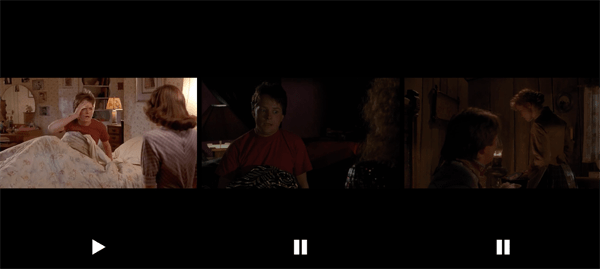
Robert Zemeckis is in the midst of being re-evaluated, currently, due to the splash ‘The Walk’ has made in theaters. Why not re-evaluate his ‘Back to the Future’ films more closely with this remarkable video piece by Davide Rapp, which places the three films side-by-side, revealing surprising and even disturbing visual echoes between them?

Watch: Inarritu’s ‘Birdman’ Is a Collage of Edits, Not Just One Take

Watch: Inarritu’s ‘Birdman’ Is a Collage of Edits, Not Just One Take

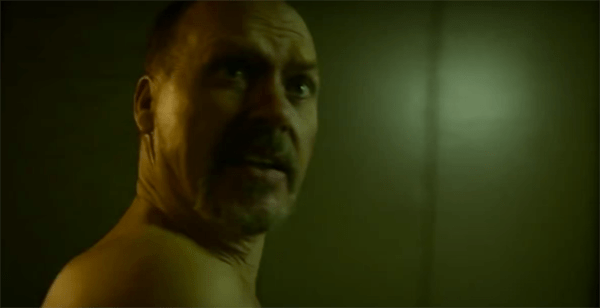
The kind souls at the YouTube channel The Film Theorists have served up a doozy with this piece on Alejandro González Iñárritu’s ‘Birdman," demonstrating not only that the film’s "single take" technique is actually the result of a myriad of takes, carefully spliced together and masked with the swerves of the camera–but also that this approach all started with Alfred Hitchcock’s 1948 film ‘Rope." Watch. Learn. Enjoy. Fly. 

Watch: What’s In a Film’s Setting? Plenty.

Watch: What’s In a Film’s Setting? Plenty.

If pressed, I would probably say that I respond more to films with a more attuned sense of setting. Part of the experience of moviegoing is tucking yourself into something–a director’s sensibility, a created world–and staying there for a while, and this tucking-in is made far more immediate if the physical setting makes a strong impression on you. In a new video essay, Now You See It swims through various setting-heavy films, ranging from ‘Citizen Kane’ to ‘About Schmidt’ to ‘The Life of Pi’ to ‘Fargo,’ and does a solid, old-fashioned analysis of the settings of those films, and why they’re important. The piece is particularly shrewd on ‘Little Miss Sunshine,’ with the socioeconomic transparency of the beauty pageant at the film’s end. So what’s in a film’s setting? The viewer, for the all-too-brief span of the film.

Watch: Guillermo del Toro Is a Master of Disobedience

Watch: Guillermo del Toro Is a Master of Disobedience

In disobedience lies Art. In disobedience lies Progress. From Aristophanes to Cervantes to The Beatles to Jackson Pollock to Jean-Luc Godard, we are taught, repeatedly, by example, that, to quote many a sports film, those who break the rules make the rules. In his latest virtuosic video essay, Evan Puschak, aka "NerdWriter," takes us inside the work of Guillermo del Toro, showing that in films such as ‘Pan’s Labyrinth‘ and beyond, the director breaks the rules of storytelling, violating the form that the Grimm’s Fairy Tales put before us, as his characters work against story paradigms to carve out spaces for themselves–and the results have been stupendous, making del Toro an idol for those who privilege the imagination over all that would conspire to crush it.

Watch: Stanley Kubrick Meets Alfred Hitchcock Meets Stanley Kubrick Meets…

Watch: Stanley Kubrick Meets Alfred Hitchcock Meets Stanley Kubrick Meets…

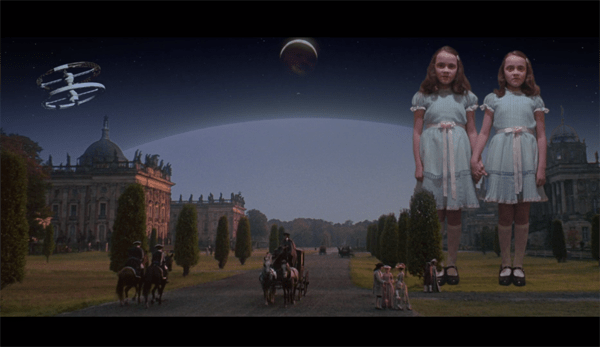
This is one of the more quietly bizarre, mind-altering films you’ll watch for a very long while. Building on the idea that all films talk to each other and that images and scenarios flow freely between them, the editors at Gump have taken several classic Alfred Hitchcock films and planted figures from classic Stanley Kubrick films within them. And vice versa. We have Jack Torrance from ‘The Shining’ staring across a courtyard at Jimmy Stewart’s wheelchair-bound voyeur from ‘Rear Window.’ We have Jimmy Stewart wandering into the orgy from ‘Eyes Wide Shut.’ And so on, increasingly intensely, until we really do begin to wonder if these two directors weren’t closer, even, than we might have thought previously. 

Watch: David Fincher and Niels Arden Oplev Take On The Revenge Scene in THE GIRL WITH THE DRAGON TATTOO

Watch: David Fincher & Niels Arden Oplev Direct The Revenge Scene in THE GIRL WITH THE DRAGON TATTOO

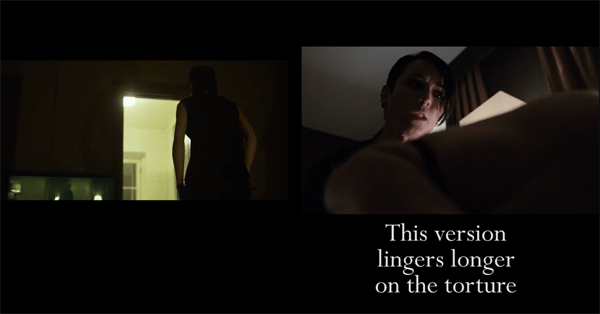
Anyone who likes Greek tragedy should, by rights, appreciate Stieg Larsson’s Millennium Trilogy, a series of books built on the power of revenge, and the catharsis that grows out of it, a catharsis so palpable it’s practically sexual. The revenge scene in The Girl with the Dragon Tattoo, the trilogy’s first volume, unfolds at a pace that is as scorching as it is satisfying, as Lisbeth Salander, the punkish information scientist thug genius, punishes her perverted legal guardian for his brutal molestation of her. When Niels Arden Oplev and David Fincher adapted the book for the screen, they took different approaches to this scene. While one version is not necessarily less fist-pump-worthy than the other, watching the scenes side by side points up crucial stylistic differences between the two directors. Here to walk us through these differences is Kevin B. Lee, for Fandor. It’s all spelled out for us here, with great care–and with huge captions! Enjoy! (If you have the stomach for it.)

Watch: Quentin Tarantino’s Shots from Above Put Him in the Center of the Frame

Watch: Quentin Tarantino’s Shots from Above Put Him in the Center of the Frame

Generally, shots from above serve to belittle the action taking place on screen; they remind us that, regardless of how involved we may be in the events unfolding there, we are all merely ants skittering across the surface of Earth, and the plot of the film is, really, just that. But in Quentin Tarantino’s case, the impact is slightly different. Emphasis is indeed taken off the action on-screen, but it is placed back on… the director. When we see an overhead shot in a Tarantino film, we are reminded that the film we are watching is personally crafted and bears the weight of significant personal investment–it’s somewhat of an auteur’s calling card. In Pablo Fernández Eyre’s latest piece, he takes us through shots in films ranging from Pulp Fiction to Jackie Brown to Kill Bill Vol. 2, to show us the director’s removed control at work.  

Watch: In Francis Ford Coppola’s ‘The Conversation,’ The Opening Sequence Foretells Our Future

Watch: In Francis Ford Coppola’s ‘The Conversation,’ The Opening Sequence Foretells Our Future

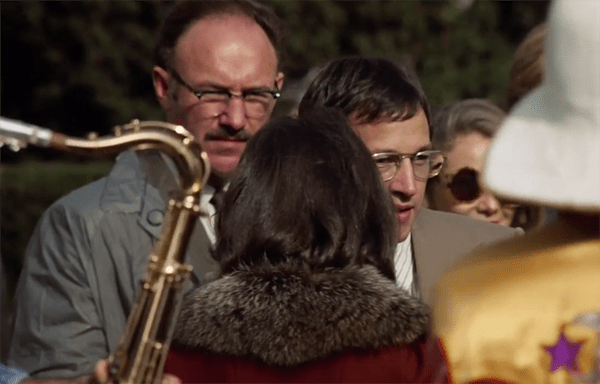
Do you think you have privacy? You don’t. Do you think no one saw? They did. You think that email is secure? It’s not. You think no one’s listening? They are. You think we’re "safe"? We probably aren’t. The intimate portrait of a surveillance professional painted in Francis Ford Coppola’s ‘The Conversation’ was, to put it mildly, ahead of its time in its suggestion of a culture in which privacy is violated all the time and in which, strangely enough, through social media and other similar outlets, we give up our privacy with alarming ease. The newest installment of "The Discarded Image" from Julian Palmer at 1848 Media examines the powerful opening sequence of Coppola’s film, linking it to its strongest influence, Michelangelo Antonioni’s ‘Blow-Up," as well as a number of contemporary films. 

Watch: Damien Chazelle’s ‘Whiplash’ and Darren Aronofsky’s ‘Black Swan’ Are the Same Film

Watch: Damien Chazelle’s ‘Whiplash’ and Darren Aronofsky’s ‘Black Swan’ Are the Same Film

It cannot be denied that Damien Chazelle’s ‘Whiplash‘ and Darren Aronofsky’s ‘Black Swan‘ are disarmingly similar. There’s the young naif at the heart of each film, Miles Teller’s Andrew Neimann vs. Natalie Portman’s Nina Sayers. There’s the overbearing instructor looming over each story: J.K. Simmons’ Terence Fletcher vs. Vincent Cassel’s Thomas Leroy. And there’s also the drive towards an artistic goal that ultimately leads a protagonist into the depths of his or her own creative self. And, as Fernando Andrés points out in this excellent video essay, which lays out considerable connections between the two films, both works focus on a particular body part that embodies the struggle at the story’s heart. In ‘Whiplash," it’s the hands; in "Black Swan,’ it’s the feet. Revisiting these two films in this form is edifying in and of itself, but the comparison so elegantly explored here also reminds us of something else behind all artistic endeavors: tenaciousness. Not quitting. Never thinking that one has done, to quote J.K Simmons’ sadistic but half-right teacher, a "good job." Suffering comes out of this kind of determination, and plenty of it. But that thing which we call, broadly, "art" comes out of it, too.