Watch: How Did Batman’s Gotham City Develop?

Watch: How Did Batman’s Gotham City Develop?

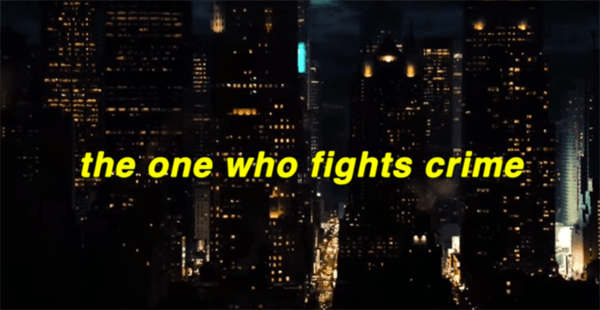
In his latest video essay, Evan Puschak, aka "NerdWriter," has taken on a potentially unwieldy subject: Gotham City. When we casually refer to "Gotham," we tend to mean a whole world of things, all centering around the crucial idea of urban corruption through political machinery. As Puschak indicates, though, the concept of Gotham City has gone through many changes from its earliest days in the Batman comic books to its re-imaginings in the hands of Tim Burton, Christopher Nolan, and the Fox Network, and at this point, if we say that Gotham City is itself a living, breathing character, we’re not necessarily spouting a cliche; the city Puschak describes here has drawn the imaginations of many for decades, and will probably continue to grow as films, books, and television shows proliferate. We just can’t get enough of it. 

Watch: In ‘Breaking Bad’ the Wide Shot Is the Gateway to the Soul

Watch: In ‘Breaking Bad’ the Wide Shot Is the Gateway to the Soul

Have you ever been to New Mexico? If you have, you would know why the wide shot is so crucial to ‘Breaking Bad.’ A story set there simply could not be filmed without giving due to the landscape’s expansiveness, to the sense that it could, in reality, progress forever, and that beyond whatever edge of the horizon you might see is not a different state, or other kinds of terrain, but just more of the same, onward and onward. For the purpose of the show, the desert wide shot reflects not so much self-realization as self-confrontation, a grappling with inner impulses, desires, and stresses uninterrupted by distractions from the world of common morality. Jorge Luengo’s newest compilation, a moving one, shows how the careful visual planning by Michael Slovis and John Toll serves to intensify and develop Vince Gilligan’s creation. 

If you’d like to see other arresting video homages to the show, check out Dave Bunting’s work here, here, or here, for starters.

Watch: Sam Mendes Is a Visual Completist

Watch: Sam Mendes Is a Visual Completist

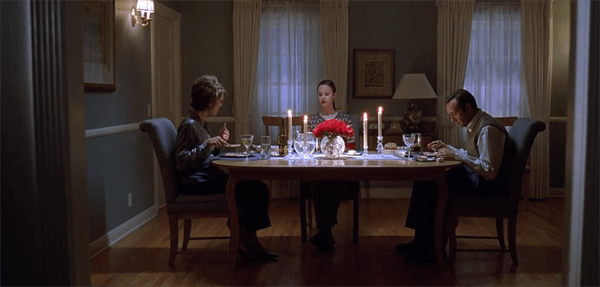
You may, with my blessing, comment on the inconsistency of Sam Mendes’s films, possibly proposing that many of them are all dramatic onrush, without payoff, or ‘American Beauty‘ is a high point to which his other films do not much up, or asking why ‘Road to Perdition’?, or what’s up with ‘Spectre’? Good thoughts, all. However, one thing you cannot say is that Mendes spares one ounce of effort, one kilowatt of creative energy on the lush and detailed settings of his films. Art of the Film‘s new video piece takes us through some of these settings, from the drab London of ‘Skyfall’ to the simmering domestic order of ‘American Beauty’ to the deceptively bucolic suburbs of ‘Revolutionary Road.’ Praise goes to Roger Deakins, Mendes’ frequent collaborator, for surrounding us; equal kudos, though, to Mendes for wanting to surround us in the first place.

Watch: What If Paul Thomas Anderson’s Films Are All Reincarnations of Each Other?

Watch: What If Paul Thomas Anderson’s Films Are All Reincarnations of Each Other?

As a filmmaker accumulates a body of work, it is inevitable that elements will recur, echoing each other and possibly growing in significance over time. Jeremy Ratzlaff proposes something slightly different about the work of Paul Thomas Anderson, suggesting that in fact his stories are all variations on each other, not an indicator of unoriginality but of symphonic intelligence. What if the tortured relationship between Daniel Plainview and Paul Sunday in ‘There Will Be Blood’ was reborn in the warped instructor-pupil relationship between Lancaster Dodd and Freddie Quell in ‘The Master’? What if the drug-addled protagonist of ‘Inherent Vice’ is actually Freddie Quell reborn? This is a finely made and meticulous consideration of an ancient truth.

Watch: Sidney Lumet’s ‘Twelve Angry Men’ Tells a Silent Story

Watch: Sidney Lumet’s ‘Twelve Angry Men’ Tells a Silent Story

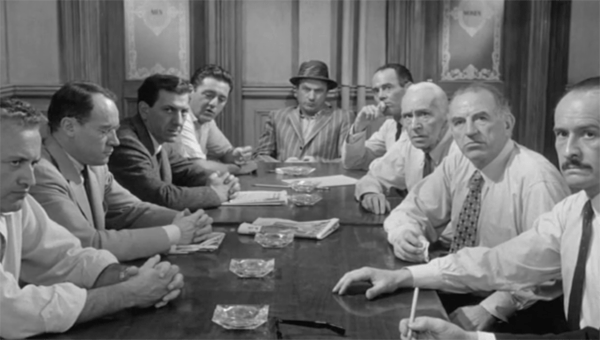
Although obviously dialogue is crucial to Sidney Lumet’s classic ’12 Angry Men,’ Filmscalpel‘s newest piece raises the following question: how crucial is it, exactly? To find out, the editors at Filmscalpel have removed the dialogue, offering us instead a series of silent scenes that tell just as compelling a story…

Watch: FARGO’s Blank Interiors and Crushing Exteriors

Watch: FARGO’s Blank Interiors and Crushing Exteriors

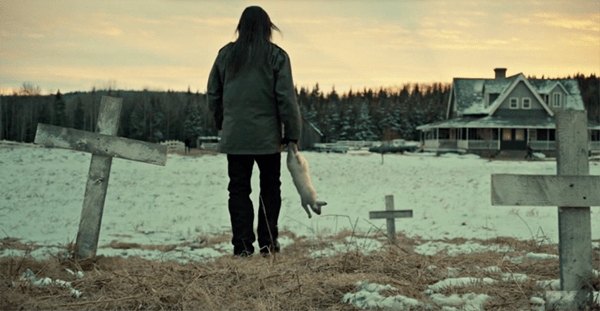
The characters in FX’s ‘Fargo‘ wage a steady war against each other–a quiet war, but a persistent one. Just as fervent and just as persistent, however is the clash between the show’s interior rooms and businesses and the sublimity lying just outside them. The tranquil diners, the bland living rooms, the weirdly sleek mansions push stubbornly against the windswept plains and long, frosty highways of the most deserted part of the midwest, where anything could and will happen. You feel cold just looking at the screen. Roger Okamoto does a wonderful job, in this video essay, of juxtaposing inside vs. outside, shelter vs. storm, civilization vs. primordial wilderness, showing that what Noah Hawley and the show’s DP, Dana Gonzales, have created here is not so much a "prestige TV" drama as an ode to the human urge to punctuate silence, either with gunfire, laughter, or good old-fashioned conversation.–Max Winter

Watch: What Props Do for The Films in Which They Appear, and Vice Versa

Watch: What Props Do for The Films in Which They Appear, and Vice Versa

Can the heart of a film be its props? The light saber. The movie camera. The gun. The tape deck. These are all things we see as we watch our Spielberg, our Andersons, our Hitchcocks, our Godards, and yet we somehow view them as incidental. Rishi Kaneria argues, with this new video essay, that they are essential. He has set himself a difficult exercise here and exceeded its limits, taking us through the use of seemingly incidental items from the beginnings of film to its most recent developments.

Watch: What Is David Fincher’s Favorite Recurring Detail?

Watch: What Is David Fincher’s Favorite Recurring Detail?

If you guessed "the refrigerator," you’re correct! And yet chances are you didn’t. The refrigerator, for Fincher, is oddly enough a perfect locus for the sorts of stories he is drawn to; stories of containment and of personal degradation, going from ‘The Game’ to ‘Se7en’ to ‘Gone Girl.’ And, in balance, the good old ice box turns out to be a miniature stage for Fincher: inside its icy depths, you get to know a subject, from creepy introverts to jubilant young lovers to hard-working detectives. This new video by De FilmKrant takes us to the back of the fridge, as it were–and inside Fincher himself: inside his methods, inside the tools he uses to get the work of storytelling done. 

Watch: Hal Ashby, Filmmaker from the Edge of Darkness

Watch: Hal Ashby, Filmmaker from the Edge of Darkness

Hal Ashby was an American filmmaker whose quirky sense of humor and sentimental charm made him a unique voice in the American New Wave. His work spans from 1970 to his death in 1988—for the sake of time, I’m going to concentrate on his string of classics between 1971 and 1979. Ashby got his start in the 60s as an editor and ended up earning an Oscar nomination for the 1966 Norman Jewison comedy ‘The Russians Are Coming, the Russians Are Coming’ and he won the Oscar one year later for another Norman Jewison film titled ‘In the Heat of the Night.’
 
Despite being older than the Vietnam generation, he was very comfortable living the hippie lifestyle, which was apparent even in his first film titled ‘The Landlord,’ about a wealthy white man who becomes the new landlord of an urban apartment building for low-income tenants. He plans to evict all the residents and transform the building into a home for himself. The film is a moving satire of race and class relations that still rings true today.
 
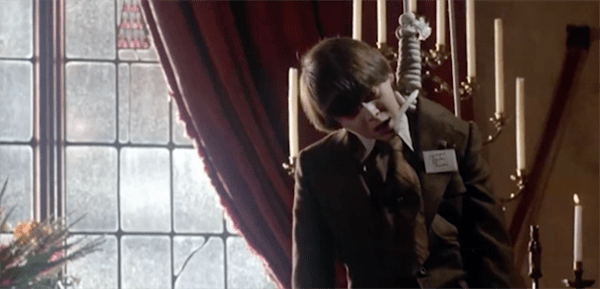
Following ‘The Landlord’ Ashby directed several iconic films starting with 1971’s ‘Harold and Maude,’ about a death-obsessed young man who starts a close relationship with an eccentric old woman. The screenplay for the film was the master’s thesis of a UCLA student named Colin Higgins. Ashby shot the film in and around the San Francisco Bay Area, which, coupled with a beautiful soundtrack by Cat Stevens, perfectly encapsulated the atmosphere of the youth culture during the early 70s and the theme of coming to terms with an existential crisis and feelings of alienation. Even though it was Ashby’s second feature film, it is widely considered to be one of his best, but that wasn’t the case at the time—after its release, it was a critical and commercial failure.
 
His next film, titled ‘The Last Detail,’ follows two navy officers as they escort a young sailor across a few states to a prison for petty theft. On the way they decide to show him a good time. Ashby was originally doing pre-production on a different film when Jack Nicholson told him about ‘The Last Detail.’ Ashby abandoned the project in favor of working with Nicholson. The script was adapted by acclaimed screenwriter Robert Towne from a novel by Darryl Ponicsan and was quite controversial when it was released due to its pervasive use of profanity. ‘The Last Detail’ captures Ashby’s unique charm and sentimentality and contains one of Jack Nicholson’s greatest performances.
 
His next film, ‘Shampoo,’ takes place during the 1968 presidential election and follows a male hairdresser—played by Warren Beatty—who uses his position to meet and have sex with women. A year later he made ‘Bound for Glory’—starring David Carradine— about folk musician Woody Guthrie who decided to travel west during the Great Depression. The film is most notable for containing the first use of Garrett Brown’s Steadicam rig, which provided smooth motion without the use of a dolly.  
 
Ashby’s political themes started to take on a bigger role starting with his next film titled ‘Coming Home,’ which is about the Vietnam War, but doesn’t depict any combat whatsoever. Instead, it is about the veterans of that war coming back to America and coping with their injuries and the reality of what they did over there. It follows a recently paralyzed veteran who connects with the wife of a soldier at a VA hospital. The wife was played by Jane Fona who, along with her costar Jon Voight, won an Oscar for acting. Ashby also earned a nomination for Best Director. ‘Coming Home’ turns the media portrayal of the glory of being a soldier completely upside-down and shows the reality of what survivors face.
 
In 1979, Ashby made ‘Being There’ about a simple gardener who finds himself amongst the most powerful people in Washington who mistake his thoughts on gardening as profound metaphors. Chance the Gardener was brilliantly played by Peter Sellers in one of his most iconic roles. Ashby continued to make films until his death in 1988, but none were as beloved as his films from the 70s.

Films referenced:

‘The Landlord’ (1970 dir. Hal Ashby)
‘Harold and Maude’ (1971 dir. Hal Ashby)
‘The Last Detail’ (1973 dir. Hal Ashby)
‘Shampoo’ (1975 dir. Hal Ashby)
‘Bound for Glory’ (1976 dir. Hal Ashby)
‘Coming Home’ (1978 dir. Hal Ashby)
‘Being There’ (1979 dir. Hal Ashby)
‘The Russians Are Coming, the Russians Are Coming’ (1966 dir. Norman Jewison)

Tyler Knudsen, a San Francisco Bay Area native, has been a student of film for most of his life. Appearing in several television commercials as a child, Tyler was inspired to shift his focus from acting to directing after performing as a featured extra in Vincent Ward’s What Dreams May Come. He studied Film & Digital Media with an emphasis on production at the University of California, Santa Cruz and recently moved to New York City where he currently resides with his girlfriend.

Watch: Terrence Malick’s Influence on… Well… Everybody

Watch: Terrence Malick’s Influence on… Well… Everybody

Ah, Terrence Malick, where would we be without your wistful, sweeping, speculative influence? As it turns out, nowhere much. Video-essay machine Jacob T. Swinney has turned out yet another piece recently, this on Malick’s ever-expanding stamp on filmmakers ranging from Cary Fukunaga to Zack Snyder to Shane Carruth, spottable by a recognition of the human capacity to dream.