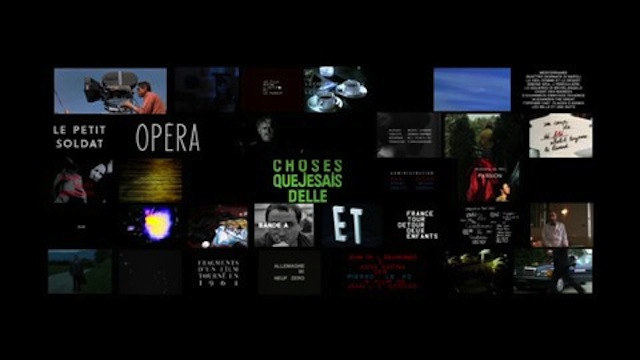
VIDEO – Motion Studies #15 & #16: The Art of Cinema on French TV (Godard on Kubrick; Costa on Straub/Huillet)

VIDEO – Motion Studies #15 & #16: The Art of Cinema on French TV (Godard on Kubrick; Costa on Straub/Huillet)

From now through April, the Oberhausen International Short Film Festival will present "Film Studies in Motion", a Web Series curated by Volker Pantenburg and Kevin B. Lee. This series, available on the festival's website and Facebook page, presents weekly selections of analytical video essays on the web, in preparation for Pantenberg and Lee's presentation  "Whatever happened to Bildungsauftrag? – Teaching cinema on TV and the Web", scheduled for April 28 at the festival.

Week Four: Precursors: TV, Cinema, Contemporary Art

There is a a tradition of “Videographic Film Studies” that existed before the Internet. Some TV channels, like the West-German WDR, but also TV programmers in other countries, initiated an impressive variety of programmes on cinema that combined thorough analytical observations with an inventiveness of visual forms and techniques. Found footage has also been used in experimental cinema and contemporary art. Most examples of this audiovisual legacy remain either overlooked or invisible as they are stacked away in archives or private catalogues. For this reason, this episode mostly gathers fragments and snippets instead of entire essays.

Today's selections:

Cinéma Cinémas (1982-1991, Antenne 2) 
Anne Andreu, Michel Boujut, Claude Ventura

Cinéma Cinémas" was conceived by Michel Boujut, Anne Andreu and Claude Ventura. It was produced and broadcast by French TV channel "Antenne 2" from 1982 to 1991. Each episode consisted of several pieces, partly interviews with Hollywood-Stars, partly contributions from filmmakers ("Letter from a filmmaker"), partly cinephile observations on directors or individual films.

In this episode produced in 1987, Jean-Luc Godard compares the use of slow motion in Stanley Kubrick's Full Metal Jacket with that of another film about Vietnam, 79 Springtimes of Ho Chi Minh by Santiago Alvarez. A translation of Godard's comparison can be found below (translated by André Dias, originally on Kino Slang

Godard: «There it is! This is the slow motion we find in Peckinpah, if you will… It addresses the crowd of spectators only by exploiting something that it lacks. It seems like what Welles talked about: a gimmick, a trick, a gadget. Something that's now usual in all these American directors, even in Kubrick, who disappoints me because he has more talent than them. And this is just Peckinpah, if you will… with the exploitation of Vietnam. To his film I wouldn't go because I wouldn't see the Vietnamese, or God knows in which form. They were there. You just needed to go there… He doesn't see them. Something's missing. Kubrick's film misses what America also missed.

They keep showing… In war films about Germany, there's not one big Hollywood actor that hasn't, sooner or later, played a German general. Here no one has played a [Vietnamese] general, cause they didn't know how to do it. That's their shame. To cover up this shame with a slow motion, whatever talent one has, it doesn't work…

Let see the Alvarez slow motion. We see a crowd that cries. And we see each one cry without privilege, despite being privileged. The spectator can make his choice. This is what never occurred… Here is a war movie made by a Cuban. It's sufficient to see this to, when we show Kubrick's images see that they do not hold…

To say good or bad things… I, (…), it wouldn’t come to my mind to make war; I've deserted in two countries. But it's necessary to watch. We see something in which we believe and there he [Kubrick] doesn't believe in films anymore. He forces himself to believe. And at a certain point it doesn't stand. There's a minimum of honesty… We see that the other [Alvarez’s], which is made of documentary, is so worked by a stylised fiction like this, that it gives back something. And there [Kubrick's] lacks the documentary approach.»

Cinéma, de notre temps (1964-1972, ORTF; 1989-present, la 7 / arte) 
André S. Labarthe, Janine Bazin

"Some of the most successful and fruitful ongoing enterprises related to film history have been either ignored or taken for granted (which sometimes amounts to the same thing) due to their omnipresence… The series of 80-odd French television documentaries about filmmakers produced by Janine Bazin (the widow of André Bazin) and André S. Labarthe, initially called Cinéastes de notre temps when it was produced by the ORTF between 1964 and 1972, and revived as Cinéma, de notre temps when it was produced by Arte between 1990 and 2003, the year that Janine Bazin died, and then taken up again by Cinécinéma in 2006. Some of the more interesting of the earlier documentaries were remarkable in the various ways that they stylistically imitated their subjects, as in the programs on Cassavetes, Samuel Fuller, and Josef von Sternberg. One specialty item was an eight-part conversation between Fritz Lang and Jean-Luc Godard (The Dinosaur and the Baby, 1967). Many important figures worked on these shows, including Noël Burch and Jean Eustache (mainly as editors, although Burch also codirected a few programs), Jean-André Fieschi (mainly on Italian filmmakers), Jean-Louis Comolli and Jean Douchet (on diverse topics), Alexandre Astruc (on F.W. Murnau), Jacques Baratier (on René Clair), Jacques Rivette (a three-part series about Jean Renoir), Claire Denis (a two-part program about Rivette, with Serge Daney as interviewer), Jacques Rozier (on Jean Vigo), Eric Rohmer (on Carl Dreyer), Olivier Assayas (on Hou Hsiao-hsien), Rafi Pitts (on Abel Ferrara), Chris Marker (on Andrei Tarkovsky), and Pedro Costa (on Jean-Marie Straub and Danièle Huillet)—to provide a less than exhaustive list."

Jonathan Rosenbaum

"This is a film about film, of course, but it understands film as a conversation—about searching, about understanding—as an opportunity for philosophy, we might say—and how all these elements build a working picture of marriage, too."

Ryland Walker Knight on Cinéma, de notre temps: Where Does Your Hidden Smile Lie? (Pedro Costa, 2001) – embedded above

View all Motion Studies video selections.

Volker Pantenburg is assistant professor for moving images at the media faculty of the Bauhaus-Universität Weimar. 

Kevin B. Lee is Editor in Chief of IndieWire’s PressPlay Video Blog and contributor to Roger Ebert.com. Follow him on Twitter.
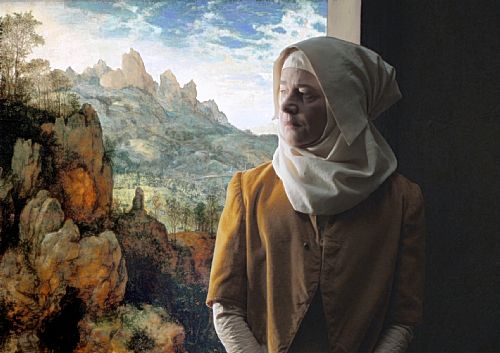
VIDEO: Stillness in Motion – The Films of Lech Majewski

VIDEO: Stillness in Motion – The Films of Lech Majewski

Lech Majewski’s acclaimed 2011 film The Mill and the Cross transcends artistic categorization, a work of 21st-century digital cinema that resurrects a 16th-century painting, Pieter Bruegel’s masterpiece The Way to Calvary. Re-staging the painting with its cast of hundreds while blending actual landscape footage with hand-painted recreations of Bruegel’s canvas, the film is an unprecedented blend of cinema, painting, theater, and scholarship. As film scholar Kristin Thompson remarked upon seeing the film, “What makes The Mill and the Cross so exciting is that it achieves that rarest of things, making us feel that we are seeing something very worthwhile that has never been done before.”

Yet those familiar with Majewski’s filmography may notice in The Mill and the Cross certain motifs and methods from his past works. This video essay makes a side-by-side comparison of The Mill and the Cross and Majewski’s 1998 film, The Roe’s Room, which happens to be his first film shot on high-definition digital video, and is also available on Fandor. Adapted from a stage opera written and produced by the multi-talented Majewski, The Roe’s Room also features a very painterly sensibility with its precise compositions and delicate visual textures all set in cinematic motion. 

Read the rest of this essay on Fandor.

Kevin B. Lee is Editor in Chief of IndieWire’s PressPlay Video Blog and contributor to Roger Ebert.com. Follow him on Twitter.
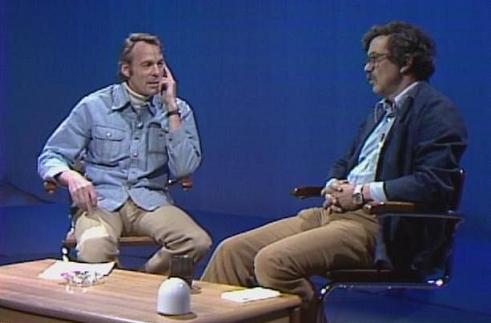
VIDEO – Motion Studies #14: Screening Room

VIDEO – Motion Studies #14: Screening Room

From now through April, the Oberhausen International Short Film Festival will present "Film Studies in Motion", a Web Series curated by Volker Pantenburg and Kevin B. Lee. This series, available on the festival's website and Facebook page, presents weekly selections of analytical video essays on the web, in preparation for Pantenberg and Lee's presentation  "Whatever happened to Bildungsauftrag? – Teaching cinema on TV and the Web", scheduled for April 28 at the festival.

Week Four: Precursors: TV, Cinema, Contemporary Art

There is a a tradition of “Videographic Film Studies” that existed before the Internet. Some TV channels, like the West-German WDR, but also TV programmers in other countries, initiated an impressive variety of programmes on cinema that combined thorough analytical observations with an inventiveness of visual forms and techniques. Found footage has also been used in experimental cinema and contemporary art. Most examples of this audiovisual legacy remain either overlooked or invisible as they are stacked away in archives or private catalogues. For this reason, this episode mostly gathers fragments and snippets instead of entire essays.

Today's selection:

Screening Room (1972-1981)

Robert Gardner

Even in a world with hundreds of cable TV channels on the air, today it's virtually impossible to conceive of a commercial TV program dedicated to discussing experimental filmmaking in depth. But there was a time when such a program existed; in fact it lasted for a decade and left an indelible legacy to appreciating the art of cinema.

Screening Room was a 1970s Boston television series that invited independent filmmakers to show and discuss their work on a commercial (ABC-TV) affiliate station. This unique program, developed and hosted by filmmaker Robert Gardner, dealt even-handedly with animation, documentary, and experimental film, welcoming such artists as Jean Rouch, Jonas Mekas, Stan Brakhage, Hollis Frampton, Yvonne Rainer, and Michael Snow. Frequently, famous literary guests such as Octavio Paz, Stanley Cavell and Rudolph Arnheim appeared as well. The filmmakers presented on the show are now considered the most influential contributors to their respective genres and the footage is invaluable for students, scholars and lovers of film. The series is now available on DVD through Studio7Arts.

View all Motion Studies video selections.

Volker Pantenburg is assistant professor for moving images at the media faculty of the Bauhaus-Universität Weimar. 

Kevin B. Lee is Editor in Chief of IndieWire’s PressPlay Video Blog and contributor to Roger Ebert.com. Follow him on Twitter.

Motion Studies #13: The Endless Night: A Valentine to Film Noir

Motion Studies #13: The Endless Night: A Valentine to Film Noir

From now through April, the Oberhausen International Short Film Festival will present "Film Studies in Motion", a Web Series curated by Volker Pantenburg and Kevin B. Lee. This series, available on the festival's website and Facebook page, presents weekly selections of analytical video essays on the web, in preparation for Pantenberg and Lee's presentation  "Whatever happened to Bildungsauftrag? – Teaching cinema on TV and the Web", scheduled for April 28 at the festival.

Week Three: Remixes: Parody, Supercut and Mashup

Appropriating and recombining existing footage has been a prime strategy of art and analysis for a long time. With the immense circulation of movies on the web and the accessibility of editing software, this method is no longer restricted to experimental cinema or contemporary art, but has become part of a wider remix culture. This episode gathers recent examples from a wide range of practices. Some of them are driven by critical intentions, some by sheer enthusiasm for iconography and rhythm.

Today's selection:

The Endless Night: A Valentine to Film Noir

Serena Bramble (2009)

A video love letter that distills film noir movies into their atmospheric essence.

View all Motion Studies video selections.

Volker Pantenburg is assistant professor for moving images at the media faculty of the Bauhaus-Universität Weimar. 

Kevin B. Lee is Editor in Chief of IndieWire’s PressPlay Video Blog and contributor to Roger Ebert.com. Follow him on Twitter.

VIDEO ESSAY: MONEYBALL and Ways of Seeing, Presented by The Seventh Art

VIDEO ESSAY: MONEYBALL and Ways of Seeing, Presented by The Seventh Art

EDITOR'S NOTE: Press Play is proud to co-present a new series of video essays produced by The Seventh Art, an independently produced video magazine on cinema. Our initial co-presentation is a lengthy critical video essay on Moneyball, coinciding with the opening week of Major League Baseball. The video is written and edited by Christopher Heron, and narrated by John Boylan. It originally appeared in Issue Two of The Seventh Art published last month.

This excerpt from the video's narration summarizes its main thesis:

"It’s tempting to think of the film as potentially operating in the same way as the tenets of player valuation championed by this new perspective on reading baseball – that it, too, champions looking at things differently. I believe the formal level of the film does gesture towards this and there is one unmistakable moment that illustrates how the film pushes the baseball film in a new direction through the film’s form and story. However… the film misses in its summary of the new philosophy and this misunderstanding of the importance of logic results in moments where the film is operating in a way antithetical to the subject matter. The result is a transitory film, which at once makes interesting strides in how it differentiates itself formally and narratively from the traditional baseball film, while still beholden to some of the unfortunate formal conventions associated with conveying information in an overly didactic way that includes rote documentary bells and whistles."

The Seventh Art describes its work in the online video magazine format on its website:

"The Seventh Art is an independently produced video magazine about cinema with profiles on interesting aspects of the film industry, video essays and in-depth interviews with filmmakers set in casual environments.

The magazine is based equally on the rich history of writing on cinema and French television shows about cinema, such as Cinéastes de notre temps. The video format allows us to seek ways to differentiate The Seventh Art from the former, while building on the latter through the lack of time or content limitations afforded by the internet. Conventional wisdom tells that internet users are looking for extremely short content, but we believe the value of this medium exists in the abolishment of assumptions of how users engage with content. Our sections err on the longer side because they are like a magazine, which you can pick up and put down at your leisure – never requiring that you consume all sections, or even each section in its entirety in one sitting.

With this video magazine format we strive to explore cinema in a manner that is at once accessible and in-depth as we pursue questions of film form/aesthetic that link back with the initial theorization of cinema as the seventh art – regardless of how unfortunately self-justifying this initial discourse had to be. We ask not only what is cinema, but when is cinema, where is cinema, how is cinema and why cinema, especially as media converges on new distribution models that are hopefully reflected in the cross-platform nature of our 'magazine'."

Motion Studies #12: Everything Is a Remix

Motion Studies #12: Everything Is a Remix

From now through April, the Oberhausen International Short Film Festival will present "Film Studies in Motion", a Web Series curated by Volker Pantenburg and Kevin B. Lee. This series, available on the festival's website and Facebook page, presents weekly selections of analytical video essays on the web, in preparation for Pantenberg and Lee's presentation  "Whatever happened to Bildungsauftrag? – Teaching cinema on TV and the Web", scheduled for April 28 at the festival.

Week Three: Remixes: Parody, Supercut and Mashup

Appropriating and recombining existing footage has been a prime strategy of art and analysis for a long time. With the immense circulation of movies on the web and the accessibility of editing software, this method is no longer restricted to experimental cinema or contemporary art, but has become part of a wider remix culture. This episode gathers recent examples from a wide range of practices. Some of them are driven by critical intentions, some by sheer enthusiasm for iconography and rhythm.

Today's selection:

Everything is a Remix. Part 2: Remix Inc.

Kirby Ferguson (2011)

An exploration of the remix techniques involved in producing films.

View all Motion Studies video selections.

Volker Pantenburg is assistant professor for moving images at the media faculty of the Bauhaus-Universität Weimar. 

Kevin B. Lee is Editor in Chief of IndieWire’s PressPlay Video Blog and contributor to Roger Ebert.com. Follow him on Twitter.

Motion Studies #11: Razzle Dazzle Part 6: The Takeaway

Motion Studies #11: Razzle Dazzle Part 6: The Takeaway

http://www.movingimagesource.us/flash/mediaplayer.swf?id=129/891

From now through April, the Oberhausen International Short Film Festival will present "Film Studies in Motion", a Web Series curated by Volker Pantenburg and Kevin B. Lee. This series, available on the festival's website and Facebook page, presents weekly selections of analytical video essays on the web, in preparation for Pantenberg and Lee's presentation  "Whatever happened to Bildungsauftrag? – Teaching cinema on TV and the Web", scheduled for April 28 at the festival.

Week Three: Remixes: Parody, Supercut and Mashup

Appropriating and recombining existing footage has been a prime strategy of art and analysis for a long time. With the immense circulation of movies on the web and the accessibility of editing software, this method is no longer restricted to experimental cinema or contemporary art, but has become part of a wider remix culture. This episode gathers recent examples from a wide range of practices. Some of them are driven by critical intentions, some by sheer enthusiasm for iconography and rhythm.

Today's selection:

Razzle Dazzle Part 6: The Takeaway

Aaron Aradillas, Steven Santos, Matt Zoller Seitz (2010)

A stunning montage that tunnels through the media distortion field as depicted in dozens of movie and video clips.

View all Motion Studies video selections.

Volker Pantenburg is assistant professor for moving images at the media faculty of the Bauhaus-Universität Weimar. 

Kevin B. Lee is Editor in Chief of IndieWire’s PressPlay Video Blog and contributor to Roger Ebert.com. Follow him on Twitter.
Motion Studies #10: Pure

Motion Studies #10: Pure

From now through April, the Oberhausen International Short Film Festival will present "Film Studies in Motion", a Web Series curated by Volker Pantenburg and Kevin B. Lee. This series, available on the festival's website and Facebook page, presents weekly selections of analytical video essays on the web, in preparation for Pantenberg and Lee's presentation  "Whatever happened to Bildungsauftrag? – Teaching cinema on TV and the Web", scheduled for April 28 at the festival.

Week Three: Remixes: Parody, Supercut and Mashup

Appropriating and recombining existing footage has been a prime strategy of art and analysis for a long time. With the immense circulation of movies on the web and the accessibility of editing software, this method is no longer restricted to experimental cinema or contemporary art, but has become part of a wider remix culture. This episode gathers recent examples from a wide range of practices. Some of them are driven by critical intentions, some by sheer enthusiasm for iconography and rhythm.

Today's selection:

Pure

Jacob Bricca (2009)

"Jacob Bricca's Pure (2008)—which played at a number of film festivals, including the Berlinale—groups together a slew of visual cues from action movies, creating a kind of auto-critical futurist paean to maximum velocity. The shots he finds are so similar that the effect is often like watching the same exact thing from multiple angles." – Tom McCormack, Moving Image Source

View all Motion Studies video selections.

Volker Pantenburg is assistant professor for moving images at the media faculty of the Bauhaus-Universität Weimar. 

Kevin B. Lee is Editor in Chief of IndieWire’s PressPlay Video Blog and contributor to Roger Ebert.com. Follow him on Twitter.
Motion Studies #9: Rose Hobart

Motion Studies #9: Rose Hobart

From now through April, the Oberhausen International Short Film Festival will present "Film Studies in Motion", a Web Series curated by Volker Pantenburg and Kevin B. Lee. This series, available on the festival's website and Facebook page, presents weekly selections of analytical video essays on the web, in preparation for Pantenberg and Lee's presentation  "Whatever happened to Bildungsauftrag? – Teaching cinema on TV and the Web", scheduled for April 28 at the festival.

Week Three: Remixes: Parody, Supercut and Mashup

Appropriating and recombining existing footage has been a prime strategy of art and analysis for a long time. With the immense circulation of movies on the web and the accessibility of editing software, this method is no longer restricted to experimental cinema or contemporary art, but has become part of a wider remix culture. This episode gathers recent examples from a wide range of practices. Some of them are driven by critical intentions, some by sheer enthusiasm for iconography and rhythm.

Today's selection:

Rose Hobart

Joseph Cornell (1936)

The original movie remix.

View all Motion Studies video selections.

Volker Pantenburg is assistant professor for moving images at the media faculty of the Bauhaus-Universität Weimar. 

Kevin B. Lee is Editor in Chief of IndieWire’s PressPlay Video Blog and contributor to Roger Ebert.com. Follow him on Twitter.

VIDEO – Motion Studies #4: Godardloop

VIDEO – Motion Studies #4: Godardloop

For the next seven weeks, the Oberhausen International Short Film Festival will present "Film Studies in Motion", a Web Series curated by Volker Pantenburg and Kevin B. Lee. This series, available on the festival's website and Facebook page, presents weekly selections of analytical video essays on the web, in preparation for Pantenberg and Lee's presentation  "Whatever happened to Bildungsauftrag? – Teaching cinema on TV and the Web", scheduled for April 28 at the festival.

Press Play will track the series, posting four or five of the selected videos each week as they also become available on the Oberhausen Film Festival website.

This week is an initial sampling of exemplary works from the emerging genre of online video essays on cinema. Combined they cover a wide range of subject matter (a genre, a sequence in a film, a cinematic motif, a director’s body of work). They demonstrate a variety of stylistic approaches to the video essay form, using an array of techniques: montage and rhythm, split screens, narration, creative use of on-screen text, etc. These works, some of them conceived as multi-part series, are made typically on computers with consumer-grade editing software, but they display an ingenuity that is comparable to that of the films they explore.

Today's selection:

Godardloop


Michael Baute (2010)

47 films spanning 50 years of filmmaking are channeled into a stream of images that attest to an inimitable talent: an artist who transforms the world simply by how he looks at it through a camera.

Volker Pantenburg is assistant professor for moving images at the media faculty of the Bauhaus-Universität Weimar. 

Kevin B. Lee is Editor in Chief of IndieWire’s PressPlay Video Blog and contributor to Roger Ebert.com. Follow him on Twitter.