VIDEO ESSAY: Maurice Sendak: Outside Over There

VIDEO ESSAY: Maurice Sendak: Outside Over There

On May 8, 2012, Maurice Sendak died.  Shakespeare’s dead, too, and Melville, and Emily Dickinson. In fact, come to think of it, so are most people who have ever lived. But most people aren’t lionized after death in the press as one of the great Fathers of Children’s Literature.

Ironic, considering that Sendak was a child until he died at the age of 83—and I mean that in the best way.

All the best children’s authors are children.  The most horrid thing that can happen in children’s books, aside from a Grown-Up deciding to Write A Book For Children, is for that book to actually get published. 

If you’re scratching your head wondering who I am, you’ve never heard of me.  Several of my children’s books have been published, so I’m an actual author of children’s books, but the fact that you know all about Maurice Sendak and nothing about me is kind of important here, because Mr. Sendak and I have a lot in common.  Just not what you think. I understand him in a different way.

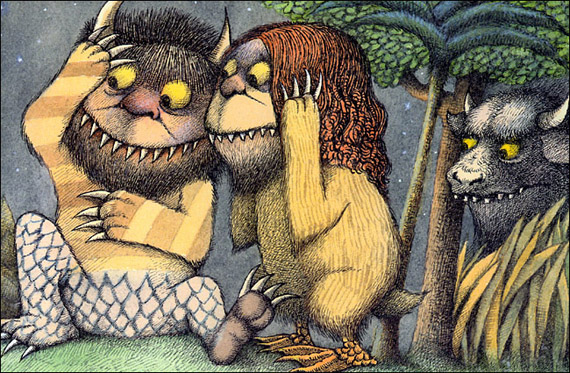
Journalist Emma Brockes, in an October 2011 edition of The Guardian, claimed that millions will always think of Sendak as “young, a proxy for Max in Where the Wild Things Are.”*  Other writers have variously described him as “Grumpy.” “Angry.” “Fierce.” Names that tend to evoke the faces of the monsters that glare out of the pages he created.

Were any of these true? I really couldn’t say. I never met him in my life, and never really wanted to.  I’m not much on meeting authors, for reasons I now understand—though when I first started writing seriously, this theory of reading sent me sprawling: That no matter how hard the writer or the artist tries to convey his or her message, no matter how perfect the execution of what lives in his or her mind, once the reader reads the work, the true message is the reader’s and the reader’s alone—even if it’s not exactly what the author meant.  This is hard, hard, hard for a creator to accept, and doubly so when that creator finds himself equated personally with the creation.

When a reader meets an author, the author becomes a clay figure upon whom the reader pastes his or her feelings, dreams, desires, and impressions. Suddenly the author finds he is expected to live up to everyone’s expectations. That’s enough to make anyone Grumpy.  Angry.  Fierce.

Sendak was, in some ways, the poster child (as it were) for children’s books in a way that mildly irritated many in the profession, through no fault of Sendak’s. When speaking to most any member of the public, about books to get for children, one invariably and repetitively heard: “Oh, how about Where the Wild Things Are?  Get Where the Wild Things Are.  My kids loved Where the Wild Things Are.” It was brilliant, true, but it’s also the only thing most people know, and Sendak was only one among a massive chest that holds an embarrassment of visual and literary riches, unguessed by most, and never found by the majority of children.

Yet passes Sendak, and in the press it is as in Outside Over There when “Ida played a frenzied jig, a hornpipe / that makes sailors wild beneath the ocean moon.”

I do not know whether Sendak was a humble man or proud. That he wrote from his child’s heart, which he somehow kept intact through a life that did its damnedest to drag him into the gray and cynical adult world, is plainly evident. When I speak of his “child’s heart,” I mean the heart that is still in love with wonder—a heart that is brave and wild and young and still unconquered by the terror and the ugliness in the world. It’s a heart that finds the world a very difficult place to live in in spite of—and because of—its excruciating beauty. That is the kind of innocence Maurice Sendak had, and that he shared with the world. It’s a contrast to the adult-imagined innocence of Peter Pan, a story that Sendak and I mutually despised.

There’s absolutely no denying the ground-shaking societal impact of Where The Wild Things Are, In The Night Kitchen and, in a quieter way, Outside Over There—they are the great post-Victorian children’s manifesto of rebellion. They are the Declaration of Monstrosity that freed children from the starched expectation that they were somehow less beastly than the adults who spawned them. Sendak rightly recognized—and to the abject horror of many, actually went so far as to illustrate—the reality that these delightful little sweetings had a nasty ego-flavored center.

Just like the rest of us.

Make no mistake—Sendak did not write for children. He wrote for himself. So do I. Our writing is for a single purpose—we yearn to be understood in a world that is wild and roaring. We feel compelled by some inner urge to convey a message.

As a writer, I am not proud of my published work because I see my role as that of a messenger only.  I will never be a Sendak, and that’s fine—that’s not what I was meant for.  My messages are modest; he had a transcendent message to deliver, and the talent to do it. But in the end, as we find ourselves pasting our own Maxes, Mickeys, and Idas onto Sendak, is it not possible that the message is more important than the man? All our messages, than the messengers themselves?

Regardless, Maurice Sendak, for all his gifts, will now give us no more. He is gone.

In this he and I differ, though: He believed that nothing happens after death; we simply cease. I prefer to think that he still is, Outside, Over There.

*Brockes, Emma. “Maurice Sendak: ‘I refuse to lie to children’.”  The Guardian.  2 October 2011, 13:30 EDT  <http://www.guardian.co.uk/books/2011/oct/02/maurice-sendak-interview?intcmp=239&gt;.

Tres Seymour is the author of thirteen books for young people, including Hunting the White Cow and Life In The Desert, a 1993 American Library Association Best Book for Young Adults  He lives in Munfordville, Kentucky.
GAME OF THRONES RECAP 9: BLACKWATER

GAME OF THRONES RECAP 9: BLACKWATER

We know what we’re getting when we watch a Game Of Thrones episode, right? We’re getting some beautifully shot scenes, certainly; this has been one of the best-looking shows on television since its premiere. We know that the actors will be good, if not great. We know that we’ll see a wide variety of different, possibly intersecting plots, divided by geography. And we know that while there might be some action, it’ll be parceled out for more drama, more cliffhangers, but probably not catharsis. It’s a decent structure. It’s served the show well, as well as working for other HBO shows like The Wire, Treme, and Boardwalk Empire.

Except that’s not what happened in “Blackwater.”

It takes confidence to alter the formal structure of a television show, but it’s also often the best thing a show can do. Shows like The Sopranos and Buffy The Vampire Slayer changed television dramatically while relying on a series of formal experiments: “College” and “Pine Barrens” from The Sopranos, or “Band Candy” and “The Body” from Buffy. The way you think the show should work, the way television normally works? That’s not what happens. If done competently, these experiments can be fun episodes. If done well? They’re among the best television can do.

“Blackwater” was an experiment done well.

I was partially wrong about last week’s episode. I assumed that everything was leading up to a climactic ninth episode of the season. We’d see Theon defending Winterfell; we’d see Dany chasing her dragons; we’d see a culmination of Robb’s romance; we’d see Jon trying to survive his capture by the wildlings; we’d see Arya, having escaped into the wilderness; we’d see the battle of Blackwater, with Stannis’ forces attacking Tyrion and the Lannisters at King’s Landing.

What we got was only the last of those. The climactic battle of the season turned out to be the entirety of the episode. Stannis attacks King’s Landing, and Tyrion defends it. Nothing else happens this episode. It is, unlike any other of the 18 episodes preceding it, entirely focused on a single story, focused only on the characters in one specific locale.

And that’s just what Game Of Thrones needed.

There are still issues. My complaints about Arya and Cat losing agency last week are still valid. There’s still a great deal of ground to cover next week. I don’t know that there’s going to be enough time left to tie it all together. The season has had issues of thematic coherence roughly equivalent to the difficulties with coherence in the novel A Clash Of Kings. Yet, while those things can be argued about the season as a whole, they don’t take away from the achievement of “Blackwater.”

“Blackwater” derives its power from its relative simplicity. It removes the extra plots, focusing on the overarching climax of the Clash Of Kings that gave the story its name in book form. Stannis, with the former Targaryen lands plus the Baratheon vassals, attacks King Joffrey in King’s Landing, with the power of the capital and the Lannisters behind him. As presented, these are the two most powerful forces in the southlands (with Robb Stark leading an equally powerful army from the north).

Yet while that simplicity increases the drama of the episode for the characters we care about—Tyrion primarily—it also demonstrates one of the biggest problems of the season: in the Stannis versus Joffrey confrontation, we have many reasons to cheer against Joff, but no particular reason to cheer for Stannis. That makes it necessary for “Blackwater” to build that drama via the few characters who will be affected. This means Davos and his son, preparing for the battle. This means the Hound and Bronn, whose stress makes them competitors, while battle makes them friends. This means Tyrion with Varys, with Sansa, with Joffrey, and with Shae. This means Sansa Stark, who finally gets the chance to shine, first by sarcastically undermining Joffrey, then by cleaning up the mess left by a drunken Cersei Lannister.

The action in “Blackwater” is very good. It’s fantastic, given the constraints of television. I, along with many other online commenters, compared it to the attack on Helm’s Deep from Lord Of The Rings: The Two Towers. Some of the individual pieces of action aren’t quite film-level, but in terms of building then releasing tension, the episode is great.

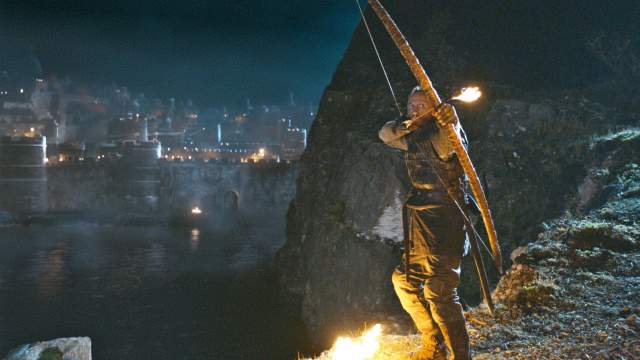
First, Stannis has an overwhelming advantage in numbers, which Tyrion lessens with his wildfire attack. This is a loaded sequence for a variety of reasons. First, there’s the simple technology of it: this is what HBO has been saving their CGI for, and it’s worth it. The green fire and the explosion look great. Beyond that, the number of extras involved in the action sequences give an epic feeling beyond the computer technology.

Tyrion’s surprise fire attack also links him to great strategists in literary history as well. His plan, to me, is reminiscent of the Zhou Yu/Zhuge Liang plot in the Three Kingdoms novel, most recently portrayed visually in John Woo’s uneven but fascinating 2008 film Red Cliff. The idea that a lone brilliant man can use surprise and the elements, particularly fire, in order to even out incredibly uneven odds is a common conceit of literature. Tyrion here is Odysseus, creating the Trojan Horse, or Caesar at Pharsalus, surprising Pompey’s cavalry, as well as Zhuge Liang, the near-deified strategist of the Three Kingdoms. Lord Varys even makes this clear early in the episode, saying that Stannis has allied with dark forces, and Tyrion is “the only man who can stop him.” There’s also the straightforward historical precedent of Byzantine “Greek fire,” the secret weapon of that famous fleet.

Yet Tyrion’s (and Peter Dinklage’s) greatest triumph isn’t his strategy, it’s that when the battle hangs in the balance, he builds his courage and makes a speech to save King’s Landing. His speech isn’t an appeal to the ideals of the Seven Kingdoms. Instead, it’s an appeal to the darkness of the series. He specifically tells his men not to fight for honor. He tells them to fight for their own survival, and for the survival of the people they care about. I don’t know that there’s a better encapsulation of the series’ themes than this speech.

Who is the bad guy here? Tyrion is defending Cersei and Joffrey, the biggest villains of the show so far, but we want him to survive. We want his people to survive. We want King’s Landing to avoid being sacked; we want the noble ladies not to be raped. We want Westeros to not go to hell, despite the “honorable” intentions of its leaders. There’s no good resolution here. There’s only survival. Tyrion gets that. And Dinklage nails the speech where he demonstrates that. “Those are brave men knocking on our door. Let’s go kill them!”

Yet all this doesn’t work without the formal changes of the episode. Only a handful of cast members are present, but almost every single one of them has some of their best moments. Sophie Turner gets many of her best moments as the rapidly maturing Sansa Stark, yes, but she’s matched by Sibel Kekilli, as Shae, whose fiery personality has been increasingly prominent recently. Lena Headey is also making a strong claim for “most improved” actress—her increasing desperation, combined with her rigid control over her emotions, makes her scenes some of the best of an already fantastic episode. Finally Sandor Clegane, Joffrey’s Hound, has been a background character for so long that his scenes here are something of a surprise, and a welcome one at that. It’s an odd thing for Joffrey’s right hand to say, straight up, “fuck the king,” but Rory McCann takes this, his most important line, and makes it sting.

Because Game Of Thrones focuses on the climactic event of the season, it can do this. It can make most of the characters at their most interesting. It can slowly build up the battle, and then get the battle right. I worry that this intense focus on the battle of the Blackwater will make the finale too busy. But for now, I think it’s worth basking in the glory that a single change in structure can achieve. There are many great moments to come in Game Of Thrones. An intense focus on them can break up the show’s rhythm in a remarkably positive way.

Adaptation:

George R.R. Martin wrote this episode, so even if I wanted to, it would be hard to say that “Blackwater” got anything in particular wrong. The lack of specificity to the Tyrell army's inclusion in the Lannister reinforcements is a bit of an issue—Loras in Tywin’s entourage could be missed easily, in part because it’s a surprise—but I assume this will be cleared up next week. While this season has had many issues of adaptation, “Blackwater”  is as ideal as any fan could expect.

Rowan Kaiser is a freelance pop culture critic currently living in the Bay Area. He is a staff writer at The A.V. Club, covering television and literature. He also writes about video games for several different publications, including Joystiq and Paste Magazine. Follow him on Twitter @rowankaiser for unimportant musings on media and extremely important kitten photographs.

MAD MEN RECAP 10: THE OTHER WOMAN

MAD MEN Recap 10: The Other Woman

Girl, you really got me going, you got me so I don't know what I'm doing.

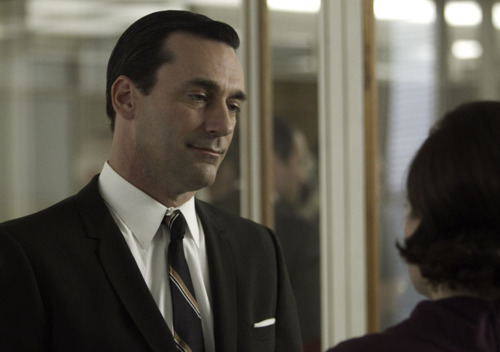
nullThe Other Woman may be the most disturbing episode of Mad Men ever. We've seen bad things happen to characters we love, some of their own doing. We've seen Don drink himself into a stupor, Roger lie the company almost into ruin, and Lane embezzle. We've seen the way both ambition and love can cause people to sacrifice themselves, but has anyone suffered more than Joan, or sacrificed more?
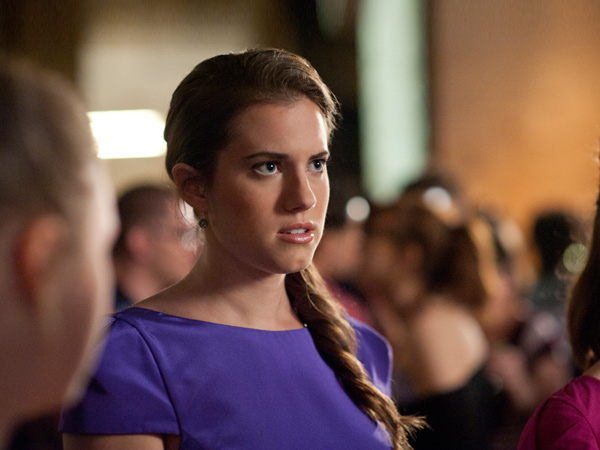
The fans have gone back and forth on Pete this season. In my recap for Signal 30, I called Pete a shit. I got some blowback from fans for that, and indeed, in subsequent episodes, Pete has again appeared more sympathetic. His pathetic adoration of Howard's wife, Beth, in Dark Shadows, touched people's hearts. But now I think more people will agree with my earlier assessment. Pete is a low-life and a shit, not just because he asked Joan to prostitute herself, but because he insisted there was nothing wrong with asking. Watch:

When Joan said "You couldn't afford it," it was not, in fact, a counter-offer, but a way of shutting Pete down; only Pete's insensitivity made him think otherwise. Pete takes seriously the old joke, often attributed to Winston Churchill: Churchill is said to have approached a lady at a party and ask, "Madame, would you sleep with me for one million pounds?" She agreed that she would. "Would you sleep with me for ten pounds?" he asked.  "Certainly not! What kind of girl do you think I am?" "Madame," he answered "We have already established what you are. Now we are merely discussing price." (I've read various versions of this story, with different price points.)

The joke has a serious underpinning, as so many jokes do. All women are whores, we are being told, and are merely negotiating price. Joan literally prostitutes herself for a partnership, but Gail, who "raised her to be admired," has been prostituting herself in her own way to Apollo, in exchange for household repairs. Megan must prostitute herself in a small way, by being displayed. Turning around and showing her ass has little or nothing to do with the callback; she thought she was safe because the director was "a fairy," but with three men on the couch it's clear she doesn't feel safe at all. At the office, her friend Julia is happy to sexually display herself to a roomful of writers in the hopes of getting a job as a Jaguar girl.

Even Peggy had money thrown at her, quite literally, and even Peggy knows she has to sell a woman's sexuality (Lady Godiva, "as naked as we are allowed to make her") to keep an account.

The most telling, most obvious, quote about the theme of this episode is what Don says in the Jaguar pitch, right down to the tagline:

Oh, this car. This thing, gentlemen. What price would we pay, what behavior would we forgive, if they weren’t pretty, if they weren’t temperamental, if they weren’t beyond our reach and a little out of our control? Would we love them like we do? Jaguar: At last something beautiful you can truly own.

While women are being prostituted, bought, and sold because they are things, the way beautiful, temperamental cars are things, men imagine they are the ones who suffer, because sometimes they can't quite control the transaction. The tagline itself is shown as being born from anger at women: Ginsberg sees Julia prancing and says "She just comes and goes as she pleases. Huh."

Why shouldn't she? I mean, she's human, isn't she? Isn't that what humans do—use self-will to make their own decisions? But to Ginsberg and many other men, a woman isn't a human, she's an object of desire, and her ability to make herself desirable and then still have self-will is enraging. To Ginsberg, the lyrics of the closing song (You Really Got Me by the Kinks) make him mad: "You really got me going" is something women do to men, which men can't control.

It's disturbing. The whole episode is disturbing, and Semi Chellas and Matt Weiner pull no punches, juxtaposing every inner cringe Joan experiences with the pitch so that there is no doubt they are the same thing. Don wants to control Megan and keep her home, Pete wants to control Trudy and 'put his foot down', his greatest anger being simply that he cannot get her to obey him, that she wants things he doesn't want. Pete, who wants a prostitute in a brothel to treat him like her king, cannot abide the fact that any woman has self-will. This is the same Pete who, in Episode 1.05: 5G, asked Trudy to sleep with an editor in order to get him published—no wonder he thinks Joan shouldn't be insulted.

But there's another quote that speaks to the heart of women being bought and sold. In the conference call about Chevalier Blanc, the client asks, "Why would a woman buy a man anything for Valentine’s Day?"

Why indeed? Valentine's Day is transactional: A man buys flowers or perfume or jewelry, a woman responds with sex. Men are the subjects, they have self-will; they make their selection and choose the purchase price, while women are the objects being purchased.

I could write for hours about this episode, but we really have to talk about Peggy.

Her decision has been a long time coming, and may be necessary. I mean, people didn't job-hop in the 1960s the way they do now, but advertising was its own animal, and as a career decision this was probably one hundred percent right.

Here's the thing: in business, you sell yourself. Ted Chauogh wants to hire Don's protégé, and he negotiates with Peggy over price and title. It's not sexual; Peggy's gender is not part of the transaction. Yet the negotiation perfectly parallels what Joan did with a percentage and a partnership. We all do sell ourselves for work, for ambition, to succeed.

Certainly a lot of feminist and other theory would tell us it's all prostitution: Marriage, dating, Valentine's Day, casting couches, and every other transaction in which men are the buyers. But when we look at it that way, we can forget how painful this particular act of prostitution is for Joan, and let's not forget that. Last episode we saw her say she has some control at work, and how important that's been for her. This wasn't just a sexual transaction, it was one that stripped Joan of her sense of control, of self-ownership, and left a dark place behind her eyes, brilliant portrayed by Christina Hendricks.

Meanwhile, Peggy sacrificed love for ambition, because truly, she and Don love each other: Watch him kiss her hand, and her choke up in response:

This clip parallels the end of Episode 4.07: The Suitcase. Don kisses the hand that he held then, he honors the love they share. But as Roger said last episode, it's every man for himself, there can be no loyalty in business.

Some additional thoughts:

  • Welcome back, Dale! Mark Kelly played copywriter Dale in one episode of each of the first three seasons, and was last seen stripped to his t-shirt after getting spattered with blood in Episode 3.06: Guy Walks Into an Advertising Agency.
  • I'm giving quote of the week to Pete, because "It’s an epic poem for me to get home" is a gorgeous bit of hyperbole.
  • Ted Chaough, Freddy Rumsen, and a call back to Tom Vogel all in one episode (plus Dale). This season has been so great about connecting the dots to past seasons.

Deborah Lipp is the co-owner of Basket of Kisses, whose motto is "smart discussion about smart television." She is the author of six books, including "The Ultimate James Bond Fan Book."

Watch Mad Men Moments, a series of videos on Mad Men, produced by Indiewire Press Play.

GIRLS RECAP 7: WELCOME TO BUSHWICK, A.K.A. THE CRACKCIDENT

GIRLS RECAP 7: WELCOME TO BUSHWICK, A.K.A. THE CRACKCIDENT

null

Was anyone else surprised that the crack in this week's episode title was crack cocaine, and not the crack of an ass? We've seen stunt penises, non-stunt pubic hair, and breasts of all ages; I figured that the crackcident would involve pants falling down somehow. And it did, sort of.

nullThe "Welcome to Bushwick" part is easy: it's the location of a big loft party where all of our main characters converge.  The crack is cocaine, which Shoshanna, of all people, ends up accidentally smoking, thinking it's pot. We don't see that mistake being made, but I hope that scene makes it onto the DVD outtakes, because what we do see is brilliant. Shosh leads off with a rant about her kick-boxing class, picks compulsively at her ear, and points a lot at Jessa; then Jessa, minutes after reassuring Shoshanna that she'll be Shoshanna's "crack spirit guide," reassigns that duty to Ray. Ray balks—"I'm not a fucking JAP daycare, absolutely not"—but Jessa says it's no big deal, just make sure Shosh doesn't jump off a roof "or get fingered by a beat-boxer." Jessa swans off. (More on that in a sec.) Shoshanna strikes a thoughtful pose.

Beat.

Shoshanna sprints off. Ray sprints after her. Niftily timed slapstick ensues: Ray runs one way, and Shoshanna runs past him the other way (waving her skirt over her head). Ray chases her down an alley while she dodges and weaves as if dodging gunfire. (Any other Archer fans here? "ZIG-ZAG, BABOU!") Ray gets a cramp and slows down; Shoshanna runs back up to him (skirt now MIA), orders him to quit chasing her, and fells him with self-defense-class moves. Ray is piqued by her freakish strength, which she attributes to the crack, although it's starting to wear off. Not entirely, though, as she's still got enough aggression in her bloodstream to offer him a "non-sexual" massage. Of his groin, in which she just kneed him. Typically, she learned massage in a sports-therapy class she took to "meet jocks." Shoshanna kneels beside Ray and massages his "area" as he eyes her speculatively. Has crack forged a love connection? If so, this is the show’s second couple brought together by bad-trip baby-sitting (see also: Charlie and Marnie).

Wait: don't see them. It's horribly awkward. Marnie is nervous because Charlie's band is playing at the party —she's not nervous to see him, mind you. She's nervous that he'll see her and feel sad. Marnie approaches Charlie after his band finishes playing and compliments him on the set, and happily comments that it's mature and pleasant between them, but then of course a girl in a headband (referred to later by Marnie as "a tiny Navajo") jumps right into Charlie's arms and starts raving to him and Marnie about the band. It's clear that "Audrey" is dating Charlie and that she has no idea who Marnie is, and Allison Williams makes Marnie's face work (beautifully) through confusion, sadness, and rejected rage, but Marnie herself is totally unsympathetic when she calls Charlie a sociopath for dating another girl, just two weeks after their break-up.

The rest of the party is a trial for her. Oh, excuse me—for anyone who runs into her. Her obsession with Charlie's two-weekrebound becomes an understandable, but obnoxious, refrain (I finally started calling Marnie "Money Pit"in my notes). First she bitches about it to a stranger, who punctuates her remarks by getting up and leaving while she's talking. Then she spots Elijah slow-dancing with his boyfriend and runs up to him to say hello—if by "say hello," you mean "complain about Charlie, and how selfish Hannah is." Elijah rolls his eyes so hard, he nearly sprains his neck, then notes that if anyone's selfish, it's Marnie, because Marnie made out with him sophomore year while Hannah had mono. Marnie snorts that it doesn't count because it was at Rent rehearsals, and besides, Elijah's the one who dated Hannah for two years and secretly liked boys the whole time. Elijah's like, not so much with the "secretly" part, sneering, 'RENT rehearsals!" It's not realistic to keep working this character into the scripts, but I don't care, because Andrew Rannells is perfect. Marnie sneeringly asks him whose dick he sucked to get a part, because his voice "sounds like a bag of dying babies," and I am so stealing that comment, even if it gets me slapped in the face like it does Marnie. (I don't know why the blocking on that smack is so amateurish and fake, either, but I assume it's intentional, and I know it's hilarious.)


On top of everything else, Marnie's now marooned at the party by herself, because Jessa has accidentally invited Lavoyt to the party and now has to deal with the inevitable ugliness. While explaining to Hannah why every party could be the best party ever, Jessa gets a text from an unknown number, asking what she's up to. Hannah tells her to ask who it is, but Jessa puts adventure above common sense once again and invites the mystery texter to the best party ever. The mystery texter is, of course, Lavoyt; the wife and kids have gone out of town to visit family, and he stayed home to work. Jessa wonders why he bothered, when he doesn't have a job. To try to get a leg over you, obviously, and as Lavoyt looks sadly down at the bottle of wine he brought to a Bushwick party with a reggae band playing, he has a realization: "Oh my God, I'm That Guy."

It's probably not a "realization," given what we see later; it's probably just another way of trying to get her to pity-fuck him. She tells him to "put a pin in [his] midlife crisis" and dance with her, but then she hurls the bottle of wine over the railing and hits someone, and that guy rolls up to them and punches Lavoyt in the face, and he and Jessa end up in the ER watching a junkie try to cadge Vicodin from the desk clerk. Lavoyt starts crying; what is he going to tell his wife? Jessa looks a little scared by the tears, and suggests telling Mrs. Lavoyt the truth. Lavoyt, facedown in her lap, wails through his bloody nose and (likely fake) tears, "Let's spend the night together," adding that they "won't do anything," and now it's Jessa having the realization. Hers is about playing with fire: "I can't do this kind of thing anymore." Lavoyt is apparently used to the sad-sack routine working, because his face hardens instantly and he calls her a tease. Jessa parries with a line she's clearly used to shut assholes down before: "I liked you better when you were being a good guy." "Ain't that the way," he grunts, and gets up to leave. Why pretend his bloody nose needs medical attention if his dick isn't going to get Jessa's? Jessa suggests they can stay friends, but he grumbles, "We were never friends to begin with. You work for my kids." Ouch: Lavoyt thinks he's cutting Jessa down with that line, but Jessa isn't the one trying to take it to the hoop with the nanny instead of finding a job or spending time with his own kids. Great job by James LeGros in shifting the character from "aimless and pathetic" to "entitled douche."

Hannah, meanwhile, has spotted Adam in a dance circle of the "best dyke friends" he's alluded to previously, doing a series of weird moves probably based in theoretical mathematics. Hannah complains to the others that, after the conversation in which he said he missed her, he hasn't responded to a text in two weeks. She also observes that she's never seen him outside his house: "I've never seen him with a shirt on." I'm not going to take credit for the insight; I'm just going to feel grateful somebody on the show pointed it out.

She hides behind a wall unit and spies on him, then flees rather than talk to him, but at the bar, she's approached by one of his "best dyke friends," Tako. (Tako makes sure to note that it's not spelled "Taco." Snerk.) Tako offers Hannah a friendly drink, but Hannah notes that she doesn't really drink after an incident with Brie and hurling on her cell phone. . . . Cute line, but it's really just to set up the big reveal for Tako, wherein she asks if that's how Hannah knows Adam—from Alcoholics Anonymous. Hannah is gobsmacked, and while Tako rambles on about how this is one of the things that defines Adam (the other, obviously, is his "love of books"—and that we've seen, at least), Hannah can't decide how to feel. Should she feel hurt, again, some more, by the fact that this isn't something Adam trusted her enough to share with her? Or should she feel even more attracted to what she sees as a new and tragic dimension of Adam?

Either way, it's Hannah making a dimension of Adam about herself, so she settles for "both." Adam invites her to join him on a dumpster-diving mission, to collect scrap for a boat he's building that's designed to fall apart as it goes along . . . in the Hudson. Instead of 1) notifying her friends that she's leaving or 2) refusing on the grounds that this nautical "plan" is excessively Alexander-Supertrampy, Hannah hops aboard Adam's bike handlebars, and off they go. But he's pedaling too fast for her, and when she wails at Adam to stop the bike and let her walk, he stops suddenly, and she face-plants. I really hope for Lena Dunham's sake that they got that on the first take . . .

…but I don't think they did, because when we cut back to the pair, Hannah's got a fat lip. She's also got a chip on her shoulder, ordering Adam not to talk to her while she sends Marnie her coordinates, and she blows up at Adam for not telling her he was in AA. He responds, gently at first, that it's been a big part of his life since he was 17, but when she won't let it go, he blows up, yelling that she never asked: "You never ask me anything!" Well, she does—but only about herself, how she's doing, does this feel good, does he like her skirt. Adam does have a great point: for a woman who wants to "rate" as his girlfriend, she hasn't done much to earn the spot. Marnie pulls up in a cab and orders Adam to get away from Hannah. Finally, Adam rounds on Hannah: "Do you want me to be your boyfriend? Is that it? Do you want me to be your fucking boyfriend?"

And then, in an episode full of them, the best cut yet: Adam, Hannah, Marnie, and Adam's bike all crammed into the back seat of the cab. Hannah is trying valiantly not to grin . . . and gloriously failing.

"Welcome to Bushwick" is the most sure-handed work we've seen yet from the show. The physical humor is edited flawlessly, including the credits sequence, a little send-up mash-up that includes Asian characters and rave-y touches. 

The one-liners are confident and don't over-explain themselves or veer into dorm-monologue territory (Ray snapping into the mic, "Don't bring a baby to a party like this"; Shoshanna responding to the crack revelation with "Don't tell my parents; don't tell me!"; the throwaway "Age of Innocence fan club" exchange between Ray and Jessa, which this Wharton nerd adored). Marnie's attempted kiss-off of Adam, "Enjoy going through life as . . . yourself," encapsulates the ep really well, because it's as though the show is doing that—enjoying itself, laughing with its characters, instead of trying to be capital-D definitive all the time. Don't get me wrong, I like the show's ambitions. But when it's "just" doing this, it does it well.

Sarah D. Bunting co-founded TelevisionWithoutPity.com, and has written for Seventeen, New York Magazine, MSNBC.com, Salon, Yahoo!, and others. She's the chief cook and bottle-washer at TomatoNation.com.

VIDEO ESSAY: War Movies for People Who Don’t Like War Movies

VIDEO ESSAY: War Movies for People Who Don’t Like War Movies

There’s no such thing as a truly anti-war film, Francois Truffaut once said. By depicting the adventure and thrill of combat, war movies can’t help but glorify their subject, fueling fantasies of spectacular, heroic violence. It’s a case where the sensational beauty of cinema works against our humanist impulses rather than for them. I’m not a fan of war movies as a general matter of principle. But in recent years, I’ve seen a couple of films with unique approaches to the war movie, and that bring humanity back into focus.

Originally published on Fandor Keyframe. For a full transcript visit Keyframe.

Kevin B. Lee is Editor in Chief of IndieWire’s PressPlay Video Blog, Video Essayist for Fandor Keyframe, and contributor to Roger Ebert.com. Follow him on Twitter.

VIDEO ESSAY – Hijacking Michael Haneke

VIDEO ESSAY – Hijacking Michael Haneke

With Michael Haneke‘s winning his second Palme d'Or following the triumphant Cannes premiere of his new film Amour (Love), I thought it a fine occasion to revisit his earliest works. Re-watching Haneke’s first five features, The Seventh Continent (1989), Benny’s Video (1992), 71 Fragments of a Chronology of Chance (1994), The Castle (1997) and Funny Games (1997), the dominant impression left by the great precision in these works—whether in their narrative, dramatic or visual construction, even while depicting cataclysmic dysfunction in individuals, families or society at large—is that one is in the presence of a control freak without equal in the contemporary cinema.

Not everyone thralls to Haneke’s exacting approach, especially when they feel the jerk of his chain a bit too violently. It was 15 years ago that Haneke made his Cannes competition debut with the original Funny Games. Its infamous “kitchen” and “remote control” scenes elicited vehement boos and bewildered applause in equal measure. That film sought to deprogram viewers from their knee-jerk habits while watching action thrillers; it made them reflect on the underlying class and social assumptions that govern both the real world and the movie world. But Haneke’s mission of liberation is paradoxically one programmed on his own terms, with the audience led down a strictly delineated path to arrive at a state of abjection. Or, to put it in his own words, he intends to “rape the viewer into independence.”

That quote from a 2007 interview with The New York Times exposed the issues underlying Haneke’s relationship with his audience. Like a dictator, he works under the premise that he knows what’s best for his people. Perhaps it’s the same premise that leads to our willing submission to all the artists we embrace. But something in Haneke’s hyper-controlled filmmaking makes the equation feel unbalanced. Maybe it’s Haneke that could use a little liberating, and or a taste of his own medicine. So in the spirit of Peter and Paul in Funny Games, this video is abducting a few fragments of Haneke’s films, playing with and poking at them to see what makes them tick. There is no grand scheme or end result to these fragments, except to tear a hole into their painstaking construction, so that some fresh air might get in.

 Notes:

The Castle (1997). When I mentioned this video essay to Daniel Kasman at MUBI, he suggested doing something with the many tracking shots of Ulrich Mühe walking in the snow. These shots are practically the only ones shot outdoors in a film that’s set within a series of confining interiors, but they end up feeling as claustrophobic. Put together it also becomes apparent how physically punishing these snowy scenes must have been for Mühe to shoot.

nullFunny Games (1997) This is an obvious riff on the “remote control” moment that follows the shot chosen here, but with the aim to dissect one of the film’s most disturbing moments (that’s also the most cheer-inducing for the audience). Instead of blood and guts exploding from Frank Giering’s midsection, we see some special effects paraphernalia: a safety pack on his belly to protect him from exploding gunpowder, and some impressive coordination between the explosion effects both in front of and behind him. What’s also impressive is his posture as he receives the blow. Most people would flinch, cower, or curl, but Giering stands erect, practically heroic; all the better for the particles to fly from his chest.
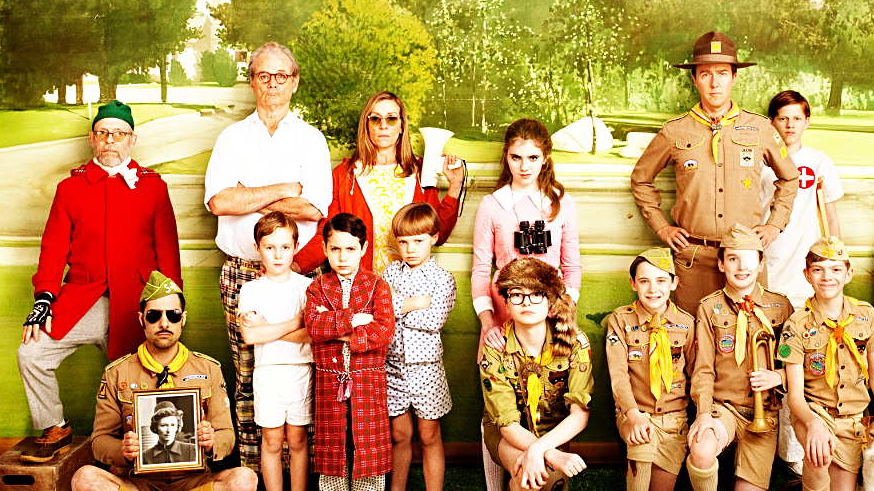
The Seventh Continent (1989): How telling that in the film’s most cataclysmic sequence of a family’s feature length journey of steady self-destruction, every shot is precisely patterned, moving from one series of related images and objects to the next. Haneke himself can’t succumb to chaos without a blueprint – one that also provides the components for this one minute fugue of mayhem.

71 Fragments of a Chronology of Chance (1994): This segment is fairly self-explanatory: Each clip is played at roughly 1000x speed, all of them centered at the midpoint, so the variety of their length is evident. The film is a confounding puzzle of causality vs. non-causality and remains such within this layout.

Benny’s Video (1992): I find “The Girl” (she doesn’t even have a name!) played by Ingrid Stassner to be the most tragic and affecting of all of Haneke’s characters. Maybe because she’s the most like us (or how we like to think of ourselves) when watching a Haneke movie: an innocent bystander unexpectedly implicated in the diabolical designs of someone wielding a camera. Let her fate be a cautionary tale for all of us: To see Michael Haneke films (much less “enjoy” one), we must be prepared to see through them.

Originally published on Fandor

Kevin B. Lee is Editor in Chief of IndieWire’s PressPlay Video Blog, Video Essayist for Fandor Keyframe, and contributor to Roger Ebert.com. Follow him on Twitter.

VIDEO: The Magnificent Andersons

VIDEO: The Magnificent Andersons

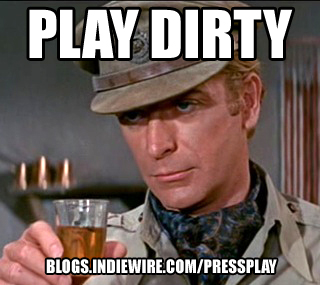
Wes Anderson has established himself as an irreplaceable and elusive American storyteller. At age 43, Anderson has already made films about the romance of crime (Bottle Rocket), a philanderer's gullibility (Rushmore), the unraveling of a family unit (Royal Tenenbaums), another family’s vitality (Life Aquatic), existential self-examination (Darjeeling Limited) and the impermanence of existence (Fantastic Mr. Fox–in animated form!). Anderson’s new film, Moonrise Kingdom, tackles the perils of young love.

nullYet, for a director who addresses such heavy themes in his work, Anderson himself remains an enigma. His public persona—sporting a hipster-ish corduroy and scarf-laden wardrobe—suggests that he is quiet, quirky, and undeniably cerebral. His films all share the borrowed visual scheme of his “pantheon of artistic heroes” (Martin Scorsese, Mike Nichols, and Orson Welles, among others). But trying to create a unified director profile for him is trite. Although Anderson seems quite the beaming poster-boy auteur, his films all contain a powerful undercurrent of much darker truths (the negligent father, the denial of failure, 21st century fatalism). If one looks past all the nifty camerawork, droll humor, and spot-on folk-rock soundtracks in the Anderson filmography, it’s obvious that Anderson is conveying the great American narrative of today: a narrative that follows fatherless children, refusing to grow up in an increasingly absurd world.
Nelson Carvajal is an independent digital filmmaker, writer and content creator based out of Chicago, Illinois. His digital short films usually contain appropriated content and have screened at such venues as the London Underground Film Festival. Carvajal runs a blog called FREE CINEMA NOW which boasts the tagline: "Liberating Independent Film And Video From A Prehistoric Value System."

VIDEO – PLAY DIRTY with Alejandro Adams: NO BLADE OF GRASS

VIDEO – PLAY DIRTY with Alejandro Adams: NO BLADE OF GRASS

Press Play introduces Play Dirty, a series in which filmmaker Alejandro Adams brings his unkempt insight and usual disregard for propriety to the video essay form, occasionally dragging along a guest to savage or praise a given film.

In this inaugural installment Alejandro points out some unique structural devices in No Blade of Grass (1970), which is available from Warner Archive.

Alejandro Adams is the director of three feature films (Around the Bay, Canary, Babnik).

null

VIDEO ESSAY: Sight and Sound Film Poll – Jonathan Rosenbaum on SATANTANGO

VIDEO ESSAY: Sight and Sound Film Poll – Jonathan Rosenbaum on SATANTANGO

Press Play presents Sight and Sound Film Poll: Critics' Picks, a series of video essays featuring prominent film critics on films they selected for Sight and Sound magazine's poll of the greatest films of all time. New videos will premiere each week until the poll results are announced later this summer.

From a personal standpoint, it is fitting that the second video of this series, following the opening tribute to Roger Ebert, features Jonathan Rosenbaum. It was through Ebert that I discovered Rosenbaum's writing 14 years ago, when his weekly reviews for The Chicago Reader made Ebert's list of "20 Essential Movie Websites." Since then, no writer has done more to expand my knowledge and develop my sensibilities on cinema. To explain why, let met me point to one of several possible examples: Rosenbaum's 1990 article "A Bluffer's Guide to Bela Tarr," one of the very first articles written in English on the Hungarian director. On a basic level, the article serves the essential function of film criticism: to introduce its readers to new and exciting work. But it goes a critical step further by identifying the inherent problems of encountering and understanding new films, especially from other parts of the world, and the uncomfortable reality of being confronted with one's ignorance of certain contextual realities (cultural, historical) that may have led to their creation and may be important to their appreciation. The title of the article implies that one can "bluff" their way to posing as an expert on such films, but what Rosenbaum does is the opposite: he systematically and transparently outlines his limited knowledge of Bela Tarr and Hungarian cinema; identifies the elements in Tarr's films that fascinate and confound him, employs sharp formal analysis to vividly describe what's happening on screen; and offers some interpretative possibilities while resisting reductive conclusions. It's an object lesson in how to actively engage with everything in cinema that is new and strange.

null

In the two decades since, Rosenbaum has become a leading authority on Bela Tarr's films, a progression that is all the more fascinating for the extent to which it is documented. One can get a sense of Rosenbaum's growing familiarity and evolving position with Tarr's films: from the 1990 "Bluffer's" piece to his 1994 review of Satantango, to his 1996 assessment of Tarr's opus coinciding with and the filmmaker's first career retrospective in Chicago, and a 2001 conversation with Tarr published in Cinemascope. Most of these articles are available on Rosenbaum's website. Later this year his commentary track will accompany the Cinema Guild DVD of The Turin Horse, reputed to be Tarr's final film. His interest now extends into investigating the literary work of Laszlo Krasznahorkai, author of the novel Satantango and co-writer of Tarr's last five films.

When we discussed the making of a video essay on Satantango, one idea was to juxtapose a scene from the film with Jonathan's reading of a passage from the Krasnahorkai novel describing the same scene. We recorded this footage, and while I wasn't able to bring it to a result that fully satisfied me, I am fascinated by the idea of comparing a cinematic work with its source text and hope to pursue this further. We settled on another idea by Jonathan that plays in its own way with the distinctive qualities of the film. – Kevin B. Lee

Jonathan Rosenbaum is an American film critic. Rosenbaum was the head film critic for the Chicago Reader from 1987 until 2008, He has published and edited numerous books, most recently Goodbye Cinema, Hello Cinephilia: Film Culture in Transition (2010). 

Kevin B. Lee is Editor in Chief of IndieWire’s PressPlay Video Blog, Video Essayist for Fandor Keyframe, and contributor to Roger Ebert.com. Follow him on Twitter.

VIDEO ESSAY: MEN IN BLACK: Three Reasons for Criterion Consideration

VIDEO ESSAY: Three Reasons: MEN IN BLACK

For this month’s Criterion Consideration, coming up with a suitable equivalent to Barry Sonnenfeld's latest film, Men in Black III, was a bit of a challenge.  In many ways, the franchise can’t be compared to other films of the genre.  How exactly would you categorize MIB?  An odd couple buddy-cop sci-fi comedy?  Immediately I thought of Ghostbusters, which has been threatening recently to corrupt its origins with an unnecessary sequel, but Ghostbusters had already had its day in the sun when Criterion was still pumping out laserdiscs. I could easily have tried to loosely tie a thousand different titles to MIB III, but really, the only reasonable association is the first film in the franchise.  Like most things, the original is always the best, leaving its successors in the dust.  It's been a decade since we all sat through the utterly intolerable MIB II, and no matter how fresh and shiny Sonnenfeld's latest effort may attempt to be, it will ultimately only remind us of the power of the original film.

Based on the comics by Lowell Cunningham, the original film was an inventive reworking of the Men in Black mythology, a phenomenon that emerged in American pop culture shortly after that supposed UFO-crash incident in Roswell, New Mexico in 1947. Sonnenfeld took further inspiration from the resurgence of conspiracy theory permeating 1990's pop culture. The paranoid visions that pervade The X-Files are rendered to ridiculous extremes as Earth's resident aliens hide in plain sight. What makes Sonnenfeld's film work is the business-as-usual approach that the Men in Black take toward in their daily routine. The black-suited men of mystery are merely intergalactic immigration officers, content to anonymously survey all alien activity in the New York area. Contrary to the shameless marketing strategies that would befall the franchise, the film's offbeat deadpan sensibilities were a welcome break from those of the mainstream blockbusters of that time.

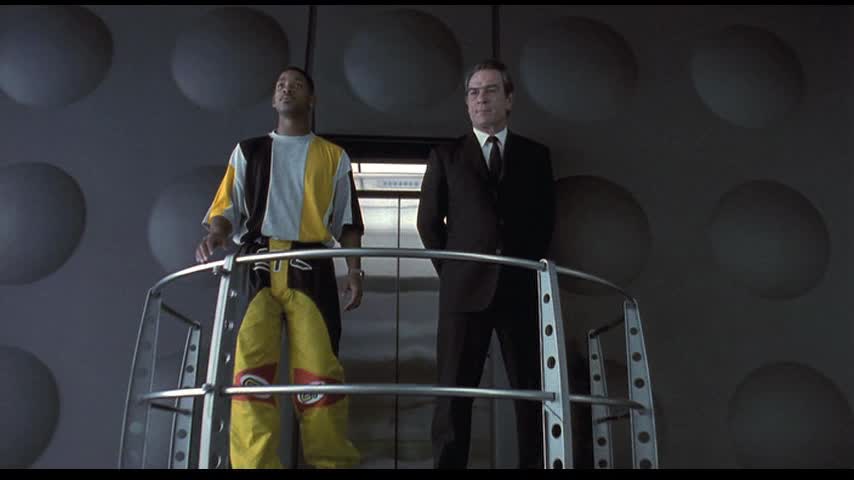
This perfect combination of elements made MIB exceptionally ambitious and artistically innovative.  Sonnenfeld's experience behind the camera (notably with the Coen Brothers' early films) brought a subtle visual wit to an otherwise flashy elaborate blockbuster.  The decision to cast underrated comedians in minor character roles also added class to seemingly minor scenes.  Ed Solomon's writing provided some endlessly quotable one-liners, and helped reinforce the chemistry between Tommy Lee Jones and Will Smith.  The way they play off each other appears genuine, with Jones' straight-faced delivery pitted against Smith's posturing wisecracks.  Rick Baker, the special effects wizard behind every notable sci-fi/horror film from the past thirty years, is allowed to let his imagination run wild, creating some remarkable alien life.

Oddly enough, the qualities that made the first MIB so engaging are exactly what killed its first sequel.  The formula for its success became so immediately apparent that even the original risked losing its charm.  Celebrities quietly suspected of being aliens were now given needless cameos, CGI took over most of the creature effects, and although the relationship between Agent K and J still works quite well, the rest of the film does not.  Early reviews of MIB3 have been mixed, but overall the formula remains unchanged.  Try as Sonnenfeld might to neurolize any trace of Men in Black II, his latest installment might very well be the long-awaited end to a nearly forgotten franchise.

Robert Nishimura is a Japan-based filmmaker, artist, and freelance designer. His designs can be found at Primolandia Productions. You can follow him on Twitter here.