VIDEO ESSAY: From Mr. Chips to Scarface: The Evolution of Walter White

VIDEO ESSAY: From Mr. Chips to Scarface: The Evolution of Walter White

"Walter's a shithead!"

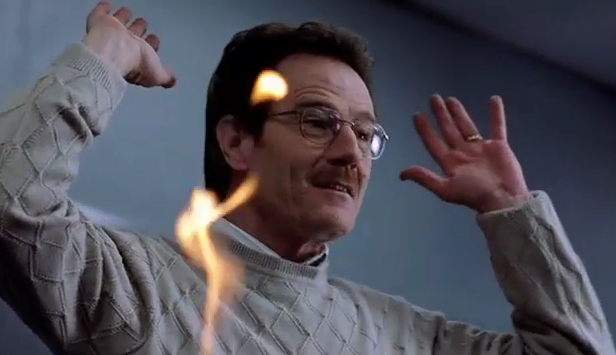
I had just walked in the door to the family home in Forestville, California. My dad had just finished the second season of Breaking Bad, specifically the episode "Phoenix," in which Walter (Bryan Cranston) passively allows Jesse's heroin-addicted blackmailing girlfriend Jane (Krysten Ritter) to choke to death on her own vomit. "I mean, he just stood there and let her die. He cried at the end, but still," my dad recounted, disgusted and amazed at the same time. Now, understand that my father is a pacifist hippie who would rather laugh than cry and much prefers Californication over Mad Men (which I give him slack for every minute I can—including while I’m writing this), but I'm sure other viewers have had a similar reaction to Walt's progression from a bumbling schoolteacher who doesn’t know where the safety tab on a gun is located to a meth kingpin, and the collateral damage in between.

Personally, I had an opposite reaction to my father’s: I feel that the show is at its strongest when it exposes the moral gray matter of Walt's decisions. Like AMC's other headliner show Mad Men, Breaking Bad doesn't excuse its protagonist's behavior like so many other shows do ad nauseum, as it reinforces and even underlines his vulnerabilities, and it boldly forgoes the safety net of having a sex symbol as a leading man. Gone are the excuses that he needs money for chemotherapy and his family. Walt has worked his way up, from Mr. Chips to Scarface, as Vince Gilligan likes to say, but now more than ever, there's nowhere to go but down. All we can do is look at him with some amount of disgust at his actions—and with amazement at how far the show has come.

Serena Bramble is a rookie film editor whose montage skills are an end result of accumulated years of movie-watching and loving. Serena is currently pursuing a Bachelor's degree in Teledramatic Arts and Technology from Cal State Monterey Bay. In addition to editing, she also writes on her blog Brief Encounters of the Cinematic Kind.

VIDEO ESSAY: THE DARK KNIGHT: NOLAN’S MODERNIZED MYTH

VIDEO ESSAY: THE DARK KNIGHT MYTH

When director Christopher Nolan first conceived of his Batman film trilogy, the challenge was revitalizing a hero who had previously been buried in cinematic fantasy shtick—a de-evolution that started with Tim Burton’s promising Batman and ended with Joel Schumacher’s laughably bad Batman & Robin. And Nolan wasn’t a franchise superhero movie director either. From the get-go, Nolan was an unlikely choice to take over such a mammoth cash cow for Warner Bros. Nolan’s previous films—Following, Memento and Insomnia—were small by comparison with the Batman films but shared the common narrative thread of a protagonist struggling to find moral redemption amidst the chaotic (psychological) forces of each film’s unique environment.  Therefore, the Batman mythos and its dark, enigmatic origin story of a billionaire turned self-made vigilante proved an apt fit for the intellectual Nolan—ultimately helping the director edge out the likes of Boaz Yakin (Remember The Titans), Darren Aronofsky (Black Swan) and Wolfgang Petersen (Air Force One) for the job of rebooting the series.

In his first entry, Batman Begins, Nolan’s masterstroke lay in envisioning Gotham City as a modern, real city. Gone were the colorful, circus-like set pieces from earlier Batman films. There weren’t any fantastical lairs or alternate dimensions. Nolan’s Gotham had public transportation, seedy corporate suits, corrupt court systems and even a lower-income housing area only accessible by street bridges. By positioning a beloved comic book superhero in a very accessible and believable environment, Nolan transcended the dated source material and forced audiences to re-evaluate Batman’s role. In other words, it wasn’t so much about what outrageous predicament Batman would have to punch (Pow!) his way out of. It was more of seeing how this new Batman could plausibly function within the day-to-day operations of the modern urban world.

After establishing a parallel “real” society in Batman Begins, Nolan raised the stakes with The Dark Knight. By zeroing in on the very relevant, modern topic of terrorism, Nolan recreated the post-9/11 atmosphere of dread and fear for the citizens of Gotham. In The Dark Knight, Nolan separated the villainous Joker character from his silly, cartoonish origins and recreated the Joker as “an agent of chaos”—a volatile criminal hell-bent on demoralizing the citizens of Gotham. The Joker’s plan was simple: If he could invoke the fear of death at every corner for every Gotham citizen, a radical unbiased social structure based on elemental fear would emerge. Thus, this society would be in constant stasis; the people of Gotham would be united by fear but torn apart by their animalistic instincts to outlive one another.

Putting Batman in the backseat in a Batman film was an important gesture for this movie and for Nolan’s work—as well as a first in the Batman filmography. In The Dark Knight, Batman himself was unusually absent from the screen, allowing for an array of equally compelling characters to come through. By building the film this way, Nolan deconstructed the mythology behind the Batman figure. Specifically, this once indomitable hero from comic book legend now became as vulnerable as anybody else in Gotham (or the real world for that matter).

Still, the fundamentals that Batman stood for as a comic book hero—justice, social order and establishing a sense of collective moral hope for Gotham—were evident in Nolan’s interpretation of the caped crusader (e.g. Batman reconciled both his and Gotham’s disillusionment with faux heroism by taking the blame for Harvey Dent’s murderous rampage in The Dark Knight). More interestingly, Nolan’s modernized Batman redefined the function of the traditional myth. Consider: The comic book Batman’s original Sociological Function was to establish a proper social order by existing outside the parameters of society, as an elite hero. In the comic book and earlier film adaptations, Batman was only accessible to Gotham’s police (via a red telephone or a bat signal in the sky); this exclusivity positioned Batman to exist as an intangible, incorruptible and unbelievably fantastic heroic figure. Yet, in Nolan’s screen narrative, Batman has been dethroned from his once-elusive crime fighter status. In an obscenely modern twist, Nolan looks to argue that order in any society cannot rest solely on an elected or officially prominent figure.

The promotional clips for Nolan’s third and final entry, The Dark Knight Rises, show Batman in the war zone streets, fighting alongside the citizens of Gotham. This is fitting imagery for Nolan’s modernization of this once-romantic comic book myth. The new Batman mythology isn’t meant to serve as adventurous escapism. The new Batman mythology reflects our very modern world, a society desperately trying to restore order amidst all the chaos—without having to always flash a bat signal in the sky.

Nelson Carvajal is an independent digital filmmaker, writer and content creator based out of Chicago, Illinois. His digital short films usually contain appropriated content and have screened at such venues as the London Underground Film Festival. Carvajal runs a blog called FREE CINEMA NOW which boasts the tagline: "Liberating Independent Film And Video From A Prehistoric Value System."

VIDEO ESSAY: Batman: The Animated Series

VIDEO ESSAY: Batman: The Animated Series

Children of the 80's and 90's remember this series with a fondness bordering on the familial.  The animated series was there for you every day after school, with new episodes on Saturdays.  Watching the episodes again, I realize now it has become a not quite completed work, which is how superhero entertainment functions.  Batman's adventures are never-ending. The last episode, "Judgment Day" wasn't a pay-off to a series long arc but just another adventure.  I think this is part of what makes Batman, and characters like him, an avatar of the collective pop culture unconscious.  For as long as stories are told, Batman will be with us. 

John Keefer is a writer/director of short films working out of Phoenixville, PA. You can view his work here. You can follow him on twitter here.

VIDEO ESSAY: HAJI!

VIDEO ESSAY: HAJI!


I personally prefer the aggressive female . . . the superwoman. — Russ Meyer

In the 1960s there was a huge revival in striptease by way of topless go-go dancing. In Los Angeles there were a bevy of strip clubs that catered to all tastes. One particular swanky strip joint on La Cienega Boulevard, called The Losers, highlighted unpopular figures from current events. Richard Nixon, Fidel Castro, and other celebrity screw-ups would be lit up on the billboard as the loser of each week. Aside from that tasteless gimmick, The Losers was a little more classy than your usual strip club. Its dancers promoted classic burlesque and Las Vegas-style showmanship that attracted more sophisticated customers. One infamous patron of the establishment was Russ Meyer, who would often go there to select the sumptous starlets for his features. Nearly all of Meyer's stars began their career at The Losers: Tura Satana, Erica Gavin, Kitten Navidad, Bebe Louie, Shawn "Baby Doll" Devereaux, and my personal favorite, Haji. If there were any kind of pecking order at The Losers (which there was), Tura Satana would certainly be at the head of the table, but Haji would be second in command. When Mr. Meyer finally persuaded Haji to audition for a minor role in his next picture, Haji admitted that she didn't know the first thing about acting.  "Stick with me, kid," said Meyer, "I'll teach you everything you need to know." It would only be the beginning of her legendary, ass-kicking career.
 
Robert Nishimura is a Japan-based filmmaker, artist, and freelance designer. His designs can be found at Primolandia Productions. You can follow him on Twitter here.

VIDEO ESSAY – Matt Porterfield and the Art of the Question

VIDEO ESSAY – Matt Porterfield and the Art of the Question

What is it that makes Putty Hill one of the more striking American independent films of recent years? Is it the genuine working class Baltimore setting, where director Matt Porterfield grew up and still lives today? Is it the cinematography by Jeremy Saulnier? Is it the ensemble of nonprofessional actors who give the film a genuine, unaffected sense of character? Or is it the questions?

Putty Hill does so much with the first three elements to immerse you in the documentary-like authenticity of its world. But the film tears its own fabric of verisimilitude in scenes where Porterfield spontaneously interviews the characters, asking them questions from offscreen. Matt Porterfield is as much a member of this community, and a character in the film, as those on screen in 'Putty Hill.' These interviews are a paradox: They break the film’s documentary realism by making its format a subject in itself.

One might worry that such a strategy would reek of arty self-consciousness, but there’s something genuine about it, because it puts Porterfield’s relationship with his characters front and center. Porterfield spent a long time working with each of these nonprofessionals, asking them questions to help them develop their characters, mixing their real life experiences and fictional inventions. These scenes are both the outcome and an acknowledgment of that process. What it reveals about Porterfield is that he is not just a director of these subjects, but a confidante. In other words, he is as much a member of this community, and a character in his film, as those on screen.

You can already see this questioning approach in Porterfield’s first film Hamilton. The majority of the dialogue consists of questions and responses. By my count there are 65 questions asked in this 65-minute film. Even the rap song featured in a key scene is full of questions. Hamilton seemingly has the objective surface of an observational documentary, but when you listen to these dialogue scenes, you can practically hear Porterfield’s voice from Putty Hill in each conversation in Hamilton. Porterfield’s world shows everyday life as an investigative documentary, with people constantly interrogating each other, seeking answers.

Is there an underlying significance to all these questions? Both films deal with the ripple effect on a community caused by a private trauma. In Hamilton, it’s a teen pregnancy; in Putty Hill it’s a suicide. In most films, asking questions would serve to explore these incidents and lead towards a dramatic resolution. Here, the questions themselves are the drama: a constant effort to reach out and stay connected. The more questions are asked, the more they suggest how vulnerable these relationship are, and how strong the desire is to hold them together. In Porterfield’s films, the story is less important than exploring the community in which it takes place, and what’s at stake in preserving it.

Originally published on Fandor

Kevin B. Lee is Editor in Chief of IndieWire’s PressPlay Video Blog, Video Essayist for Fandor Keyframe, and contributor to Roger Ebert.com. Follow him on Twitter..

VIDEO – Sight & Sound Film Poll: Nicole Brenez on THE HOUR OF THE FURNACES PART I: NOTES AND TESTIMONY ON NEOCOLONIALISM, VIOLENCE AND LIBERATION

VIDEO – Sight & Sound Film Poll: Nicole Brenez on THE HOUR OF THE FURNACES PART I: NOTES AND TESTIMONY ON NEOCOLONIALISM, VIOLENCE AND LIBERATION

For optimal viewing, click on the fullscreen button on the bottom right of the player.

Press Play presents Sight and Sound Film Poll: Critics' Picks, a series of video essays featuring prominent film critics on films they selected for Sight and Sound magazine's poll of the greatest films of all time. New videos will premiere each week until the poll results are announced later this summer.

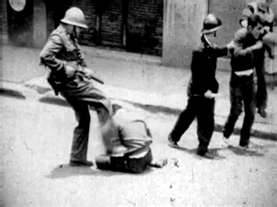
The seventh video in this series is adapted (with the author's permission) from an essay by Nicole Brenez that appeared earlier this year in Sight & Sound, which was part of a series of articles proposing films for top ten consideration. Her selection of The Hour of the Furnaces by Argentina's Fernando Solanas and Octavio Getino is one that, in my view, challenges a number of conventions that typify movie top ten lists. For starters, it may very well be the most important film to have ever been made in Latin America, a region that's long been neglected by the Sight & Sound Poll (unless you count Luis Buñuel as a Latin director).*

Brenez' endorsement also has a bit of intrigue in that it focuses exclusively on the 208 minute documentary's first part, Notes and Testimony on Neocolonialism, Violence and Liberation, ignoring the second part, which in Brenez' words "mainly consists of advocacy for the Argentinian politician Juan Péron and therefore does not concern us here." This year Sight & Sound instructed poll participants not to count multiple titles as a single work (i.e. The Godfather I and II, Dekalog); Brenez' essay provokes the question of whether half of a film can rank among the greatest (though unlike most films, in this instance there is a clear demarcation of parts forming a whole).  

But perhaps most importantly, Brenez's argument makes a compelling case for the poll's consideration of the political film – as well as the politics of filmmaking. It's fair to say that, particularly with regard to greatest films lists, overtly political filmmaking has long endured a stigma as being inferior to films that focus more exclusively on cinema as art. But it's a false dichotomy, as this video hopes to illustrate; The Hour of the Furnaces is a dense work that weaves several modes of cinema into a multifaceted polemical discourse. It plays like the apotheosis of a rich film lineage traced through the likes of Sergei Eisenstein, Dziga Vertov, Joris Ivens, Humphrey Jennings, Alain Resnais and many others.

Moreover, the film is driven by a revolutionary philosophy of filmmaking that, from today's perspective, seems ever more pertinent, if only because what it opposes seems ever more dominant. To my discredit, the video does not incorporate the passage in Brenez' essay specifically pertaining to the film's relationship to its filmmakers' seminal manifesto, "Towards a Third Cinema: Notes and Experiences for the Development of a Cinema of Liberation in the Third World." This landmark text lays a blueprint for cinema in the developing world, proposing an entirely new system for filmmaking and distribution that can truly serve the needs of a society seeking independence from external colonizing forces. It argues for a politically conscious, self-determining "Third Cinema" that can oppose the two prevailing cinemas that, Solanas and Getino argue, serve the forces of cultural and societal oppression: first, the Hollywood model of industrial filmmaking; and second, the auteur / arthouse cinema, which purports to provide an alternative to the first cinema, but amounts to a "safety valve," in Brenez' words.**

These days, it seems nearly impossible to conceive of movies beyond "mainstream" and "arthouse / alternative / independent", or to think of great cinema without summoning a rollcall of auteurs. Watching a film like Hour of the Furnaces – produced as a collective effort outside of a commercial or auteurist model, screened illegally within its home country, and made with a comprehensive, groundbreaking understanding of filmmaking's role in affecting the status quo – one starts to realize how so much of today's film culture has settled into a comfortable, marginalized space in relation to the rest of society. And yet, so much of the world described by Hour of the Furnaces still resembles ours. The film is a bracing reminder of how cinema can confront such a world head-on.

This is the second video I've produced with Nicole Brenez. Our first was on Boris Barnet's By the Bluest of Seas; as with that video, Nicole's words are voiced by another person. Here it is Nova Smith, doctoral candidate in cinema and media studies at the University of Chicago.

– Kevin B. Lee

*In the 2002 Sight & Sound Poll, only five Latin American films received more than one vote: Los Olvidados, The Exterminating Angel, and El by Buñuel (all from his Mexican period); and two films from Brazil, Black God White Devil by Glauber Rocha and Barren Lives by Nelson Pereira Dos Santos.

**Reading Solanas and Getino's essay, it occurred to me that auteurism and Facebook have something in common. Auteurism allows us to cozy up to a virtual, personalized experience of movies [movies as "personal visions"], as Facebook allows us to do so with the internet ["personal" interactions online]; in both instances, fantasies of personalization come at the risk of ignoring a more comprehensive, systemic view of the apparatus: its methods, aims, and outcomes in shaping our perceptions of reality and social order.

Nicole Brenez is professor of cinema studies at University of Paris 3/Sorbonne Nouvelle and a senior member of the Institut Universitaire de France. She is a film historian, curator, and leading specialist of avant-garde cinema. Her books include “Cinéma d’avant-garde” (2007), “Abel Ferrara” (2007), and “Chantal Akerman” (2011). Brenez has also been curating the Cinémathèque Française’s avant-garde film sessions since 1996.

Kevin B. Lee is Editor in Chief of IndieWire’s PressPlay Video Blog, Video Essayist for Fandor Keyframe, and contributor to Roger Ebert.com. Follow him on Twitter.

VIDEO ESSAY: Cocaine du Cinema

VIDEO ESSAY: Cocaine du Cinema

For roughly the last one hundred and thirty years cocaine has been the drug of choice for the working class—in fact, for even longer than that, common workers often used it as an energizer. South American indigenous populations in the Andean Region survived centuries of arduous living conditions (rough terrain, high elevations) by chewing on the cocaine leaf; in North America, during the 1890s, African American workers were actually given cocaine by their employers in an effort to help them pummel through the harsh working conditions of railroad construction and mining. The modern world, however, has seen the cocaine drug go down two polar, simultaneous routes: the “crack” cocaine circuit in poverty-stricken inner-cities, and the elite, expensive distribution rings among the rich and powerful urban elite. And in today’s pop culture, cocaine has retained its rebellious status of being an exciting and attractive goad, especially on the silver screen. It’s no surprise that Scarface’s Tony Montana remains a better-known figure than say, To Kill A Mockingbird’s Atticus Finch.

But cocaine’s presence in movies is a tricky object to dissect. It’s never really a MacGuffin. Audiences are very familiar with cocaine’s societal significance. It is, after all, a destructive catalyst in the never-ending, off-camera narrative called The War on Drugs. Still, even with an awful, bloody contemporary history under its belt, cocaine seems to be the “cool” drug for modern cinematic heroes and heroines. Unlike marijuana, which often inspires bum-lazy comedies (Half Baked, Up In Smoke) or heroin, which provokes stark warning-label movies (Requiem For A Dream, Trainspotting), cocaine is usually presented as the “Fonzie” of narcotics: in style and very much the life of the party. Sure, there are the occasional movies offering instructive principles on the perils of cocaine addiction (Less Than Zero comes to mind) but for the most part, movies treat cocaine with zeal and elation. Johnny Depp defined his crime kingpin character with a badass stroll through the airport—with suitcases of cocaine in hand—to the tune of Ram Jam’s “Black Betty” in Blow. Uma Thurman snorted some lines of coke in the Jack Rabbit Slims women’s restroom before partaking in a show-stopping dance with John Travolta in Pulp Fiction. Even when it’s the punch line of comedies (Walk Hard, Corky Romano), cocaine miraculously dodges any serious negative connotation. Cocaine is the naughty drug that no one in the movie auditorium will dare admit to being drawn to—a narcotic pastiche that’s continually expanding its cinematic iconography.

Ultimately, in the movies—as in life—the cocaine-laden screen heroes get their comeuppance. Who could forget Uma’s near-fatal mistaking of a bag of heroin for cocaine in Pulp Fiction? Or Mark Wahlberg almost getting his head shot off during a botched coke deal at the end of Boogie Nights? Strangely, such climactic, nightmarish instances aren’t what moviegoers tend to recall or replay in their heads.  Moviegoers like to remember Tony Montana as a king perched behind his cocaine-piled desk, and not as a dead body floating in a mansion lobby fountain. As on the wretched morning after a wild party, it’s always easier to cling on to the previous night’s happier moment. And for audiences, this may be the safest of vicarious pleasures; a gateway drug to cinematic escapism, without having to face the reality of cocaine addiction and violence.

Nelson Carvajal is an independent digital filmmaker, writer and content creator based out of Chicago, Illinois. His digital short films usually contain appropriated content and have screened at such venues as the London Underground Film Festival. Carvajal runs a blog called FREE CINEMA NOW which boasts the tagline: "Liberating Independent Film And Video From A Prehistoric Value System."

VIDEO ESSAY: Sight and Sound Film Poll – Adrian Martin on Philippe Garrel’s L’ENFANT SECRET

VIDEO ESSAY: Sight and Sound Film Poll – Adrian Martin on Philippe Garrel’s L’ENFANT SECRET

Press Play presents Sight and Sound Film Poll: Critics' Picks, a series of video essays featuring prominent film critics on films they selected for Sight and Sound magazine's poll of the greatest films of all time. New videos will premiere each week until the poll results are announced later this summer.

When Adrian Martin visited Chicago last May, I made certain not to miss the opportunity to record him for this video series. Martin was one of the earliest enthusiasts of video essays when they started popping up online a few years ago, and I've wanted to collaborate with him since. At the tail end of a busy trip (a film criticism conference at Northwestern Univeristy and a master class on dance in cinema at the Univeristy of Chicago), we met to discuss his all-time favorite film, Philippe Garrel's L'Enfant Secret / Secret Child. The ease with which Martin delivers his testimony is remarkable (and made for a pleasant editing session); perhaps it's no surprise given that Martin has recorded 33 DVD commentaries and has regularly appeared on Australian TV and radio. I've long admired the range of his work: from mainstream broadcast media to teaching at Australia's Monash University; his writing appears in everything from books to international film journals to his own online journals, such as Lola (co-edited with Girish Shambu).

What distinguishes Martin's scholarship for me is his passion for all that is improbable or even impossible about the cinema; how cinema breathes life into things that can't exist or last in reality. This spirit of vital, celebratory defiance in cinema came through in his presentation on dance in film that I attended: instead of doting on the familiar instances of Fred Astaire and Gene Kelly, he showed breathtaking clips from Leos Carax's Mauvais sang, David Lynch's Twin Peaks: Firewalk with Me and John Waters' A Dirty Shame that reconceive the meaning of cinematic dance as a gesture that somewhat defies meaning. That spirit of dancing at the fringe of our understanding can also be sensed in Martin's love of Philippe Garrel and especially L'Enfant Secret, a chronicle of a tortured, fragile existence that embodies those qualities in its material properties: a film that at times "threatens to disintegrate."

To some extent the delicate filmic qualities of L'Enfant Secret that are crucial to Martin's testimony can't be conveyed in an online video essay, due to the limitations of transposing the film between mediums.  One can only hope that this video will induce further efforts to present the film in its intended format, so that audiences might have the same visceral reaction that Martin relates in this video. In addition to this video, one should also read Martin's article on the film published in Transit magazine (in Spanish and English).

Adrian Martin is a film critic, scholar and co-editor of the online film journal Lola. He is winner of the Australian Film Institute's Byron Kennedy Award and the Pascall Prize for Critical Writing. 

Kevin B. Lee is Editor in Chief of IndieWire’s PressPlay Video Blog, Video Essayist for Fandor Keyframe, and contributor to Roger Ebert.com. Follow him on Twitter.

GIRLS RECAP 9: LEAVE ME ALONE

GIRLS RECAP 9: LEAVE ME ALONE

The climactic argument between Marnie and Hannah in "Leave Me Alone" is soooo satisfying—and it's not merely because Marnie is acting as the viewer's proxy in calling Hannah fully and completely on her bullshit. That's fun, but Marnie isn't even alone in that this week, because Hannah's finally gotten a semi-, sort-of, part-time coffee-shop job . . . and her manager is Ray. Ray not only sends Hannah home to change when she shows up in a stain-tempting white dress, ordering her to "forget all the BBC you watch at home with your cats" and put on something appropriate; he also advises her on what to buy at American Apparel, complete with hand gestures ("slim leg! slim leg!") (not for nothing, but a skinny jean is about the only thing that would be less flattering to Lena Dunham's figure than the dresses Hannah already wears).

null

Ray also gives explicit voice to the anxieties of young writers about their material—specifically, whether it's "serious enough." I had to accept years ago that I'd never make that cut, because when I was Hannah's age, the internet was considered the JV, at best, never mind writing about television on the internet, or telling funny stories about karate class or doing your laundry. I didn't have an agent, I didn't write literary fiction, and it didn't really matter, at all, but back then, if a guy like Ray had blown off my subject matter as frivolous—"How about divorce? How about death?  . . . How about death?"—I would have taken it to heart, and I would have tried to write a somber, well-researched, mindful, high-fiber piece about municipal politics, and it would have bombed, just like it does for Hannah at her reading. Hannah's former writing prof is very encouraging throughout, and seems to understand what Hannah's writing strength is, whether it's one that Hannah wants to own or not. (He's also played by Michael "Christopher Moltisanti" Imperioli. Imperioli has other, more recent credits, but I have to think the casting is meant to recall "Christophuh"'s struggles with the written word over the run of The Sopranos.)

But Hannah feels that snarky essays about dating a hoarder and spending the night on a stack of flattened Chinese-food cartons won't get you onto "Fresh Air." Of course, that very sort of observation by Dunham has gotten Dunham herself onto "Fresh Air," via "Girls"; the episode really nails the insecurity and toxic envy of starting out as a writer, although I'm not sure it's something Dunham has really experienced in that way. Maybe episode co-writer (and New Yorker cartoonist) Bruce Eric Kaplan helped shape the bits with Tally Schifrin, Hannah's creative-writing program-mate who already has a memoir out. Tally's a perfectly drawn cartoon of the non-fiction classmate we all despised, the well-connected mediocrity just clever enough to leverage a single incident or tagline into a hardcover deal. If you thought Hannah snarking that Tally's "lucky" to have a boyfriend who killed himself so she could write about it was too over the top, even for Hannah, you haven't spent that much time around writers. (And you shouldn't start. We are ruthless.)

Professor Imperioli is comforting, telling Hannah the thing every struggling, lost essayist wants to hear from someone in authority—that Tally's a "shitty" writer, and Hannah is good. It's more than Marnie has mustered; asked her opinion of the hoarder-date essay earlier, Marnie deemed it "a little bit, like, whiny." But when Hannah whines that Marnie could be a bit more supportive, Marnie sighs, "Hannah, I support you. Literally."

And when Hannah comes home from the reading and bags on Marnie for throwing clothes away instead of donating them to Goodwill, it sets off a very rewarding showdown. As I said before, it's partly because Marnie is ranking on Hannah for all her friendship sins: Hannah's selfish; she uses her self-loathing as an excuse to be a narcissist; she has no other subject but herself. Hannah gets a few good shots of her own off—Marnie is too focused on achievement and comparing herself to others; her woe-is-single-me routine is getting old (we haven't really seen that, but I'm fine with inferring it from Marnie's sad-sackishness last week); this is about Hannah having a boyfriend and Marnie not having one, because it throws off the balance of power. Now, Hannah doesn't use exactly those words, and it's a topic so nuclear that most women friends would never go near it out loud—but Marnie is used to having the boyfriend, feeling the pity instead of needing it, fitting into the size 6 (a fact she makes glancing reference to by saying that one of her old dresses might fit Hannah a bit snugly—exactly the right tone and wording for that kind of slight).

It's possible that Hannah isn't only selfish and lacking in empathy for Marnie; it's possible that, as the one who's feeling more settled emotionally for a change, she doesn't know how to support Marnie. But . . . it's more likely that, just as she herself says, being a good friend "isn't a priority for" her right now. Marnie's icy "thank you" when Hannah admits this echoes of the audience—because no shit, first of all, and second of all, it's not just Hannah. It's Marnie; it was me, I think, at that age. I'm not sure I had "friends," exactly, so much as "people I stood next to while holding a beer, in order to hate myself outside my apartment now and then."

All of Hannah's scenes, and the post-collegiate writing-competition stuff, totally resonated with me—and pretty much made up for a baffling plot "development" for Jessa in which Kathryn Lavoyt shows up at her apartment to ask her to come back as her daughters' nanny in spite of everything. It's unclear what Kathryn thinks happened, or how she found out about it—Jeff could have confessed, but it seems like something Jessa would do to quit and explain exactly why—but she takes the opportunity to share a very on-the-nose dream she keeps having about stabbing Jessa and eating her body while her mother is breastfeeding her husband. Kathryn gets a speech about how Jessa causes dramas like this, to distract herself from becoming who she is. Jessa looks intrigued by that possibility, and asks who she's becoming, then; Kathryn's response is more speechifying about how that person might not have a cool job or hair "like a mermaid," but might be happier than Jessa is now. Or . . . something. I really can't tell whether we're meant to hope that Jessa hears something for herself in these Now The Married Lady Will Tell You Your Life pearls of wisdom, or to think that Kathryn's condescending and out of touch. I have to go with the latter, although I don't think the scene came out the way it may have been intended.

And speaking of things that perhaps weren't intended . . . is that a jar of mayonnaise next to Hannah's bed? And do I want to know either way?

Sarah D. Bunting co-founded TelevisionWithoutPity.com, and has written for Seventeen, New York Magazine, MSNBC.com, Salon, Yahoo!, and others. She's the chief cook and bottle-washer at TomatoNation.com.

VIDEO ESSAY: A Drop of BLOOD Through the Heart – A TRUE BLOOD Tribute

VIDEO ESSAY: A Drop of BLOOD Through the Heart

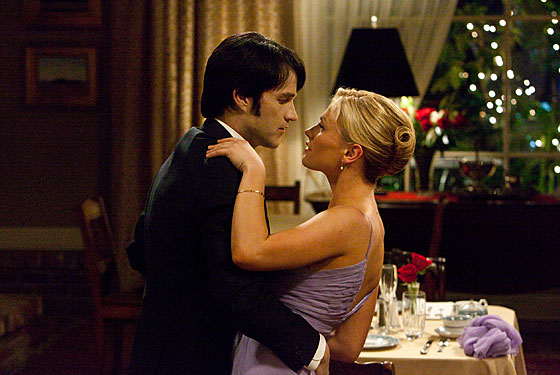
It's perhaps either a fitting coincidence or a realization of my own 20-something existential crisis that the making of this True Blood montage came shortly after I completed my video contemplation of the world of Mad Men's Don Draper. The similarities might not be obvious, but they are there: While Don Draper struggles to conceal his true identity as Dick Whitman as others around him try in vain to scratch beneath the surface, Sookie Stackhouse is still on a journey to reconcile her supernatural fairy blood with her human existence.

The essays contrast the question "Who is Don Draper?" with "What are you?" At its heart, True Blood is exactly about how we cope when we realize our constant, our humanity, is taken from us—new vampire Jessica's relationship with human Hoyt, shapeshifter Sam's investigation into the lives of his birth parents, and Bill's flashbacks to his first few decades as a vampire with Lorena are all examples. As the dearly departed Queen Sophie-Anne reminds Bill, "we started out [as humans] too." And when we left off in the Season 4 finale, mortality had never been more pressing than when Debbie and Tara had seemingly died—and perhaps even more shocking was Sookie's pulling of the trigger on Debbie in cold blood. I have a feeling that humanity, in addition to Tara's mortal life and Sookie's redemption, will be a huge theme in Season 5. And wild werewolves couldn't drag me away from seeing what happens next.

Serena Bramble is a rookie film editor whose montage skills are an end result of accumulated years of movie-watching and loving. Serena is currently pursuing a Bachelor's degree in Teledramatic Arts and Technology from Cal State Monterey Bay. In addition to editing, she also writes on her blog Brief Encounters of the Cinematic Kind.