METAMERICANA: What ‘Into the Woods’ Has to Do with David Foster Wallace

METAMERICANA: What ‘Into the Woods’ Has to Do with David Foster Wallace

Into the Woods, a film based on
the 1986 musical of the same name, offers its audience an interweaving
of well-worn material–select fairy tales from the Brothers Grimm–and
an original story by James Lapine and Stephen Sondheim. The script
of the musical (and now its cinematic adaptation) mirrors its central
theme: throughout the story characters are heard to complain that the
life they want is one that combines a gritty realism of their own
authorship with a magic that’s beyond their understanding. As Anna
Kendrick’s Cinderella tells Chris Pine’s Prince Charming, "My father’s
house was a nightmare. Your house was a dream. Now I want something
in-between." If modernism urged us to shoot for the moon, and
postmodernism compelled us to take our blinders off, the metamodernism
of Lapine and Sondheim proposes that we do both things simultaneously.
This sentiment carries even greater resonance today than it did in the
mid-1980s, given the "both/and" ethos of our contemporary, fully
digitized American culture.

David Foster Wallace, widely
considered the first and still most important metamodern novelist, began
writing his magnum opus, Infinite Jest, the same year Sondheim and Pine’s Into the Woods
saw its first live performance. While in 1986 Wallace was still
developing the metamodern rhetorical framework that would come to
fruition with the publication of Infinite Jest in 1996, the late
novelist had for years been explicit with friends and the media about
deeming postmodernism an artistic dead-end. His reasoning: the
"either/or" ethos of the postmodern novel dictated that it be entirely
one thing or another–for instance, entirely self-serious or entirely
ironic–and for this reason it was doomed to remain "hellaciously
unfun." Wallace envisioned a literature in which novels could indulge
diametrically opposed principles simultaneously, and do so with an
earnestness of intent that would make of those opposed principles a
"single-entendre" ethos. In other words, Wallace-the-metamodernist
believed that one could simultaneously articulate opposing ideas with
such a studied sincerity that the usual tone taken by any artist setting
ideas against one another–irony–could be abolished entirely.
Wallace’s ideas were inspired by films and novels he’d been exposed to
in the late 1970s and early 1980s.

It’s popular these days
to say that metamodernism was born of Internet culture, and that in
metamodern art the artist "oscillates" between opposing ideas rather
than stacking them atop one another the way Wallace proposed and then
performed in Infinite Jest. It’s popular, too, to reject the
notion that metamodernism flourished in the 1980s on the grounds that
irony also flourished during that same period–e.g., in Bret Easton
Ellis’ two late-80s novels. The problem with this reasoning is that when
one looks to historicize a movement or cultural paradigm, one really
looks first to the emergence of such ideas and commitments among the
geniuses of each generation. Wallace was a literary Great, whereas Ellis
was and is not; Wallace showed us the vitality of metamodernist
principles in the 1980s and 1990s, while Ellis merely aped an ironic
posture that was already the order of the day in mainstream American
culture by 1986.

The situation is much the same today in literature, and also in film. Writers whose work merely doubles down on the
apocalyptic cynicism of late postmodernism are received as cutting edge
not because they offer their readers anything new, but because they
crystallize things that have been in the water for many years now. In fact, what Generation Y is craving now is very much in line
with the vision Sondheim and Wallace offered us in the mid-1980s: a
world in which we can take things we find in our culture, combine them
seamlessly with materials or self-expressive instincts of our own, and
through this unholy alliance experience multiple realities at once. In Into the Woods,
the characters experience the magic of "the woods" alongside the
hardscrabble moral quandaries of their daily lives in "the village." In
America, we now conjoin the magic of "the Internet"–a place where
fantasy and reality lose all distinction–with the workaday exhaustion
of post-industrial America.

Postmodern artists fear that if
young creatives begin intermixing concocted fantasy and received
reality, or self-expressive imagination and plagiarized material from
online, the result will be an inability to distinguish between fact and
fiction and therefore political ennui. It’s a red herring that’s
admirably dealt with by the Baker’s wife (Emily Blunt) in Into the Woods, who says the following after she sings "Any Moment" with a (quite suddenly) adulterously amorous Prince Charming:

"Must
it all be either less or more? Either plain or grand? Is it always
‘or’? Is it never ‘and’? That’s what woods are for: for those moments in
the woods….[but] just remembering you’ve had an ‘and’, when you’re
back to ‘or’, makes the ‘or’ mean more than it did before. Now I
understand–and it’s time to leave the woods!"

It’s a
useful commentary on the easy misogyny of the 1980s that only moments
after her epiphany–only moments after the unfaithful baker’s wife
realizes the passing but not insignificant utility of infidelity–she is
violently killed. But the epiphany remains, and will make sense to any
adulterous spouse who’s read the latest conventional wisdom on whether
affairs must always end marriages (the CW says no), or to anyone who has
quit the Internet after ingesting near-fatal doses of its toxins (the
CW now says that doing so makes you appreciate daily living all the
more).  We may
not yet have reached the point, in the political/social spheres, at which pollsters give us
three options rather than two for their infamous "right track/wrong
track" question–that is, permit us to say that the nation is
simultaneously on the right and wrong tracks–but films like Into the Woods
demonstrate that this hybrid view of the human situation is alive and
well in art and in our hearts if still not in our discourse or our
politics.

Watching Into the Woods reminds us that for every website like Salon
whose cynical click-bait articles are rife with bitterness at the
injustices of the world–and are therefore rigged to fill our throats
with bile–there’s an Upworthy.com filled to the gills with videos of
small kindnesses and grand romantic gestures. For every use of
technology to harm or invade, there’s a simultaneous use that
saves many lives. For every Ferguson, there’s a type of dialogue on race
and policing in America that tragedy and only tragedy makes possible.
For every Mr. Wolf (Johnny Depp) in Into the Woods, there’s a wolf-skin cape waiting to be made. For every unfathomable philosophical intricacy in Infinite Jest,
there’s a moment of such pure comedy in the novel that cannot be missed
or misread. And most importantly, all this good and bad is happening to
each of us at all times and simultaneously, a fact the Internet has
made clearer to us than ever did the offline but nevertheless carnal
consumer culture that typified the eighties. For many decades now–not
just since the turn of the century–our most energetically inventive
artists and thinkers have been urging us to turn aside from zero-sum
games to find strength and vitality in contemporary juxtapositions; the
question is, are we listening? Or must we wander in the woods forever?

Seth Abramson is the author of five poetry collections, including two, Metamericana and DATA,
forthcoming in 2015 and 2016. Currently a doctoral candidate at
University of Wisconsin-Madison, he is also Series Co-Editor for
Best American Experimental Writing, whose next edition will be published by Wesleyan University Press in 2015.
Watch: Stanley Kubrick vs. Alfred Hitchcock: Who Would Win?

Watch: Stanley Kubrick vs. Alfred Hitchcock: Who Would Win?

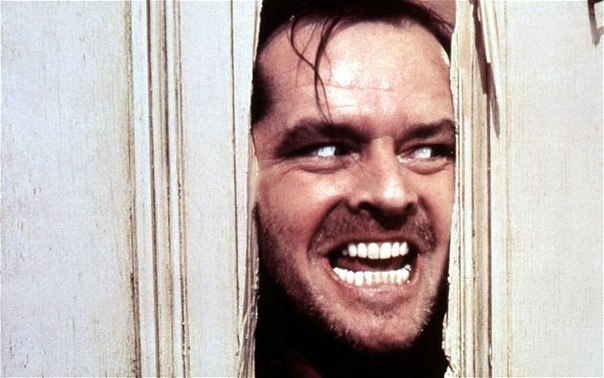
Made you look! Neither would win, of course. Pitting these two directors against each other with the goal of deciding who is "better" might be an interesting critical exercise, but not necessarily something to be proud of. They are both unfathomably complex directors; they created universes with their films that exist separately from each other. Nevertheless, you can find points of similarity in their approaches, as Freddy Smith does in this well-paced piece, apparently done "for school" but readable by those inside and outside the classroom–most notable here is the two directors’ unflinching fascination with taboo subject matter (cf. voyeurism in ‘Psycho,’ orgies in ‘Eyes Wide Shut‘). They diverge, though, when it comes to their approaches: Kubrick favors intellectual remove, whereas Hitchcock delivers a product with elegance and drive. The former made films in a variety of forms, from what Smith calls "stuffy period pieces" (‘Barry Lyndon‘) to more classic horror (‘The Shining‘), while the latter made primarily suspense films (‘North by Northwest‘, ‘Rear Window‘). If you WANT to pick a winner, you can–but why spoil the movies for yourself?

Watch: Wes Anderson’s Films Are More Violent Than You Think

Watch: Wes Anderson’s Films Are More Violent Than You Think

If you like Wes Anderson’s films, and you probably do, do you ever wonder if the reasons you like them aren’t quite the reasons you profess? He’s widely accepted as a master of aggressive whimsy, of believably awkward intimacy, and of the soundtrack, period. But what about the less comfortable moments, the moments of jarring violence? What about Royal Tenenbaum’s stabbing in ‘The Royal Tenenbaums‘? What about Max Fischer’s pummeling in ‘Rushmore‘? And what about M. Gustave’s rough treatment in ‘The Grand Budapest Hotel‘? Is it possible that what keeps you coming back to this director’s films is not the combination of humor and tenderness and charm, but the fact that here might be another ingredient in the stew, one that, if you’re not careful, might choke you? Dávid Velenczei’s wide-awake supercut raises this question eloquently and with great vivacity. If you’ve asked yourself this question before, no reason not to watch: it’s a question that can be turned over more than once without risk of diminishing it.

Watch: Martin Scorsese’s ‘The Age of Innocence’ Tells a Story Through Concealment

Watch: Martin Scorsese’s ‘The Age of Innocence’ Tells a Story Through Concealment

When Martin Scorsese’s ‘The Age of Innocence’ was released, I was stunned. I knew him as a fabulist of gangster tales, mired firmly in the present or the not-so-distant past. It did not seem to me that he would be able to handle delicacy or nuance, at least in the form delivered in Edith Wharton’s great novel. Wrong I was! This film turned out to be a masterwork of great subtlety, among the more complex of Scorsese’s films. Milad Tangshir does the film great justice with this beautiful 17-minute examination, which includes commentary from Scorsese and also from Thelma Schoonmaker, his wondrous collaborator in the editing room; among the many good points he makes here is one which he keeps coming back to, which is that Scorsese used the camera in his film as a way of both telling the story and expressing his emotional involvement with the book itself. Additionally, the essay makes the very good point that concealment, ritual, lace, formality, and all such associated restrictions heighten the eroticism in the story, rather than squelching it.

Watch: Exploring the Set-Ups in ‘One Flew Over the Cuckoo’s Nest’

Watch: Exploring the Set-Ups in ‘One Flew Over the Cuckoo’s Nest’

If
we search for the setups that contribute to the climax of ‘One Flew Over the
Cuckoo’s Nest
,’ we will find two that are very important to the emotional
payoff of the film’s conclusion. By studying these scenes, we can better
understand how these setups were cleverly concealed. In most cases, a setup
should not call attention to itself.  Even a close-up of an object will
convey to an audience that the object is significant and will be revisited
later in the film. The trick that is employed in ‘One Flew Over the Cuckoo’s
Nestseems to be the consolidating of setup scenes with character building
scenes. ‘Cuckoo’s Nest’ is a character-driven story; how R.P. McMurphy
behaves dictates the direction of the plot. The sink scene—a scene that centers
entirely on the idea of a payoff that will ultimately come to pass—can still
manage to hide the setup by using the scene as a way to show that McMurphy
believes that he can triumph over the system when he can’t.

Tyler Knudsen, a San
Francisco Bay Area native, has been a student of film for most of his life.
Appearing several television commercials as a child, Tyler was inspired to
shift his focus from acting to directing after performing as a featured extra
in Vincent Ward’s
What Dreams May Come. He studied Film & Digital
Media with an emphasis on production at the University of California, Santa
Cruz and recently moved to New York City where he currently resides with his girlfriend.


For more of Tyler’s video essays, check out his channel at
youtube.com/cinematyler.

Watch: David Fincher, From His Commercials Up to ‘Se7en’: A Video Essay

Watch: David Fincher, From His Commercials Up to ‘Se7en’: A Video Essay

This piece, the second part of a prolonged series on David Fincher, takes us inside the work leading up to ‘Se7en.’ Fincher made, prior to this remarkable film, a number of inspired and influential commercials for Nike, Coca-Cola, and other companies. And it could be said that he brought his gift for rattling around inside a form to ‘Se7en’: just as he did with the constraint of creating an advertisement, he took what could have been a fairly routine police procedural and transformed it into a horror-show on more levels than just the "what’s in the box" level–professional integrity, marital stability, and the nature of masculinity are all questioned and examined inside a film that unfolds like the best yarn you’ve ever heard. The Raccord collective is making a significant contribution to film scholarship with their directors series, and it behooves any earnest film fan to take heed.

Watch: Where Does the Term ‘Film Noir’ Come From?

Watch: Where Does the Term ‘Film Noir’ Come From?


What exactly is film noir?  Is it a movement, a mode, a style, or a
genre?  These questions have preoccupied film scholars for decades.
According to filmmaker Paul Schrader, noir began with The
Maltese Falcon 
and ended with Orson Welles’s Touch of Evil.
 He’d add that it was largely
an American movement that applied certain stylistic (high contrast
lighting, voice over narration, non-linear storytelling) and thematic
(existentialism, the cruel mechanizations of fate, amour fou) elements
in genres ranging from melodramas to detective films.
Another film scholar might add that directors like Fritz Lang and Billy
Wilder never described their films as being "noir."  They thought they
were making thrillers. Film noir?  That’s a term the French critics
applied retroactively.  

This video essay series takes the fairly provocative stance that film
noir became a genre.  Essentially, in its golden age during the 1940s,
noir was a mode/movement that was superimposed onto other genres.  In
the words of genre theorist Rick Altman, genres
can start off as "adjectives"–fragments of the style and theme might
be there, but the genre has yet to fully solidify because the filmmakers
and audiences haven’t quite gotten their heads around it yet.  However,
by the time Robert Aldrich was making Kiss
Me Deadly 
in 1955, the writings of the French critics had made it
stateside (in fact, there’s a picture of him reading Borde and
Chaumeton’s Panorama
du Film Noir 
on the set of Attack!),
and perhaps the filmmakers and audiences had finally
begun to think of noir as being a noun.  When neo-noir flourished in
the 1970s (thanks to filmmakers like Schrader), the movement
emerged–fully formed as a genre–from its black-and-white cocoon.  

I write this trajectory into this introduction to the series because I
can imagine that some of my colleagues might have been troubled by a
video essay that calls film noir a genre. I am more than aware of the
history of this debate, and I cover it in this
essay on pragmatics.  (Part IV will focus on evolution.  There will be a
Part V on international noir, so don’t think I’ve forgotten about that
either!). What I’m attempting to do here is to craft the video essay
equivalent of an encyclopedia entry on film
noir for the undergraduate student with a new episode each month.  If
you’re already familiar with the films and the key debates, you may not
find much in the way of "new" knowledge here.  My main audience–at
least in terms of an intellectual presentation–is
the uninitiated.  I assume the pleasures of the more advanced fans and
scholars of noir will be found in the aesthetics of the pieces, although
maybe they’ll be surprised by a "new" recommendation.  In any case, I
hope you enjoy the first part of this ongoing
series, and I look forward to the debate it encourages.  Stay tuned for
more! 

Dr.
Drew Morton is an Assistant Professor of Mass Communication at Texas A&M University-Texarkana.  
He
the co-editor and co-founder of
[in]Transition: 
Journal of Videographic Film and Moving
Image Studies, the first peer-reviewed academic journal focused on the
visual essay and all of its forms (co-presented by MediaCommons and
 Cinema Journal).  [in]Transitionrecently

won an award of distinction in the annual SCMS Anne Friedberg
Innovative Scholarship competition.  His publications have appeared in
animation: an interdisciplinary journal, The Black Maria, Flow, In Media Res, Mediascape, Press Play, RogerEbert.com, Senses
of Cinema, Studies in Comics, and a range of academic anthologies.  He is currently completing
a manuscript on the overlap between American blockbuster cinema and comic book style.

Watch: 7 Reasons Why KISS ME DEADLY Is the Greatest Noir Film of All Time

Watch: 7 Reasons Why KISS ME DEADLY Is the Greatest Noir Film of All Time

Quentin Tarantino in ‘Pulp Fiction.’ David Fincher in ‘Se7en.’ David Lynch in ‘Lost Highway.’ These directors, and many others, were all influenced by Robert Aldrich’s 1955 film noir milestone ‘Kiss Me Deadly.’ In this haunting and frequently inspired piece, 

Alexandra
Königsburg lists seven reasons why the film is so important–and in so doing she manages to bring in everything from ‘Friends’ to Ronald Reagan. The film itself was a bizarre masterpiece, but this analysis by Königsburg is a challenging work on its own, acquiring independent power as it moves along.

Watch: What Does ‘Daredevil’ Owe to ‘Oldboy’? A Video Essay

Watch: What Does ‘Daredevil’ Owe to ‘Oldboy’? A Video Essay

This finely attuned video essay from Cineflect on the similarities between the fight scenes in Neflix’s ‘Daredevil’ and the 2003 film ‘Oldboy‘ would be what they call "insider baseball" these days if it were not for the fact that the Netflix Marvel series is rapidly becoming a favorite on the strengths of its acting, its cinematography, and its fight scenes, and ‘Oldboy’ has long been a cult favorite on the strengths of at least two of those qualities. As you watch J.S. Lewis’s well-narrated and well-organized examination of these two films, you can see the beauty of well-honed influence–influence without anxiety, that is.

Watch: How Are Nolan’s ‘Interstellar’ and Kubrick’s ‘2001: A Space Odyssey’ Linked? Let Us Count the Ways…

Watch: How Are Nolan’s ‘Interstellar’ and Kubrick’s ‘2001: A Space Odyssey’ Linked?

If you’re an imaginative filmmaker in the present day, Stanley Kubrick is your father and Maya Deren is your mother, to paraphrase something a writing teacher once told me. Christopher Nolan’s ‘Interstellar‘ was one fairly huge example of that; the film wore its ‘2001: A Space Odyssey’ influences on its sleeve in grand fashion. Nevertheless, seeing the similarities spelled out cleverly and with brevity, as Jorge Luengo has done with this video essay, is unsettling and entertaining, in equal parts.