Watch: The James Cameron Aesthetic, and How Risky It Is To Say Those Words

Watch: The James Cameron Aesthetic, and How Risky It Is To Say Those Words

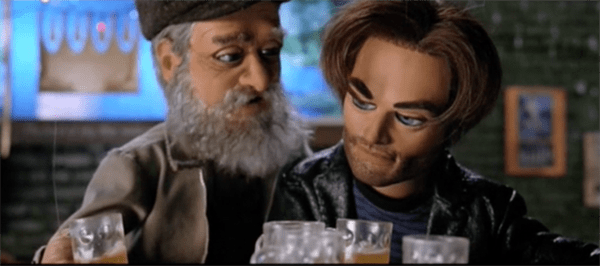
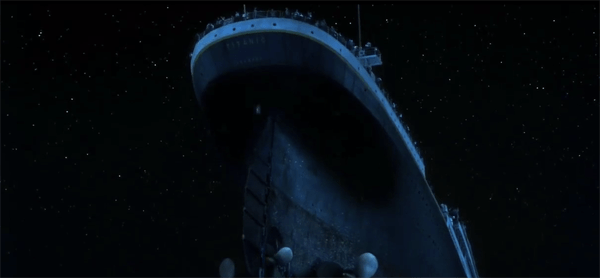
One risks stepping into an intellectual manhole if the phrase "the James Cameron aesthetic" leaves one’s lips. If you look the word up in the dictionary, it has a fairly explicit meaning: a set of rules or guidelines an artist or group of artists follows to make their work. And yet it is often viewed as synonymous with the word "style." It’s conceivable that it would be easier, by and large, to say that a filmmaker like Paul Thomas Anderson has an aesthetic, or, reaching laterally, a filmmaker such as Steve McQueen. Or Wes Anderson. Or Todd Solondz. Their movies, whatever the roots of their appeal might be, give off a faint scent of art for art’s sake, the kind of films we associate with small theaters, bad sound systems, chamomile tea at the snack bar, a distinct lack of stickiness on the floor. James Cameron’s movies go somewhere else, and one might be tempted to say that the word "aesthetic" can’t really be applied to them. You might be tempted to go snobby: That guy has an aesthetic? "I’m on top of the world"? Please! But look at this piece by Martin Kessler. To watch it, you would think you were reading one of Ezra Pound’s statements on Imagism: The figures shall be huge. The emotions shall be larger than anything that might fit on the screen. The theme shall be unmissable. The music shall boom. Cameron has been making proficient, moving films for many years, and this piece, which follows Cameron’s love of, plainly put, bodies and machines through films like ‘Aliens,’ ‘Titanic,’ ‘Terminator,’ and others encourages the viewer to do something which could potentially be challenging: consider that the moviemaking taking place here is as complex and, yes, subtle as that of the other directors mentioned above: it’s just on a slightly different scale. A caveat, though: every creative decision has its price: push this argument too far and you fall into the realm of arguments that assert that ‘Gone in Sixty Seconds’ is as good as ‘The Seventh Seal,’ and that only snobs place one above the other, quality-wise. An aesthetic is not a guarantee of quality–it’s more a stamp of intentionality.     

Watch: Milos Forman’s Vibrant, Versatile Career

Watch: Milos Forman’s Vibrant, Versatile Career

[Transcript follows:]

It is March 29th, 1976 at the 48th Academy Awards ceremony in Los Angeles, California. Czech filmmaker Miloš Forman has just won the Academy Award for directing ‘One Flew Over the Cuckoo’s Nest’—a film that would win (along with best director) best lead actor, best lead actress, best screenplay, and best picture. ‘Cuckoo’s Nest’ was the second of only three films to win the Oscar in all five of these categories—following ‘It Happened One Night’ in 1934 and preceding ‘The Silence of the Lambs’ in 1991.
 
There is no doubt that it was Forman’s brilliance as a director that made ‘One Flew Over the Cuckoo’s Nest’ the classic that it remains today. However, ‘One Flew Over the Cuckoo’s Nest’ was only Forman’s second feature film since moving to the United States. You see, Miloš Forman got his start as a director in his home country of Czechoslovakia, with his first big film being 1965’s ‘The Loves of a Blonde’, about a factory girl during the war who moves in with a jazz musician and his parents. ‘The Loves of a Blonde’ was a major film in the Czech New Wave—a film movement in the 1960s started by film students rebelling against the Communist takeover of Czechoslovakia that started in 1948.
 
Forman’s next film, titled ‘The Fireman’s Ball,’ is a comedy about a volunteer fire department in a small Czech town. There was a great deal of controversy surrounding the film after its release due to the censors of the Czechoslovakian Communist party who felt that the film satirized the government. It was banned after only a few weeks. These films gained recognition outside of Czechoslovakia and both were nominated for Best Foreign Film at the Academy Awards.
 
Shortly after the release of ‘The Fireman’s Ball,’ Forman was visiting Paris when the Soviet invasion of Czechoslovakia occurred to squash the loosening restrictions on media, speech, and travel that was taking place in 1968. He decided to leave his home country permanently and take up residence in New York City. It isn’t hard to see why Forman was the perfect choice to direct a film about a man rebelling against the oppressive staff of a mental hospital.
 
After the enormous success of ‘One Flew Over the Cuckoo’s Nest,’ Forman directed the psychedelic counterculture musical ‘Hair.’ Both ‘Hair’ and ‘Cuckoo’s Nest’ were previously performed in the theater, as was his next picture, ‘Amadeus.’ 
 
‘Amadeus’ earned Forman another Best Directing Oscar and the film took home the Best Picture prize at the 57th Academy Awards ceremony. Both ‘Amadeus’ and ‘Cuckoo’s Nest’ made use of many character actors playing the smaller roles, which came to be a trademark for the director. Many of these actors got their start in Forman’s films including: Christopher Lloyd, Vincent Schiavelli, and Danny DeVito.

This affected his style greatly. Because there were often many characters in one scene, it was essential for the scenes to be built upon reaction shots. We can see a similar approach in his later films as well. Miloš Forman is responsible for some of cinema’s most iconic films and his unique perspective helped bring the influence of the Czech New Wave to a new generation of filmmakers.  

Films:

‘It Happened One Night’ (1934 Dir. Frank Capra)
‘The Silence of the Lambs’ (1991 Dir. Jonathan Demme)
‘One Flew Over the Cuckoo’s Nest’ (1975 Dir. Miloš Forman)
‘Loves of a Blonde’ (1965 Dir. Miloš Forman)
‘The Firemen’s Ball’ (1967 Dir. Miloš Forman)
‘Hair’ (1979 Dir. Miloš Forman)
‘Amadeus’ (1984 Dir. Miloš Forman)
‘The People vs. Larry Flynt’ (1996 Dir. Miloš Forman)
‘Man on the Moon’ (1999 Dir. Miloš Forman)

Tyler Knudsen, a San Francisco Bay Area native, has been a student of film for most of his life. Appearing in several television commercials as a child, Tyler was inspired to shift his focus from acting to directing after performing as a featured extra in Vincent Ward’s What Dreams May Come. He studied Film & Digital Media with an emphasis on production at the University of California, Santa Cruz and recently moved to New York City where he currently resides with his girlfriend.

Watch: Spike Lee’s Best Head-On Shots… In 3 Minutes

Watch: Spike Lee’s Best Head-On Shots… In 3 Minutes!

The characters in a Spike Lee joint often seem to have a rather intense infatuation with the prolific auteur’s camera.  One of the strongest defining elements of Lee’s style is that characters frequently look directly into the lens. Much of the time, these moments are fourth-wall breaks–the characters are addressing us, the audience. These moments usually interrupt the flow of action in order for a character to pull us aside and give us some information. In certain cases, these moments almost take on a documentary-like feel, as the characters act as if they are being fed questions. In other cases, the characters simply give us a well-timed glance not muttering a single word.  But just as frequently as they break the fourth wall, characters simply address other characters, and Lee’s trademark serves as a POV shot: viewers are put in the position of a character in the film.  This tactic allows us to become more emotionally attached to the moment and the film as a whole.  At the same time, we often find ourselves wondering who exactly a character is addressing at any given moment.  But it is this feeling of disorder and realism that makes Spike Lee’s films such unique viewing experiences.  Here’s a look at some of Lee’s most memorable moments of dialogue between his characters and his lens. 

Films used:
‘She’s Gotta Have It’ (1986)
‘School Daze’ (1988)
‘Do the Right Thing’ (1989)
‘Mo’ Better Blues’ (1990)
‘Malcolm X’ (1992)
‘Clockers’ (1995)
‘Girl 6’ (1996)
‘He Got Game’ (1998)
‘Bamboozled’ (2000)
’25th Hour’ (2002)
‘She Hate Me’ (2004)
‘Inside Man’ (2006)
‘Miracle at St. Anna’ (2008)
‘Red Hook Summer’ (2012)

Jacob T. Swinney is an industrious film editor and filmmaker, as well as a recent graduate of Salisbury University.

Watch: Martin Scorsese’s ‘Goodfellas’: How That Last Scene Works

Watch: Martin Scorsese’s ‘Goodfellas’: How That Last Scene Works

Martin Scorsese’s classic ‘Goodfellas‘ was made for post-viewing anecdotes. Remember the scene in ‘Goodfellas’ where they’re eating dinner after they wacked that guy? Remember the scene in ‘Goodfellas’ where Joe Pesci thinks he’s going to be made, and then…? Remember the scene in ‘Goodfellas’ where Lorraine Bracco has that spat with Ray Liotta? Hey, you think I’m funny? Do I amuse you? I’m funny, like a clown? Similarly, the last sequence, in which Liotta’s Henry Hill crams as many frustrating tasks as he can into one very long day and then concludes the sequence (along with his time as a goodfella) at the business end of a police officer’s gun, is indelible and can be compared easily to a lot of high-stress situations in daily life. Julian Palmer’s latest video for 1848 Media‘s ‘The Discarded Image’ series takes a very close look at this scene, analyzing its camera angles, its narrative construction, and its links to other films (by Cassavetes and others), the sorts of realistic dramas whose inheritance gives Scorsese, in Palmer’s estimation, his greatest strength.

Watch: How Stanley Kubrick Forces Us to Look At Ourselves

Watch: How Stanley Kubrick Forces Us to Look At Ourselves

Regardless of what one might say, and there is plenty to say, about Stanley Kubrick’s technical mastery, about his sense of tragedy, about his portrayals of different modes of alienation, one thing that remains true of all of his films, to greater or lesser degrees, is their ability to spur self-reflection. Buried in all of his stories is the question: do you see yourself here? Granted, this is true of all stories, but think of it: who has not felt as lost as Tom Cruise’s William Harford in ‘Eyes Wide Shut’? Who has not felt the terror Shelley Duvall’s Wendy feels in ‘The Shining‘–or even the madness Jack feels after being cooped up for too long (even if at a much, much smaller caliber, of course)? Who hasn’t felt the misery the suicidal Private Lawrence (Vincent D’Onofrio) feels in ‘Full Metal Jacket‘? Who, after watching ‘Dr. Strangelove,’ might not question the human tendency to condone wars in certain cases? It’s too simple to call Kubrick a strictly satirical filmmaker. He is, rather, the sort of artist who causes us to look inwards even as we are lost in seemingly outward-looking narratives. This fast-paced, beautifully edited piece by Stefano Westerling takes us through Kubrick’s filmography, highlighting the works’ self-reflexive brilliance with great facility.

Watch: Lars von Trier Is the Filmmaker of Assault

Watch: Lars von Trier Is the Filmmaker of Assault

Though often packaged and presented immaculately, the films of Lars von Trier, from ‘Melancholia’ to ‘Dogville’ to ‘Dancer in the Dark’ to ‘Antichrist’ to ‘Manderlay’ to ‘Nymphomaniac’, are essentially assaultive. Oddly enough, though, you almost never expect the assaults they deliver. 

Ah, what beautiful music, with snow falling, a slow motion love sc–oh, wait, a baby just fell out a window.

Or: What a beautiful house, with gorgeously landscaped grounds. You’d never think the world was about to–wait, is that Kirsten Dunst, sprawled naked in some ferns?

Or: Nicole Kidman is a remarkably versatile actress, whose talents are well-suited to–oh, my God, what are they doing to her? Yeesh!

Or: I just love Bjork’s bizarre, personalized musical stylings. It’s so wonderful that she–god, I’m depressed. I’m not sure I can move my limbs, I’m so sad. Help!

Or: Gosh, this soda tastes good on such a hot–ouch! Watch that two-by-four, Willem!

You get the idea. In any event, Alex Kalogeropoulos’s video above succinctly and smartly captures the spirit of aggression running through von Trier’s work. So, get ready, and take a look.

Watch: ‘American Sniper’ Quotes ‘Team America: World Police’

Watch: ‘American Sniper’ Quotes ‘Team America: World Police’

It would be too easy to praise ‘Team America: World Police’ for taking down the black-and-white depiction of American patriotism at all costs, the same that many have claimed seeped through ‘American Sniper,’ or at the very least the real man Chris Kyle. But it’s a testament to both Trey Parker and Matt Stone’s democracy in attacking both ends of the political spectrum and their own talent as satirists that they boldly pointed out the "three kinds of people" rhetoric, frequently repeated in the Bush Administration under the "you’re with us or you’re with the terrorists" mantra, a good decade before it was brought back in Clint Eastwood’s ‘American Sniper.’ The notion that humans can be neatly divided into three categories is contradicting the very complicated nature of humanity, perhaps as a coping mechanism to make sense of chaos (as the original writer of the "Wolves, sheep and sheepdog" analogy, Lieutenant Colonel David Grossman, did in response to 9/11) but can also be the first step in dehumanizing the enemy and painting the speaker as a Campbellian Hero. As Parker and Stone suggest, maybe that’s the foundation of America.
Writer’s Note: For a history of Grossman’s "Wolves, sheep and sheepdog" analogy, if a politically charged write-up, read Michael and Erin Cumming’s piece at Slate: http://www.slate.com/blogs/browbeat/2015/01/21/american_sniper_s_wolves_sheep_and_sheepdogs_speech_has_a_surprising_history.html

Serena Bramble is a film editor whose montage skills are an end result of accumulated years of movie-watching and loving. Serena is a graduate from the Teledramatic Arts and Technology department at Cal State Monterey Bay. In addition to editing, she also writes on her blog Brief Encounters of the Cinematic Kind.

Watch: David Lynch’s ‘Blue Velvet’ and ‘The Elephant Man’ Have Eerie Similarities

Watch: David Lynch’s ‘Blue Velvet’ and ‘The Elephant Man’ Have Eerie Similarities

If I were to say that David Lynch’s ‘Blue Velvet’ was a pillar movie of my adolescence, and remains something of a gold standard against which I measure other films, that wouldn’t speak very well of me, in some senses. But in other senses, it might. The film is indelible for a number of reasons, chief among them being its opening: there are few films I can think of that start in such a settled way, as if the strange universe we are entering at the story’s start has always been there, waiting for us. So, I was delighted to discover this short piece by Liz Greene focusing on ‘Blue Velvet”s opening, honing in on its similarity to the opening of ‘The Elephant Man,’ another great Lynch film but one which has not, perhaps, lodged itself in the public consciousness to such a great extent as the later work. Viewed this way, side by side and simultaneously, all sorts of correlations arise: the movements, the visual cadences, even the music… Take a look. 

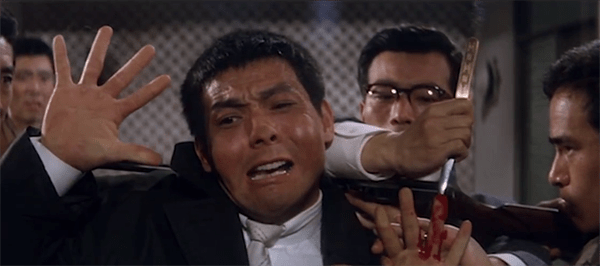
Watch: Seijun Suzuki, A Director Who Influenced Quentin Tarantino, Jim Jarmusch, John Woo, and Others

Watch: Seijun Suzuki, A Director Who Influenced Tarantino, Jarmusch, Woo, and Others

[A transcript follows.]

If you enjoy the films of Quentin Tarantino, Park Chan-wook, John Woo, Takashi Miike, and Jim Jarmusch, then you might want to check out the man who influenced them all—Seijun Suzuki. Suzuki is responsible for some of Japan’s most stylish and sometimes downright insane action movies of the 1960s.
 
He was born in Tokyo, Japan in 1923. Suzuki failed the entrance exam for the University of Tokyo, so a friend convinced him to try taking film classes at Kamakura Academy. He started working as an assistant director in 1948 for a major studio named Shochiku.
 
In 1954, Suzuki started working for Nikkatsu—Japan’s oldest major studio. He started out as an Assistant Director at Nikkatsu, but in 1956, he directed his first feature film, a B movie called ‘Harbour Toast: Victory is in Our Grasp.’
 
In 1963, Suzuki worked with the chipmunk-cheeked Joe Shishido in the lead role of ‘Detective Bureau 2–3: Go to Hell, Bastards!’ about a private investigator who infiltrates a Yakuza clan. He teamed up with Shishido again for his next film, made in the same year, titled ‘Youth of the Beast.’ Even though both of these films share a very similar story and came out in the same year, ‘Youth of the Beast’ represents a turning point in Suzuki’s style. 
 
Stunning use of color and creative shot choices made ‘Youth of the Beast’ stand out against the many other movies Nikkatsu released. And ‘many’ is an undserstatement—Nikkatsu’s schedule had them releasing two new films every single week.
 
That style would fully develop in ‘Tokyo Drifter’ where we see a beautiful use of color and modern art production design in a way that appears almost theatrical. This film showcases his western influences and we even see an homage to the Hollywood western in this bar room brawl.
 
Shishido starred in only four Suzuki films, but despite their short-lived collaboration, their movies would be among Suzuki’s greatest and most well-known. Suzuki’s most well-known film—and let’s face it, clearly his best—was a huge financial failure. Its screenings were sparsely attended and Nikkatsu president, Kyusaku Hori called the film, ‘incomprehensible’ and fired Suzuki from Nikkatsu. It was his 40th film for the studio. The film is called ‘Branded to Kill’ and follows Hanada, the Yakuza’s number three best hitman on the run after a hit gets botched when a butterfly lands on the barrel of his sniper rifle causing him to miss his shot.
 
Suzuki’s experience and the perfecting of his style shines through in this creative masterpiece that includes everything you could want from an action movie—lots of sex, violence, and general badassery, but there is another level with ‘Branded to Kill’ that didn’t exist in his earlier program pictures. In order to write the film, Suzuki assembled a team of writers he called Hachiro Guryu (or ‘Group of Eight’). Suzuki didn’t spend a lot of time on pre-production and he never storyboarded his scenes, opting instead to come up with ideas as he shot. Since Nikkatsu was releasing two films a week, the shooting schedule was at a breakneck pace—the whole film from pre to post production was only 25 days and all of the editing and looping lines was completed in one day, which happened to be the day before its release.
 
Suzuki sued Nikkatsu for wrongful termination and won, but he was blacklisted by every studio for ten years. In 2001, he made a sequel to ‘Branded to Kill’ called ‘Pistol Opera’ and his latest film, ‘Princess Raccoon,’ (made in 2005) is a musical based on a folk tale from Japan. He’s still kicking at 92 years old with 54 films under his belt. While his days of filmmaking are over, there is no doubt that his work will continue to inspire others for many years to come.
 
Clips used:
Reservoir Dogs (1992 Dir. Quentin Tarantino)
Oldboy (2003 Dir. Park Chan-wook)
Hard Boiled (1992 Dir. John Woo)
Ichi the Killer (2001 Dir. Takashi Miike)
Ghost Dog: The Way of the Samurai (1999 Dir. Jim Jarmusch)
Branded to Kill (1967 Dir. Seijun Suzuki)
Harbour Toast: Victory is in Our Grasp (1956 Dir. Seijun Suzuki)
Detective Bureau 2-3: Go to Hell, Bastards! (1963 Dir. Seijun Suzuki)
Youth of the Beast (1963 Dir. Seijun Suzuki)
Tokyo Drifter (1966 Dir. Seijun Suzuki)
Youth of the Beast (1963 Dir. Seijun Suzuki)
Pistol Opera (2001 Dir. Seijun Suzuki)
Princess Raccoon (2005 Dir. Seijun Suzuki)
 
Music used:
Branded to Kill (1967 Dir. Seijun Suzuki)
Tokyo Drifter (1966 Dir. Seijun Suzuki)
Youth of the Beast (1963 Dir. Seijun Suzuki)
 
Sources used:
Schilling, Mark. No Borders, No Limits: Nikkatsu Action Cinema. Godalming, England: FAB, 2007. Print.

Tyler Knudsen, a San Francisco Bay Area native, has been a student of film for most of his life. Appearing in several television commercials as a child, Tyler was inspired to shift his focus from acting to directing after performing as a featured extra in Vincent Ward’s What Dreams May Come. He studied Film & Digital Media with an emphasis on production at the University of California, Santa Cruz and recently moved to New York City where he currently resides with his girlfriend.
Watch: How Steve McQueen’s Camera Highlights the Shame in ‘Shame’

Watch: How Steve McQueen’s Camera Highlights the Shame in ‘Shame’

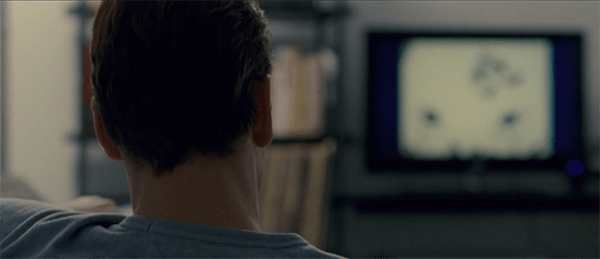
If your back is turned to another person, that usually indicates a number of things in conventional body language: Stay away. The conversation is over. Do not communicate with me. But it can also indicate a conscious disavowal of an action or state of affairs. If a camera, as in Steve McQueen’s ‘Shame,’ shows us someone’s back, it could mean a number of things–that the character is not someone whose full identity we are meant to know, for instance. Or, in ‘Shame,’ it could mean the character onscreen, namely Michael Fassbender’s Brandon, is not able to entirely face his actions. The newest entry for "Between Frames" on Vimeo shows us a collection of shots of Brandon from behind: as he moves through his apartment, as he enters the subway, as he has sex. These shots all build towards… what, exactly? It seems that McQueen is showing us Brandon as Brandon wishes to be seen, a curious move for such a controlled filmmaker. The character doesn’t want his addictive behavior to be entirely known, despite the fact that his compulsion drives him and shapes his life within the film. This is a chilling assembly of scenes which makes its point memorably.