THE NEWSROOM RECAP 4: I’LL TRY TO FIX YOU

THE NEWSROOM RECAP 4: I’LL TRY TO FIX YOU

One of the reasons I wish The Newsroom spent more time following its characters as they report stories is that there’s a thesis floating through the show about what happens when people apply the methods they use in journalism to their personal lives. Jim is honest and straight-forward but doesn’t promote himself enough, Maggie is passionate when she has an idea but not always very clear about what he wants, MacKenzie is constantly on the brink of hysteria, and Neal is enthusiastic about everything, be it Bigfoot or his dishy girlfriend. The one person we see doing both a lot of dating and a lot of news work is Will. And as he starts dating with intentions other than irritating MacKenzie in this week’s episode, he can’t shake his on-air persona, and the results prove, if not disastrous, the waste of some delicious-looking drinks.

nullIt turns out that a mission to civilize may work for long-term viewers who only have to deal with you for an hour a night—as you’d think any of the women in his office could have warned Will (even though Sloan tells us herself that she’s a social incompetent). But it’s much less effective when it sounds like you’re patronizing to a woman you don’t even know. First, Will tells a gossip columnist in the middle of a New Year’s Eve party, “You can be part of the change! You don’t have to go back to writing gossip!”—which underscores the fact that, as she’s clearly explained to him, she’s happy with her job and has no particular moral qualms about doing it.

Later, he gets his picture on the cover of a gossip magazine, bumping Jennifer Aniston, because he can’t stop himself from lecturing another date—Kathryn Hahn, who HBO should consider making the star of her own show rather than a vehicle for lessons taught to characters like Will and Girls’ Jessa—on what would happen to her if she pulled a gun on an attacker. Will ends up pointing her own unloaded pistol at her, looking like a jerk in the moment, and in the papers.

Finally, he tells another date that she’s a bad person for enjoying the reality shows the gossip columnist covers, because the “chocolate souffle on this menu is a guilty pleasure. The Archies singing ‘Sugar, Sugar’ is a guilty pleasure. Human cockfighting makes us mean and desensitizes us.” When she asks if he thinks she’s a mean person, he tells her, “Yes, but thank goodness you met me in time!” Throwing drinks in people’s faces seems to be the way powerful women express their displeasure on television these days in shows from The Newsroom to Smash, but Will’s dates are among the most justified libation-flingers anywhere on the small screen.

That’s not to say there isn’t some real pathos here. It’s sad to watch Will joust with Wade and MacKenzie in his office only to go quiet outside it. “Do people really just walk up to people?” Will asks Sloan. “I’ve seen it on TV,” she tells him. Later, when Charlie lectures him on his emotional life, Will lashes out at his boss as a peddler of fantasy. “It doesn’t work like in the movies,” he says, wounded. “It doesn’t work at all.”

The Newsroom might have less gender trouble if it directly and consistently explored the ways in which traits and behaviors that help men succeed in business end up limiting their abilities to have successful, reciprocal relationships with women. But doesn’t go there this time, portraying Will’s dates as a series of shallow shrews and crazy broads, acting as tools of the devious and mostly off-screen Leona, who retaliate unfairly when they toss cocktails at him or land him in the gossip column. The show may think Will is bad at expressing himself, but it doesn’t really bother to question the arrogance of his mission to civilize. This episode is, after all, called “I’ll Try to Fix You.”

But the show does one smart thing: it makes Will’s inability to get over the end of his relationship with MacKenzie look foolish, and it has him suffer real consequences for clinging to his resentment. It turns out that when he renegotiated his contract so he could fire MacKenzie at will, he took a non-compete clause in trade. “How much do you hate me?” MacKenzie asks him, shocked at Will’s stupidity and pettiness, the fact that he’s willing to risk ending his own career in order to retain the ability to threaten and intimidate her. It was one of the first moments when I felt like The Newsroom and I see Will the same way, as an angry man whose superiority complex carries with it the power to harm himself and other people.

And it’s a relief that unlike in the pilot, where Will and MacKenzie argue about their relationship and philosophies of news, oblivious to the fact that their employees are reporting the Deepwater Horizon explosion, the two of them stop this argument (even though I hope they revisit it) to start covering the shooting of Gabrielle Giffords. Once again, though, it’s a story about how Will and the News Night team get the story right.

But in a slight improvement from the show’s dominant newsgathering tactic, they don’t score because they have secret knowledge from being related to sources, or living with them, or hiding under their beds, or as is the case at the beginning of the episode (when MacKenzie’s boyfriend Wade tips Will to a hot story about the underfunding of the fight against financial fraud), because they’re dating. The show clearly hasn’t abandoned the idea that that’s how reporters get information: when Will complains that “I’ve got a staff of paid professionals” doing reporting so he doesn’t have to talk to MacKenzie’s squeeze, she tells him that his employees are “mostly using inside sources like Wade.”

This incident is one of the few times we’ve actually seen the process of deciding what to put on air dramatized and given more than a few seconds of screen time, as is clear in Reese's confrontation with Will during a commercial break:

And at least the team makes the right judgment call because of the principles guiding their work. And as the World’s Biggest Don Fan, it’s gratifying that the show’s writers, after spending so much time beating up on him as a weak-willed sellout, let him be the one to tell Will, “It’s a person. A doctor pronounces her dead, not the news.”

The celebration that follows is a little over the top—not making an error isn’t the same thing as advancing a story or getting an exclusive. But it’s the loosest we’ve seen these characters, given that they’re normally composed to the point of rigidity. And I was totally with Will when he declared, “You’re a fucking newsman, Don. I ever tell you otherwise, you punch me in the face,” both because it recognized Don’s integrity, and because it made Will feel like a real journalist. One of the stranger things about the show is that its self-congratulation is so pure: there’s no trash talk, no visceral distaste for News Night’s rivals, none of the slightly creepy but inevitable celebration of scoops in a way that reduces human experience to a victory or defeat. I don’t know if this was intentional or not, but I appreciated the venality of the moment. Will and the team are so wrapped up in their own sense of righteousness that they forget the Congresswoman who may be dying, the civilians who are already dead. The Newsroom would be more fun as a show that actually weighs Will’s flaws and virtues without tipping the scales in his favor, that questions whether what the news needs to stand against the suits is not saints, but jerks.

Alyssa Rosenberg is a culture reporter for ThinkProgress.org. She is a correspondent for TheAtlantic.com and The Loop 21. Alyssa grew up in Massachusetts and holds a BA in humanities from Yale University. Before joining ThinkProgress, she was editor of Washingtonian.com and a staff correspondent at Government Executive. Her work has appeared in Esquire.com, The Daily, The American Prospect, The New Republic, National Journal, and The Daily Beast.
BREAKING BAD RECAP 1: LIVE FREE OR DIE

BREAKING BAD RECAP 1: LIVE FREE OR DIE

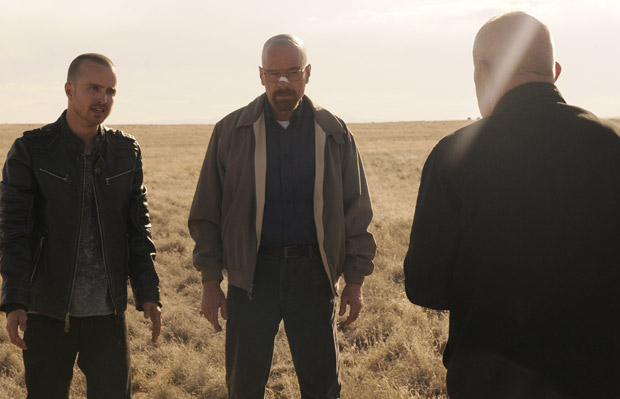
In the months since Breaking Bad's explosive season 4 finale, and Walt's certainly premature declaration of victory, we've had a long time to ponder what exactly he meant by saying, "I won."  Sure, he had won the most obvious victory in outsmarting Gus Fring, who, at least with Mike as his right hand, had mostly been able to stay a few steps ahead of the erratic and unpredictable Heisenberg (well, except for the whole Gale thing). But really, what Walt thinks he has won is his own freedom: freedom from the inconveniences that having a boss like Gus Fring brought; freedom to do things his own way; freedom to be the Southwest's real meth kingpin. We've been passing through the looking glass of Walt's need to cook meth to support his family after his presupposed demise from cancer for a few seasons now; it's obvious this guy has found something he's not only good at, but truly enjoys, except for (or more likely because of) all of the inevitable drama, chaos, and destruction he leaves in his wake as a result. And all of this havoc is completely worth it to him as long as he finally gets to be "the man" at something.

nullBut in the drug game, being "the man" is like having a target on your back, and Walt will realize soon enough that his problems have most likely been more augmented by Fring's murder than solved by it. In fact, below, in a callback to Season Two's predictive pre-credit scenes, we see a Walt with a full head of hair distractedly chit-chatting with a Denny's waitress, while nervously checking over his shoulder every few seconds. Breaking Bad’s signature sense of dread is almost overbearing (just watching the scene made me feel like I was about to have a panic attack), and as soon as we see that Walt is actually there to meet Lawson (his black market dealer for all things sidearm-related, played perfectly with cautious resignation ["Good luck, I guess."] by Deadwood's Jim Beaver), we know things can't be going as swimmingly as Walt thought they would when he said, "I won." When Walt uncovers the M60 machine gun Lawson has dropped off for him, it's obvious that something has gone severely pear-shaped.

There could be a few causes of such nastiness, knowing what we know now. Perhaps Hank has finally uncovered his brother-in-law's secret life as Heisenberg, and Walt is preparing for an all-out battle with the DEA. Perhaps the German conglomerate that was funding Fring's operation through the back door is more than a little annoyed that Gus has died, and has come to collect on their lost revenues. There is really no way to predict what Walt will have to defend himself against in the future, given writer Vince Gilligan's propensity for throwing viewers for a loop with left field plot twists. But, whatever has Walt packing such heavy heat is definitely formidable, and watching Walt dig himself deeper into whatever hole he's in will no doubt be equal parts terrifying, hilarious, and beautiful.  

For now, Walt is on top of the world. The drug trade in town has been decentralized, and is just waiting for someone to step into power ("There is gold in the streets, just waiting for someone to come and scoop it up.") His cancer's been in remission for some time, Gus can't kill him, and as much as Mike might want to put a bullet squarely between Mr. White's eyes, he can't until one last issue remaining from Fring's empire (the laptop containing all of the super lab video surveillance) is taken care of. In dealing with the issue, Walt buys himself enough time for Mike to consider joining Walt and Jesse in their proposed partnership. Mike clearly wants nothing to do with Walt; he hasn't ever, really. But the way he sees it, if he doesn't help clear up the hard drive issue, he's equally as "boned" as Jesse and Walt; naturally, in taking part, he inadvertently will be screwing himself somehow. Mike even tries to tell Jesse to take the money he's made and "skip town, today," knowing full well this White guy is rotten. But Mike's already in too deep, and it is not going to end well for him, especially if Gus's broken picture frame has anything to do with it, and I'm sure it will.

Walt's proclivity for self-destruction is exemplified perfectly in the electromagnet scene (posted below), when he (of course) decides to crank the amperage to maximize the likelihood that the hard drive will get wiped, making the box truck topple into the evidence building and putting Jesse and himself directly in danger. Of course, with Mike around, they're able to get away unscathed (for now), and Walt's new level of hubris makes itself painfully apparent when Mike asks how they can be sure the plan worked: "Because I say so." This isn't Walt saying something like this to pump himself up and convince himself it's true (a la "I am the one who knocks."); Cranston's delivery is almost flippant, making it clear that when Walter White is truly comfortable with the level of power he now has, he doesn't need gravelly-voiced machismo to sell it. He seems amused, which is far more terrifying than he ever was before Gus's death. Walt doesn't have to fake it 'til he makes it: he has arrived.

And of course, there's Ted Beneke to consider. I suppose I should have known that without seeing a body in a coffin that then closes and goes into the ground in one shot, there's no guarantee of a character's death on any television show, but I was quite sure that Ted had gone the way of Lindus from Terriers. It seems as though I was incorrect, and Gilligan and Co. aren't quite done with Ted. I'm certainly curious about this decision; perhaps Beneke, despite claiming that he's going to keep his mouth shut, could be the guy to unravel Walt's meth business, intentionally or not, directly or not. It's more likely that Walt, now knowing what he does about the situation, is going to give Ted the dirt nap I suspected he was taking all along, and in doing so yet again leaving more problems to be solved.

Finally, Anna Gunn's portrayal of Skyler has made a subtle but significant shift. We have grown accustomed to seeing Skyler act by turns distant, skeptical, spiteful and angry with Walt, at times unrelentingly (and perhaps cruelly) so. But Walt's new freedom seems to have come at the cost of Skyler's. In Gunn’s spot-on portrayal, Skyler now acts like an abused animal, trapped in a cage partially of her own making, with no escape possible. She slinks around, defeated, and speaks to Walt only when spoken to. Her knowledge of Walt's hand in Gus's death has shaken her to her core, but not as much as the knowledge that she essentially drove Walt to it by giving all of their potential escape money to Ted. Skyler hasn't always been the most sympathetic character, and her involvement with Beneke's cooked books has essentially brought the White family back to square one, financially. But now it seems she has broken under the combination of her psychic guilt at her own complicity and her fear of the husband she thought she knew until recently. Gunn’s performance stands out painfully against Cranston's portrayal of Walt’s overconfidence and obliviousness to Skyler's fragile mental state. In the scene below, Walt tells Skyler he forgives her for the Ted situation, replaying a familiar trope: Walt needs to use Skyler as an emotional punching bag, because if he has nobody to demonize, he's forced to look inward and come to grips with the monster he's created in himself. The hug at the end is so unnatural, I could barely watch. Barely.

Dave Bunting is the co-owner (with his sister and fellow Press Play contributor, Sarah D. Bunting) of King Killer Studios, a popular music rehearsal and performance space in Gowanus, Brooklyn. He plays guitar and sings in his band, The Stink, and dabbles in photography, video editing, french press coffee, and real estate. Dave lives in Brooklyn with his wife, son, and sister.

FALLING SKIES RECAP 5: HOMECOMING

FALLING SKIES RECAP 5: HOMECOMING

"Our best chance of survival is his survival."

null

"Our best chance of survival is his survival."

If you're not watching this show yet, now's the time to start. Sure, it's "low-brow" (whatever that means) and you have to be on board for genre fiction and alien creatures to enjoy it, but with that caveat, this is juicy fiction that at times is more than that. What does low-brow mean, anyway? I tend to object to the often artificial divide between that which is fun and that which is meaningful. Falling Skies endeavors to be both.

It didn't occur to me until I sat down to write this recap that Homecoming featured not one single alien; no skitters, no mechs, no Overlords.* This episode was a wonderful exercise in what a science fiction television show can do, and doesn't have to do, and the ways in which it can thwart convention. The unseen presence of the aliens was everywhere of course, from the way they invade people's bodies (a motif this week) to their violence, to the threat of their possible appearance at any moment. Naturally, the arduous post-apocalyptic circumstances in which our heroes of the Second Mass live are a direct result of the alien invasion, but it's wonderful to know we can have a great episode without ever seeing a creepy, horrifying skitter.

*Newbie catch-up: Skitters are lizard/arachnid aliens who serve as foot soldiers in the invasion of Earth. Mechs are their deadly mechanical servants. Overlords are Roswell-style "grays" about whom we know very little, except that they're in charge.

Not that there weren’t creepy or horrifying parts. The scene when Maggie and Hal come across a pile of leaves that turns out to be a barely-concealed burial ground for de-harnessed teens (hang in there, I explain harnesses below)  absolutely fit the bill. It was strange stuff for sure, right out of a horror movie, but it also had an odd, alien shape to it. The burial space was subtly reminiscent of the pod shape we've such teens sleep in, in past episodes. The woodsy setting with fall leaves covering bluish bodies lent an eerie naturalism to the scene, and then, of course, there was the jump moment, where Karen predictably awakens.

This show has suffered from too many coincidences, as I've pointed out in past recaps. How pleasing, then, to find the script this week specifically addresses the point: Karen, Hal's girlfriend prior to being captured, cannot possibly be so close to their location by coincidence. The Second Mass is about six hundred miles from where they were when Karen was captured. She didn't just happen to show up, near death and in need of rescue, only a mile or so from the unit's current location. She must have been planted somehow, and is therefore threatening.

Karen's presence takes a surprising turn, as Ben finds himself drawn to another formerly-harnessed teen. I have written in the past that Ben's superpowers (the video clip below spells them out pretty nicely) give us hints about what the skitters themselves must be like.* Instead, the superpowers are going to take these kids on a very different journey, as we see in the episode's final moments, and I can't guess what comes next.

*More catch-up: Human children are captured and "harnessed" by the aliens; they have bio-mechanical harnesses attached to them that control them and start making them alien. Skitters were, themselves, once harnessed prisoners on invaded worlds. Ben and Karen are formerly-harnessed but retain a mysterious connection to their former masters.

The clip above does a great job of spelling out what makes these "razorback" kids odd, special, and different (Ben says "razorback" is a nasty nickname given to him because of the spikes remaining in his spine after the harness was removed). They have a connection to the aliens which they can’t understand or control, and now for the first time, we see they also have a connection to each other. We don't know who to trust, and frankly, neither do they.

This show’s writers know how to keep their audience on its toes. There were predictable moments, sure, but the ambiguity keeps things interesting. Especially now that we suspect there are more than two sides: a skitter revealed last week that there is an uprising brewing, skitter versus Overlord. Is it true? Can the skitter be trusted? Again, we don't know.

The episode was so well balanced that I hesitate to call the Weaver story the "B" story, the conventional term for a secondary story in a television episode. In this case, I'm not sure which story is A and which is B.

The Captain Weaver story—in which the commanding officer of the Second Mass collapsed and nearly died when an entirely new and different form of the aliens invaded his body—was foreshadowed, but again, I was completely surprised by the direction it took. He was injured two episodes ago, and we saw last week that there was some problem with the wound site. I thought this would lead into a crisis because of the lack of medical supplies, perhaps another daring raid on a pharmacy with skitters laying in wait. Instead, the writers took us someplace we've never been before, and taught us things about the aliens we couldn't have guessed. Of course, in pop culture, a mechanic can rig up anything, just as a scientist knows all sciences equally well (the "Reed Richards effect," if you're familiar with The Fantastic Four), but the miraculous invention of a blood pump and the generator going out at just the moment when it was complete were the only trite moments in an excellent hour of television.

With all of this—A/B stories taking compelling twists and turns, fuel shortages, weird disease, and the anti-climactic and still-uninteresting return of Pope—there was yet time for good interpersonal and character development. Tom Mason (Noah Wyle) and Anne Glass (Moon Bloodgood) are going in a good direction. The show opens with a sweetly romantic scene (Tom does a pretty good Weaver imitation), and they fight like grown-ups who know how to fight.

At one point, Tom shouts, "Rebecca stop!"

Yep, Tom has a dead wife and called Anne by her name. It was bound to happen, not in the TV-cliché way, but in the inevitable-in-a-relationship way. It was handled deftly, and the scene had a grounded, human feeling to it.

In fact, almost all of the dialogue scenes had that same quality to them. Ben had a self-effacing ability to stand up for himself, identifying his freak nature as an advantage and arguing his case as if he was just a teen talking about his grades or after-school sports, that is amazing. Hal and Maggie steered away from any number of pitfalls as they nogitated their way arounbd a non-relationship. This episode was written by Ben Oh, who also did the excellent Compass. He knows how people talk to each other, and that's a lovely skill.

This week, even the music wasn't overplayed, which made the dialogue scenes that much more enjoyable.

Thematically, the episode addressed homecoming mostly in its absence. While it's true that both Pope and Karen—characters from past episodes—returned to the Second Massachusetts this week, I think the core of this episode was in the dialogue between Anne and Tom: That was what we had then, this is what we have now. It's good, or it can be, but it's not home, not really. It was especially telling that Tom, in talking about the past, doesn't at first mention people (too painful) or things; he doesn't mention plumbing or cell phones or fresh food. He cites "crisp New England air." Above and beyond the world that was destroyed, Tom is homesick.

As are they all.

Deborah Lipp is the co-owner of Basket of Kisses, whose motto is "smart discussion about smart television." She is the author of six books, including "The Ultimate James Bond Fan Book."

LONGMIRE RECAP 5: THE WORST KIND OF HUNTER

LONGMIRE RECAP 5: THE WORST KIND OF HUNTER

Last week’s shift of morality, from goodness invested in the law and its enforcers to something more complex, appears to have opened the gates for Longmire to grow as a show. In “The Worst Kind Of Hunter,” Longmire continues muddying its moral waters by separating justice from law. The victim, Ed Crawley, is a convicted murderer, out on parole after 25 years and suddenly found dead, apparently mauled by a bear. Many of the people Walt interviews are delighted that Crawley’s dead, to the point of casting disdain on our protagonist for even bothering to investigate the murder.

nullThis is the flip side of the revelation from last week: if the law is insufficient to provide justice, people desperate for justice will go outside the law. Nobody in the episode questions whether Crawley was a murderer. In fact, there’s not even a significant argument as to whether Crawley committed the murder he went to prison for, or whether he deserved to die for it. But there was a crime, and Walt and the rest of his office are investigating.
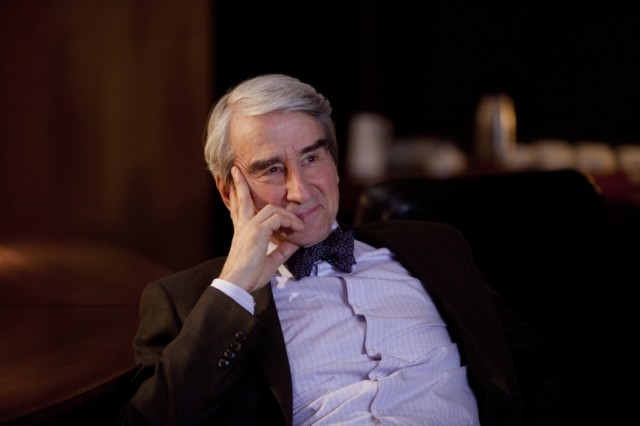
The officers, after all, merely make up one cog in the system of justice. Even if the courts or prisons don’t work out every time, the cops can’t stop doing their job. That’s the whole point: there are checks and balances, different people making different judgments, all based on different considerations. Regardless of how just one may believe one’s self to be, it’s still the job of the police to accurately figure out who committed crimes. Justice is an abstract concept, created in practice through the interactions of flawed people and institutions.

But you won’t get that from Longmire. The idea that the police need to investigate the crime regardless of whether it’s justified or not is treated as inherently true in “The Worst Kind Of Hunter.” But the lack of examination of justice proves disappointing this week. At the end of the episode, Walt confronts the killer, Crawley’s former warden, and threatens him into admitting the murder. Walt gets his confession . . . and then the episode ends.

That abrupt ending of the policing section of the case has become normal for Longmire, but for the first time here, it’s a severe detriment to the episode as a whole–partly from the editing of the final scene itself. Walt meets with the culprit, accuses him, and threatens him by dumping beef and its juices and smells on the warden, then Walt threatens to release the bear who was used for the initial murder, its senses apparently inflamed by the beef. Walt gets his confession, and then . . . he releases the bear, “Waffles,” anyway.

I can’t tell exactly what’s going in this scene, which is a major part of the problem. Walt, with the gate to the bear's cage almost open, gets his confession. Then Longmire holds the lock. The warden winces. Walt pushes the latch down, maintaining the lock, and turns his attention to the bear (and we don’t see the warden again). He then gives a brief speech to the bear, used as a tool in the initial murder, asking it to stay away from the town, and lets it go. The bear calmly wanders off. It’s a touching scene, but utterly confusing. It doesn’t appear that Walt has actually departed from the place where he confronted the warden, but the warden is gone. The entire point of the threat—that the bear, with its new taste for human flesh, might attack the warden—is lost. On the other hand, the lighting and background seems slightly different. It’s impossible to tell if Walt had been bluffing or if he was in some totally different geographic region when he released the bear.

This directly ties in to Longmire’s apparent distaste for dealing with the consequences of its investigations. Once the warden confesses his crimes, according to the visual logic of the show, he is literally removed from the world. All that matters is Walt’s victory, and his emotional response to the victory, the release of Waffles. There’s no ethical dilemma. There’s no discussion of how right or wrong the warden might have been. No discussion of how his bail would be set, no trial, no regret, nothing. To put it in television terms, we got “Law” but no “Order.”  This is important because without consequence, it’s very difficult to discuss thematic depth. (It’s also unfortunate that it lacks the intensity of last week’s wonderful confession scene.)

It’s a bit of a shame, because some of the ideas brought up by “The Worst Kind Of Hunter” were especially interesting. In the first few episodes, “foreign” influences were portrayed as leading to a kind of corruption in the rural Wyoming town and county. Here, the villain explicitly wants to represent a traditionalist point of view, making it a point to support Walt in the election as an old guy being forced out by a new guy (before his crime is revealed, of course). There’s also a comic subplot in which one of Walt’s predecessors gives unwelcome, overly old-fashioned advice to hammer the point home.

Yet this this tension of change versus traditionalism is nothing more than window dressing here. It’s an aspect of social complication in theory, but almost irrelevant in practice. Without consequences, the mysteries are just puzzles to be solved, nothing more.


Rowan Kaiser is a freelance pop culture critic currently living in the Bay Area. He is a staff writer at The A.V. Club, covering television and literature. He also writes about video games for several different publications, including Joystiq and Paste Magazine. Follow him on Twitter @rowankaiser for unimportant musings on media and extremely important kitten photographs.

TRUE BLOOD RECAP 5: LET’S BOOT AND RALLY

TRUE BLOOD RECAP 5: LET’S BOOT AND RALLY

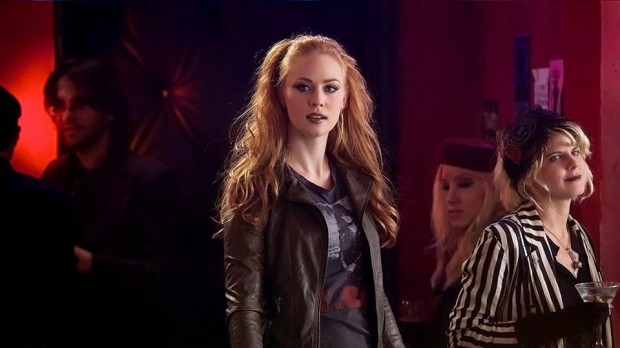
So what’s wrong with this picture: Bill (Stephen Moyer) and Eric (Alexander Skarsgard) and Alcide (Joe Mangianello), Alcide the werewolf for god’s sakes, somehow manage to band together with Sookie (Anna Paquin), in the search for the psychotic Russell Edgington (Denis O'Hare), ex-Vampire King of Mississippi.

nullAnd newbie vamp Tara (Rutina Wesley) not only owning a surrogate mom in her maker Pam but a new BFF in Jessica (Deborah Ann Woll) courtesy an adorable scene—which you can watch above—where the latter waxes irresistable about sex, blood, morality, and how tough it is being a vamp, alone. Yes, there's a tiff over rights to Hoyt's neck, but for reals, these girls are made for each other: we just wonder how much . . .
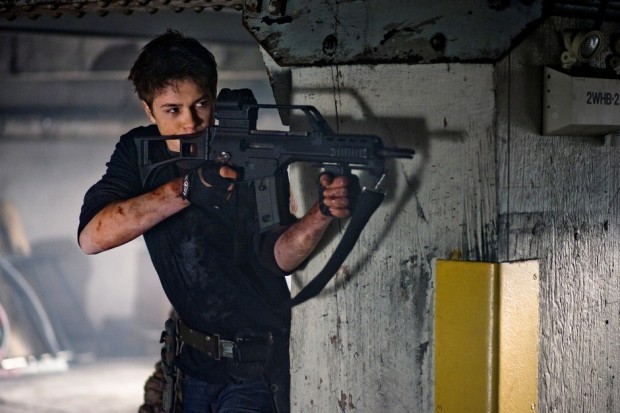
 
And, after a visit to a fairy nightclub, Jason (Ryan Kwanten) and Captain Andy (Chris Bauer) bromance their journeys of personal growth. But Lafayette (Nelsan Ellis)? Bah! Lafayette turns into a demon, looks at the heavens, cries “I just need some fuckin’ help,” and is answered with a vision of his dead lover Jesus (Kevin Alejandro) with his lips sewn up. Which I guess is an improvement over last week, when his grief caused Jesus’ demon-head to cause Sookie’s car to ram into a tree.
 
In short, it sucks to be Lafayette. It always sucks to be Lafayette. And lately, Ellis’s acting has been suffering as he tries to carry this impossible weight. I think Alan Ball has been over-trying so much to atone for very early Lafayette sins that he’s been forcing poor Ellis into repeated hair shirt moments when all he has to do is one simple thing:  Grieve over the death of Jesus.
 

But Lafayette has been denied that, just like Lafayette always seems to be denied normal things, from the very dubious beginning, when he started the show as a literal slave to the very, very, very white Eric Northman, a black guy laboring in chains.

This was . . . what’s the phrase? Wait. Got it. This was fucked up. This was Black Snake Moan, but backwards. The idea, I think, was to push an envelope so far the envelope shredded. But instead I feel like maybe it messed Alan Ball up in some way he hasn’t quite worked out.

Whatever the deal, True Blood has had a very skittish way with black characters. Jesus? A Latino? No problem. But black people? It’s just weird. This is, after all, a show that gave Tara a black lover named Eggs who became possessed by a demonic white MILF. Then Tara had to get her brains blown out to become interesting.

Mind—I’m not yelling racist. I’m yelling confuse-ist. Or rather, there’s so much subtext bubbling under any given episode of True Blood that if you started talking about race in this show that takes place in the Deep South, it would just be too much. That the show would be about nothing but race.  And that would just be miserable, and life-like.

Anyway—back to Lafayette and Ellis and fantasy misery. Ellis is such a lovable presence, and the True Blood writing room so dependably comes up with ways for him to suffer so horribly, they could at least allow him some down time to suffer his true love’s death.

I mean, sure. Tonight Sam (Sam Trammell) not only had to deal with his two shifter friends’ mysterious death, he also had to watch impotently as a bunch of apparent Slipknot fans blew away Luna. But Sam has Merlotte’s and friends aplenty.

And sure, Hoyt (Jim Parrack) has taken to dressing like he’s in Love and Rockets and hanging at Fangtasia, but that’s so he can get bitten (make contact.)

But Lafayette? How is it that someone this adorable has not discovered Grindr, or the local gay bar? More to the point, why does he still live in a shit hole like Bon Temps?

This is the weird thing about the Law of Fives, or the concept that shows tend to work for about five seasons and then the internal gravity that makes them cohere starts to fall apart. Which is why I believe Ball is leaving the show before the deadly Season Six rears its woeful head.

Before Ball blows, I hope he does all right by the beleaguered Lafayette; on the flip side, I don’t know what the moral calculus is for Terry (Todd Lowe), because what we learned tonight was unforgivable.

We knew from a previous episode that Terry and Patrick dropped acid and boozed it up in Iraq and accidentally obliterated a couple of innocent Iraqi families. Well, tonight they found another guy from their unit who’s living in an underground room surrounded by paintings of a fire demon.

Reason: At Patrick’s urging, the unit killed a surviving woman who let loose a fire demon on them all, after which the three Marines burned all the innocents. Kee-rist.

So Terry’s a mass murderer who burns women and children. Totally fucks with his adorable goofy PTSD profile. It’ll be interesting seeing where this goes. And it’s fascinating that we’re OK with Eric and Bill and Pam and the rest killing like crazy, but that’s sexy supernatural (TM Maureen Ryan) stuff: this is real Iraq War murder.

Meanwhile, Eric, Bill, Sookie and Alcide are looking for Russell in an old building. This is like Waiting for Godot at this point.

But they do find him—along with a clutch of humans he’s mesmerized for future meals. He looks a bit under the weather, but he does have his skin back. There’s a commotion and they cut to a goth classic tune. Kind of a letdown ending, considering that Bill and Eric are wearing I-Stakes (electronic stakes that can kill them from afar.) All in all, the weakest episode this season, the kind that exists to fill in the holes that’ll make the next episode really, really good by comparison.

But even weak Blood can give us Captain Andy, asking with a straight face, “I fucked a fairy?” and Ryan Kwanten swinging his full buttocks for no reason whatsoever except that this is True Blood.  So a fail? Nah, not close. But please, Mr. Ball, cut Lafayette a break, ‘k? We’ll all feel better in the morning.

Ian Grey has written, co-written or been a contributor to books on cinema, fine art, fashion, identity politics, music and tragedy. Magazines and newspapers that have his articles include Detroit Metro Times, gothic.net, Icon Magazine, International Musician and Recording World, Lacanian Ink, MusicFilmWeb, New York Post, The Perfect Sound, Salon, Smart Money Magazine, Teeth of the Divine, Venuszine, and Time Out New York.

FALLING SKIES RECAP 4: LOVE AND OTHER ACTS OF COURAGE

FALLING SKIES RECAP 4: LOVE AND OTHER ACTS OF COURAGE

Hey everyone, Rick's back!

nullI've mentioned Rick in a previous recap. In Season 1, he was one of the harnessed kids* who was rescued, along with Tom's son Ben. Rick left the Second Massachusetts, preferring to rejoin the skitters.

*Quick update for newbies: The alien "skitters" capture children and put biomechanical harnesses on them. The harnesses enslave the kids, and seem to eventually turn them into skitters. Ew, gross.

I liked Rick. He had a smoldering intensity that was creepy and stood out among some too-soft characters last season. But I honestly never expected to see him again. I was wrong. Watch:

This scene introduces an unforeseen plot element that will become vitally important (aliens attacking aliens!). But not only that, it brings back the glowing spikes that have been haunting us for three episodes now—if you've been reading my column, you know that glowing spikes has become something of a catch phrase for me—and the appearance of the spikes causes us to think Ben is in mortal danger. Then, surprise! It's Rick! Injured, mysterious, utterly untrustworthy, yet still a vulnerable child. That's a lot of wallop in one reveal, so I have to say "well done."

Falling Skies opened strong this season, but this episode, the verbosely-titled Love and Other Acts of Courage, is the weakest so far. One problem: no strong action. The clip above gives us Tom and his crew heroically checking out a battlefield after a battle is over. There's one scene of hiding from mechs (the huge, incredibly deadly mechanical drones that serve the skitters), two scenes of running away, and two scenes showing drawn guns but no battle. By my math, that's no action, although some of the tension was (as usual) very well-played. Maybe I'm just susceptible to tension, but this show always manages to get me.

The episode succeeded in delivering the creepy, although, after last week's hideous reveal of how harnesses are attached to children, nothing is going to measure up any time soon. But if something could measure up, the opening sequence, where the skitter affectionately known as Red Eye seems to pray or call to the skies, and then Ben does the same in an evil-sounding skitter voice? Well, that will do nicely.

It was so disturbing that I honestly assumed it was a dream sequence. Silly me.

And on the list of creepy things, was there blood in a mech head in that battle sequence? It's in the video above, check me on this—is that blood in the hole blown through a mech brain? Are they biomechanical too? Creeeeepy.

Say what you will about this show (and there's plenty of room for criticism), it goes there. It kills characters you thought were safe; it uproots, rearranges, and endangers its characters; and it pulls the rug of the plot out from under you. This is a dangerous war with serious consequences. I never could have guessed that a skitter rebellion would be introduced, or that Red Eye would propose an alliance. Do I think it's real? I have no idea. But I love the insanity of using this as a story element, and that our friends in the Second Massachusetts have no way of knowing who or what to trust, and that all of this is being played for the highest possible stakes.

Hey everyone, Rick's dead!

Just like that, another serious and important death, right on the heels of his restoration to the group. In some ways, this is an easy death for the writers to deliver; Rick wasn't back long enough for us to get attached, yet this was a child, killed by friendly fire, who embodied the distrust that people feel towards  Ben, and it reminds us again of what is at stake. Watching Rick get killed reminds us of how very precarious Ben's life is right now.

The clever reader may have noticed I said this was a weak episode and then proceeded to praise it. That's unfair of me.

What Love and Other Acts of Courage lacked in strong action sequences it made up for in long, long talks about serious, serious things. Talks. About things.

In fact, the core of this episode was a long, long talk between our hero, Tom Mason, and Red Eye, using Rick as his voice.* The problem with this scene (series of scenes, actually, intercutting with other scenes) was that Red Eye had nothing much to say. Tom kept asking for evidence, and Red Eye kept talking about non-evidence. He kept delivering back-story, and pleading his case, and being all serious. The whole thing honestly felt very 1950s, very Alien Invasion B Movie, as the serious-minded alien appealed to an intelligence absent in humans. Think Klaatu Barada Niktu, and all that. It was a strange tone to take in the middle of a very battered war zone, and Tom was completely right to distrust it. When Tom demanded proof, Red Eye should just have said, "I have no proof! Only time-filling exposition!" But that didn't happen, and Tom, the former history professor, even managed to revert to lecturing about history, something he'd mercifully done little of earlier this season.

*Skitters seem to communicate entirely by radio waves; they vocalize only a little. They sometimes use harnessed humans to speak for them, since the harness allows the humans to understand the radio waves. Or something. Even though the harness was removed from Ben and from Rick, it continues to affect them.

Other conversational scenes went a bit better. Hal and Maggie's burgeoning romance? Not bad. I'm not a fan of Drew Roy as Tom's oldest son, Hal, but Sarah Carter as Maggie is quite interesting to watch, and I love her gravelly voice.

There was one really good fight between Ben and Tom, with some actual father-son yelling. If you're going to do family drama in a science fiction show, you have to make it believable. I believed that little shouting match.

The episode ends with Ben telling his little brother, Matt, that he's leaving. Ridiculously, he asks Matt to keep this information a secret, but I suppose all he really wants is a few hours lead time.

I'm hoping that next week we'll get a lot more action, and I'm sure we'll get more surprises. We are informed, this episode, that the travelers are in Richmond, about two weeks from their goal of Charleston. A lot can happen in two weeks, so stay tuned.

Deborah Lipp is the co-owner of Basket of Kisses, whose motto is "smart discussion about smart television." She is the author of six books, including "The Ultimate James Bond Fan Book."

THE NEWSROOM RECAP 3: THE 112TH CONGRESS

THE NEWSROOM RECAP 3: THE 112TH CONGRESS

As much as I believe Aaron Sorkin is, to some extent, correct about the brokenness of our news system, as I’ve watched The Newsroom, I’m finding myself increasingly sympathetic with the people he’s angry at, the ones who knuckle under to commercial pressure and the terms of their contracts as Will McAvoy and the News Night team rise above them. I absolutely agree that established stars like McAvoy should use their power and influence to emphasize facts and to elevate worthy stories. But it turns out to have been pretty easy for MacKenzie and Jim to convince Will that he should be a different kind of newsman and to give him the words to help him do it. The person who’s going through an internal struggle that turns out to be compelling here, the one who doesn’t have Charlie standing as a barrier between him and pressure from Leona and Reese, and the one Sorkin wants me to hate, is Don, my new favorite character.

nullAfter Will’s epic on-air apology for falling down on the job, Don sits down to have a heart-to-heart with Jim, who has effectively replaced him. “I would have loved to be part of that. I could have done the show you guys want to do. I’m equipped for that,” he confesses. “You’ve got a mandate. Bring viewers to ten o’clock. I don’t . . . I have to cover Natalee Holloway. And you guys set me up to look like an asshole before I even got started.” Don is like Will, to a certain extent, a talented man who succumbed to the pressure to put on a show that was likable rather than substantive. But unlike Will, he’s relatively anonymous. He could be fired and Elliot’s show would keep ticking on without him. If Don is going to live in hopes of being able to make the kind of show that Jim and MacKenzie are making for Will, he has to keep his job. And that means kowtowing to a lot of unattractive people’s unattractive senses of what counts as news.

Jim doesn’t seem to understand that his mandate to do good news is a luxury, rather than something he just woke up and decided to do. He begins telling Don that he can just do a good show if he wants before they’re interrupted. Then, he mocks Don later, telling him “You guys did a good show tonight. I wasn’t aware of what was going on with the McRib sandwich.” I kind of don’t blame Don for telling Jim, “Yeah, go fuck yourself.”

And I’m not even sure Jim gets the message later when Maggie, in one of the few moments in The Newsroom where a woman gets to explain something to a man, tells Jim that Don’s failure has more complex roots than Jim acknowledges. “Don’s hands are tied,” Maggie says. “He got marching orders to get the ratings up at ten. And he’s driving a different car than McAvoy. Elliot’s smart, but he can’t do what McAvoy does. Plus, his salary’s tied to ratings.” That, not a studied, cowardly commitment to blandness for its own sake, is the reality of cable news—and the actual source of journalism’s problems.

Will can pontificate all he wants about the fact that the federal government didn’t insist that the networks provide several hours of ad-free news programming every night. But the reality is that it “failed to include in its deal the one requirement that would have changed our national discourse for the better.” And as gratifying as it would be to watch anchors and their producers get mad as hell and refuse to take it anymore, The Newsroom is a more interesting show when it actually explores what happens to people who buck their mandates and see what they can do within the limits of their contracts than it is when it focuses on Will’s ridicule of Tea Party activists and beauty queens.

We almost see an example of that kind of struggle during election night coverage, when Don tries to fire up Elliot, who’s doing his best not to influence the network’s analysis. “I am in there doing everything I can to get Mac to get him to go to you, and he is doing it,” Don grumbles to his boss. “He is inviting you to become a star. Would you stop being so fucking enthralled with the act of punching a ballot?” Instead of acknowledging that Don has a point, though, Elliot pulls rank on him. And instead of having the two men talk about Elliot’s brand, or Elliot’s desire to occupy the space Will left open with his conversion, the closest the writers give us is Elliot’s telling Don “Let me also say, I’m not the one who wants to be a star, Mama Rose.”— Sorkin has Elliot blame Don’s frustrations not on the quality of the news they’re putting out, but on Don’s romantic troubles. It’s a weird punt of what could have been a fascinating journalistic moment.

We do get some sense later that Will’s new approach may be in trouble, in the form of Atlantis CEO Leona (the allusion to Leona Helmsley cannot possibly be unintentional). “What happened to human interest stories?” she grouses at a meeting with Charlie, who thus far has protected Will from her wrath, and Reese, who we learn is her son. “Obesity, breast cancer, hurricanes, older women having babies, iPhones. He was great at that shit.” I don’t think Sorkin intended it this way, but her reminder to Charlie that “You don’t make money for stockholders, which I have a fiduciary responsibility to do” is a sharp puncturing of MacKenzie’s disdain for ratings, something Will warned Charlie about and that Charlie embraced.

Sorkin, and by extension MacKenzie, Charlie, and Will, may not like that news is a business, particularly not part of a large international conglomorate with interests that require Congressional approval and working relationships with major industrialists. But in the absence of an alternative model to pay Will’s staff and get him access to the airwaves, this is the environment he has to work in. Being obsessed with ratings, as Will was before MacKenzie got to him, may have been unattractive. But pretending that they don’t exist, or that Atlantis is a business rather than a non-profit, is to ignore that Leona’s interests and the show’s overlap. Leona has a duty to the shareholders to keep bringing in revenue, but she also needs her business to make money so she can keep paying out Will’s fat contract and the decidedly more meager salaries of his employees. And as we see in this clip, she’s thought through the business end of this proposition more thoroughly than Will, Charlie, and MacKenzie have:

In pursuing a new approach to news, Will’s been pretending the rules of the business don’t really apply to him. Neither he nor the show acknowledges that their revolution can’t possibly last if they don’t find a way for it to be financially sustainable. Now, in Leona’s parlance, he’s going to have to start playing golf, and find a way to make the machinery of the system work for him, and for the people who depend on him for their jobs.

Alyssa Rosenberg is a culture reporter for ThinkProgress.org. She is a correspondent for TheAtlantic.com and The Loop 21. Alyssa grew up in Massachusetts and holds a BA in humanities from Yale University. Before joining ThinkProgress, she was editor of Washingtonian.com and a staff correspondent at Government Executive. Her work has appeared in Esquire.com, The Daily, The American Prospect, The New Republic, National Journal, and The Daily Beast.

VIDEO ESSAY: Batman: The Animated Series

VIDEO ESSAY: Batman: The Animated Series

Children of the 80's and 90's remember this series with a fondness bordering on the familial.  The animated series was there for you every day after school, with new episodes on Saturdays.  Watching the episodes again, I realize now it has become a not quite completed work, which is how superhero entertainment functions.  Batman's adventures are never-ending. The last episode, "Judgment Day" wasn't a pay-off to a series long arc but just another adventure.  I think this is part of what makes Batman, and characters like him, an avatar of the collective pop culture unconscious.  For as long as stories are told, Batman will be with us. 

John Keefer is a writer/director of short films working out of Phoenixville, PA. You can view his work here. You can follow him on twitter here.

LONGMIRE RECAP 4: DOG SOLDIER

LONGMIRE RECAP 4: DOG SOLDIER

null

There’s an important development in this week’s Longmire, though it’s not immediately apparent. For the first time, Walt Longmire hits the barriers of what the law can do, and he is willing to work outside the law for justice. Not only that, but he's doing so because of specific corruption focused on the Cheyenne. Given the show’s previous focus on Walt’s heroism for upholding the law in the face of (justified, but difficult) bitterness from the Cheyenne, that’s an improvement.

null“Dog Soldier” is built around the kidnapping—no murders this week, initially—of some Cheyenne boys who’ve been committed to foster care. There’s possible evidence of corruption in Social Services, of pedophilia, of corruption within the reservation, child abuse, or more. As the loose threads are connected or removed, the reasons for the kidnappings become more and more clear: the children were “kidnapped” in revenge for their removal, on false premises, from the reservation.

This culminates in arguably the show’s best scene, in which Walt confronts the Social Services worker involved, Crystal Shoemaker, at the end of the episode. He carefully explains what happened, and why he knows she’s involved. She lays out her points—all of the evidence is circumstantial, she can talk a mean game about doing what’s best for the children, and oh yes, she’s white. She’ll get away, even if she is corrupt, and a kidnapper and murderer. And here’s where Walt lays down the lack of law. She’s right, of course. The system is tilted entirely toward her. The government has designed a mechanism by which the adoption/foster care system benefits—and corrupt utilizers of that system personally benefit—from making the Cheyenne on the reservation look worse and removing their children. This is an accurate depiction of both issues with child service agencies and legally enshrined bias against Native Americans.

And Walt knows it. So he doesn’t try to use the power of the state to do the right thing. He acknowledges what the Cheyenne characters have been telling him throughout the episode—that the system is unfairly and presently irredeemably working against them. They have their own extra-legal ways of achieving justice, through an enforcer named Hector who gets paid by the tooth. Hector, and the other members of the Cheyenne community, have clearly figured out the scam by which Shoemaker and her former partners have profited from taking Cheyenne from their home. And they will come for her, possibly out of control, possibly overtaken by the spirit of vengeance: “I believe in transformation. I believe we become vessels for forces we cannot control or understand.”

Walt can’t win as a lawman. So he wins as a person. This is, I think, what separates a competent show from an interesting, potentially great show. Veronica Mars had slick, entertaining mysteries each week with equal parts comedy and drama, but what made it special was its examination of class. The powerful had the law and institutions on their side, while the powerless and poor generally had only less savory options to them, and the main character was caught in the middle. That’s the case here, and it leads to more drama than previous episodes have possessed.

It also connects Longmire more directly to its setting. “The west” in American mythology—largely gone in as much as it ever existed, though rural Wyoming is as close as anything gets— exists in an odd conceptual place. On one hand, pioneers are supposed to represent the ideals of American self-perception. They’re hardy, pragmatic, pure of heart, and self-reliant. They built society, the story goes, instead of having it imposed on them. “The government” is a corrupting force, bringing laws and rules and regulations and, in the case of “Dog Soldier,” financial incentives for corruption and treating people wrong. Walt represents that frontier ideal, doing the right thing for people, regardless of whose people they are, or whether it’s part of the law or not (a far cry from previous episodes explicitly connecting him with the power of the state.)

Yet there’s an inherent tension within that mythology. Those western pioneers achieved most of what they did over the objections, sometimes violent and violently put down, of the natives of that region. The Cheyenne in Longmire have regularly complained about their treatment at the hands of white Americans, but for the first time, in “Dog Soldier,” those complaints are justified. Likewise, the socially conservative voting patterns of the western states make the idea that individual liberty is the dominant feature of western American society too simplistic. Longmire’s titular character may embody western stoicism and self-reliance in many ways, but to the show’s credit, he’s also demonstrating the complications of the western mythology.

One of the ways that Longmire does that is by continuing its overt serialization about Walt’s past. We’ve seen the flashbacks about him getting healed with Henry watching before. In this episode, a letter from the Denver PD triggers further flashbacks, but still very little information. While I generally dislike the manipulation of having the main character know about something the audience doesn’t, in order to maintain a mystery and keep viewers, I do like the way it was used in this episode. Walt’s apparent willingness to move outside the law in his past, and memory of this during the events of this episode, make his motivations more transparent to us. Likewise, the events of “Dog Soldier” work retroactively to make whatever Walt happened to do previously more understandable, when we understand them.

And I remain impressed with Longmire’s ability to construct a mystery. While it became increasingly obvious that something in the corrupt Social Services structure helped trigger the kidnapping case, who and why was still a mystery up until the very end. The revelation made sense—we had the same information Walt did—but still has some level of surprise. This is definitely not a show where a random guest star appearance clearly indicates who the likely culprit is. If Longmire manages to add effective serialization to the examination of the American west it demonstrates here, as well as keeping its episodes impressively constructed, it could get a lot more exciting.

Rowan Kaiser is a freelance pop culture critic currently living in the Bay Area. He is a staff writer at The A.V. Club, covering television and literature. He also writes about video games for several different publications, including Joystiq and Paste Magazine. Follow him on Twitter @rowankaiser for unimportant musings on media and extremely important kitten photographs.

THE NEWSROOM RECAP 2: NEWSROOM 2.0

THE NEWSROOM RECAP 2: NEWSROOM 2.0

null

For Aaron Sorkin’s characters, doing your job and falling in love are often inseparable processes: Natalie schooled Jeremy on television producing and love on Sports Night, Josh Lyman and Donna Moss bantered over bills on The West Wing, and Matt Albie and Harriet Hayes worked out their issues on the set of Studio 60 on the Sunset Strip. The staff of Will McAvoy’s show, from the big dog himself down to his most junior producers, is no exception to this rule. The staffers all have romance troubles they’re working out on set, this week in the form of bizarrely histrionic public displays of angst. And while it’s grating enough to see competent women reduced to workplace fits at the behest of men, there’s a particularly weird contrast between MacKenzie’s extended meltdowns and her antiseptic approach to what she puts on the  air. She’s supposed to be the strongest female character on The Newsroom, but increasingly, it seems like she exists to mouth Aaron Sorkin’s platitudes and to debase herself before Will.

null“We don’t do good television,” she explains towards the beginning of the episode. “We do the news.” It’s the kind of Sorkinism on the journalism business that sounds good at first but doesn’t actually make sense after any careful consideration: good television and the news aren’t actually mutually exclusive. In the pilot, the staff of Will’s show congratulated themselves on covering Deepwater Horizon as a corporate cover-up instead of as a rescue story. The death or survival of a dozen people apparently doesn’t count as news in this schema, unless there’s a demonstrable government cover-up. It left me wondering how News Night might cover the tornadoes in Joplin, Missouri. Would the victims of that natural disaster be deemed unduly heart-tugging if Halliburton wasn’t somehow culpable.

Tonight, MacKenzie deems a source blogger Neal tracked down as unworthy, a man whose parents brought him to the U.S. as a child and who learned in adult life that he was an undocumented immigrant, a chain of events that led to the loss of his driver’s license and potentially his job. “I’ve got to budget 42 minutes. I’ve already spent 18 minutes on Jan Brewer and La Raza,” MacKenzie insists. “Even if we did have the time, it would be emotionally manipulative. We’d be putting him there to feel sorry for him.” Neal protests, “We should feel sorry for him. He’s getting screwed.” MacKenzie crisply tells him, “I don’t want to feel sorry for anyone. I want the facts.”

Again, this sounds good, but it represents a sterile approach to the news. Sometimes, facts are incomprehensible without faces and stories about how they function attached to them. If Will’s supposed to play lawyer, presenting the best form of each side’s arguments, then he needs to have the best possible clients representing those views of the world. In MacKenzie’s view of things, that’s apparently a talking head from the National Council of La Raza rather than someone whose life has directly been impacted by immigration policy—she never considers the possibility that she could bring both men on the air. Maybe that’s a tiny thing to quibble over, but it furthers a sense that The Newsroom is disengaged both from the realities of reporting, and from the kinds of personal stories that often further social change.

For most of the episode, we see MacKenzie as a hectoring, sometimes condescending, but always stringent idealist when it comes to her vision of how the news should be reported. She’s a schoolmarm, telling the audience what to think more than she’s actually teaching her staff how to do their jobs. Given this characterization, you’d think The Newsroom would want to give her a rich, complex personal life, and maybe a sense of humor, so the audience could engage with her as something other than as a scold. But instead, she comes across as an immature, hystrionic brat who demands that everyone else be riveted by her weirdly mundane problems. When she finds out that economics anchor Sloan (Olivia Munn)—who MacKenzie has asked to anchor segments because “If I’m going to get people to listen to an economics lesson I need someone who doesn’t look like George Bernard Shaw”—thinks that Will cheated on MacKenzie and that’s why they broke up, she goes ballistic. “You need to do this. You need to go from person to person and tell them that Will is an extraordinary man with a heart the size of a range rover,” MacKenzie demands. To her credit, she backs off almost immediately, realizing she’s asked for something bonkers. But I’ve still never loved Olivia Munn more than the moment when Sloan informs MacKenzie briskly that she has no intention of re-arranging her day to rectify what MacKenzie views as a massive injustice, because she has facts to report. We don’t learn much about Munn in this episode, but she comes across as brisk and perceptive, a slightly more realistic Avery Jessup from 30 Rock, and at this point, she’s the only character I’m looking forward to getting know better.

That meltdown alone might have had me wondering whether MacKenzie has a split personality, or is just the victim of being Sorkin’s vessel rather than an actual person. But it’s not as if Sloan’s chat with MacKenzie has righted her ship. “Are people here under the impression that Will is an ass?” she asks her staff in a fit of panic, later. “You’re wrong. It’s wrong. And it’s an injustice.” Then, in a plotline that more likely originates in Sorkin’s well-publicized antipathy towards technology than from any actually plausible experience of a war correspondent who’s been filing stories from overseas for years, she sends an email meant for Will that goes to the entire office, then responds by destroying a staffer’s BlackBerry, demanding that she wants “everyone to delete the email you just received. Honor system,” and begging someone to destroy Will’s computer with a baseball bat in an increasingly hysterical tone.

I don’t particularly blame Will for being upset that MacKenzie broke his trust—he’s a vulnerable, vain, prickly man, and I can buy that he wouldn’t want anyone to know he was cheated on even though it was MacKenzie who transgressed. But when he screams at her “You know how something happens in an instant that is so astonishing you completely shut down? That doesn’t fucking happen to me,” he loses me. “The women who are here exist, quite simply, on the theory that nothing is more dramatically important than a man becoming great, and men cannot become great without women to inspire, provoke, and drive them,” NPR’s Linda Holmes wrote in her terrific review of The Newsroom before its release. Like Linda, I find that worldview inherently unattractive, and there’s additionally distasteful in the idea that we’re supposed to care so much about the fact that Will’s composure has been rattled.

When the lives of undocumented immigrants are at stake, emotion is a pointless distraction. But when MacKenzie’s upset or Will’s been wronged, we’re supposed to believe that their feelings are the most critical thing in the world. I know that The Newsroom wants me to feel more attached to its characters than to their subjects. But after two hours in their company I’d rather be hanging out with an undocumented immigrant in Spokane, Washington, than the supposedly-brilliant, self-absorbed people who snidely dismiss him as less than newsworthy.

Alyssa Rosenberg is a culture reporter for ThinkProgress.org. She is a correspondent for TheAtlantic.com and The Loop 21. Alyssa grew up in Massachusetts and holds a BA in humanities from Yale University. Before joining ThinkProgress, she was editor of Washingtonian.com and a staff correspondent at Government Executive. Her work has appeared in Esquire.com, The Daily, The American Prospect, The New Republic, National Journal, and The Daily Beast.