WATCH: A New Sleater-Kinney Music Video Featuring the ‘Bob’s Burgers’ Cast!

WATCH: A New Sleater-Kinney Music Video Featuring the ‘Bob’s Burgers’ Cast!

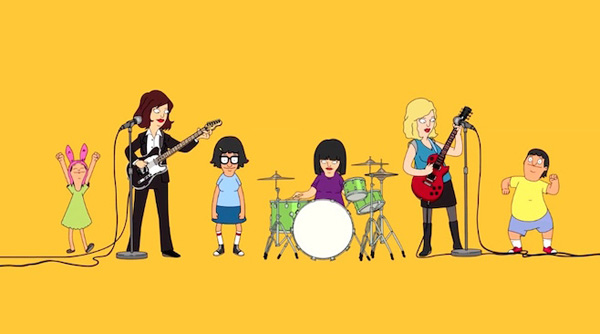
It’s entirely conceivable that you’re a Sleater-Kinney fan. The band’s fan-base has expanded considerably since Carrie Brownstein’s star turn on hit TV show Portlandia.  It’s also conceivable that you’re a fan of Bob’s Burgers, the show we raved about here not so long ago. If both these things are true, you’ll love this new music video for the song "A New Wave," from their newest album No Cities to Love. The video brings these two pillars of our culture together in Tina Belcher’s bedroom–which makes sense if you know anything about Tina, or about growing up. So: why not take a minute, put on some flannel, and press play? 

Kicking Television: EXCLUSIVE Behind-the-Scenes Look at the USA Series DIG with Co-Star David Costabile

Kicking Television: EXCLUSIVE Behind-the-Scenes Look at the USA Series DIG with Co-Star David Costabile


In this
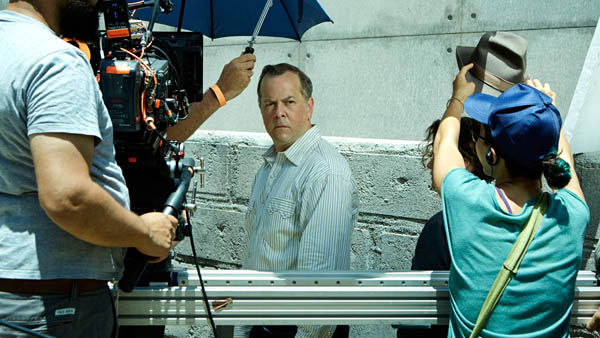
Indiewire exclusive, we go behind the scenes of the new USA series DIG with its co-star David Costabile (Suits, Breaking Bad, Damages). DIG,
from creators and executive producers Tim Kring (Heroes) and Gideon Raff (Homeland)
is the story of a murder in Jerusalem, but set against the backdrop of a much
larger mystery that takes viewers from Norway to New Mexico and into the
depths of the Holy Land. Costabile, recently praised
in this space
as an actor in need of a vehicle, plays Tad Billingham, a
deceptively charming author, TV personality, and leader of a cult who plays a
crucial role in the mystery.

The
series also stars Jason Isaacs (Awake),
Anne Heche (Save Me), Alison Sudol (A Fine Frenzy, Transparent), Richard E. Grant (Downton
Abbey
), Regina Taylor (The Unit),
Lauren Ambrose (Six Feet Under), Omar
Metwally (Non-Stop) and Ori Pfeffer (World War Z).

KICKING TELEVISION: The ‘House, M.D.’ That Love Built

KICKING TELEVISION: The ‘House, M.D.’ That Love Built

nullI’m not very good at love. Now, in
the St. Valentine’s season, I’m lucky enough to be in love. She’s very patient.
She tolerates my idiosyncrasies and flaws. We’d like to get a dog. My folks dig
her. I’m not quite sure how many times I’ve been in love before. At least once.
Most likely two-and-a-half times. And once in high school, but that doesn’t
count. I suffer from acute loneliness, which often leads to binge television
watching. At least once every two years I revisit my favorite series: Lost, Friday Night Lights, West
Wing
. They stand in as replacements for love, for companionship. Lately, in
the throes of a new relationship, I have found less of a need to binge on
TV. But a few weeks ago, as I quickly flipped past Gilmore Girls as a Saturday night viewing option on NetFlix, I
stopped briefly on House, M.D. At one
time, it had been in my binge rotation. As an argument for the virtues of Rory
and Lorelai filled my periphery, I wondered how House fit into the mix. In the absence of love, Lost, Friday Night Lights, and West
Wing
all told some sort of love story. Jack and Kate. Small town America
and football. Aaron Sorkin and whimsical banter. But House seemed on the outside, counter to the affections of my
loneliness. And then it occurred to me, in an epiphanic moment of distant
wonder, that House is the greatest
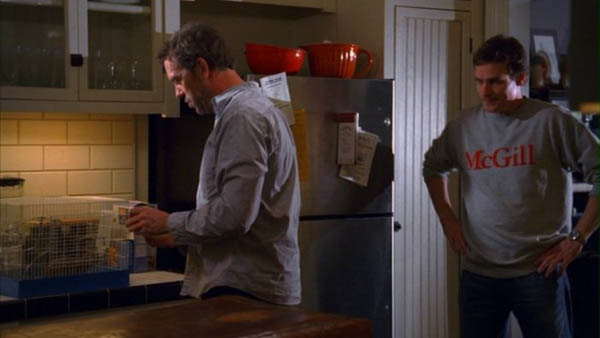
love story television has ever told. The love between Drs. Gregory House and
James Wilson, that is.

I’m not talking about the kind of
love you find in House fan fiction.
And I’m not talking about the kind of love that existed between Cameron
(Jennifer Morrison) and House (Hugh Laurie), a love born of daddy issues and a show’s attempt to create sexual tension. And I’m not talking about the Cuddy
(Lisa Edelstein) and House love, which always seemed contrived and formulaic. What existed between Laurie’s House and Robert Sean Leonard’s Wilson defied
the traditions of television which ran deeper and were more transcendent than Sam and Diane,
Ross and Rachel, Pepé Le Pew and Penelope Pussycat.  

Not unlike the love I have now, I
almost missed out on House. Just as
my partner and I briefly parted ways for superficial and ancillary reasons this
past December, I dismissed House as
typical serialized fare. It was ER with fewer characters. Hugh Laurie was
over-the-top. The guy from Dead Poet’s
Society
(Leonard) seemed under-used. The Australian was too pretty. And I
never liked Edelstein as an actress, particularly her underwhelming performance
as an escort on West Wing in all four
of my viewings of it. But like love, I gave House
a second chance, and I became enamoured by it. Maybe even obsessed. Dare say I
loved House, and all its
idiosyncrasies and flaws.

What drew me most to House was Laurie’s performance, and it
is indeed brilliant. Playing a drug-addicted and gifted diagnostician proved to
be a character for the ages.
His
Holmesian problem solving at first seemed too much in the tradition of Columbo, but Laurie made it feel
genuine, as the solution to the diagnosis fulfilled his character’s need more
so than that of the arc and narrative of the episode, counter to the traditions
of the genre and tropes of the procedural drama.  And Leonard’s Wilson was the Watson
to Laurie’s Holmes. But more than anything else on the show, I was drawn to the
extreme friendship between House and his oncologist conscience. It was the kind
of love between friends that simply isn’t shown on TV or in film, and certainly
not between men. According to the TV and film auteurs of today, all male friendships are
some form of bromance, or homoerotic exercise, or dudebro vehicle. Judd Apatow,
or Lethal Weapon, or Judd Apatow. On House,
we were treated to a love between men that I remember from home, from youth,
that I’ve missed in the transience of my adulthood, a kind of love that is
beyond sex and marriage and poetry and children and Christmas dinner and
minivans and mortgage rates and the new Keurig and Viagra and debt and
infidelity and data plans. This was a love story that aspired to more than what
the medium had ever attempted to offer before.

Every great love story revels in
the mythology of its origins. House and Wilson met as Romeo and Juliet did: at
a medical convention in New Orleans. Wilson started a bar fight in a bar after
Billy Joel’s "Leave A Tender Moment Alone" was played repeatedly by
another patron. Having witnessed the event, House posted Wilson’s bail and an undeniably real love was born.

In early seasons, Wilson enabled
House’s addictions and extremes. He writes, or allows House to forge,
prescriptions for Vicodin. He supports, or excuses, House’s alcoholic
tendencies, his affection for prostitutes, his acerbic wit. He indulges or
celebrates the oddity of House’s genius. Enabling is a form of love, as long as
it does not endanger anyone. Wilson always controlled his affections. He
managed House. He was his conscience, his sponsor, his moral center. And though
at times it bordered on burden, the friendship certainly wasn’t one-sided.

This love can best be seen in an
episode from Season 3, "Son of Coma Guy." House awakens a man (the
brilliant John Laroquette) from a coma, and he and Wilson take him to Atlantic
City for a last hurrah before the ultimate sleep. House has to euthanize the
man in order to preserve his organs and save his son. While Wilson’s morality
would never allow him to lead such an act, he supports House’s morality in providing an
alibi and advice on methodology. Love is unconditional in this way, and love on
television would rarely aspire to this form, a love so true it is literally
criminal. Joey would never have helped Dawson bury Pacey’s body.

This altruistic love continued
throughout the series. Wilson would manage House’s mania, take him to rehab,
comfort those bruised by his violent pathology. House provided the buttoned-up
Wilson with his freedom, his shy eccentricities, his inner manchild. From
adolescent pranks to monster trucks to binge drinking, House allowed Wilson to
be free to the confinements of his responsibilities. House saved Wilson from bad
relationships, from a life of stasis, and a lack of companionship. He paid a
child actor to pretend to be Wilson’s illegitimate son to provide the tangible
realization that kids are a hassle. Chandler would never do that for Joey.
Hell, he slept with Kathy.

In House’s final season, the roles between House and Wilson are
reversed when the oncologist is diagnosed with cancer. Suddenly, it is Wilson
who is embattled and prone to questionable decisions, who is faced with his
mortality the way House’s addictions continually forced him to. After failed
treatments (both traditional and experimental), Wilson is resigned to death,
something that House has never been able to consider as an option for his
patients. At this moment, House realizes he may lose his one true partner, his
one true love.
 

"You don’t have to just accept
this."

"Yes I do have to accept this. I
have five months to live. And you’re making me go this through this alone. I’m
pissed because I’m dying and it’s not fair and I need I need a friend. I need
to know that you’re there. I need you to tell me that my life was worthwhile
and I need you to tell me that you love me."

"No, I’m not going to tell you that
unless you fight."

If there has been a more true and
honest declaration of love on television, I have not seen it. Wilson’s affirmation
is a thesis statement of their relationship, and the essence of true love
itself. House’s inability to do exactly as his friend needs is in and of itself
an act of selflessness and love.

In the series final episode, House
has faked his death to escape jail so that they may spend the rest of Wilson’s
life together. The entire series had been built on the premise that House
needed the puzzle of diagnosis, the Holmesian existence, in order to live. It
was more to him than the Vicodin, or the pain, the Vicodin, or Cuddy,
or family. But in this final act, a final act of absolute love argues that the
series was not about House at all, but rather the long tale of a complicated
platony, and in more universal terms the human need for companionship above all
else.

And fittingly, astride their
motorcycles, leathered up in a wink of homoerotic wit, the two men drive off
into the sunset, to their final moments together, an epic nod to the iconic
fades into sunset.

Love is at its worst on television
and on Valentine’s Day. In these instances it is a caricature of itself. The
difference is that on TV the love portrayed is unattainable. On Valentine’s
it’s unrealistic. An overly sugared candy heart. A sitcom of emotion. Love on
television tends to be superficial, shallow, and simple. It is stained by the
inevitability of reconciliation, the false promise of happiness, and The Bachelor. What Wilson and House
shared eclipsed our hollow idea of love.

Mike Spry is a writer, editor, and columnist who has written for The
Toronto Star, Maisonneuve, and The Smoking Jacket, among
others, and contributes to MTV’s
 PLAY
with AJ
. He is the author of the poetry collection JACK (Snare
Books, 2008) and
Bourbon & Eventide (Invisible Publishing, 2014), the short story collection Distillery Songs (Insomniac Press,
2011), and the co-author of
Cheap Throat: The Diary of a Locked-Out
Hockey Player
(Found Press,
2013).
Follow him on Twitter @mdspry.

Watch: A Video Essay on Robert Altman’s Evolution, From Early TV Work to His Last Films

Watch: A Video Essay on Robert Altman’s Evolution, From Early TV Work to His Last Films


So it turns out that Robert Altman, before Nashville, before The Long Goodbye, before Short Cuts, before The Player, directed for television. And this was good television: Alfred Hitchcock Presents, for instance. Or Bonanza. Or Combat! Or Bus Stop, based on William Inge’s famous play of the same name. At the time that he directed for TV, Altman was killing two birds with one stone, in a sense. He was making a living as a director, but he was also developing the relaxed, somewhat drifting style which would later characterize his work. And, while doing so, he was studying, in a sense, with older technicians, from whom he could learn something about craft, about structure, and about dramatic build on screen, which would serve him well when he unleashed himself into celluloid glory. This excellent Film Comment video essay by Violet Lucca takes us through Altman’s early work, offering it as a window into his later films.

KICKING TELEVISION: Why David Costabile, Mary Louise Parker, Gary Cole, Michael Keaton, Ellen Page, Joan Allen, Adam Driver, and Beyonce Need Vehicles!

KICKING TELEVISION: Why David Costabile, Mary Louise Parker, Michael Keaton, Ellen Page, Joan Allen, & Beyonce Need Vehicles!

nullIn my look
back at 2014
, I bemoaned the wasting of good talent on bad TV. Fewer
things are more frustrating in film and television than a performer withering
under the bright lights of a production unbecoming of their abilities. As I
binge-watched TV over the festive season while adding 20 pounds raiding my parents’
fridge, I became more and more aware of how prevalent this neglect is. And then I was reminded
of it when J.K. Simmons won a Golden Globe on Sunday. Simmons is a character
actor with few peers. And yet, when he finds himself on TV, it’s in doomed-from-the-start series like Growing Up Fisher or
Family Tools. Alternately, pilot
season is filled with actors and actresses undeserving of their own programs who are regurgitated each year. What exec’s nephew thought we needed a Kyle
Bornheimer-led comedy? 

There is no shortage of acting talent wandering aimlessly
from lot to lot in Hollywood. True
Detective
brought Matthew McConaughey and Woody Harrelson back into the
public discourse, reminding us that they’re actors first and celebrities
second. In season two, the same revitalization will be attempted with Colin
Farell, Vince Vaughn, and Taylor Kitsch. But True Detective can’t provide every underused actor a path to
salvation.

What the industry seems to lack is the ability recognize
talent and find suitable vehicles for them to succeed in a series. What follows
is a list that could go on longer than an explanation for Anger Management, but recognizes a few actors and actresses who I
think could really excel in a series, especially in the new world of streaming
television where shows like Transparent
and House of Cards are not just made,
but celebrated.

David
Costabile

null

Costabile has had recurring or small roles in several of
the most interesting and innovative TV shows in recent memory, and more often
than not, he’s the best thing on screen. His CV includes Damages, Breaking Bad, The Wire, and Flight of the Conchords. Even in the soapy guilty pleasure of Suits, he stole scene after scene
stepping beyond the work of his co-stars. Costabile is a standout amongst his
peers, and would be excellent in a leading role in a show of the pedigree of
those he has guested on. Costabile is the least known on this list, and was one
of many character actors who I considered including, such as David Morse,
Margot Martindale, James Remar, and their peers. Here, Costabile stands for all
of them. A quietly accomplished screen presence who could no doubt define a
series if given the opportunity.

Mary
Louise Parker

null

I never liked Weeds.
The first few seasons were somewhat palatable, but the narrative got more and
more ridiculous and suffered from child casting gone awry with puberty so bad
that Robert Iler could feel better about himself. But Parker was always an
engaging presence, even in the later seasons when even she seemed embarrassed
to be enduring the silliness of the plots and wasted guest stars like Albert
Brooks and Richard Dreyfuss. Parker’s best role to date was the recurring Amy
Gardner on The West Wing. While Aaron
Sorkin is often maligned for writing poorly realized female characters,
Parker’s Gardner was a sublime revelation, and I often hoped she’d be added to
the full-time cast. Gardner’s mix of quirky intelligence and aloof indifference
to the chaotic world around her would’ve been an interesting spin-off, and a
series with Parker at its center that respected the quality of her performative
acumen. 

null

Gary
Cole

Gary Cole has been in everything. Seriously. He had a
cameo in my buddy Phil’s Bar Mitzvah video. The popular parlour game Six
Degrees of Kevin Bacon should be renamed for Cole. My introduction to Cole was
in the short-lived NBC series Midnight
Caller
, and I’ve been a fan of his in everything he has done since. An alum
of the Steppenwolf Theatre Company, Cole has been the best part of 36 episodes
of The Family Guy, stole laughs from
Will Ferrell in Talladega Nights, is
part of pop culture lore from his role in Office
Space
, and was nearly elected President – in The West Wing. And the dude has great hair. Like, George Clooney great.
How he has never been part of the main cast of a (successful) live action
series is beyond me, but then again Jon Cryer has won two Emmys, so what do I
know?

Michael
Keaton

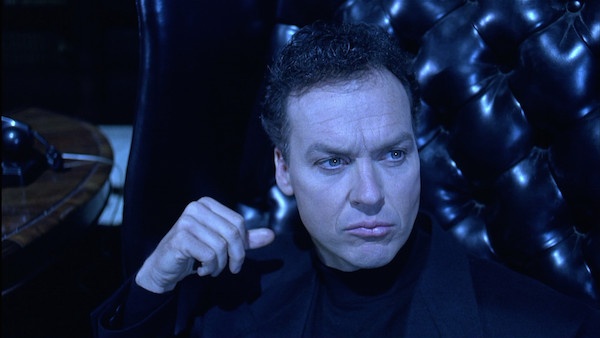
Fresh off his Golden Globe win for Birdman, and now a frontrunner for an Oscar, Keaton has revived his
career after fading from the spotlight in the past decade. The real Batman will
likely have his choice of film scripts to choose from, but to me his place is
on the small screen. After a lauded performance as a former superhero actor who
turns to the stage in an effort to find his place in the canon of contemporary
film, Keaton could learn from Riggan Thomson and turn to a more interesting
medium in the twilight of his career. And what possible better film role will
ever come his way? Keaton was a giant in the 80s and 90s, stepping seamlessly
between comedy (Mr. Mom, Multiplicity) and drama (Batman, Clean and Sober) unlike almost any actor of that era. He would’ve
made an interesting choice for new seasons of True Detective, and a series of that ilk built around Keaton would
be a welcome addition to the TV landscape.

Ellen
Page

null

Where’d you go, Ellen Page? Her Oscar-nominated turn in
Juno was eight years ago, and since then, Page has been seen only sporadically on
screen, and often lost in the grandiose of the franchise (X-Men) or the scope of the premise (Inception). Page’s coming out in a speech at the Human Rights
Campaign’s "Time to Thrive" conference reminded us of her remarkable
presence despite the absence of the false Hollywood sheen. As
a Canadian, I recall Page from her start in TV on Pit Pony and ReGenesis,
and would love to see her return to her roots in a series befitting her
marvelous talent. The problem is, Hollywood has no idea what to do with a 5’2”
Canuck lesbian who’s best known for an indie romcom role as a pregnant teen.
Ideally, they’d like to pair her with Michael Cera in Juno 2: Twins! but she deserves so much more.

Joan
Allen

null

Hollywood’s inability to cast women over 38 as anything
other than mothers and quirky older sisters is not just a plague on the
industry, but an indictment of its lack of imagination. There is perhaps not a
more captivating yet underappreciated screen presence than the three-time Oscar
nominated, Tony Award-winning Steppenwolf alum. If she had a penis, she’d be
George Clooney. One of my favorite films of the past two decades is The Contender, in which Allen’s
performance outdoes brilliant turns by Gary Oldman, Jeff Bridges, and Sam
Elliott. She’s the only life in the antiseptic aesthetic of the Bourne films.
In fact, I’d love to see her CIA Deputy Director Pamela Landy in a series of
her own. Who do you call at Netflix to get that done?

Adam
Driver

null

Girls is
awful. I mean, it’s beyond awful. I’d rather spend the rest of my life in Chuck
Lorre’s screening room than endure another episode of HBO’s series about
privileged white girls in Brooklyn trying to monetize their MFAs is exhausting
self-indulgent tripe. But Driver, is excellent. And wasted. He’s similarly
excellent and wasted in the disappointing This
is Where I Leave You
, and the only reason to suffer the Daniel
Radcliffe/Zoe Kazan romcom The F Word.
With a prominent role in the upcoming Star
Wars
sequel The Force Gets Up Early,
Driver is likely meant for more big screen turns, but is better suited for the
character driven serial quality of TV. He has the manner of a character actor
and the charm and presence of a matinee idol, traits that beg for a series. But
not NCIS: Greenpoint.

Beyoncé
Knowles

This isn’t a list of performers who need a break, it’s a
list of those who need a vehicle to fit their talents and engage viewers in the
genre of TV. Perhaps I’m still smitten by my WATCHABLES
podcast episode one Beyoncé learning from Arielle Bernstein
, but
the star among stars Ms. Knowles is a presence unlike any we’ve seen in a
generation. And she has held her own in films such as Obsessed, Cadillac Records,
Dreamgirls, and even Austin Powers 3: More Britishy and Silly.
Does she need a TV show? No. Would it immediately be a hit not matter the
quality? Yes. But talent intrigues me, and just as I wondered
aloud recently about non-TV auteurs could revitalize the sitcom
, I
would love to see what Bey could do on the small screen. And I’m not talking
about Z & Bey @ Home. I’m talking
about real TV. Like, Yoncé in twelve episodes directed by David Fincher written
by Gillian Flynn. But, you know, funny too. Hell, there’s already a trailer:

Mike Spry is a writer, editor, and columnist who has written for The
Toronto Star, Maisonneuve, and The Smoking Jacket, among
others, and contributes to MTV’s
 PLAY
with AJ
. He is the author of the poetry collection JACK (Snare
Books, 2008) and
Bourbon & Eventide (Invisible Publishing, 2014), the short story collection Distillery Songs (Insomniac Press,
2011), and the co-author of
Cheap Throat: The Diary of a Locked-Out
Hockey Player
(Found Press,
2013).
Follow him on Twitter @mdspry.
WATCHABLES Podcast #1, Feat. Arielle Bernstein and Mike Spry! From Beyonce to BOYHOOD to BIRDMAN To…

WATCHABLES Podcast #1, Feat. Arielle Bernstein and Mike Spry!

nullWe’re proud to present the first installment of Press Play’s new podcast, Watchables! This segment features our columnists Mike Spry and Arielle Benstein; future installments will bring Seth Abramson into the mix! On a semi-regular basis, the brave podcasters will discuss anything that’s… well… watchable, from film to TV to viral videos to Instagram. Today, Bernstein and Spry ruminate on their favorite things from 2014. What does this mean, for them? It means Beyonce meets Boyhood meets Birdman meets Obvious Child meets John Oliver meets… well, you’ll see. (Note: it was recorded some time ago, so forgive some references to certain holidays that might cause a slight time-machine effect.) The link is at the bottom of the page. And: if you need a visual reinforcement for some of the watchables discussed, we’ve provided a couple of those as well!

RIP Edward Herrmann (1943-2014): A John Cheever Memory

RIP Edward Herrmann (1943-2014): A John Cheever Memory

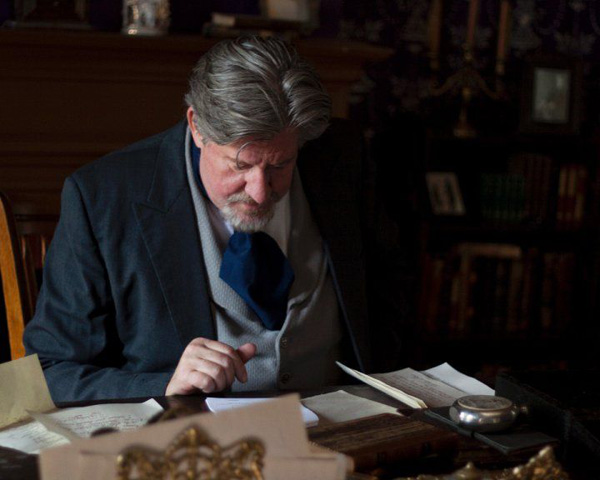
nullEdward Herrmann’s acting talent will always be emblazoned in my memory for one performance he gave, in a television adaptation of the John Cheever story "The Sorrows of Gin" in 1979. He starred with Sigourney Weaver, (who would turn heads, that same year, for her groundbreaking part in Alien) and the adaptation was done, interestingly enough, by Wendy Wasserstein, in the days when she was only just beginning to get acclaim as a playwright. The story describes a husband and wife who, unthinkingly, fail as parents through their boozing, and partying, and self-absorbed decadence; we receive the narrative through the eyes of their child, who pours her father’s gin down the sink and then tries to run away from home. The failure is bigger than that; these two individuals fail each other as members of a relationship, but rather than allowing them to redeem themselves, Cheever leaves them hanging, as he so often does, in their despair. The teleplay was one of three in a series called "3 By Cheever," which, because I was a rapt Cheever fan in 1979, I watched with complete attention; the other two equally melancholy stories in the series were "O Youth and Beauty!" and "The 5:48." I can’t say why, as a youth at a single-digit age, I found these dramas so fascinating; what I can say, though, is that even at that young age, I could recognize the skill and intelligence Herrmann brought to his sad, sad part. It was mainly in his face, both slack and taut, perfect for showing a patrician lifestyle in the early stages of decay. As he and Weaver spoke the poetically charged lines from Cheever’s story, you could tell instantly that they understood the words they were speaking, grasped the message they carried, which is half the battle for an actor. As I think about that trio of dramas (Herrmann was in "O Youth and Beauty!" as well, but did not make as strong an impression on me in that part), I’m given a little bit of pause. We claim to live, over and over, in a "golden age" of the idiot box, and yet would we be in the midst of this age if programs like this had not come first, as models? Well-produced, well-acted, with attention to quality, not calling too much attention to themselves, responsible renderings of literature by a true American master: there is little in today’s programming offerings to match this performance level, and there are few actors working at any time who could have served as agents of the subtlety in "3 by Cheever" as well as Herrmann. He’s had justified recognition for his work in Gilmore Girls, in Reds, in The Lost Boys and many other roles, at other times, but when I heard of his death, this was the first performance I thought of. For your viewing pleasure, below, is a clip from "The Sorrows of Gin."


KICKING TELEVISION: The Good, The Bad and the Lorre (2014 TV in Review)

KICKING TELEVISION: The Good, The Bad and the Lorre (2014 TV in Review)

nullI’m not big on lists, especially
in columns. I’ve indicted the BuzzFeed generation and their listicles in many
publications. But as our calendars fumble their way towards irrelevance, the
hour and our editors ask us to review the year as it fades into memory. As a
writer who published his
third book
this year to great fanfare among close relatives, “Best of” columns only serve as a reminder of the failures of our offerings,
and how much of our advances we owe back to our publishers. But 2014 was
another exciting year for television, which now regularly challenges film in
terms of narrative and aesthetic acumen. And 2014 was the year that Kicking
Television stole from Wilco and entered into the fray of TV commentary. So not
to be outdone by my new peers, here for your consideration is what I saw as the
good, the bad, and the ugly Lorre of the year in television.

The Good

You’re the Worst (FX)I’ve previously
declared my undying affection for this show in this space
. It is
quite simply the best sitcom on television, and the most interesting
dissemination of love in 22-minute intervals since Sam and Diane. Love and hate
aren’t opposites, they’re twins. And love is stupid. It’s a godawful waste of
time. Intimacy is ridiculous and often revolting. Honesty is exponentially more
difficult than deception. You’re the
Worst
celebrates these painful disparities without caricature or the
promise of inevitable reconciliation. Aya Cash (Gretchen) and Chris Geere
(Jimmy) are near flawless as a couple on the brink of love and in fear of
happiness, and Desmin Borges (Edgar) and Kether Donohue (Lindsay) defy the
tired tropes of supporting cast BFFs in creator Stephen Falk’s triumphant
production. You’re the Worst is the
shining hope that the sitcom is not dead.

The Walking Dead (AMC) — I was late to the party that is The Walking Dead. While I love
post-apocalyptic narratives, I’m afraid of zombies. And blood. And Andrew
Lincoln’s Mark from Love Actually. And while I liked the first few
seasons of the show, I wasn’t addicted to it like many. I tired of Hershel’s
farm. I skipped scenes involving The Governor. But, as soon as the show escaped
the confines of the prison, and put its band of survivors on the road, it
stepped into a higher echelon. The
Walking Dead
has become more about the challenges of surviving a world
without amenities than about stabbing extras in the head. Additionally, it takes the
time to develop characters and yet doesn’t remain static in its narrative. And
in a television landscape absent of diversity, The Walking Dead boasts the most racially varied cast perhaps ever.
Pedestrian white male actors everywhere should be in fear of this becoming a
trend.

Streaming Television — Streaming video services have compelled the film and television industries to become more conscious of the
wants and needs of their audience. By providing programming and viewing options
outside of the formulaic and staid proclivities of traditional television, the entire
industry had changed for the better. Network television is now not only being
bested by cable, but outflanked by streaming services. NetFlix is the HBO of the
medium, with Amazon and Yahoo auditioning for the roles of AMC and Showtime. (Hulu,
inexplicably, seems content as a cross between The WB and TBS.) House of Cards (NetFlix) and Transparent (Amazon) are two of the best
shows on television, and could not exist in the formulaic realm of
traditional TV. Next year will see streaming services bring viewers more of the
Marvel Universe, the third life of Community,
a talk show from Chelsea Handler, shows from Paul Feig, Jason Reitman, Tina
Fey, Mart Kaufmann, and other auteurs who have found their interest in TV reinvigorated
by the possibility and versatility of a new medium. CBS plans on combating
streaming television by sending the cast of NCIS directly to your home for
table readings.

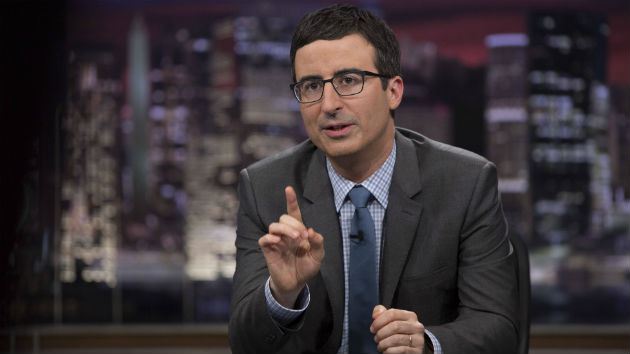
Last Week Tonight with John
Oliver
(HBO) —
I didn’t tune into Last Week
Tonight
immediately when it debuted this past summer. I stopped watching The Daily Show some time ago. The Comedy
Central stalwart has essentially become an indictment of incompetent media, and
though that’s certainly an argument that needs to be advocated, it made for a
stale production. When Oliver made the jump to HBO, my fear was that his show
would be a pale imitation of something I had grown tired of. I couldn’t have
been more wrong. Oliver has taken satirical current affairs programming to a
new level, deftly combining progressive in-depth journalism with pitch perfect
humor. No other show ever could disseminate LGBTQ rights in Uganda, net neutrality,
and lotteries with the journalistic precision of 60 Minutes and still be funny. If Oliver doesn’t win a Peabody, they
should stop giving out the award.

True Detective (HBO) — Look, I know nearly everyone has
True Detective on their “Best of 2014”
lists. The acting was superb, the writing was sublime, and the aesthetic was
unlike anything television has ever seen. And the six-minute take from episode
four is something that will be taught in film school for generations. But my
affection for it has more to do with its format than its acting or content. The
idea of a series of mini-series is not revolutionary, but one that has had more
success in the UK than in the US. True
Detective
, along with Fargo and American Horror Story, have found new
ways to tell stories using the medium of television, and a unique way to get
big talent (Matthew McConaughey, Woody Harrelson, Vince Vaughn, Cary Fukunaga,
Martin Freeman, Kirsten Dunst, Billy Bob Thornton et al.) to have an affair with TV
without committing to it.

Transparent (Amazon) — Transparent (I didn’t catch the double-entendre until Episode
8) is a series that would never have seen the light of day on a network,
perhaps not on cable, and certainly not five years ago. Jeffrey Tambor is
transcendent (see what I did there?) as Maura, who self-identifies as a woman,
and the challenges of their upper-middle class LA family. Tambor is excellent.
Judith Light (their understanding ex-wife) is embodying the role of a lifetime.
And Jill Soloway’s deft touch as creator and showrunner takes the narrative to
places never before seen in TV. But what I think makes it not just one of the
best shows of 2014, but a promising piece of art for 2015, is the manner in
which it fills the cast with unlikable characters. Maura is not without
faults, his children are self-involved and spoiled, and even Light’s Shelly was
happily planning on euthanizing her new husband. But, like Breaking Bad, Transparent proves there is interesting art in the
unlikable, despite what creative writing programs might tell you.

Banshee (Cinemax) — If someone walks in on you
watching Banshee at the wrong moment,
they’ll think you’re watching porn. Soft core porn, but porn nonetheless. And
there’s no shortage of sex and nudity in the show, but it’s on Cinemax, so it’s
kind of a given. But behind discarded panties and reverse cowboys is a show
that is simply one of the best on TV. The premise is sublime: Fresh from
serving time for a jewelry heist, our anti-hero witnesses the murder of a newly
hired small town Pennsylvania sheriff and assumes his identity. Throw in the
Amish, an ex with her own secrets, the Ukrainian mob, a Native American reserve, and a
hell of a lot of violence, and you’re left with a show that reminds me a lot of
a graphic novel, in its imaginative narratives and refined aesthetic. Also:
porn.

The Bad

Sons of Anarchy (FX) — I never understood this show and
was happy to see it end. It always seemed like The Sopranos on bikes to me, but with bad writing and poorly
realized characters. Charlie Hunnam spent seven seasons chewing scenery and his
British accent. Ron Perlman appeared ready to crawl back into the sewers to woo
Linda Hamilton, or just to hide from the scripts. Katie Sagal seemed shocked
that they were still in production, and she was on Married… with Children for twenty-eight seasons. The Shakespearean
influence was so heavy handed it might as well have been called Son of Hamlet. And the endless parade of
guest stars, culled from a list of celebrities who wear leather (Dave Navarro,
Henry Rollins, Sonny Barger, Marilyn Manson, Danny Trejo) brought the show to
the very edge of parody. Except I like parody.
 

How I Met Your Mother (CBS) — I really enjoyed HIMYM. It is perhaps the last of the
great multi-cam sitcoms. It wasn’t just a TV show, but part of the cultural
landscape. The Bro Code, lawyered, and slap bets are, for better or worse,
engrained in our lives. But the show’s final season was atrocious, and it killed
most of my affection for the preceding eight seasons. Handcuffed by the schedules
of its stars, HIMYM’s final season
took an unwelcome departure from the formula that made it a success. Set not in
New York, but at a rural wedding destination, and taking place over the course of a just few
days, season 9 was the equivalent of Cheers
finishing up its run set in a New York Starbucks. The cast shot scenes
separately; the scripts seemed cobbled together by a writer’s room unaccustomed
to their new aesthetic, and the desperate plot twist that killed off the
titular mother left the audience angry and confused. I know we’ll never again
meet the high water mark of the finales of M*A*S*H,
or St. Elsewhere, or even Newhart, but the poor choices of HIMYM’s producers in managing the challenges
of their ultimate season destroyed the legacy of the series, its
re-watchability, and even worse (wait for it) a spinoff, How I Met Your Dad.

State of Affairs (NBC) — After watching this Katherine
Heigl comeback vehicle, a friend who had been a fan of hers asked me to
describe the show. My response:It’s
like West Wing and Homeland were a gay couple that adopted
a baby that grew up to be Scandal who
married Revenge but then had a torrid
affair with Homeland that resulted in
a baby who was kidnapped from the hospital by Shonda Rhimes who raised her with
her husband, the mummified body of Tom Clancy.” Heigl’s character’s name is Charleston
Tucker, Alfre Woodard appears embarrassed to be collecting her paycheck, and
the rest of the cast looks like they’re already in line for next fall’s pilot
casting. This show is an argument for libraries. It’s so awful I fully expect
it to be renewed for 2015/2016.

The Lorre

The Sitcom — This section needed to be named for Chuck Lorre,
the producer of Two and a Half Men, Mom, Big
Bang Theory
, and Mike & Molly.
It begged to be something more than just ugly. I mourned
the death of the sitcom a few weeks ago
, and put much of the blame at
the feet of Lorre and those who have pandered in his footsteps. With the
exception of You’re the Worst, and in
the absence of Parks and Rec, I don’t
know if there’ll be a sitcom in television worth watching in 2015. (I don’t consider
Transparent to be a sitcom.)
Certainly not on network TV. I have high but tempered hopes for the upcoming Matthew
Perry/Thomas Lennon remake of The Odd
Couple
and Denis Leary’s Sex&Drugs&Rock&Roll,
but I fear that we’ll see State of
Affairs: Los Angeles
before we see a return to the heyday of the sitcom.

Wasting Talent — I understand that actors, producers, and gaffers
have mortgages to pay. Hell, I do writing for people I won’t add to my resume
or admit to my parents. But it’s heartbreaking to see talent so frivolously
wasted on TV. Margo Martindale and Will Arnett doing fart jokes on The Millers. John Mulaney having his
career set back five years by Mulaney,
not to mention wasting Martin Short and Elliott Gould. Ken Marino enduring
Casey Wilson in Marry Me. The entire
cast of The Newsroom choking their
way through Aaron Sorkin recycling discarded West Wing scripts. Jon Cryer being wasted on Two and a Half Men. No, wait. That’s where Cryer belongs. There’s a
short window in an artist’s career to attain the success we all aspire to. To
see those years wasted on efforts like the aforementioned makes you truly
appreciate when the medium reaches the heights of True Detective and You’re the
Worst
.

Social Issues and Sports Broadcasters — Sports,
as I’ve written many times before, is the last collective experience in the
television medium. You can watch NCIS or CSI or NCSI on your own schedule. You can stream, legally or illegally,
any episode of any show anytime you want, from anywhere in the world. But
sports telecasts still need to be seen live, to witness the narrative as it evolves in
real time. And, in a year that saw domestic abuse and LGBTQ rights at the
forefront of the public discourse in the world of sports, the inability of the
sports media to disseminate and discuss social issues served as an indictment
of their industry. During Sochi, very little was made of Russia’s archaic
anti-gay legislation. Even as athletes did their best to confront the issue,
NBC ignored it. Michael Sam was the first openly gay player drafted by an NFL
team, and bigoted reactions by NBC’s Tony Dungy were dismissed under the thin
excuse of religion. When Ray Rice was caught on tape beating his then-fiancée
unconscious, NFL partners ESPN/ABC, NBC, CBS, and FOX bumbled their way through
the conversation, without experts or, you know, women, added to the discussion.
Adrian Peterson was arrested for taking a switch to his 4-year-old child, and
networks debated its effect on fantasy leagues. Perhaps most indicative of the
sports media’s failures was ESPN’s Ray Lewis, who should probably be in jail
for double manslaughter, opining on the subject of domestic abuse, like having D.C. Stephenson discuss the integration of baseball.

White Men in Late Night — In a year that saw David
Letterman, Jay Leno, Jimmy Fallon, Craig Ferguson, and Stephen Colbert shuffle
into retirement or new roles, the opportunity was ripe for television to
attempt to revolutionize or contemporize late night television. Instead, they just
brought in more old white dudes. With the exception of Larry Wilmore’s The Nightly Show (replacing Comedy
Central’s Colbert Report) late night
TV will remain old and white with penises for at least another generation. I
find it impossible to believe that some more interesting choices could not have
been made to replace Fallon and Ferguson in their 12:35 timeslots. Instead,
predictably, NBC and CBS chose Seth Meyers and James Corden over every woman
and minority possibility on earth. Though, in defense of their diversity policies, Meyers
is Jewish and Corden is an Anglican. Probably. It’s frustrating enough for
insomniacs that these shows are about as progressive as an NRA convention and
funny as a TV Land sitcom, but to simply serve us more white men jokes, written
by white men, delivered by white men is discouraging for those of us who
appreciate the possibilities of the medium, not to mention those with uteri or
have a skin colour other than pasty.

Help us, Larry Wilmore and You’re the Worst; you’re our only hope.

Mike Spry is a writer, editor, and columnist who has written for The
Toronto Star, Maisonneuve, and The Smoking Jacket, among
others, and contributes to MTV’s
 PLAY
with AJ
. He is the author of the poetry collection JACK (Snare
Books, 2008) and
Bourbon & Eventide (Invisible Publishing, 2014), the short story collection Distillery Songs (Insomniac Press,
2011), and the co-author of
Cheap Throat: The Diary of a Locked-Out
Hockey Player
(Found Press,
2013).
Follow him on Twitter @mdspry.
KICKING TELEVISION: NASHVILLE is the Best Network Drama on TV

KICKING TELEVISION: NASHVILLE is the Best Network Drama on TV

nullI can already hear the denizens
of Good Wife fandom anger-typing
emails in dispute of my title. And I’ll admit to a bit of click-baiting here,
but as much as I
bemoaned the death of the sitcom in my last column
, the
network drama stands in equal peril. The medium of dramatic television is
successful only if it’s interesting, entertaining, or a form of escapism. At
its best, it’s all three, and a survey of the current network television
landscape finds little if any of these qualities. The frustrating lack of
dramatic programming worth indulging in on ABC, NBC, CBS, Fox, and the CW is
almost enough to drive audiences to pick up a book or listen to a podcast. But
hold on y’all, before you put on the latest episode of Serial and mosey on down to the local bookery to fetch a new
hardcover, take a minute or forty-two and settle in to ABC’s Nashville.

Networks lack imagination in
their programming. They have long ceded creativity and ambition to cable,
satisfied with an unhealthy affection for naval crimes and criminal forensics. Primetime
network dramas are exclusively about fighting crime, fighting the supernatural,
fighting disease, or fighting government. The only exceptions are Once Upon a Time, a show that from what
I can gather is about House’s Allison
Cameron slipping into a coma in which she exists in world populated by drunken
fairytale characters; Parenthood, a
show about actors who were once on good shows; and Jane the Virgin, which I have not seen nor read of, but assume
borrows its plot from Tom Waits’ story from the preamble to “Train Song” on Big Time, in which a stray bullet pierces
the testicle of a Union soldier, and then lodges itself in the ovaries of an
eighteen year old girl.

Nashville is a throwback to primetime soap operas of
yesteryear. It’s about beautiful people doing exceptional things while getting
laid and singing about it. And it is absolutely fearless and unapologetic about
its intentions. In the adolescence of my affection for television, I was raised
on the saccharin frivolity of Beverly
Hills 90210
and Melrose Place, which
themselves were the TV offspring of Dynasty
and The Love Boat, Aaron Spelling
productions so wondrously escapist that we forgive him for Tori and Randy. These
shows serialized the medium, and created loyal fan bases who, in the absence of
DVRs, needed to find themselves in front of a TV at an appointed hour to find
out if Dylan would choose Brenda or Kelly, and how long our sideburns should
be.

There was nothing revolutionary
about these programs, and they didn’t aspire to revolution. They weren’t
preaching. There was very little in the way of murder. Vampires and aliens only
appeared in Halloween episodes. The beauty in shows like Spelling’s were that
they didn’t condescend to the audience, they weren’t written to be lauded by
critics, or celebrated by those who claim to not watch television except for
Ken Burns documentaries and The Wire.
Primetime soaps were built for escape, to provide a breath from the day, to
revel in the frivolous.

Nashville is wonderfully reminiscent of those programs
without being derivative. The show is soapier than a Dove factory and often as cloying
as that simile. Set in and around the country music industry in Music City,
USA, Nashville boasts what few other
dramas can: Two strong female leads. Connie Britton’s established country
superstar Rayna James and Hayden Panettiere’s embattled rising star Juliette
Barnes anchor the program in their representations of polarized embodiments of
the American dream. Rayna is old money privilege. Juliette is a trailer park
rescue. They’re the old and new country . . . music that is.

The show is rounded out by a
cross-section of not quite stock but not quite unique characters. Deacon Claybourne
(Charles Esten) is the lovelorn recovering alcoholic. Gunnar Scott (Sam
Palladio) is the aw-shucks fella doomed to heartbreak. Scarlett O’Connor (Clare
Bowen) is the shy talent waiting tables. Will Lexington (Chris Carmack) is the
rising star with secrets. Avery Barkley (Jonathan Jackson) is alt-country,
where punk meets Patsy. Maddie and Daphne Conrad (Lennon and Maisy Stella) are
Rayna’s daughters who aspire to be just like Momma. And though there’s nothing
exceptional about these characters by description, each actor and actress
portrays them with an honest simplicity and subtle tweaks that eschew any
notion of stock.

Oh, and they sing.

The soundtrack of each episode
is a marvel, and a testament to the exceptional work of music supervisor
Frankie Pine and established by Season One’s supervisor, Grammy and Oscar
winner T. Bone Burnett, who just happens to be married to Nashville’s creator and showrunner Callie Khouri. Being set and filmed
in Nashville allows the show to use the city’s exceptional talent pool of
professional songwriters, not unlike the ones on the show portrayed by Esten,
Palladio, Jackson, and Bowen. The original compositions, the Tennessee set, and
that the actors play and sing themselves gives the show an authenticity that is
rare on television. And counter to Hollywood tendency, the authenticity escapes
contrivance. Executive producer Steve Buchanan is president of the Grand Ole
Opry Group. The actors playing Scarlett, Avery, and Gunnar have all worked at
the legendary Bluebird Café, where Rayna and Deacon are known to drop in for a
quick set, and which the show has reproduced as a set of its own. Nashville’s sincerity is augmented by
the producers’ inclusion of contemporary country music artists in the show and
its narrative (if peripheral), which contributes to the audience’s comfort and Nashville’s genuine and natural
escapism.

[And, if you’ll indulge me and
pardon a quick digression: Connie Britton is a criminally underappreciated and
under-celebrated actress. Very few performers have the range to play such a
diversity of roles and in different genres. She makes Christopher Walken look
limited. Britton has starred in a hit sitcom (Spin City), a seminal TV drama (Friday
Night Lights
), a redefining mini-series (American Horror Story), and owns “y’all” like she invented it.]

In an era of instant gratification
and unparalleled media attention, shows are rarely given time to grow into
themselves, to discover what they truly are. Nashville went through its growing pains. In Season One, it tried
to be Dallas set in Tennessee. Powers
Boothe played Rayna’s baron-like tyrant of a father, who perhaps killed her
mother, and was manipulating her husband, who had committed fraud in a land
deal, who burned papers in the fireplace while drinking scotch, and perhaps
wasn’t the father of their eldest child. The show created complex mythologies,
but they seemed contrived and tired. Granted a second season by ABC, the show
quickly retooled, and made the country music industry the centre of the show’s
universe, an industry that comes complete with heroes and villains, defying the
need to create them from borrowed characters like Boothe’s. Nashville’s music, authenticity, and placement within the actual
Nashville and industry immersed the show’s characters into the mythology of
country music, and gave it a life it lacked in in its first season.

And that’s what sets Nashville
apart. It aspires to be itself and nothing else. It’s amplified by well-crafted
characters and measured performances. It’s a soap opera, but one that the
audience can invest in because it feels genuine. It’s at once a tribute to
country music and a bygone era of primetime television. And you can tap your
toe to its both its musical and narrative exposition in that they’re familiar
and new. Each episode is a new album from a band you’ve loved since you were a
kid.

The network drama is in dire
straits. Lost is but a distant
memory. Friday Night Lights was
perhaps the last of the medium to truly excel in craft and creation, and is the
last to be nominated for a Best Drama Emmy (along with The Good Wife in 2011). Grey’s
Anatomy
is long past its expiration date, now that Derek and Meredith’s
grandchildren work at Seattle Grace. Scandal
is parody that refuses to admit its parody. Madam
Secretary
is West Wing-lite. CSI’s legacy will be the poisoning the
national jury pool with false science. Blue
Bloods
, Elementary, NCIS: Bowling Green, The Blacklist, et al. are all ultimately
forgettable. I’ll admit I’ve never seen The
Good Wife
, but I couldn’t bear the experience of another show about
lawyers. Hidden within the cacophony of nondescript programming is a burgeoning
gem. Nashville is not a seminal
masterpiece, nor does it want to be. It’s an homage to a genre of television
that is inexplicably absent from the current network programming landscape.

Mike Spry is a writer, editor, and columnist who has written for The
Toronto Star, Maisonneuve, and The Smoking Jacket, among
others, and contributes to MTV’s
 PLAY
with AJ
. He is the author of the poetry collection JACK (Snare
Books, 2008) and
Bourbon & Eventide (Invisible Publishing, 2014), the short story collection Distillery Songs (Insomniac Press,
2011), and the co-author of
Cheap Throat: The Diary of a Locked-Out
Hockey Player
(Found Press,
2013).
Follow him on Twitter @mdspry.
Watch: The Louisiana Landscapes of TRUE DETECTIVE As One Grand Open Stage: A Video Essay

Watch: The Louisiana Landscapes of TRUE DETECTIVE As One Grand Open Stage: A Video Essay

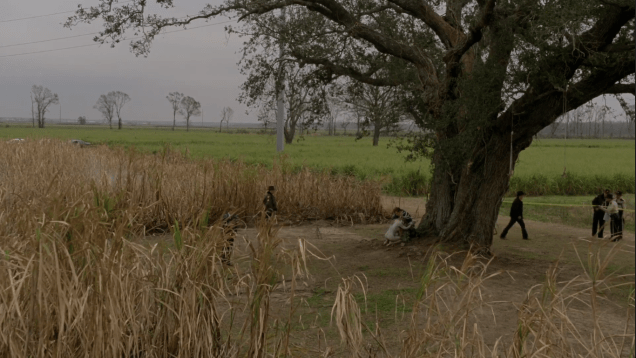
It is entirely appropriate that True Detective takes place in Louisiana. That might sound like a tautology, somewhat like saying that it’s appropriate that A Christmas Carol takes place in London or Vertigo takes place in San Francisco. However, what I mean is something different, which is called up by Jaume Lloret’s gathering of the more gorgeous landscapes of HBO’s recent episodic masterwork, filmed lovingly by Cary Fukunaga and Adam Arkapaw. The landscape of Louisiana can be described many ways: lush, verdant, mysterious, overgrown, swampy, humid, shadowy, punishing, endless. But one simple adjective which could also be applied to it is flat. The land pushes onwards until it gets tired of pushing, and then it just keeps going. Some might view the landscape, devoid of mountains, valleys, mesas, buttes, canyons, and all the other things that form the common conception of whatever spectacular is, to be quite dull. But another way of looking at it is as a tabula rasa of sorts. Rust Cohle can unfurl his eccentric, rambling monologues into the air without fear that they will ever bounce back at him. The detectives can drive on, in pursuit of one lead or another, without ever being certain that they will find the person they are looking for. And the criminals, as well, commit their acts of violence in something of a void: our first sight of the villain in the series finds him all by himself amidst the trees and shrubs of his backyard, a tiny figure, engulfed by the natural world around him even as he tries to punctuate it, in his own cruel manner. What makes True Detective so interesting, for so many people, is not its story, which is a fairly run-of-the-mill procedural with, granted, some spooky effects tossed in. It’s not the post-Tarantino digressiveness of its dialogue. And it’s not its relationships, since the parable of the man too involved in his job to be a loving marital partner has been oft-told, as has the story of the two work partners who need each other despite disagreements. It’s that all of the story’s horrific events occur on a flat plane whose closest analog, strangely enough, is reality itself.