


It used to be hard to tell if Community was a particularly turbulent show, or if its voracious fans plus a rather public cast and crew combined to give the sense that it had a great deal of behind-the-scenes drama. That question resolved itself last summer, when the shocking firing of showrunner Dan Harmon, as well as other long-time creative forces, made it clear that, yes, Community was a mess.
While many fans and critics, adopting an auteur theory of television, were convinced that this was the end of Community, it actually made me slightly more curious about the fourth season. I enjoy seeing and analyzing a show in creative flux, and Community's always manifested a chaotic creative process. But I also noticed a notable step down from the brilliant second season, thanks largely to the third season's self-indulgence—Community had become a show about itself. A kick in the pants seemed warranted, although the steel-toed boots used for this particular kick may have been excessive. Still, many of the writers and all of the stellar cast remained, giving me some hope.
The Season Four premiere of Community, “History 101,”opened with an inspired concept: the show reimagined as a multi-camera sitcom, complete with laugh track. There were enough layers here to be worthy of the show in its prime. As a single-camera, formally daring sitcom, Community is theoretically in the vanguard of television comedy, fighting against the multi-cam, a format (probably unfairly) decried as stodgy, old-fashioned, or even outright bad. (A fake Twitter profile set up in the name of the new showrunners, David Guarascio and Moses Port, invited fans to be part of the “live studio audience”–a joke within a joke, perhaps?)
 This season's premiere was also very much like the third season premiere, opening with a big happy musical number in the style of Glee (a show Community had mocked mercilessly), before the characters immediately dropped back down to earth. Finally, “History 101” made sense from a character perspective: of course Abed Nadir, resident pop culture obsessive, would find solace in an old-fashioned sitcom form labeled AbedTV. In short, the deliberately confrontational/mocking style, the formal experimentation, and the connection with the characters made it seem like it was exactly what Community should be.
The problem was that it didn't work.
AbedTV was just one part of the story among many—four and half, to be precise. That's a lot of storylines for a serialized hour-long drama, let alone a 20-minute sitcom. “Overstuffed” would be an understatement.
None of those storylines really worked, either. Pierce's throwaway joke was essentially nonexistent, which was fine, but Annie and Shirley seemed to be off in a storyline that went nowhere. The biggest problem was Britta. Even at Community's worst, like Season Three's wince-inducing “Advanced Gay,” Gillian Jacobs' defiant certainty in the face of being wrong about everything could salvage an episode. Yet in “History 101” Britta wasn't defiant, because she'd become attached to Troy in a relationship. She could mess up his tradition, but it turned into a gentle-hearted romp. A soft Britta is no Britta at all, and she's long been the best part of the show.
What was perhaps most frustrating about this turn of events is that Community has always explicitly rejected turning into a show about its characters' romantic relationships. Its first season was premised on hooking Jeff and Britta up, but episodes like “Modern Warfare” and “Contemporary American Poultry” indicated that it wanted to play around with stories apart from the romantic comedy. After a disastrous first season finale that was nothing but romantic entanglements, the second season occasionally used the actors' chemistry for comedy, but turned against romance as the show's driving force. In its mock clip show, “Paradigms of Human Memory,” Community attacked character romance directly, as Jeff dismissed his supposed will they/won't they with Annie by saying “it's called chemistry, I have it with everyone.” In that same episode, his secret affair with Britta was revealed—the show's initial premise was subverted to the point where it coming to fruition is a throwaway line.
This is not to say that the Troy and Britta romance came out of the blue. It was obviously slowly developing over the course of the third season, just as Jeff and Annie's will they/won't they hardly disappeared after it was mocked. Rather, it's that the show always deliberately steered clear of entangling its characters in such a way. Seeing its best character compromised by sweetness, it was easy to see why romance was treated with such skepticism.
 The one storyline that came anywhere near working was the Dean's Hunger Games bit, largely thanks to Jim Rash. His emergence—or perhaps the acknowledgment of his emergence—as one of the show's most important characters was one of the best parts of Community's third season, and that continued in “History 101.” The scene where he and Jeff dance the tango should have been good enough to find a place in Community lore, and maybe it will eventually. But that storyline was squished by all the others, preventing it from being more than an amusing diversion.
It would have been easy, after that episode, to say that without Harmon, Community had lost its soul/moorings/quality, and that it was now “Community” or "Zombie Community" or "not canon" or the like. The thought certainly crossed my mind. But as I was watching “History 101,” I had a gut feeling of discomfort that reminded me of something else I'd recently watched. An hour or two later, I realized that it was the same feeling I got when I watched the season three episode “Regional Holiday Music,” or rather, “that Glee episode of Community.”
Both episodes gave me the feeling that what I was watching was simply wrong. That feeling of wrongness derive from the show's being mean. I know Community has a sort of cultivated “too cool for school” reputation, but when I've watched it and loved it, it's been because it joyously immerses itself in the history of pop culture. From action movies to Dungeons & Dragons to “everyone goes to a bar!” sitcom plots, Community wanted to be everything. But in “Regional Holiday Music,” it spent an entire half-hour attacking its more popular cohort, Glee. In “History 101,” Community focused on making fun of multi-cam sitcoms (a set that perhaps coincidentally includes another rival, The Big Bang Theory). A mean-spirited Community is an unpleasant Community.
If there was any hope for the fourth season of Community, it was going to manifest in its second episode, not its premiere. Season premieres of any show are often hit-or-mess, especially sitcoms. On the other hand, the second episode, “Paranormal Parentage,” had a very promising premise. First, it was a Halloween episode, which always works well for a show that loves having its characters play roles—the first-season Halloween episode, “Introduction To Statistics,” was its first great episode.
Second, “Paranormal Parentage” was penned by Megan Ganz, a writer who quickly came to prominence with four superb episodes (the bottle episode, the two documentary episodes, and the Law & Order episode) in the second and third seasons. In each of these, Ganz showed the darkest, weirdest parts of the characters while making them more, not less, sympathetic, while also twisting the form in stunning and hilarious fashion (a combination that reminds me of The X–Files' great Darin Morgan). Her continuing presence in the writers' room was a ray of hope for fans—although her recent defection to Modern Family means that next season, worries will start anew.
“Paranormal Parentage” was a massive improvement over “History 101.” While not quite in the top tier of Community episodes, it was continuously funny and structurally clever.
 The costumes may have been the best part of “Paranormal Parentage,” possibly the best of any of Community's Halloween episodes. You can earn a lot of good will by putting Shirley in a Princess Leia outfit and Annie in a Ringu costume. Every time they appeared on-screen, I got a slight thrill of novelty. But more importantly, Britta in her canned ham costume went a huge way toward salvaging her character after the disastrous premiere. Gillian Jacobs' gifts for physical comedy were on full display: every time she had to move in costume, she made it funny; every time she spoke in costume, she managed to accent the ridiculousness. Her therapist dance, done to get Jeff to open up, was the highlight of the episode.
Yet for all the laughs I got in “Paranormal Parentage,” the episode didn't quite succeed, in part because it seemed detached from its history. When I called Community's third season self-indulgent, that was, in part, because it delved too deeply into its characters' internal turmoil. While Season Three struggled with that through its run, it did successfully tie the characters' arcs together by the end, making it appear as though they'd grown up—almost all of them had a major breakthrough in the finale.
Meanwhile, in “Paranormal Parentage,” most of the characters reverted back to their initial type. Jeff was particularly frustrating, turning into the selfish, contrarian asshole that he was at his worst early on in the show's run. Annie and Troy were right behind him in this respect, their youth and naivete a throwback both to early Community episodes as well as the Season Four premiere. This may be the legacy of the turmoil at the end of Season Three—the seeming inevitability of the show's cancellation may have forced the writers to bring the show's character arcs to a close. Alternately, the removal of Dan Harmon may have removed the show's instincts to have the characters change and then maintain those changes.
Regardless, the crucial distinction between Season Three and Season Four of Community is that now the characters are treated as types, whose various histories are less important than what can be mined from them. In the season premiere, Jeff's actions were those of someone desperate to demonstrate that working for himself could also work toward his group's benefit. But he was back to selfish here. Troy's “becoming a man” process, demonstrated in some of the show's best episodes, was ignored so that he could be treated like a child in order to make (poor) jokes about his relationship with Britta—a relationship's being treated as a marker on a storyboard rather than a necessary character development.
In short, Community seems to be mining its history for plot developments, but it's failing at understanding its character developments, even when it's of a much higher quality. This is probably a necessary stage for most comedies, to be honest. But coming after the ambitious, largely character-based Harmon era, this could lead to a major, likely negative change for the show. Still, this is only the second episode of the season. If Community stabilizes at the level of “Paranormal Parentage,” it can still be a good, occasionally great, show. Or this could be the last gasp of the old guard, struggling to do their best with a show that's spun out of control.
Rowan Kaiser is a freelance pop culture critic currently living in the Bay Area. He is a staff writer at The A.V. Club, covering television and literature. He also writes about video games for several different publications, including Joystiq and Paste Magazine. Follow him on Twitter @rowankaiser for unimportant musings on media and extremely important kitten photographs.


 Speculative fiction has often examined contemporary anxieties, either consciously or not. In the 1990s, the fall of the Soviet Union led to a world quite different from the bilateral world most American TV writers and viewers of that time had grown up with. This world was characterized by a distrust of American governments, or governments similar to ours. The X-Files is the most famous example of this conspiracy-theory mindset, but it was joined by Star Trek: Deep Space 9—a relatively cynical take on the future compared to its utopian Star Trek predecessors—and Babylon 5, in which an American-style government called EarthGov was corrupted into dictatorship. The terrorist attacks of September 11th, 2001 pushed SF TV in a still more different direction. Shows like Battlestar Galactica, Firefly, Angel, and the literally and figuratively more realistic 24 all dealt with the moral issues and compromises of being a leader in a fight against evil.
 While both Revolution and The Walking Dead are clearly descended from these previous stories (imagine Rick, Shane, and Dale as Adama, Tigh, and Roslin from BSG during some of their ethical arguments, for example), their settings focus their cultural anxieties. The shows both take place on Earth, in a semi-recognizable America, after or during a massive population apocalypse caused by something that, at least at the beginning, is unknown. On Revolution, it's the end of electricity and modern technology; on The Walking Dead, it's a zombie plague. In both cases, it's a new, harsh world, where characters used to the amenities of modern life like the video game Portal or their iPhone have to cope with facts of day-to-day reality instead of the contrivances of society. And in both cases, civilization itself may have been the cause of the apocalypse. Both shows revolve around debates of how civilization is being reborn, whether it deserves to be reborn, and whether American ideals of rights and justice can work in apocalyptic settings.
 The core anxiety is straightforward: there are too many people for civilization to be sustainable. This is a common worry. For some people, the concern is that high-population areas are immoral, breeding grounds for sex and violence; for others, the thinking is that too many people consume too many resources, which leads to climate change. In both cases, there's a general belief that there are too many people whether they be sinning via sexuality or via energy consumption. The former attitude exists to a certain extent on both shows. Revolution's post-apocalyptic setting opens on a pastoral farming community whose peace is shattered by people who want to bring the worst of civilization back. Meanwhile, The Walking Dead moves out of the dangerous city to Herschel's farm, a seemingly safe chance for the characters to regroup and survive the apocalypse.
 These two shows clearly blame the apocalypse on the flaws of civilization, but they're not alone. 2011's short-lived Terra Nova—the Revolution of its Fall television season—was entirely explicit about this role. The show was set on normal Earth, hundreds of years after a slow environmental apocalypse, with the sky covered by pollution and society governed by rigidly enforced population controls. But a magical discovery led to the chance to travel back in time, and build the colony of “Terra Nova.” This was an idyllic colony set on dinosaur-dominated Pangaea millions of years in the past, with its name's translation, “New World,” demonstrating the show's focus. The characters even state that this colony offers a chance for them to rebuild civilization without making the mistakes, technological and moral, that forced humanity down a dark road. Terra Nova was a second chance, a do-over.
 Game Of Thrones' allegorical examination of climate change ties in directly with its concept of leadership. Almost all of its characters all ignore the impending climate and supernatural disaster. These men and women making crucial decisions in Westeros are small-minded and petty, or ambitious and self-serving, or in the best case, good people who are forced by honor or obligation to do the wrong thing. The latter is true even of the heroic Robb Stark, whose decision to march south for his family's honor and to attempt to repair the Seven Kingdoms is described as a mistake by Osha, a “wildling” whose time north of “The Wall” gave her direct experience of the impending apocalypse in the south. She says he should have turned his army north, toward winter and the supernatural invasion instead of south to fulfill the obligations of his political system.
 This is the flip side of the revelation from last week: if the law is insufficient to provide justice, people desperate for justice will go outside the law. Nobody in the episode questions whether Crawley was a murderer. In fact, there’s not even a significant argument as to whether Crawley committed the murder he went to prison for, or whether he deserved to die for it. But there was a crime, and Walt and the rest of his office are investigating.



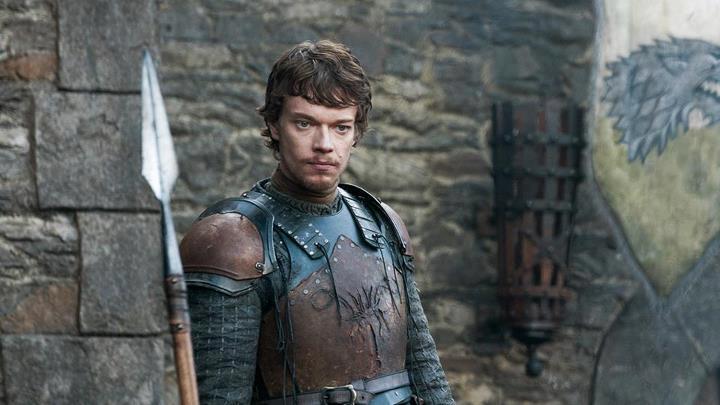
 One of the key questions facing Game Of Thrones the series, as well as its source material, is: “What’s this about?” And by this I mean: “What is this story? How is it being told? Where is this leading?” Certainly there’s drama, and characters change, grow, collapse, or die, but it’s difficult to see a clear structure at times. “Valar Morghulis,” as a season finale, did provide appropriate resolutions for most of the characters’ stories this season. But it struggled to collect them—it’s just a bunch of stuff that happens, in the words of Homer Simpson. Still, it’s a compelling bunch of stuff that happens.
 The Hero’s Journey is the default reading of most fantasy stories, and Game Of Thrones gives that opportunity with two of its characters: Jon Snow and Danaerys Targaryen. Both are born of noble blood, but are also outsiders. Both are young, and they are undergoing journeys of self-improvement as well as quests of external improvements. Both are also dealing with the most magic of any of the characters. Dany has her dragons, and Jon has fought one of the White Walkers, while the threat of more wraiths hangs over the Night’s Watch.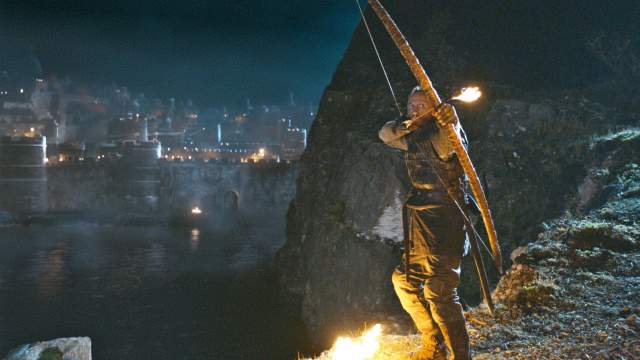

 Press Play Video Blog