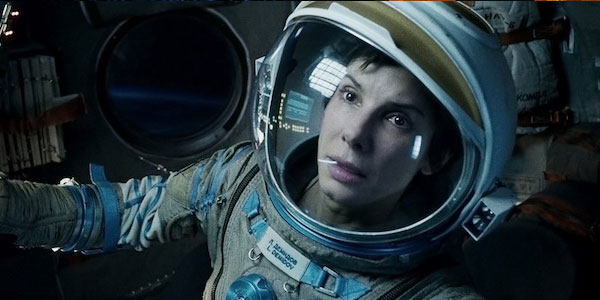
VIDEO ESSAY: Alfonso Cuarón’s Cinematic Canvas

VIDEO ESSAY: Alfonso Cuarón’s Cinematic Canvas

Alfonso Cuarón and
the Prisoner of Azkaban

The following is an
appreciation of my personal favorite film by Alfonso Cuarón, which I fear has
been somewhat critically neglected. But for more on the man’s impressive career
as a whole, see Nelson Carvajal’s video “Alfonso
Cuarón’s Cinematic Canvas
.”

People sometimes ask me whether I think “the kids today” are
all right. That always seems to me a strange question and perhaps a rhetorical
one where the speaker is really suggesting that there’s something wrong with
anyone younger than us. The logic, inasmuch as I follow it, is that
thirty-somethings had the privilege of growing up with movies like The Dark Crystal and Labyrinth and Time Bandits, and those movies fucked us up, and made us the clever
intelligent beautiful sophisticates we are today. Well, I’m not so sure it
works like that, and for every subversive film by Gilliam and Henson, there
were many more popular flicks like The
Karate Kid
, Teen Wolf, and Short Circuit. But, sure, I always
respond, “the kids today” should be totally fine, because they had Pokémon—surely
one of the strangest cartoons I’ve ever witnessed—and what’s more, they had Alfonso
Cuarón’s Harry Potter and the
Prisoner of Azkaban
.

I disliked the
first two Potter films, though I also wasn’t fond of the first two books. But
with Prisoner of Azkaban, J. K.
Rowling started hitting her stride, complicating Harry’s bright happy world with
more intricate plotting and morally ambiguous characters, the prime example of
which was the titular prisoner himself, Sirius Black. And can you imagine what
Chris Columbus would have done with that character? But Columbus bowed out of
the franchise, allowing Cuarón to inherit it—and totally redesign it.

Casting
Gary Oldman as Black was a bit of genius—this is the guy who previously played Sid
Vicious, Dracula, Lee Harvey Oswald, Guildenstern (I mean Rosencrantz), Mason
Verger, Jean-Baptiste Emanuel Zorg, and that deranged cop determined to kill the
pubescent Natalie Portman and her kindly middle-aged French hit man boyfriend.
(Although come to think about it, had Stansfield succeeded, might we have been
spared the Star Wars Prequel Trilogy?) Oldman’s mere presence—recall those
initial glimpses of the man, howling in rage in those animated wanted
posters—made Black feel genuinely dangerous, and made the Potterverse feel suddenly
dangerous. Adding David Thewlis to the mix, as the reluctant, melancholy
werewolf Remus Lupin (he’s rather Hulk-like), pushed that fictional world even
further into some dark corner of the crooked Diagon Alley. Think about it: Azkaban’s the movie where Harry Potter’s
stable of mentors swelled to include not just Oldman, but Johnny from Naked (and were we meant to sense in
Thewlis’s presence a hint of the Verlaine / Rimbaud relationship in Total Eclipse?).

More
importantly, with Azkaban, the Potter
films went from something with the look and feel of an after-school special to the
look and feel of cinema. If you’re
shaky on the details, just compare any scene in Columbus’s version with any
from Cuarón’s—for instance, these two classroom bits:

Note, in that Azkaban
scene, the wide variety of techniques on display—long gliding takes and dramatic
insert shots—as well as the inventive staging. (I particularly like the moment
when Harry steps up to the boggart, and the camera affixes itself momentarily to
the bobbing jack-in-the-box.) Azkaban
was also the movie where Hogwarts—until now a stable, horizontal, and above all
else comfortable boarding school—went
all cockeyed, becoming in Cuarón’s hands someplace sprawling and ancient, a
place with enormous swinging clock pendulums that could kill an unwary kid, and
perched precariously amidst crags and ravines. Here’s what Cuaron did: when
Columbus left the project, the producers initially turned to Guillermo del
Toro. But del Toro declined, having found Columbus’s first two installments “so
bright and happy and full of light.” But a few years later, he
expressed interest in helming a later installment
:

“After seeing the last few films,
however, the director famed for a shadowy imagination and morally ambiguous
characters has begun to reconsider. ‘They seem to be getting eerie and darker
… If they come back to me, I’ll think about it.’”

Thank Cuarón for that eeriness, that darkness (though to be
fair, the books do get more complex with that installment).

He departed
after Azkaban, but he left his mark
on the franchise: successors Mike Newell and David Yates kept the basics of his
approach, even if their direction never matched Cuarón’s. With the exception of
Bruno Delbonnel, who provided the cinematography for Half-Blood
Prince
, no one else ever came across as having as much fun with Rowling’s
sprawling world as Cuarón.

For
my own part, I saw The Prisoner of
Azkaban
three times in the theater. And whenever anyone asked me what I
thought of it, I said, “It’s great. It’s this generation’s Time Bandits.”

Nelson Carvajal is an independent digital filmmaker, writer and content
creator based out of Chicago, Illinois. His digital short films usually
contain appropriated content and have screened at such venues as the
London Underground Film Festival. Carvajal runs a blog called FREE CINEMA NOW
which boasts the tagline: “Liberating Independent Film And Video From A
Prehistoric Value System.” You can follow Nelson on Twitter
here.

A.D Jameson is the author
of the prose collection
Amazing
Adult Fantasy
(Mutable Sound, 2011), in
which he tries to come to terms with having been raised on ’80s pop culture, and the novel
Giant
Slugs
(Lawrence
and Gibson
, 2011), an absurdist retelling of the Epic of
Gilgamesh. He’s taught
classes at the School of the Art Institute of Chicago, Lake Forest College,
DePaul University, Facets Multimedia, and
StoryStudio Chicago. He’s also the
nonfiction / reviews editor of the online journal
Requited. He recently
started the PhD program in Creative Writing at the University of Illinois at
Chicago. In his spare
time, he contributes to the group blogs
Big
Other
and HTMLGIANT. Follow him on Twitter at @adjameson.
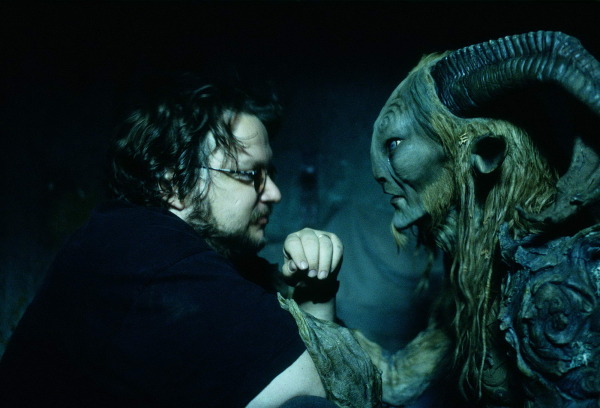
VIDEO AND TEXT: Nelson Carvajal and Amber Sparks on Guillermo del Toro

VIDEO AND TEXT: Nelson Carvajal and Amber Sparks on Guillermo del Toro

Guillermo del Toro: The
Unlikely Auteur

As Guillermo del Toro’s Pacific Rim release date fast
approaches, I can’t help but feel a little depressed.

Don’t get me wrong. I’m a huge fan (pun intended) of the kaiju—or giant monster—film, so I really
am looking forward to the release of this film, director and ultimate fanboy
Guillermo del Toro’s attempt to reboot giant monsters and mecha warriors for a
new generation. I seriously can’t wait to see Idris Elba and Ron Perlman battle
giant monsters from the deeps.

That said, I’m still in mourning for The
Hobbit
-that-could-have-been, a film that—instead of a lesser Lord of the Rings for small children and
people who love dwarf slapstick—might have featured an entirely new Middle
Earth. Imagine a brilliant, sadistic dragon-against-type; imagine troll-like dwarves
and sylph-like hobbits inhabiting an alien, immersive new world (instead of
wandering around in the digital landscape of LOTR like wide-eyed tourists:
“Look! There’s Galadriel!”); imagine Tolkien’s book, transformed utterly, in
the hands of a true auteur.

That’s right. An auteur. But,
you might say, shocked and appalled—he does genre
pictures
!

Yes. And?

His body of work reveals a filmmaker
who, along with a handful of contemporaries (both Andersons, Malick, Haneke,
Von Trier, etc.) has transformed his source
material so that it reflects absolutely his personal vision. And after
all, Hitchcock did genre, as Kurosawa often did. In del Toro’s case, the
personal vision was shaped by perhaps less
traditional sources
: by Forrest Ackerman’s Famous Monsters of Filmland, by Universal Horror classics and
Godzilla and Gamera films, by a childhood in Mexico steeped in Catholicism, and
by a self-confessed nerd’s affinity for children, outcasts, and monsters.

His interest in film began as an interest in makeup
and effects
, and his films are his
films precisely because of the love and care he takes in designing his
creatures and his unreal worlds: the pagan, organic nature of his creatures is
uncanny and frightening—even the mechanized creatures resemble insects or
animals or very old gods. In a Hollywood in which horror movies routinely make
monsters and demons from a few ready-made molds, when comic book films
(with a few exceptions) follow a format that doesn’t deviate too much from the
standard—del Toro makes films like Pan’s
Labyrinth
, with possibly the most terrifying creature in all of recent
cinema—The Pale Man, Norn-like and flesh-draped and utterly original. He makes
films like The Devil’s Backbone,
which turned the ghost story genre on its head. He makes films like Hellboy and Hellboy II: The Golden Army,
which took a wildly popular comic book and transformed it completely. The Troll
Market in Hellboy II is worth the
price of admission alone, as are the bizarre and frightening tooth fairies.
These creatures are unlike any you will find in any other film, because they
don’t come from formula and they aren’t lifted from other films. As Daniel
Zalewski wrote in his fascinating New Yorker profile of del Toro, “When movie monsters look largely the same, Del
Toro’s reach deep into the past and into mystic and pagan iconography to
present something else entirely—something far more terrifying and familiar . . . A
del Toro monster is as connected to a succubus in a Fuseli painting as it is to
the beast in ‘Predator.’ His films remind you that looking at monsters is a
centuries-old ritual—a way of understanding our own bodies through gorgeous
images of deformation.”

Del Toro himself seems motivated to keep moving, to keep
making it new. On
his sources of inspiration:
“The worst thing that you can do is be inspired
solely by movie monsters. You need to be inspired by National
Geographic,
by biological treatises, by literature, by fine painters, by bad
painters.” Indeed, in Pacific Rim,
del Toro has said he wants to create something entirely new, despite the
Godzilla and Gamera-like kaijus of
the genre’s heyday. He was instead inspired by perhaps not such an unlikely
source: Goya’s
The Colossus.

But a visual feast alone would make del Toro a great artist,
not a great filmmaker. The compelling and very dark stories he chooses to tell
are what animate the films and give them their haunting quality. Beauty holds
hands with horror, two sides of a coin in all of his films. Del Toro seems much
more in debt to Grimm’s Fairy Tales
than to The Texas Chainsaw Massacre.

One gets the impression that perhaps del Toro deals in
horror because of his dark view of human nature. People are the real monsters
in most of his films, not the fantastic, often ambivalent, only cruel-as-nature
creatures that inhabit his worlds. Humans are the ones who do the real, lasting
damage. He says, “I ended up thinking that monsters are sort of the patron saints
of imperfection. I try to celebrate imperfection in my movies; the really scary
characters are always the ones who insist everything has to be perfect.”

All this is the reason I’m still in mourning. I loved Peter
Jackson’s Lord of the Rings trilogy
just like everyone else, and after that it would have been great to see what a
true auteur could do to put a different spin on the prequel. (I also would have
loved to see Del
Toro’s canceled adaptation of Lovecraft’s At the Mountains of Madness
.) But
I suppose it’s not such a bad consolation prize to get a new and exciting kaiju movie, one that will feature new
creatures but follow the old wild joy of the kaiju orgy of destruction in the (important for a pacifist
director) empty city (thus the scenes
of frantic evacuation in every giant monster movie ever). And maybe I’ll even
(fingers crossed) get to see him team with Charlie Kaufman to make what could
be the first
good screen adaptation of Slaughterhouse Five.

The man with endless creative ideas, who lives
in a mansion he calls Bleak House—filled with monsters, aliens, and comics—seems
perhaps more in touch with a pop-culture obsessed public hungry for good horror than any other director
since Hitchcock. And as del
Toro has said himself
, “Hitchcock would have gone
to Comic-Con. He would have signed collectible shower curtains. He
was a showman and an auteur.”
–Amber Sparks


Nelson Carvajal is an independent digital filmmaker, writer and content
creator based out of Chicago, Illinois. His digital short films usually
contain appropriated content and have screened at such venues as the
London Underground Film Festival. Carvajal runs a blog called FREE CINEMA NOW
which boasts the tagline: “Liberating Independent Film And Video From A
Prehistoric Value System.” You can follow Nelson on Twitter
here.

Amber Sparks’ short stories have been widely published in journals and anthologies, including New York Tyrant, Unsaid, Gargoyle, Barrelhouse, and The Collagist. Her chapbook, A Long Dark Sleep: Stories for the Next World was included in the chapbook collection Shut Up/Look Pretty from Tiny Hardcore Press, and her first full-length story collection, May We Shed These Human Bodies, was published in 2012 by Curbside Splendor. You can find her at ambernoellesparks.com or follow her on Twitter @ambernoelle.

VIDEO ESSAY: Wong Kar-Wai’s Lust for Life

VIDEO ESSAY: Wong Kar-Wai: Superimposed Symphony

Wong Kar-Wai, whose long-awaited The Grandmaster opens in August, is not about plot. Wong Kar-wai is about motion and emotion. As my friend Nelson Carvajal’s new video suggests, he’s about the moment within the moment, the eternal in the now. Beautiful neighbors pass in a stairwell and exchange lingering looks, or talk more softly than they need to so that they can be face-to-face. The camera (usually Chris Doyle’s) doesn’t merely record or represent: it scopes out, insinuates, measures and caresses. All is texture. Physical texture. Emotional texture. What it feels like. What it really is. What you dream it is. What you dream it was.

A woman’s swaying hips are sexy, but they’d be sexy anyway, in Wong Kar-Wai’s films or anyone’s. Ditto food:  My Blueberry Nights boasts a closeup of melted ice cream on pie so lovingly composed and lit that it amounts to dessert-as-orgasm — and you know that when you’re hungry that’s just what a luscious dessert can feel like, in spirit anyway. But the sexiness, the sheer visceral tingliness, of this artist’s work transcends particular situations. Somehow he makes everything sexy: sweaty huts, cobblestone streets, peeling paint; fear, regret, misery, death. How? 

By communicating exuberance at existence. His films may chart specific lusts — for sex, for love, for freedom, for murder — but all those lusts are gathered beneath a poetic umbrella: lust for life.

He’s what I called, in a 2009 Salon series about “The Directors of the Decade,” a “sensualist” filmmaker:  “Sensualist directors have a respect for privacy and mystery. They are attuned to tiny fluctuations in mood (the character’s and the scene’s). But they’d rather drink lye than tell you what a character is thinking or feeling – or, God forbid, have a character tell you what he’s thinking or feeling. The point is to inspire associations, realizations, epiphanies — not in the character, although that sometimes happens, but in the moviegoer. You can tell by watching the sensualists’ films, with their startling cuts, lyrical transitions, off-kilter compositions and judicious use of slow motion as emotional italics, that they believe we experience life not as dramatic arcs or plot points or in-the-moment revelations, but as moments that cohere and define themselves in hindsight — as markers that don’t seem like markers when they happen.”–Matt Zoller Seitz

Between Fair Use and Infringement: The Perils of the Video Essay Form

Between Fair Use and Infringement: The Perils of the Video Essay Form

null

“In
its intent the video essay is no different from its print counterpart, which
for thousands of years has been a means for writers to confront hard questions
on the page. The essayist pushes toward some insight or some truth. That
insight, that truth, tends to be hard won, if at all, for the essay tends to
ask more than it answers. That asking—whether inscribed in ancient mud, printed
on paper, or streamed thirty frames per second—is central to the essay, is the
essay. […] Images and sound, those engines of emotion, have their own story to
tell. Promiscuity of the image isn’t a weakness of the essay-film. It’s a
feature. A volatile one, sure. And it’s changing the way we write, changing our
conception of what writing means.”
-John Bresland, On the Origin of the Video Essay

During
the last couple of years, as I developed my voice as an independent digital
filmmaker, a majority of the content in my filmography grew under the direction
of appropriation art, and in particular, the video essay form. I suppose that’s
why the above quote by Bresland speaks to me deeply these days. By “changing
our conception of what writing means,” this visual form of critical
storytelling also falls victim to accusations of piracy, infringement and
perhaps worse, unoriginality.

In 2011,
I began making cultural commentary video essays, on themes of mass media
consumption
,
and then in 2012 I was lucky enough to begin making video essays on the cinema
for Press Play. Creating and sharing video essay works with the
likes of Matt Zoller Seitz and Kevin B. Lee (the masters of the video essay
form) opened up my eyes to the far-reaching potential that the video essay
could achieve; in an age of hyper social media and over saturated online
content creation, the video essay form was the perfect medley for retooling
existing media in an effort to discover new meanings or alternative
interpretations, while also drawing back on nostalgia and what certain images
meant to different viewers. It’s been an exciting time, as the definition of
the video essay becomes more expansive and includes other forms of
appropriation art like the supercut or mashup.

But an
alarming cloud has been building: accusations of copyright infringement.

A
well-known case of this is Kevin B. Lee’s unfortunate clash with YouTube,
which resulted in his online videography being deleted completely. How could
such a travesty happen? Surely both YouTube and the third party copyright
owners (in Kevin’s specific case it was Warner Bros. Music) could see the
brilliance and vitality behind such a compilation of moving image criticism and
commentary. Why go through all the trouble of making Kevin start over with a
blank slate on his YouTube channel? What about his avid fans? These questions are
all the more troubling because there is probably no one who can legitimately
answer them. The reason for this is that a copyright takedown is usually automated.
In other words, if a video clip has a digital watermark, it’ll spur an online
takedown notice. There is no discussion by a team at a film studio; there’s
just an Internet spambot, making it clear that you cannot use this material.

And then
that same dark “accusation of copyright infringement” cloud got around to me
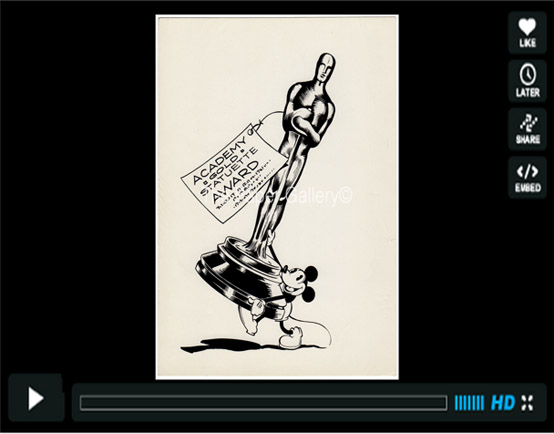
too. In February of this year I created a 4-minute video montage of every Best
Picture winner, in chronological order. Using Final Cut Pro as my editing
platform, in the modest work desk of my bedroom in my apartment, I created the
video in one sitting, on a Tuesday afternoon. And, as with every video essay I
create, I uploaded it to my Vimeo profile, with the citation: “Fair use is
codified at Section 107 of the Copyright Act: Under the fair use doctrine, it
is not an infringement to use the copyrighted works of another in some
circumstances, such as for commentary, criticism, news reporting, or
educational use.” For each video, I always acknowledged that I was abiding by
U.S. Copyright Law.
After all, they were for critical, cultural and educational use. So, with the
Oscar video, I wanted to share my enthusiasm for the coming Academy Awards
broadcast.

The
enthusiasm proved to be contagious.

I could
never have predicted that my Oscar video would go viral and receive some
national media coverage (Esquire
Magazine
,
Entertainment Weekly, etc.).
The best part about it was that it introduced a new set of viewers to my
existing body of work—and when you’re an independent digital filmmaker, that’s
the best kind of currency. The movie business is such a hard arena to stay
alive in and having an audience getting excited
about
your videography is a vital encouragement to keep going.

Fast forward to Monday April 8th, 2013: I receive an email from Vimeo,
saying that the Walt Disney Company found the material to be “infringing” and they had to
remove the video from my Vimeo account. That hurt. The video had accumulated nearly half a
million views on Vimeo and even made some television appearances on various
local news broadcasts.
People liked it and were sharing it. But now that has stopped. The Walt Disney
Company, in one swift move, not only flexed their corporate litigation muscle,
but they did it well after the fact. I understand that digital watermarking on
certain clips can spur an online takedown notice but why didn’t it happen
sooner? The video’s viral success wasn’t exactly a secret. If the Walt Disney
Company found my work to be “infringing,” why wait until AFTER the Oscar
telecast to take it down? Again, there’s no one to answer these questions,
because copyright takedown notices are impersonal, automated and cold.

I didn’t
make a single penny off of my Oscar video and the Walt Disney Company didn’t
make any money by removing it from Vimeo. It was a labor of love for me, birthed during a prolific stage of my career. By removing my Oscar video, the
Walt Disney Company only shoots itself in the foot: Much of the feedback for my
video centered on how people were excited about the Oscars again and wanted to
actually seek out some of those forgotten titles. You wouldn’t know that now,
since the Vimeo page is deleted, along with its stats, “Likes” and comment
thread.

This
experience has put me into a disheartened funk. Part of me suspects the Walt
Disney Company saw no artistry in my video and solely looked for a
bottom line win in their books. I know that’s probably not the case. It’s just
the digital copyright police out on the prowl, taking down one video after the
next. What I do know is that yesterday I was excited about what video essay I
would start working on next.

Today
I’m not so sure.

Regardless,
it’s a troubling issue that needs more attention, because the video essay form
is a vital filmmaking genre and should be respected, guarded and supported
rigorously
.
Otherwise, we, as a movie-loving audience, will lose the bigger battle of
innovation and progress in the ever-changing landscape of film criticism,
digital filmmaking and online accessibility.

Nelson Carvajal is an independent digital filmmaker, writer and content
creator based out of Chicago, Illinois. His digital short films usually
contain appropriated content and have screened at such venues as the
London Underground Film Festival. Carvajal runs a blog called FREE CINEMA NOW
which boasts the tagline: “Liberating Independent Film And Video From A
Prehistoric Value System.” You can follow Nelson on Twitter
here.

VIDEO ESSAY: Pacino: Full Roar

VIDEO ESSAY: Pacino: Full Roar

I could not stop laughing as I watched Nelson Carvajal’s “Al
Pacino: Full Roar”—not just because it’s the most entertaining
collection of over-the-top moments since Harry Hanrahan’s “Nicolas Cage
Losing His Shit,” but because Pacino is and always has been a theatrical
actor, delightfully so—a performer who manages to be big even when
he’s trying to be small. There’s an overabundance of every emotion in
every moment Pacino inhabits and in every move he makes. He sings the
body electric; sometimes he screams it. He’s a stripped electrical wire
zapping lightning bolts into the air like those transformers in the old
Universal horror films. Even when his characters are hiding or
repressing things, they seem on the verge of imploding or exploding,
transforming or mutating. When, in The Devil’s Advocate, Pacino’s Satan
launches into his “absentee landlord” monologue and his face is
momentarily lit up by pulses of volcanic red, it takes a moment to
register it as a lighting effect, so naturally does it seem to express
the lethal petulance streaming from the character’s eyes, mouth, and
jabbing fingers. 

We live for these sorts of moments. Pacino can be
wonderful when working small—see the first two Godfather films, the
quiet parts of Serpico and Dog Day Afternoon, his under-seen and perhaps
forgotten Bobby Deerfield, and the more Willy Loman-like interludes in
Donnie Brasco, in which Pacino is more likely to flinch from pain than
dish it out. But introversion and reflection didn’t make him a star;
explosiveness did, and whether he arrives at it via “slow burn” buildup,
as in the Godfather films, or launches into it full-throttle from frame
one and never takes his foot off the gas (Heat, baby), it’s invariably
as thrilling as the sight of Jack Nicholson tearing somebody a new one,
or Sean Penn contorting his face into a wet-eyed ball of anguish, or Nic
Cage being Nic Cage. You listen to the whisper while waiting for THE
SCREAM, OH YEAH! THAT’S RIGHT! ATTICA! ATTICA! I’D TAKE A FLAMETHROWER
TO THIS PLACE! THEY PULL ME BACK IN! CUZ SHE’S GOT A GREEEAAAAAT ASS! —
Matt Zoller Seitz

VIDEO ESSAY: Peter Andrews: The Soderbergh Vision

VIDEO ESSAY: Peter Andrews: The Soderbergh Vision

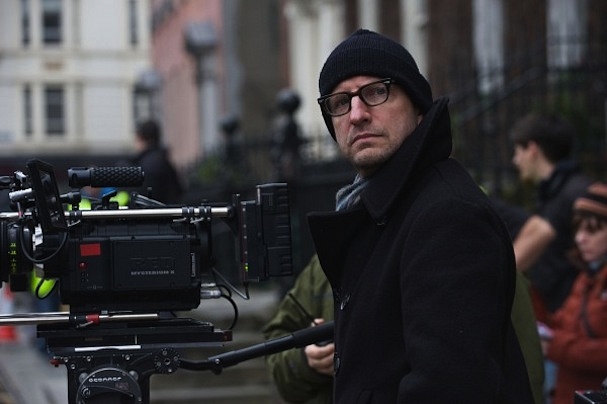
“My policy is to have my name on a movie only once,” says Steven Soderbergh, so quoted by video essayist Nelson Carvajal. “Having your name once increases the impact of that credit because I think every time you put your name up there, you’re actually diluting it.”

That’s why Soderbergh, who isn’t quite a one-man-band auteur but comes close, doesn’t put “Edited by Steven Soderbergh” and “Director of Photography: Steven Soderbergh” on his movies, even though most of the time it’s true. The filmmaker employs pseudonyms: respectively, “Mary Ann Bernard” for his editing credit (his mom’s maiden name) and “Peter Andrews” for his cinematography credit (his dad’s first and middle names).

Nelson’s video essay focuses on Peter Andrews, aka Soderbergh the Cinematographer. Soderbergh caused a minor stir back in 1999 when he announced that he was going to serve as director of photography on his drug drama Traffic, an ensemble story with multiple, parallel subplots. Soderbergh was DP on his mockumentary Schizopolis, and he’d had previously served as his own camera operator on other films, even ones that had separate, credited cinematographers, because he likes the intimacy that results when a director personally covers actors’ performances, adjusting framing as he goes and cutting out the middleman, so to speak. Much of the film was shot handheld, with relatively lightweight, 35mm Panavision XL cameras, often from a slight distance, but zoomed in, to give the actors a bit of space and to contribute to a documentary-like aesthetic, intimate yet respectfully distanced. Soderbergh had been moving in this creative direction for years, and arguably perfected the approach in his two previous movies, The Limey and Erin Brockovich (with cinematographer Ed Lachman). Soderbergh shot the film’s three main storylines in three strikingly different visual styles (discussed in some detail here) to help audiences instantly differentiate them. Although he seemed to bite off more than he could realistically chew—half of the first day’s footage proved unusable—he got a handle on things, and the film’s look was widely analyzed at the time and is still imitated. Breaking Bad even cribbed the brown “tobacco filter” used in Traffic’s Mexican sequences for its own south-of-the-border scenes.

“Peter Andrews” became more comfortable and offhandedly ambitious over the years, working both in film and video throughout the aughts; 2001’s Ocean’s Eleven and 2002’s Solaris were shot on 35mm film, lushly so, while the improvised 2002 Hollywood satire Full Frontal, the 2004 HBO series K Street, and the star-free 2005 neorealist crime drama Bubble were shot with rather modest video equipment. Soderbergh has increasingly gravitated toward video as image quality improved and the equipment became increasingly portable. As he explains in this video, he likes to shoot and edit quickly, the better to see the finished product and then move on to the next thing, whatever that turns out to be.

As you can see in Nelson’s compilation, Soderbergh isn’t interested in forcing his media to be something they aren’t naturally inclined to be. When he worked in celluloid, he tended to work with the properties of particular film stocks rather than pushing against them; he didn’t seem to mind graininess or slight under- or over-exposure as long as the story got told, and for the most part he made the capture of performance and the rhythms of cutting more of a priority than visual gloss or compositional perfection. When he started working extensively in video in the early aughts—by which point he was serving as his own pseudonymous director of photography—he didn’t seem to lose a wink of sleep over whether laypersons could tell that something was shot electronically rather than chemically. He wasn’t afraid of blown-out windows (one of the most recognizable tells of shot-on-video movies) and when he shot handheld, he didn’t try to disguise the fact that he was working with very light, at times seemingly weightless cameras. This isn’t to say that he was an aesthetically sloppy cinematographer (the locked-down, meticulously framed images in 2005’s Bubble prove otherwise)—just that, to use a fine arts metaphor, he didn’t pretend that watercolor was oil paint, or that paper was canvas.

Video is more conducive to Soderbergh’s nimble formalist mindset than film, a medium whose images cannot be accurately judged until the movie is completely edited, color timed, and printed. True, it’s possible to check focus and framing of filmed images on set by way of a video “tap,” which shows an approximation of the image on a monitor; but video (especially high-def video from the last decade or so) removes a lot of the guesswork, because when you’re shooting electronically, what you see in the monitor on set is very close to what the movie will look like when it’s done, give or take some exposure tinkering, color correction, CGI, paint-outs and the like. Video is also much more amenable to available light, and Soderbergh has always hated having to light actors and sets; he believes it saps the momentum of performances and kills immediacy, and anyone who’s ever acted for the camera will tell you that he has a point. Prizing available light and emotional momentum over the minute details of light, shade and texture won’t win a filmmaker too many accolades as a stylist. (“He saves time by not going into all that other unnecessary ‘lighting’ stuff DP’s sometimes talk about,” one film buff said in an online forum. “He never seems to let composition, camera movement and, from what I’ve heard, proper exposure dictate story either,” another countered.) But his post-2000 output is striking, albeit in a rough, Ken Loach-like way. And there’s a hell of a lot to nitpick. If “Peter Andrews” had fussed over every frame of a Steven Soderbergh production, Soderbergh would not have directed or co-directed 16 feature films, one cable movie, one cable series, two documentaries and two shorts since 2000.

The last feature film that “Peter Andrews” shot on 35mm film was 2007’s Oceans 13. Every movie after that was shot electronically. After using the high-definition Red video camera  to shoot  2008’s Che—a two-part, four hour biopic of Che Guevara, starring Soderbergh’s Oscar-winning Traffic collaborator Benecio del Toro—the director abandoned film and never looked back. “This is the camera I’ve been waiting for my whole career,” he said at the time. “Jaw-dropping imagery, recorded on board a camera light enough to hold with one hand… Red is going to change everything.” And it did. Soderbergh shot most of his subsequent projects with versions of the Red camera, including The Girlfriend Experience and The Informant! The brand has become one of the workhorse photographic systems for cinema and television; Louis C.K. shoots his series Louie on the Red, and Peter Jackson shot all three parts of The Hobbit with the Red, after having shot the original, Oscar-winning trilogy on Super 35mm film.

“Since I act as my own cinematographer, one thing I’ve had to learn is how to make things look not so good, to be able to go into a space and recognize this is the way this looks, and it’s not always my job to make everything look pretty,” Soderbergh told The Chicago Tribune in an interview about his 2012 hit Magic Mike. “It’s supposed to look real sometimes. I’m weirdly proud of scenes where I’ve let things look the way they look. To me it’s a sign of maturity.”–Matt Zoller Seitz

Nelson Carvajal is an independent digital filmmaker, writer and content
creator based out of Chicago, Illinois. His digital short films usually
contain appropriated content and have screened at such venues as the London Underground Film Festival. Carvajal runs a blog called FREE CINEMA NOW which boasts the tagline: “Liberating Independent Film And Video From A Prehistoric Value System.” You can follow Nelson on Twitter here.

Matt Zoller Seitz is the co-founder of Press Play.

VIDEO ESSAY: Beautiful Nightmares: David Lynch’s Collective Dream

VIDEO ESSAY: Beautiful Nightmares: David Lynch’s Collective Dream

David Lynch could be a wonderful stage director.

Crazy to say, perhaps, but perhaps not. Despite his relentless visual craftsmanship and tests of the limits of that craftsmanship, parading images in front of us that are luscious even when you can barely tell what’s being filmed, there is always an aspect of the staged to every film he makes. Part of it is his privileging of the naked, screaming utterance, from Lula’s “Sailor Ripley, you get me some music on that radio this instant, I mean it!” in Wild at Heart to Frank’s “I’ll fuck anything that MOOOOOOOOOOVES!” in Blue Velvet. These statements always have an ersatz quality to them, as if they were plucked out of another conversation and dropped into the movie at hand. It’s hard to link them, directly, to their contexts—and that incongruity is what makes them memorable. But, ultimately, they come to express truths about the people saying them, as if he, she, or it simply couldn’t wait any longer, just had to burst out with a plume of vulgar, unrestrained self-expression. We laugh, a little, when Sailor Ripley asks, “Did I ever tell ya this here jacket represents a symbol of my individuality, and my belief in personal freedoms?”—but we also don’t. Though Lynch is, in a sense, a truly joyous filmmaker–in that he’s able to transcend scenes of tremendous violence and energy that would pretty much eat up any other filmmaker’s intentions from the inside out, instead making them part of a grand and coldly perfect scheme–he is also, to state the wholly obvious, someone who thrills in catching us off guard, a crucial trick of theater. Why does Robert Blake’s white-faced, ghoulish menace laugh like that in Lost Highway? What’s he laughing at? What could possibly be that funny? Where’s the laugh coming from? No one knows. What’s important, though, is that he’s laughing. The laugh itself has significance beyond what precedes or follows it, and it doesn’t leave you.

And then there’s the matter of the act of performance in his films. In how many of his movies does someone perform, in some sense, so that we watch them doing something they would not normally do, often in a virtuosic fashion? Well, let’s see. There’s Isabella Rossellini's Dorothy Vallens, singing the title song in Blue Velvet (not to mention Dean Stockwell’s brilliant Roy Orbison lip-synching, by now a milestone in the cinematic education of anyone my age, though the scene itself has no purpose within the film’s storyline), there’s Agent Cooper’s talk-show-esque conference, in a room lined with red curtains, with Laura Palmer and the Man from Another Place in Twin Peaks; there’s Betty Elms' (Naomi Watts) orgasmic and career-making audition in Mulholland Drive, and, later in the same film, Rebekah Del Rio’s performance of “Llorando” in an old theater, to name but a few examples. These scenes occupy an inherently elevated position, as if Lynch were saying: This is what the film can really do for you—all the rest of this stuff is just work. This film will never be any better, or these characters any more exalted, than at this moment. And the scenes always have a hypnotic effect; as we watch, we suspend whatever we might be feeling—horror, revulsion, elbow-deep irony—and simply observe, excited at the thought of what Lynch might be about to offer us. Once the moment has passed, we don’t analyze it or question it. We know the scene is indispensable, but we have no idea why.

And what about Lynch’s characters themselves? There are very few of his major figures that can be said to be simply “getting through the story” in a utilitarian fashion—almost all of them have exaggerated traits that make the arcs they move through larger than life. Think of Willem Dafoe’s hit man Bobby Peru in Wild at Heart, whose rotting, dilapidated teeth alone describe an entire life story; or Kyle MacLachlan's Jeffrey Beaumont, his untouched face ravaged by the end of Blue Velvet. Nicolas Cage’s Sailor Ripley is, himself, a walking metaphor for the redeeming power of performance. On the point of being beaten up by a group of thugs at the end of Wild at Heart, Sailor’s last recourse is, like a good performer, to put a good face on things, maintain his Elvis-esque persona, and take his beating. And the moment when Jeffrey Beaumont does the duck walk while courting Sandy Williams in Blue Velvet has the vaguely rhapsodic, pastoral quality of a scene from Eugene O’Neill, something from Ah, Wilderness, say. It’s not a real moment, since the gesture is neither a declaration of love or a shoving away of reality—and yet we have the sense it’s as real as these characters ever get.

A writing teacher, a poet and sometime playwright, once told me and the other students in his poetry class, after he’d asked us to write plays and we responded that we signed up to write poems: Close your eyes, imagine an empty stage, and then think of something you’d like to happen there. That’s your play. Oversimple as this advice might have been, as Lynch’s career has progressed, one might easily imagine he’s making a similar leap into creative desire to fashion films, as his seemingly random, aggressively disorienting and confusing work increasingly resembles the happenings staged by Allan Kaprow or the Fluxus artists who followed him, more than the more traditional "art films" his earlier works resembled. Even in his life outside his work, Lynch has a flair for the theatrical, as when, prior to the release of Inland Empire, he sat with a billboard at the corner of Hollywood and LaBrea Boulevards, his only companion at the time a large cow. Whether this was a publicity stunt, a satire of Hollywood film marketing, or both, its performative aspect was practically its entire content. The events that take place in Inland Empire, Mulholland Drive, or Lost Highway are not necessarily parse-able—who could explain the figures with rabbits’ heads wandering through Inland Empire? Who would want to try? You could, though, depending on your degree of sympathy with Lynch, say they made visual sense within the director’s larger body of work. And they are, beyond that, figures that hold your attention on screen while also encouraging a prilferation of interpretations. Can we say that of a majority of big-budget films? When was the last time you felt mystified at a multiplex?

It is, as suggested earlier, silly to say, of a filmmaker or an artist in another medium, He could have been X, as if X were the ultimate destination, the artist’s current accomplishment only a way station. However, in Lynch’s case, what I want to suggest is that the source of his power is less the ability to shock than the ability to shout. It is through this ability that Lynch’s characters gain their great gravitas, his movies their substance. It seems entirely conceivable that, thousands of years ago, when actors were screaming into the depths of Greek amphitheaters, their statements, far from being the golden-tongued outcries of rage we’ve come to expect, might have been, in the context of their time, closer to this:

“Heineken? Fuck that shit! Paaaaaabst Bluuuuuuue Riiiiiiibbon!”

–Max Winter

Nelson Carvajal is an independent digital filmmaker, writer and content creator based out of Chicago, Illinois. His digital short films usually contain appropriated content and have screened at such venues as the London Underground Film Festival. Carvajal runs a blog called FREE CINEMA NOW which boasts the tagline: "Liberating Independent Film And Video From A Prehistoric Value System."
You can follow Nelson on Twitter here.

Max Winter is the Managing Editor of Press Play.

VIDEO ESSAY: Gangster Culture in the Movies

VIDEO ESSAY: Gangster Culture in the Movies

"He used to be a big shot." That's how a gangster's girlfriend describes him as she cradles his corpse at the end of The Roaring Twenties. But the line could be plugged into any gangster film that ends with a tough-talking, two-fisted, hot-tempered alpha male cooling his heels in prison, frying in an electric chair or bleeding out in an alley. In these films, death comes to kingpins and flunkies alike. If you're part of the underworld, you have to accept this as a given: one minute you're swaggering down the street with a curvy dame on your arm, thinking about your next big score and tipping bartenders $100 just for keeping the ice cubes cold, and the next minute you're being led into a room you thought would contain an open bar and a card game, only to find it empty save for two big guys with handcuffs and a couple of crowbars.

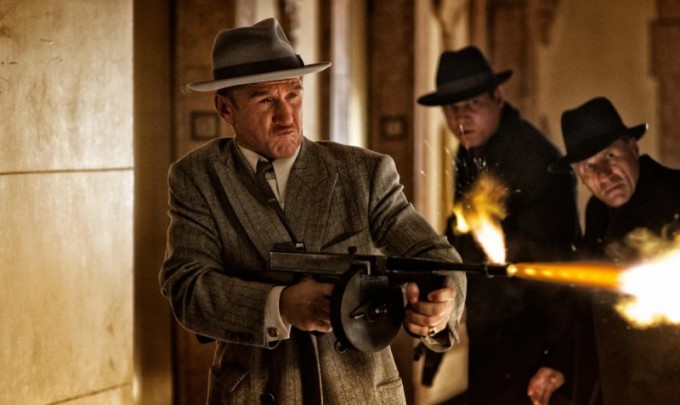
nullBut isn't it always thus, even for yeggs what's been to college? Death falls on the just and the unjust alike, on big shots and little fish. No genre save horror is as comfortable with the possibility, nay, certainty, of sudden, horrendously violent extinction. Gangster pictures are populated almost exclusively by characters who've made peace with that scary reality; deep down, everyone knows life could end at any moment, but the gangster feels it more acutely, living like there's no tomorrow because as far as he knows, there isn't one. What's the threat of prison to somebody whose line of work guarantees they might get plugged, stuck, beaten to a bloody pulp or run over with a shiny new car for the sin of being on the wrong side of the law, or a turf war, or history? And who wouldn't find a character like that appealing, especially if the story ends, as it invariably does, with the gangster getting ventilated like a Cagney character, checkmated into witness protection a la GoodFellas's Henry Hill, or pinched for tax evasion like Capone in The Untouchables? When we watch gangster films, we get to indulge the fantasy of living life without rules, plus a reminder of why people shouldn't do that: party on Saturday, church on Sunday, with a bit of the old ultraviolence tossed into the mix. No genre balances attraction and repulsion more deftly, or manages to be so immoral, amoral, and moralistic all at once. 
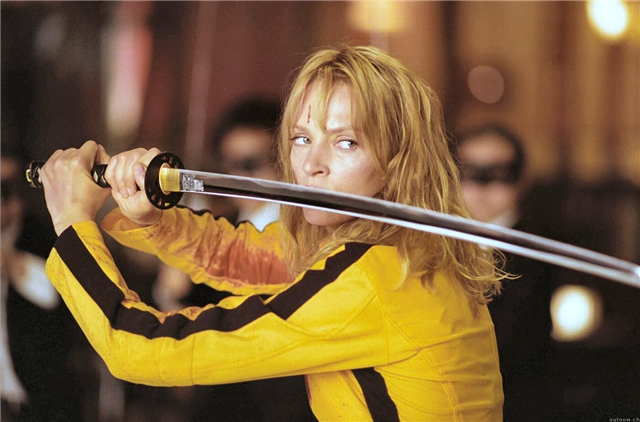
The gangster picture is as ritualized as the Western, and is in some ways the pessimistic antithesis of the western, a genre that was all about the future, about possibilities, about the likelihood of exerting will on the universe and remaking your life so that it resembles your fantasies. There's a reason why critics keep quoting Robert Warshow's piece "The Gangster as Tragic Hero" in essays like this one: because he sensed this link and elucidated it so beautifully. "Those European moviegoers who think there is a gangster on every corner in New York are certainly deceived," he wrote, "but defenders of the 'positive' side of American culture are equally deceived if they think it relevant to point out that most Americans have never seen a gangster. What matters is that the experience of the gangster as an experience of art is universal to Americans. There is almost nothing we understand better or react to more readily or with quicker intelligence. The Western film, though it seems never to diminish in popularity, is for most of us no more than the folklore of the past, familiar and understandable only because it has been repeated so often. The gangster film comes much closer. In ways that we do not easily or willingly define, the gangster speaks for us, expressing that part of the American psyche which rejects the qualities and the demands of modern life, which rejects 'Americanism' itself." Or as Henry Hill puts it, "To us, those goody-goody people who worked shitty jobs for bum paychecks and took the subway to work every day, and worried about their bills, were dead. I mean they were suckers. They had no balls." Henry, sweetheart, half-Mick, half-Guinea: wherever you are, on behalf of the silent majority of ball-less suckers who'll be queuing up for Gangster Squad this weekend no matter what the critics say, I salute you.–Matt Zoller Seitz

Nelson Carvajal is an independent digital filmmaker, writer and content creator based out of Chicago, Illinois. His digital short films usually contain appropriated content and have screened at such venues as the London Underground Film Festival. Carvajal runs a blog called FREE CINEMA NOW which boasts the tagline: "Liberating Independent Film And Video From A Prehistoric Value System."
You can follow Nelson on Twitter here.

Matt Zoller Seitz is the co-founder of Press Play.

VIDEO ESSAY: ON THE Q.T., CHAPTER 4: KILL BILL: The Female Archetype vs. The Goddess

VIDEO ESSAY: ON THE Q.T., CHAPTER 4: KILL BILL: The Female Archetype vs. The Goddess

Volume 1:

Withhold information, then release it. Set up expectations, then subvert them. Tease, then gratify. This is how you construct an epic. This is how Quentin Tarantino, block by block, builds up Kill Bill. It's disorienting at first. The story starts in medias res, and you have to stop and ask yourself, "Who is this woman? How did she get here?" Then you wait a long time for any real answers. But that's Tarantino's game. That's how he draws audiences into his vision, makes us crave more detail, makes us really feel the size of the story. He wields information like the Bride swings her Hanzo sword: aggressively but precisely, every expository word dropped just where it needs to be. Because as Tarantino is well aware, few moviegoing phenomena are as pleasure-inducing, as viscerally satisfying, as the one we call a surprise. Confusion, then clarity. That two-step process is the key to Kill Bill's thrills.

The most obvious technique by which Tarantino sets and springs these traps is also the one most closely identified with his name: nonlinear narrative. Reservoir Dogs, Jackie Brown, and Pulp Fiction each employed those loops and curlicues from present to past and back again to an extent, but here it's magnified. Volume 1 alone jumps with wild abandon across a span of four and a half years, and even travels back decades for "The Origin of O-Ren." So we get a series of revenge narratives—O-Ren's, the rape-revenge tale of Buck and the Bride, the vengeance she extracts from Vernita Green—nested inside one another like Matryoshka dolls, illustrating Hattori Hanzo's adage that "revenge is never a straight line. It's a forest." The Bride's lost there, and so are we, wandering from one intertwining cycle of violence to another, trying to pick up clues and context as we go along.

Let's zero in on that fight with Vernita, the suburban homemaker. First and most obviously, it's a fight. It's audience-sating spectacle. But it also undercuts expectations by ending abruptly just after Vernita suggests that "we have ourselves a knife fight." It throws us off balance. Then it uses Vernita's daughter to suggest that although this particular fight may be over, the Bride's vendetta is starting a wildfire. Finally, it flashes two unexplained details across the screen: the name "O-Ren Ishii," scrawled in pen but crossed out, and the words "Pussy Wagon" emblazoned on the back of our heroine's flamboyant yellow truck. Their respective meanings are as yet unknown to us, but they imply a recent, bloody past. This, all of this, is what critic Jim Emerson describes as the movie "teach[ing] you how to watch it." In this short vignette, we learn that although Kill Bill may be action-packed, its action will be morally and structurally complicated. And we learn that, as the saga grows more and more textured by detail, we won't necessarily understand how all those details fit together. Explanations lie buried in the Bride's past, as well as in her future.

Another device Tarantino uses to tease us while easing us into each new portion of Kill Bill is perhaps his most traditional: the title card. Both movies are punctuated by them, demarcating narrative borders with their suitably oblique chapter headings. "The Blood-Splattered Bride," for example, or my personal favorite, "The Man from Okinawa." So suggestive, so tantalizing, telling us just enough about Hattori Hanzo without telling us anything at all. It reminds me of Tarantino's own short "The Man from Hollywood," or one of his major inspirations, Leone's "Man with No Name." Or farther afield, the film Vivre sa vie by Tarantino's idol, Jean-Luc Godard, which employs similar intertitles but to more overtly Brechtian ends. The phrase "The Man from Okinawa" is so taciturn that it sets a stage without spoiling any of Sonny Chiba's surprise, revealing that he isn't just a man—he's the man.

This strategy pays off heavily when we actually meet Hattori Hanzo. Although he's posing as a buffoonish sushi chef (like the Bride, who's posing as a clueless tourist), that title card has primed us to see Hanzo as a crucial, enigmatic figure. And sure enough, their mutual ruse wraps up the second she starts speaking fluent Japanese. No matter how thoroughly they change their appearance or lifestyle, every one of Kill Bill's warriors remains a function of their messy, blood-soaked past, a past now embodied by the resurrected Bride. So for the viewer, the story becomes a daisy chain of revelation and revenge; a 4-hour epistemic quest tackling questions like "who?" and "why?": Who was this person in a past life? Why did they hurt the Bride? How, in the end, will she kill them?

As each of these mysteries is stripped away, we get closer and closer to the absolute truth, which lies deep inside the Bride's relationship with Bill.

Volume 2:

The climax of Kill Bill Volume 1, "The Showdown at the House of Blue Leaves," is as gargantuan as melees get. Dozens of bodies lie dismembered; O-Ren Ishii lies dead. It's all so huge, so satisfying, that even if Volume 2 were wall-to-wall carnage, there'd be no hope of topping it. So instead of trying to one-up all this swashbuckling and spilled blood, Tarantino delivers a pay-off that goes beyond action. He doesn't go bigger; he goes deeper, down into the relationship that prompted all this grisly revenge in the first place. Because the longer secrets go untold, the more potential energy they gather. For two hours now, we've been wondering: Who are these people, really? What's the Bride's real name? What does Bill look like? Our sustained curiosity supplies Volume 2 with its power.

Normally, seeing an actor's face is no big deal. But the pains that Tarantino takes to shoot around David Carradine in Volume 1 give his performance as Bill a halo, an aura of mystery. They turn him into what film sound theorist Michel Chion describes as an "acousmêtre": a being who derives power from being heard but not seen. And they root him in the tradition of other such masterminds: Bond archnemesis Blofeld, Inspector Gadget's Dr. Claw, and Charlie from Charlie's Angels. So we're forced to judge Bill from Carradine's soft, silken drawl alone—until, that is, he's introduced in the flesh through a visual nod to John Ford's The Searchers. Now, seeing the history etched into Carradine's weather-beaten face, we know we're getting close to the heart of the story; we can sense our proximity to Kill Bill's real, deep truth. After being hidden for so long, that face has an impact.

Contrast this with our introduction to Tommy Plympton, the Bride's fiancé. No fanfare, no impact, he's just there, played by makeup artist Christopher Allen Nelson in one of the saga's least stylized, least memorable performances. He has a few lines, but the only one that really stands out is "I guess I just believe in living dangerously" because it's so thick with unknowing irony. While alive, he's only defined through his relationship to the Bride, and after his death she doesn't mourn him. His only real significance is that he's so absolutely normal. He's never killed anyone and has no connection to the Bride's past. This alone, this lack of mythical back story, makes Tommy the ideal husband for the Bride and father to her child. He's her ticket to a stable, conventional life, the same kind pursued by Vernita Green, the same kind derided by Bill. Onscreen, he's a cipher. But symbolically, he's the opposite of Bill and a representation of this hypothetical future.

But no matter how fast and far you run, the past will always catch up with you. This is the moral of Kill Bill, the thematic basis for its labyrinthine chronology. Every act of violence, we learn, has a cause somewhere in the past and an effect somewhere in the future. Nothing is isolated. By killing Vernita, O-Ren, Buck, Elle, and Bill, the Bride thinks she can tie up all of her loose ends. But she never anticipates the loosest end of all: her daughter. B.B. is Volume 2's last-act bombshell, and her presence turns the Bride's last, titular objective into a complex, emotionally fraught showdown. If her grudge against Bill was about hate, no matter how intense, it would be much easier to deal with, but here Tarantino pulls a heartbreaking reversal: it's actually about love. It's about the Bride's moral obligation to kill the love of her life for the sake of her daughter. She has to sever all ties, cut herself and her daughter free, because that's the cost of a terminally impossible relationship.

Now all questions have been resolved. All these layers of mystery and secrecy have culminated in the Bride's single, poignant point: "She deserved to be born with a clean slate." That one desire, to bring B.B. into a world away from Bill, triggered all this plotting and bloodshed. This is the real pay-off Tarantino gives us, bubbling up from beneath the sheen of "cool," of fight choreography and stylization and homage. This is the real catharsis of Kill Bill. I don't often think of Tarantino's movies as being especially wise or profound, but I do think he gets relationships. Whether we're talking about Mr. White and Mr. Orange, Max Cherry and Jackie Brown, or Bill and the Bride, I think he understands how we invest ourselves in the people who are worst for us. The people who will hurt us. The people, metaphorically or otherwise, we may someday have to kill.

Nelson Carvajal is an independent digital filmmaker, writer and content creator based out of Chicago, Illinois. His digital short films usually contain appropriated content and have screened at such venues as the London Underground Film Festival. Carvajal runs a blog called FREE CINEMA NOW which boasts the tagline: "Liberating Independent Film And Video From A Prehistoric Value System."
You can follow Nelson on Twitter here.

Andreas Stoehr was born inside the Arctic Circle, has a BA in Cinema and Media Studies, and has written about film somewhere or other (especially on Pussy Goes Grrr and Twitter) since 2008. Passions include comics, dessert, and Marlene Dietrich.

In Remembrance of Harris Savides: 1957-2012

In Remembrance of Harris Savides: 1957-2012

Cinematographer Harris Savides, who died on Tuesday at 55, was a poet of light. He shot some of the most stylistically striking movies of the last two decades: James Gray’s The Yards; Sofia Coppola’s Somewhere; Jonathan Glazer’s Birth; Noah Baumbach’s Greenberg; Gus Van Sant’s Elephant, Gerry and Last Days; David Fincher’s The Game and Zodiac.

Look over that list and you get a sense of his versatility. But there was more to Savides than craft. His mix of artistic restlessness and quiet confidence bridged schools of filmmaking that might seem incompatible: virtuosity and naturalism. He came out of the world of fashion and TV ads and music videos, but when you look at his feature work, you rarely get the sense that you’re being sold anything. There’s a reticence and mystery to his images, as audacious as they often are.

Birth is filled with “How the hell did they do that?” camera moves and astoundingly long takes, but his New York streetscapes and lush interiors aren’t TV-commercial glossy, or even fussed over; they seem like places where real people, not movie characters, might live and work. Coppola’s comfortably numb Somewhere has an early 70s stoner art-film vibe, but its locked-down wide shots, which let us simply watch characters behaving for minutes at a stretch, bespeak powers of concentration that Coppola’s earlier movies only hinted at. Van Sant’s hothouse triptych seems influenced by the work of hypnotically stripped-down European filmmakers who had become critical darlings in the U.S. around that time, Bela Tarr especially; but the casual-seeming quality of the light—radiant, even woozy, yet somehow not sentimentalized—is thoroughly American. Van Sant’s school-shooting psychodrama Elephant, in particular, merges documentary patience and movie-brat showiness in a way that felt strange and new; no wonder it divided critics.

In time, Fincher’s Zodiac might prove the most significant picture of the bunch. Shot digitally with the Viper camera at a time when many directors and viewers were still suspicious of high-definition video, it was at once revolutionary and reassuring. No American movie had revealed the texture of night with such crystalline clarity. At the same time, though, the mid-’70s conspiracy thriller look that Fincher and Savides devised for Zodiac’s daytime and office scenes tied the movie to analog values, and sent an important subliminal message: tools change as technology evolves, but they’re still just a means to an end.

When I heard about Savides’ passing, I reached out to Jamie Stuart, a filmmaker and writer. He’s been doing highly conceptual documentary shorts for the New York Film Festival for years now; Roger Ebert championed his 2010 short film “Idiot with a Tripod.” Stuart was an admirer of Savides’ who interviewed him twice and corresponded with him via email; an edited transcript of our conversation follows.

null

MZS: Harris Savides' death hit me harder than that of most cinematographers, and in trying to figure out why that was, I decided it was because he was a transitional figure in a really volatile period of film history. I can't think of many cinematographers who demonstrated such mastery of both traditional celluloid and new digital technologies.

‪Jamie Stuart: It's interesting. I didn't really see that as his journey so much, because I know he was very dubious of digital and greatly preferred film. I really looked at him as somebody who came from high-end fashion and music videos and commercials—but then transitioned into simplicity and naturalism.   

‪MZS: Can you elaborate on that? Because when I think of Harris Savides, "simplicity" and "naturalism" aren't necessarily words that spring immediately to mind.

nullWhen I look over his filmography I see him acting as cinematographer on movies that seemed stylistically pivotal for their directors. He was behind the camera when Gus van Sant got into his American Bela Tarr phase, and did movie after movie comprised of very, very long Steadicam shots: Elephant, Gerry, Last Days. He was the director of photography on David Fincher's Zodiac, a groundbreaking, digitally-shot feature that revealed all the details of night that celluloid and low-end video couldn't show us before, and the somewhat stately rhythms of that movie signaled a new phase for Fincher. I wonder if the more contemplative The Curious Case of Benjamin Button and the almost live-TV-like claustrophobia of The Social Network would have happened without Fincher’s collaboration with Savides on Zodiac? We’re not talking meat-and-potatoes here. And Birth! My God. That's so daring visually that I can imagine Brian De Palma watching it and thinking, "I wouldn't have gone quite that far, but well-played, sir."

‪Stuart: Yes, but look at the way he shot and the way he lit a lot of those movies. When I first met him and interviewed him in 2003, he had just made Gerry and Elephant, and he found those experiences working mostly with long takes and practical light to be completely liberating. He was afraid he couldn't go back to shooting more controlled commercial work. He suggested he would feel like a caged animal.

I think that's one of the reasons Fincher brought him in on Zodiac — because he knew Harris would be able to give a natural look that also had style. Harris lit the basement scene, for instance, with 40-watt bulbs, I think. He was upset that the Viper couldn't handle low light well, so he was forced to light up a lot of scenes and stop down, when he really wanted to shoot things as they were.  

nullMZS: Interesting. So what you're describing here is a very simple way of shooting, one that tries to make the conditions seem "available" even if they were meticulously contrived. And then on top of that you've got formal daring with regard to camera movement. That closeup of Nicole Kidman in Birth, for example, is spectacular. No pretense of being "invisible" there. You are supposed to notice the artistry. The form is the show; the hugeness of these gestures help move the film into the realm of fable, make it operatic. And yet the exteriors and interiors don't have a fussed-over look. They're inviting, real-seeming. Glazer's previous movie Sexy Beast was daring, too, in its way, but it contains nothing as stunningly, brazenly big as the stuff in Birth. Savides must have had something to do with that change, don’t you think?

‪Stuart: Perhaps. But I wonder how much of that is Glazer and how much of that is Harris? I think Harris would've been perfectly content to shoot everything with natural light and a perfect camera angle. Harris has a quote somewhere about lighting rooms instead of actors. And that's a very specific approach.

He hated rim light or backlight. I once spotted a close-up of Jake in Zodiac that had rim light, took a still, sent it to him convinced that had been done in a reshoot that he didn't supervise. He confirmed. I remember him going on about Ballast, and how realistic it was. He loved The Dardenne brothers.  

MZS: Do you remember the first time you noticed Harris Savides' work? Do you remember when you decided he was somebody significant?

Stuart: I knew Harris' work initially from his music videos with Mark Romanek. The first one they did together was for Teenage Fanclub 20 years ago. It's black and white. Very simple. The band performing with a giant light above them.

Then, I remember when he did The Game and Fincher said he wanted Harris as his director of photography because the movie was really complex, and he needed a cameraman he could completely trust. So when I was covering the NYFF in '03, and he was there with Elephant, I introduced myself. We remained in touch ever since.

We had a similar taste in lighting and composition. We were trading e-mails when my blizzard video blew up, he was joking that I'd become a celebrity. After he first watched the video, he told me he was upset when it transitioned from black-and-white to color, but then he liked the color a lot, too, so he didn't mind.

The last time I think I saw him was at a Q&A Mark Romanek did a couple of years ago. As we were leaving, I remember looking back and seeing Mark and Harris walking together like old best friends.

I can say that, strangely, he was on my mind [Wednesday] night. The New York Film Festival screened my work at Richard Pena's tribute. One of the people featured in it was Noah Baumbach, whom I subsequently bumped into while leaving. I had sent Harris a still photo I took of Noah from a shoot a couple of months ago. I thought about e-mailing him to let him know that my work looked good on the big screen and that I'd just seen Noah.

So, to be honest, I'm a little mixed today. Going from the high of having my work play last night at the NYFF, then finding out about [his death Thursday] morning.  

MZS: Did you get to spend much time with him in person?

Stuart: Our relationship was primarily via e-mail. I interviewed him twice. Once in 2003, then again in 2006 before the release of Zodiac. We randomly discussed getting together to shoot some stills or maybe my tagging along when he was first testing the Alexa [motion picture camera]—but neither materialized.  

‪MZS: What, specifically or generally, do you think you learned from Harris Savides as an artist? Are there any things he inspired you to do, or to do better, or differently?

‪Stuart: He inspired me in the sense that I always sent him my work—and considering how highly I thought of him, I damn well hoped my work would be good enough to show him. He was somebody, a professional, who was there for me as I was embarking on my filmmaking career. And that's something I'm grateful for.

I remember sending him a copy of my first full mini-DV short in early 2004, made for like $50, and he told me his hat was off to me for doing so well with such little money. We thought similarly about lighting and composition. He had a very no-bullshit attitude about work. Whenever he made a movie and I offered my opinion, he always wanted it straight, even if I didn't like it.

He was somebody I always sent links of my work to. I liked his opinion. You know? I liked him. I liked his work.

Nelson Carvajal is an independent digital filmmaker, writer and content creator based out of Chicago, Illinois. His digital short films usually contain appropriated content and have screened at such venues as the London Underground Film Festival. Carvajal runs a blog called FREE CINEMA NOW which boasts the tagline: "Liberating Independent Film And Video From A Prehistoric Value System." You can follow Nelson on Twitter here.

Matt Zoller Seitz is the co-founder of Press Play.