From now through April, the Oberhausen International Short Film Festival will present "Film Studies in Motion", a Web Series curated by Volker Pantenburg and Kevin B. Lee. This series, available on the festival's website and Facebook page, presents weekly selections of analytical video essays on the web, in preparation for Pantenberg and Lee's presentation "Whatever happened to Bildungsauftrag? – Teaching cinema on TV and the Web", scheduled for April 28 at the festival.
Week Five: Auteur Studies
As auteur theory remains a central component of film studies, the medium of online video generates new perspectives and approaches to understanding the director’s vision and process. One remarkable aspect that can be found in this selection of videos is the extent to which the format allows the video creators to personalize their appreciation of a director’s work. These videos convey the creator’s individualized perspective through their narration or editing techniques, as well as the act of appearing on screen, even as they consciously incorporate or mimic the style of the director. This interplay between the creator and their subject gives video auteur studies a unique quality of its own.
VIDEO – Motion Studies #23: Dreaming of Jeannie: John Ford’s STAGECOACH
From now through April, the Oberhausen International Short Film Festival will present "Film Studies in Motion", a Web Series curated by Volker Pantenburg and Kevin B. Lee. This series, available on the festival's website and Facebook page, presents weekly selections of analytical video essays on the web, in preparation for Pantenberg and Lee's presentation "Whatever happened to Bildungsauftrag? – Teaching cinema on TV and the Web", scheduled for April 28 at the festival.
Week Five: Auteur Studies
As auteur theory remains a central component of film studies, the medium of online video generates new perspectives and approaches to understanding the director’s vision and process. One remarkable aspect that can be found in this selection of videos is the extent to which the format allows the video creators to personalize their appreciation of a director’s work. These videos convey the creator’s individualized perspective through their narration or editing techniques, as well as the act of appearing on screen, even as they consciously incorporate or mimic the style of the director. This interplay between the creator and their subject gives video auteur studies a unique quality of its own.
Today's selection:
Dreaming of Jeannie: John Ford's Stagecoach Tag Gallagher (2003)
VIDEO – MOTION STUDIES #22: Apichatpong Weerasethakul: Reverse Shot Talkies
From now through April, the Oberhausen International Short Film Festival will present "Film Studies in Motion", a Web Series curated by Volker Pantenburg and Kevin B. Lee. This series, available on the festival's website and Facebook page, presents weekly selections of analytical video essays on the web, in preparation for Pantenberg and Lee's presentation "Whatever happened to Bildungsauftrag? – Teaching cinema on TV and the Web", scheduled for April 28 at the festival.
Week Five: Auteur Studies
As auteur theory remains a central component of film studies, the medium of online video generates new perspectives and approaches to understanding the director’s vision and process. One remarkable aspect that can be found in this selection of videos is the extent to which the format allows the video creators to personalize their appreciation of a director’s work. These videos convey the creator’s individualized perspective through their narration or editing techniques, as well as the act of appearing on screen, even as they consciously incorporate or mimic the style of the director. This interplay between the creator and their subject gives video auteur studies a unique quality of its own.
Eric Hynes talks to Palme d'Or–winning filmmaker Apichatpong Weerasethakul (UNCLE BOONMEE WHO CAN RECALL HIS PAST LIVES) about the Thai jungle, time and duration, and the transformative qualities of life and cinema. Part of a series of videos produced by the website Reverse Shot that take playful, innovative approaches to the video interview format.
From now through April, the Oberhausen International Short Film Festival will present "Film Studies in Motion", a Web Series curated by Volker Pantenburg and Kevin B. Lee. This series, available on the festival's website and Facebook page, presents weekly selections of analytical video essays on the web, in preparation for Pantenberg and Lee's presentation "Whatever happened to Bildungsauftrag? – Teaching cinema on TV and the Web", scheduled for April 28 at the festival.
Week Four: Precursors: TV, Cinema, Contemporary Art
There is a a tradition of “Videographic Film Studies” that existed before the Internet. Some TV channels, like the West-German WDR, but also TV programmers in other countries, initiated an impressive variety of programmes on cinema that combined thorough analytical observations with an inventiveness of visual forms and techniques. Found footage has also been used in experimental cinema and contemporary art. Most examples of this audiovisual legacy remain either overlooked or invisible as they are stacked away in archives or private catalogues. For this reason, this episode mostly gathers fragments and snippets instead of entire essays.
Today's selection:
Outer Space
Peter Tscherkassky (1999)
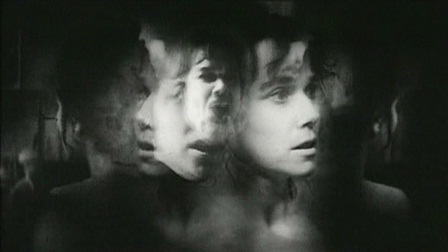
"Cannibalizing Sidney J Furie's 1982 Barbara Hershey horror film The Entity, the story of a woman who is continually assaulted and raped either by real ghosts or by awfully adept repressed traumas… The screen literally explodes with a tumult of Hershey faces, shattering Steve Burum's original cinematography into shards of frightened eyes, trembling hands, and violent outbursts of self-defense, presented in multiple exposures too layered to count, too arresting to ignore. Each frame is further entangled with details revealed by a jittery effect (a primitive traveling matte?) which spills fluttering ectoplasmic lightpools from one cubist aspect of the woman to another. The filmmaker mimics the action of nightmares by condensing the original imagery of the feature and displacing it into a new narrative — as in dreams, a narrative not explicitly linked to actual events, but emotionally more true than any rational explanation. Tscherkassky's shorts are actually considerably more terrifying than the original material."
– Guy Maddin
VIDEO – Motion Studies #19 and #20: “Telephones” and “Home Stories”
From now through April, the Oberhausen International Short Film Festival will present "Film Studies in Motion", a Web Series curated by Volker Pantenburg and Kevin B. Lee. This series, available on the festival's website and Facebook page, presents weekly selections of analytical video essays on the web, in preparation for Pantenberg and Lee's presentation "Whatever happened to Bildungsauftrag? – Teaching cinema on TV and the Web", scheduled for April 28 at the festival.
Week Four: Precursors: TV, Cinema, Contemporary Art
There is a a tradition of “Videographic Film Studies” that existed before the Internet. Some TV channels, like the West-German WDR, but also TV programmers in other countries, initiated an impressive variety of programmes on cinema that combined thorough analytical observations with an inventiveness of visual forms and techniques. Found footage has also been used in experimental cinema and contemporary art. Most examples of this audiovisual legacy remain either overlooked or invisible as they are stacked away in archives or private catalogues. For this reason, this episode mostly gathers fragments and snippets instead of entire essays.
Today's selections:
Home Stories Matthias Muller (1990) The most unmistakable forerunners of the supercut come from the end of the 20th and start of the 21st century. For Home Stories (1990), Matthias Müller fashioned an elliptical narrative out of a host of very similar scenes from Hollywood melodramas. Pastel-decked women linger in large, well-ornamented rooms, all lying down, throwing their heads back and forth, hearing something, turning on a lamp, looking shocked, slamming doors. Funny in their sameness, the women also unearth a disturbed core to the gilded dreams of ‘50s America. – Tom McCormack, Moving Image Source
Telephones Christian Marclay (1995) Christian Marclay's "Telephones" (1995), a 7 1/2-minute compilation of brief Hollywood film clips that creates a narrative of its own. These linked-together snippets of scenes involve innumerable well-known actors such as Cary Grant, Tippi Hedren, Ray Milland, Humphrey Bogart and Meg Ryan, who dial, pick up the receiver, converse, react, say good-bye and hang up. In doing so, they express a multitude of emotions–surprise, desire, anger, disbelief, excitement, boredom–ultimately leaving the impression that they are all part of one big conversation. The piece moves easily back and forth in time, as well as between color and black-and-white, aided by Marclay's whimsical notions of continuity. – From description on YouTube
VIDEO – Motion Studies #18: Los Angeles Plays Itself
From now through April, the Oberhausen International Short Film Festival will present "Film Studies in Motion", a Web Series curated by Volker Pantenburg and Kevin B. Lee. This series, available on the festival's website and Facebook page, presents weekly selections of analytical video essays on the web, in preparation for Pantenberg and Lee's presentation "Whatever happened to Bildungsauftrag? – Teaching cinema on TV and the Web", scheduled for April 28 at the festival.
Week Four: Precursors: TV, Cinema, Contemporary Art
There is a a tradition of “Videographic Film Studies” that existed before the Internet. Some TV channels, like the West-German WDR, but also TV programmers in other countries, initiated an impressive variety of programmes on cinema that combined thorough analytical observations with an inventiveness of visual forms and techniques. Found footage has also been used in experimental cinema and contemporary art. Most examples of this audiovisual legacy remain either overlooked or invisible as they are stacked away in archives or private catalogues. For this reason, this episode mostly gathers fragments and snippets instead of entire essays.
Today's selection:
Los Angeles Plays Itself Thom Andersen (2003)
Thom Anderson's features Eadweard Muybridge, Zoopraxographer (1974), Red Hollywood (1996) and Los Angeles Plays Himself (2003) place him as a leading motion picture essayist and historian. Compiled from hundreds of clips from movies filmed in Los Angeles, Los Angeles Plays Itself explores the history, mythology and reality of Los Angeles as depicted in the movies. Originally intended as a private instructional tool for use in Andersen's lectures on film, the film was released theatrically and is frequently cited as one of the best documentaries of the 2000s.
From now through April, the Oberhausen International Short Film Festival will present "Film Studies in Motion", a Web Series curated by Volker Pantenburg and Kevin B. Lee. This series, available on the festival's website and Facebook page, presents weekly selections of analytical video essays on the web, in preparation for Pantenberg and Lee's presentation "Whatever happened to Bildungsauftrag? – Teaching cinema on TV and the Web", scheduled for April 28 at the festival.
Week Four: Precursors: TV, Cinema, Contemporary Art
There is a a tradition of “Videographic Film Studies” that existed before the Internet. Some TV channels, like the West-German WDR, but also TV programmers in other countries, initiated an impressive variety of programmes on cinema that combined thorough analytical observations with an inventiveness of visual forms and techniques. Found footage has also been used in experimental cinema and contemporary art. Most examples of this audiovisual legacy remain either overlooked or invisible as they are stacked away in archives or private catalogues. For this reason, this episode mostly gathers fragments and snippets instead of entire essays.
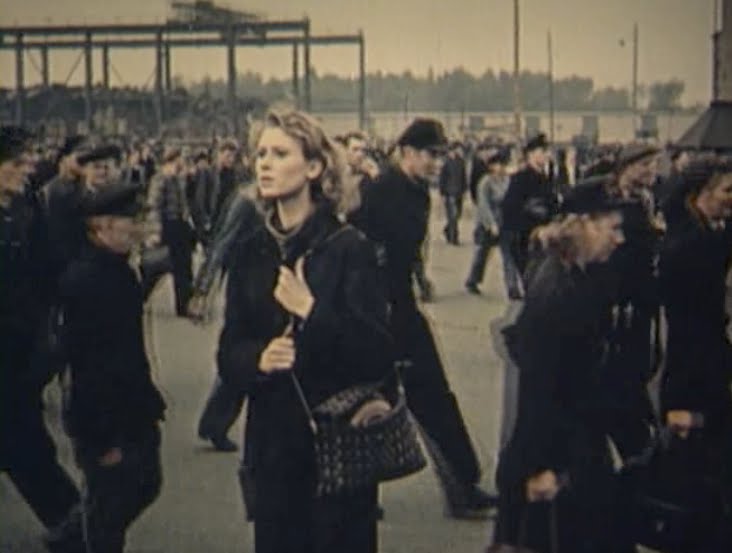
A major figure in the genre of essay film and video, Harun Farocki combines a precise formalist analysis of images with exhaustive research into the history behind those images. Farocki does not merely use archival images to tell stories of modern society, but shows how images convey unexpected stories and meanings, often unintentionally by their creators. In this clip from Workers Leaving the Factory, he uses the first film ever shown on screen to launch into a visual exploration of how factories have been depicted throughout the 20th century, and what those images say about our relationship to industrial labor.
VIDEO – Motion Studies #15 & #16: The Art of Cinema on French TV (Godard on Kubrick; Costa on Straub/Huillet)
From now through April, the Oberhausen International Short Film Festival will present "Film Studies in Motion", a Web Series curated by Volker Pantenburg and Kevin B. Lee. This series, available on the festival's website and Facebook page, presents weekly selections of analytical video essays on the web, in preparation for Pantenberg and Lee's presentation "Whatever happened to Bildungsauftrag? – Teaching cinema on TV and the Web", scheduled for April 28 at the festival.
Week Four: Precursors: TV, Cinema, Contemporary Art
There is a a tradition of “Videographic Film Studies” that existed before the Internet. Some TV channels, like the West-German WDR, but also TV programmers in other countries, initiated an impressive variety of programmes on cinema that combined thorough analytical observations with an inventiveness of visual forms and techniques. Found footage has also been used in experimental cinema and contemporary art. Most examples of this audiovisual legacy remain either overlooked or invisible as they are stacked away in archives or private catalogues. For this reason, this episode mostly gathers fragments and snippets instead of entire essays.
Today's selections:
Cinéma Cinémas (1982-1991, Antenne 2) Anne Andreu, Michel Boujut, Claude Ventura
Cinéma Cinémas" was conceived by Michel Boujut, Anne Andreu and Claude Ventura. It was produced and broadcast by French TV channel "Antenne 2" from 1982 to 1991. Each episode consisted of several pieces, partly interviews with Hollywood-Stars, partly contributions from filmmakers ("Letter from a filmmaker"), partly cinephile observations on directors or individual films.
In this episode produced in 1987, Jean-Luc Godard compares the use of slow motion in Stanley Kubrick's Full Metal Jacket with that of another film about Vietnam, 79 Springtimes of Ho Chi Minh by Santiago Alvarez. A translation of Godard's comparison can be found below (translated by André Dias, originally on Kino Slang)
Godard: «There it is! This is the slow motion we find in Peckinpah, if you will… It addresses the crowd of spectators only by exploiting something that it lacks. It seems like what Welles talked about: a gimmick, a trick, a gadget. Something that's now usual in all these American directors, even in Kubrick, who disappoints me because he has more talent than them. And this is just Peckinpah, if you will… with the exploitation of Vietnam. To his film I wouldn't go because I wouldn't see the Vietnamese, or God knows in which form. They were there. You just needed to go there… He doesn't see them. Something's missing. Kubrick's film misses what America also missed.
They keep showing… In war films about Germany, there's not one big Hollywood actor that hasn't, sooner or later, played a German general. Here no one has played a [Vietnamese] general, cause they didn't know how to do it. That's their shame. To cover up this shame with a slow motion, whatever talent one has, it doesn't work…
Let see the Alvarez slow motion. We see a crowd that cries. And we see each one cry without privilege, despite being privileged. The spectator can make his choice. This is what never occurred… Here is a war movie made by a Cuban. It's sufficient to see this to, when we show Kubrick's images see that they do not hold…
To say good or bad things… I, (…), it wouldn’t come to my mind to make war; I've deserted in two countries. But it's necessary to watch. We see something in which we believe and there he [Kubrick] doesn't believe in films anymore. He forces himself to believe. And at a certain point it doesn't stand. There's a minimum of honesty… We see that the other [Alvarez’s], which is made of documentary, is so worked by a stylised fiction like this, that it gives back something. And there [Kubrick's] lacks the documentary approach.»
Cinéma, de notre temps (1964-1972, ORTF; 1989-present, la 7 / arte) André S. Labarthe, Janine Bazin
"Some of the most successful and fruitful ongoing enterprises related to film history have been either ignored or taken for granted (which sometimes amounts to the same thing) due to their omnipresence… The series of 80-odd French television documentaries about filmmakers produced by Janine Bazin (the widow of André Bazin) and André S. Labarthe, initially called Cinéastes de notre temps when it was produced by the ORTF between 1964 and 1972, and revived as Cinéma, de notre temps when it was produced by Arte between 1990 and 2003, the year that Janine Bazin died, and then taken up again by Cinécinéma in 2006. Some of the more interesting of the earlier documentaries were remarkable in the various ways that they stylistically imitated their subjects, as in the programs on Cassavetes, Samuel Fuller, and Josef von Sternberg. One specialty item was an eight-part conversation between Fritz Lang and Jean-Luc Godard (The Dinosaur and the Baby, 1967). Many important figures worked on these shows, including Noël Burch and Jean Eustache (mainly as editors, although Burch also codirected a few programs), Jean-André Fieschi (mainly on Italian filmmakers), Jean-Louis Comolli and Jean Douchet (on diverse topics), Alexandre Astruc (on F.W. Murnau), Jacques Baratier (on René Clair), Jacques Rivette (a three-part series about Jean Renoir), Claire Denis (a two-part program about Rivette, with Serge Daney as interviewer), Jacques Rozier (on Jean Vigo), Eric Rohmer (on Carl Dreyer), Olivier Assayas (on Hou Hsiao-hsien), Rafi Pitts (on Abel Ferrara), Chris Marker (on Andrei Tarkovsky), and Pedro Costa (on Jean-Marie Straub and Danièle Huillet)—to provide a less than exhaustive list."
"This is a film about film, of course, but it understands film as a conversation—about searching, about understanding—as an opportunity for philosophy, we might say—and how all these elements build a working picture of marriage, too."
– Ryland Walker Knight on Cinéma, de notre temps: Where Does Your Hidden Smile Lie? (Pedro Costa, 2001) – embedded above
From now through April, the Oberhausen International Short Film Festival will present "Film Studies in Motion", a Web Series curated by Volker Pantenburg and Kevin B. Lee. This series, available on the festival's website and Facebook page, presents weekly selections of analytical video essays on the web, in preparation for Pantenberg and Lee's presentation "Whatever happened to Bildungsauftrag? – Teaching cinema on TV and the Web", scheduled for April 28 at the festival.
Week Four: Precursors: TV, Cinema, Contemporary Art
There is a a tradition of “Videographic Film Studies” that existed before the Internet. Some TV channels, like the West-German WDR, but also TV programmers in other countries, initiated an impressive variety of programmes on cinema that combined thorough analytical observations with an inventiveness of visual forms and techniques. Found footage has also been used in experimental cinema and contemporary art. Most examples of this audiovisual legacy remain either overlooked or invisible as they are stacked away in archives or private catalogues. For this reason, this episode mostly gathers fragments and snippets instead of entire essays.
Today's selection:
Screening Room (1972-1981)
Robert Gardner
Even in a world with hundreds of cable TV channels on the air, today it's virtually impossible to conceive of a commercial TV program dedicated to discussing experimental filmmaking in depth. But there was a time when such a program existed; in fact it lasted for a decade and left an indelible legacy to appreciating the art of cinema.
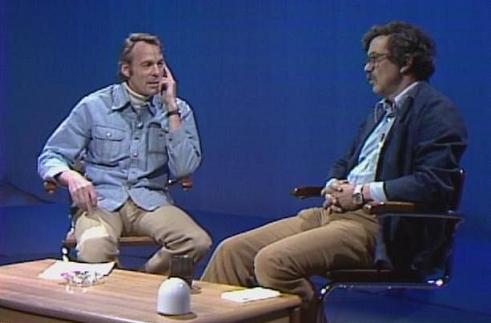
Screening Room was a 1970s Boston television series that invited independent filmmakers to show and discuss their work on a commercial (ABC-TV) affiliate station. This unique program, developed and hosted by filmmaker Robert Gardner, dealt even-handedly with animation, documentary, and experimental film, welcoming such artists as Jean Rouch, Jonas Mekas, Stan Brakhage, Hollis Frampton, Yvonne Rainer, and Michael Snow. Frequently, famous literary guests such as Octavio Paz, Stanley Cavell and Rudolph Arnheim appeared as well. The filmmakers presented on the show are now considered the most influential contributors to their respective genres and the footage is invaluable for students, scholars and lovers of film. The series is now available on DVD through Studio7Arts.
Motion Studies #13: The Endless Night: A Valentine to Film Noir
From now through April, the Oberhausen International Short Film Festival will present "Film Studies in Motion", a Web Series curated by Volker Pantenburg and Kevin B. Lee. This series, available on the festival's website and Facebook page, presents weekly selections of analytical video essays on the web, in preparation for Pantenberg and Lee's presentation "Whatever happened to Bildungsauftrag? – Teaching cinema on TV and the Web", scheduled for April 28 at the festival.
Week Three: Remixes: Parody, Supercut and Mashup
Appropriating and recombining existing footage has been a prime strategy of art and analysis for a long time. With the immense circulation of movies on the web and the accessibility of editing software, this method is no longer restricted to experimental cinema or contemporary art, but has become part of a wider remix culture. This episode gathers recent examples from a wide range of practices. Some of them are driven by critical intentions, some by sheer enthusiasm for iconography and rhythm.
Today's selection:
The Endless Night: A Valentine to Film Noir
Serena Bramble (2009)
A video love letter that distills film noir movies into their atmospheric essence.







 Press Play Video Blog