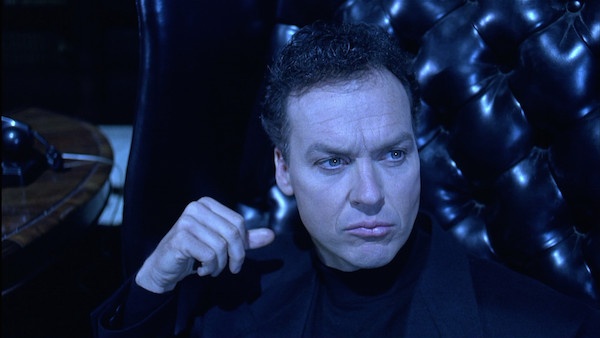
KICKING TELEVISION: Why David Costabile, Mary Louise Parker, Gary Cole, Michael Keaton, Ellen Page, Joan Allen, Adam Driver, and Beyonce Need Vehicles!

KICKING TELEVISION: Why David Costabile, Mary Louise Parker, Michael Keaton, Ellen Page, Joan Allen, & Beyonce Need Vehicles!

nullIn my look
back at 2014
, I bemoaned the wasting of good talent on bad TV. Fewer
things are more frustrating in film and television than a performer withering
under the bright lights of a production unbecoming of their abilities. As I
binge-watched TV over the festive season while adding 20 pounds raiding my parents’
fridge, I became more and more aware of how prevalent this neglect is. And then I was reminded
of it when J.K. Simmons won a Golden Globe on Sunday. Simmons is a character
actor with few peers. And yet, when he finds himself on TV, it’s in doomed-from-the-start series like Growing Up Fisher or
Family Tools. Alternately, pilot
season is filled with actors and actresses undeserving of their own programs who are regurgitated each year. What exec’s nephew thought we needed a Kyle
Bornheimer-led comedy? 

There is no shortage of acting talent wandering aimlessly
from lot to lot in Hollywood. True
Detective
brought Matthew McConaughey and Woody Harrelson back into the
public discourse, reminding us that they’re actors first and celebrities
second. In season two, the same revitalization will be attempted with Colin
Farell, Vince Vaughn, and Taylor Kitsch. But True Detective can’t provide every underused actor a path to
salvation.

What the industry seems to lack is the ability recognize
talent and find suitable vehicles for them to succeed in a series. What follows
is a list that could go on longer than an explanation for Anger Management, but recognizes a few actors and actresses who I
think could really excel in a series, especially in the new world of streaming
television where shows like Transparent
and House of Cards are not just made,
but celebrated.

David
Costabile

null

Costabile has had recurring or small roles in several of
the most interesting and innovative TV shows in recent memory, and more often
than not, he’s the best thing on screen. His CV includes Damages, Breaking Bad, The Wire, and Flight of the Conchords. Even in the soapy guilty pleasure of Suits, he stole scene after scene
stepping beyond the work of his co-stars. Costabile is a standout amongst his
peers, and would be excellent in a leading role in a show of the pedigree of
those he has guested on. Costabile is the least known on this list, and was one
of many character actors who I considered including, such as David Morse,
Margot Martindale, James Remar, and their peers. Here, Costabile stands for all
of them. A quietly accomplished screen presence who could no doubt define a
series if given the opportunity.

Mary
Louise Parker

null

I never liked Weeds.
The first few seasons were somewhat palatable, but the narrative got more and
more ridiculous and suffered from child casting gone awry with puberty so bad
that Robert Iler could feel better about himself. But Parker was always an
engaging presence, even in the later seasons when even she seemed embarrassed
to be enduring the silliness of the plots and wasted guest stars like Albert
Brooks and Richard Dreyfuss. Parker’s best role to date was the recurring Amy
Gardner on The West Wing. While Aaron
Sorkin is often maligned for writing poorly realized female characters,
Parker’s Gardner was a sublime revelation, and I often hoped she’d be added to
the full-time cast. Gardner’s mix of quirky intelligence and aloof indifference
to the chaotic world around her would’ve been an interesting spin-off, and a
series with Parker at its center that respected the quality of her performative
acumen. 

null

Gary
Cole

Gary Cole has been in everything. Seriously. He had a
cameo in my buddy Phil’s Bar Mitzvah video. The popular parlour game Six
Degrees of Kevin Bacon should be renamed for Cole. My introduction to Cole was
in the short-lived NBC series Midnight
Caller
, and I’ve been a fan of his in everything he has done since. An alum
of the Steppenwolf Theatre Company, Cole has been the best part of 36 episodes
of The Family Guy, stole laughs from
Will Ferrell in Talladega Nights, is
part of pop culture lore from his role in Office
Space
, and was nearly elected President – in The West Wing. And the dude has great hair. Like, George Clooney great.
How he has never been part of the main cast of a (successful) live action
series is beyond me, but then again Jon Cryer has won two Emmys, so what do I
know?

Michael
Keaton

Fresh off his Golden Globe win for Birdman, and now a frontrunner for an Oscar, Keaton has revived his
career after fading from the spotlight in the past decade. The real Batman will
likely have his choice of film scripts to choose from, but to me his place is
on the small screen. After a lauded performance as a former superhero actor who
turns to the stage in an effort to find his place in the canon of contemporary
film, Keaton could learn from Riggan Thomson and turn to a more interesting
medium in the twilight of his career. And what possible better film role will
ever come his way? Keaton was a giant in the 80s and 90s, stepping seamlessly
between comedy (Mr. Mom, Multiplicity) and drama (Batman, Clean and Sober) unlike almost any actor of that era. He would’ve
made an interesting choice for new seasons of True Detective, and a series of that ilk built around Keaton would
be a welcome addition to the TV landscape.

Ellen
Page

null

Where’d you go, Ellen Page? Her Oscar-nominated turn in
Juno was eight years ago, and since then, Page has been seen only sporadically on
screen, and often lost in the grandiose of the franchise (X-Men) or the scope of the premise (Inception). Page’s coming out in a speech at the Human Rights
Campaign’s "Time to Thrive" conference reminded us of her remarkable
presence despite the absence of the false Hollywood sheen. As
a Canadian, I recall Page from her start in TV on Pit Pony and ReGenesis,
and would love to see her return to her roots in a series befitting her
marvelous talent. The problem is, Hollywood has no idea what to do with a 5’2”
Canuck lesbian who’s best known for an indie romcom role as a pregnant teen.
Ideally, they’d like to pair her with Michael Cera in Juno 2: Twins! but she deserves so much more.

Joan
Allen

null

Hollywood’s inability to cast women over 38 as anything
other than mothers and quirky older sisters is not just a plague on the
industry, but an indictment of its lack of imagination. There is perhaps not a
more captivating yet underappreciated screen presence than the three-time Oscar
nominated, Tony Award-winning Steppenwolf alum. If she had a penis, she’d be
George Clooney. One of my favorite films of the past two decades is The Contender, in which Allen’s
performance outdoes brilliant turns by Gary Oldman, Jeff Bridges, and Sam
Elliott. She’s the only life in the antiseptic aesthetic of the Bourne films.
In fact, I’d love to see her CIA Deputy Director Pamela Landy in a series of
her own. Who do you call at Netflix to get that done?

Adam
Driver

null

Girls is
awful. I mean, it’s beyond awful. I’d rather spend the rest of my life in Chuck
Lorre’s screening room than endure another episode of HBO’s series about
privileged white girls in Brooklyn trying to monetize their MFAs is exhausting
self-indulgent tripe. But Driver, is excellent. And wasted. He’s similarly
excellent and wasted in the disappointing This
is Where I Leave You
, and the only reason to suffer the Daniel
Radcliffe/Zoe Kazan romcom The F Word.
With a prominent role in the upcoming Star
Wars
sequel The Force Gets Up Early,
Driver is likely meant for more big screen turns, but is better suited for the
character driven serial quality of TV. He has the manner of a character actor
and the charm and presence of a matinee idol, traits that beg for a series. But
not NCIS: Greenpoint.

Beyoncé
Knowles

This isn’t a list of performers who need a break, it’s a
list of those who need a vehicle to fit their talents and engage viewers in the
genre of TV. Perhaps I’m still smitten by my WATCHABLES
podcast episode one Beyoncé learning from Arielle Bernstein
, but
the star among stars Ms. Knowles is a presence unlike any we’ve seen in a
generation. And she has held her own in films such as Obsessed, Cadillac Records,
Dreamgirls, and even Austin Powers 3: More Britishy and Silly.
Does she need a TV show? No. Would it immediately be a hit not matter the
quality? Yes. But talent intrigues me, and just as I wondered
aloud recently about non-TV auteurs could revitalize the sitcom
, I
would love to see what Bey could do on the small screen. And I’m not talking
about Z & Bey @ Home. I’m talking
about real TV. Like, Yoncé in twelve episodes directed by David Fincher written
by Gillian Flynn. But, you know, funny too. Hell, there’s already a trailer:

Mike Spry is a writer, editor, and columnist who has written for The
Toronto Star, Maisonneuve, and The Smoking Jacket, among
others, and contributes to MTV’s
 PLAY
with AJ
. He is the author of the poetry collection JACK (Snare
Books, 2008) and
Bourbon & Eventide (Invisible Publishing, 2014), the short story collection Distillery Songs (Insomniac Press,
2011), and the co-author of
Cheap Throat: The Diary of a Locked-Out
Hockey Player
(Found Press,
2013).
Follow him on Twitter @mdspry.

WATCHABLES Podcast #1, Feat. Arielle Bernstein and Mike Spry! From Beyonce to BOYHOOD to BIRDMAN To…

WATCHABLES Podcast #1, Feat. Arielle Bernstein and Mike Spry!

nullWe’re proud to present the first installment of Press Play’s new podcast, Watchables! This segment features our columnists Mike Spry and Arielle Benstein; future installments will bring Seth Abramson into the mix! On a semi-regular basis, the brave podcasters will discuss anything that’s… well… watchable, from film to TV to viral videos to Instagram. Today, Bernstein and Spry ruminate on their favorite things from 2014. What does this mean, for them? It means Beyonce meets Boyhood meets Birdman meets Obvious Child meets John Oliver meets… well, you’ll see. (Note: it was recorded some time ago, so forgive some references to certain holidays that might cause a slight time-machine effect.) The link is at the bottom of the page. And: if you need a visual reinforcement for some of the watchables discussed, we’ve provided a couple of those as well!

KICKING TELEVISION: The Good, The Bad and the Lorre (2014 TV in Review)

KICKING TELEVISION: The Good, The Bad and the Lorre (2014 TV in Review)

nullI’m not big on lists, especially
in columns. I’ve indicted the BuzzFeed generation and their listicles in many
publications. But as our calendars fumble their way towards irrelevance, the
hour and our editors ask us to review the year as it fades into memory. As a
writer who published his
third book
this year to great fanfare among close relatives, “Best of” columns only serve as a reminder of the failures of our offerings,
and how much of our advances we owe back to our publishers. But 2014 was
another exciting year for television, which now regularly challenges film in
terms of narrative and aesthetic acumen. And 2014 was the year that Kicking
Television stole from Wilco and entered into the fray of TV commentary. So not
to be outdone by my new peers, here for your consideration is what I saw as the
good, the bad, and the ugly Lorre of the year in television.

The Good

You’re the Worst (FX)I’ve previously
declared my undying affection for this show in this space
. It is
quite simply the best sitcom on television, and the most interesting
dissemination of love in 22-minute intervals since Sam and Diane. Love and hate
aren’t opposites, they’re twins. And love is stupid. It’s a godawful waste of
time. Intimacy is ridiculous and often revolting. Honesty is exponentially more
difficult than deception. You’re the
Worst
celebrates these painful disparities without caricature or the
promise of inevitable reconciliation. Aya Cash (Gretchen) and Chris Geere
(Jimmy) are near flawless as a couple on the brink of love and in fear of
happiness, and Desmin Borges (Edgar) and Kether Donohue (Lindsay) defy the
tired tropes of supporting cast BFFs in creator Stephen Falk’s triumphant
production. You’re the Worst is the
shining hope that the sitcom is not dead.

The Walking Dead (AMC) — I was late to the party that is The Walking Dead. While I love
post-apocalyptic narratives, I’m afraid of zombies. And blood. And Andrew
Lincoln’s Mark from Love Actually. And while I liked the first few
seasons of the show, I wasn’t addicted to it like many. I tired of Hershel’s
farm. I skipped scenes involving The Governor. But, as soon as the show escaped
the confines of the prison, and put its band of survivors on the road, it
stepped into a higher echelon. The
Walking Dead
has become more about the challenges of surviving a world
without amenities than about stabbing extras in the head. Additionally, it takes the
time to develop characters and yet doesn’t remain static in its narrative. And
in a television landscape absent of diversity, The Walking Dead boasts the most racially varied cast perhaps ever.
Pedestrian white male actors everywhere should be in fear of this becoming a
trend.

Streaming Television — Streaming video services have compelled the film and television industries to become more conscious of the
wants and needs of their audience. By providing programming and viewing options
outside of the formulaic and staid proclivities of traditional television, the entire
industry had changed for the better. Network television is now not only being
bested by cable, but outflanked by streaming services. NetFlix is the HBO of the
medium, with Amazon and Yahoo auditioning for the roles of AMC and Showtime. (Hulu,
inexplicably, seems content as a cross between The WB and TBS.) House of Cards (NetFlix) and Transparent (Amazon) are two of the best
shows on television, and could not exist in the formulaic realm of
traditional TV. Next year will see streaming services bring viewers more of the
Marvel Universe, the third life of Community,
a talk show from Chelsea Handler, shows from Paul Feig, Jason Reitman, Tina
Fey, Mart Kaufmann, and other auteurs who have found their interest in TV reinvigorated
by the possibility and versatility of a new medium. CBS plans on combating
streaming television by sending the cast of NCIS directly to your home for
table readings.

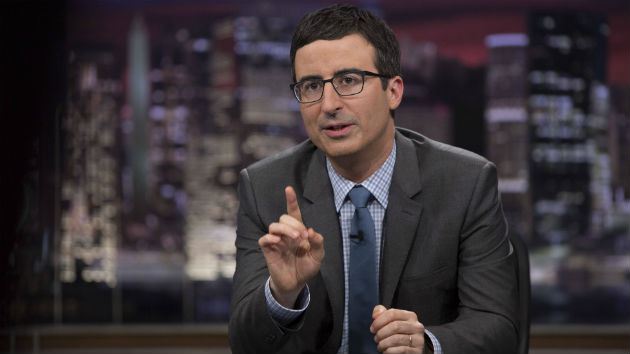
Last Week Tonight with John
Oliver
(HBO) —
I didn’t tune into Last Week
Tonight
immediately when it debuted this past summer. I stopped watching The Daily Show some time ago. The Comedy
Central stalwart has essentially become an indictment of incompetent media, and
though that’s certainly an argument that needs to be advocated, it made for a
stale production. When Oliver made the jump to HBO, my fear was that his show
would be a pale imitation of something I had grown tired of. I couldn’t have
been more wrong. Oliver has taken satirical current affairs programming to a
new level, deftly combining progressive in-depth journalism with pitch perfect
humor. No other show ever could disseminate LGBTQ rights in Uganda, net neutrality,
and lotteries with the journalistic precision of 60 Minutes and still be funny. If Oliver doesn’t win a Peabody, they
should stop giving out the award.

True Detective (HBO) — Look, I know nearly everyone has
True Detective on their “Best of 2014”
lists. The acting was superb, the writing was sublime, and the aesthetic was
unlike anything television has ever seen. And the six-minute take from episode
four is something that will be taught in film school for generations. But my
affection for it has more to do with its format than its acting or content. The
idea of a series of mini-series is not revolutionary, but one that has had more
success in the UK than in the US. True
Detective
, along with Fargo and American Horror Story, have found new
ways to tell stories using the medium of television, and a unique way to get
big talent (Matthew McConaughey, Woody Harrelson, Vince Vaughn, Cary Fukunaga,
Martin Freeman, Kirsten Dunst, Billy Bob Thornton et al.) to have an affair with TV
without committing to it.

Transparent (Amazon) — Transparent (I didn’t catch the double-entendre until Episode
8) is a series that would never have seen the light of day on a network,
perhaps not on cable, and certainly not five years ago. Jeffrey Tambor is
transcendent (see what I did there?) as Maura, who self-identifies as a woman,
and the challenges of their upper-middle class LA family. Tambor is excellent.
Judith Light (their understanding ex-wife) is embodying the role of a lifetime.
And Jill Soloway’s deft touch as creator and showrunner takes the narrative to
places never before seen in TV. But what I think makes it not just one of the
best shows of 2014, but a promising piece of art for 2015, is the manner in
which it fills the cast with unlikable characters. Maura is not without
faults, his children are self-involved and spoiled, and even Light’s Shelly was
happily planning on euthanizing her new husband. But, like Breaking Bad, Transparent proves there is interesting art in the
unlikable, despite what creative writing programs might tell you.

Banshee (Cinemax) — If someone walks in on you
watching Banshee at the wrong moment,
they’ll think you’re watching porn. Soft core porn, but porn nonetheless. And
there’s no shortage of sex and nudity in the show, but it’s on Cinemax, so it’s
kind of a given. But behind discarded panties and reverse cowboys is a show
that is simply one of the best on TV. The premise is sublime: Fresh from
serving time for a jewelry heist, our anti-hero witnesses the murder of a newly
hired small town Pennsylvania sheriff and assumes his identity. Throw in the
Amish, an ex with her own secrets, the Ukrainian mob, a Native American reserve, and a
hell of a lot of violence, and you’re left with a show that reminds me a lot of
a graphic novel, in its imaginative narratives and refined aesthetic. Also:
porn.

The Bad

Sons of Anarchy (FX) — I never understood this show and
was happy to see it end. It always seemed like The Sopranos on bikes to me, but with bad writing and poorly
realized characters. Charlie Hunnam spent seven seasons chewing scenery and his
British accent. Ron Perlman appeared ready to crawl back into the sewers to woo
Linda Hamilton, or just to hide from the scripts. Katie Sagal seemed shocked
that they were still in production, and she was on Married… with Children for twenty-eight seasons. The Shakespearean
influence was so heavy handed it might as well have been called Son of Hamlet. And the endless parade of
guest stars, culled from a list of celebrities who wear leather (Dave Navarro,
Henry Rollins, Sonny Barger, Marilyn Manson, Danny Trejo) brought the show to
the very edge of parody. Except I like parody.
 

How I Met Your Mother (CBS) — I really enjoyed HIMYM. It is perhaps the last of the
great multi-cam sitcoms. It wasn’t just a TV show, but part of the cultural
landscape. The Bro Code, lawyered, and slap bets are, for better or worse,
engrained in our lives. But the show’s final season was atrocious, and it killed
most of my affection for the preceding eight seasons. Handcuffed by the schedules
of its stars, HIMYM’s final season
took an unwelcome departure from the formula that made it a success. Set not in
New York, but at a rural wedding destination, and taking place over the course of a just few
days, season 9 was the equivalent of Cheers
finishing up its run set in a New York Starbucks. The cast shot scenes
separately; the scripts seemed cobbled together by a writer’s room unaccustomed
to their new aesthetic, and the desperate plot twist that killed off the
titular mother left the audience angry and confused. I know we’ll never again
meet the high water mark of the finales of M*A*S*H,
or St. Elsewhere, or even Newhart, but the poor choices of HIMYM’s producers in managing the challenges
of their ultimate season destroyed the legacy of the series, its
re-watchability, and even worse (wait for it) a spinoff, How I Met Your Dad.

State of Affairs (NBC) — After watching this Katherine
Heigl comeback vehicle, a friend who had been a fan of hers asked me to
describe the show. My response:It’s
like West Wing and Homeland were a gay couple that adopted
a baby that grew up to be Scandal who
married Revenge but then had a torrid
affair with Homeland that resulted in
a baby who was kidnapped from the hospital by Shonda Rhimes who raised her with
her husband, the mummified body of Tom Clancy.” Heigl’s character’s name is Charleston
Tucker, Alfre Woodard appears embarrassed to be collecting her paycheck, and
the rest of the cast looks like they’re already in line for next fall’s pilot
casting. This show is an argument for libraries. It’s so awful I fully expect
it to be renewed for 2015/2016.

The Lorre

The Sitcom — This section needed to be named for Chuck Lorre,
the producer of Two and a Half Men, Mom, Big
Bang Theory
, and Mike & Molly.
It begged to be something more than just ugly. I mourned
the death of the sitcom a few weeks ago
, and put much of the blame at
the feet of Lorre and those who have pandered in his footsteps. With the
exception of You’re the Worst, and in
the absence of Parks and Rec, I don’t
know if there’ll be a sitcom in television worth watching in 2015. (I don’t consider
Transparent to be a sitcom.)
Certainly not on network TV. I have high but tempered hopes for the upcoming Matthew
Perry/Thomas Lennon remake of The Odd
Couple
and Denis Leary’s Sex&Drugs&Rock&Roll,
but I fear that we’ll see State of
Affairs: Los Angeles
before we see a return to the heyday of the sitcom.

Wasting Talent — I understand that actors, producers, and gaffers
have mortgages to pay. Hell, I do writing for people I won’t add to my resume
or admit to my parents. But it’s heartbreaking to see talent so frivolously
wasted on TV. Margo Martindale and Will Arnett doing fart jokes on The Millers. John Mulaney having his
career set back five years by Mulaney,
not to mention wasting Martin Short and Elliott Gould. Ken Marino enduring
Casey Wilson in Marry Me. The entire
cast of The Newsroom choking their
way through Aaron Sorkin recycling discarded West Wing scripts. Jon Cryer being wasted on Two and a Half Men. No, wait. That’s where Cryer belongs. There’s a
short window in an artist’s career to attain the success we all aspire to. To
see those years wasted on efforts like the aforementioned makes you truly
appreciate when the medium reaches the heights of True Detective and You’re the
Worst
.

Social Issues and Sports Broadcasters — Sports,
as I’ve written many times before, is the last collective experience in the
television medium. You can watch NCIS or CSI or NCSI on your own schedule. You can stream, legally or illegally,
any episode of any show anytime you want, from anywhere in the world. But
sports telecasts still need to be seen live, to witness the narrative as it evolves in
real time. And, in a year that saw domestic abuse and LGBTQ rights at the
forefront of the public discourse in the world of sports, the inability of the
sports media to disseminate and discuss social issues served as an indictment
of their industry. During Sochi, very little was made of Russia’s archaic
anti-gay legislation. Even as athletes did their best to confront the issue,
NBC ignored it. Michael Sam was the first openly gay player drafted by an NFL
team, and bigoted reactions by NBC’s Tony Dungy were dismissed under the thin
excuse of religion. When Ray Rice was caught on tape beating his then-fiancée
unconscious, NFL partners ESPN/ABC, NBC, CBS, and FOX bumbled their way through
the conversation, without experts or, you know, women, added to the discussion.
Adrian Peterson was arrested for taking a switch to his 4-year-old child, and
networks debated its effect on fantasy leagues. Perhaps most indicative of the
sports media’s failures was ESPN’s Ray Lewis, who should probably be in jail
for double manslaughter, opining on the subject of domestic abuse, like having D.C. Stephenson discuss the integration of baseball.

White Men in Late Night — In a year that saw David
Letterman, Jay Leno, Jimmy Fallon, Craig Ferguson, and Stephen Colbert shuffle
into retirement or new roles, the opportunity was ripe for television to
attempt to revolutionize or contemporize late night television. Instead, they just
brought in more old white dudes. With the exception of Larry Wilmore’s The Nightly Show (replacing Comedy
Central’s Colbert Report) late night
TV will remain old and white with penises for at least another generation. I
find it impossible to believe that some more interesting choices could not have
been made to replace Fallon and Ferguson in their 12:35 timeslots. Instead,
predictably, NBC and CBS chose Seth Meyers and James Corden over every woman
and minority possibility on earth. Though, in defense of their diversity policies, Meyers
is Jewish and Corden is an Anglican. Probably. It’s frustrating enough for
insomniacs that these shows are about as progressive as an NRA convention and
funny as a TV Land sitcom, but to simply serve us more white men jokes, written
by white men, delivered by white men is discouraging for those of us who
appreciate the possibilities of the medium, not to mention those with uteri or
have a skin colour other than pasty.

Help us, Larry Wilmore and You’re the Worst; you’re our only hope.

Mike Spry is a writer, editor, and columnist who has written for The
Toronto Star, Maisonneuve, and The Smoking Jacket, among
others, and contributes to MTV’s
 PLAY
with AJ
. He is the author of the poetry collection JACK (Snare
Books, 2008) and
Bourbon & Eventide (Invisible Publishing, 2014), the short story collection Distillery Songs (Insomniac Press,
2011), and the co-author of
Cheap Throat: The Diary of a Locked-Out
Hockey Player
(Found Press,
2013).
Follow him on Twitter @mdspry.

KICKING TELEVISION: Not So Christmas Special

KICKING TELEVISION: Not So Christmas Special

nullDecember is the worst time of
year for television connoisseurs, and has been since Philo Farnsworth first
slapped the magic box for better reception. December television’s doldrums are
not the result of obtrusive college football or unexpected repeats. They’re not
the fault of lackluster scheduling or Chuck Lorre. No, December television
disappoints because of the relentless and superfluous inundation of
Christmas specials.

I don’t hate Christmas. I don’t
bah humbug my way to January. I Yuletide as much as the next fella. I like
nogs. But when it comes to television, a medium for escapism, I’ve never
understood programmers’ desire to fill our early winter hours with saccharine
and sanctimonious Christmas fare. Isn’t that what the mall is for? Besides the
annual marathons of A Charlie Brown
Christmas
, Rudolph the Red Nosed
Reindeer
, and Dr. Seuss’ How the
Grinch Stole Christmas
, each and every network show feels the need to get
in the holiday spirit by adding a special episode to its commitment. This
week’s NCIS: New Orleans features a
special Christmas naval murder. Jon Cryer will make Yuletide log double
entendres. Jimmy Fallon and Justin Timberlake will wear bad sweaters. It’ll all
be awful.

Television, at its best,
celebrates the medium itself while discussing broader issues or
providing introspective views on societal complexities. Shows of the past few years that have
garnered the most critical attention (True
Detective
, Breaking Bad, Mad Men et al.) have done so because
they understand television as an art form, not simply a vehicle to pay Tim
Allen’s mortgage. TV should be a reflection of society, and occasionally an
indictment of it. Christmas is an opportunity for television to explore our
faults which are most evident during the festive season: greed, consumerism,
falsity, obesity, or wearing red and green at the same time. A true and
interesting use of the medium would be to hold it up as a mirror and reflect
upon not just the virtues of giving but our exercises in withholding, and to
use it as a mode to discuss more than just reindeer discrimination.

I spent last week on the couch
with some kind of virus that was a cross between Ebola and a Jägermeister
hangover. Armed with a remote control and 300+ channels, I set off to waste
away my days and nights in a semi-medicated haze. But, being December, instead
I was drowned in a digital sea of holiday noise. Several channels only played Elf on a loop. Another showed 24-hour Burl
Ives. Ellen, The View, and Good Morning, Tulsa,
were all adorned in pine and tinsel and myrrh. None of these shows dared to ask
about the hypocrisy of Christmas, or questioned its virtue. Adults spoke openly
of Santa, sometimes to Santa. I’m not arguing for an anti-Christmas campaign
from NBC, but perhaps some use of television to address Christmas in an
interesting manner could’ve saved me from my feverish dreams.

I know this all seems very
Scrooge-ish. My sister would certainly disagree with my feelings. From the time we were very
young, she has reveled in the majesty of the holiday special. From Frosty the Snowman to a Friends Christmas to the eight days of The Mentalist Hanukkah, my elder sibling
has spent each December raising eggnog to every Holiday-themed broadcast her
digital cable package provides. And she’s passed this on to her children,
perpetuating a disappointing affliction. My nephew Finn, all of eight years
old, now holds up Elf not only as a
Christmas favourite, but an arbiter of truth. Some chestnuts from my sister’s
wee chestnut:

Did you know it’s a fact that elf babies are smaller than human
babies?

Did you know it’s a fact that Santa’s sled is powered by Christmas
spirit?

Did you
know it’s a fact that every year Santa picks a new reindeer to lead the sled so
they don’t get too tired?

So not only does Christmas
programming perpetuate cultural deception and reinforce a superficial need
for things, but it’s also spreading playground lies. Everybody knows that
Santa’s sled is powered by candy canes and gin.

At this point I know what you’re
thinking. It could be, perhaps, that my shoes are too tight. It could be my
head isn’t screwed on just right. And the most likely reason of all may be that
my heart is two sizes too small. Hell, even as I write this, I want to slap me
with a bowl full of jelly. But I have such an affection for television, and an
appreciation for it at its best, that it pains me to see the medium wasted. To
me, the Christmas special is like a discarded canvas, an empty page, or a Foo
Fighters album. It’s a discarded opportunity to have done something
interesting. We’ve got more than enough Christmas programming in our collective
DVR to last an infinity of lifetimes. Is it asking TV too much to give us
something new and provocative in our stocking?

I like Christmas. I like
drinking on a Tuesday afternoon wearing Santa caps. I like staff holidays. I
like getting my sock and underwear supplies replenished. I like being Canadian
and knowing what Boxing Day is. I like gravy, and figgy pudding, and drunk
relatives. I like seeing my family and friends. I like the look in my niece and
nephews eyes on Christmas morning, a look of belief and innocence that we all
lost somewhere along the way. And I like the distant sound of caroling, a
church choir on Christmas Eve, and a fresh Clementine in the bottom of my
stocking. I like snowflakes lit by a winter moon. I like the promise of a year
ending, and the hope of a new calendar. But I don’t see the dichotomy of these
affections in Christmas specials. Instead I see the capitalization of a
holiday, the bastardization of spirit, and another wasted canvas.

Mike Spry is a writer, editor, and columnist who has written for The
Toronto Star, Maisonneuve, and The Smoking Jacket, among
others, and contributes to MTV’s
 PLAY
with AJ
. He is the author of the poetry collection JACK (Snare
Books, 2008) and
Bourbon & Eventide (Invisible Publishing, 2014), the short story collection Distillery Songs (Insomniac Press,
2011), and the co-author of
Cheap Throat: The Diary of a Locked-Out
Hockey Player
(Found Press,
2013).
Follow him on Twitter @mdspry.

KICKING TELEVISION: NASHVILLE is the Best Network Drama on TV

KICKING TELEVISION: NASHVILLE is the Best Network Drama on TV

nullI can already hear the denizens
of Good Wife fandom anger-typing
emails in dispute of my title. And I’ll admit to a bit of click-baiting here,
but as much as I
bemoaned the death of the sitcom in my last column
, the
network drama stands in equal peril. The medium of dramatic television is
successful only if it’s interesting, entertaining, or a form of escapism. At
its best, it’s all three, and a survey of the current network television
landscape finds little if any of these qualities. The frustrating lack of
dramatic programming worth indulging in on ABC, NBC, CBS, Fox, and the CW is
almost enough to drive audiences to pick up a book or listen to a podcast. But
hold on y’all, before you put on the latest episode of Serial and mosey on down to the local bookery to fetch a new
hardcover, take a minute or forty-two and settle in to ABC’s Nashville.

Networks lack imagination in
their programming. They have long ceded creativity and ambition to cable,
satisfied with an unhealthy affection for naval crimes and criminal forensics. Primetime
network dramas are exclusively about fighting crime, fighting the supernatural,
fighting disease, or fighting government. The only exceptions are Once Upon a Time, a show that from what
I can gather is about House’s Allison
Cameron slipping into a coma in which she exists in world populated by drunken
fairytale characters; Parenthood, a
show about actors who were once on good shows; and Jane the Virgin, which I have not seen nor read of, but assume
borrows its plot from Tom Waits’ story from the preamble to “Train Song” on Big Time, in which a stray bullet pierces
the testicle of a Union soldier, and then lodges itself in the ovaries of an
eighteen year old girl.

Nashville is a throwback to primetime soap operas of
yesteryear. It’s about beautiful people doing exceptional things while getting
laid and singing about it. And it is absolutely fearless and unapologetic about
its intentions. In the adolescence of my affection for television, I was raised
on the saccharin frivolity of Beverly
Hills 90210
and Melrose Place, which
themselves were the TV offspring of Dynasty
and The Love Boat, Aaron Spelling
productions so wondrously escapist that we forgive him for Tori and Randy. These
shows serialized the medium, and created loyal fan bases who, in the absence of
DVRs, needed to find themselves in front of a TV at an appointed hour to find
out if Dylan would choose Brenda or Kelly, and how long our sideburns should
be.

There was nothing revolutionary
about these programs, and they didn’t aspire to revolution. They weren’t
preaching. There was very little in the way of murder. Vampires and aliens only
appeared in Halloween episodes. The beauty in shows like Spelling’s were that
they didn’t condescend to the audience, they weren’t written to be lauded by
critics, or celebrated by those who claim to not watch television except for
Ken Burns documentaries and The Wire.
Primetime soaps were built for escape, to provide a breath from the day, to
revel in the frivolous.

Nashville is wonderfully reminiscent of those programs
without being derivative. The show is soapier than a Dove factory and often as cloying
as that simile. Set in and around the country music industry in Music City,
USA, Nashville boasts what few other
dramas can: Two strong female leads. Connie Britton’s established country
superstar Rayna James and Hayden Panettiere’s embattled rising star Juliette
Barnes anchor the program in their representations of polarized embodiments of
the American dream. Rayna is old money privilege. Juliette is a trailer park
rescue. They’re the old and new country . . . music that is.

The show is rounded out by a
cross-section of not quite stock but not quite unique characters. Deacon Claybourne
(Charles Esten) is the lovelorn recovering alcoholic. Gunnar Scott (Sam
Palladio) is the aw-shucks fella doomed to heartbreak. Scarlett O’Connor (Clare
Bowen) is the shy talent waiting tables. Will Lexington (Chris Carmack) is the
rising star with secrets. Avery Barkley (Jonathan Jackson) is alt-country,
where punk meets Patsy. Maddie and Daphne Conrad (Lennon and Maisy Stella) are
Rayna’s daughters who aspire to be just like Momma. And though there’s nothing
exceptional about these characters by description, each actor and actress
portrays them with an honest simplicity and subtle tweaks that eschew any
notion of stock.

Oh, and they sing.

The soundtrack of each episode
is a marvel, and a testament to the exceptional work of music supervisor
Frankie Pine and established by Season One’s supervisor, Grammy and Oscar
winner T. Bone Burnett, who just happens to be married to Nashville’s creator and showrunner Callie Khouri. Being set and filmed
in Nashville allows the show to use the city’s exceptional talent pool of
professional songwriters, not unlike the ones on the show portrayed by Esten,
Palladio, Jackson, and Bowen. The original compositions, the Tennessee set, and
that the actors play and sing themselves gives the show an authenticity that is
rare on television. And counter to Hollywood tendency, the authenticity escapes
contrivance. Executive producer Steve Buchanan is president of the Grand Ole
Opry Group. The actors playing Scarlett, Avery, and Gunnar have all worked at
the legendary Bluebird Café, where Rayna and Deacon are known to drop in for a
quick set, and which the show has reproduced as a set of its own. Nashville’s sincerity is augmented by
the producers’ inclusion of contemporary country music artists in the show and
its narrative (if peripheral), which contributes to the audience’s comfort and Nashville’s genuine and natural
escapism.

[And, if you’ll indulge me and
pardon a quick digression: Connie Britton is a criminally underappreciated and
under-celebrated actress. Very few performers have the range to play such a
diversity of roles and in different genres. She makes Christopher Walken look
limited. Britton has starred in a hit sitcom (Spin City), a seminal TV drama (Friday
Night Lights
), a redefining mini-series (American Horror Story), and owns “y’all” like she invented it.]

In an era of instant gratification
and unparalleled media attention, shows are rarely given time to grow into
themselves, to discover what they truly are. Nashville went through its growing pains. In Season One, it tried
to be Dallas set in Tennessee. Powers
Boothe played Rayna’s baron-like tyrant of a father, who perhaps killed her
mother, and was manipulating her husband, who had committed fraud in a land
deal, who burned papers in the fireplace while drinking scotch, and perhaps
wasn’t the father of their eldest child. The show created complex mythologies,
but they seemed contrived and tired. Granted a second season by ABC, the show
quickly retooled, and made the country music industry the centre of the show’s
universe, an industry that comes complete with heroes and villains, defying the
need to create them from borrowed characters like Boothe’s. Nashville’s music, authenticity, and placement within the actual
Nashville and industry immersed the show’s characters into the mythology of
country music, and gave it a life it lacked in in its first season.

And that’s what sets Nashville
apart. It aspires to be itself and nothing else. It’s amplified by well-crafted
characters and measured performances. It’s a soap opera, but one that the
audience can invest in because it feels genuine. It’s at once a tribute to
country music and a bygone era of primetime television. And you can tap your
toe to its both its musical and narrative exposition in that they’re familiar
and new. Each episode is a new album from a band you’ve loved since you were a
kid.

The network drama is in dire
straits. Lost is but a distant
memory. Friday Night Lights was
perhaps the last of the medium to truly excel in craft and creation, and is the
last to be nominated for a Best Drama Emmy (along with The Good Wife in 2011). Grey’s
Anatomy
is long past its expiration date, now that Derek and Meredith’s
grandchildren work at Seattle Grace. Scandal
is parody that refuses to admit its parody. Madam
Secretary
is West Wing-lite. CSI’s legacy will be the poisoning the
national jury pool with false science. Blue
Bloods
, Elementary, NCIS: Bowling Green, The Blacklist, et al. are all ultimately
forgettable. I’ll admit I’ve never seen The
Good Wife
, but I couldn’t bear the experience of another show about
lawyers. Hidden within the cacophony of nondescript programming is a burgeoning
gem. Nashville is not a seminal
masterpiece, nor does it want to be. It’s an homage to a genre of television
that is inexplicably absent from the current network programming landscape.

Mike Spry is a writer, editor, and columnist who has written for The
Toronto Star, Maisonneuve, and The Smoking Jacket, among
others, and contributes to MTV’s
 PLAY
with AJ
. He is the author of the poetry collection JACK (Snare
Books, 2008) and
Bourbon & Eventide (Invisible Publishing, 2014), the short story collection Distillery Songs (Insomniac Press,
2011), and the co-author of
Cheap Throat: The Diary of a Locked-Out
Hockey Player
(Found Press,
2013).
Follow him on Twitter @mdspry.

KICKING TELEVISION: Re-imagining the Sitcom

KICKING TELEVISION: Re-imagining the Sitcom

null

The sitcom is dead. Though we’re
continually told we’re living in the New Golden Age of Television, a quick
survey of the situational comedy landscape suggests that this is not the case.
After The Sopranos gave television
permission to tell stories in more cinematic and innovative ways, we have been
blessed with unparalleled artistry and achievement on its dramatic side. Breaking Bad, Lost, Mad Men, True Detective, The Walking Dead, Friday
Night Lights
and their brethren have treated audiences to heretofore-unseen
storytelling and production on the small screen. And yet on the comedy side,
we’re left with The Big Bang Theory,
capable if uninspiring television that is forgotten moments after the credits
roll.

It wasn’t that long ago that the
sitcom ruled the airwaves. In the ‘90s, Seinfeld
and Friends were not just the most
watched shows on TV—they were part of the cultural zeitgeist. Before that, Cheers and Roseanne reveled in blue-collar settings with grace and humour.
Their predecessors, like Maude and All in the Family, contributed to the
greater discourse, addressing societal change and issues beyond what TV had
discussed previously. The sitcom wasn’t just entertainment time-filler. It was
art.

And then came Chuck Lorre.

I’m certainly not blaming the
creator of Two and a Half Men and The Big Bang Theory for the demise of
the medium, but rather pointing to these productions as indicators of the
critical flaws in the sitcom. These shows lack ambition. The writing is
borrowed from episodes we’ve seen ad infintum. The characters are stock. The
format is flat. Consider the new sitcoms cancelled already this fall season: Bad Judge, A to Z, Manhattan Love Story,
and Selfie. There was nothing
memorable or exciting about them. There was nothing we haven’t seen before.
Bland versions of those same four shows have been rolled out each season,
pillaged from the pile of pilot season dreck. And even more bland versions will
be rolled out midseason.

There is some hope. In the
instances of a post-Seinfeld TV-scape
where the industry was ambitious, there has been success. The Office in its first few seasons was as funny and clever as
anything that has ever fit beneath the sitcom umbrella. Arrested Development was punished for its ingenuity, a victim of
poor scheduling and a network that failed to see its burgeoning cult status. It’s Always Sunny in Philadelphia was Seinfeld on crack, before it became It’s Always Sunny in Philadelphia on
crack and lost its way. Party Down
was imaginative and inventive, and yet its location on the upstart Starz network
and its micro-budget couldn’t maintain its momentum nor cast. Louie is more original than most, but it
limits itself and fails to step to far beyond the confines of the genre,
despite the overwhelming sensation that it wants to. Community was the one great hope. A show that satirized the genre,
that defied the tropes. But NBC did its best to kill it, and now its left with
a fraction of its original cast in the unknown wasteland of Yahoo TV, whatever
that is. But what we’re left with, what the industry trumpets as successful, is
Modern Family, a fading Parks and Rec, a middling Mindy Project, and a sea of forgettable
offerings that don’t resonate with the audience and don’t challenge the medium.

(You’re the Worst, as I
have previously written
, is absolute genius and exempt from this tirade.)

And that’s it, other than a few
episodes here and there and a cancelled-too-early show that had promise that
we’ll never see realized. Is Modern
Family
really the best sitcom the industry can offer, as the Emmy voters
would contend, or is it simply the most not incompetent? It’s overly celebrated
in a manner that proves my thesis: It is the best of a genre that doesn’t try;
it is inoffensive and forgettable. In reality, it’s a milquetoast offering that
offends no one and takes up twenty-two minutes of twelve million people’s
Wednesday night. It is not appointment viewing. It is not Must See TV. Quite
simply, it’s all that’s on.

So is the sitcom really dead, or
is it just on life support, in desperate need of a shot of adrenaline or
whiskey or Wes Anderson?

Writing, in any of its
incarnations, is simply about telling a story. At its best, it’s telling
stories in ways that are interesting. I don’t know if the Vassar MFA grads that
currently make up 80% of the sitcom writer pool are afraid to be progressive or
are just cursed with moderate talents, but it’s time the industry looked past a
writer’s room that couldn’t get an honest guffaw without a bag of shrooms and a
laugh track.

While television dramas have
mined external resources for auteurship, the sitcom has stayed with the
tried-and-tired formula of an unambitious rotation of series creators with
pilots directed by James Burrows. David Fincher (House of Cards), Frank Darabont (The Walking Dead), and Martin Scorsese (Boardwalk Empire) are just a few of the prominent filmmakers who
have made successful forays into serial storytelling on the small screen during
the unprecedented rise of the drama in the past decade or so. Nic Pizzolatto
was a celebrated novelist, a finalist for the Edgar and National Magazine awards,
an honourable mention for the Pushcart Prize, and the winner of the Prix du Premier Roman étranger, as well
as a creative writing professor, before True
Detective
took him out of the classroom and Barnes & Noble discount
bin.

And yet, in the sitcom world,
we’re still saddled with shows “from the creators of Suburgatory and According to
Jim
.” In an industry that loves to attempt to Xerox success, why has the
comedy side of television refused to learn from its drama cousins? Would we not
be interested to see what interesting and progressive comedic filmmakers could
do with a television comedy? This trend may be slowly beginning, with TV
projects forthcoming from Mark and Jay Duplass (Togetherness) and Jason Reitman (Casual). Wouldn’t you love to see what Anderson could do with the
medium? Nicholas Stoller? Lorene Scafaria? Jonathan Dayton and Valerie Faris?

And why be so shortsighted as to
stay within the Hollywood bubble? Did HBO’s moderate success with Bored to Death, from the celebrated
novelist Jonathan Ames, not prove that literary quality has a place on
television? I’d love to see a sitcom born of the mind of George Saunders, or Jennifer
Egan, or Irvine Welsh, or Chuck Klosterman, or Sam Lipsyte, or Sloane Crosley,
or Elna Baker, or… the list borders on infinite. At least their adaptation of Pygmalion (ahem, Selfie) would come from people who had actually read the book.

The limits of the contemporary in
TV are not confined to its writing. The entire production has become stale. Let’s
put up the fourth wall once and for all, and be done with the live studio
audience, shall we? I suppose the multi-camera sitcom was supposed to be the television
version of a play, but the genre has become tired. What was the last
multi-camera sitcom to be interesting or innovative? (And if your answer in any
way suggests a Chuck Lorre production, your punishment is to watch Mom and only Mom for eternity.) The last multi-cam sitcom of any significant cultural
value was likely Seinfeld, and it
went off the air in 1998. Since then, every September and February, networks
march out a slew of carbon copy multi-camera endeavours that are rarely funny,
never innovative, and suffer tremendously at the will of their tropes.

And the laugh track? How in the
name of the Charles brothers does the laugh track still exist? I think an
audience knows when to laugh without 240 tourists on the Warner Brothers lot
telling us for twenty-two minutes.

Twenty-two excruciating minutes.

Does anyone know why the sitcom
is only a half-hour (with commercials)? Why is comedy limited and tragedy
open-ended? Would you rather laugh for an hour or cry for an hour? And from a
purely budgetary standpoint, why do Mark Harmon and Jon Cryer make the same
amount of money per episode for the same mediocre and unimaginative drivel? If
comedic and dramatic films can be of similar length, who is to say that the
same can’t be done on television?

Beyond the temporal structure of
the sitcom, its aesthetic structure is in need of contemporization and
ambition. The industry has limited the genre to two options: multi-camera and
single camera. The worlds of sitcoms are confined, insulated. They exist on
three to five sets. They are painted in the same colours, shot with the same
filters, and staged as they were three generations ago.

The incredible six-minute-long
take from the episode "Who Goes There" of True Detective is an example of what the talents of an innovative
director like Cary Fukunaga can bring to the medium. Why can’t sitcoms be
visually inventive? We have seen glimpses of such inventiveness in Pushing Daisies and to a certain extent
in the aesthetic of Community, but
their absence elsewhere in television are tenable. Why the reluctance to push
boundaries and challenge formula the way dramatic television has?

The answer to most of these
questions is that the television industry is remarkably stubborn and unimaginative,
for a business that requires creative minds. But the ability of dramatic
television to evolve in the past decade suggests that comedic television could
do the same, if just given the chance. Cable and streaming television have
reinvigorated an industry once limited by the whims of the four major networks.
The exodus of talent from film to TV has proved that the small screen is not
limiting to artistic or material aspirations among the Hollywood elite.
Removing the antiquated reins from the sitcom would certainly produce a
defining new era of the medium, and no doubt reduce the amount of half-hours of
our lives ruled by Chuck Lorre.

Mike Spry is a writer, editor, and columnist who has written for The
Toronto Star, Maisonneuve, and The Smoking Jacket, among
others, and contributes to MTV’s
 PLAY
with AJ
. He is the author of the poetry collection JACK (Snare
Books, 2008) and
Bourbon & Eventide (Invisible Publishing, 2014), the short story collection Distillery Songs (Insomniac Press,
2011), and the co-author of
Cheap Throat: The Diary of a Locked-Out
Hockey Player
(Found Press,
2013).
Follow him on Twitter @mdspry.

A NEW COLUMN BY MIKE SPRY: KICKING TELEVISION: It’s Time to Bring Back The Muppets. Again.

A NEW COLUMN BY MIKE SPRY: KICKING TELEVISION: It’s Time to Bring Back The Muppets. Again.

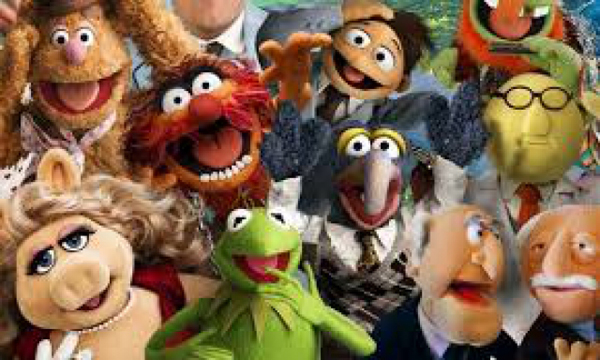
nullWhen I was a kid, there were few things I enjoyed as much
as the Muppets. The worlds created by Jim Henson dominated and cultivated my
childhood. Sesame Street, Fraggle Rock, and all things Muppet were
my earliest, fondest memories of entertainment. My mother had read an article
in the late ‘70s that claimed children should be limited to no more than an
hour-and-a-half of television per day–so most of the TV my sister and I were
allowed to consume involved Henson. Despite my parents’ insistence on the
dangers of television then, there has always been a virtue to Henson’s
productions. Sesame Street taught you
about the number 7, the letter M, what it was like to live on the Upper West
Side, and unrequited love. Fraggle Rock extended
one’s imagination, taught us about issues of class, and radishes, and
unrequited love. The Muppet Show brought
us into the realm of the subversive, prepared our young minds for Saturday Night Live, reveled happily in
absurdity and slapstick, and taught, of course, the lessons of unrequited love.
The Muppet Show was the star of them
all, the crown jewel of the Henson universe. And given the current sad
landscape of programming for kids, it’s
time to play the music, it’s time to light the lights, it’s time to meet the
Muppets on The Muppet Show tonight
. Again.

It’s time to reboot The
Muppet Show
.

For the most part I couldn’t give a flying fish about
television for kids. I don’t have kids, don’t really understand the desire to
have kids, doubt that unconditional love could be any more thrilling than clean
towels, and I think children should be unseen and unheard until they’re old
enough to watch and disseminate Breaking
Bad
. But my sister has two kids and offers a wealth of opportunities for
unpaid babysitting internships, and so I’ve found myself, over the past eight
years, confronted by what passes for televised entertainment for children. And
it’s god-awful. What the hell are Wiggles? Isn’t a sponge in someone’s pants
counterintuitive? Why does Lego suddenly talk? In an infinite channel universe,
there’s nothing on (except the timeless Sesame
Street
) that challenges, entertains and does not insult children, while
maintaining a subversive adult narrative and humor for Disney Channel-weary
parents and uncles.

What made, and makes, the Muppets such an enduring and
iconic part of the cultural landscape is their ability to treat children like
adults while allowing adults to be children. As a kid, “The Swedish Chef” is a
funny-looking mustachioed foreigner speaking gibberish and making a mess. It’s
hilarious. Pee-inducing. To an adult, the show is a perfect satire of the
cooking shows and inane cooking segments on The
Today Show
and its talk-formula brethren. Also pee-inducing. “Pigs in Space”
to a child’s eyes is a bunch of talking pigs being silly, superfluous, insane.
Those of us past our adolescence recognize it as a parody of Star Trek, Lost in Space, and early sci-fi. Kids don’t care that Dr. Julius
Strangepork is a reference to Dr. Strangelove, but its inclusion doesn’t
counter their enjoyment of the sketch, and provides safe passage for adult viewing.
The list of clever, funny, and remarkably well-written and well-crafted
sketches is endless. The intelligent and hilarious satire raised the level of
the show beyond the condescending time-filler programming that infects present
day children’s television, pandering nonsense which serves only as a virtual
babysitter, absent of form or substance.

Furthermore, The
Muppet Show
borrowed from variety shows of the era like SNL by having guest stars that were
unknown to children but comforting to adults, giving them permission to watch
the show even in the absence of children. And though kids didn’t know who
Johnny Cash or Elton John or John Cleese were, the guest stars’ participation
in the program slowly introduced youngsters to a grander cultural discourse.
The contemporary equivalent of this would be celebrities lending their voices
to animated TV shows or films. But in this manner they are rarely themselves,
and are included in order to increase ratings or box office revenues, not to
present a production that respects a cross-generational demographic.

The Muppets are the property of the Walt Disney Company,
currently charged with the task of reviving the Star Wars franchise. Their return to the big screen, successfully,
suggests that a revival of the seminal variety show is not without merit or
possibility. The Jason Segel-Nicholas Stoller-led The Muppets re-invigorated the franchise in 2011 (after a long
stretch of poorly conceived, straight-to-video releases) by employing the
elements of clever satire, well-placed cameos, and musical theatrics that made
the show (and films) so successful. The film commented on the folly of reality
TV, the economic disparities of the day, and the tropes of romantic comedies.
The soundtrack was playful and accomplished, and appealing to both children and
adults. Every generation can appreciate a puppet barber shop quartet covering
“Smells Like teen Spirit”. Its follow-up, the less successful commercially but
equally endearing Muppets Most Wanted,
solidified the Muppets as a viable entity for the studio in which to invest and
returned them with prominence to the cultural zeitgeist. So why not revisit the
production that started it all?

The Muppet Show was
revived briefly by ABC in 1996 as Muppets
Tonight
, but failed to attract enthusiastic audiences. My memory of the
show is that I have no memory of the show, which speaks volumes as to its
failure. But the landscape of television has changed drastically since then.
The medium is more intelligent, more ambitious, and has far more outlets than
ever before. A venue like Netflix, tailor-made for parents to provide viewing
entertainment and respite on their own schedules, would be perfect for a
rebooted Muppet Show. Two generations
have had to withstand the inanities of the Teletubbies,
Dora the Explorer, and Barney, programming that is nothing but
refined sugar and starch and shows contempt for tired adults. 

In one of my earliest experiences with my niece and nephew
left in my charge, we watched the 2011 The
Muppets
. Admittedly, I was rather nervous. What if they didn’t like it,
didn’t get it, didn’t want to finish watching it? Even worse, what if I didn’t like it? George Lucas had
broken my generation’s heart in 1999 with poorly conceived Star Wars Episode I: The Phantom Menace, and broke it two more
times over three summers. Lucas did it again when he produced the Indiana Jones
film whose name shall not be mentioned. There was reason for skepticism. But The Muppets exceeded my expectations,
and my niece and nephew and I have watched it together too many times to count,
singing along, reveling in the wonder of its genius and that of the Jim Henson
universe. Pretty soon they’ll be too old for the Muppets, having reached that
strange period known as adolescence, puberty, when you hate everything. The
promise of a rebooted Muppet Show
would extend this connection we have. Hell, it may even encourage me to have my
own kids.


Mike Spry is a writer, editor, and columnist who has written for The
Toronto Star, Maisonneuve, and The Smoking Jacket, among
others, and contributes to MTV’s
 PLAY
with AJ
. He is the author of the poetry collection JACK (Snare
Books, 2008) and
Bourbon & Eventide (Invisible Publishing, 2014), the short story collection Distillery Songs (Insomniac Press,
2011), and the co-author of
Cheap Throat: The Diary of a Locked-Out
Hockey Player
(Found Press,
2013).
Follow him on Twitter @mdspry.

Finding the Best in YOU’RE THE WORST

Finding the Best in YOU’RE THE WORST

nullMy generation was ruined by Friends. The popular ‘90s sitcom, which recently celebrated the

20th anniversary of its premiere, flaunted vicious lies. It told us that, despite
our being undereducated, underemployed, and underwhelmed, we could have
beautiful apartments, plentiful leisure time, and love. I’m just entering my
late 30s, the same age that Ross, Chandler, Joey, Monica, Rachel, and Phoebe
would have reached at the show’s end, and I have neither a beautiful apartment,
nor leisure time, nor love. And worse, my expectations of those things, whether
by osmosis or by syndication (or both), have been manipulated and tempered by
the false hope embodied by the Central Perk 6 and the endless stream of
imitative sitcoms and romcoms that followed in Friends’ wake. FX’s You’re
the Worst
is the antithesis of Friends,
an exploration of contemporary relationships that is fearless in its
dissemination of the futile and frustrating search for love.

The freshman sitcom from former Weeds and Orange is the New
Black
writer Stephen Falk finished its first season last week, and here’s
hoping for the sake of the impressionable, helpless, loveless, spoiled
millennials who may have found this gem of a program that FX renews it for many
seasons to come. While Friends
placated a greedy generation while pandering to its flawed aspirations, You’re the Worst celebrates the flawed,
and panders to no one. The show is fiercely loyal to its rhetoric, finding
truth and honesty in the day-to-day frailties of its characters. You’re the Worst is a brilliant
re-imagining of the romantic sitcom, an exercise in using dark humour and
cynicism to provide a realistic and surprisingly hopeful outlook on life, while
eschewing the tropes of the genre, which made my generation cynical and
hopeless in life and love.

You’re the Worst
revolves around Jimmy Shive-Overly (Chris Geere) and Gretchen Cutler (Aya Cash);
two deeply wounded late 20-somethings who hook up at a common friend’s wedding.
Their first night together establishes both their selfish individualism and
rabid idiosyncrasies: He’s a failed novelist with a foot fetish. She’s a
publicist who once burned down her high school to avoid a math test. They are certainly
not the milquetoast insights of typical sitcom fare. Their expectation is that
they are indulging in a one-night stand, which breeds honesty in their pillow
talk. Yet somewhere in the twisted marginalia of their liaison, they find their
flaws bring them closer, and a romantic sitcom is born. Where once Ross and
Rachel’s will they/won’t they tied a generation to the deceit of Thursday
nights, Jimmy and Gretchen begin You’re
the Worst
’s narrative arc by answering that question, and then they build a
show by endeavouring to sort through the painful minutiae involved in making a
relationship work.

The problem with the success of Friends (besides leading me to believe I could afford a Lower East
Side loft earning minimum wage) and the other seminal sitcoms of its era is
that it bred formulaic attempts at counterfeit programming. What resulted was
an endless supply of stock players who paled in comparison to the original
characters, and homogenized the medium. The wacky neighbour, the sarcastic best
friend, the couple with it all, the manic pixie dream girl. In a commentary on,
and indictment of, these archetypes, You’re
the Worst
manages to both include and defy these trope characters beyond
its leads. The wacky neighbour (Killian) is a lonely kid (Shane Francis Smith).
The sarcastic best friend (Edgar) is a war vet with PTSD (the excellent Desmin
Borges). The perfect couple (Lindsay and Paul) is anything but (the equally
excellent Kether Donohue and Allan McLeod). And the manic pixie dream girl
(Cash’s Gretchen) is… well, okay, some things never change. However, You’re the Worst dares its audience to
indulge not in laughing at the comically flawed as did its sitcom ancestors,
but the comedy of the flawed, which is far more honest and infinitely more
entertaining.

At the core of the show is the relationship between Jimmy
and Gretchen, and the brilliant twisted chemistry between Geere and Cash. While
sitcoms like Friends operate under
the false understanding that love and its consummation is impossible yet oddly
inevitable, You’re the Worst contends
that consummation and love are easy, but breakups and heartbreak are
inevitable. In the show’s first season’s finale, the two main paramours end up
moving in together. Not because they love each other, which they might. Not
because it makes sense financially, which it could. And not because the
audience demands it. Rather because Gretchen sets fire to her apartment with a
poorly maintained vibrator. That never happened to Rachel. But the truth
remains that life is more often dictated by happenstance that shapes important
decisions, as opposed to grandiose and theatrical declarations. In the pounding
rain. With Coldplay playing.

Beyond discussion of love and a distain for archetypes, You’re the Worst finds delight in the
notion that people are quite simply fucked up. Television typically treats us
to caricatures of the wounded, clowns for our amusement, monkeys who dance for
twenty-two minutes a week, twenty-six times a year, and infinitely into the
abyss of syndication.  For those of us
all too aware of our flaws, our struggles, our shortcomings, these characters
are insulting, because they demean our reality. You’re the Worst manages to gratify itself in the blemished
weaknesses of its characters, and in doing so satisfies the audience’s need for
empathy. Jimmy is a narcissist and coming to terms with the limitations of his talents.
Gretchen is a drug-addled slob, a barely competent adult. Lindsay is an
adulterer in a quietly broken marriage. Everybody is promiscuous. And in
contrast to the tired sitcom fare we’ve been drowned by, yet asked to aspire to
for twenty years, in truth many people are promiscuous, narcissistic,
drug-addled, barely competent adults coming to terms with the limits of our
talents. Yet in You’re the Worst, the
fucked-up are not exploited as caricatures, as television is wont to do. They’re
simply presented as average. And within the comfort of that acceptance, the
vindication of normality is the essence of the show’s ability to find humour in
our flaws.

As the finale makes its way to its conclusion, the central
couple are startled by the decision to cohabitate. Gretchen looks at Jimmy, and
with hesitatant affection, she says, “We’re gonna do this even though we know
there is only one way this ends. Whether in a week or twenty years there is
horrible sadness and pain coming and we’re inviting it.” There is a powerful
and beautiful honesty in that declaration, a vicious truth that is rarely found
in television, let alone a sitcom. And yet, they’re willing to try. The sad
inevitability of their end demands that the audience follows them to their
demise. But not with trepidation or worry, but with understanding and empathy.
Because for most of us, the inevitable end is the norm, whether in learned
truth or cynical expectation, and the route there is all we have. To find
humour in that commonality is comforting, and that is what makes You’re the Worst the most engaging
exploration of relationships within the sitcom genre in recent memory. In fact,
there may have never been a more honest examination of the history and mythology
of a relationship on television before.

For the first time in U.S. history, single people (16 and
over) are the majority, according to data used by the Bureau of Labor
Statistics. And while television loves to exploit the lives of the unattached,
it has always done so with the understanding that true love is an impending
determinant, that eccentricity is a phase, that the flawed can be fixed. You’re the Worst revels in the majesty
of eccentricity and flaw, and argues that heartbreak is inevitable, and yet
indulges wonderfully in the narrative of the attempt to settle that argument. Like
relationships, we never really know when a sitcom will end. As a result, the
norm has been to couple and uncouple characters until the audience, or the
network, has seen enough. In You’re the
Worst,
we’re being treated to a truly prodigious employment of the sitcom
and the device of love. I just hope FX allows us to continue to indulge in its
journey.

Mike Spry is a writer, editor, and columnist who has written for The
Toronto Star, Maisonneuve, and The Smoking Jacket, among
others, and contributes to MTV’s
 PLAY
with AJ
. He is the author of the poetry collection JACK (Snare
Books, 2008) and
Bourbon & Eventide (Invisible Publishing, 2014), the short story collection Distillery Songs (Insomniac Press,
2011), and the co-author of
Cheap Throat: The Diary of a Locked-Out
Hockey Player
(Found Press,
2013).
Follow him on Twitter @mdspry.

The Cool of Science, from Bill Nye to David Rees

The Cool of Science, from Bill Nye to David Rees

null
I was a horrible science
student. It was always my worst class. Right through high school. The only time
I ever cheated on a test was in grade 7 science class, and when I got caught
Mr. McGinn, the teacher, saw the shame in my eyes and we never spoke of it
again. I guess I never liked how absolute science was. It lacked humility. It
was all ego. As I’ve gotten older, this early flawed relationship with science
has manifested itself in strange ways. For example, I don’t believe that the Apollo 11 moon landing happened. I
doubted our science was capable of making it work. I’m religiously
superstitious, because superstition is the antithesis of science. I’m a
romantic. I believe in fate, a most unscientific proposition. I mean, I respect
science. I’m not a creationist. I like its work. Whatever chemist developed the
pomade that settles down my beard seems to have had some good notions. Gravity
and electricity are pretty great. But what I’ve realized recently, and what
television creators are realizing as well, is that that ego, that lack of
humility, gives science a distinctly cool quality. Confident. Retro. Universal.

The roots of cool science on
contemporary TV can likely be traced back to Bill Nye the Science Guy. Nye, a
student of Carl Sagan’s at Cornell, was an engineer in the aeronautics industry
before falling into television offering science segments during programs long
since forgotten. His eponymous show broadcast 100 episodes, and since then he
has been the cheese sauce to science’s broccoli across multiple media
platforms. He’s the pundit networks call to explain complicated matters to
fickle audiences, reducing climate change and the Big Bang theory to its basic
elements. He’s easy to stomach because of his folksy manner and trademark bow
tie. And what is cool if not some folksy dude sporting an anachronistic fashion
accessory? I’m suspicious of the fact he doesn’t have a PhD, but his work is
virtuous (consider his debate with science denier Ken Ham, in which Nye argued
the absolute theories of Darwinism and Ham argued that Jesus rode dinosaurs) and
someone has to spoon feed the fact that the earth isn’t 2000 years old to the
creationists. And, hell, Bill Nye was on Dancing
with the Stars
, so he’s even cool with middle-aged suburban housewives. He’s
multi-demographic cool.

If Nye has a contemporary equivalent,
or perhaps competitor, it’s Neil deGrasse Tyson, the prominent astrophysicist,
who is jovial, adorably geeky, and, like Nye, able to make complicated ideas very
simple. He’s a funny tweeter. He has a moustache. If you’ve been to Brooklyn or
an Arcade Fire show, you know moustaches are cool. He’s the millenials’
favorite PhD. In contrast to Nye, Dr. deGrasse Tyson does his punditry on shows
like The Daily Show, The Colbert Report, and Real Time with Bill Maher, where cool
hangs out, while squares watch Fallon, where the politically and socially
inclined go for their news. deGrasse Tyson recently hosted Cosmos: A Spacetime Odyssey, a revisitation of the seminal Carl Sagan’s Cosmos: A Personal Voyage,
in which his passion for science is clear, and his belief in its crucial role
in an engaged and advancing civilization is infectious. Even for someone like
me, who thinks Neil Armstrong filmed the moon landing on a sound stage in
Studio City.

Currently, the most prominent
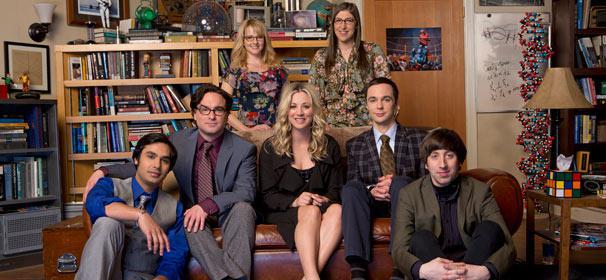
and culturally ingrained scientists on television aren’t really scientists. The Big Bang Theory, CBS’s hit sitcom,
features no less than six characters who are scientists. Well, five scientists
and one aerospace engineer. The show outfits its cast in attire straight out of
Williamsburg, the very centre of all things cool, gives them the flaws and
ticks that humanize us all, and infuses the narrative with pop humour and
scientific jargon. The show has ridden an inexplicable wave of affection for
science, which has made scientists cool.

But the problem with cool,
especially marketable and monetized cool, is that the entertainment industry
inevitably tries to duplicate it with disappointing results. That’s why every
new sitcom in the late 90s featured six beautiful friends in a coffee shop and
lasted four episodes.

Recently, I came across the
National Geographic Channel’s Going Deep
with David Rees
, which may be the beginning of the end of cool science on
TV. Rees is not a scientist. Or an engineer. He’s a writer. And a cartoonist.
And apparently has a vested interest in pencils. The show is not without its
merits. In watching this season I learned how to make ice, and tie my shoes, swat
a fly, and open a door, banal activities I had been carelessly attending to
without thought for nearly four decades. Rees investigates the benign and treats
us to the science behind it. But what is most striking about Rees’ show is its
almost desperate desire to be cool.

Going Deep borrows heavily from filmmaker Wes Anderson, crown
prince of the zeitgeist of cool, in its cinematography, score, and title fonts.
The program often attempts to replicate Anderson’s signature aesthetic:
perfectly centered shots, harmonized colors, and the Futura typeface for
titling. I was surprised to learn the score was not done by Mark Mothersbaugh.

Rees clowns relentlessly for the
camera. He breaks the fourth wall, talking to his crew. He swears. The result,
unfortunately, is a show that is the very opposite of cool because it doesn’t
understand what cool is. Desperate is not cool. Oddly, Rees strikes me as
someone who is cool, off-camera. He is personable, has an interesting
background, and is comfortable on camera. One can’t help but think while
watching the show that if Rees was less animated against the backdrop of the
Anderson homage, the show would be quite wonderful. 

Nye didn’t aspire to cool; he
fell into it. Like Neil Diamond circa 1998. deGrasse Tyson isn’t cool because
he’s on TV, he’s on TV because he’s cool. The
Big Bang Theory
isn’t cool because its characters are scientists. It’s cool
because its creator Chuck Lorre controls the universe. Well, no, but it’s cool
because it took a science and put it in the sitcom world, something that had
never been done before, and took that opportunity to explore science and geek-dom
through that familiar lens. Cool is often born either of what is new or what is
rediscovered. It’s why retro is cool. It’s the casual employment of the
contemporary and the forgotten. Instagram’s retro filters. DJs sampling music
of yesteryear. Your nana’s red plastic frames.

What Nye, deGrasse Tyson, and
Chuck Lorre understood was the marvel of science itself. Science has the
capability to answer, in absolute terms, every question about the universe. That
in and of itself is astounding. Science sells itself. It’s genuine. It’s
literally truth. And that’s what those who try to manufacture cool have never
been able to grip about cool. It just happens. It’s organic. It enters the
universe unannounced and disappears into the ether in the same manner. Going Deep with David Rees tries too
hard. And cool don’t try, man.

Mike Spry is a writer, editor, and columnist who has written for The
Toronto Star, Maisonneuve, and The Smoking Jacket, among
others, and contributes to MTV’s
 PLAY
with AJ
. He is the author of the poetry collection JACK (Snare
Books, 2008) and
Bourbon & Eventide (Invisible Publishing, 2014), the short story collection Distillery Songs (Insomniac Press,
2011), and the co-author of
Cheap Throat: The Diary of a Locked-Out
Hockey Player
(Found Press,
2013).
Follow him on Twitter @mdspry.

The Last Star: Elaine Stritch 1925–2014

The Last Star: Elaine Stritch 1925–2014

nullWe don’t have stars anymore. Not in the way we used to. I
may not even be old enough to remember true stars, who embodied the marvel of
showbiz with their very demeanor, their aura, how they carried themselves on
screen and off, on stage and off. Instead we have celebrities, contrived and
constructed fabrications from an industry that falsely believes it can create
what can only be born. A star was someone who didn’t need to be announced, but
whose very presence accomplished just that. Growing up, I had an organic sense
of this distinction: Johnny Cash on The
Muppet Show
, seeing Carson’s monologue the first time, Kathleen Turner’s
voicing of Jessica Rabbit. They simply embodied the essence of showbiz
brilliance. But the one that stuck with me, and yet seemingly doesn’t fit into
this pantheon of stardom, was Elaine Stritch, who passed away Thursday at 89.

I have a very lucid memory of Stritch appearing on The Cosby Show in the late 80s. I didn’t
watch a lot of TV growing up, and I have no other memories of television of
this era as rich in specificity. For whatever reason (as memories do), Stritch’s
three appearances on The Cosby Show
find a way to the forefront of my consciousness from time to time. In the 70s
and 80s, Cosby was a star; even without the help of sycophantic tabloidism, I
was well aware of this. My parents had his comedy albums. I watched Fat Albert and the Cosby Kids Saturday
mornings. Even by the way he carried himself onscreen as the patriarch of the
Huxtable clan, you knew Cosby was something to behold. But here, in season 6 of
Cosby’s 80s vehicle, was Stritch as Rudy’s teacher, Mrs. McGee, going to
toe-to-toe with the giant that was Cosby. And I remember reading the credits at
the sitcom’s end and wondering, who the hell was Elaine Stritch?

Elaine Stritch was a star. 

To consider her stage credits is to review the history
of contemporary theater. The native of Detroit trained at the prestigious Dramatic
Workshop of The New School in New York. She made her theater debut before the
end of the Second World War and was a mainstay on stages in London and New York
for nearly 70 years. She performed the work of Noël Coward, Irving Berlin, and
Stephen Sondheim, among many others. Stritch was conceived for the stage. She
had it all: she was beautiful, she was funny, she could sing, she could dance, she
could drink, she could curse, and she had a voice that begged for your attention.
She would finally win a Tony upon her fifth nomination for her one-woman play Elaine Stritch at Liberty in 2001, a
review of her career that was still far from over at the time.

She was the original Trixie Norton on The Honeymooners

She was a contemporary of Marlon Brando, Ben Gazzarra, and
Rock Hudson, and dated them all.

She appeared in films with Charlton Heston, Tony Curtis,
Janet Leigh, and Jane Fonda. 

She worked with David O. Selznick and Woody Allen.

She lived in the famed Carlyle Hotel in New York. Who
else, but a star, lives in The Carlyle? 

And Stritch wanted to be a star. When asked why she chose
show business, she replied, “I want to be talked about. I want to be written
about. I want everything about me! And I don’t make any bones about that.” But
she never begged for it, not on stage, and not on screen. Instead she demanded
it, which illustrates the divide between stardom and celebrity.

But all of this meant nothing to a barely teenaged kid
watching The Cosby Show on a Thursday
night in 1989. There was no IMDB. No Wikipedia. My phone had no answers. But I
knew Stritch was a star. I knew by the way she carried herself. By the way she
allowed the acting of her younger less experienced co-stars to inform hers. By
her impeccable comic timing and palpable grace. By the manner with which the
studio audience fell for her every twitch, hung on her every syllable, cackled
at her every eye roll, breathed her every moment. By the way she commanded
attention without asking for it. But mostly, in the way she battled Cosby. In
their moments on screen together, one had the sense that you were watching
something magical, something brilliant, something special. 

Stritch made her last appearance on television on 30 Rock, playing the mother of Alec
Baldwin’s Jack Donaghy, a fierce and hilarious performance. Her work with
Baldwin and Tina Fey on the show was a fitting end to her television career: a
stage actress with a brilliant performance on a New York filmed sitcom. 30 Rock was a show that mocked the
industry within which it existed, the extravagance of celebrity, and the
superfluous nature of stardom. It argued that behind the curtain there were no
stars, only degrees to which the moderately talented were pandered to. I fear
this was more documentary than satire, or as Stritch herself put it, “Everybody’s
just lovin’ everybody else just too much for my money.”

Damn right.

Mike Spry is a writer, editor, and columnist who has written for The
Toronto Star, Maisonneuve, and The Smoking Jacket, among
others, and contributes to MTV’s
 PLAY
with AJ
. He is the author of the poetry collection JACK (Snare
Books, 2008) and
Bourbon & Eventide (Invisible Publishing, 2014), the short story collection Distillery Songs (Insomniac Press,
2011), and the co-author of
Cheap Throat: The Diary of a Locked-Out
Hockey Player
(Found Press,
2013).
Follow him on Twitter @mdspry.