Watch: The Movie References in ‘True Detective’ (Including Some Shockers)

Watch: The Movie References in ‘True Detective’ (Including Some Shockers)

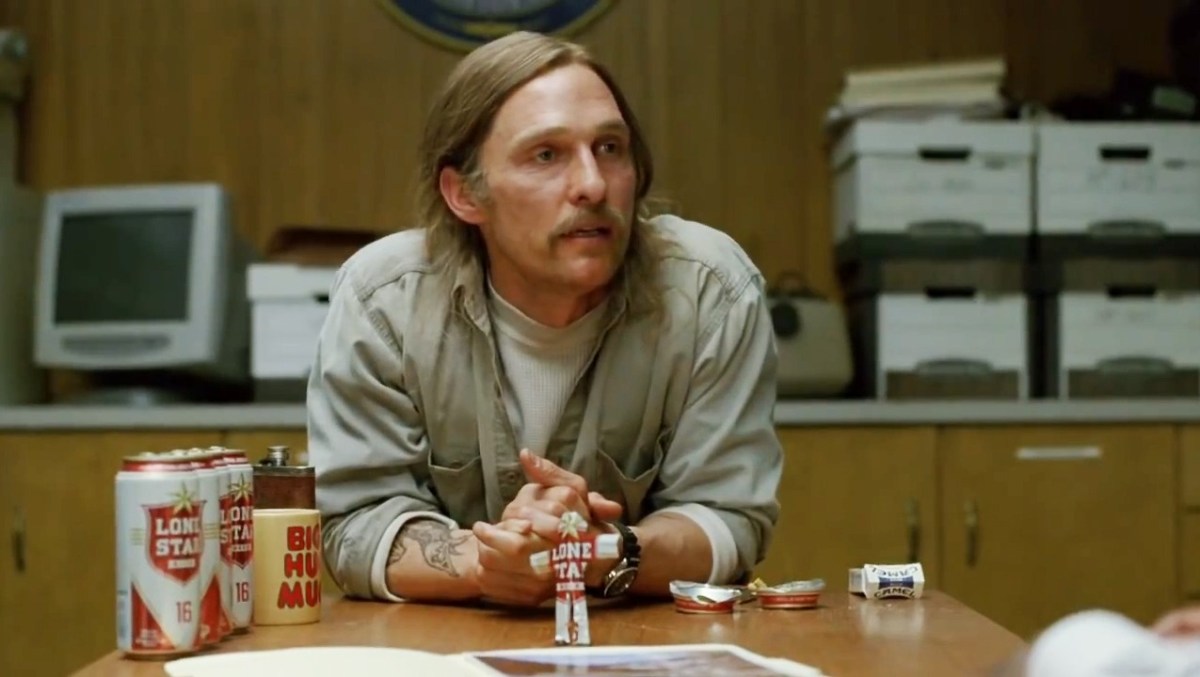
One of the reasons the first season of HBO’s ‘True Detective‘ was so fascinating for so many viewers was that its ambition–shown by the development of the tormented relationship between detectives Rust Cohle (Matthew McConaughey) and Marty Hart (Woody Harrelson), the spiraling exploration of a murder investigation, the multi-layered nature of the narrative–was of a type that, though we wouldn’t necessarily say it out loud, we would typically expect from a film rather than a television show, even in the Golden Age of Television. Decades of historic restraint of narratives on the small screen to fit into a one-hour format can still make television shows like ‘True Detective’ or its "prestige" brethren stand out. So it’s no surprise that the influences collected in this short piece by "Tea and a Movie" range from David Fincher to Jonathan Demme to (oddly enough) Andrei Tarkovsky. The piece highlights yet another part of the show’s allure, and filmic quality: its visuals (thanks to Adam Arkapaw’s cinematography), which might act on the viewer without the viewer’s awareness. Plenty have chatted about various filmmakers’ influence on the series, but seeing these similarities illustrated with such clarity could provoke further examination–where there’s smoke, there’s fire.   

A Second Chance for MUD

A Second Chance for MUD

null

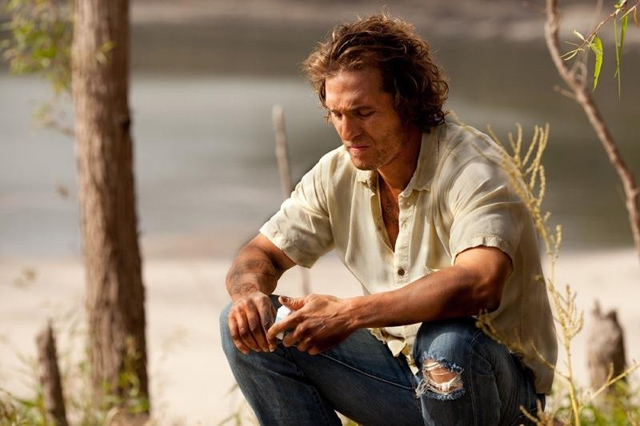
Jeff Nichols’ film Mud was just added to Netflix streaming in what I hope will be the film’s second chance at earning the attention and acclaim it deserves. For me, Mud was one of the finest films of 2013 but it was somehow overlooked during its theatrical release. It is difficult to know whether it was a marketing problem, a timing issue, or a matter of the film’s understated artistry that caused it to miss hitting critical mass in theaters. But this soft box office performance does not reflect the fine quality of storytelling in Mud: after my first viewing, I left the theater with the distinct feeling that I had just experienced an American classic.

What was so powerful about this film? And what elements had come to bear on the idea of a “classic” for me? To begin, there is something fundamental in the storytelling—something close to nature. One of the very first scenes of the film is captured from a moving boat so that the pace of the film truly aligns with the rhythm of the Mississippi River, where the tale takes place. Going forward, we see that Mud continues to move like the river, the story unfolding with the same smooth, slow-rolling tension.

This river scene introduces two boys, Ellis (Tye Sheridan) and Neckbone (Jacob Lofland), who are setting out on an adventure in the secret hours of the early morning. The distinctly American spirit of exploration is palpable, and as the boys navigate the foggy river, we recognize the archetype of a great adventure tale beginning. They boys are searching for the island where a recent storm has supposedly landed a boat high in the branches of a tree. The image recalls mythological floods and a sense of folklore, imbuing Mud with that quality of classic storytelling from the start.

What begins as an innocent adventure takes a serious turn when the kids realize that someone is living in the fabled tree-boat. This turns out to be a mysterious fugitive who calls himself Mud (Matthew McConaughey). As the boys begin a friendship with an outlaw on the banks of the Mississippi River, the influences of another classic American tale become clear: writer-director Jeff Nichols has certainly rooted Mud in the mood of The Adventures of Huckleberry Finn. He even had the two young actors study Mark Twain’s novel on set, and the influence is beautifully apparent in the film’s deep sense of adventure and wonder.

Another striking Huck Finn influence—and to me, one that lends Mud that quality of a classic—is the way the story highlights the genius of youthful intuition. The character of Ellis celebrates the intuitive wisdom of the American kid. He is adventurous, perceptive, and resourceful, having grown up steering boats and catching fish. In addition to these good old Southern attributes, Ellis values loyalty and love with such intensity that the adults in his life cannot meet his standards. That is, until he meets Mud, whose fierce devotion to his first love has landed him on the wrong side of the law. And so where Ellis might be “The Great American Kid,” Mud is “The Great American Rebel.” Both characters possess a particular kind of intelligence—the wisdom of the outliers and the outlaws, the children who see more clearly than the adults, the shrewd wit of those raised close to nature. Their characters reflect a value system that fits into the old Southern classics, the tradition of Huck Finn and Tom Sawyer coming of age and evading the law on the Mississippi River.

The film takes place in contemporary Arkansas, but it is easy to lose track of the era while watching Mud. Its raw and natural imagery evokes a timeless spirit, rather than identifying a particular moment. The cinematography engages with the rich textures of the terrain – close-ups of mud and sand, writhing snakes and creaking houseboats. This intimacy with the landscape enhances the old fabled quality of life on the river. Even the acting reflects this natural style. The cast of Mud puts forth refreshingly honest performances. Indeed, six months before his Academy success in Dallas Buyers Club, McConaughey proved himself as a seriously nuanced actor with a neatly restrained performance in this film. Surely his young co-stars encouraged this organic acting style; their intuitive performances—something of that childish genius—seemed to draw a more natural tone of acting from McConaughey and the rest of the adult cast.

And so the acting, too, feels close to nature, in a sense. It fits with the raw and uncontrived essence of Mud‘s story, closer to Southern folklore than a Hollywood performance. In many ways, Mud is a throwback to good old-fashioned storytelling. It takes us back to Mark Twain, back to childhood, back to the rhythms of nature. Now, looking forward, this modern classic gets a second life through Netflix streaming. If you missed it the first time around, Mud is well worth another look.

Kayleigh Butera is
a writer from Philadephia, PA. She is a recent graduate of Brown University,
where she studied American Studies and French language. She worked as the
programming coordinator of Brown’s Ivy Film Festival, the world’s largest
student-run film fest. Kayleigh is currently living in Brooklyn. She can be reached at
kayleigh.butera@gmail.com.

CANNES 2012: Jeff Nichols’ MUD

CANNES 2012: Jeff Nichols’ MUD

null

Some film critics have described Jeff Nichols’ Mud as the perfect way to end Cannes 2012, a fun and accessible slice of cinematic Americana. But considering the film’s hammy sentimentality and bogus emotional connections, I can’t think of a more disappointing send off, especially considering the promise Nichols showed in his first two films, the great Shotgun Stories and equally excellent Take Shelter. Both examine generational trauma in sobering ways, never shying from the physical and psychological consequences caused by familial denial and repression. Complex yarns about people in transition grappling with daily uncertainty, each film is vital in its own way. If Mud lacks anything, it’s this sense of vitality. While it’s as equally concerned with change as Nichol’s previous work, Mud fails to instill palpable tension in its very standard and melodramatic story.  

Like so many of its genre forefathers, Mud’s coming-of-age fable begins with children on a mission: best friends Ellis (Tye Sheridan) and Neckbone (Jacob Lofland) sneak out into the early Arkansas morning to visit a desolate island deep in the swamp where a large boat is nestled snugly in the branches of a tall tree. During their trip, the boys come across Mud (Matthew McConaughy), a mysterious and charming stranger lampooned on the island after fleeing his murder conviction of a wealthy Texas businessman.

Ellis quickly develops an admiration for Mud, whose sad story of unrequited love involving an old flame named Juniper (Reese Witherspoon) sparks a romantic key in the youngster’s heart. Ellis’s devout belief in strong emotional ties becomes a key motivating factor as well, especially when Mud tasks the boys to be his go-betweens with the mainland, bringing food, supplies, and later critical intelligence about the gang of Texas bounty hunters on his tail.  

Mud’s languishing, plot-heavy story swirls around in circles, establishing conflicts through long bursts of exposition and simplistic thematic groupings. Ellis’s troubled home life becomes an obvious parallel with the other failing relationships in the film, leaving little in the way of mystery when it comes to character relationships. While McConaughy has a blast turning Mud into a semi-delusional narcissist, nuanced performers like Michael Shannon and Sarah Paulson are wasted on the periphery. Thankfully, newcomer Sheridan is consistently excellent at exuding both confidence and fear in the more intense sequences.

Nichols’s eye for compositions is still apparent in Mud, but the visuals often lack poetic essence, an emotional connection between nature and the characters themselves. While the wide-screen compositions in Take Shelter give the film danger, possibility, even dread, there’s no such dimension in Mud, which is incredibly safe it both it’s depiction of location and regional identity.

What’s most heinous about this Southern potboiler is its sluggish pace and complete disregard for female complexity. The men of Mud are dense, dumb, or delusional and the women voiceless, timid, or disloyal.  Characters like these are neither interesting nor lasting, and Nichols’s sudden right turn into mainstream melodrama, littered with easy answers and clean-cut denouements, is frustrating to say the least.  We’ve come to expect brilliant regional cinema from Nichols, and maybe after just two films it’s unfair to have such high hopes. But with Mud he’s delivered a collection of safe conventions strung together by faux-lyricism, something that’s tough to dismiss during any point of a director’s career.

Glenn Heath Jr. is a film critic for Slant Magazine, Not Coming to a Theater Near You, The L Magazine, and The House Next Door. Glenn is also a full-time Lecturer of Film Studies at Platt College and National University in San Diego, CA.

CANNES 2012: Lee Daniels’ THE PAPERBOY

CANNES 2012: Lee Daniels’ THE PAPERBOY

null

In Precious: Based on the Novel 'Push' by Sapphire, Lee Daniels deplorably used sizzling pigs' hooves, mommy issues, and incestuous rape to shed light (ineptly) on the difficulties of growing up black in a broken home. In The Paperboy, he alternatively sends up and embraces hick stereotypes while also mootly insisting that issues of race and sex are, like, complicated. So, when not switching between mocking and then sympathizing with his execrably two-tone characters, Daniels makes pat statements about passion and prejudice. Based on Peter Dexter’s novel by the same name, The Paperboy is so trite and rabidly campy that you often have to wonder what you should and shouldn't be laughing at.

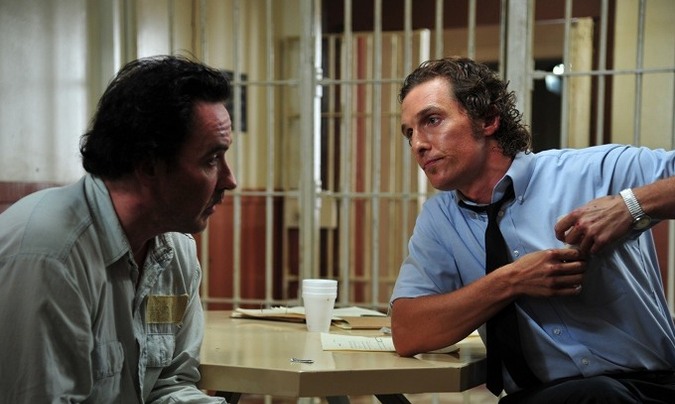
Daniels loves to pick on and then half-assedly elevate soft targets as martyrs. High School Musical's Zac Efron plays Jack, a former collegiate swimmer and part-time journalist. Jack is also the subject of a true story Anita (Macy Gray) recounts, decades after the film's events have taken place. The time is 1965, and the place is Moat County, Florida, where the white folks are mostly racist and clueless. As newspaperman Jack joins his brother Ward (Matthew McConaughey), their nymphomaniacal collaborator Charlotte (a self-debasing Nicole Kidman), and Yardley (David Oyelowo), a black writer from London, to investigate the case of convicted death row prisoner Hillary (a deliriously on-point John Cusack), they inadvertently uncover just how obnoxious a Lee Daniels movie can get in the name of ostensibly self-aware humor and indefensibly trite humanism.

That’s right, Daniels tries to be funny sometimes, a concept that totally undermines scenes in whixh he's trying to show sympathy for his characters. The scene of Charlotte and Hillary's first meeting is one such moment, in which Daniels mercilessly pokes fun at both characters for being uncouth, rednecks, and in heat. Hillary ignores the other men in the conjugal cell where he first meets Charlotte, demanding that Charlotte show him her panties and make an obscene face. She consents, and something more than the desired result is achieved. Daniels further mocks Charlotte later on by having her urinate on Jack after he’s stung by a flock of jellyfish—she even goes as far as to ward off other girls who try to whizz on him by screeching, “If anyone’s going to piss on him, it’s going to be me!”

But later, Charlotte’s character is given what she thinks she wants most: a chance to love Hillary. This predictably turns out to be not only not what she wants but also one of many crucial moments where Daniels self-seriously asserts that his film isn’t just, ahem, taking a piss with its characters. Late in the film, Charlotte reluctantly allows herself to be abused by Hillary, suggesting that Daniels thinks he’s meeting his film’s source material at its low-brow level, hence appropriately sending it up whenever necessary.

However, Daniels isn't Paul Verhoeven, and The Paperboy isn't high kitsch, just pompous, condescending trash. Even Verhoeven wouldn’t be brazen enough to ask his viewers to take seriously the unrequited romance between Anita and Jack, a tepid inter-racial romance that never becomes much more than a bathetic subplot. The two actors have no chemistry, fitting for a charmless, schizoid film like this. The best that can be said of The Paperboy is that it’s sometimes intentionally awful. More often than not, however, it’s just awful.

Simon Abrams is a New York-based freelance arts critic. His film reviews and features have been featured in The Village Voice, Time Out New York, Slant Magazine, The L Magazine, The New York Press and Time Out Chicago. He currently writes TV criticism for The Onion AV Club and is a contributing writer at the Comics Journal. His writings on film are collected at the blog, Extended Cut.