Our Scary Summer: ALIEN, the Energy Crisis and Desperate Consumerism

Our Scary Summer: ALIEN, the Energy Crisis and Desperate Consumerism

null

The cover of the June 1979 issue
of Newsweek featured an image of
Sigourney Weaver from Alien under the
caption: “Hollywood’s Scary Summer.” I was thirteen, and the horror movies
released that summer would form a kind of
grotesque carnival that mirrored my own and the world’s anxieties.
 Earlier in the spring, the disastrous nuclear accident at Three
Mile Island had occurred, and that summer major oil spills
polluted the waters of the Gulf of Mexico and the North Atlantic.  This
was also the year when oil prices doubled, Margaret Thatcher was elected, and
the Ayatollah Khomeini rose to power.  As I became aware of the
political and environmental degradation around me, the films I watched
reflected my awareness, as well as my own desires and fears as a thirteen year old, back at me.

I was caught between being a nerdy kid and a nerdy teenager;
the marketing strategies for promoting Ridley Scott’s Alien were similarly split. 
Following on the success of Star
Wars
, the film boasted special effects that would rival its
predecessor.  Reading about its
production in magazines like Starlog and
Heavy Metal, I joined other fanboys
in the building anticipation for its summer release.  The fact that Alien mingled SF with horror elements only further whetted my
appetite, but when the film was released with an R rating, I was consigned to
seeing it only through its comic book tie-ins and bubble gum card series.  Surely this was the only R-rated film to have
spawned its own action figure, yet the peculiar split in this marketing
campaign seemed to reflect my own divided self, too old to play with toys, too
young to get into adult films.

As Newsweek’s
chosen symbol of a new wave of Hollywood horror films, Alien embodied other split identities.  Formerly considered a disreputable genre,
associated with cheap special effects and lurid story lines, horror seemed to
be emerging into the mainstream, backed by mega-million dollar budgets and
featuring distinguished actors and directors. 
The process that had begun with 1973’s The Exorcist, and continued with 1976’s The Omen, seemed to reach its tipping point in the summer of 1979
with Alien and The Amityville Horror, culminating in Stanely Kubrick’s The Shining the following winter.   According to Newsweek: “What Alien proves
is that the B movies of yesterday provide the formulas for the A-movie
blockbusters of today.”

But any admirer of Ridley Scott’s film knows that the story
is anything but B movie fare.  While its
last half-hour seems patterned on the kind of murderous chase sequence
perfected the previous year in John Carpenter’s Halloween (1978), this is only one of the film’s many complex dimensions.  Interestingly, it is likely that this sequence,
along with the infamous “chest-burster” scene, brought the film its R
rating, while in fact its science fiction premise (the element of the film most
ostensibly appealing to younger audiences) more clearly mirrored what was going
on in that adult world I would soon be reluctantly entering.

While Star Wars was
predicated on an escapist premise that used science fiction conventions to
blast us into a galaxy far, far away, in the universe of Alien, space is confined, claustrophobic.  It is a universe very much like our own,
subject to the laws of supply and demand. 
As we watch a complex mass of space-borne metal slide slowly across the
screen, superimposed text tells us this is the commercial towing
spaceship Nostromo, hauling a refinery
and twenty million tons of mineral ore. 
Space, the final frontier, has become, like all frontiers, a resource to
be exploited.  The imposing size of the
ship is in perverse contrast to its seven-member skeleton crew, presumably the
result of corporate downsizing and its technological ally, automation.  It is some time before we encounter any
humans aboard, as the camera explores the ship’s instruments awakening to a
kind of ghostly, simulated life.  When
the crew is finally awakened, they emerge from steel cocoons that resemble both
eggs and coffins, clearly anticipating the deadly alien eggs the crew will
later encounter, but also figuring their grim dependence on the ship’s
technology. 

But of course it is not simply technology itself that
threatens the crew, but the exploitative uses to which it may be put.  The film gradually reveals that the real
villain of the story is not the fierce predator of the title, but the crew’s
employers, mega-corporation Weyland-Yutani, referred to simply as “The Corporation.”  Chief science officer Ash (Ian Holm) is later
revealed to be an android planted by the Corporation to superintend the capture
of the deadly alien for the company’s bio-weapons division.  Like the mineral ore the ship already
carries, the alien is yet one more resource to be commercially exploited, at
whatever cost.

Although I wasn’t yet old enough to have a driver’s license,
like everyone in 1979 I was highly conscious of rising gas prices and their
effects.  I didn’t understand the
relationship between what President Carter and Walter Cronkite repeatedly
referred to as the Oil Crisis, or the complex geopolitical issues centering
on the Iranian revolution and the Ayatollah’s return to power.  Regardless, I watched those daily images of
gas station lines, so long they looked like shanty towns, with a grim
fascination, as they so closely resembled the conjoined images of excess and
destitution common to those post-apocalyptic films I loved from that era, films
like The Omega Man, Damnation Alley, and Soylent Green, films that seemed half in
love with the world’s death.  What did
the Earth the Nostromo’s crew were trying to get home to actually look
like?  Probably something very much like
the one depicted in these films, and to which the images I watched on the
nightly news seemed to be offering a disturbing preview.

null

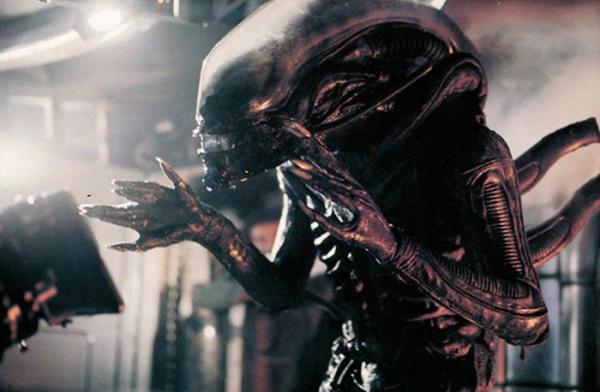
For kids who wanted to act out scenes from Alien (a film they weren’t allowed to
see without a chaperone), Kenner offered their 18-inch action figure of the monster
created by the disturbed imagination of the late H.R. Giger.  Given the fact that this was ostensibly an
R-rated toy, with sublimated sexual imagery typical of its designer, it is
somewhat odd that this is the first action figure I regarded as too childish to
buy.  Taking the alien to school would be
an invitation to bullying, and playing with it alone at home just seemed
sad.  I still had my extensive collection
of Star Wars figures, but these were
beginning to gather dust on the shelf, reluctant as I might have been to part with
them. 

Looking back now, with my wariness of buying any products
that aren’t ecologically correct, I can retroactively congratulate myself on
not purchasing a large plastic figure made largely of petroleum products.  The smaller, 3 ¾” size of the Star Wars figures, as compared to the
foot-long G.I. Joe of eras past, was a deliberate response to the increased
production costs brought on by the Energy Crisis.  So the foot-and-a-half long Alien figure was actually an avatar of
wretched excess lurking in the toy aisle, a fitting embodiment of the film’s
tacit themes of consumption and exploitation. 

The other reason I couldn’t bring myself to buy the Alien action figure is that there was
something kind of sad about it.  Produced
as a single unit, there were no other figures it could play with: no Kane
action figure to eat, no Ripley for it to chase.  It was over four times the size of my other
action figures, so had I bought it the alien would have stood alone on the
shelf, never fitting in, a large wasteful consumer product good for nothing but
packing away, eventually to be sold on eBay, shipped in a FedEx package, hauled
to its destination aboard a vast commercial aircraft, most likely piloted by a
skeleton crew of seven, reduced by corporate downsizing.

Jed Mayer is an Associate Professor of English at the State University of New York, New Paltz.
DOWN-UNDERGROUND: Muriel’s Red Wedding

DOWN-UNDERGROUND: Muriel’s Red Wedding

nullThe 90s saw Australian filmmakers enjoying worldwide success
with a series of offbeat comedies that celebrated outsider status and often
mixed challenging subject matter with laughs. 
As inventive as these films were, their success overshadowed the dark
history of Australian cinema, Walkabout and
Picnic at Hanging Rock supplanted by Priscilla and Muriel in the cultural memory. 
But in 2005 that repressed history resurfaced in one of the most
disturbing films to come from down under, Greg McLean’s Wolf Creek.  Dismissed by
many critics as misogynistic torture porn, the film is in fact a compendium of
filmic tropes that simultaneously resurrects and comments on Australia’s peculiar
film history.

One of the most successful and iconic figures of Australian
cinema is Crocodile Dundee, the
raffish survivalist bushman played by Paul Hogan.  In the years following the success of the
Dundee franchise, other Australian directors would achieve commercial—and
sometimes aesthetic—success with such offbeat comedies as Flirting, Strictly Ballroom,
Priscilla, Queen of the Desert, and
of course Muriel’s Wedding, directed
by Hogan.  Dealing with topics that had
been rarely addressed in comedy, such as racism, gay and transgender
identities, and disability (not to mention ABBA), these films also embraced a
garish and camp aesthetic that was refreshingly at odds with American and
European preoccupation with upward mobility.

But however much these films challenged certain conventions
of the comedy genre, they arguably contributed more to the worldwide success of
their stars (Nicole Kidman, Guy Pearce, Hugo Weaving, Toni Collette, and
director Baz Luhrman) than they did to Australian cinema.  The same might be said of the path taken by Dundee’s
demonic doppelganger Mad Max, who launched Mel Gibson into stardom.  While the original 1979 film was an inventive
transformation of the New Wave’s darker stylings into irresistible grindhouse
fare, as the franchise gained commercial success and higher budgets, it devolved
into the disastrously overblown theatricals of Thunder-Dome

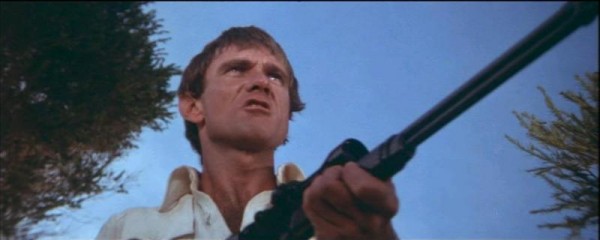
On its release, Greg McLean’s Wolf Creek was regarded by most serious critics as slasher shlock,
yet it can also be read as a disturbing treatise on Australian film and the
peculiar cultural and geographical history that underpins it.  Certainly this film is not recommended for
the queasy, but it could also be considered less a celebration of violence than an indictment of it.  By exploring the
relationship between character and setting, it offers a powerful
meditation on the causes of violence, one that has resonance well beyond its
Australian setting.

The film begins in Muriel
territory, with three twenty-somethings partying poolside before piling into a
car the next morning.  Liz and Christy
are both British tourists, and their Sydney pal Ben is accompanying them on a road
trip on their way to the airport in Queensland. 
They travel the forbidding spaces of the Great Northern Highway, which
rolls through the arid western deserts with only rare interruptions by a roadhouse
or rest-stop.  When they do finally hit a
gas station, they are harassed by a group of slack-jawed yokels, who threaten
the women with a “gang-bang.”  Ben tries
to man up on the occasion, but it is a role he is clearly uncomfortable with:
he is feminized, and the women are verbally objectified and victimized.  The film will continue to explore the ways in
which gender is as much a product of cultural context as biology.

Soon after this disturbing encounter, they arrive at their
first destination: Wolf Creek, site of a massive asteroid crater.  As they walk around the eerie terrain, the
atmosphere becomes reminiscent of Peter Weir’s Picnic at Hanging Rock (1972), in which the students and teachers
of a girl’s boarding school go for a holiday outing at a strange and ominous
rock formation, where several of the girls mysteriously disappear.  The dream-like rhythms and surreal landscape
of Wolf Creek evoke a similar sense
of the uncanny, and likewise hint at the spiritual traditions of Australia’s
aboriginal population, so closely linked to the continent’s unique
ecosystem.  This dreamy atmosphere culminates
in the travelers’ watches stopping simultaneously, suggesting a spiritual or
astral influence on the dire events that follow.

Such scenes are significantly enhanced by the film’s
astonishingly inventive sound design. 
François Tétaz composed a score woven out of a collection of field
recordings made from the sound of power lines eerily humming and vibrating in the
desert winds.  When these rise to muted
crescendos, they vaguely resemble the conventional horror movie “stingers” that
punctuate scare scenes, but with a subtle organicism rooted in the ambient
soundscape. 

When they try to leave, their car refuses to start, and as
they wait through the night for the unlikely arrival of another visitor they
are “rescued” by a rugged frontiersman, Mick, who bears more than a passing
resemblance to Crocodile Dundee, but one badly gone to seed and stripped of all
his rugged charms.  The resemblance is
made explicit later on, after an hours-long tow back to Mick’s compound.  As they sit around a campfire before their
good Samaritan goes to work on their car, the gap between rural and urban,
Australian and English, goes from awkward to excruciating, until Ben tries to
break the tension by quoting Dundee’s famous line, “You call that a knife? Now
that’s a knife!” which Mick doesn’t quite get, and assumes he’s being
mocked. 

And, in a sense, he is. 
Earlier in this uncomfortable encounter Ben tells him he’s from Sydney,
to which Mick replies, “Poofter capital of Australia!”  This further hit on Ben’s threatened
masculinity can be seen as motivating his later insult, intended to mark Mick
as a redneck, a bumpkin, a rural relic, lost in the past of a modernizing
nation of which Sydney is the urban symbol. 
But the nation’s repressed history takes its revenge, as Mick drugs them
with what he claims to be “rainwater from the top end.”  Thinking they are partaking of the landscape’s
natural purity, they are in fact being prepared for slaughter.  This irony is anticipated in the campfire
conversation when Ben enthuses about Mick’s life in the open air, his freedom
in nature, to which Mick bluntly replies: “What the fuck are you talking about?”  Idealization of nature is a product of the
urban middle class, not of those who scrabble a living off the landscape.

That campfire exchange, and the class and gender politics
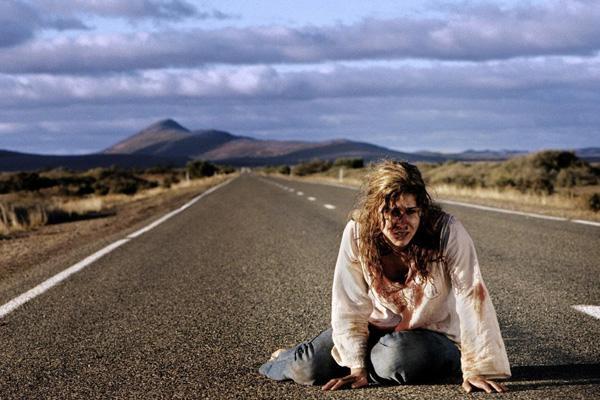
that frame it, is crucial for understanding the violence that follows.  While the women are tortured, they also fight
against, and momentarily escape, their captor. 
It should be noted that much of the film’s violence occurs off-screen,
though Mick’s gleeful sadism and Kristy’s abject fear create an unbearable
sense of dread.  During their escape the
film recalls another great film from the Australian New Wave, Wake in Fright, which makes the
expansive landscapes of the Outback into a paradoxically claustrophobic space
of dread.  Threat lurks everywhere in the
wide-open desert spaces.  Holes appear in
their getaway vehicle, inexplicably, until we realize they are made by a rifle
fired from hundreds of yards away.  As in
the Mad Max films, the freedom of the
open road is turned into a space of entrapment and violence. 

This is the end of the frontier.  The exploitation of the landscape and
near-genocide of the native peoples of Australia is supplanted by a more
mysterious, surreptitious form of violence. 
The film opens with the vague and sinister words: “30,000 people are
reported missing in Australia every year. 90% are found within a month.  Some are never seen again.”  Though this is conventional thriller
verbiage, it is also an altogether different vision of the country than that offered
by Baz Luhrmann’s camp epic Australia or
Paul Hogan’s lovable bushman.   Like the
great films of the 1970s, Wolf Creek
de-romanticizes the landscape, and reminds us that the past is never past, and
that violence can erupt from the most seemingly remote places.

Jed Mayer is an Associate Professor of English at the State University of New York, New Paltz.

DOWN-UNDERGROUND: The LONG WEEKEND of the 1970s

DOWN-UNDERGROUND: The LONG WEEKEND of the 1970s

nullAustralian cinema came into its own during the 1970s.  The same might be said of Hollywood during the
same period, as directors like Terrence Malick, John Boorman, and Peter
Bogdanovich eschewed constructed sets and artificial lighting to tell stories in which
settings were as important as characters. 
The obvious difference lies in the nature of Australian nature, itself: the vast
desert spaces of the Outback, the dense vegetation of the bush, and the shark-infested
beaches, foster forms of life that seem alien to outsiders, and many of
Australian film’s best stories revolve around forbidding encounters with a
nature that seems unnatural.  As the
country’s great film decade came to a close, a low-budget horror film would appear as a kind of compendium of the era’s visual tropes.  It is also a dark meditation on the era
itself, one that still has surprising resonance.


At the time, Long Weekend was
promoted with an irresistible tag-line: “Their crime was against nature:
nature found them guilty.”  Directed by
Colin Eggleston, the film was released on March 29, 1979, the day after the
infamous nuclear meltdown at Three Mile Island. 
Just a few months later, on June 3, an oil rig in the Gulf of Mexico
began spilling 30,000 gallons of crude oil a day, a toxic event that was later
to be echoed in the unforgettable summer of 2010.  Long
Weekend
’s theme could hardly have been more timely.  A dysfunctional couple (Peter and Marcia) decide
to get away from it all on a camping weekend: along the way they hit a kangaroo
with their car, start a fire with a carelessly thrown cigarette, dowse their
campsite with insecticides, and kill sundry birds and aquatic animals while
barely restraining themselves from killing each other.  It’s hard to imagine a more unlikable pair of
characters, and when nature begins to strike back, we are firmly on the side of
the nonhuman. 

Thematically, the film has much in common with another
environmental horror film from the same year, John Frankenheimer’s Prophecy.  Waste chemicals dumped from a local paper
mill pollute backwoods waters in Maine, causing birth defects and mutations in
the local Native American population, and bringing into being a monstrous
mutant bear.  Lost Weekend takes a less
heavy-handed approach to the same environmental theme: indeed, it would be hard not
to.  What’s surprising here is the way it
manages to merge social and psychological issues with environmental ones. 

Nature’s threat seems to come as much from the human
characters as from the bush that surrounds them.  The sound design blurs distinctions between
noises in the characters’ minds and howls and whines from the environmnt.  Since they often refuse to speak to one
another, it’s not clear who hears what, as high pitch buzzing gives way to
humanoid cries in the film’s disturbing soundscape.  Driving into the bush, they enter a space that
is as much mental as physical: driving by night, their headlamps light an eerie
tunnel through the forest that seems to go on and on; they pass what they
believe to be an identical tree several times, despite staying on the same
track; at their camp a speargun mysteriously fires on its own, nearly killing
Marcia; later a bird drops a woman’s shoe into Peter’s lap. 

Yes, there are plenty of scenes where animals attack, but as in Hitchcock’s The Birds, what is most
compelling about Long Weekend is the
lack of any explanation of the cause behind nature’s transformation.  Earlier in the film, Marcia overhears a story
on the radio about cockatoos attacking people’s homes, baffling wildlife
experts.  Near the end of the film a bird
flies into a livestock truck, blinding the driver.  In between these incidents, nature’s threat
seems to be directed entirely on the unhappy campers, and while the tag-line
seems to draw a direct connection between the characters’ disrespect for nature and its
revenge, the particular forms taken by that revenge make this less clear.

As we learn more about the couple’s past, the incidents that
befall them in the wild seem eerily to mimic the incidents that led to their
mutual loathing.  Watching Peter swimming
in the ocean, Marcia suddenly sees a large, dark shape in the water, and
screams out a warning.  Peter eventually
makes it to shore, unharmed but shaken.  Though
they suspect it is a shark, neither can identify exactly what they saw.  As they return to their camp, Marcia makes a
mysterious segue: “What would you have done if I’d have died? Would you sell
the house?  Would you have
remarried?”  Later, she asks Peter: “What
do you think that noise was last night? Sounded like a baby crying.”  Peter doesn’t reply: either he didn’t hear or
he doesn’t care about his wife’s concerns. 
Eventually we discover that Marcia has had an abortion, terminating a
pregnancy by another man.  As the sordid
story is pieced together, it seems that Peter actually pushed the two of them
together, so as to leave the man’s wife free for himself.

The story becomes a fitting epitaph for the 1970s, when
fantasies of free love and a return to nature turned violent and deadly.  In what other era could wife-swapping,
abortion, and environmental devastation be so mysteriously, but inevitably,
connected?  Human nature
takes its revenge in the film as much as does that Nature-with-a-capital-n we like to think
exists out there, pristinely apart from us. 
As the couple have it out, Peter arrogantly claims, “You’re so clear to
me, it’s all so clear to me now,” and Marcia replies, “Don’t get philosophical
with me: you poke your head out of your $2,000 camper and you think that’s reality.”  Attempting to escape the confines of
monogamy, they hav experimented with extramarital sex, and it’s torn their
marriage apart.  Hoping to heal the marriage,
they flee to a nature that is anything but nurturing.  There are few films that so cannily invoke
the uncanny in exposing the dark side of our so-called natural desires.   

Frightened again by the dark shape in the water, Peter fires
his gun relentlessly into the surf, as a bloody tide washes in.  Eventually the shape washes up on the beach,
and turns out to be a dugong, a manatee-like creature that was once populous on
Australia’s shores before being hunted nearly to extinction, “for its oil,” as
Peter says with regret.  Both comment on
how ugly the seemingly shapeless creature is, even as Peter notices that it’s a
female, and speculates that the sound they’ve been hearing is its pup: “they
sound just like a human baby when they cry.” 
In a fitting irony, they are most disgusted by nature even as they realize
how human it is.

Jed Mayer is an Associate Professor of English at the State University of New York, New Paltz.

VIDEO ESSAY: Virtual Animals: Building the Digital Ark

VIDEO ESSAY: Virtual Animals: Building the Digital Ark

[The script of the video essay follows.]

For most of us, our first encounter with a wild animal
happens through a screen: the camera has the power to bring us closer to an
animal than we are ever likely to get in the wild.  It is by sight that we become fascinated with
them, by sight that we come to know them, by sight that we mourn their
disappearance. 

We are currently living through the world’s sixth mass
extinction event, the first to be caused entirely by humans.  By the century’s end, we are likely to have
lost half of the world’s species.  Film
will not only be the most intimate encounter we have with animals: for most
species, it will be the only encounter possible.

The fewer animals we find in the wild, the more we see on
screen.  The digital revolution has
enabled filmmakers to create an entirely new breed of animal, one that exists
only in the form of pixels.  Absence of
flesh and blood answered by an abundance of virtual animals.

Animals have always been a central part of filmmaking, and
animals on the screen have always had a complex relationship to their real life
counterparts.  One of the earliest films
made by Thomas Edison is of an animal execution.  In 1903 the rogue performing elephant Topsy
was sentenced to death by electrocution after killing her trainer.  Edison used the event as an opportunity to
show the power of alternating current, as
well as his state of the art film camera. 
Thousands watched the event, and many thousands more flocked to the
film.

The celluloid used in film stock comes from gelatin made
from the rendered bodies of animals. 
Eastman Kodak had its own rendering plant so that they could monitor the
quality of the animal product that went into the patented celluloid used by
most filmmakers.  Before digital, when
you watched a film, the image on the screen was literally being projected
through animal matter.

With digital we usher in a new era in which animals might
play a different role on the screen.  For
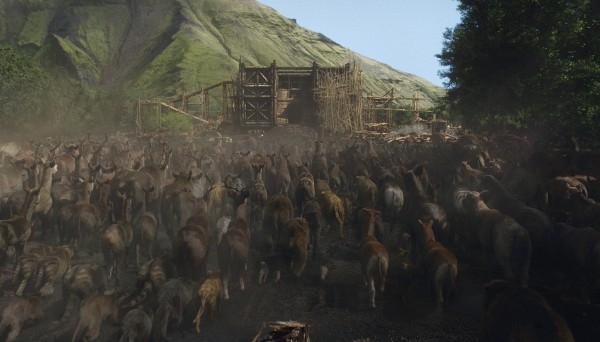
Darren Aronofsky’s animal epic Noah,
Industrial Light and Magic created 14,000 virtual animals, none of which
involved the use of live animals in their creation.  Aronofsky felt it would be against the theme
of the film to put live animals in dangerous or harmful filming conditions.  The result is the most breathtaking collection
of virtual animals ever assembled.  The
film itself is a kind of digital ark, bringing thousands of animals to life
even while their real-life counterparts are likely to become extinct in the
coming decades.

Before Noah, CGI
artists more often used live animals on the set to serve as models for digital
versions.  The process is called
capturing.  In the filming of Ang Lee’s Life of Pi, four tigers were used to
create the unforgettable feline presence of Richard Parker.  One of them was reported to have nearly
drowned on the set. 

We know animals by sight. 
By seeing we know they have souls. 
Somehow, these souls survive even in their visual avatars, even when
what we are watching is not an animal at all, but a collection of pixels on a
screen.

Nelson Carvajal is an independent digital filmmaker, writer and content
creator based out of Chicago, Illinois. His digital short films usually
contain appropriated content and have screened at such venues as the
London Underground Film Festival. Carvajal runs a blog called FREE CINEMA NOW
which boasts the tagline: “Liberating Independent Film And Video From A
Prehistoric Value System.” You can follow Nelson on Twitter
here.

Jed Mayer is an Associate Professor of English at the State University of New York, New Paltz.

Down-Underground: WALKABOUT, or Thirteen Ways of Making a National Epic

Down-Underground: WALKABOUT, or Thirteen Ways of Making a National Epic

1. Bring an outsider’s
perspective

Like Wake in Fright,
the only other Australian entry at the 1971 Cannes Film Festival, Walkabout was directed by an Englishman,
Nicolas Roeg.  He tells the story of
Australia without sentimentality, without rancor.  The landscape is not idealized or demonized;
neither are those who dwell in it.

2. Use images to tell a
story

null

Based on a 1959 novel of the same name, about two American
children whose passenger plane crash lands in the Australian Outback, Roeg’s film
rigorously pares back and revises the story; the novel is 144 pages, the
screenplay 14.  The film begins with a
mineral surveyor driving his children to a deserted desert landscape, where he
tries to shoot them before covering himself and his car with gasoline and
lighting a match.  We don’t know
why.  His daughter stares blankly.  The fire burns fiercely.  The children walk into the desert, their
school uniforms black against the rust-colored landscape.

3. Cross-cutting
multiplies perspectives

Images of rocks, strata, broken landscapes.  A girl’s school where Australians are going
through their English elocution lessons. 
Bricks, brown and earthy.  The
Outback, sand glowing fiercely red under a cloudless sky.  Brutalist architecture, dystopian concrete
forms like an urban cage.  A butcher
grinding kangaroo meat to be packaged as pet food.  A woman preparing dinner while listening to a
radio show on proper table etiquette. 
Chitinous lizards crawling over the desert floor, unwieldy in their
armor but perfectly adapted to their environment.

4. Tell immigrant stories

null

Europeans don’t seem to belong to this landscape, or at
least they seem to be trying their level best to maintain the culture of their
place of origin, practicing elocution, rehearsing manners.  Ninety per cent of Australians live on the
coasts, while the Outback represents over seventy per cent of the continent’s
landmass.  A teenage girl and her younger
brother are abandoned to this landscape; their school uniforms can’t protect
them from the heat, and they burn until their skin bleeds.  They come upon an oasis; a fruit tree feeds
them; the water revives and washes them. 
By the next morning the water has burned away in the heat.  Roeg somehow manages to compress two hundred
years of immigrant history into twenty minutes.

5. Tell native stories

A lone aboriginal boy comes upon them; he shows them how to
draw water from the soil.  They join him
for his “walkabout,” the aboriginal ritual in which a sixteen year-old boy is
sent out into the Outback to see if he can survive.  He and the schoolboy communicate through sign
language, and he increasingly draws the whites to his world.  They gradually strip off their school
uniforms, the last trappings of the world they are leaving behind but also
moving inexorably towards in their errant pilgrimage.  The aboriginal boy wears their clothing, but
with a difference, the boy’s pants on his head. 
They later make a sun parasol by stringing a blouse on sticks.  The boy decorates the children’s white skin
with elaborate painted designs.

6. Everything is sexual

null

The film was initially rated R for a nude bathing scene that
was then pared down for a PG rating.  The
restored scene is mesmerizing in its mixture of Edenic innocence and subdued
eroticism.  Nothing overt happens between
the teenage girl and boy, but in many scenes they are shown looking hungrily at
one another.  Their coy courtship breaks
racial taboos even while it serves as a metaphor for relations between immigrants
and natives.  The boy’s desire for the
girl later becomes so intense that it drives him to distraction; he does an
elaborate mating dance but she claims not to understand what he wants.

7. Everything is
political

The sexual element of the story is a bold move on Roeg’s
part, considering the radical separation enforced between immigrants and
natives, the latter of whom had long been consigned to government-sponsored
reservations.  The courtship narrative
dramatizes the country’s slow evolution towards greater inclusiveness, but the
film’s troubling conclusion offers little hope of full reciprocity.  In its post-colonial setting, every element
of the film’s narrative takes on political overtones: the father’s seemingly
innocuous profession of mineral surveyor can also be seen as essential to the
continent’s commercial exploitation; every exchange between the young
characters may be read as a cultural one, rich in possibility, fraught with
foreboding.

8. Everything is natural

null

Soon after the abandoned children begin their own version of
the aboriginal walkabout, the landscape begins to transform them.  The sun burns their skin, leaving them a
darker shade of white.  They suck water
from the dry earth.  When they encounter
the vestiges of Western civilization they are as bemused as their aboriginal
escort.  A wombat waddles up to them while
they are sleeping and sniffs curiously. 
They eat raw meat, freshly killed. 
All thoughts of elocution and table manners are burnt away.

9. Nothing is natural

This is not to say that they fully assimilate to the
landscape.  The film’s genius lies in its
unwillingness to romanticize their journey. 
They eventually grow up and become conventional urbanites.  Neither is the aboriginal way of life
represented as pure and unsullied: a kangaroo spear-hunt is cross-cut with
images from a meat-processing plant; white hunters are later shown doing the
same thing with rifles.  Killing is
killing, in city or outback, a point underscored by a close-up of the kangaroo
the boy kills, its five-fingered paw raised in the air like an accusing human
hand.

10. Mix genres

Just as the line between nature and culture is blurred, so
are the conventions of genre.  Nature
documentary undercuts social satire. 
Epic looms over coming-of-age story.  
Experimental, new wave style mediates adventure narrative.  Shifting point of view undoes the falsely objective
gaze of visual anthropology.

null


11. Know your ruins

The Outback is not a pristine, unsullied place. The walkers
come upon abandoned mines, burnt-out cars, empty sheds, and eventually,
amazingly, an entire white community residing in the middle of the desert in
geometric, modern cottages.  Seemingly,
the only difference between civilization and the wild is time.

12. There will be blood

The story begins with an apparently motiveless attempted
murder and self-immolation.  The
unexpected violence of this scene overshadows the rest of the film, like the
colonial past haunts the present.  Every
act of killing, whether for food, sport, or otherwise, feels like a brooding
recapitulation of that inaugural baptism by fire.  The possibility of violence hovers over every
encounter between the children and the landscape’s denizens.

13. History repeats itself

The children reassimilate into urban life, yet the story ends
with flashbacks to them bathing nude together. 
Was their walkabout an idyllic escape from social burdens, or a violent
rite of passage enabling them to return as better citizens?  The final image is of their school uniforms
hanging on sticks, empty vestiges of their former selves, yet waiting to be
donned again.

Jed Mayer is an Associate Professor of English at the State University of New York, New Paltz.

Click here for the first installment of Jed Mayer’s “Down-Underground,” a series on the Australian New Wave.

Down-Underground: WAKE IN FRIGHT is the Best Movie You’ve Never Seen

Down-Underground: WAKE IN FRIGHT is the Best Movie You’ve Never Seen

null

<!–
/* Font Definitions */
@font-face
{font-family:Calibri;
panose-1:2 15 5 2 2 2 4 3 2 4;
mso-font-charset:0;
mso-generic-font-family:auto;
mso-font-pitch:variable;
mso-font-signature:3 0 0 0 1 0;}
/* Style Definitions */
p.MsoNormal, li.MsoNormal, div.MsoNormal
{mso-style-unhide:no;
mso-style-qformat:yes;
mso-style-parent:"";
margin-top:0in;
margin-right:0in;
margin-bottom:8.0pt;
margin-left:0in;
line-height:107%;
mso-pagination:widow-orphan;
font-size:11.0pt;
font-family:Calibri;
mso-ascii-font-family:Calibri;
mso-ascii-theme-font:minor-latin;
mso-fareast-font-family:Calibri;
mso-fareast-theme-font:minor-latin;
mso-hansi-font-family:Calibri;
mso-hansi-theme-font:minor-latin;
mso-bidi-font-family:"Times New Roman";
mso-bidi-theme-font:minor-bidi;}
p.MsoCommentText, li.MsoCommentText, div.MsoCommentText
{mso-style-priority:99;
mso-style-link:"Comment Text Char";
margin-top:0in;
margin-right:0in;
margin-bottom:8.0pt;
margin-left:0in;
mso-pagination:widow-orphan;
font-size:12.0pt;
font-family:Calibri;
mso-ascii-font-family:Calibri;
mso-ascii-theme-font:minor-latin;
mso-fareast-font-family:Calibri;
mso-fareast-theme-font:minor-latin;
mso-hansi-font-family:Calibri;
mso-hansi-theme-font:minor-latin;
mso-bidi-font-family:"Times New Roman";
mso-bidi-theme-font:minor-bidi;}
span.CommentTextChar
{mso-style-name:"Comment Text Char";
mso-style-priority:99;
mso-style-unhide:no;
mso-style-locked:yes;
mso-style-link:"Comment Text";
mso-ansi-font-size:12.0pt;
mso-bidi-font-size:12.0pt;}
.MsoChpDefault
{mso-style-type:export-only;
mso-default-props:yes;
font-size:11.0pt;
mso-ansi-font-size:11.0pt;
mso-bidi-font-size:11.0pt;
font-family:Calibri;
mso-ascii-font-family:Calibri;
mso-ascii-theme-font:minor-latin;
mso-fareast-font-family:Calibri;
mso-fareast-theme-font:minor-latin;
mso-hansi-font-family:Calibri;
mso-hansi-theme-font:minor-latin;
mso-bidi-font-family:"Times New Roman";
mso-bidi-theme-font:minor-bidi;}
.MsoPapDefault
{mso-style-type:export-only;
margin-bottom:8.0pt;
line-height:107%;}
@page WordSection1
{size:8.5in 11.0in;
margin:1.0in 1.0in 1.0in 1.0in;
mso-header-margin:.5in;
mso-footer-margin:.5in;
mso-paper-source:0;}
div.WordSection1
{page:WordSection1;}
Many people associate
Australian films with offbeat comedies like Muriel’s
Wedding
or Priscilla Queen of the
Desert
. Excellent as such films are, the history of Aussie film-making is a
much darker one, shaped by the country’s harsh landscapes and brutal
history.  Nowhere are these conditions
more evident than in a film that most of us might never have had a chance to
see. Although Wake in Fright was
greeted with accolades when it premiered at Cannes in 1971, the film’s
uncompromising portrayal of colonial life in the Outback incensed Australian
viewers, and poor distribution elsewhere drastically curtailed its potential
audience.   It was only dogged
determination and chance luck that managed to uncover the lone surviving print
of the film in a warehouse in Pennsylvania, days before it would have been
destroyed.  With this crucial piece of
the puzzle of Australian film history now restored, those of us living in the
northern hemisphere have the opportunity of entering Australian cinema through
its darkest doorway. 

Like America, Australia is a former colony that struggled to
find a cultural voice distinct from its British origins.   In 1973 Patrick White was the first
Australian to receive the Nobel Prize in literature and it is during that same
decade that a distinctive national film culture began to emerge.  A bold group of directors—including Nicholas
Roeg, Peter Weir, and Gillian Armstrong—began telling wholly original and often
epic stories that placed Australia’s distinctive landscape at their
center.  Working with absurdly small budgets and means, these directors
offered their own, unique response to the revolutions happening in European New
Wave and the New Hollywood of the 1970s.  Like these other post-War film
revolutions, the new Australian cinema played with familiar genre conventions,
injecting them with an often ruthless sense of realism that reflected the
country’s particular social and ethnic tensions.  The result is a body of film that is both familiar
and strange, engaging, even “accessible” but infused with a sensibility refreshingly
apart from American and European film.

Wake in
Fright
is one of the earliest and most formative examples of this
new sensibility, and while it is wholly Australian, it bears comparison with other
films from the same era.  Like Sam
Peckinpah’s Straw Dogs, which also
premiered in 1971, it depicts a mild-mannered intellectual’s descent into
brutality when he is relocated into an unfamiliar and disquieting rural
world.  Like John Boorman’s Deliverance (1972) it graphically acts
out the alienation of city from country. 
Like The Wicker Man (1973), it
depicts an outsider’s initiation into a bizarre alien culture.  Yet Wake
in Fright
is arguably more complex and more disturbing than these contemporaneous
classics, at times recalling the work of Dostoevsky, Kafka, and Camus.  If these comparisons seem grandiose, see the
film for yourself and get back to me.

It opens dramatically, with a panoramic shot of the bleakest
imaginable landscape, the camera circling around to reveal a town consisting
only of two small buildings facing a railway. 
This is Tiboonda, where John Grant (Gary Bond) is serving out a kind of
indentured servitude at a teaching post assigned by the peculiar terms of his
student loans.  It is the last day of
school, and the students stare vacantly into hot space while flies buzz and
clock ticks.  At last released from the
confines of the classroom the children flee, and Grant boards a train for the
mining town of Bundanyabba where he plans on catching a plane to Sydney to
spend the vacation with his girlfriend. 

But Bundanyabba, or “the Yabba” as the locals call it, has
other plans for John Grant.  At first the
town seems deserted, but it would appear all the residents are at the pub,
where Grant is treated to the brutish hospitality of a local policeman, Jock
(played by veteran Aussie actor Chips Rafferty), who buys round after round of
beer in what will become a recognizable ritual of initiation.  Mateyness, blokeishness, or what we might
call dudishness, is portrayed almost as a form of sadism, coerced inebriation being
the first of many inductions into the male culture of the Outback, one soon to
be followed by gambling, in an explicable, seemingly free-for-all game the
locals call “two-up” that seems to be loosely based on the simple principle of
heads or tails.  These scenes are
mesmerizing, frequently shot directly from above, as we watch with an almost
anthropological eye as the locals enact this peculiar, almost dance-like
ritual.

Flush with beginner’s luck, Grant pushes it until he loses
all his money, rendering him dependent on the Yabba’s tender mercies.  While he had sought to win enough money to
free himself from his teaching bondage, he finds himself trapped in
another.  With another round of forced
pints of beer the next morning, Grant finds himself beholden to local landowner
Tim Hynes, who brings Grant back to his place, where he meets a bizarre cast of
locals, including Hynes’ enigmatic daughter, two local bullies, and the alcoholic
Doc Tyden.  Played by the always
inscrutable Donald Pleasance, Tyden is Grant’s perverse Virgil leading him
through the Yabba’s surreal Inferno. 

From one bizarre episode to the next, the film draws us in,
along with the protagonist, until we are overtaken by a sense of unreality in
which nothing is true and everything is permitted.  As Grant moves from hangover to binge, his disdain
for the yokels dwindles away, and he engages in acts he never would have
dreamed of before coming to the Yabba. 

This perverse odyssey culminates with a night-time kangaroo
hunt that remains shocking over forty years later (12 people walked out of the
theater when the film was screened as part of a classic series at Cannes in
2009).  The harrowing scene, which portrays
the drunken hunters laughing gleefully as they indiscriminately kill and wound
dozens of passive creatures, was created by editing shots of the actors with
film from an actual kangaroo hunt where the film crew was allowed to tag
along.  The footage was later
instrumental in Australia’s banning of the brutal hunting practices, where
hunters hypnotize kangaroos with bright lights and kill them in droves, for
meat that would be sent to America to be used as pet food, while the skins were
made into plush toys for the growing tourist market. It is this kind of
intersection with Australian history that makes the story of Grant’s descent so
powerful.  It might even be argued that
the kangaroo hunt sublimates and reenacts the history of slaughter that resulted
in the near-genocide of the Aboriginal population. 

These historical resonances make it all the more remarkable
that the film was directed by a Canadian, Ted Kotcheff, who would go on to
greater commercial (if not critical) success with First Blood and Weekend at
Bernie’s
.  For this reason it is
considered by some Australian film purists as less than genuine, but it is hard
to imagine any film that engages more fully with space and place than Wake in Fright.  Iconic Aussie musician, screenwriter and director
Nick Cave has called it “the best and most terrifying film about Australia in
existence.”  When the film was recently
screened at the Sydney Film Festival, followed by a Q and A session, one
audience member asked the director if he felt the world depicted in the film
still existed, to which three men shouted, “Does it still exist? It exists in
my backyard!” 

And for all the film’s brutality, the conclusion seems to
imply that the events we have witnessed are just another lost weekend in the
Outback.  John Grant gets off the train
and wanders past the drunken station master, who asks knowingly, “Did you have
a good holiday?” and when Grant answers, “The best,” he almost seems like he
means it.  Though rooted in the
sun-bleached soil of the Australian cultural landscape, Kotcheff’s masterpiece
reveals a penchant for barbarity that is disturbingly familiar.

Stuck in the Middle: 30 Great Films about Middle Age, PART THREE

Stuck in the Middle: 30 Great Films about Middle Age, PART THREE

And so we arrive at the top ten films about middle age, at which point I must
finally ask myself: did I become a perpetual adolescent because I make lists,
or do I make lists because I’m a perpetual adolescent?  At any rate, while I had intended to exorcise
my inner fanboy by accepting my age, I find that I have simply repeated
patterns already set.  Perhaps this is
what it really means to be stuck in the middle…

10.       Georgia (1985)

null

Nothing is worse than being compared unfavorably with a more
successful sibling, and the virtue of this film is that it doesn’t take that
predictable and judgmental route. 
Although the downward spiral taken by drug-abusing singer Sadie
(Jennifer Jason Leigh) is a sad one, the staid, predictable life of her sister
Georgia (Mare Winningham) is hardly exemplary. 
The choice to name the film after the less compelling sister is an apt
one, reflecting as it does her commercial success as compared to her needy and
depressive sister’s lack thereof.  Although the
encounters between the sisters are ostensibly the film’s center, the real drama
occurs onstage.  Director Ulu Grosbard
lets the camera roll allowing Leigh to give some of the most emotionally
exhausting performances of her life, screeching her way through alt-country
numbers as she bares every nerve.  Like
her life, these scenes verge on the unbearable, but are infinitely more
fascinating than her sister’s accomplished but ultimately dull renditions of
folk classics.  While films about
musicians usually suggest that it’s better to burn out than to fade away, this
one actually suggests there might be a dark virtue in doing both at the same
time.

 9.        Jackie
Brown
(1997)

null

The opening credit sequence of this film alone makes it
worthy of inclusion on this list, as we watch a middle-aged flight attendant
ride a moving walkway through LAX to the accompaniment of Bobby Womack’s
“Across 110th Street.”  Pam
Grier conveys a mood of resignation as the automatic machinery of her life
pulls her forward, the blue mosaic tiles rolling by behind her, marking the
passage of time.  By casting a middle-aged
black woman as the central character in a crime drama, Quentin Tarantino not
only revives the politics of liberation that fueled the blacksploitation genre
in the seventies, but also explores the role nostalgia plays in our lives.  The film’s touching portrayal of awakening
mid-life passion, in the relationship between Jackie and her bond agent Max
Cherry (in a mesmerizing late performance by seventies character actor Robert
Forster), is conveyed by the couple’s mutual fascination with Philly soul group
The Delfonics.  Although Jackie’s
criminal life prevents her and Max from finally getting together, they are
still able to share the past.

8.         Hannah and Her Sisters (1986)

null

A film with a happy ending for a change, although the
anguished moments the characters go through to arrive continue to linger even
while they celebrate that rare thing: a happy Thanksgiving.  Structured around three main narratives, providing
intimate perspectives on the many ways of being stuck in the middle, the story
gradually weaves these different experiences together so seamlessly that we
conclude feeling like we’ve lived an entire life in the two years of the
story’s tight arc.  From Elliott’s
(Michael Caine) reawakening of passion for his wife’s sister, to Holly’s
(Dianne Wiest) stumbling attempts to find her life’s direction, to
hypochondriac Mickey’s (Woody Allen) belatedly discovering joy as the meaning
of life, all reflect on distinct aspects of the middle age experience.  The settings, too, resonate with a nostalgia
only those of us past our thirties can know: wandering through New York’s old
bookshops, seeing a Marx Brothers movie at the Metro, and bumping into an old
acquaintance while shopping at Tower Records: these lost places are almost as
romantic as the love affairs.

7.         All That Heaven Allows (1955)

null

Lavish Hollywood melodrama at its finest, this also remains
a daring account of a Spring-Autumn romance, largely because of its reversal of
the expected gender roles.  Middle-age
and well-to-do Cary Scott (Jane Wyman) falls for her hunky gardener Ron (Rock
Hudson) and Cary’s propriety-obsessed set is scandalized.  Particularly incensed are her daughters, who
so forcefully scorn her that she gives up her paramour.  In one of the most painful scenes of 1950s
American cinema, the children give their mother a television set to keep her
company, now that they are all moving away from home.  But in time-honored melodramatic convention,
they are reunited via an improbable deus
ex machina
, and the film ends with a lapidary Technicolor image of a deer in
the snow blessing their reunion, so kitsch it actually works.  It’s all so marvelously complete that when
Todd Haynes reprised it in Far From
Heaven,
he could only write in the margins.

6.         Groundhog Day (1993)

null

Bill Murray was forty-three when he made this
film. The premise of being trapped in a repetitive life is a quintessentially
middle-aged dilemma; and thankfully, so is the promise of self-reinvention that
the story offers.  The brilliance of the
film’s conceit is in the fact that only by embracing every nuance of what we
see every day can we make it new, a potent metaphor for the possibilities that
lie in what seems to confine us.  As a
revision of Frank Capra’s It’s a
Wonderful Life
, Harold Ramis’ masterpiece brings a greater sense of
relevance and urgency to the premise of appreciating what you’ve got by
shifting the emphasis away from small-town communities and into the experience
of rutted repetition in general.  The
result is at once more universal and more precise, and I continue to go back to
this film for perspective on whatever frustrates me.

5.         Savages (2007)

null

Tamara Jenkins’ subtle, understated account of two alienated
siblings dealing with their father’s dementia is a darkly comic relief from the
sentimental twaddle with which such life-experiences are too often met.  Philip Seymour Hoffman gives one of his
subtlest performances as Jon Savage, who teaches drama in a Buffalo college while
writing a book about Bertolt Brecht.  His
sister Wendy, played by Laura Linney with a curious mixture of childishness and
world-weariness, is a struggling playwright so anxious about her lack of
success that she lies to her brother about receiving a Guggenheim Grant.  These mid-life dramas are played out against
a background of encroaching mortality, which the characters confront with a
gracelessness so extreme it verges on grace. 
In one particularly brilliant scene, during an argument in the parking
lot of a high-class nursing home from which their father has just been
rejected, Jon shouts: “People are DYING, Wendy! Right inside that beautiful
building — right now! It’s a fucking HORROR show! And all this wellness
propaganda and landscaping is just trying to obscure the miserable fact that
people die and death is gaseous and gruesome and filled with piss and shit and
rot and stink!” The camera then pulls back to reveal a nurse pushing an elderly
patient past in a wheelchair, and Jon and Wendy hang their heads in shame.  Mixing dry wit with stark sadness, the film
is something like what Charles M. Schulz might have produced in later life if
he hadn’t been stuck writing comic strips about children.

4.         Alice Doesn’t Live Here Anymore (1974)

null

Focusing on a female character for a change, Martin
Scorsese’s portrait of Alice (Ellen Burstyn), a middle-age woman struggling to
make it after the death of her husband, flirts with the conventions of
melodrama, though tempered by astonishing candor and naturalism.  If Burstyn never made another film, this
should have been enough to make her a legend, and her interactions with her
mouthy son Tommy (Alfred Lutter) are as funny and endearing as those in Paper Moon.  Like that film, this is also an unconventional
road movie, but instead of selling bibles, Alice is trying to sell herself, as
a singer that is, and Scorcese films her sweet but rather awkward performance
scenes with a touching intimacy that doesn’t cover up or mock the signs of age
that lie just beneath her make-up and tawdry dress.  The tensions that beset her developing love
affair with rancher David (Kris Kristofferson) are real, as when he disciplines
Tommy to harshly for her mother’s liking, so that when the film concludes with
a rather formulaic happy ending, you believe it because you want to.  Burstyn’s Alice may be film’s most enduring
and endearing middle-age everywoman.

3.         Close Encounters of the Third Kind
(1977)

null

“Like Halloween for grown-ups,” Roy (Richard Dreyfuss) says to Jillian (Melinda Dillon) as they
anxiously wait for the aliens to arrive, and indeed the entire film is a
magical evocation of the resurrection of childhood dreams in middle age.  What keeps this from straying into the trite
sentimentality of Spielberg’s later fantasy films is its attention to the emotional
costs of following the sense of wonder, as Roy increasingly alienates and is
ultimately abandoned by his family.  “I
guess you’ve noticed something a little strange with old Dad,” Roy says with rueful self-mockery, and he might be talking about any number of mid-life
crises.  But the magic of this film is in
the realization of Roy’s dream of escape, one that is anything but nihilistic
but almost an evolutionary step beyond the human self, as the realization of a
fantasy becomes a kind of heroism.

2.         Amarcord (1973)

null

With a few minor exceptions, none of the characters in this
film are middle-aged, only the director, as he brings his childhood past to
lavish life with unembarrassed affection and hyperbole.  Was the snow once so deep that the townspeople
had to dig paths like high ceilinged corridors through the streets?  Did the cruise ship come that close when the
bewitched boaters rowed out to see its dazzling lights at night?  Was the late-winter bonfire really that
high?  Were the tobacconist’s breasts
really that big?  Of course not, and
that’s the whole point.  Fellini
simultaneously mocks and relishes nostalgia’s penchant for fabrication,
creating a magical realist portrait of a world that hasn’t so much faded away
as never really existed, except in the middle-aged film-maker’s mind.

1. Adaptation
(2002)

null

Mid-life self-doubt as post-modernism: this is Charlie
Kaufman’s raison d’etre and this may well be his finest, most ambitious
rendering of that wholly original conception. 
In this layered self-portrait we watch Kaufman struggle to adapt Susan
Orleans’ seemingly unadaptable The Orchid
Thief
, as the struggle becomes a metaphor for, or perhaps just the most
acute manifestation of, a mid-life crisis. 
Just as Kaufman is unable to settle on one plot line he is incapable of
opening himself up to others, particularly to his female friend Amelia Kavan
(Cara Seymour), on whom he has a blindingly obvious crush.  Kaufman’s divided self is hilariously
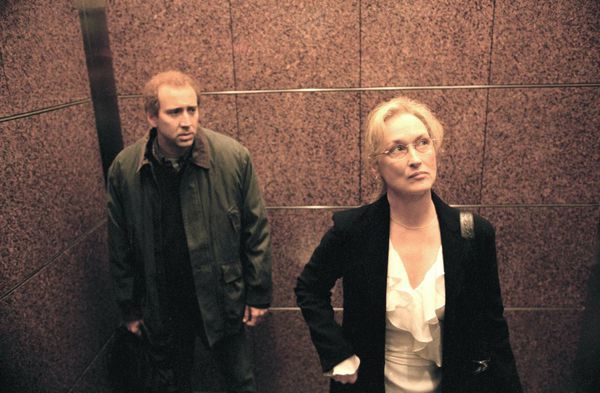
embodied by his twin brother Donald, both played by Nicholas Cage in what is
surely his greatest performance. 
Kaufman’s anxieties are matched by Susan Orleans’ herself, whose loss of
passion forms a subtext to her book: “I want to know how it feels like to care
about something passionately,” she writes, and this desire to desire draws her
to orchid hustler John Laroche (Chris Cooper). 
She discovers that to care passionately about something “whittles the
world down to a more manageable size,” and this becomes the principle
discovered by Kaufman as he puts his script and his life into a (barely)
manageable order.

[Click here to read Part One of this journey into the films of middle age…]


[Click here to read Part Two of this journey into the films of middle age…]

Jed Mayer is an Associate Professor of English at the State University of New York, New Paltz.

Stuck in the Middle: 30 Great Films about Middle Age, PART TWO

Stuck in the Middle: 30 Great Films about Middle Age, PART TWO

I must go on, I can’t go on, I’ll go on: here we are with Part Two of the list of what I consider to be the best movies about middle age.  If you’re still with me, you’ve admitted your
age, and acceptance is the first step towards… whatever, here’s the list.

20. The Prime of Miss
Jean Brodie
(1969)

null

Like so many of us at middle age, teacher Jean Brodie (Maggie
Smith) likes to proclaim she is in the prime of her life, and the devoted
following of her select girl students (whom she dubs the crème de la crème) would seem to confirm it.  But as much as she inspires her charges with
a love of art and nature, she also leads them astray through her misguided adoration
of Francisco Franco and Mussolini.  The
film implies that aging without grace can sometimes land one on the wrong side
of history, and it can also land one on the wrong side of the young.  Pamela Franklin brings a severe intensity to
her performance as Sandy, a student who grows to resent her former idol and
takes revenge by stealing Brodie’s former lover, exposing her dark
secrets.  As Brodie leaves in disgrace, only
Maggie Smith could make us feel sorry for a misguided fascist. 

19. The Man Who Shot
Liberty Valance
(1962)

null

One of John Ford’s most emotionally complex Westerns is also
an ambivalent meditation on the aging process. The film begins with Senator
Ransom Stoddard (James Stewart) returning to the once lawless Old West town
that made his name.  He’s there to attend
the funeral of his old friend Tom Doniphon (John Wayne), and as this frame
narrative gives way to flashback, we hear a story that is as much about
the historical as the personal past.  As
“Ranse” Stoddard progresses from emasculated dishwasher and busboy to the
killer of the film’s title, his brand of pacifism and justice is juxtaposed,
and finally undermined, by his rival turned friend, Doniphon.  While I’m no fan of “the Duke,” he gives a
stunning performance here as a man embodying frontier values at the very moment
of their dissolution.  His trademark
wooden delivery somehow manages to capture the alienation of a man whom history
is passing by, and Stewart’s familiar earnestness is almost childish by
contrast.  The film leaves us wondering
if what we call the wisdom of age might simply depend on a selective memory of
the past.

18. The Big Lebowski
(1998)

null

When I first saw this film in the theater, I felt that it was one
of the funniest, but also the most pointless, of the Coen brothers’ films; now I
regard it as offering one of their more pointed political commentaries on
generational politics.  Set less than a
decade before its release, in 1990, the film raises complex questions about how history is
made, and what role we play in the making of it.  In characteristic fashion, the Coens
foreground the constitutive role of language in shaping how we perceive events:
the Dude (Jeff Bridges) acts as a kind of linguistic sponge, picking up and
recirculating phrases spoken by those around him, including George Bush, Sr.’s
(in)famous “This aggression will not stand” speech.  Once a member of the subversive political
group “the Seattle Seven,” “Dude” Lebowski now spends his time bowling, getting
high, and drinking White Russians, seeming to confirm the accusation leveled
against by his namesake: “Your ‘revolution’ is over, Mr. Lebowski!  Condolences! 
The bums lost!”  But in a world
where the possibility of meaningful political change seems to have been shut
down, perhaps the best answer is to echo back the meaningless rhetoric of the
status quo, making of its very emptiness a kind of accusation: “This will not
stand, ya know, this will not stand, man!”

17. Sideways
(2004)

null

This hilarious road movie about a couple of buddies on a
kind of “stag” wine tour moves effortlessly into a moving meditation on slowly
fading joie de vivre, for which wine
serves as ironic metaphor: ironic, because the characters aren’t necessarily
getting better with age.  In the film’s
most memorable scene, Miles (Paul Giamatti) and Maya (Virginia Madsen) share
their passion for pinots, while tacitly reflecting on how other passions have
grown sour.  Maya movingly observes how
“a bottle of wine is actually alive — it’s constantly evolving and gaining
complexity. That is, until it peaks—like your ’61—and begins its steady,
inevitable decline.”  Though the film
offers a glimmer of hope and possibility at its conclusion, this is its abiding
mood, but fortunately, as Maya adds, “it tastes so fucking good.”

16. The Accidental
Tourist
(1988)

null

Writing travel guides for people who don’t want to travel,
Macon Leary (William Hurt) is a walking advertisement for middle age
malaise.  Fittingly, the symbol used on
his popular series of books is a lounge chair with wings.  The loss of a son has further strained his
marriage, and Macon seems fated to spend his life in a chair for one until his
dysfunctional Welsh corgi leads him to winningly daffy obedience trainer Muriel
Pritchett (Geena Davis), who awakens in Macon something bearing a vague
resemblance to passion.  In addition to its compellingly eccentric love story is, the film also includes an ensemble cast of other aging
eccentrics, offering diverse perspectives on the waning and rekindling of
affections.  Macon’s siblings are all
co-dependently repressed, until spinster Rose (Amy Wright) manages to capture
the heart of her brother’s publisher (winsomely played by Bill Pullman).  The fittingly beige-toned yet romantic
conclusion manages to land somewhere between “The Love Song of J. Alfred
Prufrock” and Breakfast at Tiffany’s.

15. The Squid and the
Whale
(2005)

null

This semi-autobiographical journey into the dark places of
family life is as much an exploration of middle age as it is of
adolescence.  Though told largely from
the point of view of two boys, Walt and Frank, their parents’ split-up becomes
the focus of the film, resulting in a funny and sad account of how people grow
apart.  Their father, struggling writer
Bernard (Jeff Daniels), forces his tastes and lifestyle onto his boys, a habit
that grows worse as he feels threatened by his estranged wife’s publishing
success.  The film shows how early we can
become middle-aged in spirit, as the older son, Frank, begins spouting the formulaic
literary preferences and dislikes of his father, and adopts his cynical,
self-serving worldview.  As he gradually
comes to realize the uncredited role his mother (Laura Linney) played in his
life, we understand that the conflict between his middle-age parents has become
Walt’s inner conflict as well.  Our mom
and dad, they fuck us up, indeed…

14. Picnic (1955)

null

This film is as much an enactment of mid-life crisis as it
is a portrayal of one, in that star William Holden is an actor in his late thirties
playing a character in his early twenties. 
The result is wildly implausible but, because it’s William Holden,
unexpectedly poignant.  As aimless
drifter Hal, he shows up in a small Kansas town on Labor Day, seeking out a
fraternity brother whose father owns a local mill.  Along the way he encounters Madge Owens (Kim
Novak), and passion smolders.  But a
sadder, and in some ways more compelling, romance is also taking place, that
between middle-aged schoolteacher Rosemary (Rosalind Russell) and store owner
Howard Bevens (Arthur O’Connell). 
Rosemary has been trying to get Howard to marry him, and her desperation
spills over as the whiskey flask grows emptier at the annual town picnic,
culminating in a painful scene where she throws herself at William Holden to
make Howard jealous, accidentally ripping the shirt of the “young Adonis” in
front of all.  Layers of awkwardness are
at work here: Rosalind Russell’s vivid portrayal of mid-life sexual desperation
ironically paralleling William Holden’s mid-life desperation as an actor
playing well beneath his age.  Yet it
somehow works.

13. Now, Voyager
(1942)

null

Bette Davis is mesmerizing as a middle-age spinster coming
out of her shell.  Bullied to the point
of mental breakdown by her oppressive mother, mousy Charlotte Vale seeks the
help of psychiatrist Dr. Jaquith (Claude Rains).  As she grows more confident under his care,
she gets away from it all on a therapeutic cruise where she reinvents herself
and falls in love with married man Jerry (Paul Henreid).  If their star-crossed love affair were all
this film were about, it might be just another forties Hollywood melodrama, but
when Charlotte ends up at an asylum under Dr. Jaquith’s care, she
befriends Tina, a young woman who reminds her of her own repressed self.  Though Tina turns out, rather improbably, to
be old flame Jerry’s daughter, the film ends with Charlotte taking the girl
under her wing, and settling for a life of quiet female companionship rather
than torrid romance.  This resolution is
somewhat sad, but poetically right, offering an unconventional view of
middle-age life choices.

12. Mildred Pierce
(1945)

null

As with Picnic and
The Wrestler, this film gains added
depth from the middle-age drama of the actress as much as that of the character
she portrays.  Thanks to Mommie Dearest, we all know how
desperate an aging Joan Crawford was to get this part, and how much she threw herself
into her role; thus, it’s difficult not to see the character of Mildred as
autobiographical.  Left by her husband, Mildred
Pierce works herself out of her and her daughters’ financial desperation, first
as a waitress, then as the owner of a successful chain of restaurants.  Along with Barbara Stanwyck’s Stella Dallas, this is one of the most
powerful portrayals of a working woman from Hollywood’s golden age.  Yet, while she finds satisfaction in work,
her wayward second husband reminds her of her age when she finds him cheating—with
her own daughter.  Rarely has the
generation gap been so nastily rendered.

11. Lost in
Translation
(2003)

null

From the moment Bill Murray stood on the diving board in Rushmore, belly sagging over Budweiser
swimsuit, cigarette hanging out of his drooping mouth, he has become
Hollywood’s great icon of middle age. 
Here he internalizes that sad-sack pose, making it more tragic by hiding
it behind the pasted-on smile of Bob Harris, an aging actor doing a photo shoot
for a series of advertisements for Suntory, a Japanese whiskey (!).  Paralleling Bob’s mid-life crisis, Charlotte
(Scarlett Johansson) is having a “mid-twenties crisis,” and many of the film’s
most compelling scenes are without dialogue, showing her walking through Tokyo,
where nothing seems to make sense.  When
they meet at a hotel bar, their mutual malaise is a perfect match.  “I’m planning a prison escape; we first have
to get out of this hotel, then out of the city, then out of the country,” Bob
tells her, and she answers: “I’m in,” leading to a night of bar-hopping that ends in a karaoke bar.  Murray’s
off-key rendition of Roxy Music’s world-weary “More Than This” is surely one of
cinema’s great moments, turning the classic song into a mid-life anthem.  When they part, Bob whispers something
inaudible in her ear, and they both wander off in irresolution: a perfect way
to (not) end this movingly understated film.

[Click here to read Part One of this journey into the films of middle age…]

Jed Mayer is an Associate Professor of English at the State University of New York, New Paltz.

“No redneck is this creative”: TRUE DETECTIVE and the Horror of Folk Art

“No redneck is this creative”: TRUE DETECTIVE and the Horror of Folk Art

null

Now and then a television series comes along that seems to
define its own, unique genre: think of Twin
Peaks, The X Files, The Singing Detective

Now think of True Detective,
which might be described as the first Cult Ritual Serial Killer Southern Gothic
Weird Procedural.  Which is not to say it
is without precedents: since its debut the series has spawned a plethora of online
discussions and commentaries tracing the show’s connections with, and
references to, a host of texts, from pulp fiction to true crime, nihilist
philosophy to urban myth.  Especially
fascinating in these discussions is the way in which a background of seemingly
unrelated stories and images magically click into place, as if they had been
waiting for a narrative that would connect them. 

One of the more distinctive and grimly fascinating elements
of True Detective is its preoccupation
with weird folk art, or what could be called outsider art.  Odd and intricate wooden sculptures are found
carefully arranged around the dead body of the series’ first victim, Dora
Lange.  The body itself is decked with
antlers and arranged against a tree in an elaborate display of sacrificial
obeisance, the victim’s back tattooed with a mysterious spiral symbol.  When Rust Cohle (Matthew McConaughey) returns to the scene years
later, this spiral seems to have taken wooden form, in an elaborately
sculptured circle, reminiscent of Andy Goldsworthy’s environmental art.  When clues lead to an abandoned religious
academy, Cohle finds a veritable forest of wooden sculptures inside the
derelict building.  The walls are also
decked with drawings of sinister angels, in a primitive style resembling a
painting discovered earlier in a burnt-out church depicting a horned being that
looks like Dora Lange’s dead body. 
Whatever might be said of the killer responsible for Lange’s death, he certainly
is prolific.  Had he found the right art dealer,
he might have become the next Henry Darger or Judith Scott.

The association of horror and folk art in True Detective, like its many other
thematic strands, has a rich and peculiar history, most notably in film.  Much has been written about folk elements in
British horror, as seen in such classics as Wicker
Man, Witchfinder General
, and Blood
on Satan’s Claw
, and more recently in a new wave of low-budget British
horror films, including The Fallow Field,
Overhill,
and A Field in England.  But relatively little has been said about the
parallel tradition in American horror, one that is every bit as rich, and which
True Detective helps us to see anew.

Folk art shouldn’t necessarily be equated with what is
called, alternately, outsider, visionary, or naïve art, but they do share a
quality that might be described as obsessiveness.  In folk art this is generally a healthy,
robust quality, reflecting as it does extreme care in the application of
time-honored traditions, while in outsider art this obessiveness imparts a
certain strangeness, perhaps from the fact that the artist is usually working
in isolation, outside of an enabling tradition. 
The similarity between the obsessiveness of artists and serial killers
may be an arbitrary one, but it is one that many filmmakers have
exploited.  Cohle explains why: when
his partner, Marty Hart (Woody Harrelson), compares their suspect to one in an earlier case,
Cohle replies, “That’s just drug insanity. That’s not this, this has
scope.”  A drugged-up killer is
frightening; one with scope is terrifying. 
This killer, says Cohle, “articulated a personal vision. Vision is
meaning. Meaning is historical.”  The
same might be said of folk art.

One of the most terrifying instances of folk art in American
horror is The Texas Chainsaw Massacre,
in which a family of demented slaughterhouse workers make grotesque sculptures
out of bones and skin.  When one of their
victims enters their house, she discovers a veritable art gallery of gore: rib-cages
and broken turtle shells hanging like mobiles; human and animal bones
intricately connected to form elaborate standing sculptures; teeth, feathers,
and other parts festooning a primitive gas generator; a perverse chaise longue
built of bones and skulls. 

Such images clearly derive from the loathsome objects d’art fashioned by notorious
serial killer Ted Gein from his victims’ remains, but director Tobe Hooper
brings to these objects a demented element of pure form that distinguishes this
sculptor as a kind of twisted visionary. 
Remembered largely for its gore and violence, Hooper’s film is as
remarkable for its almost mythic evocation of sadism joined to creativity.  If the meat sculptures of Texas Chainsaw Massacre convey a
particular zeitgeist, it is one best captured by Rust Cohle’s pessimistic view
of Homo sapiens: “I think human
consciousness is a tragic misstep in evolution. We became too self-aware.
Nature created an aspect of nature separate from itself – we are creatures that
should not exist by natural law.”

While Hooper took murder as folk art to a new extreme, his
imagery has precedents, most notably in Alfred Hitchcock’s Psycho.   Norman Bates was,
of course, a talented taxidermist, and his revivified birds loom over the
fateful conversation with the aptly named Marion Crane that precedes her murder.  His sculptural talents are shown in their
fullest expression later, when Marion’s sister, Lila, discovers the preserved
body of Norman’s mother sitting in the cellar. 
Such perverse craftsmanship suggests the kind of concentrated attention
Bates brings to all of his work, including murder.

In contrast, the sculptures of Texas Chainsaw Massacre derive much of their horror from their
association with folk art, an association seen in a film like Deliverance that plays upon the cultural
prejudice that connects backwoods folk culture with the sinister or malevolent.  The brilliance of John Boorman’s film (as with
the James Dickey novel on which it was based) is that it places much of this
associated horror in the eye of the beholders, those Atlanta businessmen who
use the remote Georgia wilderness as their playground.  In the famous “dueling banjos” scene, the
character of Drew is barely able to keep up with his accompanist, despite the latter’s
obvious disabilities, and the scene culminates with Drew prophetically shouting
“I’m lost” as he accepts defeat.  Though the backwoods banjo player’s birth defects mark him—and by extension his
music—as grotesque in the visitors’ eyes, the inability of the urbanite to master his arcane art
serves as a measure of folk music’s richness and complexity.

The association of rural culture and the macabre is further
explored in The Blair Witch Project,
where the hapless team of documentary filmmakers stumbles on a backwoods site
filled with primitive cairns and elaborate hanging stick sculptures, the clear
precedent for those that appear repeatedly in True Detective.  When Cohle
shows his drawings of these sculptures to a pastor, he says they look “like
something my old auntie taught us to make when I was a tyke . . . some folks call
them ‘bird traps.’ Old Auntie told us that they were ‘devil nets.’ You put them
around the bed, catch the devil before he gets too close.”  In such moments, the line between madness and
tradition becomes blurred, in a manner that reflects on True Detective’s compelling sense of place.  While the Gen-Xers in Blair Witch are horrified at what these sculptures portend, since
“No redneck is this creative,” True
Detective
is more intent on exploring the connection between rural culture
and the sinister in the popular imagination. 
Cohle’s fascination with the weird folk art he uncovers turns this
association back on the increasingly obsessive investigator himself, and, by
extension, the perversely fascinated viewer who follows his investigation, episode after episode.

Jed Mayer is an Associate Professor of English at the State University of New York, New Paltz.

Electronic Meditation: The Musical Synthesis of Tangerine Dream and Michael Mann

Electronic Meditation: The Musical Synthesis of Tangerine Dream and Michael Mann

null

The recent Blu-ray edition of Michael Mann’s influential Thief (1981) has inspired a number of
perceptive reappraisals of this stylish and enigmatic film. Of particular interest has been the film’s
cool, impressionistic cinematography, creating visual moods that bear a complicated
relationship to the story’s tensions and violence.  Just as important in setting these complex
moods, however, and just as influential, is the film’s electronic score,
composed by German band Tangerine Dream. 
While the sound they pioneered, combining melodic minimalism and taut
synthetic rhythms, would become almost a cliché in films and on dancefloors
throughout the 1980s, in Mann’s film their music serves to create an aural
environment that is simultaneously meditative and driving, and is a crucial
element of the film’s achievement.

While Tangerine Dream would go on to score dozens of films,
this was only their second major soundtrack for a Hollywood picture.  Their first was William Friedkin’s cult
classic Sorcerer (1977), itself due
for its first blu-ray release (and hopefully a long-overdue reappraisal from
critics) in April.  Friedkin was already
well-known for his innovative use of music, particularly in The Exorcist, where he took the main
theme from Mike Oldfield’s progressive rock opus Tubular Bells and transformed it into a sound that has become as
synonymous with terror as Bernard Herrmann’s slicing string section for
Hitchcock’s Psycho.  In its original setting, Oldfield’s music sets
a dreamy, pastoral mood, its ringing bell tones and slowly building piano
arpeggios more conducive to meditation than fear.  Yet in Friedkin’s film, the music conjures up an
otherworldly presence, the minor chords and circular melodies casting a
seductive, sinister spell.  This
transformation is every bit as striking as Quentin Tarantino’s subversive use of
“Stuck in the Middle with You” by Stealer’s Wheel to serve as the disturbingly
cheery accompaniment to Michael Madsen’s gruesome torture of a police officer
in Reservoir Dogs.  With the innovative scores used by
filmmakers like Wes Anderson, the Coen Brothers and others, we have become well
used to hearing found music used against the grain in this way, but Friedkin’s
use of Oldfield retains an air of mystery about it.

As iconic as this score has become, Friedkin has said that,
had he heard the music of Tangerine Dream before making The Exorcist, he would have asked them to score the film.  By the time he first heard their music in the
mid-1970s, the electronic group had evolved from the abstract atonality of
their early years to the increasingly rhythmic space rock of their most popular
period.  At the core of the group were
early members Edgar Froese and Christopher Franke, accompanied by shifting
members for the remaining decade. 
Friedkin first heard them at a concert given in a darkened cathedral in
the primeval Black Forest, an experience that would play a fundamental role in
his development as a filmmaker. “I’d never seen anything like that,” Mr.
Friedkin said. “They played one long piece of music that sounded like a
combination of Jimi Hendrix and Stockhausen.  The whole notion of the film I
later made came that evening. I started to see the images of the movie that
ultimately became Sorcerer.”

Like Mann’s Thief,
Sorcerer balances contemplative,
sometimes abstract visual elements with the taut narrative of the
thriller.  This style owes much
to the European New Wave, particularly the films of Werner Herzog and
Jean-Pierre Melville, which recast traditional elements of the thriller into
abstract meditations on destiny and free will. 
The story brings together several desperate characters who have fled
from their criminal pasts into anonymity in a remote village in South America.  After terrorists blow up a local oil well,
the oil company seeks four drivers to move a shipment of volatile nitro-glycerin
through the rain forest so that the explosives can be used to stop the flow of
flaming oil.  Tangerine Dream’s music is
not heard until the film’s second half, depicting this harrowing journey
through excruciating challenges.  While
their score has a remarkable range, moving from ethereal drones to blinding
white noise, their signature sound emerges in the form of slowly evolving
modular melodies that grow more taut and rhythmic as the journey’s tensions
increase.  A key element of the
soundtrack’s success is the nature of synthesized sound itself, which can be
sculpted into a variety of forms, in which any given sound can change
from melodic to rhythmic by increasing a tone’s percussive attack.  The electronic sounds blend seamlessly with
the truck engine’s roar and the driving rain in the film’s complex sound
design, creating a total aural atmosphere of a kind that would be later
augmented by Mann in Thief.

The films also share a preoccupation with their detailed,
seemingly real-time depiction of men engaged in complicated tasks, and both
films depend upon Tangerine Dream’s score to lend focus and tension to these
depictions.  Thief begins with a now-famous 9-minute scene in which the
protagonist Frank (James Caan) breaks into a high security vault.  The electronic rhythms and pulses of the
score become almost indistinguishable from the iconic image of the giant drill
that fills the screen, sending sparks flying to bounce off of Frank’s
surprisingly hip looking safety glasses. 
The repetitive rhythms anticipate those that would later emerge in the
Chicago club scene.  Dubbed house music,
this minimal electronic dancefloor sound has become synonymous with techno and
its variants, combining driving beats with stark, industrial sounds uniquely
suited to high-ceilinged dance clubs.  It
is a sound oddly suited to the enigmatic mood struck by Mann’s film, in which
grueling, repetitive tasks become existential rituals in which the protagonist
momentarily defies the forces that would trap him. 

Tangerine Dream’s music is used prominently in three main
sections of the film, first in the tense opening scene, then over the second
major break-in depicted a little over halfway into the picture, and, finally,
in the climactic scene of the film where Frank violently frees himself from
oppressive obligations.  Each of these
major scenes is distinctive for its lack of dialogue and almost total focus on
a particular, grim task.  Taken
individually, they assume a quality that’s hard to disassociate from the music
video, a form that was soon to come into its own with MTV, which began
broadcasting the same year Thief was
released.  Mann himself, as producer of Miami Vice, would play an important role
in extending the vocabulary of this new form by incorporating extended music
sequences into dramatic narratives, accompanied by Jan Hammer’s infinitely
adaptable electronic compositions. 

But the mood of Thief
and its relationship to Tangerine Dream’s music is a much more complicated
affair than the pink and neon night scenes evoked in Miami ViceThief conjures a kind of anti-glamour in
which grim-faced criminals pound heavy metal tools, their faces pouring sweat as
they force their way into seemingly impenetrable steel chambers.  Without a driving soundtrack and incomparably
rich cinematography, these scenes would be an extremely hard sell, but Thief transforms what might easily come
off as arty and boring into gripping cinema. 
Like Mann’s film, Tangerine Dream’s score combines the ethereal and the
meditative with the metallic and the visceral. 
The result is a film in which every element combines in a portrayal of
crime as both act and atmosphere, murder and mood.

Jed Mayer is an Associate Professor of English at the State University of New York, New Paltz.