ARIELLE BERNSTEIN: Gold Leash: The Gap Between Role Model Feminism and Our Obsession with the American Gangster Wife

ARIELLE BERNSTEIN: Gold Leash: The Gap Between Role Model Feminism and the American Gangster Wife

nullIn
her song, “Royals,” Lorde catapults herself into the music scene purring, “I
cut my teeth on wedding rings in the movies.” This lyric epitomizes everything
that made 2013 tick in pop culture. Lorde, unlike the l’enfant terrible Miley
Cyrus, or the warm and inoffensive Taylor Swift, or even the sultry and divisive
Lana del Rey, offers stunning commentary on the kind of pop culture backdrop millennials have been raised on, as well as the effects and repercussions of
being immersed in this worldview. “Royals” is about the tension between
resenting the purveyors of wealth, while still longing for the privileges of
royalty.

These
same tensions play out uncomfortably throughout Beyoncé’s latest visual album,
where Beyoncé is a female fighter and contender, who angrily smashes her
collection of pageant and talent trophies, but is still being marketed as the
poster girl for having-it-all.

Make
no mistake—when we talk about Beyoncé being Queen Bey, we are not just
referring to her creative talents; we are talking about her entire real-life
identity. As opposed to Janelle Monae, who actively constructs a creative
universe in her immersive concept albums, Beyoncé’s creative work is about her
own development as a woman and an artist. Throughout Beyoncé you see clips from
the artist’s own childhood, coming of age in the public eye. Beyoncé owns these
images in a way that Miley Cyrus did not. Part of me wonders about the way we view
little white girls as sweet and virginal, in need of rescuing. If Beyoncé never
had these trappings, she also never had these privileges. She was never held up
as an icon of girlhood, but she has grown into an icon of what it means to be a
woman coming into her own strength.

Historically,
the queen’s power comes from her ability to shape-shift. Both Beyoncé and
Madonna have been heralded as great based on their ability to shift their
images: mother, virgin, beauty queen, whore.  Beyoncé’s latest album is a gorgeous montage of transformation, both
tender and aggressive, though never at the same time. Yonce is on her knees in
a limo with her husband in one scene, and growling with Chimamanda Adichie
about giving girls the power to be who they want to be on the next. Bey wants
everything and has the ultimate in today’s feminist status symbols- a
supportive and committed husband to help her get it all done.

Throughout
the history of music and film, images of girls and women have been used as
symbols. As female artists reclaim those
images, they also have the burden of addressing that history, which is why it
is often so unclear what these images mean and what they ultimately represent,
especially in regards to female sexuality. When Beyoncé wears the garb of
motherhood, she is a symbol of all motherhood. When she shakes her hips on a
beach, she is encouraging all women to get more in touch with their sexuality.

Role
model feminism, the dominant feminism of the digital age, is all about asking
women if they measure up, and has ended up manifesting as bullying, more than
thoughtful discourse about what feminism can or should mean in the future. I’m
not sure why we would lobby for our pop stars to deliver public service
announcements anyway. After all, art, at its best, doesn’t teach us to be
perfect. It stretches us. It makes us open up. It gets under our skin. It forces us to grow.

The
closest Beyoncé comes to greatness is her song “Flawless,” which is
imaginative, inventive, powerful and provocative, but throughout much of her
visual album, Beyoncé doesn’t directly deal with the tension between her desire
to be seen as a creative agent and the fact that a great deal of her power
comes from her status as a self-described “gangster wife” and how her
status as Jay-Z’s wife allows her to be an alpha female, rather than just
another replaceable video vixen.

Perhaps
in response to the antihero alpha male trend, the 2010s have been filled with
icons of frail femininity trying to have teeth. Lana del Rey describes herself
as a  “gangster Nancy Sinatra,” which
plays out as tarnished Hollywood beauty rather than street smarts. TV shows
like Breaking Bad were notorious for
dividing viewers on whether or not Skyler, who inadvertently became a mob wife,
was an ungrateful shrew or a beaten down heroine.  In Sons
of Anarchy,
Jemma’s status allows her to see the other younger women her
husband and the entire gang screw on a regular basis as objects to be used,
rather than a true threat to her power.

The
true mob wife gains her status at the expense of other, more disposable, women.
This is not the kind of marriage that Chimamanda Adiche speaks about in her wonderfully
revolutionary call for women and men to aspire to marriage on equal terms. The
“powerful” gangsta wife is feminism on a gold leash, where a ring (and a man)
is a status symbol, rather than a true partnership.

In
order for the type of feminism Adichie calls for, we not only need to see women
as powerful, but we need to dismantle the deep-rooted patriarchal
ideals that consumer culture continues to dictate. Videos for songs like
‘’Pretty Hurts” pretend to illuminate the harm of beauty standards, even as they sell us back the same image of perfection—how gorgeous Beyoncé revels
in her thinner body after quickly losing her baby weight. The reason so many
girl power ballads fall flat is that feminism loses when it becomes just
another marketing tool, another way to make money. Girls don’t run the world and Beyoncé knows it. The idea that an
individual woman can be powerful is not really a new idea at all- we love our
Cleopatras, our Madonnas, our Beyoncés bouncing on a beach, completely in control
of their money, their sexuality, their public persona. It is the idea that in a
sea of video vixens, or in the backdrop of women in a party scene, each woman is
individually worthy of respect that is truly radical and revolutionary. “I’m a
grown woman. I can do whatever I want,” Beyoncé coos in the last song of her
album, smiling knowingly and mischievously at the camera. Never has a woman
enjoyed the love and attention of a million adoring fans as much as Beyoncé
does. If only we gave every girl who took a selfie that much power.

Arielle Bernstein is
a writer living in Washington, DC. She teaches writing at American
University and also freelances. Her work has been published in
The
Millions, The Rumpus, St. Petersburg Review and The Ilanot Review. She
has been listed four times as a finalist in
Glimmer Train short story
contests
. She is currently writing her first book.

Paul Walker’s Los Angeles

Paul Walker’s Los Angeles

null

I’m not surprised film noir is a California genre. The light is
hard and bright out there—all key and no fill, as they say on the backlot—and the eternal sunshine makes the shadows as dense and black as an agent’s
soul. The Paramount Studios backlot butts back-to-back against the Hollywood
Forever Cemetery, eternal resting place of Virginia Rappe and Lana Clarkson and
Rudolph Valentino, and just in case you missed the point, scrawled on the wall
outside the cemetery gates is this satanic graffito: “9/11 HA HA
HA”, the baroque strokes of the As jaunty like musical notes, left
by some flesh-crawling sicko, perhaps in memory of those California-bound
planes that never made it.

If you want to crash and burn, LA’s the place to do it. And I mean that rigidly
metaphorically, since I’m talking about Paul Walker, buried recently not at
Hollywood Forever but at Forest Lawn Memorial Park in the Hollywood Hills, an
equally prestigious post-mortem address. Because I’m East Coast brutal but not
sick like the cultists John Waters describes in his book Crackpot, who
gather at Mann’s Chinese at the crack of dawn to see the water fill Natalie
Wood’s footprints when they wash down the Walk Of Fame. Because Paul Walker
was, by all accounts, an utterly decent human being, as measured by all the
metrics one usually considers when measuring these things—charismatic and
pleasant-tempered and competent at his profession and god-fearing and principled
and generous (spontaneously and humanitarian/charitably) and devoted to
a teenage daughter who is capable of stumbling upon
irreverent-at-best-and-disrespectful-at-worst cultural dissections of her
deceased father on the internet all by herself.

I have better intentions than that.

But now that we’re clear about the civilities, we can address the
elephant in the room, the same sardonic irony that also surrounded Mr. T when
he announced he not only had cancer but T-cell lymphoma (I pity the fool): how
we’re supposed to feel when an actor known mostly, if not entirely, for a
franchise of drag racing spectacles dies in a spectacular car accident. It’s
hard to think of a collision that incinerated foliage and blew debris into
windows hundreds of feet away as tidy, but there is something pat and
fitting and no-loose-ends about his demise. It’s more than just the morbid
clairvoyance that shades James Dean’s “chicken” scene in Rebel
Without A Cause
or how Bruce Lee’s final film was Game Of Death or
Marilyn Monroe’s final film was Something’s Got To Give. It goes deeper
than that, all the way down to the bones of Los Angeles and its heavy-laden
fruit trees and eternal sunshine, where MGM bragged it had “more stars
than heaven” but neglected to mention the first step towards heaven is
death.

The job of being a movie star is demanding, not only
logistically (prolonged location shoots, employment insecurity, punishing
physical maintenance, loneliness) but spiritually, in that once you submit yourself
to the intrusive machinations of 21st century fame, they will flay open any
remaining sense of selfhood as an offering to the slobbering masses. Displacing
one’s ego five paces to the left so it can weather the slings instead of
“you”, if there’s any “you” left by the time you get to the
top, is really your only recourse, and it helps if there aren’t any relatives
around to remind you of the sticky, pesky self you left behind. Lana Turner,
Joan Crawford, Barbara Stanwyck, Charlize Theron: the people who can weather
the work it takes to become a star often already have family trauma that makes
it easier to flee their old life.  It’s
like the Pony Express: orphans preferred.

When you’re born into the machine, however, it’s a different story.
Walker, the son of a former fashion model, grew up middle class in the
euphonious Sunland neighborhood of Los Angeles, and had been working steadily
as an actor and model since toddlerhood: a company man making good in a company
town. He was acceptably eye-catching on screen, but unmemorable—I confess that
after a professional lifetime full of writing, thinking, and teaching about
movies, I could never remember “that Fast and the Furious guy’s” name
until I saw the CNN scroll announcing his death. His stardom wasn’t as transcendent as that of someone like River Phoenix or Heath Ledger, but someone
was watching his movies: It’s beyond me why they made five-going-on-six Fast
And The Furious
sequels, but they filled a need, and hundreds of drag
racers held midnight rallies in honor of their fallen golden boy.

Los Angelenos live and die by the car. Nobody walks in LA, not even a
Walker. The modern city was born around the same time as the automobile, and
their shared adolescence shaped the city’s sprawl. But surprisingly, for all
the gridlock, drivers there are overwhelmingly well-mannered. You won’t get
cursed out or cut off like you might in Boston or New York. Your daily commute
won’t be slowed to a molasses crawl because of yet another clot of
rubberneckers gawking at the latest smash-up on the Baltimore-Washington
beltway. They’re pros on the 405. And they have to be: the car and the city
need each other, like those birds that roost on crocodiles and peck food out of
their teeth. If the movies and a car are the two things that most shaped LA, it
seems fitting that in 2003 Walker was awarded an MTV Teen Choice award for
“Best Movie Chemistry” between him and his co-star, the Nissan
Skyline GT-R he throttled in 2 Fast 2 Furious.

Walker wasn’t a passenger in a Nissan Skyline GT-R on that fateful
November 30th, but instead a Porsche Carrera GT, a
notoriously treacherous make of muscle car. Maybe he and driver Roger
Rodas were drifting sleek curves too fast (one theory) or maybe the car hit a
coruscation in the road that made it jump out of the driver hands (the Walker
family’s theory). One thing’s for sure, it was only a matter of time before
amateur footage of the holocaustic crash site jammed itself next to our
memories of Walker’s movie crashes—a irreconcilable paradox made more
discomforting by news replays of Walker’s handsome face, a face that most
certainly was not currently in the same fine condition. Do you know what
happens when you burn? The soft fatty skin of your lips, unanchored to skeletal
muscle, shrivels first and pull away from your teeth. Go ahead, feel inside
your own mouth for the deep pockets that go down to the gums and imagine how a
fresh skull looks with all that labial flesh burned away. Smile for the camera.

Paul Walker alive, dead, fiction, reality—it’s a paradox, but it’s
only a paradox if we don’t remember the town that birthed him. It’s the land of
decay and loss, of quick-blooming life and just as startling death, where no
one ages and the seasons don’t change and oblivion is quick. This is how a
child of LA is supposed to die, in an onanistic immolation of a car crash that
would do J.G. Ballard proud, cradled in the combustible engine’s
gasoline-fueled embrace. The City Of Angels still whispers its dream to
millions of unhappy hopefuls: go on the big screen and you will become
something more than your flesh. It’s paradise, sure, but to placate the gods
you’ve got to throw a virgin into the volcano every once in a while. It keeps Los Diablos happy.
We shrug. It’s Chinatown, Jake.

Violet LeVoit is a video producer and editor, film critic, and
media educator whose film writing has appeared in many publications in
the US and UK. She is the author of the short story collection
I Am Genghis Cum (Fungasm Press). She lives in Philadelphia.

Chaos Theory: An Unofficial History of the Modern Superhero Film

Chaos Theory: An Unofficial History of the Modern Superhero Film

null

While this wasn’t always standard practice, continuity has become the
cornerstone of American superhero comic books. Stand-alone stories that start
and stop within one issue are a rarity now; six-part stories that tie into
other series, often for cross-over events, are the norm. This is partly because
the average age of comics readers has shifted over the years from pre-teens to
40-somethings. Comics aren’t just for kids anymore, as mainstream journalists
have recurringly  screamed since the
’80s, so mainstream comic books have to form a cogent narrative. But, as comics
readers know, continuity-based comics almost never make intelligible sense.

For example: if a major character died years ago, there’s a good chance he
(it’s usually a he) will come back, thanks to a new creative team. Think of it
like a soap opera: each of these whimsical resurrections pokes a hole in readers’
faith in the stories they’re reading. If Barry Allen’s The Flash can return
after selflessly sacrificing himself in Crisis on Infinite Earths, who
cares about the death of a lesser character? That’s the defining paradox of
comic book superheroes: even though they’re perennially rewritten, superhero stories
are defined by wink-wink, nudge-nudge, secret-handshake-worthy events,
allusions, and mythology.

On the one hand, these are imaginary stories about characters that control time
and space, as Grant Morrison, the writer who brought Allen back from the dead,
has argued. Every issue is ostensibly a new one for a comics reader, so why not
ingratiate these readers with new stories about old characters? Also, comics
are for kids, and kids aren’t insane enough to care about narrative
inconsistencies. Ahem. On the other hand, constantly-retooled origin stories,
and routine Christ-like resurrections blow holes in the very idea of continuity.
If Barry can come back, why care when the Red Skull dies one more time, or the
death of yet another Robin? It’s a headache for everyone involved, but it’s
also business as usual.

null

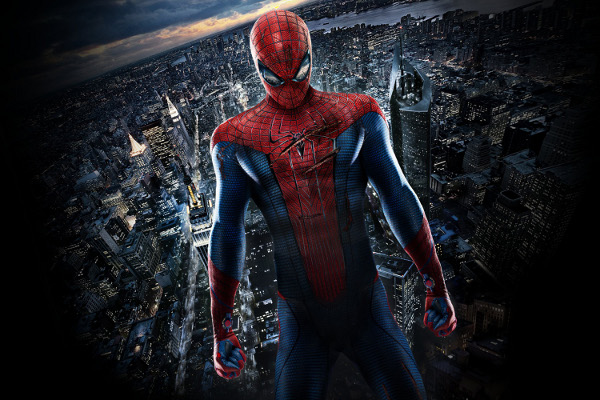
It makes sense, then, that superhero movies would also be about remakes,
reboots, and recycling. Even today, we’re still being told and retold the story
of how Peter Parker earned his arachnid-like powers, or what really made Bruce
Wayne want to dress up and scare criminals. The sad fact is that almost nobody making
superhero movies has any idea what they’re doing. There’s no proven formula for
success in the genre, so any given successful superhero film is only proof of
what works in the present, not what will work again. Here comes the first sequel to the
second Spider-Man franchise; and next up, a new actor playing Batman in the
sequel to the third Superman feature film series; and so on.

Rebooting a franchise does not have to be a terrible
idea. In a 2011 Cinema Journal article entitled “Why I Hate
Superhero Movies,” Scott Bukatman hit the nail on the head when he wrote,
“Superhero films remain something of a provisional genre, still very much
in a state of becoming.” Bukatman goes on to praise origin stories as,
“the most intriguing part of these films […] this is the moment when […]
everyday reality will yield to something more, the moment when the constraints
of the mundane world will evaporate, forcing a new awareness of corporeal
possibility as the body is rethought […]”

Bukatman has a point: a good origin story reminds you of how exciting a
character can be. But since franchises are rebooted so often, premature
fatigue sets in, and audiences just don’t want to support even superior origin
stories (cough, Amazing
Spider-Man
, cough). Audiences always vote loudest with their wallets,
but as with anything, a film’s box office success is usually relative. Batman
Begins
soberly re-established the title character’s popularity after Joel
Schumacher high-lit Val Kilmer and George Clooney’s Bat-nipples. But even
Schumacher’s Batman & Robin was
eventually successful, even if it only grossed 40% of its original
production budget during its opening weekend release. And Schumacher’s manic,
campy style was itself a response to Tim Burton’s expressive, grim (and even
more financially successful) take on the title character.

null

But again: nobody knows what they’re doing. In a 1997 Cinefantastique interview,
Schumacher says he hoped to present Batman as “a more accessible, less
agonizing, lighter character… There is a certain narcissism and selfishness to
constantly brooding about yourself and although Batman was created in 1939,
this is 1997 and it was incumbent for Batman to mature and become more
concerned about others.” Remember: this is the guy that put Bane in a
trench-coat and armed Arnold
Schwarzenegger’s Mr. Freeze with puns that would make Otto Preminger’s version
of the character (from the 1960’s TV show) blush. So it’s no wonder that
audiences took to Batman Begins. Kitsch-fatigue had set in, though
everybody still paid to see Schumacher crash-zoom into his brooding hero’s junk
a few years earlier.

Christopher Nolan’s Batman will be succeeded by Zack Snyder’s Batman because
Snyder’s Man of Steel made money. Not
much is known about Snyder’s take on the character except that Christian Bale
will be replaced by Ben Affleck, suggesting that Snyder’s Batman does not exist
in the same universe as Nolan’s. But Man
of Steel
is clearly inspired by Nolan’s Bat-films. Now, Clark Kent’s origin
has twice the bathos: Daddy-devouring tornados! Wanton skyscraper demolition!
Neck-snapping fury! And per diem, too! After the failure of Bryan Singer’s
Richard Donner-inspired Superman Returns, studio execs were convinced
that Superman had to toughen up (though Returns also netted $120 million
during its theatrical run, almost half of its $270 million budget). They spoke
for the fans when they said people wanted a tough, contemporary hero who is
also devoted to, in the words of Donner’s Superman, “Truth, justice, and
the American way.” Snyder’s Superman reworks that mantra, suggesting that Man
of Steel
is light! But also dark. In that sense, the next Batman film will
be something of a return to beguiling form, though only in the sense that it
will be almost as confusing as Schumacher’s film.

Then again, one shouldn’t just blame superhero films’ creators for their
characters’ schizoid characterizations (especially not directors). Avi Arad,
the Toy Biz mogul who helped rescue Marvel Comics from bankruptcy in the ’90s,
is exceptional in that he’s been involved in several superhero success stories,
from the mid-’90s to present. Arad helped create Marvel Films in 1996, a
company that ostensibly helped Marvel to avoid the many pitfalls that kept
money-making properties like Spider-Man and Captain America caught up in
law-suits and pre-production limbo. The formation of Marvel Films was supposed
to be a major step towards standardizing continuity in superhero comics:

null

Realistically, Arad has only unified the Marvel universe so much. He’s produced
both Sam Raimi and Marc Webb’s versions of Spider-Man, and Ang Lee and Louis
Leterrier’s Hulk films, as well. He’s also bankrolled a couple of Marvel films
that belong to competing studios: Daredevil and the Fantastic Four films were
produced by 20th Century Fox while the Spider-Man films were released by Sony
Pictures. And of the Avengers-related properties, Arad only produced the first
Iron Man film (Robert Downey Jr. is locked for two more films!), both Hulk
movies (already rebooted once!), and a Nicky Fury film starring David
Hasselhoff that nobody
wants to remember
. He’s also only produced the first three X-Men films
(three more done, and three on the way!), one of two Punisher films (New World
Pictures!), and two of three Fantastic Four films (Roger Corman’s New Horizons,
oh no!). If there’s a unifying principle to Arad’s filmography, it’s anything goes,
a form of chaos theory. They’re all made under basically similar conditions,
but their success is determined by small, but significant different conditions
of their production, and popular reception.

And yet, while you might not think it to look at them, the three Arad-produced
titles that helped to prove that superhero comic books were blockbuster
material were the Blade films. Based on a minor character introduced in the
cult favorite comic book series Tomb of Dracula, the first Blade made
$70 million in profits. Sean Howe, author of Marvel Comics: The Untold Story writes: “although Marvel only
saw $25,000 of the profits, suddenly there was proof that Marvel Comics
characters were viable as film franchises.” The Blade movies were
probably also successful because Wesley Snipes played the title character in
all three films. In the comics, Blade was always a secondary character, making
cameo appearance in other heroes’ series. But Snipes has played the character
as many times as Christian Bale has played Batman, or Tobey Maguire has been
Spider-Man. No wonder there have been decades of fruitless speculation on
similarly minor characters, like Doctor Strange (Wes Craven was gonna direct!),
and the Black Panther (Snipes was gonna star!).

These movies obviously don’t sink or swim based on a producer’s confusing (but
successful!) whims. There’s also the simultaneously negligible and crucial role
comic book fans have in determining the success of a superhero film. Nerds
build hype, as when trailers, casting rumors, production stills, and sequel
speculation popped up to rally around Martin Campbell’s Green Lantern at
fanboy sites like Bleeding Cool, Newsarama, Ain’t It Cool News, and others. At
the same time, despite earlier planted reports, Green Lantern 2 won’t
happen anytime soon, because the first film cost $200 million to make, and only
netted $20 million during its theatrical release.

Then again, Edgar Wright somehow managed to bounce back after the geek-driven
momentum surrounding his Scott Pilgrim vs. the World adaptation failed
to carry-over to the box office. If the world were ruled by
geeks, the kind that salivate over various PR-friendly production updates from
the film’s cast and crew, Scott Pilgrim
vs. the World
might have been a blockbuster. In this world, almost nobody else showed up. Wright is currently
developing an Ant-Man movie for Marvel, a film that will presumably tie-in with
the other Avengers-related satellite films. Admittedly, assigning Wright
to direct an Ant-Man movie seems like a low-stakes gamble. But it also suggests
that Marvel wants viewers to distinguish the Avengers-centric films from
each other. So, directors for these films are being chosen based on their
established track records, even if their previous films weren’t financially
successful (Scott Pilgrim didn’t make back its original production costs
during its three-month theatrical run). So Kenneth Branagh and one of the
show-runners of Game of Thrones handle the Thor films, Rocketeer director
Joe Johnston takes the Captain America movies, and Super director
James Gunn is making the upcoming Guardians of the Galaxy film. This last
assignment is especially exciting/perplexing.

null

Gunn has scripted films for Troma, Lloyd Kaufman’s boastful, flea-circus
barker-style independent production company. He’s also done some mainstream work
before, though scripting two live-action Scooby Doo films only lends you
so much street cred. The closest thing to a superhero film Gunn has done prior
to Guardians of the Galaxy is Super, a black comedy in which The
Office
‘s Rainn Wilson plays a disturbed wannabe superhero. Still, asking
Gunn to direct a movie like Guardians of the Galaxy, an action-adventure
in which Bradley Cooper voices a talking, gun-toting raccoon named Rocket
Raccoon, sends a loud message to a small audience: here’s a weird one for you,
fanboys and fangirls. Here, finally, is a weird-ass, misfit movie that will
also be part of Marvel’s burgeoning meta-narrative. Here’s hoping it doesn’t
bomb too badly.

Uniting the Marvel movies into a barely-coherent narrative is such a popular
strategy that DC Comics is now aping that conceit with their upcoming Man of
Steel
sequel. That film will apparently feature Batman and Wonder Woman,
too. But Marvel’s novel structuring gimmick has also become something of a
running joke. For example, mid-credits stingers only really serve to introduce
characters that will barely matter in the movie, in Marvel’s four-colored,
Wagner-worthy cycle. And Avengers director Joss
Whedon has even said
that Thanos, the shadowy boss-behind-the-boss in his
first of three planned Avengers films, was “never meant to be the next
villain.” Whedon has also said that Thanos “was only teased to give
fans a taste of how big this Marvel Cinematic Universe can really get.”
That kind of ass-covering logic–He’s not the bad guy, we just made him look
that way! Look over there, we’re already working on another story!–is
unfortunately par for the course with Marvel’s Avengers films. Their films are
part of a continuity-reliant series whose individual entries are united only by
their creators’ need to resemble the Wizards of a Neu Oz. Just don’t look
behind the curtain—but oops, Whedon has already peeled it back.

Marvel’s struggle to make films that feel of a piece is the biggest sign that
superhero films are still stuck in Bukatman’s never-ending provisional phase.
The most stylistically experimental superhero films to date–stuff like Peter
Berg’s Hancock, Frank Miller’s The Spirit, Ang Lee’s Hulk,
and Lexi Alexander’s Punisher: War Zone–bombed at the box
office. Furthermore, the only one of those four films about a
popular-enough character has already been rebooted twice. 

Superhero movies are, for the moment, hyper-popular, but
what makes them work still eludes us. Marvel’s multi-film model is successful
right now, and Marvel Studios are now branching out to television, and
Netflix-exclusive programs like Agents of S.H.I.E.L.D., Daredevil,
and Defenders are in
various states of development. But there’s no guarantee that business model is
sustainable. The Amazing Spider-Man 2 is on the way, just ahead of
another Captain America sequel (yes, I do count the Reb Brown made-for-TV
monstrosity where Christopher Lee participates in one of the least climactic
fist-fights committed to film). And while the former series was never
associated with the Avengers franchise, it will probably go on to have a
second sequel, and so will Captain America

The allure of a cohesive, all-encompassing universe of
characters is tempting. But contemporary audiences are just as likely to
grumble while forking over their money for yet another origin story. So until
the next successful paradigm-shifting film somehow makes money by being
different, superhero films are going to just be more of the same Marvel
Studios-style chaos. The genre’s future is uncertain because it’s being made up
as its creators and characters go along. Let’s just hope that Joel Schumacher
doesn’t helm the inevitable Spider-man reboot; the world isn’t sophisticated
enough to resist The Tackily Flamboyant Spider-Man just yet.

Simon Abrams is a freelance film critic and native New Yorker. His
review and feature coverage is regularly featured in the
Village Voice,
Esquire, RogerEbert.com, and other outlets.

ARIELLE BERNSTEIN: Swaddled in Bravado: Our Heroes and Us

ARIELLE BERNSTEIN: Swaddled in Bravado: Our Heroes and Us

nullCultural critics often lament the lack of strong female

characters, but rarely turn their gaze to ask whether male heroes are
actually as empowered as we think they are. 
For all their bravado and bluster, most classic male heroes are not
allowed much emotional latitude. Superheroes like Batman and Superman have
secret identities that can never be exposed, and modern anti-heroes like
Don Draper and Walter White have covert pasts, which they keep closely
guarded. In our culture vulnerability is risky, something the hero has to
be selective about sharing with the outside world. Confession is viewed as
feminine, yielding, emasculating. At best, male confession is seen as
adolescent, the mark of moody emo bands like Bright Eyes and boyish rappers
like Eminem. Jesse Pinkman may be beloved on Breaking Bad, but he still looks like a kid. Walter White is
the icon of the modern adult man, who creates (and destroys) what he will
in order to make his own destiny.

Female heroes who possess agency often revel in the best
of both gendered worlds— they are rewarded for their strength and humanity
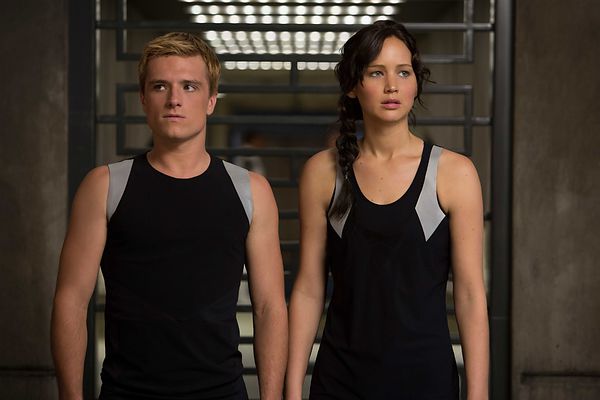
in equal measure. Women take great pride in characters like Katniss, but
feel less sure of what to do with characters like Peeta, serving the role
of “movie girlfriend”—selfless and often pushed to the side. If the roles
of women lack diversity of experience, the roles of men in today’s cultural
landscape do as well. For every dumb airhead, we have a dickish bro. For
every manic pixie dream girl, we have a silent heartthrob (a Jordan
Catalano) staring vacantly into space while strumming his guitar.

The male perspective, the supposedly default
perspective, is still one that is actively constructed, while it receives
far less critical examination than femininity does.

In reality, the masculine mystique is as incomplete and
impenetrable as the feminine one. Boys and men are shaped by social
expectations as much as women are. The reason that certain sexualized
images are popularized has less to do with universal male desire than with
the cultural acceptability of certain portrayals of male desire, ones that
boys are just as acculturated to accept as girls are.  The body types that men are allowed to
find attractive on TV are limited to the thin and young and while 2013’s 50 Shades of Grey culture has
bolstered the social acceptability of the female sexual submission and male
dominance narrative, portrayals of any myriad number of kinks and taboos,
especially those that involve a portrayal of male vulnerability, are still
few and far between.There are massive discourses on how to talk about
female desire in periodicals from The
Atlantic

and The New York Times.
Many of these discussions are cursory, assumption-laden and incomplete, but
at least they exist. Male desire, in contrast, is assumed to be unanimous
and well understood, the product of a world of boob and dick jokes, where
getting off feels like a game which only one person can possibly win. Men
are consistently portrayed as emotionally simplistic, wanting nothing more
than beer,  sex and a partner who will
allow them to get away with acting like a goofy child.

Outside of comedy shows, everything in pop culture right
now is a proverbial battlefield. Our heroes are alphas through and through.
We are taught to read Tony Stark’s swagger as sexy, just as we interpret
Don Draper’s sense of entitlement as charming and seductive. In 2013 we
admire the ability to weild a weapon and make a tough decision, but we
rarely see tenderness as being life affirming or empowering. Our heroes
generally go into battle with teeth clenched and talons sprung.

I’m fascinated by images of aggression, and sometimes I
fear that this kind of semiotics of agency is inescapable. I’d like to
pretend my fascination with horror movies and UFC fighting is merely
anthropological, but  I’d be lying if
I didn’t say the other reason I am drawn to violence is that there is
something aggressive inside me too. I can’t listen to Kanye without
identifying with something primitive and raw in his sexually charged rage.
What does it mean when a woman identifies with a man singing about “bitches”
as objectified property? I know he’s not singing about me, but he is
singing about the idea of me. Sometimes it feels like a kind of Stockholm
syndrome—as if my resolve not to consume sexist material just gave way
after years of losing a war which I might never win. But then I see myself
in the mirror and I see that part of me seduced by the idea of climbing
over other people to get to the top. The part that is pure id: wild,
unadulterated want.

If our stories don’t change, we don’t change. The things
we want are all culturally constructed, sure, but the ubiquity of gender
roles taps into something that is more complex than current culture. These
are core archetypes, as natural to us as breathing or sleeping. The breadth
of the human experience is wide, but our world gets smaller when we reduce
complex human feelings and experiences to prescribed gender roles.

Of course, mainstream pop culture has never been about
freedom. Media, even at its best, is always about indoctrination. For all
the alpha male bravado we see raging against the establishment, the alpha
male is still just an animal swaddled in bravado trapped in a slightly
bigger cage.

Arielle Bernstein is
a writer living in Washington, DC. She teaches writing at American
University and also freelances. Her work has been published in
The
Millions, The Rumpus, St. Petersburg Review and The Ilanot Review. She
has been listed three times as a finalist in
Glimmer Train short story
contests
. She is currently writing her first book. She is Associate
Book Reviews Editor at
The Nervous Breakdown.

On the Shoulders of Giants: Why Movies Are Shifting from the Undead to Big Monsters

On the Shoulders of Giants: Why Movies Are Shifting from the Undead to Big Monsters

null

At this year’s New York
Comic Con, hordes
of cosplayers
donned khaki military jackets, white spandex, combat boots,
and hip-level silver boxes—costumes imitating the uniforms of the Survey Corps
in this spring’s breakout anime show, Attack
on Titan
. In the show, the Survey Corps is the group responsible for identifying
and dispatching gigantic humanoids that eat people for fun. Earlier this year, Jack the Giant Slayer blended the Jack
and the Beanstalk and Jack the Giant Killer fairy tales into a battle of mythic
proportions between humans and giants, and, in the fall, the Guillermo del
Toro-helmed Pacific Rim combined
global crisis and B-movie kitsch with state-of-the-art mecha-kaiju grudge
matches. That vampires and zombies have surged in popularity over the past
decade is news to none, but it’s becoming clear that, in the new moment, our
interests lie with bigger things.

To discuss the genres
intended to scare—horror, suspense, and thriller, et al.—is to examine the
cultural fears they exploit. They serve as litmus tests for our collective anxieties;
no matter how intelligent a scary movie may be, the underlying purpose is to
frighten—to activate in viewers some amalgam of masochism (the chance to be put
through psychological discomfort), catharsis (the chance to see what scares us
exterminated), and voyeurism (the chance to see others suffer our demons). The spike
in popularity of vampires and zombies in Western entertainment stems back to
the pre-recession decadence of the early aughts. Before the financial collapse,
enough of the American population felt comfortable that their basic needs would
be met, creating an environment that allowed many the space to speculate about
evils lurking in their midst. The embarrassment of riches was obvious enough to
generate the fear that it could be stripped away, making the undead, creatures
that begin their lives as humans, perfect vehicles to play on this anxiety. Hearkening
back to the Biblical fall from Paradise, their immutability only deepens their
evil. They exist as binaries along the spectrum of the idea that overwhelming
power can easily turn monstrous; vampires present the conundrum of willful
immortality, zombies showcase the total relinquishing of agency to beast instinct
without the pesky intrusion of awareness.

But, by 2013, the
illusion of economic security has long since crumbled, and with it, the energy
to interrogate the contours and consequences of the milieu that produced it.
“Big monster” movies and television shows mirror this phenomenon in their frequent
inclusion of global catastrophe. In place of the fear that we’ll lose our
resources is the fear that we’ll even survive long enough to use what resources
we have left. These creatures generally exhibit neither the vampire’s cunning nor
the zombie’s contagion, and, maybe most importantly, are not so obviously us, and when they are—as in the giant
armored robots of Pacific Rim—they showcase
our aptitude for collectively addressing and combatting impending evil of equal
proportion.

This is the most pivotal psychological
difference between big monsters and the undead: the turn away from the individual
to the group. One person—with enough strength, wit, or courage—can
singlehandedly dispatch zombies or vampires. Giants, though, are enemies so
massive that only a group can vanquish them. Where a zombie can be shot in the
head and a vampire can be exposed to sunlight, the kaiju in Pacific Rim, for instance, have no
obvious Achilles heel. Humanity’s only fighting chance lies in the convergence
of disparate sets of knowledge—some from scientists, some from black market
dealers, some from those who fight the beasts directly. It is only from this
collaboration that Newton Geiszler, the excitable researcher with
nontraditional methods, begins to discover patterns that can be exploited to
save humanity.

Attack on Titan is also an exemplar of this new trend in its degree of remove from
culpability. Big monsters are, at worst, an accidental outgrowth of humanity,
and likely unrelated to us whatsoever. We’re aware that the monsters couldn’t
exist without our involvement (this becomes an important plot point in Attack on Titan), but blaming ourselves
for them doesn’t fit, either. Even if we were implicitly involved in their creation,
our involvement was unknowing and passive. The average person may buy Kraft
macaroni, for instance, but that doesn’t mean the average person intended to
support the parent company, Monsanto, in effectively monopolizing
entire crops
.

Simultaneously, our social
ills are the outgrowth of groupthink, and, as is the case with mega-conglomerations,
are the fault of no definable enemy. This process is explained in a recent video titled “The Innovation of Loneliness.”

In its immediacy of
exchange, the Internet is unprecedented in its uniting of human knowledge and
experience, revealing on a mass scale our best and our worst. The new
technologies that have sprung up alongside it have created as many conveniences
as they have barriers of separation, ranging from internet-based customer
service lines to video conferencing. No technology is fundamentally bad—neither
are big monsters, in that sense—they’re just doing what they’re compelled to
do. How we respond to them has effects on us, though, some of which can harm us
and others that can help or better us. Much as social networking has altered our
sense of community, it also allows us to organize in record timeframes. With
the growing presence of fundraising apparatuses like Kickstarter and Indiegogo,
grassroots campaigns have never been easier or more effective. As witnessed in
the increasing relevance of viral media, the strength of the individual now
lies in one’s participation in the sharing process. We still need leaders and
innovators, but there are so many voices now that we can—and in fact,
must—exist in more stratified niches than ever before. There will always be the
Eren Jaegers and Raleigh Beckets—those who traditionally exist as heroes of the
stories—but they will have relied more heavily than ever before on the work of
the Armin Arlerts and Mikasa Ackermans, the Newton Geiszlers and Hannibal Chaus.
It’s the agency of an individual hero that’s being held in scrutiny, not the
necessity of their existence.

Where undead
entertainment traffics in pessimism, big monster movies often feature underlying
optimism, typically borne of dire circumstance. The fighting is necessary for
our very survival, imbuing it with undeniable purpose, and, maybe most
importantly: we’re fighting for something we want to save. It’s not about the
monsters; it’s about us, the underdogs. It’s about what we’ll do—who we’ll become—to
fight back. If it was the allowances of the group that allowed these monsters
to exist, it can only be the group that takes them down. Our giants are bigger
than they’ve ever been. We can’t beat them alone.

Jesse Damiani is Series Co-Editor for Best American
Experimental Writing (Omnidawn, 2014). He lives in Madison,
WI.

Complicit in THE ARMSTRONG LIE

Complicit in THE ARMSTRONG LIE

null

In no other place are we so
desperate to crown monarchs, to live vicariously through victory and wealth,
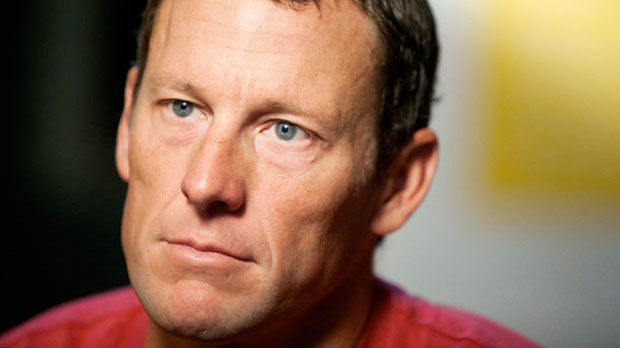
than in the realm of celebrity. We are smitten by the success of others. In Lance
Armstrong, we were given a character for the ages. A man born to a single
mother in East Nowhere, Texas. A cancer survivor who rose to prominence in a
sport dominated by Europeans and ignored by Americans. While Michael Jordan, Wayne
Gretzky, and Brett Favre were preceded by Julius Erving, Bobby Orr, and Roger Staubach,
Armstrong was a singular entity, the king of a land that had just been
discovered. He dated rock stars and supermodels. He was handsome and wealthy. His
celebrity was virginal, and unique in the glimmering magazine cover world
dominated by common and contrived stories.

And it was, in its entirety,
built on lies all too familiar. Built on vengeance. Cheating. A complex system
of blood doping and performance-enhancing drugs designed to take him to the
forefront of his sport, and the heights of celebrity.

Alex Gibney’s The Armstrong Lie began as a tale of
redemption. In 2009, the disgraced cyclist returned to the scene of his
greatest achievements, the Tour de France, where he had won a record seven
titles, and brought Gibney and crew to capture his comeback. But, once again,
Armstrong (as is now well-documented) was caught cheating and doping, and
Gibney’s film was put on hiatus. Four years later, Armstrong reached out to
Gibney to set the record straight on his marred career, and the documentary
became a story of a man so driven to greatness, so oblivious to his own self-destructive
nature, that he was deluded into believing he had yet another comeback in him, a
comeback not in competition, but in the public spectrum, one that would feature
Oprah in a supporting role as his hand-picked interviewer/enabler/PR shill, and
one that Gibney would capture for posterity.

Unfortunately, both the film and
its subject are deeply flawed. Armstrong is fearlessly naïve about his ability
to dope without being caught, to charm without being transparent– and Gibney
is so taken by Armstrong’s aura and the story he hopes to tell that he raises
the question as to why viewers have been asked to empathize with a ruthless,
destructive, vindictive cheat. In footage shot during the 2009 Tour comeback,
Armstrong and Gibney come off as teammates, certainly more than Armstrong and
his actual teammates, who more closely resemble reluctant participants in the
lies. Gibney, on more than one occasion in his narration and the film’s action,
reveals himself to be cheering for Armstrong, a revelation both awkward for the
audience and counter to the medium of documentary. A successful documentary
revels in its subject and defines the immersive; it puts the viewer at the
story’s core and the filmmaker in the quiet shadows. The Armstrong Lie takes on a promotional tone, and though
Armstrong’s warts are revealed, Gibney foolishly attempts to apply cover-up, by
shifting blame or asserting over-and-over that everyone in cycling was doping, to
conceal what the audience is already well aware of, that Armstrong cheated his
way to celebrity, and did so with no care for those around him. Armstrong uses
Gibney as he used his teammates, his celebrity, his fans, and his sport.

What is also startling about The Armstrong Lie’s failings is its
overt effort to isolate Armstrong, a man who defines isolation through his
manner and sport. Whether it be from former teammates, Italian doping doctor Michele
Ferrari, or Gibney himself, the film tries desperately to reveal Armstrong as a
loner, a man on a mission to dominate a sport, and attain celebrity no matter
the cost. However, Armstrong does this with little or no help. Gibney’s heavy
hand is present throughout, most notably through the near total absence of
Armstrong’s family. Some of his children appear for a moment, when they are awkward
witnesses to a surprise drug test, a test seemingly as common as the breakfast
it interrupts. Armstrong’s first wife is not mentioned. His current partner is
acknowledged briefly, as are his dalliances in celebrity dating. Perhaps Gibney
wanted viewers to simply assume known facts–but this comes across as an
attempt by a director to find the movie he wants, and not the film unfolding
before him.

What appears above may seem like
an indictment of the film, though it is anything but. Through his complicity in
the Armstrong lie, Gibney reveals the very manner in which we are all complicit
in the deception of celebrity. While Gibney shows Armstrong with children
struggling with cancer as an attempt to elicit empathy, instead we see a man
who will use anyone, including children suffering from the very disease that
nearly claimed his life, in order to disguise the truth of his being. Gibney is
as taken by Armstrong as the children are, as the cameras are, as we were. 

During the height of the
Armstrong affair I appeared on the sports and pop culture program, PLAY with A.J. As part of their humorous
“30 Seconds of Fame” segment, I were asked, “The Huffington Post is reporting that there are three
Lance Armstrong movies in the works…what should the movie be called?”
My reply was: “One Ball, but What a Dick:
The Lance Armstrong Story
.” I wouldn’t normally dare to find a punch line
in cancer, a horrific disease that is devoid of humor or prejudice. But
Armstrong’s betrayal of his fans, family, his charity, his sport, allowed for
my humour.

But the joke said more about the celebrity
relationship of sports fandom than the failings of Armstrong. With The Armstrong Lie, Gibney is no different from the fans that
cheered Barry Bonds to 73 home runs in 2001, golf’s apologists who continued to
feed the Tiger Woods machine despite sordid tales of flawed character, or the
NFL fans who continue to embrace Michael Vick despite his serving jail time for
abusing dogs. Sports fandom allows for this obliviousness in a manner that
Hollywood does not because of cultural familiarity. We’ve all ridden a bike,
swung a bat, tossed a football, and yet so few of us have sung on stage, or
acted, or written. We live vicariously through athletes because we don’t
require a giant leap of faith to imagine ourselves in their Nikes. And so we
excuse their faults because we so wish that their faults could be ours.

We know how the story ends, and The Armstrong Lie is well aware of that.
The documentary’s post-script is unnecessary. Armstrong was stripped of his
seven Tour de France titles, dropped by his sponsors, and dismissed by his own
cancer charity, Livestrong. If it was Gibney’s intention when editing his
footage to include himself as a character through which the audience
experiences the director’s flaws analogous to our own, then the film is a
rousing success. If it was unintentional, then it fails as a documentary film,
but not as a document. Either way, The
Armstrong Lie
is a riveting examination of both celebrity and those of us
who feed it, and while it may not completely give us permission to laugh, it
asks us to consider our relationship with those through whom we live
vicariously.

Mike Spry is a writer, editor, and columnist who has written for The
Toronto Star, Maisonneuve, and The Smoking Jacket, among
others, and contributes to MTV’s
 PLAY
with AJ
. He is the author of the poetry collection JACK (Snare
Books, 2008), the short story collection
Distillery Songs (Insomniac Press,
2011), and the co-author of
Cheap Throat: The Diary of a Locked-Out
Hockey Player
(Found Press,
2013). His next poetry collection,
Bourbon & Eventide, is forthcoming in 2014
from Invisible Publishing. Follow him on Twitter
@mdspry.

How WHITE REINDEER Defies Cliches of Grief

How WHITE REINDEER Defies Cliches of Grief

null

Spoiler Alert: This piece could be said to contain spoilers, but it would be difficult to discuss the film without spoilers.

Grief is a vast, ugly emotion. No one cries beautifully. No
one copes with death gracefully. Of the emotions one might depict on the big
screen, it would seem to be the most difficult. And yet, in the movies, we have
grown to accept a comfortable set of images, moods, even whole scenes that
communicate it: the hug, in which we usually see a comforting look on one
character’s face as he or she comforts someone else; the collapse in a hospital
hallway, seen from a distance, on the receipt of bad news; the lone tear,
rolling down a cheek, of a person on a telephone, when we can’t hear what’s
being said but we know what it is just the same; the downcast eyes; the slumped
shoulders. We respond to these images, generally, without realizing we’ve seen
them many times before, or perhaps because
we’ve seen them before (paging Susan Sontag, maybe). In any case, Zachary Clark’s White Reindeer is all about a woman’s grieving
process—is steeped in it, in fact—and its great strength lies in its
determination to work against filmic clichés of that process. Its outstanding
set of actors, fantastically chosen soundtrack, and moving, sensitive
cinematography make this film so genuine you can almost taste it.

We’ve all known someone like Suzanne, played beautifully
by Anna Margaret Hollyman. As if she were switching masks, she wears a perky
face at times, and a near-slack face at others, deploying them expertly. She
has a blond, pretty, all-American look, and she knows it—and yet… When we first
see her, she is watching her husband deliver the weather on a local news
station as she waits to show a house to two clients (she’s in real estate),
eyebrows raised, half-smiling, a devoted spouse; after the showing, which goes
very well, her seemingly wholesome clients overjoyed, we get a side view of her,
bent over for some energetic and talkative standing-up sex, in work clothes.
When tragedy hits, only a few scenes later, after she has arrived home from
Christmas shopping (the film is set in that cliché-laden time of the year), the
first thing she does is drop her vacuum cleaner, in near-comic fashion: her
husband is lying dead on the floor, shot in the head. The next thing she does
is file a police report and eat a candy cane the detective offers her (a candy
cane?); later she goes to a Marriott, where her parents arrive to stay with her,
and her mother, in fact, sleeps in her bed. The director presents these scenes
to us without preparation or fanfare—in fact, the lack of either is dramatic in
and of itself. When we do see Suzanne break down, she’s on the toilet, dress
around her knees, sobbing loudly and without inhibition. This would
seem, in hindsight, near-sentimental if it weren’t for the fact that the
director gives us another bathroom scene later, after her husband’s funeral; as he cries loudly—blubbers, in fact—he tells Suzanne her husband cheated on her with a stripper.

It doesn’t help Suzanne that the film is set in the
Christmas season, when happiness is obligatory for all and attainable by fewer
than we’d think—but it does help the film, by casting her approach to grief
into relief. (And it also gives Clark the chance to fill the soundtrack with ghoulishly
cheery Christmas music, some in English, some not, which gives the whole film a
strangely taut, wired feeling.) After finding out where her husband’s mistress
worked, she does what any responsible widow would do: she tracks the stripper
down, gets acquainted, and then goes out clubbing with her. This isn’t before,
of course, she buys over five thousand dollars’ worth of holiday oriented
clothing and Christmas decorations. She does cry again, but she shares this moment
of sadness with a stack of empty egg nog cartons. There are moments in the film
where some viewers’ sense of decency might make them think Clark has gone too
far—but the feeling shouldn’t last, because what he actually doing is trying to
convey the ersatz reality of human reactions, and human behavior. Not pretty. Not
graceful. Not believable, ironically enough. Indeed, Suzanne parties plenty,
for someone who’s just lost her husband. She attends a holiday party, thrown by
her earlier clients, which turns out to be an orgy—yes, an orgy, complete
with swinging breasts, hand jobs, masks, oral and anal sex, everything. And Suzanne
participates, if sadly.

Clark’s very smart move in this film is to temper the satire
(in its truest sense, given that Clark is asking us to acknowledge the reality
of the way we humans act when faced with unmanageable sadness, and to distrust
the way grief happens in the movies) with poignance and attentiveness.
Fantasia, the stripper, is played with unsettling poise by Laura
Lemar-Goldsborough; as the movie winds along, we find out about her home life
with her mother and her child, revealed in soft, funny touches (the child wakes
Suzanne up from her sleep on Fantasia’s sofa after a long night out by banging
a gift near her head and screaming “Wake up, Wake up, Wake up!”). The two women have
an immediate bond, as people, and not just as a cheating husband’s wife and her
husband’s lover—this friendship steels the movie, giving it a sense of uplift.

But that uplift comes from elsewhere, as well.
What Clark is actually suggesting is something larger—that the answer to the
problem of handling loss comes from letting the world in, in whatever form.
This is very much a movie about survival—and another one of its strengths is
that, even as it makes a myriad of dark jokes, it doesn’t make either grieving or subsequent survival seem
easy or simple. Suzanne’s pain in the film is mixed, in even portions, with
excitement, with love, and with intoxication of all kinds. Much like, it turns
out, life itself.

Max Winter is the Editor-in-Chief of Press Play.

Kathleen Hanna Up Front: On THE PUNK SINGER

Kathleen Hanna Up Front: On THE PUNK SINGER

null

This is what a feminist looks like: a young woman in a white
t-shirt at the center of someone’s crowded house party in Olympia, Washington,
1991, her dark hair tied back in a sloppy ponytail, all eyes on her; she
holds the room’s attention with the magnetism of a movie star as she chants a
poem in railroad-train rhythm, in the voice of a little girl realizing she’s
been sexually abused: “I am your worst nightmare come to life/I’m a girl
who can’t shut up/There is not a gag big enough to handle this mouth/Because
I’m not going to shut up/I’m going to tell EEEEVVVVVEEERRRYYYYOOOOONNNNE!”

This clip of Kathleen Hanna mid-performance opens Sini
Anderson’s documentary The Punk Singer, an unprecedented feature-length
portrait of the radical icon and “leader” of the leaderless ’90s riot
grrrl movement whose music, while spanning a range of styles from angry punk to
danceable electronica, has always been built on a core backbone of
no-compromise feminism; Hanna admits her impetus for pursuing an
audience is because “nobody has ever listened to me my whole life,” a personal manifesto balanced perplexingly with her 2005 declaration that she had nothing more to
say, ever.

That declaration was hard to believe. Hanna’s gift was
always her ability to distill feminist theory into accessible, chantable
soundbites: “I eat your hate like love.” “We are turning cursive
letters into knives.” “In her kiss I taste the revolution.” (She famously penned the phrase “Kurt Smells Like Teen Spirit,” a
drunken graffito that became an anthemic catchphrase of the grunge era.). Those
soundbites sprouted barbs when flung out in her distinctive singing voice:
unpolished, babyish, high-register without ever becoming true soprano, and yes,
objectively, “shrill”, if there’s any objectivity left in a word
that’s to women what “uppity” is to African-Americans—I do not
like the timbre of your voice
disguised as I do not like the content of
your words.

Add to that Bikini Kill’s insistence that women come up to
the front rows of their shows, pushing men to the back, and Hanna’s
push-and-pull sexual presence onstage, luring and rebuking hungry eyes by
undressing and scrawling words like “SLUT” in black
Sharpie on her baby fat, doing bump and grind moves (learned during a stint
as a stripper, back in college in Olympia) with uncalculated, ungraceful
sprawls and tantrums as she caterwauled and grinned. You want me, you hate
me, you will listen to me. And there is nothing stopping you from being me.

This wasn’t an easy concoction to swallow. I’ll admit I choked
on it when I was a teenager in suburban Baltimore, a mere 50 miles up the road
from the place where Bikini Kill was carving out its revolution, grrrl style,  but ideologically many more miles away, our discoherent
punk scene forever in the shadow of uber-principled Dischord Records. I
rejected the reverse discrimination of pushing men to the back so that the
women could enjoy the music without being battered by the mosh pit they
dominated. How stupid. Women didn’t need someone to tell them to come to the
front. Wasn’t that the point of punk? That if you were a woman and wanted to
come to the front, you did it, with hard shoulders and gritted teeth, and you
took the consequences like the outlaw girl you were? In D.C., I slipped in the
pit and someone landed on my head. I got hit in the eyes and saw stars. In
Boston I got punched in the face so hard by some guy’s flailing fist I couldn’t
open my mouth for the next 48 hours. This is how I embraced punk rock’s
anti-pretty. This was its promise to me: eat our fists and you too can get
everything we do.

But isn’t that the nature of privilege? That those who don’t
fight for it get it anyway? Sheryl Sandberg wears the ethos in boardroom suits
that I wore in combat boots in 1991. “Lean in”, the argument goes,
“and you can run with the boys too.” Hanna saw it another way, a
smarter way: girls up front and boys in the back, even the timid boys who never
crowded anyone out on purpose but still managed to win without knowing. Try it,
just for tonight, so you can remember what it’s like to have someone’s bigger
(or smaller) piece of cake, while you hear a woman sing about how no one
believes what her body’s been through, a real-life version of Corinne Burns in Ladies
And Gentlemen, The Fabulous Stains
(1982). She warned the women in
the crowd, “They’ve got such big plans for the world but they don’t include
us.” Then carry that feeling, plus or minus, into the night air after you
leave the show, while your ears are still ringing, and let it change you.

When Hanna’s own ears began to ring, however, things began
to fall apart. After successful post-Bikini Kill projects The Julie Ruin and Le
Tigre, Hanna started experiencing baffling symptoms: numbness, fatigue, ear ringing,
and most traumatizing, loss of control over her singing voice. In a lifetime
full of brave gestures, The Punk Singer‘s second act may be Hanna’s bravest, as she drops the veil of her
own cult glamour and confesses that she lied to her fans about the truth behind
her 2005 withdrawal from music. Late stage Lyme disease, contracted after an
inadequately treated tick bite, was making her chronically ill. (Worse, again
no one was listening—her real symptoms were being dismissed as psychosomatic, with one nurse
dismissing her near-collapse at a rally as just a panic attack.) In the most
moving sequence, she allows her husband, Adam Horovitz of the Beastie Boys, to
videotape her as she’s taking some of her brutal treatment regime. The scene is
full of pathos, but its meaning cuts both ways. Is exposing her weakness (in
body and spirit) a penance, addressed to her fans, for not telling them the whole truth? Or
is it once again a rebuke to the doctors who’ve wronged the woman who once
shouted: “I’m not going to shut up/I’m going to tell
EEEEVVVVVEEERRRYYYYOOOOONNNNE!”

Hanna’s recovery is messy and uncertain, and The Punk
Singer
doesn’t tie things up in a neat bundle. But director Anderson leaves
an optimistic gap that suggests there is room for a third act in Hanna’s life. At the end of the film, she’s steeling herself to perform again with
her new band The Julie Ruin. Offstage she’s nervous and frail, waiting in the
wings while Bikini Kill tribute bands perform her songs and friends like Kim
Gordon praise her spirit. There’s a stiffness in her stride that makes it look as if her
joints hurt. But onstage, something in her bones uncoils, and she is once again that fearless
girl with the mic in her hand, right where she belongs, where people
listen.

Violet LeVoit is a video producer and editor, film critic, and
media educator whose film writing has appeared in many publications in
the US and UK. She is the author of the short story collection
I Am Genghis Cum (Fungasm Press). She lives in Philadelphia.

Some Things Are Best Done the Old-Fashioned Way, Pixar Studios: The Beauty of IS THE MAN WHO IS TALL HAPPY?

Some Things Are Best Done the Old-Fashioned Way, Pixar: The Beauty of IS THE MAN WHO IS TALL HAPPY?

null

Imperfection will always be more interesting than perfection. We will always be drawn towards a work, be it a film, a novel, or a piece of music, for the ways in which it swerves, for the decisions the creator of the work has made which make it distinct from others of its type, or elevate it. And yet our culture does not necessarily move this way—in fact, accuracy, perfection, flawlessness, whatever you would like to call it, receive tremendous cultural validation. This sort of striving is desirable in the sciences, but disturbing when it edges over into the arts. The most recent trend in animated films, for instance, has been to make them smoother, to make their figures more polished in appearance and strangely realistic, even as their actual proportions are distorted; we don’t see the shaky hand of the animator in these works at all, because many times the animator’s physical hand has been replaced by a mouse or a computer key, or maybe a stylus, dragged across a specially constructed pad. And the result of this? Gradually, the public memory of, and appreciation for, older, more personal ways of creating films is being erased, to be replaced by images which give the illusion of being more “advanced” because they have been created with more advanced technology. Why watch Fantasia when you could watch Toy Story? Why watch the early Warner Bros. cartoons when you could watch Monsters University? Michel Gondry’s latest, Is The Man Who Is Tall Happy?, is an animated film on a linguist and political philosopher, seemingly an invitation to disaster. However, the film is anything but. Gondry tells two stories at once, here: one is a plain-spoken, relaxedly paced conversation with Noam Chomsky about his life and thought; the other is the story of a filmmaker’s attempt to understand Chomsky’s words, expressed through highly personalized and gloriously imperfect drawings. Technology was obviously quite important to the making of this film–nevertheless, in telling both of these stories, Is the Man Who Is Tall Happy? is a strong reminder of the power of the human touch, for lack of a better phrase, in artistic works.

The first story the film tells is one which many Chomsky fans may be familiar with already. Gondry asks Chomsky a number of questions, both personal and impersonal, and Chomsky gives dry but straightforward responses. Chomsky has a congenial, warm, and fairly comforting tone, even as he issues intellectual challenges. We learn about Chomsky’s father, and his love of classic Hebrew tales; we also learn about Chomsky’s school days, and how he hated sports, asking why anyone would want to be better than anyone else (there’s a foreign policy statement in a nutshell); we also learn that Chomsky is uncomfortable speaking about his late wife, the only moment in a continuous stream of monologic explanation in which the interviewee is simply silent. The explanation present here addresses Chomsky’s ideas about language: why and how words might have certain meanings for us, and where we get our ideas about what those words mean. Gondry does his best to parry productively, in a verbal way, with Chomsky, but often comes up short, even by his own admission. Chomsky’s solution to the problem–how does one have a meaningful conversation across a vast language and (possibly) intelligence gap?–is profound. He draws. And the drawings move, and they also speak, albeit silently.

But saying they move is an oversimplification. They cavort; they shimmer; they dominate, at times, with poor Chomsky reduced nearly to the size of a talking footnote. And what does Gondry draw? All sorts of things. At time the designs take the shape of rows of parallel lines extending outwards, up, down, over, back; at time Gondry draws huge machines that push their robotic arms across the screen; at times Gondry draws simple, childlike figures, meant to represent him or Chomsky. Of course, calling them childlike isn’t so accurate: drawing is, in this particular instance, an immediate form of communication, however long (several years) it took Gondry to make the film. Gondry is trying to translate the concepts he is facing in visual terms–and this makes the second, more interesting and complicated story in the film. In constructing the film in this way, Gondry makes himself vulnerable–very few of us, who aren’t professionally trained, can draw flawless representations of anything. This imperfection is, in fact, a sign of humanity. Despite their roughness, though, the illustrations in the film communicate, with their energy, and perhaps with some other indescribable element, akin to those notes that only dogs can hear, that Gondry does grasp Chomsky’s concepts (even if he denies it). And, knowing that, we feel that we can grasp them as well.

But, all this aside, why are the drawings important? So Gondry made an animated film about a subject most people would think to be unanimateable–so what? Well, the significance is this: the problem with films such as Toy Story 1, Toy Story 2, Toy Story 3, Up, Monsters University, Brave, or Ratatouille is that, entertaining and complex as these films might be, and as impressively droll and clever as their storylines might be, and as purely dynamic as they might be, and as impressively realistic as they might be, hovering somewhere between animation and photography, they’re not real in the right sense, in that they don’t tell you anything about the person who made them. They don’t tell you if their creators could actually make a real drawing, in pencil, on paper; they don’t tell you how the creators feel about their subject, as this film so often does; while they might have grand themes, as in Brave, or Up, you’re never entirely sure who it is who’s communicating it, as an absence of style becomes an absence of, well, presence behind the camera. Is there a camera, even? It’s okay to take for granted that our telephones will become smarter and smarter; it’s okay to take for granted that travel will become more and more comfortable, or that even that all cars will someday drive themselves. But is it okay for filmmakers to take for granted that all their viewers want is more accuracy on screen, more “polish,” leaving out the possibility that the reflection of “reality” viewers want might be one more clearly filtered through a human being’s perspective?

Max Winter is the Editor-in-Chief of Press Play.

The Life Lesson of LENNY COOKE

The Life Lesson of LENNY COOKE

null

“I don’t think they’re evaluated and
drafted because they’re ready. They’re evaluated and drafted because of their
potential […] also: They’re cheap. You can buy them,” explains Mike Jarvis. At the
time of the interview, Jarvis was the basketball coach of St. John’s
University. The “them” he’s referring to are the young basketball prodigies who
put their dreams on the line the moment they enter the NBA draft. Most of the
time, these talented young athletes have a couple of college years under their
belt, which lifts the veil on alternate career possibilities, in the event that
their future bid in the draft falls through–but in 2001, the NBA made an
unprecedented move by drafting Glynn Academy high school’s Kwame Brown as the
first overall pick; Brown would later be joined by Tyson Chandler (Dominguez
High School) and Eddy Curry (Thornwood High School) in the first round as well.
That 2001 NBA Draft not only made history, it changed the entire climate of
talent-seeking and cultivation in professional basketball. It stripped back
the rite of passage of continuing education (i.e. college) as an option for
these young men and tempted them with the opportunity of instant fame and “cash
money.” It also left a taste of cynicism among the higher-ups in the industry.
According to Jarvis, “In its own way, it’s not a whole lot different than
slavery. You buy the best-looking person. If they make it, fine. If they don’t,
you go out and buy somebody else.” At the time of the 2001 NBA Draft, Lenny
Cooke was ranked the number one high school basketball player in the country,
beating out fellow youthful players like LeBron James, Carmelo Anthony and
Amar’e Stoudamire.

Cooke’s decision to enter the 2002 NBA
Draft, as a 19-year-old talent fresh out of high school, is what is at the
center of Ben and Joshua Safdie’s new cinema verite-style documentary Lenny
Cooke
. Using handheld cameras that often zoom in and out on their subjects,
while chasing a moment or fleeting thought, the Safdie Brothers have unusual
access to Cooke’s day-to-day activities in the months leading up to the 2002
Draft; Cooke sometimes busies himself with basketball practice, but mostly
hangs out with his New York-based friends and Virginia-based family. Because of
the immediacy of this kind of filmmaking, we watch the red tape and gym
court-politics surrounding the young basketball star from a remove, like flies
on a wall. Particularly, there’s a bleak but insightful scene of a former NBA
coach breaking down how little money the players stand to earn, once they’re
actually drafted into the NBA, to a room of full of teenage basketball players;
as they listen to the coach crunch the numbers (e.g. paying federal taxes,
health insurance, taking care of the innumerable amount of family members that
will come out of the woodwork, etc.) into a real, bottom line scenario, and
their faces get more pensive and quiet, we get a glimpse at how fooled these
young men have been by the faux rock-star appeal of the professional athlete’s
life.

And through it all, Cooke seems like a
generally nice young kid. Sure he’s tall, more physically developed than your
average teenage male, but he has a wonder in his eyes—almost like a childlike
sense of discovery—when all of these new life opportunities are presented to
him. He is in a tailspin, due to all the attention from the media, from sports
agents, and from his status as the neighborhood hero. Still, Cooke is a
teenage father: he’d rather play an arcade video game than deal with his
tireless baby. He also falls victim to the attention of his early high school
stardom (a trip to Las Vegas, the temptation of other women, and access
to walking-around money). And when the documentary reaches the pivotal night of
the 2002 NBA Draft, neither the people in the film or members of the audience
can anticipate what will happen.

The fallout and denouement after that
fateful draft night makes up the final third of the film. The results are
equally surprising and sometimes satisfying. And the last third of Lenny
Cooke
is exceptionally moving: in this section, the film emerges as a life
lesson
, not just a basketball documentary: Cooke was constantly surrounded by
people who wanted to help him—and those who wanted to exploit him. At the end
of the day, neither Cooke nor his closest of friends could put the blame on any
one industry move-maker or organization. The Lenny Cooke of this film  was always in control of his own life
decisions. Early on in the documentary, a mentor who really did care for
Cooke’s future put it plainly: “It’s easy to be responsible–if you’re
responsible all the time. It’s difficult when you pick and choose the times you
want to be responsible. Ain’t nobody gonna teach you how to be a better
basketball player until you learn how to be a better person.”

Nelson Carvajal is an independent digital filmmaker, writer and content
creator based out of Chicago, Illinois. His digital short films usually
contain appropriated content and have screened at such venues as the
London Underground Film Festival. Carvajal runs a blog called FREE CINEMA NOW
which boasts the tagline: “Liberating Independent Film And Video From A
Prehistoric Value System.” You can follow Nelson on Twitter
here.