ARIELLE BERNSTEIN: Orphans, Refugees, and Architectural Spaces: The Dream of THE GRAND BUDAPEST HOTEL

Orphans, Refugees, and Architectural Spaces: The Dream of THE GRAND BUDAPEST HOTEL

null

There is something about human spaces that speaks to us
directly, that triggers every human impulse we love and fear about the world. Several
years ago I visited Barcelona, a city that is renowned for its unique and
colorful architecture. I was swept up in the romance of color, the cake-like
spirals and soft curves of Gaudi’s churches and parks, but it wasn’t until my
friends and I visited an old, gutted church in the heart of Girona that I
understood God, or at least, what human beings call God. The Girona church was
simpler, less ornate and almost empty, unlike any of Gaudi’s churches, which
were filled with as many tourists as there were practitioners. I felt dwarfed
by the height of the ceilings and frightened by the coldness of the walls, the
stillness inside of me. I’ve felt awed by the earth before, by sunsets where
the sky collapses into color, by the silence of an empty beach, the moon
lighting up the ocean. But none of these experiences managed to move me as
strongly as this moment in an entirely man-made space.

Wes Anderson’s latest film, The Grand Budapest Hotel, is about human spaces as much as it is
about people. For years now, Anderson has meticulously crafted and created
architecture that elicits amusement and awe—each child’s bedroom’s in The Royal Tenenbaums is an entire world,
each space a character in and of itself. Steve Zissou’s ship in The Life Aquatic is warmly planned and
meticulously crafted. Even the campsites of Moonrise
Kingdom
show the quaint necessity of human planning, of the obvious, almost
primordial need human beings have to craft and create their space in the world.

The Grand Budapest
Hotel
elevates this intimate understanding of place to a greater status.
The hotel, though shot in delicate pastel hues, seems as grand and impenetrable
as the mountains surrounding it. When we first see the interior of the hotel,
we see that its once beautiful and extravagant facilities are all in disrepair.
Mr. Moustafa, or Zero as we come to know him as a younger man, has allowed the
hotel to fall into a space of gentle decay, neither closing the hotel nor
providing the proper maintenance to keep the hotel alive.

At surface, the film seems plays out like a mad caper, a
zany, colorful fable, with entertaining characters, but at its heart, The Grand Budapest Hotel is Anderson at
his most melancholy. In the film time does not heal all wounds, and characters
do not learn and grow and triumph. They endure, despite the war and because of
their commitment to love and honor. This is a film about loyalty, about being
faithful to the places we love as well as the people we long to come home to.
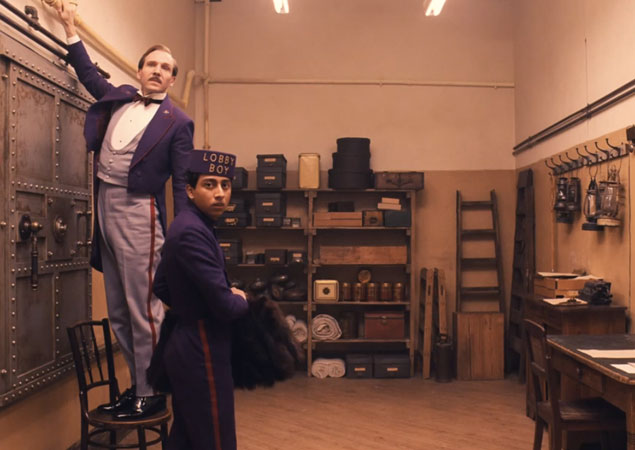
When Zero Moustafa stays at The Grand Budapest, he chooses to stay in the same
room where he lived as a lobby boy, the first place he was able to call a home
after becoming a refugee and an orphan when his parents were killed during a
never named war in a far-away place.

The Grand Budapest Hotel is the privately carved world of
Monsieur Gustave, the hotel’s concierge who has made the hotel his life, and
who loves the hotel with every part of his being; it is also a symbol, which
changes constantly over the course of the film. Regal and imposing in its early
days, the hotel is as much a place for the wealthy to escape from the realities
of the world as it is a place of refuge for Zero, who has nowhere to go. Over
time, the hotel loses its luster and fades into a symbol of the ravages of
time, as much as it showcases the ravages of war. 

A building isn’t a photograph or a letter. It can’t be
easily destroyed. I’ve lived in Northwest Washington, D.C., for almost eight
years, the longest I have ever lived in a single city in my adult life. Over
the years, the city has taken on different shapes and shades. When I first
moved to D.C. from Boston, I thought the new city would save me: from the fear
of not knowing what to do after I graduated from college, and from the end of a
relationship with a person I couldn’t imagine being without. D.C. cracked me
open in a way cities I had lived before never did. I eagerly learned its
rhythm. I wanted to call it home.

In D.C., everyone is going somewhere new. There is a
tremendous amount of pressure to get ahead, to go somewhere else, to transition
into the next best thing. A lot of urban American cities are like that. But it
takes time to truly love a place, just like it takes time to truly love a
person. Places we visit for short periods of time remain tinged in romance, the
warm light of nostalgia, but places that feel like home involve more
complicated relationships, housing both wonderful and terrible memories.

I have often had to reinvent myself in this city, and by
reinvent I mean I had to reorient myself in relationship to the city, after
people I cared about left it, or left me, or I left them. Sometimes places
still evoke vivid memories and I find myself randomly shaken for no apparent
reason, overwhelmed by the sight of a restaurant or tree or crack in the
sidewalk I had once known in connection to someone else.

Zero is grateful for the Grand Budapest, because the small
closet-sized room he is offered as a lobby boy is his safe space, a place for
someone who had nothing. But when the author, who is never given an actual
name, interviews Zero about why he decided not to close the Grand Budapest ,
Zero said he decided to allow the hotel to remain open in honor of his wife,
Agatha, who had died years before. “We were happy here,” he tells the author,
remembering the times that he, Gustave and Agatha all spent together.

Of course, the places we love are nothing but reflections of
ourselves. After Gustave  is wrongfully
accused and arrested for the murder of Madame D., an elderly patron of the
hotel that he was having an affair with, he is sent to prison, where he behaves
the same exact way he did at The Grand Budapest, offering plates of gruel, as
if they were slabs of filet mignion, to his criminal compatriots.

If the places we live make us, we also make the places we
live. No wonder Zero Moustafa doesn’t have the heart to tear down a world he
loved dearly; and no wonder he didn’t have the heart to build it back up
either: after Gustave and Agatha were gone there was nothing left to rebuild.
Any refurbishing would have been a new creation. In the end, The Grand Budapest
is offered the peace of cremation, as every part and piece of it slowly drifts
away.

Arielle Bernstein is
a writer living in Washington, DC. She teaches writing at American
University and also freelances. Her work has been published in
The
Millions, The Rumpus, St. Petersburg Review and The Ilanot Review. She
has been listed four times as a finalist in
Glimmer Train short story
contests
. She is currently writing her first book.

ARIELLE BERNSTEIN: Childhood from ADAPTATION to MAD MEN to MOONRISE KINGDOM

ARIELLE BERNSTEIN: Childhood from ADAPTATION to MAD MEN to MOONRISE KINGDOM

nullFor adults, childhood is
perceived as a time of full potential. At the end of the film Adaptation, Susan Orlean, awash in a druggy
love affair with her subject, John Laroche, calls out that what she
wants most is to start over, before things got all messed up. “I want to be a
baby again,” she whimpers, “I want to be new.”

It’s a seductive fantasy,
one less about childhood itself than about our adult ideas of what childhood
represents. In a 2005 Pitchfork review of Neutral Milk Hotel’s album, “In the
Aeroplane Over the Sea,” Mark Richardson commended Neutral Milk Hotel
for capturing how “dark surrealism is the language of childhood”: the newly
developing body, newly awakened stretches of feeling, the inherent strangeness
of sex. Childhood is the time when everything in us cracks open, when we see
the world as it really is for the very first time.

Directors like Wes Anderson,
Noah Baumbach and Spike Jonze often obsessively highlight the combination of
tenderness and terror that comes from being a small, new person in the world.
In The Royal Tenenbaums, the child versions of Chaz,
Richie and Margot are wide-eyed and solemn, wiser than their parents and wiser
still than the grown-ups they end up becoming. In The Squid and the Whale,
the kind of childish acting out that Walt and Frank demonstrate seems like
merely gentle thrashing in response to a grown up world that is not necessarily
beautiful or true. In Where The Wild Things Are, Max’s
wildly yearning heart is consistently coming up against giant monsters
manifesting adult suffering. And in Moonrise Kingdom Sam
and Suzy’s love for each other is steadfast and true, a kind of love that the
adults surrounding them have a terribly hard time replicating in terms of
either intensity or purity of heart.

If childhood is presented as a
time of great potential, it is also presented as a time of incredible loss. Female
children in particular are poised to lose something—their innocence, their
virginity, their baby-faced youth. To my mind, the most touching moments in
Mad Men occur when Sally makes tentative
steps towards adulthood. Betty’s icy maternal speeches highlight how
restrictive the adult world ultimately is, how full of suffering by comparison.
After Sally kisses a boy for the first time, Betty warns her, “The first kiss
is very special.” “But I already did it,” Sally tells her matter-of-factly.
“It’s over.”

It’s unclear whether Sally
feels the kind of sadness an adult viewer experiences when hearing those words.
Children learn that first times are important primarily because adults tell
them they are. Our sense of nostalgia for our childhood comes less from the
knowledge that our experiences of the world were more fulfilling when we were
young than from the acknowledgment that these moments were the only chance we
ever had to experience something new for the first time.

*******

Recently I assigned a
personal narrative assignment to my college writing students, most of who are
between 18 and 20. They all wrote about things that 18 to 20 year olds normally
do—first kisses, first deaths, first loves. I was surprised at how many wrote
about nostalgia for their childhoods, since for me, 18 is far enough away to
feel like a piece of my childhood. It’s far enough away that the pain I felt
during the time period doesn’t feel all that painful anymore, and the joys I
felt feel stronger. I don’t remember the eating disorder. I can laugh at the
heartache. But the concerts, the parties, the music, the classes, the first
moments of falling in love: everything is swaddled in nostalgic hues.

I turned 30 this year,
and my therapist, who is probably my mother’s age,
just smiled at me every time I mentioned how afraid I was to hit this year. I
know that my older friends and teachers probably view me with the same sort of
mild amusement I feel when my students tell me similar fears about turning 20.
“I feel so old,” one tells me. “I haven’t figured anything out yet.” “You have
plenty of time,” I reply.

Of course we only have as
much time as we think we do. The inevitable aging process is exacerbated by a
kind of media that is constantly trying to sell us a version of ourselves we
can never entirely attain. My students want to be older and more respected, to be
seen as adults with real feelings
and ideas. They long to be respected and heard, to prove they are actually people, walking through the world.
I felt that way forever too, but somewhere around your late twenties you get a
memo that tells you that you will never be as sexy or wonderful or perfect or
free as when you were young.

When Betty tells Sally that
every kiss she is going to experience from here on out is a shadow of her first
kiss, poor Sally is afraid she already let it slip away. Consumer culture, of
course, is not just about capturing that shadow, but also actively creating it.
This is happiness, we are
told.
This is freedom. This is love. We bought it since the
inception of television and we buy it even more today. Activists don’t even try
to tell us to turn off our televisions and to unplug from the Internet. Today we
know what other generations didn’t- that the media world is the real world and, just like in childhood,
our very identity still hinges on someone more powerful than we are, telling us
how we ought to think and feel.

“What I came to understand
is that change is not a choice,” Susan Orlean says in Adaptation, shortly after seeing the elusive
ghost orchid in person and realizing the quest was more exciting than finding
the actual plant itself. “It’s just a flower,” she tells John Laroche flatly.
Our greatest fear is always that the things we love are merely illusions,
smaller and less important than we imagine them to be. Every time I’ve felt
anything that mattered I thought I would never feel anything that strongly ever
again. But I did. I did and I did and I did. And each time wasn’t some shadow
of something I felt before. Each time something new woke inside me, something I
hadn’t experienced yet and something I wouldn’t ever experience ever again.

We are built for
transformation, even though we have a culture that doesn’t encourage us to live
that way, a social media-infused landscape where identity is seen as something
fixed, where our very identity is a brand.

In Moonrise Kingdom, when Sam and Suzy run away
together, Sam asks Suzy what she wants to be when she grows up. “I don’t know,”
Suzy replies. “I want to go on adventures, I think. Not get stuck in one place.”
Escape is, of course, the heart of any love story, because when we fall in love
we live the best parts of childhood, with every atom in us open and alive.

Arielle Bernstein is
a writer living in Washington, DC. She teaches writing at American
University and also freelances. Her work has been published in
The
Millions, The Rumpus, St. Petersburg Review and The Ilanot Review. She
has been listed four times as a finalist in
Glimmer Train short story
contests
. She is currently writing her first book.

ARIELLE BERNSTEIN: The Spaces Between: Spike Jonze’s HER and Love in the Time of Machines

ARIELLE BERNSTEIN: The Spaces Between: Spike Jonze’s HER and Love in the Time of Machines

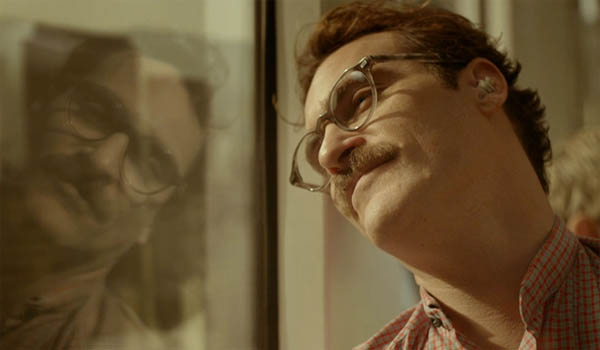
nullWoody Allen’s brilliant Annie Hall ends on a joke. Alvy Singer, the film’s narrator, describes a guy who goes to his
psychiatrist complaining that his brother thinks he is a chicken. When the
doctor asks why he doesn’t have him committed, the guy responds, “I would, but
I need the eggs”.

“Well, I
guess that’s pretty much how I feel about relationships. You know, they’re
totally irrational and crazy and absurd and, but, uh, I guess we keep going
through it because, uh, most of us need the eggs.” Alvy says, slightly
bewildered.

Her makes an
even more wistful claim—that those imaginary eggs are what actually make us feel
alive.

The central premise of Her is that a man ends up falling in
love with his OS. The idea that mankind might one day develop intimate
relationships with intelligent AI is certainly not new. In Battlestar Galactica, for example, cylons date, mate and develop
relationships with humans all the time, albeit for ulterior motives. But what
sets Her apart is that Samantha, the
OS that Theodore Twombly falls in love with, has no actual, physical body,
whether flesh and blood or metal and machine. Her very ephemeral nature mimics our
current era, where our first experiences of love are often shaped through the
use of email, social media sharing, and chatting online. If anything, these
technologies seem to be showcasing our need for intimacy, rather than diminishing
it. If I look at any of my friendships and relationships with other people on social media, I see a slew of images and inside jokes capturing something that
seems very real, but also seems paper-thin. Is this the nature of the machine,
or is this the nature of how we love?

Early on in Her, Amy, one of Theo’s close friends,
shyly shows the documentary she has been working on to Theo and her husband. We
see only the first few moments, a close up of her mother sleeping in bed. Her
husband is unimpressed and asks whether anything else will happen. Amy looks
embarrassed and explains that she feels the film is about dreams, how we spend
a third of our lives asleep, but can’t truly access those moments. Her husband
looks incredulous and asks why she doesn’t just interview her mother about her
dreams, since this would make her ideas more explicit.

The space between what Amy
sees and what her husband can’t is the center of Her, which is about the desire for connection in a world where
connection seems more and more fleeting. 
The surface of Her shows a
slightly dystopian landscape where people seem alienated, lonely and
disconnected from one another, even as individuals are more and more plugged in
to new technologies. But beneath this pastel veneer lies a warm animal pulse.
One of the major arguments of the film is
that love in a modern age is like love at any other time. We are motivated by
the same strange impulses as our ancestors, a pre-programmed idea of closeness
that has motivated humanity since the beginning of time. Samantha may herself
evolve during the film, but the weird, small, tender ways that human beings
strive to connect to each other, are never going to change.

Scarlet Johannson’s portrayal
of Samantha in this film would suggest that we aren’t moving away from each
other in the slightest. Many reviewers of Her
have pointed to Samantha’s voice as the warm and effervescent glue that holds
the film together. It’s hard not to be drawn to Samantha, even though we don’t
see her. Her OS breathes, sighs and trembles, laughs and even tenderly screams
while making love. Is this an affectation? In an essay called What’s Missing From Her, Anna Shechtman
argues that the female characters we are presented with in Her are not authentic, and that Samantha in particular is troubling
because her desire for a body is entirely based on wanting to connect with
Theodore. Our doubts about Samantha’s “personhood” are actually similar to our
doubts about what constitutes female desire. We always question whether women
who come on to men have ulterior motives or are faking it, in bed or otherwise.
It’s a little too easy to cast Samantha as the ultimate “manic pixie dream
girl” when she is actually constantly evolving, in both a technological and a
dramatic sense. By the end of the film she even outgrows Theo and the small,
gentle world that they created together.

Her might present
one of the most egalitarian and loving relationships on screen this past year. In
many films that focus on the way technology is changing how we view intimacy,
sex is reduced to a mere transaction, and female robots are often vulnerable
and designed to please or serve men, as we have seen in films from The Stepford Wives to Blade Runner. This view of sex is
consistently complicated in Her, even
in one of the first scenes when Theo has phone sex with a woman online and she
commands him to strangle her with a dead cat. This bizarre scene, where we only
see a close-up of Theo’s face shocked and confused, illustrates a world where people are desperately trying and
failing to connect with one another. Though the cat fetish scene is hilarious
in its portrayal of extreme disconnection, sex throughout Her is depicted less as salacious than tender, and when Theo makes
love to Samantha for the first time, the screen fades demurely to black.

We grow up with the people we
love, but the process of growing and changing means we sometimes grow away from
them too. In Her, intimacy is
fleeting, not because technology has diminished our relationships to one
another, but because people change over time. By the end of the film Samantha
has outgrown her relationship with Theo. She still loves him, but she has
fallen in love with a billion other things as well. She tries to convey to Theo
that this isn’t personal, but, of course, for human beings love is always about
focus; it means turning away from the rest of the world as much as it means
letting someone in.

Arielle Bernstein is
a writer living in Washington, DC. She teaches writing at American
University and also freelances. Her work has been published in
The
Millions, The Rumpus, St. Petersburg Review and The Ilanot Review. She
has been listed four times as a finalist in
Glimmer Train short story
contests
. She is currently writing her first book.

ARIELLE BERNSTEIN: Gold Leash: The Gap Between Role Model Feminism and Our Obsession with the American Gangster Wife

ARIELLE BERNSTEIN: Gold Leash: The Gap Between Role Model Feminism and the American Gangster Wife

nullIn
her song, “Royals,” Lorde catapults herself into the music scene purring, “I
cut my teeth on wedding rings in the movies.” This lyric epitomizes everything
that made 2013 tick in pop culture. Lorde, unlike the l’enfant terrible Miley
Cyrus, or the warm and inoffensive Taylor Swift, or even the sultry and divisive
Lana del Rey, offers stunning commentary on the kind of pop culture backdrop millennials have been raised on, as well as the effects and repercussions of
being immersed in this worldview. “Royals” is about the tension between
resenting the purveyors of wealth, while still longing for the privileges of
royalty.

These
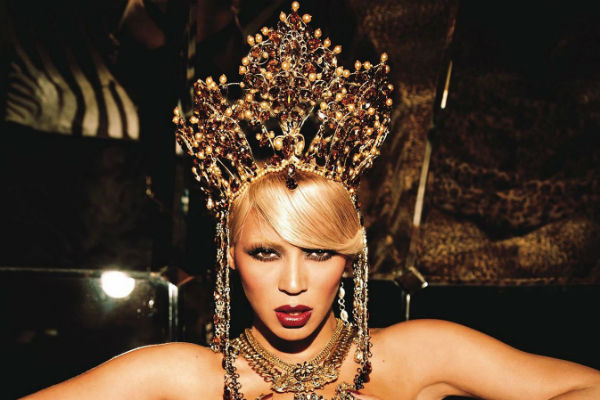
same tensions play out uncomfortably throughout Beyoncé’s latest visual album,
where Beyoncé is a female fighter and contender, who angrily smashes her
collection of pageant and talent trophies, but is still being marketed as the
poster girl for having-it-all.

Make
no mistake—when we talk about Beyoncé being Queen Bey, we are not just
referring to her creative talents; we are talking about her entire real-life
identity. As opposed to Janelle Monae, who actively constructs a creative
universe in her immersive concept albums, Beyoncé’s creative work is about her
own development as a woman and an artist. Throughout Beyoncé you see clips from
the artist’s own childhood, coming of age in the public eye. Beyoncé owns these
images in a way that Miley Cyrus did not. Part of me wonders about the way we view
little white girls as sweet and virginal, in need of rescuing. If Beyoncé never
had these trappings, she also never had these privileges. She was never held up
as an icon of girlhood, but she has grown into an icon of what it means to be a
woman coming into her own strength.

Historically,
the queen’s power comes from her ability to shape-shift. Both Beyoncé and
Madonna have been heralded as great based on their ability to shift their
images: mother, virgin, beauty queen, whore.  Beyoncé’s latest album is a gorgeous montage of transformation, both
tender and aggressive, though never at the same time. Yonce is on her knees in
a limo with her husband in one scene, and growling with Chimamanda Adichie
about giving girls the power to be who they want to be on the next. Bey wants
everything and has the ultimate in today’s feminist status symbols- a
supportive and committed husband to help her get it all done.

Throughout
the history of music and film, images of girls and women have been used as
symbols. As female artists reclaim those
images, they also have the burden of addressing that history, which is why it
is often so unclear what these images mean and what they ultimately represent,
especially in regards to female sexuality. When Beyoncé wears the garb of
motherhood, she is a symbol of all motherhood. When she shakes her hips on a
beach, she is encouraging all women to get more in touch with their sexuality.

Role
model feminism, the dominant feminism of the digital age, is all about asking
women if they measure up, and has ended up manifesting as bullying, more than
thoughtful discourse about what feminism can or should mean in the future. I’m
not sure why we would lobby for our pop stars to deliver public service
announcements anyway. After all, art, at its best, doesn’t teach us to be
perfect. It stretches us. It makes us open up. It gets under our skin. It forces us to grow.

The
closest Beyoncé comes to greatness is her song “Flawless,” which is
imaginative, inventive, powerful and provocative, but throughout much of her
visual album, Beyoncé doesn’t directly deal with the tension between her desire
to be seen as a creative agent and the fact that a great deal of her power
comes from her status as a self-described “gangster wife” and how her
status as Jay-Z’s wife allows her to be an alpha female, rather than just
another replaceable video vixen.

Perhaps
in response to the antihero alpha male trend, the 2010s have been filled with
icons of frail femininity trying to have teeth. Lana del Rey describes herself
as a  “gangster Nancy Sinatra,” which
plays out as tarnished Hollywood beauty rather than street smarts. TV shows
like Breaking Bad were notorious for
dividing viewers on whether or not Skyler, who inadvertently became a mob wife,
was an ungrateful shrew or a beaten down heroine.  In Sons
of Anarchy,
Jemma’s status allows her to see the other younger women her
husband and the entire gang screw on a regular basis as objects to be used,
rather than a true threat to her power.

The
true mob wife gains her status at the expense of other, more disposable, women.
This is not the kind of marriage that Chimamanda Adiche speaks about in her wonderfully
revolutionary call for women and men to aspire to marriage on equal terms. The
“powerful” gangsta wife is feminism on a gold leash, where a ring (and a man)
is a status symbol, rather than a true partnership.

In
order for the type of feminism Adichie calls for, we not only need to see women
as powerful, but we need to dismantle the deep-rooted patriarchal
ideals that consumer culture continues to dictate. Videos for songs like
‘’Pretty Hurts” pretend to illuminate the harm of beauty standards, even as they sell us back the same image of perfection—how gorgeous Beyoncé revels
in her thinner body after quickly losing her baby weight. The reason so many
girl power ballads fall flat is that feminism loses when it becomes just
another marketing tool, another way to make money. Girls don’t run the world and Beyoncé knows it. The idea that an
individual woman can be powerful is not really a new idea at all- we love our
Cleopatras, our Madonnas, our Beyoncés bouncing on a beach, completely in control
of their money, their sexuality, their public persona. It is the idea that in a
sea of video vixens, or in the backdrop of women in a party scene, each woman is
individually worthy of respect that is truly radical and revolutionary. “I’m a
grown woman. I can do whatever I want,” Beyoncé coos in the last song of her
album, smiling knowingly and mischievously at the camera. Never has a woman
enjoyed the love and attention of a million adoring fans as much as Beyoncé
does. If only we gave every girl who took a selfie that much power.

Arielle Bernstein is
a writer living in Washington, DC. She teaches writing at American
University and also freelances. Her work has been published in
The
Millions, The Rumpus, St. Petersburg Review and The Ilanot Review. She
has been listed four times as a finalist in
Glimmer Train short story
contests
. She is currently writing her first book.

ARIELLE BERNSTEIN: Swaddled in Bravado: Our Heroes and Us

ARIELLE BERNSTEIN: Swaddled in Bravado: Our Heroes and Us

nullCultural critics often lament the lack of strong female
characters, but rarely turn their gaze to ask whether male heroes are
actually as empowered as we think they are. 
For all their bravado and bluster, most classic male heroes are not
allowed much emotional latitude. Superheroes like Batman and Superman have
secret identities that can never be exposed, and modern anti-heroes like
Don Draper and Walter White have covert pasts, which they keep closely
guarded. In our culture vulnerability is risky, something the hero has to
be selective about sharing with the outside world. Confession is viewed as
feminine, yielding, emasculating. At best, male confession is seen as
adolescent, the mark of moody emo bands like Bright Eyes and boyish rappers
like Eminem. Jesse Pinkman may be beloved on Breaking Bad, but he still looks like a kid. Walter White is
the icon of the modern adult man, who creates (and destroys) what he will
in order to make his own destiny.

Female heroes who possess agency often revel in the best
of both gendered worlds— they are rewarded for their strength and humanity
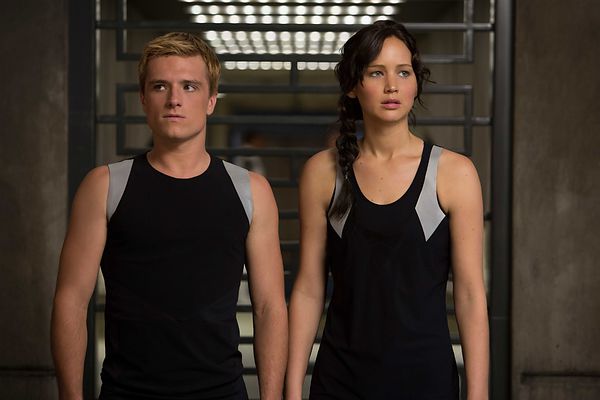
in equal measure. Women take great pride in characters like Katniss, but
feel less sure of what to do with characters like Peeta, serving the role
of “movie girlfriend”—selfless and often pushed to the side. If the roles
of women lack diversity of experience, the roles of men in today’s cultural
landscape do as well. For every dumb airhead, we have a dickish bro. For
every manic pixie dream girl, we have a silent heartthrob (a Jordan
Catalano) staring vacantly into space while strumming his guitar.

The male perspective, the supposedly default
perspective, is still one that is actively constructed, while it receives
far less critical examination than femininity does.

In reality, the masculine mystique is as incomplete and
impenetrable as the feminine one. Boys and men are shaped by social
expectations as much as women are. The reason that certain sexualized
images are popularized has less to do with universal male desire than with
the cultural acceptability of certain portrayals of male desire, ones that
boys are just as acculturated to accept as girls are.  The body types that men are allowed to
find attractive on TV are limited to the thin and young and while 2013’s 50 Shades of Grey culture has
bolstered the social acceptability of the female sexual submission and male
dominance narrative, portrayals of any myriad number of kinks and taboos,
especially those that involve a portrayal of male vulnerability, are still
few and far between.There are massive discourses on how to talk about
female desire in periodicals from The
Atlantic

and The New York Times.
Many of these discussions are cursory, assumption-laden and incomplete, but
at least they exist. Male desire, in contrast, is assumed to be unanimous
and well understood, the product of a world of boob and dick jokes, where
getting off feels like a game which only one person can possibly win. Men
are consistently portrayed as emotionally simplistic, wanting nothing more
than beer,  sex and a partner who will
allow them to get away with acting like a goofy child.

Outside of comedy shows, everything in pop culture right
now is a proverbial battlefield. Our heroes are alphas through and through.
We are taught to read Tony Stark’s swagger as sexy, just as we interpret
Don Draper’s sense of entitlement as charming and seductive. In 2013 we
admire the ability to weild a weapon and make a tough decision, but we
rarely see tenderness as being life affirming or empowering. Our heroes
generally go into battle with teeth clenched and talons sprung.

I’m fascinated by images of aggression, and sometimes I
fear that this kind of semiotics of agency is inescapable. I’d like to
pretend my fascination with horror movies and UFC fighting is merely
anthropological, but  I’d be lying if
I didn’t say the other reason I am drawn to violence is that there is
something aggressive inside me too. I can’t listen to Kanye without
identifying with something primitive and raw in his sexually charged rage.
What does it mean when a woman identifies with a man singing about “bitches”
as objectified property? I know he’s not singing about me, but he is
singing about the idea of me. Sometimes it feels like a kind of Stockholm
syndrome—as if my resolve not to consume sexist material just gave way
after years of losing a war which I might never win. But then I see myself
in the mirror and I see that part of me seduced by the idea of climbing
over other people to get to the top. The part that is pure id: wild,
unadulterated want.

If our stories don’t change, we don’t change. The things
we want are all culturally constructed, sure, but the ubiquity of gender
roles taps into something that is more complex than current culture. These
are core archetypes, as natural to us as breathing or sleeping. The breadth
of the human experience is wide, but our world gets smaller when we reduce
complex human feelings and experiences to prescribed gender roles.

Of course, mainstream pop culture has never been about
freedom. Media, even at its best, is always about indoctrination. For all
the alpha male bravado we see raging against the establishment, the alpha
male is still just an animal swaddled in bravado trapped in a slightly
bigger cage.

Arielle Bernstein is
a writer living in Washington, DC. She teaches writing at American
University and also freelances. Her work has been published in
The
Millions, The Rumpus, St. Petersburg Review and The Ilanot Review. She
has been listed three times as a finalist in
Glimmer Train short story
contests
. She is currently writing her first book. She is Associate
Book Reviews Editor at
The Nervous Breakdown.

A New Column by Arielle Bernstein: Without a Caveat: Can Girls Look Past GoldieBlox?

A New Column by Arielle Bernstein: Without a Caveat: Can Girls Look Past GoldieBlox?

null

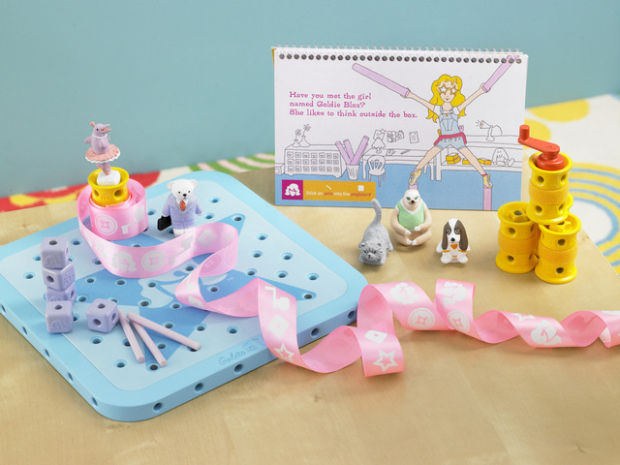
Consumer culture has always been about the illusion of
options. GoldieBlox, a toy that encourages girls to be engineers, both plays off
of stereotypes about female needs and yearnings (the need for a story, the
requirement of pink packaging) while also attempting to undercut current pink
princess culture, which, as I mentioned in my previous column, remains the
dominant image of “femininity” in America. In a previous ad for
GoldieBlox, we could see little girls seated in front of a television, bored out of
their skulls by ads which depicted little girls playing princess. Together they
would develop a miraculous contraption that would turn off the TV, while a parody version
of the Beastie Boys’ song “Girls” played in the background.

The ad garnered considerable attention, especially in
light of the discussion on whether or not GoldieBlox’s version of “Girls” should
be considered fair use (the makers of GoldieBlox have subsequently agreed to redo the ad). Less consideration has been given to the parody itself
and the fact that “girl power” is so often framed by pitting girls against girls, rather than creating an
environment where little girls and boys are encouraged to choose toys that
appeal to them. 

The problem with GoldieBlox’s ad was the same as in Pink’s song and
music video, “Stupid Girls,” where a little girl is encouraged to choose
between a doll and a football. After Pink showcases various dumb girl
stereotypes—the valley girl carrying her puppy in her purse, the bimbo who
wants to be loved, the skinny blonde who refuses to eat- our little tomboy
heroine makes the “right” choice and goes for the football. GoldiBlox
encourages a similarly reductive attitude towards gender, with little girls’ sing-song
voices hating on dolls: “…we
would like to use our brains. We
are all more than princess maids.” As if girls don’t use their brains when
playing dress up or with dolls. As if the very accoutrements of girlhood render
girls deaf, blind, and dumb.

Anti-princess culture is often more hostile towards girls
than princess culture itself is. It enforces negative stereotypes about
femininity by asserting that the only way girls can be smart is to reject traditionally
feminine things. It’s wonderful when girls are strongly encouraged to excel in
a range of different fields, but I’d love to see a world that also lauds men
who pursue a career as a nurse or teacher. For all the furious antipathy
towards the pink aisle it is much easier to be a tomboy in our culture than to
be a little boy that likes girlie things. One of the main reasons for this is the
fact that we still view traditionally feminine things as less important than
male ones. A girl who likes aggressive sports and toys that feature weapons is
likely to be praised for her tenacity, while a boy who likes to play dress up
and play with dolls is still seen as doing something that is fundamentally
taboo. This is clearly seen in the slew of cases where little boys have faced
repeated harassment at school for wanting to wear nail polish or wear dresses.
But we don’t have movements encouraging boys to explore their “feminine side”
precisely because we don’t view doing so as meaningful or important.

Ads like the one for GoldieBlox reinforce the idea that
girlhood is an obstacle to success, rather than simply encouraging girls to
pursue what they want and love who they are. Phrases like “more than just a
princess” do little to counter pink culture but do a lot to harm girls. By consistently
presenting girlie-girl culture as stupid, airheaded and catty, we are
effectively reducing the chance that girls who do like dolls and princesses might
see themselves as capable and competent just as they are.

In its second season, Mad Men
famously played off the idea that women had only two options for what they
could aspire to be in life: a Jackie or a Marilyn.  Today we see that false and limited dichotomy
as completely sexist, but we are still offering girls and young women shallow
and limited options: the pretty princess or the tomboy warrior, the playboy
bunny or the gaming geek. Let’s not confuse these new cookie cutter models of
female identity with genuine empowerment. True freedom will come when we don’t
feel the need to continuously remind girls that they are “more than just a
princess.” The only word that has ever stuck with this brand of messaging is
the word just. Girls need models of empowerment that don’t consistently
emphasize that their burden will be to forever fight against a world that sees
them as meek and incompetent. It’s a sad lesson, and one which perpetuates a
view in which girls will never be seen as brave or strong without a caveat.

Of course, at its root, all advertising wants to us to get
rid of our old toys and replace them with new ones, at least until we get bored
of old patterns or eventually grow up. Today, we need toys that challenge
children to explore the world around them, rather than remind them that the
gender they are born into will determine their entire path, whether they like
it or not.

Arielle Bernstein is
a writer living in Washington, DC. She teaches writing at American
University and also freelances. Her work has been published in
The
Millions, The Rumpus, St. Petersburg Review and The Ilanot Review. She
has been listed three times as a finalist in
Glimmer Train short story
contests
. She is currently writing her first book. She is Associate
Book Reviews Editor at
The Nervous Breakdown.

A NEW COLUMN BY ARIELLE BERNSTEIN: The Princess, The Queen and The Warrior: Part 1: Teeth and Swagger.

A NEW COLUMN BY ARIELLE BERNSTEIN: The Princess, The Queen and The Warrior

PRESS PLAY HAS A NEW COLUMN.

Having been thrilled and impressed by Arielle Bernstein’s previous essays for this publication, on topics ranging from the cinematography of Breaking Bad to Melissa McCarthy to Lana Del Rey, we are excited to announce that she will be beginning an eponymous column here at Press Play, in which she will continue to surprise and awaken readers with insightful, poetically well-composed analyses of cultural and artistic issues. Please welcome–and read–our newest columnist!

nullIn
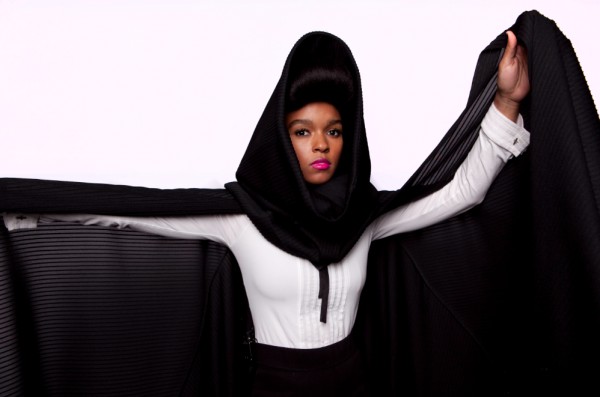
Pitchfork’s review of Janelle Monáe’s latest album, Jayson Greene describes Monáe
as an auteur. He argues that “her music
has always been about the exhilaration coming from the sensation of total
control.” When I saw Monáe perform live
recently, I was struck by the same sense of her intensity: Monáe is a tiny
wide-eyed powerhouse, strong and savvy. While artists like Nicki Minaj and
Taylor Swift enjoy playing the princess, Monáe emerged on the music scene
completely suited up, and her first single off her new album, The Electric Lady, is regal, rather than
docile. “QUEEN” is female power all grown up.

The image of the princess remains a symbol of idealized American
female identity. From the oft-lambasted pink toy aisle of the department store,
to princess-themed weddings and sweet 16 parties, much of female coming-of-age
is still centered around the narrative of a young maiden finding her prince.
Certainly the princess myth has been modernized in new stories. Today,
princesses are often smart, capable and strong. Sometimes the princess wants a
career. Sometimes she rejects marriage. Sometimes she is the one who rescues
her prince. Despite these outward changes, the princess figure persists because
it resonates with everything our culture expects, loves and hates about
girlhood. What defines a princess is not her docile nature, but the fact that
her very position is one of subordination. She may have a voice, but she is a
child, under the rule of her parents. She is in a state of perpetual
adolescence. Warrior princesses like Brave’s Merida, or
Mulan, appeal to us because they are adolescents on the verge of realizing
their power.  Princess Jasmine may claim she is not a prize to be won all
she wants, just as Ariel can flex her fins at the notion of discovering a world
of her own: In reality, both are still under the lock and key of a father who
wants to protect them.

Queens, in contrast, are sinister figures in our culture, much
more threatening than the cute female warrior types that our culture has grown
accustomed to. We are used to Buffy and Hit-Girl, badass warriors who are often
accompanied by a male guardian to ease their transition to adulthood. Likewise,
we laud the lone wolf mother narrative: Ellen Ripley and Beatrix Kiddo are seen
as strong and powerful, while still staunchly feminine, as their primary
objective is about protecting their young.

Queens, in contrast,
protect nothing but their personal influence. The queen in fairy tales is
fierce and autocratic, heartless and self absorbed. She is a threat to the
princess and is also often presented as a threat to the kingdom. She is feared
rather than beloved. While Snow
White has been given various reboots that render her less passive, the evil
queen remains an arch nemesis. Similarly, Cinderella’s various iterations are
more outspoken, while her stepmother remains a brute, uncaring force. In
Disney’s Tangled, we are given a
fiery Rapunzel with another controlling, domineering and repulsive version of
mom. In other words, for every Ripley that we praise for being assertive and
adventurous, there remains a queen alien that the princess must destroy.

This hero narrative is substantially different from the male
hero’s journey. Young Luke Skywalker has many father figures that guide him on
his journey. The male rise to power is perceived as multifaceted. The male hero
is allowed the agency to choose to become a good, benevolent leader, or a
selfish one. The female hero is only allowed tempered bits of power—she gets to
flex her little muscles a bit before finding love, but we don’t get to see her
exert her influence on the throne.

In today’s culture, power is often synonymous with dominance. We
may gently chide Don’s cheating ways, but we are poised to identify and
sympathize with his desire for power even more so than redemption.
 Masculine displays of power and dominance are seen as a force, which is
as creative as it is destructive. We rally behind Don Draper, Walter White, and
Jax from Sons of Anarchy. Even when they do terrible things, we are fascinated by their
decisions and by their gumption. Women, unless they are leaving an abuser or
protecting their children, are simply not given the latitude to commit these sorts
of actions without consequence. Indeed, women who rupture male narratives of
power are seen as threatening. Characters like Breaking Bad’s Skyler White and Mad
Men
’s Betty Draper are seen as far less sympathetic than their spouses.

This column will be centered on the question of female agency,
which I see as being fundamentally tied to positive images of women in power,
rather than princesses on the cusp of coming-of-age. Most visions of queens in
our culture today buy into male ideas and ideals of power: The dominatrix is a
popular figure in music videos for this very reason. We see Britney whip a
pretty young collared thing in her video for “Work Bitch,” just as we see Queen
Bee Beyonce tell us to bow down. But is the power displayed in these videos
substantive or reductive? In this column I’ll consider a range of media—movies,
TV shows, music videos, video games—in order to consider how power is
constructed in regards to gender, and whether power is a collaborative force,
or if it is always necessarily combative, a world of swagger and bared teeth.

Arielle Bernstein is
a writer living in Washington, DC. She teaches writing at American
University and also freelances. Her work has been published in
The
Millions, The Rumpus, St. Petersburg Review and The Ilanot Review. She
has been listed three times as a finalist in
Glimmer Train short story
contests
. She is currently writing her first book. She is Associate
Book Reviews Editor at
The Nervous Breakdown.

VIDEO ESSAY: Gliding Over All: The Cinematography of BREAKING BAD, Season 5.2

VIDEO ESSAY: Gliding Over All: The Cinematography of BREAKING BAD, Season 5.2

This video essay is a co-production of Press Play and RogerEbert.com.

Because
He Wanted To

The final episode of Breaking Bad was a tender goodbye. I’ve watched
the entire series with my heart firmly planted in my mouth, but watching the
last moments of Walt’s life, his look of contentment as he sees the gas mask he
used to wear when cooking, that smear of his blood on metal as he finally
collapses to the ground, felt gentle. The great Heisenberg went out with a sigh
of contentment, rather than a roar of pride.

For five seasons critics have debated just what about Breaking Bad
has captured the American zeitgeist. In some ways, the show is surely
emblematic of some pressing cultural concerns—the desperation of the working
class and the changing face of American masculinity, for example. But ultimately,
the heart of Breaking Bad is not a public service announcement about the
dangers of meth, the need for better health care or the importance of family. Breaking
Bad
is about existential terror. It’s about the choices we make when
confronted with death and the disintegration of our own very identity. It’s
about the limits of free will and the recognition that we have minimal control
over our own destiny.  And it’s about how we all push for some kind of a
high, even though we know everything we do eventually has an expiration date.

In the end, Walt is a hero and a villain in equal measure. The same Walt who
murders his enemies in cold blood is the one who ties his wedding ring to a
string around his neck when his fingers become too thin to wear it, just as the
same Walt who kidnaps Holly is the one who touches her tenderly in her crib in
a final farewell.

Joan Didion once wrote, “We tell ourselves stories in order to live.” Walter
White rewrote his story in order to survive. In the final episode we see Walt
claiming this story, owning his responsibility in the chaotic landscape that
nourished and destroyed him. In the end, Walt’s relationships with the people
who meant the most to him were faded fragments from a time when Walt was living
a different story, a time when he truly believed that he was making moral
choices to protect the family he loved. Nowhere is this clearer than in the
final showdown, where Walt is forced to look at the life to which he condemned
his former friend and partner Jesse. Even after respect and trust are long gone
between Walt and Jesse, there always remains the weight of a sad, long dead
love.

I cried watching that last moment of Walt wandering around what, at this point
in his life, had become his natural habitat—a meth lab littered with bodies and
blood. Walt died very alone, in every sense of the word. His meticulously
planned out last hurrah to set things right was, certainly, a suicide mission.
In the final episode of the series we see Walt, who had always resisted death at
every turn, finally resign himself to it, even though, in true Heisenberg
fashion, he went out in his own terms.

The final episode of Breaking Bad gives the illusion of closure, as
if the entire world will fade away now that Heisenberg and Walter White are one
and gone. In reality, there were things that Walt did that will never be
healed. Walt was proud of letting Jane die and poisoning Brock, both decisions
which he felt were made out of necessity. But this same Walt was terribly
ashamed of his betrayals—leading Hank to his death and losing the love and
trust of his only son. Walt’s confession to Skyler, where he says he did it all
for himself, that he liked it, he was good at it and it made him feel alive,
betrays the weight of his tremendous guilt, but doesn’t necessarily give us the
whole truth to his story. In earlier episodes one can clearly see a man who is
struggling to make moral choices; somewhere along the way his motivations
changed. The difficulty in pinpointing that catalyst is what makes Breaking
Bad
great art and it is what makes this touching, quiet finale emotionally
wrenching.

For me, Walt’s guilt tempers those last moments of Breaking Bad,
where we see Heisenberg wandering about the meth lab—his reflection beaming
back at him, all stretched and misshapen. Walt’s tremendous pride in his
creation, his love for his “baby blue” is palpable in that moment, but so is
the image of his bloodied hand, tarnishing a space that requires cleanliness in
order to make a dirty product a signature product: it got close, but was never
100% pure.


To read a wonderful essay by Scott Eric Kaufman about the season finale at RogerEbert.com, click here:

http://www.rogerebert.com/balder-and-dash/the-cinematography-of-breaking-bad-season-5-part-2

To watch the entire series on Press Play, go here:

http://blogs.indiewire.com/pressplay/tag/dave-bunting-jr

Arielle Bernstein is
a writer living in Washington, DC. She teaches writing at American
University and also freelances. Her work has been published in
The
Millions, The Rumpus, St. Petersburg Review and The Ilanot Review. She
has been listed three times as a finalist in
Glimmer Train short story
contests
. She is currently writing her first book. She is Associate
Book Reviews Editor at
The Nervous Breakdown.

Dave Bunting, Jr. is the co-owner (with his sister and fellow Press Play contributor, Sarah D. Bunting) of King Killer Studios, a popular music rehearsal and performance space in Gowanus, Brooklyn.  He plays guitar and sings in his band, The Stink,
and dabbles in photography, video editing, french press coffee, and
real estate.  Dave lives in Brooklyn with his wife, son, and sister.

VIDEO ESSAY: Female Sexual Agency in a World of Blurred Lines

VIDEO ESSAY: Female Sexual Agency in a World of Blurred LInes

We live in a culture where female
bodies are constantly on display. However, most images of female sexuality we
see are passive and two-dimensional.

For the past two weeks Miley Cyrus’s MTV
VMA performance has been decried by parents’ groups and feminists alike. The
response to Cyrus’s performance is more interesting than Cyrus’s performance
itself. It hit on every cultural nerve about what is appropriate and inappropriate
for a young woman to do with her body. Of course, this dialogue has been going
on for years. Female artists from Madonna to Lady Gaga to Rihanna to Nicki
Minaj all have used sexuality to express themselves.

The main reason that Cyrus’s
performance stood out is twofold. Cyrus grew up in the public eye. Like Britney
Spears, Christina Aguilera, Selena Gomez and other child stars, Cyrus’s sexual
display is not seen as a natural transition to adulthood. Instead, critics are
concerned  to see a coveted virginal
starlet transforming into just another sexual object.

We are still uncomfortable with the
idea that young women have sexual agency. In general, our media depicts
powerful women as direct and aggressive on the streets or on the battlefield. In
the bedroom, however, they are still prizes to be won over. The trope of the
strong female who needs the male lead to work extra hard to win her over is
commonplace. The theme here is that strong women don’t put it out for just
anybody, and sexual and romantic longing make a woman weak.  

This can be seen in any range of shows,
such as Daria and 30Rock, where the smart, savvy female seems
patently disinterested or not good at garnering male attention. In the film Bridesmaids, Annie Walker puts up with
male bad behavior until a sweet guy she initially pushes away wins her heart. In
Iron Man we root for Pepper Potts, a
higher quality woman than the types Tony Stark bangs early on.

Today, strength and sexuality are
perceived as mutually exclusive. This trend became even more readily apparent
this past summer. Look at songs like “Blurred Lines,” for instance, or our
obsession with the female submission narrative 50 Shades of Grey, which is less about a sexually secure woman
exploring her own kinks (a la Secretary)
than a genuinely meek young woman submitting to a man’s control.

Lena Dunham’s Girls has been lauded and reviled
for its focus on young women’s unhappy sexual encounters, which are perceived
as being more authentic than those of Samantha in Sex in the City. Indeed sex is different for young women in 2013
than it was in the late 90s. What is public and private space has changed and
the risks associated with getting naked have increased. In this culture, a
woman’s body can easily become shared public property, whether or not she wants
it.

To me, what is most shocking about Miley
Cyrus’s performance is that it is devoid of pleasure. Cyrus looks gawky and
uncomfortable, her tongue sticks out cheekily, rather than sensually, her
twerking looks like something she practiced in the mirror for a few hours. If
Cyrus was offensively appropriating symbols of “blackness” in her act,
she was also appropriating elements of raunch culture. When Madonna and Lady
Gaga present sexual displays they own it, while Cyrus seems to be figuring out
how she feels about her own sexual awakening.

Most displays of female desire are so
prescriptive that it is hard to differentiate between raw want and
commercialized longing. In many ways the pre-packaged version of sexuality is
less threatening than the unscripted version. We question whether or not
Rihanna really loves S&M, or whether Madonna’s sexually provocative videos
were merely about capturing attention.

Women can rarely be seen as sexual
beings without being reduced to objects or otherwise exploited. This is part of
what keeps women from being viewed as whole people, capable of intellectual bravado,
as well as great desire.

Of course, opening up this kind of
dialogue means listening to women. Films such as Easy A and The To-Do List attempt
to dismantle the stereotype that young women cannot be in control of their
sexuality, but the idea that young women can be sexual agents is still not
mainstream. We believe that young women cannot possibly be sexual agents, and that
sexuality for young women is about display and attention, rather than desire.

Allowing women the space to be sexual,
either in pop culture or in society at large, matters. When female sexuality is
most commonly depicted as either incredibly dangerous or incredibly vulnerable,
the narrative that coming-of-age for a girl is a time of loss needs to change. Girls
and young women deserve to be offered the possibility that their sexual
awakening could signal that a world is opening up.


Arielle Bernstein
is
a writer living in Washington, DC. She teaches writing at American
University and also freelances. Her work has been published in
The
Millions, The Rumpus, St. Petersburg Review and The Ilanot Review. She
has been listed three times as a finalist in
Glimmer Train short story
contests
. She is currently writing her first book. She is Associate
Book Reviews Editor at
The Nervous Breakdown.


Serena Bramble is a film editor whose
montage skills are an end result of accumulated years of movie-watching
and loving. Serena is a graduate from the Teledramatic Arts and
Technology department at Cal State Monterey Bay. In addition to editing,
she also writes on her blog Brief Encounters of the Cinematic Kind.

Cracking the Mold? Melissa McCarthy’s Position in 21st Century Female Comedy

Cracking the Mold? Melissa McCarthy’s Position in 21st Century Female Comedy

null

The idea that a comedy centering on the lives and
experiences of women cannot be a moneymaker has all but faded away after Bridesmaids’ release back in 2011, but
the debate over whether or not women, as a gender, are as funny as their male
counterparts is still being actively debated today. In many ways, this is
rather strange. After all, we have no shortage of funny women performing standup
and starring in various roles on TV and in the movies. Of course, humor is
highly subjective and culturally loaded. The things we find funny are a
combination of personal preference and social constructs. Melissa
McCarthy’s success as a comedian and status as the “new face” of female comedy
is likewise a combination of fierce talent and the
media’s willingness to give her support.

The support that McCarthy, and other female comedians,
receive tends to be tremendously ambivalent, a buttressing that continuously
comes back to the idea that funny women are rare and unusual. Female comedians are still perceived as
subversive, even though women like McCarthy have been performing comedy for
years.

All of this points to the fact that
our heightened awareness of sexism doesn’t necessarily stop it from occurring.
Two years ago I ran into a male acquaintance who I hadn’t seen for some time.
We caught up about career and relationship things, and then he mentioned that
the woman he was seeing was a few years younger than himself, a ripe old 27.

“I really prefer dating younger
women,” he told me earnestly. “After all, once a woman is my age—the late
twenties—she starts having certain expectations. It must be sad that, as a
woman, you have so much less time to explore and be young, what with your
biological clock and all.”

This was said one part in earnest, one
part as a playful jab, one part in an almost endearing attempt to talk to me about what it
was like to be a woman, but it hit me like a brick and left me feeling
exhausted and angry. I felt the same way when a male friend told me that he
could gain as much weight as he liked without bearing any social consequences
because that was just a women’s issue. Both women and men have stated
unflinchingly that women just don’t age well, period. Comments like these are
not intended to engage me in a dialogue about pressing gender concerns, nor are
they attempts to think critically about an inherently sexist system. Instead,
comments like these, which position gender stereotypes as stark, unchanging
facts, are intended to keep women in a position of vulnerability and
learned helplessness.

I keep being reminded of these
types of comments as I consider the recent hubbub about McCarthy, whose
tremendous success in TV shows (SNL,
Gilmore Girls, Mike and Molly
) and films (Bridesmaids and, most recently, The
Heat
) has inspired women and fueled further debate about whether women are
funny or not.  The debate, which is a
recurrent one, seems to boil down to the issue of whether or not female
comedians are as funny as male comedians. You can find such esteemed
thinkers as Jerry Lewis, Christopher Hitchens and Adam Carolla considering it
from various vantage points of subjectivity. Their comparisons always imply
that women, rather than being seen as individuals who either possess or lack a capacity for
humor, are instead seen as being somehow representative of all womankind.nullWhile McCarthy is talented and incredibly likeable, she is also not
the first female comedian to do physical comedy (Lucille Ball did that way back
in the 50s, when stuffing chocolate into her bra, or contorting her face when
crying, or falling over or into things when dancing). Nor is she the first to
wear her weight proudly (Roseanne Barr did that throughout Roseanne in the 80s and 90s). She is also not the first to be
raunchy and in-your-face (fortunately or not Joan Rivers still does that now). I don’t say this to downgrade McCarthy’s
accomplishments or to criticize her work. However, I do find it strange that women
are still perceived as being unusual when they are talented at any and all of
these things. If McCarthy has broken out of a mold, she has broken out of a
mold that many, many female comedians have already cracked.

The female comic, like the female
writer, the female artist, the female filmmaker or the female public
intellectual, is always seen as representative of a female experience, not a
human one. True, female comedians today are allowed to play with a greater
number of facades than they used to. There are “sexy” comedians like Chelsea
Handler, Whitney Cummings and Sarah Silverman, who are each perceived as pretty
first and funny second; “quirky” comedians (my favorite brand) like Tig Notaro,
Aubrey Plaza and Kristen Schaal, whose dedication to awkwardness is thoroughly
genderless; and “self deprecating” comedians like Tina Fey, Janeane Garofalo
and Roseanne Barr, who willingly put themselves down for the sake of a few
laughs. While each of these women individually brings great, unique talent to
the industry, female comedians, more so than their male counterparts, are pigeonholed
into certain set personas.

nullOf course, this is seen outside of
Hollywood as well. It may be a function of our Internet age as much as
run-of-the-mill sexism. I’ve been alternately thrilled and dismayed at the way online
magazines like Slate and The Atlantic feature women’s issues sections—which serve the
dual function of bringing women’s issues to attention and ghetto-izing them. It
certainly is helpful to have all of my feminist commentary in one handy section
of a magazine, but these publications, condescengingly enough, clearly don’t consider
issues that affect women to be “news.” Issues pertaining to gender in general
are presented as loftier lifestyle-oriented pieces. Bridesmaids was marketed as a game changer and seen as subversive
because it featured an all-female cast, but it was also only one of a long line
of female-centered films about getting married. While Bridesmaids was innovative in that it placed women in situations
more rough and raunchy than was previously deemed appropriate or acceptable, Bridesmaids’ success did not reinvent
Hollywood. as many feminists hoped it would. It simply paved the way for a new
female brand, one which Melissa McCarthy has become the poster child for: the
rough and raunchy female comic.

The
Heat
, McCarthy’s latest film, is effective and funny, but it is also hardly
revolutionary in its approach to comedy. Its appeal to both genders is really
based on the fact that the buddy cop comedy genre has been a historically male-oriented
one. In determining a film’s importance, we still mainly worry about whether or
not that film is going to appeal to men. Perhaps my cynicism sounds a bit
world-weary. After all, The Heat does
pass the Bechdel test, which posits that a movie’s gender equity can be gauged
by whether or not we encounter two or more women in a film who talk about
something other than a man. It highlights a positive and affirming
female-friendship that seems genuinely affectionate and is not based around
relationships with men.  That said, I am coming to a point as a feminist critic where watching two women who
don’t seem pathetic, or boring, or insular, or don’t make me feel like I want
to shoot myself in the head is not enough for me anymore. The summer months are
still a sea of bromances, as well as male-centered action and superhero movies,
and I don’t feel grateful when I see women “allowed” to engage in the same
vulgar and offensive humor that men have been playing at for years.

When writing this piece, I talked
it over with a friend, who tried playing devil’s advocate with me. My friend
said that all the female comics of the past 60 years were courageous game changers.
They have worked hard to help women break into the comedy world. But while I
agree that the socially-minded commentary of women like Margaret Cho, Wanda
Sykes and Roseanne Barr have been tremendously inspiring and empowering, it is
clear that the comedy circuit is still incredibly hostile to women. Our culture
itself is hostile to women, skeptical of their successes, unwilling
to see women’s accomplishments as anything more than a special interest work.
The recent and prolonged debate about whether or not it is okay to joke about
rape is often derailed by critics and comedians alike. Big headliners like
Daniel Tosh often claim impunity when confronted by angry critics, highlighting
how comedy can only be successful when there is complete freedom of speech. Unfortunately,
the sheer ubiquity of these types of jokes reinforces the idea that women’s
needs—for safety, consideration and respect—are simply not important, and that
women’s needs are actually counter to the goals of comedy as a whole.

nullThe trend of creating a kind of
false gender discourse as a means of actually reinstating the status quo is not
unique to the comedy circuit. In the past month blogger,
researcher and artist Nickolay Lamm tried his hand at transforming Barbie so that her
measurements would reflect the height, size and shape of an “average” American
woman, rather than the obviously out-of-proportion measurements of the much worshipped
and maligned traditional Barbie doll. In the pictures of this version of Barbie,
you can see a shorter, slightly thicker Barbie, with a rounder chin and ass.

I’m not sure what I am supposed to
feel about these kinds of projects. Most likely the same kind of gratitude I am
expected to feel when women are given the main billing in a comedy. Are these
new Barbies intended to help us recognize that the unattainable images we
constantly see are, in fact, unattainable? That a short lived dialogue
surrounding a trendy new meme will promote some kind of tangible change? The
reality is very different. Every few years someone else comes along with a new
reason for why the original Barbie is bad and how a more realistically shaped
Barbie would help girls learn to feel good about themselves. And we all know that
Barbie isn’t going anywhere. Little girls are not going to be fighting over
these new Barbie models. If Barbie sells
a bill of lies to girls and young women, “average” Barbie sells an even bigger such bill:
that continuing a dialogue around a problematic image will help heal us. In
reality, Barbie’s ubiquity is strengthened by clichés. These clichés surround
her very existence, which is a part of America’s cultural fabric.

Our current view of female
comedians reduces them to dolls. By this I don’t mean to suggest that we don’t
laugh at the jokes female comedians make or listen to them when they talk about
their experiences. What I mean is that we still reduce female comedians to
their gender. Perhaps this is a problem of consumerism, as well as sexism.
After all, we have just as many ridiculous and offensive stereotypes about
masculinity being marketed to us today ( the idea that men are buffoons who can’t
take care of children, for example, is a staple in sitcoms and commercials
alike,) and the culture of masculinity is not one that most of us are trained
to think critically about. At the end of the day, we buy the bill of goods we
are sold, which is why PSAs about how unrealistic photoshopping is are doing
nothing to help women (and men) feel better about themselves.

I enjoy laughing more than I enjoy
criticizing things. In researching this piece, I loved having the opportunity
to watch a lot of really wonderful and talented female comedians at their best.
But the longer I kept researching, the angrier I got. Our world pretends to
offer women a tremendous array of options, only to continuously remind women
that we should be thankful for getting anything at all.

Anger, of course, often comes from
a feeling of being out-of-control or helpless, and that is truly how I often
feel when I talk about these issues. I know I have seen them constantly, every day,
since I was a little girl. I know that there are a lot of compassionate and
concerned thinkers, male and female, who really want to improve these issues. I
also know, however, that real, permanent, far-reaching change won’t come from
simply allowing women a greater number of stereotypes to play into. What we don’t need is another a parade of
Barbies. It doesn’t matter if we accept all shapes, sizes, colors and any
number of interesting and evocative outfits. At the end of the day, funny,
talented women notwithstanding, the cultural machine is still just interested
in churning out plastic.


Arielle Bernstein is a writer living in Washington, DC. She teaches
writing at George Washington University and American University and also
freelances. Her work has been published in
The Millions, The Rumpus, St. Petersburg Review, and South Loop Review, and she has twice been listed as a finalist in Glimmertrain‘s Family Matters Short Story Contests. She is Associate Book Reviews Editor at The Nervous Breakdown.