ARIELLE BERNSTEIN: Feminist Camp: Reclaiming the Booty in a Digital Age

ARIELLE BERNSTEIN: Feminist Camp: Reclaiming the Booty in a Digital Age

nullI grew
up with thin white girl icons—with angry girl rockers like Fiona Apple crawling
half naked and hungry all over the floor, and Poe’s deep sultry voice, shifting
from ethereal to mad, everything about her skinny-armed longing. The feminist
rockers when I was a teen wilted and cried and clawed and spit. In the late 90s
a loud voice was always about rage, and female artists often sold a seemingly
contradictory image—a strong heart and fragile body.

My
mother, who emigrated from Cuba to America in the late sixties, could never
understand my obsession with thinness as a teenager. She drank water with heaps
of sugar in it to try and put on weight—curviness was seen as a sign of
sensuality, of sexiness. Certainly, there were curvier icons I could have looked
up to. The waif craze was in many ways a reaction to the aerobics-inspired look
of the 80s, with super models like Cindy Crawford and Naomi Campbell and pop
sensations like Madonna ushering in an era of sexuality that was large-bosomed
and muscular. And throughout the 90s, pop stars from J-Lo to Beyonce were famous
for their impeccable curves.

The waif
look appealed to me because it seemed defiant and dangerous. In reality it just
offered a different type of body as a fashion accessory.

To my mother,
my preference for thinness was more than a trend; it represented a kind of
cultural abandonment, a desire to be perceived as WASP-y and white, rather than
who I really was: a daughter of immigrants, a Latin American Jew. Two specific
markers of American assimilation—my thinness and blond hair, coupled with my
not having an accent, seemed to grant me access to things my mother never felt
she had access to.

But I
never felt as though I had complete access either, even if on the surface I
seemed to have it. I always felt like an imposter, as if I was wearing a mask I
could never take off.

We are all reduced to
our body parts.

The past several months
have been particularly depressing for anyone with a female body. Headlines
describing rape and sexual assault are virtually everywhere, from the numerous women speaking out against Bill Cosby, to the attention placed on
college campuses and how they could be doing more to prevent rape and sexual
assault.

In his essay on the rape
allegations against Cosby, Ta-Nehisi Coates reflects on the horrors of rape,
saying, “Rape
constitutes the loss of your body, which is all you are, to someone else.”
Likewise, in a recent essay, Roxane Gay considers the language of a sexual
assault from a Rolling Stone article that chronicles the experiences of a UVA
student who describes being gang raped at a frat party, how she was reduced to
an object and referred to as an “it.” In her essay, Gay implores her readers to
think long and hard on that word, to let that “it” haunt us.

What does it mean to acknowledge that our bodies are all that we are?

And where does this “it” stand in relation to the droves of young,
female pop stars today commanding us to look at “it,” to check “it,” to
smack “it,”—“it” being, in this case, their twerking behinds?

To
some, these close up images of the booty dehumanize and victimize women,
reducing us to sexual playthings. But I actually see something else here: a
reclaiming of the “it,” a defiant assertion of bodily autonomy, a demand for women
to be able to be as big and sexual as we damn well please.

The recent big booty craze is still fashion, of course, and some aspects
of the current trend, from Miley Cyrus’s use of black women as props in her
2013 VMA performance to Kim Kardashian’s photo spread for PAPER Magazine, are
infuriatingly disrespectful to black women in particular. And, of course, while
songs like Meghan Trainor’s “All About That Bass” preach body positivity, the
big booty trend really only praises a particular brand of curve, one belonging
to Kim Kardashian rather than Melissa McCarthy.

Yet
there is something also exciting about the way that some female performers are
reclaiming and celebrating the female body, about the way Nicki Minaj takes parts and
pieces of Sir Mix-A-Lot’s ode to women’s backsides in “Baby Got Back” and
transforms the booty from an object to be admired to a symbol of female sexual
appetite in “Anaconda.” The playful,
kitschy, over-the-top big booty shenanigans on Nicki Minaj’s video for the song are about self-love and swagger. “You love this fat ass,” she
manically cackles. It’s that cackle—wild, unhinged, defiantly unpretty—that
made me grow to love “Anaconda,” where the big booty becomes a symbol of
excess, sexiness, and silliness, all at once. Minaj’s “Anaconda”
doesn’t offer women a kind of empowerment fantasy, where women’s sexual
liberation will bring about a feminist revolution, but it does give women the
chance to reclaim that “it”: rather than being an object of someone else’s
consumption, it becomes a symbol of female sexual appetite and power.

The same thing could be said for Beyonce’s video for “7/11” where the
self-described feminist is seen hanging around in her underwear, having fun and
being silly, throwing her hands in the air and shaking her butt. Unlike her
classic ballads, or even her sexually explicit songs about getting it on with
her husband, this video focuses instead on women just having a good time, being
as loud, ridiculous, and playful as they want to be.

For the female body to be perceived as a source of pleasure, rather than
an object that is always on the brink of violation, is an incredible subversion
of our expectations about what it means to live in that body. The act of
reclaiming a word or an image is, of course, always fraught. I’m sure many
people feel there is simply no difference between a male-gaze-centric focus on
female curves and the booty-centered fashions surfacing in all sorts of media
today. Certainly, J.Lo and Iggy Azalea’s collaboration on the video for “Booty”
is no work of high art, and is replete with product placement and traditional
artifacts of the male gaze, but the delightfully campy videos of Nicki Minaj
and Beyonce, which showcase the female body as a source of unending amusement,
happiness, and power, are in fact changing the way we see that body. They
dare us to not only appreciate greater female involvement in the creative
process, but also challenge us to see a woman’s body as something inherently
powerful—as something, which can, and should, take up space.

Arielle Bernstein is
a writer living in Washington, DC. She teaches writing at American
University and also freelances. Her work has been published in
The
Millions, The Rumpus, St. Petersburg Review and The Ilanot Review. She
has been listed four times as a finalist in
Glimmer Train short story
contests
. She is currently writing her first book.
ARIELLE BERNSTEIN: Girl Found: GONE GIRL’s Boring Masochism

ARIELLE BERNSTEIN: Girl Found: GONE GIRL’s Boring Masochism

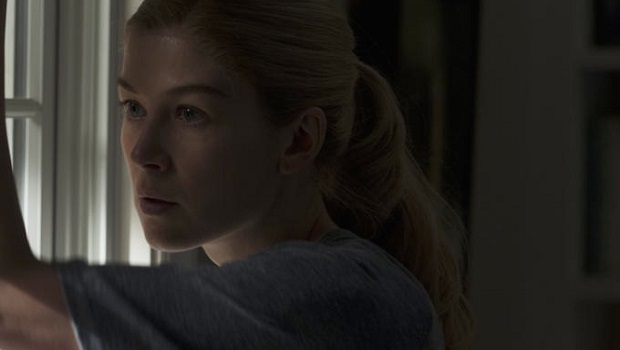
nullBefore I saw Gone
Girl,
I had seen enough plot spoilers to know that Amy Dunne was the icy
villain, a femme fatale who devours male victims like a praying mantis. I
expected rage; what I didn’t expect was her willingness to hurt herself. Amy’s
aggressive behavior and her ability to manipulate the system hinges on how she
cuts, bleeds, tears at and otherwise desecrates her own body. 

I know, I know. Feminist champions of Gone Girl claim that Amy’s ability to play with the cookie-cutter roles
that women are cast in is somehow triumphant, but Amy’s self-inflicted wounds,
coupled with her meticulously constructed calendar, complete with yellow sticky
notes questioning whether now would be a good time to kill herself, struck me
as boring, rather than subversive. While male villains like Batman’s The Joker and American Psycho’s Patrick Bateman thrill
us as they play the role of sadists, female villains, even at their most evil
and vindictive, are still relegated to the role of masochists.

Just as horror films love to torture their female victims,
feminist films and literature are often obsessed with female debasement. We
watch brilliant 19th century women slowly deteriorate into insanity
in stories like “The Yellow Wallpaper.” We lament the smart, talented young
women who try to off themselves in Girl
Interrupted
. We watch Dove ads where rows of normal looking women shed
tears when talking about the pressure to have poreless skin and gaps between
their thighs. From Beyonce’s “Pretty Hurts” to the return to Twin Peaks and its obsession with the
tragic death of the young and beautiful Laura Palmer, what defines femininity
today is pain. The recently released short animated feature, “Sidewalk” by
Celia Bullwinkel, shows a girl’s journey to womanhood and old age, during which
she is always uncomfortable in her skin. She endures stares and whistles from
men as she enters puberty, the discomfort of pregnancy, the pressures faced on
older women’s bodies and, finally, the invisibility of old age. “Sidewalk” is
touted as a journey to “self-love,” but when the protagonist reaches old age
and helps a young girl walk along the same sidewalk, the mood is one of
resignation, rather than joy, the path to womanhood still presented as an
obstacle, rather than a pleasure.

This downtrodden story of what it means to be a woman is
just as limited a view of the female experience as the more cheerful,
empty-headed views of womanhood portrayed in such musical numbers as “I Enjoy
Being a Girl” from the 1958 musical Flower
Drum Song
and “How Lovely to Be a Woman” from the 1963 musical Bye Bye Birdie. Both songs feature a
young, beautiful woman enjoying her sexy new curves and newfound attention from
men. Certainly these songs, along with 80s and 90s jams like Cindi Lauper’s,
“Girls Just Want To Have Fun” and Shania Twain’s “I Feel Like A Woman” aren’t
particularly deep or challenging of gender norms, but at least their view of
the female experience is upbeat.

In contrast our modern day obsession with female suffering
is as much a throwback to earlier tropes, as it is a kind of pushback against a
consumer culture that claims that by purchasing the right product women can be
happy and free. Amy Dunne’s desire to disappear certainly fits this model. In her
now famous “Cool Girl” speech, she describes the social pressure on women to
fit into a man’s fantasy, at once inhabiting and also casting off the “Cool Girl”
persona in the process.

Perhaps Amy’s “Cool Girl” theory would have been more
meaningful to me had I thought that Amy was truly making a feminist manifesto
and wasn’t just angry that her husband was having an affair with a “younger,
bouncier Cool Girl.”  Throughout the
film, Amy is not only vicious to her philandering husband and other men who she
tortures using her feminine wiles; she is also equally hostile to women,
speaking ill of the “stupid” neighbor she tries to quickly befriend, and
throwing venomous barbs at the large-breasted student her husband is having an
affair with. Amy’s self-involved, beautiful, blond, white, trust fund brand of
feminism just rings tone deaf to me in a world where women of all colors,
creeds and classes are claiming the feminist mantle in the name of justice,
rather than a plea to “have it all.” Amy’s self-victimization presents feminism
as its worst possible caricature: one of spoiled rage and privilege, rather
than a very real call for women’s stories to be told and women’s voices to be
heard.

In this way, Gone
Girl’s
heroine is not reclaiming her identity when she stages her escape;
she’s just another in a long line of self-destructive women, obsessed with
finding ways to disappear completely.

Arielle Bernstein is
a writer living in Washington, DC. She teaches writing at American
University and also freelances. Her work has been published in
The
Millions, The Rumpus, St. Petersburg Review and The Ilanot Review. She
has been listed four times as a finalist in
Glimmer Train short story
contests
. She is currently writing her first book.

ARIELLE BERNSTEIN: PARKS AND RECREATION, A Feminist Utopia

ARIELLE BERNSTEIN: PARKS AND RECREATION, A Feminist Utopia

nullAt the end of the penultimate season of Parks and Recreation, our heroine Leslie Knope gets everything—the
man, the kids, the high profile job. She even manages to move her new position right smack into the middle of her beloved hometown Pawnee.
Though the finale of the most recent season was wrapped up in a very pretty bow, it still felt genuinely satisfying, as well as genuinely
subversive. In a world where the T.V. show Girls
portrays sex and romance as empty and unsatisfying for its female leads, and
heroines in shows from Game of Thrones
to American Horror Story navigate a
landscape where sexism is rampant and men are often depicted as deeply
misogynistic, Leslie Knope’s triumphant success felt like a kind of joyful
respite and relief from a terrifying and cruel world.

One of the reasons Parks
and Recreation
has succeeded as a feminist T.V. show is not simply because
the female characters have remained funny, dynamic, ambitious, unique and
interesting, but also because the show succeeds at presenting male characters
that are equal parts strong, vulnerable, silly and staunch advocates for the
rights and successes of female characters throughout the series. Male and
female characters in Parks and Recreation
actively root for one another, rather than tearing each other down. Ben and
Lesley’s marriage is a model of egalitarianism; April and Andy’s young, silly
love is presented as a string of silly, ridiculous games and make out parties,
with each character deeply invested in helping the other grow. Even Ron
Swanson, staunch individualist and rugged he-man, is distinguished throughout
the series by his commitment to women’s rights. By the end of the series he is
a proud dad and loving husband, all without having to give up his signature “strong
silent type” brand of masculinity. Ron’s appreciation of feminism doesn’t
diminish his hatred of vegans, or devotion to woodworking—it simply makes him a
much more interesting and funny character.

Many of the current debates about female representation
onscreen are about granting female protagonists access to male spaces. We saw
this in the 80s and 90s when there was a proliferation of women as warrior
motifs from Xena the Warrior Princess
to Buffy the Vampire Slayer.
Recently, a slew of articles have called for women to have access to the joys
and pitfalls of the antihero world as well, as we praise the glorious brutality
of Orange is the New Black’s character
Vee and go to theaters in droves to see the icy villainy of Gone Girl. 

Heroines today are more diverse and complex than ever
before, yet few serious dramas that feature a cast of strong female characters
showcase romantic relationships that are genuinely egalitarian, the way we see
romance unfold in Parks and Recreation.
Often, female protagonists who are strong and willful are presented as
rejecting male romantic interest. In modern Disney Princess films like Brave, the heroine often makes a big
deal about not needing a man or romantic partner. In some films, like The Hunger Games, the romantic scripts
are flipped and male romantic interests are portrayed as doting, helpful and encouraging
mates. In truth, while many
cluck their tongues
at the unhealthy dynamics presented in teen romances
like Twilight, and their adult
equivalents Fifty Shades of Grey, one
of the pleasures of both these series is the positioning of boys and men as
being the objects of desire, even if the female protagonists within these
worlds aren’t particularly interesting in and of themselves.

The suggestion that strong female characters are the sole
hallmarks of feminist media may simply not be setting the bar high enough. In
order to really dismantle the patriarchy we need to see more varied
presentations of men. This is not to say that we should do away with the
douchey bros, bullies and alpha assholes that have become a mainstay in popular
media. Complex villains are fascinating, but excellent dramas like Breaking Bad, Mad Men, American Horror
Story
and The Walking Dead too
often pit men and women against each other, as if one gender’s success is
another’s loss.

The great T.V. dramas of today are about creating immersive
fantasies where we are transported to different times, places and worlds. The
adherence, then, to the narrative that men and women are consistently at odds
with one another is not about portraying a kind of gritty realism; it’s about
perpetuating the status quo and limiting our imagination about the
possibilities for a feminist future. I’d like to see a media landscape that
acknowledges the changing roles of men and women with greater nuance and
compassion, and also recognizes that there are many men today who are
incredibly happy to be living in a world where they aren’t shackled to one
particular model of male strength. Parks
and Recreation’s
greatest feminist success is not simply that the heroine
is allowed to “have it all” but in creating a world where male and female
characters are equally one another’s allies.

Arielle Bernstein is
a writer living in Washington, DC. She teaches writing at American
University and also freelances. Her work has been published in
The
Millions, The Rumpus, St. Petersburg Review and The Ilanot Review. She
has been listed four times as a finalist in
Glimmer Train short story
contests
. She is currently writing her first book.

ARIELLE BERNSTEIN: Images and Illusions: On Aging, Beauty and Renée Zellweger’s “New” Face

ARIELLE BERNSTEIN: Images and Illusions: On Aging, Beauty and Renée Zellweger’s “New” Face

nullIt’s scary to see actors age.

In her essay, “The Theory of Receptivity and Some Thoughts
on Ethan Hawke’s Face
,” Michelle Orange reflects on watching Ethan Hawke’s face
grow older:

Life began to show itself as more than a series
of days, or movies, all in a row, which I might or might not attend. He was
gaunt and slightly stooped, but it was his face—rough skin and sunken cheeks,
with an angry, exclamatory furrow wedged like a hatchet blade between his
eyes—that transfixed me. Some said he’d come through a divorce, and it took its
toll; that that’s what life does to people. I’d heard about such things but
never really seen it in action on the face of someone only a few years older than
me. There was something awful and yet so marvelous, so real and poignant and
right, about Ethan Hawke’s face, and about getting to see it in this beautiful
meditation on what life does to people, a ten-years-in-the-making sequel to a
film about people too young and smitten to be too concerned about what life
might do to them.

The public response to actors’ aging is uncomfortable, but it is
also inevitable and it isn’t necessarily always about sexism. We comment on the
changing appearance of actors and musicians like Ethan Hawke, Jared Leto, Elvis
Presley, Christian Bale, and Marlon Brando, their bodies held to similar
scrutiny as new lines and wrinkles emerge and bodies grow fatter or more gaunt
with age or for deliberate movie roles.

Actresses are afforded a different type of pity than aging
male actors, one that lacks the same tenor of existential gravitas. While we worry
about a fading sense of self in men, we worry about fading beauty in women.
When Renee Zellweger attended Elle’s 21st Century Women in Hollywood
event recently, tabloids immediately started reporting on Zellweger’s “new”
face, which does look significantly different and probably is the result of
both natural aging—as well as a heck of a lot of plastic surgery.

In some ways it is easy to criticize Zellweger and other
women who have gone under the knife. We call them vain, or brainwashed, or stupid
for making these choices. It’s harder, for whatever reason, to assess a culture that is
unforgiving about every single body change that a woman will go through over the
course of her life from puberty to after menopause. We judge whether a women
weighs too much or too little. We judge whether women have children or don’t
have children. We judge whether or not they breastfeed. We judge whether women
dye their hair or still wear miniskirts past the age of 40.

As Anne Helen Peterson points out in her article, “What’s
Really Behind The Ridicule of Renee Zellweger’s Face?
”, Zellweger is
particularly vulnerable to this kind of treatment because she was sold to her
audience as a symbol of youth. Zellweger’s efforts to essentially retain her
trademark “look” by way of surgery is perceived by many as especially gauche since she
is meant to symbolize a type of effortless prettiness. We hate seeing bad
plastic surgery on aging female faces, because it represents an acknowledgement of how
much the Hollywood image is mere smoke and mirrors, how the bill of goods we
are sold is so often just a bag of lies.

In an age where selfies are a dime a dozen, and the past is
hidden under a barrage of newer and newer tweets, we are constantly in the
process of building our “brand,” of crafting our identity. In this kind of
culture, the worship of youth feels almost inevitable, but then again our
obsession with female beauty always began and ended with the ultimate Hollywood
image of soft, exquisite, female perfection. Think of Marilyn Monroe, a woman
whose outside effectively masked that which was inside from the dawn of her status
as an icon onwards, and whose early death ensured that, even after we’d learn about her
frustrations, heartache and unsung potential, we’d never see that gorgeous
façade crack.

Arielle Bernstein is
a writer living in Washington, DC. She teaches writing at American
University and also freelances. Her work has been published in
The
Millions, The Rumpus, St. Petersburg Review and The Ilanot Review. She
has been listed four times as a finalist in
Glimmer Train short story
contests
. She is currently writing her first book.

VIDEO ESSAY: Electric Sheep: How Female Power Is Limited By Consumer Culture

VIDEO ESSAY: Electric Sheep: How Female Power Is Limited By Consumer Culture

[The script for the video essay follows.]

In the opening montage to Do The Right Thing, Tina, played by Rosie Perez, dances to “Fight
The Power,” the only figure in an otherwise empty urban landscape. In this opening sequence, Tina symbolizes
everything we associate with female power: a delicate body in a kung fu pose,
her big beautiful eyes coupled with tight fists. In the world of the “strong
female character,” sex is a snarl, fingers are clenched and punches are thrown,
even though the camera zooms in and lingers on curves.

In the opening credits Tina seems active and empowered, In
the actual film, Tina is house-bound. We see moments of her talking to Mookie,
begging him to come home or lecturing him about being a man. However, we don’t
have any scenes of interiority, where Tina is established as a character, with
her own hopes and dreams. 

Her existence in Do
The Right Thing
is less about unpacking the world that women of color live
in than showing a sexy female figure in a poor urban landscape. After that
opening sequence, Tina is actively disempowered. Her role goes from
revolutionary to mere eye candy. Tina’s big moment in a film about individuals
making hard choices is when Mookie finally shows up and rolls an ice cube over
her segmented body.

The image of the female revolutionary has often been adapted
to fit different time periods. In the 1928 film, The Passion of Joan of Arc, we see close ups of Joan’s face
crying. In a ’48 version we see Joan in full armor leading the charge, as well
as images of her bound and crying. In
the 1999 film, The Messenger, Joan’s
hair is shorn, her eyes looking intently, her lip curled into a snarl. Is Joan
of Arc’s strength from her religious conviction, or her prowess on the
battlefield? 

We focus less on the substance of icons of female strength
than we do on their image. We worry about what Wonder Woman is going to wear
when she fights evil. We get concerned about whether Super Girl’s breasts look
fake. We cheer when Beyonce dresses up as Rosie The Riveter; her curled bicep
is lauded as a powerful statement about female empowerment. We care less about
what celebrities actually do to help women than whether or not they are
willing and proud to proclaim themselves feminists. We want the quick sound byte,
the 3:00 minute Upworthy video, the clever meme.

We don’t want women to be objects, but we sure as hell want
them to be symbols. 

The powerful woman is defined first by how she looks and how
she holds her body. The “strong female lead” is always beautiful and fierce,
sexy and tough. She has a tragic back-story and a yearning for justice as solid
and strong as any male action hero. In today’s world, Xena, Buffy, The Bride,
and Lara Croft, as well as superheroes like Wonder Woman and Super Girl, are read
as powerful because of their physical prowess. Often their power is meant to
surprise us precisely because, despite their physical strength, they appear
pretty, delicate, and sweet.

The ubiquity of these images of female strength and power is
exacerbated in a world of Instagram images and constantly generated GIFs.
Beyonce’s allusion to Rosie the Riveter is one part homage and one part
marketing initiative. It’s a beautiful, brazen and, above all, familiar image,
a picture of feminism that we generally don’t question, an idea about power we
all agree we can get behind.

Beyonce and Janelle Monae are two artists at the forefront
of today’s feminist movement. Beyonce is deeply invested in claiming space for
female experience in a man’s world and insists on a woman’s right to “have
it all.” In contrast, Monae demands change. Monae doesn’t want us to “ban
bossy” or “lean in”, she wants us to open our minds. To embrace creativity,
queerness, sensuality.

There’s a reason Beyonce can be heralded as both a feminist
icon, and also have her lyrics used to support a mainstream film like Fifty Shades of Grey, which is less
about S&M than a relationship that meets all the criteria for abuse. In
reality, Queen Bey isn’t worried about power dynamics as long as she gets to
call the shots, which is why her rallying call of “bow down bitches!” is less a
call for female revolution than an assertion that she wants a seat in the boys
club.

Beyonce’s feminist message, though visible and important,
does not actively disrupt the mainstream. In contrast, Janelle Monae is an
R&B artist who is actually deeply invested in dismantling the way we think
about power. In her debut studio album, The
ArchAndroid
, Monae plays the character Cindi Mayweather, an android who
time travels to save a civilization from forces trying to suppress freedom and
love. In her recently released Q.U.E.E.N.,
Monae also calls for revolution. She encourages solidarity amongst the
disenfranchised, the wacky and the just plain weird. Women in Monae’s videos
don’t bump and grind, objects for the camera, the way they do in almost every
single music video. They smile, they dance, they play records, they sing.  While Beyonce croons slow ballads about
yearning to be an object of allure for her husband, Monae tells a male lover on
“Prime Time,” “I don’t want to be mysterious with you.”

In a world where female sexuality and power is
still often obscured, rendered strange, unintelligible, or made to exist to
fulfill a male fantasy, Monae’s insistence on being seen as a full person is
far more radical than any power pose you can copy and share on Facebook or
Instagram. While Beyonce’s brand of feminism might be a more attractive model
for consumer culture, it’s artists like Monae, who insist on questioning the
ways we are labeled, that will ultimately help us do what Tina in Do The Right Thing strives for in her
opening dance, but never ultimately achieves: get a chance to actually fight the
power.

Arielle Bernstein is
a writer living in Washington, DC. She teaches writing at American
University and also freelances. Her work has been published in
The
Millions, The Rumpus, St. Petersburg Review and The Ilanot Review. She
has been listed four times as a finalist in
Glimmer Train short story
contests
. She is currently writing her first book.


Serena Bramble is a film editor whose
montage skills are an end result of accumulated years of movie-watching
and loving. Serena is a graduate from the Teledramatic Arts and
Technology department at Cal State Monterey Bay. In addition to editing,
she also writes on her blog Brief Encounters of the Cinematic Kind.

ARIELLE BERNSTEIN: Bloody Handprints: What Comes After Domestic Violence in Television and Life

ARIELLE BERNSTEIN: Bloody Handprints: What Comes After Domestic Violence in Television and Life

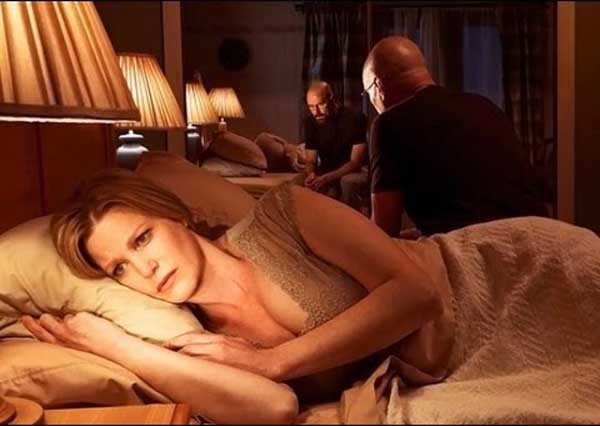
nullIn episode “Fifty-One” of Breaking
Bad,
Walter White buys Walt Jr. a
gorgeous, fast-moving and expensive red sports car, even though Skyler has expressly
asked him not to. It’s a subtle move of dominance. Walt has already made it
clear that he is the one who will be calling all the shots, and this is another
way to drive a wedge between Walt Jr. and Skyler by painting himself as the
better, cooler parent. A few scenes
later we cut to Walt and Skyler in bed together, Skyler turned away from Walt
as they spoon; the camera affording us a view of a close up of Skyler’s face,
as Walt gently strokes her arm and tells her that everything is going to be
okay, putting in a coyly worded request for a chocolate cake to celebrate his
birthday. Throughout this monologue, Skyler’s eyes remain dead and far away.
She knows Walt’s gestures of affection are not meant to actually open a warm
dialogue about the future; they are about quietly asserting Walt’s dominance
and control. Skyler is no longer an equal partner to a man she loves; she is a
prisoner in her own home.

As TV dramas that focus on male antihero protagonists have
become increasingly in vogue over the last 10 years, the women who
bear the brunt of their specific brand of male entitlement and rage have become increasingly noticeable. Female
characters in shows ranging from Mad Men to Game of Thrones are constantly subjected to verbal, sexual and physical violence, sometimes from the
male characters we admire and love. Male-on-female violence is portrayed as
normal and is often sexualized or depicted as romantic or glamorous. While I’m
a fan of all three shows I just mentioned, I also worry about the ubiquity of the
victimized woman in many of these programs and how the attitudes towards women
presented in these otherwise nuanced, intelligent shows might bleed over into real
life.

I’ve been thinking recently of Breaking Bad in light of
the recently released footage showing Ray Rice punching his now wife, Janay
Rice, in the face. After all, at its heart, Breaking
Bad
is a story about family and
violence, the family that Walt continues to claim to love, even as he selfishly
destroys it in order to become a drug kingpin. Walt’s transformation from
gentle chemistry teacher to leader of a drug ring comes at the expense of his
wife and children. He goes from being a protector to being someone who controls
every aspect of his family’s small suburban life, continuously putting his
wife and children at immense risk. 

The fact that Walt wants to provide for his family is often
listed as the most sympathetic excuse for his actions. In reality, it is
probably his most evil trait. Walter White’s transformation into a formidable
antihero is complex and rife with important moral questions, but Walt’s bad
behavior is often presented as less menacing than edgy; the newly evolved
Heisenberg, after all, has his fast sports cars and pork pie hat, his pithy,
brilliant one-liners. While clearly Walt is intended to be a villain by the end
of the series, many people still view Walt as a sympathetic figure and, while
Walt’s actions are never forgiven, they often do seem to be lionized. By the
end of the series Walt is presented as a flawed and tragic hero who did what he
needed to do in order to save the person he loved most: himself.

Skyler, who goes from being a strong, smart and willful
protagonist to a kind of cowering shadow of her former self, is never portrayed
as a hero. Her story is swallowed up by Walt’s. Indeed, many viewers took
tremendous joy from her slow collapse under Walt’s thumb. Often feminists cite
hatred of female characters under the broad, nebulous heading of “misogyny,” but the specific reason that Skyler was such a maligned character may have less
to do with a general hatred of women than with a specific discomfort at seeing the
White household descend into domestic violence and not wanting to blame Walt
for the deterioration. Skyler’s defiant attitude towards Walt, her refusal to
be willed into submission and go along with his egomaniacal plans, were
initially what inspired fans rooting for Walt to hate her.
Others criticized her when she began to become more desperate, give in to
Walt’s demands and eventually align herself with him after being worn out,
terrorized, and brainwashed by a person who was once her loving partner.

We spend a lot of time criticizing victims of domestic violence,
but we also spend a lot of time talking about them as victims, rather than
seeing them as whole people who are forced, by circumstance, to make a series
of genuinely complex and heartbreaking decisions. When footage is released of
Ray Rice knocking out his fiancé, we rush to see the evidence but don’t really
know what to do with it. A few commentators have struggled to excuse or defend
Rice’s actions, while others have complained that we simply don’t have context
to understand why he would do such a thing. Most mainstream discussion has
rushed to Janay Rice’s defense by pointing out the ways that she was an
innocent victim of a horrible crime.

But when Janay Rice herself responded to the public distribution
of this footage, she was primarily angry that she had been directly embarrassed by the
sudden media exposure. And why wouldn’t she be? When discussing Janay Rice, many
commentators rushed to criticize her choices, or simply left her out of her own
story. While the term “victim” is meant to put the blame on the perpetrator, it
also serves to flatten the person who has been hurt. We may feel sympathy for
victims, but we don’t see them as full people, with rich life stories, with the
combination of triumphs and mistakes that comprises each of our lives. In the
case of Breaking Bad, the
audience often could only think of Skyler in absolutes: either a shrew or a
victim, a bitch or a victim, a ball-buster or a victim.

We have plenty of stories where male protagonists fight
adversity and triumph over it, with dedication, with fists, with spiritual and
intellectual epiphanies that nurture individual growth. For female survivors of
domestic violence, we don’t tend to offer a similar opportunity for triumph. I
admire the number of women who have come forward to share their own stories
about how they experienced partner violence, but I also resent the fact that the
media still often presents these stories like a series of broken sighs and
resignations, rather than a deeply heroic act.

Even when leaving is presented as strategic, it is still
presented as a victim’s last decision, the path of least resistance, the thing
the weaker animal does when it knows it lost. The Skyler at the end of Breaking Bad is a
shadow of her former self, forced to support herself off the ugly drug money
she swore she would never take. Walt meanwhile is given his swan song, his
bloody handprint a signature stamp on the top of his baby blue.

We forgive a lot of male bad behavior. We are primed to see male characters as awash in their own hero’s journeys,
where the choices they make fundamentally matter, where they are leading the
charge of their own destiny. When Walt bellows at Skyler, “I am the one who
knocks,” late in the series, audiences applaud how Walt has been utterly
transformed. We see him as both menacing and brave, badass and brutal. In
contrast, in the world of the antihero, women have never been the ones to knock. We’ve been the ones to respond to that
knocking, the girls who end up dead in bloody bags washed to the shore, the
women condemned to stand by their man, or the women finally saved by a good
man.

This isn’t necessarily true in all media representations of
women. One of the reasons Buffy the Vampire Slayer succeeded as a feminist T.V. series is that although Buffy was
sometimes victimized, she was never ultimately portrayed as a victim. Her
response to trauma was complex and multifaceted, but she was consistently
portrayed as someone who is a survivor, rather than a victim of circumstances
beyond her control. In the same way, The Hunger Games’ Katniss’s greatest asset was not simply her skill at using a
bow and arrow, but her sheer resilience in the face of evil. 

Of course both of these stories are the domain of fantasy,
rather than the gritty realism we are supposed to see on any number of
antihero-centered T.V. dramas, genuinely brilliant, riveting shows, where,
nonetheless, female characters are often created in order to be broken. It’s time for women (and men) to start pushing back harder against narratives
that flatten female characters into either villains or victims of circumstances
beyond their control, and demand that female characters
are afforded a chance at redemption. I want a story that doesn’t end with death or leaving,
a world where we expect female protagonists, even those who experience violence
and pain, to ultimately carve out a new future.

Arielle Bernstein is
a writer living in Washington, DC. She teaches writing at American
University and also freelances. Her work has been published in
The
Millions, The Rumpus, St. Petersburg Review and The Ilanot Review. She
has been listed four times as a finalist in
Glimmer Train short story
contests
. She is currently writing her first book.

ARIELLE BERNSTEIN: Ciphers, Masks and Longing: Old Hollywood Ethos and Lana Del Rey

ARIELLE BERNSTEIN: Ciphers, Masks and Longing: Old Hollywood Ethos and Lana Del Rey

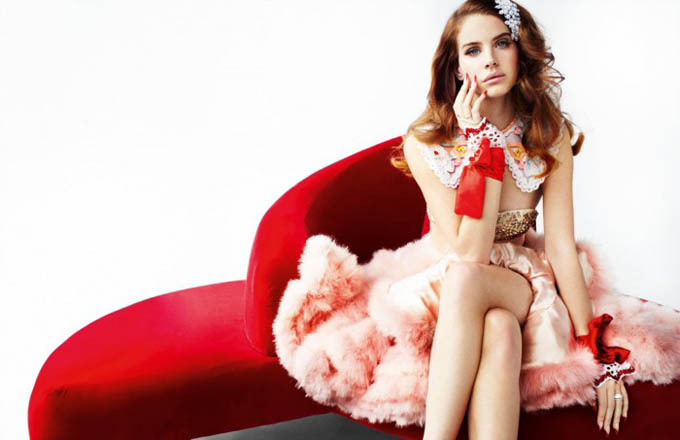
nullLana Del Rey’s latest album, Ultraviolence, is filled with hazy and seductive contradictions,
affirming the glamour and seduction of old Hollywood icons, femme fatales with
Veronica Lake waves, and mobster wives with baby voices. Del Rey is certainly
not the only female singer to be drawn to these motifs.  But the worldview that Del Rey constructs is
not Beyonce’s sepia-hued “Why Don’t You Love Me?”, where Queen Bey playfully
dismantles the image of the 1950s housewife.

Nor is it Madonna’s
wink to Marilyn Monroe in her video for “Material Girl.”

Del Rey isn’t
interested in reclaiming the figure of the housewife or movie star. In fact she
takes her feminine icons very seriously. 
Her video for "Shades of Cool," for example, has echoes of Marilyn Monroe’s
famous pool scene in “Something’s Got to Give,” and in “Brooklyn Baby” she
references her in lyrics, based on some of Monroe’s famous diary entries where
she wonders why no one takes her seriously.

The world of Ultraviolence is filled with reverence for a
rock-and-roll lifestyle that many feel has already come and gone, but that Del
Rey clearly appreciates for more than the sake of nostalgia. In interviews she
has explained that her songs are mostly autobiographical, plucked from times in
her life when she has felt most lost, and also the times, generally in the arms
of a lover, when she has felt most genuinely free.

One of the main reasons that Del Rey has been maligned has to
do with the fact that she is an artist who is more interested in the masks we
wear than in being a “strong female role model.” Critics of Del Rey have long
denied her authenticity (her records under her given name, Lizzy Grant, looked
and felt intrinsically different than her first album as LDR, Born To Die) as well as her agency. Del
Rey has historically been seen as a pawn of record executives, or, even worse,
as a figure that is merely empty and submissive. Pitchfork called Born To Die the “equivalent of a faked orgasm” and critics like Ann Powers
lamented that Del Rey represented “the worst parts of being a girl.”

For a woman to be perceived as “submissive” or “docile” is
the ultimate feminist insult, even though these words are often strangely
unspecific, related to being gentle, soft-spoken, quiet, or even just being
disarmingly pretty, or liking or wanting male attention. Songs demanding better
treatment and female empowerment existed before the girl power anthems I grew
up on in the late 90s and early 2000s.  In
the 60s, Aretha Franklin demanded respect . . .

. . . and Carole King and
Joni Mitchell urged us to listen to women’s stories; artists from Madonna,
Beyonce, Christina Aguilera, TLC to Lil Kim, Missy Elliott, and Nicki Minaj
often explicitly sing about double standards in the music industry and in the
bedroom. While they all define it in a different way, each artist explicitly
urges women to seek empowerment above all else.

Del Rey doesn’t play into this script. Catherine Vigier,
whose essay The Meaning of Lana Del Rey is
often discussed when pop culture critics lament the influence of Del Rey on the
Millennial generation, claims that one of the reasons Del Rey is so controversial
is that she is a woman who is clear that she doesn’t know what she wants, in a
world where feminists argue that knowing what you want is the ultimate and
definitive feminist act.

But is Del Rey’s desire to play with the many masks she is
given inherently anti-woman? In recent interviews Del Rey has made it clear
that she is less interested in talking about feminism than space, a quote that,
like many of Del Rey’s quotes, could lead to a thousand different interpretations.
In truth, Del Rey’s influences are mostly moody depressives, icons like Kurt
Cobain, whose vulnerability was read as “sensitive,” rather than “vacant.”

Unlike many current female artists, like Lily Allen, and
popular comedians, like Amy Schumer, whose social commentary is laid thick with
sarcasm, there is something about Del Rey that is disturbingly earnest.

Her constant need for
sex is more akin to The Rolling Stones’ howl for “Satisfaction” than Samantha’s
need to get laid on Sex and the City.

Del Rey is closer to a character in a Mary Gaitskill
collection: she is a submissive, like many of Gaitskill’s narrators, who seek
out fantasies and are ultimately calling all the shots, rather than an empty
headed, meek ingénue like Anastasia in Fifty
Shades of Grey.

Though some insist that Del Rey’s nostalgic styles are
inherently anti-feminist, female sexuality in pre-code and even post-code
Hollywood,was, in reality, filled with saucy, sexually assertive women, vixens
and femme fatales who played up their sexual charms joyfully—Barbara Stanwyck,
Marlene Dietrich, Greta Garbo, Josephine Baker, as well as the ever delightful
Mae West.

Playful banter remained a mainstay in classic Hollywood
cinema, where female wit was both smart and playful, a way to reel a guy in or
keep the men at bay. Heterosexual banter often sizzled on screen because it
managed to highlight sexual tension between equals.

Del Rey is certainly more Marilyn Monroe than Mae West, but
her self-described “gangster Nancy Sinatra” image is also one that is much more
about the female gaze than the male one. Del Rey is obsessed with the way women look at men, about
the desire to be desired. In the video for “Blue Jeans”, for example, we watch
Del Rey watching her lover undress, her face sinking into pure pleasure as he
gently slides his fingers into her mouth.

In her video for
“Ride,” Del Rey is in constant pursuit of pleasure, her little red sneakers
walking tentatively on pavement, her hands thrown back in the air, while riding
on the back of a motorcycle.

If she lives for the
men she loves, as many criticize, it is also those men who are cheering for her
in the spotlight. Is the desire for male attention inherently anti-feminist,
as some theorists claim? For men like The Fonz on Happy Days, The Situation on The
Jersey Shore
, and Barney Stinson on How
I Met Your Mother
, their entire sense of identity is based on their ability
to pick up chicks. Indeed, the same is
true in many commercials. Take, for instance, the Axe body spray commercial,
predicated on the idea that male power is derived from the ability to score
with a hottie.

When men alter their
body hair, douse themselves in cologne and use “pick-up artist” techniques,
they are seen as active, free agents, in charge of their own destiny, but when
women like Del Rey paint their nails, don pretty dresses and talk about boys
they want to love, they are dismissed by many men and women as being
empty-headed and unserious. 

The Bechdel test, the idea that female characters in a movie
should have at least one scene where they are talk to one another about
something other than a male romantic interest, is often cited as a means of
figuring out whether female characters are allowed true agency. If one uses
this test as a guideline for romantic and sexual obsession for heterosexual
women, it automatically reduces the complexity of their characters. This idea
plays itself out all the time, especially in films targeting teenagers. Male
teen lust is portrayed as natural, and learning to approach women is seen as a
way that young men can build their identity. In contrast, teenage girls and
young women who are interested in romance are often portrayed as foolish,
unintelligent, or “boy-crazy”. 

For all her sauciness, Mae West would have failed the
Bechdel test. Throughout her self-made career she was often portrayed as the
single female being admired by a gaggle of men eager for her affection and
approval. She is obsessed with
seeing herself as an object of great desire, which she doesn’t see as being
antithetical to being seen as an individual who can get whatever she wants with
her fiery wit and her insistence on being taken seriously.

Del Rey insists on a different kind of seriousness: she
really wants her despair to be seen as human, for her conflicted desires to
reach the same level of gravitas that we afford male leads. One of her favorite
icons, Marilyn Monroe, wanted the same thing: to be taken seriously for her
intelligence, for her viewers to look beyond the mask—that baby voice, that
golden coifed hair—and see the person underneath the artifice. 

Unlike Monroe, whose desire to be seen for her humanity over
her status as “sex icon”, went largely unrecognized in the era she lived, Del
Rey’s status in a post-third wave feminist world is constantly discussed. But perhaps Del Rey’s image is charged
precisely because viewers haven’t changed as much as we think we have since the
40s and the 50s, when a post Hays code world supplied a crib sheet for what
desirability looked and sounded like. In her article, “Pretty When You Cry,”
for Pitchfork, Lindsay Zoladz claims there is in fact something subversive
about Del Rey’s insistence on sadness, her refusal to wear a happy face; in a
world where people often demand female exuberance, Del Rey refuses to placate
audiences with a smile and a wink.

While I grew up on the angry rock anthems
of artists like Fiona Apple, Tori Amos and Alanis Morrissette, I also take Del
Rey seriously when she says she doesn’t find feminism particularly interesting.
Despite how drenched in femininity her persona is, Del Rey is much more
interested in being an icon, period, than a female icon, and her gritty image
on Ultraviolence is all about
swagger. In “Ultraviolence” she croons The Crystals’ uncomfortable lyrics, “He
hit me and it felt like a kiss,” and sounds like a breathy Bill Withers
beckoning a lover, “If it feels this good being used / you just keep on using
me / until you use me up.” In this same song she also references the
novel Lolita, which Del Rey has often
cited as a source for inspiration.

In the end, Lana Del Rey could care less about your girl
power anthems and political charges. Ultraviolence
is about the contradictions in the human experience—lust and sadness and
existential need and desires that don’t have easy answers and won’t be fixed
with better public policies. The world of
Ultraviolence
is important not because it necessarily has specific
political aims, but because it is about the messiness of the human experience
and how, no matter how many power ballads we write, true satisfaction, for men
and women, is still often mysteriously elusive.

Arielle Bernstein is
a writer living in Washington, DC. She teaches writing at American
University and also freelances. Her work has been published in
The
Millions, The Rumpus, St. Petersburg Review and The Ilanot Review. She
has been listed four times as a finalist in
Glimmer Train short story
contests
. She is currently writing her first book.


***A special thanks to Serena Bramble for the Monroe/West/Bacall and Knowles/Mitchell/Dietrich medleys posted above!***

VIDEO ESSAY: White Knights and Bad People

VIDEO ESSAY: White Knights and Bad People

[The text of the video essay follows.]

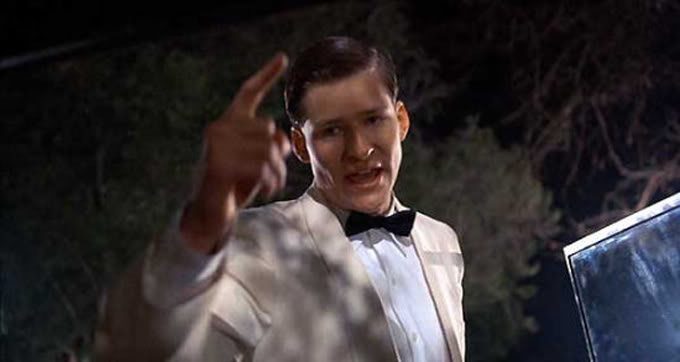
When I watched Back to
the Future
with my parents as a child, I remember my shock at seeing Marty
McFly’s mom sexually assaulted by the high school bully, Biff, in the backseat
of a car. The assault was confusing. I remember my first viewing of this
relatively tame movie as a garble of images–the backseat, the fluffy curls of
the pink prom dress, the feet poking out, the muffled screams.

Of course, this entire scene is about Marty’s dad having the
guts to punch the rapist in the face, to tell him to “leave her alone.” By the
end Marty’s mother is all smiles, relief, and pride in having chosen a man who
would defend and respect her.

My exposure to cartoon gender relations was similarly
violent. The female cartoon characters in shows like Tiny Toon Adventures and Animaniacs
liked to don skimpy outfits. The male characters’ eyes would pop out of their
skulls, tongues hanging out lecherously. Of course, these shows played on old
cartoon favorites. Betty Boop often had to avoid unwanted male attention, poor
Olive Oyl was constantly placed in supposedly comic situations where she was
being either kidnapped or harassed, and in Tex Avery’s Little Red Riding Hood,
“Red” is a full grown woman who must be careful of the predatory wolf who
stalks her nightclub. 

When I was a child, the images of a female cartoon character
being catcalled, or a woman being assaulted, did not seem especially unusual. I
assumed that warding off male attention was met by most adult women with a
mixture of pride and mild annoyance. As I got older, I became more and more
concerned about this phenomenon. When even strong, powerful women are victimized
in films and television, a dashing hero saves the day.

Today, in the age of Steubenville, we still worry about the
ways boys and men prey on girls and women. Social organizations often still
rely on the white knight trope when they address this matter. Actors and
musicians who regularly objectify women on screen and in music videos are shown
looking sad as they pose with Real Men Don’t Buy Girls hashtag signs. In the
White House PSA on sexual assault, Daniel Craig and Benicio Del Toro are among the male
participants calling for heroic behavior.

Stepping in when someone is in trouble is certainly
honorable, but the moral lesson in these PSAs provides men with the same
options they had in Back to the Future.
Are you a Marty, or a Bif? Will you defend womanhood, or assault it?

The threat of rape is often used as a device for male
characters to become heroes, which contributes to the idea that sexual assault
is a normal part of growing up female. Rape is still seen as unchecked lust
rather than an expression of violence. 
This myth has far reaching repercussions, as girls and women live in the
very real shadow of sexual assault constantly. We get inured to sexual violence
on shows like Game of Thrones, where
rape is often presented in the background of a scene, something bad, brutal men
do to helpless women.

It’s exhausting as a woman to constantly see the female body
on the brink of violation. I’m tired of the voicelessness of those bodies, by
the fact that we still need to spread awareness about how horrible sexual
assault actually is. I know I’m supposed to be grateful when people express
that they are aware, when men who seem poised to protect me when I go out, when
someone develops an app designed to help get me home safe by checking in with my
family and friends.

The way rape is portrayed today is not so different from how
it was portrayed in 80s exploitation films, where rape is intended to shock and
titillate in one fell swoop, like it often does in the current series Game of Thrones. A film like Extremities, for example, promises the
sweetest of revenges for a female protagonist, but it is the image of Farrah Fawcett
cowering and sobbing, forced to take off her clothes, while her rapist looks on
and calls her beautiful that has become the ubiquitous Hollywood rape scene,
where a gorgeous woman is exposed and shamed and, despite the fact that we are
told to root for her, we are also given permission to ogle her, to see her
through the rapist’s lens, before we see her own experience.

This is one of the reasons that Joan’s rape scene on Mad Men is so effective is that it
portrays her quiet terror without fetishizing her body or her fear. We don’t
see her ample curves illuminated, the way they normally are. Joan’s sexuality
is a point of pride throughout the series, and the camera makes it clear that
what we are witnessing is a power play and violation. There’s nothing sexual
about it. The camera ends not on a close up of her body, but a close up of her
staring at a point just ahead of her in an office that isn’t hers, as she waits
for what is happening to stop.

Arielle Bernstein is
a writer living in Washington, DC. She teaches writing at American
University and also freelances. Her work has been published in
The
Millions, The Rumpus, St. Petersburg Review and The Ilanot Review. She
has been listed four times as a finalist in
Glimmer Train short story
contests
. She is currently writing her first book.


Serena Bramble is a film editor whose
montage skills are an end result of accumulated years of movie-watching
and loving. Serena is a graduate from the Teledramatic Arts and
Technology department at Cal State Monterey Bay. In addition to editing,
she also writes on her blog Brief Encounters of the Cinematic Kind.

ARIELLE BERNSTEIN: The Gender Swap as a Feminist Revenge Fantasy

ARIELLE BERNSTEIN: The Gender Swap as a Feminist Revenge Fantasy

null

In a recent Slate
article called “The Brilliant Misandry of Orphan
Black
,” Jessica Roake argues that the men in Orphan Black are ciphers, emotionally shallow and boring, the kind
of cardboard cutout characters that women often play on T.V. shows. Roake
argues that this “switch” is subversive. “Finally!” she says, “Men are the sexy, empty
listeners!” But is portraying men as one-dimensional as women are often
portrayed really as subversive and politically minded as Roake claims? Is
revenge a meaningful reaction to the pervasiveness of misogyny in popular
culture?

The politically minded gender swap is everywhere these days.
The Hawkeye Initiative Tumblr features drawings of classic male superheroes in feminine
poses, calling attention to how overtly sexualized female bodies are often
presented, ass and chests sticking out provocatively. The swap is an
interesting kind of power play since these revamped “sexualized” male comic
book characters are not really sexualized at all; they are merely rendered
feminine, in classic pliant poses that are obviously funny, rather than erotic.
Indeed, the gender swap is often done for comedic effect. Amy Schumer, whose
Comedy Central show Inside Amy Schumer
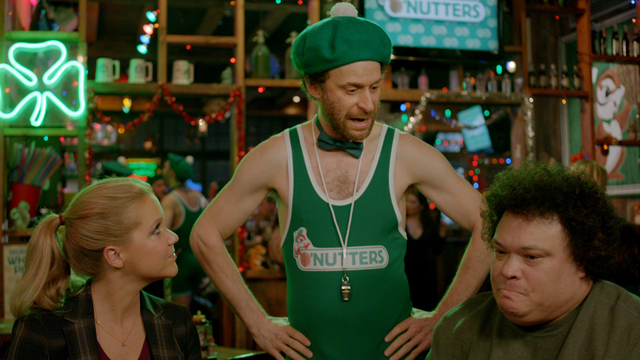
often spoofs traditional gender roles, had a recent skit “Lunch at O’Nutters” that
is a quintessential gender swap revenge fantasy, with Schumer and her friend
taking a coworker out to lunch at a restaurant that is the female equivalent of
Hooters. At one point, a waiter puts his nuts up on the table for the ladies to
ogle. Later there is a “wet nut” contest, where guys around the bar get their
pants sprayed with water.

Schumer’s comedy intends to highlight the absurdity of
restaurants whose entire purpose is to objectify women, just as the drawings
found on Hawkeye Initiative are intended to get us thinking more critically
about the ubiquity of sexualized female characters. One of the biggest problems
with this and other similarly minded “gender swaps,” however, is their
suggestion that, in order to level the playing field, we should allow women the
opportunity to demean and objectify men. In one popular gender-swapped parody
of “Blurred Lines,” for example, the female singers threaten to emasculate
their half-naked male background dancers. And a gender-swapped Wolf of Wall Street parody shows women
engaging in “bad boy” antics, but in this version throwing female midgets and
taping cash to a half naked man’s body. 

Popular wisdom suggests that incredibly sexist ads and music
videos and films and T.V. shows exist because sex sells. But the fantasy of sex
is not actually what we are being sold at all in the vast majority of
sexist-leaning media. What we are being sold is a fantasy of power, in which
women are presented as property in the same way that nice jewelry, a new car,
or a brand new iPhone might be. The problem with the feminist revenge fantasy
is that it doesn’t actively dismantle this type of power system at all. It
simply inverts the players, ultimately supporting the very system it seems
poised to protest.

Nowhere is the problematic nature of this more readily
apparent than in the way that some female artists have appropriated other
women’s bodies as a kind of exotic display. We saw this in Miley Cyrus’s VMA
performance, for example, which featured African American women twerking
provocatively behind her, and we also saw it in Lily Allen’s critique of
Cyrus’s performance, where almost exclusively black background dancers are used
to illustrate the obsession with sex and excess in the music industry. Most
recently, Avril Lavigne’s “Hello Kitty” video has garnered healthy criticism
for its portrayal of Japanese culture and its inclusion of blank-faced Japanese
women as background singers, echoing Gwen Stefani’s past performances with her
famous Harajuku Girls. All of these pop culture displays reduce people to caricatures
and all involve a single powerful female artist who feels entitled to collect
people as if they were merely ornaments or objects. 

The film Fight Club
criticized the way that consumer culture gives individuals the illusion that
they can buy power and happiness, all the while showing us that we are really
just cogs in a well oiled machine, rather than the unique and special snowflakes
we strive to be. At one point Tyler Durden comes up with the brilliant idea to
make soap out of liposuctioned women’s fat and then sell these beautifully
packaged bars of soap at expensive department stores. “It was beautiful,” the
narrator says.“We were selling women their own fat asses back to themselves.”

The political gender swap presented in recent years
functions the same way. It presents itself as critique, but really just
reassembles old, outdated ideas about power dynamics in a way that seems smart,
shiny, and new. True feminism should not be about “reclaiming” harmful and
hateful power dynamics in which one person always ends up being the victim.
Instead it should be about promoting justice, and about a world where no one is
reduced to being someone else’s plaything.

Arielle Bernstein is
a writer living in Washington, DC. She teaches writing at American
University and also freelances. Her work has been published in
The
Millions, The Rumpus, St. Petersburg Review and The Ilanot Review. She
has been listed four times as a finalist in
Glimmer Train short story
contests
. She is currently writing her first book.

VIDEO ESSAY: Lars Von Trier: Cinema’s Dancer in the Dark

VIDEO ESSAY: Lars Von Trier: Cinema’s Dancer in the Dark

In my writing group, a friend describes the way that, when
you edit a piece of writing, you should look for hot spots, places where the
strength of emotion is so great that heat radiates outwards. These are the
places that jolt the heart, that cause a vibration in your spine.

In Lars von Trier’s body of work there is nothing but this
kind of heat: piercing, exhilarating, painful, heartbreaking. When you watch
von Trier, every part of you wakes up, even parts you don’t like very much. A
von Trier film is a visceral experience. You can see this in Nelson Carvajal’s
brilliant video essay: a clamor of sounds, an array of confusing images,
panicked cuts. In a von Trier film you aren’t allowed to look away: not from
suffering, not from sex, not from heartache, not from desperation, not from
human evil, and not from the pain of lost innocence either. 

In many of von Trier’s earlier works, like Breaking the Waves and The Idiots, overwhelming emotion is
evoked through quick, jerky camera movements and raw acting. In his Golden
Hearts Trilogy, von Trier is particularly interested in looking at the purity
of altruism, while his more painful films often beg the question of whether
there is anything noble in sacrifice at all. 
Some feminists criticize the way von Trier depicts his heroines, his
obsession with their suffering, but von Trier’s films never struck me as
misogynistic, as some critics claim. His heroines are complex and authentic.
They make choices with conviction, even when those choices end up being the end
of them. In short, von Trier’s female characters are given permission to have a
kind of existential hunger that few “strong female characters” are ever able to
explore.

In recent films, like Melancholia,
Antichrist and Nymphomaniac, von Trier commands this same intensity as in his
earlier movies, while focusing more on languid scenes that showcase the horror
and beauty contained within the natural world. In von Trier’s universe, human
beings are brainy and removed from this landscape, yet also inextricably bound
up in it, constantly coming into contact with their animal selves, naked,
lustful, hungry. At the start of Antichrist a couple makes love to
classical music, while their baby falls out a window to his death. In Nymphomaniac,
a character muses about Fibonacci sequences and the intellectual pleasures of
fly-fishing, in between scenes of animalistic intercourse. And in Melancholia
all the scientific study in the world can’t save humanity from a star quietly
hurling itself into the earth.

While von Trier’s heroines are often presented as
Christ-like figures, he is less invested in exploring the fall from grace than in showing the messiness of the human experience and what happens when
Icarus flies too close to the sun.

In this way, von Trier’s power comes not simply from making
us empathize with another’s pain, but also allowing us to feel the dizzying
hope of free fall: from that moment before we give up, when all we can do is
reach.–Arielle Bernstein

Nelson Carvajal is an independent digital filmmaker, writer and content
creator based out of Chicago, Illinois. His digital short films usually
contain appropriated content and have screened at such venues as the
London Underground Film Festival. Carvajal runs a blog called FREE CINEMA NOW
which boasts the tagline: “Liberating Independent Film And Video From A
Prehistoric Value System.” You can follow Nelson on Twitter
here.

Arielle Bernstein is
a writer living in Washington, DC. She teaches writing at American
University and also freelances. Her work has been published in
The
Millions, The Rumpus, St. Petersburg Review and The Ilanot Review. She
has been listed four times as a finalist in
Glimmer Train short story
contests
. She is currently writing her first book.