VIDEO – Motion Studies #33: Touching the Film Object?

VIDEO – Motion Studies #33: Touching the Film Object?

The Oberhausen International Short Film Festival presents "Film Studies in Motion", a Web Series curated by Volker Pantenburg and Kevin B. Lee. This series, available on the festival's website and Facebook page, presents weekly selections of analytical video essays on the web, in preparation for Pantenberg and Lee's presentation  "Whatever happened to Bildungsauftrag? – Teaching cinema on TV and the Web", scheduled for April 28 at the festival.

Episode 7: Critics and Scholars on Video

The online video essay format opened a new playing field for critical and scholarly analysis of movies, providing opportunities for innovative explorations of films while also challenging the established conventions and limitations of text-based film criticism and scholarship. In its early stages, the video essay format was legitimized by the involvement of such prominent critics as Jonathan Rosenbaum and Matt Zoller Seitz and scholars such as Nicole Brenez and Kristin Thompson. One characteristic of these early videos is that they often resembled narrations of written texts with the video serving a secondary role as illustration. Over time, the relationship between text and media has evolved into more sophisticated works that seek to fully utilize the potential of the medium to illuminate itself. As more people continue to adopt the medium to advance their scholarship, the creative and analytical possibilities of this emerging genre will continue to evolve.

Today's selection:

Catherine Grant (2011)

Touching the Film Object?

View all Motion Studies video selections.

Volker Pantenburg is assistant professor for moving images at the media faculty of the Bauhaus-Universität Weimar. 

Kevin B. Lee is Editor in Chief of IndieWire’s PressPlay Video Blog and contributor to Roger Ebert.com. Follow him on Twitter.

SIMON SAYS: On THE AVENGERS, Joss Whedon, Dan O’Bannon, and Zapped Toads

SIMON SAYS: On The Avengers, Joss Whedon, Dan O’Bannon, and Zapped Toads

nullIn the beginning of The Avengers, when Hawkeye says, “Oh, I see better from a distance,” I feared the worst and I thought of Joss Whedon, Dan O’Bannon, Lifeforce (1985) and X-Men (2000). I thought, “Oh god, that poor toad in the X-Men movie got hit by lightning and a bad line of dialogue all over again.” And I groaned mightily, albeit somewhat prematurely, because I thought that Joss Whedon was about to prove yet again that he, like most mortals, is fallible. Bear with me a moment—this will take some unpacking.

The Avengers, which for the record is mostly serviceable even if it is laughably contrived and underdone, was directed and scripted by Joss Whedon. Whedon is the grand geek poobah creator behind such cult projects as Buffy the Vampire Slayer, Firefly and Dr. Horrible’s Sing-Along Blog. He’s a singular voice in contemporary science fiction and fantasy who is famous for his complex characters and snappy dialogue, and he’s a major geek celebrity. But with Whedon’s storied reputation as a sharp pop artist also comes a series of incidents that have turned Whedon into a de facto martyr. Any time something goes wrong with a Whedon-related project, it’s assumed that it can’t be Whedon’s fault. That stigma of being misunderstood by people in power has only been enhanced by Whedon’s rocky history with 20th Century Fox. Let’s unpack that confusing relationship a little, as well.

First there was the script that Whedon wrote for Alien: Resurrection, a fairly unremarkable script in itself that was then turned into something different from Whedon’s original ideas. Which is basically, you know, what happens to most scripts when they get made into movies. Since Alien: Resurrection (1997), the fourth film in the 20th Century Fox’s Alien film franchise, had plenty of on-set production difficulties (for example: director Jean-Pierre Jeunet didn’t speak English), Whedon publically blamed the film’s director for the film’s numerous shortcomings. In a 2001 interview with the AV Club, Whedon complains:

I listened to half the dialogue in Alien 4, and I’m like, “That’s idiotic,” because of the way it was said. And nobody knows that. Nobody ever gets that. They say, “That was a stupid script,” which is the worst pain in the world[…]In Alien 4, the director changed something so that it didn’t make any sense. He wanted someone to go and get a gun and get killed by the alien, so I wrote that in and tried to make it work, but he directed it in a way that it made no sense whatsoever. And I was sitting there in the editing room, trying to come up with looplines to explain what’s going on, to make the scene make sense, and I asked the director, “Can you just explain to me why he’s doing this? Why is he going for the gun?” And the editor, who was French, turned to me and said, with a little leer on his face[…]”Because eet’s een the screept.” And I actually went and dented the bathroom stall with my puddly little fist. I have never been angrier. But it’s the classic, ‘What something goes wrong, you assume the writer’s a dork.’ And that’s painful.

Whedon has since publicly admitted that there were some shortcomings inherent in his script. Still, he’s only sharing blame here, though I wouldn’t really expect any screenwriter to fall on their creative sword and assume responsibility for everything that went wrong with Alien: Resurrection (it really is a mess, albeit an interesting one).

Then there was the cancellation of Firefly, a very strong science fiction TV show that Whedon created and directed. Firefly aired originally on Fox, but it was soon canceled after it failed to attract high ratings. After the show’s rabid fans banded together, Whedon got to write and direct Serenity, a feature-length theatrical release. The show has also been released on DVD, thanks to its vocal fans.

Then there was Dollhouse, a conceptually interesting but rarely well-executed science fiction/spy program about a high tech brothel where prostitutes who are secretly intelligence agents have their identities reprogrammed cybernetically to suit their clients’ desires. The show was teetering on the edge of cancellation after the first season. After heavy rewrites, the show was renewed for a second season, receiving relatively sturdier ratings, but the show was not renewed for a third season.

In between these three major events, there is a fairly minor but nonetheless relevant anecdote about Whedon’s work as a script doctor on X-Men, the first and mostly forgettable live-action film of Marvel Comics’ mutant superhero team. Whedon has taken credit for writing the line where Storm (Halle Berry), a mutant with powers to control the weather, taunts a villain named Toad by saying, “Do you know what happens to a toad when it's struck by lightning? The same thing that happens to everything else." Whedon says that the line was not the problem but rather the line-reading, insisting that Berry read the line “like she was [The Addams Family’s] Desdemona.” I fear that, in this case, it’s the writer’s fault. No matter what sarcastic register Berry might have affected, that toad-frying line is dopey.

Whedon’s creative woes makes me think of Lifeforce and Dan O’Bannon, the acclaimed screenwriter of Dark Star and Alien, who complained of having his work significantly altered by director Tobe Hooper (The Texas Chain Saw Massacre, Funhouse). Like O’Bannon before him, Whedon is a recognized talent with a respectable track record that infrequently climbs onto a cross for very silly reasons. Once again, a troubled production history and outlandish reports of Hooper’s unprofessional and unfocused behavior seem to have been confirmed by the tonally inconsistent and utterly bizarre film that was theatrically released. O’Bannon still took a check for the movie, but he grumbled intensely about it. He was misrepresented, and of course that had nothing to do how cheesy and flat-out bad an idea it is to have a naked energy vampire (Mathilda May, hubba hubba) virtually seduce everyone she meets on planet Earth.

Make no mistake, O’Bannon and Whedon have both made exemplary work. O’Bannon’s scripted a number of great projects, like Alien and Dark Star, and he’s even directed one of the very best horror-comedies, Return of the Living Dead (1985). Whedon’s TV work has similarly been consistently strong, and the handful of stories he wrote in the Astonishing X-Men comic book series was also pretty engaging.  But sometimes, it’s enough to just not say anything about work that’s not very good. This probably won’t happen with The Avengers. Whedon’s script is marred by garden-variety contrivance, but some of its ideas are rather underdone, especially the ones in the film’s first half-hour. Hawkeye’s line about “see[ing] better from a distance” is especially dismal when you consider that he’s being asked why he hasn’t involved himself in a group project. Renner delivers the line with a straight face. He could not have been misreading it, since Whedon also directed the film. That line is just a tediously literal-minded joke.

There aren’t many painfully awkward moments like this one in the rest of The Avengers, but there are a couple. For instance, Loki (Thomas Hiddleston) is first identified to viewers in the film by a character who unceremoniously blurts out, “Loki! The brother of Thor!” Or how about when Loki brainwashes Hawkeye in the film’s first twenty minutes, (not a spoiler, true believer!) after tapping his magic spear on Hawkeye’s chest and lamely declaiming, “Freedom is life’s great lie.” Just before tapping on Hawkeye’s breast and hypnotizing him into becoming one of his minions, Loki adds, “Once you accept that in your heart . . . you will know peace.” (Sort of a spoiler!) Simply put, these are bad lines. In the future, if Whedon complains about creative interference again without doing actively disowning the work, he’ll be leaving himself wide open to some really bad cardiac-arrest-related puns.

Simon Abrams is a New York-based freelance arts critic. His film reviews and features have been featured in The Village Voice, Time Out New York, Slant Magazine, The L Magazine, The New York Press and Time Out Chicago. He currently writes TV criticism for The Onion AV Club and is a contributing writer at the Comics Journal. His writings on film are collected at the blog, Extended Cut.

VIDEO: Motion Studies #32: David Bordwell on OXHIDE II

VIDEO: Motion Studies #32: David Bordwell on OXHIDE II

http://www.movingimagesource.us/flash/mediaplayer.swf?id=143/944

The Oberhausen International Short Film Festival presents "Film Studies in Motion", a Web Series curated by Volker Pantenburg and Kevin B. Lee. This series, available on the festival's website and Facebook page, presents weekly selections of analytical video essays on the web, in preparation for Pantenberg and Lee's presentation  "Whatever happened to Bildungsauftrag? – Teaching cinema on TV and the Web", scheduled for April 28 at the festival.

Episode 7: Critics and Scholars on Video

The online video essay format opened a new playing field for critical and scholarly analysis of movies, providing opportunities for innovative explorations of films while also challenging the established conventions and limitations of text-based film criticism and scholarship. In its early stages, the video essay format was legitimized by the involvement of such prominent critics as Jonathan Rosenbaum and Matt Zoller Seitz and scholars such as Nicole Brenez and Kristin Thompson. One characteristic of these early videos is that they often resembled narrations of written texts with the video serving a secondary role as illustration. Over time, the relationship between text and media has evolved into more sophisticated works that seek to fully utilize the potential of the medium to illuminate itself. As more people continue to adopt the medium to advance their scholarship, the creative and analytical possibilities of this emerging genre will continue to evolve.

Today's selection:

David Bordwell (2011)

Slow Food. Oxhide II and the art of dumpling making

View all Motion Studies video selections.

Volker Pantenburg is assistant professor for moving images at the media faculty of the Bauhaus-Universität Weimar. 

Kevin B. Lee is Editor in Chief of IndieWire’s PressPlay Video Blog and contributor to Roger Ebert.com. Follow him on Twitter.

BONUS TRAILER MIX: THE DARK KNIGHT RISES

BONUS TRAILER MIX: THE DARK KNIGHT RISES

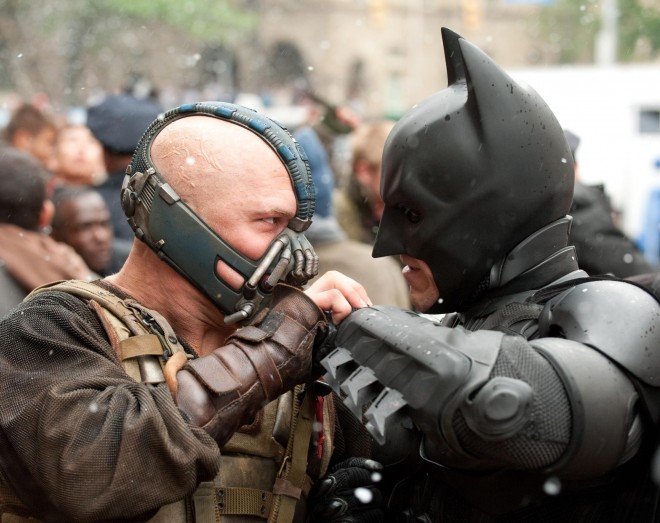
At the end of The Dark Knight, Commissioner Gordon (Gary Oldman) had to explain to his son why Batman (Christian Bale) was being willfully chased by police—disgracing himself and abandoning his post for the greater good of Gotham. The new trailer for The Dark Knight Rises zeroes in on the sleepy void that abandonment left behind, positioning Batman as the embodiment of hope, which won't return to the city's people until he himself returns. At the center is another boy who, while chalking the bat symbol on the pavement and chatting with Joseph Gordon-Levitt's beat cop, asks the question on everyone's mind: “Do you think he's coming back?”

Christopher Nolan hasn't been wont to cater to fanboy demands, but with the inclusion of idealistic children, he allows for the presence of both innocence and wide-eyed admiration, representative of vulnerable Gothamites and minute-counting franchise diehards. The moods of both parties are evoked in the trailer's first half, which, but for a light score accented with gentle piano notes, uses the sound of silence to ratchet up tension and augment awe. In rather Spielbergian fashion, both viewers and city residents look on as epic effects ravage Gotham in an eerie hush, its bridges, football fields, and crowded interiors handily destroyed by Bane (Tom Hardy), representing the self-professed “Reckoning” of the gray metropolis. “Hope is lost” and “Faith is broken,” read the ominous intertitles, setting up everything, from the music to the masked avenger, to ultimately rise, appeasing all who were flabbergasted by Gotham's quiet undoing.  

Through it all, the trailer finds precious balance in shady Selina Kyle (Anne Hathaway), a character who, beyond possessing unique allure, has notoriously played both sides in Batman's world. In voiceover, she whispers that “a storm is coming,” which one could apply to everything from Bane's impending assault to the movie's probable record-breaking sales. And with both a teasing menace and a clear devotion to the hero, her ambiguity is employed to amplify the theme of unease, another figure denoting citizens' fears and fans' rapid pulses.

The double entendres continue to pour from Selina's mouth, as she assures Batman that he “[doesn't] owe these people anymore,” and that he's “given them everything.” “Not everything,” Batman replies. “Not yet.” Without doubt, this exchange speaks directly to the tricks still tucked up Nolan's sleeve, and aims to assure the masses there's still plenty to come from the Caped Crusader. It's a promise that requires more faith than one may have expected, seeing as this preview doesn't boast the kind of wow factors oft-associated with a year's most anticipated film (the tacked-on reveal of a new Bat-vehicle seems more like a shameless trick than a thrilling addition). But in its use of the silent hovering of hope, the latest Dark Knight Rises trailer weaves audience loyalty into its very fabric, and leaves to the ticket-buyer the final assertion that the storm was worth waiting for.

R. Kurt Osenlund is the Managing Editor of Slant Magazine's The House Next Door, as well as a film critic & contributor for Slant, South Philly Review, Film Experience, Cineaste, Fandor, ICON, and many other publications.

VIDEO ESSAY: FAREWELL, MY LOVELY, The Last Philip Marlowe Movie

VIDEO ESSAY: FAREWELL, MY LOVELY, The Last Philip Marlowe Movie

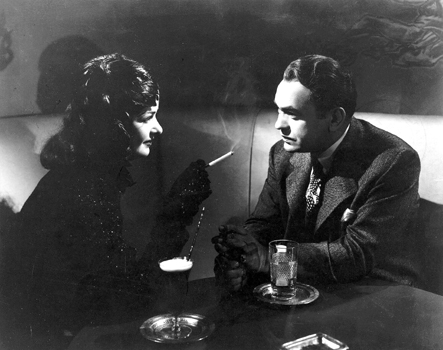
For decades, the detective Phillip Marlowe has been iconic character in American cinema, but who is Phillip Marlowe? Is he the sly and dashing professional of The Big Sleep? The tough yet vulnerable man from Murder, My Sweet? Perhaps we may think of Marlowe as the stalking camera of Lady in the Lake, or even as the bumbling comic in Robert Altman’s The Long Goodbye. But perhaps none of these are the true Marlowe, the one present in the pages of Raymond Chandler’s fiction. What exactly makes Phillip Marlowe, and what if he couldn’t be Marlowe, anymore?

Made in the wake of the box office failure of The Long Goodbye, Dick Richards’s Farewell, My Lovely is an elongated and weary trip of nostalgia into the world of film noir, as well a melancholic lament for the passing of the Marlowe mythology. The film manages to be both an homage to film noir, as well as a bleak deconstruction of the Marlowe character. Richards and screenwriter David Zelag Goodman create something quite the opposite of Robert Altman’s film, which had a zany and esoteric approach, placing the classic hero in the modern age. Instead, they would transport us back to a slower time, but move Marlowe forward.

By casting Robert Mitchum, perhaps the most iconic star of film noir, Richards set the stage for a weary and tiring detective who must solve one last mystery, but not because he searching deeply for the truth. Marlowe’s story revolves around two cases: a missing girl and a sour deal that leaves a client dead.

But Marlowe’s interest in both cases is less motivated by pride or the professionalism of film adaptations past. Here instead it is guilt. An added character from the novel, Tommy Ray, is murdered early in the story, and Marlowe continually reminds us that this is why he can’t let go of the case.

Otherwise, Marlowe seems to be more inefficient than ever. He gets clocked, drugged, beaten, and saved by others at every moment. He also takes time out of his case work to find out the latest news about the Yankee baseball star, Joe DiMaggio.

During the summer of 1941, when the film is set, DiMaggio was on a legendary hitting streak, still the longest in baseball history. Marlowe identifies with DiMaggio’s record not out of talent, but the player’s ability to soldier on, one hit a day. The streak also allows him to ignore the impending doom of World War II.

The film slyly plays with this impending history. Marlowe blatantly ignores what could happen; he’s seen it all, and what’s another war compared to the crimes he’s seen? Richards and Goodman understand the pain that has followed Marlowe throughout the cases from his novels. Chandler’s Marlowe is not some professional who always finds himself two steps ahead of the bad guys. To paraphrase the author, he was a knight in an era with no need for knights.

The film’s visual palette also provides a world Marlowe can’t fit in. The film’s director of photography, John Alonso, had just come off Chinatown, and shot the film in Fujicolor, the first American film to do so. These textures not only give the film a soft 1940s-like palette, but give these intense colors that seem to soak Marlowe in blood red throughout the film. This is not film noir, but film rouge, with Marlowe unable to escape these distorted colors that now frame his world.

Goodman also changed the background narrative of the film by making race and gender a larger issue than either the film’s original adaptation in 1942 or even the novel by Chandler. The writer not only added additional African-Americans and Asian-Americans characters, but changed Amthor from a card reading psychic into a butch lesbian who runs a whorehouse. Such revisionism displaces Marlowe even further from the social pariahs he often identified with in the classic Hollywood films. His identity as a straight white male in the lower class seems more out of touch than usual, like a walking relic of an older time.

Like The Long Goodbye, Farwell revels in its Hollywood nostalgia. Marlowe makes a number of glib remarks containing cinematic references, and the film’s visual style includes a number of references from the classic Marlowe films. Even Jim Thompson, the writer of many classic crime novels from the 1950s, as well as Stanley Kubrick’s The Killing, makes a brief cameo. But he, like Marlowe, is too old to be a force within the narrative, and is instead played for a patsy.

But the most fascinating aspect of Farewell is Mitchum’s drained and battered performance. Like his work in The Friends of Eddie Coyle, Mitchum embodies his ghosts throughout. Pauline Kael once referred to Mitchum as an actor “who wore a gut as a badge of honor.” You don’t just see an old man trying to play Philip Marlowe; you see the tired heroes of film noir trying to fit into a new era of even grayer ambiguity and stronger institutional control. Mitchum’s slow and laborious walks, his almost tone deaf narration, and those soulful eyes that have seen too much all build into a very different, but in many ways, the most authentic, vision of Marlowe.

What happened to Phillip Marlowe? Like The Long Goodbye, Farwell, My Lovely suggests a world in which the era for Marlowe has finally passed. Marlowe was never an iconic hero, meant to last beyond his era. He got old. By the end, all he can do is walk out of the narrative. Some heroes are meant to last forever. But for the Marlowe myth, Farwell suggests it is the end.

Peter Labuza is a film writer in New York City originally from Minnesota. He has written for Indiewire, Film Matters, the CUArts Blog, the Columbia Daily Spectator, and MNDialog. He will be attending Columbia University in the fall for a Master in Film Studies, focusing on the history of American film genres. He currently blogs about film at www.labuzamovies.com. You can also follow him on Twitter.

TRAILER MIX: MAGIC MIKE vs. COYOTE UGLY

TRAILER MIX: MAGIC MIKE vs. COYOTE UGLY

Films that showcase nightlife as a business have a way of settling into their guilt, reminding us that parties have moral consequences despite being the main attraction (think 54, which uses a whole institution to symbolize nightlife's rise and fall). The first trailer for Steven Soderbergh's Magic Mike, a male-stripper story loosely based on lead star Channing Tatum's life, doesn't waste much time owning up to this sub-genre cliché. After kicking things off with a policeman striptease straight out of a million bachelorette parties, and some fancy stage work from Tatum's eponymous gyrating hero, the preview quickly veers to the dreamer's yearning for something more, namely a “respectable” profession and a dollop of love on top. In the process, it wags a disciplinary finger at its own conceit, and reductively promises as many plucked heartstrings as flaunted G-strings.

Conversely, the trailer for 2000's Coyote Ugly masks the reverie respite entirely, making no mention of the songwriting goals of its young lead ingenue (Piper Perabo), and instead exhibiting every sweet sin of the titular New York bar. The B-Side to the Magic Mike clip's tips-in-the-pants atonement (“I am not my lifestyle!” Mike promises his sweetheart), the Coyote Ugly preview sells sex to the last shot, emerging as one of cinema's most misleading acts of marketing. By all evidence, the arc of Magic Mike isn't far off from that of its cowgirl predecessor, which also paired a risqué job with wholesome career ambitions. But while the former felt the need to appease its female target audience with bathos, the latter abandoned its demo completely to rope in live, rude boys, who surely left the film with a mind to murder producer Jerry Bruckheimer.

These two previews are as hypocritical in their respective messages as they are revealing about gender in advertising. Magic Mike's trailer, for all its initial oohs, ahhs, and ab-baring, acts as if its drawing factor isn't a man-candy parade (which also features Matthew McConaughey, Alex Pettyfer, and True Blood's Joe Manganiello), but boilerplate romcom developments. It condescends to women or Tatum fans by assuming they need a snuggly love story, and speaks to the unending taboo of showing too much male skin. Coyote Ugly's clip more or less lies to its audience, consisting primarily of girls on bars and bars on fire, which in fact only account for about 30 percent of the film. It exploited the permitting of female exploitation to pull a thorough bait-and-switch. That  the trailer  worked wonders is really beside the point.

Technically speaking, the Coyote Ugly clip is better by a mile, promising a fun and enticing setting and zipping along with ultra-cool construction, right down to the rough-and-tumble font. Magic Mike's preview has its moments, but only truly hits a groove when Rihanna's “We Found Love” sparks a tonal transition. It's a pity neither of these  trailers could find a pleasant medium, for no one wants a movie merely about flesh on display, but they don’t want such an angle to be shoved under the rug, either. The hot rush of naughty nightlife has a massive, vast appeal—it should neither be used as a ruse nor as a cause for a deceptive wrist slap.

R. Kurt Osenlund is the Managing Editor of Slant Magazine's The House Next Door, as well as a film critic & contributor for Slant, South Philly Review, Film Experience, Cineaste, Fandor, ICON, and many other publications.

VIDEO: Motion Studies #30: Girish on THE WOMAN IN THE WINDOW

VIDEO: Motion Studies #30: Girish on THE WOMAN IN THE WINDOW

The Oberhausen International Short Film Festival presents "Film Studies in Motion", a Web Series curated by Volker Pantenburg and Kevin B. Lee. This series, available on the festival's website and Facebook page, presents weekly selections of analytical video essays on the web, in preparation for Pantenberg and Lee's presentation  "Whatever happened to Bildungsauftrag? – Teaching cinema on TV and the Web", scheduled for April 28 at the festival.

Episode 7: Critics and Scholars on Video

The online video essay format opened a new playing field for critical and scholarly analysis of movies, providing opportunities for innovative explorations of films while also challenging the established conventions and limitations of text-based film criticism and scholarship. In its early stages, the video essay format was legitimized by the involvement of such prominent critics as Jonathan Rosenbaum and Matt Zoller Seitz and scholars such as Nicole Brenez and Kristin Thompson. One characteristic of these early videos is that they often resembled narrations of written texts with the video serving a secondary role as illustration. Over time, the relationship between text and media has evolved into more sophisticated works that seek to fully utilize the potential of the medium to illuminate itself. As more people continue to adopt the medium to advance their scholarship, the creative and analytical possibilities of this emerging genre will continue to evolve.

Today's selection:

Girish Shambu (2008)

“The Woman in the Window” (Fritz Lang)

View all Motion Studies video selections.

Volker Pantenburg is assistant professor for moving images at the media faculty of the Bauhaus-Universität Weimar. 

Kevin B. Lee is Editor in Chief of IndieWire’s PressPlay Video Blog and contributor to Roger Ebert.com. Follow him on Twitter.

VIDEO: Motion Studies #31: Elliptical Editing in VAGABOND

VIDEO: Motion Studies #31: Elliptical Editing in VAGABOND

The Oberhausen International Short Film Festival presents "Film Studies in Motion", a Web Series curated by Volker Pantenburg and Kevin B. Lee. This series, available on the festival's website and Facebook page, presents weekly selections of analytical video essays on the web, in preparation for Pantenberg and Lee's presentation  "Whatever happened to Bildungsauftrag? – Teaching cinema on TV and the Web", scheduled for April 28 at the festival.

Episode 7: Critics and Scholars on Video

The online video essay format opened a new playing field for critical and scholarly analysis of movies, providing opportunities for innovative explorations of films while also challenging the established conventions and limitations of text-based film criticism and scholarship. In its early stages, the video essay format was legitimized by the involvement of such prominent critics as Jonathan Rosenbaum and Matt Zoller Seitz and scholars such as Nicole Brenez and Kristin Thompson. One characteristic of these early videos is that they often resembled narrations of written texts with the video serving a secondary role as illustration. Over time, the relationship between text and media has evolved into more sophisticated works that seek to fully utilize the potential of the medium to illuminate itself. As more people continue to adopt the medium to advance their scholarship, the creative and analytical possibilities of this emerging genre will continue to evolve.

Today's selection:

Elliptical Editing in Vagabond

Kristin Thompson (2012)

Read related article: "The #1 Textbook on Film, Now with Video"

View all Motion Studies video selections.

Volker Pantenburg is assistant professor for moving images at the media faculty of the Bauhaus-Universität Weimar. 

Kevin B. Lee is Editor in Chief of IndieWire’s PressPlay Video Blog and contributor to Roger Ebert.com. Follow him on Twitter.

MAD MEN RECAP 6: AT THE CODFISH BALL

MAD MEN RECAP 6: AT THE CODFISH BALL

"It’s the future. It’s all I ever wanted."

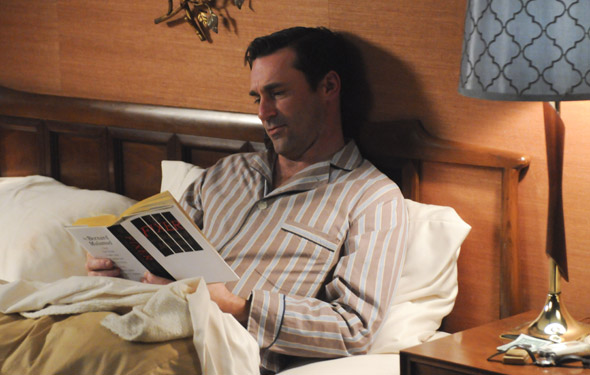
nullAfter weeks of dense, intricate episodes of Mad Men that have challenged my skills as a writer, it's something of a relief to experience the plain ol' symbolic, interesting, well-written, enjoyable quality of At the Codfish Ball. I strongly suspect that I don't have to spend the rest of my life analyzing this episode, and that I can derive all its meaning in two or three viewings.

Which is not a criticism! I loved this episode, and I love the more complex ones. I do, however, see the difference.

The lyrics of the song "At the Codfish Ball" are about dancing fish. Twice we see Sally confronted with the task of eating fish. The first time, she's served spaghetti—you know kids, they just won't eat grown-up food. The second time, at the banquet, she tries it, and it seems like she might be learning to like it. But, while the kids in Megan's commercial are having beans rather than spaghetti, in either case comfort food and comforting adults aren't available to girls who eat fish and stumble upon illicit blow jobs. (Watch if you dare!)

At the Codfish Ball is about passing the torch, about generations, about growing up, and about the changes from one generation to the next. It's especially apropos in 1966, which is approximately when the term "generation gap" was coined, but it's true for all of us, from cave men to people who eat beans on the moon. Because this is Mad Men, it aims to take a more honest look at the generations than Megan's commercial does, and it ends on a dark note (that tableau at the end of dinner—in the video above—is as striking as the elevator tableau at the end of The Beautiful Girls). Yet about three-quarters of the way through, I was wondering if I was watching the most optimistic episode of Mad Men ever made. As dark as some of it was, I still feel that way.

How is the torch passed? Let me count the ways. At work, Peggy is proud of Megan and explicitly states that she is seeing the torch passed. Joan is proud of Peggy, and happy for her. Perhaps for the first time she sees Peggy striking out on a path that isn't the one Joan herself laid out for Peggy in the very first episode of the show. Joan serves as a surrogate mother for Peggy, since Peggy's own mother refuses to approve of her, and even withdraws Peggy's father's approval from beyond the grave. That torch didn't pass quite so successfully. Sally is praised as a mature young lady, and she heroically saves the older generation—but she's still too young to wear makeup. Nonetheless, attending the banquet is a significant "graduation." When she sees Roger, she asks if he's her sitter, and in a way he is: He's her "date," and he passes a kind of torch to her, teaching her how to be an account person and a "wing man."

We've already discussed the way that Sally's journey into adulthood turns suddenly darker. Megan's journey into maturity is also both joyful and dark. Those are some tough parents! They seem to have trained Megan well for marriage to Don, accustomed as she is to adultery and drunkenness. Another torch passed.

I loved Pete's conversation with Emile Calvet. If you recall, way back in Season 1 (Episode 1.04: New Amsterdam), Pete's own father said he didn't understand what Pete did, and was disdainful. Now Pete has an answer for the question, and an elegant one. Pete's been difficult to like this season, but he has grown up!

One of the great things about this episode was the core character development. Every episode of Mad Men is structured around a theme, and almost everything happens because of that theme. What makes these writers extraordinary is that their characters still behave like themselves as their lives move forward. It would be hard enough to write these people authentically without making it all flow from one subplot to another! Yet, while we have to see Joan living with her decision, and Roger with his, and see how Don and Megan's marriage is doing, and so on, we must do so within the thematic context.

"I for one am not going to let a bunch of dirty teenagers in the paper disrupt the order of things."

Roger's conversation with Mona (video below) was one of the highlights of the episode, not because it was thematically important (although the quote above is certainly about the generation gap), but because these two actors are great together, because Mona has always been a terrific and underused character, and because the interplay sparkles.

So much of this episode simply sparkled. Hey everybody, catch a deep breath, let go of interpretation, and just enjoy! Peggy looked so cute in pink, and Katherine Olson is a great character, every mean bit of her. Mona and Katherine are two people the fans always want back, Glen Bishop's return is another treat, and as if that weren't enough, we have the stellar Julia Ormond as Marie Calvet, and Ray Wise's return as Ken's father-in-law. A real Codfish Ball of a guest cast!

Another motif of At the Codfish Ball is seeing others as they are, and not simply as they relate to you. Roger has suddenly discovered he's a member of the human race, and he thinks he's the first person to ever notice, bless him. It's funny, of course, and Don is bemused, but Don hasn't previously seen his new wife entirely as her own, separate human being either. Last week he treated her as no more than an extension of his whims. This week, he discovered Megan is actually a person with talent and ability, and lo and behold, it turns him on! Peggy is discovering the same thing about herself; that she has her own desires and needs, and that she may not need to live under the thumb of expectation.

Peggy expected the worst news from Abe. Oh, honey. Then Joan woke her up, and she was so . . . so . . . girlish. With a pink dress with a pink bow on the front and an unshakable grin. She was living the childhood dream of a wedding, one she thought was only for prettier girls, but even though she didn't get what she thought she wanted, she made an adult choice. She changed from little girl pink to a beautiful and womanly dress to talk to "Ma." In this case, Peggy is figuring out that she is a person.

Some additional thoughts:

  • Meta-generational fun: Creator Matt Weiner's son Marten plays Glen Bishop. Ray Wise was on Twin Peaks as someone who killed his own daughter (thanks to my sister Roberta for pointing that out). Julia Ormond played Sabrina in the remake of the same name (a remake of a Hollywood classic is, after all, a kind of "next generation").
  • Sally should simply stop opening double doors. There's always sex behind double doors.
  • Quote of the week usually goes to Roger, and he certainly had several runner-ups, but nothing beats Emile Calvet with: "Don, there’s nothing you can do. No matter what, one day your little girl will spread her legs and fly away."
  • The motif of wealth also played itself out in this episode. I haven't the space to explore it properly, although I probably will on my blog as the week unfolds. Emile is a Marxist who disapproves of what unearned wealth does to Megan's soul. Mona counsels Roger not to feel guilty for wealth (check the second video, above). The wealthy "establishment" doesn't trust Don, according to Ed Baxter (Ray Wise).

Deborah Lipp is the co-owner of Basket of Kisses, whose motto is "smart discussion about smart television." She is the author of six books, including "The Ultimate James Bond Fan Book."

Watch Mad Men Moments, a series of videos on Mad Men, produced by Indiewire Press Play.

GIRLS RECAP 3: ALL ADVENTUROUS WOMEN DO

GIRLS RECAP 3: ALL ADVENTUROUS WOMEN DO

nullRemember those Cosmo-ish "Which Sex & the City character are you?" quizzes that every single editorial outlet featured during that show's run? Of course you couldn't take the results seriously; you can't "be" one of those people, because those people weren't people. They were slices of people, meant to illustrate (and easier to write than) the composite, contradictory whole.

nullIt was reductive to say that I "was a Miranda" (a workaholic who ate cake from the trash) ( . . . What? It was still in the box!), and it's just as reductive to say that I'm in large part a Marnie (controlling, responsible, paralyzed, gorgeous) (just kidding; I'm not that responsible). But I do relate to Marnie's rigidity, self-righteousness, the frustration and fear of change that manifest as meanness, and maybe that's why I completely hated Marnie's story in "All Adventurous Women Do."


I hated Marnie during it at times, for sure. Charlie surprises her with a stubbly new haircut, and it's actually an improvement over the previous floppy style, but Marnie's face falls straight off her head (nice work by Allison Williams, here and throughout). She hates it, sneering that he looks like "Mickey Mouse without the ears." She's basically mad that he didn't clear it with her first, and she's even madder when he reveals that he shaved his head to support a woman at work who has ovarian cancer, because now Marnie looks like a total bitch. That’s because she is a total bitch here.

We didn't need another illustration of the idea that Marnie and Charlie should split up already, but the show moves the ball at least a few feet later . At an opening at the gallery where Marnie works, Marnie's inappropriate boss (she reads as tipsy, but you get the feeling she's always like that; kitted out in a low-cut blouse, she sends another assistant to get her "tit tape," and nobody in the scene even flinches) introduces Marnie to a snotty artist, Booth Jonathan. The "introduction" takes the form of the boss yelling at Booth for sleeping with some other lady of a certain age, and noting that Marnie says she has a boyfriend, "but I've never seen him." Marnie, flustered, shares that she's a big fan of Booth's; Booth sizes her up and advises her to "try and give less of a shit." My immediately saying, out loud, "The correct usage is 'try to," means I'm not in the demo for Booth's cocky whatever, but Marnie is intrigued. Flirting. She feels obligated to inform him that she's not going to kiss him. More flirting.

And here's where I get annoyed. Booth gets right up close to her and murmurs, "But I want you to know: the first time I fuck you, I might scare you a little, because I'm a man, and I know how to do things." He walks off to enjoy being That Guy and wearing his blazer collar turned up. Marnie rushes inside, locks herself in a bathroom, and masturbates. . . . Girls, please. It's not that a line like that has never worked, but the entire sequence felt, to me, like a man's take on what Marnie needs, i.e., "That filly wants breaking to harness!" Yes, people should stand up to Marnie, but 1) I don't care for the idea that that's a result of her gender, or that the opposite gender is what's required to "take her down a peg"; and 2) snideness and pat line delivery do not a man make in the first place. Maybe I'm overthinking this, but the cure for uptight-bitch-itis is not necessarily cock.

We're seeing more than enough peen-alization on the show as it is. Hannah puts on war paint (high five on the tights-and-Chuck-Taylors wardrobe choice, though) and goes over to Adam's house, where he's lifting weights (natch). The next morning, in bed, he's making her tummy fat "talk," which she's both charmed and terrified by; he asks whether she's "tried a lot to lose weight." Mildly irritated, she tells him she decided to make other things more important in her life, but I liked the way the scene highlighted that the average straight man's cluelessness about matters lady-weight is exactly that: cluelessness. He doesn't mean to be hurtful, because he absolutely has not noticed whichever five-pound pocket his lady friend thinks is flagrantly hideous, unless it is a third breast, which he thinks is rad.

The tickly, teasing development of their bond is rudely interrupted by a call from the clinic, informing Hannah that she has HPV. Lena Dunham kills it here: Hannah is near tears as she relays this to Adam, and he continues to earn points by hugging her and saying he's sorry. Think it's all about to go pear-shaped? Correct! Hannah grumps, "Are you sorry because you gave it to me?" Adam is promptly and completely offended, claiming that he got tested recently "and I don't have that." Even if there were a screen for HPV for men, which there isn't, his claim to have gotten tested would smell like bullshit just because he’s the one making it. Hannah promptly backs down, though: she's sorry, she's only slept with two people (down from "two and a half" in a previous ep) and she doubts it's her college boyfriend, surely he can see how she might assume Adam is the source, is he mad at her? "Will you still have sex with me?" Adam, coldly: "When it's appropriate, sure." What a prince. When Hannah asks for a hug goodbye, he's too "busy" doing a shoulder-stand and cycling his legs.

Water having found its insensitive level once more, Hannah goes outside to call Marnie, who starts crying about how it's so unfair because Hannah is so careful with condoms. They discuss whether Hannah could have gotten HPV from the college ex, Elijah, and do a dead-on riff on the stupid details you inevitably have handy about your exes' exes—viz. Elijah's previous girlfriend, a cellist with a "loose-joint disorder," who annoys Hannah by "liking" her Facebook statuses. Hannah assures Marnie that she's fine, so Marnie reminds her that rent is due in a week, and asks about Hannah's job hunt. Hannah's not that fine. "I have pre-cancer!" she snaps, and hangs up on Marnie. Looks like Hannah is putting her theory from last week—that an STD is a great excuse not to bear down on looking for a job—into practice.

Hannah heads over to Shoshanna's to change clothes. Shoshanna is still kind of a cartoon at this point in the series, but Zosia Mamet is doing a great job with the broad strokes she's given. This scene doesn't do much for Shoshanna's depth, but it's still kind of fun: she's cuddled up on her couch, eating cereal, stroking a furry décor pillow in a Blofeldian manner, and watching Baggage. Baggage is apparently a real show, hosted by one Jerry Springer, in which contestants put their emotional baggage in various suitcases, and then their partners have to pick one, or something . . . . I mean, what it really is script-wise is an excuse to shorthand some background info about Shoshanna (she has IBS, unsurprisingly), and also to address the etiquette of STDs.

Shoshanna's practical inexperience doesn't hinder her here, as she shrugs that Jessa has "a couple of strains" of HPV (the Parisian and Balinese strains, I presume), and Jessa's typically self-mythologizing take on it is that "all adventurous women do." Hannah doesn't want to have to tell/ask Elijah what's going on, because she doesn't want to see him, because she thinks he's still in love with her (. . . oh, dear), but Shoshanna thinks she has to: "In the STD world, I think it's like kind of courteous." She also thinks it's totally fine if Hannah and Elijah end up having sex (. . . ohhhhhh, dear) because they both already have HPV. I know Shoshanna only has two dimensions, but I love both of them, and the insane clown logic that prevails therein.

The adventurous woman, meanwhile, is on a babysitting job, clad in a transparent floor-length white dress with neon-pink underthings. The mom, rushing off to a shoot, suggests the kids do their "mosaic work," or maybe the older one could let Jessa proofread her (ten-page) novel. Jessa is a natural with the girls, listening attentively to Trixie's grammar-school masterwork while eating string cheese in a makeshift tent in the living room. Dad (James LeGros, a casting decision I found all-caps delightful in my notes—love that actor) comes home to find Jessa snoozing on the couch; something about Jessa's artless report that she accidentally kicked one of his kids in the head appeals to him (or perhaps it's the visible hot-pink brassiere), and they smoke pot together and talk around their shared aimlessness. One of the kids wakes up and wanders into the kitchen before it Goes There, but LeGros isn't generally a throwaway-cameo guy, and the dialogue set his character up as a man who's not working and resents his hard-charging wife's blah blah justified in his own mind to fuck the babysitter blah, so! Expect these two to get it on.


Elsewhere, the Elijah talks break down in a matter of minutes. He thinks Hannah's confronting him because she heard about his emergence from the closet, but she's stunned by the news. What follows is a Horvath's Inferno-esque tour of all the insecurities women have, or could have, about ex-boyfriends who "turn out to be" gay—that they were always attracted to men, that they thought about Doing It with men during the relationship, that they could feign an attraction to a woman because she had mannish traits. Elijah confirms all these things, commenting that "there's a handsomeness to" Hannah, and Hannah snaps that maybe he could have figured his attracted-to-dudes shit out before passing her a disease. Elijah goes to DefCon 1 at that point. It's not clear where all his hostility is coming from; she's just accused him of giving her an STD, then claimed that he's affecting a "fruity little voice," but now it seems like he's been lying in the high weeds for other reasons. In any case, he hotly denies he's the carrier, informs her that Adam is full of shit about testing negative, and snots, "You were always like this." Hannah notes that he was not always like this, or she would have known he was gay. Elijah: "We're only as blind as we want to be." Then he throws a low blow he's obviously been saving: her dad is gay. Elijah cites the stud in Dad's ear, and I totally noticed that on Peter Scolari in the pilot, so it's nice that it gets a callback here. After failing to convince Elijah that her dad is straight, she passive-aggressives that she's going to ask people if they're gay before she sleeps with them from now on. Elijah wishes her a sarcastic good luck with that—"and don't be surprised if people ask you if you keep dressing like that." I agree that Hannah doesn't always dress to flatter her shape, but again, the bile seems unrelated to what's actually going on here. Hannah has had it and announces that she's going to get the last word in. Not so fast! Elijah snaps, "It was nice to see you, your dad is gay," and leaves.

Back at the Hannah/Marniehaus, Hannah is over-thinking a tweet that ends up reading, "All adventurous women do." She gets up to have a solo dance party to a song with on-the-nose lyrics ("I keep dancing on my own"). When Marnie gets home, Hannah does not stop frugging to announce to her that Elijah is gay, which she probably should have known since he "only ejaculated 30 percent of the time. And . . . he seemed gay." Marnie laughs, because you kind of have to. They dance together, but Hannah's determination to hide her hurt feelings in dance soon flags, and we fade to credits on Hannah giving Marnie a huge, almost desperate hug—making the connection she's sought all episode.


Sarah D. Bunting co-founded TelevisionWithoutPity.com, and has written for Seventeen, New York Magazine, MSNBC.com, Salon, Yahoo!, and others. She's the chief cook and bottle-washer at TomatoNation.com.