VIDEO ESSAY – Hijacking Michael Haneke

VIDEO ESSAY – Hijacking Michael Haneke

With Michael Haneke‘s winning his second Palme d'Or following the triumphant Cannes premiere of his new film Amour (Love), I thought it a fine occasion to revisit his earliest works. Re-watching Haneke’s first five features, The Seventh Continent (1989), Benny’s Video (1992), 71 Fragments of a Chronology of Chance (1994), The Castle (1997) and Funny Games (1997), the dominant impression left by the great precision in these works—whether in their narrative, dramatic or visual construction, even while depicting cataclysmic dysfunction in individuals, families or society at large—is that one is in the presence of a control freak without equal in the contemporary cinema.

Not everyone thralls to Haneke’s exacting approach, especially when they feel the jerk of his chain a bit too violently. It was 15 years ago that Haneke made his Cannes competition debut with the original Funny Games. Its infamous “kitchen” and “remote control” scenes elicited vehement boos and bewildered applause in equal measure. That film sought to deprogram viewers from their knee-jerk habits while watching action thrillers; it made them reflect on the underlying class and social assumptions that govern both the real world and the movie world. But Haneke’s mission of liberation is paradoxically one programmed on his own terms, with the audience led down a strictly delineated path to arrive at a state of abjection. Or, to put it in his own words, he intends to “rape the viewer into independence.”

That quote from a 2007 interview with The New York Times exposed the issues underlying Haneke’s relationship with his audience. Like a dictator, he works under the premise that he knows what’s best for his people. Perhaps it’s the same premise that leads to our willing submission to all the artists we embrace. But something in Haneke’s hyper-controlled filmmaking makes the equation feel unbalanced. Maybe it’s Haneke that could use a little liberating, and or a taste of his own medicine. So in the spirit of Peter and Paul in Funny Games, this video is abducting a few fragments of Haneke’s films, playing with and poking at them to see what makes them tick. There is no grand scheme or end result to these fragments, except to tear a hole into their painstaking construction, so that some fresh air might get in.

 Notes:

The Castle (1997). When I mentioned this video essay to Daniel Kasman at MUBI, he suggested doing something with the many tracking shots of Ulrich Mühe walking in the snow. These shots are practically the only ones shot outdoors in a film that’s set within a series of confining interiors, but they end up feeling as claustrophobic. Put together it also becomes apparent how physically punishing these snowy scenes must have been for Mühe to shoot.

nullFunny Games (1997) This is an obvious riff on the “remote control” moment that follows the shot chosen here, but with the aim to dissect one of the film’s most disturbing moments (that’s also the most cheer-inducing for the audience). Instead of blood and guts exploding from Frank Giering’s midsection, we see some special effects paraphernalia: a safety pack on his belly to protect him from exploding gunpowder, and some impressive coordination between the explosion effects both in front of and behind him. What’s also impressive is his posture as he receives the blow. Most people would flinch, cower, or curl, but Giering stands erect, practically heroic; all the better for the particles to fly from his chest.

The Seventh Continent (1989): How telling that in the film’s most cataclysmic sequence of a family’s feature length journey of steady self-destruction, every shot is precisely patterned, moving from one series of related images and objects to the next. Haneke himself can’t succumb to chaos without a blueprint – one that also provides the components for this one minute fugue of mayhem.

71 Fragments of a Chronology of Chance (1994): This segment is fairly self-explanatory: Each clip is played at roughly 1000x speed, all of them centered at the midpoint, so the variety of their length is evident. The film is a confounding puzzle of causality vs. non-causality and remains such within this layout.

Benny’s Video (1992): I find “The Girl” (she doesn’t even have a name!) played by Ingrid Stassner to be the most tragic and affecting of all of Haneke’s characters. Maybe because she’s the most like us (or how we like to think of ourselves) when watching a Haneke movie: an innocent bystander unexpectedly implicated in the diabolical designs of someone wielding a camera. Let her fate be a cautionary tale for all of us: To see Michael Haneke films (much less “enjoy” one), we must be prepared to see through them.

Originally published on Fandor

Kevin B. Lee is Editor in Chief of IndieWire’s PressPlay Video Blog, Video Essayist for Fandor Keyframe, and contributor to Roger Ebert.com. Follow him on Twitter.

CANNES 2012: And the Winners Should Be…

CANNES 2012: And the Winners Should Be…

null

Read our critics' personal predictions of who SHOULD win the awards, and who WILL win the awards, at Cannes 2012:

Glenn's Predictions:

With the last Cannes competition screening in the books, let the award prognostications begin. Since Cannes 2012 has been the year of non-consensus, trying to pick the award winners is like playing a game of musical chairs.  But here goes:

Best Actor:

If there’s any justice in this world, Denis Lavant will carry the day for his breathtaking, transformative performance in Holy Motors. There’s no male performance in competition that compares. Aniello Arena of Reality has an outside chance of pulling an upset here, as does Jean-Louis Trintignant of Amour, but I see the latter and his co-star Emmanuelle Riva getting a special mention award instead.

Will and Should Win: Denis Lavant, Holy Motors

Best Actress:

This category is more of a crapshoot, with Margarete Tiesel (Paradise: Love), Marion Cotillard (Rust and Bone) and Emmanuelle Riva (Amour) all serious competitors. Cotillard should take it as the local favorite, especially since Paradise: Love is an incredibly divisive film and the performances in Amour should get their own award.

Should Win: Margarete Tiesel, Paradise: Love

Will Win: Marion Cotillard, Rust and Bone

Jury Prize:

Sergei Loznita’s In the Fog has an outside chance at the Palme, but I see him getting either the Jury Prize (his great War film would be my choice) or Best Director for his brilliantly dire work. But my prediction for third place is Cristian Mungui’s stark indictment of religious ideology, Beyond the Hills, a resounding technical achievement hindered by taxing hysterics and a blunt “fish-in-a-barrel” ending.

Should Win: In the Fog

Will Win: Beyond the Hills

Best Screenplay:

Andrew Dominik’s talky gangster film Killing Them Softly deserves this one for its amazingly dense dialogue sequences and interesting subplots. But I see David Cronenberg’s talky satire Cosmopolis pulling this one out. If Resnais doesn’t get the Palme, he might get a Screenplay win in return.

Should Win: Killing Them Softly

Will Win: Cosmopolis

Best Director:

It would be wonderful if Wes Anderson were honored with Best Director for Moonrise Kingdom, the one American film in Competition that grows more complex and enjoyable by the day. But he seems like a long shot despite the overall warm reception. If Holy Motors doesn’t win any other award, Carax has a shot at director as well. But the aforementioned Loznitsa will walk away with the prize.

Should Win: Wes Anderson, Moonrise Kingdom

Will Win: Sergei Loznitsa, In the Fog

Grand Prix:

Michael Haneke’s stunning Amour has been the one film most festivalgoers agree on, gaining both critical acclaim and audience praise. But since the Danish director won for his last film (The White Ribbon), look for it to receive the runner-up prize.

Will and Should Win: Amour

Palme d’Or:

Four films have a viable shot at winning the Palme d’Or (Amour, You Ain’t Seen Nothing Yet, Like Someone in Love, and Holy Motors), but directors of two (Haneke and Kiarostami) have already won the top prize. Kiarostami’s brilliant Like Someone in Love deserves the award for its audacity, complexity, and sheer thematic force, but it’s hard to imagine the jury giving this divisive a film the big prize.  I’m going with Resnais, mostly because he’s never won the award and this is reportedly his last film. The master of the French New Wave will undoubtedly be jury president Nanni Moretti’s sentimental choice. But don’t count out Leos Carax’s loony Holy Motors, the one film in competition with the most impassioned momentum.

Should Win: Like Someone in Love

Will Win: You Ain’t Seen Nothing Yet

SIMON'S PREDICTIONS:

I’m usually pretty bad at prognosticating anything, so please do take that in mind when reading these predictions. I’ve tried to keep in mind the warm reception some of these films have gotten from colleagues, audience members and myself as well as what a jury (any jury, really) might be inclined to reward. But really, this is a tough year to predict. There have been a number of exceptional films in competition and also a bunch of awful ones, too. Choose wisely, Nanni and co.

Best Actor:

Who Will Win: Denis Lavant, Holy Motors. Lavant plays an actor that transforms from one scene to the next in Leos Carax’s astounding ode to film (the rise of digital cinema weights heavily on him). I tend to think this will win because Lavant’s not only typically versatile but he also has a very physical and demanding role. It’s an impossible-to-miss performance.

Who Should Win: Denis Lavant, Holy Motors. He really is that good, you guys.

Best Actress:

Who Will Win: Emanuelle Riva, Amour. Admittedly, there’s a look-at-me quality to the role that Riva plays in Michael Haneke’s suffocating and disturbing (but in a rewarding way!). How could an award’s body ignore the actress that plays an elderly woman losing her memory? At the same time, Riva really is excellent so this seems like an easy pick.

Who Should Win: Anne Consigny, You Ain’t Seen Nothin’ Yet! Alain Resnais’s newest (and possibly last) film is characteristically rich. He gathers a bunch of actors and has them perform the same roles as each other for the sake of a meta-textual and meta-physical commentary on, well, life, death and performance. Of the three actresses that play Eurydice in the film, Consigny stands out the most, however. This is saying something, considering that she’s playing the same part as the equally impressive Sabine Azema.

Jury Prize:

Who Will Win: Like Someone in Love. I’m not even sure what this award is for. What’s this award for? In any case, Nanni Moretti, the competition jury’s president, apparently made a push for Like Somone in Love director Abbas Kiarostami’s The Taste of Cherry to win a prize. And Kiarostami’s “due,” as they say. Oh, and the movie’s good, too.

Who Should Win: Holy Motors. I seriously don’t know what this prize is. And Carax’s new film is kind of amazing but I don’t think it will win the Palme. Still, I think it will win…something, certainly. This prize could just as easily go to Moonrise Kingdom though.

Best Screenplay:

Who Will Win: After the Battle. Again, being the jaded ass that I am, I don’t think jury members can resist this film’s blunt, dialectical discussion of the recent and highly publicized Egyptian coup. I mean, they should try to resist it, but I think it’ll be a difficult resistance.

Who Should Win: Cosmopolis. David Cronenberg’s adaptation of Don Delillo’s novel is seriously impressive. The changes he’s made to Delillo’s narrative are small but significant, as they only serve to bolster Delillo’s complex and fascinating story. Cronenberg’s script is the backbone for a very well-paced and canny bit of speculative fiction (ie: scifi). So it won’t win but it should.

Best Director:

Will Win: Reality. I rather like Matteo Garrone and am okay with the assured but subtle creative decisions he made for this film. But honestly, the real reason I chose this one is because Garrone's apparently stuck around. So, hey: the prize goes to the guy that directed First Love. Noiiiiice.
 
Should Win: Killing Them Softly. You can say what you want about the film's obnoxious politics but Dominik is one assured filmmaker. The way he juggles the acidic irony of certain lines of dialogue with relatively playful song cues and then, you know, a serious heist plot–really impressive, even if the rest of the film isn't as good as his previous efforts.
 

Grand Prix:

Who Will Win: Holy Motors. Leos Carax’s deeply felt passion project has understandably impressed almost everyone I’ve talked to at Cannes. It’s a great film and a complex one, so I tend to think it has something for everyone. Plus, it’s about cinema. So the guys that thought The Artist would tickle the 2011 Cannes jury’s fannies, I mean fancies might have just been off by a year.

Who Should Win: Cosmopolis. I dunno, guys, it takes a lot of skill to pull off an adaptation of Delillo’s knotty source novel that’s as great as Cronenberg’s is. And this sure as hell won’t win the Palme. Plus, the subject’s contemporary, it’s hip, it’s happening. I dunno, I think this movie should win a major award and as long as I’m being both hopeful and realistic, this is probably the prize it should win.

Palme D’Or:

Who Will Win: You Ain’t Seen Nothin’ Yet! Alain Resnais is considered to be the favorite for the Palme by everyone and their mother because, well, he’s old, probably dying and a great fucking filmmaker. So he’s “overdue,” as they say. Oh, and his new movie is really good, too.

Who Should Win: The Paperboy. Make no mistake: Lee Daniels’ new movie is not good by any stretch of the imagination. He confuses sleazy mugging with meeting tawdry material at its own level and trite notions of sex and race as if they were deep sentiments to live by. But holy guacamole, if this movie won, Cannes would be burned to the ground overnight. The prize would be stolen, along with viewers' hearts (?!), by the guy that directed such faux-works of holier-than-thou kitsch as Shadowboxer and Precious: Based on the Novel ‘Push’ by Sapphire. How awesome would that be, right?!

Glenn Heath Jr. is a film critic for Slant Magazine, Not Coming to a Theater Near You, The L Magazine,andThe House Next Door. Glenn is also a full-time Lecturer of Film Studies at Platt College and National University in San Diego, CA.

Simon Abrams is a New York-based freelance arts critic. His film reviews and features have been featured in The Village Voice, Time Out New York, Slant Magazine, The L Magazine, The New York Press and Time Out Chicago.He currently writes TV criticism for The Onion AV Cluband is a contributing writer at the Comics Journal.His writings on film are collected at the blog, Extended Cut.

Cannes 2012: Sang-soo Im’s THE TASTE OF MONEY

Cannes 2012: Sang-soo Im’s THE TASTE OF MONEY

null

You have to really want to say “F*** you” to anyone watching your work to make a black comedy as rancid as The Taste of Money. Money is a needlessly self-parodizing, feature-length supplement to South Korean Sang-soo Im’s (The President’s Last Bang) recent remake of Ki-Young Kim’s The Housemaid. In fact, Im rubs that connection in viewers’ faces by alluding to The Housemaid three times in Money, even going so far as to have his hatefully stupid protagonists watch both versions of The Housemaid.

For comparison’s sake: both versions of The Housemaid focus on a working-class domestic who suffers a hilarious psychotic breakdown on refusing to be bought off by her corrupt bosses, who naturally come from old money. The Taste of Money's two hirelings reluctantly climb the corporate ladder and look on in mute disdain while their screwy bosses literally screw each other over, acting like rejected antagonists from Passions. Im actively encourages laughter at hysterical, one-dimensional protagonists. This aggressively broad satire is designed to needle everybody and satisfy no one.

Young-jak (Kang-woo Kim) is a factotum-cum-personal assistant for Chairman Yoon (Yoon-sik Baek), a wealthy owner of a multi-billion dollar international conglomerate. Yoon has Young-jak do almost everything for him. And, as is explicitly spelled out in the film’s first scene, in which Young-jak is told to “taste” (ie: pocket) some money for himself, he’s being groomed for a higher position.

But Young-jak doesn’t know if he wants to climb the corporate ladder in the weird, unexpected ways required in this film. He’s awkwardly caught between Geum-ok Baek (Yeo-jong Yoon), Yoon’s wife, and Yoon, who is having an affair with his Filipina maid Eva (Maui Taylor). And to keep everything copacetic between everyone in the Yoon clan, he also has to schtup Na-mi (Hyo-jin Kim), Yoon’s attractive daughter, too. Despite his reluctance to admit it, there is a line that even a would-be sell-out like Young-Jak isn’t prepared to cross. And he’s made to cross it several times over.

The Taste of Money’s smugly shrill sense of humor delights in ridiculing its soft target protagonists. The film is punishing-ly surreal in that way, being insanely melodramatic, but it also never reaches a Mel Brooks-level of farce. If anything, Im is just so in love with his jokes that he reaches a new strata of semi-self-aware camp. Topless women, too many gimmicky POV shots, and the random presence of a white CEO named Robert Altman (played by the respected real-life Korean film critic Darcy Paquet) are not even the most bewildering things about the film. It’s an utterly baffling film: not because it’s hard to understand what Im’s doing (money corrupts, apparently!) so much as why he won’t stop doing it.

Unfortunately, The Taste of Money isn’t even batshit on an inspired level, like the ending of his The Housemaid remake (One word: SELF-IMMOLATION). It’s just a noxiously tedious bit of fuckwittery and a big waste of time. If the ending of Im’s The Housemaid was his way of exhaling sharply and letting his gut out, then The Taste of Money is his way of keeping his beer belly out and playing The Green Hornet theme song with his navel, over and over and over again. 

Simon Abrams is a New York-based freelance arts critic. His film reviews and features have been featured in The Village Voice, Time Out New York, Slant Magazine, The L Magazine, The New York Press and Time Out Chicago. He currently writes TV criticism for The Onion AV Club and is a contributing writer at the Comics Journal. His writings on film are collected at the blog, Extended Cut.

CANNES 2012: Jeff Nichols’ MUD

CANNES 2012: Jeff Nichols’ MUD

null

Some film critics have described Jeff Nichols’ Mud as the perfect way to end Cannes 2012, a fun and accessible slice of cinematic Americana. But considering the film’s hammy sentimentality and bogus emotional connections, I can’t think of a more disappointing send off, especially considering the promise Nichols showed in his first two films, the great Shotgun Stories and equally excellent Take Shelter. Both examine generational trauma in sobering ways, never shying from the physical and psychological consequences caused by familial denial and repression. Complex yarns about people in transition grappling with daily uncertainty, each film is vital in its own way. If Mud lacks anything, it’s this sense of vitality. While it’s as equally concerned with change as Nichol’s previous work, Mud fails to instill palpable tension in its very standard and melodramatic story.  

Like so many of its genre forefathers, Mud’s coming-of-age fable begins with children on a mission: best friends Ellis (Tye Sheridan) and Neckbone (Jacob Lofland) sneak out into the early Arkansas morning to visit a desolate island deep in the swamp where a large boat is nestled snugly in the branches of a tall tree. During their trip, the boys come across Mud (Matthew McConaughy), a mysterious and charming stranger lampooned on the island after fleeing his murder conviction of a wealthy Texas businessman.

Ellis quickly develops an admiration for Mud, whose sad story of unrequited love involving an old flame named Juniper (Reese Witherspoon) sparks a romantic key in the youngster’s heart. Ellis’s devout belief in strong emotional ties becomes a key motivating factor as well, especially when Mud tasks the boys to be his go-betweens with the mainland, bringing food, supplies, and later critical intelligence about the gang of Texas bounty hunters on his tail.  

Mud’s languishing, plot-heavy story swirls around in circles, establishing conflicts through long bursts of exposition and simplistic thematic groupings. Ellis’s troubled home life becomes an obvious parallel with the other failing relationships in the film, leaving little in the way of mystery when it comes to character relationships. While McConaughy has a blast turning Mud into a semi-delusional narcissist, nuanced performers like Michael Shannon and Sarah Paulson are wasted on the periphery. Thankfully, newcomer Sheridan is consistently excellent at exuding both confidence and fear in the more intense sequences.

Nichols’s eye for compositions is still apparent in Mud, but the visuals often lack poetic essence, an emotional connection between nature and the characters themselves. While the wide-screen compositions in Take Shelter give the film danger, possibility, even dread, there’s no such dimension in Mud, which is incredibly safe it both it’s depiction of location and regional identity.

What’s most heinous about this Southern potboiler is its sluggish pace and complete disregard for female complexity. The men of Mud are dense, dumb, or delusional and the women voiceless, timid, or disloyal.  Characters like these are neither interesting nor lasting, and Nichols’s sudden right turn into mainstream melodrama, littered with easy answers and clean-cut denouements, is frustrating to say the least.  We’ve come to expect brilliant regional cinema from Nichols, and maybe after just two films it’s unfair to have such high hopes. But with Mud he’s delivered a collection of safe conventions strung together by faux-lyricism, something that’s tough to dismiss during any point of a director’s career.

Glenn Heath Jr. is a film critic for Slant Magazine, Not Coming to a Theater Near You, The L Magazine, and The House Next Door. Glenn is also a full-time Lecturer of Film Studies at Platt College and National University in San Diego, CA.

CANNES 2012: David Cronenberg’s COSMOPOLIS

CANNES 2012: David Cronenberg’s COSMOPOLIS

null

Billionaire business mogul Eric Packer (Robert Pattinson) treats his body like a temple, receiving a health assessment from a physician every day like clockwork. One such appraisal takes place midway through Cosmopolis, David Cronenberg’s talky and occasionally scathing post-modern nightmare about the downfall of capitalism in the modern age. This gnarly doctor’s visit includes a brutally frank rectal exam that becomes highly erotic for both Eric and a female colleague standing inches away.

The physical body and all its beautiful horrors have long been essential to Cronenberg, but in Cosmopolis they become a way station for penetrating absurdities and diseased ideas. Lengthy dialogue-driven sequences, most taking place between Eric and various lovers, employees, and business advisors inside his brilliantly white high-tech stretch limousine, explore the way we construct fantasy and gather data to justify our hollowed-out existences. If Eric’s descent into the heart of darkness is any indication, we’ve failed.

Adapted from Don DeLillo’s famous novel, Cosmopolis faithfully follows Eric on a long and slow jaunt across Manhattan to get a haircut. Multiple complications threaten to compromise his trip, including a visit from the U.S. President and the funeral for a famous rap star. During his Ulysses-like journey, Eric’s professional and physical worlds quickly collapse, revealing the ideological rot and deformation of his soul that has been repressed underneath a mountain of wealth. Constantly questioning and forever yearning, Eric is the ultimate empty vessel trying to reclaim something, anything in the way of an identity.

But it’s not just Eric’s existence that seems on the verge of self-immolation: the entire city is tipping into the void. Angry protesters spray-paint Eric’s limo during a heated battled with riot police, screaming “A specter is haunting” while flinging dead rats in every direction. Burning bodies litter the sidewalks, protesters who’ve made the ultimate sacrifice in the name of anarchy. Eric displays a shocking indifference to it all, more concerned with discussing his own self-involved questions about the minutiae of societal contradictions.

If “time is a corporate asset,” as Eric’s advisor Vija Kinsky (Samantha Morton) suggests, then Cosmopolis strips away the 24/7 urgency of capitalist intent and allows one of its titans to ponder the possibilities of his own failure. The entire film is measured in detailed prose and combustible mise-en-scene. In one of the few times Eric leaves the safe haven of his limo, he watches a pick-up basketball game from afar, asking his bodyguard Torval (Kevin Durand) if he likes to play the sport. The sudden consequences of this conversation send Cosmopolis even deeper into a psychological abyss, one in which Eric embraces his own disintegrating persona, seemingly leaving the regular world (if there ever was one) behind.

For a Cronenberg film, Cosmopolis is light on violence and body horror, but the director’s obsession with evolving ideas and tainted perspectives remains on full display. Pattinson brings a ghostly intensity to the demanding role (Eric is in every scene), a trait that becomes even more dynamic in the film’s great final sequence. But does it all add up to something more than a series of striking vignettes about the downfall of personal will? Even if Cosmopolis feels stunted by its limitations of setting and movement, it manages to make small urban spaces feel combustible, ready to explode on a moment’s notice. For that, this is quite the dangerous method.

Glenn Heath Jr. is a film critic for Slant Magazine, Not Coming to a Theater Near You, The L Magazine,andThe House Next Door. Glenn is also a full-time Lecturer of Film Studies at Platt College and National University in San Diego, CA.

CANNES 2012: Koji Wakamatsu’s 11/25: THE DAY HE CHOSE HIS OWN FATE

CANNES 2012: 11/25: Koji Wakamatsu’s THE DAY HE CHOSE HIS OWN FATE

null

Legacy is the thing in 11/25: The Day He Chose His Own Fate, Japanese guerilla filmmaker Koji Wakamatsu’s remarkable drama about the death of militant poet/novelist Yukio Mishima. Wakamatsu (United Red Army, Angelic Orgasm) knows that Mishima, a jingoist who committed seppuku at Tokyo’s Ministry of Defense, was obsessed with political action and what future generations would take away from his work. This is why Wakamatsu’s film, whose docudrama realism contrasts sharply with Paul Schrader’s oneiric depiction of Mishima in Mishima: A Life in Four Chapters, is so concerned with Mishima’s ritual suicide. Wakamatsu’s ambiguous but sometimes-fawning representation of this enigmatic event's aftermath is problematic but just as vital a work of revisionist cinema as his essential United Red Army.

Wakamatsu’s character arc for Mishima (superbly rendered by Arata) in The Day He Chose His Own Fate tellingly revolves around his death. Variations on the question, “When is the day you will die,” mark the frustration and broad beats of Mishima’s pre-suicide activities. But this myopic focus also makes Masakatsu Morita (Shinnosuke Mitsuhima), Mishima’s most ardent acolyte and the only other follower who committed suicide with him, a crucial supporting character in Mishima’s story.

Wakamatsu examines Morita’s pre-seppuku activities with similar fascination for the most part, as in a scene in which a fisherman reminds Morita and a student colleague of the potential consequences of their pseudo-revolutionary actions. But the fact that Wakamatsu consistently lavishes Morita’s activities with almost as much attention as Mishima’s, from Morita's expulsion from college to his reunion with Mishima, is a clear sign of Wakamatsu’s admiration for Mishima’s drive towards death.

After all, we don’t really know much about Mochimaru, Mishima’s original second-in-command before Morita’s promotion. Morita wouldn’t be as close to Mishima if Mochimaru hadn't departed. But Mochimaru’s most important moment in the film is a scene in which he tells Mishima he has to get a job and marry, rejecting Mishima’s counter-offer of a salary for his Society activities. “Should passion be submerged by absurdity,” Mishima murmurs in response, making it seem as if Mochimaru is only really important to Mishima’s story for leaving it.

More importantly, Wakamatsu’s depiction of the speech Mishima delivers before killing himself is equally problematic. Mishima’s speech is filmed from just below the balcony where he speaks. It’s therefore impossible to see the crowd he’s addressing, or the lack thereof. The sounds of yelling and the drone of a nearby helicopter periodically increase, and grainy images of what or may not be footage of police and onlookers are interspersed with Mishima’s speech. But all this does is ground this crucial scene in Mishima’s tortured headspace. Wakamatsu doesn't quite indulge Mishima’s romanticism at this moment or elsewhere in the film, instead ineffectually complicating it.

However, Wakamatsu’s portrait of the artist as an obsessed, self-fashioned martyr is periodically gripping for the way it develops its concern with legacy. Scenes like the one where a journalist looks over a glossy photo of the Shield Society members, with each member identified on the back, achieve the thoughtfulness Wakamatsu is known for. Also, Arata’s performance is so nuanced, giving Wakamatsu’s Mishima an air of troubled grace. I’m especially impressed with the sequences where Mishima descends his home’s staircase for the last time, passing each step with a surreal detachment. 11/25: The Day He Chose His Own Fate is not as rigorous a work as it should be, but it is a complex and absorbing re-interpretation of the Mishima legend.

Simon Abrams is a New York-based freelance arts critic. His film reviews and features have been featured in The Village Voice, Time Out New York, Slant Magazine, The L Magazine, The New York Press and Time Out Chicago. He currently writes TV criticism for The Onion AV Club and is a contributing writer at the Comics Journal. His writings on film are collected at the blog, Extended Cut.

VIDEO: The Magnificent Andersons

VIDEO: The Magnificent Andersons

Wes Anderson has established himself as an irreplaceable and elusive American storyteller. At age 43, Anderson has already made films about the romance of crime (Bottle Rocket), a philanderer's gullibility (Rushmore), the unraveling of a family unit (Royal Tenenbaums), another family’s vitality (Life Aquatic), existential self-examination (Darjeeling Limited) and the impermanence of existence (Fantastic Mr. Fox–in animated form!). Anderson’s new film, Moonrise Kingdom, tackles the perils of young love.

nullYet, for a director who addresses such heavy themes in his work, Anderson himself remains an enigma. His public persona—sporting a hipster-ish corduroy and scarf-laden wardrobe—suggests that he is quiet, quirky, and undeniably cerebral. His films all share the borrowed visual scheme of his “pantheon of artistic heroes” (Martin Scorsese, Mike Nichols, and Orson Welles, among others). But trying to create a unified director profile for him is trite. Although Anderson seems quite the beaming poster-boy auteur, his films all contain a powerful undercurrent of much darker truths (the negligent father, the denial of failure, 21st century fatalism). If one looks past all the nifty camerawork, droll humor, and spot-on folk-rock soundtracks in the Anderson filmography, it’s obvious that Anderson is conveying the great American narrative of today: a narrative that follows fatherless children, refusing to grow up in an increasingly absurd world.

Nelson Carvajal is an independent digital filmmaker, writer and content creator based out of Chicago, Illinois. His digital short films usually contain appropriated content and have screened at such venues as the London Underground Film Festival. Carvajal runs a blog called FREE CINEMA NOW which boasts the tagline: "Liberating Independent Film And Video From A Prehistoric Value System."

VIDEO – PLAY DIRTY with Alejandro Adams: NO BLADE OF GRASS

VIDEO – PLAY DIRTY with Alejandro Adams: NO BLADE OF GRASS

Press Play introduces Play Dirty, a series in which filmmaker Alejandro Adams brings his unkempt insight and usual disregard for propriety to the video essay form, occasionally dragging along a guest to savage or praise a given film.

In this inaugural installment Alejandro points out some unique structural devices in No Blade of Grass (1970), which is available from Warner Archive.

Alejandro Adams is the director of three feature films (Around the Bay, Canary, Babnik).

null

GREY MATTERS: The Way the World Ends

GREY MATTERS: The Way the World Ends

null

In 2001, Steven Spielberg went apocalypse crazy and he never recovered.  2001 was when he froze the world in in A.I.: Artificial Intelligence, followed by War of the Worlds, followed by the legacy-soiling Transformer toy-apocalypse line, more alien end times in Falling Skies, and the failed eco-Holocaust/Jurassic Park mash-up of Terra Nova—and was he done? No, he was not.

He will soon be destroying the world again in a remake of the original SF Armageddon, 1951’s When Worlds Collide, and an adaptation of Daniel H. Wilson’s robot apocalypse, Robopocalypse.

Still, the question isn’t “Why?” so much as, “What took him so long?”

One can only guess, so I will. One thing that rose from the debris of 9/11 was a need to process ambient terrors, of which there were suddenly so many. A new genre created itself from bits and pieces of other genres, in true Doctor Frankenstein fashion. And there’s always big money in salving inarticulated jitters—just ask Spielberg.

And so, by my rough count, over seventy-five films and TV shows have congealed over the last decade to form an actual new subgenre, or series of interconnected subgenres, complete with shared repeating narrative patterns and modes of obliteration.

How does the world end? By nuclear means (28 Days Later), by plagues (Contagion), vampires (Stake Land), zombies (The Horde), aliens (Returner), natural threats (The Happening), and sundry Biblical agita  (Jerusalem Countdown).

The subgenre has developed certain stylistic defaults: for example, heavy gray murk and raining ash, as in the indie post apocalypse road picture, The Road, and populist films like Terminator: Salvation and Book of Eli. We also have apocalypse-film go-to actors: Willem Dafoe moves effortlessly from Michael and Peter Spierig’s populist vamp actioner Daybreakers to Abel Ferrara’s self explanatory art house effort, 4:44: Last Day on Earth, while Sarah Polley, eternally wan, affectless and snarky, stared in 1998’s seminal indie end timer, Last Night, which added dot.com-style yawns to the Armageddon reactive syntax, and the remake of Romero’s pre-apocalypse classic, Dawn of the Dead.

Most fascinatingly, this new subgenre has split into what I’ll call indie and populist apocalypse films, each with radically differing sensibilities, aesthetics, and values.

First, the indie apocalypses. The indies are largely by, about, and for upscale, highly educated, older white people fortunate enough to enjoy the luxury of feeling a weary, ambient disappointment, born of under-appreciated entitlement. Inevitably, this leads to the valuing of the canon over the new, the ‘introspective’ over the vibrant, and, to bring us back to where we started, to what Spielberg is up to: staying lively, even if that means blowing up the world.

In the populist apocalypse films, anyone, of any class or any gender, can be a hero. She can be a genetically modified lab experiment turned anti-corporate leader, (see Paul Anderson’s Resident Evil: Afterlife). She can be a boy survivor of Earth’s decimation with a second chance on another planet (see Titan, A.E.).  Or, possibly, in a few years from now, while the world is falling apart, a starving, ruined slip of a girl taking down a fascist government, one arrow at a time, in the last of the Hunger Games films.

Anyway, while she may not make it to the end credits, the pop-apocalyptic hero’s efforts will not be for naught, and our entertainment budget will not be blown on a solipsistic nihilism fantasy.

And so, for your approval—or not—five films from the indie and populist sides of the Armageddon divide. Although I clearly have my issues with the indie cause, I’ve tried to include the best—or most interesting—of the subgenre.

INDIE ARMAGEDDON!

4:44: Last Day on Earth (2012)

nullSo nobody listened to Al Gore, and now some unspecified, global—but prompt!—atmospheric disaster will destroy the world at exactly 4:44 EST, in Abel Ferrara's new film.

As if continuing the role of the drug dealer he played in Paul Schrader’s Light Sleeper, Willem Dafoe is Cisco, a recovering addict with a super younger painter girlfriend named Skye. She’s played by Shanyn Leigh, the director’s real-life GF, which adds a layer of hermetic creepiness. Her paintings, big splashes of bold organized color are a true relief from the drab, mauve-ish digital video tones that give the movie a vanity project emptiness broken only by stock footage of riots, the Dalai Lama and other random elements.

In true boomer fashion, the End is really all about Cisco. So after bedding Skye, he mumbles to the heavens, wanders around Essex Street on the Lower East Side to see if—like the wild Ferraro of Ms. 45, Bad Lieutenant, and The Addiction—he will be able to stay literally/figuratively sober long enough to find some friends with whom he can talk about himself. Then he comes home, and the world ends.

Thing about these movies, you don’t have to worry much about spoilers.

They Came Back (2004)

nullThey Came Back takes the flesh-eating out of the zombie film model; what's left is a nightmarish allegory of elderly hospice care that never ends.

In a French village, the dead return. They seem the same. Almost. Sort of. But then they start gathering at night, silently, doing . . . what?

Robin Campillo’s unnerving film bounces real world fears into a fog of classic, Val Lewton-style quiet horror. The camerawork is stealthy, but like many indie apocs you wonder why color is such a villain in the director’s mind.

Still, the atmosphere and implication stabs home some cold questions: How long before the dead use up too many jobs, resources and space rightfully allotted to the young or healthy? How much care is too much care?

They Came Back also entertains a spiritual dimension that’s truly scary. It’s also revealing in the sense that it reminds us how self-limiting left-leaning indie film has chosen to be.

Melancholia (2011)

nullBoth a balm and a reveal of a classic Romantic sensibility at work behind Lars von Trier's mad Dane image, Melancholia limns depression as an elemental power that rips the planets out of line and threatens to sever the connection between two sisters. There's Justine (Kirsten Dunst), a major depressive getting married in the grand style, and Claire (Charlotte Gainsbourg), slender and always frightened.

And then there’s a planet—called “Melancholia”, no less—hurtling, When Worlds Collide-style, towards Earth, and Claire has no choice but to do the most terrifying thing: to ask for what she needs from a sister who delights in cruelty.

Most of all, this is rapturously beautiful, the natural universe as a cruel, loving, and insane mother-tormentor figure. Obliterated in the first and last images by Melancholia’s impact, but united by Wagner’s “Tristan und Isolde” and the sisters’ recurrent hand-holding, this is von Trier filming his way out of malady back to our world—and at 56, just starting a whole new peak of his career.

The Road (2009)

nullSo, something destroyed all life on Earth. The skies are grey, trees black and spindly, buildings in advanced decay. The world, in John Hillcoat's vision, looks like a 90s black metal album cover.

Filthy, wretched, starving, fifty-something Poppa (Viggo Mortensen) and his filthy, wretched, starving Boy (Kodi Smit-McPhee) are wandering South, and that’s what you’re going to be seeing for 111 minutes. The only reprise comes in the form of 30-second sunny dreams of Man's wife (Chalize Theron).

Aside from starvation and the elements, the biggest threat is from cannibal attack. As luck would have it, Man and Boy stumble upon an old southern mansion with a basement full of naked, crazed people . . . who are being warehoused as food.

Excuse my flippancy, but The Road’s cloying high seriousness, its saccharine Nick Cave score, and its studied miserablism can't hide the fact that The Road is one genre step away from being a zombie movie, which is why I suppose they eliminated the famed baby-roasted-on-a-campfire-spit scene which appeared in Cormac McCarthy's original book.

The Last Days of the World (2011)

nullThanks to Japan's manga culture, we finally got an indie end time film with young people in it. Based on Naoki Yamamoto’s cult manga, The Last Days of the World tells of Kanou (Jyonmon Pe), a seventeen-ish schoolboy busy hating life when a half-foot high God in a top hat shows up to tell him the world will be ending soon.

And so Kanou kidnaps his crush, Yumi (Chieko Imaizumi), steals a car, tries to sexually attack Yumi with mayonnaise (don’t ask), finds a cult devoted to cos-play (dressing up in manga costumes), as a life-hating cop kills people while in pursuit of the pair. And sometimes a talking dog, or their car, might remind Kanoe that The End is Nigh.

Eiji Uchida’s sometimes funny nihilist travelogue wants to be Donnie Darko, suggesting Miike’s Gozu, but it lacks the latter’s passionate nuttiness. It’s also bereft of any music beyond a stumbling two-chord guitar flourish, or any color beyond a dull palette of liver-lavenders, greys and spoiled mauves. Uchida’s film is already dead: the end of the world is a mere formality.

POPULIST ARMAGEDDON!

Pandorum (2009)

nullAt the start of the film, the crew of a huge starship wakes from hyper-sleep with severely compromised memories.

The ship—apparently designed by a firm headed by Philippe Starck, H.R. Giger and H.P. Lovecraft—slowly reveals itself to be infested by shadow-dwelling monstrosities, but this is blamed on a mind-malady called "pandorum."

As more sleepers awake and promptly die horribly, we realize that the starship has been at the bottom of another planet’s ocean for hundreds of years after Earth’s destruction, and that Christian Alvart’s relentlessly nerve-wracking film is, like Carpenter’s The Thing, about trust among the working class. Unlike Carpenter’s film, it ends with a very tentatively hopeful gesture.

Dollhouse, “Epitaph Two: Return” (2009)

nullJoss Whedon’s Dollhouse starred Eliza Dusku as Echo, a ‘doll’ implanted with an endless array of personalities with as many skills who are hired by the rich, corrupt and despicable for various purposes. After a dumbed-down first season that felt like a surreal, sub-par Alias with muted anti-objectification subtext, Fox left Whedon alone. The result: the bleakest show in network history.

Men ‘nested’ inside women's memories like cancers. ‘Dolls’ blew their brains out to stop becoming what men wanted, or were brain-wiped and stored in an ‘Attic’ like, well, broken dolls.

“Epitaph” suggests where Whedon would have gone with a third season. It’s 2020. Corporate misuse of Dollhouse technology has turned the world into a wasteland. Clutches of people know who they are; others have built agrarian lives built on false memories.

Echo and a small group of survivors believe that a pulse weapon can destroy all imprinting and return humanity to their real selves.The Onion’s Noel Murray compared Dollhouse’s artistic growth to “MacGyver [who] gradually morphed into Battlestar Galactica."  Yep.

I Am Legend (2007)

nullFor all Robert Neville knows, he’s the last man in Manhattan after an attempted cancer cure decimated most of the city’s population, save nocturnal “Daykseekers” that feed on those immune to the virus.

Neville—played with grace and gravity by Will Smith in what will be remembered as his greatest role—is an Army doctor who doesn’t give in to despair even as it tears at him.

Director Francis Lawrence takes shots of almost Malick-ian stillness in long shots of a strangely sylvan dead city, rendered in computer-assisted views of Manhattan landmarks overgrown with Nature softly amuck. There’s the tiny alien effect of being able to hear Neville’s German Shepard sniffle where once crowds would dwarf his loudest bark. Smith portrays the alienation, fear, and loneliness of his situation beautifully, while never going for pitiful. And that ending—what’s wrong with nobility again?

Priest (2011)

nullSomewhere in an unspecified post-apocalypse wasteland, The Church is led by a corrupt monsignor (Christopher Plummer) who rules with an iron Christian fist in the middle of a war between vampires and humans.

When a lovely young girl (Lily Collins) is kidnapped by rogue vampires, led by an uber-vamp Black Hat (Karl Urban), who doesn’t know the girl is the niece of a vamp-hunter named Priest (Paul Bettany), all hell breaks loose.

Before you know it, our rockin’ man of the cloth with the upside down crucifix face tattoo (!) is on his ultrasonic nitrocycle to save Lucy and teach Plummer a thing or two, eventually teaming with a priestess badass (Maggie Q).

Directed by Scott Stewart as if he lost his mind after watching The Searchers, Priest is the real successor to the Mad Max films, with about twenty gallons of sizzling sacrilegious transgression thrown in just because they could, and also the alien luster in Don Burgess’ purposefully monocolor images, as a gorgeous bonus feature.

Terminator: The Sarah Connor Chronicles (2008-9)

nullTerminator: The Sarah Connor Chronicles was the most conceptually daring television entry in the canon since the first film in 1984. Predictably, Fox axed it after a paltry thirty-one episodes.

Lena Headey took the titular role as the badass mother of John Connor, aka the man who will save us all from the world-destroying Terminators. Connor, meanwhile, is played by Thomas Dekker.

Guaranteeing the show its eternal place in Queer Media Studies is the other "woman" of the Conner household–a "good" Terminator dedicated to John’s survival. Her name is Cameron, and she's played by Joss Whedon regular Summer Glau in a hilariously discombobulated performance.

Showrunner Josh Friedman deftly ran this odd alt.family through plot lines that juggled Fugitive tropes, bits of bizarro-world domestic comedy, SF time paradoxes and action film storytelling—but what’s compelling now is the way its anti-corporate storylines mirror the general exhaustion of the Cheney era’s end.

Ian Grey has written, co-written or been a contributor to books on cinema, fine art, fashion, identity politics, music and tragedy. Magazines and newspapers that have his articles include Detroit Metro Times, gothic.net, Icon Magazine, International Musician and Recording World, Lacanian Ink, MusicFilmWeb, New York Post, The Perfect Sound, Salon, Smart Money Magazine, Teeth of the Divine, Venuszine, and Time Out/New York.

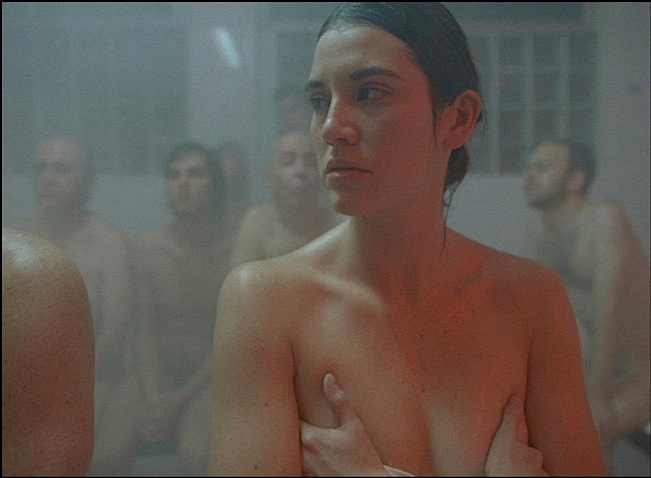
CANNES 2012: Carlos Reygadas’ POST TENEBRAS LUX

CANNES 2012: Carlos Reygadas’ POST TENEBRAS LUX

null

Narrative is the devil in Carlos Reygadas’s baffling and intoxicating Post tenebras lux. Finding any coherent structure or storyline in Reygadas’s deeply autobiographical film about a wealthy family’s daily existence in the Mexican countryside is next to impossible. The normal markers of story (psychology, back story, motivation) are all either denied or abstracted through the haze of memory and natural splendor, temporal uncertainties and jarring cuts. The result is a disjointed collection of sublime images, haunting sounds, and elliptical tangents, parts of an attempted exploration of the elemental nature of trauma and isolation. But does the film succeed?

In the film’s mesmerizing opening sequence, Reygadas positions his handheld camera at the eye level of a toddler walking slowly through a vast field surrounded by mountains. As the young girl stomps through puddles saying words like “father” and “mother,” the heft of the moment evokes Malick’s The Tree of Life. Hordes of dogs roam in and out of the frame, then stampeding horses fill the background space. When darkness overwhelms the image, and flashes of lightning provide the only sporadic illumination, the girl’s small figure takes on a near-mystical quality. The entire sequence is an overture to instinctual cinema.

While kinetic movement and wonder define Post tenebras lux’s impressive prologue, stagnation and rot permeate the rest of the film, the product of an overt sense of evil in mankind. This trend begins with the image of a glowing red devil entering a dark living room holding a toolbox, scanning each room, standing face to face with a child, and disappearing behind a closed door. Paternal wickedness is a longstanding theme for Reygadas, and the heightened visualization of Satan as a father figure returning home from work aptly connects with Post tenebras lux’s two perpetually conflicted male characters.

Juan (Adolfo Jiménez Castro), a sporadically violent man trying to repress his rage, lives with his wife Natalia (Nathalia Acevedo) and their two children in a posh villa located deep in the high mountains. Their handyman El Siete (Willebaldo Torres), an alcoholic and deadbeat father, grapples with his own internal demons. Reygadas crosscuts between the two men's slow unraveling over time, jumping forward and backward without any semblance of logic. Sudden violence, as when Juan brutally beats one of his dogs, is the only thing interrupting the rest of the film’s mind-numbing stasis.

With Post tenebras lux, Reygadas, the talented Mexican director behind Japon, Battle in Heaven, and the brilliant Silent Light, expands the anarchic sense of time and space he first explored in his loony short for Revolucion into an entire film.  Nothing adds up in this mostly maddening cinematic experience, but everything feels connected by the same ethereal view of environment, in the way characters languish, and in the nuances of a shifting world half-remembered.

Reygadas seems to be examining his own failure to visualize the past, one example being several gigantic falling trees in the film’s final sequence. Or the fact that all of Post tenebras lux is filmed using a camera lens that blurs the exterior of the frame, leaving only the center clearly defined. When characters move from one side of the image to the other, their bodies suddenly double, refracted by the beguiling aesthetic. For Reygadas, emotional memory is an impenetrable beast, and in many ways, so is Post tenebras lux.