SIMON SAYS: White Men Can’t Ninja

SIMON SAYS: White Men Can’t Ninja

null

In the ‘60s and ‘70s, ninjas proliferated in Japanese movies. Movies like The Daimyo Spy (1964) and Castle of Owls (1964) helped to establish ninjas as the sneaky but honorable warriors that we now know them as. In 1981, an Israeli filmmaker with too much money and not enough talent started a wave of ninja-sploitation films. Producer-cum-director Menahem Golan was supposed to direct Charles Bronson in Death Wish 2. But, as the apocryphal story goes, Bronson didn't want Golan at the helm. So Golan directed Enter the Ninja—a movie which, oddly enough, has remote ties to the spaghetti western genre.

Enter the Ninja is the first film in a trilogy of schizoid films that Carlson, my amiably ornery Bad Idea Podcast co-host, has wisely characterized as "copy-and-paste cinema." Like spaghetti westerns and Manchurian action films before them, ninja-splotation films depend on cinematic revisionism. But instead of post-dubbed Italians shooting each other in Monument Valley, ninja cheapies like Enter the Ninja feature non-Italian Europeans throwing ninja stars and colored smoke bombs at Asian guys (plenty of whom were not even Japanese-American) in colorful outfits.

Ironically enough, Franco Nero, the star of Sergio Corbucci's blood-soaked spaghetti Western classic Django (1966), also starred in Enter the Ninja. Nero's face changed in the 15 years between the two films: the formerly glass-jawed B-grade star is notably puffier and has a different mustache in the later film. But the jowly, bleary-eyed, Chevron-mustache-clad look Nero perfected here would influence a couple of other ninja-splotation heroes, including Richard Harrison, star of such films as Ninja Terminator (1985) and Project Ninja Daredevils (1986). Harrison may have started his film career auspiciously in the 50s, as the co-pilot in the film version of South Pacific (1958), but after starring in such spaghetti westerns as Rojo (1967) and $100,000 for Ringo (1966), Harrison went even farther West: to Japan. 

The connection between spaghetti westerns and the '80s cycle of white-washed ninja films doesn’t run very deep. The narrative coherence found in spaghetti westerns can’t be found in ninja movies. For example, in Enter the Ninja, Golan arbitrarily transplants a western stock plot in the Philippines, presumably because it was famously very cheap to shoot there. But once we are in the Philippines, we see that nothing makes sense. Case in point: the film's villain is an evil, union-busting plantation owner with a bizarre love for synchronized swimming. He's hired a sadistic one-eyed German fellow as his head lackey. Similarly, the titular machine in Ninja Terminator is a small toy robot that delivers its irate masters' death threats for them. Regardless of budget constraints, these movies make no sense.

But ultimately, such a salient lack of sense is part of the appeal of the ninja-sploitation film. These blustery and nonsensical films follow murderous but chivalric white guys with lethal squints as they fight badly dubbed villains who laugh maniacally and use the telephone too much. What kind of ninja uses a phone? These are ninjas! They live by a code of honor, protect their women and beat each other up with exotic weapons. Who said anything about Ma Bell?!

In summation: no, I can't tell you why one film would include a toy robot, or another a sadistic, eye-patch-wearing gnome. But I'd have an equally hard time explaining why Nero's Django hid his signature Gatling gun in a coffin. The average ninja-splotation film makes its own rules, unwittingly going further than most spaghetti westerns did to feature as much exploitable ninja-related violence as possible on a tiny budget. Schlockmeisters like Golan and Godfrey Ho (Ninja Destroyer, Rage of Ninja), inept filmmakers though they were, carved out a surreally burgeoning niche for themselves.

***Enter the Ninja will be the first movie playing in a double bill that Steve Carlson and I will present next Saturday, 6/9 at 92YTribeca. That night, we will also be screening a 35mm print of Ninja III: The Domination.***

GREY MATTERS: What Is Sherlock Holmes Afraid Of?

GREY MATTERS: What Is Sherlock Holmes Afraid Of?

null

Sherlock, Steven Moffat and Mark Gatiss’s present-day adaptation of Sir Arthur Conan Doyle’s century-old sleuthing stories, gives us two heroic figures struggling with, well, not much. But you wouldn’t know it to watch them, as the creators of the most recent version of Doctor Who conjure up one of this year’s best rides.

It’s a show that lacks not one bit of wit, pace, and all-around smarts. It gives you everything you could reasonably want from a Sherlock Holmes movie—and not one iota more. It sidles right up to greatness—but stops right before it gets there.

The splendidly named Benedict Cumberbatch and his magnificent cheekbones play Sherlock as a zero-patience dandy with a mainframe for a brain. This Sherlock, using deductive reasoning, can suss out your life story from a scratch on your watch and a murder from a smear on a wall. He shares the storied 221B Baker Street flat with Afghanistan war veteran Doctor John Watson (the UK Office’s Martin Freeman), the only person he can tolerate for more than sixty seconds. Watson, in turn, is enthralled by Holmes’ brilliance. Thus, a bromance blooms, as arcane cases are engaged at light speed.

And aside from a consistent subplot in which Watson hopes to bring out the human side in Sherlock that may not exist, that is that. Never has a cigar so strenuously insisted it is just a cigar.  Or, in Sherlock’s case, a nicotine patch. Once the dust settles, the most remarkable thing about Moffat and Gatiss’ smashing new Sherlock is how little there is to say about it, on the surface.

It should be said that there are some fun updates. Dr. Watson posts Holmes’ adventures in a blog. High tech replaces creaky Victorian science. And Moriarty is now a master computer coder/madman with a Bee Gees infatuation, a playful riff on Doyle’s vision of Sherlock’s arch enemy, who was a master criminal utilizing the day’s highest technology to wreak havoc (Watson would call him “the famous scientific criminal”).

In addition, Doctor Who fans can, of course, point out the traits The Doctor and Sherlock share: uncontrollable braininess, love of long coats and fascinated companions, the threat of boredom, and arch enemies. But where Doctor Who has turned out to be the stuff of university courses, Sherlock displays a flashy insubstantiality. Which is, again, fine. Or is it?

After the end of the second season broadcast two weeks ago, the image I have trapped in my mind is that of Sherlock and Watson in a long dark corridor, running, from a scene on the show. By now I wonder, however, what from?

SEX.

Doyle was a man of his time. He disapproved of women’s right to vote and created in Sherlock the ultimate logical man, one who believed that “women are never to be entirely trusted—not the best of them” and “ "the motives of women . . . so inscrutable . . . . How can you build on such quicksand?”

Moffat and Gatiss, meanwhile, who brought to Who not one but two main female characters as integral as the Doctor, along with some of TV's most ceaseless casting of female secondary characters, are the most feminist showrunners this side of Joss Whedon. They’ve gone beyond mere surface changes, pissing off the traditionalists to make their show really work in the 21st century.

Already their Sherlock doesn’t dislike women any more than men. But then it gets complicated.

I’ll take Watson’s word that he and Sherlock are not gay. But what are we to make of Sherlock, cutting an almost ridiculously Romantic figure, running across the hills and moors of the Baskervilles with his scarf and Saville Row coat unfurling in the whipping wind?

I’d say the game is afoot.

In "A Scandal in Belgravia," the show hits its low point, because it tries to reconcile Doyle’s female aversion with a semi-female-interest story for Sherlock, courtesy of a contemptuous dominatrix named Irene Adler (Lara Pulver) whose client list and sexual allure could topple nations. (Literally.)

Aside from the absurdity of Adler as a character—in 90 minutes she goes from S & M top to intellectual peer to Bond-style girl of international mystery to terrorist victim—there’s the dissonance of any of these female types fitting into any Sherlock-esque story. (Yes, I know an Irene Adler exists in the Canon, but she was nothing like this, and that was another Sherlock, a long time ago.)

The Holmes stories have nothing to do with love. When Sherlock makes it clear to Watson that he doesn’t have friends in the plural sense, you realize there is even less room for a lover, and the obligations love entails. And that’s why the story rings so hollowly.

One assumes that, if Sherlock ever felt the slightest erotic stirring, he would deduce its chemical origins and construct an elixir to neutralize the sensation. And that’s what Sherlock Holmes is all about.

He lives in an intrinsically adolescent, sex-negative safe zone—which also describes the official club for Holmes enthusiasts, The Baker Street Irregulars, who did not allow female members until 1991, when the appearance of ASH (The Adventuresses of Sherlock Holmes) leveled the non-erotic playing field.

At the moment, we’re at the exact point in the show’s existence where Watson can’t continue to look satisfied with his exclusive relationship with Sherlock without wanting something more. (My limited understanding of the books is that he gets a bit more, but that this happens largely off-stage, which wouldn’t be adequate for modern drama.)

The point is—who are these guys? For two short seasons the show has floated on appearances, in a very Victorian fashion. And I suppose it could keep doing that, in a very "series TV" fashion.

And I know, for a show that doesn’t give you much to talk about, I certainly talked a great deal, but that’s what I’m talking about—the empty spaces, the things the show hasn’t yet addressed.

Earlier, in “The Hound of the Baskervilles,” drugs cause Sherlock to think he’s seen a monster, which leads to doubt, which he suffers badly.  Add this to his usual arrogance and tiny cruelties, and you wonder why other characters insist that Sherlock could be a great man.  Not a good one, a great man.  And yet it’s Moriarty, a mad genius, a sociopathic criminal and mass murderer who sees in Holmes a fellow traveler in boredom and compulsive puzzle playing, who’s more accurate.

Watson too has his own dark bipolarity.  When we first meet him, he seems to be suffering from PTSD. But as he says himself, what was wrong was that he missed war. The thrill of being with Sherlock—the crime, death and violence—was curing him.

If Moffat and Gatiss want, they can tell the traditionalists this: Hey, we stayed true to the original model for two seasons. But Sherlock is gaining an international audience. If you could take Russell T. Davis’ version of Doctor Who and make it your own, can’t we add some dark shadows to this Victorian black and white?

Ian Grey has written, co-written or been a contributor to books on cinema, fine art, fashion, identity politics, music and tragedy. Magazines and newspapers that have his articles include Detroit Metro Times, gothic.net, Icon Magazine, International Musician and Recording World, Lacanian Ink, MusicFilmWeb, New York Post, The Perfect Sound, Salon, Smart Money Magazine, Teeth of the Divine, Venuszine, and Time Out New York.

VIDEO ESSAY: Cruel Summer: ROCKY III (1982)

VIDEO ESSAY: Cruel Summer: ROCKY III (1982)

This video essay is part of the "Cruel Summer" series of articles; this series examines influential movies from the summers of the 1980s. The previous entries in the series covered THE BLUES BROTHERS (1980) and STRIPES (1981).

[The following is the working script of the video essay above. It was modified during the editing process.]

He’s one of cinema’s most beloved heroes. He represents strength, decency, and determination. Born and raised on the streets of Philadelphia, the city of brotherly love and the birthplace of democracy, Rocky Balboa stands for all that is good about America.

Taken together, the first two ROCKY movies tell a human-sized story of triumph, with the original ROCKY as a Bicentennial fairy tale about a bum winning his pride and the love of his girl, while ROCKY II shows him becoming a man and champion.

But how do you continue a story that everyone assumed was complete? Well, if you’re writer-director-star Sylvester Stallone, you look within yourself, and the rapidly changing tastes of the movie-going audience, and you come out ready to ROCK.

ROCKY III continued an American tradition by transforming the stage of Rocky into a 4th of July fireworks show. It used compact storytelling and groundbreaking montage editing to create a new kind of fist-pumping summer crowd-pleaser.

The opening montage recalibrated the viewer’s ability to take in multiple pieces of information simultaneously. Made nine months after the launch of MTV and one year before FLASHDANCE, ROCKY III is the first instance of a major Hollywood entertainment embracing MTV-style editing. A kind of ROCKY 2.5, the sequence caught us up with our favorite characters, introduced the themes of fame and becoming soft, and kicked the story into motion by letting us see the villain all but stalking Rocky—with everything held together by Survivor’s “Eye of the Tiger,” a piece of working-class pop perfection.

Stallone used his overnight success following the release of ROCKY to inform ROCKY III’s portrayal of how celebrity can lead one to be isolated and lose touch with everyday life. Rocky—and Stallone—had become such outsized characters that some self-criticism was necessary.

But Stallone places all this thoughtful reflection in the background of the movie. What’s front and center is keeping the movie in constant motion. Shorn of nearly 30 minutes, ROCKY III compresses its story without sacrificing emotion. Some viewed this as an indication that audiences' attention spans were growing shorter, but what it really said was that audiences were able to process events and plot points at a quicker pace.

The story of ROCKY III shows Rocky getting a comeuppance courtesy of street fighter Clubber Lang, who’s enraged by Rocky’s softening. Rocky takes the challenge, but his trainer Mickey knows it’s a bad idea.

It’s only the 30 minute mark when Roc loses his title and, in a plot twist that shocked audiences back in ’82, Mickey dies from a heart attack. Normally these events would’ve occurred at the halfway point of the movie, but ROCKY III was so relentless in its pacing that the movie felt halfway over by this point. The death of the beloved Mickey gave weight to the remainder of the story, reminding us of the dramatic pull the ROCKY movies have on audiences.

The rest of the movie shows Rocky returning to the top, as former adversary Apollo Creed offers to train him. Apollo wants Roc to go back to the beginning, to get back in touch with his roots as a street fighter. How does he plan on doing this? He teaches him rhythm—to dance around the ring.

It must be noted that a lot of the elements of ROCKY III—from the cocky hero to the musical montages to the shaking of the hero’s confidence from an early defeat to the death of a friend—would become key elements of several popular movies throughout the 1980s. ROCKY III created a template for success.

Everything leads up to THE SHOWDOWN, which, following the car chase, became the defining movie sequence of the 1980s. What made the climax of ROCKY III different from all the others is that it’s the only one that doesn’t compress the final fight into a montage. Instead, it plays out in something approximating real time. It’s a three-round action sequence that pummeled the audience into submission, as ROCKY III set a new standard in summer entertainment. ROCKY III trained us to demand more bang for our buck.

San Antonio-based film critic Aaron Aradillas is a contributor to The House Next Door, a contributor to Moving Image Source, and the host ofBack at Midnight,” an Internet radio program about film and television.

A critic, journalist and filmmaker, Matt Zoller Seitz is the staff TV columnist for New York Magazine and a finalist for the Pulitzer prize in criticism. He has worked as a movie critic for The New York Times, New York Press, and New Times Newspapers, and as a TV critic for The Star-Ledger of Newark. His video essays about Terrence Malick, Oliver Stone, Kathryn Bigelow, Budd Boetticher, Wes Anderson, Clint Eastwood, Michael Mann and other directors can be viewed at the The Museum of the Moving Image web site. Seitz is the founder of The House Next Door, a website devoted to critical writing about popular culture. His book-length conversation with Wes Anderson about his films, titled The Wes Anderson Collection, will be published in fall 2012 by Abrams Books.


A CONFEDERACY OF DUNCES Finds Its Star In Zachary Galifianakis

A CONFEDERACY OF DUNCES Finds Its Star In Zachary Galifianakis

null

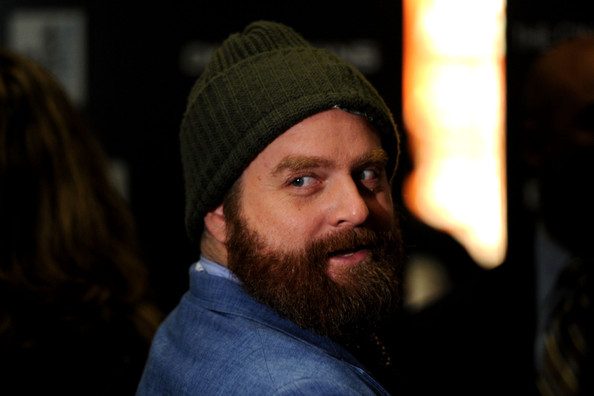
Among its army of cult followers, A Confederacy of Dunces is the funniest American novel ever written. Little surprise, then, that the recent leaked news of yet another attempt to adapt it to the big screen after thirty years of failure—with Zachary Galifianakis in the lead role—was greeted ecstatically by the book’s fans. But enormous obstacles remain in translating the unusual book to screen, including, most of all, whether Galifianakis has the ability to capture its one-of-a-kind antihero, Ignatius J. Reilly, in a way no one has ever done.

The story of the book’s path to publication is extraordinary. A gifted young New Orleans writer named John Kennedy Toole wrote A Confederacy of Dunces in the early 1960s. Toole couldn’t get it published, and, falling into deep depression from his general lack of success, killed himself in 1969 at age 32.

Several years after his death, his mother discovered the only remaining copy of the Confederacy manuscript in a box in his room. Determined to prove her son’s brilliance, she submitted the book to several publishers, meeting with rejection until she approached the great southern writer Walker Percy in 1976. Showing up unannounced at his office at Loyola University, she dumped the massive, barely legible draft in his hands and demanded he read it. Percy, who describes the incident in the book’s foreword, astonishingly not only read it but loved it. With his prodding, Louisiana State University Press published it in 1980 with a small print run, not expecting a profit. The rest is history: Confederacy earned national critical attention, won the Pulitzer Prize, and has sold millions of copies.,

The book’s path to Hollywood has not had a similar ending . . . yet. After Confederacy’s release, Scott Kramer, a young executive at 20th Century Fox, immediately bought its rights and set out to get the movie made. In 1982, he nearly signed John Belushi to star—after several amusing face-to-face meetings where the prickly star repeatedly forgot who Kramer was—but Belushi died shortly before a deal could be consummated.  Since then, such luminaries as Kramer, Johnny Carson, and John Langdon have tried to get the project made, with stars attached including John Candy, Chris Farley, John Goodman, and Will Farrell, as well as directors Harold Ramis and Steven Soderbergh, but none of the productions have ever gotten off the ground.

Of Confederacy, Will Farrell has said, “It’s a movie everyone in Hollywood wants to make, but no one wants to finance.” He may be right, but that’s only a small piece of the story. Other challenges relate to the book’s structure, specifically its language (which is unique to blue collar New Orleans), time period (ostensibly set in the early 1960s), and unusual plot layout (or really, its lack thereof). A big part of the book’s charm, indeed, lies in its language, which many Louisianans have long praised for its accuracy in capturing the region’s accents, something Toole seemingly acknowledged to his future readers in the beginning of the book: “’Oh, Miss Inez,’ Mrs. Reilly called in that accent that occurs south of New Jersey only in New Orleans, that Hoboken near the Gulf of Mexico.”  (This was also observed by Percy in a letter to Toole’s mother: “[Confederacy has] an uncanny ear for New Orleans speech and a sharp eye for place (I don’t know of any novel which has captured the peculiar flavor of New Orleans’ neighborhoods as well).”). First-time readers may take some time to get used to this language, but it’s hardly unintelligible: it’s an integral ingredient in creating the strange world of the novel, and it wouldn’t have to be changed to be understood or be funny. Take, for example, the main character’s description to his mother of an altercation at work: “I had a rather apocalyptic battle with a starving prostitute,” Ignatius belched. “Had it not been for my superior brawn, she would have sacked my wagon. Finally she limped away from the fray, her glad rags askew.”

Time period is also a potential challenge, but one that can be fairly neatly addressed. For the most part, the book makes almost no direct reference to its time, with the only clues revealing it based on the movies Ignatius goes to throughout the book (“When Fortuna spins you downward, go out to a movie and get more out of life”). When the adaptation actually takes place, then, is potentially flexible; a good film could take place in 1962 or 2012 and still capture the book’s spirit. In fact, it seems likely, both because of cost considerations and Ignatius’s loathing of the modern world, that the adaption would be set in the present, to make Ignatius’s pathology more timely and relatable.

Implementing Confederacy’s plot would be harder. For all of its gifts, the book is a highly unconventional narrative with no real plot. Not that there's anything wrong with that, but this why Toole had such a tough time finding a publisher in the 1960s, and why any adaptation would be a challenge.  

This problem was recognized by Simon & Schuster’s Robert Gottlieb. Gottlieb, who would go on to become the Editor-in-Chief at The New Yorker and the top editor at Knopf, corresponded with Toole over two years in the mid-1960s. He admired the book but repeatedly observed its lack of plot, something he noted in his first letter to Toole: “[Confederacy] must be strong and meaningful all the way through—not merely episodic . . . . In other words, there must be a point to everything in the book, a real point, and not just amusingness that’s forced to figure itself out.”

Considering its level of success, Gottlieb clearly underestimated Confederacy’s broader appeal, but his criticism remains apt. Despite Ignatius’s epic misadventures and squabbles, his personal story doesn’t follow a regular arc. This lack of direction is even more pronounced with the other characters: Ignatius’s antagonist, Myrna Minkoff, who isn’t actually seen until the novel’s final scene, the sardonic Burma Jones, the nasty bar owner Lana Lee and her dopey aspiring stripper Darlene, Patrolman Mancuso and his aimless “quest” to make an arrest, the pitiful denizens of Levy Pants, Claude Robichaux and his hatred of “communisses,” and others have no realizable goals—they’re all just drifting through the story. Make no mistake: their exploits are fantastic, but they lack real depth or meaning and would thus largely have to be filled out in a film—where, unlike in a novel, a character's actions must be seen and not just surmised.

Still, no book adapted to film is retained in its entirety, and writers must cut, amend, or remake entire scenes or segments. While in Confederacy’s case, the plot work to be done will be more immense – creating an individual drive for virtually each of the characters—and has likely been a factor in the repeated adaption failures, it’s not unreasonable to expect from a crack writer. Furthermore, as there is no single framework for a movie, Confederacy could come out as more episodic and less plot-driven; though many details would need to be creatively crafted from scratch.

Instead, the biggest difficulty in adapting Confederacy comes from the unparalleled main character. It is not hyperbole to describe Ignatius Reilly, the massive, flatulent, obese, obscene, delusional, curmudgeonly, masturbatory, habitually unemployed, and unemployable medieval philosopher layabout as a character with few parallels anywhere in American letters. He is Toole’s most magnificent creation, the novel's center and its most appealing part.

Every reader knows Ignatius is a fool, as does every character with whom he crosses paths; the only person who doesn’t realize this is Ignatius himself, which is what would make any portrayal of him so complicated.  Just beneath Ignatius’s hapless appearance, questionable sanity, and miserable tenure as a hot dog vendor is an unshakable dignity: we may see him as a clownish pariah, but Ignatius believes, no, knows he is a genius and a revolutionary, and it is the rest of the world—businessmen, police officers, gays, Protestants, beatniks—that ignores his wisdom at its own peril.  Preserving this dignity while at the same time capturing Ignatius’s rants and pratfalls would require a tough balancing act.

To portray him as simply a bumbling fat-ass who lives with his mother might earn some cheap yucks, but it would ignore Ignatius’s true greatness. This approach marks the fate Confederacy fans should fear most given the substandard comedies being churned out in recent years; I can just see a preview ad with a mustached, bloated Ignatius falling over and farting in a coarse resemblance to the tired slapstick of the recent ghastly-looking Three Stooges flop.

The newest adaptation attempt is at least in good hands.  The helming producer, Scott Rudin, is one of the most respected and intelligent men in Hollywood today (The Social Network, There Will Be Blood, The Girl With the Dragon Tattoo), with a reputation for taking on tough projects (including, for example, plans to adapt some of the most complex novels of William Faulkner and Cormac McCarthy).  Rudin’s selection of Zach Galifianakis to play Ignatius is evidence that the filmmaker is on the right track.  Confederacy with Will Farrell would have been a painful disaster: besides lacking the all-important physical look, Farrell’s one character, the Ricky Bobby-Ron Burgundy-Frank the Tank-George W. Bush idiot may lack self-awareness, a deficit which would be key to portraying Ignatius, but it’s a tired, one-dimensional act which couldn’t capture Toole’s subtlety.  John Candy, who thrived in kindly roles in Uncle Buck and Planes, Trains and Automobiles would have been too soft-edged, and the great Chris Farley, most clearly in Tommy Boy and defining roles like SNL motivational speaker Matt Foley, too loud and purely physical to pull it off. 

Less comedically narrow, Galifianakis is a better fit for the role.  Besides sharing Ignatius’s girth, tangled facial hair, swarthy visage, and panting physique, Galifianakis can also be funny in a mild manner, something he exhibited well in The Hangover as Alan, a pathetic, creepy weirdo who nonetheless doesn’t realize his eccentricity or others’ disgust for him.  Galifianakis also acts with a disguised but pointed bitterness, conveying an anger at the world which doesn’t come off as so biting and hostile that it overwhelms his comic effectiveness, and which would be a critical component to capturing Ignatius’s crusade against the world.  Galifianakis’s acting resume is thinner than those other top comic actors, but with Belushi and Oliver Hardy long gone, he seems by far the best man to balance Toole’s story with Ignatius’s misplaced dignity and soft, harmless fury.

If Confederacy finally gets made, fans everywhere will be hoping he can do it.
 

Mark Greenbaum's work has appeared in The New York Times, Salon, The LA Times, The New Republic, and other publications.

VIDEO ESSAY: Sight and Sound Film Poll – Molly Haskell on CLAIRE’S KNEE

VIDEO ESSAY: Sight and Sound Film Poll – Molly Haskell on CLAIRE’S KNEE

Press Play presents Sight & Sound Film Poll: Critics' Picks, a series of video essays featuring prominent film critics on films they selected for Sight & Sound magazine's poll of the greatest films of all time. New videos will premiere each week until the poll results are announced later this summer.

I first met Molly Haskell and her husband Andrew Sarrris when they spoke at the 2008 Moving Image Institute, a weeklong program for emerging film critics organized by the Museum of the Moving Image. Ever since then I've wanted to collaborate with them on a video essay. Not so much because of their stature as two highly influential thinkers on cinema, but because of something they expressed at the Institute: their curiosity and slight puzzlement about film culture in the online era. For Haskell and Sarris, both of whom have resisted those hand-wringing "death of cinema" theories embraced by their contemporaries, the profusion of movie websites, blogs, videos, etc. over the past decade was something new, exciting and a little overwhelming. At the time, I felt qualified to help steer them through the flood of content; four years later, I feel just as inundated by all that is out there. But infusing their insights into the realm of online video is one thing I still feel capable of doing, and the Sight & Sound Film Poll video series provides the perfect opportunity to explore one of Haskell's favorite films, Eric Rohmer's Claire's Knee.

nullListening to Haskell speak about the film conjures visions not only of the film, but also of an era that it reflects: a late '60s-early '70s generation in the throes of a massive cultural shift, discovering new ways to engage with cinema and with the opposite sex. Those impulses are still as present as ever, but perhaps one important distinction between then and now, which the film reflects, is an exquisite sophistication and delight in oral communication that may be endangered in the era of text messaging and tweeting. At the same time, there's something in the written traces of that era's film culture that distinguishes it from those of the present. This became apparent to me when, in the middle of our recording, Haskell brought out Sarris' original 1971 review of Claire's Knee published in the Village Voice and read passages from it. There is something both rigorous and relaxed in Sarris' prose that reflects a time when alternative print media was at its mightiest, when writers weren't pressed to mind wordcounts or angle for pullquote-worthy soundbites, and were freer to ruminate memorably on how a film, or even a knee that appears in a film, could reflect the essence of cinema. I write all this knowing that it may all amount to a nostalgic, Midnight in Paris-like projection of present disappointments upon an idealized past that may never have been as good as I make it out to be. But that doesn't stop those ideals from being worthy of aspiration.
I'm very pleased that I was able to incorporate Haskell's reading of Sarris' review, and also to visualize it with a shot of the review as first printed in the Voice. Juxtaposed with the distracting image of Claire's sensually sunlit knee, it was a fun way to visualize the relationship between a critical text and its subject, one surface expressing the essence of another surface, itself a beguiling decoy diverting the attention of both the film's protagonist and its audience from the film's true beauty.

For additional insights into the film, read Haskell's essay on Claire's Knee published in the Criterion Collection DVD release of the film. 

Molly Haskell is a film critic, author of many books, including From Reverence to Rape: The Treatment of Women in the Movies, and former co-host of Turner Classic Movies's The Essentials.

Andrew Sarris is a film critic and author of many books, including The American Cinema: Directors and Directions 1929-1968.

Kevin B. Lee is Editor in Chief of IndieWire’s PressPlay Video Blog, Video Essayist for Fandor Keyframe, and contributor to Roger Ebert.com. Follow him on Twitter.

VIDEO ESSAY: Maurice Sendak: Outside Over There

VIDEO ESSAY: Maurice Sendak: Outside Over There

On May 8, 2012, Maurice Sendak died.  Shakespeare’s dead, too, and Melville, and Emily Dickinson. In fact, come to think of it, so are most people who have ever lived. But most people aren’t lionized after death in the press as one of the great Fathers of Children’s Literature.

Ironic, considering that Sendak was a child until he died at the age of 83—and I mean that in the best way.

All the best children’s authors are children.  The most horrid thing that can happen in children’s books, aside from a Grown-Up deciding to Write A Book For Children, is for that book to actually get published. 

If you’re scratching your head wondering who I am, you’ve never heard of me.  Several of my children’s books have been published, so I’m an actual author of children’s books, but the fact that you know all about Maurice Sendak and nothing about me is kind of important here, because Mr. Sendak and I have a lot in common.  Just not what you think. I understand him in a different way.

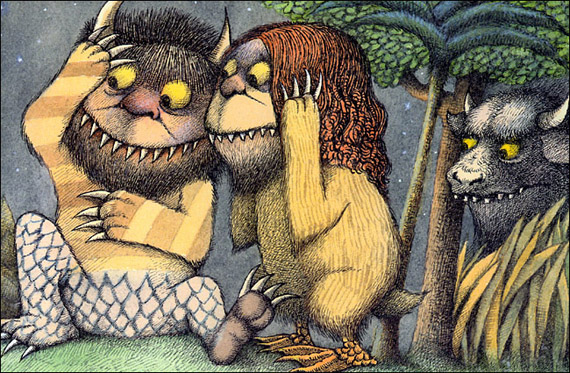
Journalist Emma Brockes, in an October 2011 edition of The Guardian, claimed that millions will always think of Sendak as “young, a proxy for Max in Where the Wild Things Are.”*  Other writers have variously described him as “Grumpy.” “Angry.” “Fierce.” Names that tend to evoke the faces of the monsters that glare out of the pages he created.

Were any of these true? I really couldn’t say. I never met him in my life, and never really wanted to.  I’m not much on meeting authors, for reasons I now understand—though when I first started writing seriously, this theory of reading sent me sprawling: That no matter how hard the writer or the artist tries to convey his or her message, no matter how perfect the execution of what lives in his or her mind, once the reader reads the work, the true message is the reader’s and the reader’s alone—even if it’s not exactly what the author meant.  This is hard, hard, hard for a creator to accept, and doubly so when that creator finds himself equated personally with the creation.

When a reader meets an author, the author becomes a clay figure upon whom the reader pastes his or her feelings, dreams, desires, and impressions. Suddenly the author finds he is expected to live up to everyone’s expectations. That’s enough to make anyone Grumpy.  Angry.  Fierce.

Sendak was, in some ways, the poster child (as it were) for children’s books in a way that mildly irritated many in the profession, through no fault of Sendak’s. When speaking to most any member of the public, about books to get for children, one invariably and repetitively heard: “Oh, how about Where the Wild Things Are?  Get Where the Wild Things Are.  My kids loved Where the Wild Things Are.” It was brilliant, true, but it’s also the only thing most people know, and Sendak was only one among a massive chest that holds an embarrassment of visual and literary riches, unguessed by most, and never found by the majority of children.

Yet passes Sendak, and in the press it is as in Outside Over There when “Ida played a frenzied jig, a hornpipe / that makes sailors wild beneath the ocean moon.”

I do not know whether Sendak was a humble man or proud. That he wrote from his child’s heart, which he somehow kept intact through a life that did its damnedest to drag him into the gray and cynical adult world, is plainly evident. When I speak of his “child’s heart,” I mean the heart that is still in love with wonder—a heart that is brave and wild and young and still unconquered by the terror and the ugliness in the world. It’s a heart that finds the world a very difficult place to live in in spite of—and because of—its excruciating beauty. That is the kind of innocence Maurice Sendak had, and that he shared with the world. It’s a contrast to the adult-imagined innocence of Peter Pan, a story that Sendak and I mutually despised.

There’s absolutely no denying the ground-shaking societal impact of Where The Wild Things Are, In The Night Kitchen and, in a quieter way, Outside Over There—they are the great post-Victorian children’s manifesto of rebellion. They are the Declaration of Monstrosity that freed children from the starched expectation that they were somehow less beastly than the adults who spawned them. Sendak rightly recognized—and to the abject horror of many, actually went so far as to illustrate—the reality that these delightful little sweetings had a nasty ego-flavored center.

Just like the rest of us.

Make no mistake—Sendak did not write for children. He wrote for himself. So do I. Our writing is for a single purpose—we yearn to be understood in a world that is wild and roaring. We feel compelled by some inner urge to convey a message.

As a writer, I am not proud of my published work because I see my role as that of a messenger only.  I will never be a Sendak, and that’s fine—that’s not what I was meant for.  My messages are modest; he had a transcendent message to deliver, and the talent to do it. But in the end, as we find ourselves pasting our own Maxes, Mickeys, and Idas onto Sendak, is it not possible that the message is more important than the man? All our messages, than the messengers themselves?

Regardless, Maurice Sendak, for all his gifts, will now give us no more. He is gone.

In this he and I differ, though: He believed that nothing happens after death; we simply cease. I prefer to think that he still is, Outside, Over There.

*Brockes, Emma. “Maurice Sendak: ‘I refuse to lie to children’.”  The Guardian.  2 October 2011, 13:30 EDT  <http://www.guardian.co.uk/books/2011/oct/02/maurice-sendak-interview?intcmp=239&gt;.

Tres Seymour is the author of thirteen books for young people, including Hunting the White Cow and Life In The Desert, a 1993 American Library Association Best Book for Young Adults  He lives in Munfordville, Kentucky.

GAME OF THRONES RECAP 9: BLACKWATER

GAME OF THRONES RECAP 9: BLACKWATER

We know what we’re getting when we watch a Game Of Thrones episode, right? We’re getting some beautifully shot scenes, certainly; this has been one of the best-looking shows on television since its premiere. We know that the actors will be good, if not great. We know that we’ll see a wide variety of different, possibly intersecting plots, divided by geography. And we know that while there might be some action, it’ll be parceled out for more drama, more cliffhangers, but probably not catharsis. It’s a decent structure. It’s served the show well, as well as working for other HBO shows like The Wire, Treme, and Boardwalk Empire.

Except that’s not what happened in “Blackwater.”

It takes confidence to alter the formal structure of a television show, but it’s also often the best thing a show can do. Shows like The Sopranos and Buffy The Vampire Slayer changed television dramatically while relying on a series of formal experiments: “College” and “Pine Barrens” from The Sopranos, or “Band Candy” and “The Body” from Buffy. The way you think the show should work, the way television normally works? That’s not what happens. If done competently, these experiments can be fun episodes. If done well? They’re among the best television can do.

“Blackwater” was an experiment done well.

I was partially wrong about last week’s episode. I assumed that everything was leading up to a climactic ninth episode of the season. We’d see Theon defending Winterfell; we’d see Dany chasing her dragons; we’d see a culmination of Robb’s romance; we’d see Jon trying to survive his capture by the wildlings; we’d see Arya, having escaped into the wilderness; we’d see the battle of Blackwater, with Stannis’ forces attacking Tyrion and the Lannisters at King’s Landing.

What we got was only the last of those. The climactic battle of the season turned out to be the entirety of the episode. Stannis attacks King’s Landing, and Tyrion defends it. Nothing else happens this episode. It is, unlike any other of the 18 episodes preceding it, entirely focused on a single story, focused only on the characters in one specific locale.

And that’s just what Game Of Thrones needed.

There are still issues. My complaints about Arya and Cat losing agency last week are still valid. There’s still a great deal of ground to cover next week. I don’t know that there’s going to be enough time left to tie it all together. The season has had issues of thematic coherence roughly equivalent to the difficulties with coherence in the novel A Clash Of Kings. Yet, while those things can be argued about the season as a whole, they don’t take away from the achievement of “Blackwater.”

“Blackwater” derives its power from its relative simplicity. It removes the extra plots, focusing on the overarching climax of the Clash Of Kings that gave the story its name in book form. Stannis, with the former Targaryen lands plus the Baratheon vassals, attacks King Joffrey in King’s Landing, with the power of the capital and the Lannisters behind him. As presented, these are the two most powerful forces in the southlands (with Robb Stark leading an equally powerful army from the north).

Yet while that simplicity increases the drama of the episode for the characters we care about—Tyrion primarily—it also demonstrates one of the biggest problems of the season: in the Stannis versus Joffrey confrontation, we have many reasons to cheer against Joff, but no particular reason to cheer for Stannis. That makes it necessary for “Blackwater” to build that drama via the few characters who will be affected. This means Davos and his son, preparing for the battle. This means the Hound and Bronn, whose stress makes them competitors, while battle makes them friends. This means Tyrion with Varys, with Sansa, with Joffrey, and with Shae. This means Sansa Stark, who finally gets the chance to shine, first by sarcastically undermining Joffrey, then by cleaning up the mess left by a drunken Cersei Lannister.

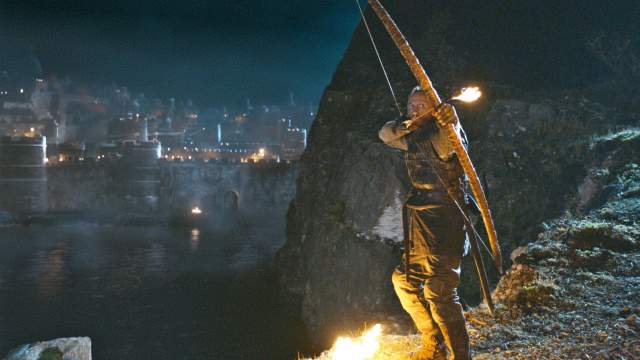
The action in “Blackwater” is very good. It’s fantastic, given the constraints of television. I, along with many other online commenters, compared it to the attack on Helm’s Deep from Lord Of The Rings: The Two Towers. Some of the individual pieces of action aren’t quite film-level, but in terms of building then releasing tension, the episode is great.

First, Stannis has an overwhelming advantage in numbers, which Tyrion lessens with his wildfire attack. This is a loaded sequence for a variety of reasons. First, there’s the simple technology of it: this is what HBO has been saving their CGI for, and it’s worth it. The green fire and the explosion look great. Beyond that, the number of extras involved in the action sequences give an epic feeling beyond the computer technology.

Tyrion’s surprise fire attack also links him to great strategists in literary history as well. His plan, to me, is reminiscent of the Zhou Yu/Zhuge Liang plot in the Three Kingdoms novel, most recently portrayed visually in John Woo’s uneven but fascinating 2008 film Red Cliff. The idea that a lone brilliant man can use surprise and the elements, particularly fire, in order to even out incredibly uneven odds is a common conceit of literature. Tyrion here is Odysseus, creating the Trojan Horse, or Caesar at Pharsalus, surprising Pompey’s cavalry, as well as Zhuge Liang, the near-deified strategist of the Three Kingdoms. Lord Varys even makes this clear early in the episode, saying that Stannis has allied with dark forces, and Tyrion is “the only man who can stop him.” There’s also the straightforward historical precedent of Byzantine “Greek fire,” the secret weapon of that famous fleet.

Yet Tyrion’s (and Peter Dinklage’s) greatest triumph isn’t his strategy, it’s that when the battle hangs in the balance, he builds his courage and makes a speech to save King’s Landing. His speech isn’t an appeal to the ideals of the Seven Kingdoms. Instead, it’s an appeal to the darkness of the series. He specifically tells his men not to fight for honor. He tells them to fight for their own survival, and for the survival of the people they care about. I don’t know that there’s a better encapsulation of the series’ themes than this speech.

Who is the bad guy here? Tyrion is defending Cersei and Joffrey, the biggest villains of the show so far, but we want him to survive. We want his people to survive. We want King’s Landing to avoid being sacked; we want the noble ladies not to be raped. We want Westeros to not go to hell, despite the “honorable” intentions of its leaders. There’s no good resolution here. There’s only survival. Tyrion gets that. And Dinklage nails the speech where he demonstrates that. “Those are brave men knocking on our door. Let’s go kill them!”

Yet all this doesn’t work without the formal changes of the episode. Only a handful of cast members are present, but almost every single one of them has some of their best moments. Sophie Turner gets many of her best moments as the rapidly maturing Sansa Stark, yes, but she’s matched by Sibel Kekilli, as Shae, whose fiery personality has been increasingly prominent recently. Lena Headey is also making a strong claim for “most improved” actress—her increasing desperation, combined with her rigid control over her emotions, makes her scenes some of the best of an already fantastic episode. Finally Sandor Clegane, Joffrey’s Hound, has been a background character for so long that his scenes here are something of a surprise, and a welcome one at that. It’s an odd thing for Joffrey’s right hand to say, straight up, “fuck the king,” but Rory McCann takes this, his most important line, and makes it sting.

Because Game Of Thrones focuses on the climactic event of the season, it can do this. It can make most of the characters at their most interesting. It can slowly build up the battle, and then get the battle right. I worry that this intense focus on the battle of the Blackwater will make the finale too busy. But for now, I think it’s worth basking in the glory that a single change in structure can achieve. There are many great moments to come in Game Of Thrones. An intense focus on them can break up the show’s rhythm in a remarkably positive way.

Adaptation:

George R.R. Martin wrote this episode, so even if I wanted to, it would be hard to say that “Blackwater” got anything in particular wrong. The lack of specificity to the Tyrell army's inclusion in the Lannister reinforcements is a bit of an issue—Loras in Tywin’s entourage could be missed easily, in part because it’s a surprise—but I assume this will be cleared up next week. While this season has had many issues of adaptation, “Blackwater”  is as ideal as any fan could expect.

Rowan Kaiser is a freelance pop culture critic currently living in the Bay Area. He is a staff writer at The A.V. Club, covering television and literature. He also writes about video games for several different publications, including Joystiq and Paste Magazine. Follow him on Twitter @rowankaiser for unimportant musings on media and extremely important kitten photographs.

MAD MEN RECAP 10: THE OTHER WOMAN

MAD MEN Recap 10: The Other Woman

Girl, you really got me going, you got me so I don't know what I'm doing.

nullThe Other Woman may be the most disturbing episode of Mad Men ever. We've seen bad things happen to characters we love, some of their own doing. We've seen Don drink himself into a stupor, Roger lie the company almost into ruin, and Lane embezzle. We've seen the way both ambition and love can cause people to sacrifice themselves, but has anyone suffered more than Joan, or sacrificed more?
The fans have gone back and forth on Pete this season. In my recap for Signal 30, I called Pete a shit. I got some blowback from fans for that, and indeed, in subsequent episodes, Pete has again appeared more sympathetic. His pathetic adoration of Howard's wife, Beth, in Dark Shadows, touched people's hearts. But now I think more people will agree with my earlier assessment. Pete is a low-life and a shit, not just because he asked Joan to prostitute herself, but because he insisted there was nothing wrong with asking. Watch:

When Joan said "You couldn't afford it," it was not, in fact, a counter-offer, but a way of shutting Pete down; only Pete's insensitivity made him think otherwise. Pete takes seriously the old joke, often attributed to Winston Churchill: Churchill is said to have approached a lady at a party and ask, "Madame, would you sleep with me for one million pounds?" She agreed that she would. "Would you sleep with me for ten pounds?" he asked.  "Certainly not! What kind of girl do you think I am?" "Madame," he answered "We have already established what you are. Now we are merely discussing price." (I've read various versions of this story, with different price points.)

The joke has a serious underpinning, as so many jokes do. All women are whores, we are being told, and are merely negotiating price. Joan literally prostitutes herself for a partnership, but Gail, who "raised her to be admired," has been prostituting herself in her own way to Apollo, in exchange for household repairs. Megan must prostitute herself in a small way, by being displayed. Turning around and showing her ass has little or nothing to do with the callback; she thought she was safe because the director was "a fairy," but with three men on the couch it's clear she doesn't feel safe at all. At the office, her friend Julia is happy to sexually display herself to a roomful of writers in the hopes of getting a job as a Jaguar girl.

Even Peggy had money thrown at her, quite literally, and even Peggy knows she has to sell a woman's sexuality (Lady Godiva, "as naked as we are allowed to make her") to keep an account.

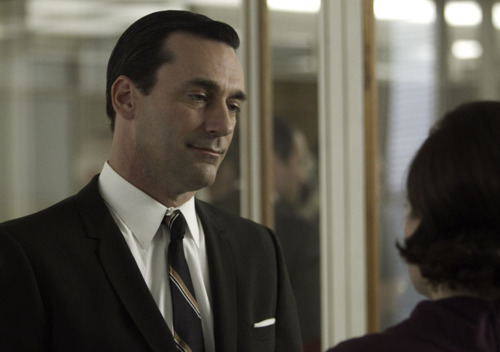
The most telling, most obvious, quote about the theme of this episode is what Don says in the Jaguar pitch, right down to the tagline:

Oh, this car. This thing, gentlemen. What price would we pay, what behavior would we forgive, if they weren’t pretty, if they weren’t temperamental, if they weren’t beyond our reach and a little out of our control? Would we love them like we do? Jaguar: At last something beautiful you can truly own.

While women are being prostituted, bought, and sold because they are things, the way beautiful, temperamental cars are things, men imagine they are the ones who suffer, because sometimes they can't quite control the transaction. The tagline itself is shown as being born from anger at women: Ginsberg sees Julia prancing and says "She just comes and goes as she pleases. Huh."

Why shouldn't she? I mean, she's human, isn't she? Isn't that what humans do—use self-will to make their own decisions? But to Ginsberg and many other men, a woman isn't a human, she's an object of desire, and her ability to make herself desirable and then still have self-will is enraging. To Ginsberg, the lyrics of the closing song (You Really Got Me by the Kinks) make him mad: "You really got me going" is something women do to men, which men can't control.

It's disturbing. The whole episode is disturbing, and Semi Chellas and Matt Weiner pull no punches, juxtaposing every inner cringe Joan experiences with the pitch so that there is no doubt they are the same thing. Don wants to control Megan and keep her home, Pete wants to control Trudy and 'put his foot down', his greatest anger being simply that he cannot get her to obey him, that she wants things he doesn't want. Pete, who wants a prostitute in a brothel to treat him like her king, cannot abide the fact that any woman has self-will. This is the same Pete who, in Episode 1.05: 5G, asked Trudy to sleep with an editor in order to get him published—no wonder he thinks Joan shouldn't be insulted.

But there's another quote that speaks to the heart of women being bought and sold. In the conference call about Chevalier Blanc, the client asks, "Why would a woman buy a man anything for Valentine’s Day?"

Why indeed? Valentine's Day is transactional: A man buys flowers or perfume or jewelry, a woman responds with sex. Men are the subjects, they have self-will; they make their selection and choose the purchase price, while women are the objects being purchased.

I could write for hours about this episode, but we really have to talk about Peggy.

Her decision has been a long time coming, and may be necessary. I mean, people didn't job-hop in the 1960s the way they do now, but advertising was its own animal, and as a career decision this was probably one hundred percent right.

Here's the thing: in business, you sell yourself. Ted Chauogh wants to hire Don's protégé, and he negotiates with Peggy over price and title. It's not sexual; Peggy's gender is not part of the transaction. Yet the negotiation perfectly parallels what Joan did with a percentage and a partnership. We all do sell ourselves for work, for ambition, to succeed.

Certainly a lot of feminist and other theory would tell us it's all prostitution: Marriage, dating, Valentine's Day, casting couches, and every other transaction in which men are the buyers. But when we look at it that way, we can forget how painful this particular act of prostitution is for Joan, and let's not forget that. Last episode we saw her say she has some control at work, and how important that's been for her. This wasn't just a sexual transaction, it was one that stripped Joan of her sense of control, of self-ownership, and left a dark place behind her eyes, brilliant portrayed by Christina Hendricks.

Meanwhile, Peggy sacrificed love for ambition, because truly, she and Don love each other: Watch him kiss her hand, and her choke up in response:

This clip parallels the end of Episode 4.07: The Suitcase. Don kisses the hand that he held then, he honors the love they share. But as Roger said last episode, it's every man for himself, there can be no loyalty in business.

Some additional thoughts:

  • Welcome back, Dale! Mark Kelly played copywriter Dale in one episode of each of the first three seasons, and was last seen stripped to his t-shirt after getting spattered with blood in Episode 3.06: Guy Walks Into an Advertising Agency.
  • I'm giving quote of the week to Pete, because "It’s an epic poem for me to get home" is a gorgeous bit of hyperbole.
  • Ted Chaough, Freddy Rumsen, and a call back to Tom Vogel all in one episode (plus Dale). This season has been so great about connecting the dots to past seasons.

Deborah Lipp is the co-owner of Basket of Kisses, whose motto is "smart discussion about smart television." She is the author of six books, including "The Ultimate James Bond Fan Book."

Watch Mad Men Moments, a series of videos on Mad Men, produced by Indiewire Press Play.

GIRLS RECAP 7: WELCOME TO BUSHWICK, A.K.A. THE CRACKCIDENT

GIRLS RECAP 7: WELCOME TO BUSHWICK, A.K.A. THE CRACKCIDENT

null

Was anyone else surprised that the crack in this week's episode title was crack cocaine, and not the crack of an ass? We've seen stunt penises, non-stunt pubic hair, and breasts of all ages; I figured that the crackcident would involve pants falling down somehow. And it did, sort of.

nullThe "Welcome to Bushwick" part is easy: it's the location of a big loft party where all of our main characters converge.  The crack is cocaine, which Shoshanna, of all people, ends up accidentally smoking, thinking it's pot. We don't see that mistake being made, but I hope that scene makes it onto the DVD outtakes, because what we do see is brilliant. Shosh leads off with a rant about her kick-boxing class, picks compulsively at her ear, and points a lot at Jessa; then Jessa, minutes after reassuring Shoshanna that she'll be Shoshanna's "crack spirit guide," reassigns that duty to Ray. Ray balks—"I'm not a fucking JAP daycare, absolutely not"—but Jessa says it's no big deal, just make sure Shosh doesn't jump off a roof "or get fingered by a beat-boxer." Jessa swans off. (More on that in a sec.) Shoshanna strikes a thoughtful pose.

Beat.

Shoshanna sprints off. Ray sprints after her. Niftily timed slapstick ensues: Ray runs one way, and Shoshanna runs past him the other way (waving her skirt over her head). Ray chases her down an alley while she dodges and weaves as if dodging gunfire. (Any other Archer fans here? "ZIG-ZAG, BABOU!") Ray gets a cramp and slows down; Shoshanna runs back up to him (skirt now MIA), orders him to quit chasing her, and fells him with self-defense-class moves. Ray is piqued by her freakish strength, which she attributes to the crack, although it's starting to wear off. Not entirely, though, as she's still got enough aggression in her bloodstream to offer him a "non-sexual" massage. Of his groin, in which she just kneed him. Typically, she learned massage in a sports-therapy class she took to "meet jocks." Shoshanna kneels beside Ray and massages his "area" as he eyes her speculatively. Has crack forged a love connection? If so, this is the show’s second couple brought together by bad-trip baby-sitting (see also: Charlie and Marnie).

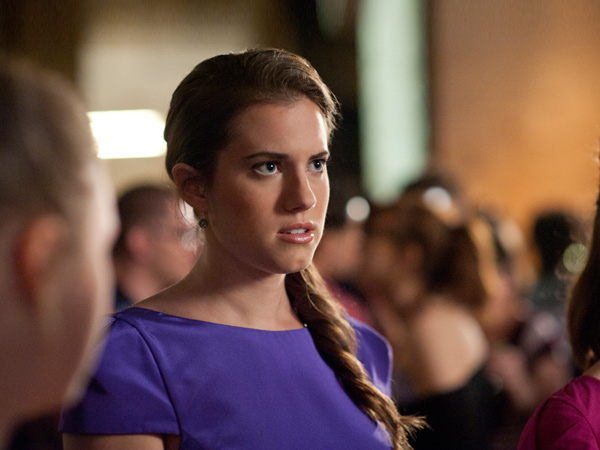
Wait: don't see them. It's horribly awkward. Marnie is nervous because Charlie's band is playing at the party —she's not nervous to see him, mind you. She's nervous that he'll see her and feel sad. Marnie approaches Charlie after his band finishes playing and compliments him on the set, and happily comments that it's mature and pleasant between them, but then of course a girl in a headband (referred to later by Marnie as "a tiny Navajo") jumps right into Charlie's arms and starts raving to him and Marnie about the band. It's clear that "Audrey" is dating Charlie and that she has no idea who Marnie is, and Allison Williams makes Marnie's face work (beautifully) through confusion, sadness, and rejected rage, but Marnie herself is totally unsympathetic when she calls Charlie a sociopath for dating another girl, just two weeks after their break-up.

The rest of the party is a trial for her. Oh, excuse me—for anyone who runs into her. Her obsession with Charlie's two-weekrebound becomes an understandable, but obnoxious, refrain (I finally started calling Marnie "Money Pit"in my notes). First she bitches about it to a stranger, who punctuates her remarks by getting up and leaving while she's talking. Then she spots Elijah slow-dancing with his boyfriend and runs up to him to say hello—if by "say hello," you mean "complain about Charlie, and how selfish Hannah is." Elijah rolls his eyes so hard, he nearly sprains his neck, then notes that if anyone's selfish, it's Marnie, because Marnie made out with him sophomore year while Hannah had mono. Marnie snorts that it doesn't count because it was at Rent rehearsals, and besides, Elijah's the one who dated Hannah for two years and secretly liked boys the whole time. Elijah's like, not so much with the "secretly" part, sneering, 'RENT rehearsals!" It's not realistic to keep working this character into the scripts, but I don't care, because Andrew Rannells is perfect. Marnie sneeringly asks him whose dick he sucked to get a part, because his voice "sounds like a bag of dying babies," and I am so stealing that comment, even if it gets me slapped in the face like it does Marnie. (I don't know why the blocking on that smack is so amateurish and fake, either, but I assume it's intentional, and I know it's hilarious.)


On top of everything else, Marnie's now marooned at the party by herself, because Jessa has accidentally invited Lavoyt to the party and now has to deal with the inevitable ugliness. While explaining to Hannah why every party could be the best party ever, Jessa gets a text from an unknown number, asking what she's up to. Hannah tells her to ask who it is, but Jessa puts adventure above common sense once again and invites the mystery texter to the best party ever. The mystery texter is, of course, Lavoyt; the wife and kids have gone out of town to visit family, and he stayed home to work. Jessa wonders why he bothered, when he doesn't have a job. To try to get a leg over you, obviously, and as Lavoyt looks sadly down at the bottle of wine he brought to a Bushwick party with a reggae band playing, he has a realization: "Oh my God, I'm That Guy."

It's probably not a "realization," given what we see later; it's probably just another way of trying to get her to pity-fuck him. She tells him to "put a pin in [his] midlife crisis" and dance with her, but then she hurls the bottle of wine over the railing and hits someone, and that guy rolls up to them and punches Lavoyt in the face, and he and Jessa end up in the ER watching a junkie try to cadge Vicodin from the desk clerk. Lavoyt starts crying; what is he going to tell his wife? Jessa looks a little scared by the tears, and suggests telling Mrs. Lavoyt the truth. Lavoyt, facedown in her lap, wails through his bloody nose and (likely fake) tears, "Let's spend the night together," adding that they "won't do anything," and now it's Jessa having the realization. Hers is about playing with fire: "I can't do this kind of thing anymore." Lavoyt is apparently used to the sad-sack routine working, because his face hardens instantly and he calls her a tease. Jessa parries with a line she's clearly used to shut assholes down before: "I liked you better when you were being a good guy." "Ain't that the way," he grunts, and gets up to leave. Why pretend his bloody nose needs medical attention if his dick isn't going to get Jessa's? Jessa suggests they can stay friends, but he grumbles, "We were never friends to begin with. You work for my kids." Ouch: Lavoyt thinks he's cutting Jessa down with that line, but Jessa isn't the one trying to take it to the hoop with the nanny instead of finding a job or spending time with his own kids. Great job by James LeGros in shifting the character from "aimless and pathetic" to "entitled douche."

Hannah, meanwhile, has spotted Adam in a dance circle of the "best dyke friends" he's alluded to previously, doing a series of weird moves probably based in theoretical mathematics. Hannah complains to the others that, after the conversation in which he said he missed her, he hasn't responded to a text in two weeks. She also observes that she's never seen him outside his house: "I've never seen him with a shirt on." I'm not going to take credit for the insight; I'm just going to feel grateful somebody on the show pointed it out.

She hides behind a wall unit and spies on him, then flees rather than talk to him, but at the bar, she's approached by one of his "best dyke friends," Tako. (Tako makes sure to note that it's not spelled "Taco." Snerk.) Tako offers Hannah a friendly drink, but Hannah notes that she doesn't really drink after an incident with Brie and hurling on her cell phone. . . . Cute line, but it's really just to set up the big reveal for Tako, wherein she asks if that's how Hannah knows Adam—from Alcoholics Anonymous. Hannah is gobsmacked, and while Tako rambles on about how this is one of the things that defines Adam (the other, obviously, is his "love of books"—and that we've seen, at least), Hannah can't decide how to feel. Should she feel hurt, again, some more, by the fact that this isn't something Adam trusted her enough to share with her? Or should she feel even more attracted to what she sees as a new and tragic dimension of Adam?

Either way, it's Hannah making a dimension of Adam about herself, so she settles for "both." Adam invites her to join him on a dumpster-diving mission, to collect scrap for a boat he's building that's designed to fall apart as it goes along . . . in the Hudson. Instead of 1) notifying her friends that she's leaving or 2) refusing on the grounds that this nautical "plan" is excessively Alexander-Supertrampy, Hannah hops aboard Adam's bike handlebars, and off they go. But he's pedaling too fast for her, and when she wails at Adam to stop the bike and let her walk, he stops suddenly, and she face-plants. I really hope for Lena Dunham's sake that they got that on the first take . . .

…but I don't think they did, because when we cut back to the pair, Hannah's got a fat lip. She's also got a chip on her shoulder, ordering Adam not to talk to her while she sends Marnie her coordinates, and she blows up at Adam for not telling her he was in AA. He responds, gently at first, that it's been a big part of his life since he was 17, but when she won't let it go, he blows up, yelling that she never asked: "You never ask me anything!" Well, she does—but only about herself, how she's doing, does this feel good, does he like her skirt. Adam does have a great point: for a woman who wants to "rate" as his girlfriend, she hasn't done much to earn the spot. Marnie pulls up in a cab and orders Adam to get away from Hannah. Finally, Adam rounds on Hannah: "Do you want me to be your boyfriend? Is that it? Do you want me to be your fucking boyfriend?"

And then, in an episode full of them, the best cut yet: Adam, Hannah, Marnie, and Adam's bike all crammed into the back seat of the cab. Hannah is trying valiantly not to grin . . . and gloriously failing.

"Welcome to Bushwick" is the most sure-handed work we've seen yet from the show. The physical humor is edited flawlessly, including the credits sequence, a little send-up mash-up that includes Asian characters and rave-y touches. 

The one-liners are confident and don't over-explain themselves or veer into dorm-monologue territory (Ray snapping into the mic, "Don't bring a baby to a party like this"; Shoshanna responding to the crack revelation with "Don't tell my parents; don't tell me!"; the throwaway "Age of Innocence fan club" exchange between Ray and Jessa, which this Wharton nerd adored). Marnie's attempted kiss-off of Adam, "Enjoy going through life as . . . yourself," encapsulates the ep really well, because it's as though the show is doing that—enjoying itself, laughing with its characters, instead of trying to be capital-D definitive all the time. Don't get me wrong, I like the show's ambitions. But when it's "just" doing this, it does it well.

Sarah D. Bunting co-founded TelevisionWithoutPity.com, and has written for Seventeen, New York Magazine, MSNBC.com, Salon, Yahoo!, and others. She's the chief cook and bottle-washer at TomatoNation.com.

VIDEO ESSAY: War Movies for People Who Don’t Like War Movies

VIDEO ESSAY: War Movies for People Who Don’t Like War Movies

There’s no such thing as a truly anti-war film, Francois Truffaut once said. By depicting the adventure and thrill of combat, war movies can’t help but glorify their subject, fueling fantasies of spectacular, heroic violence. It’s a case where the sensational beauty of cinema works against our humanist impulses rather than for them. I’m not a fan of war movies as a general matter of principle. But in recent years, I’ve seen a couple of films with unique approaches to the war movie, and that bring humanity back into focus.

Originally published on Fandor Keyframe. For a full transcript visit Keyframe.

Kevin B. Lee is Editor in Chief of IndieWire’s PressPlay Video Blog, Video Essayist for Fandor Keyframe, and contributor to Roger Ebert.com. Follow him on Twitter.