In making this list of the best, or maybe just my favorite, romantic comedies of the last twenty years, editors Matt Zoller Seitz and Max Winter and I set out to make clear goalposts. The list would be as inclusive as our memories and subjective tastes would allow. It would span the last 20 years. The best film of each year, from 1993-2012, would be elevated above the rest, but other worthwhile films would be frequently mentioned so as to better contextualize my choices. Also, in the case of foreign films, I’ve chosen films based on the year of their production, not the year of their US release.
Ranking any kind of comedy is challenging because I often have to compare drastically different kinds of movies. It’s harder still to quantify what a “romantic” gesture is. Because your mileage may vary, I wanted to start with two preferred definitions of “romantic.” The first is taken from a Google search: “Inclined toward or suggestive of the feeling of excitement and mystery associated with love.” A good romantic comedy does not always end with a promise of commitment. Several of the films on this list conclude with a heartbreak or a break-up, but I still find them to be both very funny and moving because they nicely approximate the confusion and, yes, mystery of romance. Because love isn’t just a gesture or visible connection: it’s also a lot of guesswork and well-intended misinterpretation. Some of the movies mentioned below are romantic not just because they’re about love, or sex, or both, but because they maintain a certain romantic mystique.
That being said, the other definition of “romantic” I used for this list is less opaque and was taken from the Merriam-Webster Dictionary: “consisting of or resembling a romance.” This obvious definition gave me a little wiggle room: as long as the film was a comedy that was also about love, romance, amorous complications, etc., it was fair game. Which isn’t to say that I went mad with power or anything. In fact, some superior films were passed over in any given year because I didn’t want to equivocate about whether or not they really are romantic comedies. In discussing my picks with Matt, he gave me a great litmus test for this piece: how much breath do I need to waste before I realize I’m just arguing for the sake of argument? If the answer was a lot, then I wouldn't pick that film.
With these guidelines in mind, let’s get started.
1993: The Wedding Banquet
 For this year, it’s tempting to stump for Groundhog Day, but while I love that film’s Capra-inspired understanding of what makes humanity great (the ability of humans to universally empathize and care for each other), the romance between Andie McDowell and Bill Murray isn’t as central to that film as Murray’s transformation is. I tend to think 1993 was dominated by two films: Sleepless in Seattle and The Wedding Banquet. I’ve chosen the latter film because while I love Sleepless in Seattle’s episodic, observational sense of humor, I don’t think the film is as generally thoughtful or as touching as The Wedding Banquet. While both films are essentially progressive, the latter title doesn’t romanticize courtship to the point where gestures are more important than the feelings they connote.
Sleepless in Seattle is about the seductive power of wish fulfillment. Annie (Meg Ryan) wants to believe that a relationship with Sam (Tom Hanks) could work because she wants her life experiences to be just like the romantic comedies she loves to endlessly rewatch, especially An Affair to Remember. It’s a sweet thought, but compare that to The Wedding Banquet’s notion of romance as a feeling that may or may not survive a seemingly endless series of rituals. Ang Lee’s film has a touchingly finite and matter-of-fact understanding of how romance works that makes the mysterious three-way attraction between Wei-Wei (May Chin), her landlord Wei Tong (Winston Chao), and his boyfriend Simon (Mitchell Lichtenstein) that much more compelling. To hide the fact that he’s gay, Wei Tong has to convince his conservative parents that he’s straight. So he marries Wei-Wei, who already has a crush on him, and uses the sham wedding to get her green card.
What’s most touching about The Wedding Banquet is the refreshingly open-ended resolution that Wei Tong reaches with his parents, particularly his proud father (Sihung Lung). Lung’s character confesses to Simon that while he doesn’t understand how his son could love another man, that’s the reality he’s facing. He doesn’t make a big show of re-assuring his son, or even suggest that he approves of Wei Tong. But, along with a handful of scenes where it’s unclear whether or not Wei Tong still loves Simon, this quiet moment of acceptance underscores the film’s biggest virtue: a willingness to see love as a series of decisions that maintain one’s feelings based on how much those feelings are worth, not how much face they save.
1994: The Hudsucker Proxy
 1994’s top two contenders are Barcelona and The Hudsucker Proxy, neither of which neatly qualifies as a romantic comedy. I was initially tempted to pick Barcelona since writer/director Whit Stillman does a fantastic job of re-contextualizing romance as one of a series of theoretical conflicts for Ted Boynton (Taylor Nichols), an American yuppie living in Barcelona. Ted only realizes the extent to which his own neuroses make him ideologically opposed to everyone around him after his gauche cousin Fred (Stillman regular Chris Eigeman) comes to stay with him indefinitely. Ted’s not the empty-headed fascist many Spaniards assume he is because of his nationality, nor is he as stubbornly contrarian as Fred thinks he is when confronted with that reality. Fred’s romance with local Spaniard Montserrat (Tushka Bergen) is doomed because he’s looking for a level of commitment that doesn’t come naturally to her. Ted’s not even sure whether it’s inherently foolish to act on his instincts and pursue women that he’s physically attracted to.
Still, Stillman’s not primarily concerned with romance in Barcelona. By contrast, while The Hudsucker Proxy is a screwball comedy first, and then a romantic comedy, the film’s main catalyst is podunk savant Norville Barnes’s (Tim Robbins) romance with Pulitzer-winning busybody reporter Amy Archer (Jennifer Jason Leigh). Norville even realizes this later in the film, murmuring to himself that everything after his appointment as the head of Hudsucker Industries happened because of Amy. Apart from being a masterful tribute to New York City, The Hudsucker Proxy is fantastic because Amy and Norville’s romance is just one iteration of the Coen brothers’ Herculean pastiche, a comedy that combines elements from Frank Capra movies, Preston Sturges screwball comedies, and even German expressionist classics like Metropolis. I love Norville and Amy because they comprise a hearty composite of the Coens’ interests, and the most charming and vital part of one of their best comedies. Go, Eagles!
1995: Kicking and Screaming
 Having watched and rewatched French Kiss so many times with my sister, I was tempted to give that corny but infrequently cute film a shout-out (Hi, Daphne!). Because, what the hell, I do like Kevin Kline’s goofy French accent. But while I like both French Kiss and Sydney Pollack’s disposable, but perfectly adequate Sabrina remake, I ditched both options as soon as I remembered that Kicking and Screaming was also made in 1995. The way that writer/director Noah Baumbach’s characters talk to each other, totally absorbed in their own anally specific theories on the world at large, is similar to Whit Stillman’s style of banter. But unlike the two films that Stillman made prior to Kicking and Screaming’s release, Baumbach’s movie is directly concerned with a trio of young egocentric post-grads who eventually realize that just knowing they’re shallow and self-centered is not the same thing as actively trying to change that sad fact. Grover (Josh Hamilton) can’t get over the fact that his girlfriend Jane (Olivia d’Abo) elected to study abroad in Prague instead of living with him in Brooklyn. At the same time, Max (Chris Eigeman, again) is shaken out of his own adolescent complaisance by Kate (Cara Buono), who, unlike Max, is not well-read, well-spoken, or particularly self-satisfied—basically, she’s nothing like Max or his friends.
Grover’s story is particularly well-resolved because it’s the exception that proves Baumbach’s rule. While best friends like Max are able to eventually move on from their collegiate-centric glory days, and move farther off-campus, Grover can’t. Eventually, Jane has to come back to him, which leads to one of my favorite scenes in any of the films on this list. Grover and Jane look like they’re about to make up, but she can’t further over-extend herself, and he’s too paralyzed with fear and expectation to do what he knows he needs to. That non-resolution is incisive and well-tempered by Baumbach’s Lubitsch-like banter, as when Kate chirps, “I’m going to be 17 tomorrow,” and Max cruelly replies, “Wow, now you can read Seventeen Magazine and get all the references!”
1996: Shall We Dance?
 While Walking and Talking is tempting, and Iris Blond is staid but perfectly enjoyable, Shall We Dance? is a must. I especially love that writer/director Masayuki Suo (I Just Didn’t Do It) doesn’t shame his married protagonist for falling in love with someone other than his wife. After all, Shohei (Koji Yakusho), a nebbish accountant, only takes up dancing after seeing Mai (Tamiyo Kusakari), a beautiful competitive dancer, standing at her dance studio’s window. Shohei’s interest in dancing starts with romantic attraction, thus creating a power dynamic that doesn’t really go away once wife Masako (Hideko Hara) and daughter Chikage (Ayano Nakamura) have entered the picture.
In fact, Shall We Dance?’s most endearing moment is the scene where, after Shohei realizes that he’s grown more interested in dancing than in Mai, she invites him to dance with her one last time before she moves away to pursue dancing professionally. The private detective that Masako hires to snoop on Shohei is right to say that Mai and Shohei never had an affair. But had circumstances been different, they could have. That ending matters because it proves that, as the film’s opening intertitle declares, ballroom dancing is treated as a taboo social ritual in Japan. The fact that the ember of a potential extra-marital romance persists by the film’s end makes Suo’s blockbuster hit that much more endearing.
1997: Chasing Amy
 Chasing Amy may not hold up as the progressive alternative to formulaic romcoms that many of its contemporary defenders thought it was. But it remains a moving unrequited romance, and a juvenilely funny comedy. Here, Smith’s greater ambitions pay off in his actors’ superior performances, and in his relatively polished dialogue. Smith inspires his regular cast of actors to try harder by giving them better roles, and while his direction was never exactly rigorous, his confidence is evident from the film’s pace. Comic book penciller Holden’s (Ben Affleck) vain attempts at understanding why he can’t be with Alyssa (Joey Lauren Adams) are fittingly clumsy, and uninsightful, but his behavior is true to the way a character of a certain mind-set and a certain upbringing might behave. Smith has never stopped writing about what he knows, but in Chasing Amy, he also applies his self-knowledge to a broader canvas, and it pays off. There are big emotional stakes in play, though the three-way gambit that Holden uses to try to win Alyssa back is painfully dopey. Still, Holden’s apparent earnestness comes across thanks in no small part to Affleck and Adams’s palpable chemistry. In the scene where Holden breathlessly confesses his love to Alyssa, you actually believe that such a guilelessly confused character would do anything to win over the girl he knows he can’t have. While it may not sound like much, Chasing Amy remains Smith’s career best, by a sizable margin.
1998: Buffalo ‘66
 Only a list like this could make me want to compare apples and oranges like There’s Something About Mary? and Buffalo ’66. Realistically, most films come up short when compared to the latter film, a blisteringly weird black comedy that suggests that finding someone with a compatible sexual hang-ups is a great foundation for a relationship. Newly-released ex-con Billy Brown (writer/director Vincent Gallo) kidnaps and persistently berates Layla (Christina Ricci), a slavishly submissive kook who grows to like being abused by Brown’s impotent lover. Everyone in Billy’s hometown is sexually screwed-up, from his best friend Goon (Kevin Corrigan), a guy who's obsessed with strip clubs but can’t think how to describe them (“that place where women take their clothes off…") to his equally deviant parents. While Ben’s mom goes into an orgiastic fit at the sight of a college football player on TV, his dad (Ben Gazzara) tries to seduce Layla with his golden voice, proving that the psychotic apple really doesn’t fall far from the tree. And amidst all the decibel-piercing screaming, Gallo’s film establishes itself as a singular, hilariously strange comedy of inter-related anxieties. If you can watch this movie with a date, and remain on speaking terms with her/him by the end credits, you’ve got yourself a keeper!
1999: Sweet and Lowdown
 Of the handful of memorable 1999 romantic comedies, a couple stand out. Shakespeare in Love’s tedious, winking style of humor has none of screenwriter Tom Stoppard’s characteristic genius for romantic banter. Runaway Bride has two great leads trapped by a trite story. And while I really like the infectious energy that Ten Things I Hate About You’s cast brings to the film’s already likable update of Shakespeare’s The Taming of the Shrew, I much prefer the two top choices for the year: Notting Hill and Sweet and Lowdown. I ultimately chose Sweet and Lowdown because it’s not only a fantastic star vehicle for Sean Penn, who plays the second-best guitar player in the world after Django Reinhardt, it’s also another terrific riff on writer/director Woody Allen’s pet themes. As a tongue-in-cheek docudrama, Penn’s Emmet Ray is treated like a historical footnote, one who’s remembered for his music but was a bigger failure in love because he always saw himself as an also-ran.
Sweet and Lowdown defines Emmet’s failure as a musician as his over-arching inability to see beyond his reputation. He performs beautifully, as in the handful of scenes where Penn throws himself into Emmet’s music (he was coached by jazz composer Dick Hyman). But when he stops playing, Emmet can’t stop fussing. He’s an egotist and therefore can’t see his accomplishments for what they are. This is certainly true of his romance with Samantha Morton’s Hattie, a mute laundress who he falls in love with and inevitably leaves to pursue Uma Thurman’s Blanche, a smarmy socialite. Blanche looks down on Emmet the same way he looks down on Hattie. And while that kind of doomed love triangle is par for the course for Allen, he develops that relationship and the world it’s situated in to an uncommonly sophisticated way. Which stands to reason given that his script for Sweet and Lowdown was rewritten from an earlier script he wrote decades before (it was originally titled The Jazz Baby, and was shelved because it was considered too ambitious). Like The Hudsucker Proxy before it, Sweet and Lowdown is an exceptional comedy not just because it’s a repository for its auteur creator’s best ideas. Because even if you ignored the film’s speculative historical narrative and its lovingly tenderly filmed musical performances, Sweet and Lowdown would still be a terrific Woody Allen movie because its doomed threeway romance applies Allen’s usual “the heart wants what it wants” dictum to a devastating effect.
2000: The Tao of Steve
 There’s not a lot of really good choices for 2000, so it’s a very good thing that Matt Zoller Seitz cautioned me against putting Dr. T and the Women on this list, just to see if anyone was still reading by this point. Still, The Tao of Steve stands out in the year in which What Women Want is the year’s top-grossing romantic comedy. While the latter film insists that a man can learn how to get in touch with his feminine side, the former maintains that Donal Logue’s schlubby lothario, can’t just assume he understands women because he knows how to manipulate them. Dex (Logue) is over-educated, over-weight, and under-stimulated. So he makes a game out of casually and effortlessly seducing women, tricking himself into thinking he’s irresistible because he knows how to play hard-to-get. The “Steve” of the film’s title are mythic badasses like Steve McQueen and Steve Austin, men of action that let women come to them. Mel Gibson’s character in What Women Want essentially does that, too, letting a pseudo-mystical meteorological event push him to transform his character rather than naturally realizing why he needs to stop being such a know-it-all prick.
In that sense, The Tao of Steve is like a couple other films on this list, films where self-centered men grow a little wiser after realizing their own limitations. But what distinguishes Dex from those other characters is that he’s a guy whose tendency to live for short-term enjoyment comes back to bite him in the ass. (SPOILER-OILER-OILER) The fact that Syd (Greer Goodman), Dex’s new love interest, is also a former love interest who he doesn’t happen to remember is a perfect way to demystify Logue’s Don Juan as a unconsciously forgetful lover. This doesn’t mean he has a tortured past or is trying to get over any one girl in particular. Instead, Dex has just forgotten what it’s like to shut up and really enjoy himself. As corny as it sounds, the scene where Logue is beaming like a little kid while night-swimming with Goodman is effectively disarming.
2001: My Sassy Girl
 One of the reasons why the 2008 American remake of this records-busting Korean romcom failed so miserably is because the original My Sassy Girl is so painfully earnest. The creators of the original 2001 film try very hard and mostly succeed at impressing viewers with their characters’ spontaneity. This is partly because My Sassy Girl is based on a series of hyper-popular, fictitious blog posts that were later collected in a novel. Though a slapdash pattern emerges later in the film, My Sassy Girl hastily reduces its womanizing protagonist Gyeun-woo (Tae-hyun Cha) to a puling schoolboy through the use of a playful, shit-stirring heroine, simply called “the Girl” (Ji-hyun Jun).
One of the best things about My Sassy Girl, a romantic comedy which spawned several lesser subsequent Korean romantic comedies (the best of which is probably Please Teach Me English), is its creators’ lapel-shaking zeal. They want you to know that the Girl is unusual, that she’s not passive, and that while she is flighty, she’s not really a manic pixie dream girl. That last point is what the film’s tone-shifting second half establishes most forcefully: the Girl has a past, and she is behaving a certain way because she wants to avoid further heartbreak. My Sassy Girl feels lived-in, and slapdash, and alive, in a way that most romantic comedies aren’t because its creators are always seemingly negotiating their characters’ next moves. So while I could have gone with Amelie, Bandits, Love on a Diet, Monsoon Wedding, or even Va Savoir, I chose My Sassy Girl because it’s messy, and boisterous, and totally charming.
2002: Punch Drunk Love
 There’s no real competition for this year: not the drecky My Big Fat Greek Wedding, not the poignant About a Boy, not even the half on-target Kate and Leopold. 2002 belongs to Punch Drunk Love, a movie that is best whenever falling in love makes already emotionally-stunted Adam Sandler and Emily Watson regress even more. Take, for example, the scene where Barry Egan (Sandler) helplessly runs around Lena Leonard’s (Watson) building, trying to get back to her apartment–after she has called him at her building’s front desk, just to say that she wanted to kiss him. This is one of many perfect, anxiety-producing moments where you can’t help but wonder how screwed up these characters really are until they magically come together.
Punch Drunk Love is a neo-noir screwball comedy, a film where long shadows and the threat of imminent emotional violence is not only nerve-wracking but also very funny. There are, in other words, lots of weirdly related and apparently momentous events in the film, from the car crash that leaves a harmonium on Barry’s doorstep to Barry and Lena’s seemingly random garage park meet-cute. But few of them are really random. That haze of anticipation and excitement is, as the film’s title implies, is what makes romance so simultaneously funny, and scary in Punch Drunk Love. Sandler’s volcanic performance is often heralded as his only worthwhile role because here, he’s actually pushing himself far enough that you’re both scared for and of him. Watson’s equally great, hiding so many conflicting feelings behind her nervous smile. Punch Drunk Love’s operatic scope makes Barry and Lena’s mad love affair so unassailably great.
2003: Running On Karma
 Pitting Running On Karma against any other romantic comedy is unfair because Running On Karma is like the Ever-Lasting Gobstopper of movies. It’s not just a great romantic comedy, it’s a great cosmic plea for guidance, a great, bizarro CSI-style fantasy, a crazy Buddhist kung fu film, and so much more. While working with screenwriter Ka-Fai Wai often brings out the crazy in Hong Kong director Johnnie To (Sparrow, Mad Detective), Running On Karma is by far their most exciting, and yes, batshit collaboration yet. Big (superstar Andy Lau, wearing a bulky prosthetic muscle suit) is a body-builder that can see people’s past lives. A former Buddhist monk, Big flees his monastery and becomes a stripper after realizing that he can effectively see people’s karma. When he’s busted by Lee (Cecilia Cheung), a kind-hearted undercover cop, he sees her karma: in a past life, she was a Japanese soldier that murdered innocent civilians during World War 2.
Apart from having an especially memorable meet-cute (she tries to bust him, but only after he starts to liberally apply canola oil on his rippling, Montalban-sized pecs), Lee and Big’s romance is fantastic because their romance is mostly implicit. He heroically tries to keep her alive, solving crimes with her and selflessly pushing her out of harm’s way. He even fights a killer Indian contortionist that somehow manages to cram his entire body into an eensy aluminum can. And if that’s not romantic enough, there’s also the scenes where Big literally sees the good in Lee, as when she gleefully cheers him on at his muscleman competition. Running On Karma would be in a class all its own even if it weren’t so utterly unclassifiable, but it’s also incredibly moving because it’s one man’s uphill struggle to literally banish the sins of his lover’s past. Lee and Big’s story encompasses pretty much every genre that you can think of. Running On Karma is not just the best romantic comedy of 2003, it’s pretty much the best anything of 2003.
2004: When the Sea Rises
 The year 2004 was an especially difficult one to call since it’s the year of Sideways, Shaun of the Dead, Eternal Sunshine of the Spotless Mind, and Love is Eternal While it Lasts. Both Eternal films are excellent, but I chose French comedienne Yolande Moreau’s When the Sea Rises instead because it’s somehow melancholic without being overwhelmingly sad. Of the films on this list, Moreau’s film best shows how euphoric romance can make even seasoned lovers feel. In When the Sea Rises, love is a momentary respite from the crushing weight of living alone. Moreau, who co-wrote and co-directed the film, plays Irene, a version of Moreau. Irene is a traveling performer who makes a living from her one-woman show, A Dirty Business of Sex and Crime, the same play Moreau made her reputation with in the ‘80s. Having performed so often on the stage, and then later in so many prominent films, like Amelie and Seraphine, Moreau clearly understands the emotional distance that performing for a live audience has on an actor. She shows that every time Irene mounts the stage, and makes her own morose uncertainty her schtick.
While in character, Irene jokes that the fact that her husband is dead is paradoxically both all-consuming and totally inconsequential to her. Irene’s obviously not a happy person, but she is when she’s with Dries (Wim Willaert), a foreign migrant worker. Love isn’t a panacea-like tonic, and it doesn’t make Irene feel a million years younger, sexier, or more invincible. But it does make her unmoored life a little more grounded. Neither Dries nor Irene is comfortable thinking about their relationship in the long-term because neither person knows where they’re going to be in the next five months, let alone the next five years. They just drift together, and eventually part ways. But when they meet again, it’s a very moving reversal of their typical roles as performer and accomplice.
2005: The 40 Year-Old Virgin
 The 40 Year-Old Virgin is the best Judd Apatow-brand film because it’s the one where he most tenderly shows us why it sucks to be an arrested adolescent. While Apatow-directed films like Knocked Up and Funny People show how much harder it is to be juvenile as one gets older, The 40 Year-Old Virgin follows an immature character after he takes steps to grow up and try to overcome his insecurities. It’s accordingly tempting to view Apatow’s more recent films as being more accomplished and/or ambitious, but Virgin is as good as it is because it doesn’t just assume that being gawky and sensitive makes you a diamond in the rough. Andy (Steve Carrell) is an old geek: he carries emotional baggage with him, stuff that makes his awkward-ness more than just goofy. He’s well-meaning, but ill-equipped to talk to single mom Trish (Catherine Keener) or her daughter Marla (Kat Dennings). And while Trish wants to be with Andy, she needs someone who can adapt to her social situation just as well as she can adapt to his.
The reciprocally dysfunctional nature of Trish and Andy’s relationship is that much more winning because The 40 Year-Old Virgin also features some of Apatow’s best sex jokes. They’re more casually gross than the dick-joke-centric films he’s produced since, partly because this film makes greater hay of how intimidating sex can seem to someone that’s never actually done it. The mechanics of the act are mystifying to Andy, but they’re just as beguiling to his moron friends. Andy’s friends want to get him laid because they want to regress to a time when they had fewer responsibilities and more opportunities to screw up. But Andy knows better, and in this case, waiting so long to make a move just makes everything after that preliminary decision all the more exhausting.
2006: I’m a Cyborg, But That’s OK
 South Korean director Chan-wook Park (Oldboy, Joint Security Area) makes movies about characters who realize the loaded ideas and defense mechanisms that they use to define themselves are wrong. His protagonists often force themselves into revelatory confrontations that irrevocably change the way they protect themselves from dealing with the world. They’re never totally cured of their delusions, not for long, anyway. I’m a Cyborg, But That’s OK is a fantasy of projection, a romantic comedy where two emotionally unstable people try to bond in spite of their respective problems. Young-goon (Soo-jung Im) is admitted to a mental institution after she tries to kill herself. She thinks she’s a robot that can talk to other machines but can’t process human food. She bonds with Il-soon (K-pop idol Rain), a kleptomaniac who steals people’s personalities when he takes their most prized possessions.
Park’s lovers’ respective character-defining tics are also the way they process the world. But while Il-Soon is well enough to recognize that there’s something wrong with Young-goon, he doesn’t really succeed in curing her. To Park, there’s no way to cure someone who doesn’t know that they want to get better. While many detractors might assume that Park is condescending to his characters, he never treats them like pitiable freaks. The scene that best establishes that is the film’s ending. Young-goon wants to kill herself, and everyone around her, so Il-soon promises to help her. They wait in pelting rain to be hit by lightning. She’s waiting for a transformative act of divine destruction, but he knows it’s not going to happen. The image of them sitting together, neither one expecting to see the world the same way as the other, is one of Park’s most tender.
2007: Music and Lyrics
 2007 wasn’t a great year for romantic comedies. There was a mediocre remake of The Heartbreak Kid, the mostly sweet Waitress, and the puppy dog-cute Enchanted, and that’s about it. That having been said, Music and Lyrics isn’t anything more than a breezy, formula-based romantic comedy, but the jokes are consistently funny, and the stars have chemistry, two traits sadly rare for a studio-produced romantic comedy. Writer/director Marc Lawrence (Miss Congeniality, Two Weeks Notice) clearly knows what he likes about star Hugh Grant and takes great pleasure in giving him a comfortable but fitting role. Grant plays Alex Fletcher, a has-been pop music composer that gets inspired by Sophie Fisher (Drew Barrymore), the woman he hires to water his plants. She helps him while he predictably has his eye on ex-girlfriend Cora Corman (Haley Bennett), the pop star that Alex rode the coattails of some years ago. The scenario is a familiar one, and is distinguished primarily by how consistently effective the film’s superficial gags are, from music video parodies to frustrated lyrics-writing sessions (“Why would you put a clown in your bed?” “It would not be the first time…”). In that sense, the film is a fitting homage to bubble gum pop songs: it doesn’t go anywhere you don’t expect it to, but it doesn’t need to, because its charms are immediate and plentiful.
2008: Ghost Town
 Screenwriter David Koepp (Stir of Echoes, Premium Rush) has only directed a handful of films, but Ghost Town is the best example of why his distinctive light touch makes him an invaluable modern B-moviemaker. It’s also a good star vehicle for Ricky Gervais, which is a major relief given how lousy Gervais’s American roles usually are (The Invention of Lying and both Night at the Museum movies are both especially lousy, though for fairly different reasons). Koepp is precise and knows exactly what kind of actors he needs to achieve the kind of effect he’s going for (ex: it’s particularly nice to see Greg Kinnear get a decent role). Gervais is perfectly cast as Bertram, a misanthropic dentist who starts to see ghosts after a routine colonoscopy goes awry. Koepp revels in the absurdity of this dilemma by making Bertram’s laughable inability to talk to people, dead or alive, the biggest hurdle in his quest to romance the recently bereaved Gwen (Tea Leoni).
Ghost Town is as breezy and charming as it is because Koepp has a great sense of proportion. With the exception of the film’s very last scene, there’s nothing in the film that feels unnecessary or inappropriate in light of the film’s characters or situational comedy. Paced wonderfully, it has several memorable exchanges between Gwen and Bertram. And while light, exceptional banter is a virtue unto itself (“I love you!” “Don’t call me!”), Koepp’s film is also unostentatiously wise. His ghosts linger on Earth not because they have unfinished business, but because their loved ones do. Gwen gets to the heart of why Koepp’s modest, pragmatic style of comedy is so satisfying when she explains to Bertram that you are only as happy as you are able to cope with life as it unfolds: “We just get the one life, you know. Just one. You can't live someone else's or think it's more important just because it's more dramatic. What happens matters. Maybe only to us, but it matters.” Bertram loves Gwen because her presence makes being surrounded by the needy and the undead a little more bearable.
2009: Duplicity
 Role-playing and role reversals are everything in Duplicity, writer/director Tony Gilroy’s comic follow-up to Michael Clayton. Gilroy excels at disorienting viewers by seemingly focusing on everything but what’s important: the love affair between two knowing competitors/accomplices, played by Clive Owen and Julia Roberts. His lovers’ relationship is, in that sense, a perfect foil to the film’s depiction of corporate espionage. The main difference between rival CEOs Dick (Paul Giamatti) and Howard (Tom Wilkinson relationship and Ray (Owen) and Claire (Roberts) is that the latter couple secretly loves each other while the former couple not-so-secretly hates each other’s guts. While determining the extent to which Ray and Claire will double-cross each other is more than half the fun of Duplicity, that’s only because the pair’s apparent attraction can’t really be sublimated. Owen and Roberts make for fantastic sparring partners, Roberts tartly rattling off one-liners while Owen growls rejoinders back at her. While the film’s plot eventually gets distractingly convoluted, Owen and Roberts’s dueling performances are always the film’s main attraction.
2010: Love in a Puff
 Hong Kong writer/director Edmond Pang excels at making comedies where friends, enemies, and lovers are all related by elaborate conspiracies of pleasure. They know each other because in their heads, they’re all involved in a grand scheme whose holistic importance is never the sum of its many vaguely-related parts. In Exodus, a security guard stumbles upon the real reason why women spend so much time in the bathroom while in Men Suddenly in Black, a covert bachelor party gets hunted down by its participants’ spouses. Love in a Puff, similarly, is about two lovers who fall in love through various half-understood urban legends and half-truths, stories that nobody believes but everybody gets taken in by. For example, Jimmy (Shawn Yue) hears a story about a girl who gets her lover’s freakishly-long pubic hair stuck in her bracelet, and consequently draws unwanted attention at a dinner party. The story is the kind of innocent fiction that characters tell each other for the sake of remaking the world as a series of funny, nonsensical anecdotes. It’s no wonder then that Jimmy first meets Cherie (Miriam Yeung) while smoking a cigarette outside his office building. Like the butt in their mouths, the stories Cherie and Jimmy tell each other are unimportant in and of themselves, but their associative power really makes Love in a Puff, recently followed by the decent, but inferior, Love in the Buff, stand out.
2011: Extraterrestrial
 This year’s comedies are primarily distinguished by their various whimsical milieux: Lost Generation-era Paris in Midnight in Paris, Seven Oaks College in Damsels in Distress, and, uh, the magical Franklin Park Zoo of Zookeeper, simultaneously the worst and the highest-grossing romantic comedy of 2011. But Extraterrestrial, assuredly the best romantic comedy of the year, could take place in any city as it’s set in the shadow of an alien visitation. City-spanning flying saucers descend on Madrid like angry black clouds, and then do nothing. Extraterrestrial is not in that sense really a science-fiction story. Julio (Julian Villagran) wakes up in Julia’s (Michelle Jenner) apartment, not knowing what happened, but assuming that they slept together. While the slept, the city was evacuated. Now, the only people left are Julia’s nosy, jealous neighbor Carlos (Raul Cimas), and her boyfriend Angel (Carlos Areces). Julia’s feelings for Angel persist but never diminish Julia and Julio’s relationship, nor vice versa. In fact, Julio and Julia have sex while Angel’s out looking for supplies.
That indecision is a good part of what’s so funny about Extraterrestrial: even a city populated by four people feels crowded when only two people are nervously enjoying themselves. As in Timecrimes, Spanish writer/director Nacho Vigalondo’s endlessly rewatchable debut film, Extraterrestial follows characters that are actively figuring out the extent of their agency. They can only do so much with the resources available to them, but for the sake of making their lives even simpler, Julio and Julia have to get rid of Carlos and talk to Angel about their affair. It’s funny because the characters are constantly clueless, and it’s romantic because Vigalondo just assumes that two adults that are attracted to each other will have sex and be together until one realizes that something greater has got to give. It’s not really a science-fiction film so much as a neo-screwball comedy with spaceships.
2012: Moonrise Kingdom
 While I’d love to give a final shout-out to Amy Heckerling’s Vamps, her long-awaited follow-up to Clueless (No, sorry, Loser and I Could Never Be Your Woman never happened), Moonrise Kingdom really does tower above that film. I can’t help but love the dizzying speed with which Anderson and co-writer Roman Coppola establish Sam Shakusky (Jared Gilman) and Suzy Bishop’s (Kara Hayward) affection for each other: the scene where the two exchange letters is hilariously succinct. The direct-ness with which Anderson establishes Sam and Suzy’s relationship allows him to focus on what he really likes about them. They each have inner lives that nobody else sees because nobody else knows enough to look for them. No revelation is too shocking to these kids, not science fiction novels nor survival skills. Sam and Suzy act as if whatever they haven’t seen can be handled as it comes up, even the tantalizing prospect of sex (“It feels hard.” “Do you mind?” “I like it.”). Anderson and Coppola don’t smother Suzy and Sam in cheap sentiment. In fact, these kids are more emotionally mature than the film’s adults! Seeing them pulled apart from each other on the beach after they’ve danced, and even slept together is heartbreaking. Sam and Suzy really do seem to belong together.
Simon Abrams is a New York-based freelance arts critic. His film reviews and features have been featured in the Village Voice, Time Out New York, Slant Magazine, The L Magazine, The New York Press and Time Out Chicago. He currently writes TV criticism for The Onion AV Club and is a contributing writer at the Comics Journal. His writings on film are collected at the blog, Extended Cut.


 This season's premiere was also very much like the third season premiere, opening with a big happy musical number in the style of Glee (a show Community had mocked mercilessly), before the characters immediately dropped back down to earth. Finally, “History 101” made sense from a character perspective: of course Abed Nadir, resident pop culture obsessive, would find solace in an old-fashioned sitcom form labeled AbedTV. In short, the deliberately confrontational/mocking style, the formal experimentation, and the connection with the characters made it seem like it was exactly what Community should be.
 The one storyline that came anywhere near working was the Dean's Hunger Games bit, largely thanks to Jim Rash. His emergence—or perhaps the acknowledgment of his emergence—as one of the show's most important characters was one of the best parts of Community's third season, and that continued in “History 101.” The scene where he and Jeff dance the tango should have been good enough to find a place in Community lore, and maybe it will eventually. But that storyline was squished by all the others, preventing it from being more than an amusing diversion.
 The costumes may have been the best part of “Paranormal Parentage,” possibly the best of any of Community's Halloween episodes. You can earn a lot of good will by putting Shirley in a Princess Leia outfit and Annie in a Ringu costume. Every time they appeared on-screen, I got a slight thrill of novelty. But more importantly, Britta in her canned ham costume went a huge way toward salvaging her character after the disastrous premiere. Gillian Jacobs' gifts for physical comedy were on full display: every time she had to move in costume, she made it funny; every time she spoke in costume, she managed to accent the ridiculousness. Her therapist dance, done to get Jeff to open up, was the highlight of the episode.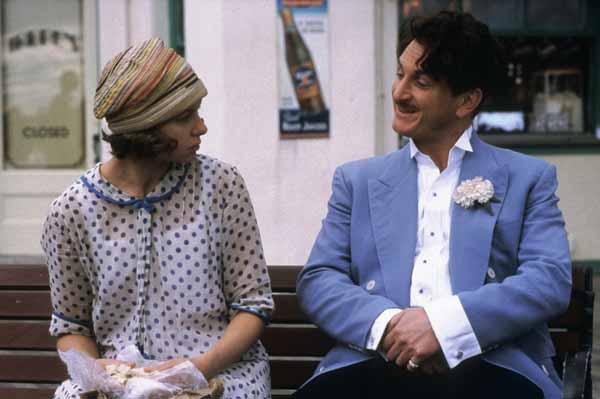





 Press Play Video Blog