Watch: David Fincher’s Close-Ups Are the Keys to His Work

Watch: David Fincher’s Close-Ups Are the Keys to His Work

David Fincher is, in one sense, what would happen if Joseph Cornell, H.P. Lovecraft, and Alfred Hitchcock teamed up to make vast, rambling, quietly explosive epics. Watching one of Fincher’s films is less like following a story than entering a fully imagined world. This aspect of the experience of his work is most evident in his use of close-ups–in these shots, the camera is not so much bearing down as peering in. In frequent Press Play contributor Jacob T. Swinney’s latest video, he takes a close look at these close looks, and the result is every bit as fun as watching a Fincher movie. 

Watch: Vilmos Zsigmond Defined 1970s Cinema

Watch: Vilmos Zsigmond Defined 1970s Cinema

The late cinematographer Vilmos Zsigmond arguably defined the look of American cinema in the 1970s. He worked on films like Altman’s ‘McCabe and Mrs. Miller,’ De Palma’s ‘Blow Out’ and Spielberg’s ‘Close Encounters of the Third Kind,’ for which he received an Oscar. Despite the fact that few of his films look alike, Zsigmond developed a distinct visual style over the course of his illustrious career—namely succeeding in creating significance within the frame by juxtaposing his subjects using deep focus. In ‘Blow Out,’ the shot where John Travolta’s Jack Terry points his boom mic at the distant owl can be seen as representing the duality between sight and sound. In ‘Deer Hunter,’ you can also see a duality in Robert De Niro’s Michael "Mike" Vronsky. As he walks across atop a rocky mountain, his troubled past is represented by his mirror image that’s reflected on the lake surface. Zsigmond’s ability to maximize the area of the visual frame to produce new meaning beyond the film’s narrative is just one of the many reasons why he gained his legendary status in the filmmaking industry.

Watch: Terrence Malick’s Best Nature Shots in 3 Transformative Minutes

Watch: Terrence Malick’s Best Nature Shots in 3 Transformative Minutes

Terrence Malick isn’t so much a filmmaker as a poet.  Rather than relying on traditional narrative framework (especially in his later films), Malick relies on nature to create visual poems on celluloid.  Blindly picking a random frame from Malick’s modest filmography, there is a rather high chance of a close-up of a plant or a wide landscape free of humans.  This is because nature itself is a character in a Malick film–sometimes even more so than the human characters.  There is a reason why Malick often chooses to cut to a blowing leaf or a low-angle shot of tall trees during moments of poignancy.  In a way, these images express something that more traditional misty-eyed close-ups of professional actors simply cannot.  We learn more from lingering on a stream than we do from dialogue.  The swaying tree tells us more about a character’s past than flashbacks can.  Rays of sunlight through a rain-forest canopy put the entire film in perspective.  While these elements may be simple, they seem to be something only Malick can pull off successfully.  Many filmmakers are inspired by them and even more copy them, but only Malick can create in this way.  His imagery possesses a certain level of truth due to the fact that he himself finds stories in nature.  Here is a look at some of Malick’s best shots of his favorite storyteller, nature. 

Jacob T. Swinney is an industrious film editor and filmmaker, as well as a recent graduate of Salisbury University.

ARIELLE BERNSTEIN: Women’s Bodies and the Outrage Machine

ARIELLE BERNSTEIN: Women’s Bodies and the Outrage Machine

nullIn 2007 I was working part time in a Borders bookstore while completing my MFA. It’s not uncommon in service jobs that customers will say completely strange, off-putting, or frustrating things, but one comment clearly stands out to me as most painful. Two men were standing at the register, chatting and looking at the magazines, one of which featured Jennifer Love Hewitt on its cover, wearing a black bikini and swimming in the ocean. She was smiling broadly and looked like she was having fun, even though all the recent articles about her pointed out that she had clearly gained a lot of weight.

The men laughed at how fat she looked, and then one looked at me. “Remember when she was young? She used to look like you. Nice and thin.”

The men were probably in their thirties or early forties and not in very good shape. One had a beer belly that very clearly hung over his jeans. I didn’t know what to say. In a world where the customer is always right, well-meaning managers will do anything to placate a difficult customer, rather than come to workers’ defense. And in this particular case, the boorish comment was even meant to have been softened with a supposed compliment. But underneath that compliment was also a very clear warning—that gaining weight or getting older was clearly a hilarious and utterly unacceptable thing for a woman to do.

I thought of this experience when reading about the hostile barbs and insults hurled at Carrie Fisher for recently daring to resume her role of Leia in Star Wars: The Force Awakens, even though her body had changed as she got older. The response was uncomfortable precisely because the later film was deliberately crafted in order to show Leia growing up, going from princess to general, changing her hairstyle, sharing a bittersweet moment with Han Solo, who had also aged, but who received no contempt from audiences when he did not remain a young heartthrob.

We tend to think of media as something we passively accept, rather than actively engage, even though the advent of social media has obviously changed that dynamic significantly. Our constant interaction with media images, from tweets, to blog posts, to internet think pieces, would, on the surface, seem to assume that we are more sophisticated media consumers than in the past. But I would argue our relationship to images has stayed relatively the same as always; only now we spend even more effort contorting ourselves into the same images we see on the screen, editing our faces, Photoshopping thigh gap. We torment each other more directly with the comforting shield of anonymity. Social media hasn’t humanized actors; it’s dehumanized the rest of us, turning us into easy targets and prey.

Issues of body image are not new. Every semester I have a new class of students, and every semester I have several young female students who want to write about body image. “There’s so much pressure today,” they say. “Being a teenage girl is the worst thing in the world.” They don’t think about whether women in their 20s and 30s and 40s and 50s worry about the same things. They seem confident that eventually this specific kind of pain is going to stop.

Every year reveals another ad campaign intended to supposedly make girls and women feel more confident, to make women feel less like failures. We get realistic Barbies, and dolls with less makeup, and then with more makeup. We get memes and hashtag campaigns. We get girl power anthems. We get Notorious RBG. We get Star Wars films with girl heroes and princesses who become generals. But the problem is still there.

The cycle of shaming women and then exalting them when they refuse to be reduced to exceptionally limited views of beauty is exhausting, and it’s not getting us anywhere. I feel terrible that I don’t feel liberated by Carrie Fisher’s response, because I do admire her tremendous resolve to not let other people bully her online. But I think the problem is bigger than Carrie Fisher, who was lauded when she was younger for dieting and working out to fit into that famous gold bikini, and was likewise encouraged to diet for her role in The Force Awakens. It’s bigger than Beyoncé telling us to “feel ourselves” and then also appear in an advertisement for her new vegan diet. It’s bigger than the exceptionally talented Jennifer Lawrence consistently getting roles to play women 10-15 years older than she actually is, at a time when women only a little older than Lawrence talk about struggling to find roles. It’s bigger than Oprah encouraging women to love their bodies and then expressing how ashamed she feels of her own.

Outrage culture makes some people feel empowered to effect social change through collective criticism, demands, and boycotting. But the reality is that cultural change takes time and, for issues related to women’s bodies in particular, things haven’t changed very much since the advent of the Mad Men era.  We still want to be beautiful and loved. We still want to be seen. We carefully craft our own image so that we can be Instagram-perfect, so that we can all be like movie stars in our own personal magazines.

For some bizarre reason, a few months ago I found that someone, somewhere, had signed me up for a subscription to Teen Vogue. I’ve been incredibly amused. I’ve been saving the magazines, curious to see what teen girls today are like, and I find it a bizarro version of what being a teen girl actually felt like. After all, in the magazine, everyone is beautiful and popular and pretty and has nice hair. Everyone looks like they are having the time of their lives.

Of course, being a teenager was often awful and none of us felt beautiful or cool, at least not all of the time. But riffling through Teen Vogue as an adult, I am struck with a strange sense of nostalgia for a teenage life I never really experienced—a world where youth is constructed as eternally beautiful and joyful. Often, these magazines sell feminism as much as they are selling makeup or fashion. The magazines’ editors seem to have incredibly short memories, forgetting that many of the fashions we are being sold as new have actually been around for years. After all, it’s the illusion of newness that sells articles. Perhaps that’s why when so many headlines have praised Fisher for her “revolutionary” statements, I remain relatively cynical. Until “body positivity” isn’t sold back to us as a new kind of consumer culture fantasy, nothing is actually going to change.

Arielle Bernstein is a writer living in Washington, DC. She teaches writing at American University and also freelances. Her work has been published in The Millions, The Rumpus, St. Petersburg Review and The Ilanot Review. She has been listed four times as a finalist in Glimmer Train short story contestsShe is currently writing her first book.

Watch: Martin Scorsese Embodies a Clash Between Neo-Realism and Postmodernism

Watch: Martin Scorsese Embodies a Clash Between Neo-Realism and Postmodernism

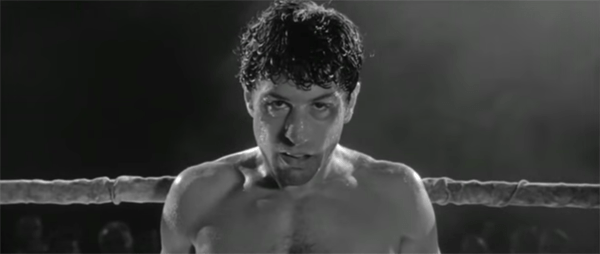
The Film Theorists have hit on something crucial about Martin Scorsese in their newest video essay, which is that his movies rely on the tension between the everyday, the grit, the grim, the signs of humanity at its worst, and an ongoing desire to transcend that element through cinematic technique. In ‘Goodfellas,’ we see the humble upbringings of the titular thugs contrasted with outsized violence, outsized dreams, outsized immorality. In ‘Raging Bull,’ we see the simplicity and primacy of boxing itself re-cast with outrageous camera angles, distended perspectives, drip-slow motion. And on and on. The makers of the video describe this tension in terms of the director’s lineage, his roots in the neorealism of Rossellini and Fellini, and the explosion that occurred when the director discovered these paradigms could be subverted–but the tension could be more integral than that, perhaps something within Scorsese himself that, like many geniuses before him, is able to maintain two contrasting ideas in mind at the same time. 

Watch: How the Patton Oswalt Vehicle ‘Big Fan’ Critiques Celebrity Culture

Watch: How the Patton Oswalt Vehicle ‘Big Fan’ Critiques Celebrity Culture

As Scout Tafoya points out in his 25th installment in the "Unloved" series of video essays on under-discussed films for RogerEbert.com, we live in a culture in which fandom is often mistaken for cultural awareness, in which celebrities are like kings surrounded by flailing, worshipful peasants. Patton Oswalt’s New York Giants-worshipping Paul Aufiero in 2009’s ‘Big Fan‘ would seem to be a natural product of this sort of national impulse, the tortured, embarrassing result of a world in which following greatness might be considered a step towards achieving greatness of one’s own, when in fact, an entirely different set of activities is required. As in this film, our attempts at getting closer to those we idolize are rendered even more painful when the results of our labors are not what we were expecting. Oswalt’s work in Robert D. Siegel’s film was riveting, like a well-acted car crash; Tafoya, as always, walks us through that crash, shows us the parts, assesses the damage, and shows us how this car crash is probably the best car crash we could possibly watch. 

Watch: The Film Frame Is a Kingdom, The Director Its Ruler

Watch: The Film Frame Is a Kingdom, The Director Its Ruler

When you create a film, you are simultaneously creating a frame for it, a set of boundaries in which events will unfold. When you do that, you are creating a world–and by extension, you appoint yourself its emperor. The decisions you make about what takes place within a given frame, or how the frame is shaped, or what lies within and outside the frame, cannot help but reflect on the world parallel to the frame, the world in which viewers sit in a theater and watch the film. In this sense, framing, and its exploration, become political. These are the sorts of prescient ideas floating through Chloé Galibert-Laîné’s recent beautiful video essay for Fandor. Taking us through such films as George Miller’s ‘Mad Max: Fury Road,’ Xavier Dolan’s ‘Mommy,’ and Ruben Ostlund’s ‘Force Majeure, Galibert-Laîné shows us what it means to frame something in a film, on a political level as well as, I think, an emotional level. Who says, after all, that emotions and politics aren’t symbiotic?

KICKING TELEVISION: Seeing Ourselves in the Golden Globes

KICKING TELEVISION: Seeing Ourselves in the Golden Globes

nullThere are few things I detest more than celebrity culture. But, in stark contrast and wrapped in hypocrisy, I love the Golden Globes. Not that long ago, just after my now wife and I had become friends, we were taking a nice walk on a beautiful spring day in Montreal, headed out for some breakfast to try and get to know each other better. I was tipping shy that day, a bit in awe of her beauty—a beauty that I refuse to describe analogously through comparisons to indie songstresses or pixied actresses—and was kind of fumbling through early friendship questions. What are you reading? I dunno… not much—Saunders. What bands are you in to? Uh, Silver Jews. Do you like stuff? Hmm. Mostly just things. My responses provided no insight, revealed no interesting character beneath my Bon Iver beard and unwashed aesthetic. I was losing her. But then, in a flash of inspiration, and out of nowhere, I uttered: All I really want out of life is someone to watch the Golden Globes with. And a love was born.

What was important in this transcendental moment was that I didn’t profess my desire to have someone to watch TV with. That would’ve been too simple and lacking of perceptive interiority. And I didn’t claim a longing for the Oscars or the Grammys or the People’s Choice Awards. Affection for those ceremonies offers suggestions of alternate character: Glamour and elitism, fondness for trite song writing, celebration of the pedestrian. The Golden Globes suggest an understanding of culture, but also a devotion to the playful, a love of honesty, a tenderness towards organized chaos, and respect for accomplishment and an open bar. In an inspired moment I revealed myself to someone who is three leagues beyond me, and perhaps endeared myself to her.

What I love most about the Golden Globes is the way they reflect the time in which they exist unlike other forms of pageantry and celebrity. The Oscars always seem dated, with safe jokes and anachronistic musical productions. The Grammys don’t seem to understand that music exists outside of Top 40 radio, which further exposes the insulation and ignorance of celebrity culture. The Emmys try to get it right, but then celebrate The Big Bang Theory and Jon Cryer as comedy, and not in a meta way. The Golden Globes—perhaps organically, perhaps by design—communicate a moment in our culture, a snapshot of where we are as a people.

Case in point: The ignorant and transphobic jokes at the expense of Caitlyn Jenner, Transparent and its exceptional star Jeffrey Tambor. Of Jenner, host Ricky Gervais quipped: “I’ve changed. Well, not as much as Bruce Jenner, obviously—now Caitlyn Jenner, of course. What a year she’s had. She became a role model for transpeople everywhere, showing great bravery in breaking down barriers and destroying stereotypes. She didn’t do a lot for women drivers, but you can’t do everything.” He then joked about Tambor’s testicles. No only are these punch lines not funny, but they’re unfortunately indicative of where our tolerance is in terms of understanding LGTBQ issues. That it’s still acceptable to use these issues as punch lines shows that we have yet progressed to the level of understanding we need in order to assimilate all people into our culture. It was like Gervais had told a black joke in 1985 or a gay joke in 2005. It reveals the distance between where we are and where we need to be.

Despite Gervais’ failed humor, the Golden Globes provided, as they always do, a forum for the celebrated artists to address larger societal concerns. Transpeople’s issues are important right now, and Transparent, Caitlyn Jenner, and Laverne Cox are important beacons of that conversation. Last night, Leonardo DiCaprio and Alejandro González Iñárritu (after wins for The Revenant) both asked that indigenous people’s issues be more prominent in our cultural and political discourses. In many instances, certainly too many, venues like awards ceremonies are the only place much of the audience would be exposed to issues more relevant than the Kardashians’ meal choices. And while at the Oscars or the Grammys or the Cable Ace Awards such speeches could come across as preaching, the laid-back and jovial manner of the Golden Globes seems to make political messages more palatable to the audience.

Beyond societal concerns, the Golden Globes provide a place to reflect upon the condition of the mediums of film and TV, and the roles they play in cultural discourse.  Last night, Gervais recycled jokes from previous eras and hosting efforts, mocking Charlie Sheen’s addictions, Angelina Jolie Pitt’s adoptions, and Mel Gibson’s anti-Semitism. And while not being funny, they did illuminate and illustrate where we seem to be as a culture artistically, certainly in film and television: We seem to be out of ideas. Now is a time of recycling and rebooting; from Star Wars to The Muppets to old white men in late night film and TV, we seem to be plagued (except in some exceptional cases) with an inability or unwillingness or fear to be ambitious or innovative. The Golden Globes were a reflection of this, from Gervais’ jokes to Sylvester Stallone’s Best Supporting Actor win for Creed to the endless close-ups on Harrison Ford. Even the appearance of BFFs Jennifer Lawrence and Amy Schumer seemed rebooted, like a joke we’ve seen before: this time, the punch line didn’t hit.

The funniest part of the production, and further reflection of the disparity between society and the entertainment we’re fed, was the excessive bleeping of cursing. How is it possible, in an era of unconscionable violence both in art and reality, that expletives can be deemed so dangerous? This is indicative of the flawed manner in which we address issues in society. Swearing in a Versace gown is unacceptable, but the 2nd Amendment is important. Expletives are dangerous but Donald Trump isn’t. The Golden Globes, through the flaw of their network oversight, illuminate this hypocrisy. Perhaps futilely, but at least its there. Nary a celeb would dare drop an F-bomb on the Oscars, even while drone bombing plays live on other channels.

In a more positive light, what I do love about the Golden Globes is the honesty it seems to project, in stark contrast to the polished and tapered product of celebrity we are fed by Entertainment TonightPeople Magazine, and publicist-driven narratives. Other awards ceremonies revel in that culture of disingenuous production, but the Golden Globes celebrate its absence. Everyone has had a few cocktails. Lips are loose. Mistakes are made. There are always a few moments of truth that we don’t often get from the Hollywood machine. Rachel Bloom’s exuberance in her upset win as Best Actress in a Musical or Comedy TV Series, Denzel Washington and his wife without their glasses stumbling through his acceptance speech for his Cecil B. DeMille Award, Jamie Foxx’s noting the absence of recognition (at least musically) for Straight Outta Compton and his love for his daughter (Miss Golden Globe), and Tom Hanks’ Denzel impression are examples of polished and pampered stars being human. And I find something inherently beautiful about that.

We filter ourselves through celebrity. We quantify our aesthetic through its dissemination. We value our art in contrast to theirs. And their success—family, fame, fortune—is what we aspire to, no matter how impractical those aspirations are. I writhe at the lack of humility and grand ego that encompasses it all—both the celebrity and our obsessive filtering. But, once a year—when it’s at its best—the Golden Globes provide a glimpse of the virtue of celebrity and a reminder that these are simply people at the top of their industry, all dressed up, and out for a night of free champagne.

Mike Spry is a writer, editor, and columnist who has written for The Toronto Star, Maisonneuve, and The Smoking Jacket, among others, and contributes to MTV’s PLAY with AJHe is the author of the poetry collection JACK (Snare Books, 2008) and Bourbon & Eventide (Invisible Publishing, 2014), the short story collection Distillery Songs (Insomniac Press, 2011), and the co-author of Cheap Throat: The Diary of a Locked-Out Hockey Player (Found Press, 2013). Follow him on Twitter @mdspry.

Watch: For Stanley Kubrick, Color Was an Instrument

Watch: For Stanley Kubrick, Color Was an Instrument

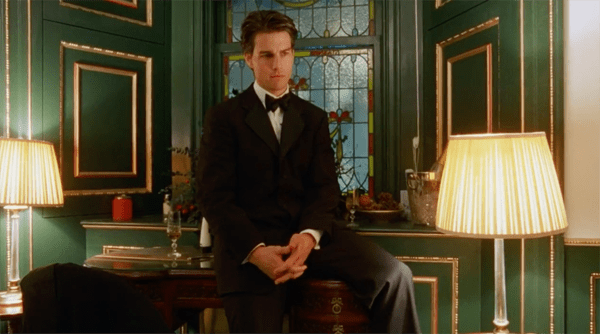
If you accept that all art is manipulation, which you should, then it should be no stretch to conclude that artists in different disciplines have tools with which they effect that manipulation. One of Stanley Kubrick’s numerous tools, one of the implements with which he managed to transport viewers, was color. The colors have an effect. We may not be able to put into word what the effect is, for instance, of seeing the hallway of the Overlook Hotel in a river of blood in ‘The Shining,’ just as we cannot say what the effect of watching a blue-lit and perturbed Tom Cruise in ‘Eyes Wide Shut’ looking down at his sleeping wife might be. Can we say that red is the color of violence? And blue the color of foreboding? Perhaps. But we could just as easily say many other things. Marc Anthony Figueras has put together a rapidfire compilation of Kubrick’s strummings on the instrument of color, and you should take a look, at the very least to explore the effect of these dazzling onslaughts on your mind. 

Watch: Steven Soderbergh’s ‘Sex, Lies, and Videotape’: The Director’s Hand

Watch: Steven Soderbergh’s ‘Sex, Lies, and Videotape’: The Director’s Hand

It makes complete sense that Steven Soderbergh, who started with ‘Sex, Lies, and Videotape’ would go on to direct such elaborate productions as ‘Kafka’ or ‘The Knick’: if you look closely at the director’s debut, you discover that it’s a highly determined film, down to its last nail. Shaun Higgins gives the film a very careful look in his most recent video essay (the first of a projected series): the editing, the dialogue, the camera angles, everything, down to the characters’ appreciation of ice tea, are given careful scrutiny here. The film made a remarkably strong impression ion me when I first saw it, and watching this piece has helped me to understand why.