Watch: Motion in the Films of Tony Scott: A Video Appreciation

Watch: Motion in the Films of Tony Scott: A Video Appreciation

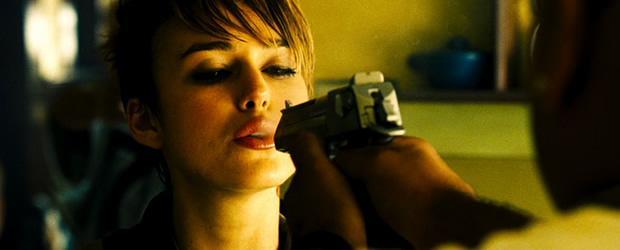
Say what you will about the films of Tony Scott–and you will say plenty, because his films are often divisive–one thing unifies them, and in fact links them to the rest of cinema history: their movement. When Eadward Muybridge brought the world his zoopraxiscope films back in the 19th century, the miraculous thing about them was that they were moving, and animated, little figures of the imagination come to life, even if they weren’t doing anything out of the ordinary. Scott has preserved the quality the earliest filmmakers found so magical. In every single shot Tom Kramer shows us in this terrific video homage, as he runs through the director’s images and themes–gunshots, explosions, dramatic, head-on looks at faces, death, danger, moral precariousness–is relentless, breakneck movement. Whether it’s the spinning planes of Top Gun (one of his more divisive films), the car speeding towards the lovers of True Romance, who have paused for a private moment, or the world that spins around Denzel Washington’s Creasy in Man on Fire, progress through space, even if it’s not necessarily linear progress, is essential. Even in the most still shots, as we see here, there is motion: it could be a flicker of activity in the background of an unmoving figure, or it could be, simply, a heat shimmer, casting everything into and out of focus, simultaneously. In Tony Scott’s films, the motion in the frame parallels the motion in characters’ lives, amplifying it, glorifying it, making it more, at times, than the movie screen can contain.

Watch: Terrence Malick’s Visual Motifs: A Video Homage

Watch: Terrence Malick’s Visual Motifs: A Video Homage

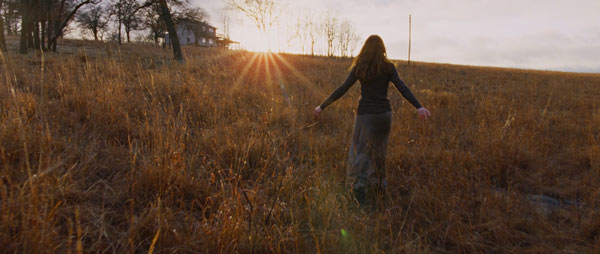
For better or for ill, Terrence Malick is a poet’s filmmaker. It could be argued that to make a film requires that one force a compromise between the desire to tell a story and the need to immerse viewers in the experience they are having, to access their minds on a level that’s not quite describable, the way poems, and also music operate. There’s no "and what happened next" in the way a poem operates–or if there is, it’s a far cry from the same element in a well-told story. Malick is exemplary and distinctive in allowing both impulses to flourish, perhaps more the latter than the former. Malick has never been one to be overly concerned about plot construction. As this excellent and touching tribute by Rachel Glassman shows, great effort here goes into visual meditation: on fields of grain, on the ocean, on the play of light around human figures in a landscape as wide as the souls of the characters inhabiting it. Regardless of what story a film might be telling–whether it’s the story of Texas farmers in Days of Heaven, or desperate criminals in Badlands, or World War II travails in The Thin Red Line, or the story of John Smith in The New World–in Malick’s hands, the work always looks inwards by looking outwards. By showing us the physical world with such precision and also grandness, he also shows us the world within ourselves.

Watch: The Inherent Vice in Paul Thomas Anderson’s Films: A Video Essay

Watch: The Inherent Vice in Paul Thomas Anderson’s Films: A Video Essay

Throughout
his career, Paul Thomas Anderson has focused on human vulnerability. Films from
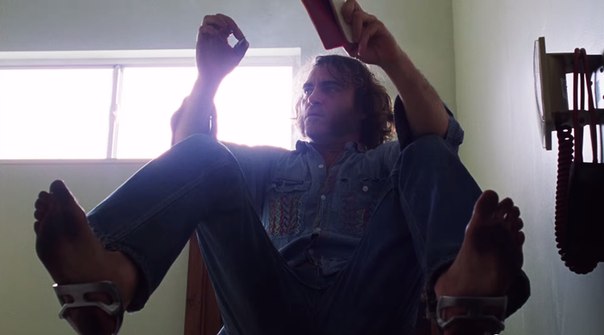
Punch Drunk Love to Magnolia to The Master to Inherent Vice to There Will Be Blood portray love as equal parts tender and strange. The
protagonists of Anderson’s films struggle with a range of
vices, from drug and sexual addiction, to anxiety and depression, to megalomania,
to gambling, to rage, to straight-up greed.

Anderson
uses vice as a way to explore different dimensions of human sadness. Each hero
is promised some kinds of greatness—Barry Egan wants to achieve success by collecting
frequent flyer miles from pudding box tops in Punch Drunk Love. Dirk Diggler hopes to keep up his fame and
recognition by virtue of his enormous package in Boogie Nights. Troubled Freddie Quell hopes to find both freedom
and family when he meets his mentor, the cult leader Lancaster Dodd, in The Master.

I was
first introduced to the world of P.T., as I affectionately called him, when I
watched Boogie Nights in a dingy
college dorm room, my sophomore year. There was a painting of an ocean on the
wall and a bottle of melatonin on the dresser, a tiny hand-me-down television
we borrowed from a friend that still played VHS tapes. At the time I spent full
days writing poems and songs and learning to be an artist and a writer. I was
smart, but I often didn’t live up to my potential and I wasn’t a particularly
good student. I have many good memories, but I have a lot of sad ones too. I
struggled throughout college with an eating disorder, I often had a strained
relationship with my parents, I rushed headfirst into a relationship that
taught me everything there is to appreciate about young love, and everything
there is to be wary of too.

In my
last year of college I’d walk past the elementary school at about noon every
day, on my way home from getting out of morning classes, and I’d see a sea of
children playing just over the horizon. My painful memories from college seem
blurry and imprecise, but images like these remain clear. At the time I didn’t
know it, but moments like these were slowly carving out my heart into the shape
it was meant to be.

Perhaps
P.T. Anderson strikes such an emotional cord in me because I discovered him at
a time when I was first learning to push back against cynicism. The truth may burn in a P.T. Anderson film, but even when it
does, we learn not to regret the scar. The
worlds that he explores are darkly sensual, hardboiled and masculine, but
softness and light always seem to linger somewhere in the periphery: sunlight
arching over an oil rig, a harmonium found next to a warehouse. We focus on tear-filled
faces throughout Magnolia, but the
final shot was still a close-up of a crying woman’s smile.–Arielle Bernstein

Arielle Bernstein is
a writer living in Washington, DC. She teaches writing at American
University and also freelances. Her work has been published in
The
Millions, The Rumpus, St. Petersburg Review and The Ilanot Review. She
has been listed four times as a finalist in
Glimmer Train short story
contests
. She is currently writing her first book.

Nelson Carvajal is an independent digital filmmaker, writer and
content creator based out of Chicago, Illinois. His digital short films
usually contain appropriated content and have screened at such venues as
the London Underground Film Festival. Carvajal runs a blog called FREE CINEMA NOW which
boasts the tagline: "Liberating Independent Film And Video From A
Prehistoric Value System." You can follow Nelson on Twitter here.

RIP Edward Herrmann (1943-2014): A John Cheever Memory

RIP Edward Herrmann (1943-2014): A John Cheever Memory

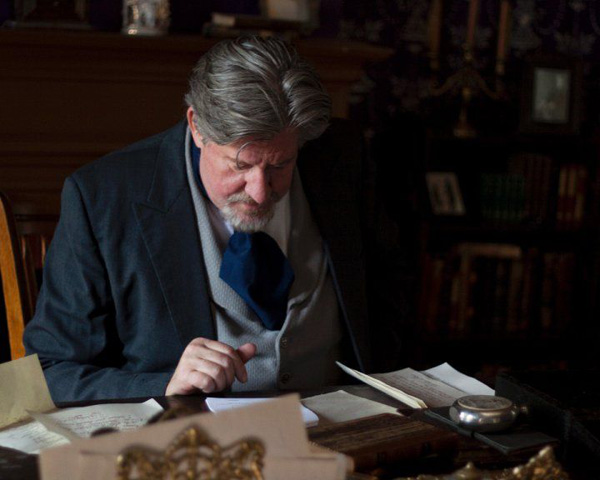
nullEdward Herrmann’s acting talent will always be emblazoned in my memory for one performance he gave, in a television adaptation of the John Cheever story "The Sorrows of Gin" in 1979. He starred with Sigourney Weaver, (who would turn heads, that same year, for her groundbreaking part in Alien) and the adaptation was done, interestingly enough, by Wendy Wasserstein, in the days when she was only just beginning to get acclaim as a playwright. The story describes a husband and wife who, unthinkingly, fail as parents through their boozing, and partying, and self-absorbed decadence; we receive the narrative through the eyes of their child, who pours her father’s gin down the sink and then tries to run away from home. The failure is bigger than that; these two individuals fail each other as members of a relationship, but rather than allowing them to redeem themselves, Cheever leaves them hanging, as he so often does, in their despair. The teleplay was one of three in a series called "3 By Cheever," which, because I was a rapt Cheever fan in 1979, I watched with complete attention; the other two equally melancholy stories in the series were "O Youth and Beauty!" and "The 5:48." I can’t say why, as a youth at a single-digit age, I found these dramas so fascinating; what I can say, though, is that even at that young age, I could recognize the skill and intelligence Herrmann brought to his sad, sad part. It was mainly in his face, both slack and taut, perfect for showing a patrician lifestyle in the early stages of decay. As he and Weaver spoke the poetically charged lines from Cheever’s story, you could tell instantly that they understood the words they were speaking, grasped the message they carried, which is half the battle for an actor. As I think about that trio of dramas (Herrmann was in "O Youth and Beauty!" as well, but did not make as strong an impression on me in that part), I’m given a little bit of pause. We claim to live, over and over, in a "golden age" of the idiot box, and yet would we be in the midst of this age if programs like this had not come first, as models? Well-produced, well-acted, with attention to quality, not calling too much attention to themselves, responsible renderings of literature by a true American master: there is little in today’s programming offerings to match this performance level, and there are few actors working at any time who could have served as agents of the subtlety in "3 by Cheever" as well as Herrmann. He’s had justified recognition for his work in Gilmore Girls, in Reds, in The Lost Boys and many other roles, at other times, but when I heard of his death, this was the first performance I thought of. For your viewing pleasure, below, is a clip from "The Sorrows of Gin."


KICKING TELEVISION: The Good, The Bad and the Lorre (2014 TV in Review)

KICKING TELEVISION: The Good, The Bad and the Lorre (2014 TV in Review)

nullI’m not big on lists, especially
in columns. I’ve indicted the BuzzFeed generation and their listicles in many
publications. But as our calendars fumble their way towards irrelevance, the
hour and our editors ask us to review the year as it fades into memory. As a
writer who published his
third book
this year to great fanfare among close relatives, “Best of” columns only serve as a reminder of the failures of our offerings,
and how much of our advances we owe back to our publishers. But 2014 was
another exciting year for television, which now regularly challenges film in
terms of narrative and aesthetic acumen. And 2014 was the year that Kicking
Television stole from Wilco and entered into the fray of TV commentary. So not
to be outdone by my new peers, here for your consideration is what I saw as the
good, the bad, and the ugly Lorre of the year in television.

The Good

You’re the Worst (FX)I’ve previously
declared my undying affection for this show in this space
. It is
quite simply the best sitcom on television, and the most interesting
dissemination of love in 22-minute intervals since Sam and Diane. Love and hate
aren’t opposites, they’re twins. And love is stupid. It’s a godawful waste of
time. Intimacy is ridiculous and often revolting. Honesty is exponentially more
difficult than deception. You’re the
Worst
celebrates these painful disparities without caricature or the
promise of inevitable reconciliation. Aya Cash (Gretchen) and Chris Geere
(Jimmy) are near flawless as a couple on the brink of love and in fear of
happiness, and Desmin Borges (Edgar) and Kether Donohue (Lindsay) defy the
tired tropes of supporting cast BFFs in creator Stephen Falk’s triumphant
production. You’re the Worst is the
shining hope that the sitcom is not dead.

The Walking Dead (AMC) — I was late to the party that is The Walking Dead. While I love
post-apocalyptic narratives, I’m afraid of zombies. And blood. And Andrew
Lincoln’s Mark from Love Actually. And while I liked the first few
seasons of the show, I wasn’t addicted to it like many. I tired of Hershel’s
farm. I skipped scenes involving The Governor. But, as soon as the show escaped
the confines of the prison, and put its band of survivors on the road, it
stepped into a higher echelon. The
Walking Dead
has become more about the challenges of surviving a world
without amenities than about stabbing extras in the head. Additionally, it takes the
time to develop characters and yet doesn’t remain static in its narrative. And
in a television landscape absent of diversity, The Walking Dead boasts the most racially varied cast perhaps ever.
Pedestrian white male actors everywhere should be in fear of this becoming a
trend.

Streaming Television — Streaming video services have compelled the film and television industries to become more conscious of the
wants and needs of their audience. By providing programming and viewing options
outside of the formulaic and staid proclivities of traditional television, the entire
industry had changed for the better. Network television is now not only being
bested by cable, but outflanked by streaming services. NetFlix is the HBO of the
medium, with Amazon and Yahoo auditioning for the roles of AMC and Showtime. (Hulu,
inexplicably, seems content as a cross between The WB and TBS.) House of Cards (NetFlix) and Transparent (Amazon) are two of the best
shows on television, and could not exist in the formulaic realm of
traditional TV. Next year will see streaming services bring viewers more of the
Marvel Universe, the third life of Community,
a talk show from Chelsea Handler, shows from Paul Feig, Jason Reitman, Tina
Fey, Mart Kaufmann, and other auteurs who have found their interest in TV reinvigorated
by the possibility and versatility of a new medium. CBS plans on combating
streaming television by sending the cast of NCIS directly to your home for
table readings.

Last Week Tonight with John
Oliver
(HBO) —
I didn’t tune into Last Week
Tonight
immediately when it debuted this past summer. I stopped watching The Daily Show some time ago. The Comedy
Central stalwart has essentially become an indictment of incompetent media, and
though that’s certainly an argument that needs to be advocated, it made for a
stale production. When Oliver made the jump to HBO, my fear was that his show
would be a pale imitation of something I had grown tired of. I couldn’t have
been more wrong. Oliver has taken satirical current affairs programming to a
new level, deftly combining progressive in-depth journalism with pitch perfect
humor. No other show ever could disseminate LGBTQ rights in Uganda, net neutrality,
and lotteries with the journalistic precision of 60 Minutes and still be funny. If Oliver doesn’t win a Peabody, they
should stop giving out the award.

True Detective (HBO) — Look, I know nearly everyone has
True Detective on their “Best of 2014”
lists. The acting was superb, the writing was sublime, and the aesthetic was
unlike anything television has ever seen. And the six-minute take from episode
four is something that will be taught in film school for generations. But my
affection for it has more to do with its format than its acting or content. The
idea of a series of mini-series is not revolutionary, but one that has had more
success in the UK than in the US. True
Detective
, along with Fargo and American Horror Story, have found new
ways to tell stories using the medium of television, and a unique way to get
big talent (Matthew McConaughey, Woody Harrelson, Vince Vaughn, Cary Fukunaga,
Martin Freeman, Kirsten Dunst, Billy Bob Thornton et al.) to have an affair with TV
without committing to it.

Transparent (Amazon) — Transparent (I didn’t catch the double-entendre until Episode
8) is a series that would never have seen the light of day on a network,
perhaps not on cable, and certainly not five years ago. Jeffrey Tambor is
transcendent (see what I did there?) as Maura, who self-identifies as a woman,
and the challenges of their upper-middle class LA family. Tambor is excellent.
Judith Light (their understanding ex-wife) is embodying the role of a lifetime.
And Jill Soloway’s deft touch as creator and showrunner takes the narrative to
places never before seen in TV. But what I think makes it not just one of the
best shows of 2014, but a promising piece of art for 2015, is the manner in
which it fills the cast with unlikable characters. Maura is not without
faults, his children are self-involved and spoiled, and even Light’s Shelly was
happily planning on euthanizing her new husband. But, like Breaking Bad, Transparent proves there is interesting art in the
unlikable, despite what creative writing programs might tell you.

Banshee (Cinemax) — If someone walks in on you
watching Banshee at the wrong moment,
they’ll think you’re watching porn. Soft core porn, but porn nonetheless. And
there’s no shortage of sex and nudity in the show, but it’s on Cinemax, so it’s
kind of a given. But behind discarded panties and reverse cowboys is a show
that is simply one of the best on TV. The premise is sublime: Fresh from
serving time for a jewelry heist, our anti-hero witnesses the murder of a newly
hired small town Pennsylvania sheriff and assumes his identity. Throw in the
Amish, an ex with her own secrets, the Ukrainian mob, a Native American reserve, and a
hell of a lot of violence, and you’re left with a show that reminds me a lot of
a graphic novel, in its imaginative narratives and refined aesthetic. Also:
porn.

The Bad

Sons of Anarchy (FX) — I never understood this show and
was happy to see it end. It always seemed like The Sopranos on bikes to me, but with bad writing and poorly
realized characters. Charlie Hunnam spent seven seasons chewing scenery and his
British accent. Ron Perlman appeared ready to crawl back into the sewers to woo
Linda Hamilton, or just to hide from the scripts. Katie Sagal seemed shocked
that they were still in production, and she was on Married… with Children for twenty-eight seasons. The Shakespearean
influence was so heavy handed it might as well have been called Son of Hamlet. And the endless parade of
guest stars, culled from a list of celebrities who wear leather (Dave Navarro,
Henry Rollins, Sonny Barger, Marilyn Manson, Danny Trejo) brought the show to
the very edge of parody. Except I like parody.
 

How I Met Your Mother (CBS) — I really enjoyed HIMYM. It is perhaps the last of the
great multi-cam sitcoms. It wasn’t just a TV show, but part of the cultural
landscape. The Bro Code, lawyered, and slap bets are, for better or worse,
engrained in our lives. But the show’s final season was atrocious, and it killed
most of my affection for the preceding eight seasons. Handcuffed by the schedules
of its stars, HIMYM’s final season
took an unwelcome departure from the formula that made it a success. Set not in
New York, but at a rural wedding destination, and taking place over the course of a just few
days, season 9 was the equivalent of Cheers
finishing up its run set in a New York Starbucks. The cast shot scenes
separately; the scripts seemed cobbled together by a writer’s room unaccustomed
to their new aesthetic, and the desperate plot twist that killed off the
titular mother left the audience angry and confused. I know we’ll never again
meet the high water mark of the finales of M*A*S*H,
or St. Elsewhere, or even Newhart, but the poor choices of HIMYM’s producers in managing the challenges
of their ultimate season destroyed the legacy of the series, its
re-watchability, and even worse (wait for it) a spinoff, How I Met Your Dad.

State of Affairs (NBC) — After watching this Katherine
Heigl comeback vehicle, a friend who had been a fan of hers asked me to
describe the show. My response:It’s
like West Wing and Homeland were a gay couple that adopted
a baby that grew up to be Scandal who
married Revenge but then had a torrid
affair with Homeland that resulted in
a baby who was kidnapped from the hospital by Shonda Rhimes who raised her with
her husband, the mummified body of Tom Clancy.” Heigl’s character’s name is Charleston
Tucker, Alfre Woodard appears embarrassed to be collecting her paycheck, and
the rest of the cast looks like they’re already in line for next fall’s pilot
casting. This show is an argument for libraries. It’s so awful I fully expect
it to be renewed for 2015/2016.

The Lorre

The Sitcom — This section needed to be named for Chuck Lorre,
the producer of Two and a Half Men, Mom, Big
Bang Theory
, and Mike & Molly.
It begged to be something more than just ugly. I mourned
the death of the sitcom a few weeks ago
, and put much of the blame at
the feet of Lorre and those who have pandered in his footsteps. With the
exception of You’re the Worst, and in
the absence of Parks and Rec, I don’t
know if there’ll be a sitcom in television worth watching in 2015. (I don’t consider
Transparent to be a sitcom.)
Certainly not on network TV. I have high but tempered hopes for the upcoming Matthew
Perry/Thomas Lennon remake of The Odd
Couple
and Denis Leary’s Sex&Drugs&Rock&Roll,
but I fear that we’ll see State of
Affairs: Los Angeles
before we see a return to the heyday of the sitcom.

Wasting Talent — I understand that actors, producers, and gaffers
have mortgages to pay. Hell, I do writing for people I won’t add to my resume
or admit to my parents. But it’s heartbreaking to see talent so frivolously
wasted on TV. Margo Martindale and Will Arnett doing fart jokes on The Millers. John Mulaney having his
career set back five years by Mulaney,
not to mention wasting Martin Short and Elliott Gould. Ken Marino enduring
Casey Wilson in Marry Me. The entire
cast of The Newsroom choking their
way through Aaron Sorkin recycling discarded West Wing scripts. Jon Cryer being wasted on Two and a Half Men. No, wait. That’s where Cryer belongs. There’s a
short window in an artist’s career to attain the success we all aspire to. To
see those years wasted on efforts like the aforementioned makes you truly
appreciate when the medium reaches the heights of True Detective and You’re the
Worst
.

Social Issues and Sports Broadcasters — Sports,
as I’ve written many times before, is the last collective experience in the
television medium. You can watch NCIS or CSI or NCSI on your own schedule. You can stream, legally or illegally,
any episode of any show anytime you want, from anywhere in the world. But
sports telecasts still need to be seen live, to witness the narrative as it evolves in
real time. And, in a year that saw domestic abuse and LGBTQ rights at the
forefront of the public discourse in the world of sports, the inability of the
sports media to disseminate and discuss social issues served as an indictment
of their industry. During Sochi, very little was made of Russia’s archaic
anti-gay legislation. Even as athletes did their best to confront the issue,
NBC ignored it. Michael Sam was the first openly gay player drafted by an NFL
team, and bigoted reactions by NBC’s Tony Dungy were dismissed under the thin
excuse of religion. When Ray Rice was caught on tape beating his then-fiancée
unconscious, NFL partners ESPN/ABC, NBC, CBS, and FOX bumbled their way through
the conversation, without experts or, you know, women, added to the discussion.
Adrian Peterson was arrested for taking a switch to his 4-year-old child, and
networks debated its effect on fantasy leagues. Perhaps most indicative of the
sports media’s failures was ESPN’s Ray Lewis, who should probably be in jail
for double manslaughter, opining on the subject of domestic abuse, like having D.C. Stephenson discuss the integration of baseball.

White Men in Late Night — In a year that saw David
Letterman, Jay Leno, Jimmy Fallon, Craig Ferguson, and Stephen Colbert shuffle
into retirement or new roles, the opportunity was ripe for television to
attempt to revolutionize or contemporize late night television. Instead, they just
brought in more old white dudes. With the exception of Larry Wilmore’s The Nightly Show (replacing Comedy
Central’s Colbert Report) late night
TV will remain old and white with penises for at least another generation. I
find it impossible to believe that some more interesting choices could not have
been made to replace Fallon and Ferguson in their 12:35 timeslots. Instead,
predictably, NBC and CBS chose Seth Meyers and James Corden over every woman
and minority possibility on earth. Though, in defense of their diversity policies, Meyers
is Jewish and Corden is an Anglican. Probably. It’s frustrating enough for
insomniacs that these shows are about as progressive as an NRA convention and
funny as a TV Land sitcom, but to simply serve us more white men jokes, written
by white men, delivered by white men is discouraging for those of us who
appreciate the possibilities of the medium, not to mention those with uteri or
have a skin colour other than pasty.

Help us, Larry Wilmore and You’re the Worst; you’re our only hope.

Mike Spry is a writer, editor, and columnist who has written for The
Toronto Star, Maisonneuve, and The Smoking Jacket, among
others, and contributes to MTV’s
 PLAY
with AJ
. He is the author of the poetry collection JACK (Snare
Books, 2008) and
Bourbon & Eventide (Invisible Publishing, 2014), the short story collection Distillery Songs (Insomniac Press,
2011), and the co-author of
Cheap Throat: The Diary of a Locked-Out
Hockey Player
(Found Press,
2013).
Follow him on Twitter @mdspry.

Watch: L.A.I.: Spike Jonze’s HER Meets Ridley Scott’s BLADE RUNNER: A Video Essay

Watch: L.A.I.: Spike Jonze’s HER Meets Ridley Scott’s BLADE RUNNER: A Video Essay

This video amalgamation of Spike Jonze’s Her and Ridley Scott’s Blade Runner by Drew Morton has a sad, sweet quality about it, as if Morton were depicting two parts of the same film. Indeed, the movies show two sides of the same city, which in this case is futuristic Los Angeles. Los Angeles is a ripe creative playground for filmmakers, and they tend to exercise their recess privileges with great abandon. Jonze imagines the daytime city as a place built for both human convenience and soul-crushing anonymity; Scott imagines the nighttime city as a James-Joyce-meets-Buck-Rogers-meets-Raymond-Chandler stew, in which anything might happen, on the one hand, but the results might be depressingly predictable on the other. Similarly, blending the films this way makes one think that Joaquin Phoenix’s Twombly and Harrison Ford’s Deckard could be two halves of the same person–one vulnerable and open, the other jaded and wary. Both actors stepped out of their habitual roles for these films; Phoenix broke from his normal scenery decimation to play someone who was approachable, almost boring, and Ford played a character scarred by seeing the worst of life for too long, on his way to acquire still more scars, fresh from playing Indiana Jones. Morton skillfully allows the two films to bleed into each other, as when the music from Blade Runner becomes the music for Her–or does it?–and thus shows how two visions, separated by several decades, might possibly speak to each other, sending universal messages about loss and loneliness that echo and expand with repeated viewings, and with consideration.

Watch: What Is It, Kevin B. Lee Asks, That Makes a Video Essay Great?

Watch: What Is It, Kevin B. Lee Asks, That Makes a Video Essay Great?

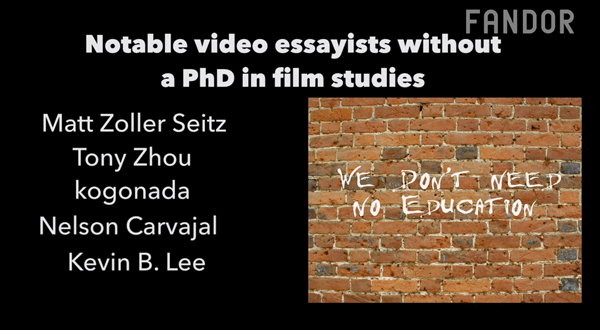
This excellent video piece by Kevin B. Lee for Fandor should be of interest to anyone who reads this blog regularly. If you go to the home page for Press Play, you’ll see a quote by Roger Ebert at the (more or less) upper left corner: "The best video essay source on the Web." And, if you’ll notice, a healthy percentage of the content posted here is, well, of the video essay variety. Faces in the work of Jonathan Glazer. What are the links between Martin Scorsese and Elia Kazan? The sublime in Michael Mann’s films. How has the treatment of rape changed in film and television–or has it? What is composition? The experience is simple. You press the play symbol, as the blog’s title suggests, and then what rolls in front of you is either a set of film clips spliced together with a voiceover or a set of related film clips bound together only by a (usually) catchy soundtrack and a fairly broad theme. And, there’s some accompanying text, either a transcript of the video essay’s script, or some text by me or someone else, an interpretation of or rather a response to the video you’re watching. Lee is asking a simple question in this video essay, in an animated and dynamic fashion, alluding to many of the acknowledged masters of the form, such as Matt Zoller Seitz, Nelson Carvajal, and Tony Zhou: what makes one of these pieces better than the other? How do we distinguish a meaningful video essay from a not-so-meaningful one? What’s the value of these pieces? You could learn a tremendous amount by watching Lee’s video: about Lee’s own erudition in film history, about the purposes and forms these pieces may assume, and also about the ways in which we (you, me, the person reading over your shoulder) watch films, these days. We interrogate. We dissect. We connect. We sever. We compare. We measure. We evaluate. The message here isn’t apocalyptic, i.e. Movies are done for! Embrace the video essay! Hug your iPhone, because soon it will be all you have left! Instead, it’s speculative: there’s more than one way to watch films, think about them, or discuss them–in fact, a plethora of ways. And the video essay, be it a 2-minute supercut or a scholarly work with MLA-approvable attributions in the credits, is one of those forms. It’s an enjoyable one, a moveable lecture. Take it or leave it, but give it a chance to wash over you first.

Watch: A Video Essay on the Links Between Martin Scorsese and Elia Kazan in THE DEPARTED

Watch: A Video Essay on the Links Between Martin Scorsese and Elia Kazan in THE DEPARTED

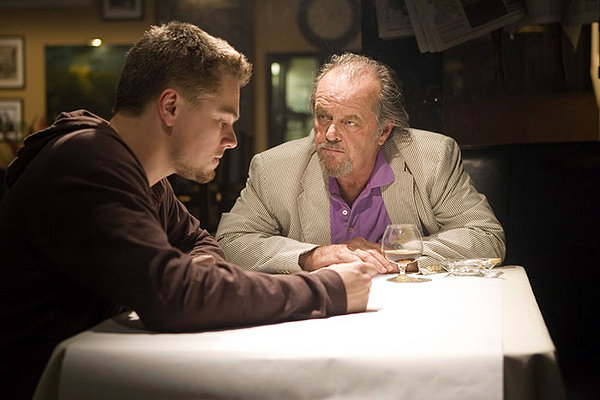
Cole Smith’s recent video essay on the links between Martin Scorsese and Elia Kazan brings a few important things to light, with an unusual amount of command and fluidity. One of these is the turbulent story of Kazan himself; Smith includes footage of the 1999 Academy Awards, at which Kazan received a Lifetime Achievement Award, presented by Scorsese, and at which only some of the audience members clapped. Why was this? Well, it was because, as many know, Kazan worked with the House Un-American Affairs Committee to name many Hollywood professionals suspected of having Communist leanings; it’s been said that On the Waterfront was an apology of sorts for this misstep. Smith leapfrogs over this moment to look at the Kazan film itself, along with A Streetcar Named Desire, to show how important the assumption of different points of view is for telling a story in these works, as in the contrast between Blanche DuBois’s and Stanley Kowalski’s vantage points in Streetcar or Terry Malloy’s and Johnny Friendly’s vantage points in Waterfront. It’s an easy transition, then, to a discussion of The Departed, one of Scorsese’s most successful films of recent years, and an examination of the way in which playing off Costigan’s (Leonardo DiCaprio) point of view against Sullivan’s (Matt Damon) point of view heightens suspense, stretches it to an almost wire-thin degree. Indeed, Scorsese’s films are at their best when they are taking us inside someone, whether it’s Travis Bickle in Taxi Driver, Jake LaMotta in Raging Bull, Henry Hill in Goodfellas, Teddy Daniels in Shutter Island, or, more recently, Jordan Belfort in The Wolf of Wall Street. Without that voyage into a character’s interior, there can be little empathy, and without empathy, the story can’t come to life inside viewers themselves.

Watch: 2014: Year of the Iconoclast: A Video Essay

Watch: 2014: Year of the Iconoclast: A Video Essay

If
nothing else, 2014 will be the year in which we were reminded that a
film from Hollywood is more powerful a medium than any politician in
Washington–even before Sony’s The Interview threatened the shaky
international protocol between the US and North Korea. The fallout of
2013’s wild decadence of the upper class as a parody of the American
Dream landed into the more thoughtful, darker universe that commands the
recipients of those same trickle-down economics. Foxcatcher’s
slow-motion Greek tragedy and Snowpiercer’s literal-minded metaphor of
class division as a train engine could never have appropriately occupied
the same year that gifted us Leonardo Di Caprio blowing money, women,
cocaine and just about everything else in The Wolf of Wall Street and The Great Gatsby (though in all fairness, Nightcrawler‘s Lou Bloom wouldn’t
have been out of place shooting Gatsby’s dead body floating in the
pool). Last year’s actions of society brought upon the consequences of
the individual this year, and the results were fascinating, not to
mention impeccably scheduled: Obvious Child‘s low-key depiction of
abortion as a woman’s choice that doesn’t define her life directly stood
against the very recent Burwell vs. Hobby Lobby Supreme Court case
which put corporations’ religious rights above female birth control. Selma‘s reminder of a more shameful chapter of our American history will
no doubt be tinted by the very raw distrust of police brutality,
proving that the more things change, the more they stay the same. Nightcrawler reminded us, with cynicism, of the vicious cycle of
manipulation between the wants of the consumer and the supply of the
media–or is it the other way around?
The
debate can be endless as to whether films hold a mirror to our society
or if society merely copies from media; I like to be reminded of Roger
Ebert
‘s quote that movies are proof our our humanity,  for better or
worse. From the vantage point of a later future, it will be easier to
look back upon this year and see if the collective voices from our films
turned any tides or if one rogue wave didn’t make a cultural tsunami.
In the meantime, it’s clear that the microphone is finally coming down
to the people, whether it’s the African-American Millennials navigating
racism and identity in Obama’s America of Dear White People or the
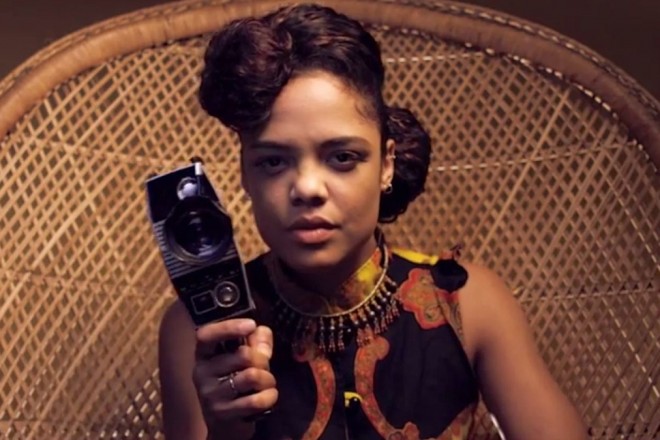
radical notion that women have recreational sex in the main players of Wild, Obvious Child, and most famously Nymphomaniac. And in its own way,
that’s Goddamn revolutionary.

Serena Bramble is a film editor whose
montage skills are an end result of accumulated years of movie-watching
and loving. Serena is a graduate from the Teledramatic Arts and
Technology department at Cal State Monterey Bay. In addition to editing,
she also writes on her blog Brief Encounters of the Cinematic Kind.

Watch: Faces in the Work of UNDER THE SKIN Director Jonathan Glazer: A Video Essay

Watch: Faces in the Work of UNDER THE SKIN Director Jonathan Glazer: A Video Essay

In looking at Shaun Higgins‘ video homage to Jonathan Glazer, director of Under the Skin, Birth, and Sexy Beast, what is most striking is the presence of the human face. Or rather, the human face made vaguely unhuman. If you repeat a word long enough, as we know from childhood, it will eventually lose its meaning. And if you stare at a human face long enough, its components will eventually stop adding up to the thing we call "face" and will eventually seem much more like a random collection of bones, arranged into an image which is familar to us but which we can’t quite place. Consider, for instance, the face of Scarlett Johansson, the star of the most recent of the three films addressed here. In her other dramatic work, we expect that look from her face, a highly sexualized and yet open stare, somewhat as if, before her gaze rose to meet the camera, her eyes have made a scooping motion, as if she were either taking something in or simply taking her time to look upwards. Here, she’s numb, raw, dead-eyed, in some senses not animalian, but quite literally alien, as if the vantage point from which she views her male victims and the world around her is so far removed as to be incomprehensible to us. Nicole Kidman’s mother in Birth, far from the animated, mischievous taunting woman she played in Moulin Rouge, Eyes Wide Shut, or even Flirting, is so frightened and disoriented by the experiences depicted in the film that to say she is "beside herself" is not far from accurate. And what’s most visible in the amalgamation of gangsters’ faces from Sexy Beast shown here are different degrees of toughness under strain, most memorably displayed in Ben Kingsley’s craggy mug. These films are obviously quite complex, balancing hosts of elements, too many to adequately summarize, but characters’ faces, as this video piece accurately points out, make focal points for the films, entryways into their beautifully orchestrated madness.