Watch: Brian De Palma’s ‘Carlito’s Way’ and the Vulnerability of Al Pacino

Watch: Brian De Palma’s ‘Carlito’s Way’ and the Vulnerability of Al Pacino

Al Pacino never played a more nakedly conflicted character than he did in Brian De Palma’s ‘Carlito’s Way.’ Sure, there was the famous "dragging me back in" moment from ‘The Godfather Part II," but even the thugs caricatured in ‘The Sopranos’ made fun of that line. You could say that his recent performance in ‘The Humbling’ showed a soul torn between the desire for glory and the desire for happiness. But really, his turn as Carlito in De Palma’s film showed us a man who, in his heart, wanted strongly not to be a criminal but somehow could not reverse inevitable patterns–and did so indelibly. 1848 Media’s meticulous and brilliant breakdown of the infamous poolhall scene from ‘Carlito’s Way’ shows us what was at stake in the character’s life, both in real time and in the span of the plot–and how all of this was expressed through the positioning of the camera. This film is under-watched, among De Palma’s works, which seems unfortunate; it glides with a confidence his other movies don’t always display, prey as they are to jerks of suspense alternated with Ken-Russell-level decadence. Kudos to Julian Palmer for giving this film the very close look it deserves–this is the second episode in the excellent "The Discarded Image" series, preceded by a remarkable piece on the famous beach scene from ‘Jaws.’ 

Watch: A Trip To Pluto and Beyond

Watch: A Trip To Pluto and Beyond

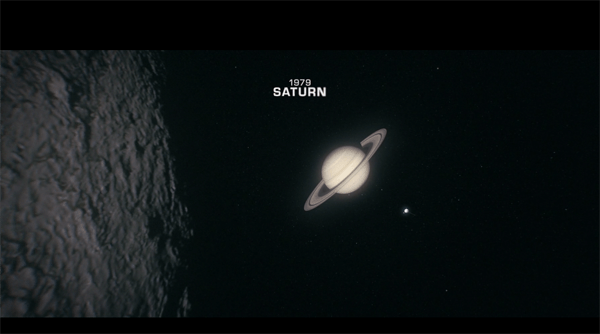
Do you remember when you first learned what a planet was? When someone pointed up at the sky and explained that, out there in the darkness, there were huge masses of rock and gas that were as big as Earth, if not bigger? Do you remember wondering what those planets looked like? Or wishing you could travel to one of them, and see outer space? That’s the feeling this video by Erik Wernquist accesses, as it gives us a three-minute history of space exploration. He made it on commission for NASA, and with the use of NASA’s images, to commemorate a very special event that’s taking place tomorrow, July 14, 2015. Tomorrow, our spacecraft are exploring Pluto and its system of moons for the very first time in history. Doubtless we’ll receive hundreds of remarkable photos from the journey. I, personally, can’t wait. So, while it’s fun to ponder what Ennio Morricone’s soundtrack for Quentin Tarantino’s ‘The Hateful Eight’ will sound like, or wonder what Wes Anderson might do next, or find something to complain about in the second season of ‘True Detective,’ why not take a couple of minutes to watch this short film and just… imagine?  

Watch: How Wes Anderson and Yasujiro Ozu Are Very, Very Similar

Watch: How Wes Anderson and Yasujiro Ozu Are Very, Very Similar

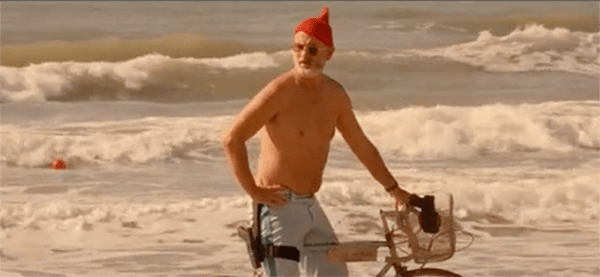
When you think about it, the influences of Wes Anderson are hard to trace, as much as he might be discussed and re-discussed–if you had to find one director he was "quoting," it might be slightly difficult. His influences, such as they are, are more easily found within visual art and literature (Joseph Cornell, Franz Kafka) or even music (Serge Gainsbourg, for instance). Similarly, it’s hard to find a director Wes Anderson is "like"–he cultivates a meticulous distinctiveness that makes it tricky to compare him in the same way you might compare, say Steven Spielberg and George Lucas, or David Fincher and Christopher Nolan. Nevertheless, Anna Catley, who has posted memorably at Vimeo, has waded in and made a strong, fascinating comparison between Wes Anderson and Japanese director Yasujiro Ozu, perhaps most famous for his 1953 film ‘Tokyo Story.’ Catley finds many points in common, such as strong repertory casts or a love of complex interiors, as well as many thematic overlaps, which make the comparison seem wholly logical–and might make one wonder why it hadn’t popped up before.   

Watch: Who Is Jonathan Glazer?

Watch: Who Is Jonathan Glazer?

[A transcript follows:]

The ultra-bizarre surrealist nightmare ‘Under the Skin’ sparked a lot of discussion when it came out last year and the name Jonathan Glazer found its way onto the lips of many film enthusiasts, but what you may not realize is that you’ve been watching his work for years.
 
Let’s go back a bit. For the past 20 years, Jonathan Glazer’s directorial efforts have mainly been television advertisements and music videos. You may recognize his 1996 video for Jamiroquai’s ‘Virtual Insanity’ where Jamiroquai appears to slide around the room as he dances. The effect is quite an ingenious one. He was a theater design major at Nottingham Trent University in his native country of England, and we can see how this knowledge came into play in his creative solution for the video.
 
It seems obvious that his experiences working on music videos and commercials allowed for much more experimentation than if he had focused on directing features from the beginning, but it’s much more than that. He also had the invaluable experience of heading a Guinness campaign that provided the opportunity and constraint to communicate information economically. These ads pack a lot into a short timeframe—whether it’s character, story, or atmosphere.
 
The next thing these commercials and music videos did was provide logistical experience in a shoot much shorter than a feature film. And sometimes the scale of the production was quite substantial. This ad for Bravia, which he directed in 2006 (after his first two feature films), used 250 crew members and was made pretty much entirely out of practical effects. It took 10 days to shoot and the result is nothing short of epic.
 
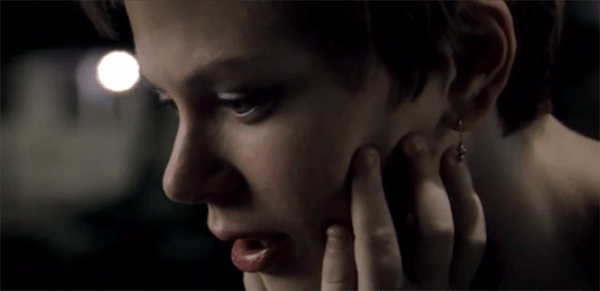
His first feature film, made in 2000, was titled ‘Sexy Beast’ about a gangster called out of retirement to aid in a heist. His second, made in 2004, was ‘Birth’—a film about a boy who claims to be the reincarnated soul of a woman’s deceased husband. The films display Glazer’s playful creativity and striking visual style, but none more so than his most recent endeavor—’Under the Skin.’
 
I don’t know about you, but I am really looking forward to seeing what he does next—whatever that may be.

Credits:

Films:
Under the Skin (2014 dir. Jonathan Glazer)
Sexy Beast (2000 dir. Jonathan Glazer)
Birth (2004 dir. Jonathan Glazer)

Music Videos:
“Street Spirit” by Radiohead  (Music Video dir. Jonathan Glazer)
“Virtual Insanity” by Jamiroquai (Music Video dir. Jonathan Glazer)
“Rabbit in Your Headlights” by UNKLE (Music Video dir. Jonathan Glazer)
“The Universal” by Blur (Music Video dir. Jonathan Glazer)
“Karma Police” by Radiohead (Music Video dir. Jonathan Glazer)
“Karmacoma” by Massive Attack (Music Video dir. Jonathan Glazer)

"Treat Me Like Your Mother" by The Dead Weather (Music Video dir. Jonathan Glazer)

Commercials:
Wrangler – Ride (Commercial dir. Jonathan Glazer)
Guinness – Surfer (Commercial dir. Jonathan Glazer)
Guinness – Swim Black (Commercial dir. Jonathan Glazer)
Guinness – Dreamer (Commercial dir. Jonathan Glazer)
Volkswagen – Protection (Commercial dir. Jonathan Glazer)
Stella Artois – Last Orders (Commercial dir. Jonathan Glazer)
Stella Artois – Whip Round (Commercial dir. Jonathan Glazer)
Levis – Kung Fu (Commercial dir. Jonathan Glazer)
Levis – Odyssey (Commercial dir. Jonathan Glazer)
Barclays – Chicken (Commercial dir. Jonathan Glazer)

Sony BRAVIA – Paint  (Commercial dir. Jonathan Glazer)


Clips:
Jonathan Glazer: The Making of Jamiroquai’s "Virtual Insanity"
Jonathan Glazer: Keeping It Alien – Jonathan Glazer on Under The Skin
Jonathan Glazer: BRAVIA "Paint" Behind the Scenes
DP/30 Short Ends – Jonathan Glazer talks Under The Skin

Music:
“Andrew Void” – Under The Skin OST
“Virtual Insanity” by Jamiroquai
“Karma Police” by Radiohead

Tyler Knudsen, a San Francisco Bay Area native, has been a student of film for most of his life. Appearing in several television commercials as a child, Tyler was inspired to shift his focus from acting to directing after performing as a featured extra in Vincent Ward’s What Dreams May Come. He studied Film & Digital Media with an emphasis on production at the University of California, Santa Cruz and recently moved to New York City where he currently resides with his girlfriend.

Watch: Why ‘Mad Men’ Is a Personal Experience

Watch: Why ‘Mad Men’ Is a Personal Experience

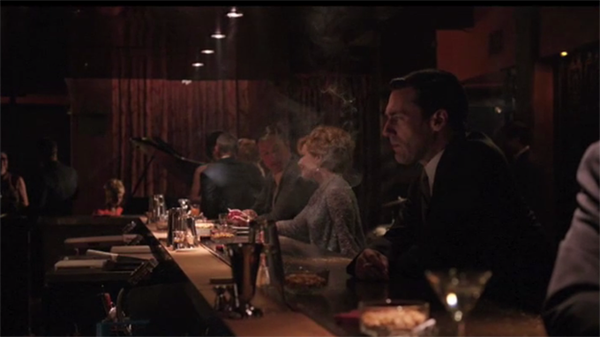
Mad Men is a show about the odd relationship that human beings have with the past—our desire to escape coupled with our desire to hang on. On Mad Men nostalgia is dangerous, deceptive, illusory.

When Mad Men first came out eight years ago, friends hosted theme parties with tailored clothes and twist and shout dances, bars had Mad Men themed events, with cocktails named after the characters, clothing stores like Banana Republic opened up their own Mad Men themed clothing lines.

Over the course of the last eight years we’ve acknowledged the casual sexism and racism of the 60s, while also distancing ourselves from it. I ran into people at parties who swooned over Don’s primal masculinity, who laughed at sexist and racist moments, as if they were an inside joke.

Mad Men’s construction has always been seductive, all the beauty and sex and money and cars. We keep coming back even after we see that its an illusion, when Don’s house is emptied, when Betty is diagnosed with cancer from those same cigarettes we couldn’t help thinking were beautiful and sexy and dangerous in all the best ways.

Mad Men has always also been a mirror, forcing us to look at our own choices and see how deeply they are marred in the culture we live in. I was first introduced to the series by an ex who smoked cigarettes and loved whisky and cinema and sad films as much as I did. When we fought I often felt like one of the women of Mad Men, desperate to keep up appearances, to hide tears with makeup, to throw used liquor bottles in the trash. I’ve seen myself in every female character on Mad Men: when Betty shot those birds, when Joan knocked her fiancé out with her flowers, when Sally got those go-go boots.

But I didn’t think of these women when I left that relationship and started my life ostensibly over; I thought of Don, those empty shots of office rooms and open highways, of New York skylines and the California sun.

Despite strange protests that Mad Men is really all about the women, the truth is Mad Men has always been about Don. No character on Mad Men is capable of evolution the way that Don is, if not for himself than for the advertising culture he lives for. The ending of the series is ambiguous—does Don find peace? Does he use his experience in California as the foundation for a beloved and manipulative Coca Cola ad that defined the 70s?

The final episode of Mad Men reinforces the show’s allure for me, as well as its fundamental tensions. I’m still half in love with and half terrified of what I’m being sold. In the beginning Don tells us that, “What you call love was invented by guys like me, to sell nylons.” By the end, Don is moved to tears by the unmemorable man named Leonard who explains how deeply unloved he feels even though he knows the people in his life who he cares about are trying. Don’s response to Leonard’s opening up is the exact opposite response he received when he opened up about his own past at the Hershey pitch the previous season, when he was basically fired from his position for opening up about a past he is deeply private and emotional about.

Don has tried to fill a void in his heart with any number of vices. It’s telling that when Don calls Peggy, he doesn’t lead with his secret past, but the myriad ways he has been disloyal to the people he truly loved the most. “I broke all my vows.”

We can’t help being who we are, even when who we are is so deeply shaped by the culture we live in. In some ways, the hippie retreat is a relief and respite from the stiff, unfeeling world of advertising that Don comes from. But, at the end of the day, it’s just peddling another set of wares. Does Don’s meditation forgive him of his sins? “You always run away,” Peggy tells him over the phone and it’s true. If anything, the hero of this series is Sally, dutifully cancelling her trip to Madrid, so that she can help her mother and brothers at home.

But that’s not who we are poised to identify with at the end.

Though Mad Men has always fiercely critiqued the patriarchy, it is also very much the product of the time in which it was created. For the past eight years we have seen many series featuring a white, male antihero who finds some kind of redemption—steely, hard eyed, with an emotionally soft core. The women in these series have been given a far greater capacity for rich interior lives, but we also are still poised to see other women in the series as mere objects. We view these women through the eyes of the ad men themselves, the camera panning up and down legs, breasts and other disembodied body parts, whether in pencil dress or mini skirt.

To be a woman on Mad Men is to endure hurt after hurt, and brief moments of sisterhood and solidarity. At the very end, Peggy is afforded a possibility for romance that is still predicated on a man wanting her, rather than someone she has been overtly longing for. At the very end, Joan makes a decision, but finds she can’t have it all either.

At the start of Mad Men, I hated Don—I couldn’t stand his smugness, his womanizing, his lies, his cruelty in the workplace and at home. But after watching this show for eight years I began to see myself in him in small ways, especially in moments where the façade of ease would break.

Many of the reasons I will mourn the end of Mad Men do feel intensely personal. If you watch something for eight years, even something you felt profoundly ambivalent about, you’ll eventually start to have feelings for it, or at least for the YOU that was watching it. A lot has happened over the last eight years. I lost friendships, gained them and lost and gained them again. I started and left different jobs. I lost my grandparents. I mended my relationship with my parents. I learned to love in new ways, to love more deeply, and more carefully. I felt my soul crack open and felt parts of me sewn shut, and then I let parts of myself be open all over again. At the end of Mad Men, Don is the same person he was at the start, older, wiser, slightly changed, but still with that same wonderful, terrible core. Our identity is as malleable as we let it be, except when it’s not. By the end of the series we still want more, but at least we’ve learned to listen.

Arielle Bernstein is a writer living in Washington, DC. She teaches writing at American University and also freelances. Her work has been published in The Millions, The Rumpus, St. Petersburg Review and The Ilanot Review. She has been listed four times as a finalist in Glimmer Train short story contestsShe is currently writing her first book.

Serena Bramble is a film editor whose montage skills are an end result of accumulated years of movie-watching and loving. Serena is a graduate from the Teledramatic Arts and Technology department at Cal State Monterey Bay. In addition to editing, she also writes on her blog Brief Encounters of the Cinematic Kind.

Watch: Shakespeare on the Silver Screen

Watch: Shakespeare on the Silver Screen

In high school, I was, admittedly, usually on the verge of rolling my eyes at the thought of reading Shakespeare in my English classes; this must’ve quietly pissed off my English teachers, considering that these were AP (Advanced Placement) English courses intended for gaining college credits. It’s not that I didn’t respect Shakespeare’s glorious body of work—I just wasn’t interested in fetishizing every pentameter of his slippery sonnets.  I preferred to adore the urgent, contemporary voices found in works like Crime and Punishment and The Catcher in the Rye.

It wasn’t until a high school field trip to the Goodman Theatre in the Theater District of downtown Chicago, where I saw Amy Freed’s The Beard of Avon, that I began to develop a different attitude toward Shakespeare. Freed’s amusing play told the story of how Shakespeare didn’t author his own plays, in fact being just a front man. Sure, the premise is devilishly fun, and it sure annoyed the loyal literary folk on the faculty, but what it did was it made me hone in on the language of these plays, and how it mirrored the temperaments of the society where it was spoken. My interest became less about swooning over the preciseness and clinical breakdowns of his poems than about why these works even materialized in the first place. 

So by the time I was in college, I was very deliberate in relating several real life political current events to musings from Shakespeare’s works. I remember a celebrated paper I wrote in one of my college English classes (I took several of these, since my minor was in Writing) during my Freshman year was supposed to be on Marc Antony’s speech from ‘Julius Caesar.’ Our professor had played clips from ‘Julius Caesar’ (starring Marlon Brando) during class to give us supplemental inspiration. When I got back to my dorm room and turned on my TV, I watched Howard Dean’s now infamous “scream” speech following his coming in third place in Iowa caucuses in early 2004. So I wrote about Marc Antony’s speech by fusing my observations of Dean’s body language with Antony’s rabbling of the crowd. Again, it became less about the words, and more about the feeling—more about the temperature of the moment.

In the years since college, I’ve revisited some of the major film adaptations of Shakespeare. I was always surprised to see so many movie stars (e.g. Denzel Washington, Bill Murray, Leonard DiCaprio, etc.) try to Laurence-Olivier their way through a soliloquy, some to better ends than others. But what these prolific screen adaptations show is how vital Shakespeare’s work (or whoever wrote these plays) is for the present. Sure, the language may be airy and fleeting, but they touch upon on universal themes of guilt, corruption, love, and foolish abandon. From groundlings at the Globe Theatre to patrons at the movie theatre, we come back, time and time again, to see these plays, to learn lessons as old as time itself. It’s drama at its earliest; it’s comedy at its most earnest; it’s viewers looking at themselves at their most exposed vantage point—stage front and center.

Nelson Carvajal is an independent digital filmmaker, writer and content creator based out of Chicago, Illinois. His digital short films usually contain appropriated content and have screened at such venues as the London Underground Film Festival. Carvajal runs a blog called FREE CINEMA NOW which boasts the tagline: "Liberating Independent Film And Video From A Prehistoric Value System." You can follow Nelson on Twitter here.

Watch: ‘Fear and Loathing in Las Vegas’ As You’ve Never Seen It Before

Watch: ‘Fear and Loathing in Las Vegas’ As You’ve Never Seen It Before

Regardless of what you may think of Johnny Depp, Hunter S. Thompson, Terry Gilliam, ‘Fear and Loathing in Las Vegas,’ Las Vegas itself, or Google, this clip will, to put it gently, blow your mind. Roelof Pieters ran the famous San Francisco acid trip bar scene from Gilliam’s adaptation of Thompson’s drug-addled Vegas travelogue through Google Deep Dream, a neural-network-esque code that re-visualizes objects and ultimately transforms them (that’s my best explanation)–and transform the scene he did! (Although it didn’t need much…) In any event, watch for yourself.

Watch: An Animated Journey Through the 2005 London Underground Suicide Bombings

Watch: An Animated Journey Through the 2005 London Underground Suicide Bombings

Whether they choose to accept it or not, inhabitants of large cities are confronted daily with the possibility of bombings like those in the London Underground at King’s Cross on July 7, 2005, grippingly and frighteningly brought to life in Georgina Ferguson’s and Eduarda Lima’s beautiful animation ‘Seven Seven.’ The sad reality, and one which this film works against, is that unless you experience it firsthand, such an event will often have little meaning for you–it registers as a news item, albeit a frightening one, with abstracts: x dead, x injured, x amount of damage. ‘Seven Seven,’ though, marks Ferguson first public description of the event, and how she escaped the wreckage of the train. The piece uses muted colors, perfect to show how the suicide bombings disrupted, indeed shattered an everyday commute, which began like many other commutes–and how the event shaped the lives of the people who survived them. Few details are used for the film’s figures, and yet the events are rendered with unquestionable precision, in a sense. Think, as you watch this piece, how you would feel if this happened to you–without the protection of newsprint, which could make a beheading sound not much more important than a foul in a baseball game, the effect could be devastating, lasting a million times as long as the minute length of the explosion itself. 

Watch: In Praise of ‘The Assassination of Jesse James By The Coward Robert Ford’

Watch: In Praise of ‘The Assassination of Jesse James By The Coward Robert Ford’

At the beginning of his most recent ‘Unloved’ installment for RogerEbert.com, this one on Andrew Dominik’s ‘The Assassination of Jesse James by the Coward Robert Ford," Scout Tafoya asks, somewhat justly, what this particular film is doing in a series that has, up to now, focused on misfit movies, films that have gotten little recognition—or not the recognition they deserved, for reasons buried in the insides of the films themselves: odd story idea, bad casting, arbitrarily idiosyncratic cinematography. This one’s different, starring Brad Pitt and Casey Affleck, as it does, and being based on a very famous moment in Western American history—the killing of Jesse James. Nevertheless, Tafoya cites critical slights to the movie, along with a mediocre box office history, and then supplies a moving defense of it, based on its meaning to him, as a young man turning 26, watching a story onscreen that is as much about growing up and coming into manhood as it is about the murder of an outlaw. Strewn with gorgeous clips from Dominik’s cinematically arresting film, this seems like Tafoya’s best ‘Unloved’ entry yet, on a piece of work which deserves as many viewings as you’d like to give it.

Watch: Pixar’s ‘Inside Out’ Meets Christopher Nolan’s ‘Inception’

Watch: Pixar’s ‘Inside Out’ Meets Christopher Nolan’s ‘Inception’

Given the dramatic way in which Christopher Nolan injected the imagination into the plot of ‘Inception,’ and given the surreal, somewhat dreamlike premise of Pixar’s ‘Inside Out,’ it wouldn’t be too far off to suggest that the soundtrack of the older film and the bizarre visuals of the ever-more-popular new film were simply waiting for Nelson Carvajal to come along and mix them. The result is fitting, playing up the elements of both films that give you butterflies in your stomach.