Watch: In ‘Buffy the Vampire Slayer,’ Doorways Were Everything
Watch: Where Does ‘Straight Outta Compton’ Really Come From?
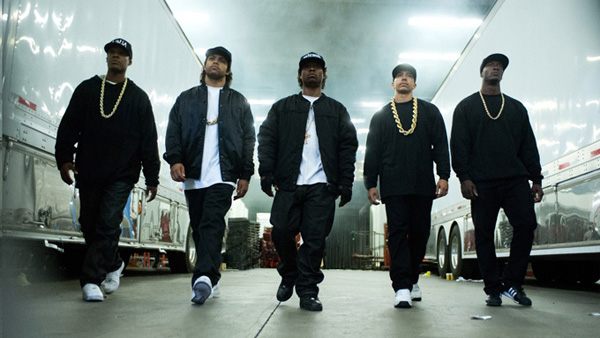
As I write this, the country is entering its one-year anniversary since the untimely and awful death of Michael Brown, the eighteen-year-old black man who was fatally shot in cold blood by police in Ferguson, Missouri. Brown’s death sparked civil unrest last summer; this week, unrest has resurfaced in Ferguson. On Sunday, August 9, 2015, police in Ferguson shot another eighteen-year-old black man (Tyrone Harris Jr.) during a demonstration in commemoration of Michael Brown’s passing. Coincidentally, during this same week in 1965, the Watts Riots—which started when a black motorist was arrested for drunk driving—brought 4,000 bodies from the California Army National Guard to a Los Angeles neighborhood. The clash would result in thirty-four deaths. And on Friday August 14th, the musical biopic on N.W.A. (Straight Outta Compton) hits theatres across the country. I’m not listing all of these events to stress some cosmic coincidence; if anything, it’s to further shine some light over what I’ve been ruminating on as of late.
In the simplest terms, I could best describe it this way: we are in a heightened state of national unrest. On the one hand, gang wars have been happening on the tough streets of this country for decades. On the other hand, you have the law enforcement that tries to combat those wars in an effort to retain order for the communities. But in between those hands is a complex, layered and deeply rich history of varied philosophies (the pacifism of Dr. King vs. the radical retaliation of the Black Panthers), taste-making media gatekeepers (CNN vs. Fox News), and (most unfortunately) racism. From the glorification of street gang violence to the misconstrued views that all black men wearing hoodies are thugs (a la Trayvon Martin), the power for understanding and the possibility for gauging what we’re saying with these films lie in the moving images presented to the public.
And this isn’t some soapbox declaration. Street violence has been an element in my personal life from the get-go. Shortly before I first watched Boyz N The Hood, gang members shot my father’s brother-in-law several times here in the streets of Chicago; he survived the incident only to move his wife and kids out of the city not too long after recovering. The weekend I moved out of state for college, I received a frantic phone call from my mother: the oldest son of a family friend was shot and killed in a drive-by across the street from my mother’s apartment. He was in early 20s, was not in a gang, and sadly was just in the wrong place at the wrong time. Even though I don’t live in Compton, where numerous gangbanger films take place, growing up in the violent streets of Chicago positioned me to observe these films on two levels: as entertainment and as personal social filmmaking.
With my latest video essay titled Street Culture, Street Cinema, my aim was to conjure up a visual melting pot of historical violence and contemporary carnality to show the generational passing of the torch; this torch of course carries the burden of voices that aren’t heard or that have already accepted a fate of bleakness and social immobility. I’m not saying that decontextualizing street gang films is going to save the world—but at the same time, when the world we live in quickly calls a black shooter a “thug” or a “threat” and yet somehow manages to marginalize a white shooter as only being “mentally ill,” well then, the responsibility falls on all of us to look deeper into the media we devour on a daily basis. I worry that a social media mantra like #BlackLivesMatter only gains traction because of its populist “hip” factor—the same way that a catchy rap song about murder captivates the pop culture public. That simply won’t do. The reality is that Black lives struggle. They have struggled for a long time. Civil rights violence, segregation, and class struggle are all a large part of this nation’s oral and visual history. But that somehow becomes mute the minute the national media dialogue focuses much of its efforts on proving how certain cops are not racist and how that week’s Black victim was already going down the wrong path anyway. It’s not as clear-cut as that. Gang culture spawns from inopportunity in low-income housing neighborhoods coupled with desperation for a crack at the American dream. The problem is that most movies don’t delve into the “why” but more into the “where,” which are the streets, where the bullets soar through the air like Shakespearean verses stressing the tragic, inescapable plight of life. I hope that, while watching my video essay, one can come closer to feeling both the historical and emotional undercurrent that permeates every image of street violence. Much in the spirit of my first viewing of Boyz N The Hood, our eyes should penetrate through these images with a fervent yearning to want it all to be about something, and to ultimately mean something.
Nelson Carvajal is an independent digital filmmaker, writer and content creator based out of Chicago, Illinois. His digital short films usually contain appropriated content and have screened at such venues as the London Underground Film Festival. Carvajal runs a blog called FREE CINEMA NOWwhich boasts the tagline: "Liberating Independent Film And Video From A Prehistoric Value System." You can follow Nelson on Twitter here.
Watch: The James Cameron Aesthetic, and How Risky It Is To Say Those Words
One risks stepping into an intellectual manhole if the phrase "the James Cameron aesthetic" leaves one’s lips. If you look the word up in the dictionary, it has a fairly explicit meaning: a set of rules or guidelines an artist or group of artists follows to make their work. And yet it is often viewed as synonymous with the word "style." It’s conceivable that it would be easier, by and large, to say that a filmmaker like Paul Thomas Anderson has an aesthetic, or, reaching laterally, a filmmaker such as Steve McQueen. Or Wes Anderson. Or Todd Solondz. Their movies, whatever the roots of their appeal might be, give off a faint scent of art for art’s sake, the kind of films we associate with small theaters, bad sound systems, chamomile tea at the snack bar, a distinct lack of stickiness on the floor. James Cameron’s movies go somewhere else, and one might be tempted to say that the word "aesthetic" can’t really be applied to them. You might be tempted to go snobby: That guy has an aesthetic? "I’m on top of the world"? Please! But look at this piece by Martin Kessler. To watch it, you would think you were reading one of Ezra Pound’s statements on Imagism: The figures shall be huge. The emotions shall be larger than anything that might fit on the screen. The theme shall be unmissable. The music shall boom. Cameron has been making proficient, moving films for many years, and this piece, which follows Cameron’s love of, plainly put, bodies and machines through films like ‘Aliens,’ ‘Titanic,’ ‘Terminator,’ and others encourages the viewer to do something which could potentially be challenging: consider that the moviemaking taking place here is as complex and, yes, subtle as that of the other directors mentioned above: it’s just on a slightly different scale. A caveat, though: every creative decision has its price: push this argument too far and you fall into the realm of arguments that assert that ‘Gone in Sixty Seconds’ is as good as ‘The Seventh Seal,’ and that only snobs place one above the other, quality-wise. An aesthetic is not a guarantee of quality–it’s more a stamp of intentionality.
Watch: Milos Forman’s Vibrant, Versatile Career
It is March 29th, 1976 at the 48th Academy Awards ceremony in Los Angeles, California. Czech filmmaker Miloš Forman has just won the Academy Award for directing ‘One Flew Over the Cuckoo’s Nest’—a film that would win (along with best director) best lead actor, best lead actress, best screenplay, and best picture. ‘Cuckoo’s Nest’ was the second of only three films to win the Oscar in all five of these categories—following ‘It Happened One Night’ in 1934 and preceding ‘The Silence of the Lambs’ in 1991.
There is no doubt that it was Forman’s brilliance as a director that made ‘One Flew Over the Cuckoo’s Nest’ the classic that it remains today. However, ‘One Flew Over the Cuckoo’s Nest’ was only Forman’s second feature film since moving to the United States. You see, Miloš Forman got his start as a director in his home country of Czechoslovakia, with his first big film being 1965’s ‘The Loves of a Blonde’, about a factory girl during the war who moves in with a jazz musician and his parents. ‘The Loves of a Blonde’ was a major film in the Czech New Wave—a film movement in the 1960s started by film students rebelling against the Communist takeover of Czechoslovakia that started in 1948.
Forman’s next film, titled ‘The Fireman’s Ball,’ is a comedy about a volunteer fire department in a small Czech town. There was a great deal of controversy surrounding the film after its release due to the censors of the Czechoslovakian Communist party who felt that the film satirized the government. It was banned after only a few weeks. These films gained recognition outside of Czechoslovakia and both were nominated for Best Foreign Film at the Academy Awards.
Shortly after the release of ‘The Fireman’s Ball,’ Forman was visiting Paris when the Soviet invasion of Czechoslovakia occurred to squash the loosening restrictions on media, speech, and travel that was taking place in 1968. He decided to leave his home country permanently and take up residence in New York City. It isn’t hard to see why Forman was the perfect choice to direct a film about a man rebelling against the oppressive staff of a mental hospital.
After the enormous success of ‘One Flew Over the Cuckoo’s Nest,’ Forman directed the psychedelic counterculture musical ‘Hair.’ Both ‘Hair’ and ‘Cuckoo’s Nest’ were previously performed in the theater, as was his next picture, ‘Amadeus.’
‘Amadeus’ earned Forman another Best Directing Oscar and the film took home the Best Picture prize at the 57th Academy Awards ceremony. Both ‘Amadeus’ and ‘Cuckoo’s Nest’ made use of many character actors playing the smaller roles, which came to be a trademark for the director. Many of these actors got their start in Forman’s films including: Christopher Lloyd, Vincent Schiavelli, and Danny DeVito.
This affected his style greatly. Because there were often many characters in one scene, it was essential for the scenes to be built upon reaction shots. We can see a similar approach in his later films as well. Miloš Forman is responsible for some of cinema’s most iconic films and his unique perspective helped bring the influence of the Czech New Wave to a new generation of filmmakers.
Films:
‘It Happened One Night’ (1934 Dir. Frank Capra)
‘The Silence of the Lambs’ (1991 Dir. Jonathan Demme)
‘One Flew Over the Cuckoo’s Nest’ (1975 Dir. Miloš Forman)
‘Loves of a Blonde’ (1965 Dir. Miloš Forman)
‘The Firemen’s Ball’ (1967 Dir. Miloš Forman)
‘Hair’ (1979 Dir. Miloš Forman)
‘Amadeus’ (1984 Dir. Miloš Forman)
‘The People vs. Larry Flynt’ (1996 Dir. Miloš Forman)
‘Man on the Moon’ (1999 Dir. Miloš Forman)
Tyler Knudsen, a San Francisco Bay Area native, has been a student of film for most of his life. Appearing in several television commercials as a child, Tyler was inspired to shift his focus from acting to directing after performing as a featured extra in Vincent Ward’s What Dreams May Come. He studied Film & Digital Media with an emphasis on production at the University of California, Santa Cruz and recently moved to New York City where he currently resides with his girlfriend.
Watch: Spike Lee’s Best Head-On Shots… In 3 Minutes!
Films used:
‘She’s Gotta Have It’ (1986)
‘School Daze’ (1988)
‘Do the Right Thing’ (1989)
‘Mo’ Better Blues’ (1990)
‘Malcolm X’ (1992)
‘Clockers’ (1995)
‘Girl 6’ (1996)
‘He Got Game’ (1998)
‘Bamboozled’ (2000)
’25th Hour’ (2002)
‘She Hate Me’ (2004)
‘Inside Man’ (2006)
‘Miracle at St. Anna’ (2008)
‘Red Hook Summer’ (2012)
Jacob T. Swinney is an industrious film editor and filmmaker, as well as a recent graduate of Salisbury University.
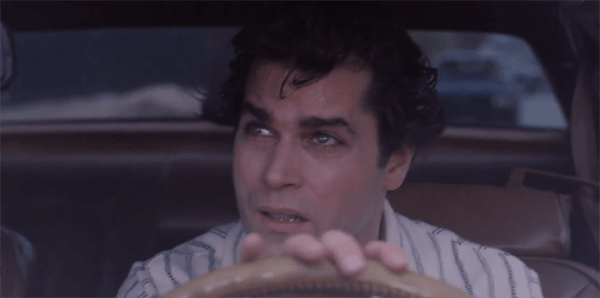
Watch: Martin Scorsese’s ‘Goodfellas’: How That Last Scene Works
Martin Scorsese’s classic ‘Goodfellas‘ was made for post-viewing anecdotes. Remember the scene in ‘Goodfellas’ where they’re eating dinner after they wacked that guy? Remember the scene in ‘Goodfellas’ where Joe Pesci thinks he’s going to be made, and then…? Remember the scene in ‘Goodfellas’ where Lorraine Bracco has that spat with Ray Liotta? Hey, you think I’m funny? Do I amuse you? I’m funny, like a clown? Similarly, the last sequence, in which Liotta’s Henry Hill crams as many frustrating tasks as he can into one very long day and then concludes the sequence (along with his time as a goodfella) at the business end of a police officer’s gun, is indelible and can be compared easily to a lot of high-stress situations in daily life. Julian Palmer’s latest video for 1848 Media‘s ‘The Discarded Image’ series takes a very close look at this scene, analyzing its camera angles, its narrative construction, and its links to other films (by Cassavetes and others), the sorts of realistic dramas whose inheritance gives Scorsese, in Palmer’s estimation, his greatest strength.
Watch: How Stanley Kubrick Forces Us to Look At Ourselves
Regardless of what one might say, and there is plenty to say, about Stanley Kubrick’s technical mastery, about his sense of tragedy, about his portrayals of different modes of alienation, one thing that remains true of all of his films, to greater or lesser degrees, is their ability to spur self-reflection. Buried in all of his stories is the question: do you see yourself here? Granted, this is true of all stories, but think of it: who has not felt as lost as Tom Cruise’s William Harford in ‘Eyes Wide Shut’? Who has not felt the terror Shelley Duvall’s Wendy feels in ‘The Shining‘–or even the madness Jack feels after being cooped up for too long (even if at a much, much smaller caliber, of course)? Who hasn’t felt the misery the suicidal Private Lawrence (Vincent D’Onofrio) feels in ‘Full Metal Jacket‘? Who, after watching ‘Dr. Strangelove,’ might not question the human tendency to condone wars in certain cases? It’s too simple to call Kubrick a strictly satirical filmmaker. He is, rather, the sort of artist who causes us to look inwards even as we are lost in seemingly outward-looking narratives. This fast-paced, beautifully edited piece by Stefano Westerling takes us through Kubrick’s filmography, highlighting the works’ self-reflexive brilliance with great facility.
Watch: Christopher Nolan Worships the Image
In another life, Christopher Nolan was probably a painter. Throughout his filmography, from ‘Memento’ through ‘The Prestige’ through ‘Interstellar,’ his works, despite their gripping stories, often build towards crucial tableaux that, without necessarily containing any plot events, convey truths about the characters described and the stories told. This video compilation by Nikita Malko calls up this quality in Nolan–which in fact harks back to the most basic element of film construction: that of telling tales with images, first and foremost, and letting the words buttress them.
Watch: Lars von Trier Is the Filmmaker of Assault
Though often packaged and presented immaculately, the films of Lars von Trier, from ‘Melancholia’ to ‘Dogville’ to ‘Dancer in the Dark’ to ‘Antichrist’ to ‘Manderlay’ to ‘Nymphomaniac’, are essentially assaultive. Oddly enough, though, you almost never expect the assaults they deliver.
Ah, what beautiful music, with snow falling, a slow motion love sc–oh, wait, a baby just fell out a window.
Or: What a beautiful house, with gorgeously landscaped grounds. You’d never think the world was about to–wait, is that Kirsten Dunst, sprawled naked in some ferns?
Or: Nicole Kidman is a remarkably versatile actress, whose talents are well-suited to–oh, my God, what are they doing to her? Yeesh!
Or: I just love Bjork’s bizarre, personalized musical stylings. It’s so wonderful that she–god, I’m depressed. I’m not sure I can move my limbs, I’m so sad. Help!
Or: Gosh, this soda tastes good on such a hot–ouch! Watch that two-by-four, Willem!
You get the idea. In any event, Alex Kalogeropoulos’s video above succinctly and smartly captures the spirit of aggression running through von Trier’s work. So, get ready, and take a look.
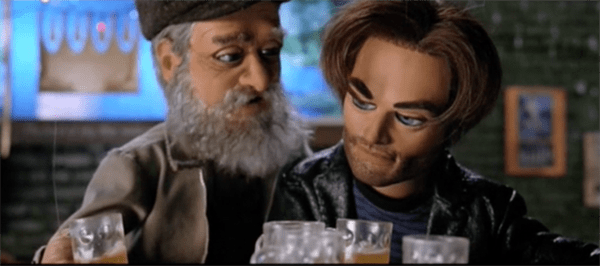
Watch: ‘American Sniper’ Quotes ‘Team America: World Police’
Serena Bramble is a film editor whose montage skills are an end result of accumulated years of movie-watching and loving. Serena is a graduate from the Teledramatic Arts and Technology department at Cal State Monterey Bay. In addition to editing, she also writes on her blog Brief Encounters of the Cinematic Kind.