Watch: How Aspect Ratio Limns a Film Director’s Vision

Watch: How Aspect Ratio Limns a Film Director’s Vision

You only know as much about a film as a director tells you. You only see as much, furthermore, as the director allows you to see. And, in considering the story within a film, you may think you are looking outwards when you allow the film to inspire expostulations and intellectual ramblings–and yet you are, in fact looking inwards, deeper into the images unrolling above you. One way we are reminded of this is through aspect ratio, which is, for the layperson, simply the proportional relation between the width of the frame and the height of the frame. De Filmkrant‘s video essay addresses the use of and experimentation with this element in recent films. Xavier Dolan’s frame tightens slowly on a woman’s face, going slowly out of focus; in another Dolan scene, a character actually pries the screen wide open. In Gust Van den Berghe’s ‘Lucifer,’ a circular frame is used throughout, giving the whole film, and subsequently its story, the quality of a vignette, from a film of an older era. Joost Broeren and Sander Spies, the video essay’s editors, attribute some of this experimentation with aspect ratio to the growth of digital filmmaking, but not all, in this survey of directors ranging from Wes Anderson to Ang Lee, and beyond. 

Watch: ‘It Follows’ Is a Slash in the Fabric of the American Dream

Watch: ‘It Follows’ Is a Slash in the Fabric of the American Dream

[The following is an essay by Jed Mayer, written independently of the above video essay by PonderDog Productions.]

You never forget that first experience: sitting in a dark theater, or watching late-night television, the screen becomes an entrance into another world, one that is new, yet strangely familiar, as if the rain-lashed castle or the cabin in the woods existed next door to your own nightmares.  After such an experience, other films may come and go, but the ones that really matter are those that let you into the abandoned buildings and haunted alleyways of that other world.  Watch enough of them, and the other world begins to take on a life of its own, one that works according to its own sinister logic, and where settings and scenery are trapped in a dream time doomed to repeat itself, obsessively.

This other world of horror’s past is both the setting and the subject of David Robert Mitchell’s ‘It Follows,’ a film that has garnered accolades from critics and horror aficionados for its dense interweave of references to classics of the genre. Unlike Wes Craven’s ‘Scream’ franchise, however, which featured characters who meticulously (and often tiresomely) parsed the rules of the genre in which they find themselves trapped, ‘It Follows’ avoids the train-spotting approach of ticking off film references like a game of “Six Degrees of Kevin Bacon.” Mitchell’s film doesn’t just reference the spaces and traces of classic horror films: it occupies them, raising troubling questions about the persistence of the past in the cultural imaginary.

Even the filmgoer with only a passing interest in horror will note the strong presence of John Carpenter, particularly his breakthrough ‘Halloween,’ arguably the first major slasher film. The throbbing synthesizer-driven score by Richard Vreeland is a direct homage to Carpenter, who crafted his own soundtracks on analog equipment. The textures of old synthesizers have taken on a patina of age that marks them as products of the 1970s, before they were replaced by the sleeker and easier to use digital models of the 1980s that let anyone start a synthpop band. Vreeland’s score, like Carpenter’s, is dense, heavy, lumbering, like the monstrous pursuers it accompanies.

The landscape of ‘It Follows’ looks like it exists just around the corner from the sleepy suburb where Michael Meyers returned to stalk his teenage prey—lush, tree-lined streets where something sinister lurks in green shadows. And as in ‘Halloween,’ these streets are strangely empty, and even when we encounter residents other than our main characters, they seem detached, as if looking in from the outside.  This is played to sinister effect in the opening scene of ‘It Follows,’ where a teenage girl, dressed in t-shirt, short-shorts, and, inexplicably, a pair of high heels, runs out of her home in obvious distress. As she runs down the leaf-strewn street, looking backward in terror, a neighbor unloading groceries from her SUV asks, “Hey, are you okay?” When the girl replies unconvincingly that she’s fine, the woman returns blithely to her groceries. Then the girl’s own father asks her what’s wrong, but doesn’t do anything to help her. Like Carpenter’s HalloweenIt Follows takes place in a world where we can’t be helped by outsiders, and that includes pretty much everyone besides our small clique of friends.

Adults are notably absent from ‘It Follows,’ a trait it shares not only with the slasher films of the 1970s and 1980s, but also with the long tradition of children’s literature, in which young people are tested by trials and tribulations without parental support or interference.  The slasher film can be read as one more variation of a coming-of-age narrative whose roots go back to oral forms such as fairy tales.  Like ‘Nightmare on Elm Street’ and its sequels, the teens of ‘It Follows’ hang out and scheme, as they seek avenues of escape from the nightmare in which they find themselves trapped. Even high school, a place where one would expect groups of peers and a bustling sense of community, is curiously vacant, empty, as the teacher droningly recites “The Love Song of J. Alfred Prufrock” to a sparsely-attended classroom.

One of the qualities of ‘It Follows’ that makes it so refreshing is its avoidance of cheap horror devices like jump scares, brooding ominously where most horror films would slap us in the face. Mitchell employs long cuts and deep focus shots that allow us to dwell on particular scenarios, waiting for something sinister to emerge from otherwise placid settings. Early in the film, the protagonist, Jay, floats dreamily in a stand-up swimming pool. As the camera pans in closer, we see that the water is littered with leaves and bugs. Jay picks up an ant, studies it curiously, drops it back. She notices something watching her behind the fence. When she discovers it to be group of adolescent peeping toms, she laughs it off.

Such moments recall dark retro-fantasies like David Lynch’s ‘Blue Velvet’ and Sophia Coppola’s Virgin Suicides, where nostalgia for the past (the 1950s evoked by Lynch’s soundtrack and costume design, and the 1970s evoked by Coppola’s suburban idyll) becomes morbid, grotesque, as we discover what’s rotting beneath the surface of our cultural memories. Returning to Lumberton, the sleepy logging town where he grew up, Jeffrey Beaumont (Kyle MacLachlan) wanders the empty fields and finds a severed ear, crawling with ants, lying in the grass, a grotesque object that acts like a passport into the town’s dark secrets. The affluent suburban world of Grosse Point, Michigan is shattered with the dramatic suicide of Cecilia Lisbon, who leaps from her window and impales herself on an iron fence.  In both films dreams of the past become nightmares.

It Follows takes place in a world that is difficult, if not impossible, to place in time.  The teens communicate by corded wall phones, but recite ponderous lines from Dostoevsky on an e-reader.  They get around in a beat-up 1980s station wagon, but pass other cars that are more recent.  They watch monster films from the 1950s on tube-era televisions, and go to Audrey Hepburn and Cary Grant movies at the local cinema, while wearing clothes that look like they came off the rack at Old Navy or the Gap.  The world of ‘It Follows’ is like the world of horror cinema itself, haunted by its past, struggling to move on. 

Much has been made of the film as a metaphor for sexual guilt, the curse suffered by the heroine following an unfortunate hook-up manifesting itself like a zombie version of an STD.  She is pursued by revenants that only she can see, and the particular forms taken by these ghosts of the past are telling.  A half-naked woman, beaten and soiled, confronts Jay first; an old lady, seemingly strayed from her rest home, stalks the halls of Jay’s high school; later, another beaten and stripped woman confronts Jay in her home, urinating on the carpet.  These seem less like the avatars of sexual guilt than of urban decay, a point underscored by the film’s location, an unnamed suburb on the outskirts of Detroit.  We only learn this relatively late in the film, when the teens go out in search of the boy who passed his curse on to Jay, and one character mentions to another that she had always been warned by her mother not to cross the line into 8 Mile.  The seemingly placid environment of the suburbia where they live is now seen to be haunted by the urban decay existing just beyond the horizon. By setting his film in a world dominated by the tropes of horror movies from the Reagan era, Mitchell obliquely places us back in a time when trickle-down economics and deregulation eroded the middle class and grew a wider gap between rich and poor. Like those earlier horror films and the aimless, leisured lives of their white protagonists, It Follows is as haunted by the horrors it portrays as by those it turns its back on.  

Jed Mayer is an Associate Professor of English at the State University of New York, New Paltz.

Watch: 100 Great Moments of Film Editing and 5 Crucial Visual Punctuation Marks

Watch: 100 Great Moments of Film Editing and 5 Crucial Visual Punctuation Marks

Watching a film is reading a book, and reading a book is watching a film. There’s really no difference. In one case you sit quietly in the dark as the light flows over you; in the other case you sit quietly in a lighted room as the text washes over you. The difference between the two is an academic distinction. In both cases, you take in what you see, either on a screen or on the page; you take an experience away from it; you make it yours as you assign structure and significance to its parts. Why else do you think so, so many films are based on books? This video essay by Max Tohline is an important one, which takes up this overlap with considerable energy and intelligence. Twenty minutes in length, it takes its inspiration from a Kathryn Schulz piece on the 5 best punctuation marks in literature, such as a famous ellipsis in T.S. Eliot’s ‘The Love Song of J. Alfred Prufrock’ or an oddly placed colon in Charles Dickens’ ‘A Christmas Carol.’ What Tohline manages to do is apply Schulz’s observations to film analysis, with wholly convincing results. A comma placed between two items which implies a relationship between the two (as in Nabokov’s famous "(picnic, lightning)" in ‘Lolita’ becomes the equivalent of a jump cut which makes equivalencies where there would seem to be none on the surface, as in the leap from the bone flung in the air in Stanley Kubrick’s ‘2001: A Space Odyssey’ to a vast white craft floating smoothly through outer space, centuries later. The ellipsis from ‘Prufrock’ becomes the equivalent of a moment in which Woody Allen’s malcontent in ‘Hannah and Her Sisters’ seeks respite from despair by seeing, in an example of omitting a part of a story for comic effect… a Marx Brothers film. And so it goes. Tohline shows us clips from 100 films in which editing made all the difference; the list, posted at Tohline’s blog, includes everyone from the Coen Brothers to David Lynch to George Melies to Martin Scorsese to Dziga Vertov to Francois Truffaut–and could serve as a great primer for students of film editing, in and of itself.

Watch: 7 Reasons Why David Lynch’s ‘Twin Peaks: Fire Walk With Me’ Is an Underrated Masterpiece

Watch: 7 Reasons Why David Lynch’s ‘Twin Peaks: Fire Walk With Me’ Is an Underrated Masterpiece

Coming as it did on the heels of the more-than-a-cult-show ‘Twin Peaks,’ David Lynch’s film annex to the series, ‘Twin Peaks: Fire Walk With Me’ had an uphill climb with its viewers and reviewers. Such is the way with extensions like this: Tolkien’s Silmarillion never had much of a chance beside the Lord of the Rings series, just as the X-Files films have not seen much critical acclaim. (Ever read the "other" Oz books by L. Frank Baum? Didn’t think so.) It’s hard to say what causes this syndrome of reception, if you want to call it that: perhaps the simplest way of saying it is that once viewers decide they’ve had enough, they back away? Or, in the case of Lynch’s film, a creative world that teemed and had true magnetism in one medium didn’t have the same draw for its viewers in another, for reasons that weren’t the film’s fault? Whatever the case, Joel Bocko is a defender of ‘Twin Peaks: Fire Walk With Me,’ and defend it he does, with 7 well-supported points and an appropriately dreamy tour of Lynch’s much-maligned film, which takes imaginative leaps that shouldn’t be overlooked. Take a look yourself: you might want to enter into the Twin-Peaks dreamscape once more after you watch this piece.

Watch: David Bowie, ‘The Man Who Fell to Earth,’ and an Immortal Soundtrack

Watch: David Bowie, ‘The Man Who Fell to Earth,’ and an Immortal Soundtrack

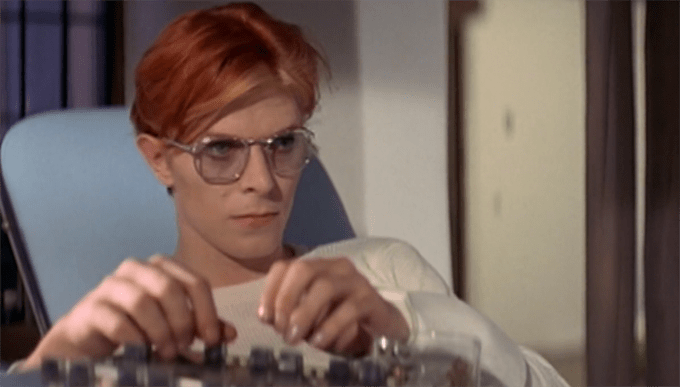
When they made this video essay for Film Comment on Nicolas Roeg’s ‘The Man Who Fell to Earth,’ Sean Doyle and Violet Lucca must have been reading my mind. From time to time, I (re-)listen to David Bowie, always with the same objective: trying to determine if his songs, with their esoteric lyrics and winding melodies, are actually good, or just products of a period, and moreover of an impenetrable affect. Most often my conclusion lies with the former. This video did little to sway me one way or the other on that question, but what it did do was educate me on the history of a remarkable film, most notably the history of its soundtrack. Bowie wrote a soundtrack for the film, but director Nicolas Roeg went with John Phillips, previously of The Mamas and the Papas, for the job. While Bowie’s soundtrack would probably have had an appropriately whacked-out tone for the film’s central character, alien Thomas Jerome Newton, Doyle and Lucca show that Phillips’ soundtrack has its own rewarding complexities.  

Watch: John Cassavetes’ Cinematography Is the Key to His Work

Watch: John Cassavetes’ Cinematography Is the Key to His Work

Interestingly, when watching Cassavetes’ work, the first thing I notice is the cinematography, as his films always represent an example of the idea that artfulness lies not so much in the story being told, but in the way it is told. In films like ‘Love Streams,’ ‘A Woman Under the Influence,’ or ‘Shadows,’ Cassavetes presents images of individuals in the midst of life being lived–and in so doing, may show actions onscreen that are not, in and of themselves, captivating. This is where the camera comes in, and our experience becomes more about how we see something than what we are seeing. Kevin B. Lee, in his latest video essay for Fandor, takes a close look at one of Cassavetes’ more close-up films, ‘Shadows,’ to show us, explicitly and with energized clarity, how Cassavetes’ angles, approaches, and recessions show us a mind at work showing other minds at work, in the process of growing, changing, and perpetually departing.

Watching Alex Ross Perry’s ‘Queen of Earth’ Follow Itself

Watching Alex Ross Perry’s ‘Queen of Earth’ Follow Itself

Queen of EarthIf you take enough writing classes, you will eventually hear the expression "following the poem." When used in relation to reading, it simply means tracing the visible path a writer has taken from the beginning to the end of a piece; when used in relation to writing, though, it means that the writer has followed the work’s inspiring impulse to its natural end, rather than trying to steer it, and that that following is recognizable in the structure of the poem. Alex Ross Perry’s most recent film, ‘Queen of Earth,’ can be said to "follow the film" as it makes an excellent portrait of a woman having a nervous breakdown that often tips into being a cross-section of a character’s mind, and does so in a way that seems effortless and seamless and wholly natural.
The reason the film might interest us and hold our attention from its outset is that its characters are, for lack of a better word, real: the rarified parts of their personalities are laid bare next to the less interesting aspects, with no narrative preference. Every trait is fair game for the filmmaker, and the story evolves from these traits, rather than from an overarching plot. Catherine has come to the country house of Virginia’s parents, following two traumatic events: her father’s suicide and breaking up with her boyfriend; while she stays in the house, she unravels. And that’s pretty much it. Watching is the sport here, and because virtually every actor in the film gives an equally strong performance, regardless of screen time, watching a natural course of events unfold is a pleasure. If I say Elizabeth Moss, as Catherine, is a "revelation," I might actually mean just that: her descent in the film, complete with snot, running make-up, some horrifyingly depressed facial turns, shows us, in a way entirely new, how far one might go into the self’s abyss. Moss’s typically straightforward delivery, each sentence announced as much as it is said, is perfect for a character in a film which seeks, eventually, to expose her. Moss seems open to us, the viewers, at first, and then only becomes more open. Katherine Waterston brings a familiar kind of negativity to her performance as Virginia; there’s a pout behind every statement she makes. It’s easy to see that she’s the more stable of the two friends, and yet her stability seems somewhat joyless. Perry includes several shots here of Waterston simply jogging, seemingly pointless but telling at the same time: she runs with the mood of someone determined to bring discipline into her life; somehow her downcast eyes tell us the exercise isn’t the point. Patrick Fugit has a brief but very memorable appearance here as Virginia’s semi-boyfriend. You’ve seen this person before. He’s the kind of gadabout male who enters a social milieu, takes advantage of it for a while, and then leaves–but not before telling Catherine off, calling her a "spoiled rich brat." His movements are sluggish, cool, and mildly creepy. We can’t be certain what his relationship to Virginia is, and this seems as if it might be because of an allergy to commitment. These characters are thrown together, and not; at times it seems as if Perry is playing alchemist here, tossing a collection of characters together in a beaker and seeing what new element arises from their combination.

Throughout the film, characters beat each other up, verbally, even in their offhand remarks. When one of Virginia’s neighbors meets Catherine near the house, he calls Virginia’s parents "terrible people." How often does such a plain statement of dislike occur in a film? During an intimate conversation, at a time when Catherine’s unraveling strands are plainly visible, Virginia remarks that this must have been what Catherine was really like, all along, even before her break-up or her father’s demise. The insensitivity is startling. And yet Perry doesn’t necessarily swing empathy in Catherine’s favor, or Virginia’s, or anyone else’s. These people’s relentless sniping at each other has an important function, or perhaps two functions. It entertains: few filmmakers do "mean" as well as Perry does. But it also stabilizes. The nastiness seems effortless, part of the film’s highly natural motion, its following of itself. This is only true to a certain extent, of course; the razor-sharp editing of the film–the close-ups, the cuts, the vaguely hallucinatory light refractions–is highly deliberate. Everything is deliberate: such a closely observed portrait of an individual, which in turn gives portraits-in-relief of other characters, must be worked out ever-so-carefully. But the driving impulse of the film is to work from within, to let lives fall where they may, with all their cruelties, sufferings, and deteriorations on full display.  

Watch: Martin Scorsese’s Best Slow-Motion Sequences… In Three Minutes

Watch: Martin Scorsese’s Best Slow-Motion Sequences… In Three Minutes

Martin Scorsese has acquired many trademarks over his 50-year filmmaking career. Perhaps the trademark he is best known for, something we are sure to expect when viewing a Scorsese picture, is his renowned use of slow motion. Nowadays, slow motion shots are a dime a dozen, being utilized by everyone from Michael Bay and Zack Snyder to Quentin Tarantino and Paul Thomas Anderson. When discussing such a popular (and possibly overused) technique, what makes Scorsese’s methods stand out and stick with us?

While the many blockbusters of today use slow motion to extend action and create drama, Scorsese seems to mostly use slow motion in order to enhance subjectivity. For example, the slow motion used during the quaalude-fueled beer pong match in ‘The Wolf of Wall Street’ allows us to experience the sluggish high of the characters. In "Shutter Island", Teddy’s flashbacks, dreams, and hallucinations contain slow motion in order to emphasize his false beliefs. While these two examples utilize obvious slow motion, Scorsese’s slow motion is perhaps best when it goes almost unnoticed. When Johnny Boy makes his famous entrance in ‘Mean Streets,’ minor slow motion is used to create tension on an almost subconscious level. As Travis Bickle watches Betsy from afar in ‘Taxi Driver", she glides through the crowd just slow enough to stand out a bit. This allows us to instantly feel Travis’ admiration–"They…cannot…touch…her." Scorsese does not use slow motion to to add style to his films; he uses it to tell us something. Here is a look at Scorsese’s use of slow motion throughout his prolific career.

Who’s That Knocking at My Door (1967)
Mean Streets (1973)
Taxi Driver (1976)
New York, New York (1977)
Raging Bull (1980)
The King of Comedy (1983)
After Hours (1985)
The Color of Money (1986)
The Last Temptation of Christ (1988)
Goodfellas (1990)
Cape Fear (1991)
The Age of Innocence (1993)
Casino (1995)
Kundun (1977)
Bringing out the Dead (1999)
Gangs of New York (2002)
The Aviator (2004)
The Departed (2006)
Shutter Island (2010)
Hugo (2011)
The Wolf of Wall Street (2013)

Jacob T. Swinney is an industrious film editor and filmmaker, as well as a recent graduate of Salisbury University.

Watch: Nicolas Winding Refn’s Brutal Style, and How It Evolved

Watch: Nicolas Winding Refn’s Brutal Style, and How It Evolved

Nicolas Winding Refn is a Danish filmmaker responsible for some of contemporary cinema’s most brutally stylish films. Refn’s parents also work in film—his father is a director and editor and his mother is a cinematographer. His parents found their inspiration in the French New Wave, which Refn compared to the antichrist. He was quoted saying, “how better to rebel against your parents than by watching something your mother is going to hate, which were American horror movies.” He found his own inspiration to become a filmmaker after watching the 1974 American horror film ‘The Texas Chainsaw Massacre.’  

After seeing what Kevin Smith was able to do with his extremely low-budget 16mm comedy debut, ‘Clerks,’ Refn decided to make his first film, titled ‘Pusher.’ Like ‘Clerks,’ ‘Pusher’ was shot on 16mm and filmed in real locations with a shoestring budget. ‘Pusher’ would eventually become the first installment in a trilogy of films about a drug dealer with the next installments being completed nearly a decade later. 

His second film titled ‘Bleeder’ is another hard-hitting crime drama—this time, about a group of friends who work at a video store in Copenhagen. His next film, and first English language film, is titled ‘Fear X.’ It stars John Turturro as a man trying to solve his wife’s murder. The film was not well received and was a financial failure and ultimately caused Refn’s production company, Jang Go Star, to go bankrupt leaving Refn over a million dollars in debt. 

But Refn made his comeback with a film titled ‘Bronson’ in 2008. The film stars Tom Hardy in the titular role as a famous English criminal in prison who spent many years in solitary confinement due to his outrageous behavior. The character was loosely based on real-life prisoner Michael Gordon Peterson— named one of the UK’s most dangerous criminals. He followed ‘Bronson’ with ‘Valhalla Rising’—a Viking film shot in Scotland that follows a warrior named One-Eye. 

Several of these films reached some level of acclaim, but they were mostly unsuccessful financially. It wasn’t until 2011’s ‘Drive’ that Refn became a major player in contemporary American cinema. ‘Drive’ is a highly stylized modern day noir film about a Hollywood stunt driver who finds himself up against some of Los Angeles’ most dangerous gangsters. The film really struck a chord with American audiences who praised Ryan Gosling’s silent tough guy protagonist and the 80s synth pop aesthetic. ‘Drive’ ended up winning Refn the Best Director prize at the 2011 Cannes Film Festival. 

He teamed up with Ryan Gosling again for his most recent film, titled ‘Only God Forgives,’ which he characterizes as a western that takes place in the Far East. The film was shot entirely in Bangkok, Thailand and follows a man coaxed by his mother into taking revenge on an almost supernatural police lieutenant who was responsible for the death of Gosling’s murderous brother. Refn takes the hyper-stylized aesthetic of ‘Drive’ even further in ‘Only God Forgives’ with an intensely powerful soundtrack composed by Cliff Martinez and highly saturated yet brooding neon colored lights, which is possibly related to his colorblindness.  

Refn’s next feature, titled ‘The Neon Demon,’ is set to be released in 2016 and I, for one, cannot wait to see how his creativity continues to evolve.

Tyler Knudsen, a San Francisco Bay Area native, has been a student of film for most of his life. Appearing in several television commercials as a child, Tyler was inspired to shift his focus from acting to directing after performing as a featured extra in Vincent Ward’s What Dreams May Come. He studied Film & Digital Media with an emphasis on production at the University of California, Santa Cruz and recently moved to New York City where he currently resides with his girlfriend.

Watch: Vancouver Has Stood In for Many Cities, But Rarely Plays Itself

Watch: Vancouver Has Stood In for Many Cities, But Rarely Plays Itself

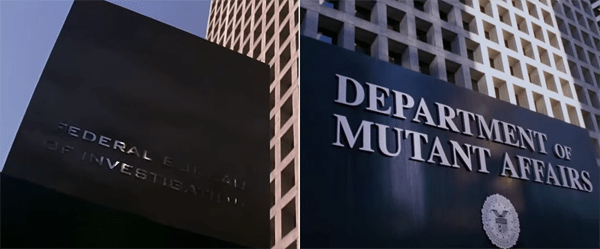
Moviegoers are, by definition, trusting souls. When a film begins, we block more avenues to skepticism than we could possibly imagine. We believe that animals talk, aliens burst from people’s stomachs, and giant, strangely human-looking gorillas crush skyscrapers–or at least we want to believe these things. We also believe that if a film tells us it is taking place in Chicago, boom: we ‘re in Chicago. If it tells us we’re in New York, voila: we’re in New York, in the middle of Bronx traffic. And yet, as this new video essay by Tony Zhou points out, often, we’re actually in Vancouver. The piece is one part homage, one part truth-telling mission, as Zhou goes through all the different films that have used Vancouver as their backdrop while calling it something (or somewhere) else: everything from Christopher Nolan’s ‘Insomnia‘ to Mike Nichols’ ‘Carnal Knowledge.’ Take a look, and see how many films you recognize–or, as it were, don’t recognize.