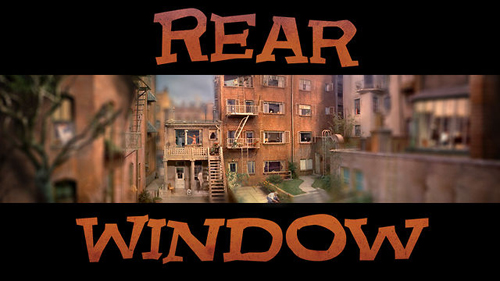
Alfred Hitchcock’s REAR WINDOW reimagined by artist Jeff Desom

Alfred Hitchcock’s REAR WINDOW reimagined by artist Jeff Desom

Rear Window Timelapse from Jeff Desom on Vimeo.

[Editor's Note: We at Press Play can't imagine the hours, the imagination and the creativity it took to create the above tableau. It is a reworking of Alfred Hitchcock's film Rear Window, presenting this classic in a way that has never been seen before. It extracts all of the film footage as seen from Jimmy Stewart's point of view, stitches and reconstructs the pieces, and places them on a single plane. This has to be seen to be believed. It is the remarkable work of installation artist Jeff Desom, who employed any number of digital effects programs and lots of caffeinated coffee to create this effect. Way to go, Mr. Desom. Let us know what you're doing next. Here is Mr. Desom's site.]

MAD MEN RECAP 2: TEA LEAVES

MAD MEN RECAP TWO: Tea Leaves

Watch a clip from Mad Men Season Five, Episode Two: "Tea Leaves."

"When is everything going to get back to normal?"

null

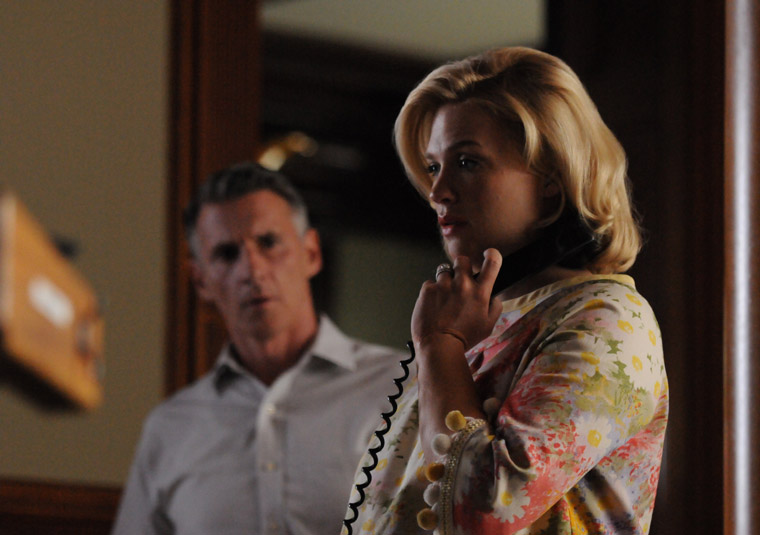
In recent interviews, Matt Weiner has been sharing this quote, uttered by Roger at the end of Tea Leaves, as a kind of capsule of the entire season. There is no normal to get back to, and as Don said in episode 105, 5G, "I have a life, and it only goes in one direction. Forward." At the moment (late June and early July 1966), forward is a very strange direction indeed, for Don, for Betty, for Roger, for SCDP, and for the United States as a whole.

When forward gets strange, backward looks pretty good. Betty reached out to Don because she knew what she would get: "Say what you always say," she begs, and Don knows exactly what she means. There was a time she hated when he said that; "You don't know that," she answered, but now she reaches out to Don, not because she's in love with him, or threatening his marriage or her own, but because he is familiar, and she knows what he'll say, and she can use that to calm herself. Betty's parents are both dead, the only past that Betty can touch is Don, and it works, she calms down enough to breathe.

The title Tea Leaves suggests the future, and a fortune teller arrives a little before the halfway point to remind us that attempts to predict the future are a fool's game. Mad Men has treated tarot reading quite respectfully in the past, and even uses a tarot card as a production logo. The tea leaf lady doesn't represent a condemnation of the whole idea of divination so much as a demonstration that the belief in a controllable and containable future just doesn't withstand scrutiny.

"Time is on My Side" is the Rolling Stones song everyone’s talking about, and not because it was a big hit in 1966. In fact, the Stones recorded it in '64; if Mad Men simply wanted to reference a current song, why not "Paint It Black,"  which was released in May of 1966 and was huge. No, the song was selected for its title. Is time on Betty's side? On Roger's? On Megan's? Betty might not have cancer, but there's a kind of awakening to the future, to tea leaves, to the choice to reach forward or back.

It's also not a coincidence that the doctor refers to Betty as "middle-aged." Man, that's got to hurt. Betty is now all of 34, which we wouldn't call middle-aged now, but was not an unreasonable label in 1966. Still, I can't imagine she likes it. She's seething that Megan is 20 (she's 26 but hey, what's six years between enemies?). Youth culture has arrived. Our closing song, "Sixteen Going on Seventeen" (from The Sound of Music), Harry lusting clumsily after young girls, even Megan calling Don "square": it's all about the passage of time. Don's inability to communicate with his mother-in-law (he doesn't speak much French) seems symbolic of the gulf between Megan's youth and Don's age. These old squares can't even tell whether or not they've met the Rolling Stones! (I don't know how much scrutiny a closing song gets, but Hammerstein died of cancer shortly after The Sound of Music opened on Broadway, before it was made an Academy Award-winning film in 1965; that bit of musical trivia sure fits with the contrast of youth and death, which is one a theme of this episode.)

Naturally everyone will want to talk about Betty's weight gain, and naturally, the storyline was written to accommodate January Jones's pregnancy. It's strange that in Season 1, Peggy's story was that she looked fat but was actually pregnant, and now January Jones is pregnant, and Betty looks pregnant but is actually fat. The fourth wall kind of melted for me when I saw Betty, and I had a hard time understanding, for a few minutes, that this was a tale about Betty Francis becoming fat, because instead I was thinking, "Oh, that's how they are dealing with January's pregnancy." I was wondering if Betty was pregnant, instead of seeing the evidence on-screen: From the moment we saw Betty struggling to get into her dress, we saw a story about a woman who had gained unwanted weight. Thinking otherwise comes entirely from reading gossip columns and knowing what's going on behind the scenes. We really undermine ourselves when we suck up all that backstage stuff, because it prevents us from seeing the drama on its own terms.

Anyway. Betty got fat. Again, in interviews following Season 1, Matt Weiner expressed a lot of interest in the way that fat women are treated in our world, and he got to tell some of that story by having Peggy gain weight. In Season 2, we met Betty's friend Sarah Beth, who couldn't string three sentences together without including one about how awful it was that her daughter was fat. The oppressiveness of that ongoing monologue was palpable.

As is Betty's self-hatred. It's one thing to get fat, it's another to decide that your husband can no longer see you naked, and you can no longer go to fancy events unless you fit into your old, glamorous clothes, and you can no longer have an active sex life. One thing I've always loved about Betty is her libido: she may be prim and judgmental, but in the sack she is desirous, playful, and rarin' to go. Betty is denying herself things she loves: going out, showing off her beautiful clothes, making love, being admired. She's doing this because fatness is hateful to her.

I am not a doctor, but it seems to me that even a benign tumor sitting on the thyroid could cause weight gain, so it surprised me that the show played, at the end, with the notion that Betty is fat because she's eating extra ice cream. Maybe that's true, or maybe she's giving herself permission to indulge because she's unable to lose weight even when she starves herself (which is exactly what happens with a thyroid problem). Betty watches every bite she eats, even during pregnancy ("Jesus, Bets, have some oatmeal. That baby’s gonna weigh a pound," Don said in episode 3.09). This is why her silent, private indulgence in a chicken leg (episode 2.13) was so moving and so sensual. If there's a loss of control it's more than just "letting herself go;" Betty is control.

The other major theme of Tea Leaves is appearances. Betty is not just fat, she is deeply concerned with being seen as fat, and she is sure that Henry is incapable of seeing her accurately. Megan is concerned with how she appears to the Heinz people, and awkwardly makes sure they know she didn't sleep with a married man. Harry wants to look cool in front of, well, he's not sure…the girls backstage? Don? The security guard? If only someone would think he's cool, he'd feel better. Meanwhile, he's hiding his eating, which seems like a nod at Betty. Michael Ginsberg is a talented nebbish who wants to appear so obnoxious that he'll be mistaken for bold and exciting. And Peter, as ever, wants everyone to know how important he is. (Note Peter in a black suit, when he usually wears blue or green; he's dressed as the Head of Accounts and he doesn't want anyone to miss it.) Part of what Tea Leaves is about is the show we're all putting on for each other so much of the time.

Some additional thoughts:

In Season 1, Harry advised Pete that looking and flirting were the kinds of pleasures a married man can have. His one infidelity left him remorseful and quick to confess. I don't know if Harry is cheating, but what he's doing is worse, in a way. He's longing. Jennifer can't know what's hit her.

Henry is working for John Lindsay, who was Mayor of New York from 1966 through 1973. He doesn't want the mayor seen with (George) Romney because "Romney's a clown." Ha! I'm allowed to enjoy the cheap shots, aren't I? Mitt's father, George, was governor of Michigan at the time, but I'm sure the writer's room had a nice laugh sticking that in the script.

"Romney's a clown" would be the quote of the week if it weren't for "Someone with a penis."/"I'll work on that." My son came home from work just as Peggy said that, and I was laughing so hard he thought something was wrong.

I think we can give Jon Hamm's directorial debut a thumbs up, don't you?

Deborah Lipp is the co-owner of Basket of Kisses, whose motto is "smart discussion about smart television." She is the author of six books, including "The Ultimate James Bond Fan Book."

Watch Mad Men Moments, a series of videos on Mad Men, produced by Indiewire Press Play.

Motion Studies #9: Rose Hobart

Motion Studies #9: Rose Hobart

From now through April, the Oberhausen International Short Film Festival will present "Film Studies in Motion", a Web Series curated by Volker Pantenburg and Kevin B. Lee. This series, available on the festival's website and Facebook page, presents weekly selections of analytical video essays on the web, in preparation for Pantenberg and Lee's presentation  "Whatever happened to Bildungsauftrag? – Teaching cinema on TV and the Web", scheduled for April 28 at the festival.

Week Three: Remixes: Parody, Supercut and Mashup

Appropriating and recombining existing footage has been a prime strategy of art and analysis for a long time. With the immense circulation of movies on the web and the accessibility of editing software, this method is no longer restricted to experimental cinema or contemporary art, but has become part of a wider remix culture. This episode gathers recent examples from a wide range of practices. Some of them are driven by critical intentions, some by sheer enthusiasm for iconography and rhythm.

Today's selection:

Rose Hobart

Joseph Cornell (1936)

The original movie remix.

View all Motion Studies video selections.

Volker Pantenburg is assistant professor for moving images at the media faculty of the Bauhaus-Universität Weimar. 

Kevin B. Lee is Editor in Chief of IndieWire’s PressPlay Video Blog and contributor to Roger Ebert.com. Follow him on Twitter.

GAME OF THRONES RECAP 1: THE NORTH REMEMBERS

GAME OF THRONES RECAP ONE: THE NORTH REMEMBERS

null

The second season of the densely, intricately plotted fantasy series Game Of Thrones is going to have to attempt something never before done on television. Even the most complex television series, such as David Simon’s The Wire and Treme, with their sprawling casts of characters, focused intently on different aspects of a single city. Game Of Thrones has dozens of major characters, scattered across a fantasy world. Its increasingly fractured and complicated story will, in the second season, have to maintain some level of coherence, even though the structure of Ned Stark’s tale that it used in the first season is largely gone.

Season One of Game Of Thrones was a fairly simple story, told with complex detail. It was the story of Ned Stark, a lord called by his king to maintain the kingdom’s peace, and his failure to achieve that goal, climaxing with his execution. Most of the show’s major characters were tied to Ned somehow. They were primarily his family, but also his advisors, friends, and betrayers. There were two major exceptions: Tyrion Lannister provided a necessary counterpoint to the way the Starks viewed the world. And Daenerys Targaryen, half a world away, still had a significant connection to Ned: her actions triggered a split between Ned and the king.

The novel maintained coherence by labeling each chapter with the name of the character who narrates it. That wasn’t possible for the show, so it attempted (and usually succeeded) at doing this by making its settings distinct. Most of the major players were at the capital, King’s Landing, with Ned and his daughters. Jon Snow was at the Wall, guarding the realm in the north. Dany was growing up in the exotic Dothraki homelands. Robb and Bran remained in Winterfell. Everything of import occurred in these four places, and when it didn’t, there were problems. There was very little sense of place (or time to travel) in “The Kingsroad,” the second episode. The Aerie, where Tyrion was imprisoned and tried, was the most fantastic (and least believable) locale in the series. The final war between the Starks and Lannisters was ill-defined, with apparently meaningful battles taking place entirely off-screen.

I think the show, to its significant credit, understands just how important a sense of place is in this wide-ranging fantasy world. Its credit sequence, one of the most powerful mechanisms for assigning meaning, is all about creating a sense of locale. We see maps, and we see focal points built up before our eyes. Its focus is dragged across Westeros, giving us a feel for each location on the map, as we watch those locations being constructed.

The plot of the first season demanded an increase in scope in the season following it. Ned’s failure to maintain stability in the realm has led to a massive civil war, with several different factions vying for control. On a personal level, many of the characters left their home bases last season: Jon Snow rode beyond the Wall, Arya Stark was dragged away by the Night’s Watch, Dany was forced to leave Dothraki, and Cat and Robb Stark were in the field, at war with the Lannisters. Immediately in the first episode of the new season, we see some of these new locations: Dragonstone, home of Stannis Baratheon, and Craster’s Keep, beyond the Wall.

I’ve never seen a series escalate its ambition as quickly as Game Of Thrones needs to, and I’m very interested in seeing how well the show manages to accomplish it. I’m not entirely certain that A Clash Of Kings, the second novel of the series, managed to succeed in maintaining the coherence established by the first book, and I will be fascinated to see if the second season show follows in the first season’s footsteps, falls apart, or (my guess and hope) improves upon the source material.

So, place-by-place, what is Game Of Thrones doing, and how well is it doing that?

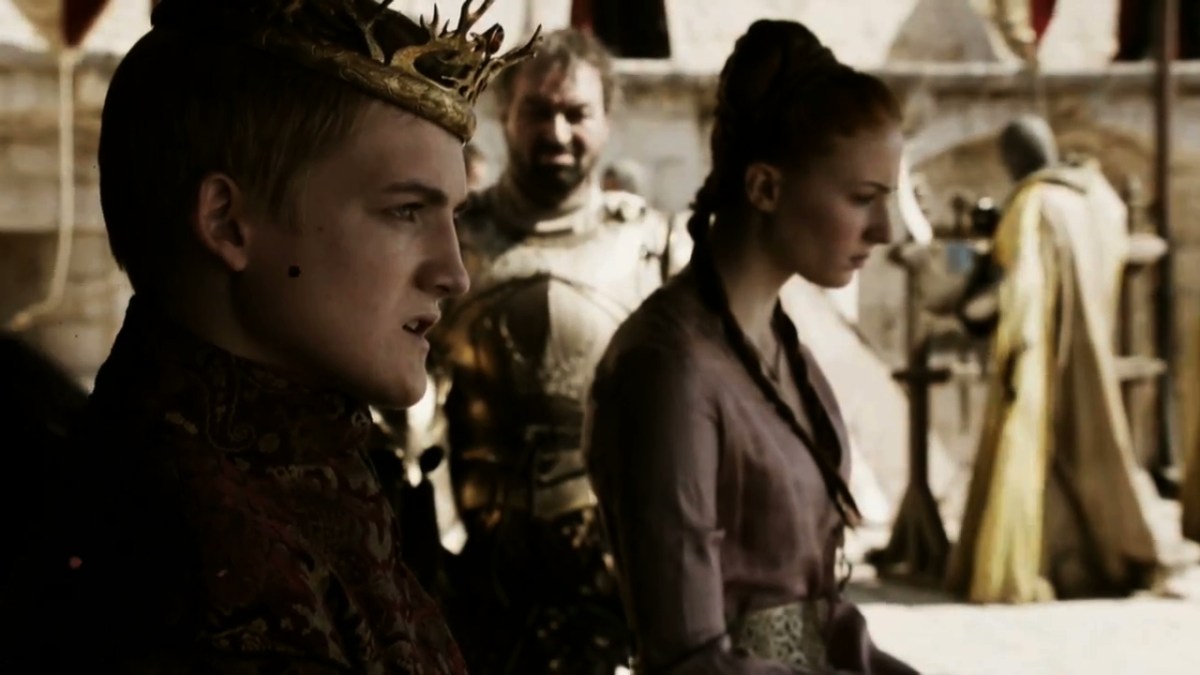
King’s Landing is the heart of the series, ruled by the arch villains Queen Cersei and King Joffrey, and served by minions of various loyalties: Littlefinger, Varys, the Hound, Grand Maester Pycelle, and the guard captain Janos Slynt. The one sympathetic character remaining from the first season is Sansa, the most feminine of the Stark daughters, who discovered far too late that gallantry, handsomeness, and good manners do not prevent a prince from being a sociopath. And the wildcard, Tyrion Lannister, rides in to rule as the Hand, a title given to him by the father he hates, to rein in a king he hates as well. At a social level, King’s Landing is in chaos as well. Refugees are flooding the city, and Cersei demands that the guard keep them out. At the end of the episode, she (or Joffrey) also order the death of all of King Robert’s bastard children, in a real sucker punch of a montage.

Although it is the most important place in the story, I had mixed feelings about King’s Landing in the first season. It felt a little bit too artificial, all beautiful and warm reddish sets. It had memorable aesthetics from room to room, but it never felt like a bustling city or an important castle, only a collection of rooms. In a single moment, the second season dispels that effect to a certain extent—Tyrion’s new favorite prostitute, Shae, is looking over a balcony at the city, which looks cramped with houses, huge, and beautiful. It also looks totally fake, a reminder that no matter the scope and budget of Game Of Thrones, there are some things it just can’t do perfectly. Still, I respect it for trying.

The strongest location in the first season was Winterfell, home of the Starks, in the north, and the place where the whole story (except for Dany’s) started. Winterfell still feels exactly as it should, a place where civilization is scraping by in ramshackle villages, but it is ruled by rugged men in equally rugged castles.

Only one major character is left there now, Bran Stark, left crippled in the events of the pilot. He’s leading as best he can, accompanied by Maester Luwin of Winterfell, a recurring bit character in the first season, as well as Osha, the wildling woman who joined the Starks, and Hodor, his carrier. He’s also dreaming of wolves, or perhaps dreaming as a wolf. The shaky camera used for the wolf sequence was a little jarring, to be honest, but I don’t know how else this could have been done. Bran is seeing through his wolf’s eyes in his dreams, and that can’t feel normal.

Apart from those two locations, the sense of place is less solid in this season. “The North Remembers” ties disparate locations together with the red tail of a comet in the sky. Conveniently enough, everyone can claim the comet is an omen of whatever they wish, serving as a good way for Game Of Thrones to reintroduce characters’ motivations and standings in the world at large.

One theory put forth is that it signals a sign of dragons’ returning to the world (“Stars don’t fall for men”), but Daenerys Targaryen, the woman in possession of those dragons, does not appear powerful as the season begins. Her husband is dead, his power scattered, and her handful of people are stuck fleeing into an unknown wasteland. I enjoyed the constantly-changing grasses of Dany’s story in the first season. This fluid sense of place seemed perfect for the “Dothraki Sea.” The Red Waste, as the show labels her current location, is equally effective. It looks nasty, and if that’s not enough, we see Dany’s silver horse die—an appropriate symbol, as it was her best gift, when she became Drogo’s Khaleesi.

Two other settings on-the-move are less successful. Robb Stark’s Camp is where he, his lords, his mother, and Jaime Lannister are at the moment, but there’s little to be done that can give that a sense of place. Just the inside of a tent here, and a cage at night there: it’s enough to move the plot along, with Robb sending his friend Theon Greyjoy to form an alliance with his people on the Iron Islands, and his mother to treat with Renly Baratheon, the other most powerful rebel king. The characters are powerful—my favorite scene in the episode might have been Robb’s verbal sparring with Jaime Lannister —but it’s hard to grasp the scope of the war.

Likewise, it’s difficult to make much of the Night’s Watch at Craster’s Keep, Beyond The Wall in the far north. Craster is a mean little man, and the show does well to show just unsavory he is. He’s selfish, demands gifts, insults the Watch, and is rumored to have taken all his daughters as wives, but there’s not much else going on in this storyline yet. Jon Snow is still impetuous, and a “King-Beyond-The-Wall,” Mance Rayder, may be gathering his forces. And his keep, well, it’s a little shithole stopover in the middle of nowhere, and I suppose effective for that. But the excitement of being Beyond The Wall isn’t to see Craster’s tiny Keep.

I was, perhaps, most pleased with the new setting, Dragonstone, seat of Stannis Baratheon. It was quickly shown to be a foreboding place, all fire and darkness. Its statues are brown and grim, and our first vision is of scarecrows burning on the beach at night. All of these characters are brand new: Stannis was mentioned by name but never appeared in the first season. We also meet his advisor, Ser Davor Seaworth, but he has little to do other than very effectively force Stannis to reveal his painful rigid modes of thinking, refusing to even call his dead brother, King Robert, “beloved.” But the most important thing here is the imagery, and the introduction of Melisandre, the Red Priestess of the Lord Of Light. She feels alien, and survives a poisoning attempt so ominously that it demonstrates  something is clearly wrong at Dragonstone, and that Stannis is not going to be a hero to sweep in and save the day, even if he is the rightful heir.

Game Of Thrones is going to have a difficult time tying all these different threads together in a meaningful fashion. It might even be impossible. But “The North Remembers” makes a fine case for the show continuing to do what it does, because it does it so damn well—it looks great, its characters are vivid, and there’s a feeling that anything can happen. The sections in King’s Landing, the Stark Camp, and the Red Waste are immediately interesting, and the final shot of Arya is also a reminder that one of the show’s best characters still has her own story ahead of her. Season premieres often have difficulties maintaining the momentum of the end of the last season, but that’s not an issue here. Game Of Thrones is more confident than ever. That’s more than enough to carry the seemingly weaker sections.

Adaptation

I’m a reader of the books, and I like discussing them, although they have too many issues for me to call myself whatever George R.R. Martin super-fans prefer to call themselves. So the show is doubly interesting to me as a subject of criticism and as an adaptation of something that resists adaptation. So I’m going to discuss this (without specific spoilers, although I can’t say that there won’t be thematic discussions overall, or notes of what’s important or not) in a separate section, going forward.

I’m particularly interested in two things: how the show will adapt the books in terms of overall narrative structure, and what new scenes it adds to tell its story. On the first level, this season already seems to be diverting from the source material far more than the first season did. It’s accelerating Jon’s storyline with the Night’s Watch, and seems to be accelerating the story of Jaime Lannister’s captivity, which was the biggest event in the first season. We will be seeing more of this, though—a trailer for the season showed a certain character screaming “But I love her!”, a reference to events of the third book.

I’m always curious to see what the show does outside of the constraints of the characters’ perspectives. A Clash Of Kings loses Ned Stark, of course, but gains Davos Seaworth and Theon Greyjoy. Any scene depicting characters that doesn’t include them or the original POV characters (Tyrion, Dany, Cat, Arya, Sansa, Jon, and Bran) is entirely new to the series. Fascinatingly, in the first season, those were often the best scenes, a trend which continues here in “The North Remembers.” In addition to Robb's confronting Jaime, I also very much enjoyed Cersei’s argument with Joffrey, which depicted the story’s two biggest villains at odds, as Joffrey tried to buck her regency and insulted her to her face. And that final montage of the episode is something that would be impossible in the novel’s usual structure, and is brilliantly done here, demonstrating just how high the stakes are by depicting the murder of innocent children.

Note on spoilers: If your comment includes a spoiler from the novels, please label it SPOILER.

http://www.hbo.com/bin/hboPlayerV2.swf?vid=1241799


http://www.hbo.com/bin/hboPlayerV2.swf?vid=1234943

 
Rowan Kaiser is a freelance writer currently living in the Bay Area, who also writes for The A.V. Club, and has been published at Salon, Gamasutra, Kotaku, and more. Follow him on Twitter @rowankaiser.

GREY MATTERS: Chaos Is Here To Stay

GREY MATTERS: Chaos Is Here To Stay

nullWhen a movie turns into the biggest film that isn’t a sequel or a remake in Earth’s history, you can bet that Hollywood is going to do everything short of ritual sacrifice to figure out what made that film such a billion dollar baby.  That movie, of course, is Gary Ross’ The Hunger Games, and the most easily utilized element of that film that can be transferred to other films hoping to cash in on the nonlinear zeitgeist is something not much loved around here—chaos cinema.

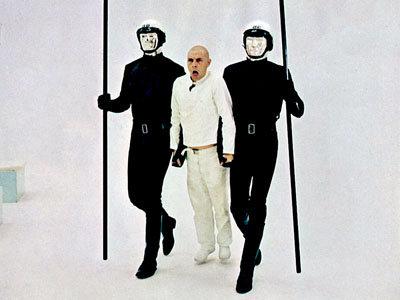
Chaos cinema: Yes, that pell-mell movie-making style of un-motivated shakycam and matching frenetic cutting style, both of which leave us confused as to where a character might be in a scene at any given time.

Chaos cinema: where the director starts a scene with a Dutch angle of a character running (a low, oblique shot like they’d use in a Batman cartoon), then cuts suddenly to her feet, and then a long shot in reverse from a helicopter, leaving the audience utterly baffled as to who’s where, or when, or how.

Ah, but making linear sense isn’t the goal. Visceral excitement is what’s on the menu, with a side dish of faux documentary-style verité.

And some folks here at Press Play really dislike it. Film writer Matthias Stork went so far as to craft a video essay titled “CHAOS CINEMA: The decline and fall of action filmmaking.”

Stork looks back fondly on how, until the early 21st century, classical style was the default.  Camera movement and editing were motivated, and things happened in the frame for a reason.

But over the last decade or so, all that started going to hell. Films were speeding up, being packed with event, and thanks to nonlinear editing systems like AVID, being cut into often crazed new shapes that made less and less sense. Sensory overload, stylistic excess, and exaggeration became the coin of a realm Stork named “chaos cinema”.

Looking back, it looks like Mr. Stork has a point. It really did seem that if a movie wasn’t one of those spiritually rotted films reflective of the Cheney years’ new bellicosity, it was one of those cutting edge techno-nihilism actioners, and both were total chaos.

Cases in point: stinkers like Black Hawk Down (2001), Domino (2005), The Kingdom (2007), Man on Fire (2004), Michael Bay's filmography, and Quantum of Solace (2008). One particularly offensive scene in The Dark Knight was brilliantly deconstructed by Jim Emerson here.

We see how Nolan seems to have either lost interest, or never had it, in where cars and trucks are coming from, what direction they seem to be going when he cuts, what happens after that happens, and so on. This may seem like nerdy minutiae unless you think of it this way—if this were real life, and a car hit you, and your body was thrown a few feet, and you closed your eyes, but when you opened them, you found you were on the other side of the road, well, that would freak you a bit. Same thing in movies.

So yes, these particular “chaos films” were dreadful grotesques. But what was I to make of–

Moulin Rouge! (2001), a rapturously gorgeous film that felt chopped together, at 120 BPM?  Or 2004’s hyper-jacked The Transporter? Or 2007’s [rec], which combined chopped-up, personal DV and horror? Or The Hurt Locker  (2008), the first chaos Oscar winner? Or Friday Night Lights (2006-2011) the first great show to import chaos values to serialized TV, and The River (2012) the first to do so to network horror?

To me, Rouge! Is a traditional musical, except with twice as many shots run at the speed of a trance remix. The Transporter is a Euro-trash version of a John Woo cartoon. And Friday Night Lights with graceful camera? Nope. Boring. We’d never be able to slink into those sizzling Texas mini-worlds on network time. And I’ve not yet mentioned Paul W.S. Anderson’s jaw-dropper of a surprise, Resident Evil: Afterlife, one of the greatest uses of multi-level geometry and spatiality in cinema I can recall seeing, where oneattack scene features twenty or so color-coded Milla Jovoviches attacking hundreds of color-coded bad guys, and it’s not even a high point.

Chaos, I think, has been evolving. And now there’s The Hunger Games, whose “high chaos” style will have an incalculably huge effect on action, drama, indie and hell, on all kinds of films, that just pulled in about $140 million its first weekend. In that film, Katniss' neo-Depression small town life of privation, hunting and solitude, her total love for her sister, and the ambient danger of a totalitarian government are all conveyed in quick, but soft-cut nonlinear hyper-montage that would take classical storytelling a quarter hour to express but here zips by in dreamy minutes. You've never seen a cinema future like this.

So: drop it. The argument is lost and over. Chaos is here to stay as a permanent part of televisual syntax. All that’s left is how we incorporate that reality into our critical discourses.

The exciting thing isn’t chaos cinema on its own—that can be as rote, knee-jerk and annoying to me as anything else.

It’s the incredibly exciting promise of what it will lead to that’s exciting, while classicism always just points back to more of itself. 

“Truths” are death and taxes. Everything else is changing and subjective. Everyone said ET was full of “universal” truths, when all I found was the truth that my heartstrings had been mauled and mangled by a sociopathic optimist. And recently I showed Psycho to a  friend—not a cineaste, a pro journalist, age 27—only to have her fall asleep. She felt terrible for just not getting it. Remembering my unseemly lack of ET resonance, I said not to worry. Universal, shmuniversal.

Meanwhile, this is a generation that’s been raised viewing entertainment on all manner of screens, some tiny, some tablet, in theaters, at home, everywhere. And a lot of the time, the image is literally shaky because it’s on your leg, in your hand, or wherever.

So televisual entertainment—movies, webcasts, networks, the whole shebang–wants to fit into our natural ecosystem by being a little wobbly itself—even Parks and Recreation and The Office are a bit shaky. So shakycam now signifies a base level of realism. The imperious side of chaos, then, is trapping artists in a small range of high velocities. This could be bad or…

I’m staying with my story—that Ross, who may not be a Great Filmmaker but is one helluva craftsman, trusted his instincts regarding how his market would best be served with the most valuable property on the planet. And he chose chaos. And, like that, chaos cinema became the mainstream.

VIDEO – Motion Studies #8: Following

VIDEO – Motion Studies #8: Following

From now through April, the Oberhausen International Short Film Festival will present "Film Studies in Motion", a Web Series curated by Volker Pantenburg and Kevin B. Lee. This series, available on the festival's website and Facebook page, presents weekly selections of analytical video essays on the web, in preparation for Pantenberg and Lee's presentation  "Whatever happened to Bildungsauftrag? – Teaching cinema on TV and the Web", scheduled for April 28 at the festival.

Week Two: Cinematic Techniques on Display

The video essay format has quickly shown its abilities to illuminate and critique the techniques of filmmakers in ways that surpass the reach of traditional text-based analysis. This selection of videos creatively engages with various films to reveal surprising insights into the many dimensions of cinema: cinematography, editing, sound, etc.

Today's selection:

Following

Matt Zoller Seitz (2009)

More than 50 following shots from different films form a seemingly continuous forward movement, displaying dozens of variations on a single camera technique.

View all Motion Studies video selections.

Volker Pantenburg is assistant professor for moving images at the media faculty of the Bauhaus-Universität Weimar. 

Kevin B. Lee is Editor in Chief of IndieWire’s PressPlay Video Blog and contributor to Roger Ebert.com. Follow him on Twitter.

SIMON SAYS: LOVE IN THE BUFF Redeems China Lion

SIMON SAYS: LOVE IN THE BUFF Redeems China Lion

null

For a few months now, China Lion Entertainment has been better in theory than in practice. For those that missed my Lunar New Year piece: China Lion is an American distributor of popular contemporary Chinese and Hong Kong films. Until this week and with the notable exceptions of some interesting but inconsistent melodramas like Aftershock and Love in Space, China Lion had yet to release a film worth recommending without serious reservations. China Lion films typically don't leave you with any resonant emotions beyond superficial first impressions. They're fluffy, and, even in the extreme case of Aftershock, a family drama about two generations of Tangshan Great Earthquake survivors, there's very little gravity to them.

Thankfully, with the release of Love in the Buff, Hong Kong co-writer/director Ho-cheung Pang's (aka: Edmond Pang) sequel to the equally moving and light romcom Love in a Puff, China Lion has finally released something worth recommending (China Lion never released Love in a Puff, presumably because it originally released when the company, which focuses mostly on first-run features, did not exist in 2010).

Love in the Buff follows a young former couple as they try to meet other people while struggling to get back together. Like many of Pang's previous offbeat comedies, Love in the Buff is a movie about storytelling and the cumulative effect of white lies. Pang's young lovers tell each other stories about people they know and about each other, like the one about the girl with a lover's pube stuck in her bracelet or the plain-looking blind date whose mother claims he looks like In the Mood for Love star Tony Leung Chiu-wai (the man explains that his mother only meant that he is as tall as Leung). In telling these small, incestuously inter-related fictions, Pang's characters create the lives they want to lead out of the unremarkable ones they currently live.

That heady concept is developed at the start of Love in a Puff, in which Cherie Yu (Miriam Yeung) and Jimmy Cheung (Shawn Yue), two soon-to-be lovers, meet while huddled over a trash can for a smoke (in 2009, a law in Hong Kong was passed that banned smoking in office buildings and some public parks, too). Pang frames the romance in Love in the Buff similarly by showing Cherie and Jimmy chatting conspiratorially about a mutual friend. No matter how hard their mutual friend tries to protect her boyfriends, they all inexplicably die, or so the story goes. One dies after doing laundry at a Laundromat so the friend buys a washer machine. But her next boyfriend falls to his death from a window while hanging laundry up to dry at home, and so on.

So unlike Love in a Puff, which started with a story about a man being trapped in a trunk and the aforementioned pube anecdote, Love in the Buff starts with a personal, fatalistic myth of Cherie and Jimmy's "Black Widow" friend. You don't have to know who Cherie and Jimmy are or where they are in their relationship after the events of Love in a Puff because Pang has just had his jaded lovers tell us. They're scared of losing each other, an anxiety that soon proves to be self-fulfilling.

In the Love in the ____ series, Cherie and Jimmy relate to each other and people in general primarily through character-embellishing tall tales. So it's not surprising that, even after the couple drifts apart in Love in the Buff when Jimmy announces that he has to move to Beijing for work, Cherie and he still both remake their lives based on little fictions. And when Cherie and Jimmy's friends and loved ones can't meet the high expectations that the set up in Cherie and Jimmy's private stories, the nee personality traits that hey exhibit become the raw material for new stories.

For instance, Jimmy starts dating a Beijing girl named You-You (Mini Yang), a flight attendant, after she promises to repay a favor that Jimmy did for her by helping him "in bed." While Jimmy's thinking he'll get laid, You-You actually just wants to meet at a trendy bar where patrons are served food and drink in beds. But bear in mind: Jimmy only meets You-You after Eunuch tells him a yarn about flight attendants, saying that stewardesses can be sexually harassed twice before there are serious repercussions for their molester. A man sitting behind Eunuch overhears this and tries to grope one of You-You's fellow stewardesses. He immediately gets caught however since Eunuch was, uh, apparently mistaken! So Jimmy decides to meet You-You at the bed bar and checks to see if Eunuch’s new theory (Eunuch insists that You-You is sexually aroused by Jimmy) is true. But he only does this after Eunuch's story about groping women proves to be untrue.

The opposite dynamic is true of Cherie's post-Jimmy search for love. She first tries matchmakers that hook her up with their sons, like the one that misrepresents her son as a Tony Leung look-alike. But then, when another blind date turns out to actually match his mother's description, Cherie winds up stuck fishing her cell phone out of a public toilet while her best friend, now clearly enamored with a Huang Xiaoming look-alike (actually played by Hong Kong actor Huang Xiaoming), hits on Cherie's intended date. So Cherie winds up meeting Sam (Xu Zheng) instead, a guy she later realizes she wants to date because she thinks he is, personality-wise, Jimmy's complete opposite.

But the situation Cherie's in when she dates Sam is not an inversion of when she first started to date Jimmy in Love in a Puff. In fact, it's just like the circumstances that led Jimmy and Cherie to originally date each other. Whereas Jimmy chose to date Cherie knowing that she was already seeing somebody, Cherie is now cheating on Sam with Jimmy while Jimmy cheats on You-You with Cherie. Everybody's telling a different story in Love in the Buff, making it both a knotty and accomplished variation on Puff's meta-textual main theme and a very clever and resonant romantic comedy unto itself. This: this is the China Lion film to see.

Simon Abrams is a New York-based freelance arts critic. His film reviews and features have been featured in The Village Voice, Time Out New York, Slant Magazine, The L Magazine, The New York Press and Time Out Chicago. He currently writes TV criticism for The Onion AV Club and is a contributing writer at Comics Journal. His writings on film are collected at the blog, Extended Cut.

VIDEO – Motion Studies #7: Low Budget Eye Candy

VIDEO – Motion Studies #7: Low Budget Eye Candy

From now through April, the Oberhausen International Short Film Festival will present "Film Studies in Motion", a Web Series curated by Volker Pantenburg and Kevin B. Lee. This series, available on the festival's website and Facebook page, presents weekly selections of analytical video essays on the web, in preparation for Pantenberg and Lee's presentation  "Whatever happened to Bildungsauftrag? – Teaching cinema on TV and the Web", scheduled for April 28 at the festival.

Week Two: Cinematic Techniques on Display

The video essay format has quickly shown its abilities to illuminate and critique the techniques of filmmakers in ways that surpass the reach of traditional text-based analysis. This selection of videos creatively engages with various films to reveal surprising insights into the many dimensions of cinema: cinematography, editing, sound, etc.

Today's selection:

Low Budget Eye Candy

Steven Boone (2009)

Even George Lucas started out as a resourceful low-budget filmmaker, as detailed in this video essay manifesto on DIY film production.

View all Motion Studies video selections.

Volker Pantenburg is assistant professor for moving images at the media faculty of the Bauhaus-Universität Weimar. 

Kevin B. Lee is Editor in Chief of IndieWire’s PressPlay Video Blog and contributor to Roger Ebert.com. Follow him on Twitter.

VIDEO ESSAY: GALLO(W)S OF PUNISHMENT

VIDEO ESSAY: Gallo(w)s of Punishment

There is hardly a more polarizing figure in the independent film scene than Vincent Gallo. He once called Roger Ebert a “fat pig with the physique of a slave trader” after Ebert blasted the Cannes debut of his sophomore directorial effort, The Brown Bunny. On his official website, Gallo sells himself as a weekend escort and even offers women his sperm for an “in-vitro fertilization.” Most recently, Gallo declared that his third directorial project, an abstract romantic film, Promises Written In Water, would not be released. Ever. Still, if one can overlook—or even just ignore—the jaw-dropping, off-screen antics that Gallo throws at the public, it is actually pretty rewarding to take in the quiet power of Gallo’s first two (and still available) directorial works: Buffalo ’66 and The Brown Bunny. Not only does Gallo write, direct and star in each of these feature films, he basically offers himself as a post-postmodern martyr for a new generation of moviegoers. In fact, a lot of actors, writers, and directors could never pull off what Gallo does in these works. Gallo’s screen martyrdom ends up being an effective technique for revealing dark truths within his film’s heroes.

For starters, consider his directorial debut Buffalo ’66. Gallo plays Billy Brown, an ex-convict coming off a five-year prison stint for a crime he didn’t commit. Billy was the fall guy for a bookie played by Mickey Rourke—again phoning in his 90s tough guy persona (Thursday, Fall Time, Bullet). So Billy, still emotionally scarred from his childhood upbringing, kidnaps the angelic Layla (Christina Ricci) in order to present her to his spacy parents (Anjelica Huston and Ben Gazzara) as his wife. Billy’s parents, nestled in their Buffalo, New York home, are trapped in a time capsule of naïve nostalgia: They seem to care more about a recorded VHS tape of a Buffalo Bills football game than they do with their son’s supposed new bride. On paper, all of this sounds like a black comedy in the vein of The Whole Nine Yards. Yet, Buffalo ’66 plays out with a quiet surrealism. There is an instrumental dance sequence in a bowling alley, showcasing Layla’s impromptu tap dancing skills. There is also a fantasized murder of a Buffalo Bills kicker at a strip club. The color scheme of every shot is muddled,  like a fading Polaroid. And most of the film is actually quiet, with Billy basking in his own sorrow. Yes, kidnapping Layla is the last thing he should probably be doing upon being released from prison. But Billy is so distraught with his broken existence that he becomes blind to his downward path of behavioral absurdity. Gallo’s performance here is key to the power of Buffalo ’66. He is able to sell Billy’s self-punishment not as an act of self-righteousness but as a self-remedy. Screwing up and avoiding any sort of real relationship not only feigns a reinvention of self-identity–it also helps Billy hold on to the last bit of sanity he thinks he has. In the off-kilter universe that Gallo creates in Buffalo ’66, people can rewrite their existences by deceiving themselves about the past and the projected future. There is something to be said about a filmmaker exploring these notions behind and in front of the camera.

In his next directorial project, The Brown Bunny, Gallo takes even more abrasive narrative risks and they take the movie to heights of pathos that most American independent films don’t even get a peek at. In this film, Bud Clay (Gallo) drives and drives listlessly across an indifferent highway, a drive through Americana itself. Sometimes he stops at a pet store. Other times he stops for gas. His few encounters with women prove fruitless. And then, in the last third, we meet Bud’s elusive beau, Daisy (Chloe Sevigny), in a soft-lit hotel room. The two embrace and begin to get intimate. In fact, Daisy—in front of the camera—performs oral sex on Bud. The scene is shocking. Are we really seeing this in an American indie flick? And then, ingeniously, Gallo the filmmaker pulls the rug from under us. While Daisy and Bud spoon on the hotel bed, a flashback sequence occurs: It’s revealed that Daisy was a drug addict and died of asphyxiation during a house party some time ago. She was also pregnant with Bud’s child when this happened. And during all of this we hear a broken Bud sob helplessly on the soundtrack, asking aloud why Daisy made the choices she did. A concluding shot shows Bud lying on the bed—alone. Thus, The Brown Bunny reveals itself not so much as a vain Vincent Gallo road trip movie but as a crippling dissection of male insecurity and ailing guilt. It’s the kind of film that would have thrived in the 1970s, when artists were unabashedly emoting their anxieties and fears on the screen.

In the end, with only two directorial efforts, Mr. Gallo has given us more profundity than any of his shock-driven publicity stunts or sound bites could ever articulate.

Nelson Carvajal is an independent digital filmmaker, writer and content creator based out of Chicago, Illinois. His digital short films usually contain appropriated content and have screened at such venues as the London Underground Film Festival. Carvajal runs a blog called FREE CINEMA NOW which boasts the tagline: "Liberating Independent Film And Video From A Prehistoric Value System."

VIDEO – Motion Studies #6: Chaos Cinema Part 1

VIDEO – Motion Studies #6: Chaos Cinema Part 1

From now through April, the Oberhausen International Short Film Festival will present "Film Studies in Motion", a Web Series curated by Volker Pantenburg and Kevin B. Lee. This series, available on the festival's website and Facebook page, presents weekly selections of analytical video essays on the web, in preparation for Pantenberg and Lee's presentation  "Whatever happened to Bildungsauftrag? – Teaching cinema on TV and the Web", scheduled for April 28 at the festival.

Week Two: Cinematic Techniques on Display

The video essay format has quickly shown its abilities to illuminate and critique the techniques of filmmakers in ways that surpass the reach of traditional text-based analysis. This selection of videos creatively engages with various films to reveal surprising insights into the many dimensions of cinema: cinematography, editing, sound, etc.

Today's selection:

Chaos Cinema Part 1

Matthias Stork (2011)

This popular video, first featured on Press Play, explores how chaos reigns in the techniques used to make contemporary action films.

View all Motion Studies video selections.

Volker Pantenburg is assistant professor for moving images at the media faculty of the Bauhaus-Universität Weimar. 

Kevin B. Lee is Editor in Chief of IndieWire’s PressPlay Video Blog and contributor to Roger Ebert.com. Follow him on Twitter.