VIDEO – Motion Studies #15 & #16: The Art of Cinema on French TV (Godard on Kubrick; Costa on Straub/Huillet)

VIDEO – Motion Studies #15 & #16: The Art of Cinema on French TV (Godard on Kubrick; Costa on Straub/Huillet)

From now through April, the Oberhausen International Short Film Festival will present "Film Studies in Motion", a Web Series curated by Volker Pantenburg and Kevin B. Lee. This series, available on the festival's website and Facebook page, presents weekly selections of analytical video essays on the web, in preparation for Pantenberg and Lee's presentation  "Whatever happened to Bildungsauftrag? – Teaching cinema on TV and the Web", scheduled for April 28 at the festival.

Week Four: Precursors: TV, Cinema, Contemporary Art

There is a a tradition of “Videographic Film Studies” that existed before the Internet. Some TV channels, like the West-German WDR, but also TV programmers in other countries, initiated an impressive variety of programmes on cinema that combined thorough analytical observations with an inventiveness of visual forms and techniques. Found footage has also been used in experimental cinema and contemporary art. Most examples of this audiovisual legacy remain either overlooked or invisible as they are stacked away in archives or private catalogues. For this reason, this episode mostly gathers fragments and snippets instead of entire essays.

Today's selections:

Cinéma Cinémas (1982-1991, Antenne 2) 
Anne Andreu, Michel Boujut, Claude Ventura

Cinéma Cinémas" was conceived by Michel Boujut, Anne Andreu and Claude Ventura. It was produced and broadcast by French TV channel "Antenne 2" from 1982 to 1991. Each episode consisted of several pieces, partly interviews with Hollywood-Stars, partly contributions from filmmakers ("Letter from a filmmaker"), partly cinephile observations on directors or individual films.

In this episode produced in 1987, Jean-Luc Godard compares the use of slow motion in Stanley Kubrick's Full Metal Jacket with that of another film about Vietnam, 79 Springtimes of Ho Chi Minh by Santiago Alvarez. A translation of Godard's comparison can be found below (translated by André Dias, originally on Kino Slang

Godard: «There it is! This is the slow motion we find in Peckinpah, if you will… It addresses the crowd of spectators only by exploiting something that it lacks. It seems like what Welles talked about: a gimmick, a trick, a gadget. Something that's now usual in all these American directors, even in Kubrick, who disappoints me because he has more talent than them. And this is just Peckinpah, if you will… with the exploitation of Vietnam. To his film I wouldn't go because I wouldn't see the Vietnamese, or God knows in which form. They were there. You just needed to go there… He doesn't see them. Something's missing. Kubrick's film misses what America also missed.

They keep showing… In war films about Germany, there's not one big Hollywood actor that hasn't, sooner or later, played a German general. Here no one has played a [Vietnamese] general, cause they didn't know how to do it. That's their shame. To cover up this shame with a slow motion, whatever talent one has, it doesn't work…

Let see the Alvarez slow motion. We see a crowd that cries. And we see each one cry without privilege, despite being privileged. The spectator can make his choice. This is what never occurred… Here is a war movie made by a Cuban. It's sufficient to see this to, when we show Kubrick's images see that they do not hold…

To say good or bad things… I, (…), it wouldn’t come to my mind to make war; I've deserted in two countries. But it's necessary to watch. We see something in which we believe and there he [Kubrick] doesn't believe in films anymore. He forces himself to believe. And at a certain point it doesn't stand. There's a minimum of honesty… We see that the other [Alvarez’s], which is made of documentary, is so worked by a stylised fiction like this, that it gives back something. And there [Kubrick's] lacks the documentary approach.»

Cinéma, de notre temps (1964-1972, ORTF; 1989-present, la 7 / arte) 
André S. Labarthe, Janine Bazin

"Some of the most successful and fruitful ongoing enterprises related to film history have been either ignored or taken for granted (which sometimes amounts to the same thing) due to their omnipresence… The series of 80-odd French television documentaries about filmmakers produced by Janine Bazin (the widow of André Bazin) and André S. Labarthe, initially called Cinéastes de notre temps when it was produced by the ORTF between 1964 and 1972, and revived as Cinéma, de notre temps when it was produced by Arte between 1990 and 2003, the year that Janine Bazin died, and then taken up again by Cinécinéma in 2006. Some of the more interesting of the earlier documentaries were remarkable in the various ways that they stylistically imitated their subjects, as in the programs on Cassavetes, Samuel Fuller, and Josef von Sternberg. One specialty item was an eight-part conversation between Fritz Lang and Jean-Luc Godard (The Dinosaur and the Baby, 1967). Many important figures worked on these shows, including Noël Burch and Jean Eustache (mainly as editors, although Burch also codirected a few programs), Jean-André Fieschi (mainly on Italian filmmakers), Jean-Louis Comolli and Jean Douchet (on diverse topics), Alexandre Astruc (on F.W. Murnau), Jacques Baratier (on René Clair), Jacques Rivette (a three-part series about Jean Renoir), Claire Denis (a two-part program about Rivette, with Serge Daney as interviewer), Jacques Rozier (on Jean Vigo), Eric Rohmer (on Carl Dreyer), Olivier Assayas (on Hou Hsiao-hsien), Rafi Pitts (on Abel Ferrara), Chris Marker (on Andrei Tarkovsky), and Pedro Costa (on Jean-Marie Straub and Danièle Huillet)—to provide a less than exhaustive list."

Jonathan Rosenbaum

"This is a film about film, of course, but it understands film as a conversation—about searching, about understanding—as an opportunity for philosophy, we might say—and how all these elements build a working picture of marriage, too."

Ryland Walker Knight on Cinéma, de notre temps: Where Does Your Hidden Smile Lie? (Pedro Costa, 2001) – embedded above

View all Motion Studies video selections.

Volker Pantenburg is assistant professor for moving images at the media faculty of the Bauhaus-Universität Weimar. 

Kevin B. Lee is Editor in Chief of IndieWire’s PressPlay Video Blog and contributor to Roger Ebert.com. Follow him on Twitter.
TRAILER MIX: VINTAGE MODEL: WHO’S AFRAID OF VIRGINIA WOOLF?

TRAILER MIX: VINTAGE MODEL: WHO’S AFRAID OF VIRGINIA WOOLF?

This vintage edition of TRAILER MIX looks back at a film preview from days gone by, and measures its virtues in terms of nostalgia, contemporary comparison, and innate artistry. Vintage entries will appear periodically throughout the run of the column.

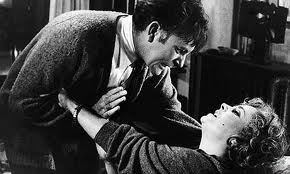
The only thing uttered by the characters in the trailer for Who's Afraid of Virginia Woolf? (1966) is the film's title, a wicked pun repeated and chanted by members of the story's unraveling quartet, originally created for the stage by Edward Albee. “It's easy to talk about it,” the trailer's ever-earnest narrator says of the movie. “It's hard to tell about it.” He then adds that discussion of the film's worth can be summed up by simply mentioning the talent involved, name-dropping Elizabeth Taylor, Richard Burton, and director Mike Nichols with great reverence. As it should be, the trailer is a reflection of the movie itself – a stark snapshot with a tight-lipped veneer that hints at the degradation of decorum. There's no mistaking that something's terribly wrong here, but the preview's refusal to divulge details beyond synopsis basics calls to mind the thin masks George (Burton) and Martha (Taylor) wear in their daily lives.

The first nod to the movie's simmering stew of ugliness comes when Martha finishes her title recitation with a booze-induced choke. In Who's Afraid of Virginia Woolf? nothing's fully  pure, not even the jovial repetition of a pun. The eerie insistence of laughter continues in the trailer, as the narrator tells us that history professor George and wife Martha are “the essence of Ivy League charm to students and friends . . . who don't know them.” In between cackles, the most foreboding of which come from gravelly-voiced Burton, film stills are flashed across the screen, the slideshow looking more and more like a string of crime scene photos (after all, the movie's events could certainly warrant a border of “caution” tape).

“George Segal and Sandy Dennis are the newcomers,” the narrator says, “led by their charming host and hostess to the hell that hides behind those ivy-clad university walls.” The word “hell” is emphasized and followed by a delirious descent. Cigarette in hand, Martha continues to laugh devilishly, then Nick (Segal) gets a turn, then Honey (Dennis) pricelessly lets her giggle transform into a shrill scream of horror. Chilling images of George and Martha in the midst of a struggle are soon topped by a perfect cut to a spinning camera – a sick, twirling dance between Honey and George that hears the two of them chant the title yet again.

It's ironic that a trailer for a work that's so well-written is devoid of any remarkable dialogue. And yet, it's both gracious and appropriate that nearly none of the film's transgressive goodies are revealed. The narration sounds both hasty and deliberate, but were this a modern film, you'd likely know half the plot by the time the clip wrapped, weakening the desire to actually bother seeing the movie. The end of the trailer remains ironic, almost unwittingly so. In order to sell the film, screenwriter Ernest Lehman's work on West Side Story and The Sound of Music is mentioned, as if that could properly prepare anyone for what they'd be getting from Who's Afraid of Virginia Woolf? And the word “Incredible,” tacked on as “the only thing left to say,” reads as an off-key, comically unsure way to close. Not that many people would argue with the sentiment.

R. Kurt Osenlund is the Managing Editor of Slant Magazine's The House Next Door, as well as a film critic & contributor for Slant, South Philly Review, Film Experience, Cineaste, Fandor, ICON, and many other publications.

VIDEO: Stillness in Motion – The Films of Lech Majewski

VIDEO: Stillness in Motion – The Films of Lech Majewski

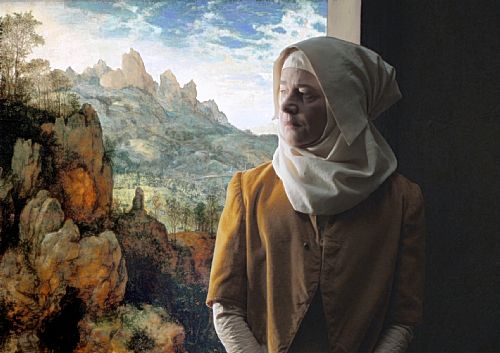
Lech Majewski’s acclaimed 2011 film The Mill and the Cross transcends artistic categorization, a work of 21st-century digital cinema that resurrects a 16th-century painting, Pieter Bruegel’s masterpiece The Way to Calvary. Re-staging the painting with its cast of hundreds while blending actual landscape footage with hand-painted recreations of Bruegel’s canvas, the film is an unprecedented blend of cinema, painting, theater, and scholarship. As film scholar Kristin Thompson remarked upon seeing the film, “What makes The Mill and the Cross so exciting is that it achieves that rarest of things, making us feel that we are seeing something very worthwhile that has never been done before.”

Yet those familiar with Majewski’s filmography may notice in The Mill and the Cross certain motifs and methods from his past works. This video essay makes a side-by-side comparison of The Mill and the Cross and Majewski’s 1998 film, The Roe’s Room, which happens to be his first film shot on high-definition digital video, and is also available on Fandor. Adapted from a stage opera written and produced by the multi-talented Majewski, The Roe’s Room also features a very painterly sensibility with its precise compositions and delicate visual textures all set in cinematic motion. 

Read the rest of this essay on Fandor.

Kevin B. Lee is Editor in Chief of IndieWire’s PressPlay Video Blog and contributor to Roger Ebert.com. Follow him on Twitter.
VIDEO – Motion Studies #14: Screening Room

VIDEO – Motion Studies #14: Screening Room

From now through April, the Oberhausen International Short Film Festival will present "Film Studies in Motion", a Web Series curated by Volker Pantenburg and Kevin B. Lee. This series, available on the festival's website and Facebook page, presents weekly selections of analytical video essays on the web, in preparation for Pantenberg and Lee's presentation  "Whatever happened to Bildungsauftrag? – Teaching cinema on TV and the Web", scheduled for April 28 at the festival.

Week Four: Precursors: TV, Cinema, Contemporary Art

There is a a tradition of “Videographic Film Studies” that existed before the Internet. Some TV channels, like the West-German WDR, but also TV programmers in other countries, initiated an impressive variety of programmes on cinema that combined thorough analytical observations with an inventiveness of visual forms and techniques. Found footage has also been used in experimental cinema and contemporary art. Most examples of this audiovisual legacy remain either overlooked or invisible as they are stacked away in archives or private catalogues. For this reason, this episode mostly gathers fragments and snippets instead of entire essays.

Today's selection:

Screening Room (1972-1981)

Robert Gardner

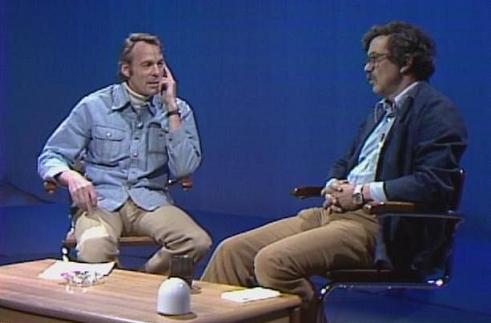
Even in a world with hundreds of cable TV channels on the air, today it's virtually impossible to conceive of a commercial TV program dedicated to discussing experimental filmmaking in depth. But there was a time when such a program existed; in fact it lasted for a decade and left an indelible legacy to appreciating the art of cinema.

Screening Room was a 1970s Boston television series that invited independent filmmakers to show and discuss their work on a commercial (ABC-TV) affiliate station. This unique program, developed and hosted by filmmaker Robert Gardner, dealt even-handedly with animation, documentary, and experimental film, welcoming such artists as Jean Rouch, Jonas Mekas, Stan Brakhage, Hollis Frampton, Yvonne Rainer, and Michael Snow. Frequently, famous literary guests such as Octavio Paz, Stanley Cavell and Rudolph Arnheim appeared as well. The filmmakers presented on the show are now considered the most influential contributors to their respective genres and the footage is invaluable for students, scholars and lovers of film. The series is now available on DVD through Studio7Arts.

View all Motion Studies video selections.

Volker Pantenburg is assistant professor for moving images at the media faculty of the Bauhaus-Universität Weimar. 

Kevin B. Lee is Editor in Chief of IndieWire’s PressPlay Video Blog and contributor to Roger Ebert.com. Follow him on Twitter.
MAD MEN RECAP 3: MYSTERY DATE

MAD MEN RECAP 3: MYSTERY DATE

Hiding under the bed doesn't help.

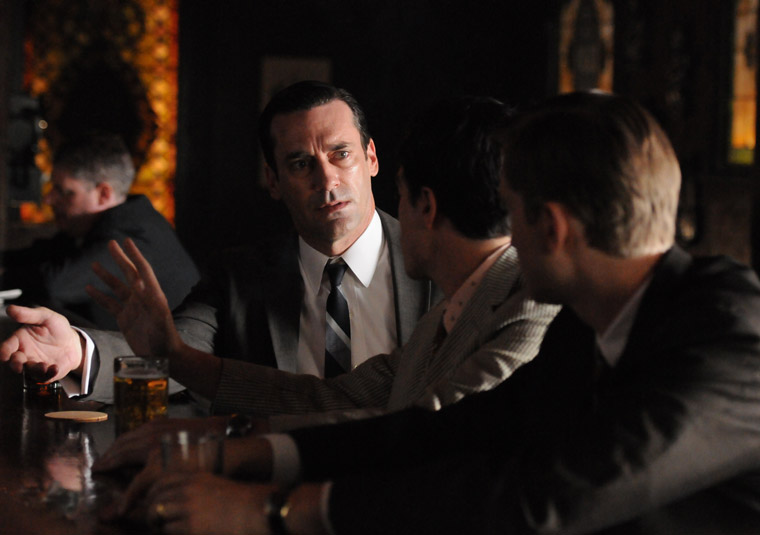
The dirty, violent, erotically-charged, drug-fueled, violent, violent, violent world is encroaching, and none of us can hide from it. Not Sally, not Pauline with her knife, not Don in his fever, not Dawn on Don's couch.

This episode was shocking, disturbing, and brilliant. Neither director Matt Shakman nor co-writer Victor Levin has worked on Mad Men before, so let's say welcome aboard, fellas, because damn, you're good.

nullIn three crucial moments of Mystery Date, female bodies are under a piece of furniture. First, the Richard Speck murders are discussed at the office: The episode takes place on Friday, July 15, 1966, and the following morning. The murders occurred on July 14, and Speck was arrested on the 17th,  so during the days depicted, the horrific mass murderer was nameless and at large.  Stan gruesomely recounts how the lone survivor of Speck's killing spree hid under the bed. Next, in the most shocking scene we've ever seen on Mad Men, Don hides Andrea's body under the bed, her foot luridly sticking out. Finally, Sally hides under the couch overnight after Pauline has made her feel worse rather than better.

I suspect the scene we all want to talk about is Don and Andrea, but let's look first at Pauline and Sally. The swirling mass of chaos that is 1966 is affecting all the characters. Divorce, Vietnam, racial tension, sexual anxiety, promiscuity, rape, violence, drugs, the generation gap: they're all here. Once Sally has managed to frighten herself by reading the newspaper (not a forbidden piece of fiction, mind you, it's the newspaper that's unsuitable for the young) and gone to Pauline for comfort, Pauline blasts Sally with such a megaton of crap that I wanted to hide under the couch, too. Parents kick you for no reason, but that's a good lesson. A twelve year-old girl (Pauline is sure) already knows, not only what sex is, but what rape is. It's bad but it's sexy, and Pauline tells it like a camp counselor with a flashlight under her chin. Here, let me show you my big knife. Here, let me give you a Seconal. Holy crap. That one scene encapsulates, in its emotional tone and in the notes it hits, almost everything that happens in every other scene.

The episodic stuff this week was enormously eventful. Joanie kicks her scumbag husband out, Peggy extorts Roger, and DON . . . yet none of what we're seeing is entirely about the characters. This is a mood piece, and the mood is grim. Even the humor (and there are plenty of laughs) is grim: Stan with pantyhose over his head is funny, but then you can't help thinking he looks like a serial killer, especially given that's his "outfit" when Joyce (luv ya, Joyce) comes in with the unprintable student nurse photos.

So, did you know, when Don strangled Andrea, that it was a dream? I was reminded of 5G. We wondered, five years ago, if Don could possibly be planning to kill Adam. It was a new enough show that it was easy to be uncertain. Five years down the road, it's harder to imagine this can possibly be a direction the show will take, but we can't be sure. That scene was filmed with a feverish intensity that left you believing. At the end, Don leaving the foot sticking out seemed impossibly sloppy, and only then was I 100% convinced it was a dream or a hallucination.

Two dreams in two weeks. We're living in unreal times.

The violence permeates everything. Peggy, whom I'm sure has worked late and alone many times, is suddenly scared when she hears a noise. Finding Dawn, she sees someone (on another couch, by the by) even more constrained by the violence outside than herself. Dawn can't go home. Cabs won't go into her neighborhood, and her brother won't "let" her ride the subway. (Fancy that; her brother is still in his teens, but as the man of the house, he gets to make decisions for Dawn.)

See, I've worked in the city and been afraid to leave the office alone. Hell, I've felt that way working in the suburbs. That women's lives are restricted by the threat of rape and violence is not a "period detail." It's a reality that women live with every day, and that men often don't notice. So often, I've been in offices, making little pacts with other women to walk one another out, while the men assume we're overreacting, or don't pay attention. We women are bounded about by violence and the threat of violence, sexualized violence made light of, as if it's erotic, as if it's exciting, as if it's a dirty fever-dream like semi-willing sex with a former lover you then strangle. But it's none of that. It's real and confining and we tiptoe around it. Every. Damn. Day. Like Peggy. Like Dawn.

It's interesting that it's a man—new guy Michael Ginsberg—who notices how horrible it is. He objects to the excitement over the murder photos, but he's not above a sales pitch based on the sexiness of being stalked in a dark alley. "Too dark," he says with mock sincerity, but he's thrilled to make the pitch, which results both in a sale (to the client) and a threat of violence (from Don). That's almost like saying, "He Hit Me and It Felt Like a Kiss," (the closing song, by Goffin and King). 

The other side of the darkness of this episode is choice. Choice is as much a theme here as hiding under the bed. You have to do one or the other, is the thing. You have to hide or you have to make your own choices, because there's no escaping the grim reality.

"I'm glad the Army makes you feel like a man, because I'm sick of trying to do it."

We're all glad to see Greg go, I'd wager. This is a much more satisfying resolution for Joan than having Greg killed in Vietnam, which many fans were expecting. It's vastly better to see Joan making a choice than having one made for her. "Greg dying is not a solution," she said in Hands and Knees. Kicking him out on his ear is. I wonder what comes next in the saga of Joan and Roger, now that she's going to be divorced. I have no predictions, except to say that she's learned not to be victimized by one man, and I doubt she'll let herself be victimized by another.

Don is choosing to be faithful to Megan, when he has a different opportunity. (I'm unclear if Andrea's first visit, when he sends her out by a service elevator, is also a hallucination. Is there really a back door in that apartment?) And when he suddenly, depressingly, seems to change his mind, it's portrayed as foul. Andrea says sex is meaningless, she calls Don dirty and sick, she embodies everything he hates about his own promiscuous past. And, like Sally hiding under the couch, he fears his own doom is  inevitable. Don's impulse to kill the false Andrea is a suicidal impulse just as much as it's a murderous one: He hates himself for what he's done and for what he fears he may do.  The violent impulse he directs towards his own hallucination is a violent impulse he directs towards himself. (Richard Speck was arrested when he was hospitalized for a suicide attempt right after committing masss murder.)

Don can choose to do better. He can choose to eradicate, by strangulation if necessary, his own infidelity. Joanie can choose to kick her rapist husband out (and it's no coincidence that in this episode, with Speck hovering over the proceedings, she finally makes reference to that horrific day). She can't make Greg a good person, or a good husband, but she can stop being wounded by him. Don can't make women from his past disappear, and he can't stop Megan from being jealous when that happens, but he can choose how he behaves going forward. Choice is the only weapon in dark times.

Peggy, too, makes a choice. Dawn knew what Peggy was looking at. Peggy knew she knew. The racist thought, 'I can't trust a black woman with my purse full of cash,' came to her entirely unbidden. ("Racist" is an adjective, not a noun. It describes the thought or action, it doesn't define the person.) This happened then, it happens now: well-meaning people suddenly find racist (or sexist or homophobic or what-have-you) thoughts leaping into their heads. The choice, the only choice, is in what you do about it. Peggy could have taken her purse. She chose not to. Dawn may never feel truly at ease with Peggy, but she saw Peggy choose.

Some additional thoughts:

* Roger now has exactly one account and he didn't manage to assign the work. I can't wait to see how this blows up. It's going to be spectacular.

* We barely glimpsed Betty, and my eyes may be deceiving me, but she seems slightly thinner this week. I predict a Mother's Little Helper subplot very soon.

* Quote of the week: "Hey Trotsky, you're in advertising."

* Ginzo feels like a nickname that'll stick.

Deborah Lipp is the co-owner of Basket of Kisses, whose motto is "smart discussion about smart television." She is the author of six books, including "The Ultimate James Bond Fan Book."

Watch Mad Men Moments, a series of videos on Mad Men, produced by Indiewire Press Play.

GAME OF THRONES RECAP 2: THE NIGHT LANDS

GAME OF THRONES RECAP 2: THE NIGHT LANDS

Game Of Thrones uses geography to tie its stories together in a literal sense, but what keeps those stories interesting—or better, relevant—is its commitment to its themes. It’s different from most “quality television” in that its themes aren’t hammered home from the very beginning, as happened with Tony Soprano’s Gary Cooper monologue, or The Wire’s magnificent opening scene. Tony Soprano, in his first therapy session, lays out one of the key themes of The Sopranos: things were better in the old days, when men were men. The dice game gone wrong at the start of The Wire acts as a microcosm for the show’s depiction of Baltimore, where the recurring game self-destructs every week because they can’t turn a thief away.

In its pilot, Game Of Thrones didn’t include any similar scene. Instead it let its themes slowly emerge. This second season did have a moment like that in its premiere, when Cersei confronts Littlefinger, who declared that “Knowledge is power.” Cersei responded by demonstrating, with her guards, that “Power is power.” The advertising also included The second trailer for this season included a brief monologue Varys The Spider about how “Power resides where men think it resides. It’s a trick. A shadow on the wall.”

But “power” is vague. Taken on its own, the word could probably be called an important theme of any drama. Game Of Thrones focuses on three more specific aspects of power: how power is acquired, how power is distributed, and how power is maintained. Or: war, patriarchy, and honor.

For “The Night Lands,” honor is most important. The word itself is all over Tyrion’s part of the story, as he attempts to consolidate his power in King’s Landing. First, he discovers Varys meeting with his paramour Shae, which he treats as a threat. He tells Varys, “Ned Stark was a man of honor. I am not.” That comes to direct fruition when Tyrion confronts Janos Slynt, the commander of the Gold Cloaks, about both taking a bribe to betray Ned Stark as well as following the orders to kill all of King Robert’s bastards. When Slynt attempts to defend his honor, Tyrion replies: “I’m not questioning your honor. I’m denying its existence.”

In Game Of Thrones, honor is a mechanism for people—men, really—to understand their relationship to the people in power (the patriarchs generally, the feudal system and king specifically). Slynt, a two-faced murdering villain by any account, actually believes that he is an honorable man, having followed orders from the crown in both of the cases Tyrion cites. If everyone were honorable, then following the orders within the patriarchal system would keep a stable system. But there is some serious disagreement about the nature of honor, and the system in Game Of Thrones is clearly not stable.

nullHere are things from Slynt’s perspective: When Littlefinger went to bribe him to take the queen’s side against Ned Stark, he had the option to follow orders of one of the most important powers of the realm, or let Lannister and Stark war in the streets. In the first case, he gets rewarded with a lordship for his loyalty. In the second case, the queen becomes his enemy. It’s not a difficult choice. Then, he’s given an order by his king, to kill Robert’s bastards, again, for the stability of the realm—or lose his head. Honor means following the orders of the patriarch . . .

. . . or, alternately, it means doing the right thing. You could argue that Slynt’s behavior in the first season made the best of an impossible situation, keeping the Hand and the queen from outright war in King’s Landing. But no ethical system would call tearing babies from their mothers’ arms and stabbing them to death “honorable.”

These questions of honor are more subtle through the rest of “The Night Lands” but they’re still very much present. Up north, beyond the wall, Jon Snow and Samwell Tarly are learning more about Craster’s Keep. Sam saves a girl, Gilly, from Jon’s wolf, and discovers that she’s pregnant and scared. Sam wants to help her, against orders, but Jon, following Lord Mormont’s orders, says they can’t. In the end, following the code of personal honor, he ends up chasing Craster and a baby boy into the woods.

On Dragonstone, we see both Davos and Stannis in discussions of honor. Davos is expressing his, convincing the pirate Salladhor Saan to go legit for Stannis. Saan is played with swashbuckling relish by Lucian Msamati. Unlike other characters, he’s actually having fun. Saan wants to know why Davos would be so loyal to Stannis: “Man chops off your fingers and you fall in love with him.” Davos claims Stannis is an most honorable and just man, deserving of loyalty. But Stannis isn’t so honorable later. When discussing his lack of manpower in council, Lady Melisandre convinces him that she has a plan to give him manpower. She just needs his, ah, man power—to have sex with him, despite his married status. When she mentions that he doesn’t have a son, she brings up a patriarchal point which pushes him over to her side, against honor, as he takes her on his strategy table. This is a little bit over the top, though it does fit the “honor” theme of the episode.

In another area of Westeros, Theon Greyjoy returns to his homeland. His father Balon tells him he needs to pay “the iron price” for any jewelry he has, and when Theon says he paid for it in gold instead of from an enemy’s corpse, Balon tears it off of him. He is dishonorable on his homeland. The rules are different there, and he’s lost—a fact hammered home by the prank his sister Yara pulls on him, pretending they’re in a seduction. Theon is left with an apparent choice: the honor of his homeland or the honor of his foster family. This crossroads point works better than I would have expected, given Theon’s difficult characterization in the first season.

Here in our world, we have all kinds of different mechanisms for understanding and categorizing ethical choices. For example, Stannis believes Melisandre’s offer but must decide if the just ends—him taking his rightful crown—are worth the means of sleeping with a woman who is not his wife. Or there’s Tyrion, trying to do the right thing for the populace and maintain his position of power, a utilitarian dilemma. The characters don’t have any terms of this, of course, but it’s to the show’s credit that it manages to portray the concepts as meaningful to both the characters and the viewers. “The Night Lands” is almost all setup, but it’s clever and meaningful setup. The conflicts which define the show’s new, old, and suddenly important characters are clarified, and “The Night Lands” is tense and fast-paced despite its relative lack of event.

Adaptation:

We’re getting some increasingly big diversions from the show’s source material, A Clash Of Kings. The most common deviation, elimination of characters, shows up twice here: Aeron Damphair, Theon’s religious uncle, isn’t there to greet him on the docks, and Stannis doesn’t mention the daughter he has in the novels. There’s also one television-based change. Dany’s bloodrider, Rakharo, doesn’t get killed in the books, but apparently that actor got himself another show. It’s a pity, really, as Rakharo had been fairly well established in the first season as an Everyman Dothraki, making their culture sympathetic. Finally, there’s Bronn being given command of the Gold Cloaks, instead of the sympathetic knight in the novel, a change that’s somewhat surprising but makes sense—it gives Bronn more to do.

But Melisandre's active sexual corruption of Stannis is the biggest change, and it’s one I’m not fond of. Melisandre is my least favorite character in the books, and this reinforces that instead of fixing it. It makes a certain kind of logical sense given later events, but the seductress stereotype is just too much for me. There will be much more on this soon; I’m fascinated to see where the show goes with her. Other than Melisandre’s behavior, most of the changes make Game Of Thrones more viewer-friendly. Some may even make the story of A Clash Of Kings, a transitional novel in the series, a superior standalone story in Season Two of Game Of Thrones.

Rowan Kaiser is a freelance writer currently living in the Bay Area, who also writes for The A.V. Club, and has been published at Salon, Gamasutra, Kotaku, and more. Follow him on Twitter @rowankaiser.

One Life, Two Callings: A Review of GOD IS THE BIGGER ELVIS

One Life, Two Callings: A Review of GOD IS THE BIGGER ELVIS

null

"The first night I felt like I had jumped off a 20 story building and landed flat on my butt." That’s Mother Prioress Dolores Hart, describing her first night in the Regina Laudis Abbey, after taking her vows as a novice in the Benedictine order. Hart had it all: an exploding Hollywood career, a contract with famed American film producer Hal Wallis, and a handsome fiancé.  She appeared in 10 movies.  Often compared to Grace Kelly, with the same willowy blonde beauty, she, too, ended up walking away from her Hollywood life in 1963, to enter a convent.  She has lived in an abbey in Bethlehem, Connecticut, a cloistered monastery, the only one of its kind in the United States, for 48 years.  Her journey is the subject of God Is the Bigger Elvis, a new Oscar-nominated HBO documentary, which aired last night.  Directed by Rebecca Cammisa, it is a moving and intimate portrait, not only of the contemplative monastic life, a world we rarely get access to, but of the personal journey of one woman who seemingly had it all but gave it up to find something higher and deeper.  

The documentary is made up of current interviews with Dolores Hart and the other nuns and novices in the Abbey, as well as clips from old home movies of the Abbey's history.  We see grainy footage of nuns working in the garden, herding cows, riding in the back of a pickup truck waving to the camera. Any preconceived notion you may have had that nuns are stiff and uptight will be completely shot to pieces when you watch this beautiful documentary.  The nuns speak openly about their pasts and their own doubts.  They say that living a monastic life requires a constant renewal of their vows.  Submitting to the rigors of communal life and the order is not easy for many of them.

Born to teenage parents, Dolores Hart felt called to be an actress. She speaks now of the series of "strokes of good luck" that came her way early on in her career, which eventually put her in the position of auditioning to be Elvis Presley's co-star in Loving You (1957).  It was his second movie, and it would be her debut.  Even after so many years, Hart still seems awe-struck that she got that role.  Hart says, "I often wonder why the Lord gave me such an opportunity to audition for Elvis. There were so many of us in line that day.  And I just can't believe that I got the part."  When asked if she had prayed that she would get the part, you can still see the hunger and ambition of a young actress in Hart's response, "Did I pray to get the part in Loving You?  You bet your sweet I did!  Every role I got I prayed for."

She appeared again opposite Elvis, in King Creole (1958), directed by Michael Curtiz, a wonderful film featuring one of Elvis' best performances.  In King Creole, Hart plays Nellie, the five-and-dime cashier romanced by a tough bruiser, Danny Fisher (Presley).  God Is the Bigger Elvis opens with a clip from King Creole, showing Elvis as Danny singing in a New Orleans nightclub, with a beaming, teary-eyed Dolores Hart watching from the audience.  She was an intense and natural actress with a deep capacity for emotion, and she enjoyed her career. 

nullIn 1959, Elvis Presley sent Hart a postcard from Germany, where he was stationed with the 3rd Armored Division. His greeting to her was, "How are you, hot lips?"  Hart told the drooling press at the time that no, they were not in love, he called her that because she had the honor of giving him his first onscreen kiss in Loving You, thereby making her the envy of swooning girls worldwide. Hart has described how nervous the two of them were filming that kissing scene. They both blushed so painfully that the makeup department was forced to do some damage-control.  She was a devout Catholic and went to Mass every day at 6 A.M.. before heading to the studio.  In a 2002 interview, she said that she felt fortunate to get to know Elvis when she did, that he had "an innocence" to him that was very touching.  There are home movies of the two of them at her house, he playing the piano, she jamming out on a clarinet, both of them laughing and free.

In 1958 and 1959, Hart was appearing on Broadway in The Pleasure of His Company and  struggling with fatigue.  A friend suggested Hart take a weekend retreat at an abbey in Connecticut, to get some rest.  Hart was so taken with the life that she saw there amongst the nuns that she had a hard time getting it out of her mind, although she did return to her burgeoning career.  She began dating a Los Angeles architect, Don Robinson.  They ended up seeing one another for five years, before getting engaged.  Preparations for the wedding proceeded at breakneck speed.  The invitations were sent out.  The legendary Edith Head designed Hart's wedding dress.  But Don Robinson, who is interviewed in the documentary, could tell that something was wrong.  

Hart finally came clean and told him that she wanted to join the Abbey.  Robinson says, "I said to her, 'Dolores, are you telling me that you're going to become a nun?' And she said, 'Yes, I am.'  I totally collapsed.  I felt, in Catholicism, when you give yourself to a person – that's a contract commitment.  Then an outside force comes in and breaks it up. Every part of my love for her was destroyed in a matter of seconds."  

Robinson never married.  And every Christmas and Easter, for 47 years, until his death last November, he would travel to the Abbey in Connecticut, to attend Mass and spend time with Dolores.  We see them walking hand in hand on the abbey grounds, talking quietly. Robinson says baldly, "I never got over Dolores. I have the same thoughts today that I had 52 years ago. I love her. I've come to the abbey for 47 years. I think that says something."  

The access Camissa was given is extraordinary.  The nuns accept the presence of the camera.  We see them at prayer, we see them observing the three periods of silence each day.  The abbey itself is beautiful, with wooden walls and rounded doors. The nuns stomp around in work boots and work gloves, herding sheep, driving tractors. Dolores Hart always wears a jaunty beret placed on top of her habit, with three gleaming bird pins on the side.  Her cluttered office is filled with chirping birds in cages.  She plays music for one temperamental parrot named Toby, and smiles widely when he starts bouncing up and down to the beat.  She counsels pained people who come to her, and she listens to the novices who express to her their struggles.  In the clip of King Creole that opens the film, Hart's listening is so intense that it seems her heart is on the outside of her skin, which was one of her gifts as an actress.  That listening power is still with her.  You can see it in every moment she is interacting with someone else.  Even her parrot gets her full attention.

She still gets fan mail.  She goes through some of it in her office, showing the publicity photos for Loving You, with Hart and Presley looking at the camera cheek to cheek.  She reads one of the letters out loud:  "I enjoyed watching you and Elvis. He was such a sweet personable young man.  I loved you in Loving You and Where the Boys Are.  You were my favorite actress.  What are you doing now?"  At that last question, Hart stops, looks at the camera, in her full habit, and bursts into a hearty laugh.  

In her early visits to the Abbey, she had expressed concerns to the Mother Superior about her career.  "The concern that I had was that it was wrong as a Catholic to be in the movies because sexually – you could be aroused by boys, and you could get involved sexually with men.  And my leading man was Elvis.  She said, 'Well, why not? You're a girl. Chastity doesn't mean that you don't appreciate what God created.  Chastity says use it well.'"  

In one of the most emotional moments of the film, she and her old fiancé, Don Robinson, say goodbye.  They have spent the afternoon together, talking. They embrace goodbye.  He tells her he thinks about her all the time, that he loves her.  She tells him she loves him, too.  He holds onto her hand, and doesn't want to let go. But finally, with his halting elderly step, he walks away.  Hart watches him go and suddenly, out of nowhere, her eyes well up with tears.  A lifetime of emotion is in that look:  what she gave up, what she passed on, the sacrifice she made to choose the life she chose.  It is a breathtaking moment.

Early in the documentary, Hart says, with a mischievous smile, "I never felt I was leaving Hollywood… The Abbey was like a grace of God that entered my life that was totally unexpected.  God was the vehicle.  He was the bigger Elvis."  

null

Sheila O'Malley is a film critic for Capital New York. She blogs about film, television, theater, music, literature and pretty much everything else at The Sheila Variations.

GREY MATTERS: More Room for Rockstars!

GREY MATTERS: More Room for Rockstars!

null

Sometimes a terrible music movie isn’t such a bad thing.

Good films made by interesting people are mediated creations, in which elements are deleted, themes considered, emphasized, or shaded. From Kevin McAlester’s deft contextualization of the relationship of Roky Erickson's madness to his sublime music in You’re Gonna Miss Me to the balancing act of accomplishment to pitifulness leveled on eternal L.A scenester/DJ Rodney Bingenheimer in The Major of Sunset Strip, there’s all this palpable thinking going on.

No Room for Rockstars (Cinedigm, 2012) isn't hindered by any of that. Whatever it observes about the 2010 Van’s Warped Tour—currently in its 17th year of existence—is just another shiny part of something slick, not terribly stylistically different from, say, an Audi commercial. Touted in the PR as the product of “the team that brought you the highly acclaimed Dogtown and Z-Boys," director Parris Patton’s No Room comes to us with plenty of sheen and literally no idea behind it.

But it’s that very thoughtlessness that allows all manner of cultural stuff to drift to the surface unfiltered, starting with what seems like (and probably is) the Tour’s devolution into absolute, possibly contemptuous, multi-quadrant cynicism, and teetering into issues of class, hyper-capitalism, and the endless, American Idol-style entitlement craze and pathology.

What is Warped? It’s a combination extreme music/sports roadshow started 17 years ago by entrepreneur Kevin Lyman with the sponsorship of skateboard and shoe manufacturer Van’s.

Bikers, skaters, indie labels and zine culture were complemented by left-ish non-profits. From 1993 to 2009, Warped hosted the rocking likes of Andrew W.K., Bring Me the Horizon, Dropkick Murphys, Green Day, NO FX, Parkway Drive, Pennywise and tons more.

The archetypal Warped band was punk and hardcore, but moved on to include metalcore bands like As I Lay Dying, The Devil Wears Prada and the inexplicably ginormous, Warped-playing Asking Alexandria, the rare extreme metal record to reach Billboard’s Top 200 at #9.

But as chronicled in No Room, Lyman—presented here as an distracted enigma wrapped in chinos and a polo shirt—decided in 2010 to expand his tour’s demographic reach to include folkie-emo tweens and R&B-pop teens, and in the process, gladly risk blowing 17 years of alt-culture history for reasons known only to Lyman’s priest, shrink, or accountant. None of Lyman’s many detractors—and they are legion–are represented in the film. Instead we get a guy worshipped by his crew and glimpsed making an apparently legendary bar-B-que. One assumes he signed off on everything in this film. Which means he’s okay with . . . well, let’s look.

The first nu-Warped act we meet is Never Shout Never, the band name of wee Christofer Drew, an adorable 20-year-old acoustic emo troubadour. With his quiff of tousled Bieber-hair and earnest Cat Stevens-esque tunes sure to set tween hearts a-flutter, he’s the film’s artist who falls from innocence.

At first Drew seems too young to buy Gatorade without adult supervision, but a rock star dive from a speaker stack breaks his leg. Immobility leads him to re-think the endless merchandise stands and corporate tie-ins of Warped. He comes to despise how everything—the corporate tie-ins, band tee shirt, belt buckles, jean jacket patches, the endless merch stalls selling boards, drinks, nipple rings, Van’s stuff, Spotify subscriptions, personal style accouterments, and other information and assistance regarding how to officially become an individual—how it’s all become a meaningless, hyper-capitalist shitstorm (I paraphrase). He declares that, after this tour, Warped is dead for him. 

null

Meanwhile, pop/R&B crooner Mike Posner is Drew’s opposite. Posner is . . . well, how to put this?

The arrogant 24 year-old Duke University business grad can’t even thank his fans without smirking. His music is sub-Timberlake Cheez-Whiz performed alone with taped backing tracks to screaming teen girls. His biggest hit is called “Cooler Than Me,” but you know he doesn’t believe such a thing would be possible.

Posner is here to drag an entirely new demographic onto the Warped Tour fairgrounds to buy Monster energy drinks. Posner uses Warped to pimp his record, find new airports from which to jet to LA, guest on The Ellen DeGeneres Show and Live! with Regis and Kelly, and otherwise chill in his luxury bus while ignoring other bands tripled up in stinky buses. Hello, first 1-percent pop star. What a . . . dick.

If Posner and Warped are the film’s Great White sharks, the suckerfish living off their dregs is Forever Came Calling.

A three-piece pop-punk group from Palms, California, Forever follows Warped in a beat-up van, and nags people into buying their demo-CD at every stop. The band has no charisma, and we hear none of their music; all we know about them is their absolute belief that they deserve a slot on the tour because they believe in it, like any other reality show contestant, except this is actually reality. The sad mix of desperation and ego here is often hard to watch.

As children of American Idol culture, Forever is using Warped to leapfrog from obscurity to fame without all the tiresome business of work and music-making. Even as The Team locates the baseless U.S. entitlement hysteria that makes Idol and its variants possible, it decides to turn the Forever story into a mini-Idol narrative itself, compete with a highly dubious finale intended for uplift. The ironies are, of course, lost in the shuffle.

When Suicide Silence actually plays its pummeling "deathcore"—death metal and hardcore mixed—the liveliness of it is almost shocking.

Suicide’s lead screamer is the charming, tatt-covered Mitch Lurker. Lurker has an anxiety disorder that only leaves him when he performs. He’s also got kids and a wife.

In the economic post-apocalypse called the music industry, where big box stores do the Darwin and legal organized crime steals his work (think Spotify, Mog, Pandora), where the only companies who reliably pay you—iTunes and Amazon—do so by the track, as the idea of the album becomes an ancient concept, endless touring is the sole means to solvency.

So I’m glad there’s a Warped for Lurker’s band and family. But at the same time it feels like strivers like Lurker are in the inexorable process of being devalued from stars in the making to something like itinerant day workers.

What Lurker does is singular, special. The Posner type will come and go; Suicide will still be here. Maybe Lyman understood that once, maybe he’s forgotten, clearly this film has no idea. Me, I want more room for rockstars: more is the whole idea, the whole dream.

null

Ian Grey has written, co-written or been a contributor to books on cinema, fine art, fashion, identity politics, music and tragedy. Magazines and newspapers that have his articles include Detroit Metro Times, gothic.net, Icon Magazine, International Musician and Recording World, Lacanian Ink, MusicFilmWeb, New York Post, The Perfect Sound, Salon, Smart Money Magazine, Teeth of the Divine, Venuszine, and Time Out/New York.

Motion Studies #13: The Endless Night: A Valentine to Film Noir

Motion Studies #13: The Endless Night: A Valentine to Film Noir

From now through April, the Oberhausen International Short Film Festival will present "Film Studies in Motion", a Web Series curated by Volker Pantenburg and Kevin B. Lee. This series, available on the festival's website and Facebook page, presents weekly selections of analytical video essays on the web, in preparation for Pantenberg and Lee's presentation  "Whatever happened to Bildungsauftrag? – Teaching cinema on TV and the Web", scheduled for April 28 at the festival.

Week Three: Remixes: Parody, Supercut and Mashup

Appropriating and recombining existing footage has been a prime strategy of art and analysis for a long time. With the immense circulation of movies on the web and the accessibility of editing software, this method is no longer restricted to experimental cinema or contemporary art, but has become part of a wider remix culture. This episode gathers recent examples from a wide range of practices. Some of them are driven by critical intentions, some by sheer enthusiasm for iconography and rhythm.

Today's selection:

The Endless Night: A Valentine to Film Noir

Serena Bramble (2009)

A video love letter that distills film noir movies into their atmospheric essence.

View all Motion Studies video selections.

Volker Pantenburg is assistant professor for moving images at the media faculty of the Bauhaus-Universität Weimar. 

Kevin B. Lee is Editor in Chief of IndieWire’s PressPlay Video Blog and contributor to Roger Ebert.com. Follow him on Twitter.