VIDEO ESSAY: Mapping the Long Take: Béla Tarr and Miklós Jancsó

VIDEO ESSAY: Mapping the Long Take: Béla Tarr and Miklós Jancsó

Originally published on Fandor.

The Red and the White Shot #70

From what I can tell, this shot from Miklós Jancsó‘s The Red and the White (1968) was filmed with the camera mounted on a single dolly track that allowed it to move smoothly back and forth across several feet. By combining different degrees of zooms at different positions along the dolly track, the scene yields a stunning variety of shots. The camerawork has a pendulum-like quality. Not only does it move left and right along the dolly, it also zooms forward and backward, alternating between close-ups that capture the intimate expressions of a face, or exchanges between two people, and wide panoramic shots of soldiers and prisoners in formation. While the camera rests at certain points, it is never stable, conveying a sense of anxious uncertainty in wartime.

This one shot features over 100 actors, and the choreography of their bodies creates different geometries and patterns from start to finish. Notice how this shot is the same as one at the beginning, except now a group of prisoners are lying where it was once an open field of grass. It attests to the clockwork choreography of the scene. All of this culminates in a brilliant moment, this amazing deep focus shot of the White Army soldiers spotting Red Army horses across the river, and the White Army captain is then killed by a shot from an offscreen source. The horses were a decoy for the Red rebels to launch their attack from the opposite direction. It’s a scene whose timing is full of irony—if the rebels had arrived earlier, they could have stopped the executions, but they had to wait for the White platoon to leave, ironically in search of the rebels. The choreography of the scene is symbolic, representing the conflict between the order imposed by the oppressive White Army and revolutionary chaos of the Red soldiers. Here, the victory is a conquest of cinematic space.

The Turin Horse Shot #22

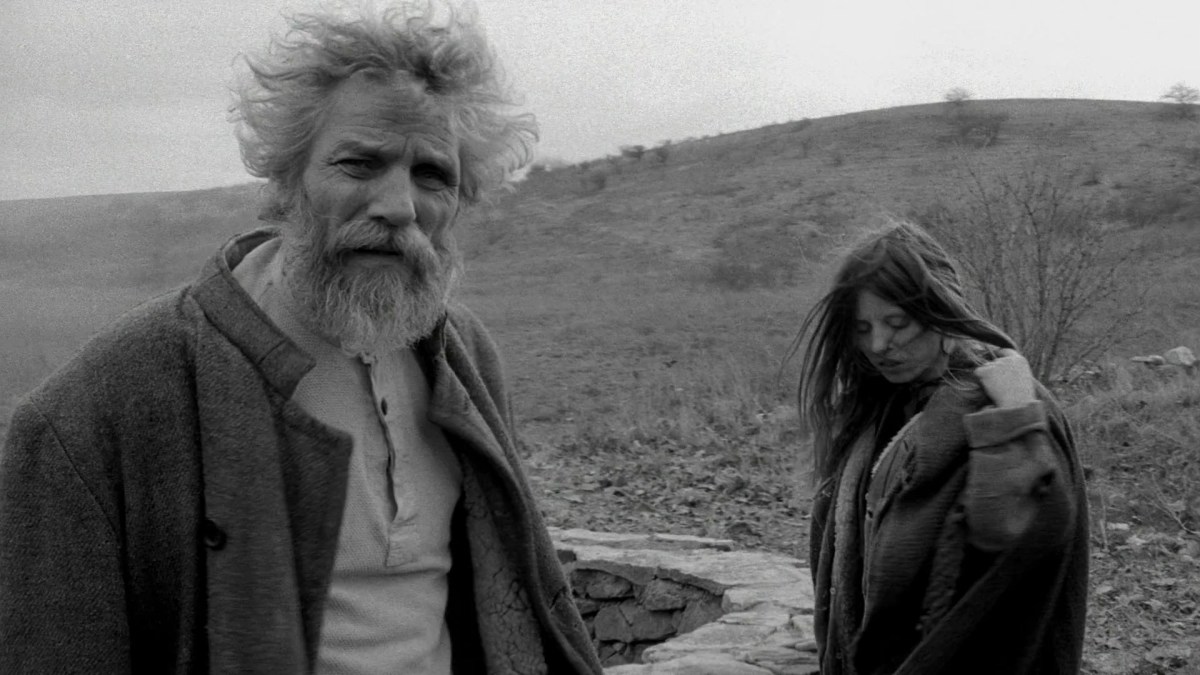
Comparing this one shot from The Turin Horse (2011) with the one that we just watched, you can see how Bela Tarr‘s use of the long take both incorporates and rejects different elements of Jancso’s camerawork. Here the camera is less active and elaborate, and the staging is less busy. Instead, there’s a greater emphasis on physicality. The wind and the leaves blowing across the frame, the way the camera tracks along closely with the woman as she hauls the wagon, focusing on her exertion. The moments where the camera is static let us focus on the material, tactile qualities of the visuals: stone, wood and dirt. The camera follows the man with a sweeping lateral motion. The low angle conveys a perspective of reverence towards this figure.

Miklos Jancso uses the real-time long take to create an abstract spectacle of human cruelty as a function of time and space. Bela Tarr uses it to convey the palpable sensations of a lived experience, one of harsh, grueling exertion. Like the Jancso scene, there’s a pendulum-like rhythm to the camera movement as it moves back and both between two poles of activity. Like Jancso, though to a lesser degree, Tarr is able to use off-screen space to economize activity: Notice how by the time the camera returns to the house, the woman has almost finished packing the wagon.

All of this is done with a handheld camera, which gives it a slightly unstable quality, in contrast to the precision of Jansco’s dolly-mounted camera. Again, the emphasis is on human effort. Here, each footstep has a felt impact. There’s a greater sensitivity to the textures, of the many layers of clothing heaped on the woman, how they stretch and rustle with each stride forward.  There’s a paradoxical sense of life moving forward, yet everything stays the same. Everything on screen has a fundamental immutable essence, moving and staying still.

Kevin B. Lee is Editor in Chief of IndieWire’s PressPlay Video Blog, Video Essayist for Fandor’s Keyframe, and a contributor to Roger Ebert.com. Follow him on Twitter.

EYE OPENERS: VIDEO ESSAY: Mickey Rourke: Highs & Lows

EYE OPENERS: VIDEO ESSAY: Mickey Rourke: Highs & Lows

The video essay above, by Jason Bellamy, is a tribute to Mickey Rourke, in honor of his 60th birthday, which is today. Originally posted at Bellamy's blog, The Cooler, It takes us through Rourke's best performances and his moments of distended excess, from Rumble Fish to 9 1/2 Weeks to Angel Heart to Sin City to The Wrestler.  And, as such, it's a moving tribute to the changing career—and changing body—of a remarkably complicated screen actor.

VIDEO ESSAY: Gliding Over All: The Cinematography of BREAKING BAD, Season 5.1

VIDEO ESSAY: Gliding Over All: The Cinematography of BREAKING BAD, Season 5.1

Gliding Over All: The Cinematography of Breaking Bad, Season 5.1 from Press Play Video Blog on Vimeo.

Every great television show has an episode that pushes the medium in some bold, even experimental manner, either visually and/or in the way the plot is structured. It's usually something the writers and director do as a challenge for themselves and the audience to quicken the blood. Historically, cinema has been the arena for directors with a robust visual sense. Television, on the other hand, was the safe haven for writers. This has changed significantly in recent years with the rise of cable networks willing to accommodate writers and directors with ambitious projects. Now, the emphasis on high production values and vibrant imagery is just as essential as a great script. Breaking Bad, with its carefully thought-out look, dependably relies on its cinematography to deliver crucial narrative/thematic information, just as it relies on its characters to deliver significant exposition in a straightforward manner.      

A truly great dramatic series, such as Breaking Bad, tends to show brilliance fairly consistently, but episode ten from the third season—"Fly," directed by Rian Johnson (Brick, Looper) and written by Sam Catlin and Moira Walley-Beckett—sprints ahead as a major creative standout. The entire episode plays out in the confines of the sublevel lab where ex-high school chemistry teacher Walter White (Bryan Cranston), now a big time meth cooker, makes the drug with his ex-student and now-assistant, Jesse Pinkman (Aaron Paul). But through the entire 48-minute episode, Walter and Jesse aren't cranking out batches of meth for their boss, the highly successful fast food entrepreneur and bloodthirsty drug kingpin Gus Fring (Giancarlo Esposito). A fly has somehow gotten into the lab and Walter obsesses over killing it. He can't cook until the lab is sterilized and free from any taint. Of course, it's not really about the fly. Walter is paralyzed by fear and the knowledge that he's about to die. It's only a matter of time before the cancer inside him will reawaken and the stalemate between him and Gus will dissolve. Regardless of which one gets to him first, Walter is a dead man.

Since the writers have trapped Rian Johnson, in a sense, with this plot, he must, along with cinematographer Michael Slovis and editor Kelley Dixon, figure out ways to keep the whole thing visually dynamic. It's a difficult challenge considering the action is primarily contained to one setting and the variety of camera setups are limited to a large degree. They pull it off, but that shouldn't surprise anyone who's been watching closely; Breaking Bad has consistently been one of the most cinematic serial dramas on television.

All of the great serial dramas over roughly the last decade—The Sopranos, The Wire, Battlestar Galactica, Deadwood, and Mad Men—excel in their different ways at the art of storytelling. However, only Breaking Bad, and Mad Men to a large degree, also deliver a strong cinematic visual scheme to accompany the stellar writing. From its first episode, Breaking Bad has told its story of the transformation of nebbish teacher Walter White into sociopathic monster Heisenberg with imagery as much as with writing and acting. The show's sophisticated compositions and its ability to convey meaning and thematic resonance through classic framing and symmetry over the course of its five seasons is something that should interest any serious cinephile. On a visual level, Breaking Bad rivals anything you'll see in the theater.

What makes the show special? It works in a seemingly dormant tradition of classic visual storytelling; what it reveals through its images is just as important as the dialogue. The trust in the audience displayed by the show's creator/showrunner, Vince Gilligan, makes it feel daring and even radical at times. With some major exceptions, this form of bold stylization in major commercial filmmaking (particularly in action and crime features) has fallen out of fashion in lieu of hyperkinetic editing schemes and discordant action sequences, the rivet-headed mode of style in so-called chaos cinema. What Breaking Bad has is visual literacy; it draws on the muscular richness of past masters of the action genre, such as Sergio Leone, John Sturges, Budd Boetticher, Sam Peckinpah, William Friedkin, and Michael Mann, to deliver the goods.

Set in modern-day Albuquerque, New Mexico, Breaking Bad is ostensibly a crime show. It explores the realism and grittiness of urban decay to great effect, but it also uses and reconfigures the visual motifs of the Western and horror genres. What's remarkable and distinctive here is that the show swipes from these genres in a way completely opposite to the approach of a pop postmodernist like Quentin Tarantino. The style and signature visual metaphors of Breaking Bad cannot be extricated from the psychological subjectivity of its characters.

The show frequently jazzes around (as fiction writer John Gardner said of experimentation), positioning the camera in holes, toilets, underneath corpses, at the bottom of a bathtub, in a safety deposit box, submerged in a deep fat fryer, and in crawlspaces, showing us the world from vantage points that are more or less unseen by our eyes in real life. The camera even microscopically observes the movements of a fly. And the show aggressively embraces the musical montage sequence (usually during its meth cooking scenes), as is the norm for contemporary dramas like this.

But the most stirring cinematic moments in Breaking Bad occur during less virtuosic sequences. They rise from the show's visual metaphors, from the way cinematographer Slovis frames the actors (traps them) behind barred windows, in darkly lit hallways and doorways, behind cracked windows, and frequently on their backs peering up at us from the ground, where the symmetry of the image and the existential despair of the characters' psychological headspace meld.

Actors in the frame are typically juxtaposed with advertising signs or dwarfed by urban architecture, a sort of primetime visual semiotics. Although the show ostensibly explores Walter and Jesse's trajectories through the seedy, violent world of drug dealing and crime, it's really about capitalism at its most savage. Walter's justification for his involvement in the meth business has always been his need to financially support his family. That's what he tells himself and his wife Skyler (Anna Gunn). It's a lie, however, since Walter has had many opportunities to walk away with the fortune he's made. Greed and the American need to dominate have taken root in Walter now. Jesse, a low-level drug dealer before hooking up with his old teacher, is seduced by the luxuries of wealth as well, although he's also a victim of its violence. Sometimes, the scourge of unfettered capitalism is portrayed in a humorous fashion, as in the scene when Jesse runs into his drug buddy Badger (Matt Jones) dressed as a $1 bill, trying to draw in customers for a savings and loan. Capitalism offers a bounty of comfort, but it can likewise deliver our doom.

In Breaking Bad, mundane places like fast food joints, big box stores, and strip malls, can easily change from the innocuous to the malevolent. The ingredients and instruments of death can be readily purchased at your everyday building supplies store. Gus, an outstanding member of the community and the proprietor of the Los Pollos Hermanos fast food chicken chain, is a brutal murderer and high-level drug lord. His restaurant is frequently used as a meeting place with associates. Places where families gather for fun, such as a rundown laser tag amusement center that corrupt lawyer Saul Goodman (Bob Odenkirk) tries to get Walter to purchase for money laundering purposes, can be nests for corruption and vice. Not even the beauty and the expansiveness of the high desert country around Albuquerque is free from the corruption. Equipped in their RV, Walter and Jesse cooked meth in the country in the early episodes, a stark reminder of how widespread the drug’s reach can be.

The West has always been violent. It hasn't really changed. It's just that in the world of Breaking Bad, the outlaws sport pocket protectors and wear garish Ed Hardy shirts. In this new American Nightmare, no place and no one is spared its destruction.


null

nullnullnullnull

Dave Bunting is the co-owner (with his sister and fellow Press Play contributor, Sarah D. Bunting) of King Killer Studios, a popular music rehearsal and performance space in Gowanus, Brooklyn. He plays guitar and sings in his band, The Stink, and dabbles in photography, video editing, french press coffee, and real estate. Dave lives in Brooklyn with his wife, son, and sister.

Derek Hill is the author of Charlie Kaufman and Hollywood’s Merry Band of Pranksters, Fabulists and Dreamers (Kamera Books), a study of the films of Charlie Kaufman, Richard Linklater, David O. Russell, Wes Anderson, Sofia Coppola, and others. He is also a movie reviewer for the Athens, Georgia alternative newsweekly Flagpole, contributing editor/movie critic for the online arts journal Sinescope, and reviews books for Mystery Scene magazine.

VIDEO ESSAY: The Weeknd at the House of Bava

VIDEO ESSAY: The Weeknd at the House of Bava

August typically finds the air of the cineplex ripe with horror fare—the supernatural thriller Apparition is being released this Friday and The Possession is due out next weekend—so I thought it a fitting time to pay homage to horror master Mario Bava. A true original in a genre rife with uninspired copycatting of well-worn formulas, Bava expanded the horror palette into vivid new dimensions of color, movement and sensuality. If cinema is a kind of architecture, Bava was a master designer of interiors, not just in building indoor set pieces with paltry B-movie resources, but in channeling our deepest fears and desires of the uncanny, in all its luscious depravity. His sinuous camera movements through sinister shadows alternating with lurid, beckoning neon are as seductive as they are threatening, bringing us ever closer to the consuming sensations of both sex and death.

As I edited clips from Blood and Black Lace and The Whip and the Flesh, two Bava films available on Fandor, the danger and sexiness of Bava’s cinema kept bringing to mind the music of The Weeknd, one of my favorite acts of the moment. So I decided to cut the video to the horrorific “High for This,” a track from The Weeknd’s 2011 releaseHouse of Balloons. Welcome to the House of Bava.

While there’s pure pleasure to be hand in the mix of Weeknd+Bava, I hope the video also yield’s some critical insights to the texture and craft of Bava’s filmmaking. Mostly I mixed up speeds for the clips, ranging from 1/20th to 10x normal speed. The fast clips are typically to compress Bava’s elaborate long takes, heightening the sensation of Bava’s camera tracking and moving across cavernous spaces. I use slow motion to stretch out moments of terror to get past their initial shock value and dote on their aesthetic properties, the elements of light, color and motion that feed their impact.

Through this we can see the full arsenal of techniques at his command: varying use of both deep staging and extreme closeups; off-screen sounds and negative space; a persistently pulsing sense of rhythm in both the visual and sound design, something like a cinematic corollary to human breathing; and, above all, an incredibly rich color palette that encompasses “all the colors of the dark” (the title of Tim Lucas’s supreme tome on Bava). Bava may possess one of the most borrowed toolkits in cinema history (you can see his tricks in everything from Ridley Scott’s Alien to Japanese exploitation), but his artistry still has plenty of room to be explored in its own right.

Originally published on Fandor.

Kevin B. Lee is Editor in Chief of IndieWire’s PressPlay Video Blog, Video Essayist for Fandor’s Keyframe, and a contributor to Roger Ebert.com. Follow him on Twitter.

VIDEO ESSAY: There Will Be Blood and Symmetry

VIDEO ESSAY: There Will Be Blood and Symmetry

Paul Thomas Anderson’s youthful panache and exploratory bent has yielded a small but forceful filmography. Even his two shortest efforts, Hard Eight and Punch-Drunk Love, are imbued with a relentless, epic spirit. Anderson has always embraced the electric potential in themes such as faith, incest, scamming, family dynamics, and the American West.

If Magnolia was a work that could only be made by a cocky, precocious rogue, then There Will Be Blood was evidence of mature polish. Magnolia’s creative ecstasy was replaced by tight formal elegance in Punch-Drunk Love and There Will Be Blood, and they’re all variations on the common themes of fatherhood, power, and spirituality. However, There Will Be Blood’s scope was so enormous that it required a type of maturity that Anderson had yet to demonstrate. He succeeded by employing large-scale symmetry capable of sustaining his dangerous ambition. The film didn’t collapse under its own gravitas because of a careful system of visual and thematic rhymes. Of course, Daniel Day-Lewis delivered a performance of Streetcar-Brando level virtuosity, but accolades are due equally to Anderson, who constructed a final vision of the character from subtle visual cues that lead Plainview from rise to ruin.

Matt Zurcher is a senior at Carnegie Mellon University studying film and musicology. He is an arts critic for CMU’s newspaper and blogs at www.thefamilyberzurcher.com.

VIDEO ESSAY: Andrew Sarris and Buster Keaton

VIDEO ESSAY: Andrew Sarris and Buster Keaton

The latest edition of the Sight & Sound Critics’ Poll of the greatest films of all time, held only once every decade, is full of delights and disappointments, with an epochal change at the top: Citizen Kane at long last unseated from the throne by Vertigo. The rise of other films through the rankings, led by 1929 groundbreaker Man with a Movie Camera’s first entry into the top ten, are well worth celebrating. (I’m also heartened to see the ascendance of Ozu’s Late Spring, Akerman’s Jeanne Dielman, Rossellini’s Voyage to Italy, Dreyer’s Ordetand Gertrud, Jacques Tati’s Playtime, and Godard’s Histoire(s) du Cinema, the last being possibly the ultimate “video essay”). Misfortune met other titles as they spilled down the list: Singin’ in the Rain, Pather Panchali, M, Barry Lyndon, The Magnificent Ambersons, The Third Man, Intolerance.

One of the saddest declines befell The General.  Buster Keaton’s 1926 masterpiece once ranked among the top ten in the 1972 and 1982 editions of the poll; in 2002 it still held firm at #15. This year it suffered its lowest ranking in decades, at #34. Keaton rival Charlie Chaplin fared no better, his sublime City Lights barely making the top 50. One might ascribe their fates to a lessening interest in silent cinema, but to the contrary, on the whole pre-talkie movies did as well as they ever had (with three occupying the top 10). Silent films certainly did much better than the other genre befitting Keaton and Chaplin, the comedy. Of the top 50 films in the poll, only seven are comedies (and only 9 in the top 100!), so it would seem the 846 participating critics and programmers lack a sense of humor. (For what it’s worth, my list included one comedy, the sublime and underseen 1946 gem Under the Bridges).

One also has to wonder if Keaton’s decline in the poll reflects a generational shift among the voting pool. Back in the 1950s and 1960s, Keaton, long neglected by Hollywood as a washed-up silent clown, became something of a cause célèbre among the first auteurist critics in the US and abroad. (A critics’ poll at the 1955 Brussels World Fair hoisted Sherlock Jr. as the greatest film of all time).  Keaton’s kinetic vision and death-defying craft was steadily championed through retrospective screenings and film classes, and by 1972, The General finally cracked the Sight & Sound top ten.

SEVEN CHANCES

Buster Keaton outruns wannabe brides in 'Seven Chances.'

Ranking among Keaton’s most devoted champions during (and well beyond) that period was Andrew Sarris, the legendary critic who passed away just two months ago. Sarris pioneered the notion that Hollywood directors could be seen as artists, and Keaton held a central place in his personal pantheon. I can’t help but think that Sarris’s passing and Keaton’s fall in the S&S poll have a symbolic connection, in the sense that a generation of critics like Sarris is gradually leaving our midst, giving way to other critics, values and favorite films. – Kevin B. Lee

TRANSCRIPT: EXCERPT ON KEATON FROM ANDREW SARRIS’S YOU AIN’T HEARD NOTHING YET:

Buster Keaton could be hilarious on occasion, but most of his work is not geared to a laugh meter. The Frozen North strikes me as his funniest film, with CopsThe High Sign, and The Goat not too far behind. Significantly, these are all short films. Even in these works, the virtuosity unveiled often transforms the wild laugh into an appreciative chuckle. All in all, Keaton is far from being the funniest comedian ever, yet he could generate the belly laugh when he so desired.

Keaton’s comedy, for the most part, does not deflate pomposity or overthrow the powers that be, at least not by conscious design. Copsbecame an underground classic in the late sixties because of the sheer number of “pigs” who were zapped and lampooned in the course of Buster’s madcap adventures. But Keaton is no anarchic angel. Much of the havoc he wreaks is caused by his lofty indifference to convention. At his best, he is consumed by an obsessive logic that impels him into a physically and visually harmonious relationship with the world around him. His forte is construction rather than demolition. Keaton walking into the movie screen in Sherlock Jr., Keaton dangling confidently from the mast in The Navigator, swinging from the falls in Our Hospitality, fleeing from the hordes of would-be brides in a continuous shot in Seven Chances, and above all, riding the whirlwind itself, to Oedipal reversal in Steamboat Bill Jr.by saving his father from drowning. If one assembles all these haunting images, and many more, the composite effect in one’s mind is a spectacle at which one must gasp rather than guffaw.If one thinks of a comedy/ha-ha as the most important part of screen comedy, one must conclude that the funniest films are almost invariably destructive and subversive and, more often than we like to admit, ratty and mean-spirited. The eternal appeal of the ethnic joke attests to the criterion of cruelty in these matters. So much “humor” is based on feelings of contempt, superiority, and comparative sophistication and normality.

When Buster Keaton was three years old, a Kansas cyclone lifted him out of a second story window and deposited him unharmed in the middle of an unpaved main street some four blocks away. In Steamboat Bill Jr.Keaton seems to draw on intuitive insights into the cyclonic forces of nature, and the state of grace and adaptability necessary to survive them. In the end, he triumphs over adversity by a majestic submission to the forces of motion, the very forces that constitute the logic and magic of all movies.

VIDEO ESSAY: Doris Wishman, the Mother of Sexploitation

VIDEO ESSAY: Doris Wishman, the Mother of Sexploitation

The career of Doris Wishman defies belief. She was one of the most prolific woman filmmakers of all time, making 30 features over four decades in a genre dominated by men, the sexploitation flick.

She only got into filmmaking in her 40s, after the untimely death of her husband left her looking for a way to keep herself occupied. The emerging subgenre of nudist films of the early ’60s were a cheap and easy way to start.

As censorship eased up and audiences demanded more extreme content, Wishman moved into darker stories of sex mixed with violence. It’s in these films that her sensibility starts to emerge, with an almost subversive approach to her subject matter. Her shooting and editing style keeps things off balance, carving out an unnerving sense of displacement amidst the eroticism.

BAD GIRLS GO TO HELL

'Bad Girls Go to Hell' (1965): Does the title say it all?

Her most successful films starred the appropriately named Chesty Morgan and her fulsome bosom. But instead of being sensual erotic organs, her breasts are used as weapons. In Wishman’s movies, sex isn’t depicted as something that is fulfilling, but a cold, even cruel act that’s often used like a transaction, a means to an end. It’s as if Wishman were commenting on her own career, her sexploitation films are just a way to get by.

Her ambivalence towards sex and sexploitation reaches a bizarre apogee with Let Me Die a Woman, a pseudo-documentary about the lives of transsexuals. Mixing real life testimonials, softcore reenactments, and explicit clinical footage, the film is a jarring embodiment of the different, at times conflicting ways we relate to sex: as a biological fact, as a perverse sensation, as profound self-discovery.

After her first and only attempt at a horror movie flopped, Wishman went inactive for a decade, but renewed interest in her work led to her comeback feature, Satan Was a Lady, made when she was in her 80s. The film follows Wishman’s classic setup of a woman using sex as a vehicle to find her own way through life, even as it lacks fulfillment in itself. It’s that tension over what sex means to us that stirs our interest in Doris Wishman, the unlikeliest of sexploitation directors.

Kevin B. Lee is Editor in Chief of IndieWire’s PressPlay Video Blog, Video Essayist for Fandor Keyframe, and contributor to Roger Ebert.com. Follow him on Twitter.

What the Sikhs Taught Me

What the Sikhs Taught Me

Several years ago, Press Play Editor in Chief Kevin B. Lee produced a video documenting hate crimes against the Sikh American community in the aftermath of 9/11. That video, "Dastaar: Defending Sikh Identity" has been circulating in the wake of the mass shootings in Oak Creek, Wisconsin last Sunday. The video is embedded below. Lee has also written a personal reflection about how the video led to his involvement in Sikhism. This essay is also published in Slate.

nullThis is a photo of me taken in 2008. I was in the middle of a five-year personal journey with the Sikh community, during which I seriously contemplated adopting the Sikh faith as my own. It was the most intensive and productive period of spiritual growth in my life, even if it ultimately ended in a personal failure of sorts. The tragedy that befell the Sikh congregation in Oak Creek last Sunday brought back to mind all my experiences with the Sikh-American community, and certain invaluable lessons they taught me that I am still trying to put into practice.

Seven years ago, I was just another aspiring independent filmmaker in New York City, biding my time in a nondescript office job to make ends meet. Frankly, I was ashamed to be a white-collar drone, so I kept a low profile. But word got around about my moonlighting, and one day a Sikh co-worker visited my cubicle. He told me his son and other Sikh children were being called terrorists by their classmates because of the turbans they wore. He asked if I could help him make a short educational video about his community that he could use at his son’s school. How could I say no?

That weekend I filmed my co-worker and other Sikh parents at a school fair, as they shared with other parents some facts about their culture and faith, varnished with more than a small sense of pride. Sikhism has the fifth-most followers of any world religion. (“More than the Jews!”) Founded in the 15th century, Sikhism is a newcomer among the major faiths. (“Our founder Guru Nanak studied all those other guys and learned from their mistakes!”) Sikhism emphasizes equality among all people regardless of faith, race, gender, or class. (“We fought the caste system in India!”) Sikhism doesn’t believe that one religion is better than any other, but rather that each has its own way to peace and enlightenment. (“We accept the other religions, that’s why Sikhism is the best!” wink)

The religious cynic in me found this all too good to be true. My youth had left me weary of organized religion: The church I grew up with was more of a social club where its congregation of professionals could network; the other kids seemed more interested in discussing designer clothes and cars than debating what appeared to me the obvious contradictions in the Bible. I had even spent two years as a missionary in China trying to come to terms with my Christian upbringing, ultimately to make a separate peace with God and keep my faith to myself. I haven’t attended church regularly in over a decade.

Now here I was listening to these lovely spiritual ideals being spouted by men in turbans, and they stirred the long-dormant idealist in me. Part of it was due to the presentation: They seemed so relaxed and accepting of other people’s questions and misgivings, betraying no anxiety to persuade their audience to do anything more than simply understand who they are. They boasted, somewhat ironically, “We are non-evangelical! We are not allowed to push our faith on others! Once you understand our beliefs, you’ll know why we don’t have to force them on others!” But their lack of interest in evangelizing, I realized, could partly explain why so many—myself included—were ignorant about their faith, an ignorance which has, at times, had tragic consequences.

This became apparent only a week after we started filming, when several white men brutally attacked a middle-aged Sikh man named Rajinder Singh Khalsa on a sidewalk in Queens in broad daylight, denouncing him as a terrorist. Once Khalsa left the hospital, my Sikh friends ushered me to his home to interview him for our video. I also met members of the Sikh Coalition, a group of young professionals who organized to protect Sikhs from violence and harassment. These men and women were the same age as me, and like me were the children of immigrant parents, and here they were were attending City Hall hearings and lobbying Congress and the White House, all in the time they could spare away from their jobs as lawyers, doctors, and programmers. My habitual self-pity over my unfulfilling day-job and my filmmaking routine looked laughable next to their work ethic and sense of purpose. Above all, I admired their cheerful optimism, a quality known in Sikhi as chardi kala: an attitude towards life that dusts off the cliché of “making the world a better place” and makes it radiate anew with the energy of Sikh convictions.

The Coalition introduced me to other Sikhs who were dealing with workplace harassment: an NYPD officer and a New York subway driver who were disciplined for not removing their turbans while on duty. The subway driver, Kevin Harrington, was an Irish-American man who adopted Sikhism 30 years ago and had been wearing a turban without incident while driving the subway for 20 years. September 11th had suddenly made his attire a problem. I would later learn that he, too, was moonlighting, as a Sikh Kundalini yoga instructor; I began taking his classes to help manage my stress. As I worked on the documentary, these people became fixtures of my days—and also good friends. Life seemed to be pointing me further in the direction of the Khalsa, the community of the Sikh faith.

http://video.google.com/googleplayer.swf?docid=5243469727255150190&hl=en&fs=true

The resulting short documentary, “Dastaar: Defending Sikh Identity,” eventually made its way to my co-worker’s son’s classroom, and it was also broadcast on PBS in New York City. The Sikh Coalition adopted it as their video of choice to show at schools and government agencies across the country. Rajinder Singh Khalsa, the beating victim, suggested I make a feature documentary on Sikhism, with him as the on-camera guide. His insights into Sikhism were always colorful, even when they were somewhat questionable. (“You know why there are no Buddhists left in India?” he asked. “Because they were too peaceful and got chased away. You can’t just be peaceful all the time, you have to stand up for yourself.”) On and off we worked on this documentary for the next three years. We didn’t quite finish it, but the journey became its own destination. We went to India together, staying in temples for three weeks and observing Sikhism in its homeland. We visited the Sikh holy city of Amritsar and its most sacred site, the Golden Temple, a building that is so beautifully conceived that the sunrise seems to ignite it with the light of heaven. And yet throughout the journey I found myself searching for signs of corruption and hypocrisy in the organized aspect of the faith, or anything to cast a more critical view. Old habits die hard.

Following the trip, I continued to internalize Sikhi. I routinely attended services at gurdwara, the Sikh temple, enjoying the extended raags performed during kirtan. (It’s sort of like being at a Grateful Dead or Phish concert, but on a much higher level.) I attended a university class on Sikhism for a scholarly perspective, and a workshop for people learning how to practice the faith. I talked with Sikh immigrants from India and their children, gauging how their values were passed across generations in a new environment. I hung out with Kevin Harrington and asked other American followers about how they practiced Sikhism without the benefit of a cultural upbringing within it.

As much as I learned from all of them, I knew that, underneath all this exploration and research, there was just one person who could take me where I needed to go: myself. My hipper-than-thou cynicism had run its course. Whatever my misgivings about organized faith, I knew that this, at its core, was as beautiful a belief system as anything I’d ever encountered, at least as beautiful as my own heart and mind would allow it to be. And so I found myself at the brink of becoming a practicing Sikh.

But ultimately I faltered. Why?

The answer lies in the same item, the same image, that brought me to work on behalf of the Sikh community in the first place. As a practicing Sikh, a man is required to wear a turban at all times in public. The turban was given to the Sikhs by their tenth Guru, Gobind Singh, at the time of their greatest peril. The turban, previously an article of clothing worn only by royalty, was placed on the heads of all Sikh men to make them see themselves as kings and conduct themselves accordingly: with honor, self-respect, courage, and piety. At the same time, the turban makes Sikhs symbolically “give their head” in the service of a higher order. No longer can they hide in anonymity. They are united in their values, and must stand together to uphold them.

I’ve worn the turban on several occasions, when visiting gurdwara or attending Sikh events, like the Surat Youth Conference where the photo above was taken. But when it came to making the commitment to wear it in daily life as a practicing Sikh, I couldn’t find the courage. It was such a bizarre disconnect. Everything about Sikhism on paper pointed to its being a belief system as perfect as anything I’d encountered: its de-emphasis on the retributive cycle of sin and forgiveness in favor of harmony between oneself and the world; its core doctrine of equality among all people across class, religion, race, and gender, a true oneness with all.

And yet, to truly be a Sikh, you have to stand out like a sore thumb as a living, visual manifestation of your beliefs. I just couldn’t do it, simply because I felt too self-conscious about how people would look at and perceive me. I couldn’t resist the comfort of not being looked at, of knowing that I could blend into a crowd, withdrawing into the secluded, private existence that I’d grown accustomed to. (Ralph Ellison’s Invisible Man is my favorite novel for a reason.) Maybe this is why I’ve found a more successful career as a film critic than as a filmmaker: I find it easier to watch others than to be looked at.

Let me make it clear, in no uncertain terms, that my failure to don the turban does not reflect poorly on Sikhism itself. On the contrary, the turban has a perfect logic to it. When you adopt a set of values that represent humanity at its finest, why wouldn’t you want to become a living symbol of it? By wearing your values in public, you “out” yourself as someone who must conduct themselves according to those values. It is a virtuous cycle, and it gives the Sikh faith its own special sense of drama, with its followers performing a sacred role in public every day.

In contrast, my failure to adopt the turban, after all my experiences and all that I learned about Sikhism, symbolizes the distance between my present self and the ideals I wish to embody. What the turban tells me is that our ideals are not a matter of convenience, but of true conviction. It also fills me with respect for all the Sikhs in America who do choose to look as they do, especially the Sikh children born in this country who every day are faced with the temptation to assimilate, particularly when post-9/11 America sees the turban as a threat. But the real threat has been the other way around all along. Oak Creek is only the most recent and most devastating instance of this perverse irony, and the distorted reality we live in, rooted in misperception.

My experience has stuck with me, and it taps me on the shoulder now that this tragedy has happened. Even though I still lack the courage to wear a turban, I learned that you can’t hide from the world forever. As long as you care about the world and the people in it, something will bring you out. This is why I felt compelled to write this testimony. I have to take my experiences and manifest them into something visible and useful that I can offer to others. We haven’t truly lived until we stand up for what that we believe is good in life. This is what the Sikhs have taught me.

Video: An Editor’s Ballot for the Sight & Sound Greatest Films Poll

Video: An Editor’s Ballot for the Sight & Sound Greatest Films Poll

Press Play presents Sight & Sound Film Poll: Critics' Picks, a series of video essays featuring prominent film critics on films they selected for Sight and Sound magazine's poll of the greatest films of all time. 

For the Sight & Sound Critics Poll of the greatest films of all time, I picked ten films, each one from a different decade, as well as from a different country.

Les Vampires (1915) 
Man with a Movie Camera (1929)
Love and Duty (1931)
Under the Bridges (1946)
Mother India (1958)
The House Is Black (1962)
Killer of Sheep (1977)
City of Sadness (1989)
Outer Space (1999)
Bamako (2006)

Looking at this top ten, I see two films that resonate with each other, even though they were made 70 years apart. What do these films have in common? First, they are radical, groundbreaking approaches to genre moviemaking. I tend to prefer films that break the rules of genre instead of epitomizing them.

With Man with a Movie Camera, here’s a film that on one level is a documentary. Director Dziga Vertov captures an astounding array of life in the Soviet Union. But he breaks so many conventions of documentary, and of most movies for that matter. Narrative storytelling, characters, and even overt meaning: The film rejects all of these principles. It wants to break free from the world of theater and literature and speak in a language of pure cinema. This movie was generations ahead of its time, and I’d say it’s still ahead of ours as well.

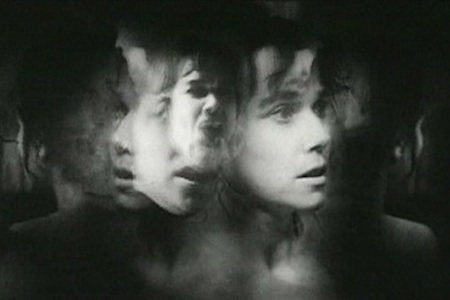
Outer Space is my favorite horror movie of all time. It’s only 10 minutes long, but I think those ten minutes capture the essence of what movie horror is all about. The film is actually a kind of remake of a 1981 horror film The Entity, starring Barbara Hershey as a woman being attacked by an invisible, supernatural force. Director Peter Tscherkassky took a celluloid print of the movie and ran it through an untold number of experimental effects, creating something that’s 1,000 times more powerful and scary than the original.

I think both films are supreme examples of the art of film editing. I produce video essays, and half of what I do basically comes down to editing, so I might be biased. But I think editing is the most underappreciated component of a movie, compared to the acting, writing, cinematography, or even sound. Most times, you only notice editing when you notice something wrong with it.

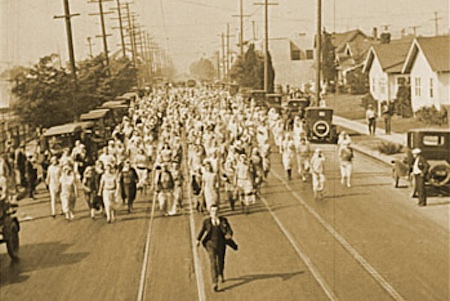
Man with a Movie Camera: Don’t let the title mislead you. This movie is as much about the power of editing as it is about the movie camera. The film unleashes dozens of techniques: dissolves and multiple exposures, stop motion and time lapse, jump cuts and juxtapositions. The film is an essential handbook for every film and video editor, and it’s an eye-opener for anyone interested in how movies are put together, piece by piece.

With Outer Space, we see a movie being taken apart piece by piece, using some of the same techniques as Vertov, but mainly through a painstaking process. Tscherkassky used special laser beams and multiple exposures to manipulate the source footage, spending as much as an hour on each second of film. The images, as well as the amazing soundtrack, become highly unstable, heightening our sense of excitement and dread. It’s as if the celluloid film print itself were being assaulted. We find ourselves watching a film literally falling apart before our eyes.

That is perhaps the supreme achievement of Outer Space, as well as Man with a Movie Camera. Both films pull off an amazing double feat. They make us aware that what we are watching is just a movie. But that awareness doesn’t take us out of the film, instead it pushes us deeper into it. These films are celebrations of cinema’s most basic elements: light, dark, and motion. When I watch these two films, I see those basic elements opening into limitless possibilities.

Originally published on Fandor.

Kevin B. Lee is Editor in Chief of IndieWire’s PressPlay Video Blog, Video Essayist for Fandor’s Keyframe, and a contributor to Roger Ebert.com. Follow him on Twitter.

VIDEO ESSAY: BEAVER’S LODGE: THE RAZOR’S EDGE (1946)

VIDEO ESSAY: BEAVER’S LODGE: THE RAZOR’S EDGE (1946)

This is the fourth installment of BEAVER'S LODGE, a series of video essays narrated by actor Jim Beaver which will offer critical takes on some of Beaver's favorite films. Jim Beaver is an actor, playwright, and film historian. Best known as Ellsworth on HBO’s Emmy-award winning series DEADWOOD and as Bobby Singer on SUPERNATURAL, he has also starred in such series as HARPER'S ISLAND, JOHN FROM CINCINNATI, and THUNDER ALLEY and appeared in nearly forty motion pictures. You can follow Jim on Twitter.

I don’t usually have a lot of patience for navel-gazing, spiritual-trek, meaning-of-life movies, and I don’t think too many of them have been particularly successful, at least commercially. I put off for years watching this 1946 film adaptation of Somerset Maugham’s 1944 novel for just the reason that I didn’t want to spend two and a half hours watching some guy find himself, even if the guy was someone I like as much as Tyrone Power. Well, that delay was a mistake. It’s not for everyone, I’m sure, and it may have faults as drama, but I found The Razor's Edge a richly rewarding experience. Part of that is due to some really exquisite filmmaking by director Edmund Goulding and cinematographer Arthur Miller, a gorgeous score by Alfred Newman, a literate and dramatic script by Lamar Trotti, and some quietly terrific performances by a starry cast including Power, Gene Tierney, Anne Baxter, Clifton Webb, Elsa Lanchester and others. But part of it is due to the fact that this isn’t just a story of a man seeking his soul and its meaning, it’s a fine mixture of character drama and internal drama, the latter of which isn’t often successfully translated to the screen.

Tyrone Power is Larry Darrell, a World War I veteran shaken by his experiences. Returning to his wealthy home surroundings and the girl he loves, he finds he can no longer settle for a life of avoiding meaning, of mere acquisition and societal “respectability.” His girl, Isabel (an incandescent Gene Tierney), cannot understand why he doesn’t want to “make something of himself,” and thinks he merely wants to have a well-deserved and much-delayed youthful fling, so she sends him off happily to get the wild oats out of his system. But Larry has no interest in oats. He wants to understand why he lived through the war when other men just like him didn’t. He wants to have a life built on meaning, not possessions, a life of understanding rather than mere acceptance of the status quo. And so he sets out on a pilgrimage to follow the path of wisdom, across the razor’s edge.

There is more, much more to the film than Larry’s journey, though that of course is the core of the work. Isabel is astonished to learn that Larry really is prepared to give up the life of plenty that she is so accustomed to, and that he hopes she will join him in doing so. She plots to trap him into the kind of marriage she wants, but isn’t able to. Meantime, the couple’s close friend Sophie, a childhood intimate of Larry’s, has her most happy world torn asunder when her husband and child are killed in an accident. What becomes of poor Sophie is the catalyst in which Larry’s growth is experienced, and it is the source of the highest and most deeply affecting drama of the film.

Tyrone Power came back from the Marines in World War II to resume his career, and he pleaded with Twentieth Century Fox producer Darryl Zanuck to give him more serious and rewarding roles than the swashbucklers he’d specialized in before the war. Zanuck reluctantly complied, and in doing so, gave Power possibly the two best consecutive roles of his career, this and the immediately subsequent Nightmare Alley. Power may well have been the most beautiful man ever born, and it would be easy, though wrong, to dismiss him as just a pretty face. His work in The Razor's Edge is convincing in the extreme. He truly seems to be the seeker he portrays, a man of innate goodness terribly desirous of becoming better. Goodness and internal growth—these are among the hardest things for an actor to portray without drifting into sappiness or cliché, and Power does so extremely well.

Gene Tierney is not merely the female counterpart to Power’s extraordinary beauty, she embodies the sensitive yet shallow callowness of Isabel. We see the qualities that Larry loves about Isabel, yet she commits her mistakes and crimes in ways that stem from an almost innocent inability to let go of how she’s always been told things should be. As a result, Isabel is not a monster or a bitch, not at all. She’s a woman clinging to what she believes is good, but not understanding that it isn’t good at all.

Clifton Webb plays Elliott Templeton in an Oscar-nominated, Golden Globe-winning performance. Elliott is Isabel’s uncle, a vain, snobbish, pretentious, yet somehow gentle and likable man, and when his time for comeuppance arrives, we hope to see him spared. It’s a perfectly marvelous piece of acting.

Considering I raised some eyebrows (and hackles, perhaps) a while back by saying I didn’t think nearly as much of All About Eve as I’m supposed to, and not remotely as much about Anne Baxter’s mannered, phony performance in it as I ought to, it might be surprising to learn that I think she deserved the Oscar and Golden Globe she won for her role as Sophie in The Razor's Edge. Something about Baxter’s work has always bothered me, a certain over-earnestness, a deliberateness that spoke of performance rather than recreated life. But none of that applies to her work here. She’s just tremendous. Certainly it’s a role with the kind of range that wins awards, but she plays it with the kind of assuredness and humanity that deserves awards. Sophie is a great tragic figure, and Baxter does her justice.

In a very small part near the end, the wonderful Elsa Lanchester is mesmerizing as the social secretary to one of Elliott’s “friends.” Lanchester does as much in five minutes as some of our greatest actors have done in 120.

As in the novel, Somerset Maugham is a character in his own story. Herbert Marshall plays Maugham, a sort of onlooker/narrator/confidante, and does so very well. I confess that, watching this film with Marshall acting in it and Edmund Goulding directing, I could not avoid remembering a hysterically funny story told in one of David Niven’s autobiographies about him and the wooden-legged Marshall falling down a hill while serving as Goulding’s pallbearers and carrying his coffin. It didn’t help me concentrate on the drama at hand, and now it probably won’t help you, either. But it’s a great story.

I’m so glad I finally wised up and saw The Razor's Edge. I felt very good once I had.