VIDEO ESSAY: Growing up a Bond Girl

VIDEO ESSAY: Growing up a Bond Girl

Introduction:

I am a woman, a feminist, and a hardcore James Bond fan; I've even written a book on the Bond movies. But when I meet fellow fans, they are often startled that a woman is among them. When I tell feminists that I am a Bond fan, their shock is as great, and often accompanied by disgust. In either case, I'm subtly, or not-so-subtly, being told that James Bond is not meant for me.

But Bond, and the sexy, wild Bond girls that populate his movies, are for me. My video essay speaks for the influence of Bond movies; their women and their world, on me as I was growing up and developing my identity, my values and my sexuality. They were, without qualification, a positive influence as I grew up female, feminist, and queer. I am forever proud to be a Bond girl.

[The following is a transcript of the video essay Growing Up a Bond Girl.]

I was 18 months old when the first James Bond movie, Dr. No, was released. I grew up in the 60s. The TV shows I watched showed women almost exclusively as housewives, secretaries, or nurses. No matter how exotic the situation was, the women always seemed to be servants to their husbands, trapped in secretarial roles, or even slaves. But I loved "I Dream of Jeannie!" At 8 or 9 years old, I didn't have magic feminist glasses. I didn't know what it meant to call a man "Master." I just liked the outfit and the bottle. I had no thought that being "exotic" could be more satisfying than that.

Then I saw a Bond movie. 

In late 1970 and '71, my father was impaired by bronchial asthma. He had difficulty walking more than a few steps. We went to a lot of movies, since he could be with his kids while sitting. One day we saw a triple-feature of Thunderball, You Only Live Twice, and Goldfinger at the Queen Anne Theater in Bogota, New Jersey. We came in partway through Thunderball, watched the next two, and then stayed to see the beginning of Thunderball again. Six hours in a dark theater, awash in the world of James Bond.

I saw women who were pilots, spies, and powerful villains. All three movies blurred together. I had no understanding of plot or character. just pictures and feelings. My initiation into the world of Bond was shaped by this onslaught of imagery. It was beyond my understanding, yet somehow I picked up on it.

Bond women were sexy in a whole new way. 

At that age, I may not have known what "sexy" really meant. I just knew that when a Bond girl did something, it felt grown-up and powerful. In Bond movies, women were strong, assertive, and exciting, while on TV, single women were always virgins, and usually coy. When I thought about "sexy," it was like that: passive, pretty, and weak. The movies of those years were full of Doris Day and Jane Fonda defending their virginity at all costs. 

As late as 1977, Looking for Mr. Goodbar told us exactly what a woman could expect if she dared to sleep around. 

Into that world walked the very first Bond girl, Sylvia Trench. She was assertive, attacking Bond as a competitor, and then flirting with him. She strolled through the world in an evening gown like she owned the place. Then she showed up at Bond's apartment and changed into his pajamas! You'd think a woman of that era might be punished for such blatant sexual aggression, but no. She was back for the next movie!

Was there sexism in the Bond movies? Absolutely. But I grew up in a sexist world. There were many sexist things I rejected, and many others I never even noticed, because they seemed so normal. Feminism isn't just a self-conscious rejection of sexism. It's also about showing girls options; letting them see a world they can look forward to, where the person they might want to be is up there, larger than life, on-screen. Even today, girls don't get a lot of that.

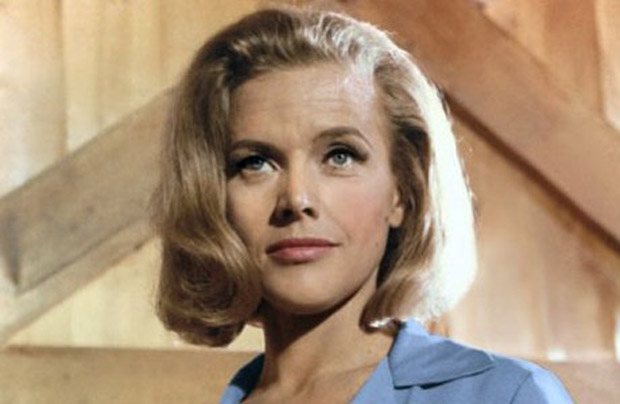
Women in Bond movies outsmarted Bond, fought him, and slept with him. What I saw in the Bond girls was adventure, power, and a sexuality that was bold – and maybe a little bit bent. In Goldfinger I saw something I'd never seen on TV. Somehow, at age nine, I realized something that still escapes most people today. Pussy Galore was gay.  And it thrilled me. That blond pilot she's talking to? I wanted to be her when I grew up.

In 1971 I saw Diamonds Are Forever, my first "new" Bond. It was just as exciting, just as sexy—and even gayer! Two women, Bambi and Thumper, lived in this amazing house, romping with James Bond and each other. They were bodyguards; beautiful, strong, and wild. My fate was sealed. 

When Connery walks down the beach at the beginning of Diamonds are Forever, telling a soon-to-be topless sunbather his name is “Bond, James Bond,” he is still, somehow, always talking to me. I am still responding to the seduction of Bond, of Bond girls, and of the exotic world of 007. Bond girls gave me sexual possibilities: Seductive men like Bond himself; seductive women like Pussy Galore. They can seduce or be seduced by a gorgeous man, or woman, and wear gorgeous clothes, but they don't have to live in a bottle. 

Bond girls speak to the part of me that is both feminist AND femme. The Bond girl became my archetype of an independent and exciting woman; a vision of who I could become that was purely fantasy, but still spoke to the real me. As I grew up, she remained my role model and my fantasy self. 

The woman I am today: writer, Mom, feminist, and professional, is still, deep down, a Bond girl.–Deborah Lipp

Deborah Lipp is the co-owner of Basket of Kisses, whose motto is "smart discussion about smart television." She is the author of six books, including The Ultimate James Bond Fan Book.

Kevin B. Lee is the Editor-in-Chief of Press Play.

VIDEO ESSAY: Gliding Over All: The Cinematography of Breaking Bad, Season 4

VIDEO ESSAY: Gliding Over All: The Cinematography of Breaking Bad, Season 4

Hollywood can keep its 3D, its CGI and whatever Dolby Surround version they’re up to now. For a contemporary cinematic experience as visceral and visually arresting as Breaking Bad, audiences must look abroad, to Gaspar Noé’s Enter the Void, or further, to films coming out of Thailand, Japan, and South Korea. As Dave Bunting and Derek Hill point out in their video essay and commentary on season 5.1, Vince Gilligan’s series puts U.S. cinema to shame, not just in terms of story, but in its execution: The direction, the dialogue, the acting, and—as is evident from the video essay above—the cinematography are, quite simply, of a higher order of intelligence. An intelligence that is extremely, at times obsessively, self-aware.

Regarding the cinematography: We all agree that Michael Slovis has as many visual tricks up his sleeve as Penn & Teller and that his palette is as rich and saturated as that of Henri Matisse. And few will argue with the assertion that the series’ visuals feel not like excess or icing, but integrally connected with the psychological states of the characters. But for me, the kick is about how the kind of semantic moves being made in episode after episode—in the cinematography, as in everything else—effortlessly reverberate meaning out in a number of directions all at once. Slovis is not just emphasizing mere character states. By constantly, at times relentlessly, making the audience aware of the camerawork—does a camera on the end of a shovel really underscore anyone’s character state?—he’s giving us clues to a whole layer of meta-meaning. Like the incendiary and morally conscious German playwright Bertolt Brecht (who shares initials with Breaking Bad), Slovis works to absorb and entertain us, even as he pushes us an arm’s length away.

Breaking Bad is a well-crafted, hyper-visceral Brechtian tragicomedy about the slow but sure descent into amorality of high school chemistry teacher-turned meth cook Walter White (Bryan Cranston) and the lives and relationships that are forever spavined, torn asunder or vanquished in his wake. Metaphorically speaking, it’s a relentless commentary on capitalism and capitalism’s life-blood, addiction.

But there are other, more poetic, at times troubling layers. Consider Walter White’s relationship with his product. Like the late Steve Jobs, White sees himself not simply as an entrepreneur, but as an innovator, an artist. His exquisitely cool blue meth (has anything so toxic ever looked quite so delicious?) is, laugh if you will, artisanal. He even has worshipful followers, most notably his temporary lab partner Gale Boetticher (David Costabile). White, in fact, is an artist, or at least has the temperament of one when he’s cooking. He is, to meth, what Breaking Bad’s creative team is to television.

That last connection is not something that I pulled out of my hat, but a connection the creators have made again and again, the longer this show has run. In the fourth episode of season four (“Bullet Points,” by writer Moira Walley-Beckett and director Colin Bucksey), they practically hand the connection to you in the most meta-rich installment to date. At the precise midpoint of this 44:30-long episode, White’s brother-in-law, Hank Schrader (Dean Norris), shares Gale’s lab notebook with White, pausing to mull over the dedication: “TO W.W. MY STAR, MY PERFECT SILENCE.” Tension develops as we understand that “W.W.” refers to Walter White, who deflects suspicion by telling Schrader that it refers instead to Walt Whitman, whose poem “When I Heard the Learned Astronomer” is quoted several pages earlier.

It’s a brilliant moment on several levels, in part because of the almost sick symmetry of it (you’ve basically got four Ws pivoting on the dead center midpoint of the episode), in part for the gently aggressive camera, which cuts from the notebook to White’s face, seemingly looming over the viewer, half in a subtle but clearly bluish shadow, half too dark to fully see.

Whitman and his poetry figure significantly in this television series, though no single poem is fully quoted—consider how differently Mad Men handled another American poet, Frank O’Hara, whose poem “Mayakovsky” Don Draper read the whole fourth section of, just before the closing credits of the first episode of Season 2. There, O’Hara briefly took center stage, though his poem had little to do with the whole series, other than to help underscore the emptiness of Draper’s soul.

In Breaking Bad, Whitman’s poem gets only a passing reference, but Whitman is integral to the mix, and not just because Schrader will finally, in the last episode of the first half of Season 5, make the connection between White and the blue meth via a copy of Leaves of Grass in the Whites’ bathroom. That episode, not coincidentally, shares its title, “Gliding Over All,” with another Whitman poem from Leaves of Grass, which ends “Death, many deaths I’ll sing.”

There is a reason Breaking Bad’s creative team has Walter White graduating from a moustache to a goatee, and it’s not just because cartoon images of Satan often have him sporting one. It’s because Vince Gilligan, the show’s creator, wears one. (What is a W, visually, if not a double V?) I don’t mean to suggest that White is a stand-in for Gilligan, but that a connection is being made, however subtle, however subconsciously. Is it merely coincidence that every main character charged with the oversight, production, and/or distribution of meth has a first or last name that begins with either a G (Gale and Gus, played by Giancarlo Esposito) or some residue of V? Even Gus’s right hand man, Mike Ehrmantraut (Jonathan Banks), whose initials spell “ME” and whose first name initial, M, is an inverted W, fits into this odd semantic play. The only person whose name does not prominently feature a G or a V (nesting in the form of a W or M), is Jesse Pinkman (Aaron Paul), the closest thing to an “innocent” in the whole crew, and a character that Gilligan has said was originally slated to be killed off by the close of season one.

This isn't to conspiratorially imply that this was necessarily planned, or that we’re meant to parse this all out. I’m simply saying that, in the creative process, there are many things that just “feel right” when one hits on them—and that intelligent creators tend to include those things in their work. I’m also saying that there is a poetic quality to the way meaning is accrued and resonates throughout the series, much of which was planned, and some of which simply fell into place as the creators cooked.

The character Walter White's poetic linking to the creative process couldn’t be made more clear than it is in Episode 4.4. After an opening scene involving a shootout that causes the liquid ingredients for meth to be spewed out all over a delivery truck’s floor, White’s wife, Skyler (Anna Gunn), is seen in bed, jotting down notes, trying to fall asleep, then sitting back up to jot down some more notes. She looks as if she is suddenly inspired. Poetically, subconsciously, we connect the image of the blue liquid pouring out of the plastic tubs to the creative juices now flowing through Skyler as she begins to construct an elaborate fiction about her meth-cooking husband being a gambling addict. The amount of research she has done on this, we see a few minutes later, appears to be extensive and no doubt resembles the research Gilligan and team did on meth and its production and distribution.

Another freaky bit of semantic symmetry: While prepping Walter on his story, Skyler makes a big deal about whether or not he’s going to “split the 8s”—which means one thing in the immediate context of blackjack, but consider it poetically: Splitting an 8 would result in two 4s, and here we are in Season 4, Episode 4, with a running time of exactly 44 and-a-half minutes from opening scene to blackout prior to credits.

When an exasperated Walter tells Skyler that he doesn’t need to know what he’s doing, as he’s in recovery and shouldn’t be called upon to talk extensively about his gambling system, Skyler brings out what appears to be a script, or what she describes as “bullet points.” For the next 10 minutes or so, the couple goes over the points—which include scripted dialog, blocking and suggestions for physical gestures—like actors familiarizing themselves with a script. The cinematography during this scene is practically invisible: the viewer simply has the sense of being there in the room with the couple. At one point, Skyler says something that could have been lifted right out of a development meeting for Breaking Bad: “We need this story to be solid, sympathetic and most of all completely believable.”

Armed with their story of Walter as successful gambler, the White family, with Walter, Jr. (R.J. Mitte) in tow, visits Hank and Marie (Betsy Brandt) Schrader. Early in the evening, Hank pulls out a DVD to show Walter and Walter, Jr.: It’s Gale, singing Peter Schilling’s English-language version of “Major Tom” in a Thai karaoke lounge. Though brief, there’s a ridiculous amount of semantic information packed in to this scene: Not only do we see, via the horrified reaction shot of Walter, the levels of remorse and fear he has in the wake of his having ordered Jesse to kill Gale, but the circumstances of Schilling’s song mesh nicely into the general meaning-universe of the show.

The relationship of Peter Schilling and “Major Tom” to David Bowie and Space Oddity foreshadows the later revelation of Gale’s homage to his creative superior, Walter. Further, its interstellar theme resonates with the Whitman poem Gale references as part of his homage. But, creepily, ghostly resonances of meaning go beyond even than that. Originally recorded in German (it made #1 on both the German and Austrian charts), “Major Tom” was rerecorded in English, where it went on to chart in Canada, Australia, the U.K., and the U.S. The Thai subtitles beneath Gale’s rendition hearken back to the song’s English status as translation. And, whether or not they were aware of it, Breaking Bad’s creators would certainly appreciate the original German version’s running time: 4:33. Not just because it slant-rhymes with the episode’s 44:30 running time, but because it shares an exact running time with the most notorious American composition of the late 20th century: John Cage’s 4’33”, which could easily be described as a kind of answer song, in its interrogation of silence, to Whitman’s “When I Heard the Learned Astronomer” and that poem’s last line, “Look’d up in perfect silence at the stars.”

Is Breaking Bad, like Leaves of Grass, the great epic poem of our time? If not, it’s the closest thing television has ever given us.

Dave Bunting is the co-owner (with his sister and fellow Press Play contributor, Sarah D. Bunting) of King Killer Studios, a popular music rehearsal and performance space in Gowanus, Brooklyn.  He plays guitar and sings in his band, The Stink, and dabbles in photography, video editing, french press coffee, and real estate.  Dave lives in Brooklyn with his wife, son, and sister.

Gary Sullivan’s poetry and comics have been widely published and anthologized, in everything from Poetry Magazine and The Wall Street Journal to The Norton Anthology of Postmodern Poetry (2nd Edition, forthcoming). Everyone Has a Mouth, a selection of his translations of poetry by the Austrian schizophrenic Ernst Herbeck, was recently published by Ugly Duckling Presse. He lives in Astoria, Queens, where he maintains bodegapop.com, a music blog devoted to treasures found in immigrant-run bodegas in New York City.

PRESS PLAY THEATER: Preston Miller’s GOD’S LAND (2010)

PRESS PLAY THEATER: Preston Miller’s GOD’S LAND (2010)

null

PRESS PLAY THEATER, OCT. 19-25: GOD’S LAND, WRITTEN AND DIRECTED BY PRESTON MILLER

By Matt Zoller Seitz

This is Press Play Theater, a streaming video feature that showcases notable work by independent filmmakers in one-week exclusive runs.

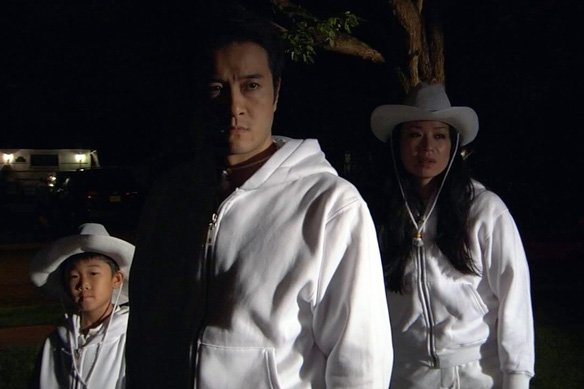
Our debut offering is God’s Land (2010), the second feature by Long Island-based director Preston Miller. It’s a drama about a family that joins an apocalyptic religious cult in Texas. It fictionalizes the true story of the Chinese Soul Light Association, or “True Way,” a Christian group from Taiwan that settled in 1997 in Garland, Texas. The group’s faith mixed aspects of Taoism, Buddhism and belief in UFOs, and a conviction that so-called civilization, which had lasted thousands of years, was just temporary, a way station en route to something more profound. The group’s members dressed in white sweats with white cowboy hats. In 1998, followers readied for the end of the world, which they believed would be signaled by the appearance of God on TV.  

Miller’s film retells a version of the story through the eyes of one family: a true-believer husband named Hou (Shing Ka), his innocent son Ollie (Matthew Chiu), and his wife Xiu (Jodi Lin). Xiu is the closest thing to an audience surrogate in God’s Land: she’s a sophisticated woman from a rich family who doesn’t really buy into the prophecy but has followed the family to Garland to protect her son and support her beloved husband’s faith in the group’s leader, Teacher Chen (Jackson Ning).

Taking his cues from meditative European Art Cinema, Miller stages the tale in unbroken, often static long takes that make us think about these spiritually-driven characters in relation to their mundane, somewhat impersonal environments: motel rooms, malls, supermarkets, nondescript suburban streets. As we watch the family struggle to commit to Teacher Chen’s otherworldly vision, we think about how the modern world makes faith (or mysticism) difficult. The cult’s members are surrounded by symbols of the modern “fallen” world that will theoretically be wiped out, one by one, by God’s judgment. It’s an eerie yet unexpectedly warm movie, one that observes the passion of its characters with empathy but no harsh judgment.

God’s Land is presented in its entirety at Press Play; click the Vimeo link above to watch it. The movie will be available on the site Oct 19–25.

Miller has also been kind enough to upload two supplemental clips: a sequence showing reporters besieging the group’s headquarters, featuring voice-over commentary by Miller and yours truly; and an interview with Richard Liu, who served as Teacher Chen’s interpreter. (A complete transcript of the March 15, 1998 press conference wherein Chen announced the end of the world can be read here.)  

Analysis of helicopter scene, featuring commentary by Preston Miller and Matt Zoller Seitz.

Preston Miller’s audio interview with Richard Liu, interpreter for Teacher Chen.

God's Land will be available for purchase on DVD in November, check www.vindaloophilmwallah.com for more details regarding the release date and information on the film.–Matt Zoller Seitz

Preston Miller was born and raised in Raleigh, North Carolina. He attended Appalachian State University for three years before transferring to City-College of New York. There he graduated in 1995 with a Bachelors of Fine Arts with honors in the Communications, Film & Video Department. He currently resides in the New York City area with his wife and their two sons. Miller's first film was Jones (2007).

Matt Zoller Seitz is a co-founder of Press Play.

VIDEO ESSAY: ON THE Q.T.: Chapter 2: PULP FICTION (The Cool)

VIDEO ESSAY: ON THE Q.T.: Chapter 2: PULP FICTION (The Cool)

Quentin Tarantino’s films treat talk as action; torrents of words spill out of his characters' mouths, defining and redefining them, in their own eyes and in the eyes of the world. Words as clay, the speaker as sculptor, the rest of the world as spectator, art critic, vandal: this vortex of monologue and dialogue draws the viewer into the curiously theatrical spectacle of people attempting to create, refine, and propagate their own mythology. They are what they say they are, and more, and less. They build themselves up, and the film does, too; then somebody else tears them down, and the film grinds the last remaining pieces of their fragile self-images into powder.

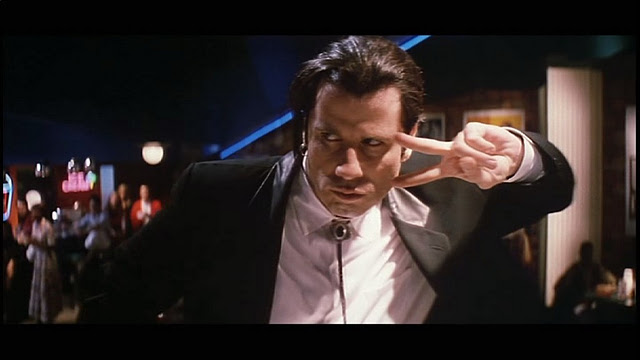
nullTarantino has been doing this from the start of his career, from the moment in Reservoir Dogs when the doomed Mr. Brown (played by Tarantino himself) waxed profane about the supposed true meaning of Madonna’s “Like a Virgin,” then promptly died of gunshot wounds behind the wheel of a getaway car. His second film, Pulp Fiction, moves this tendency into the foreground. Nearly all of the movie’s 150-minute running time features characters talking, talking, talking, about their personalities, their values, their world views, and about other characters, some of whom we don’t get to know—or even meet—for an hour or more. All the film’s major characters are modern, workaday cousins of the Great and Powerful Oz; the film builds them up by having others repeat their (often self-created) legends until they loom in our minds like phantoms, then tears away the curtain to reveal panicked little people desperately yanking levers. “Come on,” Jules tells Vincent in the film’s opening section, “let’s get into character.”

The gang boss Marsellus Wallace is granted a Col. Kurtz-level buildup. Jules and Vincent’s early dialogue about how he threw Tony Rocky Horror out of a window for giving his wife Mia a foot massage establishes that he’s not a man to be trifled with. In the film’s second section, Marsellus orders the boxer Butch to throw a fixed fight, but remains tantalizingly undefined. He’s a big, bald head with a Band-Aid on its neck—a totemic abstraction on par with the fabled briefcase, contents unknown, that emits hellish light when opened. We see him again from the back right after Butch pulls a double-cross, kills his opponent in the ring, and flees with the money he made by secretly betting on himself: again, no face, just a voice and some words. When we finally see Marsellus’ face 95 minutes into the movie, Tarantino instantly demystifies him as a burly man standing in a crosswalk holding a box of donuts—whereupon Butch runs him over. Marsellus’ first close-up represents Pulp Fiction’s storytelling strategy in microcosm: after all that advance press, he’s just a stranger bleeding on the street, his face framed upside-down as if to certify what we already suspected, that his mythology has been suddenly and violently flipped.

nullTarantino does this over and over again in Pulp Fiction. Mia Wallace is introduced as a sex goddess monitoring her date, Vincent, via surveillance cameras while mood-setting music (“Son of a Preacher Man”) thrums on the soundtrack, and then speaking to him through a microphone. Until Vincent’s car pulls into the parking lot of Jackrabbit Slims, she’s just a pair of lips and two bare feet, intriguing by virtue of her remoteness and sense of control. She seems a more strange and special person than the woman described earlier by Jules: a failed wannabe-star turned gangster’s trophy. “Some pilots get picked and become television programs,” Jules says. “Some don't, become nothing. She starred in one of the ones that became nothing.” But the date proves to be a complete disaster, as Mia mistakes Vincent’s heroin for cocaine while he’s in the bathroom and nearly dies of an overdose. And about that needle scene: Vincent and his drug dealer Lance’s terrified babbling about the right way to administer a heart injection refutes an earlier conversation in which they tried to make themselves seem like world-weary bad-asses. (Lance on his smack: “I'll take the Pepsi challenge with that Amsterdam shit, any day of the fuckin' week.” Vincent: “That’s a bold statement.”)

Vincent Vega creates a mythology of a globetrotting hipster on a voyage of self-exploration, but as the movie unreels, it becomes increasingly clear that he’s a bullshit artist whose main target of deception is himself. He can’t take criticism, advice or even notes from other people (“You have to ask me nicely,” he tells the man entrusted with cleaning up Vincent’s accidental shooting of Marvin). And when the film’s fractured chronology is rearranged in linear fashion, we realize that the poor bastard learned nothing from the According-to-Hoyle Miracle that stopped the bullets and spared his life. He dies on the toilet reading Modesty Blaise while his buddy Jules—who had a religious experience after the near-miss, and pledged to stop murdering people and “walk the Earth, like Caine in Kung Fu”—lives on. “I was sitting here, eating my muffin and drinking my coffee and replaying the incident in my head, when I had what alcoholics refer to as a moment of clarity,” he tells his friend, who’s locked away so deep inside his own mythology that he doesn’t recognize that Jules has just handed him a second chance, an opportunity to escape, to be free, to live.

null“There's this passage I got memorized,” Jules tells Pumpkin, the would-be diner robber who has dared to steal his “Bad Motherfucker” wallet. “Ezekiel 25:17. ‘The path of the righteous man is beset on all sides by the iniquities of the selfish and the tyranny of evil men. Blessed is he who, in the name of charity and good will, shepherds the weak through the valley of darkness, for he is truly his brother's keeper and the finder of lost children. And I will strike down upon thee with great vengeance and furious anger those who attempt to poison and destroy my brothers. And you will know my name is the Lord when I lay my vengeance upon thee.’ I been saying that shit for years. And if you heard it, that meant your ass. I never gave much thought to what it meant. I just thought it was some cold-blooded shit to say to a motherfucker before I popped a cap in his ass. But I saw some shit this morning made me think twice. See, now I'm thinking, maybe it means you're the evil man, and I'm the righteous man, and Mr. 9 millimeter here, he's the shepherd protecting my righteous ass in the valley of darkness. Or it could mean you're the righteous man and I'm the shepherd, and it's the world that's evil and selfish. I'd like that. But that shit ain't the truth. The truth is, you're the weak, and I'm the tyranny of evil men. But I'm trying, Ringo. I'm trying real hard to be the shepherd.” – Matt Zoller Seitz
Peter Labuza is a film critic and blogger. He is the host of The Cinephiliacs, a podcast where he interviews the great cinephiles of our time. His written work has appeared in Indiewire, MNDialog, Film Matters, and the CUArts Blog. You can follow him on Twitter (@labuzamovies).
 

Matt Zoller Seitz is a co-founder of Press Play.

VIDEO: 100 Masters of Animated Short Films

VIDEO: 100 Masters of Animated Short Films

One of Keyframe’s most popular articles from last year was its illustrated guide to 100 masters of the animated short film. Film animation has thrived for over a century, but has never seen quite the level of recognition afforded to live-action feature filmmakers. And while there are plenty of outstanding animated features to celebrate, a list of those films wouldn’t boast nearly as much eye-popping diversity as those represented by this list. 

Working within the compressed parameters of the short form, some of the most unique talents in the field of animation delivered their inimitable visions with maximum potency in a matter of mere minutes or even seconds. This video attempts to demonstrate that spectrum of brilliance with as much brevity: 100 masters in nine minutes.  Of course such a video can’t possibly do full justice to each of these artists,  but watching this visual roll call of animation heroes proceed, what’s remarkable is how strong a visual impression just a few seconds of each artist can make. 

This video would not be possible without the work of some of my old friends at the IMDb Classic Film Board, who first created this list back in 2008. They have since followed up to produce a list of 250 Great Animated Short Films, which can serve as an excellent guide if you’re looking for specific titles to explore any of the artists featured in this video.

Special thanks to Lee Price, who organized the compilation of both lists, and is currently writing in-depth entries about the 250 Great Animated Short Films on his blog, as well as on Press Play.

Kevin B. Lee is Editor in Chief of IndieWire’s PressPlay Video Blog, Founding Editor and Video Essayist for Fandor’s Keyframe, and a contributor to Roger Ebert.com. Follow him on Twitter.

VIDEO ESSAY: The Portuguese Process – Pedro Costa and Miguel Gomes

VIDEO ESSAY: The Portuguese Process – Pedro Costa and Miguel Gomes

<em>Correction: While the video refers to <em>Our Beloved Month of August</em> as Miguel Gomes' debut feature, the film is actually his second.

Correction: While the video refers to Our Beloved Month of August as Miguel Gomes' debut feature, the film is actually his second.

One of the most striking films in recent memory is Our Beloved Month of August by Portugal’s Miguel Gomes. Part of what makes it so remarkable is the near-disastrous predicament in which it was made. Gomes and his crew traveled to the Portuguese countryside to shoot his first feature, only to discover that his funding fell through. Nonetheless, they decided to stick around and film their surroundings, improvising a documentary panorama that captures the vibrant lives and people they encountered, punctuated by summer concerts and festivals. They also turn the camera on themselves, recording their own working process as they figure out how to salvage their project. Then, unexpectedly, the film shifts into a fiction, and the documentary world we’ve been watching is transformed into a storybook version of itself. We are watching a film showing us how it becomes itself, like a caterpillar transforming into a butterfly.

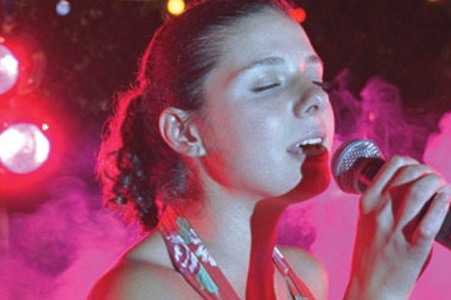
Gomes may have been influenced in part by his fellow countryman Pedro Costa, who is a major practitioner of film as a process. In Ne Change Rien, he films the French actress and singer Jeanne Balibar recording her debut album and performing on stage. Balibar’s search for the right sound is a laborious process of false starts and retakes, but Costa films it with an incredible sense of precision and focus. Never once moving the camera, he’s utterly locked into each moment. Using a deceptively simple palette of shadows and light, he sculpts an arresting portrait of Balibar as she shapes her music.

Both of these films are remarkable in how they use what might normally be considered outtakes or behind-the-scenes scraps, sifting them to reveal beguiling mysteries to the creative process. I don’t think it’s an accident that music figures so prominently in both films. Music is that state of sublime expression that transcends and transforms the language of the mundane. Both of these films do so much to show just what it takes to get ther

Kevin B. Lee is Editor in Chief of IndieWire’s PressPlay Video Blog, Video Essayist for Fandor’s Keyframe, and a contributor to Roger Ebert.com. Follow him on Twitter.

VIDEO ESSAY: BEAVER’S LODGE: CAIN’S CUTTHROATS (1971)

VIDEO ESSAY: BEAVER’S LODGE: CAIN’S CUTTHROATS (1971)

This is the fifth installment of BEAVER'S LODGE, a series of video essays narrated by actor Jim Beaver which will offer critical takes on some of Beaver's favorite films. Jim Beaver is an actor, playwright, and film historian. Best known as Ellsworth on HBO’s Emmy-award winning series DEADWOOD and as Bobby Singer on SUPERNATURAL, he has also starred in such series as HARPER'S ISLAND, JOHN FROM CINCINNATI, and THUNDER ALLEY and appeared in nearly forty motion pictures. You can follow Jim on Twitter.

A great deal of effort was apparently put into making this the worst movie ever made. They didn't pull it off, but the effort certainly shows.

It's a Western with rockabilly songs. It's a Civil War-era movie that was originally released with footage of motorcycle gangs edited into it. It's a movie where single bullet holes look like exploding steak tartare. It's a movie with a black character played by the whitest-looking white woman you can imagine. It's a movie with 20 people in the cast, 18 of whom are the worst collective gathering of actors in the history of motion pictures.

Fortunately, one of the other two actors is John Carradine, who could be one of the best actors alive or one of the worst hams ever to set foot on a stage, depending on the material. Carradine, who should have had an Oscar for THE GRAPES OF WRATH and was reportedly a great Hamlet in his day, is in semi-hammy mode here, but it's more or less right for the character, a preacher/bounty hunter. It's one of the larger roles of his late career, when he clearly took anything that came along. If there's anything worth watching in this collection of uncut banjo picks, it's he.

Scott Brady, who is the only other bearable (or recognizable) actor in the cast, is Justice Cain, a former Confederate officer who is worshiped by his troops, but that doesn't keep them from raping his wife and killing her and his son when he refuses to join them in restarting the war, long after the rebel surrender. So Cain sets out to avenge himself on the men he once led, joining forces with Preacher Simms (Carradine), who spouts Bible verses and keeps a collection of human heads in a barrel of brine.

The movie is nowhere near as good as that description sounds. In fact, it's nowhere near as good as choking to death on a drill bit.

But at least there's a chance at one point to see John Carradine in drag. And Carradine, brilliant or hammy, always brightens up a movie.


VIDEO ESSAY: Anatomy of the Sex Scene

VIDEO ESSAY: Anatomy of the Sex Scene

Origina

Originally published in Fandor.

Dogtooth is the story of a person who tries to escape a fictitious world. Alps is about a person who tries to enter a fabricated world.”—directorYorgos Lanthimos

Note: Both films feature actress Aggeliki Papoulia, one of the most remarkably performers to emerge in the international festival scene in the last few years. Her poker-faced commitment to these surreal, sexually demanding scenarios is critical to their execution.

Warning: this video contains spoilers as well as graphic sexual content.

Sex Scene from Dogtooth: Son’s bedroom. Older Daughter is enlisted by her family to satisfy the sexual cravings of Son.

Shot #1: This is the first and only time in the movie that the Daughter wears makeup, presumably to make her look less like a sibling and more like a sex partner to her brother. It’s one of several dehumanizing elements in this scene. There’s a perfunctory quality in the body language of both characters.  As she stands to undress the tight framing of the camera effectively separates her face from her body. The white rooms are awash in daylight, making this erotic moment feel sterile, as well as transparent—all the family members know this is happening.

Shot #2: This wider angle establishes more of the room. Stickers on the headboard of the boy’s bed signify his childish mentality, even though he has the body (and bodily needs) of a grown man.

Shot #3: Return to tight framing that separates heads from bodies, reinforcing the impersonal quality of this sexual encounter. The scene progresses in real time, as if to underscore that this unthinkable act of incest is actually happening. The real-time duration is also not unlike a porn film, suggesting that for the son it serves the same function as watching pornography.

Shot #4: An overhead shot of the boy’s back muscles exerting as he thrusts. The shot conveys his youthful virility, as well as a belabored quality of his sexual exertion, like a task his parents have assigned him to complete.

Shot #5: A side view of Older Daughter’s head and chest as she winces and stiffens. The mirror in the background reflects Son thrusting above her. The two images combined reinforce the disembodied quality of their act.

Shot #6: Overhead shot, post-coitus, two heads again disembodied. She has never been taught by her parents to express negative emotions. To voice her anger, she quotes from a movie she secretly watched. This moment catalyzes her awakening and rebellion against her family.

Sex Scene from Alps: Basement of store. Monte Rosa is hired to play the ex-girlfriend of a client who runs a lighting store.

Shot #1: The darkness underscores secrecy. There is confusion over whether sex is part of the agreement between the two parties. Handheld camera gives scene a spontaneous, uncertain quality, much looser than the rigid framing ofDogtooth.

The client instructs Monte Rosa, who follows his instructions.

Shot #2: Reverse angle reveals similar formal elements from the sex scene in Dogtooth. The woman’s body is cropped, emphasizing her presence as a body. But her body language, the briskness with which she disrobes, suggests a willingness to follow his instructions. The man’s orders are based on his past experience with his ex-lover.

Shot #3: Two figures framed on the couch; the man disrobes. The scene feels less formally composed than the one inDogtooth, more like a natural moment of intimacy.

Shot #4: The shot of Monte Rosa’s head and chest resembles a similar shot of the same actress in Dogtooth. This time the man’s head is not spatially disembodied by a reflection, but physically in the same space connected to her body. There’s more of a dialogue than in the Dogtooth scene, and it gives their interaction a greater sense of intimacy and warmth.

She laughs. Is it at the disconnect between the sentiment of the line she is speaking with the awkwardness of the situation? At the absurdity of being instructed to express a genuine feeling?

Shot #5: Or is it from a real sensation of pleasure?

In both scenes, the woman has internalized words from outside and is using them to express herself.

Kevin B. Lee is Editor in Chief of IndieWire’s PressPlay Video Blog, Video Essayist for Fandor’s Keyframe, and a contributor to Roger Ebert.com. Follow him on Twitter.

VIDEO ESSAY: Reel Islam

VIDEO ESSAY: Reel Islam

Originally posted on Fandor.

There are many things that disgust me about Innocence of Muslimsand all the tragic violence it has caused. As a movie lover, what disgusts me is this: Something that looks like it was made by rank amateurs in a basement studio, something that has nothing valuable to say about the lives and beliefs of one and a half billion people, has somehow captured the world’s attention in the worst way possible.  Lost in the media firestorm are many other films that actually deserve our attention in exploring the world of Islam.

The documentary Veiled Voicesis a revealing look at the evolving role of Muslim women in the Arab world, profiling several women who serve as leaders in their communities and in the media. The film shows how these women are fostering a new generation of progressive thinking and openness in Islamic society.

Children of the Prophet is a vivid look at Ashura, an important religious day for Shiite Muslims, the largest denomination of Islam in Iran. The film uses the occasion to elicit frank reflections from Iranians about their faith. We also learn that for young, modern Iranians, this religious day of mourning has a completely different significance.

The Tunisian comedy Khorma shows that, contrary to what the mass media portrays, Muslims don’t mind poking fun at their own faith and pointing out its shortcomings. Khorma is the simpleminded servant of a cleric whose job is to announce weddings and funerals, that is until one day when he gets them mixed up. Khorma takes over the job, and unwittingly exposes the petty corruption and economic exploitation lurking within the shadow industry of religious services.

But for a movie that captures the beauty of Islam at its purest, it’s hard to beat the films of Tunisian director Nacer Khemir.  Bab’Aziz the final chapter of Kehmir’s Desert Trilogy, and unlike the deplorable green screen effects ofInnocence of Muslims, it was actually shot in the desert, drinking in its panoramic beauty. Inspired by the mystical teachings of the Sufis, the film charts a winding intuitive journey, as one story falls into another. Each character has their own spiritual quest to fulfill, their own path to follow. Khemir’s film shows that Islam is not a single monolithic entity or pernicious threat, but a world of innumerable wonders waiting to be discovered, especially in its films.

Kevin B. Lee is Editor in Chief of IndieWire’s PressPlay Video Blog, Video Essayist for Fandor’s Keyframe, and a contributor to Roger Ebert.com. Follow him on Twitter.

What are some of your favorite films that depict Islam and the lives of Muslim people? Leave a comment.

The Mystery of Werner Herzog: Two Video Essays and One Text Essay

The Mystery of Werner Herzog: Two Video Essays and One Text Essay

DOES MR. JONATHAN SMITH CRY IN HIS PILLOW AT NIGHT?: THE UNIRONIC WORLDS OF WERNER HERZOG

One of the most revealing statements in the book Herzog on Herzog appears early on, when Werner Herzog tells interviewer Paul Cronin that from the time he was a young child he has suffered a particular "communication defect": he has no sense of irony.

Whether Herzog the actual human being does or doesn't have a sense of irony is itself a minor point, a bit of autobiographical gossip. But there is a useful truth in extrapolating the insight to his work: Understanding and appreciating Herzog's films means giving up on the pleasures of irony. (It is difficult to imagine a satire written and directed by Werner Herzog.) What is entertaining and meaningful in Herzog's movies and his public persona is a peculiar earnestness — the earnestness of the straight man in comedy routines, but less oblivious, more mystical. Various labels can and have been applied to his work: Romantic, Expressionist, Existentialist. But they are inevitably incomplete and unsatisfying because their orientation is toward analysis, systematization, precepts, and principles—where Herzog's philosophy is more like a garden of intuitions, or a collection of koans written on scraps of paper and scattered across the floor of an abandoned monastery atop some far-off mountain where the wind never settles down.

The title of Nelson Carvajal's new video essay, "Werner Herzog Looks at Man's Futility," is full of tricks and traps. What is Werner Herzog: the filmmaker, his films, the actual human being for whom that is a byline, the public figure we know from interviews and guest appearances and YouTube videos? Looks: How? With eyes or camera? Are we looking with him, through him? Man's Futility: "Man" as a macho revanchist term for "humanity"? Or literally of men: the futility of men, the futility of masculinity, men adjusting their lives to the fact of futility . . . (The video's first image, from Stroszek, is of a woman being beaten by men.)

Carvajal's work can speak for itself; its juxtapositions are rich with possibility and ambiguity. The choice of the word futility is what most strikes me. A quick glance at Herzog's oeuvre might cause an inattentive viewer to see it as nihilistic, as celebrating or at least embracing the futility of living: human life is inconsequential, nature is great and unknowable, death and failure are ever-present, hopes and dreams are naïve. But that is not it at all. Instead, Herzog encourages us toward the sublime, toward awe and humility when faced with great mystery—toward, indeed, the seeking and celebration of such mystery. Toward an epistemology that is not irrational but sur-rational, that thrives between the lines of all we could ever know. It is not that we live in a meaningless universe, but rather that our intellectual tools for measuring the meaning of the universe are about as well developed as those of a mosquito contemplating how Manhattan came to be so tall.

Existence is its own meaning. Thus, the need for pushing existence toward its limits and extremes, for exploration and adventure. Every worthwhile encounter happens at the end of some world. Facts are not truth, and truth is not a product of careful measurement and objective observation, but of ecstasy, and ecstasy requires the knowledge of the senses, the trust of intuition, the cultivation of mystery. Teleology leads to ruin, but knowledge and enlightment come from the fact of life's force: Aguirre, on a monkey-covered raft at the end of his adventures, doomed and clearly mad because still he dreams of conquest; Fitzcarraldo failing at what he set out for and achieving much he did not; Dieter Dengler clinging to existence with the same strength as the premature baby grips the doctor's hand in Stroszek. Life's force and the power of chance determine the aesthetic, with shots and scenes included not for reasons of cause and effect, not for obvious or metaphorical association, but because they feel right. Animals and objects take on mercurial meaning: the albino crocodiles in Cave of Forgotten Dreams, the fiery oil fields of Lessons of Darkness, the basketball in My Son, My Son, What Have Ye Done, the chickens in everything. Chance and chaos rule over all: the volcano in La Soufrière might explode at any moment, the actors in Heart of Glass are hypnotized and thus strange and unpredictable, the squirrels in the story told in Into the Abyss could have been killed if not for good brakes on a golf cart.

Herzog's truths emanate from estrangement. The worlds and peoples he portrays are always exotic, and so there is a consistent unity to his work from its earliest days—each film displays a contempt for nothing except dominant normality. No person or place is exotic to itself, but we do not have access to these selves. Few, if any, of Herzog's characters are "knowable" in the sense familiar from the genre of psychological realism. Psychologizing is futile. Worse than futile: boring. The camera's fascination adheres to anyone and anything that confounds simple analysis, that lives outside predictable boundaries, that does not look like commercial, homogenized culture. We discover (through cracks, crevices, abandoned pathways, extremes of distance, altitude, weather) the panoply of ways of living.

"I want the audience with me in wild fantasies in something that illuminates them," Herzog said in an appearance on The Colbert Report in June of 2011. Wild fantasies illuminate. Wild fantasies bring us beyond the banal, commodified dreams that haunt our days of sleepwalking. "You see if I were only fact based—you see, the book of books in literature then would be the Manhattan phone directory: four million entries, everything correct. But it dusts out of my ears and I do not know: do they dream at night? Does Mr. Jonathan Smith cry in his pillow at night?" Knowledge requires imagination, empathy, curiosity. Anything else is at best facts, and, as David Byrne once sang, "Facts are living turned inside out."

Herzog makes a point of differentiating his lack of a sense of irony from a lack of a sense of humor. Irony and humor, he says, are very different things. This is a truth borne out by Herzog's films, which are often filled with sly and absurd humor. By desaturating his work and words of irony, Herzog adds another layer of ambiguity to his films, provoking laughter at moments where we might not know why we are laughing, or what we are laughing at, and complicating those moments with other emotions.

I recognized this effect most forcefully when, on a lark, I re-edited the trailer for Baz Luhrman's upcoming adaptation of The Great Gatsby to be, instead, a preview for a Herzog movie. My intentions were entirely silly. But once I started editing the video, I realized that by inserting Herzog into the glitzy stylistics of the movie, and positing him as a director of the hollow shell of a character that is Gatsby (the opposite of the obsessed dreamers he often films, for Gatsby, though obsessed, lacks their gravitas, their mysticism, their madness), that the silliness of the premise was undercut.

Even when Herzog is at his most humorous and least meaningful, his affect is one of absolute sincerity, which heightens his humor but also adds other layers. When he reads Go the Fuck to Sleep, for instance, there is no fear that he will ever break into giggles, no chance that he will laugh along with us, no suspicion that he is even inviting us to laugh (imagine the contrast if an irony-besotted comedian like Stephen Colbert read it). Irony insists that we know there is a joke, that we see the opposite meanings, that we smirk inside because we get it. It can be a lot of fun, and even quite meaningful. But it's never what Herzog is up to.

A mien of sincerity can be as shallow and tiresome as an endless array of ironies—who wants to live in a world of anchorites, pamphleteers, and true believers? Gnomic pronouncements get old fast when all you want to know is whether you should eat at the restaurant on the corner. But ours is a culture of winks and spins, of campaign slogans, billboards for Jesus, self-help politics, and an endlessly Googled Earth. Every imaginable court bursts with jesters. We need a few people with no sense of irony to see through it all. We need enigmatic images to steal our dreams back from their corporate mergers.

Men are futile, yes, in every sense, and Herzog, whose movie worlds are mostly made of men, knows this as well as anybody. "Get over it," he seems to say. What does our futility matter if we can share our wild fantasies? Give up on the wonders of your gender, stop venerating your species. Are we so different from radioactive albino crocodiles? In the movie, they're just as real as we are. — Matthew Cheney

Nelson Carvajal is an independent digital filmmaker, writer and content creator based out of Chicago, Illinois. His digital short films usually contain appropriated content and have screened at such venues as the London Underground Film Festival. Carvajal runs a blog called FREE CINEMA NOW which boasts the tagline: "Liberating Independent Film And Video From A Prehistoric Value System."
You can follow Nelson on Twitter here.

Matthew Cheney's work has been published by English Journal, One Story, Web Conjunctions, Strange Horizons, Failbetter.com, Ideomancer, Pindeldyboz, Rain Taxi, Locus, The Internet Review of Science Fiction and SF Site, among other places, and he is the former series editor for Best American Fantasy. He teaches English, Women's Studies, and Communications & Media Studies at Plymouth State University.