Watch: The 2016 Oscar for Best Actress: One Critic’s Approach

Watch: The 2016 Oscar for Best Actress: One Critic’s Approach

How *do* you determine who should win an award as grandiose as "Best Actress"? Do you flip a coin? Do you murmur an incantation? Is there someone you’re supposed to call, or possibly a helpline? Because surely the process by which the Academy makes these choices is anything but rational. What’s the lay-viewer, or even the not-so-lay-viewer, to do? Kevin B. Lee, in this video essay for Fandor (one of an ongoing series), has taken a quasi-mathematical approach to the choice for Best Actress, looking at the amount of time Cate Blanchett, Saoirse Ronan, Jennifer Lawrence, Brie Larson, and Charlotte Rampling spend on screen, in minutes and hours, and then evaluating how effectively that time is spent. Sort of an equation, sort of… not. Which is about as practical an approach to the decision as I could imagine. Take a look.

Watch: David Fincher’s Close-Ups Are the Keys to His Work

Watch: David Fincher’s Close-Ups Are the Keys to His Work

David Fincher is, in one sense, what would happen if Joseph Cornell, H.P. Lovecraft, and Alfred Hitchcock teamed up to make vast, rambling, quietly explosive epics. Watching one of Fincher’s films is less like following a story than entering a fully imagined world. This aspect of the experience of his work is most evident in his use of close-ups–in these shots, the camera is not so much bearing down as peering in. In frequent Press Play contributor Jacob T. Swinney’s latest video, he takes a close look at these close looks, and the result is every bit as fun as watching a Fincher movie. 

Watch: Vilmos Zsigmond Defined 1970s Cinema

Watch: Vilmos Zsigmond Defined 1970s Cinema

The late cinematographer Vilmos Zsigmond arguably defined the look of American cinema in the 1970s. He worked on films like Altman’s ‘McCabe and Mrs. Miller,’ De Palma’s ‘Blow Out’ and Spielberg’s ‘Close Encounters of the Third Kind,’ for which he received an Oscar. Despite the fact that few of his films look alike, Zsigmond developed a distinct visual style over the course of his illustrious career—namely succeeding in creating significance within the frame by juxtaposing his subjects using deep focus. In ‘Blow Out,’ the shot where John Travolta’s Jack Terry points his boom mic at the distant owl can be seen as representing the duality between sight and sound. In ‘Deer Hunter,’ you can also see a duality in Robert De Niro’s Michael "Mike" Vronsky. As he walks across atop a rocky mountain, his troubled past is represented by his mirror image that’s reflected on the lake surface. Zsigmond’s ability to maximize the area of the visual frame to produce new meaning beyond the film’s narrative is just one of the many reasons why he gained his legendary status in the filmmaking industry.

Watch: Terrence Malick’s Best Nature Shots in 3 Transformative Minutes

Watch: Terrence Malick’s Best Nature Shots in 3 Transformative Minutes

Terrence Malick isn’t so much a filmmaker as a poet.  Rather than relying on traditional narrative framework (especially in his later films), Malick relies on nature to create visual poems on celluloid.  Blindly picking a random frame from Malick’s modest filmography, there is a rather high chance of a close-up of a plant or a wide landscape free of humans.  This is because nature itself is a character in a Malick film–sometimes even more so than the human characters.  There is a reason why Malick often chooses to cut to a blowing leaf or a low-angle shot of tall trees during moments of poignancy.  In a way, these images express something that more traditional misty-eyed close-ups of professional actors simply cannot.  We learn more from lingering on a stream than we do from dialogue.  The swaying tree tells us more about a character’s past than flashbacks can.  Rays of sunlight through a rain-forest canopy put the entire film in perspective.  While these elements may be simple, they seem to be something only Malick can pull off successfully.  Many filmmakers are inspired by them and even more copy them, but only Malick can create in this way.  His imagery possesses a certain level of truth due to the fact that he himself finds stories in nature.  Here is a look at some of Malick’s best shots of his favorite storyteller, nature. 

Jacob T. Swinney is an industrious film editor and filmmaker, as well as a recent graduate of Salisbury University.

Watch: Martin Scorsese Embodies a Clash Between Neo-Realism and Postmodernism

Watch: Martin Scorsese Embodies a Clash Between Neo-Realism and Postmodernism

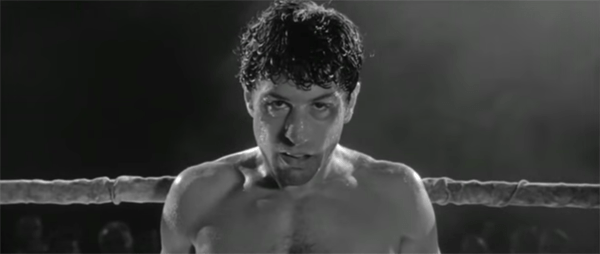
The Film Theorists have hit on something crucial about Martin Scorsese in their newest video essay, which is that his movies rely on the tension between the everyday, the grit, the grim, the signs of humanity at its worst, and an ongoing desire to transcend that element through cinematic technique. In ‘Goodfellas,’ we see the humble upbringings of the titular thugs contrasted with outsized violence, outsized dreams, outsized immorality. In ‘Raging Bull,’ we see the simplicity and primacy of boxing itself re-cast with outrageous camera angles, distended perspectives, drip-slow motion. And on and on. The makers of the video describe this tension in terms of the director’s lineage, his roots in the neorealism of Rossellini and Fellini, and the explosion that occurred when the director discovered these paradigms could be subverted–but the tension could be more integral than that, perhaps something within Scorsese himself that, like many geniuses before him, is able to maintain two contrasting ideas in mind at the same time. 

Watch: How the Patton Oswalt Vehicle ‘Big Fan’ Critiques Celebrity Culture

Watch: How the Patton Oswalt Vehicle ‘Big Fan’ Critiques Celebrity Culture

As Scout Tafoya points out in his 25th installment in the "Unloved" series of video essays on under-discussed films for RogerEbert.com, we live in a culture in which fandom is often mistaken for cultural awareness, in which celebrities are like kings surrounded by flailing, worshipful peasants. Patton Oswalt’s New York Giants-worshipping Paul Aufiero in 2009’s ‘Big Fan‘ would seem to be a natural product of this sort of national impulse, the tortured, embarrassing result of a world in which following greatness might be considered a step towards achieving greatness of one’s own, when in fact, an entirely different set of activities is required. As in this film, our attempts at getting closer to those we idolize are rendered even more painful when the results of our labors are not what we were expecting. Oswalt’s work in Robert D. Siegel’s film was riveting, like a well-acted car crash; Tafoya, as always, walks us through that crash, shows us the parts, assesses the damage, and shows us how this car crash is probably the best car crash we could possibly watch. 

Watch: The Film Frame Is a Kingdom, The Director Its Ruler

Watch: The Film Frame Is a Kingdom, The Director Its Ruler

When you create a film, you are simultaneously creating a frame for it, a set of boundaries in which events will unfold. When you do that, you are creating a world–and by extension, you appoint yourself its emperor. The decisions you make about what takes place within a given frame, or how the frame is shaped, or what lies within and outside the frame, cannot help but reflect on the world parallel to the frame, the world in which viewers sit in a theater and watch the film. In this sense, framing, and its exploration, become political. These are the sorts of prescient ideas floating through Chloé Galibert-Laîné’s recent beautiful video essay for Fandor. Taking us through such films as George Miller’s ‘Mad Max: Fury Road,’ Xavier Dolan’s ‘Mommy,’ and Ruben Ostlund’s ‘Force Majeure, Galibert-Laîné shows us what it means to frame something in a film, on a political level as well as, I think, an emotional level. Who says, after all, that emotions and politics aren’t symbiotic?

Watch: For Stanley Kubrick, Color Was an Instrument

Watch: For Stanley Kubrick, Color Was an Instrument

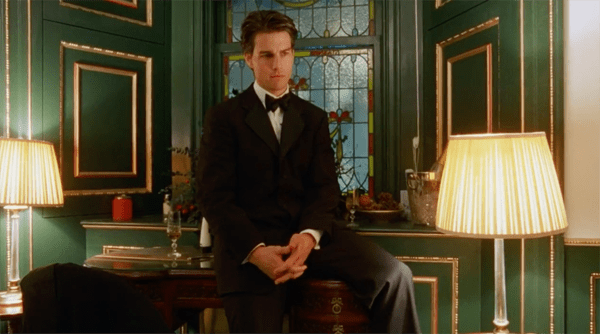
If you accept that all art is manipulation, which you should, then it should be no stretch to conclude that artists in different disciplines have tools with which they effect that manipulation. One of Stanley Kubrick’s numerous tools, one of the implements with which he managed to transport viewers, was color. The colors have an effect. We may not be able to put into word what the effect is, for instance, of seeing the hallway of the Overlook Hotel in a river of blood in ‘The Shining,’ just as we cannot say what the effect of watching a blue-lit and perturbed Tom Cruise in ‘Eyes Wide Shut’ looking down at his sleeping wife might be. Can we say that red is the color of violence? And blue the color of foreboding? Perhaps. But we could just as easily say many other things. Marc Anthony Figueras has put together a rapidfire compilation of Kubrick’s strummings on the instrument of color, and you should take a look, at the very least to explore the effect of these dazzling onslaughts on your mind. 

Watch: Steven Soderbergh’s ‘Sex, Lies, and Videotape’: The Director’s Hand

Watch: Steven Soderbergh’s ‘Sex, Lies, and Videotape’: The Director’s Hand

It makes complete sense that Steven Soderbergh, who started with ‘Sex, Lies, and Videotape’ would go on to direct such elaborate productions as ‘Kafka’ or ‘The Knick’: if you look closely at the director’s debut, you discover that it’s a highly determined film, down to its last nail. Shaun Higgins gives the film a very careful look in his most recent video essay (the first of a projected series): the editing, the dialogue, the camera angles, everything, down to the characters’ appreciation of ice tea, are given careful scrutiny here. The film made a remarkably strong impression ion me when I first saw it, and watching this piece has helped me to understand why.

Watch: Pixar’s Best Nods to Movie History

Watch: Pixar’s Best Nods to Movie History

Even if you’re an avowed Pixar skeptic, as I am, this new video compilation by Jorge Luengo on Pixar’s movie allusions will turn your head. The reality is that what will save Pixar, in the end, is its smarts and cleverness; its visual sheen really couldn’t, unless you’ve got android DNA. Pixar films are frisky, and self-aware; their virtues show when they quote "The Shining," or "Vertigo," or "Mission: Impossible," and demonstrate that their reach expands beyond the bounds of what technological virtuosity alone can offer. Watch this, and you’ll be reminded of what it means to have fun at the movies.