WATCH: In Nicolas Winding Refn’s DRIVE, Screen Quadrants Tell A Story of Desire: A Video Essay

WATCH: In Nicolas Winding Refn’s DRIVE, Screen Quadrants Tell A Story of Desire: A Video Essay
In his latest video essay, the second in a week, in fact, Tony Zhou tackles Nicolas Winding Refn’s Drive. Interestingly, he comes at it from a geometrical standpoint, as he did in his last piece, on Kurosawa. Zhou shows that, if you look at the arrangement of figures in the film as if they were figures on a plane, their relationships clarify and intensify, and the immense care Refn put into the crafting of the film becomes evident. This is, indeed, an appropriate way to look at this film–often Ryan Gosling and Carey Mulligan seem as much like visual elements in a canvas as they resemble, in their portrayals of their characters, people we might pass on the street. Tony Zhou is on fire, and I can’t wait to see what he comes up with next.

Watch: A Video Essay on Paul Thomas Anderson’s Provocative Use of the Long Shot

Watch: A Video Essay on Paul Thomas Anderson’s Provocative Use of the Long Shot

The characters in the films of Paul Thomas Anderson share many similarities.
They come from dysfunctional families, they are desperately seeking
acceptance, they let their emotions get the best of them, and the list
goes on. But a similarity that seems to especially stand out is a sense
of isolation. Anderson’s characters are adrift, looking for someone or
something to connect with in their lonely worlds. This idea is
expressed visually through the use of long/extreme long shots. We are
often presented with characters lost within the frame, and therefore
have trouble connecting with said characters–we become isolated
ourselves. Here is a look at Anderson’s use of the long/extreme long shot
throughout his first six feature films.

MUSIC: "Alethia" by Jonny Greenwood

Films:

Hard Eight (1996)
Boogie Nights (1997)

Magnolia
(1999)

Punch-Drunk Love
(2002)

There Will be Blood
(2007)

The Master
(2012)

Jacob T. Swinney is an industrious film editor and filmmaker, as well as a recent graduate of Salisbury University.

Watch: A Video Essay on Robert Altman’s Evolution, From Early TV Work to His Last Films

Watch: A Video Essay on Robert Altman’s Evolution, From Early TV Work to His Last Films


So it turns out that Robert Altman, before Nashville, before The Long Goodbye, before Short Cuts, before The Player, directed for television. And this was good television: Alfred Hitchcock Presents, for instance. Or Bonanza. Or Combat! Or Bus Stop, based on William Inge’s famous play of the same name. At the time that he directed for TV, Altman was killing two birds with one stone, in a sense. He was making a living as a director, but he was also developing the relaxed, somewhat drifting style which would later characterize his work. And, while doing so, he was studying, in a sense, with older technicians, from whom he could learn something about craft, about structure, and about dramatic build on screen, which would serve him well when he unleashed himself into celluloid glory. This excellent Film Comment video essay by Violet Lucca takes us through Altman’s early work, offering it as a window into his later films.

Watch: The Geometry of Akira Kurosawa: A Video Essay

Watch: The Geometry of Akira Kurosawa: A Video Essay


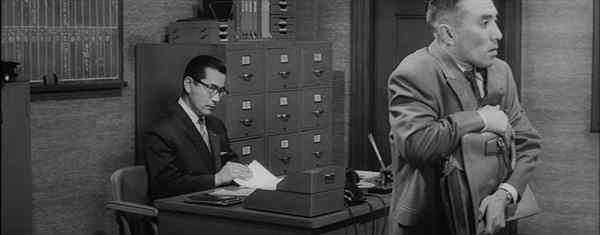
It’s not always easy to determine why some parts of an artistic piece, be it a chapter in a novel, a verse in a song, or a scene in a film, work for you, and why others don’t. The reasons why these passages work might not be immediately clear to you–and when the reasons surface, they might not be the ones you were expecting. With his inimitable zing, seasoned video essayist Tony Zhou takes us on a stroll through a scene from a classic Akira Kurosawa film, The Bad Sleep Well, and it turns out that the reason the scene "works" is its geometry, the relationship between its rectangles and its triangles, which, as you watch the scene, becomes akin to a kind of visual language. The director may not be using that language to say anything terribly complex, or that you haven’t heard before, but the succinctness and the tightness of the visual statement being made propels you, much as you might be propelled through a plotless video essay. After his verbal diagramming of this scene, Zhou suggests that we could look at all of Kurosawa’s scenes, in all of his films, this way, as geometrical compositions moving from harmony into disharmony and back.

Watch: Why Are the LORD OF THE RINGS Films Better Than the HOBBIT Films? A Video Explanation

Watch: Why Are the LORD OF THE RINGS Films Better Than the HOBBIT Films? A Video Explanation

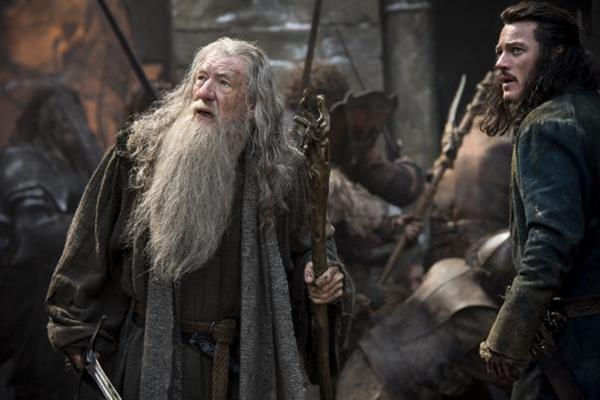
Whether you’re a fan of Peter Jackson’s films of J.R.R. Tolkien’s The Hobbit or not, this video essay by Sean Hickey gives a fairly well-reasoned explanation of why one might not have as much fun watching these films. The Hobbit trilogy, Hickey reports, takes the qualities that made the Lord of the Rings films so successful: grand scale, interpersonal intrigue, suspense, believable conflicts, and tries to reproduce them, in some cases aping the older film, without much success. You’ll see a lot of your favorite clips from both parts of the story here, but marshalled in support of a fair question: why try to improve on a formula that worked so well in the first place? And why divide it up into three parts?

Watch: Sword Fights from SEVEN SAMURAI to KILL BILL to STAR WARS, and Onward…

Watch: Sword Fights from SEVEN SAMURAI to KILL BILL to STAR WARS, and Onward…

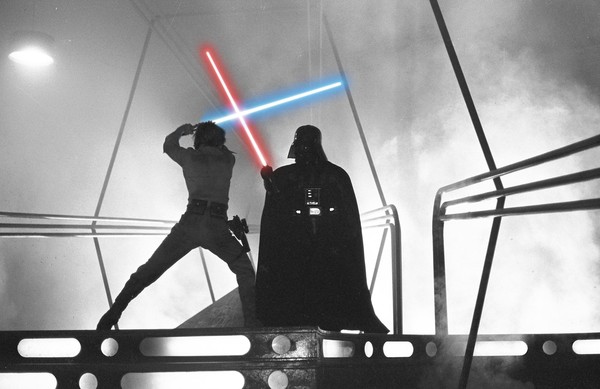
Admit it. You love a good sword fight in a film. Admittedly, you may not have seen a good sword fight in a film in a while, given that recent movies have more of a preference for gunplay, but… There’s something unusually nerve-wracking about watching sword fights, be it the revenge matches in the Kill Bill films, the sizzling smash of light sabers in The Empire Strikes Back, or the timeless deftness of Crouching Tiger, Hidden Dragon. Maybe it’s the alternation of vigorous movement with near-frozen, tense stares? Or perhaps it’s the knowledge that such combat requires more dexterity than most of us could muster on a regular day–and so the swordplay is a reminder that we are, in fact watching a movie? Whatever the case, this (literally) breathtaking piece by Clara Darko will transport you: enjoy!

Watch: Title Sequences: The Leap from Alfred Hitchcock to David Fincher

Watch: Title Sequences: The Leap from Alfred Hitchcock to David Fincher

Alfred Hitchcock and David Fincher have made remarkable thrillers, and they have also been responsible for some wildly imaginative title sequences. This video essay by Susana Sevilla shows us how, as filmmakers have transitioned to digital filmmaking, the images they present us with have changed as well. Savila focuses on contrasting the angular, stylish titles of Psycho or North by Northwest with the more surreal, dreamlike sequences of films like Se7en or Panic Room. Both directors’s openers are disorienting, certanly; they bring us from the day-world outside the theater into the night-world within it, and they drive home that what we are watching on the screen is not real, never will be real, and will force us into direct contact with the more discombobulating parts of our imaginations. Because the directors are using different tools, though, their ways of easing us into the strange dream of their movies is different; a different visual language is being spoken by Saul Bass in the older films than the one being spoken by Kyle Cooper in the later films. Whatever the language, though, this well-researched piece makes a concise point deftly and elegantly. Watch it, and behold title sequences that are like small movies by themselves.

Watch: A Video Essay About Stanley Kubrick’s Influence on Wes Anderson and Others (NSFW, Maybe)

Watch: A Video Essay About Stanley Kubrick’s Influence on Wes Anderson and Others (NSFW, Maybe)

Press Play veteran Nelson Carvajal offers, with this video essay, a look at the ways Stanley Kubrick has visually influenced many directors, including Wes Anderson, Paul Thomas Anderson, Alfonso Cuaron, and others. As Carvajal superimposes one scene on top of another, you may spot connections you hadn’t made before–or perhaps some you had made without quite realizing it yet. To add to the fun, Carvajal has presented some of the clips in mirror fashion, like a kaleidoscope–all too appropriate, because, after all, the modern work reflects and builds upon its predecessors as much as it creates a world of its own. Right?

Watch: Eyes in the Films of Darren Aronofsky: A Video Appreciation

Watch: Eyes in the Films of Darren Aronofsky: A Video Appreciation

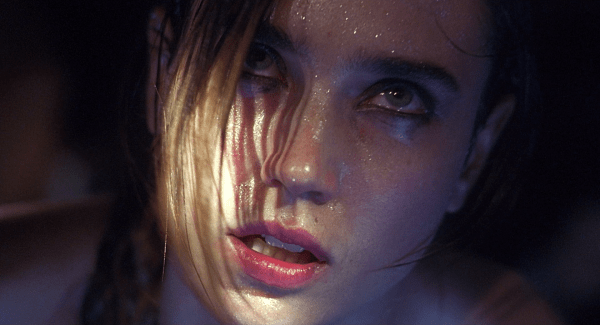
When Darren Aronofsky focuses on a character’s eyes, the story told will be different than the story told when Hitchcock does it, or Bergman does it. Aronofsky uses eyes to show precariousness, to show how close we all are to falling, at every moment. In Requiem for a Dream, we could say that Marion has already fallen. In The Wrestler, we could say that Randy knows he has fallen but is struggling to right himself, to pull himself back up. In Black Swan, Nina knows she is falling, but the particular fall she takes provides her with a toxic charge. This video mix by Vimeo user "WarmBakedBread" gives us a laparoscopic glimpse of the lives Aronofsky portrays, and invites us to witness de-evolution at its most thrilling.

Watch: Why DO the Characters in Quentin Tarantino’s PULP FICTION Spend So Much Time in the Bathroom?

Watch: Why DO the Characters in Quentin Tarantino’s PULP FICTION Spend So Much Time in the Bathroom?

Of the myriad questions raised by Quentin Tarantino’s now-classic Pulp Fiction, I would have to confess that one of them was not, for me, "Why do the film’s characters spend so much time in the bathroom?" And yet this video essay by Michele Bucci raises the question, and answers it, and argues for its validity. The answer is more complicated than you might think–it reaches towards both the true definition of pulp, as well as examining what’s going on (beyond the obvious) when Vincent Vega, Mia Wallace, et al. are in that little room. Enjoy!