Watch: How the Boulder Scene from ‘Raiders of the Lost Ark’ Was Made and Why It Lasts

Watch: How the Boulder Scene from ‘Raiders of the Lost Ark’ Was Made and Why It Lasts

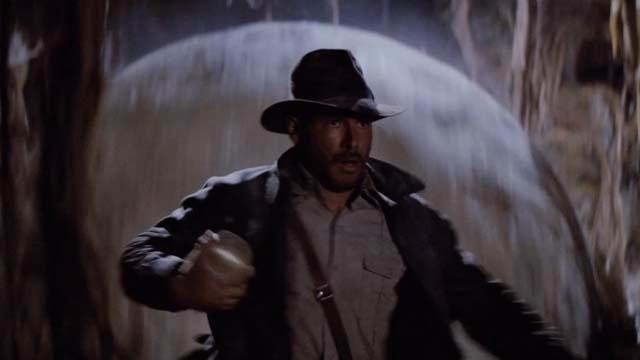
There were many scenes from Raiders of the Lost Ark that thrilled my preteen mind: brushing the spiders off a man’s back, the melting eyeballs, the unleashing of the power of the Ark. But, in the end, a scene of Indiana Jones being chased by a large boulder down a long tunnel wins. Why? Not sure. It has metaphorical power, I suppose–maybe it’s the opposite of the myth of Sisyphus, in which a man pushes a boulder up a hill for eternity? Maybe because it was the sort of gut-level entertainment that we rarely see in unmitigated, pure form in films these days? In any event, this brisk and informative "Art of the Scene" installment from Cinefix lays out the history of the film, and, for our edification, the details of the making of the boulder scene. We learn, among many other things, that George Lucas got the idea for the boulder from a Scrooge the Duck comic book, and that the sound of the boulder rolling is actually the sound of the wheels of a Honda Civic, rolling on gravel. Enjoy!

Watch: The Power of Reflection in 120 Films (in Five Minutes)

Watch: The Power of Reflection in 120 Films (in Five Minutes)

Reflections
are a common find in every type of film, but what can we learn from them? 
What does it mean when a character gazes emptily into his or her own
reflection?  What is communicated when the filmmaker decides to focus on
the characters’ reflections rather than on their actual bodies? 
  There are several ways a reflection may be presented to us–we see
them in mirrors, windows, water, shiny surfaces–each holding numerous symbolic
interpretations.  Of course, just as sometimes a "cigar is just a
cigar," a reflection is often just a reflection.  If a character is
grooming in the bathroom, a reflection would clearly be a natural part of the
scene.  But even in cases such as this, the way the said reflection is
presented to us may hold deeper significance.

A recurring
idea expressed through reflections is duality.  Travis Bickle talking to
his reflection in Taxi Driver, the gasoline puddle foreshadowing Harvey Dent’s
disfigurement in The Dark Knight, and the overwhelmingly disorienting
mirror placement in Black Swan are prime examples of duality expressed through
reflections.  Reflections shown in the mirror of a vehicle can often
express regret, dwelling on the past, and isolation.  In Brokeback
Mountain
, Jack watches as Ennis becomes belittled by the distance in his side-view
mirror.  In Drive, we are frequently presented with the driver reduced
down to eyes in the rear-view mirror–this is all he has.  Sometimes
reflections are manipulated to help us feel the inner turmoil of a
character.  Rayon is pigeonholed into the tiny makeup mirror reminiscent
of his lifestyle in Dallas Buyers Club, Lou Bloom’s inner disconnect is
portrayed through his fragmented reflection in Nightcrawler, and Ed Avery’s
unpredictable state of mind is visually expressed through his fractured mirror
in Bigger Than Life.  Reflections presented in reflective surfaces other
than mirrors seem to suggest an intrusion of some sort.  As the elevator
doors close in Lost in Translation, Bob’s own identity is forced into his
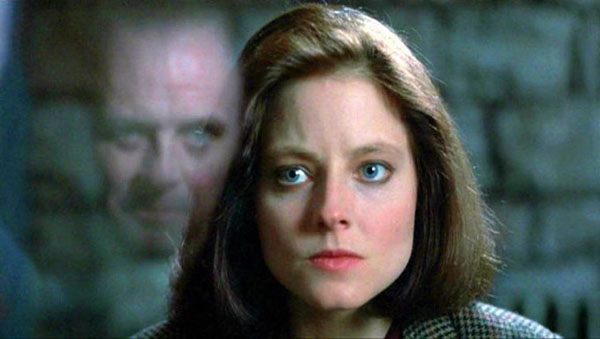
view.  During Clarice’s close-up in Silence of the Lambs, Dr. Hannibal
Lecter’s reflection in the prison wall monopolizes the frame–he is in
control. 

When used in a
significant manner, reflections can effectively communicate intricacies of a
character’s thoughts, feelings, and secrets that would otherwise not be
expressed visually.  Here is a look at significant reflections in 120
films. 

Watch: Why the Colors of ‘The Unbreakable Kimmy Schmidt’ Are So Important

Watch: Why the Colors of ‘The Unbreakable Kimmy Schmidt’ Are So Important

On what level do we notice the colors a director of a film or TV show chooses? When we watch, we’re noticing all kinds of other things: the dialogue, the intrigues, the humor, the suspense. We don’t necessarily always consciously notice the way directors help these things work together; we don’t necessarily instantly analyze what’s happening on screen; we don’t necessarily think of film as a visual phenomenon first. And why should we? Why should we view these works with special technique-detecting goggles on? We shouldn’t, but, as Todd VanDerWerff points out in this excellent Vox video essay, there may be a reason for our positive response to a show or film, and that reason may lie with the director’s ingenuity, rather than the twistings and turnings of individual taste. It’s a simple point, possibly, and almost tautological, but one worth making, lest we see ourselves as mindless amoebae, wondering from one stimulus response to another. VanDerWerff trains his sights here on The Unbreakable Kimmy Schmidt, one of the more interesting serial dramas around at this moment, novel for both its storyline and its hyper-caffeinated, fresh-from-left-field approach to storytelling; there have been precious few TV dramas that made cults an integral part of their storyline, though they might have appeared in the occasional school-of-Law-&-Order procedural every now and then. The piece clues us in to the director’s ingenious use of colors here, primarily, also giving us a small glimpse of enough TV history, via a clever timeline and some fast shots of older shows, to drive home the idea that experimentations with the clash of Day-Glo colors and milder hues, of the colors of emotional overdrive with its bland opposite, are yet another indication of the rare and strange period of TV history in which we live. A piece like this reminds me of what a writing teacher once said after a rather long monologue on technique: "These are terrible things to think about, but they’re wonderful things to have thought about." If you’re a fan of this show, maybe this careful examination will make you more aware of technique the next time (or two) you watch.

Watch: A Supercut of Over 300 Ass-Kicking Women

Watch: A Supercut of Over 300 Ass-Kicking Women

There’s a lot of visceral pleasure to be had in Entertainment Weekly‘s new supercut of "women who kick ass." First, there’s the title. What does it mean, exactly? If someone "kicks ass," does that mean they’re vindictive? Don’t take prisoners? Judge with an iron fist? Yep. Or could it mean the individual in question is a trendsetter (hateful word, but accurate)? Or is it just a sexiness thing, the thought being that once a woman reaches a certain level of sex appeal, she can be said to… "kick ass"? Or maybe the "kicking ass" came first? Whose ass, exactly? Everyone’s? One person’s in particular? Sure, it’s a metaphor, but the farther you dig into it, the more elusive it becomes. In any event, the video is wonderful. It’s fun to watch Joan Jett do anything, but singing "I Love Rock’n’Roll" is one of those things. The same goes for Nancy Sinatra and "Bang Bang." Or Mary Poppins. Or Madonna. The way Jonathan Keogh mixes and matches these images of women in moments of power and electricity is thrilling–two particularly choice moments were watching Winona Ryder in Beetlejuice dancing to "All the Single Ladies" or hearing Maureen Stapleton’s Edith Bunker shout "I ain’t taking no orders," followed immediately by Ellen DeGeneres saying, "Yes, I’m gay." But there are many others. These clips have nothing and everything to do with each other–they illustrate a paradigm that has survived and grown through a century of cultural rippling, a paradigm of matriarchy, a paradigm of femininity.

Watch: An Unsettling Mash-Up of Terrence Malick’s ‘Days of Heaven’ and Woody Allen’s ‘Manhattan’

Watch: An Unsettling Mash-Up of Terrence Malick’s ‘Days of Heaven’ and Woody Allen’s ‘Manhattan’

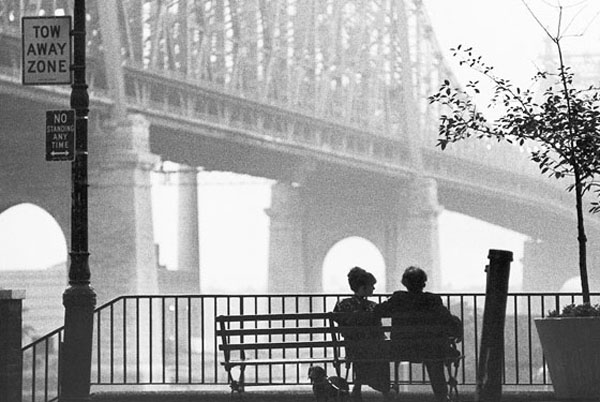
Terrence Malick and Woody Allen would seem to make a rather odd pair, but the reality is that, as this piece by Vince Di Meglio shows, the two have more in common than one might think. Di Meglio has taken the opening voice-over from Malick’s Days of Heaven and spliced it over the opening shots of Manhattan–and then done the reverse, taking Woody Allen’s novel draft stops-and-starts from Manhattan and placing them over the opening scenes from Days of Heaven. And… to be honest… it works quite nicely. The angst-ridden tones of the Malick film complement Allen’s vast, black-and-white Gordon Willis vistas, just as the aspirational tone of the Manhattan voice-over portends the desperation soon to be seething in Days of Heaven, after its opening frames. It doesn’t hurt, either, that the movies were relatively close in release date; their evident sympathetic relationship here could be because they were part of a larger, more romantic zeitgeist than the one we have at present.

Or maybe not.

Watch: How Can Music Shape a War Film?

Watch: How Can Music Shape a War Film?

Just as war is inexplicable, music is inexplicable. We can describe both: one is violent, savage, sometimes needless, uneven; the other operates by relationships between sounds that simply work, remaining in our memory for reasons we can’t pinpoint. It makes sense, then, that music would be important to war films. It’s hard to forget, for instance, the sound of Wagner’s "Ride of the Valkryies" blasting from the helicopters in Apocalypse Now. The tension in the "I don’t know but I been told" marching song in Full Metal Jacket is palpable, especially given what lies ahead of the singing trainees. And the whistling melody from The Bridge Over the River Kwai is a classic–which I once whistled with a small group during summer camp as a child, not realizing the full significance of the tune. This video essay by Ian Magor uses these and other scenes to show us how music can affect the way we
perceive war in movies–and can "allow us to rediscover our humanity."

Watch: The Gangster Face in 50 Movies: A Compilation

Watch: The Gangster Face in 50 Movies: A Compilation

What is it about the gangster face? Not so long ago, we ran an excellent video essay by Nelson Carvajal that celebrated the brash, tough, hypnotic, quintessentially macho quality of "gangster culture" in film. Now, Jorge Luengo has posted a piece digging into similar territory but with a narrower focus: the face. The alternately calm and monstrous face of Robert DeNiro’s Al Capone in The Untouchables. Or his affable but menacing face as James Conway in Goodfellas. Or… the grizzled visage of Jack Nicholson as Frank Costello in The Departed. Or the near-theatrically sad, almost noble face of Marlon Brando’s Don Vito Corleone in The Godfather. Or Al Pacino’s twitching, ever-animate countenance as Tony Montana in Scarface. Or, reaching back a little, Warren Beatty’s handsome Clyde Barrow in Bonnie and Clyde. Or James Cagney’s craggy Rocky Sullivan in Angels with Dirty Faces. Strung together with the ubiquitous "Little Green Bag" song from Reservoir Dogs, this piece truly makes one reflect on the face of the gangster, in every sense of that phrase. So what is it, I ask again, that’s so fascinating here? Is it the fact that we can’t be entirely certain what lies beneath that face? Or is it that the gangster isn’t sure either?

Watch: Akira Kurosawa’s Love of Movement: A Video Essay

Watch: Akira Kurosawa’s Love of Movement: A Video Essay

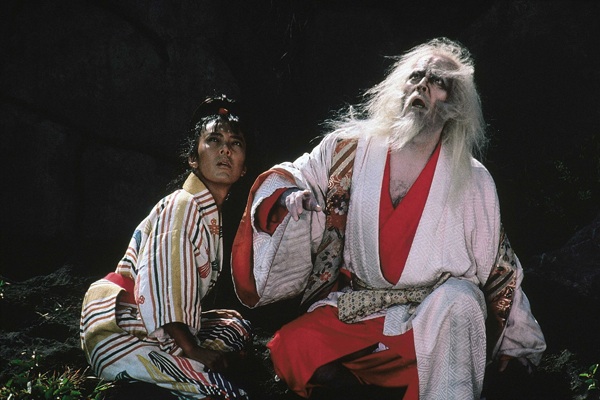
Tony Zhou has looked at Kurosawa before, as when he examined the Japanese director’s use of geometry in a crucial scene from ‘The Bad Sleep Well.’ In this piece, he takes a more wide-ranging look at the director’s work to show how, in films from ‘Throne of Blood’ to ‘The Hidden Fortress’ to ‘Ran,’ movement is essential to every Kurosawan frame. Zhou’s central idea is that Kurosawa unifies motion and emotion, so that one force speaks through another–and proposes that superior films follow suit, across the board. At one point, Zhou even uses this idea to critique one of the many mediocre scenes in The Avengers, indicating that if we judged the scene by movement alone, without knowing anything about the story, we wouldn’t know what was going on–whereas in Kurosawa, movement tells the story as well as the dialogue.

Watch: Who’s Your Favorite Movie Hamlet?

Watch: Who’s Your Favorite Movie Hamlet?

Many people have portrayed Hamlet: actors ranging from Kenneth Branagh to Kevin Kline to Ethan Hawke have tried their hand at inhabiting Shakespeare’s moody Dane. It’s not a role, though, that anyone can really claim ownership of–paradoxically, the qualities that make Hamlet a human character, namely indecisiveness and an enduring tendency to stare into the abyss of the self–are the exact qualities that make the role impossible to play without interpretation that leaves out some element of the character. My personal favorite Hamlet is Ethan Hawke’s, in Michael Almereyda’s marvelous modernized adaptation; Hawke gets at Hamlet’s weakness and simultaneous rage growing out of that weakness with memorable intensity and absorption. This piece, one of many on YouTube from the too-self-deprecatingly named JoBlo Movie Trailers which weaves different movie interpretations of Hamlet together with the famous "To be or not to be" soliloquy, takes us on a grand tour of one of Shakespeare’s most bottomless creations.

Watch: What Do David O. Russell’s Characters All Have in Common?

Watch: What Do David O. Russell’s Characters All Have in Common?

A character in a David O. Russell film cannot
be easily described in a few words. Russell’s characters tend to
possess a variety of contradicting qualities that spin and twist
throughout the duration of the film. It started in 1994 with the
quirky, baby-faced pre-med student who just so happens to have an
incestuous relationship with his mother (Spanking the Monkey). There’s
also the romantic and volatile mental patient who wants nothing more
than companionship (Silver Linings Playbook). And let’s not forget the
pudgy, comb-over-sporting con artist with a heart of gold (American
Hustle
). With all of Russell’s characters, we often witness a turbulent
assortment of emotions, ranging from one end of the spectrum to
the other–we see greed and sympathy, violence and tenderness,
neurosis and confidence. These characters are clearly not simple,
but ironically enough, they usually have one simple desire. And while
these characters may seem to be unlikeable on paper, in spite of their
tedious and often aggravating complexities, we cannot help but like
them. Here is a look at David O. Russell’s unpredictable characters
from 1996’s Flirting with Disaster to 2013’s American Hustle.

Films used:
Flirting with Disaster (1996)
Three Kings (1999)
I Heart Huckabees (2004)
The Fighter (2010)
Silver Linings Playbook (2012)
American Hustle (2013)

Jacob T. Swinney is an industrious film editor and filmmaker, as well as a recent graduate of Salisbury University.