CANNES 2012: David Cronenberg’s COSMOPOLIS

CANNES 2012: David Cronenberg’s COSMOPOLIS

null

Billionaire business mogul Eric Packer (Robert Pattinson) treats his body like a temple, receiving a health assessment from a physician every day like clockwork. One such appraisal takes place midway through Cosmopolis, David Cronenberg’s talky and occasionally scathing post-modern nightmare about the downfall of capitalism in the modern age. This gnarly doctor’s visit includes a brutally frank rectal exam that becomes highly erotic for both Eric and a female colleague standing inches away.

The physical body and all its beautiful horrors have long been essential to Cronenberg, but in Cosmopolis they become a way station for penetrating absurdities and diseased ideas. Lengthy dialogue-driven sequences, most taking place between Eric and various lovers, employees, and business advisors inside his brilliantly white high-tech stretch limousine, explore the way we construct fantasy and gather data to justify our hollowed-out existences. If Eric’s descent into the heart of darkness is any indication, we’ve failed.

Adapted from Don DeLillo’s famous novel, Cosmopolis faithfully follows Eric on a long and slow jaunt across Manhattan to get a haircut. Multiple complications threaten to compromise his trip, including a visit from the U.S. President and the funeral for a famous rap star. During his Ulysses-like journey, Eric’s professional and physical worlds quickly collapse, revealing the ideological rot and deformation of his soul that has been repressed underneath a mountain of wealth. Constantly questioning and forever yearning, Eric is the ultimate empty vessel trying to reclaim something, anything in the way of an identity.

But it’s not just Eric’s existence that seems on the verge of self-immolation: the entire city is tipping into the void. Angry protesters spray-paint Eric’s limo during a heated battled with riot police, screaming “A specter is haunting” while flinging dead rats in every direction. Burning bodies litter the sidewalks, protesters who’ve made the ultimate sacrifice in the name of anarchy. Eric displays a shocking indifference to it all, more concerned with discussing his own self-involved questions about the minutiae of societal contradictions.

If “time is a corporate asset,” as Eric’s advisor Vija Kinsky (Samantha Morton) suggests, then Cosmopolis strips away the 24/7 urgency of capitalist intent and allows one of its titans to ponder the possibilities of his own failure. The entire film is measured in detailed prose and combustible mise-en-scene. In one of the few times Eric leaves the safe haven of his limo, he watches a pick-up basketball game from afar, asking his bodyguard Torval (Kevin Durand) if he likes to play the sport. The sudden consequences of this conversation send Cosmopolis even deeper into a psychological abyss, one in which Eric embraces his own disintegrating persona, seemingly leaving the regular world (if there ever was one) behind.

For a Cronenberg film, Cosmopolis is light on violence and body horror, but the director’s obsession with evolving ideas and tainted perspectives remains on full display. Pattinson brings a ghostly intensity to the demanding role (Eric is in every scene), a trait that becomes even more dynamic in the film’s great final sequence. But does it all add up to something more than a series of striking vignettes about the downfall of personal will? Even if Cosmopolis feels stunted by its limitations of setting and movement, it manages to make small urban spaces feel combustible, ready to explode on a moment’s notice. For that, this is quite the dangerous method.

Glenn Heath Jr. is a film critic for Slant Magazine, Not Coming to a Theater Near You, The L Magazine,andThe House Next Door. Glenn is also a full-time Lecturer of Film Studies at Platt College and National University in San Diego, CA.

CANNES 2012: Koji Wakamatsu’s 11/25: THE DAY HE CHOSE HIS OWN FATE

CANNES 2012: 11/25: Koji Wakamatsu’s THE DAY HE CHOSE HIS OWN FATE

null

Legacy is the thing in 11/25: The Day He Chose His Own Fate, Japanese guerilla filmmaker Koji Wakamatsu’s remarkable drama about the death of militant poet/novelist Yukio Mishima. Wakamatsu (United Red Army, Angelic Orgasm) knows that Mishima, a jingoist who committed seppuku at Tokyo’s Ministry of Defense, was obsessed with political action and what future generations would take away from his work. This is why Wakamatsu’s film, whose docudrama realism contrasts sharply with Paul Schrader’s oneiric depiction of Mishima in Mishima: A Life in Four Chapters, is so concerned with Mishima’s ritual suicide. Wakamatsu’s ambiguous but sometimes-fawning representation of this enigmatic event's aftermath is problematic but just as vital a work of revisionist cinema as his essential United Red Army.

Wakamatsu’s character arc for Mishima (superbly rendered by Arata) in The Day He Chose His Own Fate tellingly revolves around his death. Variations on the question, “When is the day you will die,” mark the frustration and broad beats of Mishima’s pre-suicide activities. But this myopic focus also makes Masakatsu Morita (Shinnosuke Mitsuhima), Mishima’s most ardent acolyte and the only other follower who committed suicide with him, a crucial supporting character in Mishima’s story.

Wakamatsu examines Morita’s pre-seppuku activities with similar fascination for the most part, as in a scene in which a fisherman reminds Morita and a student colleague of the potential consequences of their pseudo-revolutionary actions. But the fact that Wakamatsu consistently lavishes Morita’s activities with almost as much attention as Mishima’s, from Morita's expulsion from college to his reunion with Mishima, is a clear sign of Wakamatsu’s admiration for Mishima’s drive towards death.

After all, we don’t really know much about Mochimaru, Mishima’s original second-in-command before Morita’s promotion. Morita wouldn’t be as close to Mishima if Mochimaru hadn't departed. But Mochimaru’s most important moment in the film is a scene in which he tells Mishima he has to get a job and marry, rejecting Mishima’s counter-offer of a salary for his Society activities. “Should passion be submerged by absurdity,” Mishima murmurs in response, making it seem as if Mochimaru is only really important to Mishima’s story for leaving it.

More importantly, Wakamatsu’s depiction of the speech Mishima delivers before killing himself is equally problematic. Mishima’s speech is filmed from just below the balcony where he speaks. It’s therefore impossible to see the crowd he’s addressing, or the lack thereof. The sounds of yelling and the drone of a nearby helicopter periodically increase, and grainy images of what or may not be footage of police and onlookers are interspersed with Mishima’s speech. But all this does is ground this crucial scene in Mishima’s tortured headspace. Wakamatsu doesn't quite indulge Mishima’s romanticism at this moment or elsewhere in the film, instead ineffectually complicating it.

However, Wakamatsu’s portrait of the artist as an obsessed, self-fashioned martyr is periodically gripping for the way it develops its concern with legacy. Scenes like the one where a journalist looks over a glossy photo of the Shield Society members, with each member identified on the back, achieve the thoughtfulness Wakamatsu is known for. Also, Arata’s performance is so nuanced, giving Wakamatsu’s Mishima an air of troubled grace. I’m especially impressed with the sequences where Mishima descends his home’s staircase for the last time, passing each step with a surreal detachment. 11/25: The Day He Chose His Own Fate is not as rigorous a work as it should be, but it is a complex and absorbing re-interpretation of the Mishima legend.

Simon Abrams is a New York-based freelance arts critic. His film reviews and features have been featured in The Village Voice, Time Out New York, Slant Magazine, The L Magazine, The New York Press and Time Out Chicago. He currently writes TV criticism for The Onion AV Club and is a contributing writer at the Comics Journal. His writings on film are collected at the blog, Extended Cut.

CANNES 2012: Carlos Reygadas’ POST TENEBRAS LUX

CANNES 2012: Carlos Reygadas’ POST TENEBRAS LUX

null

Narrative is the devil in Carlos Reygadas’s baffling and intoxicating Post tenebras lux. Finding any coherent structure or storyline in Reygadas’s deeply autobiographical film about a wealthy family’s daily existence in the Mexican countryside is next to impossible. The normal markers of story (psychology, back story, motivation) are all either denied or abstracted through the haze of memory and natural splendor, temporal uncertainties and jarring cuts. The result is a disjointed collection of sublime images, haunting sounds, and elliptical tangents, parts of an attempted exploration of the elemental nature of trauma and isolation. But does the film succeed?

In the film’s mesmerizing opening sequence, Reygadas positions his handheld camera at the eye level of a toddler walking slowly through a vast field surrounded by mountains. As the young girl stomps through puddles saying words like “father” and “mother,” the heft of the moment evokes Malick’s The Tree of Life. Hordes of dogs roam in and out of the frame, then stampeding horses fill the background space. When darkness overwhelms the image, and flashes of lightning provide the only sporadic illumination, the girl’s small figure takes on a near-mystical quality. The entire sequence is an overture to instinctual cinema.

While kinetic movement and wonder define Post tenebras lux’s impressive prologue, stagnation and rot permeate the rest of the film, the product of an overt sense of evil in mankind. This trend begins with the image of a glowing red devil entering a dark living room holding a toolbox, scanning each room, standing face to face with a child, and disappearing behind a closed door. Paternal wickedness is a longstanding theme for Reygadas, and the heightened visualization of Satan as a father figure returning home from work aptly connects with Post tenebras lux’s two perpetually conflicted male characters.

Juan (Adolfo Jiménez Castro), a sporadically violent man trying to repress his rage, lives with his wife Natalia (Nathalia Acevedo) and their two children in a posh villa located deep in the high mountains. Their handyman El Siete (Willebaldo Torres), an alcoholic and deadbeat father, grapples with his own internal demons. Reygadas crosscuts between the two men's slow unraveling over time, jumping forward and backward without any semblance of logic. Sudden violence, as when Juan brutally beats one of his dogs, is the only thing interrupting the rest of the film’s mind-numbing stasis.

With Post tenebras lux, Reygadas, the talented Mexican director behind Japon, Battle in Heaven, and the brilliant Silent Light, expands the anarchic sense of time and space he first explored in his loony short for Revolucion into an entire film.  Nothing adds up in this mostly maddening cinematic experience, but everything feels connected by the same ethereal view of environment, in the way characters languish, and in the nuances of a shifting world half-remembered.

Reygadas seems to be examining his own failure to visualize the past, one example being several gigantic falling trees in the film’s final sequence. Or the fact that all of Post tenebras lux is filmed using a camera lens that blurs the exterior of the frame, leaving only the center clearly defined. When characters move from one side of the image to the other, their bodies suddenly double, refracted by the beguiling aesthetic. For Reygadas, emotional memory is an impenetrable beast, and in many ways, so is Post tenebras lux.

CANNES 2012: Lee Daniels’ THE PAPERBOY

CANNES 2012: Lee Daniels’ THE PAPERBOY

null

In Precious: Based on the Novel 'Push' by Sapphire, Lee Daniels deplorably used sizzling pigs' hooves, mommy issues, and incestuous rape to shed light (ineptly) on the difficulties of growing up black in a broken home. In The Paperboy, he alternatively sends up and embraces hick stereotypes while also mootly insisting that issues of race and sex are, like, complicated. So, when not switching between mocking and then sympathizing with his execrably two-tone characters, Daniels makes pat statements about passion and prejudice. Based on Peter Dexter’s novel by the same name, The Paperboy is so trite and rabidly campy that you often have to wonder what you should and shouldn't be laughing at.

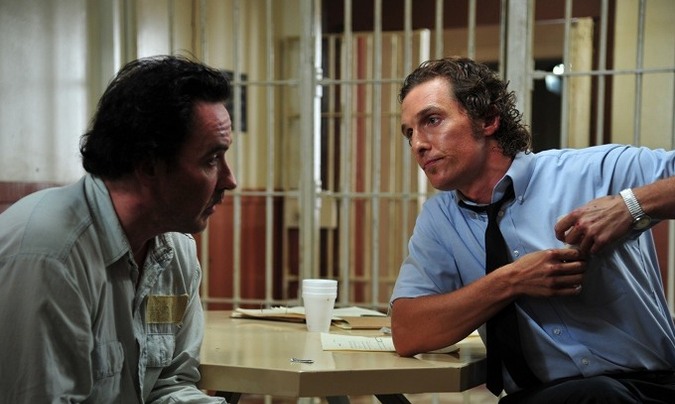
Daniels loves to pick on and then half-assedly elevate soft targets as martyrs. High School Musical's Zac Efron plays Jack, a former collegiate swimmer and part-time journalist. Jack is also the subject of a true story Anita (Macy Gray) recounts, decades after the film's events have taken place. The time is 1965, and the place is Moat County, Florida, where the white folks are mostly racist and clueless. As newspaperman Jack joins his brother Ward (Matthew McConaughey), their nymphomaniacal collaborator Charlotte (a self-debasing Nicole Kidman), and Yardley (David Oyelowo), a black writer from London, to investigate the case of convicted death row prisoner Hillary (a deliriously on-point John Cusack), they inadvertently uncover just how obnoxious a Lee Daniels movie can get in the name of ostensibly self-aware humor and indefensibly trite humanism.

That’s right, Daniels tries to be funny sometimes, a concept that totally undermines scenes in whixh he's trying to show sympathy for his characters. The scene of Charlotte and Hillary's first meeting is one such moment, in which Daniels mercilessly pokes fun at both characters for being uncouth, rednecks, and in heat. Hillary ignores the other men in the conjugal cell where he first meets Charlotte, demanding that Charlotte show him her panties and make an obscene face. She consents, and something more than the desired result is achieved. Daniels further mocks Charlotte later on by having her urinate on Jack after he’s stung by a flock of jellyfish—she even goes as far as to ward off other girls who try to whizz on him by screeching, “If anyone’s going to piss on him, it’s going to be me!”

But later, Charlotte’s character is given what she thinks she wants most: a chance to love Hillary. This predictably turns out to be not only not what she wants but also one of many crucial moments where Daniels self-seriously asserts that his film isn’t just, ahem, taking a piss with its characters. Late in the film, Charlotte reluctantly allows herself to be abused by Hillary, suggesting that Daniels thinks he’s meeting his film’s source material at its low-brow level, hence appropriately sending it up whenever necessary.

However, Daniels isn't Paul Verhoeven, and The Paperboy isn't high kitsch, just pompous, condescending trash. Even Verhoeven wouldn’t be brazen enough to ask his viewers to take seriously the unrequited romance between Anita and Jack, a tepid inter-racial romance that never becomes much more than a bathetic subplot. The two actors have no chemistry, fitting for a charmless, schizoid film like this. The best that can be said of The Paperboy is that it’s sometimes intentionally awful. More often than not, however, it’s just awful.

Simon Abrams is a New York-based freelance arts critic. His film reviews and features have been featured in The Village Voice, Time Out New York, Slant Magazine, The L Magazine, The New York Press and Time Out Chicago. He currently writes TV criticism for The Onion AV Club and is a contributing writer at the Comics Journal. His writings on film are collected at the blog, Extended Cut.

CANNES 2012: Walter Salles’ ON THE ROAD

CANNES 2012: Walter Salles’ ON THE ROAD

null

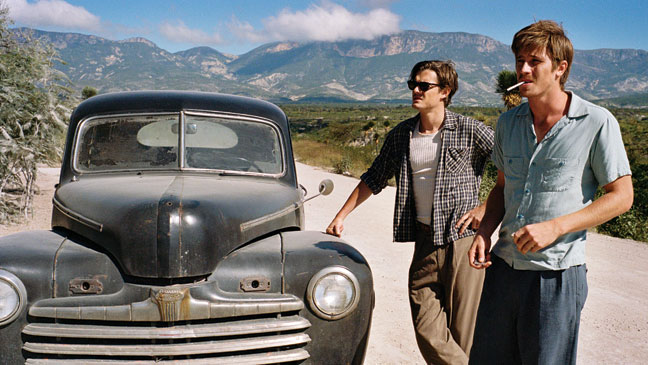
Walter Salles’s painfully literal-minded On the Road is a chore to watch. Unlike its source material, Jack Kerouac’s sui generis, fictional beatnik opus, Salles’s adaptation is flat-footed and monotonous. Salles and screenwriter Jose Rivera counter-intuitively eschew Kerouac’s anecdotal and dizzyingly nimble style of stream-of-consciousness prose to attempt a straightforward, narrative-bound film of it.

The film's narrative is at its best when it veers into impressionistic territory showing us isolated images of an itinerant Sal Paradise’s (Sam Riley) feet or the symbolic road whizzing past him, echoing Kerouac’s immortal bohemian poetry. Unfortunately, Salles and Rivera rarely allow viewers to think for themselves or to appreciate the agony and ecstasy of the nomadic romantic lifestyle. Instead, they superimpose voice-over narration, often taken verbatim from Kerouac’s book, onto these beautifully spare images. Everything in Salles and Rivera’s On the Road is explicitly spelled out, nothing is left to the viewers’ imagination, and no one scene ever feels as alive as Kerouac’s novel.

Sal’s narrative begins and ends with his friendship with Dean Moriarty (Garrett Hedlund), the leader of a pack of vagabond writers. In Salles’s film, Dean is more of an emblematic personality than anyone else. While Dean’s mistreatment of his wife Camille (Kirsten Dunst) is ostensibly addressed at the film’s end, Salles and Rivera are ultimately more interested in making viewers pity Dean. By film’s end, Dean’s disillusionment speaks louder than anyone else’s feelings, making Salles and Rivera’s On the Road more of an artistic manifesto than a turbulent account of artistic self-fashioning. According to Salles and Rivera, the end of Sal and Dean’s story is the end of a boho dream.

Sal and Dean travel the country several times over with a couple of friends and lovers, stealing food, doing drugs, and having sex with each other whenever they can. These characters are in the process of creating a new life for themselves, ignoring the mandates of a square society that isn’t, as Sal puts it, as “mad” as Sal and Dean are for experiential pleasure. This makes squares like Galatea Dunkel (Mad Men’s Elizabeth Moss), the wife of the dowdy and largely absent-minded Ed Dunkel (Danny Morgan), semi-sympathetic obstructions to Sal and Dean’s free-wheeling good times.

But Kerouac’s story should feel like a long and alternately wonderful and alienating trip, not a joy ride whose cheap thrills are sometimes hampered by the periodic jettisoning of human baggage. Therein lies the main problem with On the Road: Salles and Rivera indulge their protagonists, and then sometimes acknowledge the consequences of their actions, when in fact the book was less programmatic.

The weakest aspect of On The Road is the thoughtless way Sal and Dean are immortalized. Kerouac’s protagonists were never heroes, but rather people who experienced things that radically changed their points of view. Just because these characters periodically say that they want to do exactly what they wound up doing doesn’t necessarily make their actions good, valorous, or un-problematically romantic. Salles and Rivera love On the Road’s characters and world too much to know how to properly represent them.

Simon Abrams is a New York-based freelance arts critic. His film reviews and features have been featured in The Village Voice, Time Out New York, Slant Magazine, The L Magazine, The New York Press and Time Out Chicago.He currently writes TV criticism for The Onion AV Cluband is a contributing writer at the Comics Journal.His writings on film are collected at the blog, Extended Cut.

CANNES 2012: Leos Carax’s HOLY MOTORS

CANNES 2012: Leos Carax’s HOLY MOTORS

null

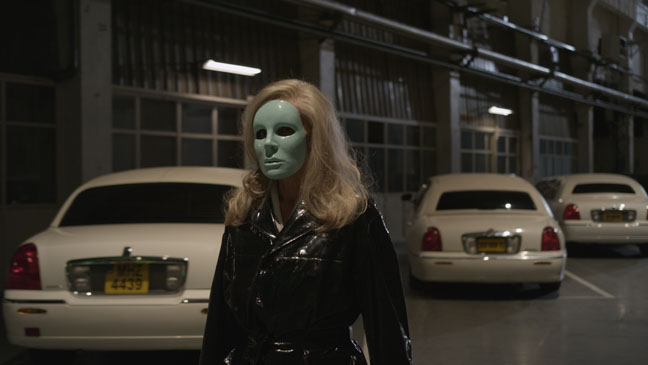
Where does one begin with Leos Carax’s insane Holy Motors? Maybe its incredible central performance(s) by Denis Lavant, who literally transforms into a different character in nearly every other scene, each one stranger than the next? Or perhaps its stark raving mad narrative that bends so far into the absurd, it threatens to break apart? There’s no easy answer, because Holy Motors evolves with each passing minute, both brilliantly human and purposefully silly, a prism of performance and death so different from other films that it seems to have been beamed down from another planet.

Whether you embrace or reject Holy Motors’s challenging approach (I’m still on the fence), it’s impossible to deny that Carax has created a singular mosaic, the rare film that doesn’t just crush the basic rules of storytelling but reinvents them. Lavant plays Oscar, a shape-shifting chameleon who travels around the dark streets of Paris in a white limousine driven by his advisor/chauffeur Céline (Edith Scob). Oscar hatches a new identity between each stop, as if constant metamorphosis were integral to his survival. The interior of his car is a dressing room, the outside world his stage. Oscar’s characters range from a bald assassin to an angry family man to his previous incarnation “Merde,” a raging man-beast who first appeared in the omnibus film Tokyo.

The scenarios following each transformation examine the dynamic power of cinema (with long tracking shots, detailed blocking, kinetic movement), but also the different emotions an actor can express mid-moment. Instant rage and tenderness co-exist in the Merde segment, in which the hunched-over psychotic roams a cemetery, eating flowers, capturing an American model (Eva Mendes), and subjecting her to one of the most bizarre ceremony scenes ever. Lust and instinct dominate the section in which Oscar wears a motion capture suit, grinding on another female actor in what Carax himself calls the “Coitus” dance. Their erotic physical movements lead to the animation of two mind-blowing dragon figures. A motif of mutual destruction runs throughout the film, especially in one sequence in which two identical characters stab each other in the throat, as if the very act of performance could destroy the humanity beneath the mask.

Like Alain Resnais’s You Ain’t Seen Nothing Yet, Holy Motors explores the way performance can transcend death, evoking a collective joy in direct contrast with the consistent physical ugliness on display. The film’s most rousing sequence is also its most random: Oscar leads a marching band of accordion players around a closed-off room, the camera tracking backward constantly, so it looks as if the camera is pursued by the musicians. If this sequence resonates with inspiration and joy, the musical number later in the film (with another time-traveling performer played by Kylie Minogue) is fraught with tragedy. As Oscar trails slowly behind, the woman walks through a gutted-out hotel, stepping over pieces of dismembered mannequins littering the floor. Carax's creation of dualities is endlessly fascinating.

Late in the film, Oscar confesses, “we’re having a ball in the back of beyond,” but the exhaustion on his face tells a different story. Sometimes living so deeply inside your profession is punishing to the point of madness, and with so many masks layered on top of each other, identity becomes fluid, random, even combustible. Holy Motors ends with a series of ridiculous revelations that really don’t reveal anything except more possibilities. Is Oscar an angel? Or a player in the devil’s most sadistic recess game? Like everything in Holy Motors, the answer is up for endless discussion.

CANNES 2012: Andrew Dominik’s KILLING THEM SOFTLY

CANNES 2012: Andrew Dominik’s KILLING THEM SOFTLY

null

It’s a testament to Australian director Andrew Dominik’s considerable story-telling abilities that a movie as nakedly cynical and aggressively repellent in its philosophy as Killing Them Softly is as satisfying as it is. Dominik adapted Killing Them Softly’s screenplay himself, from George V. Higgins’s novel of the same name, and it shows. The ambiguous, larger-than-life macho men in Dominik’s Chopper, The Assassination of Jesse James by the Coward Robert Ford and now Killing Them Softly are all of a piece. They all have one foot in their own self-mythologizing headspaces and the other in the future they believe is just around the corner. But unlike those two earlier films, the macho-est man of all in Killing Them Softly knows exactly what the future holds—but he just doesn’t care.

The present of Dominik’s latest film is a dystopian version of contemporary America. Chest-thumping tough guys and hand-wringing power brokers abound, none as tough as they’d like others to think. This is especially true of Jackie Cogan (Brad Pitt), a hitman hired to knock off two bottom-feeding hoods who rob a group of well-connected gangsters at an illegal poker game. Since this is the second time the games have been robbed, confidence in these illegal card games is at an all-time low. Business needs to pick up and fast. Enter Cogan, introduced with a tongue-in-cheek song cue of Johnny Cash’s “When the Man Comes Around.” Yes, Brad Pitt is God and the Economic Apocalypse is upon Obamerica. Heavy-handed, sure, but consistently self-serious? Not so much.

That having been said, Killing Them Softly can just as easily be characterized as a plaintive howl of disaffection with, according to Dominik, President Obama’s failure to deliver on his 2008 campaign’s promise of “change” and bipartisan unity. This brazen and largely idiotic lament drones in the background of Killing Them Softly’s loud and hearty heist-and-doomed-getaway narrative until the film’s last scene. Throughout, Dominik inserts snippets from televised and radio addresses where both George W. Bush and Obama, still a senator at the time, talk rhetorically about what needs to be done to fix America’s ailing economy. At the end, Dominik effectively slaps his viewers in the face (back-handed!) and dares them to like it. But until then, Dominik masterfully develops his film’s ultimately untenable thesis.

For example, the film’s song cues and fetishistically detailed slow-motion scenes of violence (they’re not really action scenes) lend an air of ambivalence to the film’s otherwise dour proceedings. Cues from Depression-era standards like “Life is Just a Bowl of Cherries” and “It’s Only a Paper Moon” are sandwiched between songs like “Heroin” and “Windmills of Your Mind,” creating a weird ahistorical context in which every confrontation seems simultaneously over-dramatic and self-deflating.

Thankfully, Dominik is a great meat-and-potatoes visual story-teller. He paces scenes composed entirely of conversations, framing them with ostentatious care and dyspeptic whimsy: Killing Them Softly ultimately suggests Zodiac as directed by Paolo Sorrentino.

Dominik also fleshes out his characters effectively, making them the human context for his film’s polemical and largely vague political posturing. The director draws striking parallels between Cogan’s character and his friend Mickey (James Gandolfini), a fellow hitman who’s gone to seed in just two years’ time, as well as with the two-bit robbers that Cogan is hired to kill. Killing Them Softly does fall apart completely in its last scene, in which Cogan venomously explains that America is “not a country: it’s a business,” smugly using the fact that Thomas Jefferson, the great unifier, owned and had sex with his slaves as proof. But until then, Dominik does a fantastic good job of selling curdled milk.

Simon Abrams is a New York-based freelance arts critic. His film reviews and features have been featured in The Village Voice, Time Out New York, Slant Magazine, The L Magazine, The New York Press and Time Out Chicago.He currently writes TV criticism for The Onion AV Cluband is a contributing writer at the Comics Journal.His writings on film are collected at the blog, Extended Cut.

CANNES 2012: Abbas Kiarostami’s LIKE SOMEONE IN LOVE

CANNES 2012: Abbas Kiarostami’s LIKE SOMEONE IN LOVE

null

Denial and delusion ripple the pristine visual surface of Like Someone in Love, Abbas Kiarostami’s masterful critique of social and emotional formality, set in Japan. The importance of perception cannot be understated here, since the film often buries its cutting ideology beneath a measured narrative pace interspersed with hypnotic silences. Whereas Certified Copy, Kiarostami’s previous cinematic riddle set outside his home country of Iran, splits the narrative midway through to accentuate the sudden fracturing of romantic love, Like Someone in Love waits until the bitter end to reveal its true nature. In this way, the film is far more disturbing and cagey than anything Kiarostami has done before, examining just how fragile public personas can be when pushed to the limits of control.

Tragic warning signs abound in Like Someone in Love, menacing clues hiding inside each polite glance and in the long conversations between subdued characters. In the film’s multi-layered opening shot, Akiko (Rin Takanashi) argues off-screen with her fiancé Noriaki (Ryo Kase) over the phone as patrons of a posh bar converse. Ambient sounds overlap with her words, blurring the lines of communication even further. The subject of the couple’s heated conversation is trust, or a lack thereof, and since we hear Akiko’s voice before we see her body, it’s clear Kiarostami is concerned with the patterns of verbal discourse and how they can hide our true intentions.

After Akiko hangs up the phone, her boss warns against being involved in such a volatile relationship, advising her to focus entirely on her job as a sex escort. Even though her profession is not necessarily reputable, the older man treats Akiko much like Noriaki does: as an object of formal pride he wants to entomb.

When Akiko is tasked with visiting a client outside of Tokyo, she debates whether or not she should to stop and see her grandmother, who’s left her phone messages while waiting all day for a visit.

Cruising the hyper-colored streets of Tokyo in a taxi, Akiko spots her grandmother underneath a statue outside the train station, her small frame dwarfed by the distance of the shot and the size of the monument. Akiko asks the driver to circle the roundabout once, then twice, obviously struggling to reconnect with her familial past. It’s a wonderfully staged sequence, in which POV advances her character, confirming that she is perpetually stifled by the requirements of formality.

When Akiko finally arrives at the quaint house of retired academic Takashi (Tadashi Okuno), she quickly becomes an emblem of formality for the respected man as well. One line of dialogue late in the film suggests that Takashi has suffered a terrible family trauma in the past, and his fatherly interactions with Akiko certainly suggest that he wants her to play the role of his surrogate daughter. This dynamic is eventually extended by Noriaki, a talented mechanic determined to make Akiko his wife. Noriaki’s obsession with formality is the most constricting of all, almost religious in nature.

Kiarostami plays with color and depth throughout, spraying green and blue hues across the urban frame, layering reflections so that many images feel infinitely realized. Even more so than Certified Copy, Kiarostami’s mise-en-scene attains a level of classiness that ultimately imbues the mostly subtext-laden set pieces with visual grace. The titular song adds an even richer dimension to the languishing and hazy mood in many interior scenes.

The characters of Like Someone In Love fortify their emotions by reinforcing the façades of love, independence, and family they so desperately want to protect. But one supporting character actually speaks truth. A former student of Takashi’s, whom he and Akiko meet while visiting Noriaki’s auto shop, confesses to his ex-teacher that “violence in society interests me.” The horrifying frankness of his statement, and the restrained way it is spoken, breaks Kiarostami’s mosaic of formality for a split second. No one takes these words seriously, and that becomes the key to unlocking Like Someone in Love’s core thesis.

Long dialogue-heavy car rides, sobering reflections, and protracted shot-reverse-shot segments comprise the film’s pulse, all vintage Kiarostami aesthetics that deflect the story’s subtle threads until the consequences of this collective refusal come crashing through the frame. Ultimately, Like Someone in Love assesses the way people (and societies) ignore their own destructive traditions over large gaps in time, bleeding the reserves of emotional infrastructure dry, one false-bottomed promise at a time.

Glenn Heath Jr. is a film critic for Slant Magazine, Not Coming to a Theater Near You, The L Magazine, and The House Next Door. Glenn is also a full-time Lecturer of Film Studies at Platt College and National University in San Diego, CA.
CANNES 2012: Hong Sang-soo’s IN ANOTHER COUNTRY

CANNES 2012: Hong Sangsoo’s IN ANOTHER COUNTRY

null

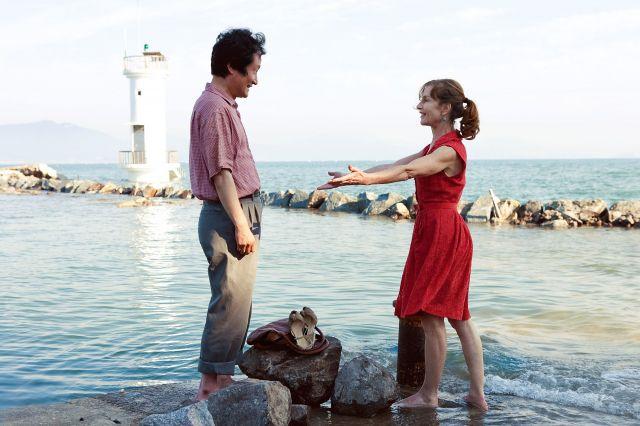
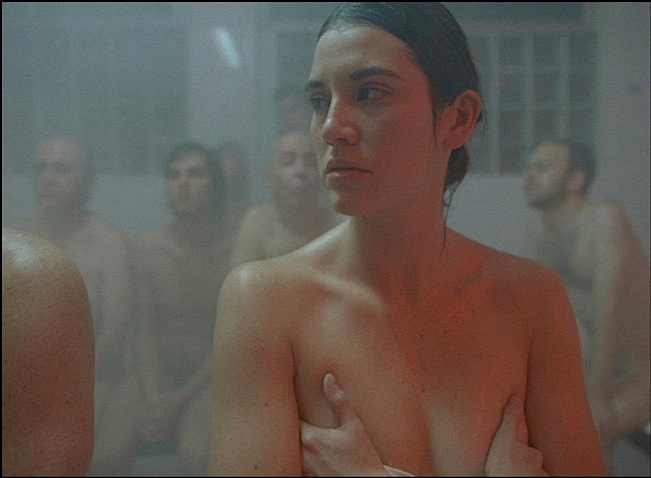
The screenwriting process produces a kind of sandbox cinema in Hong Sang-soo’s In Another Country, the Korean director’s latest jazz riff on human interconnection. The film’s beach side location may be consistent with earlier films, but its unique characterizations traverse freely outside the logic of conventional storytelling. Made up of three separate pieces, each revolving around a different character played by French actress Isabelle Huppert, the film addresses the overlapping ripple effect of miscommunication, and how a world can be expanded or quantified by simply noticing (or remembering) the details of your surroundings.  

From its beginning, In Another Country somersaults forward, spinning and turning on a dime whenever it pleases. The opening scene finds a woman writing a script in her beachside villa, passing the time by flexing her creative muscles, to avoid dealing with the uncertainties of life. Hong then dives inside her imagination, showing us the film's succeeding stories in chronological order and connecting each divergent thread through recurring dialogue and characters. A product of the hazy desire to experiment with time and space, much of In Another Country feels lovingly improvised, light as the persistent whisper of raindrops in its background. There’s very little rush to the character’s actions, in keeping with the island feel of the mainland coastal setting.

Hong is fascinated with the way people interact during awkward situations, focusing organically on the random channels of human movement and speech in times of momentary duress. The first section of In Another Country, in which Huppert’s famous actress visits a Korean director at his vacation home by the sea, is hilarious because it frames controlled confusion in a loving manner. The climax of Huppert’s indoctrination into the natural rhythm of this particular Korean community occurs when she interacts with a local lifeguard (Yu Junsang) who seems hell bent on pleasing her, no matter the cost. Their respectful banter is something special, in which two people cross paths and can’t quite figure out how to connect.

Like virtually all of Hong’s films, In Another Country is made up of diverging narrative tracks unfolding inside the same universe. Props, lines of dialogue, and character expressions all show up multiple times, but always within a different context. As a result, similar situations and motivations that repeat under similar circumstances are given unique qualities specific to the moment they occur. Hong has played with temporal bridging so many times, most wonderfully in last year’s Un Certain Regard entry The Day He Arrives. But In Another Country feels wonderfully lost at times, almost lovingly so, as if to evade anyone attempting to put a label on its freeform verses. Time really doesn’t matter here.

By the end of In Another Country, Huppert’s performing triptych reveals a surprising balance of tones, whisking comedy and tragedy together to establish a level of nuance that connects the three women as unknown kindred spirits. Taken in context, this is exactly what makes Hong’s films so indelible: the spacious and formative revelations people experience during everyday conversations that sneak up suddenly, and then quietly change your life.

Glenn Heath Jr. is a film critic for Slant Magazine, Not Coming to a Theater Near You, The L Magazine, and The House Next Door. Glenn is also a full-time Lecturer of Film Studies at Platt College and National University in San Diego, CA.

CANNES 2012: Brandon Cronenberg’s ANTIVIRAL

CANNES 2012: Brandon Cronenberg’s ANTIVIRAL

null

Antiviral, Brandon Cronenberg’s directorial debut, proves the apple really doesn’t fall far from the tree. Like his father David Cronenberg’s early features, Antiviral is more of a collection of inspired, perverse ideas than a cogent piece de provocation. To be fair, Antiviral’s vision of the soon-to-be corrupt future is derivative, which would be a moot point if it didn’t evoke David Cronenberg films like Crash and Videodrome. But at the same time, Antiviral is more than sufficiently novel to be entertaining, even if Brandon Cronenberg’s script and direction are not as sufficiently assured.

Brandon Cronenberg imagines a world where people’s celebumania has mutated into an obsession with contracting famous people’s exotic diseases, which will literally consume their flesh. His debut has promise, though it lacks the conviction that we’ve come to associate with his father’s movies, over time.

Syd (Caleb Landry Jones) is a salesman at a clinic dedicated to infecting plebs who want to contract various diseases, including herpes, from their favorite celebrities. Syd is also a viral mule, inoculating himself and smuggling bugs out of the clinic to sell on the black market. Unfortunately for Syd, the latest bug he’s contracted, this time directly from “perfect” celeb Hannah Geist (Sarah Gadon), is of unknown origin and probably lethal.

While Syd looks for a cure, both for himself and for Hannah, he navigates between two predictably similar different worlds. The clean world of radical new cosmetic technology and antiseptic clinics is necessarily similar to the black market world of stem cell muscle steaks grown from human tissue samples. The representatives of both sides are equally morally bankrupt and practically cutthroat, from Arvid (Joe Pingue), the butcher who buys viruses and sells human meat, to Syd’s boss, Edward Porris (Douglas Smith), the CEO who publicly denies the ethical dubiousness of his practice to a reporter. 

Syd’s character arc is thus defined by his struggle to neither identify with nor distance himself from either side. The result of this class-based tug-of-war is not hard to guess. (Spoilers ahead, though not really!) Since he’s caught between two stations and has an unidentified sickness gnawing at his guts, Syd inevitably grows to accept that he wants to buy what Arvid and Edward are both selling. In one scene, Syd looks on with awe at an interactive TV console in a seedy club that allows customers to dominate a helpless celebrity, virtually. After the celebrity mewls and begs him, still an anonymous, un-committed voyeur, to tell her how she should hurt herself, Syd starts to become convinced.

In the end, Syd doesn’t wind up anywhere unexpected. He’s not a obsessed cipher like Videodrome’s Max Renn, or a free-wheeling pervert like Crash’s James Ballard, but rather an embroiled collaborator. His fate is too neat to be really transgressive, an effect which is, ironically enough, one of the most salient ways Brandon Cronenberg’s first work differs from most of his father’s work. On some level, David always knew how to push buttons, even if he did get better at it as he went along. Brandon’s a better scenarist and idea man than he is as a button-pusher though. One can only hope his follow-up is a little more distinct, or, barring that, a lot more confident.

Simon Abrams is a New York-based freelance arts critic. His film reviews and features have been featured in The Village Voice, Time Out New York, Slant Magazine, The L Magazine, The New York Press and Time Out Chicago. He currently writes TV criticism for The Onion AV Club and is a contributing writer at the Comics Journal. His writings on film are collected at the blog, Extended Cut.