

 [EDITOR'S NOTE: Sarah D. Bunting of Tomatonation.com is watching every single film nominated for an Oscar before the Academy Awards Ceremony on February 26, 2012. She is calling this journey her Oscars Death Race. She has completed the category for Best Actress and now surveys the competition. For more on how the Oscars Death Race began, click here. And you can follow Sarah through this quixotic journey here.]
The BAFTAs complicated this assessment somewhat, but at least we can predict with a reasonable degree of confidence who isn't going to win. And now, the firm of Streep Davis & Others, LLC…
The nominees
 Glenn Close (Albert Nobbs): Well, we know Close has looking apprehensive down pat; it's what she spends the bulk of the movie doing. It's a pity, in a way, because she's obviously close (…sorry) to the material and she spent years and years trying to make the project happen, but she didn't have enough distance on it, I don't think; the film is overworked, and so is this performance.
Viola Davis (The Help): The early leader until Streep snagged the BAFTA, Davis makes the movie around her performance seem better than it is by association — more thoughtful, more credible. She's really good. Could still win if voters decide it's the only one The Help should be getting (and I would agree there).
Rooney Mara (The Girl with the Dragon Tattoo): I enjoyed her, but I might have enjoyed almost anyone; I'm not sure how much of the performance was the character. Good work; no shot.
 Meryl Streep (The Iron Lady): Streep is extremely good, and she's playing some wet toilet paper in that role. Until the BAFTA, I considered the nomination her award, a thanks for yeoman service, but she's probably going to win. Hated the movie, liked the work, fine with me.
Michelle Williams (My Week With Marilyn): Technically accurate but not terribly interesting portrayal of a figure I already found not terribly interesting.
Who shouldn't be here: I would have preferred to see Williams nominated for Meek's Cutoff instead. It's not surprising that movie threw a shutout nominations-wise, though I loved it, but that would likely have been its shot. Close's character is grating, but the performance itself is fine. I don't really take issue with these.
Who should be here, but isn't: Elizabeth Olsen for Martha Marcy May Marlene, maybe, but I don't feel super-strongly about it.
Who should win: Slight edge to Davis.
Who will win: Slight edge to Streep.
Sarah D. Bunting co-founded Television Without Pity.com, and has written for Seventeen, New York Magazine, MSNBC.com, Salon, Yahoo!, and others. She's the chief cook and bottle-washer at TomatoNation.com. For more on how the Oscars Death Race began, click here.
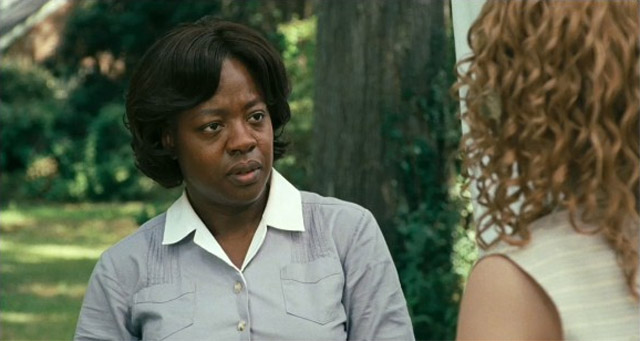
 The power of the performance is in Davis’ eyes. They take in everything – tossed-off racist remarks, a child’s need to be comforted. And her voice, which never rises above a formal submissiveness, quivers with a boiling anger that stands for generations of women whose hard work goes unnoticed. It’s a voice that needs to be heard.
 Press Play Video Blog