Watch: Robert Bresson, Master of the Self-Sustaining Shot

Watch: Robert Bresson, Master of the Self-Sustaining Shot

Robert Bresson was a French filmmaker whose minimalist approach to filmmaking and dedicated precision in his style made him a favorite among his contemporaries and the following generation of filmmakers—most notably Jean-Luc Godard and Andrei Tarkovsky, both of whom cited him as a strong influence. His filmic philosophies of using real locations, non-actors, and retaining authorial control helped to inspire the start of the French New Wave.
 
Bresson was born in 1901 in central France and later moved to Paris where, as a young man, he wanted to be a painter. In fact, he didn’t make his first feature film until he was already in his early forties. By that time, he had been a prisoner of war for a year and his debut film, released in 1943, would be his only feature film made during the Nazi occupation of France. The film is titled ‘Angels of Sin’ and follows a young woman who decides to become a nun. ‘Angels of Sin,’ as well as his second film, would be the only of Bresson’s films to feature a cast of professional actors.
 
His time spent as a prisoner of war would influence one of his most famous films, titled ‘A Man Escaped,’ which follows a French Resistance fighter in Nazi-occupied France named Fontaine, who is taken prisoner. The film traces Fontaine’s attempts to escape the prison, and the story is based on a real person named Andre Devigny who managed to escape a Nazi-run prison in France during World War II. Bresson tells this story as factually as possible—the events are not sensationalized, and this allows us to better connect with the experience of Fontaine’s predicament and put ourselves in his shoes.
 
Catholicism would also be a major influence on his work, showing up in nearly all of his films, and several center entirely around the religion. Bresson himself was said to have identified as a “Christian Atheist,” although it is unclear to what extent. The themes of his films range from finding salvation and redemption to commentary on French society.
 
Perhaps his most famous film, titled ‘Pickpocket,’ follows a thief learning and practicing techniques to master his craft. Bresson’s discipline as a painter most likely contributed to the precision of his shots. He would storyboard his shots alone and then set his drawings aside never to look at them again during production. He is well-known for fragmenting the body through composing shots of hands or feet, which was part of his aim to find and define the language of film as opposed to many other films, which could just as easily be done on the stage.
 
In his forty years of filmmaking, Bresson would make only thirteen films, yet his impact on cinema as an art form leaves us with a masterful and unique demonstration of what the medium can do.


Clips:

‘Angels of Sin’ (1943 dir. Robert Bresson)
‘Diary of a Country Priest’ (1951 dir. Robert Bresson)
‘A Man Escaped’ (1956 dir. Robert Bresson)
‘Pickpocket’ (1959 dir. Robert Bresson)
‘The Trial of Joan of Arc’ (1962 dir. Robert Bresson)
‘Au hasard Balthazar’ (1966 dir. Robert Bresson)
‘Mouchette’ (1967 dir. Robert Bresson)
‘A Gentle Woman’ (1969 dir. Robert Bresson)
‘L’argent’ (1983 dir. Robert Bresson)
‘Breathless’ (1960 dir. Jean-Luc Godard)

Tyler Knudsen, a San Francisco Bay Area native, has been a student of film for most of his life. Appearing in several television commercials as a child, Tyler was inspired to shift his focus from acting to directing after performing as a featured extra in Vincent Ward’s What Dreams May Come. He studied Film & Digital Media with an emphasis on production at the University of California, Santa Cruz and recently moved to New York City where he currently resides with his girlfriend.
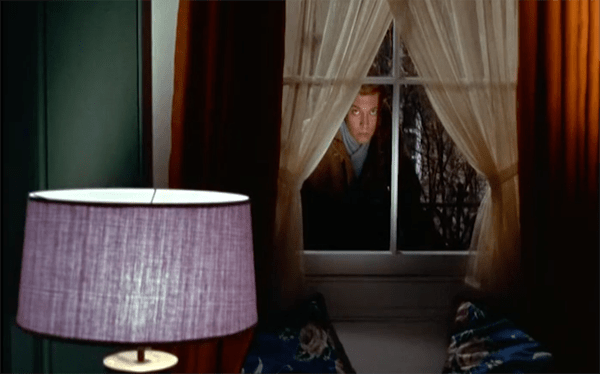
Watch: Michael Powell’s ‘Peeping Tom’ Painted the Perversity Born of Loneliness

Watch: Michael Powell’s ‘Peeping Tom’ Painted the Perversity Born of Loneliness

Of course Martin Scorsese championed Michael Powell’s ‘Peeping Tom.’ Scorsese knew a fellow connoisseur of isolation when he saw one. This video essay by the Weld Art Collective deftly explores this classic, teaching a little bit about its remarkable director, as well as his frequent collaborator Emeric Pressberger. Without films such as this story of a murderous, perverted photographer, the films of Brian DePalma, David Lynch, Ken Russell, and other similar directors would either be different or would not exist. Powell’s films have an enduring mystery about them, possibly because he takes on subjects which are themselves, in a sense, depthless. 

Watch: Paul Thomas Anderson’s Very, Very Independent Roots

Watch: Paul Thomas Anderson’s Very, Very Independent Roots

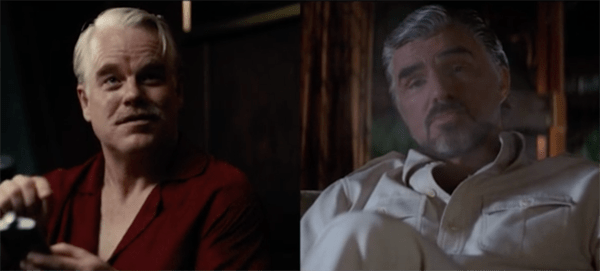
Watching a director in their earliest attempts can be highly enlightening about their future methods and work, as shown in this new video essay in the Raccord collective’s excellent Directors Series, made by Cameron Beyl, about the starting years of Paul Thomas Anderson. Not only do we glance at ‘The Dirk Diggler Story,’ the very cheaply made short that blossomed into ‘Boogie Nights,’ but we also take a look at ‘The Hard Eight,’ the gorgeous gambler drama that would give Gwyneth Paltrow one of her great early roles. Enjoy.

Watch: Michael Mann As a Master of Digital Filmmaking in ‘Public Enemies’

Watch: Michael Mann As a Master of Digital Filmmaking in ‘Public Enemies’

In this installment of "The Unloved," a series of video essays for RogerEbert.com on films which didn’t necessarily find widespread critical acceptance on their delivery, Scout Tafoya takes up ‘Public Enemies,’ Michael Mann’s voyage to the 1930s gangster universe of John Dillinger and his ilk. Tafoya emphasizes the degree to which Mann made digital cinematography his own in the film, an interesting point and one which, if applied properly, could be a mind-changer in looking at this less popular of Mann’s films. At the time the film was released, Press Play published Nelson Carvajal’s gangster movie homage, whose text accompaniment a skeptical eye on the film’s chances—this video piece by Tafoya might encourage those who shared that skepticism to give the film a second look. 

Watch: The Doorway Shot in Film Points Outwards and Inwards at the Same Time

Watch: The Doorway Shot in Film Points Outwards and Inwards at the Same Time

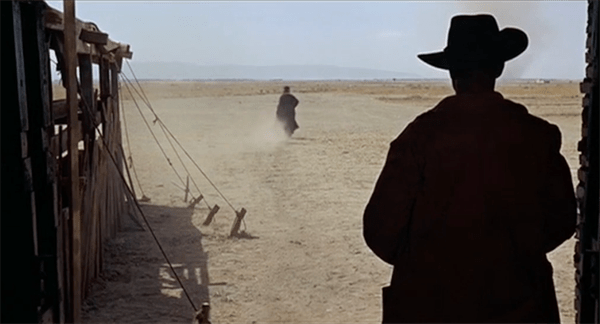
If a director places a figure standing in a doorway, looking off into the distance, where does the viewer’s gaze go? Invariably, it will both go through the doorway, towards all that lies beyond it, but it will also, in a strange way, go back inwards, towards all a character may be turning away from or leaving. This new video compilation by ever-prolific Jake Swinney for Fandor takes us through doorway shots from cinema history, starting with John Ford’s ‘The Searchers,’ which contains the grand-daddy of all doorway shots, and then moving on to directors such as Paul Thomas Anderson, Quentin Tarantino and others.

Watch: Buster Keaton’s Immortal Gags, and Their Influence

Watch: Buster Keaton’s Immortal Gags, and Their Influence

With expected aplomb and sensitivity, Tony Zhou’s newest piece gives us a peek inside the mind of Buster Keaton. Not satisfied with merely stringing together a group of gags, which would be cinematic nourishment enough in and of itself, this video essay breaks down some parts of Keaton’s gags, such as the action performed within them, the importance of the camera angle for a gag’s humor, and the physical rules of the world in which the gag occurs, while also looking at Keaton’s influence on directors such as Wes Anderson and Sofia Coppola. Because of the nature of Keaton’s humor, knowing these things about his jokes doesn’t ruin them–on the contrary, it makes them richer and stranger. And it doesn’t hurt to learn that he did so many of his own stunts… 

Watch: How Did Batman’s Gotham City Develop?

Watch: How Did Batman’s Gotham City Develop?

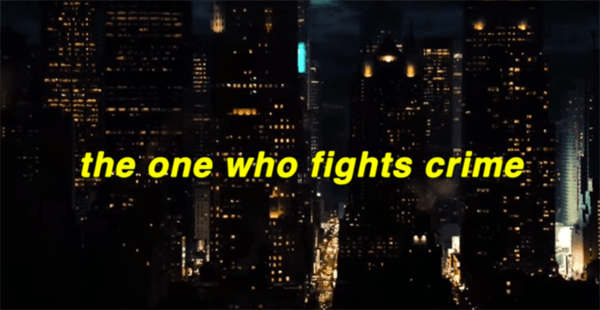
In his latest video essay, Evan Puschak, aka "NerdWriter," has taken on a potentially unwieldy subject: Gotham City. When we casually refer to "Gotham," we tend to mean a whole world of things, all centering around the crucial idea of urban corruption through political machinery. As Puschak indicates, though, the concept of Gotham City has gone through many changes from its earliest days in the Batman comic books to its re-imaginings in the hands of Tim Burton, Christopher Nolan, and the Fox Network, and at this point, if we say that Gotham City is itself a living, breathing character, we’re not necessarily spouting a cliche; the city Puschak describes here has drawn the imaginations of many for decades, and will probably continue to grow as films, books, and television shows proliferate. We just can’t get enough of it. 

Watch: In ‘Breaking Bad’ the Wide Shot Is the Gateway to the Soul

Watch: In ‘Breaking Bad’ the Wide Shot Is the Gateway to the Soul

Have you ever been to New Mexico? If you have, you would know why the wide shot is so crucial to ‘Breaking Bad.’ A story set there simply could not be filmed without giving due to the landscape’s expansiveness, to the sense that it could, in reality, progress forever, and that beyond whatever edge of the horizon you might see is not a different state, or other kinds of terrain, but just more of the same, onward and onward. For the purpose of the show, the desert wide shot reflects not so much self-realization as self-confrontation, a grappling with inner impulses, desires, and stresses uninterrupted by distractions from the world of common morality. Jorge Luengo’s newest compilation, a moving one, shows how the careful visual planning by Michael Slovis and John Toll serves to intensify and develop Vince Gilligan’s creation. 

If you’d like to see other arresting video homages to the show, check out Dave Bunting’s work here, here, or here, for starters.

Watch: What If Paul Thomas Anderson’s Films Are All Reincarnations of Each Other?

Watch: What If Paul Thomas Anderson’s Films Are All Reincarnations of Each Other?

As a filmmaker accumulates a body of work, it is inevitable that elements will recur, echoing each other and possibly growing in significance over time. Jeremy Ratzlaff proposes something slightly different about the work of Paul Thomas Anderson, suggesting that in fact his stories are all variations on each other, not an indicator of unoriginality but of symphonic intelligence. What if the tortured relationship between Daniel Plainview and Paul Sunday in ‘There Will Be Blood’ was reborn in the warped instructor-pupil relationship between Lancaster Dodd and Freddie Quell in ‘The Master’? What if the drug-addled protagonist of ‘Inherent Vice’ is actually Freddie Quell reborn? This is a finely made and meticulous consideration of an ancient truth.

Watch: Sidney Lumet’s ‘Twelve Angry Men’ Tells a Silent Story

Watch: Sidney Lumet’s ‘Twelve Angry Men’ Tells a Silent Story

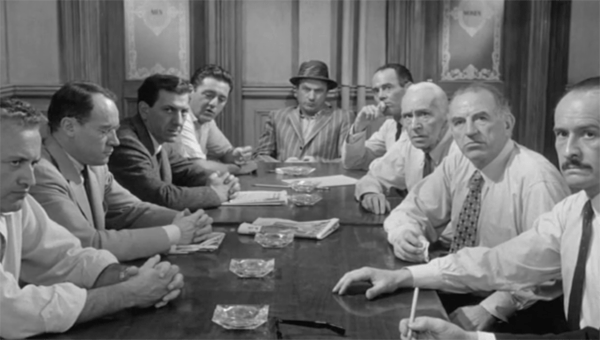
Although obviously dialogue is crucial to Sidney Lumet’s classic ’12 Angry Men,’ Filmscalpel‘s newest piece raises the following question: how crucial is it, exactly? To find out, the editors at Filmscalpel have removed the dialogue, offering us instead a series of silent scenes that tell just as compelling a story…