VIDEO ESSAY: Chaos Cinema, Part 3, Matthias Stork responds
Editor’s Note: Press Play is proud to debut part three in Matthias Stork’s Chaos Cinema, the latest installment in an ongoing consideration of a phenomenon that Stork defined in two video essays that ran on this site in August, 2011. His first two chapters touched off a firestorm of debate that’s still going on. Just last weekend, New York Times contributor Alex Pappadeascited the piece in a year-end “Riffs” column. Citing bizarre images in "the trailer for 2016, a possibly nonexistent sci-fi movie from Ghana," Pappadeas argued that the major problem with the style is that it does not go far enough. "The standard knock on Chaos Cinema filmmakers is that they’re constructing narratives entirely from rupture and collision," he writes. "But if movies are going to go there, they should really go there. Let’s stop asking directors who clearly have no affinity for story or character to pretend otherwise. Instead, let’s let the alien kick the baby, and see how far the baby will fly." That’s what Stork is doing here by addressing his critics directly using the form that has served him well in the past, the video essay. The full text of the piece’s narration is printed below. For context, we’ve also reproduced Parts 1 and 2 of Chaos Cinema as well. The comments section is open. You may fire when ready.
Chaos Cinema, Part 3
Parts 1 and 2 of my video essay Chaos Cinema argued that chaos cinema represents a major trend in mainstream action filmmaking. It could be seen as the third stage in mainstream movie storytelling.
The first stage was classical cinema. It reigned supreme from the silent era until well into the 1960s. It emphasized spatial clarity, for the most part. The goal was to keep the viewer oriented and involved. You were always supposed to know more or less where you were, where the action took place, and who was involved. And this visual clarity was only disrupted at moments of high tension.
Then came intensified continuity. It favors velocity and increases the speed of classical cinema. It still keeps the viewer oriented, but it does so in a more compact form – almost shorthand. The shots are more succinct, the cutting more aggressive, the camerawork more hectic. This is the old style, reconfigured in a new time.
The third and modern stage is chaos cinema. It makes the previous two stages look old-fashioned. The goal is total visceral impact. There is no clear axis of action that tells you where characters and objects are in relation to each other. The action does not have to be comprehensible. It has to be overwhelming. This is not the action that we have come to know in the cinema; it is the general idea of action. Chaos cinema is a vehicle for spectacle, a roller-coaster ride. It is designed to showcase attractions.
The three stages are by no means mutually exclusive. They are all interrelated and define what we see as the action film.
My video essay on chaos cinema led to an interesting discussion on the Internet. Many viewers agreed with my position. Others took issue with the argument and sought to refute or dismantle it. They posited chaos cinema as a legitimate action style, with its own purposes and goals, and criticized the videos on several grounds.
The points raised were generally instructive. And some deserve a response.
1. Chaos Cinema as Pop Art – Ian Grey, Press Play
Several commenters dismissed my point of view as romantic, misguided. They argued that chaos cinema offers filmmakers a new style for a new age.
In his engaging essay "The Art of Chaos Cinema", Press Play columnist Ian Grey defines the chaos cinema style as “pop art”, with a film syntax that better suits the trashy taste of the PlayStation-trained, YouTube-raised digital generation. He writes: "[C]lassical cinema doesn’t match the experience of a generation of Facebookers, Tweeters and Call of Duty players. It just doesn’t." In his view, chaos cinema presents the world as it is: hyper-mediated, flamboyant and excessive. And classical action cinema is simply obsolete.
Chaos cinema is undoubtedly newer, perhaps even more modern. But I do not see it as an accurate reflection of the 21st century online / gaming experience. It is at best an interpretation. Using the Internet is not the same as watching chaos cinema fireworks onscreen.
Grey also stresses chaos cinema’s potential to engage audiences, keep them awake in the soporific dream machinery of the movie theater. We agree on this one, although I do not necessarily consider it to be a virtue.
2. Chaos Cinema as Abstract Art – Scott Nye, The Rail of Tomorrow
I admit that Tony Scott’s chaos style is intriguing, especially the texture of his images. He paints with the camera in a playful, experimental manner. Or, more accurately, he splatters. Nye’s argument is thus sound in general terms.
But it ignores one thing: the genre context.
And that’s a problem with his comparison. Action filmmaking, even highly stylized action filmmaking, is really not abstract; it is literal. Its goal is to tell a mini-narrative, to record things that happen in a story for an audience that absorbs and processes the action. It is, at its basest level, a record of bodies, or objects, moving from point A to point B. Chasing. Leaping. Clashing. The action scene is <strong>a record of something concrete</strong>. Therefore,
legibility should matter. Precision should matter. Grace should matter.
Abstract artists such as Jackson Pollock or the filmmaker Stan Brakhage produced art with very different aims. Their work only has an implied narrative, no characters, no motivations, and no tangible goals beyond what the individual viewer decides to bring to the work.
And here is another important point: artists such as these exclusively work in a hermetically sealed environment: the avant-garde. They have different audiences, reception spheres and ambitions.
This is not to say that the abstract has no place in the world of narrative. But when we discuss action, should we not agree on a specific framework? Is it abstract art? Not even the great Sergei Eisenstein could produce this association. And in any event, I suspect it will be a few years before <i>Domino</i> is displayed in the Louvre.
The video essay was also dismissed as anachronistic hipster nostalgia which favors the old over the new. Film critic Matt Lynch summed up the general dissent in a rather ingenious, if reductive tweet which labeled the video essay an example of "neoclassical get-off-my-lawnism". Frankly, it is hard to rebut this accusation. I admit a certain bias towards the old.But I am by no means opposed to the new … if it acknowledges the old, and demonstrates an understanding of it, a sense of its value. There have been a number of recent films fitting that description. And I enjoyed them very much.
4. Chaos Cinema as Myopic Discourse
My seemingly wholesale condemnation of chaos cinema in parts 1 and 2 of my video essay infuriated several commenters — and in retrospect, I have to admit, rightfully so.
I did point out that chaos can be effectively used as a narrative device. But my example of The Hurt Locker did not suffice. I should have included others. And I should have made clear that not all films cited as chaos cinema were bad movies that were somehow not worth seeing or discussing. In some cases, I chose particular clips because I think the films are below average. In other cases, I selected clips only because they illustrated a certain point that I wished to make about the look and feel of chaos cinema. In other words, if anyone felt insulted or offended by seeing a certain clip in there, my apologies.
5. Chaos Cinema as Video Game Aesthetic – Matthew Cheney, The Mumpsimus
Action films and first-person shooters share certain narrative parallels. They are essentially navigations through space. As far as aesthetics are concerned, however, they could not be more different. Yes, shooters emphasize speed in all its glory, with pans, tilts and track-ins. But they transpire in a clearly defined diegetic space. There are no cuts, no disruptions, mise-en-scène rather than montage, complete stability. This is not chaos cinema. This is something else, something that cinema aspires to reproduce, by different means.
6. Chaos Cinema: Beyond the Surface – Ambrose Heron, FilmDetail
As many commenters pointed out, chaos cinema did not just magically appear in the new millennium. It was a steady process, a development. Critics such as David Bordwell, Barry Salt or Geoff King have been writing about the stylistic changes for a long time. In his essay Chaos Cinema and the Rise of the Avid, blames non-linear editing systems for the emergence of chaos techniques. This is how we should discuss chaos cinema, as an aesthetic and industrial phenomenon.
In the end, however, we all approach action films with the same mindset. To quote Michael Bay: we demand our action to be …awesome!
Matthias Stork is a film scholar and filmmaker from Germany who is studying film and television at UCLA. He has an M.A. in Education with an emphasis on American and French literature and film from Goethe University, Frankfurt. He has attended the Cannes film festival twice (2010/2011) as a representative of Goethe University's film school. You can read his blog here.
Press Play is proud to announce our first video essay series in direct partnership with IndieWire: Magic and Light: The Films of Steven Spielberg. Set to premiere Dec. 15, 2011 on this blog, this series will examine facets of Spielberg's movie career, including his stylistic evolution as a director, his depiction of violence, his interest in communication and language, his portrayal of authority and evil, and the importance of father figures — both present and absent — throughout his work.
Magic and Light is produced by Press Play founder and Salon TV critic Matt Zoller Seitz and coproduced and narrated by Ali Arikan, chief film critic of Dipknot TV, Press Play contributor, and one of Roger Ebert's Far Flung Correspondents. The Spielberg series brings many of Press Play's writers and editors together on a single long-form project. Individual episodes were written by Seitz, Arikan, Simon Abrams and Aaron Aradillas, and cut by Steven Santos, Serena Bramble, Matt Zoller Seitz, Richard Seitz and Jose Salvador Gallegos. For a taste of Magic and Light, check out the embeddable trailer above, which was edited by Serena Bramble. — Editors
EDITOR'S NOTE: Matt Zoller Seitz and Ken Cancelosi created Never Before, Never Again: Henson and Oz, a video essay which describes the collaboration between Jim Henson and Frank Oz, to mark the opening of a Jim Henson exhibit at the Museum of the Moving Image in July 2011. Press Play is re-posting that essay in advance of the release of The Muppets. Given the length of their 27-year collaboration and their creative influence on the culture, the essay makes the argument that Henson and Oz should be considered a comedy team on the level of Abbott and Costello and Laurel and Hardy. In addition,we are publishing a conversation between the essay's creators about the challenge of sustaining the Muppets after Jim Henson's untimely death .
Ken: Around 1996 or '97, Frank Oz appeared at the USA Film Festival in Dallas, Texas. He was there to give a comedy master class to young filmmakers, and he appeared at a screening of Muppet Treasure Island. After the movie he engaged the audience in a Q & A. It was interesting, because the first two questions were about the movie we'd just seen, and the next ten were about the fate of the Muppets.
We wanted to know who was going to perform these characters that we loved so much. Practically everyone in the audience was a Muppet fan, and we felt that the characters were in jeopardy because the Henson company and Disney — even in the six or seven years or so since Henson had died — had given the impression that they hadn't settled any of the issues related to how they were going to keep some of these characters alive.
We were all worried about it. The types of questions Oz was getting reflected that.
Matt: Right.
Ken: I finally raised by hand and asked my own question about the fate of the Muppets. Frank Oz answered me in a loud clear voice — after a half-hour of this line of questioning — he said, "You people are the most depressing audience I've ever been in front of."
And, Matt, you could feel the whole audience sort of hold their breath: "Oh my gosh, we pissed off Frank Oz." Well, Oz kind of sensed he'd lost the audience and he backed off a bit. I'm paraphrasing, of course — I can't remember exactly what he said — but it was something like, "What happens when any great artist dies? What happened when Jack Benny died? What happened when Groucho Marx died? We grieved for them. We grieve for Jim (Henson). Then, you look at their body of work and you look at what they have created, and you let it influence you. Once it becomes a part of you, you move on with your life. What choice do you have?"
And then he addressed those issues we were most concerned about — who was going to perform the Muppets. He said, "The Henson company will do the best they can to maintain a certain the integrity of each character, to keep up the quality of those performances. If they can't maintain the quality of the characters they will have to retire them. What choice do they have?" He was really nice about it.
I had no clue that the death of Jim Henson would effect me the degree to which it did. For that audience, his comments sort of had the effect of moving us down the road with regard to this issue.
Matt: To be fair to that audience, there is major difference between the death of, say, Jack Benny, and the death of Jim Henson. It is that the performer is not all there is to the Muppets. The Muppets are a franchise, they're a property, and they have an existence apart from the people who physically operate the Muppets. I think that what Frank Oz was coming up against in that Q&A was the reality of corporate America. These characters were properties, and so for financial reasons they had to continue, just as the Warner Bros cartoon characters had to continue after the death of Mel Blanc. Blanc was the closest thing to a Jim Henson over at Warners, in the sense that he was the creative unifier, the spirit of Warner Bros. cartoons. And, for that matter, it's not unlike what happened after Walt Disney died. After Walt Disney's death, the Disney corporation had to continue making children's entertainment for fiscal reasons. They couldn't just shut down the company. They had to find a way to keep going. Disney was like a David O. Selznick. He was the visionary and the micro-manager, and he was quality control.
Ken: Yeah.
Matt: There are two cameos in The Muppet Movie (1979) tell you everything you need to know about Jim Henson. One is Edgar Bergen's appearance at the county fair — and I believe he died not too soon after that. Right?
Ken: Yes.
Matt: Bergen is obviously so old he can barely even speak, but, it's such an incredibly affectionate close-up of him. That's influence number one. And influence number two is Orson Welles, who gets the last cameo in the film — and it's one of the greatest cameos I've ever seen, because it's like Jim Henson is trying to right the cosmic scales in his fantasy, in a way that never could happen in life. You know, giving Orson Welles, who had to fight like hell throughout most of his career to get anything made, a cameo as the head of a studio — I think that's just fabulous. Ken: [Laughs]
Matt: So in his heart, Jim Henson is Edgar Bergen plus Orson Welles. But, unfortunately, Henson had a studio, or a production company, attached to him. So he dies prematurely, and now suddenly you have the Muppets minus Jim Henson, which is just about as bad as Warner Bros without Mel Blanc or Disney without Disney.
The stuff that was made — I would say all the way up until the viral videos that appeared a couple of years ago — all that stuff didn't have the old flavor that the Muppets had when Henson was alive. They've gotten in touch somewhat with that old spirit, and I guess we'll learn when the new movie comes out whether they can bring it to the big screen again. But Jason Bellamy is right in his video essay when he says the major Muppets characters were kind of downplayed after Henson's death. Kermit wasn't really Kermit in the way that we remembered him.
And yet you've also got Muppets like Pepe the Prawn. Pepe's a fabulous character. I think he's almost as big right now as any of the other Muppet characters — you know, among the younger generation — and that's because he wasn't freighted with all of these expectations, and he wasn't carrying the tragic weight of the Jim Henson's legacy.
Ken: Yeah.
Matt: He could just be a new character.
I kind of get Frank Oz's resentment. I don't think his resentment is against the fans. I think he probably has a financial stake in the Muppets still. So, he can't say to your audience what I bet he really wanted to say, which is they should have packed it in after Henson died.
Ken: So, you think there's corporate pressure at work, not artistic pressure?
Matt: Yeah. I think the problem is that Jim Henson was a performer. He was like an actor, but in addition to that, he was a filmmaker and an impresario and a quality control guy who ran everything. So he was Edgar Bergen and he was Orson Welles, and he was also David O. Selznick. But the heart of what he did was really the performance aspect, and when he died, that was gone and could not be replaced.
I think Henson started to go astray a little bit in the 1980s, quite honestly, with things like — and I know this is blasphemy for some Muppet fans — but things like The Dark Crystal and Labyrinth. Those films are interesting, but they're the Jim Henson equivalent of Woody Allen doing Interiors.
Ken: [Laughs]
Matt: I respect those films for all the imagination involved, but I don't love them in the way that I love The Muppet Show.
Ken: Let's talk directly about why that is. I really do feel that the Muppets were designed to be a satire on the idea of show business. The pressures of show business. The conventions of show business. And when they ceased to be that, that's where the Muppets went wrong. It's a little like casting Eric Cartman as Oliver Twist–
Matt: And having Cartman give a straight performance, yeah. Again, I keep coming back to Warner Brothers. That's one of the things made the Warner Brothers characters so funny. If you watch What's Opera, Doc? the source of humor is very complex, if you think about it. It's not just that Chuck Jones and Mel Blanc and everyone are spoofing Wagner. It's the fact that you are seeing Bugs Bunny and Elmer Fudd perform Wagner with great spirit and great emotion while still retaining their Bugs and Elmer-ness. Daffy Duck playing Robin Hood is still Daffy Duck, and that's what makes it funny. He's not doing an English accent. He just Daffy Duck, but he happens to be wearing a green outfit with those little pointy shoes. Ken: Yes. [Laughs]
Matt: My favorite moment of the post-Henson Muppet film projects is the 2005 TV movie The Muppets' Wizard of Oz, just because it's just so damned weird. To me, the future of the Muppets is in this fantastic moment where Pepe the Prawn, apropos of nothing, turns to the camera and says "Those of you who have Dark Side of the Moon, press play now."
Ken: [Laughs]
Matt: That's the modern equivalent of that great moment on that old Muppet Show where you see Kermit the Frog sitting at his desk backstage, and he's drinking a glass of milk through a straw. The image is surreal, and just as you're thinking "What a surreal image," Kermit pauses, looks up and says something like, "Let's all think about this for a moment." And then he takes another sip.
Ken: One of my favorite moments in The Muppet Show wasn't funny at all. One of the worst shows they created in that series was where they got Sylvester Stallone to be the guest star.
Matt: Somehow I knew you were going to say Stallone!
Ken: It was such a boring, terrible show that Jim Henson as Kermit the Frog could be heard saying as the credits rolled, "You've been a really great laugh track."
Matt: [Laughs]
Ken: It's Jim Henson acknowledging that they know the show is kind of awful. [See below]
Matt: Part of what makes the original 1979 The Muppet Movie so brilliant is that it takes that fourth-wall-breaking self-awareness to the next level. When I saw it recently at that Big Movies for Little Kids screening in Brooklyn, I hadn't seen it all the way through in a number of years, and my appreciation for that film deepened a lot during that viewing. It is a postmodern film.
Ken: It certainly is.
Matt: It's all the level of Looney Tunes Back in Action or Blazing Saddles. It's that kind of a movie. It's a movie that's about the conventions of movies. This is going to sound weird to bring David Mamet into the discussion, but David Mamet wrote this play called Sexual Perversity in Chicago.
Ken: Right. It became the movie About Last Night.
Matt: Right, the studio changed the title to About Last Night, which tells you right away that they didn't get it. I remember reading an interview with Mamet from the '70s or '80s where he said his purpose in writing that play was to completely tear down all the conventions of the love story, and of romance itself, in order to demonstrate why they worked. Well, The Muppet Movie starts with a screening of the film you're about to see, and there's even a point where the film breaks and has to be fixed and the movie you're watching is temporarily interrupted. The Muppet Movie climaxes with that finale on the soundstage, and then ultimately returns to the screening room.
The interesting thing is, though, when you're on that soundstage with the Muppets and they're singing, "Life's like a movie/Write your own ending", you're not actually seeing the scenes that they were supposedly shooting for their little Muppet movie. You're seeing the point of view of the crew that is making the movie. You're seeing the lights, you're seeing the cameras. The song itself is about the act of making art. And then the roof collapses and the rainbow streams through, and it's magical. That's a metaphor for the kind of phenomenon that David Mamet was talking about. You foreground the mechanics and call attention to the conventions, but the rainbow still streams in and makes you feel good.
There's a kind of sorcery to pulling off a movie like that, or a television show like The Muppet Show, a production that wants to have it both ways. And I don't think any of the people in charge of the Muppets who came along after Henson ever quite achieved that. The new viral videos are funny, and in some cases brilliant in their own way. [Click here if you want to see the Muppet's version of Queen's Bohemian Rhapsody.] But then you look at the Henson-era Muppets, and the new stuff seems lacking. The Henson-era Muppets had the conceptual brilliance — it was there in a very casual way, and they weren't making a big deal of it — but they had heart at the same time. That's so hard to do! It's like a magician who sits there and systematically explains to you how he does every magic trick, and yet you still go, "Wow, that was amazing."
Ken: That's precisely it. You could appreciate the Muppets for the characters that they created, but you also respected the craft itself that you were witnessing.
Magic is like that. Most great art is like that, I suppose.
Matt: In a weird way, they fact that you're aware that's it's all an illusion and that you've agreed to believe in it is part of what gives it its power.
Ken: Yes. Avenue Q. You can see the performers on the stage.
Matt: I'm excited to see this new movie, but I'm also extremely skeptical. I hope they get in touch with the old magic. I was somewhat heartened reading interviews with Jason Segel. It turns out that he's not anywhere being cynically fascinated by the Muppets. There is no irony to his appreciation at all, and he obviously a very smart guy. So I'm sure he gets what's buried underneath the surface of these characters.
Ken: Yes.
Matt: I think what the Muppets have needed for decades — and I don't know if Jason Segel is the guy — is some kind of guiding force. Someone who sets the tone for everybody. Since Henson's death, there really hasn't been anybody like that. Brian Henson took control for a while and I thought he did a pretty good job. I interviewed him for the Star-Ledger back in the late '90s, and there was a tragic weight to that guy was very unsettling, a sense that he was almost like a Hamlet figure. He had to come in after the death of his father and take over. There was a sense that he was the prince ascending to the throne and he wasn't psychologically prepared to do it. You see that elsewhere in film history, too. Nobody who ran the Walt Disney company made as strong an impression as Disney, except maybe Michael Eisner, but the tone of the work was very different, and he didn't have as long a run.
Ken: Let's get the video essay that you and I created. We should talk about how it came into existence. We felt the need to acknowledge that fact that Jim Henson and Frank Oz were a comedy team. But no one has ever really marketed them that way. They don't have an agent. And unfortunately, it's too late for them. Someone needed to say they had a unique chemistry that was all their own.
I'm sure everyone in the Henson company knew it. It's taken forever for people to understand the nature of that collaboration. Twenty-seven years of working together — that's longer than many other comedy teams, like Abbott and Costello. Matt: And they're not just doing Kermit and Miss Piggy. They're also doing Animal and Swedish chef. And they're doing all these other combinations of characters. Kermit and Grover. Rowlf and Fozzie Bear. There was a wonderful quote from someone, I wanna say it was Henson: "When Frank Oz does Grover, I think he is a better actor than Lawrence Olivier." Those guys really were actors, performers who could dig deeply into the psychology of their characters. You see the characters thinking. You see the characters struggling with their internal demons. The greatest example of that is Miss Piggy. Miss Piggy is a diva and a star and all that, but they fact of the matter is, she is a terrible actress.
Ken: [Laughs]
Matt: She's awful. She indicates everything. She delivers happy lines happily, sad lines sadly, angry lines angrily, and she takes a big breath before she says something dramatic.
Ken: Her unconvincing diva behavior has always fascinated me, because she exists for the same reason Archie Bunker exists. She's there to satirize that a certain kind of behavior, in this case the behavior you'd associate with big stars.
Matt: I would say that, but I would go a step further and say that the Muppets don't just embody showbiz stereotypes, they show you how people conform to stereotypes without knowing what cliches they are.
I thought about the Muppets what I watched (Woody Allen's) Bullets Over Broadway. You know, that could have been a Muppet movie. Very easily. Diane Wiest's character is basically Miss Piggy. You've got the Jim Broadbent character, who is basically a compulsive eater and he gains five pounds ever time you see him. You know, that's the level that film is pitched at. These are psychologically believable characters, but what makes them so funny is that same thing that makes the Muppets so funny, the fact that they don't know that they're stereotypes.
Ken: Let's talk about Gonzo for a moment. I had to become an adult to truly appreciate that character, to truly understand what Henson was trying to say about performance artists. They're basically freak shows, and we love them for it. Gonzo has a mildew collection. He's a truly adult creation.
Matt: If you actually read about or watch a documentary about Evel Kneivel, he has a kind of a Gonzo-like aspect to his personality. You have to have an upbeat, sunny, "I can do anything!" attitude in order to drive a motorcycle off of a cliff with a parachute on your back. Gonzo really captures that. I also love Gonzo because he is a very well-adjusted guy, and he handles adversity better than any of the other Muppets — including Kermit. You never see Gonzo going off into a funk. Occasionally, Kermit will just decide that he's had enough, and he'll go off by himself and go pout somewhere or something. Of course he always comes back. He's essentially a melancholy personality, like Charlie Brown.
Ken: Yes, that's true. What about Rowlf the Dog?
Matt: I can't think about Rowlf without thinking of my Dad — who is a jazz pianist.
Ken: They seem to have imbued each one of these characters with a heightened sense of realism. When Rowlf plays the piano, he does it with the same nonchalant effortlessness of a real piano player.
Matt: Occasionally you'll hear him make these little involuntary noises!
Ken: That's what real pianists do.
Matt: Those are the moments where you can see that Rowlf kind of surprised himself.
Ken: I've been around a lot of pianists in my life. Most of them look like they are working harder than Rowlf, and they're probably not as good a performer as Rowlf is.
Matt: Subtleties like that are just one small testament to the level of quality control in the Muppet company. From the very beginning, they always insisted that Rowlf's fingering look accurate. They didn't do that thing like when Dooley Wilson is playing the piano in Casablanca and he's just sort of pounding on the keys. With Rowlf, you can see that his fingering is correct. The dog can play.
Ken: In that clip in our video essay, it looks like he's actually playing "Claire de Lune."
Matt: Yeah!
Ken: That's just amazing to me.
Matt It seems a strange word to apply, "realism." But there is a level of realism to the Muppets. On one hand you've got this extremely self conscious post modern quality to everything the Muppets are associated with, and at the same time, there's this parallel sense of physical realism. The vaudeville house where The Muppet Show is performed feels like a real place. I feel as though I could draw a floorplan.
Ken: I can think of another example of what you are talking about, the realism existing on the same plane as the postmodernism. The perfect example of that is Kermit on the bicycle in The Muppet Movie. He looks like he's actually riding a bicycle. Yet there's something post-modern about the very idea of a Muppet riding a bicycle.
Matt: There's a moment in Jason's video essay that is almost kind of an inverse of the bicycle scene in The Muppet Movie. It's the bit where Kermit says, "A lot of you have written in to me asking, 'Can the frog tap dance'? Well, the answer is yes." And then he proceeds to do a dance number, but you never see his feet. The number reaches a dizzying conceptual peak when they cut to a prismatic, fly's eye view, and you see like 25 little images of Kermit dancing the "Happy Feet" number, and you don't see his feet there either!
Ken: Yeah. I remember that.
Matt: There's is not even a cut away to a close-up up of his feet, yet you hear this incredibly vigorous tapping, and the crowd is going crazy because presumably the frog is such a great dancer.
Ken: Would you say Jim Henson's crowning achievement is The Muppet Show?
Matt: I think The Muppet Show and the first movie. I think as a producer as a writer as an impresario, those are his peaks. His peaks as a performer are too numerous to mention.
Ken: Yeah.
Matt: You can say that about all the Muppet performers, really. One of the greatest Muppet sketches I've ever seen is the one with Cookie Monster and the computer, which is like from the early 60s. I mean that is perfection. It's one of the most perfect comedy sketches ever — the way it builds, and that fantastic twist at the end. But, the genius of the performers evident in all sorts of places. There are some Muppet sketches on Saturday Night Live where you can see it. And you can see it in Jim Henson's The Storyteller, which I really think is due for a major re-appreciation. You admire the design of the characters and the sets, and perhaps the lighting and camerawork, but at its core, the Muppets is a performer-driven phenomenon. The troupe during the Henson years was as like-minded and cohesive as the troupe that Robert Altman assembled in the '70s, and that carried him from M.A.S.H. all the way through Popeye — a period where he was using a lot of the same people over and over, both in front of the camera and behind it. In fact, I'm a little surprised that Robert Altman and the Muppets never teamed up. Doesn't it seem like it would have been a natural thing?
Ken: [Laughs] Yes, it does.
Matt: Can't you just imagine McCabe and Mrs. Miller with Miss Piggy and Kermit, with Robert Altman directing. It's widescreen with a lot of slow zooms, and you hear all this overlapping Muppet dialogue. There's Miss Piggy lying there with the opium pipe in her hand, and Kermit in his McCabe outfit trudging through the snow with Leonard Cohen playing. I can dream, can't I?
Ken: How does a character become beloved? How do they enter the culture and stay there from one generation to the next? What is it about the Muppets that will endure? Do you think they will endure?
Matt: I think the Muppets will endure, and have endured. People still watch the original Muppet show and the original Muppet movies. I consider the first three Muppet movie to be the true Muppet movies. Not to get all fanboyish on you, but the ones that came after that are increasingly problematic, even through they have their nice points.
Ken: Yeah, Muppets in Space isn't bad.
Matt: But to go back to that original question that you asked, "What is it that makes a character beloved and make them enter the pop culture consciousness," I think it's really simple. I think the character has to be psychologically rich enough and vivid enough that you feel as if you know them as well as you know a friend or somebody in your family, and they've been around long enough that you get used to them. You kind of give them a spot in your imagination, next to real people that you actually know. Once that happens, then they're in.
It helps tremendously if the artists are able to create a character who's basically a new archetype, or stereotype, somebody who's shorthand for a type of personality that we've all known in real life but that we never saw represented onscreen before, in quite that way. Archie Bunker was that kind of character. Mary Richards on The Mary Tyler Moore show as was that kind of character, and Ralph Kramden. Woody Allen created a new type in his standup, then he built movies around it.
Ken: He did.
Matt: There was nobody ever like Woody Allen. That basic Woody allen persona, that hyper-verbal, intellectual, but extremely neurotic, physically cowardly man, was something new. He was like Bob Hope, but Jewish and with glasses, and encrusted with a kind of Freudian self-awareness that Bob Hope never had.
Ken: Yes.
Matt: It's really rare that you see the creation of a new type. The Muppets did that. Kermit is a new type. Fozzie is a new type. There are a lot of them. And just as performers who came after Woody Allen broke off bits and pieces of that original person and did their own thing with it, pop culture after the Muppets was inspired by, or took things from, the Muppets, and the Muppet characters. I always felt that Judd Hirsch on Taxi was basically kind of like a Kermit type. I think a lot of sitcoms owe a lot to the Muppets in the way they will have this well-adjusted central character who's kind of a calm eye at the center of the storm. Any kind of high-strung pretentious diva character is inevitably going to turn into Miss Piggy. Any sad sack guy who'll do anything to get a laugh is inevitably going to turn into Fozzie bear. Do you remember Neil on Freak and Geeks?
Ken: Of course. Great show.
Matt: I think he's basically Fozzie.
Ken: [Laughs] You're right Matt: When Peter Jackson did Meet the Feebles, one of the more fascinating things about that was that, as the film went on, it became simultaneously a parody of a Muppet movie and a Muppet movie. The movie is NC-17 and its certainly not for children. Ultimately, though, it's strangely like a Muppet movie. The hero in that is a combination of Kermit the Frog and Scooter. You have a hippo character who is basically Ms. Piggy, and the filmmakers aren't trying terribly hard to disguise that. And you find yourself rooting for the hero to save the day just as you'd root for Kermit to save the day in an actual Muppet film. The innocent purity of the Muppets ultimately proves stronger than the corrosive satire and parody that Jackson is attempting. Jackson gives in, and he gives in willingly, with pleasure.
And here we're going back to that David Mamet Sexual Perversity in Chicago comparison. In Meet the Feebles, Peter Jackson sets out to critique, undermine, examine, and perhaps even pulverize all of the cliches and conventions of the Muppets, and what does he end up doing? He ends up using them.
Ken: Yes. If you capture people's imaginations, people will think they know those characters.
Matt: I kind of wish someone would come along and just do a new troupe of Muppet characters with their own personalities.
Ken: Thank you!
Matt: There is part of me that thinks when Henson died, the Muppets died. There is almost a zombie-like quality to it — as much as I love them. Why are they still walking around?
Ken: I'm going to go out on a limb and say I think the Muppets we know — Fozzie, Kermit, Miss Piggy — I'm going to say that their years are numbered. I mean a decade or so down the road; it's going to be very difficult to maintain the quality of the performances. When I say their days are numbered, I don't mean in the sense of some vaudeville act from the 1920s that you've never heard of. I think people will always watch the Muppets. They're so clever and funny. People will always relate to those characters. But they'll relate mainly to the characters that were created in the 1970s. The original chemistry between those two guys, Jim Henson and Frank Oz, has long since gone. There's no way to re-create it.
Matt: Well, when you watch Warner bros. cartoons, do you watch the ones from the 70s?
Ken: No. Matt: No, you don't, despite the fact that Mel Blanc was still involved at that point. The heyday of Warner bros cartoons was roughly the 1930s through maybe the early '60s, and that's being generous. After that it becomes a case of diminishing returns. I think they got a new lease on life in that Joe Dante film from a few years ago, but only because that wasn't just a pure Warner Brothers cartoon. It was a post-modern exercise that was as much about being a Warner brothers fan as it was about the characters themselves.
Ken: Yes. The only way the Muppets can continue to stay in the culture is to create a new set of characters — characters that reflect the sensibility of whatever era they happen to be in.
Matt: Yeah, when I want to experience the Muppets, I pop in The Muppet Movie or watch the DVDs of the original TV series. That's when the Muppets were at their peak. And the people who make the Muppets shouldn't feel embarrassed by that.
Ken: Nope. To endure that long is really something. And that takes us back to what Frank Oz said — that when someone dies, you let their body of work influence your work, and you create something new. You create something beautiful from it.
Maybe that's the lesson from the career of Jim Henson for me — this idea that he made it OK to be creative, to be as nutty and as clever as you can possibly be. He freed everybody's imagination. That's really an amazing legacy.
Matt: Yeah, it is. Think about how many kids were inspired to put on a show because of the Muppets, in the way that earlier generations were inspired by The Little Rascals. It is an amazing thing.
Henson's always been a hero to me. It's not just the fertility of his imagination and the sheer breath of his accomplishments that I admire. It's also the warm and generous spirit that he brought to everything he did.
Ken: Yep.
Matt: If they really want to resuscitate the Muppets, that's what they need to go look for. It would be nice if Jason Segel was the guy. But if it turns out that he's not, then maybe there's somebody else out there. And if there isn't, it just means that what we already suspected is true: Jim Henson was one of a kind.
Ken: We'd like it to not be true because we love the characters. But you may be right.
A critic, journalist and filmmaker, Matt Zoller Seitz is the staff TV columnist for Salon.com. Ken Cancelosi is a writer and photographer living in Dallas, Texas.
EDITOR'S NOTE: The release of Jason Segel's The Muppets has re-ignited world-wide interest in revisiting the legacy of Jim Henson. To mark the occasion, Press Play contributor Jason Bellamy has created Searching for the Muppets, parts 1 & 2. Together, these video essays explain the enduring popularity of these beloved characters as well as evaluate their cultural impact since the death of their creator. The embeddable version of Muppets, part 1 is here. The embeddable version of Muppets, Part 2 is here.
When Jim Henson died in 1990, at the age of 53, there was reason to fear that the Muppets wouldn’t live on without him.
They did. Since Henson’s death, Muppets have appeared in three major movies, a short-lived TV series, a few TV specials and several direct-to-YouTube videos. They’ve inspired toys, calendars and postage stamps. And now they’re poised to hit the big screen yet again, in a movie written by and starring Jason Segel.
Indeed, the Muppets brand, which has roots to the 1950s, has persisted in Henson’s absence. But the Muppets’ true spirit? That’s been hard to find.
The word “muppet,” a combination of “marionette” and “puppet,” accurately describes the majority of Henson’s foam-and-fur characters wherever they may roam, from Sesame Street to Saturday Night Live. But when we talk about “The Muppets,” we’re referring to a very specific, if sprawling, cast of characters who gained their fame with The Muppet Show.
Starring Kermit the Frog, Miss Piggy, Fozzie Bear, Gonzo, Rowlf, the Swedish Chef, Statler and Waldorf and so many more, The Muppet Show played for five seasons. It inspired three Jim Henson movies and a cartoon spinoff, not to mention Fraggle Rock, while creating a brand as distinct as the one over at Sesame Street.
Where Sesame Street is designed to educate, The Muppet Show is designed to entertain. Full of frenetic song-and-dance routines, intentionally bad jokes and chest-heaving off-stage drama, The Muppet Show is a loud, loony, heartfelt variety act that’s transparently disguised as a loud, loony, heartfelt variety act.
To find the essence of the Muppets, the search has to begin here, because The Muppet Show was Henson’s magic factory. It was a place where a frog tap-danced, crocodiles rocked and pigs flew … in space. Working closely with head writer Jerry Juhl and longtime collaborator Frank Oz, who literally was Bert to Henson’s Ernie, Henson created a world of whimsical absurdity that seemed limitless, and in fact often delighted at pointing to the presumptive line just before leaping over it.
Like the puppets themselves, the show was a marriage of tangible authenticity and cartoonish fantasy, brought to life by incredible unseen artists who were so skillful in their illusions that the predominantly waist-up action never seemed less than fully formed.
Thirty-five years after its inception, the genius of The Muppet Show remains its cross-demographic appeal. Kids are helplessly drawn to the characters’ colorful and cuddly exteriors, and all the high-energy skits that needn’t be fully comprehended to be wildly entertaining. Adults, meanwhile, find kinship in the characters’ black and blue interiors — all those maladjusted and overwhelmed but unfailingly optimistic souls.
It’s easy to forget, in light of the Muppets’ well-known capacity for sweetness, that irritability and lack of sympathy extended far beyond the old cranks lobbing insults from the theater balcony. Indeed, as often as The Muppet Show is tender, it’s a symposium of bickering, putdowns, sarcasm and exasperation. Henson’s Muppets possess the boundless optimism of a child, but their personality flaws, ranging from anger to arrogance to ignorance, are distinctively adult.
From afar, The Muppet Show fulfills Henson’s dream, articulated by Kermit in The Muppet Movie. It’s a place for singing and dancing and making people happy. More than that, though, The Muppet Show – like the three Henson-powered movies that followed it – is a tribute to perseverance, an ode to those who soldier on with indomitable hope in the face of mediocre or even disastrous results.
The cast of The Muppet Show is a band of misfits, oddballs and failures. The Swedish Chef’s cooking abilities are as questionable as his dialect. Bunsen Honeydew’s inventions only succeed in traumatizing his put upon assistant Beaker. Fozzie is a comedian forever in search of his first laugh. Gonzo is a desperate performance artist in search of his audience – a weirdo before there was a Jackass. Miss Piggy is a diva without talent and a seductress without an enthusiastic admirer. And Kermit? He’s a dreamer stuck in a nightmare, a well-meaning leader and loyal friend who wants to do the right thing, and usually does, but sometimes can’t quite manage to bite his fly-catching tongue.
Kermit’s importance to the Muppets’ signature spirit and brand identity can’t be minimized. Clever and self-aware, Kermit is the audience surrogate, our guide through the chaos, an island of sanity amidst an ocean of zany foolishness. After Henson’s death, when Kermit’s presence was significantly reduced in deference to the man who gave the banjo-playing frog his soul, it created a void that has never been adequately filled.
To some degree it never can be. But the Muppets phenomenon is bigger than Kermit and even Henson. The post-Henson Muppet projects haven’t missed the character of Kermit so much as the quality of Kermit’s character. Kermit isn’t just the most identifiable Muppet, he’s the most relatable one, too. In Kermit’s determination, we see who we want to be, and through his occasional inability to maintain his composure, we see who we are. Kermit grounds the Muppets. Without him, or another Muppet in that role, the balance is thrown off and the inmates take over the asylum.
That Kermit and the gang have seemed less like themselves since Henson’s death has less to do with the puppeteers performing them – Steve Whitmire, in Kermit’s case – than with the roles the Muppets themselves have been performing. In two of the three big-screen movies released in the post-Henson era, the Muppets have vacated their own characters to step into others. These projects are not without their charms, but it’s hardly an accident that the most consistently entertaining character in the post-Henson years is the one who has been allowed to remain mostly himself: Gonzo.
Alas, the other characters often appear to be in a daze. Fozzie has no clue whatsoever that he’s Fozziewig in A Christmas Carol, and to watch Kermit as Captain Smollett in Treasure Island is to be condemned to the tragedy foretold in Henson’s final Muppet movie, 1984’s The Muppets Take Manhattan, in which Kermit is struck by a cab and gets amnesia. Kermit looks like Kermit, and he roughly sounds like Kermit, but he just isn’t Kermit. Not exactly. Which only makes us long for the real thing.
Sure enough, the post-Henson projects have held true to the mission statement of singing, dancing and making people happy, but while doing so the Muppets have disappeared inside their characters all too well, and the wonderful exceptions only prove the rule.
These post-Jim Henson Muppet adaptations stand in stark contrast to the one near the end of The Muppet Show’s third season, when the Muppets perform Robin Hood. Here, as in A Christmas Carol and Treasure Island, the Muppets step into other roles, but the crucial difference is that they never lose their own identities. Kermit, as Robin Hood, is still more of a backstage ringleader than a hero. Gonzo plays the Sheriff of Nottingham, but he only does damage only to himself. And Miss Piggy, who refuses to accept her role as Sister Tuck, proves more conniving than the Sheriff of Nottingham in an effort to get top billing, whatever it takes.
Time and again, The Muppet Show shows us that the Muppets can’t escape who they are. They’re too odd, too mediocre, too, well, human for that. And we love them for it.
And that brings us back to the Muppets’ unforgettable sweetness.
If in memory, the cuteness and tenderness of the Muppets overshadows the bickering and putdowns, there’s a reason. Many episodes of The Muppet Show end with the cast rallying around the guest star and joining in song, effectively erasing all the preceding friction and failure with one dose of literal harmony.
What made the Muppets’ sweetness so affecting is that, just like the exasperation and suffering, it’s entirely honest. With imperfect voices and awkward figures, the Muppets sing from the heart. And by ending almost every episode of The Muppet Show in song, Henson suggests that underneath the cynicism and the sarcasm, and the woe and the wounds, love and hopefulness are our default settings.
Beyond the singing and the dancing, the arguing and the teasing, the gags and the stunts, the core value of The Muppet Show is sincerity. When you find earnestness, you find the spirit of the Muppets.
Jason Bellamy ruminates on cinema at The Cooler and is a regular contributor to Slant Magazine's The House Next Door, coauthoring The Conversations series with Ed Howard. Follow him on Twitter.
EDITOR'S NOTE: Contributor Tony Dayoub marks the 25th anniversary of the premiere of Michael Mann's Crime Story. We have paired his new piece with Matt Zoller Seitz's video essay Zen Pulp, Pt. 5: Crime Story, which was created for the Museum of Moving Image.
On September 18, 1986, director Michael Mann (Heat) made good on his promising career in TV and film with the debut of his new period cops-and-robbers saga, Crime Story. Not only did Crime Story’s feature-quality production design live up to that of its TV antecedent, Mann’s stylish Miami Vice; Crime Story also fulfilled its aim to present a morally complex world in which it was often difficult to tell those who broke the law from those who upheld it. Set in 1963, the show explores the multiple facets of a young hood’s rise to power in the Chicago Mob through the viewpoints of its three protagonists. Ray Luca (Anthony Denison) is the pompadoured criminal quickly ascending the ranks of the “Outfit.” Lieutenant Mike Torello (Dennis Farina) is the cop in charge of Chicago’s Major Crime Unit (or MCU) who bends the law in the service of justice. And David Abrams (Stephen Lang) is the idealistic young lawyer caught between the two men and their obsessive cat-and-mouse game. Today, a little over 25 years since its premiere, Crime Story: The Complete Series (Image Entertainment) comes out on DVD. At press time, review copies were not made available, so it’s impossible to ascertain if any improvements have been made over the questionable video quality of previous iterations. But this short-lived series, an influential precursor to the well-written serials littered throughout cable this decade (i.e., The Sopranos, Mad Men, Justified, and others), is worth owning despite any potential issues with its digital transfer.
In 1984, the success of Miami Vice’s MTV cops premise had made Mann a household name, allowing him to develop virtually any project for NBC. Mann went back to a theme that informed his earlier films and would recur again and again in subsequent ones: the razor-thin borderline between order and chaos. In his first feature, Thief (1981), Mann focused on the rigid code of honor of a Chicago jewel thief named Frank (James Caan), zeroing in on his professionalism and expertise as counterpoint to the crooked methods used by the police and his criminal associates to bring him under control. Manhunter, a crime procedural, took a different tack, examining how FBI profiler Will Graham (William Petersen) experiences a progressive loss of his own identity as he tries to get inside the head of an active serial killer. With the same skill Vice displayed in applying memorable music to key moments of its violent tale, only now taking a period setting into account, Crime Story represented a sort of apotheosis of all of these elements.
In much the same way Heat would later, Crime Story looked at opposing sides of the law – both in sharp relief and, in some cases, muddled reflection of each other. (Heck, Heat even lifted one scene from Crime Story whole cloth – Al Pacino’s cop discovers he’s being cuckolded and takes his TV as he moves out, just as Torello does in an early episode.) Torello’s poisonous hatred of Luca spills onto his personal life, rupturing his marriage and often bringing death to his loved ones. At one point, Torello acknowledges his obsession privately to Luca, “You know, when you chase someone as long as I’ve chased you, in the end, it really comes down to two people: you and me.” With little regard for his officers – big-hearted Sgt. Danny Krychek (Bill Smitrovich), cigar-chomping Walter Clemmons (Paul Butler), jokester Nate Grossman (Steve Ryan), and rookie detective Joey Indelli (Billy Campbell) – Torello rushes headlong in pursuit of Luca, frequently endangering the lives of innocent bystanders. The lethal Luca, meanwhile, cooly dispatches orders and manages his lackeys in much the same way a company CEO does. Public defender Abrams justifies his work on behalf of criminal scum by righteously pointing out that everyone is entitled to a top-notch legal defense. But as the series continues, Torello begins fumbling the rest of his police work in order to focus on Luca, coming under fire from a federal attorney. Abrams starts feeling the sting of his close association with mobsters, especially when his father (himself a famous mob lawyer) is killed by a car bomb meant for him. The ambitious Luca becomes more reckless in his hunger for power.
By the time Luca makes it to the top of his organization, he is paranoid. Luca turns on his closest henchmen, Pauli Taglia (John Santucci) and Max Goldman (Andrew Dice Clay), in an episode directed by Mann himself, “Top of the World.” The real-life events that inform the episode (perhaps the pinnacle of the entire series) also provide the backstory for Martin Scorsese’s Casino. Like Joe Pesci’s Nicky Santoro, the character of Luca stands in for real-life mobster Anthony “the Ant” Spilotro whose cowboy antics began interfering with the Chicago Outfit’s Vegas dealings. The character of Max Goldman, like Robert De Niro’s “Ace” Rothstein in Casino, is a stand-in for Frank “Lefty” Rosenthal. Casino’s opening scene, in which Rothstein survives an abortive car explosion, is also depicted in “Top of the World;” Goldman survives an explosion meant to eliminate him for discovering Luca cheating with his wife.
Crime Story came by its gritty realism honestly. It was created by Chuck Adamson, a former Chicago cop who consulted Mann on Thief, and Gustave Reininger, a former investment banker turned screenwriter with a tendency to put himself in dangerous undercover situations while researching his work. In fact, Mann filled out Crime Story’s cast, much the same way he did in Thief, with actors who had once been cops or felons in Chicago. Lead actor Farina had been a cop and Adamson’s partner. And Santucci, whose supporting character of Pauli was the show’s breakout favorite, had been a highline jewel thief busted by Adamson and Farina. Santucci’s exploits served as much of the foundation for Thief, and he doubled as a technical consultant on Crime Story.
While it wasn’t the first prime-time series to have serialized elements, Crime Story was one of the most cohesive, at least in the first of its two seasons. The first season follows Luca’s meteoric rise from simple home invader (in the pilot episode directed by Abel Ferrara) in Chicago to chief enforcer for syndicate boss Manny Weisbord (Joseph Weisman) in Las Vegas. Torello rides his coattails, in a sense, graduating to G-man with the Justice Department along with the disillusioned Abrams, both of them tasked specifically with bringing Luca and the Outfit to justice. The time-compressed first season comes to a natural and nihilistic conclusion, in which few of the characters seem to get out alive, Mann’s nod to the slim chances that the ratings-challenged series would return for a second season. But return it did, and now, the Crime Story writing staff, or what was left of it after many moved on to other projects, had to figure out how to get themselves out of the corner that they had painted themselves into. With two, possibly three, of the lead characters at death’s door in the first season finale, the ultimate resolution was far-fetched for a show that had always prided itself for its verisimilitude. The show wound down its second season with inconsistent episodes set in the Vegas milieu before concluding with a tight trilogy of episodes filmed in Mexico, where Torello’s squad goes vigilante in order to finally stop Luca once and for all. One wonders if today’s TV landscape might have been more supportive of Crime Story.
Though ratings played a part in its cancellation, another significant contribution was the expense of recreating the early ‘60s. Today’s cable series have learned to amortize their costs – not to mention increase the production time allotted in filming an episode – by producing seasons that are half the number of episodes as those of network series. With less need for filler episodes – Crime Story produced a number of episodes that mostly consisted of clip compilations to bring its audience up to speed – then season-long storylines take on more potency. Just look at the current season of Sons of Anarchy, another show in which the criminals are the protagonists. Kurt Sutter’s outlaw biker series had to ask for one more episode than its allotted 13 when it became clear this year’s plotline involving SAMCRO’s dealings with a Mexican drug cartel was bursting with too much story potential.
Still, as a forerunner to the morally relativistic worlds seen on TV crime sagas like Boardwalk Empire and its cable confreres, Crime Story stands out as a beautifully executed and engaging exemplar.
Atlanta-based freelance writer Tony Dayoub writes about film and television for his blog, Cinema Viewfinder, and reviews DVDs and Blu-rays for Nomad Editions: Wide Screen, a digital weekly. His criticism has also been featured in Slant’s The House Next Door blog, Opposing Views and Blogcritics.org. Follow him on Twitter.
[Editor's note: Press Play is pleased to welcome filmmaker John Keefer to our roster of contibutors.]
Parents is a film with an intimate and acute knowledge of what it feels like to be a frightened child, citing the source of those fears as a growing awareness of the carnality of adults.
The film was not a success critically or commercially on its first release in 1989. Reviews complained of a mixed tone — that it didn't know if it wanted to be a horror or a comedy. But the film works best if taken from the point of view of a child. A tipoff comes from the opening image; it suggests a boy's point of view, or perhaps a Missing Child photo from the side of a carton of milk. What the boy sees is what we all see at one point or another: the strange behaviors and bizarre rituals of adults glimpsed through banisters from upstairs.
I blame the accusations of a mixed tone on the fact that there were two listed Directors of Photography. Taken from the p.o.v. of the boy, the tone is perfectly consistent: bright, perfect days dissolving into nightmares and monsters under the bed. In this sense, the film's '50s setting isn't so much indicting the hypocrisy of the time as much as using the period to suggest the archetypes of the father, the mother, and the confusion we all share as the child.
I haven't mentioned the plot: Michael realizes his parents are cannibals and the leftovers they keep trying to get him to eat are actually people. He doesn't spend the film trying to convince police or school officials that his Parents are dangerous and need to be stopped. We just see him being affected by it. Which is just right.
I can't say if this is a great film, but it's one I saw at the perfect time. I was around ten or eleven when it played on cable, and it was just a little over my head, which is probably why it's stuck with me for the past eighteen years. It's a film about the moment before the last moment of childhood, a time when nightmares were very real.
John Keefer is a writer/director of short films working out of Phoenixville, PA. You can view his work here. You can follow him on twitter here.
By Serena Bramble and Matt Zoller Seitz
Press Play contributors
Still the most divisive major studio release of 2011, Terrence Malick's fifth feature The Tree of Life is a dream film, a special effects extravaganza, an experimental movie, a rueful reflection on love and pain, and a memoir of small-town Texas life in the 1960s. Since Malick's movie has a deliberately open-ended, perhaps unfinished, quality, I've conceived this two-part video essay along similar lines. It does not purport to be a definitive or even comprehensive take on the movie, but more of a loose personal reaction to it, one that could very well be revised or revisited in the future. It is intended as Chapter 5 in the Moving Image Source series All Things Shining: The Films of Terrence Malick, which ran earlier this year.
The first half of this chapter concentrates on the "creation" sequence of the film, paying special attention to the work of effect master Douglas Trumbull (2001), the influence of experimental filmmaker Jordan Belson, and the connection between the cosmic vistas and the more intimate human drama. The second half delves into the subjective and free-associative nature of the storytelling, the film's portraits of the mother, father and narrator characters, and the possible meaning of the film's much-debated final sequence.
I wrote and narrated the piece and Serena Bramble, a regular contributor to Press Play, edited. To view the piece in its original context at Moving Image Source, or to view other chapters in the series, click here.
Serena Bramble is a rookie film editor and publisher of the blog Brief Encounters of the Cinematic Kind. Matt Zoller Seitz is the staff TV columnist for Salon.com and the founder of Press Play.
VIDEO ESSAY: ON THE GO, PART 3: TO LIVE AND DIE IN L.A.
By Aaron Aradillas, Richard Seitz and Matt Zoller Seitz
[EDITOR'S NOTE: This post contains the third chapter of Aaron Aradillas and Richard Seitz's On the Go, a series of video essays about the golden age of the car chase, 1968-85. Part 1 can be viewed here. Part 2 can be viewed here. This entry is devoted solely to the car chase in 1985's To Live and Die in L.A.. After some initial scene-setting, the video essay lets the chase play out in its entirety, with sparse voice-over narration at significant points. As accompaniment to the videos, we're running Matt Zoller Seitz's piece on To Live and Die in L.A., which was originally published in The B-List, the National Society of Film Critics' 2008 anthology of writing about disreputable classics. To order the paperback or Kindle version of The B-List, click here.
William Friedkin's To Live and Die in L.A. includes several closeups of men getting shot point-blank in the face. Friedkin has been painting actors’ faces crimson since his breakthrough hit, the notoriously ruthless policier The French Connection, which included a just-for-the-hell of it close-up of a cou- ple of disfigured accident victims who had no apparent connection to the film’s main plot. In most cases, these images are a visual definition of the word “gratuitous.” But in L.A., Friedkin’s horrific close-ups are integral aspects of the picture’s down-and-dirty aesthetic and a rebuke to an especially irritating cliché: the movie character who sustains what would surely be a mortal wound in real life, only to show up a couple of scenes later with a cast on his arm. In Friedkin’s Los Angeles, when characters die, they’re dead, and Friedkin puts the camera right up in their freshly pulped faces so you know it’s adios muchacho.
Friedkin’s viciously blunt direction of the film—which he cowrote with cops-and- robbers novelist Gerald Petievich, from Petievich’s best seller—mirrors the obsessive quest of its protagonist, U.S. Treasury agent Richard Chance (William Petersen), a surly jerk hell-bent on punishing his partner’s killer, the suave counterfeiter and would-be painter Rick Masters (Willem Dafoe). Chance flouts rules and procedures in the name of justice and ego; Friedkin startles the audience by flagrantly disregarding conventions that encrusted so many Hollywood movies in the 1980s. That decade saw the rebel antiheroes of the Johnson-through-Ford eras supplanted by macho narcissists played by the likes of Sylvester Stallone, Arnold Schwarzenegger, Michael Douglas, and later, Bruce Willis; alpha males who walked all over everybody, yet still earned a slow clap at the end of the story. In the scenes of Chance drawing his more straitlaced new partner, John Vuckovich (John Pankow), deeper into his payback fantasy, the film puts an ironic spin on the arguments that other ’80s action heroes used to justify their quasi-fascist hijinks. “I’m gonna bag Masters, and I don’t give a shit how I do it,” Chance declares. He sounds like Mickey Rourke’s Stanley White in the Oliver Stone-scripted, Michael Cimino-directed Year of the Dragon, which came out the same year as Friedkin’s movie (White’s signature line: “How can anybody care too much?”). But there’s a crucial difference: not for a moment does Friedkin’s film encourage us to believe that Chance represents anyone’s interests but his own.
There’s a disquieting sense that Chance’s fury originates not just in his resentment of lawbreakers and his grief over his partner’s death but also in an overpowering feeling of emasculation. He prides himself on getting close to death—even courting it—without being affected by it. The film’s prologue finds Chance interrupting an assassination attempt on the president by a Middle Eastern suicide bomber who exclaims, “God is great!” before leaping off a hotel rooftop and blowing himself up. The next time we see Chance, he’s bungee-jumping off a bridge on the day of his partner’s retirement—a sequence whose opening shots are deliberately framed to suggest a suicide attempt. Masters’s menace is personal; his treachery rattled Chance, and the fact that the system won’t let Chance exact revenge with deliberate speed amps up his restlessness and egomania and ultimately leads to his demise.
The movie is attuned to the decade’s Me First culture; it’s borderline nihilistic in a way that’s true to its gutter milieu and the self-interested, often loathsome humanoids that scamper through it. At its heart, L.A. is a cautionary tale about a man who is denied instant gratification and then seeks it in his own way, destroying careers, property, and lives in the process. In a DVD supplement, Friedkin describes L.A. as a story of “counterfeit lives” in which every major character is pretending to be something he’s not. On a superficial level, that’s accurate. (Chance and Vukovich go undercover as criminals, and Masters is a frustrated, mediocre painter who lives an art-world hero’s life, financed with money from his counterfeiting operation.) But the description implies a sense of delusion that doesn’t really jibe with the characters’ single-mindedness. They know what they are, they have primal drives, and they do what they need to do to satisfy them.
Except for a few moments of macho banter, there’s little warmth onscreen, and there’s nothing resembling a traditional movie “love interest.” Chance’s relationship with Ruth Lanier (Darlanne Fluegel), a parolee and single mom, is bereft of hearts and flowers. Chance and Ruth seem to need each other physically, and they betray a guarded vulnerability when they’re together, but the relationship is based on mutual exploitation, and the cop has the upper hand. He wants tips that he can use to nail Masters; she wants to stay out of prison and needs money to supplant her gig as a ticket taker at a strip joint. “How much do I get for the information I gave you on Waxman?” Ruth asks Chance in an early scene. “No arrest, no money,” he replies. “It’s my fault he’s dead?” she counters. “It took me six months to get next to him. I got expenses, you know.” “Guess what?” Chance snarls, “Uncle Sam don’t give a shit about your expenses. You want bread, fuck a baker.”
Chance’s platonic seduction of Vukovich is far subtler. Chance uses his he-man flamboyance (hectoring righteousness, snotty asides, bow-legged gunfighter’s strut) as an intoxicant. He gets Vukovich high on bad-boy swagger and loosens his standards one concession at a time, like a high-school stud taking all night to unbutton his prom date’s gown. By the film’s midpoint, Chance and Vukovich are cutting legal and procedural corners; by the end—after posing as potential customers of Masters and then being denied the down payment required to make a deal with him and bust him—they rob an unrelated drug courier who turns out to be an FBI agent, accidentally get him killed (repeating a twist from The French Connection), then flee from the money’s heavily armed presumptive owners.
The film’s final stretch is a turbocharged black comedy—a Keystone Cops chase going the wrong way on an LA freeway while Wang Chung’s synthesized score chug-chugs like a cokehead’s dance-floor heartbeat. The chase doesn’t just build on Popeye Doyle’s deranged pursuit of the El train in The French Connection; it improves on it by serving up a spectacular metaphor for the characters’ progress through—and effect upon—their world. Tear-assing across Southern California while drug goons strafe them with rifle fire and oncoming cars and trucks swerve to avoid hitting them head-on, the treasury agents threaten the very society that their improvisations are meant to protect.
Friedkin is a deeply untrustworthy director; if you don’t believe it, seek out his have-it-both-ways defenses of the audience-jazzing ugliness in The French Connection, the blasphemous mayhem in The Exorcist, the sinister homophobia of Cruising, and the pro– and anti–capital punishment pandering woven throughout Rampage. But in L.A., his coldly observant eye—that of a robber casing a bank—suits the subject matter, and the production’s glorified underground aesthetic cranks up its energy and intensifies its themes. At the time, Friedkin was reeling from a string of box-office disappointments. He shot L.A. outside the studio system with a nonunion crew, on a relatively modest $14 million budget, with a cast comprised mainly of unknown or barely known actors (including John Turturro as a busted courier whom Masters believes is going to turn state’s witness). Friedkin’s biggest name was Dean Stockwell, a supporting player who has a few effective scenes as Masters’s sleazy sellout of a lawyer. Except for the complex action sequences, most of the film’s scenes play out from one, two, or at most three camera angles. Friedkin often printed first takes. In a few instances he told the actors they were just rehearsing, secretly rolled film, then called “Cut” and moved on. The result feels like what it is: a work of furious urgency. The director depicts the movie’s amoral crooks and corner-cutting feds as animals fighting for survival and dominance: sharks that must keep moving or die.–Matt Zoller Seitz
San Antonio-based film critic Aaron Aradillas is a contributor to The House Next Door, a contributor to Moving Image Source, and the host of “Back at Midnight,” an Internet radio program about film and television. Video editor Richard Seitz has worked for 20 years as a sound designer, audio engineer, composer, and dialogue editor for video games, television, short films and theatrical trailers. Game titles include The Hulk 2, Battlestar Galactica, Van Helsing, The Hobbit, Predator and Diablo 2.Matt Zoller Seitz is the publisher of Press Play.
EDITOR'S NOTE: Press Play continues with Part 2 of its video essay series On The Go, detailing the history of the car chase from 1971-1984. In the text portion of this post Press Play publisher Matt Zoller Seitz leads a discussion with On The Go series creators Aaron Aradillas and Richard Seitz as they talk about the car chase boom of the 1970s and early 80s. You can watch On The Go, Part 1: Bullitt, The French Connection and The Seven-Upshere. Warning: this video contains spoilers galore. Watch at your own risk.
By Aaron Aradillas and Richard Seitz
Part 1 of Aaron Aradillas and Richard Seitz's On the Go focused on three great setpieces from the Golden Age of the Car Chase, 1968-1985: Bullitt, The French Connection and To Live and Die in L.A.. Part 2 is is a straight-up montage with no narration.
The selection of clips is not meant to be comprehensive; there were hundreds of chases during this period, and trying to account for them all would have been a fool's errand. This is more of a sampler, one that's meant to give a sense the different flavors of car chase that appeared on screens in the immediate post-French Connection era, roughly 1971-1984. There are examples of the comic chase, the epic chase, the counterculture outlaw chase, the retro-serial chase, and a couple of clips that represent sci-fi and horror. Most of the chases involve one or more cars, but Aaron and Rich selected a couple of representative motorcycle bits, as well as snippets from two fairly low-speed chases showcasing pedestrians trying to outrun vehicles that are stalking them like horror movie slashers.
A couple of things jumped out at me as I watched this piece. One is that the feature-length chase in Steven Spielberg's 1971 breakthrough film Duel, which aired on ABC in 1971, foreshadowed a couple of early 80s clips that appear much later in the video essay, from Christine and The Terminator. The other thing is that if you close your eyes and listen to the sound, you can actually hear cinema becoming less mechanical and more electronic. As the 70s morph into the 80s, conventionally arranged and recorded jazz, country and orchestral tracks made with real instruments gradually give way to analog synthesizers. At the same time, the sound effects become more meticulously deployed and mixed, reflecting the shift from mono sound in the late 60s and early 70s to multi-track Dolby, all of it ultimately pointing toward the rise of digital theater sound in the 90s.
I asked Aaron and Rich to set up this middle chapter for us. The resulting chat turned into a discussion of the Golden Age of the Car Chase, parts of which are reproduced here. — Matt Zoller Seitz
Matt: Aaron, set the stage for us. What period are we dealing with here, and what are the elements that make its car chases distinctive?
Aaron: Following producer Phil D'Antoni's "chase trilogy", which we covered in Part 1 — Bullitt,. The French Connection and The Seven-Ups — we're looking at a decade, 1974-1984, where car chases became the action setpiece in movies. You saw everything from existential road movies (Vanishing Point, Two-Lane Blacktop) to comic cross-country chases (Smokey and the Bandit, Dirty Mary, Crazy Larry) to bigger-is-better extravaganza (The Cannonball Run, The Blues Brothers) to just plain action movies (Magnum Force, First Blood). A lot of it was exciting. Also, a lot of was tiring.
Matt: Rich, you're a skilled driver, and I say that as somebody who's been in the passenger seat while you were driving around the Hollywood Hills. When you look at these movies from the standpoint of a guy who loves to drive, and who just loves cars, what do you see? Are there any qualities of the cars themselves that at least partly explain why the chases feel, to use Aaron's words, exciting and tiring?
Rich: Mostly, for me, I want to be the drivers in these cars. Having driven race cars, I know what it feels like to drive on the edge. And I like it.
Matt: A movie fan who said in my Twitter feed today that he thought the more primitive suspension in 70s cars had a lot to do with the excitement factor, because it meant there was "more careening". Do you think there's anything to that? And what about the power of the engines? When you look at car chases in 1940s and '50s films, there seems to be a lot more under-cranking of the camera to make the chases look more intense. There seemed to be less of that once we got into the 60s and 70s. Was it at least partly a technology thing?
Rich: For sure, the cars from '70s were less then ideal to drive at high speed, mostly cornering. The muscle cars had a lot of power and minimal handling. The chases from that period really are more exciting to watch because of that.
Aaron: I don't know much about cars, but I will say that the sound of cars during a chase became more prominent during this period. I've mentioned to Rich on several occasions that one of my favorite chases is the cop car-motorbike chase in First Blood. The main reason is the sound of the bike's engine. It gives the chase real tension.
Matt: Did particular stars like Steve McQueen or Burt Reynolds — guys who were strongly associated with machismo and driving — make special requests about what cars they wanted in their films, or how the cars were to be presented onscreen while they were driving them?
Aaron: I know McQueen was pretty meticulous about his cars. Reynolds struck me as someone who just liked looking good, be it in sharp clothes or in a cool car.
Rich: I think the advent of the muscle car had a lot to do with it. There weren't a lot of really fast cars prior to that. Also, I think in the '60s and '70s muscle-car era, auto makers supplied the cars to filmmakers, to show off their new cars.
Matt: Yeah, that's a good point — product placement as we now know it really got refined in the '70s.
Do either of you guys have any theories about why there were such an incredibly large number of car chases in '70s and early '80s movies? That was the formative period of moviegoing for me, and for Rich, and maybe for you too, Aaron, even though you're younger than we are. I mean, there were always chases, but the sheer incidence just spiked after Bullitt and The French Connection. I don't think it was entirely due to producers wanting to "top" those chases, though I'm sure that was part of it.
Aaron: I think it had something to do with the culture being on the go, as it were. Everything just started to move faster. What's faster than a car chase? The car chase just became the go-to setpiece for filmmakers. Then in the '90s, it became the explosion. In the Aughts it was the shaky-cam fist fight.
Matt: I also wonder if, on top of the improved engines and higher speeds, you have to factor in the interstate highway system, which was just getting started in the 50s, but really started to solidify in the 60s and '70s. With all that fresh pavement and asphalt, it seems only natural that filmmakers would want to put it to use.
Aaron: Maybe it's something as simple as the fact that and more people started to drive at the end of the 1960s. Easy Rider set the template for the American Road Picture, and from that point on, one of the defining images in American cinema was that of a car on the open highway. The next step would be the chase. Or, could it be as simple as dick thang? Most directors are male, and men have a special connection to their cars. I mean, even Michael Mann, one of the more intellectual Hollywood directors, was not above showcasing cars on Miami Vice. Maybe we should change the title of this series from On the Go to It's a D-I-C-K Thang.
Rich: Funny, Aaron.
Matt: Yeah, I don't think it's an accident that some of the iconic cars of 70s and 80s chase films are slowly unveiled, starting with the headlights and grille or the wheels, and then pulling back or cutting to a wider shot. It's the machine equivalent of starting a reveal of a gorgeous dame in a detective movie by focusing on her high heeled shoes and then slowly craning up. But in this case it's self-reflexive: Behold, the phallus!
Rich: Although they say men compensate for their small dicks with fast cars. But that can't be true, 'cause I like fast cars!
Aaron: Can you name a movie where it was women behind the wheel during a car chase?
Rich: Ronin.
Matt: Yeah — if we skip ahead to 1998.
Aaron: That's one. It's rare. I guess we have to wait and hope that Kathryn Bigelow does one.
Rich: Yeah.
Matt: I can't think of many examples off the top of my head. Even in James Cameron's films, which have a pretty good track record of showcasing tough women, the men, or the male cyborgs, do the driving, except for Ripley driving that all-terrain vehicle in Aliens, and I am not sure that really counts as a chase sequence.
Aaron: Yeah, and she fucks up the axle! "You're just grinding metal!"
Matt: This three-part series deliberately excluded films made after 1985, and concentrated on English language movies. Have you thought about doing a follow up focusing on chases in films from overseas, 1980s and '90s Hong Kong specifically? Or films from the post-CGI era?
Aaron: Hadn't thought about it, but we can. The Hong Kong stuff is cool. I'm also a fan of Diva, a film we left out but probably should've thrown in.
Rich: I think we should do the follow up on this one going through the '80s to the present day.
Aaron: Basically, the second half of the '80s saw filmmakers trying to tweak the language of car chases. That's when you get things like the ending of Pee-Wee's Big Adventure and the opening of Lethal Weapon 2.
Matt: Lethal Weapon 2 kicks off with the Looney Tunes theme by Carl Stalling, as if to acknowledge right up front that you're about to see an R-rated cartoon. And that's kind of what a lot of action films turned into by that point in time, the late '80s.
Aaron: The thing that's interesting is that the '90s didn't see a lot of memorable chases in Hollywood movies.Terminator 2, Die Hard with a Vengeance and Speed are the only ones that really come to mind.
Rich: Well, Ronin, a couple of Bond films…
Aaron: Ronin's a good one. I don't remember much from the more recent Bond films. Casino Royale had a great foot chase, though. The car chase didn't make its official comeback until the first Bourne film.
Matt: Okay, quiz time. Most logistically impressive chase from the Golden Age, in terms of scale or destructiveness? Go.
Rich: The Blues Brothers. Or The Road Warrior.
Aaron: Whatever problems I have with the movie, I'm gonna have to agree with Rich and say The Blues Brothers. And the two great Friedkin chases — The French Connection and To Live and Die in L.A., to which we devote the entire closing chapter of this series — are close to perfect.
Matt: Most flat-out thrilling car chase? One that just wears you out?
Rich: The Seven-Ups. Then The French Connection.
Aaron: To Live and Die in L.A. always puts me through the wringer.
Rich: I do love the Live and Die chase. What ruins it for me is the music — cheesy '80s. But I guess it was hip at the time.
San Antonio-based film critic Aaron Aradillas is a contributor to The House Next Door, a contributor to Moving Image Source, and the host of “Back at Midnight,” an Internet radio program about film and television. Video editor Richard Seitz has worked for 20 years as a sound designer, audio engineer, composer, and dialogue editor for video games, television, short films and theatrical trailers. Game titles include The Hulk 2, Battlestar Galactica, Van Helsing, The Hobbit, Predator and Diablo 2.Matt Zoller Seitz is the publisher of Press Play.
VIDEO ESSAY: ON THE GO, PART 1: BULLITT, THE FRENCH CONNECTION AND THE SEVEN-UPS
The subtitle of Aaron Aradillas and Richard Seitz's series "On the Go" says it all: "The Golden Age of the Car Chase, 1968-1985." Films that played in American theaters and on TV during those years were likely to contain at least one car chase. Some pictures from this period were built around a series of car chases. A few were essentially feature-length chases in which most of the action and dialogue took place while the characters were zipping down city streets or interstate highways.
The chase has always been with us, of course; it's as old as movies, and chases have hardly become scarce today. But there was something overwhelming about chases during what Aaron and Rich call the Golden Age. The combination of more sophisticated filmmaking technology, innovative camerawork and editing, bigger and louder cars and (by the mid-'70s) drastically escalating budgets meant that the chases were more viscerally effective than any before or since. I think the absence of digital effects — which started to appear in the late 1980s, and were used to wreak virtual destruction, add nonexistent pedestrians to crosswalks, and even digitally move vehicles closer together — might explain why these post-Bullitt chases, even the lighthearted ones, feel so intense, even oppressive. On some level, moviegoers knew that the overwhelming vehicular mayhem projected on big screens in the analog era was real — that those were flesh-and-blood drivers risking actual death and inflicting actual property damage, and that certain effects could not be cheated.
By the late '70s and early '80s — which showcased the "Smokey and the Bandit" films and "The Blues Brothers," which between them wrecked hundreds of cars — some critics saw the willful extravagance of chase films as evidence that both directors and audiences were morally and intellectually bankrupt, and that Western cinema had lost whatever shreds of perspective and taste it once had. Box-office receipts eclipsed such objections, though — and in hindsight these movies have a childlike innocence, or maybe an adolescent naivete. This was an era that produced a hit show called "C.H.I.Ps", large portions of which consisted of endless scenes of the heroes, a couple of swingin' single highway patrolmen, riding motorcycles around Southern California's then-pristine interstates, grinning at sexy babes from behind their mirrored sunglasses. Despite the gas crisis of the early '70s, most people weren't losing sleep over oil scarcity, climate change, or minimizing the size of their global footprints. They didn't want to save the planet; they wanted to hop in a Highland Green 1968 Mustang GT 390 Fastback like Steve McQueen in Bullitt and go tear-assing around San Francisco.
That's where this Press Play series opens — with McQueen in Bullitt (1968), the film that kicked off the car chase era. As Aaron points out in his script, this film's big chase feels tonally disconnected from the rest of the movie, a hardboiled crime thriller with a whiff of existential malaise; but it was the hell-on-wheels setpiece that made the film a hit and inspired countless attempts to best it. Director Peter Yates and his key stunt drivers, Carey Loftin, Bud Elkins and Bill Hickman, make hash of both San Francisco geography and auto mechanics; by some counts, Frank Bullitt's car loses five wheel covers during the sequence, and the chasing cars pass the same green Volkswagen Beetle over and over. But it was exhilarating, and when people left the film, it was all they could talk about. The movie's producer, Phll D'Antoni, looked at the box office take, rightly credited it to the brilliant chase, and told William Friedkin, the director of his next major action picture, 1971's The French Connection, that he expected him to top it.
And he did. A particular line from Aaron's script jumps out at me: "…a car chase that was indicative of the sense of lawlessness running rampant in big-city America." That's what raised the French Connection chase beyond Bullitt, and that set the stage for subsequent 70s and 80s chases; in contrast to the Bullitt chase, with its hilly, wide and curiously depopulated San Francisco streets, Friedkin's car-vs.-elevated train sequence was the densest, wildest, most intensely urban car chase yet filmed. It's agonizingly claustrophobic, with cars and people constantly getting in the way of mad dog cop Popeye Doyle (Gene Hackman, playing a character based on real life New York police detective Eddie Egan). The whole film is set in a paranoid, savage early '70s Manhattan that's like a film noir city with all the poetry boiled out of it; it's a place devoid of love or even decency, a hellhole in which laws are merely suggestions. Every scene seems perched on the edge of chaos. The chase pushes it over the brink. It's crazy.
It seems no surprise that when D'Antoni stepped into the director's chair for the first time, it was in service of what Aaron calls "a kind of spiritual sequel to The French Connection": The Seven-Ups (1973), starring Roy Scheider as Buddy Manucci, a character loosely based on Popeye's Connection partner Buddy "Cloudy" Russo. (Both characters were based on Sonny Grosso, a technical adviser on Connection and the real life partner of Eddie Egan.) The peak of D'Antoni's film — and the only part that really stuck with audiences — was the car chase, a setpiece that's so transparently trying to top the French Connection chase that it can't help but pale in comparison. It's still pretty astounding, though — loud, fast and brutal, and infused with that distinctly '70s sense of physical and emotional decay. The Seven Ups, like The French Connection, used many of the same drivers and stuntpeople as Bullitt, including Bill Hickman, who choreographed the chase. This sequence might have been as influential in its own way as the other two, because it was so immense and impressive yet obligatory. Any subsequent film that staged a stunningly intricate chase because it thought the audience expected it should send D'Antoni royalties. — Matt Zoller Seitz
San Antonio-based film critic Aaron Aradillas is a contributor to The House Next Door, a contributor to Moving Image Source, and the host of “Back at Midnight,” an Internet radio program about film and television. Video editor Richard Seitz has worked for 20 years as a sound designer, audio engineer, composer, and dialogue editor for video games, television, short films and theatrical trailers. Game titles include The Hulk 2, Battlestar Galactica, Van Helsing, The Hobbit, Predator and Diablo 2.Matt Zoller Seitz is the publisher of Press Play.


 The video essay was also dismissed as anachronistic hipster nostalgia which favors the old over the new. Film critic Matt Lynch summed up the general dissent in a rather ingenious, if reductive tweet which labeled the video essay an example of "neoclassical get-off-my-lawnism". Frankly, it is hard to rebut this accusation. I admit a certain bias towards the old.But I am by no means opposed to the new … if it acknowledges the old, and demonstrates an understanding of it, a sense of its value. There have been a number of recent films fitting that description. And I enjoyed them very much.




 Where Sesame Street is designed to educate, The Muppet Show is designed to entertain. Full of frenetic song-and-dance routines, intentionally bad jokes and chest-heaving off-stage drama, The Muppet Show is a loud, loony, heartfelt variety act that’s transparently disguised as a loud, loony, heartfelt variety act.


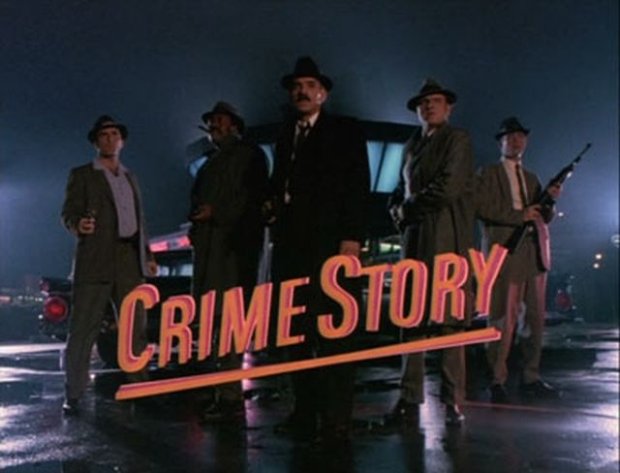


 William Friedkin's To Live and Die in L.A. includes several closeups of men getting shot point-blank in the face. Friedkin has been painting actors’ faces crimson since his breakthrough hit, the notoriously ruthless policier The French Connection, which included a just-for-the-hell of it close-up of a cou- ple of disfigured accident victims who had no apparent connection to the film’s main plot. In most cases, these images are a visual definition of the word “gratuitous.” But in L.A., Friedkin’s horrific close-ups are integral aspects of the picture’s down-and-dirty aesthetic and a rebuke to an especially irritating cliché: the movie character who sustains what would surely be a mortal wound in real life, only to show up a couple of scenes later with a cast on his arm. In Friedkin’s Los Angeles, when characters die, they’re dead, and Friedkin puts the camera right up in their freshly pulped faces so you know it’s adios muchacho.
 Friedkin’s viciously blunt direction of the film—which he cowrote with cops-and- robbers novelist Gerald Petievich, from Petievich’s best seller—mirrors the obsessive quest of its protagonist, U.S. Treasury agent Richard Chance (William Petersen), a surly jerk hell-bent on punishing his partner’s killer, the suave counterfeiter and would-be painter Rick Masters (Willem Dafoe). Chance flouts rules and procedures in the name of justice and ego; Friedkin startles the audience by flagrantly disregarding conventions that encrusted so many Hollywood movies in the 1980s. That decade saw the rebel antiheroes of the Johnson-through-Ford eras supplanted by macho narcissists played by the likes of Sylvester Stallone, Arnold Schwarzenegger, Michael Douglas, and later, Bruce Willis; alpha males who walked all over everybody, yet still earned a slow clap at the end of the story. In the scenes of Chance drawing his more straitlaced new partner, John Vuckovich (John Pankow), deeper into his payback fantasy, the film puts an ironic
  spin on the arguments that other ’80s action heroes used to justify their quasi-fascist hijinks. “I’m gonna bag Masters, and I don’t give a shit how I do it,” Chance declares. He sounds like Mickey Rourke’s Stanley White in the Oliver Stone-scripted, Michael Cimino-directed Year of the Dragon, which came out the same year as Friedkin’s movie (White’s signature line: “How can anybody care too much?”). But there’s a crucial difference: not for a moment does Friedkin’s film encourage us to believe that Chance represents anyone’s interests but his own.
 The movie is attuned to the decade’s Me First culture; it’s borderline nihilistic in a way that’s true to its gutter milieu and the self-interested, often loathsome humanoids that scamper through it. At its heart, L.A. is a cautionary tale about a man who is denied instant gratification and then seeks it in his own way, destroying careers, property, and lives in the process. In a DVD supplement, Friedkin describes L.A. as a story of “counterfeit lives” in which every major character is pretending to be something he’s not. On a superficial level, that’s accurate. (Chance and Vukovich go undercover as criminals, and Masters is a frustrated, mediocre painter who lives an art-world hero’s life, financed with money from his counterfeiting operation.) But the description implies a sense of delusion that doesn’t really jibe with the characters’ single-mindedness. They know what they are, they have primal drives, and they do what they need to do to satisfy them.
 The film’s final stretch is a turbocharged black comedy—a Keystone Cops chase going the wrong way on an LA freeway while Wang Chung’s synthesized score chug-chugs like a cokehead’s dance-floor heartbeat. The chase doesn’t just build on Popeye Doyle’s deranged pursuit of the El train in The French Connection; it improves on it by serving up a spectacular metaphor for the characters’ progress through—and effect upon—their world. Tear-assing across Southern California while drug goons strafe them with rifle fire and oncoming cars and trucks swerve to avoid hitting them head-on, the treasury agents threaten the very society that their improvisations are meant to protect.


 Press Play Video Blog
