VIDEO ESSAY: Ninja Turtles: Generation Y in a Half Shell

VIDEO ESSAY: Ninja Turtles: Generation Y in a Half Shell

“Ugh. Where do they come up with this stuff?” groans a frustrated Raphael, the brooding, red-bandana-wearing member of the Ninja Turtles, whilst walking out of a New York movie theater that’s playing the 1980s creature feature Critters. Here’s why this is an important scene in director Steve Barron’s live-action film Teenage Mutant Ninja Turtles: The 1980s saw an explosion of brawny, Reagan-infused cartoon TV series (e.g. Transformers and G.I. Joe) and live-action romps (e.g. the American family battling the furry aliens in Critters is yet another microcosmic representation of Reagan’s war against international terrorism), but when TMNT hit cinemas in the spring of 1990, its band of sewer-dwelling, skateboard-riding (mutant) outcasts aligned themselves with what we call Generation Y (people born between the late 70s and early 90s), leaving behind the pandemic seriousness of the 80s (industrializing economies, wars in the Middle East, etc.) and embracing a childlike irreverence, a burgeoning urban terrain and yes, lots of pizza with no anchovies. The Turtles were in a pop culture class all by themselves. After emerging as an overnight sensation with comic book fans (Ninja Turtles’ creators Peter Laird and Kevin Eastman only printed 3,000 copies of the original black and white magazine-style comic book in 1984), the Ninja Turtles quickly became a phenomenon both onscreen (its popular animated TV series debuted in 1987) and off (Playmates Toys began producing Turtles action figures in 1987, becoming regular “must-haves” for the youth). Considering all of this Turtlemania, it’s remarkable that Barron’s live-action Turtles film was able to thwart the “Saturday morning” innocence of its source material and create a dark, atmospheric film which dug a little deeper into the themes that would interest its target audience—Generation Y.

In many ways, the Ninja Turtles were the perfect mirrors for the angst-driven Generation Y’ers. Take the case of the family unit, for example. Unlike the generation that came before theirs (Generation X), a substantial number of Generation Y’ers were born into single-parent families. The four Ninja Turtles—Leonardo, Michelangelo, Donatello and Raphael—were no different, living only with their father Splinter (a giant rat), in the most poverty-stricken of homes: a sewer lair. And like most young Generation Y’ers, the Turtles dealt with their anxieties by turning familiar behavioral schemes into occasionally distracting daily routines: The Turtles blended the speech patterns of 1989’s Bill & Ted’s Excellent Adventure into their own vernacular (“Cowabunga!”), while also applying the Ninjutsu practices of 1988’s Bloodsport during their ventures onto the battle worn streets of New York.

Throughout TMNT, isolation is opposed to acceptance. Although the Turtles have a haven in their reclusive sewage den, the rest of New York’s teenage population (i.e. the movie’s “real” Generation Y) seeks acceptance (and shelter) from the Foot Clan, an underground gang overseen by the villainous Shredder. In a disarming scene, Shredder addresses his hordes of loyal teen followers: “You are here because the outside world rejects you. THIS is your family. I am your father.” The dark, striking images in these sections of TMNT (pre-teens smoking cigarettes, young kids fighting each other as part of the training to become a “foot soldier”) are a precursor to future Generation Y films of the 90s that follow teens desperately seeking acceptance, even in the midst of violence (e.g. Menace II Society, Juice and The Basket Ball Diaries). And for a PG-Rated “children’s movie,” the Ninja Turtles talk in a shockingly racy way, too (on more than one occasion, Raphael angrily yells out “Damn!”).

Perhaps the one aspect of TMNT that is not directly linked to Generation Y is its technical accomplishment. The Jim Henson Creature Shop (famous for introducing The Muppets to the world) made an indelible impression on young hearts and minds in multiplexes during the spring in 1990. The lifelike turtle bodysuits that the performance actors wore had movable mouths and blinking eyes. Even the skin of these turtle bodysuits seemed to sweat and pulsate. Detractors of the film always point to the obvious absurdity of watching four grown men high-kicking in giant turtle costumes. But to get hung up on that would ignore how special a film like this can be when it’s done right (as in Spike Jonze’s 2009 live-action film Where The Wild Things Are). And TMNT gets it right. Like the best children’s stories, fables and films, the Teenage Mutant Ninja Turtles movie earns its place as a seminal work of popular fiction by acting as a cultural prism through which viewers (in this case Generation Y) can develop a more profound sense of their identity—depending on their cultural and historical vantage point. As the Turtles would say: “Totally tubular, dude!”

Nelson Carvajal is an independent digital filmmaker, writer and content creator based out of Chicago, Illinois. His digital short films usually contain appropriated content and have screened at such venues as the London Underground Film Festival. Carvajal runs a blog called FREE CINEMA NOW which boasts the tagline: "Liberating Independent Film And Video From A Prehistoric Value System."

BEAVER’S LODGE: THE PROFESSIONALS (1966)

BEAVER’S LODGE: THE PROFESSIONALS (1966)

This is the third installment of BEAVER'S LODGE, a series of video essays narrated by actor Jim Beaver which will offer critical takes on some of Beaver's favorite films. Jim Beaver is an actor, playwright, and film historian. Best known as Ellsworth on HBO’s Emmy-award winning series DEADWOOD and as Bobby Singer on SUPERNATURAL, he has also starred in such series as HARPER'S ISLAND, JOHN FROM CINCINNATI, and THUNDER ALLEY and appeared in nearly forty motion pictures. You can follow Jim on Twitter.

There was a time when a certain kind of adventure film was popular. The 1960s were its heyday. Sometimes they were realistic, or even drawn from real life. Sometimes they were fanciful. But almost always they were intelligent and enormously entertaining. I haven't seen a new example of that kind of film in 30 or 40 years. Maybe they exist, maybe I've simply forgotten them or never knew of them. But I don't think they make that kind of movie anymore (though I suspect Hollywood thinks it still makes them). I'm thinking of movies like The Dirty Dozen, Von Ryan's Express, The Magnificent Seven, The Great Escape, The Guns of Navarone, and this one, The Professionals.

The Professionals is about four rugged experts in various fields, hired by a rich man to rescue his wife, abducted by a Mexican revolutionary near the Texas border around 1917. Lee Marvin, Woody Strode, Robert Ryan, and Burt Lancaster are the charismatic title figures, each particularly well-equipped for one aspect of the mission. Ralph Bellamy is their wealthy employer, Claudia Cardinale his buxom Latina wife, and Jack Palance is the revolutionary, Raza, with whom Marvin and Lancaster once rode. And Marie Gomez is Chiquita, a delectable tough girl, *really* tough, in a way that suggests it's her way of life, not something the script called for her to do.

Accompanied by a jaunty, rousing score by Maurice Jarre, the film by Richard Brooks is delirious masculine fun, an adventure filled with derring-do, witty quips, and just enough pseudo-depth to make it seem like it means something beyond the fun. I can't speak for women, but it's the kind of movie no guy can pass up, no matter how many times he's seen it. They don't make 'em like this anymore. And it's a shame.
 

VIDEO ESSAY: BEAVER’S LODGE: OUR HOSPITALITY (1923)

VIDEO ESSAY: BEAVER’S LODGE: OUR HOSPITALITY (1923)

This is the second installment of BEAVER'S LODGE, a weekly series of video essays narrated by actor Jim Beaver which will offer critical takes on some of Beaver's favorite films. Jim Beaver is an actor, playwright, and film historian. Best known as Ellsworth on HBO’s Emmy-award winning series DEADWOOD and as Bobby Singer on SUPERNATURAL, he has also starred in such series as HARPER'S ISLAND, JOHN FROM CINCINNATI, and THUNDER ALLEY and appeared in nearly forty motion pictures. You can follow Jim on Twitter.

A guest at a screening of this masterpiece at my home recently literally leaped out of her seat upon seeing the final, transcendentally beautiful stunt executed by Buster Keaton. I've never seen anyone do that except at a horror movie. Our Hospitality is a comedy, without an ounce of horror element. Yet it has heart-stopping thrills, made all the more heart-stopping by the knowledge that it was Keaton himself risking his neck in stunts that no star until the Keaton-inspired Jackie Chan would approach, seventy years later.

The title Our Hospitality refers to a peculiar brand of rural courtesy that says one can't murder a guest INSIDE one's home. The Hatfield-McCoy feud of legend is the inspiration for this story of a young man (Keaton) coming home to claim his inheritance, unaware of the feud between his family and another that will lead anyone in the other family to try to kill him on sight. Invited by fluke into the Canfield family residence, young Joseph McKay (Keaton) learns of the feud and realizes his only safety lies in never leaving. This is the setting for the central comedic sequence of the film, in which the Canfield family is constantly on the ready to shoot him whenever he gets anywhere near an exit door. It's pretty amazing how many brilliant comic variations Keaton is able to play out with the situation.

The earlier portion of the film is wonderful in its own right, both for the masterful comedy of which Keaton was unmatched at creating and for the wonderfully amusing look at 1830, the period in which the film is set. Manhattan's Broadway and 42nd Street intersection is not much more than a pasture, yet people are already complaining about the traffic. Keaton, who in real life was a railroad buff, recreated the first locomotive for this film, and it is both historically fascinating and wildly funny to watch his trip across country on rails that can be moved out of the way to avoid obstacles and which aren't always even necessary for the train's progress.

The final third of the film is a thrill-seeker's paradise. On the run from his enemies, Keaton finds himself adrift in a cascading river along with the girl he loves (the daughter of the enemy Canfield clan). Keaton's attempts to save himself and then his girl from the spectacular waterfall toward which they race is one of the great comedic stunt sequences of all cinema.

It's difficult for me to pick my favorite Buster Keaton film, but this is usually the one I show to people I want to convert to Keaton idolatry. I've never known it to fail. The word classic gets thrown around a lot—maybe not as much as the dreaded awesome, but far too frequently, nonetheless. But this is a genuine comedy classic. It's awesome.


VIDEO ESSAY: From Mr. Chips to Scarface: The Evolution of Walter White

VIDEO ESSAY: From Mr. Chips to Scarface: The Evolution of Walter White

"Walter's a shithead!"

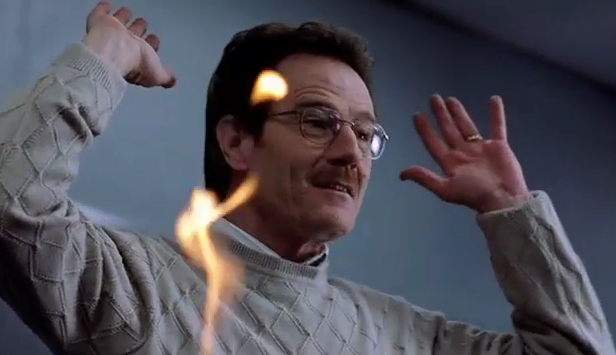
I had just walked in the door to the family home in Forestville, California. My dad had just finished the second season of Breaking Bad, specifically the episode "Phoenix," in which Walter (Bryan Cranston) passively allows Jesse's heroin-addicted blackmailing girlfriend Jane (Krysten Ritter) to choke to death on her own vomit. "I mean, he just stood there and let her die. He cried at the end, but still," my dad recounted, disgusted and amazed at the same time. Now, understand that my father is a pacifist hippie who would rather laugh than cry and much prefers Californication over Mad Men (which I give him slack for every minute I can—including while I’m writing this), but I'm sure other viewers have had a similar reaction to Walt's progression from a bumbling schoolteacher who doesn’t know where the safety tab on a gun is located to a meth kingpin, and the collateral damage in between.

Personally, I had an opposite reaction to my father’s: I feel that the show is at its strongest when it exposes the moral gray matter of Walt's decisions. Like AMC's other headliner show Mad Men, Breaking Bad doesn't excuse its protagonist's behavior like so many other shows do ad nauseum, as it reinforces and even underlines his vulnerabilities, and it boldly forgoes the safety net of having a sex symbol as a leading man. Gone are the excuses that he needs money for chemotherapy and his family. Walt has worked his way up, from Mr. Chips to Scarface, as Vince Gilligan likes to say, but now more than ever, there's nowhere to go but down. All we can do is look at him with some amount of disgust at his actions—and with amazement at how far the show has come.

Serena Bramble is a rookie film editor whose montage skills are an end result of accumulated years of movie-watching and loving. Serena is currently pursuing a Bachelor's degree in Teledramatic Arts and Technology from Cal State Monterey Bay. In addition to editing, she also writes on her blog Brief Encounters of the Cinematic Kind.

VIDEO ESSAY: BEAVER’S LODGE: EMPEROR OF THE NORTH POLE

VIDEO ESSAY: BEAVER’S LODGE: EMPEROR OF THE NORTH POLE

This will be the first installment of BEAVER'S LODGE, a weekly series of video essays narrated by actor Jim Beaver which will offer critical takes on some of Beaver's favorite films. Jim Beaver is an actor, playwright, and film historian. Best known as Ellsworth on HBO’s Emmy-award winning series DEADWOOD and as Bobby Singer on SUPERNATURAL, he has also starred in such series as HARPER'S ISLAND, JOHN FROM CINCINATTI, and THUNDER ALLEY and appeared in nearly forty motion pictures. You can follow Jim on Twitter.

I love this movie. Let's get that out of the way before I start in on a rant about studio stupidity.

This film is about hobos riding the rails of Depression-era America. It was made and originally released as Emperor of the North Pole. After initial screenings, Twentieth Century Fox executives feared that audiences might think the title indicated a Christmas movie (!) or an Arctic exploration story and so shortened the title to Emperor of the North, a change that made little sense in terms of audience expectations and none at all in light of the fact that "Emperor of the North Pole" is a hobo term used extensively throughout the film. To be emperor of the North Pole, in hobo jargon, is to be king of the road. To be emperor of the north means some idiot is in charge of the title.

This is a tough little picture, directed by Robert Aldrich, no stranger to tough little pictures (Kiss Me Deadly, The Dirty Dozen). It is written by Christopher Knopf (a true gentleman, by the way), reportedly from stories by Jack London. It stars Lee Marvin as the toughest 'bo on the rails and Ernest Borgnine as the meanest man ever to run a train. Keith Carradine is a windy, self-important, and callow kid who thinks he can play with the big boys. Borgnine's Shack is the conductor on #19, a freight train plying the rails of the Pacific Northwest. His driving passion is to prevent hobos from stealing free rides on his train, and he's willing to kill and maim to stop them. Marvin, as "A-No. 1," decides to ride the 19 and show Shack just who is Emperor of the North Pole.

nullMarvin is just about perfect in this gritty film. His makeup, his wardrobe, his demeanor, everything about him screams 1930s tough guy on the bum. There's no glamor to this star turn. The same can be said for Ernest Borgnine, though glamor admittedly was never his strong suit. Borgnine was one of the most decent men in Hollywood, but when he played a heavy, there were few nastier fellows in the business. His intensity and cruelty as the obsessed Shack are brilliantly delineated. Keith Carradine is irritating as Cigaret, the peacock kid who thinks he's as tough as they come. But he's supposed to be irritating, and it's a fine performance.

This is also one of those films that pulls together a passel of great character actors (Elisha Cook Jr., Malcolm Atterbury, Charles Tyner) and leaves one wondering where all the wonderful, familiar faces that used to populate Hollywood films have gone, and why we don't see such collections of comfortably resonant characters so much anymore. (I think I know why, but that's corporate talk, for another discussion.)

Most of the action takes place on board the train, and some of it is harrowing. Of particular note is the fact that most of the leading actors put themselves at some extended risk in the making of the film. Long before CGI special effects made such things meaningless, it's clear in this movie that it really is Ernest Borgnine, Lee Marvin, Keith Carradine, and Charles Tyner walking, running, and clambering on, around, and UNDER a speeding train. Surely safety measures were taken, yet it's wonderful to see shots where one misstep could have cost a star, not a stuntman, his life–even as it's good to know nothing like that happened.

Aside from my disgust with the stupidity of the title change, and a couple of too-cutesy moments in the music and a river baptism scene, Emperor of the North Pole is a favorite of mine, an exciting film as tough as old leather and as harsh as the era it depicts. And it's got Lee Marvin and Ernest Borgnine, two of the hardest hard cases in movies, going head to head. It's a great ride.
 

VIDEO ESSAY: THE DARK KNIGHT: NOLAN’S MODERNIZED MYTH

VIDEO ESSAY: THE DARK KNIGHT MYTH

When director Christopher Nolan first conceived of his Batman film trilogy, the challenge was revitalizing a hero who had previously been buried in cinematic fantasy shtick—a de-evolution that started with Tim Burton’s promising Batman and ended with Joel Schumacher’s laughably bad Batman & Robin. And Nolan wasn’t a franchise superhero movie director either. From the get-go, Nolan was an unlikely choice to take over such a mammoth cash cow for Warner Bros. Nolan’s previous films—Following, Memento and Insomnia—were small by comparison with the Batman films but shared the common narrative thread of a protagonist struggling to find moral redemption amidst the chaotic (psychological) forces of each film’s unique environment.  Therefore, the Batman mythos and its dark, enigmatic origin story of a billionaire turned self-made vigilante proved an apt fit for the intellectual Nolan—ultimately helping the director edge out the likes of Boaz Yakin (Remember The Titans), Darren Aronofsky (Black Swan) and Wolfgang Petersen (Air Force One) for the job of rebooting the series.

In his first entry, Batman Begins, Nolan’s masterstroke lay in envisioning Gotham City as a modern, real city. Gone were the colorful, circus-like set pieces from earlier Batman films. There weren’t any fantastical lairs or alternate dimensions. Nolan’s Gotham had public transportation, seedy corporate suits, corrupt court systems and even a lower-income housing area only accessible by street bridges. By positioning a beloved comic book superhero in a very accessible and believable environment, Nolan transcended the dated source material and forced audiences to re-evaluate Batman’s role. In other words, it wasn’t so much about what outrageous predicament Batman would have to punch (Pow!) his way out of. It was more of seeing how this new Batman could plausibly function within the day-to-day operations of the modern urban world.

After establishing a parallel “real” society in Batman Begins, Nolan raised the stakes with The Dark Knight. By zeroing in on the very relevant, modern topic of terrorism, Nolan recreated the post-9/11 atmosphere of dread and fear for the citizens of Gotham. In The Dark Knight, Nolan separated the villainous Joker character from his silly, cartoonish origins and recreated the Joker as “an agent of chaos”—a volatile criminal hell-bent on demoralizing the citizens of Gotham. The Joker’s plan was simple: If he could invoke the fear of death at every corner for every Gotham citizen, a radical unbiased social structure based on elemental fear would emerge. Thus, this society would be in constant stasis; the people of Gotham would be united by fear but torn apart by their animalistic instincts to outlive one another.

Putting Batman in the backseat in a Batman film was an important gesture for this movie and for Nolan’s work—as well as a first in the Batman filmography. In The Dark Knight, Batman himself was unusually absent from the screen, allowing for an array of equally compelling characters to come through. By building the film this way, Nolan deconstructed the mythology behind the Batman figure. Specifically, this once indomitable hero from comic book legend now became as vulnerable as anybody else in Gotham (or the real world for that matter).

Still, the fundamentals that Batman stood for as a comic book hero—justice, social order and establishing a sense of collective moral hope for Gotham—were evident in Nolan’s interpretation of the caped crusader (e.g. Batman reconciled both his and Gotham’s disillusionment with faux heroism by taking the blame for Harvey Dent’s murderous rampage in The Dark Knight). More interestingly, Nolan’s modernized Batman redefined the function of the traditional myth. Consider: The comic book Batman’s original Sociological Function was to establish a proper social order by existing outside the parameters of society, as an elite hero. In the comic book and earlier film adaptations, Batman was only accessible to Gotham’s police (via a red telephone or a bat signal in the sky); this exclusivity positioned Batman to exist as an intangible, incorruptible and unbelievably fantastic heroic figure. Yet, in Nolan’s screen narrative, Batman has been dethroned from his once-elusive crime fighter status. In an obscenely modern twist, Nolan looks to argue that order in any society cannot rest solely on an elected or officially prominent figure.

The promotional clips for Nolan’s third and final entry, The Dark Knight Rises, show Batman in the war zone streets, fighting alongside the citizens of Gotham. This is fitting imagery for Nolan’s modernization of this once-romantic comic book myth. The new Batman mythology isn’t meant to serve as adventurous escapism. The new Batman mythology reflects our very modern world, a society desperately trying to restore order amidst all the chaos—without having to always flash a bat signal in the sky.

Nelson Carvajal is an independent digital filmmaker, writer and content creator based out of Chicago, Illinois. His digital short films usually contain appropriated content and have screened at such venues as the London Underground Film Festival. Carvajal runs a blog called FREE CINEMA NOW which boasts the tagline: "Liberating Independent Film And Video From A Prehistoric Value System."
VIDEO ESSAY: Batman: The Animated Series

VIDEO ESSAY: Batman: The Animated Series

Children of the 80's and 90's remember this series with a fondness bordering on the familial.  The animated series was there for you every day after school, with new episodes on Saturdays.  Watching the episodes again, I realize now it has become a not quite completed work, which is how superhero entertainment functions.  Batman's adventures are never-ending. The last episode, "Judgment Day" wasn't a pay-off to a series long arc but just another adventure.  I think this is part of what makes Batman, and characters like him, an avatar of the collective pop culture unconscious.  For as long as stories are told, Batman will be with us. 

John Keefer is a writer/director of short films working out of Phoenixville, PA. You can view his work here. You can follow him on twitter here.

VIDEO ESSAY – Matt Porterfield and the Art of the Question

VIDEO ESSAY – Matt Porterfield and the Art of the Question

What is it that makes Putty Hill one of the more striking American independent films of recent years? Is it the genuine working class Baltimore setting, where director Matt Porterfield grew up and still lives today? Is it the cinematography by Jeremy Saulnier? Is it the ensemble of nonprofessional actors who give the film a genuine, unaffected sense of character? Or is it the questions?

Putty Hill does so much with the first three elements to immerse you in the documentary-like authenticity of its world. But the film tears its own fabric of verisimilitude in scenes where Porterfield spontaneously interviews the characters, asking them questions from offscreen. Matt Porterfield is as much a member of this community, and a character in the film, as those on screen in 'Putty Hill.' These interviews are a paradox: They break the film’s documentary realism by making its format a subject in itself.

One might worry that such a strategy would reek of arty self-consciousness, but there’s something genuine about it, because it puts Porterfield’s relationship with his characters front and center. Porterfield spent a long time working with each of these nonprofessionals, asking them questions to help them develop their characters, mixing their real life experiences and fictional inventions. These scenes are both the outcome and an acknowledgment of that process. What it reveals about Porterfield is that he is not just a director of these subjects, but a confidante. In other words, he is as much a member of this community, and a character in his film, as those on screen.

You can already see this questioning approach in Porterfield’s first film Hamilton. The majority of the dialogue consists of questions and responses. By my count there are 65 questions asked in this 65-minute film. Even the rap song featured in a key scene is full of questions. Hamilton seemingly has the objective surface of an observational documentary, but when you listen to these dialogue scenes, you can practically hear Porterfield’s voice from Putty Hill in each conversation in Hamilton. Porterfield’s world shows everyday life as an investigative documentary, with people constantly interrogating each other, seeking answers.

Is there an underlying significance to all these questions? Both films deal with the ripple effect on a community caused by a private trauma. In Hamilton, it’s a teen pregnancy; in Putty Hill it’s a suicide. In most films, asking questions would serve to explore these incidents and lead towards a dramatic resolution. Here, the questions themselves are the drama: a constant effort to reach out and stay connected. The more questions are asked, the more they suggest how vulnerable these relationship are, and how strong the desire is to hold them together. In Porterfield’s films, the story is less important than exploring the community in which it takes place, and what’s at stake in preserving it.

Originally published on Fandor

Kevin B. Lee is Editor in Chief of IndieWire’s PressPlay Video Blog, Video Essayist for Fandor Keyframe, and contributor to Roger Ebert.com. Follow him on Twitter..

VIDEO ESSAY: ON THE QT # 1: RESERVOIR DOGS

ON THE QT # 1: RESERVOIR DOGS

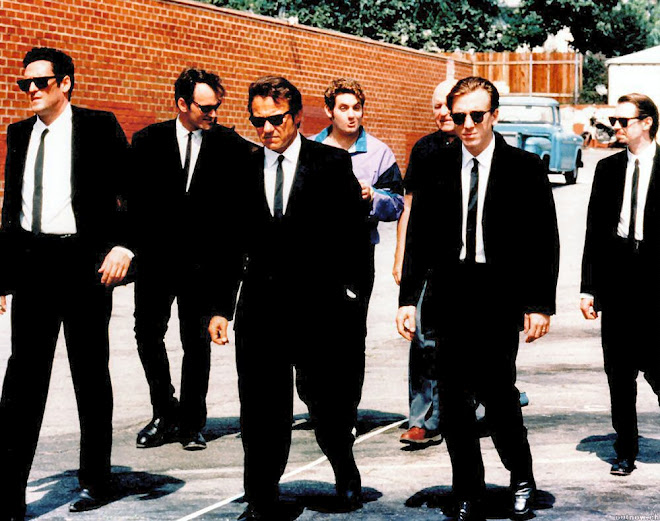
Press Play launches its new director series On the Q.T., about Quentin Tarantino, with a look at his debut Reservoir Dogs (1992). Although it earned plenty of acclaim, the film also sparked two kinds of controversy. One had to do with the movie's content: its profanity, racial epithets, blood, and torture merged art house and grindhouse traditions in a fresh and unsettling way. The other controversy was aesthetic: Tarantino, a former video store clerk, quoted movie history so ostentatiously—even working pop culture rants into his dialogue!—that detractors accused him of being more of a gifted mimic than a real artist, a charge that has followed him throughout his career.

Funny thing, though: when you look back on the late '90s and early '00s, you see plenty of films that desperately wanted to be Reservoir Dogs or Pulp Fiction. Truth or Consequences, N.M., Things to Do in Denver When You're Dead, The Usual Suspects, Two Days in the Valley, Mad Dog Time, and many others channeled what was presumed to be the Tarantino formula. Yet none of them has had the staying power of Reservoir Dogs. Why? The answer is contained in Reservoir Dogs' opening monologue about Madonna's "Like a Virgin"—delivered by none other than Tarantino himself—and in the scenes of the undercover cop, Mr. Orange (Tim Roth), getting into character as one of the crooks. Put these images together—a lover so good that he makes a sexually experienced woman feel like a virgin, and an actor so good that he fools hardbitten crooks into thinking he's one of them—and you have Tarantino's early career: a performance so extraordinary that it stops being performance and becomes an emotional event.

How does Tarantino do it? Press play to find out.

San Antonio-based film critic Aaron Aradillas is a contributor to The House Next Door, a contributor to Moving Image Source, and the host of “Back at Midnight,” an Internet radio program about film and television.

Matt Zoller Seitz is one of the founders of Press Play. A finalist for the Pulitzer Prize in Criticism, he is currently the TV Critic for New York Magazine.

Ken Cancelosi is a writer and photographer living in Dallas, Texas. He is the co-founder of Press Play.

VIDEO – Sight & Sound Film Poll: Nicole Brenez on THE HOUR OF THE FURNACES PART I: NOTES AND TESTIMONY ON NEOCOLONIALISM, VIOLENCE AND LIBERATION

VIDEO – Sight & Sound Film Poll: Nicole Brenez on THE HOUR OF THE FURNACES PART I: NOTES AND TESTIMONY ON NEOCOLONIALISM, VIOLENCE AND LIBERATION

For optimal viewing, click on the fullscreen button on the bottom right of the player.

Press Play presents Sight and Sound Film Poll: Critics' Picks, a series of video essays featuring prominent film critics on films they selected for Sight and Sound magazine's poll of the greatest films of all time. New videos will premiere each week until the poll results are announced later this summer.

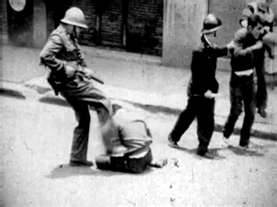
The seventh video in this series is adapted (with the author's permission) from an essay by Nicole Brenez that appeared earlier this year in Sight & Sound, which was part of a series of articles proposing films for top ten consideration. Her selection of The Hour of the Furnaces by Argentina's Fernando Solanas and Octavio Getino is one that, in my view, challenges a number of conventions that typify movie top ten lists. For starters, it may very well be the most important film to have ever been made in Latin America, a region that's long been neglected by the Sight & Sound Poll (unless you count Luis Buñuel as a Latin director).*

Brenez' endorsement also has a bit of intrigue in that it focuses exclusively on the 208 minute documentary's first part, Notes and Testimony on Neocolonialism, Violence and Liberation, ignoring the second part, which in Brenez' words "mainly consists of advocacy for the Argentinian politician Juan Péron and therefore does not concern us here." This year Sight & Sound instructed poll participants not to count multiple titles as a single work (i.e. The Godfather I and II, Dekalog); Brenez' essay provokes the question of whether half of a film can rank among the greatest (though unlike most films, in this instance there is a clear demarcation of parts forming a whole).  

But perhaps most importantly, Brenez's argument makes a compelling case for the poll's consideration of the political film – as well as the politics of filmmaking. It's fair to say that, particularly with regard to greatest films lists, overtly political filmmaking has long endured a stigma as being inferior to films that focus more exclusively on cinema as art. But it's a false dichotomy, as this video hopes to illustrate; The Hour of the Furnaces is a dense work that weaves several modes of cinema into a multifaceted polemical discourse. It plays like the apotheosis of a rich film lineage traced through the likes of Sergei Eisenstein, Dziga Vertov, Joris Ivens, Humphrey Jennings, Alain Resnais and many others.

Moreover, the film is driven by a revolutionary philosophy of filmmaking that, from today's perspective, seems ever more pertinent, if only because what it opposes seems ever more dominant. To my discredit, the video does not incorporate the passage in Brenez' essay specifically pertaining to the film's relationship to its filmmakers' seminal manifesto, "Towards a Third Cinema: Notes and Experiences for the Development of a Cinema of Liberation in the Third World." This landmark text lays a blueprint for cinema in the developing world, proposing an entirely new system for filmmaking and distribution that can truly serve the needs of a society seeking independence from external colonizing forces. It argues for a politically conscious, self-determining "Third Cinema" that can oppose the two prevailing cinemas that, Solanas and Getino argue, serve the forces of cultural and societal oppression: first, the Hollywood model of industrial filmmaking; and second, the auteur / arthouse cinema, which purports to provide an alternative to the first cinema, but amounts to a "safety valve," in Brenez' words.**

These days, it seems nearly impossible to conceive of movies beyond "mainstream" and "arthouse / alternative / independent", or to think of great cinema without summoning a rollcall of auteurs. Watching a film like Hour of the Furnaces – produced as a collective effort outside of a commercial or auteurist model, screened illegally within its home country, and made with a comprehensive, groundbreaking understanding of filmmaking's role in affecting the status quo – one starts to realize how so much of today's film culture has settled into a comfortable, marginalized space in relation to the rest of society. And yet, so much of the world described by Hour of the Furnaces still resembles ours. The film is a bracing reminder of how cinema can confront such a world head-on.

This is the second video I've produced with Nicole Brenez. Our first was on Boris Barnet's By the Bluest of Seas; as with that video, Nicole's words are voiced by another person. Here it is Nova Smith, doctoral candidate in cinema and media studies at the University of Chicago.

– Kevin B. Lee

*In the 2002 Sight & Sound Poll, only five Latin American films received more than one vote: Los Olvidados, The Exterminating Angel, and El by Buñuel (all from his Mexican period); and two films from Brazil, Black God White Devil by Glauber Rocha and Barren Lives by Nelson Pereira Dos Santos.

**Reading Solanas and Getino's essay, it occurred to me that auteurism and Facebook have something in common. Auteurism allows us to cozy up to a virtual, personalized experience of movies [movies as "personal visions"], as Facebook allows us to do so with the internet ["personal" interactions online]; in both instances, fantasies of personalization come at the risk of ignoring a more comprehensive, systemic view of the apparatus: its methods, aims, and outcomes in shaping our perceptions of reality and social order.

Nicole Brenez is professor of cinema studies at University of Paris 3/Sorbonne Nouvelle and a senior member of the Institut Universitaire de France. She is a film historian, curator, and leading specialist of avant-garde cinema. Her books include “Cinéma d’avant-garde” (2007), “Abel Ferrara” (2007), and “Chantal Akerman” (2011). Brenez has also been curating the Cinémathèque Française’s avant-garde film sessions since 1996.

Kevin B. Lee is Editor in Chief of IndieWire’s PressPlay Video Blog, Video Essayist for Fandor Keyframe, and contributor to Roger Ebert.com. Follow him on Twitter.