VIDEO ESSAY – The Sight and Sound Film Poll: An International Tribute to Roger Ebert and His Favorite Films

VIDEO ESSAY – The Sight and Sound Film Poll: An International Tribute to Roger Ebert and His Favorite Films

This week Press Play introduces Sight and Sound Film Poll: Critics' Picks, a series of video essays featuring prominent film critics on films they selected for Sight and Sound magazine's poll of the greatest films of all time. New videos will premiere each week until the poll results are announced later this summer. 

To start off the Critics' Picks series, why not have the most famous film critic in the world? Roger Ebert needs no introduction, but his impact on film culture is something we have long taken for granted, and extends beyond his 45 years of film reviewing and television celebrity. His reach is felt even within the Sight and Sound Poll – as I wrote in Press Play's roundtable discussion of the poll, it was Ebert who first brought the poll to my attention as a teenager reading his Movie Home Companion, where he analyzed the 1982 poll results and shared his own top ten, distilled in a series of exquisitely crafted paragraphs. That book and those paragraphs initiated my own love of film criticism, and form the basis for this video essay. 

The passages that serve as the video's narration cover the four films from Ebert's 1982 list that remain on his freshly minted top ten for the 2012 Sight and Sound poll. In its own way, the video reflects more significant developments in his life than his updated top ten list. When a fight with cancer left Ebert unable to speak, he took to the web to express himself, convening a international community of movie lovers around his website and blog. That in turn led to the creation of a special section on his website, Roger Ebert's Far-Flung Correspondents, featuring film reviews and articles from people around the world. The site celebrates movies as a global phenomenon bringing people together across languages and cultures.

To honor that vision, this video features many of the Far-Flung Correspondents speaking Ebert's words in their own language. The video also reunites the two hosts of Ebert Presents at the Movies, Christy Lemire and Ignatiy Vishnevetsky, with Vishnevetsky bringing a multilingual twist to his voiceover. Also taking part are contributors to Roger Ebert's Demanders, the section of his site reviewing video on-demand titles.

It was extremely fortuitous that the production of this video coincided with Ebertfest, Ebert's personally curated annual film festival held at his alma mater, the University of Illinois Urbana-Champaign. Most of the participants of this video travelled to Ebertfest, making it the perfect opportunity to record them. Others recorded themselves remotely and sent their audio via email. All told, there are 20 contributors speaking ten languages, discussing four favorite films of one man whose writing proves that not only great films, but great film writing, can transcend humankind's boundaries. – Kevin B. Lee

null

Roger Ebert's Far-Flung Correspondents

Ali Arikan (Turkish)
Olivia Collette (Canadian French)
Wael Khairy (Arabic)
Scott Jordan Harris
Michael Mirasol (Tagalog)
Omer Mozaffar
Michal Oleszczyk (Polish)
Krishna Shenoi
Gerardo Valero (Spanish)
Pablo Villaça (Brazilian Portugese)
Grace Wang (Mandarin)

Roger Ebert's Demanders

Steven Boone
Jim Emerson
Odie Henderson
Kevin B. Lee
Donald Liebenson
Jana Monji
Jeff Shannon

Ebert Presents At the Movies

Christy Lemire
Ignatiy Vishnevetsky (Russian)

GAME OF THRONES RECAP 8: THE PRINCE OF WINTERFELL

GAME OF THRONES RECAP 8: THE PRINCE OF WINTERFELL

One of the recurring discussions about this second season of Game Of Thrones concerns how much the television show is changed from the novels. While the merits of the specific changes are debatable, a running theme of both my reviews and those of other critics is that the show is more confident in its adaptation, becoming its own entity.

nullAs obvious as it might sound, we should remember that entity is a television show, and a particular form of a television show, at that: highly serialized with multiple interweaving plots, much like many of the great dramas of the last decade-plus. But the TV show-ness of Game Of Thrones works against it slightly in “The Prince Of Winterfell.” This episode leads towards the climax of the season, so it’s almost all build-up. Episodes like this are traditional in television, but they don't work so well for Game Of Thrones.

The two series associated most with the “build-up” episode are two of the most important for the current form of serialization, Buffy The Vampire Slayer and The Wire. Buffy helped develop a model of the standalone episode, with clues in each week's show leading towards a larger finale each season. After a few seasons, the overarching plot became such an important part of the show that the last batch of episodes became a string of heavily serialized “mythology” episodes, barely working by themselves. The Buffy episode “The Prince Of Winterfell” reminded me most of is “The Weight Of The World,” the fifth season's penultimate episode, in which Buffy, having lost all hope and motivation, has to be emotionally wrestled back into heroic shape for the season’s climax—the emotions before the storm. While both of these episodes may be competent, they’re fairly unmemorable out of context.

Game Of Thrones is significantly more complicated than Buffy, though, taking place across multiple geographic regions, with exponentially more major characters; in this sense, it’s more similar to The Wire. The Wire’s serialization was even more focused than Buffy’s, or any other show, really. Each of its seasons was 10-13 episodes, focused generally on a component of the society of Baltimore, and specifically on a drug case worked by the main characters. Most of the season would be build-up, the second-to-last episode would contain the climax of the investigation, and then would come the finale, the denouement. Game Of Thrones mostly followed that model in the first season, and is certainly following it here: several different plotlines are leading to what should be an explosive conclusion.

Here’s the problem: Games Of Thrones is even more scattered and geographically disjointed than The Wire. While The Wire had almost as many characters and motivations to keep track of as this show, all the events were working towards the same climax: the conclusion of the drug investigation, and then the rippling effects of that climax (although, to be fair, the fourth season deviated from this specific form). In Game Of Thrones, each smaller story seems to be moving towards a different climax.

The chief upcoming event we hear discussed is Stannis’ attack on King’s Landing, the capital. This would be the biggest battle of the war so far, and a total Stannis victory might even end that war altogether. Preparing for it makes sense. Jon Snow, now captured by wildlings and being led to their king, is also clearly moving toward a climax of some kind, as is Dany, desperate to get her dragons back. And the tension is clearly escalating in Winterfell, as Theon refuses to leave with his sister, even as a northerner army approaches.

But that’s only half of the show’s stories, maybe fewer. Robb Stark’s romance may be climaxing, but its effects are unclear, as are the actions of his mother, who has released Jaime Lannister in exchange for her children, escorted by Brienne of Tarth. This is a new story thread and an interesting choice for the show to make (these events happened relatively later in the novels than they do here). Samwell Tarly and the rest of the Night’s Watch haven’t been mentioned in several episodes, but their discovery of a cache of obsidian weapons is deemed important enough to show up here. Yes, the show is moving towards something, but the important ones can’t help but be  diluted among all the other events taking place.

Three different things make the lack of action in this episode disappointing. First, last week’s episode was also relationship-heavy and event-light. It was so good that this episode pales in comparison, though of course two high points in a row isn’t always wise structurally. Second, the eighth episode of the first season, “The Pointy End,” managed to contain several different momentous events: the death of Arya’s dancing instructor; the undead attack at the Night’s Watch, Robb Stark summoning his bannermen and gaining their respect. Meanwhile, “The Prince Of Winterfell” seems intentionally non-momentous.

Why “intentionally”? The most dramatic moment of the episode occurs when Arya and her friends leave Harrenhal by walking past a bevy of dead men, all killed off-screen by Arya’s murder genie, Jaqen H’ghar. There is craft here: the build-up to this moment involves the Stark girl's desperation and cleverness, telling Jaqen to kill himself, or aid her. When he says, “A girl lacks honor,” Arya gives a quick shrug. Honor is meaningless to her. She’s trying to survive, and win. This is all good.

There’s just one tiny problem with the resolution, though: it’s not what happened in the novels. The changes the show made from the novel end up removing Arya’s agency, the importance of her actions, the intensity of the actions themselves, and not one but two of her most badass moments. There’s still some time for the show to make it up to her, I suppose, but I simply cannot fathom why it would remove arguably the best scenes of the second book . . . unless it was to deliberately rearrange events to fit a Wire-like structural framework. It doesn’t have to work that way. Game Of Thrones has so many different characters, working on a complex enough narrative, that it could have action and preparation in each episode.

Despite a disappointing lack of events and warping of Arya’s story, there was still a lot to like about “The Prince Of Winterfell.” Its theme of finding romance and comfort in the midst of war and intrigue successfully built the emotional tension in advance of the impending climax. Robb Stark’s scene with his new crush Talisa was a major step forward for this storyline. And Peter Dinklage acted the hell out of his romantic scene with Shae, showing a vulnerability only hinted at before. Additionally, Tyrion’s scenes with Varys are among the best the show has done, filled with wit, danger, foreshadowing, and charm. (“We could throw books at his men.” “We don’t have that many books.”) This demonstrates that Game Of Thrones is telling its multiple stories well. The issue is how it’s editing those stories together into a story, and into a series.

Adaptation:

In addition to the tremendously disappointing changes in the Arya Stark story, another Stark is ill-served by the adaptation. Arya's mother Cat Stark has had her agency largely removed as well, due to a couple of changes. When Littlefinger made the offer to exchange Jaime for her daughters, her decision to free Jaime was changed from one she made on her own to one she merely accepted. In the novels, Cat also made that decision after receiving the “news” of Bran and Rickon’s death; here, she’s pushed into it by the Karstarks demanding Jaime’s death after his failed escape last week. Cat Stark’s strength made her arguably my favorite character in the novels, but the show regularly weakens her.

Rowan Kaiser is a freelance pop culture critic currently living in the Bay Area. He is a staff writer at The A.V. Club, covering television and literature. He also writes about video games for several different publications, including Joystiq and Paste Magazine. Follow him on Twitter @rowankaiser for unimportant musings on media and extremely important kitten photographs.

VIDEO ESSAY: Law and Disorder in Ying Liang’s THE OTHER HALF

VIDEO ESSAY: Law and Disorder in Ying Liang’s THE OTHER HALF

Chinese director Ying Liang cannot return to his country. On April 28, Ying debuted his film When Night Falls at the Jeonju International Film Festival in South Korea. The film is based on the true story of Yang Jia, who killed six policemen after allegedly suffering police brutality, and whose trial stirred controversy and protest over the fairness and due process of the legal system in China. After the film was shown in Jeonju, Ying’s family, in Shanghai, and his wife’s family, in Sichuan, were visited by Chinese authorities, who also tried “to buy the rights to the film.” Ying also learned that he would be arrested if he were to return to mainland China. He currently lives and works in Hong Kong, trying to manage the well-being of his relatives back home (asking them to document every interaction with local authorities), as well the fate of his new film.

When Night Falls has brought unprecedented scrutiny and pressure upon Ying Liang, but it’s not the first time his films have offered a sharply critical view of China’s societal dysfunction. Ying’s debut Taking Father Home examined the breakdown of families in the era of migrant labor. Good Cats views labor exploitation from the opposite end, following a young man’s entry into the inner circle of business and corruption in his hometown. Ying’s best feature, The Other Half, is perhaps the most thematically aligned with When Night Falls, as it also deals explicitly with the failure of China’s legal system to address the problems of its people. New Yorker film critic Richard Brody selected The Other Half as one of his ten best films of the 2000s, heralding Ying’s ability to bring a “laser-like analytical eye to the crossroads of private life and oppressive authority.” This video essay further explores the film and Ying’s ability to bring the “other half” of China into a stark spotlight.

Originally published on Fandor. Read a transcript of the video.

Kevin B. Lee is Editor in Chief of IndieWire’s PressPlay Video Blog, Video Essayist for Fandor Keyframe, and contributor to Roger Ebert.com. Follow him on Twitter.

CRUEL SUMMER: STRIPES (1981)

CRUEL SUMMER: STRIPES (1981)

In this series, frequent Press Play contributor Aaron Aradillas will analyze a significant movie from each year of the 1980s. The previous installment: The Blues Brothers (1980).

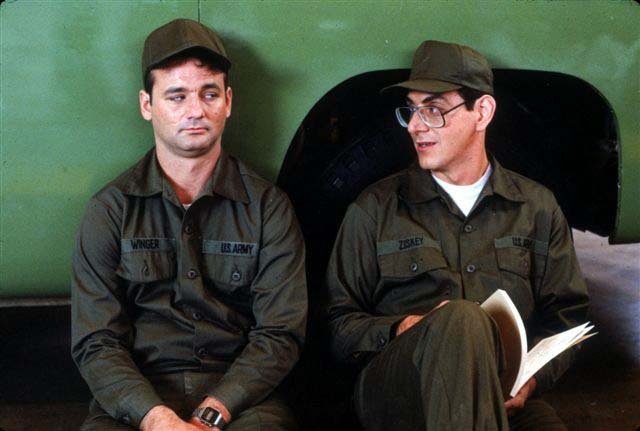
When Bill Murray came on the scene at the start of the 1980s, he represented a fundamental shift in comedy. He specialized in an utter emotional detachment from any and all situations. His fans claimed he was deconstructing the absurdity of whatever predicament he found himself in. The famous Saturday Night Live sketch of Murray as a lounge act performer singing about Star Wars was funny because he knew how pathetic the guy was. Murray did nothing but asides and put-ons. Some critics praised him as a Groucho Marx type, but if you looked closely, some of his lines had a nasty streak; while Groucho took the air out of a tense situation, Murray made you tense.

Performers like Jack Nicholson, Richard Pryor, even Eddie Murphy in 48 HRS., specialized in upsetting the status quo, speaking up for those who couldn’t speak, and expressing suspicion of those in power, Murray spoke for himself, suspicious of everyone. The most courteous thing he would do is not remind you that he’s the smartest person in the room. It’s almost impossible for Murray to do sincerity. His worst scene as an actor? His plea for goodwill toward your fellow man at the end of Scrooged. He’s like a bully telling you to be kind to others or else.

Murray became a comic hero pretty quickly. He gave the genial summer-camp comedy Meatballs a groovy anarchic charge. Along with Rodney Dangerfield, he was the highlight of the surprise hit Caddyshack. But it wasn’t until the release of Stripes in the summer of 1981 that Murray became a star. A service comedy that was surprisingly reverential toward the military, Stripes was the kind of anti-Establishment comedy that appealed to audiences. It was safely subversive but not offensive.

Directed by Ivan Reitman and written by Len Blum and Dan Goldberg, along with Harold Ramis, Stripes had the kind of anti-authority attitude that even conservatives could get behind. Rather than trashing institutions like the military, the movie just made the individuals in power look comically foolish. This was a big change from the thinking of just a decade earlier. At that time, young people questioned the nature of long-standing institutions far more aggressively. (It’s interesting to note that Stripes was originally conceived as a vehicle for Cheech and Chong. They truly didn’t trust institutions.) Now, it seemed, a compromise was being reached as Stripes predicted the coming onslaught of pop militarism in American movies. Just six months before the release of Stripes, Goldie Hawn had scored a hit (and an Oscar nomination) with the post-feminist service comedy Private Benjamin. Now we had Stripes. Throughout the 1980s, a whole series of movies did a brilliant job of allowing us to forget the trauma of Vietnam. Uncommon Valor, An Officer and a Gentleman, Missing in Action, Firefox, Rambo: First Blood Part II, Heartbreak Ridge, Aliens, Iron Eagle, Top Gun, RedDawn, Platoon Leader, and Commando all suggested, in one way or another, that Vietnam was a winnable battle. A lot of these movies were outrageously entertaining. They were also cinematic recruitment posters. (Oliver Stone’s Platoon would single-handedly provide the antidote to Hollywood’s love affair with war.)

The opening of Stripes indicates it’s going to both play with and poke gentle fun at images of authority. The first image we see is a commercial for the Army playing on a television. Murray’s John Winger views the commercial with a mix of skepticism and (possible) curiosity. Murray’s trademark ironic detachment surfaces with his first line of dialogue. (“I don’t think I’ve ever been this happy.”) Winger is so blasé about life that when his girlfriend leaves him, he looks as if he is just going through the motions of being hurt. When Winger says, “Then, depression,” we laugh: If a Murray character is depressed, that would suggest he was once happy.

(Murray aficionados will no doubt know that Joel McHale’s character on Community is an homage to the stock Murray character. The difference being is that McHale’s Jeff Winger genuinely does care about his studymates.)

Luckily for the movie Murray’s coolness is tempered by Harold Ramis as his loyal best friend Russell. When Winger decides to join the Army because, frankly, he has nothing else to do, Russell accompanies him almost for the intellectual exercise of seeing where this will lead them. Or, in the parlance of Animal House, one stupid gesture deserves another. What gives the movie its zip is the comic spin given to standard basic-training scenes. There’s a less abrasive National Lampoon/MAD Magazine quality to some of the gags. There’s also a surprising sense of reverence toward the military, particularly in a shot at dusk where the platoon is going through an obstacle as they sing a recruitment song. Bill Butler’s crisp cinematography makes it clear this shot is not meant to be ironic. On the other end of the shot is the famous scene of the men marching and singing Manford Mann’s “Do Wah Diddy Diddy” as a cadence. (It is said that after the release of Stripes this became a popular cadence.) What you get with that bit is the acknowledgement of rock & roll’s place in the military.

Sgt. Hulka gives the movie’s situational comedy some weight. It was a masterstroke to cast Warren Oates as Hulka. He represents authority, but not totalitarian authority. He has Winger’s number the moment he sees him. He understands the impulse to question people in power. (He does it himself.) But he also knows that some semblance of order is needed to sustain life. Murray’s best scene is when Sgt. Hulka calls him out on his bad attitude and the audience ultimately comes to side with Sgt. Hulka.

From that point on, Murray’s performance picks up. The scene where he takes the guys to a mud wrestling contest has a playful three-ring circus quality. (The sequence is helped tremendously by John Candy’s wonderfully light comic presence.) When Murray is called upon to deliver an inspirational speech (a staple of 80s movies), he makes it off-kilter enough that he almost sounds convincing. It’s a jingoistic speech with a little sting. (“We’ve been kicking ass for 200 years! We’re 10 and 1!”)

The movie climaxes, of course, with an action sequence, as Winger, Russell, and their MP girlfriends must enter enemy territory (Germany and Czechoslovakia!) to rescue their fellow soldiers. Like the parade finale of Animal House, this sequence is about destruction, but it ALSO works as an action set-piece. Stripes toys with AN anti-authority stance but ultimately adheres to tradition. And at the center is Murray, thumbing his nose at everyone and everything. In recent years. a generation of filmmakers have found interesting ways to utilize Murray's limited range of emotions. John McNaughton located Murray's capacity for menace in the brilliant Mad Dog and Glory, while Wes Anderson maximized Murray's deadpan detachment by turning him into a terrific supporting actor in Rushmore and The Royal Tenenbaums. (When Anderson forced Murray to play a front-and-center character who had to care about others in The Life Aquatic With Steve Zissou, the result was both compelling and uneven.) But in the beginning, with Stripes, Murray's what-me-worry cocky arrogance turned out to mirror both the audience's and American movies during the 1980s.

San Antonio-based film critic Aaron Aradillas is a contributor to The House Next Door, a contributor to Moving Image Source, and the host of “Back at Midnight,” an Internet radio program about film and television.

MAD MEN RECAP 9: CHRISTMAS WALTZ

MAD MEN RECAP 9: CHRISTMAS WALTZ

In watching Mad Men episode 5.10, Christmas Waltz, my first thought was not about the episode's theme. In fact, at first, a theme didn't emerge. Instead, my first thought was how much fun this episode is. I haven’t been complaining about the season; last week got some bad reviews but I was fine with it, and the season overall has had some amazing episodes (Mystery Date and Far Away Places in particular), but this feels different. This feels like perfect Mad Men, everything we love about it. Scary, unpredictable, heart-stopping in its tense moments, laugh-out-loud funny, sexy, insightful . . . all the great Mad Men things. In fact, I’m pleased that a theme didn't present itself in an obvious way tonight. By being fun, funny, and surprising, Christmas Waltz engaged our interest without having to announce itself. The episode is also brilliant and unassuming, in that it doesn't have to stand on a chair and tell you how meaningful it is. But don't worry, there's meaning, and we'll get to that.

nullAs soon as I saw the "previously on" clips, I thought, 'We're getting everything the fans have been clamoring for.' More Lane, more Joan, less of a laser-focus on the Draper marriage to the exclusion of wonderful secondary characters. But I had no idea, no idea, that the longed-for return of Paul Kinsey was in store, and what a return it was! (I want you all to know that my son has to be at work at 5 a.m. on Monday, and my loud laughter was very inappropriate while he was trying to sleep. But I just couldn't help it. This scene is hysterical. Oh, Paul, we missed you so.) Watch his first scene here:

Paul, by the way, is the perfect access point to what the episode is about thematically: people turning themselves into things they aren't; people layering false identity onto false identity until they don't know, truly, who they are. Paul is a Krishna devotee, except he isn't. He knows himself, to a certain extent: He's still the jerk who wants people to like him but nobody does, and even in the act of serving his guru, Srila Prabhupada (yes, they depicted the real founder of the Krishna Consciousness Movement), he is sure that the guru likes everyone else better. This is the same old Paul who was jealous of Peggy's talent, and realizing he's the same person, whether in ad-man guise or spiritual guise, is actually a profound insight that might someday help him achieve true happiness, but for the moment, it makes him miserable.

Paul has a false image of his own creativity, made embarrassing by his ridiculous Star Trek script (when fans talked about Paul coming back to the show, Star Trek was often mentioned, so this was quite satisfying). He pretends to be a devotee to stay with Lakshmi; he is a twisted mass of false fronts and self-deception. Lakshmi, hilariously, is equally false, trading sex to undermine Paul's dreams, wanting a drink, slapping Harry, and calling Paul a great closer: neither the spiritual teacher she pretends to be nor the vulnerable, frightened girl Paul sees is anywhere in the person she presents (ass-first) to Harry.

Virtually by definition, a Joan episode is a great episode. Christina Hendricks  knocked it out of the park again. I am frustrated that we've seen almost nothing of Joan since episode 5.04, but this is a welcome return. Have we seen her melt down before? I don't think so. Oh, Joan, melt down for us:

This scene has everything; Joan Harris losing it, the magnificently silly receptionist, Mohawk's airplane getting crushed (a little foreshadowing for their late-episode strike announcement–historically accurate, natch), and Don coming to the rescue.

Joan, too, has layers of false identity, pretending to be a happy wife at SCDP for over five months when she knows her marriage is over, pretending that Greg is Kevin's father, and managing Roger's efforts to act as Kevin's father, which could pull the curtain away from her story. Joan had an identity she understood: "My mother raised me to be admired." But she also had an identity she thought she understood: Mrs. Harris. Now she just doesn't know. She's as lost as Paul, but without the ponytail. The sweetness of her connection to Don has always been a delight: Everyone loves the scene at the end of Guy Walks Into an Advertising Agency where they just get each other, because they know that being admired and feeling admirable are two very different things, and because they know each other as two people who have the appearance part down but not the rest of it. Will they or won't they? I kind of hope they won't, because I love the mutual respect, but I may be the only person on the entire Internet who feels that way, and I have to admit the potential visuals of a Don-Joan hookup make my head spin.

Roger, too, is juggling identities. He thinks his LSD experience exempts him from falsity, but he's still playing Roger games. Like Paul, whose shaven head doesn't drive out his old self, Roger is still trying to manipulate Joan with money and a puppy-dog sort of longing for her that shows no real commitment. He's never had a clue what she really wants and needs.

I haven't talked about Lane yet, and his falsity is most obvious, most pivotal, and most dangerous. All we know by the end of the episode is that he's set himself up to be caught, and probably by Joan, since she's the one who goes over the books. Forging Don's signature was an ugly move by a desperate man; he was so sure he'd figured it all out! At the beginning of the season, Lane was riddled with unarticulated longings; it's almost wrong to say he has a false front because, like Paul and like Joan, he hasn't a clue who the real Lane is. There's no true self hiding behind a false front, just a series of facades that fail to give him any satisfaction.

If there is a flaw in Christmas Waltz, it's that we can feel the machinery of this episode moving towards the conclusion of a later episode. Obviously, early episodes have to set up later ones, and also stand alone. When you experience the set-up more than the stand-alone, that's a structural flaw, and in the Lane storyline, that flaw is present. But: great episode? Yes! I am on pins and needles about Lane's fate.

Don is the mystery at the heart of it here: Who is he and who is he becoming?  While we have a pretty clear idea of the positive and negative trajectories of every other character (Paul, Joan, Roger, Harry, even Lakshmi), I honestly don't know who Don is defining himself as in Christmas Waltz.

Unaffected by work earlier, Don is suddenly, at the end, throwing himself into it. Missing Megan, he's angry at her, happy with her, and unhappy with her all at once. He doesn't understand her temper tantrum, at first taking it for sex play, and I'm not sure she understands it either. You know what's hard? Suddenly being home all day. Suddenly being "the wife," and preparing a simple, low-effort dinner and then having nothing else to do. The "problem that has no name" is worse in the suburbs but not only found there. Megan doesn't know who she is now either, and so the circle is complete.

Some additional thoughts:

  • We could tease out a second theme of people helping, or withholding help: Harry genuinely helped Paul, Don genuinely helped Joan. Lane got what he thought was the help he needed from the bank, but it proved not to be so. Joan also refused Roger's help, seeing strings attached.
  • Quote of the week goes to Don: "You’re going to need to define some of these pronouns if you want me to keep listening." Ha!
  • Megan throws food! Joan throws airplanes! Lakshmi slaps Harry! Even though nobody punched out Pete, that was still a lot of violence, and I loved it. Call me shallow.
  • We finally see Scarlett! She's been mentioned in many episodes but this is the first time she's appeared on-screen.
  • Don quotes Bobbi Barrett from episode 2.03: The Benefactor, "I like being bad and then going home and being good."

Deborah Lipp is the co-owner of Basket of Kisses, whose motto is "smart discussion about smart television." She is the author of six books, including "The Ultimate James Bond Fan Book."

Watch Mad Men Moments, a series of videos on Mad Men, produced by Indiewire Press Play.

GIRLS RECAP 6: THE RETURN

GIRLS RECAP 6: THE RETURN

null

One of the things I liked most about The Return—and I liked a bunch of things—was its title. Nearly every series has an episode like The Return, in which the hero returns to his/her place of origin to find things much changed for the smaller; after years of recapping serial television, on seeing that title, I'd originally expected the customary uncreative variation on one of the plots sure to follow—"Going Home," for instance, or "Homecoming," or a pun on the idea that you can't go home again or it's where the heart is.

null"The Return" was written by Lena Dunham and Judd Apatow, who pick up the clichés that surround "home" and see what icky bugs run out from underneath by sending Hannah to her parents' house in Michigan for the weekend, for their thirtieth anniversary. The episode defines and redefines "home" as it applies to Hannah: as an oblivious twentysomething, as a New Yorker, and as an adult only child. And it starts with the "oblivious" part when Hannah's heading to the airport. Marnie—Hannah's mother hen by proxy—leans out the window to remind Hannah that rent is due next week, and admonishes her to "be nice to your parents. Okay?" "I'm the nicest!" Hannah chirps.


She tries to be, but not very hard. Hannah slogs off the plane, lugging the garbage bag full of laundry that's serving as her suitcase. (In what post-2001 fantasy-land would the Hefty luggage get past TSA? Marnie would have made her borrow a duffel bag, I think.) Mom and Dad are waiting over-eagerly at the curb (next to their Volvo, natch); Dad is holding a sign with a picture of bananas on it, and mentions on the ride back to the house that they couldn't think of a better way to spend their anniversary than with "our best friend, who we just happened to create." That idea, simultaneously sweet and inappropriate, comes up repeatedly in the ep; her parents seem to have always treated Hannah as a sort of peer, but now that she's a real voting adult, nobody quite knows how to deal with that reality.

Mom responds to Dad by mentioning local job listings; she's doing it because she misses Hannah, but Hannah is immediately defensive. Mom also mentions the "fun Netflix" they've got at the house, a spot-on parental detail that Hannah is too busy texting, then stomping out of the room when Mom suggests she's hungry, to appreciate. (The movie they're watching: Million Dollar Baby. Rimshot!) Hannah flops on her bed, stares at her Party Girl poster, ignores a text from Marnie asking if she got the rent money from her parents, and calls Adam's phone but hangs up after one ring—she's put herself in his mind, but can plausibly claim that she just butt-dialed him.

And Dad assumes that Hannah is going on their anniversary "date," but Hannah declines—not because it's kind of weird, although she does mention that, but because she has a date of her own. Eric , whom Hannah meets when her frantic mother sends her on a mission to pick up hot-flash meds, is a sideburned cutie who co-owns a local pharmacy with his father, and a stark contrast to Adam in every possible way: traditionally good-looking; makes good money in a non-creative field; reacts with disbelief when Hannah tries to put a finger in his poop chute during sex, then murmurs to him, "I'm tight like a baby, right?" The look on Hannah's face when he initiates no-kink missionary intercourse is almost pitying.

He's a pleasant, solicitous young man with a business-like, adult relationship with his father, and he's definitively Not Adam. He's also definitively Not New York, and the automatic, unearned superiority Hannah feels to her high-school classmates—one perpetrated by New Yorkers of all ages—is another theme of the episode. It's made explicit in the pep talk Hannah gives herself in the mirror as she's getting ready to go out: "You are from New York, therefore you are just naturally interesting, okay? It is not up to you to fill up all of the pauses. You are not in danger of mortifying yourself." The latest in a line of unbecoming vintage frocks would beg to differ on that last point, as would the moment where she mentions offhandedly to Eric that she gave up on vegetarianism because Adam had nothing to eat at his place except meat—and because she thought that, if she went out for food, Adam wouldn't let her back in.

Hannah's New York bias in favor of, well, herself is even stronger in her interactions with Heather, an old high-school friend. We've seen framed pictures of Hannah and Heather in Hannah's old room, but they haven't kept in touch; Hannah hasn't heard anything about "the benefit"—the fundraiser Heather has put together for her friend Carrie, who got Natalee Hollowayed on a spring-break trip. Hannah also hasn't heard that Heather's about to move to Los Angeles to pursue a dance career, and when she asks whether Heather has any contacts out there to help her get started, Heather shrugs airily, "I know enough to know that you don't really have to know anybody."

In a way, she's right, because based on the moves we see, no contact short of Alvin Ailey could get Heather a job that wouldn't involve a pole—but it's Hannah's attitude we're meant to look at, and she believes that she knows better than Heather simply by virtue of living in "the big city" herself. Heather's belief that she merely has to move to L.A. and go on auditions to "make it" sounds innocent, even silly, but we've seen that Hannah cherished the publishing-world version of that belief. (And may yet cherish it.) Yes, the "benefit" is low-rent (to underscore the point, Edwin McCain's obnoxiously ubiquitous "I'll Be" is playing when Hannah and Eric walk in), and when Hannah buries her face in her pint to keep from laughing, it's sad for Heather and her inappropriate booty-dance of tribute to Carrie. It's also sad for Hannah, who thinks she knows something Heather doesn't about how to make it in a creative field.

Hannah's rant to Eric afterwards is revealing; Eric concedes that Heather's show "was a little cheesy," and Hannah wails, "It was very cheesy, and nobody's telling her! She's gonna go to L.A. and live in some shitty apartment and feel, like, sad and scared and lonely and weird, all the time, but she's got a good life here. I would like her life." Noooo kidding—that speech isn't a prediction for Heather's life, it's a description of Hannah's. When Eric jokes that he knows the florist has a job opening, Hannah retreats to the safety of Gotham-centric condescension, saying she'd get "a real job, like a teacher or something." Eric, bless his heart, doesn’t point out that she'd need a master's or certification to do that, just asks what her real job in New York is. She snaps that she's a writer, like she told him. Eric is surprised: "That's how you make money?" Hannah non-answers, "I don't have any money." I had that "no no no, it's not what I do, it's what I am" conversation about my career several times. In those conversations, it’s impossible not to sound like a stubborn jackass who should suck it up and sit for the LSATs before she winds up in bankruptcy court, and that's exactly what Hannah sounds like. But I can relate.

So can her father, as it turns out, but his "relating" to Hannah is more like "projecting." He's filling the space she's left at the dinner table by worrying aloud about her. "What does a person like that turn into?" he wonders, adding that she's funny and likable, "but that and ten cents . . ." Such a dad-ly expression, that. Mom thinks his assessment is harsh, but it’s really about Dad's own disappointments: "At what point will she realize, she's not gonna get to be what she wants to be when she grows up?" Like Hannah's comments about Heather moving to L.A., this isn't so much about the subject of the remarks as it is about the utterer; apparently Dad's life didn't turn out like he'd dreamed. Mom is taken aback by his lack of faith, and asks how he knows. "You know that, you're the one who forced us to cut her off to help her realize that!" Interesting take on what we saw; Mom did force the issue, but according to her, she wanted to have a lake house. Now she's singing a different tune: "I cut her off so she'd have something to write about!" Dad grumbles that "we don't even know if her writing is any good." It's hard to tell if this is a comment on how Hannah doesn't produce much in the first place, or if her parents just don't read it (remember how they left the pages she'd brought them behind in their hotel room?), but Mom thinks that Hannah knows how to have fun, "and she thinks about that fun, and she learns from that fun." The pronouncement is completely irrelevant to what makes a good, or successful, writer—but it also shows exactly how parents misunderstand what a writer does.

Certainly her parents try to supply Hannah with material later that night. Dad, vigorously pumping Mom from behind in the shower, slips and hits his head on the bathroom floor. Hannah comes home to find them dishabille, Mom trying to revive Dad, Dad naked and worried about a back strain, and has to help Mom haul Dad off the floor and into bed, suggesting repeatedly that he put a towel or a robe on.

After Dad's safely tucked in, Mom makes a gentle "not Mr. Right, but Mr. Right Now" observation about Eric that Hannah's surprised to hear the truth in, then asks if Hannah's doing okay financially, admitting that they cut her off rather abruptly. But they're proud that she's "making it work"—and Hannah, after taking a moment to consider asking for rent money anyway, chooses to pretend that she is making it work. Or vows to actually make it work.

Later, Adam calls. When Hannah says she's at home, he duhs that he is too, but she clarifies "home home," at her parents' house. She tells Adam about Dad's "sex injury," and about her own Eric-scapade, asking if it's "weird" that she told Adam that she slept with someone else. She's hoping it is, and the fruitlessness of this attempt to arouse his jealousy is as familiar to her now as her old high-school life no longer is. But Adam—wearing black undies and a lacy green satin sleep mask—doesn't react, so she changes the subject to Eric's gigantic, cheap apartment, wondering why they kill themselves to stay in a city that doesn't want them. Adam misses her. She's pleased, because she misses him—but what she really misses is home, the city, her life. She asks Adam to tell her what's going on out his window, and as he narrates a neighborhood crackhead's perambulations, Hannah stands on her parents' silent, dark front lawn, listening.

The Return is well crafted, subtle and smart about that day in every adult child's life when she refers to "home" as college, or her current city, and her mom goes quiet. It portrays Hannah's New York tunnel vision accurately without expecting us to sign off on it, and it asks what the definition of "home" is without answering its own question. Nice work by the supporting cast, especially Becky Ann Baker and Peter Scolari as her parents (and Little Scolari, heh), as the show itself "returns" to the exact observations that make it work best.

Sarah D. Bunting co-founded TelevisionWithoutPity.com, and has written for Seventeen, New York Magazine, MSNBC.com, Salon, Yahoo!, and others. She's the chief cook and bottle-washer at TomatoNation.com.

VIDEO ESSAY: DIAL K FOR KUROSAWA

VIDEO ESSAY: Dial K for Kurosawa

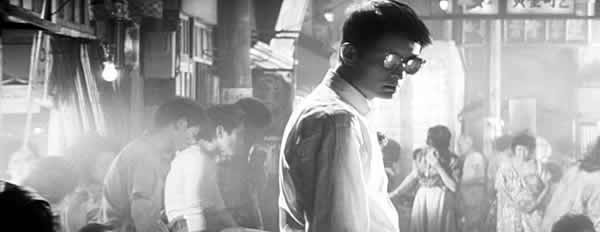
The perfect crime, the wrong man, the speeding train, and the surprising MacGuffin. High and Low has all the best elements of a great Alfred Hitchcock film. But it isn’t Hitchcock—it’s Akira Kurosawa, the Japanese director better known for his samurai flicks and complex moral tales.

When Kurosawa adapted works of Western fiction, he often chose from the greats: Shakespeare, Dostoevsky, Gorky. But High and Low (1963) is not adapted from a literary giant or even a Japanese author, but a minor 1950s American pulp novel entitled King’s Ransom by Ed McBain. King’s Ransom was part of a series of novels following the stories of the 87th police precinct, and while it has its literary qualities, the novel’s style bears no resemblance to the serious tone and moral complexity of Kurosawa’s film.

However, one director in Western cinema made his entire career through the meshing of high and low art: Hitchcock. The master’s reputation stemmed from spinning popular murder and suspense stories while engaging critics and scholars with morbid and psychological themes. High and Low feels as much indebted to Hitchcock as Kurosawa’s samurai films show the influence of John Ford’s westerns. Like Hitchcock, Kurosawa explores the roles of duality, ubiquitous guilt, and the incapacity to understand evil in a frightening and ultimately despairing fashion. High and Low ultimately paints a disturbing portrait of humanity, where evil simply exists within each person without explanation, creating a world similar to the sadistic one Hitchcock often presented.

The film seems ripe for comparison to Hitchcock from the opening shot, as the camera never leaves the home of Gondo. Like Rope, Lifeboat, Dial M for Murder, and especially Rear Window, Kurosawa limits himself by never staging a sequence outside of Gondo’s mansion—even the credits are framed from the large window looking down. Other classic Hitchcock tropes play large roles in the film: a train—essential in the narratives of North by Northwest and Shadow of a Doubt—literally bridges the two sections of the film. And we can see intense shadows, symbolic staircases, voyeurism, and grotesque death, other Hitchcock trademarks.

But High and Low’s most noted motif is the use of doubles and opposites as a sign of similarities between good and evil. Strangers on a Train, Shadow of a Doubt, Frenzy, and countless other Hithcock works explored this topic, and Kurosawa forges the same relationship between Gondo and Takeuchi. Kurosawa foreshadows the duality with the use of the two children, who are so identical that Gondo’s wife confuses them when they switch clothes while playing cops and robbers. The children’s outer appearance might suggest their societal roles, but under the surface, both Gondo and Takeuchi are both conniving and malicious—Gondo simply confines his immoral practices to business.

Kurosawa builds this philosophy into the film’s structure. Like Hitchcock’s Psycho, the narrative breaks into two parts with a protagonists in the center of each part. The film’s first half centers around Gondo and his moral dilemma of whether to save Shinichi. The second half of the film focuses on Takeuchi, operating on an opposing plane. Set in multiple locations, often with crowded frames, the genre of the film changes from morality play to police procedural in this part. The film bears down on Takeuichi’s story—his background, identity, and methodology—as the cops investigate and arrest him. When Gondo and Takeuchi meet face-to-face in the film’s final scene, Kurosawa uses the glass to literally reflect their faces onto each other, a technique that recalls the penultimate shot of Psycho as Norman’s mother’s face is superimposed over Norman’s.

So why does such a fate fall on Gondo? In High and Low, the kidnapping narrative is not just set up as coincidence, but as a fate that Gondo is punished for. As soon as the Osaka deal is set, Takeuchi calls almost immediately with news of the kidnapping. The placement of the phone is made to seem not like coincidence but fate—even one of the rival businessmen later reflects that it was “divine retribution.” Gondo hasn’t done anything terribly wrong, but he does recall Roger Thornhill in North by Northwest.. Before Thornhill becomes a case of mistaken identity (as Shinichi is here), we watch him pretending his secretary is ill, to grab a taxi quicker. Thornhill likes playing pretend, and thus his punishment is an extreme version of that.

Plus, Gondo’s not the only one to be punished. During the first half, Akoi, Gondo’s driver, seems like a humble man who deserves to have his son back. But in the second half, we see how poorly he treats his child, and that perhaps deserves the shame. And during the film’s harrowing alley sequence, we watch an addict suffer at the hands of Takeuchi. Her death seems inevitable, but it only happens because the police, the men responsible with her protection, allow it to happen so they may arrest Takeuchi. As Kurosawa’s camera shoots up to reveal her discarded body on the floor, he reveals that the height of evil is also its lowest point.

These ubiquitous punishments of the not-so-innocent relate to the worldview that both Hitchcock and Kurosawa seem to subscribe to: an evil that is ever prevalent and simply incapable of explanation. In Hitchcock, evil is often presented as kindness and without any precise motivation. Psycho’s famous psychiatrist speech has always had a humorous tone to it, more than one of essential exposition. And what motivation could one even begin to ascribe to the titular animals of The Birds?

In the second half of the film, the main narrative tension derives from the mystery surrounding the identity of the kidnapper and his rationale. The fact that High and Low leaves the spectator with an unsatisfactory answer is only more significant in examining the evil that surrounds the film. Takeuchi turns out to be a simple medical intern who is also a drug dealer, but nothing establishes him as a unique case. In the last sequence, he reveals that he wanted Gondo present to show that he was not afraid to die, but he soon screams in anguish, making him more pathetic than villainous.

The final moment in High and Low, where Gondo stares at his own image, answers the question of where such evil lies. Hitchcock suggested this answer too, but so often, his endings left us with a smile. Kurosawa never mentioned the influence of Hitchcock in any of his interviews, but I can’t imagine watching this modern day crime story and not think of the master of suspense. Kurosawa may have seen Hitchcock’s cinema, but instead of exiting the theater with a smile, he would have left with a chilled face.

And whatever happened to Ed McBain, the author who inspired this masterpiece? His real name was Evan Hunter, and he went on to write a little film called The Birds.

Peter Labuza is a film writer in New York City, originally from Minnesota. He has written for Indiewire, Film Matters, the CUArts Blog, the Columbia Daily Spectator, and MNDialog. He will be attending Columbia University in the fall for a Master in Film Studies, focusing on the history of American film genres. He currently blogs about film at www.labuzamovies.com. You can also follow him on Twitter.

Click here to donate to the NFPF!

In 2011, the New Zealand Film Archive discovered part of The White Shadow, a film directed by Graham Cutts, and written, edited, and assistant directed by the legendary Alfred Hitchcock. The first three reels of this lost work have been arduously restored, but the film has only had a single public screening. For this year’s For the Love of Film: The Film Preservation Blogathon, we are asking for donations to the National Film Preservation Foundation. If we can raise $15,000, the Foundation will provide free streaming of The White Shadow for four months, and record a new score by Michael Motilla. To donate, simply click here. And for more information on the blogathon, please visit Ferdy on Films, the Self-Styled Siren, and This Island Rod. Every donation counts, and we thank you for your continued support of film.

CRUEL SUMMER: THE BLUES BROTHERS (1980)

CRUEL SUMMER: THE BLUES BROTHERS

In this series, frequent Press Play contributor Aaron Aradillas will analyze a significant movie from each year of the 1980s. First up: The Blues Brothers (1980).

According to John Landis, The Blues Brothers was the last movie made under the old studio factory system, in which Universal had everything from the props to the costumes made on the lot. The Blues Brothers feels, indeed, like a transition from the old to the new. It takes the form of a big studio musical, but its execution is all 1980s bigger-is-better filmmaking.

The first movie to expand a sketch from Saturday Night Live, The Blues Brothers was “high concept” before that term even existed. When The Blues Brothers was made, Landis was the go-to comedy director working in Hollywood, having just made National Lampoon’s Animal House,the most successful comedy in movie history. Stars Dan Aykroyd and John Belushi had just ended their time on SNL, possibly the most culturally influential TV show of the late ‘70s. The Blues Brothers was the right movie, hitting at just the right moment. This movie fed an audience leaning toward the sophisticated comedy of Woody Allen and Steve Martin on the one hand and slob comedies like Animal House, Caddyshack, and Meatballs on the other.

The movie itself, despite its winning ingredients, is a big, lumbering, at times awkwardly paced thing that only intermittently comes to life. The screenplay by Aykroyd and Landis is less a script than a scenario. The story of Jake (Belushi) and Elwood (Aykroyd) putting the band back together, in order to raise money to pay off the back taxes owed by the orphanage where they grew up, has a Mickey-and-Judy-let’s-put-on-a-show innocence that’s quite appealing. The problem is that Landis stretches this story to over two hours, which allows for several unnecessary storylines. (Pacing has always been a problem in Landis’ work. It’s telling that his best movie, An American Werewolf in London, is also his shortest.) There are no scenes in The Blues Brothers. The movie consists entirely of sequences, numbers, and set-pieces. Consequently there aren’t any real characters. Everyone is more or less a cast member. As it turns out, this would be the modus operandi for a vast majority of movies made throughout the 1980s.

The problem with The Blues Brothers movie is the concept of the Blues Brothers themselves, a soul gimmick. (The band’s best performance remains their cover of Sam & Dave’s “Soul Man.” The sight of white boy John Belushi proclaiming he has soul is funny and kind of touching.) At the time no one seemed to question or even be concerned with the sight of a couple of white guys performing predominantly black music. (Inexplicably, The Blues Brothers’ Briefcase Full of Blues remains one of the all-time best-selling blues records.) The difference between the Blues Brothers and, say, Elvis or the Stones or Eminem is they rarely attempted to do anything that would test them as performers. They were an instant nostalgia act.

Landis probably knew the appeal of the act was limited and that’s why he added so many subplots, ranging from Illinois Nazis to Illinois state troopers to The Good Ole Boys to Jake’s parole officer to Carrie Fisher chasing the boys in their trademark police car. All of these adversaries have potential, but most of them don’t go anywhere. (The Illinois Nazis unfortunately provide the movie with a gratuitous scene of Henry Gibson shouting ugly rhetoric into a bullhorn.) Landis is clearly emulating It’s A Mad, Mad, Mad, Mad, World, but what made that movie a masterpiece was its gags on top of gags. It also allowed performers like Buddy Hackett, Phil Silvers, Sid Caesar, Ethel Merman, and Jonathan Winters to play characters that showcased their talents. Belushi and Aykroyd are kept mostly in check throughout this movie. Belushi’s kamikaze style is what made his appearances in Animal House and 1941 so memorable. And Aykroyd is best when he uses his Asperger’s-esque detachment to subversive comic effect. (His career performance remains his portrayal of Joe Friday in the underrated Dragnet.) The only sequence where the buried antisocial behavior of their act comes to the surface takes place when they disrupt the peace in a snooty restaurant in order to persuade Mr. Fabulous to join the band.

The musical performances are a mixed bag; small bits of each number indicate just how good they could potentially be. Whatever reservations you may have about Belushi and Aykroyd as bluesmen, the band itself, a combination of Stax musicians and a New York horn section, is always fun to listen to. And a couple of the players manage to emerge as terrific comic actors, especially Willie “Too Big” Hall and the recently deceased Donald “Duck” Dunn. The band’s big performance at the Palace Hotel Ballroom is fun but the song selections just remind you how good the originals are. I mean, compared to Solomon Burke’s original or The Rolling Stones’ cover, Belushi’s version of “Everybody Needs Somebody to Love” just ain’t cutting it. Belushi’s best vocal is on the movie’s opening song, “She Caught the Katy.” The song is used to score Jake’s release from jail and reunion with his brother. The opening guitar picking and blast of the horn section get the movie started on a high note, And Belushi’s phrasing is good because he doesn’t force it.

Unfortunately the promising opening song is followed by the movie’s worst musical number. The boys are sent to church to get some inspiration. James Brown plays Rev. Cleophus James, a showman who leads his congregation in a boisterous rendition of “The Old Landmark.” Designed as a tribute to black gospel music, the number borders on offensive as George Folsey’s frenetic editing makes the dancers into leaping bodies, killing any chance of the song’s building to a climax, and turning the spiritual into something comical. Besides, who wants to see The Godfather of Soul do a gospel song? Aretha Franklin does better with her rendition of “Think,” but Landis stages the dancing awkwardly. And when the band plays a rowdy country bar, the mere sight of Jake and Elwood in their costumes performing “Theme from Rawhide” simply doesn’t do enough to make the connection between country music and the blues.

Then, Ray Charles does a fantastic cover of “Shake a Tail Feather.” Charles proves to have perfect comic timing. (“It breaks my heart to see a boy that young go bad.”) And it’s also the best edited and choreographed of all the musical numbers. Even better is Cab Calloway donning his trademark white tux and performing “Minnie the Moocher.” He makes an effect Belushi and Aykroyd struggle to accomplish look effortless.

The Blues Brothers is best remembered for its extended climactic car chase, and it’s still a doozey. Cars fly, spin, flip, careen, and crash into one another like a pileup at a Hot Wheels factory. (“This is car 55. We’re in a truck!”) Landis sustains the comic momentum of the sequence in what amounts to the movie’s best musical number. The sheer audacity of the sequence at the time turned out to be prophetic, as it pretty much announced the 1980s as the decade of the bigger-and-louder-is-definitely-better school of filmmaking. The Blues Brothers put the existential dread and emphasis on the personal of ‘70s filmmaking in its rearview mirror. What it was speeding toward didn’t matter. The chase was all that mattered.

San Antonio-based film critic Aaron Aradillas is a contributor to The House Next Door, a contributor to Moving Image Source, and the host of “Back at Midnight,” an Internet radio program about film and television.

GAME OF THRONES RECAP 7: A MAN WITHOUT HONOR

GAME OF THRONES RECAP 7: A MAN WITHOUT HONOR

What makes for a great Game Of Thrones episode? What stories can it tell that could put it on the rarefied level of, say, HBO’s holy trinity of The Sopranos, Deadwood, and The Wire? I’m not sure how I would have answered this question before seeing “A Man Without Honor.” I would not have expected to say that arguably the show’s best episode would have only one major event combined with a series of dialogues. This isn’t a surprise, given that the dialogue and characters are some of the strongest components of the show, but it is somewhat odd, given how many different storylines are going on at once, that so few move directly forward.

Instead, in scene after scene, we’re shown reasons why these characters are important, and why the stakes are so high. Not many of the metaphorical poker hands are fully played out, but watching them progress gives us insight into most every major character as well as a few minor ones.

Take, for example, the centerpiece of the episode, Jaime Lannister, in his cage, talking to a cousin he barely remembers. The cousin squired for Jaime once, and clearly worships Jaime as a hero. They reminisce. They bond. Jaime supplies us with a bit of exposition, a reminder of the currently missing Barristan Selmy. They discuss their current situation. “I’m not well-suited for imprisonment.” Jaime has a plan of escape. The cousin wants to know what he can do. Jaime says “die” and then kills the man he just charmed.

There are two good reasons this scene shouldn’t work. First, it’s been done before. In the middle of the first season, Jaime talked with Ned Stark’s guard, Jory Cassel. After initially dismissing Jory, the two men ended up bonding over past war stories. Shortly afterwards, Jaime killed Jory with no regrets. For this reason, and because of the slow buildup of danger via the blocking, lighting, and music cues, Jaime’s violent turn isn’t a surprise. It's still a great scene, though.

Nikolaj Coster-Waldau’s performance as Jaime Lannister deserves the credit here. From the beginning, he has imbued Jaime with the charisma and power that the novels tell but don’t show until much later. He’s been largely off-screen this season—there's only so much you can do when chained in a cage—but Coster-Waldau’s cheerful cynicism dominates anytime Jaime is on-screen.

Only writing this now do I realize that Jaime didn’t say much to the poor boy he promptly murdered, beyond generic platitudes. Perhaps he did remember the boy, and spoke to him as a friend because he wanted some pleasant human interaction even as Jaime planned his cousin’s murder. Perhaps he didn’t remember the lad, and simply told him what he wanted to hear in order to get him within arm’s reach. Jaime was built up as the primary villain in the first season, but here, imprisoned for months and covered in his own shit, plotting a desperate, doomed escape, he seems even more dangerous.

This may have been the standout scene of the episode, but “A Man Without Honor” is filled with one-on-one interactions, most of them good, some of them brilliant. Arya Stark’s dangerous sparring with Tywin Lannister is dramatically improved this week, after the too-farcical physical comedy last week. Instead, tonight it’s a game of wits. Seeing both Charles Dance and Maisie Williams take each other on is a joy, and further confirmation that Williams is a potential star. This is one of the show’s funniest-ever scenes, with Dance’s slight facial expressions showing how impressed he is with the girl’s audacity, and Arya just barely staying ahead of Tywin’s probing questions.

Almost every major character gets a scene where the tension of their surroundings is built and detailed. Sansa Stark continues her awkward, tense relationship with The Hound, who seems to have adopted her as a pet of his own, saying “You’ll be glad of the hateful things I do when you’re queen, and I’m all that stands between you and your beloved king.” This may be Sophie Turner’s best episode as Sansa, and it’s also the one where she’s had the most to do, as Sansa’s first period shows up, making her betrothal to Joffrey much more likely to be completed. With this known, she meets with Queen Cersei, whose odd mentoring of Sansa is even more explicit than The Hound's, thanks to Tywin’s parallel relationship with Arya Stark.

Cersei then meets with Tyrion Lannister, and finally shows vulnerability, admitting that her children were born of incest and how troubled she is by Joffrey. During the first season, I thought Lena Headey was the weakest actor in the ensemble, constantly relying on her “scrunchyface” to convey any emotion, genuine or manipulative. With a bit of vulnerability on display, Headey manages to make a scene where Tyrion and Cersei bond a bit seem honest and even sympathetic. It also serves as a reminder that Stannis, with his huge fleet and new army, is less than a week away from the capital, and close to the climax of the season.

Some of the most fun comes from the romantic comedy Beyond the Wall, where Jon Snow continues to hold the wildling Ygritte prisoner. Much like Jaime Lannister’s scene, there are lots of reasons to dislike this storyline: Ygritte’s sexual manipulations are so transparent as to be downright wacky, and the part where she argues about who owns the land struck me as overly-modern, with its anti-colonial discourse (“You lot just came along and put up a big wall and said it was yours!”). The acting, once again, helps—Rose Leslie sells both the sexuality and the wildlings’ different norms—but I think the real work is done by the location. The scenes north of the Wall were shot in Iceland, and the craggy hills, tundra, and cold, cold snow and rain imbue the apparently comic scenes with seriousness and even danger.

Also, impressively enough, several episodes in, Jon’s half-brother Robb Stark and his infatuation with the nurse Talisa has finally gotten to the point where it doesn’t stand out as the worst part of the episode. That, surprisingly, goes to Dany’s adventures in Qarth, where her pursuit of her dragons’ kidnappers leads her deeper and deeper into a storyline where she lacks agency, which she attempts to make up for by screaming, in increasingly petulant and shrill fashion. (She sounds like Mel Gibson in the commercials for Ransom, yelling “GIVE ME BACK MY DRAGONS.”) It’s disappointing given the depth Emilia Clarke brought to Danaerys in the first season.

And then Game Of Thrones tosses in a sucker punch. After an hour of scenes consisting almost exclusively of two people talking to one another, the action returns to Winterfell and Theon Greyjoy’s pursuit of the younger Stark boys. After a day of fruitless searching, Theon returns to Winterfell, claiming to have found the boys, and offers proof: two charred, dismembered children’s corpses. The grim music rises as we see that a character who began the season as a sidekick to one of the heroes is now a child-murderer. That doesn’t relieve the tension built up over the course of the episode—it hammers it in. That’s what will make Game Of Thrones worthy of inclusion in the tevevision pantheon.

Adaptation:

As far as I can tell, every single scene in this episode was significantly altered, or simply invented, compared with the novel. Robb’s, Arya’s, Dany’s, Jorah’s, and Jaime’s scenes with the cousin are totally new. Jon and Cat have had their scenes altered chronologically, and their motivations have also been changed due to alterations in previous episodes: Qhorin didn’t leave Jon with Ygritte for days in the novel, instead disappearing for a while, then returning.

Missing characters change the structure and meaning of Bran’s main scene in the episode—a friend with a premonition of the dead bodies has been deleted and has had his character merged with Osha, who doesn’t have that gift. Meanwhile, Theon’s worst impulses are being exacerbated by one of his crew, instead of by another major character (who will apparently be introduced later). Sansa’s scene with Cersei may be the only one to be relatively unchanged from the novel.

I would quibble with some of these decisions—in fact, I almost certainly will next week when we see the fallout from Cat’s confrontation of Jaime—but overall, I think this marks a turning point for Game Of Thrones as an adaptation. It has fully detached itself from the source material. It still uses the books' themes, characters, and overall story, but it now has the confidence to be tell that story in its own fashion.

Rowan Kaiser is a freelance pop culture critic currently living in the Bay Area. He is a staff writer at The A.V. Club, covering television and literature. He also writes about video games for several different publications, including Joystiq and Paste Magazine. Follow him on Twitter @rowankaiser for unimportant musings on media and extremely important kitten photographs.

MAD MEN RECAP 8: DARK SHADOWS

MAD MEN RECAP 8: DARK SHADOWS

"I’m thankful that I have everything I want, and that no one else has anything better."

nullBetty can't just be happy. She can't just have what she wants. Having what she wants doesn't feel good. Instead, what feels good is having what she wants at the expense of others. It's a mean-spirited way to live, and no amount of window-dressing can make it sound nicer. "Selfish" would be an improvement. She lacks self-awareness to such an extent that she can say the above as a sincere expression of gratitude at Thanksgiving. The Internet is full of Betty haters, and I don't consider myself one of their number, but this aspect of her character cannot be explained away, softened, or justified. It's just nasty.

I know what you're thinking. You thought I'd open with the "Every man for himself" quote. Clearly, that's the, or a, theme of Mad Men Episode 5.09: Dark Shadows, and it's also something that Matt Weiner has been talking about in the media. Because Weiner is so secretive about what's to come on the show, when he releases a quote or a theme, it spreads like wildfire in the blogosphere.

Yet "Every man for himself" only takes us halfway on our journey. Don could have pushed hard for himself without ditching Ginsberg's work in the cab. Betty could work to lose weight and be a supportive wife without trying to destroy Don's new marriage. Pete could pursue Beth Dawes without taking a shot at her husband. (Check out Pete's delightful Beth fantasy in the video below, and don't fail to notice that Pete can't fantasize about sex without fantasizing about power and recognition as well.)

So, it's every man for himself, sure, but it's also about crushing the other guy in the process, and the notion that success just isn't as much fun unless someone is under your bootheel. I don't think many fans love Jane Sterling, but her plaintive realization that she's been defeated by Roger touched me: "You get everything you want, and you still had to do this." That, as much as Betty's Thanksgiving gratitude, is the real point: Winning in this show's world is hollow unless someone else loses.

What are the major plot lines this episode? First is Betty: Her weight struggle, and her competitiveness with Megan. Then comes Don and his competitiveness with Ginsberg. Then there's Roger, who is competing with Pete for business and with Jane for a sense of ownership. Others are swept up into various competitions: Peggy versus Ginsberg, Pete versus Howard, Julia versus Megan. These people compete not only for themselves, but because they specifically and pointedly resent what others have.

I doubt fans will love this episode. There is, first of all, the Betty backlash to contend with. I think her character was absolutely compelling this week, but she usually sets off an Internet Comment Shitstorm. You heard it here first. It was also kind of a difficult episode. It didn't have a lot of BANG WOW moments: I mean, sure, Megan in a bra, Beth in nothing at all, but no hand jobs or blow jobs or fisticuffs in sight, so maybe people will feel shortchanged. I also think seeing this kind of nastiness can be wearing; it feels petty and so you come away from it like Sally at the end of last episode; "Dirty." The "killer smog" at the end of the episode really happened, and it also serves as a symbol for the creeping toxicity of these cutthroat shenanigans. It makes it hard to breathe for all of us, and I suspect some portion of the audience might react negatively. [Click through to the next page for more…]

A second, connected theme is secrecy, and people being outed. This is threaded throughout Dark Shadows: Secrets and the ability to expose secrets represent power, and power is what our characters compete for. Nothing is more insidious than Betty's "sweetly" mentioning Anna Draper to Sally (watch it below):

In Betty's version of self-revelation at her Weight Watchers' meeting, she's so vague as to border on meaningless: She says merely that she experienced something that upset her. What upset her was another person's happiness. Don and Megan have a magnificent apartment, and Megan has a young, beautiful body. Betty can barely contain how awful this makes her feel. Inadvertently finding a love note from Don to Megan puts her over the edge: It's simply not okay for them to be in love, for Don to be sweet to Megan, for the Draper apartment to be more beautiful than the Francis house. (By the way, Megan is wrong about the distance; it's 25 miles from Rye to 73rd and Park.)

Betty setting up Sally to ask just the right question to create havoc reminds me so much of Betty setting up Sara Beth in the Season 2 episode Six Month Leave (Betty has an Episode 9 pattern, I guess). She manages her feelings by making others suffer, this time in an episode where the Weight Watchers leader talks about stuffing the feelings you can't express using food. Betty wants to feel differently; swallowing the mouthful of canned whipped cream and then spitting it out is a perfect encapsulation of that YES NO YES NO feeling; wanting and not wanting, stuffing and letting it out. She offers just the right kind of support and wisdom to Henry even while spreading her poison.

So, Betty tries to use outing someone's secret as a weapon, and we get a sense of that with Jane and Ginsberg, too: Jewishness is a secret you have to keep in Roger's social circles, a secret Roger required Jane to keep. Now he expresses power over her by pushing that secret out of the shadows. Roger wants Ginsberg to keep a secret and he says no; Peggy kept a secret for Roger, and each was paid for it (although Peggy was paid a lot more). Whoever holds the reins to a secret is ahead in this "doggy dog world."

Some additional thoughts:

  • Henry wonders if he "bet on the wrong horse" for nothing. It seems like Betty is wondering the same, and Henry is that horse.
  • It looks like a senility plot might be in Bert Cooper's future. Correcting "hip" for "hep" makes him seem amusingly out of touch, but not knowing that Roger and Jane are divorcing could be a bad sign.
  • Betty really enjoys food this episode: Whether it's her meager breakfast, or a bit of steak, or a tiny bit of Thanksgiving dinner, she chews with gusto. In past seasons, when thin, she barely ate at all. Allowing herself or not allowing herself to experience pleasure is a whole motif with this character. At least chewing is some kind of start.
  • On the other hand, I feel like the chin appliance gets in the way of January Jones's ability to use her face expressively.
  • Okay, fine, I said I wouldn't, but I'll give quote of the week to this: Peggy: "You are not loyal. You only think about yourself." Roger: "Were we married? Because you’re thinking about yourself too. That’s the way it is, it’s every man for himself."

Deborah Lipp is the co-owner of Basket of Kisses, whose motto is "smart discussion about smart television." She is the author of six books, including "The Ultimate James Bond Fan Book."

Watch Mad Men Moments, a series of videos on Mad Men, produced by Indiewire Press Play.