VIDEO ESSAY: Alfonso Cuarón’s Cinematic Canvas

VIDEO ESSAY: Alfonso Cuarón’s Cinematic Canvas

Alfonso Cuarón and
the Prisoner of Azkaban

The following is an
appreciation of my personal favorite film by Alfonso Cuarón, which I fear has
been somewhat critically neglected. But for more on the man’s impressive career
as a whole, see Nelson Carvajal’s video “Alfonso
Cuarón’s Cinematic Canvas
.”

People sometimes ask me whether I think “the kids today” are
all right. That always seems to me a strange question and perhaps a rhetorical
one where the speaker is really suggesting that there’s something wrong with
anyone younger than us. The logic, inasmuch as I follow it, is that
thirty-somethings had the privilege of growing up with movies like The Dark Crystal and Labyrinth and Time Bandits, and those movies fucked us up, and made us the clever
intelligent beautiful sophisticates we are today. Well, I’m not so sure it
works like that, and for every subversive film by Gilliam and Henson, there
were many more popular flicks like The
Karate Kid
, Teen Wolf, and Short Circuit. But, sure, I always
respond, “the kids today” should be totally fine, because they had Pokémon—surely
one of the strangest cartoons I’ve ever witnessed—and what’s more, they had Alfonso
Cuarón’s Harry Potter and the
Prisoner of Azkaban
.

I disliked the
first two Potter films, though I also wasn’t fond of the first two books. But
with Prisoner of Azkaban, J. K.
Rowling started hitting her stride, complicating Harry’s bright happy world with
more intricate plotting and morally ambiguous characters, the prime example of
which was the titular prisoner himself, Sirius Black. And can you imagine what
Chris Columbus would have done with that character? But Columbus bowed out of
the franchise, allowing Cuarón to inherit it—and totally redesign it.

Casting
Gary Oldman as Black was a bit of genius—this is the guy who previously played Sid
Vicious, Dracula, Lee Harvey Oswald, Guildenstern (I mean Rosencrantz), Mason
Verger, Jean-Baptiste Emanuel Zorg, and that deranged cop determined to kill the
pubescent Natalie Portman and her kindly middle-aged French hit man boyfriend.
(Although come to think about it, had Stansfield succeeded, might we have been
spared the Star Wars Prequel Trilogy?) Oldman’s mere presence—recall those
initial glimpses of the man, howling in rage in those animated wanted
posters—made Black feel genuinely dangerous, and made the Potterverse feel suddenly
dangerous. Adding David Thewlis to the mix, as the reluctant, melancholy
werewolf Remus Lupin (he’s rather Hulk-like), pushed that fictional world even
further into some dark corner of the crooked Diagon Alley. Think about it: Azkaban’s the movie where Harry Potter’s
stable of mentors swelled to include not just Oldman, but Johnny from Naked (and were we meant to sense in
Thewlis’s presence a hint of the Verlaine / Rimbaud relationship in Total Eclipse?).

More
importantly, with Azkaban, the Potter
films went from something with the look and feel of an after-school special to the
look and feel of cinema. If you’re
shaky on the details, just compare any scene in Columbus’s version with any
from Cuarón’s—for instance, these two classroom bits:

Note, in that Azkaban
scene, the wide variety of techniques on display—long gliding takes and dramatic
insert shots—as well as the inventive staging. (I particularly like the moment
when Harry steps up to the boggart, and the camera affixes itself momentarily to
the bobbing jack-in-the-box.) Azkaban
was also the movie where Hogwarts—until now a stable, horizontal, and above all
else comfortable boarding school—went
all cockeyed, becoming in Cuarón’s hands someplace sprawling and ancient, a
place with enormous swinging clock pendulums that could kill an unwary kid, and
perched precariously amidst crags and ravines. Here’s what Cuaron did: when
Columbus left the project, the producers initially turned to Guillermo del
Toro. But del Toro declined, having found Columbus’s first two installments “so
bright and happy and full of light.” But a few years later, he
expressed interest in helming a later installment
:

“After seeing the last few films,
however, the director famed for a shadowy imagination and morally ambiguous
characters has begun to reconsider. ‘They seem to be getting eerie and darker
… If they come back to me, I’ll think about it.’”

Thank Cuarón for that eeriness, that darkness (though to be
fair, the books do get more complex with that installment).

He departed
after Azkaban, but he left his mark
on the franchise: successors Mike Newell and David Yates kept the basics of his
approach, even if their direction never matched Cuarón’s. With the exception of
Bruno Delbonnel, who provided the cinematography for Half-Blood
Prince
, no one else ever came across as having as much fun with Rowling’s
sprawling world as Cuarón.

For
my own part, I saw The Prisoner of
Azkaban
three times in the theater. And whenever anyone asked me what I
thought of it, I said, “It’s great. It’s this generation’s Time Bandits.”

Nelson Carvajal is an independent digital filmmaker, writer and content
creator based out of Chicago, Illinois. His digital short films usually
contain appropriated content and have screened at such venues as the
London Underground Film Festival. Carvajal runs a blog called FREE CINEMA NOW
which boasts the tagline: “Liberating Independent Film And Video From A
Prehistoric Value System.” You can follow Nelson on Twitter
here.

A.D Jameson is the author
of the prose collection
Amazing
Adult Fantasy
(Mutable Sound, 2011), in
which he tries to come to terms with having been raised on ’80s pop culture, and the novel
Giant
Slugs
(Lawrence
and Gibson
, 2011), an absurdist retelling of the Epic of
Gilgamesh. He’s taught
classes at the School of the Art Institute of Chicago, Lake Forest College,
DePaul University, Facets Multimedia, and
StoryStudio Chicago. He’s also the
nonfiction / reviews editor of the online journal
Requited. He recently
started the PhD program in Creative Writing at the University of Illinois at
Chicago. In his spare
time, he contributes to the group blogs
Big
Other
and HTMLGIANT. Follow him on Twitter at @adjameson.

VIDEO ESSAY: Gliding Over All: The Cinematography of BREAKING BAD, Season 5.2

VIDEO ESSAY: Gliding Over All: The Cinematography of BREAKING BAD, Season 5.2

This video essay is a co-production of Press Play and RogerEbert.com.

Because
He Wanted To

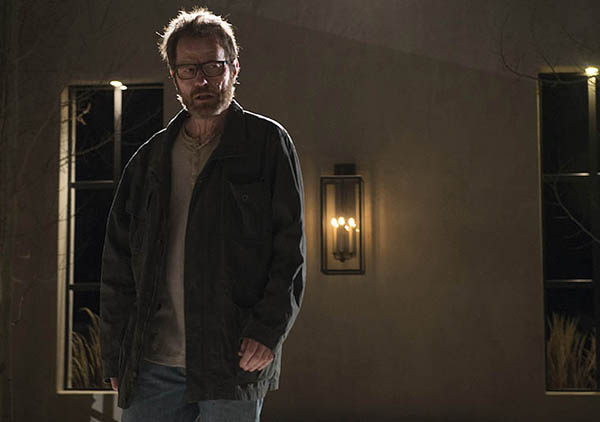
The final episode of Breaking Bad was a tender goodbye. I’ve watched
the entire series with my heart firmly planted in my mouth, but watching the
last moments of Walt’s life, his look of contentment as he sees the gas mask he
used to wear when cooking, that smear of his blood on metal as he finally
collapses to the ground, felt gentle. The great Heisenberg went out with a sigh
of contentment, rather than a roar of pride.

For five seasons critics have debated just what about Breaking Bad
has captured the American zeitgeist. In some ways, the show is surely
emblematic of some pressing cultural concerns—the desperation of the working
class and the changing face of American masculinity, for example. But ultimately,
the heart of Breaking Bad is not a public service announcement about the
dangers of meth, the need for better health care or the importance of family. Breaking
Bad
is about existential terror. It’s about the choices we make when
confronted with death and the disintegration of our own very identity. It’s
about the limits of free will and the recognition that we have minimal control
over our own destiny.  And it’s about how we all push for some kind of a
high, even though we know everything we do eventually has an expiration date.

In the end, Walt is a hero and a villain in equal measure. The same Walt who
murders his enemies in cold blood is the one who ties his wedding ring to a
string around his neck when his fingers become too thin to wear it, just as the
same Walt who kidnaps Holly is the one who touches her tenderly in her crib in
a final farewell.

Joan Didion once wrote, “We tell ourselves stories in order to live.” Walter
White rewrote his story in order to survive. In the final episode we see Walt
claiming this story, owning his responsibility in the chaotic landscape that
nourished and destroyed him. In the end, Walt’s relationships with the people
who meant the most to him were faded fragments from a time when Walt was living
a different story, a time when he truly believed that he was making moral
choices to protect the family he loved. Nowhere is this clearer than in the
final showdown, where Walt is forced to look at the life to which he condemned
his former friend and partner Jesse. Even after respect and trust are long gone
between Walt and Jesse, there always remains the weight of a sad, long dead
love.

I cried watching that last moment of Walt wandering around what, at this point
in his life, had become his natural habitat—a meth lab littered with bodies and
blood. Walt died very alone, in every sense of the word. His meticulously
planned out last hurrah to set things right was, certainly, a suicide mission.
In the final episode of the series we see Walt, who had always resisted death at
every turn, finally resign himself to it, even though, in true Heisenberg
fashion, he went out in his own terms.

The final episode of Breaking Bad gives the illusion of closure, as
if the entire world will fade away now that Heisenberg and Walter White are one
and gone. In reality, there were things that Walt did that will never be
healed. Walt was proud of letting Jane die and poisoning Brock, both decisions
which he felt were made out of necessity. But this same Walt was terribly
ashamed of his betrayals—leading Hank to his death and losing the love and
trust of his only son. Walt’s confession to Skyler, where he says he did it all
for himself, that he liked it, he was good at it and it made him feel alive,
betrays the weight of his tremendous guilt, but doesn’t necessarily give us the
whole truth to his story. In earlier episodes one can clearly see a man who is
struggling to make moral choices; somewhere along the way his motivations
changed. The difficulty in pinpointing that catalyst is what makes Breaking
Bad
great art and it is what makes this touching, quiet finale emotionally
wrenching.

For me, Walt’s guilt tempers those last moments of Breaking Bad,
where we see Heisenberg wandering about the meth lab—his reflection beaming
back at him, all stretched and misshapen. Walt’s tremendous pride in his
creation, his love for his “baby blue” is palpable in that moment, but so is
the image of his bloodied hand, tarnishing a space that requires cleanliness in
order to make a dirty product a signature product: it got close, but was never
100% pure.


To read a wonderful essay by Scott Eric Kaufman about the season finale at RogerEbert.com, click here:

http://www.rogerebert.com/balder-and-dash/the-cinematography-of-breaking-bad-season-5-part-2

To watch the entire series on Press Play, go here:

http://blogs.indiewire.com/pressplay/tag/dave-bunting-jr

Arielle Bernstein is
a writer living in Washington, DC. She teaches writing at American
University and also freelances. Her work has been published in
The
Millions, The Rumpus, St. Petersburg Review and The Ilanot Review. She
has been listed three times as a finalist in
Glimmer Train short story
contests
. She is currently writing her first book. She is Associate
Book Reviews Editor at
The Nervous Breakdown.

Dave Bunting, Jr. is the co-owner (with his sister and fellow Press Play contributor, Sarah D. Bunting) of King Killer Studios, a popular music rehearsal and performance space in Gowanus, Brooklyn.  He plays guitar and sings in his band, The Stink,
and dabbles in photography, video editing, french press coffee, and
real estate.  Dave lives in Brooklyn with his wife, son, and sister.

VIDEO ESSAY: My Life as a Chick Flick

VIDEO ESSAY: My Life as a Chick Flick

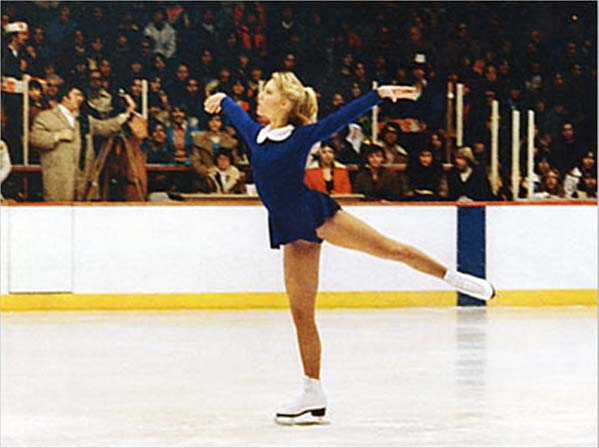
That’s me up there. 
See?  That nine-year-old boy cheering
on Lexie Winston to victory? 

No, actually I can’t see me up there either.  But I was
there, along with hundreds of other lucky people who managed to get spots as
extras on the set of Ice Castles.  Starring a promising unknown, Lynn Holly
Johnson, playing next to Robbie Benson, heartthrob of all the girls at my
school, I’m still not sure why I was so excited when a friend gave me a pass to
be on the set of this movie.  

Growing up in Minnesota during the 70s, one didn’t have too
many opportunities to rub shoulders with fame, so I guess I was excited at the
possibility of maybe seeing myself in a movie filmed in my own home state.  Like Lexie Winston, I was a small town kid
hungry for a taste of fame.

When the film was finally released several months later, I
was a little disappointed not to see my face up there in the crowd.  But something else happened to me while I was
watching Ice Castles, the kind of
movie I wouldn’t have been caught dead seeing under normal circumstances.  As I sat there, watching Lexie’s triumph
against adversity, as she wins a regional competition despite being blind, I
started to get a strange feeling inside me. 
By the time she started to trip over the roses thrown by her adoring
fans, thus revealing her secret disability to the public, something happened to
me that hadn’t happened since I was a child watching Dorothy trapped by the Wicked
Witch: I found myself crying at a movie. 

At some point during the picture I had come to identify with
this plucky gal from the Midwest, and later came to realize, hey, maybe I did
see a little of myself in that movie. 
Maybe, just maybe, a kid who watched only horror and science fiction
movies had learned to watch movies in a different way.  Maybe, like Lexie, I’d learned to see through
the eyes of love.

As I secretly wiped away my tears on a napkin greasy with
popcorn butter, I was anxious to forget about the incident, and I might have,
until a few weeks later, when, bored on a Sunday night, I decided to watch the
NBC movie of the week with the rest of the family.  The feature turned out to be The Other Side of the Mountain, based on
the true story of ski racing champion Jill Kinmont, who suffers a terrible
accident during a race and becomes a quadriplegic.  As soon as I heard Olivia Newton John singing
the maudlin theme song I should have known what I was getting myself into, but
some part of me couldn’t turn away.  Not
only was I drawn in to the story of Kinmont’s heroic struggle against
adversity, but I also realized some part of me wanted to be made to cry.  Some part of me was tired of trying to act
like the guys I hung out with at school. 
Something in these movies allowed me to be a different kind of viewer
than I was used to being.  When I watched
these films, I could be one of the girls.

Yeah, I know it’s sexist to associate getting emotional with
being female, but that’s the way Hollywood tends to divvy up its demographics,
and the movies I had been most obsessed with before what I have come to call “my
Ice Castles experience” didn’t offer
a lot of emotional range.  But the more I
watched these female-centered stories, the more I came to realize it wasn’t
just tears I was after.  I wanted to hang
out with a different crowd.  Bored with
my male friends, I wanted to see how the other half lived.  And the only place I felt I could be one of
the girls was at the movies.

I would have given anything to have friends like this.  When my friends hung out together, we
pretended we weren’t really having fun, we didn’t care too much about each
other, and that there wasn’t anything worth talking about besides music and
movies.  But I bet Annabeth Gish would
have understood my secret hopes and dreams. 
And I’m sure Lili Taylor would have accepted all my adolescent sexual
hangups, and maybe have had some good advice for me.  And if only I could work at a place like
Mystic Pizza, with a tough but lovable owner who would act as a kind of
surrogate mother…  In my naïve mind, this
is what I thought life for women was like, and I wanted to be a part of
it.  And for two hours, I could.

In the movie Satisfaction
I found the best of all possible worlds, female camaraderie and rocking
out, kicking ass, taking names, and then having a good cry together. 

What more could anyone ask for? 

There’s even a male character in the film who gets to live
out my dream, allowed into the secret world of women! 

He says it’s his own private hell, but I knew what he really
meant: it was heaven.

These kinds of films are derisively referred to as
chick-flicks, but for many viewers they hold a significance that exceeds this
condescending marketing niche.  People
who have favorite movies in common, especially those we wouldn’t admit to just
anyone, are like members of a secret community, connected despite differences
of age, gender, or taste.  And what
happens when we start looking outside of the confines of our gender roles?

Even though the stories of many so-called chick flicks tend
to be conservative—I mean, most of these movies end with marriage—the experience
of watching them might be seen as more transgressive.

Though you might not admit to it in the presence of certain
people, I bet you secretly love Dirty Dancing.  And once you get past the inane title, it’s
actually a pretty good story.  In it’s
own daffy way, it’s also quietly subversive: it’s hard to imagine the Hollywood
of today portraying a girl helping someone get an abortion in a positive
light.  By establishing a strong sense of
identification between the viewer and the character of Baby, the film takes us
through a narrative rite of passage in which we move from being Daddy’s innocent
little girl to an abortion facilitator and a dirty dancer.  And at the end, she makes everyone dance
along. 

Chick flick as agit prop? 
Maybe not, but for a girl watching this film it offers a rather racy
path to maturity.  And what about when a boy watches Dirty Dancing
Speaking for myself, I certainly don’t identify with Patrick Swayze: I
connect with Baby.  And this kind
of connection can be liberating. 
At least, it certainly has been for me.  I can’t imagine my life without
chick flicks.  Just don’t tell anyone I love this movie,
alright?

Jed Mayer is an Associate Professor of English at the State University of New York, New Paltz.

Jeffrey Canino grew up editing video on stacked VCRs. He holds a
Master’s in English Literature from the State University of New York at
New Paltz, and he blogs about horror cinema at his website, Nessun
timore:
http://nessuntimore.com

VIDEO ESSAY: Female Sexual Agency in a World of Blurred Lines

VIDEO ESSAY: Female Sexual Agency in a World of Blurred LInes

We live in a culture where female
bodies are constantly on display. However, most images of female sexuality we
see are passive and two-dimensional.

For the past two weeks Miley Cyrus’s MTV
VMA performance has been decried by parents’ groups and feminists alike. The
response to Cyrus’s performance is more interesting than Cyrus’s performance
itself. It hit on every cultural nerve about what is appropriate and inappropriate
for a young woman to do with her body. Of course, this dialogue has been going
on for years. Female artists from Madonna to Lady Gaga to Rihanna to Nicki
Minaj all have used sexuality to express themselves.

The main reason that Cyrus’s
performance stood out is twofold. Cyrus grew up in the public eye. Like Britney
Spears, Christina Aguilera, Selena Gomez and other child stars, Cyrus’s sexual
display is not seen as a natural transition to adulthood. Instead, critics are
concerned  to see a coveted virginal
starlet transforming into just another sexual object.

We are still uncomfortable with the
idea that young women have sexual agency. In general, our media depicts
powerful women as direct and aggressive on the streets or on the battlefield. In
the bedroom, however, they are still prizes to be won over. The trope of the
strong female who needs the male lead to work extra hard to win her over is
commonplace. The theme here is that strong women don’t put it out for just
anybody, and sexual and romantic longing make a woman weak.  

This can be seen in any range of shows,
such as Daria and 30Rock, where the smart, savvy female seems
patently disinterested or not good at garnering male attention. In the film Bridesmaids, Annie Walker puts up with
male bad behavior until a sweet guy she initially pushes away wins her heart. In
Iron Man we root for Pepper Potts, a
higher quality woman than the types Tony Stark bangs early on.

Today, strength and sexuality are
perceived as mutually exclusive. This trend became even more readily apparent
this past summer. Look at songs like “Blurred Lines,” for instance, or our
obsession with the female submission narrative 50 Shades of Grey, which is less about a sexually secure woman
exploring her own kinks (a la Secretary)
than a genuinely meek young woman submitting to a man’s control.

Lena Dunham’s Girls has been lauded and reviled
for its focus on young women’s unhappy sexual encounters, which are perceived
as being more authentic than those of Samantha in Sex in the City. Indeed sex is different for young women in 2013
than it was in the late 90s. What is public and private space has changed and
the risks associated with getting naked have increased. In this culture, a
woman’s body can easily become shared public property, whether or not she wants
it.

To me, what is most shocking about Miley
Cyrus’s performance is that it is devoid of pleasure. Cyrus looks gawky and
uncomfortable, her tongue sticks out cheekily, rather than sensually, her
twerking looks like something she practiced in the mirror for a few hours. If
Cyrus was offensively appropriating symbols of “blackness” in her act,
she was also appropriating elements of raunch culture. When Madonna and Lady
Gaga present sexual displays they own it, while Cyrus seems to be figuring out
how she feels about her own sexual awakening.

Most displays of female desire are so
prescriptive that it is hard to differentiate between raw want and
commercialized longing. In many ways the pre-packaged version of sexuality is
less threatening than the unscripted version. We question whether or not
Rihanna really loves S&M, or whether Madonna’s sexually provocative videos
were merely about capturing attention.

Women can rarely be seen as sexual
beings without being reduced to objects or otherwise exploited. This is part of
what keeps women from being viewed as whole people, capable of intellectual bravado,
as well as great desire.

Of course, opening up this kind of
dialogue means listening to women. Films such as Easy A and The To-Do List attempt
to dismantle the stereotype that young women cannot be in control of their
sexuality, but the idea that young women can be sexual agents is still not
mainstream. We believe that young women cannot possibly be sexual agents, and that
sexuality for young women is about display and attention, rather than desire.

Allowing women the space to be sexual,
either in pop culture or in society at large, matters. When female sexuality is
most commonly depicted as either incredibly dangerous or incredibly vulnerable,
the narrative that coming-of-age for a girl is a time of loss needs to change. Girls
and young women deserve to be offered the possibility that their sexual
awakening could signal that a world is opening up.


Arielle Bernstein
is
a writer living in Washington, DC. She teaches writing at American
University and also freelances. Her work has been published in
The
Millions, The Rumpus, St. Petersburg Review and The Ilanot Review. She
has been listed three times as a finalist in
Glimmer Train short story
contests
. She is currently writing her first book. She is Associate
Book Reviews Editor at
The Nervous Breakdown.


Serena Bramble is a film editor whose
montage skills are an end result of accumulated years of movie-watching
and loving. Serena is a graduate from the Teledramatic Arts and
Technology department at Cal State Monterey Bay. In addition to editing,
she also writes on her blog Brief Encounters of the Cinematic Kind.

VIDEO ESSAY: First Fassbinder

VIDEO ESSAY: First Fassbinder

EARLY FASSBINDER: A ROMANTIC ANARCHIST FROM THE FIRST

The German actor and filmmaker Frank Ripploh interviewed Rainer Werner Fassbinder in March 1982, only a few months before Fassbinder’s death at age 37.

Ripploh’s last question was: “How do you describe yourself?”

“I’m a romantic anarchist,” Fassbinder said.

And so he had been from the beginning. It can be difficult to know what to make of Fassbinder, how to enter his extraordinary body of work, how to assess and appreciate his achievement. Romantic anarchists don’t sum up well.

First, there is the simple problem of scale. Though his career was relatively short, he sometimes directed in one year more movies than other people made in entire lifetimes. Even quantifying the exact number of items is a challenge, because they span so many formats — over 40 feature-length films (both for television and theatrical release), a handful of shorts, some radio plays, numerous stage plays, and a few television mini-series (including the 15-hour Berlin Alexanderplatz, his magnum opus). That Fassbinder is generally known for a small set of major works (The Bitter Tears of Petra von Kant, Fear Eats the Soul, The Marriage of Maria Braun) is partly due to how well those films were originally received at international film festivals, but also because limiting the idea of “Fassbinder” to a small number of titles allows the casual viewer a few touchstones.

It is impossible, though, to get a sense of what makes Fassbinder’s work uniquely powerful and uniquely necessary without knowing at least some of his lesser-known movies. The Rainer Werner Fassbinder Foundation has done excellent work preserving and restoring many of Fassbinder’s films, and the majority have found their way onto home video in one form or another over the years — most recently, the revelatory restoration of Fassbinder’s 4-hour TV mini-series World on a Wire, a captivating, reality-bending science fiction story that had only rarely been seen anywhere since its original airing in 1973. Even some of Fassbinder’s most obscure films are currently available on DVD in Europe, and while that is not the case in the United States, the Criterion Collection has done a fine job of bringing a few of the major works into print in typically excellent packages, and providing others via their Hulu Plus channel. Their most recent release is a selection of five of Fassbinder’s earliest films as part of their Eclipse series of DVDs.

The selection of works for Early Fassbinder is excellent, giving viewers access to the most satisfying films Fassbinder made before his stylistic breakthrough into melodrama with The Merchant of Four Seasons, shot in August 1971. The pleasure of the early films is the pleasure of watching a breathtakingly talented artist discover his art. While completists must certainly lament the exclusion from the Eclipse set of Fassbinder’s first two shorts (as well as, perhaps, Whitey, the production of which at least partly inspired Beware of a Holy Whore), the core of Fassbinder before his deliberate turn to melodrama is represented here.

Various scholars have attempted to categorize and periodize Fassbinder’s output and make the vast sprawl of it more manageable. Fassbinder himself hinted at one way to do this with his early films, saying that they break into two types: cinema films and bourgeois films. The cinema films were primarily in conversation with other films and the world of filmmaking, while the bourgeois films were critiques of middle class values and lifestyles.

Categories hide as much as they show, however, and we should only use the cinema films/bourgeois films taxonomy as a quick way to get oriented with the works up through Beware of a Holy Whore. Other categorizations also work as well or better, for instance Thomas Elsaesser’s two categories for the first quarter of Fassbinder’s career: gangster films and more general tales of violence, self-aggression, and in-groups. No taxonomy is entirely satisfactory, though, because what’s most apparent in the early work is how much Fassbinder is trying out different genres and styles. These are exploratory works, and sometimes almost hermetic works—occasionally, Fassbinder scoffed at his first ten movies, insisting they were made just to amuse his friends and nothing more. At other times, he felt differently; for instance, in 1981 he made a list of “The Top Ten of My Own Films” and placed Gods of the Plague fourth and Beware of a Holy Whore first.

Love Is Colder than Death, Gods of the Plague, and The American Soldier form a loose trilogy, overlapping in both content and style, but each is also unique in ways that may not be apparent immediately. While none is as fast-paced as a film from Hollywood, Gods of the Plague is notably less narrative than the others and distinctly more laconic. The American Soldier brings Fassbinder’s interest in manipulating (or hollowing out) the icons of genre films to the fore. Love Is Colder than Death, for all its long takes and shallow conversations, offers a journeyman’s go-for-broke energy that Fassbinder would rarely replicate (such blind brio would reach its apex with The Third Generation in 1979).

Katzelmacher challenges audiences with its determinedly static camera, empty conversations, and miserable characters. Fassbinder was fascinated, especially early in his career, with stretching the audience’s experience of cinematic time by removing any elements that would contribute to a sense of suspense or even rising/falling dramatic action: the characters speak with as little affect as possible, and the editing allows shots and scenes to last longer than seems at all justified. (Even later, when he wanted to make movies that would attract a larger audience, Fassbinder couldn’t resist letting scenes go on for just a little bit longer than most other directors and editors would.) Our discomfort and impatience become a valuable response—boredom and frustration are important to the experience of what films like Katzelmacher are attempting to communicate. We feel, viscerally and almost unbearably, the ennui of the lives of Elisabeth, Paul, Erich, Franz, etc., and so gain an emotional connection to their relationships with and behavior toward Jorgos that we would not have were the film more conventionally entertaining. With Katzelmacher, the young Fassbinder took this approach as far as he could, and farther than he ever would again. The experiment is fascinating and sometimes powerful and evocative, but the characters are all either so detestable or dull that it may be difficult for viewers to locate a space for themselves within its suffocating world. Whatever we end up thinking of Katzelmacher, though, it was vital to Fassbinder’s development, for without it, it’s unlikely he could have achieved, for instance, the extraordinary (and painful!) perfection of pacing in The Bitter Tears of Petra von Kant, a similarly challenging film, but one where compassion for the characters has more opportunity to grow.

The final film in the Early Fassbinder set, Beware of a Holy Whore, marks a clear end to the first phase of Fassbinder’s career, no matter what taxonomy we choose. From his earliest days in the theatre, he and many of his colleagues had tried to live by communal, even utopian, principles, effectively creating a repertory company that lived and worked together constantly. The arrangement is part of the reason that Fassbinder was able to be so consistently productive, but it led to many tensions and tempests. Beware of a Holy Whore is, among other things, an epitaph for the most communal time of Fassbinder’s life. He was too talented, ambitious, and relentless to live and, especially, work in even a superficially nonhierarchical structure. For all his love of anarchy and romance, he needed to be able to channel order. He needed to be The Director.

Order can arrive in seemingly anarchic forms. The best of Fassbinder’s films are full of juxtapositions and contradictions. For all the sharp shocks and even despair in Beware of a Holy Whore, one thing we mustn’t forget about the film is that it is often deliberately absurd, exaggerated, and sometimes very funny. Many of the participants later noted that they had a great time making it (though Fassbinder’s more sardonic and acid caricatures wounded some of his friends). Fassbinder was often drawn to the exploration of characters as types rather than fully rounded human beings, and that interest is especially apparent here. The effect is, for the first time in his oeuvre, haunting: perceptive, sympathic viewers learn to see the roundedness within the types, the unique humanity within the common words, gestures, behaviors. It’s an effect he would soon master and repeat, an effect that would give his later, emotionally complex films extraordinary resonance.

Beware of a Holy Whore is an epitaph to a certain way of living, but it is an also an exorcism. Fassbinder seemed to recognize that he had come to the end of all of his paths — of living, working, being. He now knew the proclivities of the demons that drove him through his first ten movies. His favorite topics and obsessions would recur throughout his career, from his first shorts in the late 1960s until the final shot of his final film, Querelle, in 1982, but his tactics and templates would change. His discovery in 1971 of the American movies directed by Douglas Sirk offered him a new model, one that fit his sensibilities and showed him ways to bring feeling into form without sacrificing his interest in politics, representation, and identity. No longer was he stuck with the nihilism of noir or the angry disaffection and incipient fascism of the young bourgeoisie. Instead of having a character tell the story of an elderly woman who falls in love with a guestworker, as he did in The American Soldier, now he could bring that story itself to life in Fear Eats the Soul (his most explicitly Sirkean melodrama), meanwhile incorporating many of the insights about German society that he explored in Katzelmacher—and doing so in a way that not only infuriated and discomfited the audience but also engaged them in a more richly complex emotional journey.

We might become so enamored of the complexities and richness of the later films that we misinterpret the early films as shallow. They are not. They are experimental and deliberately artificial, certainly. They hold the viewer at a distance. But at their best their effects are purposeful and controlled. The films are, each of them, enjoyable on their own terms, and meaningful in their own ways. More importantly, they fit into the great tapestry that is the Fassbinder canon. The great joy of exploring beyond the most familiar and famous of Fassbinder’s works is the joy of seeing variations and iterations, the joy of possibilities and potentials. Character names and types appear and re-appear, sometimes in the body of the same actor as before, sometimes not. Situations arise in one way and then another, ideas flow toward a particular conclusion and then away from it, images expand and echo, and all the while our feelings shift, stretch, drift. Fassbinder’s work was often highly, even ostentatiously, artificial, but it was also rooted in a desire to address the world: both the specific world of his (and Germany’s) immediate circumstances and the world more generally, the world of history and literature and philosophy and humanity.

One of Fassbinder’s favorite books was Antonin Artaud’s Van Gogh, the Man Suicided by Society. It’s partly a prose poem, partly a statement of desires dreams, partly a denunciation of humanity, partly an artistic manifesto, and mostly a celebration of outsiders and unholy fools against the forces and institutions of conformist society. Fassbinder surely read some of himself into it. We could, too. Consider, for instance: “Under the guise of representation he welded an air and enclosed within it a nerve, things which do not exist in nature, which are of a nature and an air more real than the air and nerve of real nature” (trans. by Helen Weaver).

From the right distance, chaos reveals its order. Anarchy needs governing forces to resist. The romantic anarchist is always resisting, always seeking another order and thus imbuing every present order with chaos. Fassbinder was sometimes a lord of chaos, but now, thirty years after his death, we have the distance to perceive the order, to feel our way through artificiality to reality, to learn to see again.

Matthew Cheney’s work has been published by English Journal, One Story, Web Conjunctions, Strange Horizons, Failbetter.com, Ideomancer, Pindeldyboz, Rain Taxi, Locus, The Internet Review of Science Fiction and SF Site, among other places, and he is the former series editor for Best American Fantasy. He teaches English, Women’s Studies, and Communications & Media Studies at Plymouth State University.

VIDEO ESSAY: Gliding Over All: The Cinematography of BREAKING BAD, Season 1

VIDEO ESSAY: Gliding Over All: The Cinematography of BREAKING BAD, Season 1

This video essay is a co-production of Press Play and RogerEbert.com.

What is it about the desert?

Put more simply, what is it about the desert that simplifies
human conflicts, desires, and fears as represented in film and literature?

Think of Kobo Abe’s Woman
in the Dunes
, Paul Bowles’ The
Sheltering Sky
, Sam Shepard’s True
West
. Terrence Malick’s Badlands. Sergio Leone‘s Once Upon a TIme in the West.

Or, more relevantly to this discussion, Breaking Bad.

Put more specifically, what is it about the desert that, in
early episodes of this show, threatens to topple the narrative with the
sparseness of its scenery, with shots so dry you can practically taste the
sand?

It’s the emptiness.

The sense that there is nothing but the air between a
character and his problems, and that air is so thin it might as well not be
there.

The sense that a man, when faced with a problem, be it the
legality of his enterprise, death, the ineptitude of other humans, or all
three, might flail in the desert air, and find nothing giving resistance,
moving him forward.

The tedium of all of it. The difficulty.

But, at the same time, the profound importance of it.

There is also the way conversation sounds in the desert: the
way each sentence falls into silence, like a coin falling into a dry well.

We don’t hear the clink of the coin at the bottom of the
well, because it doesn’t have a bottom. Not on this show.

Another thing about the desert, particularly the New Mexico
desert, is that it dehydrates you. It sucks everything out of you. You come to
it with a set of complications, a set of morals, a set of daily worries, and
you find, in almost no time, that they’re all gone, lost in the cold night wind.

All that’s left is you, and the matter that brought you
here.

Another thing about the desert is that it’s where we all
started. (Depending on who you ask.)

Not in the desert, literally—but in the semblance of desert.
With nothing.

Nothing except, of course, that 800-pound elephant,
shimmering in the heat in front of you.

You can either stay where you are, and hope, until the sun
goes down, that the elephant goes away.

Or you can do something. And walk towards it.

And that moment, right there, that first step, is where your
troubles begin.

You think, If I can
just kill that elephant, all my problems will go away. I can leave. I can step
over its corpse, and head back to what I was doing before this.
 

But sadly,

and truthfully,

and unavoidably,

you think you’re walking out, but in reality, you’re just
walking farther in.–Max Winter

For a terrific essay by Nick Schager on the cinematography of Breaking Bad’s inaugural season, go here:

http://www.rogerebert.com/balder-and-dash/cinematography-of-breaking-bad-season-1

To watch the video essay on Season 2, along with an interview with director of photography Michael Slovis, go here:

http://www.rogerebert.com/balder-and-dash/gliding-over-all-the-cinematography-of-breaking-bad-season…

To watch the entire series on Press Play, go here:

http://blogs.indiewire.com/pressplay/tag/dave-bunting-jr

Dave Bunting, Jr. is the co-owner (with his sister and fellow Press Play contributor, Sarah D. Bunting) of King Killer Studios, a popular music rehearsal and performance space in Gowanus, Brooklyn.  He plays guitar and sings in his band, The Stink,
and dabbles in photography, video editing, french press coffee, and
real estate.  Dave lives in Brooklyn with his wife, son, and sister.

Max Winter is the Editor-in-Chief of Press Play.

VIDEO ESSAY: Siding with the Victim, Part 3: We Are All Meat

VIDEO ESSAY: Siding with the Victim, Part 3: We Are All Meat

Warning: This video contains shocking imagery, and so the faint of heart might want to gird themselves before Pressing Play.

[Complete script follows:]

We like to think we are in control, of our lives, of our
bodies, of our futures. If we work hard
and manage our lives, everything will turn out fine. 

We hold these truths to be self-evident . . . until we lose
that fragile sense of control.

Illness, injury, the loss of a loved one: all of us have
experienced moments when we realize we have no control over things, when we are
powerless.

That’s an uncomfortable place to be. But these experiences teach us that just
because we’re human, that doesn’t mean we’re special.

Art critic John Berger has said: “Animals are born, are
sentient, and are mortal. In these
things they resemble man.” In other
words, our most basic selves are animal. The horror movie reveals this, by showing us our mortality, stripping
away our arrogance.

Trapped. Tortured. Hunted. Slaughtered. This is the way of life, and death, for most animals. We’d like to forget this, but the horror film
never forgets. It reminds us that, like the over 50 billion animals killed
every year for human consumption, in the end, we are all meat.

The images of violence so abundant in modern horror movies
may seem prurient, mindless, sadistic. But
they also show us what we would otherwise turn away from: namely, the raw
material fact of our physical bodies, which, at the end of the day, are only so
much meat.

Most of us believe that human beings are more than this, but
horror movies are not so sure.

Plot and dialogue are crucial to a great horror film, but
when it comes time to immerse the audience in fear, the only sound we hear is
screaming. 

And sometimes a string section. 

To be without a voice is to be put in the place of animals:
speechless.

No film better captures this feeling of brute powerlessness
than The Texas Chainsaw Massacre. When a band of twenty-somethings pick up a
hitcher in rural Texas, he tells them about an old slaughterhouse that has been
closed down. He tells them his family’s
always been in meat, a grotesque line that cuts several ways: First, for
generations this community was sustained by the local meat industry; Second,
like the rest of the community, the hitcher and his family are no more
important to big agriculture than the animals they slaughtered; and Third,
driven to madness, they now make meat out of anything that crosses their path,
animal or human, male or female.

This scene is arguably the most terrifying ever filmed. It exemplifies
the moral force of siding with the victim. Here we see a woman stripped of every last vestige of her humanity, her
very fear made an object of derision by her monstrous hosts.

Most striking is the camera’s concentration on her eyes. A
baby’s eyes tell a mother what it needs, what it feels; in a dog’s or cat’s
eyes we can tell if it is happy or sad, scared or confident. Eyes transcend the species barrier, but,
unfortunately, that isn’t going to help this victim.

And this is why horror movies bring us to these horrifying
places: so that we can’t ignore the appeal in a victim’s eyes. In horror we
bear witness to suffering. We recognize ourselves in the victims, and the
victims in ourselves.

This family has always been in meat. For the film’s most frightening antagonist,
known as Leatherface, this is literally true. He wears a mask made from the skin from a human victim.  He is one of the most terrifying creations in
the history of cinema. Yet in this scene, unexpectedly, we feel a grudging
sense of sympathy with a monster we have already witnessed ruthlessly murdering
several hapless twenty-somethings. He is
like a guilty child, uncomfortable in his own skin. Underneath that mask we can imagine a being
stalled at a rudimentary stage of development, and made evil. But we can also recognize,
perhaps even relate to, his anguish.

Our protagonist has clearly been wounded by her experiences,
inside and out, and she can only laugh maniacally as the truck moves away at
the growing distance between herself and her erstwhile attacker. This distance, though, is only an illusion. Her
attacker’s dance of demented victory suggests a kinship between their warped
psychological states, and a reminder that monsters and victims, predator and
prey, are often two sides of the same being.


Ken Cancelosi is the Publisher and Co-Founder of Press Play.

Jed Mayer is an Associate Professor of English at the State University of New York, New Paltz.

VIDEO ESSAY: Horror Films and the War on Women (Siding with the Victim, Part 2)

VIDEO ESSAY: Horror Films and the War on Women (Siding with the Victim, Part 2)

[Original script follows:]

Everyone loves a winner. 
This is why most films have happy endings.

Such films seem empowering, especially when the characters
have to struggle through difficulties before rising triumphant.

Although we all know these are fantasies, they also mirror
our real life aspirations.

In the 1970s women demonstrated in the hopes of realizing
their aspirations to be treated equally.

But the most striking films from that decade tell a
different story.

There are two sides to any social movement, tales of victory
and tales of defeat. 

Horror movies tell us tales of defeat, usually involving
women.  Most people would say that horror
films are generally anti-feminist, even misogynistic.

But the stories of victims are just as important as those of
victors. The war on women has been going
on for many years, and the stories of its victims still need to be told.

Before the modern horror film, the melodrama told such
stories to women. Most melodramas follow the lives of people who encounter
great misfortunes. In the golden age of Hollywood, melodramas flourished. Such
films came to be called “women’s pictures.” Back then, women were expected to
be seen and not heard. There was no open forum where women’s issues could be
discussed. But women could connect with others through the medium of film. They
saw their own stories reflected in those of characters played by their favorite
stars. These lives were generally filled with suffering, and this suffering was
largely caused by men.

The modern horror movie takes this scenario to an
extreme.  This is the melodrama’s dark
unconscious.  Victimization is taken to
an extreme, and this makes us uncomfortable. 
In the best horror films, the viewer learns what it’s like to have every
last vestige of power and control stripped away.

For all of Roman Polanski’s own questionable behavior with
women, his films are uniquely attuned to their plight.  Rosemary’s
Baby
, from 1968, anticipares the 70s and horror by focusing on the vulnerability of women in a male-dominated world. This scene cuts in and out of Rosemary’s dreams. This emphasizes the
fact that we are seeing the world from a female character’s perspective. That
world is a very scary place, filled with very scary men. Such scenes linger in
the mind. They create a sense that anything can happen, and all is not as it
seems.

Or is it? Polanski leaves this in doubt until the ending of
the film.

After keeping her feelings bottled up inside for several
months, Rosemary spills out her troubles. 

Her husband then tries to regain control, but this only
makes Rosemary more suspicious.

But at last Rosemary makes a decisive break from the
sinister circle that seems to be tightening around her.  Farrow’s marvelously fragile and nervous
delivery draws us in to her vulnerable state. We share her nervousness:
certainly no one will believe her.  When
he does, a door of possibility opens and we share her relief. 

But as the door to her examination room is about to open,
the camera shifts to her perspective. When the door opens to reveal her
husband, and the sinister Dr. Sapirstein, we share her entrapment. 

The moral of the story? 
Don’t hire Charles Grodin as your obstetrician.

One of the worst injustices against women is when a
complaint of sexual harassment or charges of spousal abuse are disregarded as oversensitivity or the
delusions of female biology. Rosemary’s Baby captures that experience of being a
victim who isn’t taken seriously.

Unlike melodramas, horror films don’t simply negate the
experience of suffering by tacking on a happy ending in which everything comes
out right. This can make for grim
viewing, but it also challenges us to endure even when hope seems dim or even
non-existent.

Whether it’s physical abuse, rape, or simply a quiet life of
desperation under the glass ceiling, you don’t just get over it. There’s no “closure” for women living in a
sexist society, but most Hollywood films would like to make us forget that. 

Thankfully the horror film has a way of shutting
that whole thing down.

Ken Cancelosi is the Publisher and Co-Founder of Press Play.

Jed Mayer is an Associate Professor of English at the State University of New York, New Paltz.

VIDEO AND TEXT: Nelson Carvajal and Amber Sparks on Guillermo del Toro

VIDEO AND TEXT: Nelson Carvajal and Amber Sparks on Guillermo del Toro

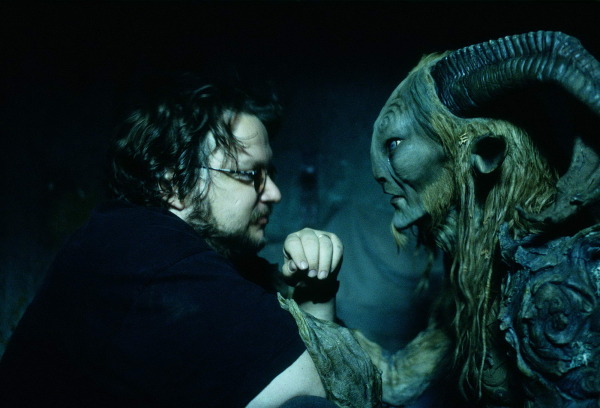
Guillermo del Toro: The
Unlikely Auteur

As Guillermo del Toro’s Pacific Rim release date fast
approaches, I can’t help but feel a little depressed.

Don’t get me wrong. I’m a huge fan (pun intended) of the kaiju—or giant monster—film, so I really
am looking forward to the release of this film, director and ultimate fanboy
Guillermo del Toro’s attempt to reboot giant monsters and mecha warriors for a
new generation. I seriously can’t wait to see Idris Elba and Ron Perlman battle
giant monsters from the deeps.

That said, I’m still in mourning for The
Hobbit
-that-could-have-been, a film that—instead of a lesser Lord of the Rings for small children and
people who love dwarf slapstick—might have featured an entirely new Middle
Earth. Imagine a brilliant, sadistic dragon-against-type; imagine troll-like dwarves
and sylph-like hobbits inhabiting an alien, immersive new world (instead of
wandering around in the digital landscape of LOTR like wide-eyed tourists:
“Look! There’s Galadriel!”); imagine Tolkien’s book, transformed utterly, in
the hands of a true auteur.

That’s right. An auteur. But,
you might say, shocked and appalled—he does genre
pictures
!

Yes. And?

His body of work reveals a filmmaker
who, along with a handful of contemporaries (both Andersons, Malick, Haneke,
Von Trier, etc.) has transformed his source
material so that it reflects absolutely his personal vision. And after
all, Hitchcock did genre, as Kurosawa often did. In del Toro’s case, the
personal vision was shaped by perhaps less
traditional sources
: by Forrest Ackerman’s Famous Monsters of Filmland, by Universal Horror classics and
Godzilla and Gamera films, by a childhood in Mexico steeped in Catholicism, and
by a self-confessed nerd’s affinity for children, outcasts, and monsters.

His interest in film began as an interest in makeup
and effects
, and his films are his
films precisely because of the love and care he takes in designing his
creatures and his unreal worlds: the pagan, organic nature of his creatures is
uncanny and frightening—even the mechanized creatures resemble insects or
animals or very old gods. In a Hollywood in which horror movies routinely make
monsters and demons from a few ready-made molds, when comic book films
(with a few exceptions) follow a format that doesn’t deviate too much from the
standard—del Toro makes films like Pan’s
Labyrinth
, with possibly the most terrifying creature in all of recent
cinema—The Pale Man, Norn-like and flesh-draped and utterly original. He makes
films like The Devil’s Backbone,
which turned the ghost story genre on its head. He makes films like Hellboy and Hellboy II: The Golden Army,
which took a wildly popular comic book and transformed it completely. The Troll
Market in Hellboy II is worth the
price of admission alone, as are the bizarre and frightening tooth fairies.
These creatures are unlike any you will find in any other film, because they
don’t come from formula and they aren’t lifted from other films. As Daniel
Zalewski wrote in his fascinating New Yorker profile of del Toro, “When movie monsters look largely the same, Del
Toro’s reach deep into the past and into mystic and pagan iconography to
present something else entirely—something far more terrifying and familiar . . . A
del Toro monster is as connected to a succubus in a Fuseli painting as it is to
the beast in ‘Predator.’ His films remind you that looking at monsters is a
centuries-old ritual—a way of understanding our own bodies through gorgeous
images of deformation.”

Del Toro himself seems motivated to keep moving, to keep
making it new. On
his sources of inspiration:
“The worst thing that you can do is be inspired
solely by movie monsters. You need to be inspired by National
Geographic,
by biological treatises, by literature, by fine painters, by bad
painters.” Indeed, in Pacific Rim,
del Toro has said he wants to create something entirely new, despite the
Godzilla and Gamera-like kaijus of
the genre’s heyday. He was instead inspired by perhaps not such an unlikely
source: Goya’s
The Colossus.

But a visual feast alone would make del Toro a great artist,
not a great filmmaker. The compelling and very dark stories he chooses to tell
are what animate the films and give them their haunting quality. Beauty holds
hands with horror, two sides of a coin in all of his films. Del Toro seems much
more in debt to Grimm’s Fairy Tales
than to The Texas Chainsaw Massacre.

One gets the impression that perhaps del Toro deals in
horror because of his dark view of human nature. People are the real monsters
in most of his films, not the fantastic, often ambivalent, only cruel-as-nature
creatures that inhabit his worlds. Humans are the ones who do the real, lasting
damage. He says, “I ended up thinking that monsters are sort of the patron saints
of imperfection. I try to celebrate imperfection in my movies; the really scary
characters are always the ones who insist everything has to be perfect.”

All this is the reason I’m still in mourning. I loved Peter
Jackson’s Lord of the Rings trilogy
just like everyone else, and after that it would have been great to see what a
true auteur could do to put a different spin on the prequel. (I also would have
loved to see Del
Toro’s canceled adaptation of Lovecraft’s At the Mountains of Madness
.) But
I suppose it’s not such a bad consolation prize to get a new and exciting kaiju movie, one that will feature new
creatures but follow the old wild joy of the kaiju orgy of destruction in the (important for a pacifist
director) empty city (thus the scenes
of frantic evacuation in every giant monster movie ever). And maybe I’ll even
(fingers crossed) get to see him team with Charlie Kaufman to make what could
be the first
good screen adaptation of Slaughterhouse Five.

The man with endless creative ideas, who lives
in a mansion he calls Bleak House—filled with monsters, aliens, and comics—seems
perhaps more in touch with a pop-culture obsessed public hungry for good horror than any other director
since Hitchcock. And as del
Toro has said himself
, “Hitchcock would have gone
to Comic-Con. He would have signed collectible shower curtains. He
was a showman and an auteur.”
–Amber Sparks


Nelson Carvajal is an independent digital filmmaker, writer and content
creator based out of Chicago, Illinois. His digital short films usually
contain appropriated content and have screened at such venues as the
London Underground Film Festival. Carvajal runs a blog called FREE CINEMA NOW
which boasts the tagline: “Liberating Independent Film And Video From A
Prehistoric Value System.” You can follow Nelson on Twitter
here.

Amber Sparks’ short stories have been widely published in journals and anthologies, including New York Tyrant, Unsaid, Gargoyle, Barrelhouse, and The Collagist. Her chapbook, A Long Dark Sleep: Stories for the Next World was included in the chapbook collection Shut Up/Look Pretty from Tiny Hardcore Press, and her first full-length story collection, May We Shed These Human Bodies, was published in 2012 by Curbside Splendor. You can find her at ambernoellesparks.com or follow her on Twitter @ambernoelle.

VIDEO ESSAY: Siding with the Victim, Part I: THE SHINING

VIDEO ESSAY: Siding with the Victim, Part I: THE SHINING: Death in the Family

[The script follows:]

From the time we are little children we like hearing scary stories.  Some
psychologists claim it’s because we use these stories to work through our anxieties.
 Fairy tales and nursery rhymes expose us to fearful situations, and along
with Hansel and Gretel, Goldilocks, and Little Red Riding Hood, we see our way
through to daylight.

But for every little piggy who lives, another little piggy has to die…

Maybe there’s another explanation to why we like scary stories, a darker, and
perhaps a richer one than that given by psychologists. Perhaps we don’t
identify with the victors so much as the victims.


Horror films show us the dark underside of the
American dream. As one group rises to power, another is disenfranchised. Often,
violence is visited upon those who are in the minority. 

Thrillers and action films celebrate triumph and
success. Horror films clean up the mess, mop up the blood, and show us what’s
under the rubble after the action hero lays waste.

Many horror movies’ victims, are women and
children, as in real life.

The Shining is
arguably the greatest horror film because it so movingly bears witness to the
suffering of the frightened wife and child of a violent alcoholic.
 

Wendy Torrance’s glassy-eyed smile holds a dark
history and a sense of nervous fear. This is revealed by the enormous ash
perilously dangling from her cigarette. The film will draw her repressed fears
out, writ large in bloody letters across the screen.

If this were a made for TV movie about spousal
abuse, a councilor or friend would come to the abused wife’s aid. That person
would help her to gain control of her life. 

But the narrative and moral logic of horror films
tells us a different story, one that is, perhaps, truer to life: evil never
sleeps, and the dead don’t always stay dead.

It is a common story, sadly enough, but like all
great horror films, The Shining gives this
story the magnitude of a tragic American myth. 

As family tensions mount in the Overlook, each
member of the family goes over the edge in their own special way.


“They fuck you up, your mum and dad. / They may
not mean to, but they do. / They fill you with the faults they had / And add
some extra, just for you.”  Poet Philip
Larkin’s words are particularly relevant to the American horror film.  Many of the best horror films capture the
unique vulnerability of childhood. In the end, the horror movie makes us all as
vulnerable as little children.

The tradition of gothic horror has been replete with beings
whose monstrousness is as much a burden to themselves as a threat to others.  There is no such thing as a victimless crime
in horror movies. Even the victimizers may be said to suffer.

We see Jack Torrance having a nightmare that,
the film suggests, is a kind of a vision brought on by the haunted hotel where he
and his family live. Such visitations vex him, and we can identify with his
anguish. 

Jack can still feel compassion, though, and we sense
his torment and anguish as he confronts and eventually turns toward
derangement. 

As such visitations increase in frequency and
intensity, Jack is transformed into a savage, and yet we continue to see him as
a victim driven to madness. And thus, his final transformation and his
merciless rampage seem all the more tragic. 

Even in the end, he is no monster. 

This is simply the dark side of human power. 

The waxing and waning of power itself—in
cinema as in real life—is merely an illusion.

The horror film: It shows us the dark side of
power, and reminds us that we are all, at some levels, powerless victims.

Power,
in and of itself, is not a moral virtue, but compassion is.


Jed Mayer is an Associate Professor of English at the State University of New York, New Paltz.

Ken Cancelosi is the Co-Founder and Publisher of Press Play.