KICKING TELEVISION: TV and the Death of the American Marriage

KICKING TELEVISION: TV and the Death of the American Marriage

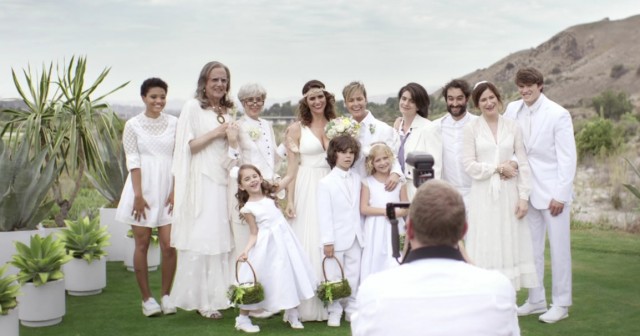
nullThe first episode of season two of Transparent begins with a wedding. “Kina Hora” opens with a long, uninterrupted shot of the Pfefferman clan, draped in expensive, virginal white vestments, opulent garb against an epic California coastal backdrop. The series, which is the anti-thesis of tradition in society and on television, chose to invite the viewer into its sophomore effort by indulging in the very essence of tradition. Despite the immaculate aesthetic of the event, the wedding and its participants and guests were ugly, and in such a depiction Transparent stood with the traditions of its medium in presenting marriage as a deeply flawed and false institution.

Transparent explores the challenges of relationships. It beautifully examines how individuals construct, compromise, and conform in order to find happiness, or at least endure the journey. At the center of Transparent lie several marriages: the transitioned Maura and his ex Shelly; the newly betrothed Sarah and Tammy; Sarah and her ex Len; Josh and his partner Raquel; and all the bits and pieces, characters and relations who intersect and intertwine. It’s a look at marriage that introduces the contemporary evolution of our culture to the medium of television, a medium that tends to treat marriage with contempt. It’s also a medium that has evolved with the advent of streaming services like Amazon, which allows shows like Transparent the freedom to discuss an institution like marriage with less attachment to the traditions that permeate the network model. 

In “Kina Hora”, the defining moment—as the ugliness of the event meets the realities of the institution—finds Rabbi Raquel (the exceptional Kathryn Hahn) describing weddings as, “a ritual. It’s a pageant. It’s a very expensive play.” The same could be said about television itself. It’s part of our lives, an ongoing and unannotated play, in many parts, in many forms, with no end in sight. It’s a filter by which we quantify and qualify our own attempts at life. The streaming services have broadened the modes and conversations by which we apply that filter. And for the most part what we know as “television” seems to deplore marriage.

I got married this past summer, which was a surprise to many because I had never expressed any interest in marriage. This is not because I didn’t believe in love, which I did; or eternal happiness, which I aspired to; or gifts, which I rely on. I didn’t really want kids, but that became irrelevant, as marriage and kids ceased to be connected the way they once were. I think diamonds are a contrived industry, but I’m not wearing one. Ceremonies seemed opulent and gluttonous, but we eloped. Marriage, to me, had seemed simply a precursor to infidelity and divorce.

I’m not sure why I believed this. My parents have been together for more than 40 years and are very happy. My sister has been married for a dozen years or so, and my niece and nephew report no issue. Many of my high school friends are married and don’t complain about it much. But still, I had issues with the institution. And then, a few weeks ago, I was reading one of the many asinine and short-sighted op-eds that link television and movie violence to American gun culture, and I decided to blame what I believed to be the death of marriage on TV as well.

Television has killed the American marriage.

Unlike the facile arguments that blame media for gun violence, I decided to attempt to link my hypothesis to fact before asking my editors at Indiewire to publish it. Kind of like what Fox News does except the complete opposite. Is marriage, as television to me implies, dead—only worthy of farce, ridicule, and revile? Apparently, the meme that 50% of all marriages end in divorce is actually untrue. According to a New York Times study, “The divorce rate peaked in the 1970s and early 1980s and has been declining for the three decades since.” The piece also cites Fox, ABC, and Bravo references to the divorce rate myth as fact. The same media that both perpetuate and deride TV and film violence as contributing to a violent culture apparently do the same for the institution of marriage.

Violent shows bear ad revenue, as does programming of punditry that condemns them, as does the contemporary news model that treats myth as fact and viewers as sheep. Entertainment is an industry, and I like capitalism as much as the next guy with a paralyzing disinterest in nuptials. But I like facts and informed discourse too, which doesn’t explain why my own fears about marriage were tied to a straw man with commitment issues.

Interestingly, the Times piece begins with a reference to Chris Martin (a musician of some sort) and Gwyneth Paltrow (Blythe Danner’s daughter) ending their marriage. Of course it does. Even a respected outfit like the New York Times can’t make a concise argument in this day and age without tying it to B-list celebrities. It’s a trope of contemporary discourse that we filter issues through celebrity and media institutions. Television is a convenient barometer by which we tend to measure ourselves. It’s in our homes, a flawed mirror reflecting society and our notions of self. Am I as pretty as Rachel? Am I as funny as Chandler? Am I as successful as… well, none of the Friendswere particularly successful, but they had nice apartments and love and friendship and pet monkeys.

But beyond the aesthetic comparisons, there are institutional quantifications, which has lead me to believe that what has actually died is the representation of marriage on television. Once marriage was the aspiration of television, a narrative progression borrowed from Shakespeare. Boy meets girl, boy marries girl, and if it lasts more than four seasons everyone gets rich in syndication money. Weddings were sweeps staples, the ultimate achievement of television narratives: Luke and Laura, Jim and Pam, Ross and Emily. Weddings were beautiful, happy, defining moments that led to a lifetime of martial bliss, either on screen or in the world we imagined as completed series continued in our minds.

The current TV landscape sees marriage as either a cartoonish institution or one unworthy of reverence, perhaps as a result of the false meme or as a contributor to it. The sitcom revels in the former; a contrived wonderland where marriage is bliss, where flaws are adorable, and divorce is just a preamble to second chance happiness. Modern Family is a mockumentary meant to capture the contemporary American marriage, but instead it gives us animated generalizations. Phil the goofy loving father is married to Claire the overbearing mom, whose pratfalls bring us such joy. Jay is on his second marriage to the buxom Gloria, whose accent and ethnicity are a source of endless amusement. Cameron is married to Mitchell, and they’re both men, which is hilarious!

Two and a Half MenThe MiddleThe GoldbergsMindy: these shows all portray similar caricatures of marriage. Marriage is goofy. Men like football and synthetic cheese and drinking and they have penises, while women like shopping and makeup and Jon Hamm and they have vaginas. The dichotomy therein is a hoot.

In dramas marriage is a dismissed relic. The genre just doesn’t seem to like marriage very much. The modern day pulp of Shondaland savours infidelity common as oxygen and rarely attached to repercussion. The adulterous spouse can still be a president or a tenured prof or happy. Game of Thrones is filled with marriages of convenience and despair. Parenthood aspired to a more realistic depiction of marriage, but still filled its six seasons with adulterous leanings and desperate compromise. Maybe that’s what marriage is. Maybe mine is too new. Maybe I’m naïve. Maybe I should ask my wife.

These two representations perhaps help explain my media-driven fear of commitment. While marriage itself is a healthy and vital institution, television revels in its mockery. In actuality, marriage is a joyous union, an entry to a better life, not one of restriction or farce. I like being married, though I’m not very good at it yet. I’m heavier than I was when I was single, attentive but somewhat lazy with my affection, and not as responsible as a married man should be. But I’m trying. I aspire to better. I wish TV felt the same way.

Mike Spry is a writer, editor, and columnist who has written for The Toronto Star, Maisonneuve, and The Smoking Jacket, among others, and contributes to MTV’s PLAY with AJHe is the author of the poetry collection JACK (Snare Books, 2008) and Bourbon & Eventide (Invisible Publishing, 2014), the short story collection Distillery Songs (Insomniac Press, 2011), and the co-author of Cheap Throat: The Diary of a Locked-Out Hockey Player (Found Press, 2013). Follow him on Twitter @mdspry.
ARIELLE BERNSTEIN: ‘Transparent’ and the Drive for More Progressive Media

ARIELLE BERNSTEIN: ‘Transparent’ and the Drive for More Progressive Media

nullIn the first season of Transparent,
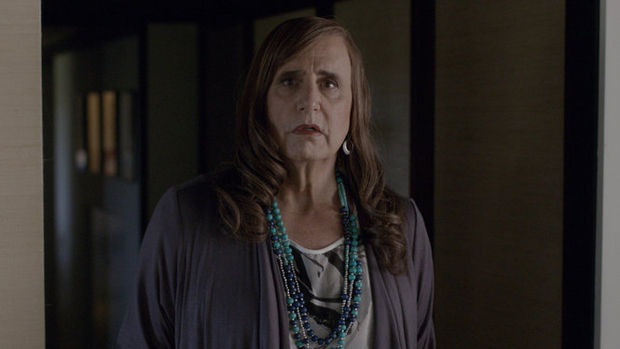
Maura (Jeffrey Tambor), the central protagonist of the series, is in the process of coming out
as transgender to her adult children. In an effort to claim an identity she has
long tried to hide from public view, Maura packs a few things and moves from
her comfortable, beautiful house to a small LGBT friendly apartment complex
called the Shangri-La. In one episode, Maura comes home to find a huge party
going on next door. After trying to politely request that they turn their music
down several times, Maura is exasperated. Using her shoe to bang on the wall
separating their apartments, she calls them “motherfuckers” and “faggots.”

What to make of Maura’s use of this homophobic slur, as a
testament of exhaustion and frustration? This scene occurs shortly after Maura
is insulted and humiliated by a woman who yells at her, calls her a pervert,
and demands that she leave the ladies room.

Maura’s use of the term “faggot” in this scene is deeply
affecting—it’s thoughtless, a knee-jerk response to dealing with a situation
beyond her control. The term is not used a way to reclaim its power; she’s
furious and she wants to hit her neighbors where it hurts. The fact that
someone for whom LGBT rights are deeply personal errs in how she uses language
at a moment of exhaustion and pain is not meant to portray Maura as a
hypocrite, but as someone who is human. In a culture where racism, sexism, and
homophobia are rampant, it’s easy to fuck up.

One of the things I love most about Transparent is the tenderness with which Jill Soloway treats her
incredibly flawed characters. Often, the ease with which characters say cruel,
dismissive, or disrespectful things to one another is downright shocking. Each
of Maura’s children is portrayed as self-absorbed, and the manner in which
Sarah, Josh, and Ali come to terms with their father’s transition is deeply
flawed. All three children make jokes about how “weird” the situation is. Josh
tries to learn about the trans community from a porn site and Ali attempts to
learn about what it means to be transgendered from pursuing sex with a trans
man she meets at a gender studies class.

In his now famous article for New York Magazine, “Not a Very PC Thing to
Say
,” Jonathan Chait argues that the emphasis on being politically correct is
hindering free thought and expression. A lot of very intelligent articles have
been written discussing the ways that Chait ignores how PC language functions
as a way to protect the most marginalized members of our society. But I also
think it’s important to consider how PC language also doesn’t always achieve
its immediate goals. People can parrot any number of PC terms while still
having perfectly lamentable ideas; genuinely sensitive thinkers may, as
Benedict Cumberbatch recently did when he used the term “colored” to refer to
black actors, make deeply regrettable mistakes.  Language can be deliberately wielded as a
weapon. It can also be unintentionally hurtful. The fact that celebrities,
writers and actors are pressured to think critically about their word choice in
today’s world doesn’t mean that we are being censored. It demonstrates that we
as a society are moving in the direction of empathy. 

Nonetheless, while today’s Internet landscape is obsessed
with words, our insistence on shaming others online as the primary means to
correct mistakes doesn’t necessarily encourage sensitive thinking. The age of
Twitter is an age of slogans, of a politics predicated on being “with us” or
“against us.” You don’t have to know very much about a cause or social issue to
use a hashtag. Real change won’t come from socially ostracizing allies who make
mistakes. It comes from cultivating empathy, from showing people just why
certain terms are dehumanizing.

Online progressive spaces spend a lot of time dissecting the
many problems in the media representation of marginalized groups. Recently, The
Representation Project released a video entitled “Demand Better Media in 2015”
which shows an assorted medley of media wins for women, as well as a variety of
examples of places where media failed women. The clip ends with a cry for us to
demand better media, as well as a list of helpful links that we can click on to
support media that “got it right,” or complain about the media that “got it
wrong.”

Indeed, women make up a tiny percentage of artists, writers
and producers. We need to hear more diverse stories, to tap into women’s
potential, as Emma Watson recently called for in one of her “He for She”
speeches.

But some tenets within this call for justice do seem
problematic. Who is the arbiter of what types of violence on screen and in
games are harmful or not harmful? The notion that video games cause violence
has been disproven in countless studies at this juncture, and many of the
scenes of violence that The Representation Project pins down as bad for gender
relations, like Grand Theft Auto, could certainly be viewed as satire
intended to get us thinking about the media we are consuming. Others also seem
a bit unfairly cherry-picked. Sons of
Anarchy
, which was picked apart for reinforcing harmful ideas about
masculinity, has featured one of my favorite characters, Gemma, a complex
female protagonist, who turns what it means to be an older woman going through
menopause on its head. And, of course, there are constant debates about whether
or not Game of Thrones is “good” or
“bad” for women. The series has presented varied depictions of female power,
while also depicting what would have been very real concerns for female
characters in this particularly violent fantasy world—the threat of sexual
assault.

I don’t think we can achieve parity by getting rid of media
that doesn’t neatly fit into a neat, progressive checklist, especially since
art may present racist, sexist and homophobic language in order to deconstruct
it. It’s important for us to make a distinction between language that condones
hate, and art that uses this kind of language deliberately in order to
interrogate the status quo. 

It’s also important for us to remember that learning to be
conscious of our choices is a process that takes time, energy, and, often,
involves making mistakes. In Jon Ronson’s aricle, “How One Stupid Tweet Blew Up
Justine Sacco’s Life,” Ronson describes how today’s shame culture has both
positive and negative ramifications. Our ability to expose and denounce racist
and sexist beliefs helps to hold people accountable for saying terrible,
dangerous things. But it has also contributed to a culture where shaming is
considered perfectly acceptable. In his article, “The Anti-Vaccine Movement
Should Be Ridiculed, Because Shame Works
,” Matt Novak claims that shaming can
be a quite effective means to promote social change, as long as we shame
movements, rather than humiliate individual people. This distinction seems to
me to be an important one. In today’s world individuals who are caught saying
terribly offensive things are often publically crucified and while humiliation
can certainly frighten some individuals into using more appropriate language,
it doesn’t dissolve hate. One only has to look at the endless barrage of
harassment, including rape and death threats, that many online feminist writers
receive, in order to see hate speech online is thriving.

Transparent
triumphs in part because it highlights how gaining empathy is in itself a
process. Maura is gentle, dignified and strong, but earlier episodes show her
making complicated decisions and various mistakes. Maura’s children are
portrayed as selfish, but also genuinely caring. Ali objectifies the men she is
dating and uses them for sex, but she also deeply cares about her stepfather
Ed. Sarah is completely self-involved and impulsive, but she is also the
sibling most genuinely empathetic with her father’s transition, rallying her siblings
to be supportive as well. Josh is temperamental and a womanizer, but you can
also see glimpses of how he wants to be a better man.

Soloway has faced scrutiny for making certain choices, like
hiring Jeffrey Tambor, rather than a trans woman, to play Maura. Soloway has also
been criticized for sharing a photo on social media, which combined images of the
Kardashian family and an advertisement for Transparent,
in reference to speculations about Bruce Jenner’s gender identity. Her
apologies fell on deaf ears to some, while others view her acknowledging her
mistakes as genuine. This type of real-life dialogue mimics the content of the
show itself, which emphasizes that individuals have the potential to change,
evolve, grow, and learn. Transparent
shows us a world where people are often not getting empathy right, but also
shows us a world where we have the power to learn from our mistakes and become
better, more empathetic people.

Transparent
succeeds because it goes beyond today’s hashtag activism to show us a nuanced
portrait of one trans woman’s experience of coming out, and one family’s
experience adapting to that change. The show’s depiction of today’s world is
fraught with contradictions: Maura has the freedom to be herself in a way she
never could have in the past. She explains to her daughter, “People led secret
lives. And people led very lonely lives. And then, of course, the Internet was
invented.” But, of course, the world has changed a lot, and also very little,
as Maura faces everything from awkward stares to outright discrimination. Her
children love her, but are also confused and are often incredibly insensitive.

Transparent shows
how the cultivation of empathy is in itself a process, a societal one, and also
an individual one. Unlike a show like Mad
Men
, where stylized scenes often give in to nostalgia, while still
criticizing the world of the 60s, Transparent
pushes back against any sense of wistfulness. In the opening montage,
images from the past dissolve into scenes from the present.

When discussing their father’s new gender identity, Josh
wonders, “What does this mean? That everything Dad has said or done before this
moment is a sham? Like he was just acting the whole time?”

“It just means we all have to start over,” Ali replies.

In my favorite scene of the series, Maura lights Shabbat
candles for the first time, a Jewish tradition reserved for the mother of the
house. I love this scene because it highlights the wonderful juxtapositions
that characterize the entire series—the desire for tradition, stability and
wisdom leads each character back to a faith that is literally thousands of
years old, but each character is also constantly reconciling this drive with
the recognition that these traditions need to evolve in order for them, and for
us, to truly thrive.

Arielle Bernstein
is
a writer living in Washington, DC. She teaches writing at American
University and also freelances. Her work has been published in
The
Millions, The Rumpus, St. Petersburg Review and The Ilanot Review. She
has been listed four times as a finalist in
Glimmer Train short story
contests
. She is currently writing her first book.