Why did so many Nazis get away with murder?

Why did so many Nazis get away with murder?

nullSimon Weisenthal’s greatest contribution to the world was his dogged pursuit of Nazi criminals who escaped punishment at the end of World War II. His second greatest contribution was his reminder that despite being described as “the Good War” or “a just war,” not enough good was ultimately done, and comparatively little justice was meted out. Some of the most prominent and heinous architects of mass murder simply got on with their lives, and some were the recipients of largesse — jobs, travel assistance, even money and government protection — that was denied to the people who endured their cruelty. And we tend to forget that for every high-ranking sadist or mass murderer who was imprisoned or executed after the war, thousands more who assisted them directly (through action) or indirectly (through silence) were never even called to account.

This grim fact is the jumping-off point for “Elusive Justice” (Tuesday, PBS; check local listings), a documentary by Jonathan Silvers about Holocaust survivors (and victims) and the German war criminals that still weigh on their minds nearly 70 years after the end of the war. Narrated by Candice Bergen, the movie hits some of the expected topics and people, including the Nuremberg Trials and the efforts of Weisenthal (who disliked being called a “Nazi hunter” because so much of his work consisted of sifting through documents) and Asher Ben Natan, who funded and organized ex-Nazi-tracking operations in Europe.

You can read the rest of Matt's piece here at Salon.

Matt Zoller Seitz is publisher of Press Play.

The Chicago Way: Crime Story back on DVD for its 25th Anniversary

The Chicago Way: Crime Story back on DVD for its 25th Anniversary

null

http://www.movingimagesource.us/flash/mediaplayer.swf?id=54/801

EDITOR'S NOTE: Contributor Tony Dayoub marks the 25th anniversary of the premiere of Michael Mann's Crime Story. We have paired his new piece with Matt Zoller Seitz's video essay Zen Pulp, Pt. 5: Crime Story, which was created for the Museum of Moving Image.

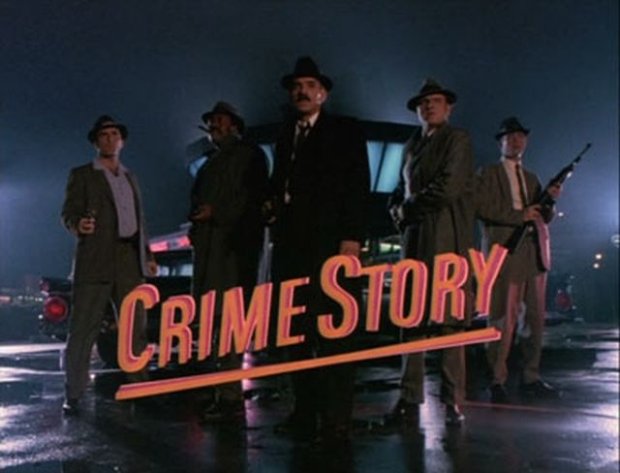
On September 18, 1986, director Michael Mann (Heat) made good on his promising career in TV and film with the debut of his new period cops-and-robbers saga, Crime Story. Not only did Crime Story’s feature-quality production design live up to that of its TV antecedent, Mann’s stylish Miami Vice; Crime Story also fulfilled its aim to present a morally complex world in which it was often difficult to tell those who broke the law from those who upheld it. Set in 1963, the show explores the multiple facets of a young hood’s rise to power in the Chicago Mob through the viewpoints of its three protagonists. Ray Luca (Anthony Denison) is the pompadoured criminal quickly ascending the ranks of the “Outfit.” Lieutenant Mike Torello (Dennis Farina) is the cop in charge of Chicago’s Major Crime Unit (or MCU) who bends the law in the service of justice. And David Abrams (Stephen Lang) is the idealistic young lawyer caught between the two men and their obsessive cat-and-mouse game. Today, a little over 25 years since its premiere, Crime Story: The Complete Series (Image Entertainment) comes out on DVD. At press time, review copies were not made available, so it’s impossible to ascertain if any improvements have been made over the questionable video quality of previous iterations. But this short-lived series, an influential precursor to the well-written serials littered throughout cable this decade (i.e., The Sopranos, Mad Men, Justified, and others), is worth owning despite any potential issues with its digital transfer.


In 1984, the success of Miami Vice’s MTV cops premise had made Mann a household name, allowing him to develop virtually any project for NBC. Mann went back to a theme that informed his earlier films and would recur again and again in subsequent ones: the razor-thin borderline between order and chaos. In his first feature, Thief (1981), Mann focused on the rigid code of honor of a Chicago jewel thief named Frank (James Caan), zeroing in on his professionalism and expertise as counterpoint to the crooked methods used by the police and his criminal associates to bring him under control. Manhunter, a crime procedural, took a different tack, examining how FBI profiler Will Graham (William Petersen) experiences a progressive loss of his own identity as he tries to get inside the head of an active serial killer. With the same skill Vice displayed in applying memorable music to key moments of its violent tale, only now taking a period setting into account, Crime Story represented a sort of apotheosis of all of these elements.

null
In much the same way Heat would later, Crime Story looked at opposing sides of the law – both in sharp relief and, in some cases, muddled reflection of each other. (Heck, Heat even lifted one scene from Crime Story whole cloth – Al Pacino’s cop discovers he’s being cuckolded and takes his TV as he moves out, just as Torello does in an early episode.) Torello’s poisonous hatred of Luca spills onto his personal life, rupturing his marriage and often bringing death to his loved ones. At one point, Torello acknowledges his obsession privately to Luca, “You know, when you chase someone as long as I’ve chased you, in the end, it really comes down to two people: you and me.” With little regard for his officers – big-hearted Sgt. Danny Krychek (Bill Smitrovich), cigar-chomping Walter Clemmons (Paul Butler), jokester Nate Grossman (Steve Ryan), and rookie detective Joey Indelli (Billy Campbell) – Torello rushes headlong in pursuit of Luca, frequently endangering the lives of innocent bystanders.  The lethal Luca, meanwhile, cooly dispatches orders and manages his lackeys in much the same way a company CEO does. Public defender Abrams justifies his work on behalf of criminal scum by righteously pointing out that everyone is entitled to a top-notch legal defense. But as the series continues, Torello begins fumbling the rest of his police work in order to focus on Luca, coming under fire from a federal attorney. Abrams starts feeling the sting of his close association with mobsters, especially when his father (himself a famous mob lawyer) is killed by a car bomb meant for him. The ambitious Luca becomes more reckless in his hunger for power.


By the time Luca makes it to the top of his organization, he is paranoid. Luca turns on his closest henchmen, Pauli Taglia (John Santucci) and Max Goldman (Andrew Dice Clay), in an episode directed by Mann himself, “Top of the World.” The real-life events that inform the episode (perhaps the pinnacle of the entire series) also provide the backstory for Martin Scorsese’s Casino. Like Joe Pesci’s Nicky Santoro, the character of Luca stands in for real-life mobster Anthony “the Ant” Spilotro whose cowboy antics began interfering with the Chicago Outfit’s Vegas dealings. The character of Max Goldman, like Robert De Niro’s “Ace” Rothstein in Casino, is a stand-in for Frank “Lefty” Rosenthal. Casino’s opening scene, in which Rothstein survives an abortive car explosion, is also depicted in “Top of the World;” Goldman survives an explosion meant to eliminate him for discovering Luca cheating with his wife.

null
Crime Story came by its gritty realism honestly. It was created by Chuck Adamson, a former Chicago cop who consulted Mann on Thief, and Gustave Reininger, a former investment banker turned screenwriter with a tendency to put himself in dangerous undercover situations while researching his work. In fact, Mann filled out Crime Story’s cast, much the same way he did in Thief, with actors who had once been cops or felons in Chicago. Lead actor Farina had been a cop and Adamson’s partner. And Santucci, whose supporting character of Pauli was the show’s breakout favorite, had been a highline jewel thief busted by Adamson and Farina. Santucci’s exploits served as much of the foundation for Thief, and he doubled as a technical consultant on Crime Story.


While it wasn’t the first prime-time series to have serialized elements, Crime Story was one of the most cohesive, at least in the first of its two seasons. The first season follows Luca’s meteoric rise from simple home invader (in the pilot episode directed by Abel Ferrara) in Chicago to chief enforcer for syndicate boss Manny Weisbord (Joseph Weisman) in Las Vegas. Torello rides his coattails, in a sense, graduating to G-man with the Justice Department along with the disillusioned Abrams, both of them tasked specifically with bringing Luca and the Outfit to justice. The time-compressed first season comes to a natural and nihilistic conclusion, in which few of the characters seem to get out alive, Mann’s nod to the slim chances that the ratings-challenged series would return for a second season. But return it did, and now, the Crime Story writing staff, or what was left of it after many moved on to other projects, had to figure out how to get themselves out of the corner that they had painted themselves into. With two, possibly three, of the lead characters at death’s door in the first season finale, the ultimate resolution was far-fetched for a show that had always prided itself for its verisimilitude. The show wound down its second season with inconsistent episodes set in the Vegas milieu before concluding with a tight trilogy of episodes filmed in Mexico, where Torello’s squad goes vigilante in order to finally stop Luca once and for all. One wonders if today’s TV landscape might have been more supportive of Crime Story.

null

Though ratings played a part in its cancellation, another significant contribution was the expense of recreating the early ‘60s. Today’s cable series have learned to amortize their costs – not to mention increase the production time allotted in filming an episode – by producing seasons that are half the number of episodes as those of network series. With less need for filler episodes – Crime Story produced a number of episodes that mostly consisted of clip compilations to bring its audience up to speed – then season-long storylines take on more potency. Just look at the current season of Sons of Anarchy, another show in which the criminals are the protagonists. Kurt Sutter’s outlaw biker series had to ask for one more episode than its allotted 13 when it became clear this year’s plotline involving SAMCRO’s dealings with a Mexican drug cartel was bursting with too much story potential.
Still, as a forerunner to the morally relativistic worlds seen on TV crime sagas like Boardwalk Empire and its cable confreres, Crime Story stands out as a beautifully executed and engaging exemplar.

Atlanta-based freelance writer Tony Dayoub writes about film and television for his blog, Cinema Viewfinder, and reviews DVDs and Blu-rays for Nomad Editions: Wide Screen, a digital weekly. His criticism has also been featured in Slant’s The House Next Door blog, Opposing Views and Blogcritics.org. Follow him on Twitter.
 

RECAP: Dexter heads over the edge

RECAP: Dexter heads over the edge

null

This recap contains spoilers for "Dexter" season six, episode seven; read at your own risk.
 

Something extraordinary happened on “Dexter” this week. As Dexter split into two personas as he struggled to hang on to his remaining humanity, a show that’s been MIA suddenly reported ready for duty.

It’s as if the death of Brother Sam (Mos Def) last week performed a ritual cleansing of all that was wrong with “Dexter’s” sixth season. Gone is the ceaseless God talk, the ill-advised forays into slapstick comedy — serial-killer slapstick golf, really? — and even a super-tardy entry into the Manic Pixie Dream Girl sweepstakes.

Brother Sam’s murder also quashed any hope that Dexter (Michael C. Hall) had in redemption, as it led to the rebirth of the ghost of Dexter’s brother Brian (Christian Camargo), a killer who Dexter himself killed in the show’s first season. Brian is here to remind Dex of some core principles, such as “You don’t turn the other cheek — you slice it.”

Brian’s monstrous effect on Dexter runs parallel to Travis’ attempts to free himself of the monstrous Professor Gellar (Edward James Olmos). And you know what? Salon readers discussing the show in the comments were probably right. There probably is no Professor Gellar. The Apocalypse-crazed installation artist may actually be Travis’ killer alter-ego. It would have been nice if it hadn’t taken six episodes to get to this fascinating juncture, but let’s not dwell. Instead, let’s appreciate how this episode didn’t feel like the writers dutifully hitting plot points they didn’t care much about. About how director Romeo Tirone favored long, moody takes of this gifted cast.

You can read the rest of Matt's recap of Dexter here at Salon.

Matt Zoller Seitz is the co-founder and publisher of Press Play.

RECAP: “The Walking Dead” Season Two, episode 5, “Chupacabra.”

RECAP: “The Walking Dead” Season Two, episode 5, “Chupacabra.”

null"The Walking Dead" has craft and atmosphere; if only the characters weren't so insufferably earnest and dense. This recap contains spoilers for "The Walking Dead" Season Two, episode 5, "Chupacabra." Read at your own risk.
There were huge revelations on Sunday’s episode of “The Walking Dead,” including a tantalizing hint that the missing girl Sophie might still be alive, and a climactic reveal that the courtly old religious veterinarian Hershel (Scott Greene) was keeping captured zombies alive inside his barn, presumably in hopes of one day curing them. There was another big revelation last week in the form of a surprise pregnancy, Lori’s.

But that’s not enough to stave off charges that “The Walking Dead” is taking a Hamburger Helper approach to TV drama, padding out meager amounts of dramatic meat with bags of bland dramatic stuffing. Sophie has been missing for the entire season; Carl has been bedridden since the end of episode two; Lori found out about her pregnancy last week but still hasn’t told Rick; etc. If you added up the screen time devoted to the genuinely interesting elements, they might total maybe ten minutes per episode, if that. The rest is wandering, suffering, and talking, talking, talking, courtesy of characters who are for the most part so naive and/or irritating that if you were watching them on a big screen at a drive-in movie theater, you’d cheer for them to be eaten.

The “WTF?” count in my “Walking Dead” notebook is nearing 200 by now, and this week’s installment, “Chupacabra”, added a few more, including the cutesy back-and-forth between end-of-the-world sex buddies Glenn (Steven Yeun) and Maggie (Laurie Cohen), complete with scribbled dinner-table notes; the protracted sequence of the wounded Daryl (Norman Reedus) falling down that cliff, then climbing up, then falling again; and that somebody-please-kill-all-these-stupid-characters moment when Andrea (Lauren Holden) mistook the returning Daryl for a zombie and winged him across the temple with a rifle shot. (I’m sure the producers didn’t intend this as a “You can’t trust women with guns” moment, but given the male-dominated power structure on this series, that’s how it played.)

You can read the rest of Matt's recap here at Salon.

Matt Zoller Seitz is publisher of Press Play.

RECAP: A bear, a baseball glove and Boardwalk Empire

RECAP: A bear, a baseball glove and “Boardwalk Empire”

nullEditor's Note: The following article contains spoilers for "Boardwalk Episode" season two, episode eight, "Two Boats and a Lifeguard." Read at your own risk.

“Powerful” episodes of cable dramas make a huge impression on viewers, and are often acclaimed as the best of their season. Sometimes the praise is deserved; other times it’s a reaction to the sight of characters we like being diagnosed with fatal illnesses, beaten, raped, killed, etc.  Meanwhile, low-key but complex episodes often get short shrift from critics and viewers. I hope that doesn’t happen with tonight’s “Boardwalk Empire” episode, “Two Boats and a Lifeguard,” because in degree of difficulty, it’s impressive, in some ways extraordinary.

As written by Terence Winter and directed by Tim Van Patten — a dynamic duo on a lot of great “Sopranos” episodes — “Two Boats and a Lifeguard” seems like just a  “housekeeping” episode that’s mainly concerned with wrangling subplots and exploring characters. But as I’ll explain in a moment, the episode went way beyond that.

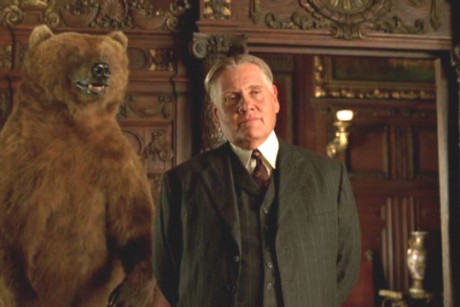
Nucky and Eli buried their father and had an uncomfortable moment of almost-reconciliation at the memorial. (This episode marked the final appearance of the late stage and screen actor Tom Aldredge, who played both Nucky and Eli’s dad and Carmela’s father on “The Sopranos.”) Nucky responded to his dad’s death — the psychological aftershock of the second assassination attempt against him, this one set up by his surrogate son Jimmy Darmody — by declaring that he was quitting his job as Atlantic City treasurer and was going to try to mend his ways and become a respectable citizen. (Fat chance of that happening on a show like this, but it was still a fascinating development that let star Steve Buscemi show us intriguing new shadings.) Nucky even asked Margaret’s son to address him as “Dad” rather than “Uncle Nucky” — a huge step toward commitment and emotional availability, even though it was conveyed in a rigid 19th century manner. Van Alden hired a nanny to take care of his baby with Lucy, in the process confirming his near-total inability to respond to the child as a father should, but revealing very faint glimmerings of potential near the end. (Or was that just wishful thinking on my part? Probably so — Van Alden is such a rancid sour persimmon — and so encrusted with lame graphic novel pathology, from religious fanaticism to sexual hypocrisy to cold sadism and murderous rage — that the writers might be unable to salvage him as a workable character.)

You read the rest of Matt's piece here at Salon. 

Matt Zoller Seitz is TV critic for Salon  and publisher of Press Play.

24: Kiefer Sutherland’s ticking clock classic turns 10

24: Kiefer Sutherland’s ticking clock classic turns 10

nullEDITOR'S NOTE: Kiefer Sutherland's ticking clock classic debuted 10 years ago this week. To mark this milestone, Press Play is re-publishing the video essay series "5 on 24" which was created by Matt Zoller Seitz and Aaron Aradillas for the Museum of Moving Image in 2010. According to their introduction, "5 on 24" examines various aspects of the show, including its real-time structure, its depiction of torture, and the psychology of its hero, counterterrorist agent Jack Bauer. The show tapped into the ticking-clock on-the-go mentality of post-millennial society. And its machine-gun pacing, real time structure, and long-form plotting took aesthetic risks that no other action show had dared.
http://www.movingimagesource.us/flash/mediaplayer.swf?id=110/872 http://www.movingimagesource.us/flash/mediaplayer.swf?id=112/873 http://www.movingimagesource.us/flash/mediaplayer.swf?id=111/867 http://www.movingimagesource.us/flash/mediaplayer.swf?id=113/874 http://www.movingimagesource.us/flash/mediaplayer.swf?id=114/875

San Antonio-based film critic Aaron Aradillas is a contributor to The House Next Door, a contributor to Moving Image Source, and the host of “Back at Midnight,” an Internet radio program about film and television. Matt Zoller Seitz is publisher of Press Play.

MATT ZOLLER SEITZ: The big tease of “Glee”

MATT ZOLLER SEITZ: The big tease of “Glee”

null


EDITOR'S NOTE: The following recap of Glee season three, episode 5 contains spoilers; read at your own risk.

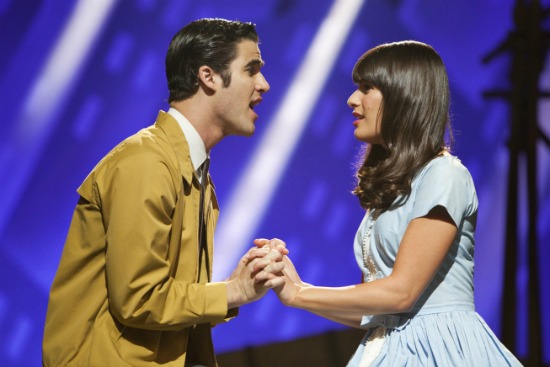
Really, Glee? Was it really necessary to end an episode revolving around virginity loss with a shot of a roaring fireplace?

That’s a trick question. Midway through its third season there’s little that’s necessary about Glee, save for the underused Chris Colfer’s performance as out gay teenager Kurt Hummel, the even more severely underused Mike O’Malley’s performance as his dad, one out of every five musical numbers, and Sue Sylvester’s surreal rants, which Jane Lynch sells even when the writing is just sassy word salad. And even those compensatory values aren’t enough to make me watch each week. After a long and increasingly desperate infatuation with this musical comedy soap — which repeatedly threatened to be astonishing and sometimes delivered, only to settle for cheerfully incoherent inanity at least 80 percent of the time — I’ve relegated it to the second tier of my DVR, which consists of shows that I skip for weeks at a time, then catch up on in one dutiful burst. I doubt I would have watched this installment in real time if my 14-year-old daughter hadn’t reminded me that it promised to deliver big moments this week. Her reactions were more entertaining than the show. She contrived reasons to leave the room whenever nooky threatened to break out, and ended up watching the parts she’d skipped while I was in the next room writing this recap. “If you were 14, would you want to watch this episode with your dad?” she asked later. Hell, no. I vividly recall being in the same tiny house with my mom while she watched The Postman Always Rings Twice on cable with the sound cranked way up, but only because my therapist dug that repressed memory out through hypnosis and primal scream therapy.

You can read the rest of Matt's piece here at Salon. 

Matt Zoller Seitz is TV critic for Salon and publisher of press play.

MATT ZOLLER SEITZ: The awesome, thrilling spectacle of Vietnam?

The awesome, thrilling spectacle of … Vietnam?

null


Before I review Vietnam in HD, the six-hour History Channel epic, I need to get a couple of caveats out of the way.

First, if you have a high definition television, access to the History Channel’s HD signal, and a killer home stereo system, you should record the series and watch it in a dark room with no interruptions, preferably while indulging your inebriating substance of choice. It’s a sound and light show extraordinaire — a trip.

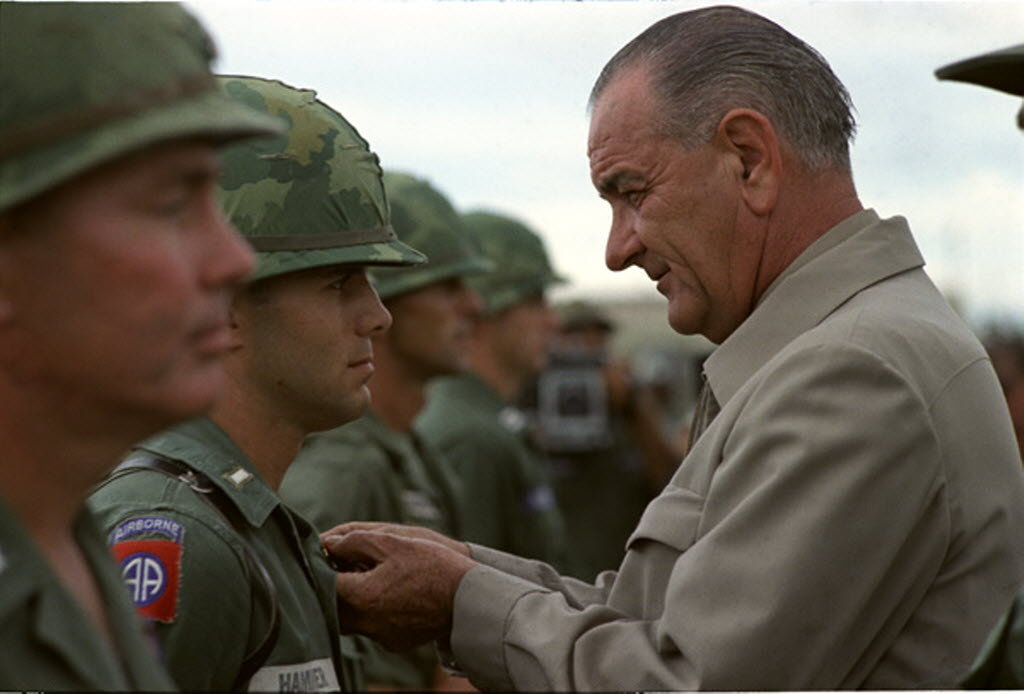
But you should only do this if — and here comes caveat No. 2 — you consider intense, often shockingly bloody documentary images to be just another thing to gawk over; something to toss up on a big screen instead of, say, Sucker Punch or The Dark Knight or The Dirty Dozen. Judged purely as a technical achievement, “Vietnam in HD” (Nov. 8-10, 9 p.m./8 Central) is impressive. It merges thousands of bits of footage collected via the History Film Corps into a nearly seamless whole — a roiling canvas of chopper evacuations, napalm strikes, city and jungle infantry skirmishes, and shots of wounded and dead soldiers with burned and mangled flesh. And it weds these images to the narratives of individual American soldiers who served in different phases of the war, from the early advisor stage (roughly 1961-1964) through the peak of infantry combat (1965-1969), the post-Tet Offensive period of “Vietnamization” and the fall of Saigon. (I’ve previewed the first four hours; the last two, “A Changing War”/”Peace With Honor,” weren’t available for critics.)

You can read the rest of Matt's piece here at Salon. 

A critic, journalist and filmmaker, Matt Zoller Seitz is the staff TV columnist for Salon.com and the founder of Press Play.

MATT ZOLLER SEITZ: THE OFFICE and the zen of Robert California

MATT ZOLLER SEITZ: THE OFFICE and the zen of Robert California

null

Taking its cues from James Spader's performance, the NBC show has become warm, relaxed and mysterious.


By Matt Zoller Seitz
Press Play Contributor

The post-Michael Scott version of The Office isn’t what I expected, but it’s growing on me. First I had to get over the fact that James Spader’s character — Robert California, CEO of Dunder-Mifflin’s parent company — isn’t quite the scary, malevolent person I hoped he’d be, based on California’s debut in last season’s finale and Spader’s track record of playing unhinged oddballs. California is a mind-effer, to be sure, but he’s more benevolent than expected.

There are times when he casually shatters his employees’ confidence simply because he’s a powerful man who’s used to saying whatever pops into his head without fear of punishment. (When he prompted Andy to talk about his attraction to Erin, and Andy obliged, California cut him off with, “I’m afraid you’ve lost my interest.”) But so far there’s no indication that he’s anything but fundamentally decent; based on last week’s Halloween episode, during which he brought his son to work, he’s also a good dad with a deep (if unusual) connection to his child. He’s not a craven, impulsive, inadvertently destructive person, as Michael often was. He’s wry and aloof. He seems to view the goings-on at the Scranton branch from a lofty perspective — including the reflexive ass-kissing that greets his every pronouncement, no matter how whimsical or baffling. His visits to the Scranton branch are charged with an excitement that no other regular Office character ever summoned, and it’s not just because he’s the CEO. His peculiar energy sparks love and respect as well as fear. (Andy greeted him by blurting out, “Hi, Dad.”)

The Office loses something by having Spader’s Zen master drive the action instead of Michael Scott. When Michael was running things, the Comedy of Discomfort flowed naturally, but with California in charge, it doesn’t — not quite. And when the series ventures into that old, familiar vein (see the garden party episode, which was more silly than mortifying) the discomfort is mild compared to, say, “Dinner Party” or some other Michael Scott-era exercise in cringe humor. I don’t mind, though. Seven seasons of the show showcased enough knife-twisting comedy to last a lifetime. If The Office had to continue — and in a bottom-line sense, it absolutely did — it would have seemed desperate and pathetic if the producers had replaced Michael with a Michael-esque character. Thankfully, they didn’t.

You can read the rest of Matt's piece here at Salon.

Matt Zoller Seitz is publisher of Press Play.

MATT ZOLLER SEITZ: The awful brilliance of “American Horror Story”

MATT ZOLLER SEITZ: The awful brilliance of “American Horror Story”

null

As the high school dramedy sputters, its producers' new show reaches crazy, brilliant heights.


By Matt Zoller Seitz
Press Play Contributor

Anybody who’s still watching Glee will testify to how awful last night’s episode was — and that’s quite a statement considering that even the most brilliant Glee installments flirt with awfulness. The bits with Mike O’Malley’s garage-owner character, Burt Hummell, running for Congress against Jane Lynch’s venemous Coach Sue were almost tolerable, but only because I love O’Malley and think he’s hugely underused. Much of the episode was dominated by tedious subplots in which 1) innocent/stupid Brittany thought that the Irish foreign exchange student (“Glee Project” winner Damian McGinty) staying with her family was a leprechaun, and 2) Will managed Kurt’s dad, Burt, in his surprise congressional run. Even the musical numbers flatlined. The best of the bunch, McGinty’s “It’s Not Easy Being Green,” was undercut by the ludicrous notion that a handsome young man with a great smile and an Irish accent would be ostracized anywhere, least of all in a Midwestern high school.

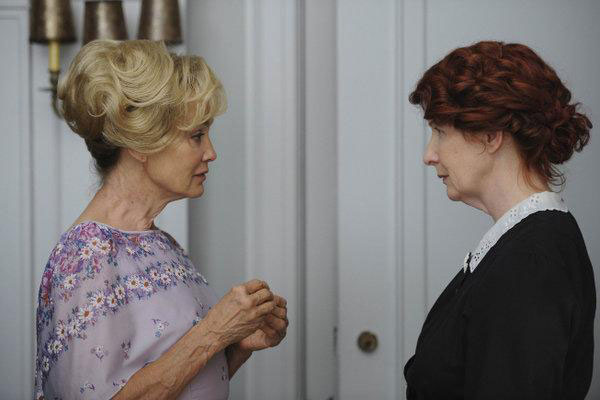
If “Glee” has, in fact, run out of steam, I suspect it’s because two of its executive producers, Ryan Murphy and Brad Falchuk, are busy putting out another series, FX’s American Horror Story (Wednesdays 10 p.m./9 Central). Like Glee, and like Nip/Tuck, which involved many of the same people, “AHS” flirts — nay tangos — with awfulness in every second of every episode. There is nothing, repeat nothing, subtle about this show, which chronicles the misadventures of a troubled couple, Vivien and Ben Harmon (Dylan McDermott and Connie Britton) who buy a beautiful faux-Victorian house in L.A., and are haunted by the seemingly infinite number of violent acts that have taken place there and throughout the neighborhood. It’s a jumble of pathology and mayhem. There are present-day scenes and flashbacks and scenes in which flashback characters materialize in the present, interacting with one or more “regular” characters in real time as if they were flesh-and-blood people rather than ectoplasmic intruders or manifestations of mental illness. A 1920s woman who was married to a drug-addicted abortion doctor who performed Dr. Frankenstein-style experiments in his basement shows up in the present day, inspecting the house she once lived in. McDermott’s character, a therapist who sees patients in his haunted house, hallucinates that their pushing-60, one-eyed maid, Moira (Frances Conroy), is a bubble-butted 20-something and is relentlessly trying to seduce him. And who knows — maybe she is!

You can read the rest Matt's piece here at Salon.

Matt Zoller Seitz is TV critic for Salon and publisher of Press Play.