LUCK RECAP: No icing error, this

LUCK RECAP: No icing error, this

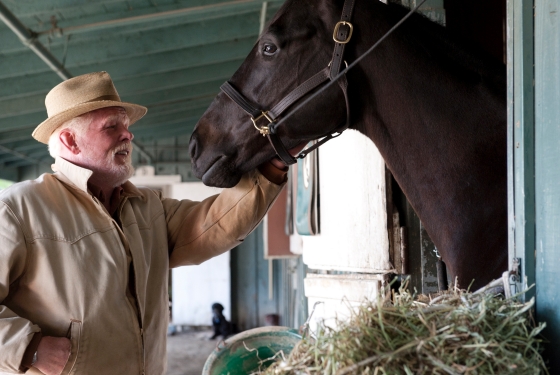
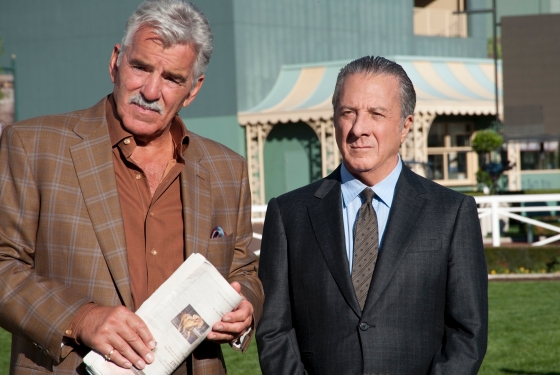
nullAbout a third of the way through episode six of Luck, a conversation between the horse trainer Turo Escalante and the veterinarian Jo is cut short by portents. A flock of birds erupts from behind, or within, the stands; silhouetted, they look like bats. The horses freak out. Then comes an earthquake. The walls tremble. The ground shakes. And then it's over.

When sudden horrible and/or miraculous events unite all the characters on David Milch's cable series, the shows suggest there are mysterious forces at work in the universe — that's "forces", plural. Nature is an insistent presence on Luck, with its talk of equine and human health, blood, and broken bones. (The relationship between Ace and his parole officer revolves around piss tests.) Accounting and probability are important, too: Every episode is filled with talk of percentages and dollar figures, odds and payouts. But that's as far as the intimations go. The great shake-up this week might be a metaphor, or it might be just a physical event. The show's opening credits suggest a multiplicity of possible manifestations of luck — praying hands, crucifixes, a shamrock, dice, a spinning coin, coins in a fountain — without favoring any one of them. Ultimately, what matters isn't what's happening or how the events came about, but how the characters interpret events and react to them — how they respond to good and bad fortune.

The manager Joey Rathburn loses his stutter when the gun that he's about to kill himself with misfires because of the tremors; the bullet ricochets through the room, inflicting only a flesh wound. "Hello. My name is Joey Rathburn," Joey says, upon discovering the change. Then, reading a clothing label: "Tommy Bahama. One hundred percent cotton. Extra large. Made in China. Machine wash. Cold water." The change in his personality is subtle but instantly apparent: Joey seems a bit more confident and forthright, not as much of a shmo demoralized by a failing marriage. Entering the bar, he exclaims, "Good evening, one and all!" as if he owns the place. By the end of the episode his stutter has returned, though in that last conversation with Ronnie, it seemed to me that he was able to at least assert a bit of control over it.

You can read the rest of Matt's article here at New York Magazine.

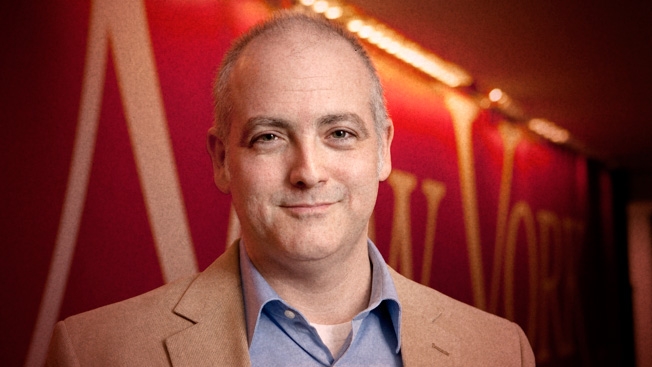
Matt Zoller Seitz is co-founder of Press Play and TV critic for New York Magazine

ADWEEK INTERVIEW: New York Magazine TV critic Matt Zoller Seitz takes a tough stand on reality TV shows

ADWEEK INTERVIEW: New York Magazine TV critic Matt Zoller Seitz takes a tough stand on reality TV shows

null

Have you been surprised at any of the comments you’ve gotten about what you’ve written so far?
I don’t feel like Indiana Jones in front of the boulder at New York magazine. Everything that happened at [ex-employer] Salon is like what happened on the island of Lost. There were people who would comment on everything. On one level it was terrifying, but it was kind of nice. There were people who cared about every little thing.

You’re not a fan of Jersey Shore. Are you prepared to take heat from its big fan base among the magazine’s readers?
I have very particular tastes when it comes to reality TV. Just because people are stupid enough to be exploited doesn’t mean you should take advantage of them. My idea of a good reality show is like Survivor, where it’s goal-directed and they have to use their minds to solve problems.

You have a soft spot for doomed shows like Pan Am and Community. Do you hope that by writing about them you can save them?
I want people who make these shows to know someone appreciates what they’re doing, even though they’re not quite pulling it off. I’m 43 years old. I want to see things I haven’t seen before. I think Pan Am is trying to be extremely rich and extremely light at the same time. They haven’t quite mastered the art of making a soufflé every week.

You can read the rest of Adweek's interview with Matt Zoller Seitz here.

GREY MATTERS: LOST GIRL is goofy, sexy entertainment, in a BUFFY vein

GREY MATTERS: LOST GIRL is goofy, sexy entertainment, in a BUFFY vein

nullLost Girl is no big deal, and yet, for me, on sheer level of affection, it’s up there with the ludicrously better Luck, and I can barely wait for each episode to air. So WTF, right?

Looked at on paper (or screen) my affection becomes even more baffling. It’s yet another televisual offering where creatures of legend turn out to be true – see Grimm, Mirror, Mirror, Once Upon a Time, Red Riding Hood, Snow White and the Huntsman, etc. The production values and directorial style vary between modest and meh, and on first approach it at best achieves the amusement level of a third-tier Buffy episode.

And yet after a mere clutch of episode I can firmly say I simply adore it. I even think I’ve a notion why. I think creator Michelle Lovretta has made a list of every post-Buffy and fairy tale trope – and I mean every freaking one of them – and has methodically tweaked them just enough, not to radically change the entire urban fantasy, but to perhaps stretch the parameters of usual pleasures just enough to make aficionados feel real gratitude at the effort expended.

nullRight off, Lost Girl offers something that differentiates itself in a way that non-genre shows would be swell to emulate: a femme hero un-crushed by her backstory. While supernaturals from Buffy to Sookie to the entire cast of Once Upon a Time suffer their supernatural-ness, Lost Girl’s hero, the casually bi, trimly pumped, no-bullshit Bo (Anna Silk) accepts that she’s a deadly Fae.

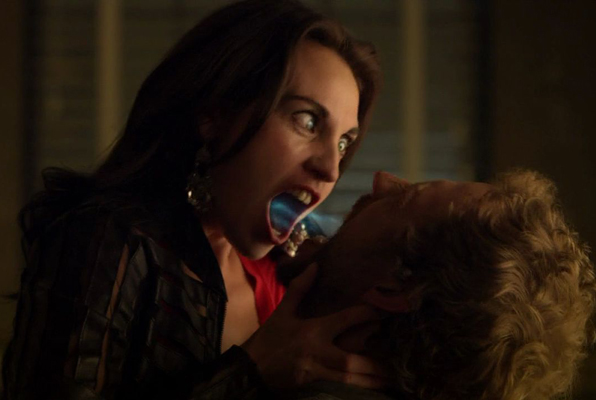
A what? A Fae, a succubus who, through an accident of birth, occasionally sexy-sucks the life out of jerks. That is, until she hooks up with a hot Fae dude who lets her in on an epic backstory.

Warning: info dump! Seems that a war between the Light and Dark clans of Fae has been been going on for ages. And it turns out that Bo was raised by human parents while kept in the dark about this Fae business. So, she must choose between Light and Dark Fae, but being stout of heart and cranky of spirit, she tells them all to piss off and, like Fleetwood Mac suggested so long ago, goes her own way.

She does, however, avail herself of the Fae medicinals of the shy and lovely Dr. Lauren (Zoie Palmer), who you totally know will have supernatural sex with Bo, and who gives our hero a medication that allows her to just sort of nibble at people’s energy instead of draining them outright. (Hey, it’s that kind of show.) As it’s really early in the story’s arc, I will say no more, except to note that once-a-loner-Bo meets, pals up with and starts a PI agency with kohl-eyed Kenzi (Ksenia Solo), a goofy, post-goth petty thief human. Supernatural chemistry, kicky dialogue and Solo’s ceaselessly silly/energetic performance manage to make us buy into this beyond-absurd conceit, which comes complete with headless assassins, werewolves, underwater monsters, unearthly dwarves with agendas and so on.

Still, what’s the big? Again, the lack of hand-wringing mixed with the show’s overall light touch is constantly refreshing, as is both women’s advanced coping abilities.

nullSo, want to talk about sex? Yeah? Cool. There’s tons of it here, and in the show’s world, it’s no big, which makes sense when your hero is a being whose entire deal is sexual.

This is a show where the hero gets information from people by using her psychic abilities to get them so horny, they beg to spill (so to speak). Where, in that aforementioned Bo/scientist scene, lesbian sex-spark is a natural. Where Bo milks info from a cougar college administrator via a calf leg touch that causes the woman to practically orgasm the answers. Where another Fae literally tongue-kisses Bo back to health and to a few implied orgasms. It’s really something.

What Lost Girl isn’t is an HBO/Showtime/name-yer-basic-cable-channel-pandering-to-dudes boob parade. It is what comes after we accept as a given that gender orientation is, of course, an in-flux designation. So does that make the show feminist? Can’t say, it’s too early in its run. Certainly, Lost Girl is what comes after whatever it is we think of as “feminist” in TV action hero terms. While the show is usually having too much fun to attach itself to one congruous ideology, what it does have to say about self-determination manifests itself most often in the syntax of style.

Whereas Buffy once quipped that she was “not exactly quaking in my stylish yet affordable boots,” the girls and boys of Lost Girl look like they deal with the terrible economy with refreshing trips to retailers selling couture designers’ “diffusion lines.” Think of the iconic Missoni house creating a budget-conscious line for Target, Versace’s high style pretties for H&M at Nu Depression prices or Vera Wang dong the same at Kohl’s. Lost Girl’s constant engagement with fashion could be off-puttingly elitist but the whiff of the bargain makes it endearingly egalitarian. Instead of class resentment, we can enjoy the looks.

nullThere’s the sloe-eyed Fae werewolf (Kristen Holden-Ried) who’s partial to complexly rockin’ leather combos that suggest off-label John Varvatos; the mystery bartender named Trick (Rick Howland), whose way-butch, deep-dyed denim and rolled-sleeve style is off-season Diesel all the way; and the adorable, what-the-fuck-is-she-wearing Kenzi, whose loopy gothiness suggests Betsey Johnson after listening to My Chemical Romance a lot.

Again, just looking at these people is a tiny pleasure. I like to imagine them shopping (or in Kenzi’s case, liberating items from previous owners), which is just such an interesting way to craft a character, you know? And this isn’t about the evil tang of capitalism and over-consumption. Lost Girl loves style because fashion allows people with a unique way to beautifully present themselves to the world – and these are some pretty unique people.

As for where these stylish supernaturals hang, we see Lost Girl’s creators charming yet again with a rejection of the usual. Instead of True Blood’s “Fangtasia,” a sleaze dive straight out of a Rob Zombie lyric or an industrial metal light show hangout left over from an Underworld movie, the show’s creators offer us what looks like an airy German beer garden, heavy on the oak and steins.

But problems do exist with Lost Girl. The FX are pretty crappy, but I choose to think this as emblematic of the show having its priorities in the right place. The fact that Bo killed people before that blonde fixed up her sexual appetite is rather glossed over, but I’m trusting that we’ll be finessing that as episodes progress. And the one thing that does cause a certain amount of teeth gnashing for Bo is the least interesting part of the show for me: the whole “Who are my real parents?” thing. As played by Silk with a delicate mix of fuck-off, bite-me and muted need, Bo just doesn’t really seem the sort to need the crutch of a never-known bloodline.

But this too could be teased out and finessed; the show is called Lost Girl, after all. I’ll accentuate a positive view and say it will be a neat hat trick when the show lives up to the melancholy that lives right now in Bo’s startled responses; in Trick’s already exhausted helplessness regarding Dark/Light Fae hatreds; in the way the show plays with us with the simple fact that, unlike everyone else who is Fae and super-powered, Kenzi, the most instantly lovable character, is constantly in danger of a horrible instant death.

As of now, Lost Girl gracefully aims low-to-medium-high and always hits its mark. But I’ll be there watching as it inevitably aims higher. It’s the rare show you just have faith in.

Ian Grey has written, co-written or been a contributor to books on cinema, fine art, fashion, identity politics, music and tragedy. His column "Grey Matters" runs every week at Press Play. 

MATT ZOLLER SEITZ: Why, After 500 Episodes, Slagging The Simpsons Is Unfair

MATT ZOLLER SEITZ: Why, After 500 Episodes, Slagging The Simpsons Is Unfair

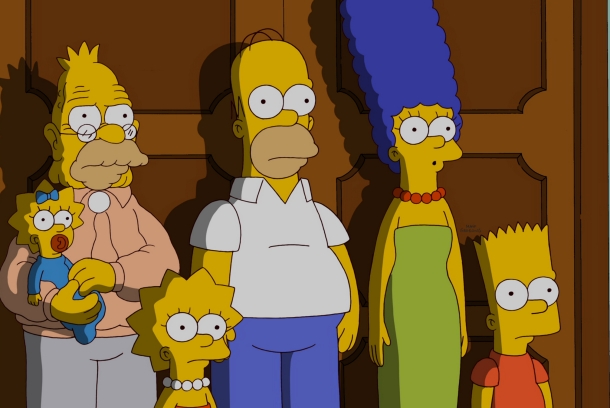
nullAt some point, a show stops being a show and becomes a utility: gas, electricity, water, The Simpsons. That’s not my line; it’s cribbed from a quote about 60 Minutes by its creator, the late Don Hewitt. But it seems appropriate to recycle a point about one long-running program in an article about another when it’s as self-consciously self-cannibalizing as The Simpsons. Matt Groening’s indestructible cartoon sitcom has run 23 seasons and will air its 500th episode on February 19. It hasn’t been a major cultural force in a decade or more, unless you count 2007’s splendid The Simpsons Movie, but it’s still the lingua franca of pop-culture junkies, quoted in as many contexts as the Holy Bible and Star Wars, neither of which includes lines as funny as “Me fail English? That’s unpossible!” I haven’t seen the 500th installment yet because it wasn’t done when I wrote this piece, and that’s probably for the best; pin a thesis to any single chapter and the kaleidoscopic parade of The Simpsons will stomp it flat. Early in the show’s run we rated episodes. Now we rate seasons. In seven years, we’ll be rating decades.

Homer, Marge, Bart, Lisa, and Maggie Simpson appeared in short segments of Fox’s The Tracey Ullman Show in 1987 and got their own series roughly two years later. By now, the series has sunk its roots so deep into the popular imagination that we tend to forget it was once considered déclassé, maybe even dangerous. Twenty years ago, Evangelists and politicians denounced The Simpsons as a televised toxin that weakened parental authority and coarsened the culture. Oblivious to the love that Homer, Marge, and the kids showed for one another, they blasted the clan as a disgusting, dysfunctional unit that was unfit to anchor a prime-time cartoon. During his 1992 reelection campaign, President George H. W. Bush even pledged to help U.S. families be “a lot more like the Waltons and a lot less like the Simpsons.”

You can read the rest of Matt's article here at New York Magazine.

Matt Zoller Seitz is publisher of Press Play and TV critic for New York Magazine.

MATT ZOLLER SEITZ RECAP: LUCK: If Wishes Were Horses …

MATT ZOLLER SEITZ RECAP: LUCK: If Wishes Were Horses …

null

Before we delve into HBO's Luck, I need to get some housekeeping out of the way. I wrote about it in a very general way for New York magazine, then asked to recap the first season for Vulture. Luck is a rare TV drama that benefits from wonky auteurist scrutiny, and that's how I'm going to approach it. I'm fascinated by series creator David Milch and have written extensively about his great western drama Deadwood for the Star-Ledger, The House Next Door, and Salon. I'm also an aficionado of the show's executive producer and pilot director, Michael Mann. In 2009 I wrote, edited, and narrated a series of video essays about Mann's film and TV work. As I recap each episode of Luck, I'll delve into Mann and Milch's creative histories and sensibilities. I might also break down scenes and sequences in detail and talk about why they succeed or fail. I'm not interested in the details of plot except as they relate to character and theme, and I tend to hop around in an episode's chronology rather than writing about events in a linear way.

One other thing you should know: HBO sent the whole first season of Luck to critics in December, so bear in mind that when you read my (and others') recaps, you're reading observations by people who already know how everything turns out. Beyond urging readers who might be on the fence about Luck to stick around through episode four, where things really start to come together, I'll try to avoid spoilers, and ask anybody out there who's seen future episodes to do the same. I plan to delete anything resembling a spoiler from the comments threads and ban anybody who makes a habit of posting them. Them's the rules.

And … we're off!

If you would like to read the rest of Matt's recap of Luck, click here.

A critic, journalist and filmmaker, Matt Zoller Seitz is the staff TV columnist for New York Magazine and the founder of Press Play.

MATT ZOLLER SEITZ: The Sexy, Gory, Low-Rent Spectacle of SPARTACUS: VENGEANCE

MATT ZOLLER SEITZ: The Sexy, Gory, Low-Rent Spectacle of SPARTACUS: VENGEANCE

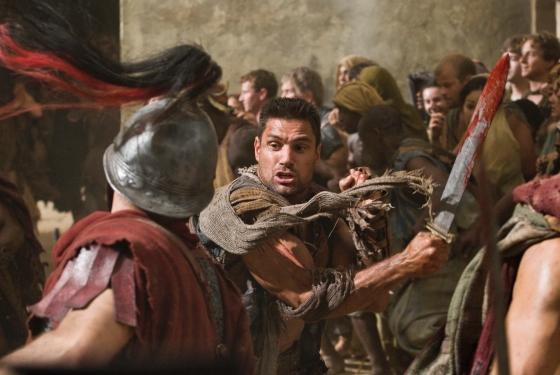
nullSpartacus is back with a new Spartacus. Both the new actor and the revamped series take some getting used to. For the most part, the reincarnation works, in large part because this cable franchise doesn't have a pedigree to sully. The latest edition, Spartacus: Vengeance, picks up where the original 2010 hit Spartacus: Blood and Sand left off, with the title character and his lusty band of former slaves afflicting their former Roman masters, and the Romans trying to contain the rebellion. Liam McIntyre takes over the title role, replacing Andy Whitfield, who died of cancer last year. Whitfield, whose sinewy torso and sweaty earnestness helped turn the original series into Starz's biggest ratings hit, was diagnosed with early-stage non-Hodgkin lymphoma after the first season wrapped. Starz delayed the second season to accommodate his treatment, then plugged the long hiatus with the six-episode prequel Spartacus: Gods of the Arena, which was pretty good for a period piece thrown together in a hurry. Production of the mothership show was supposed to resume after Whitfield was declared cancer-free, but the actor relapsed and died September 11 of last year. Starz approached McIntyre as a contingency; McIntyre says he had some contact with Whitfield near the end, though they never actually met, and took over with Whitfield's blessing.

This would be a tough situation for any performer, and I'm sure some fans will feel that the show can't or shouldn't continue with a different star no matter who he is. But I like McIntyre. He doesn't have Whitfield's odd sweetness and Joseph Gordon-Levitt eyes, and he has a somewhat more square, old-movie presence (except for the fussed-over eyebrows), but he's a good actor, and his Tom Cruise–like relentlessness suits the story.

If you would like to read the rest of Matt's piece, click here.

A critic, journalist and filmmaker, Matt Zoller Seitz is the staff TV columnist for New York Magazine and the founder of Press Play.

PAMELA AUCOIN: How HOMELAND validates the war on terror

How HOMELAND validates the war on terror

null[EDITOR'S NOTE: The following piece about Showtime's drama Homeland contains spoilers for season one. Read at your own risk.]

Pop culture serves to entertain and reinforce cultural norms. Television shows have always done this; studying them and their attitudes towards authority reveals a lot about America.

One of the most well-received shows of the season is Showtime’s Homeland. The series features a fine cast including Claire Danes and Mandy Patinkin, and was originally an Israeli TV show. While that may not sound exactly like the BBC, Homeland still has the allure of the foreign-produced, which suggests a less provincial background.

The New Yorker critic Emily Nussbaum praised Homeland as “an antidote to NBC’s 24,” accused of glorifying torture abroad. Homeland is presented as a show with more liberal values, one which portrays a more nuanced C.I.A that's less likely to promote bigotry against Muslims and enhanced interrogation techniques.

nullThis has not been my viewing experience. While Homeland is undeniably compelling, it is not a balanced show that seems very interested in presenting American intelligence services honestly. Rather, it is very validating. The all-star, critic-proof cast somehow sublimates the very undemocratic policies the show suggests need to exist in order for the Claire Danes character to succeed in her mission.

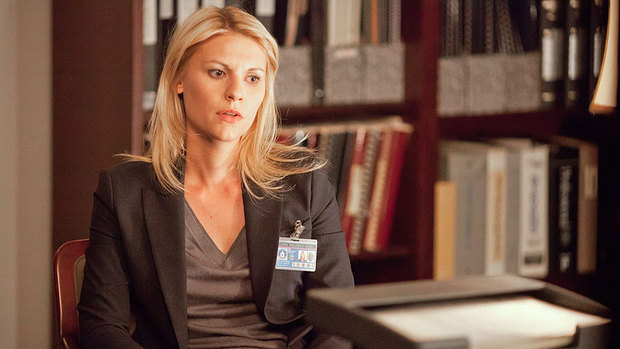
Danes' Carrie Mathison is a complicated character with an undisclosed mood disorder that may actually help her do her job; after all, what kind of sane person could reconcile leading the double life of the spy? Yet her actions are quite horrifying; she installs bugs on the home of a terror suspect, which she has been ordered to take down before she can gather any meaningful intelligence. Isn’t that convenient? Our civil liberties are what come between sniffing out Al Qaeda operatives, who just won’t allow well-meaning if somewhat psychotic spies to do their jobs properly.

The fact Carrie does not lose her job is telling; ultimately, Homeland’s C.I.A. bends the rules a lot. Carrie’s boss Estes is supposedly the “smartest guy in Near East, by a mile,” yet is short-sighted enough to allow a Marine P.O.W., Nick Brody (Damian Lewis), to visit a former jailer who is kept locked up in an interrogation room. Naturally, Brody attacks his former torturer and possibly slips him a razor blade.

There are many other slip-ups by Carrie’s boss, and Carrie herself; she even has a brief affair with said Marine, who she suspects is a sleeper agent. She also manages to inadvertently let it slip she’s been spying on him. All of this suggests that the C.I.A. is a rather sloppy organisation, but such criticism is not blatant in Homeland. Carrie is the rogue genius who might become occaissionally unhinged, but her unorthodox methods are what is needed, and can lead to results.

nullBut do they really? Not according to interrogation research, which has shown time and again that torture leads to bad intelligence and creates even more terrorists. Yet Homeland embraces torture as a viable tool to get information. The captured Al Qaeda operative is tortured in a C.I.A. cell which is freezing cold (he is undressed), and plays bursts of heavy metal music and blasts strobe lights to unnerve him sufficiently to name names. Just before he is about the provide them with specific information, he manages to commit suicide. The subtext is not missed by the viewer. Geneva conventions be damned, torture works, and an exceptional America must be allowed to practice it.

It is also telling that when innocent Muslim bystanders are shot and killed in a mosque by American law enforcement, the issue is not dealt with; it is understood this will not create an international or even domestic incident. They are Muslims, and therefore expendable; this seems to be the show’s message.

Viewers of the far superior British program The Sandbaggers would likely notice that Homeland is a far less sensitive program. The show’s eponymous “sandbaggers” are a group of British agents who would fit in well in John Le Carre’s The Spy Who Came In From the Cold. They are low-paid civil servants who engage in highly dangerous, and certainly morally ambiguous missions to keep the KGB in check. What was brilliant about this show (and, to some extent, Le Carre in general) was how it questioned the sanity of the Cold War and those who ordered these excursions in the first place. The agency bosses are portrayed as careerists, all too willing to send the sandbaggers on highly dangerous and morally ambiguous missions while they wine, dine, and dream of knighthood.

Expect no such honestly from Homeland, which can admit no such complexity. Nussbaum mentions the program’s “deep characterization.” Certainly, the writers take their time detailing some of Carrie’s family background and inability to sustain romantic relationships. This is to appease critics, who cannot simply criticize the characters as one-dimensional Jack Bauers or James Bonds. It hints at it to woo critics just enough, but it would never go so far as to suggest that there is something rotten about the State Department, whose endorsement of internationally illegal prisons abroad has served to encourage the growth of terror cells and damaged our authenticity when we criticize other nations like China, Syria, and Russia for not respecting civil liberties. The show recently won several Golden Globes, lending even more credibility to the show’s dangerous message that the war on terror can, and should, indulge our “dark side.”

Pamela AuCoin is a freelance journalist living in New York City. She has written investigative articles on the Manhattan real estate market for New York Living magazine, and currently teaches world history and occasionally German in the New York City Department of Education. 

GREY MATTERS: DOCTOR WHO’s sublime study of grief, death and transfiguration continues to captivate its viewers

GREY MATTERS: DOCTOR WHO’s sublime study of grief, death and transfiguration continues to captivate its viewers

nullOn a recent episode of The Graham Norton Show, the genial goofball host was plainly delighted to have Karen Gillan—known worldwide as Amy Pond, the spirited, ginger-haired companion of The Doctor on Doctor Who—on his guest couch.
 
Of course, Norton couldn’t pass up commenting on a rumor that Amy Pond would meet her maker on a coming Who episode, chiding her, “Everyone knows nobody on Doctor Who dies!” The joke was that everyone on Doctor Who dies all the time and yet comes back to die yet again and again. Because dying is what you do on Who.
 
That said, if the show was just a series of expirations and miracle resurrections, it would quickly become hard to care.
 
But Who is so much more. In the way it ‘does’ mortality, it seems keenly aware of David Cronenberg’s career-long assertion that the SF and horror genres are uniquely able to allow us to rehearse finality, to play act Kübler-Ross, explore entropy, and consider matters of faith and/or the lack of it. This is, after all, a show that not only has an orchestral death theme, but an eerie, reverse-instrumental leading-to-death theme as well. It’s kind of blatant.
 
Here’s the thing: I do not believe that anyone likes anything deeply for innocent reasons, and by innocent I simply mean nobody is gaga over Star Trek, Lisbeth Salender or The Wire just because. There’s always a subconscious shadow text that makes things resonate.
 
It would be absurd not to assume linkage between my deepening attraction to Doctor Who, a time travel show that insists on memory’s primacy, just as I began a new labor in my own memory retrieval process, the result of a bus accident and brain trauma a long time ago.
 
I am even more sensitive to Who’s mortality themes as I write this column. Last week I found out that my mother, who is very old and very frail from several illnesses, will be operated on for cancer.
 
Before I got that news, the show had me thinking about Barbara — Barbara whose death was the first that shredded my world, Barbara of the too-wild black-brown hair, too-white skin, too-loud laugh, the absurd 50s ball gowns, too-everything, dead at 35 of a hidden cancer.
 
When you’re vulnerable the strangest things sneak through the cracks. And so when the Doctor tells one person after another after another that nobody is ever really gone, not really, and when The Doctor himself dies and Amy Pond literally remembers him back to life…well, I could barely swallow.
 
And so as my mother floats between worlds, and Barbara lives in memory, as I slip into a demographic where mortality—if not my own, necessarily, then those around me–the melodies sounded in Doctor Who touch me like no other film or TV. Sometimes the small tears feel almost like healing. Doctor who?
 
“Bowties are cool!”
 
nullThe Doctor himself isn’t actually called ‘Doctor Who’. He’s the last of his race, the Timelords, obliterated after some galactic war.
 
The genius of the Doctor Who conceit—the show runs back to 1963–is that that a Timelord cannot die. Instead, every few years he ‘regenerates’ and is reborn to be played by another actor.
 
Since ’63 ten actors have played him, meaning that, theoretically, Doctor Who could run forever. (I know that the Doctor says that he can only regenerate 13 times. Rule One: The Doctor always lies.) Despite being about 900, he’s a hyperactive, fashionable loon with great hair. Imagine an upbeat Jarvis Crocker and you’re 75% there.
 
The Doctor travels through space and time in what looks like a ‘60’s police phone booth but is actually a time/space travelling machine called a TARDIS.  He’s also pathetically lonely and always finds a companion, usually female, always platonic. (Come on, that thing with Rose was with a human Doctor double, sheesh.)
 
Since Steven Moffat took over the franchise from Who re-animator Russell T. Davis two years ago, the time we’ll be looking at here, the Doctor has shared his adventures with the feckless, insanely brave Rory  and his wife Amy Pond, who is the key to the continued existence of the universes. (Why aim low? the Moffat rule of thumb.)
 
Also in the mix is River Song, vivaciously played by Alex Kingston as a sort of uber-MILF in Prada complete with her own sardonically endgame-based tagline (“Spoilers!”) who may be the Doctor’s wife, mother, or murderer.
 
The Doctor, Amy, Rory, River—the closer they become, the better Moffat can hurt you when he kills them.
 
DYING
 
“If we're going to die, let's die looking like a Peruvian folk band.” – Amy Pond
 
nullHow you die on Doctor Who is romantic in the classical sense because it’s seen as very important. In television/film fan terms, it has additional appeal, as dying is usually a thing done in montage, a montage in waltz time.
 
It can also be, well, funny. There’s death by aquatic-vampire bite, pterodactyl bite, Dalek ray-blast, feral Ood, sentient tumors, infant liquefaction, being turned to dust by alien-possessed senior citizens and to stone by the Weeping Angels.
 
And sometimes death is just meaningless, abrupt and mean. In  “A Good Man Goes to War”, we meet Lorna, a 18-ish girl whose entire life has been defined by a few seconds spent running with the Doctor during an old adventure, a literal extra in his life.
 
She joins a holy war all on the chance that she’ll meet him. After a stupid battle, she’s shot—but she does meet the Doctor.
 
He caresses her forehead and assures her that he does remember her. She smiles, shudders, dies. It’s almost ghoulish it’s so true to life.
 
The same episode offers a waltz-time triptych of montage death so exquisitely morbid I imagine two tremulous thumbs up from the shadow of Alexander McQueen. Against Murray Gold’s typically gorgeous score—rather like Christopher Young’s Hellraiser rhapsody, but with the sinister extracted—we see The Doctor and his beloved cross-cut and succumbing in slo-mo, character-defining ways. I perversely wish it could have gone on a while longer.
 
But Who can also be downright cruel. In a moment that almost shocks with its naked spiritual need, its digital nihilism, “The God Complex” presents us with a Muslim girl trapped in a hallway with a murderous, belief-stealing monster.  The Doctor, trapped in another room watches helplessly on ugly, ‘80s-stle close-circuit TV as she begs him, “Please let me be robbed of my faith in private.” The Doctor, pained into silence, flicks off the video feed. It’s devastating stuff. (Moffat trashes organized religion, but he respects belief. Interestingly, when the Doctor is asked if he is an atheist, he does not answer.)
 
ENTROPY
 
“The Doctor’s death doesn’t frighten me, nor does my own. There’s a far worse day coming for me.” – River
 
nullIf she wasn’t such a fun/hot knock-about, River Song would be unbearably tragic.
 
As at ease leading militarized clerics (“The Time of Angels”) as she is raiding the Third Reich for haute couture (“Let’s Kill Hitler”), River exists in decaying romantic agony, as her ‘time stream’ is running in the opposite direction from that of The Doctor, whom she loves.
 
Every time she sees The Doctor, he remembers her a little less. Eventually, he will forget her entirely.
 
I was on the same page as The Onion’s Keith Phipps when he pointed out that River’s situation “echoes the plight of anyone who’s watched a loved one fade into the shadowlands of dementia. This is not a story that ends well for River and she knows it.”
 
In a show about time and travelling through it, addressing decay is only honest and Who worries on the topic. Every cast member has grown old and fallen apart in multiple episodes to various degrees.
 
The great literary fantasist Neil Gaiman co-wrote an episode called “The Doctor’s Wife” in which the TARDIS itself manifested in human female form just long enough to become frail and die painfully. We’re sad at the Doctor’s loss—and chilled at the reminder that ours isn’t so much longer.
 
DENIAL
 
“Does it ever bother you, Amy, that your life doesn’t make any sense?” – The Doctor
 
nullOne of the ways Who works is by blindsiding you from oblique angles. Witness: “Vincent and the Doctor” is really about Amy and grief and…well, here’s what it seems to be about. The Doctor takes Amy to a museum to see Vincent Van Gogh’s paintings, then to the past to meet Vincent himself, who is miserable and being attacked my an invisible monster. With The Doctor’s help, the monster is slain, Vincent’s taken to 2010 to see that he’s a cherished artist in the hope he won’t kill himself. He still does.
 
But this sad fable is just an armature on which to rest the episode’s real concerns, which have to do with Rory having just died in the episode prior. She cannot recall this due to a crazed religious order’s actions.  Amy’s amnesia is a way for Moffat to metaphorically address Kübler-Ross’s first stage of grief, denial.
 
Amy’s denial is the anxiety engine powering the episode. We know and The Doctor knows Rory’s dead and Amy not remembering is driving us kind of crazy.
 
When she transfers her considerable energies to poor Vincent—the same height and built as Rory—convinced she can stop his depression and suicide, metaphorically like the relative at a wake who’s cooking, pouring drinks and doing everything but admitting somebody is gone now.
 
Anyway, Vincent worries for her.
 
“Amy Pond, I hear the song of your sadness,” he says.
 
She denies it: “I’m fine!”
 
“Then why are you crying?” He asks as tears pour down her cheeks. From nowhere a funeral procession appears, covered in sunflowers. Rory is finally grieved over by proxy—and we’re bowled over and choked up because we were unprepared for this, because it only makes dream sense.
 
Amy is like a child dealing with her first loss. While Vincent’s return to 2010 and discovery of his value is a Spielberg-style spirit lifter, it’s eclipsed by Amy’s rage when she learns of Vincent’s persistent suicide and eclipsed yet again as Amy moves a small step past denial.
 
She sees that her efforts did matter: a dolly-in on a masterpiece reveals Vincent’s signature, “for Amy.” And so grief, a la Who.
 
 
DEALING
 
The Dream Lord: If you die in the dream, you wake up in reality…Ask me what happens if you die in reality.
Rory: What happens?
The Dream Lord: You die, stupid. That's why it's called "reality".
 
nullBut not necessarily. Because this is a time-travel show, it’s possible to be conversant with people earlier in their timelines.
 
But beware of SF show paradoxes. In other words–dead really is dead. Repeatedly, often in interlocking episodes, across time, space, multiverse, people, robots, aliens and elementals covering half a century of TV, films and novelizations,  we see the Kübler-Ross model—denial, anger, bargaining, depression, acceptance—play out in narratives that are so deeply geek that I’d need a some charts, maps, a PowerPoint presentation, and two laser pointers to convey the situations.
 
And anyway, the whole death thing—ultimately, it’s not literally about death. Or rather, it is and it isn’t. Doctor Who will be useless when my mother finally leaves us. And it only offers different ways to think about Barbara. Then again, the later is who lot of something. Doctor Who, I find, doesn’t have fans—it has followers. Some since 1963.
 
Just as The X-Files assured us that The Truth is Out There, Doctor Who assures us, as it obsesses over death, that nobody is forgotten, “not really”.  As The Doctor refuses to deny his faith he becomes an avatar for people with a hungry sort of closeted agnosticism.
 
But sometimes, Moffat lets his cool slip and lets us know what he’s feeling. It’s very qualified, but it’s very sweet: it’s very Doctor Who.
 
It’s Rory, surviving yet another conflagration intact to ask The Doctor, “Why am I here?”
 
“Because you are. The universe is big, it’s vast and complicated and ridiculous and sometimes, very rarely, impossible things happen and we call them miracles.”

Ian Grey has written, co-written or been a contributor to books on cinema, fine art, fashion, identity politics, music and tragedy.

GREY MATTERS: HOMELAND and the art of playing crazy

GREY MATTERS: HOMELAND and the art of playing crazy

null

As a certified crazy person, I’m here to tell you that either vampires burn in daylight or they don’t. I’ll accept no wiggle room on this. Anything less and you’ll quickly lose my suspension of disbelief. To get what I’m babbling about, this way, please. I’m talking about Homeland, which is, by the way, about almost nothing but crazy people.

Homeland, in case you’ve been busy catching up on something more realistic – I suggest Syfy’s zero-dollar wonder, Alphas – is about Carrie Mathison (Claire Danes), a C.I.A. operations officer haunted by the notion that she failed to do something that may have stopped 9/11 from happening. She was also compromised in an Iraq operation because of an American soldier who’d turned against his country.

Then a Delta Force raid uncovers Marine Sergeant Nicholas Brody (Damian Lewis) in a compound belonging to super-terrorist Abu Nazir. Brody becomes a hero but Carrie pegs him as connected to her failed op and worse, a turned sleeper agent.

When the C.I.A. turns down Carrie’s requests for invasive surveillance because dammit, we don’t do that sort of thing in America, she does it herself with some spy pals. (Alphas, with its metaphor-fraught tales of working class, genetically “super-powered” people fighting Cheney’s still-booming and lawless torture system that Homeland needs to pretend doesn’t exist, is the more clear-eyed, adult view of post-civil liberties America.) In episodes Alfred Hitchcock would love, Carrie watches Brody eat, talk and have sex with his stunningly gorgeous wife (Morena Baccarin of Firefly fame).

The season-long hook, teased sometimes to exquisitely hair-pulling extremes, is a has-he-or-hasn’t-he game of whether or not Brody has been turned and is out for big-time trouble.

And then, for me, it all went to hell.

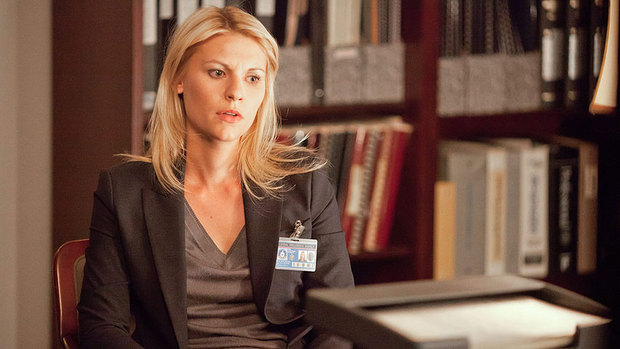
nullCarrie’s a character whose entire life, as the brilliant credits sequence reminds us every week, is literally defined by terrorism, fear and trying to control that fear by building a life, a personage as a person in strict control, serving her country, her profession and the one real man in her life, her mentor and father figure Saul Berenson (the mighty Mandy Patinkin).

So of course she decides to throw it all away, including, quite possibly, the security of the United States, so she can get drunk and fuck Brody.

The show recovered in fits, some so good and others so bad it was like tuning in to get whiplash, but this was the first trumpet sounding Homeland’s true nature, and televisual literature was not included in that symphony. Homeland never dived so far as The Killing. It stayed professional, keeping us interested (and glad there were no commercial breaks where we could pause to think about its manifold absurdities). Then there was last week’s finale that led to an explosive terrorist conflagration that wasn’t – because if it was, one of the players would be taken off the board, and so much for Homeland Season Two.

But what about the vampires? What about you being crazy?

Okay. What I mean is, if a show has vampires who can never walk in sunlight because they’ll burn up in flames except when the writers need them to, well, I’m not going to be watching that show, because the writers have contempt for me, or their material, or both.

On the most basic level, that’s the deal with Carrie and Brody. In order to accept Carrie and Brody, we must accept some whoppers about what we know about bipolar disorder – if only from Oprah, what millions of people know about returning Iraq vets and P.T.S.D. and what we all know about what it is to be human.

nullRight, bipolar disorder. I didn’t mention that, to add some tension spice to Carrie’s character, Homeland makes Carrie suffer really badly from bipolar disorder. Like, it’s so bad that she has to take her meds every day or else she’ll go into a manic tailspin and lose her mind. The poor thing, she can’t even go to a regular doctor for those meds because the C.I.A. would kick her out as a security risk. So, she visits her psychiatrist sister on the down-low for her weekly supply, which translates into even more suspense, and some shame and anxiety to boot; this bipolar thing is paying off big-time and all they had to do was say she has it. Poor Carrie. This is going to be one rough season.

Except, not so much, because on Homeland, vampires can walk in daylight, so to speak. After a few episodes, her bipolar kind of…goes away. Why? I would imagine because its rigors would get in the way of other plots leading to such flights of fancy as Carrie blowing off seeing her sister for meds so she can get blotto drunk for some hot Brody ooh la la. Unlike all of us, intemperance does nothing to aggravate her bipolar; hell, she doesn’t even get hangovers.

Yes, “us.” I outed myself a while ago on being bipolar. It’s no big thing – as long as you remotely behave like a grown-up about this controllable thing, i.e., not like Carrie.

nullDon't get me wrong: I don’t suggest Homeland hang itself on the horns of scientific accuracy (or a WebMD search). I just ask that it create a ‘verse where there are laws for Carrie’s condition, and then stick to those laws, like the way Vulcans can or can’t intermarry and the like. (On the other hand, absurdity met ugliness when the showrunners had Carrie, in deep depression, diagnosing herself – with her sister mutely complicit – for electroconvulsive therapy, a.k.a. shock treatment, a controversial, risky, cognition- and memory-impairing but highly photogenic treatment calling for Danes to be strapped and gagged, electrodes glued to her scalp. Then they cranked the juice as her body spasmed grotesquely. If you’re suffering from depression, there are a million other ways to get help – this is just an ignorant TV show by the guys who made the torture-happy 24.)

Danes has created a viable person built off the showrunners’ thumbnail description and her own vision of Carrie, which manifests in endlessly fascinating halting speech patterns, “talking” body language, odd glares and more. The creators of Homeland were insanely fortunate to get such an artist.

As for Brody – good grief. Here’s a man who for eight years was brutalized, beaten, locked in solitary, became a surrogate father to an adorable child who died horribly, was forced to brutalize other Americans and, for a freshet of memorable detail, was pissed on while he bled. And yet within a day or so he’s home, and aside from limited, soon-to-improve sexual dysfunctions and some behavioral dissonances, he’s on his way to a full recovery with timeouts for plot-advancing nightmares.

nullMeanwhile, in Brody’s frequent shirtless scenes we see his scars and their implied memories of unimaginable months of pain and horror, which now have no apparent effect. (Even his attempted terrorist act is based not on torture, but on love of a child.) This is Spielbergism; take a sad song and make it ludicrously better, one-upping it by saying the sad song doesn’t exist even as you’re looking at it.

As Brody breezed through photo ops, interrogations, his love affair, superior fathering, a remarkable act of remembrance in a church, the first steps towards a congressional run and the build-up to his terror attack, watching Homeland, for me, became the job of creating in my mind a less ridiculous backstory for Brody. Something Uwe Boll would not reject as failing to meet his stringent standards of realism. (I also had to ixnay the absurdity that any country would allow such damaged goods into the ‘burbs with no decompression process, where anyone could get to him, or the poor bastard could just blow his brains out in 24 minutes.)

Again, it’s entirely the actor’s art that pulls this nonsense off. It’s Lewis’ eye and neck muscle work, his oddly timed blinks, his general tightness of bearing suggesting things blowing up inside. Everything that nobody bothered to write.

But there were such great moments! Like when Brody and Carrie went to her family cabin in the woods, with its implications of a peaceful childhood she somehow missed, and his connection to a person who gets his deal. It was beautiful. And then she flat-out accuses him of being with Al Qaeda, and he’s back at her, yelling that he isn’t (which technically is true). It’s the spy scene we’ve always wanted to see: the breaking of both players’ pose.

Pure gold. But moments like this get lost in a spy show’s mechanics and, as Carrie’s mental illness makes that special guest appearance, devastating her just in time for dramatic effect, I’m just over these daywalking vampires. Next season, I’ll recalibrate my expectations of Homeland. I’ll enjoy the acting, the twists and turns. What do you want? It’s just TV.

Ian Grey has written, co-written or been a contributor to books on cinema, fine art, fashion, identity politics, music and tragedy. His column "Grey Matters" runs every week at Press Play. To read another piece about Drive, with analysis of common themes and images in all of Refn's films, click here.

MATT ZOLLER SEITZ: SONS OF ANARCHY: What happens next, daddy?

MATT ZOLLER SEITZ: SONS OF ANARCHY: What happens next, daddy?

null

EDITOR'S NOTE: The following recap of "Sons of Anarchy" season four, episode 12 contains spoilers. Read at your own risk.

When Charles Dickens was at the peak of his popularity, Americans used to wait on East Coast docks for the latest chapters of his serialized novels to arrive. TV dramas are our version of that. The best have that mix of shamelessness and sophistication that Dickens refined into art — or at the very least, artful melodrama — and the FX biker drama Sons of Anarchy is right up there in the pantheon. Its cliffhanger episode endings are among the most addictive I’ve seen, and last night offered a great example: a three-way standoff between the increasingly evil gang boss Clay Morrow (Ron Perlman), his disaffected lieutenant Jax (Charlie Hunnam) and the vengeful Opie (Ryan Hurst), who discovered his dad’s reeking body and was informed that Clay secretly killed him. Everything about the standoff was utterly shameless: the race-to-the-finish-line lead-up; Opie’s tearful speech; Opie leveling his gun at Clay at the precise moment when Jax burst in and screamed at him to drop it; the shot of Clay’s body slamming against a wall; Jax’s horrified close-up. Cut to black, roll credits. Is he dead? Was he wearing a bulletproof vest?

I laughed out loud at this ending. It was primordially manipulative. It reminded me of watching old Captain America serials on local TV as a kid. (Me: “Mom, is Captain America going to get cut in half by the buzz saw?” Mom: “I guess you’ll have to watch next week to find out, but for now I’ll just remind you that the thing is called Captain America.) It also parallels nicely with the adventure tales I’ve been reading to my young son at bedtime — the kinds of books that’ll end chapters with sentences like, “He held his sword in front of him, moving slowly down the long, dark hallway until he pushed open the door and revealed the most horrifying image imaginable.” My boy’s reaction to these Big Reveal is always the same: “Daddy, what happens next? Can we read just one more chapter?”

If you would like to read the rest of Matt's recap, click here at Salon.

A critic, journalist and filmmaker, Matt Zoller Seitz is the staff TV columnist for Salon.com and the founder of Press Play.