SLIDE SHOW: Movies for a desert island

SLIDE SHOW: Movies for a desert island

null

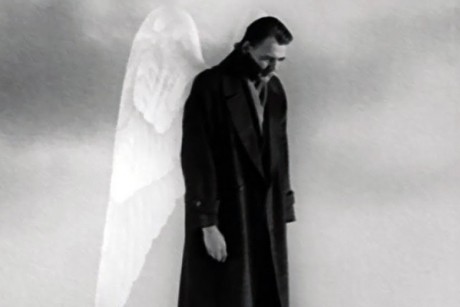
You don’t need much of a setup for this one: It’s a Desert Island List of visual media that I’d like to have with me if I were shipwrecked.

Here are the rules:

1. This list is composed solely of motion pictures and TV shows. Music, books, paintings and other media are not included. It is assumed that you’ll have an indestructible DVD player with a solar-recharging power source, so let’s not get bogged down in refrigerator logic, mm’kay?

2. You can list 10 feature films, one short and a single, self-contained season of a TV series.

3. NO CHEATING. Every slot on the list must be claimed by a self-contained unit of media. You can put all 15 hours of Berlin Alexanderplatz on the list because it’s considered one long film (or if you saw it in Germany, a TV miniseries), but you can’t put The Godfather and The Godfather, Part II in the same slot because “it counts as one long film” (it doesn’t!). You can’t put 10 seasons of I Love Lucy on their, either, or "Twin Peaks up through the part in Season 2 where we finally find out who killed Laura Palmer.” Part of the fun of this exercise is figuring out what you think you can watch over and over, and what you can live without. Stick to the parameters, otherwise we’ll have human sacrifice, dogs and cats living together, and mass hysteria.

I’ve listed my short film pick and my TV season first, followed by a list of 10 theatrical features in alphabetical order. Please add your own picks to the Letters section; I want to see what you’d put in your suitcase.

You can view Matt's final slide show here at Salon.

A critic, journalist and filmmaker, Matt Zoller Seitz is the staff TV columnist for New York Magazine and the founder of Press Play.

SLIDE SHOW: The best TV shows of the year

SLIDE SHOW: The best TV shows of the year

nullWe’re living in some kind of new Golden Age of scripted TV, and this year’s best offerings were amazing. I decided to be rigorous and restrict myself to just 10 entries. It wasn’t easy.
These 10 picks represent what I think were the most creative and consistently satisfying scripted comedies and dramas that aired on American TV during 2011. If I’d expanded the list to account for shows that were somewhat more erratic but that produced terrific individual episodes, this list would have had 30 or maybe even 40 titles on it. If anybody’s curious, I may post the expanded list in the comments section.

You may see some of the runners-up cited next week, when I will present a slide show honoring the best individual episodes of scripted series. There might be an article listing the best nonfiction programs as well.

You can view Matt's slide show here at Salon.

Matt Zoller Seitz is the publisher of Press Play and TV critic for Salon.

MATT ZOLLER SEITZ: Where can AMERICAN HORROR STORY go from here?

MATT ZOLLER SEITZ: Where can AMERICAN HORROR STORY go from here?

null

EDITOR'S NOTE: The following article contains spoilers for "American Horror Story" season one, episode 11, "Birth." Read at your own risk.

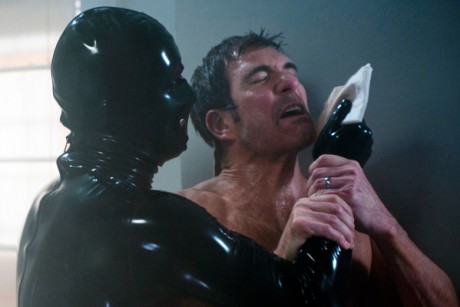
“Just because we’re dead doesn’t mean we don’t have wants … desires,” said Tate, the pouty, bratty, forever-teenage rubber-suit-wearing, mom-of-the-house raping, suicide pact-making … sorry, I feel like there should be about 12 more adjectives in there, because the ghostly Tate, like most of the characters on FX’s aggressively lurid “American Horror Story,” requires them. But let’s stay focused on Tate’s statement, because it’s key. Yes, of course! He and the other ghosts have wants … desires. And one of the many amazing things about the show is how, over the past few episodes, it has subtly moved the ghosts to the center of the narrative, to the point where the ever-dwindling number of living characters have started to seem like the supporting cast on a show that they were ostensibly the stars of. (Of course, now that they’re all dropping like flies — even money on Constance to bite the dust by the end of season two — they get to be at the center of the story again.)

I’ll spare you a detailed recap because if you didn’t see the episode, you shouldn’t be reading this article in the first place — and besides, appreciation and speculation is more fun. As written by Tim Minear and directed by Alfonso Gomez-Rejon, it was perhaps the show’s spookiest episode to date, campy and trippy (check out all those dissolves!) yet straightforwardly horrific, in the art house/grindhouse vein of a 1970s Ken Russell or Dario Argento picture.

You can read the rest of Matt's piece here at Salon.

Matt Zoller Seitz is the publisher of Press Play and TV critic for Salon.

Dear HBO: Renew ENLIGHTENED

Dear HBO: Renew ENLIGHTENED

null

“Everything can be transformed,” said Laura Dern’s character, Amy Jellicoe, on last night’s first-season finale of Enlightened, walking to work and then through the corridors of her office. “Every single thing. Goodness exists. It’s all around. It’s just sleeping. It can be wakened.”

HBO, which is reputedly on the fence about renewing this critically acclaimed but low-rated series, should recognize the goodness on its schedule Monday night and give Enlightened another season. It’s charming, intelligent, uncomfortable, often moving. Executive produced by Dern and writer-producer Mike White, and written by White, Enlightened is doing things that no series has ever done, in a tone that no show has ever attempted. And on top of that, it feels like a definitive statement on a troubled era.

If you saw the finale of Enlightened last night — only half-jokingly titled “Burn it Down” — you know that Amy made good on her promises to confront her employer, the giant drug company Abaddon, about the callousness and illegality that she uncovered through research. You also know that Amy, who survived a breakdown so severe that it sent her into rehab, is especially outraged about her own department, which is developing software that figures out how to work employees as hard as possible while paying them as a little as possible. Enlightened is not an explicitly political series — not in the way that South Park is, or that The West Wing was — and yet the corporate intrigue aspects strike to the heart of the moral crisis that’s convulsing this nation. The image of Amy fantasizing about pouring gasoline on the floors of Abaddon’s headquarters and setting it ablaze was chilling — and as metaphor, perfect. Do we continue to accept business as usual out of a weary belief that change is just too hard? Or do we say something, and do something, even if means enduring humiliation and abuse? Do we continue to live in this rotting house, or do we burn it down?

You can read the rest of Matt's article here at Salon.

Matt Zoller Seitz is publisher of Press Play and TV critic for Salon.

RECAP: What’s this on DEXTER? An incest tease?

RECAP: What’s this on DEXTER? An incest tease?

nullSeriously, Showtime: Dexter-Debra incest? That’s what you’re banking on as you approach the season-six finale? Isn’t that why God created slashfic? What’s next? Ghost-y tussles between Dexter and Harry? Deb and Laguerta? The mind reels.

This week’s Dexter is all bent out of shape, peaking at the 20-minute mark, then limping along as it betrays sundry atrocities, anti-revelations and proof that Captain Laguerta (Lauren Vélez) is the Latina Cruella de Vil of the Miami police department.

After a recap in which Debra (Jennifer Carpenter) says that Dex (Michael C. Hall) is her one safe place — oh, great — the Miami police find the body of Travis’ latest murdered girl, along with the corpse of Doomsday_Adam (Kyle Davis), the one-time Travis fanboy, who was actually stabbed by Dexter.

Travis, meanwhile, has hogtied Angel (David Zayas), stolen his ID and given it to Doomsday_Adam’s batty wife Beth (Jordana Spiro). He’s also gifted Beth with a backpack bomb of wormwood poison, with instructions to deliver the package to Deb. She’d once interviewed the object of Travis’ passions, his sister (who he then killed, as these brother-sister love affairs never pan out). And so Deb and the Miami P.D. must die in the name of God. It’s simple, really.

You can read the rest of Ian's piece here at Salon.

Ian Grey has written, co-written or been a contributor to books on cinema, fine art, fashion, identity politics, music and tragedy. His column "Grey Matters" runs every week at Press Play.

MATT ZOLLER SEITZ: The controlled madness of AMERICAN HORROR STORY

MATT ZOLLER SEITZ: The controlled madness of AMERICAN HORROR STORY

null

EDITOR'S NOTE: The following article contains spoilers for American Horror Story season one, episode 10, "Smoldering Children." Read at your own risk.

“Ladies and gentlemen … the ham.”

This may be the line that Jessica Lange was born to say, in the role she was born to play, on a TV show perfectly suited to her fluttery intensity. That she delivered it over a tight shot of a ham festooned with moist pineapple slices being thrust into the camera’s lens — as if the show were being broadcast in 3-D! — made it a perfect kick-off to “Smoldering Children,” the 10th episode of the first season of American Horror Story.

Written by X-Files veteran James Wong and directed by Michael Lehmann (Heathers), the hour greatly escalated the madness on this already demented show. Created by Glee executive producers Ryan Murphy and Brad Falchuk, the series seems to be inventing a new kind of horror — a 21st-century, short-attention-span-theater version, with no lulls. The traditional buildup to the big scare? Booooo-ring. Perhaps operating under the assumption — not unwarranted — that most viewers are watching the program on DVR or illegal download and will just fast-forward to the “good parts” anyhow, they’ve decided to save us all the bother. Every few seconds there’s a fabulously bitchy one-liner, a grim bit of exposition or a surprisingly deft transition between the two, or a beating or stabbing or disembowelment or horrendous searing of flesh, or a faintly S&M-dungeon-flavored sex scene, or a revelation that a character you thought was alive was actually dead all along, or that the heroine has been impregnated by both her husband and by a black-rubber-suited spectral hunk and is carrying both of their children.

What happened tonight? Let’s review — with the caveat that when you describe the actual events on this show, they sound like the plot of a hypothetical horror novel being plotted out by a couple of precocious 13-year-olds.

You can read the rest of Matt's article here at Salon.

Matt Zoller Seitz is publisher of Press Play and TV critic for Salon.

MATT ZOLLER SEITZ: TV’s unconscionable spectacle

MATT ZOLLER SEITZ: TV’s unconscionable spectacle

null

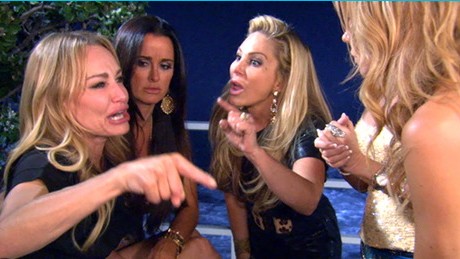
The scariest, most disgusting show on television isn’t American Horror Story. It’s Real Housewives of Beverly Hills.

Bravo’s unscripted series offers that horror movie gimmick of showing you unlikable people doing ill-advised things that you can’t prevent no matter how loudly you yell or curse at the screen. But because the characters are — in the physical sense, at least — “real,” and the world-shattering plot twist at the core of this season was telegraphed to the audience long in advance, what might otherwise seem a guilty pleasure seems instead a travesty, as depraved a spectacle as anything that has ever appeared on American screens.

We all knew before this new batch of episodes started that Real Housewives husband Russell Armstrong killed himself in August 2011. We knew that some of his family members blamed the unrelenting public scrutiny built into the show’s production for hastening his death, and that the tension with his wife, Taylor, was more than a tabloid spat between shallow rich folk — that it was, in fact, symptomatic of something far darker than the typical unscripted cable show could handle. But Real Housewives either ineptly failed to integrate our awareness of the tragedy into the plot in any meaningful way, or else decided to plug its ears and tiptoe through the hand-woven silk origami tulips. Is this approach evidence of a conscious creative choice — the calm before the storm? If this franchise weren’t so committed to manufactured melodrama and toxic materialism, I’d offer a very tentative “yes,” but I suspect it’s more likely the case of the show not having the slightest clue of what to do with such explosive material — material that it frankly never should have tried to deal with on-screen, because it is morally, intellectually and creatively unequipped to get anywhere near it without making it dishonest and trite. We’re not talking about Deadliest Catch here, or even Survivor or freaking Celebrity Rehab. It’s Real Housewives of Beverly Hills.

You can read the rest of Matt's piece here at Salon.

Matt Zoller Seitz is the publisher of Press Play and TV critic for Salon.