
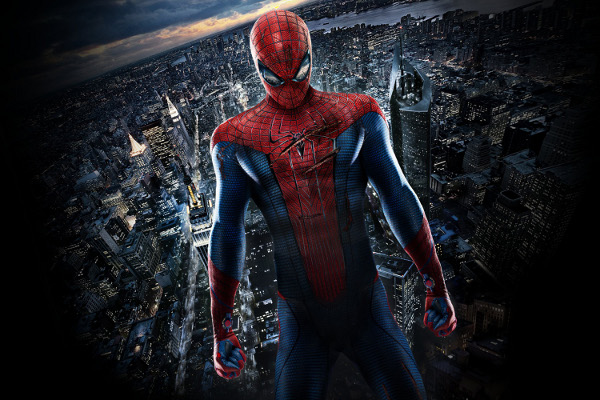

While this wasn’t always standard practice, continuity has become the
cornerstone of American superhero comic books. Stand-alone stories that start
and stop within one issue are a rarity now; six-part stories that tie into
other series, often for cross-over events, are the norm. This is partly because
the average age of comics readers has shifted over the years from pre-teens to
40-somethings. Comics aren’t just for kids anymore, as mainstream journalists
have recurringly screamed since the
’80s, so mainstream comic books have to form a cogent narrative. But, as comics
readers know, continuity-based comics almost never make intelligible sense.
For example: if a major character died years ago, there’s a good chance he
(it’s usually a he) will come back, thanks to a new creative team. Think of it
like a soap opera: each of these whimsical resurrections pokes a hole in readers’
faith in the stories they’re reading. If Barry Allen’s The Flash can return
after selflessly sacrificing himself in Crisis on Infinite Earths, who
cares about the death of a lesser character? That’s the defining paradox of
comic book superheroes: even though they’re perennially rewritten, superhero stories
are defined by wink-wink, nudge-nudge, secret-handshake-worthy events,
allusions, and mythology.
On the one hand, these are imaginary stories about characters that control time
and space, as Grant Morrison, the writer who brought Allen back from the dead,
has argued. Every issue is ostensibly a new one for a comics reader, so why not
ingratiate these readers with new stories about old characters? Also, comics
are for kids, and kids aren’t insane enough to care about narrative
inconsistencies. Ahem. On the other hand, constantly-retooled origin stories,
and routine Christ-like resurrections blow holes in the very idea of continuity.
If Barry can come back, why care when the Red Skull dies one more time, or the
death of yet another Robin? It’s a headache for everyone involved, but it’s
also business as usual.

It makes sense, then, that superhero movies would also be about remakes,
reboots, and recycling. Even today, we’re still being told and retold the story
of how Peter Parker earned his arachnid-like powers, or what really made Bruce
Wayne want to dress up and scare criminals. The sad fact is that almost nobody making
superhero movies has any idea what they’re doing. There’s no proven formula for
success in the genre, so any given successful superhero film is only proof of
what works in the present, not what will work again. Here comes the first sequel to the
second Spider-Man franchise; and next up, a new actor playing Batman in the
sequel to the third Superman feature film series; and so on.
Rebooting a franchise does not have to be a terrible
idea. In a 2011 Cinema Journal article entitled “Why I Hate
Superhero Movies,” Scott Bukatman hit the nail on the head when he wrote,
“Superhero films remain something of a provisional genre, still very much
in a state of becoming.” Bukatman goes on to praise origin stories as,
“the most intriguing part of these films […] this is the moment when […]
everyday reality will yield to something more, the moment when the constraints
of the mundane world will evaporate, forcing a new awareness of corporeal
possibility as the body is rethought […]”
Bukatman has a point: a good origin story reminds you of how exciting a
character can be. But since franchises are rebooted so often, premature
fatigue sets in, and audiences just don’t want to support even superior origin
stories (cough, Amazing
Spider-Man, cough). Audiences always vote loudest with their wallets,
but as with anything, a film’s box office success is usually relative. Batman
Begins soberly re-established the title character’s popularity after Joel
Schumacher high-lit Val Kilmer and George Clooney’s Bat-nipples. But even
Schumacher’s Batman & Robin was
eventually successful, even if it only grossed 40% of its original
production budget during its opening weekend release. And Schumacher’s manic,
campy style was itself a response to Tim Burton’s expressive, grim (and even
more financially successful) take on the title character.

But again: nobody knows what they’re doing. In a 1997 Cinefantastique interview,
Schumacher says he hoped to present Batman as “a more accessible, less
agonizing, lighter character… There is a certain narcissism and selfishness to
constantly brooding about yourself and although Batman was created in 1939,
this is 1997 and it was incumbent for Batman to mature and become more
concerned about others.” Remember: this is the guy that put Bane in a
trench-coat and armed Arnold
Schwarzenegger’s Mr. Freeze with puns that would make Otto Preminger’s version
of the character (from the 1960’s TV show) blush. So it’s no wonder that
audiences took to Batman Begins. Kitsch-fatigue had set in, though
everybody still paid to see Schumacher crash-zoom into his brooding hero’s junk
a few years earlier.
Christopher Nolan’s Batman will be succeeded by Zack Snyder’s Batman because
Snyder’s Man of Steel made money. Not
much is known about Snyder’s take on the character except that Christian Bale
will be replaced by Ben Affleck, suggesting that Snyder’s Batman does not exist
in the same universe as Nolan’s. But Man
of Steel is clearly inspired by Nolan’s Bat-films. Now, Clark Kent’s origin
has twice the bathos: Daddy-devouring tornados! Wanton skyscraper demolition!
Neck-snapping fury! And per diem, too! After the failure of Bryan Singer’s
Richard Donner-inspired Superman Returns, studio execs were convinced
that Superman had to toughen up (though Returns also netted $120 million
during its theatrical run, almost half of its $270 million budget). They spoke
for the fans when they said people wanted a tough, contemporary hero who is
also devoted to, in the words of Donner’s Superman, “Truth, justice, and
the American way.” Snyder’s Superman reworks that mantra, suggesting that Man
of Steel is light! But also dark. In that sense, the next Batman film will
be something of a return to beguiling form, though only in the sense that it
will be almost as confusing as Schumacher’s film.
Then again, one shouldn’t just blame superhero films’ creators for their
characters’ schizoid characterizations (especially not directors). Avi Arad,
the Toy Biz mogul who helped rescue Marvel Comics from bankruptcy in the ’90s,
is exceptional in that he’s been involved in several superhero success stories,
from the mid-’90s to present. Arad helped create Marvel Films in 1996, a
company that ostensibly helped Marvel to avoid the many pitfalls that kept
money-making properties like Spider-Man and Captain America caught up in
law-suits and pre-production limbo. The formation of Marvel Films was supposed
to be a major step towards standardizing continuity in superhero comics:

Realistically, Arad has only unified the Marvel universe so much. He’s produced
both Sam Raimi and Marc Webb’s versions of Spider-Man, and Ang Lee and Louis
Leterrier’s Hulk films, as well. He’s also bankrolled a couple of Marvel films
that belong to competing studios: Daredevil and the Fantastic Four films were
produced by 20th Century Fox while the Spider-Man films were released by Sony
Pictures. And of the Avengers-related properties, Arad only produced the first
Iron Man film (Robert Downey Jr. is locked for two more films!), both Hulk
movies (already rebooted once!), and a Nicky Fury film starring David
Hasselhoff that nobody
wants to remember. He’s also only produced the first three X-Men films
(three more done, and three on the way!), one of two Punisher films (New World
Pictures!), and two of three Fantastic Four films (Roger Corman’s New Horizons,
oh no!). If there’s a unifying principle to Arad’s filmography, it’s anything goes,
a form of chaos theory. They’re all made under basically similar conditions,
but their success is determined by small, but significant different conditions
of their production, and popular reception.
And yet, while you might not think it to look at them, the three Arad-produced
titles that helped to prove that superhero comic books were blockbuster
material were the Blade films. Based on a minor character introduced in the
cult favorite comic book series Tomb of Dracula, the first Blade made
$70 million in profits. Sean Howe, author of Marvel Comics: The Untold Story writes: “although Marvel only
saw $25,000 of the profits, suddenly there was proof that Marvel Comics
characters were viable as film franchises.” The Blade movies were
probably also successful because Wesley Snipes played the title character in
all three films. In the comics, Blade was always a secondary character, making
cameo appearance in other heroes’ series. But Snipes has played the character
as many times as Christian Bale has played Batman, or Tobey Maguire has been
Spider-Man. No wonder there have been decades of fruitless speculation on
similarly minor characters, like Doctor Strange (Wes Craven was gonna direct!),
and the Black Panther (Snipes was gonna star!).
These movies obviously don’t sink or swim based on a producer’s confusing (but
successful!) whims. There’s also the simultaneously negligible and crucial role
comic book fans have in determining the success of a superhero film. Nerds
build hype, as when trailers, casting rumors, production stills, and sequel
speculation popped up to rally around Martin Campbell’s Green Lantern at
fanboy sites like Bleeding Cool, Newsarama, Ain’t It Cool News, and others. At
the same time, despite earlier planted reports, Green Lantern 2 won’t
happen anytime soon, because the first film cost $200 million to make, and only
netted $20 million during its theatrical release.
Then again, Edgar Wright somehow managed to bounce back after the geek-driven
momentum surrounding his Scott Pilgrim vs. the World adaptation failed
to carry-over to the box office. If the world were ruled by
geeks, the kind that salivate over various PR-friendly production updates from
the film’s cast and crew, Scott Pilgrim
vs. the World might have been a blockbuster. In this world, almost nobody else showed up. Wright is currently
developing an Ant-Man movie for Marvel, a film that will presumably tie-in with
the other Avengers-related satellite films. Admittedly, assigning Wright
to direct an Ant-Man movie seems like a low-stakes gamble. But it also suggests
that Marvel wants viewers to distinguish the Avengers-centric films from
each other. So, directors for these films are being chosen based on their
established track records, even if their previous films weren’t financially
successful (Scott Pilgrim didn’t make back its original production costs
during its three-month theatrical run). So Kenneth Branagh and one of the
show-runners of Game of Thrones handle the Thor films, Rocketeer director
Joe Johnston takes the Captain America movies, and Super director
James Gunn is making the upcoming Guardians of the Galaxy film. This last
assignment is especially exciting/perplexing.

Gunn has scripted films for Troma, Lloyd Kaufman’s boastful, flea-circus
barker-style independent production company. He’s also done some mainstream work
before, though scripting two live-action Scooby Doo films only lends you
so much street cred. The closest thing to a superhero film Gunn has done prior
to Guardians of the Galaxy is Super, a black comedy in which The
Office‘s Rainn Wilson plays a disturbed wannabe superhero. Still, asking
Gunn to direct a movie like Guardians of the Galaxy, an action-adventure
in which Bradley Cooper voices a talking, gun-toting raccoon named Rocket
Raccoon, sends a loud message to a small audience: here’s a weird one for you,
fanboys and fangirls. Here, finally, is a weird-ass, misfit movie that will
also be part of Marvel’s burgeoning meta-narrative. Here’s hoping it doesn’t
bomb too badly.
Uniting the Marvel movies into a barely-coherent narrative is such a popular
strategy that DC Comics is now aping that conceit with their upcoming Man of
Steel sequel. That film will apparently feature Batman and Wonder Woman,
too. But Marvel’s novel structuring gimmick has also become something of a
running joke. For example, mid-credits stingers only really serve to introduce
characters that will barely matter in the movie, in Marvel’s four-colored,
Wagner-worthy cycle. And Avengers director Joss
Whedon has even said that Thanos, the shadowy boss-behind-the-boss in his
first of three planned Avengers films, was “never meant to be the next
villain.” Whedon has also said that Thanos “was only teased to give
fans a taste of how big this Marvel Cinematic Universe can really get.”
That kind of ass-covering logic–He’s not the bad guy, we just made him look
that way! Look over there, we’re already working on another story!–is
unfortunately par for the course with Marvel’s Avengers films. Their films are
part of a continuity-reliant series whose individual entries are united only by
their creators’ need to resemble the Wizards of a Neu Oz. Just don’t look
behind the curtain—but oops, Whedon has already peeled it back.
Marvel’s struggle to make films that feel of a piece is the biggest sign that
superhero films are still stuck in Bukatman’s never-ending provisional phase.
The most stylistically experimental superhero films to date–stuff like Peter
Berg’s Hancock, Frank Miller’s The Spirit, Ang Lee’s Hulk,
and Lexi Alexander’s Punisher: War Zone–bombed at the box
office. Furthermore, the only one of those four films about a
popular-enough character has already been rebooted twice.
Superhero movies are, for the moment, hyper-popular, but
what makes them work still eludes us. Marvel’s multi-film model is successful
right now, and Marvel Studios are now branching out to television, and
Netflix-exclusive programs like Agents of S.H.I.E.L.D., Daredevil,
and Defenders are in
various states of development. But there’s no guarantee that business model is
sustainable. The Amazing Spider-Man 2 is on the way, just ahead of
another Captain America sequel (yes, I do count the Reb Brown made-for-TV
monstrosity where Christopher Lee participates in one of the least climactic
fist-fights committed to film). And while the former series was never
associated with the Avengers franchise, it will probably go on to have a
second sequel, and so will Captain America.
The allure of a cohesive, all-encompassing universe of
characters is tempting. But contemporary audiences are just as likely to
grumble while forking over their money for yet another origin story. So until
the next successful paradigm-shifting film somehow makes money by being
different, superhero films are going to just be more of the same Marvel
Studios-style chaos. The genre’s future is uncertain because it’s being made up
as its creators and characters go along. Let’s just hope that Joel Schumacher
doesn’t helm the inevitable Spider-man reboot; the world isn’t sophisticated
enough to resist The Tackily Flamboyant Spider-Man just yet.
Simon Abrams is a freelance film critic and native New Yorker. His
review and feature coverage is regularly featured in the Village Voice,
Esquire, RogerEbert.com, and other outlets.

 10) “Going Sane,” written by J.M. DeMatteis and Drawn by Joe Staton and Steve Mitchell
 9) Batman as drawn by Gene Colan: “Nightmare in Crimson”
 8) Batman in the Justice League International, written by J.M. DeMatteis and Keith Giffen, drawn by Kevin Maguire
 7) Tim Burton and Batman Returns
 6) Batman: Year One, written by Frank Miller and Drawn by Dave Mazzuchelli
  5) Grant Morrison and The Return of Bruce Wayne
 4) Bruce Timm’s Batman: Batman: The Animated Series and Batman: Mask of the Phantasm
 3) Denny O’Neil and “Venom”
 2) The Killing Joke
 1) Steve Englehart and Marshall Rogers’ Batman


 And yet, the kind of died-on-the-vine disappointment that both professionally critical friends and lay-nerds alike have experienced after watching Ghost Rider: Spirit of Vengeance led me to wonder about the comic book films that never were – dream projects like Tim Burton’s aborted version of Superman, whose
  The Amazing Spider-Man (1977): This 90-minute pilot for the short-lived live-action TV show by the same name is pretty strange. It’s almost as if its creators thought that because Peter Parker (Nicholas Hammond) is a hard-luck hero with a cloud permanently affixed over his head, he must also be a sub-intelligent creep and a pest, too. As his human alter ego, Parker spends a lot of time bothering poor Daily Bugle editor J. Jonah Jameson (David White) for work (Jameson just can’t use any of the photos Parker gives him, suggesting that this universe’s Parker is actually just a talentless hack that got lucky). Hammond’s Parker is Christopher-Reeve-as-Clark-Kent-levels of nebbish and annoying, but minus all the well-meaning aw-shucks stuff. He’s bashful but has a million questions to ask everyone and a weird inability to take a hint and leave well enough alone.
 Captain America II: Death Too Soon (1979): The second of two starring vehicles for the charisma-less Reb Brown is much more interesting than its previous installment. In it, Brown fights Christopher Lee, who blackmails world leaders with a chemical agent that makes people age faster. See, already cool, right?
 Dr. Strange (1978): For a movie about a surgeon that becomes the world’s greatest sorcerer, this made-for-TV film’s pretty damn sleepy. Peter Hooten (where do they find these guys?) plays Stephen Strange, a kind-hearted medico that gets wrapped up in the schemes of evil Morgan Le Fay (Jessica Walter), a sorceress trying to take over the world so that she can stay young forever. Strange is called up to help Thomas Lindmer (John Mills), who is secretly Merlin the ancient magician, to fight Morgan. Presumably because Dr. Strange is a relatively obscure superhero, this one’s a fairly straightforward and vanilla origin story. You spend most of the film’s 93-minute runtime watching a cookie cutter hero get the courage to dress up in a garish costume (complete with an ill-fitting cape) and duke it out on the Astral Plane with an evil woman in an equally garish costume. It has its moments, I suppose, and some cute psychedelic imagery. My favorite moment has to be when Le Fay tries to seduce Strange and trick him into removing the talisman-like ring that protects him from her. That moment was almost good! The rest is mostly indistinct and uninteresting.
 Nicky Fury: Agent of S.H.I.E.L.D. (1998): This is the one made-for-TV film I chose that wasn’t made in the ‘70s, that wild period where Marvel was most committed to bad ideas. In it, David Hasselhoff plays Col. Nick Fury, a grizzled old war vet that never met a rule he couldn’t break. I’m paraphrasing from David S. Goyer’s cheese-stuffed screenplay. (Goyer, incidentally, wrote the story and co-wrote the screenplay for Ghost Rider: Spirit of Vengeance, along with many other comic book properties.) Basically, this is a fairly rote alternative to the origin story: Fury comes back from retirement and helps S.H.I.E.L.D. fight Baroness von Strucker (Sandra Hess), the daughter of his arch-nemesis…Baron von Strucker. While it’s always a delight to see the Hoff chomp on a cigar and wildly overact, there probably should have been more to this film than just a lot of juiceless Oorah-ing and weird creative decisions (why do HYDRA’s minions look like the Spy vs. Spy guys except without the pointy noses?).
 First two episodes of Supaidaman (1978): This is easily my favorite of the collection of, well, stuff that I watched for this article. This live-action tokusatsu show is a weird mash-up of Spider-Man and Power Rangers. I didn’t know until now that select episodes were officially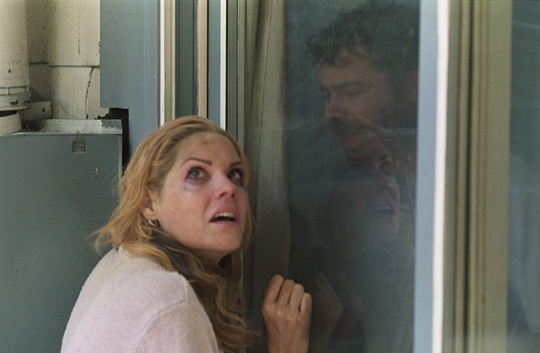

 As in Romero’s The Crazies, Right at Your Door evokes a world where authority figures are visibly shown to be unreliable. This is extraordinary in Right at Your Door because authority figures are only physically represented by armed grunts clad in gas masks and biohazard jumpsuits. These monsters are just following orders when they don’t answer Brad’s questions. For example, one can't help but notice the way one soldier hesitates and even trembles while puffing out his chest and defensively telling Brad, “We’re not trying to cause more panic than there already is.” Compare that with the way the similarly dressed soldiers in The Crazies are defined by their actions. They don’t use verbal prompts that might even tentatively reveal their humanity. By contrast, Gorak's army men reveal their humanity while they’re doing the most cruelly impersonal things.

 You’d have to work pretty hard to cover up that kind of wear, but that’s kind of the point of Ghost Protocol: Cruise’s Hunt is not in denial. He’s in great shape – did you not see him clean up the world’s tallest building in Dubai? Or, on foot in a sand storm, running around like a madman? Or crashing several BMW luxury sedans? Just think of Tom Cruise’s face as the portrait of Dorian Gray, which I guess makes his body Dorian Gray…except in Ghost Protocol, Dorian Gray is galloping around the world with his portrait on display. Which is…odd, to say the least.
 But in all seriousness, Ghost Protocol needs Cruise’s over-seriousness and his tendency of making himself look that much more focused, that much more determined and that much more capable than everyone around him. Even newcomer Jeremy Renner looks like a girly man compared to Cruise, like in the scene where Renner is floating around (literally, floating around) in an overheated subterranean tunnel while wearing a chain mail suit that levitates his whole body.

 This is it, folks: David Gordon Green isn’t the guy that made George Washington and All the Real Girls anymore. Now, he’s the guy that made Pineapple Express and Your Highness. Which is a transition that doesn’t really deserve an award or a hearty handshake or even much praise really. But for the sake of needlessly giving credit where credit is due, I have to say: this new David Gordon Green is ok.
 Because, let’s face it, the plot of The Sitter is exhausting and not always comically so. Even screenwriter Brian Gatewood and Alessandro Tanaka eventually throw up their hands and accept that they have to get semi-serious about their lazy, potty-mouthed pastiche after a point, which puts a serious damper on Green’s genital-fixated style of humor (I’d say the point where the film stops being generously funny is probably the point where Noah tells Slater that he’s gay…).
 Press Play Video Blog