


EDITOR'S NOTE: We are proud to present an unusual and personal series of articles by critic Peter Tonguette about grief and mourning on film, and how certain moviegoing experiences affected him in the aftermath of his father's death. Peter's series includes pieces on Hereafter, The Darjeeling Limited, Running on Empty, Men Don't Leave and A Soldier's Daughter Never Cries. If you would like to read the introduction to the series, Pictures of Loss: Introduction, click here. If you would like to read part 1 of the series, Pictures of Loss: Hereafter, click here. If you would like to read Pictures of Loss: The Darjeeling Limited, click here. If you would like to read Pictures of Loss: Men Don't Leave, click here. If you would like to read Pictures of Loss: A Soldier's Daughter Never Cries, click here.— Matt Zoller Seitz
If I told you I was writing about movies that have meant something to me after my father died, you probably wouldn’t blink if I said that Hereafter and The Darjeeling Limited were among my choices. You might have even thought of them yourself. But Running on Empty? Don’t humor me—you wouldn’t have thought of it in a million years.
After all, no one dies (on screen) in Running on Empty. The film does not take bereavement as its subject as the other two do. And yet every time I watch it now it reminds me of my father.
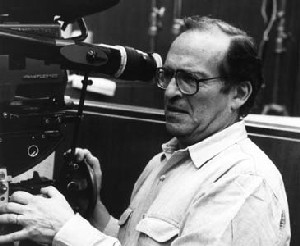
It began when Sidney Lumet died in April. What a great, great director he was. When I stopped to consider his career, I thought of his towering legal dramas, like 12 Angry Men and The Verdict, and his brilliant filmed plays, like Long Day’s Journey Into Night and Equus. I thought of the key scenes from Dog Day Afternoon and Network (released just a year apart). I thought of the unique way he shot and framed and edited, which Peter Bogdanovich paid tribute to in his chapter on the director in Who the Devil Made It: “Sidney ‘cuts in the camera.’ Which means he knows before he shoots exactly how each scene or sequence is going to be edited and therefore films only what he needs to accomplish this…”
In 2006, as he was finishing his first feature film in nearly seven years—the unfairly neglected Find Me Guilty—I even had the nerve to call him up out of the blue and ask for an interview. To my astonishment, he answered the phone himself. He begged off my request, saying he was in the midst of mixing Find Me Guilty and that I should arrange an interview with him when the movie came out. He was very nice, though, and when I mentioned that I’d interviewed his friend Peter Bogdanovich rather extensively in the past, I remember him saying, rather amiably, “Peter’s a lovely fellow.”
I never did interview Sidney Lumet, but in many ways he had already answered most of my questions. Despite the great variety of films he directed, his obsessions are obvious. Those who know his terrific book Making Movies will remember the section where he gives us what amount to log lines for a number of his best movies. He asks the question, “What is the movie about?” and then gives us his answers. The striking thing is that a couple of answers are repeated. For example, “the machines are winning” is the stated theme of not just Fail-Safe, but also The Anderson Tapes and Network. Daniel and Running on Empty also share a theme. “Who pays for the passions and commitments of the parents?” Lumet writes. “They do, but so do the children, who never choose those passions and commitments.”
Lumet was not coy about the fact that the concerns of those movies overlapped. “See, I don’t know if I’ve ever said this publicly,” he told Joanna E. Rapf in a 2003 interview, “but I’ve done three movies, Daniel, Running on Empty, and Family Business, that are thematically the same thing—the cost that others pay for one’s passions—and I only recognized this afterwards…. Any deep emotional commitment on the part of the parents is going to cost something… not just to the parents but also almost always to the children.”
It so happens that I loved Running on Empty long before I embraced Lumet’s other movies. Naomi Foner’s screenplay is about a married couple named Arthur and Annie Pope (Judd Hirsch and Christine Lahti). They were radicals in the sixties, since 1971 pursued by the FBI for the bombing of a military research lab, but they have spent the seventies and eighties attempting to raise their children while on the lam. The crushing truth of the movie is that it is impossible to do so.
When Lumet talks about the burden the children bear for their parents’ passions and commitments, I see what he means. But I also see something else. However imperfect the lives of Danny (River Phoenix) and his younger brother Harry (Jonas Abry) are, however unfair their birthright is, with the incessant moving, switching of schools, changing of names, they still have their parents. Early in the film, Danny comments sarcastically, “It’s wonderful having a new name every six month.” But consider the person he’s complaining to: his mother, who loves him, listens to him, cares about him. (Perhaps I am especially attuned to this because Annie is played by Christine Lahti, who just a year before Running on Empty starred as Aunt Sylvie in Bill Forsyth’s Housekeeping, a great film about loss.) It could be worse—it could be so much worse. We need only to look to Daniel—the film Lumet was forever grouping with Running on Empty—to see how much worse. It tells the story of Paul and Rochelle Isaacson (loosely based on Julius and Ethel Rosenberg), and of the two children they leave behind when they are convicted of conspiracy to commit treason during the McCarthy years and executed.
At the conclusion of Running on Empty, as the Popes prepare to flee yet another town to begin again, the father allows Danny, a gifted pianist, to stay behind, to be with his lovely girlfriend (Martha Plimpton), to go to Julliard, where he has given a triumphant audition and where he expects to receive a scholarship. At first glance, it is all terribly hopeful. Danny is losing his parents, but gaining a life. Yet I ask myself now: Will Danny ever think back to his father’s earnest plea, as Danny starts to make noises about leaving home and going to college, “A unit is only as good as its weakest link and we are a unit”? Arthur wants to hang on to Danny not because he is controlling or possessive but because he loves him. Will Danny come to realize that success and happiness just aren’t much good without the most important people in your life to share it with? When Danny graduates from Julliard, will he look out into the crowd of proud parents and wonder where his are? Will he remember who is missing?
“We’ll see you again,” Arthur says to Danny in that last scene. “You can be sure.” But can he really? Danny is a smart kid and he knows his fugitive parents are one false move away from being caught. Even if they live for another fifty years, this moment must feel like a final goodbye to son and father both. As far as I’m concerned, the grief-stricken look on River Phoenix’s face after his parents have driven off, leaving him behind, is no different than if he was standing at their graves. Like the children of Paul and Rochelle Isaacson do at the end of Daniel, after their parents have been killed. As a young adult, daughter Susan (Amanda Plummer) drifts in and out of mental hospitals, but as her brother Daniel (Timothy Hutton) reasonably asks, “What if she’s not ill? What if she’s inconsolable?”
That’s what Danny in Running on Empty looks like: inconsolable.
At this point, you may be asking how I ever managed to twist Running on Empty into a story of loss. In my grief, I am reading something into it that isn’t there. Yet I cannot concede that, even though I recognize no one else sees what I see in the movie. I’m reminded of a powerful passage in Meghan O’Rourke’s The Long Goodbye (which I first read not long after Lumet died) in which she writes about the cold spring that followed her mother’s death: “A bitter rain came down for days on end, as if the gods knew my sorrow.” O’Rourke explains that the literary term for this is “‘pathetic fallacy,’ coined by the art critic John Ruskin to describe the attribution of human emotions to nature and inanimate objects; the harsh, angry moors in Wuthering Heights mirror the characters’ lives.”
When I watch Running on Empty now, it feels like Sidney Lumet “knew my sorrow,” even though he couldn’t have, and like we’re doing that interview after all, even though he can’t.
Peter Tonguette is the author of Orson Welles Remembered and The Films of James Bridges. He is currently writing a critical study of the films of Peter Bogdanovich for the University Press of Kentucky and editing a collection of interviews with Bogdanovich for the University Press of Mississippi. You can visit Peter's website here.

 Prince is a complex tale of police corruption in the 1970’s adapted from the book by
  But from the opening scene, you begin to see the cracks in this prince’s facade. An argument with his drug addicted brother shows that there is someone unwilling to continue the charade that Ciello and his partners are somehow upstanding officers of the law. In a key scene, Ciello is forced to rob a drug addict to supply heroin to his informant. He begins to take pity on him, perhaps recognizing his own addicted brother. More importantly, he begins to witness firsthand the consequences his illegal acts as a cop have on others.Ciello remembers why he wanted to become a detective, and makes an effort to change because he can no longer see much of a difference between the cops and the criminals no matter how much he tries to justify his actions by blaming the way the criminal justice system works. Perhaps you would think that this film will be a simple tale of redemption, where a man acknowledges his wrongdoings and then helps to put the remorseless criminals behind bars.
 Prince was not the first or last time that Sidney Lumet examined this subject. 1973’s “Serpico”, based on the real-life detective
  In addition to Serpico and Prince of the City, Lumet returned to the theme of police corruption twice more in the 1990’s with Q & A (1990) and Night Falls on Manhattan (1997). Of the four films, Q & A is the one that plays most like a crime thriller, as we watch a fairly degenerate cop (
 Lumet is fascinated by the logic behind corruption. What is the thought process that causes people to lose their way? The key to Lumet’s success in exploring this theme is the degree to which he does not pass black and white judgment on his characters. The more we see ourselves reflected in people who justify their amoral actions, the more Lumet has made these people human. While Q & A and Night Falls on Manhattan admirably try to explore the gray zone of morality and corruption, it is Prince of the City that is Sidney Lumet’s masterwork on that theme.
 As this was a tribute to Lumet, Williams and Leuci told stories about the making of Prince, talking about the long audition process Williams went through and how Lumet did not want Leuci around set due to the not-very-happy experience of having Frank Serpico on set all the time during the production of Serpico. Although Lumet is not acknowledged as a significant auteur by cinephiles because his almost invisible direction served the story rather than himself, the Williams/Leuci Q & A re-asserted that Lumet was a filmmaker with a true vision, and highlighted the choices he made that enabled Prince to be so effective.
 Press Play Video Blog