
 [EDITOR'S NOTE: Fearless Sarah D. Bunting of Tomatonation.com is making it her mission to watch every single film nominated for an Oscar before the Academy Awards Ceremony on February 26, 2012. She is calling this journey the Oscars Death Race. For more on how the Oscars Death Race began, click here. And you can follow Sarah through this quixotic journey here.]
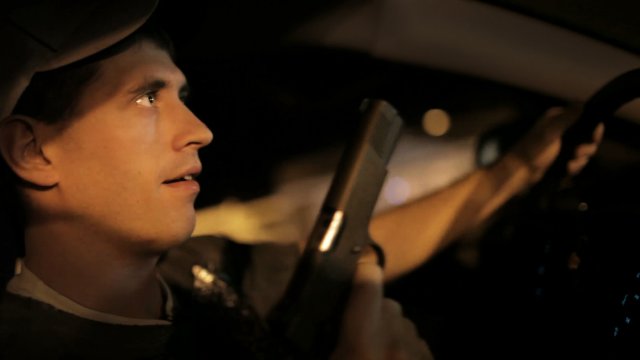
Sgt. Nathan Harris took a gunshot in the hip during an ambush in Afghanistan in 2009. Hell and Back Again tells you this without delay; Harris, back on U.S. soil and trying to rehab his way back to active duty, takes care of telling everyone else, compulsively — Wal-Mart greeters, prospective landlords, fellow Marines. He can't help it. His shattered leg has become his world, and his medications send him spinning away from other topics despite himself.
 Hell and Back Again cuts back and forth between the present day and the ground operation that brought Harris to harm, between Harris's attempts to manage his pain and his civilian life and the platoon's attempts to manage the mission, and civilians, in Afghanistan. In the quieter moments, the film is too pointed in showing us that this isn't a war to be "won," and the overlapping style of the sound design — by J. Ralph, and I'm probably the only one who remembers that he did the song for that VW ad where the guy who looks like James Spader is late for a wedding and trapped behind a freight train — can feel gimmicky. We don't necessarily need an elbow to the ribs and a stage-whispered "PTSD"; we can see the man's face. And we can see his wife's face, reflecting Harris's intermittent disappearances into confusion and rage.
A gimmick will usually work at least once, though, and the layering of the sound of battle over the mild aggro of a complicated drive-through-menu order does create tension. The level of access to Harris's unit, and the extent of the footage (not least during firefights, during which I genuinely cannot conceive of NOT dropping the camera and sprinting to…let's say Germany), is remarkable. Also remarkable: Harris himself, a smart, tough, funny man, gentle at bedtime, boyishly romantic about his pistol, who looks a little like John Travolta and sounds a lot like Lucas Black. He looks like fun. He looks like hell.
It's a solid enough doc, but I'm not sure how this gets a seat at the table when Project Nim and The Interrupters didn't. What you think of its chances depends on how cynical you want to get about subject matter in the category as a determinant. More on that when I complete the category.
Sarah D. Bunting co-founded Television Without Pity.com, and has written for Seventeen, New York Magazine, MSNBC.com, Salon, Yahoo!, and others. She's the chief cook and bottle-washer at TomatoNation.com.


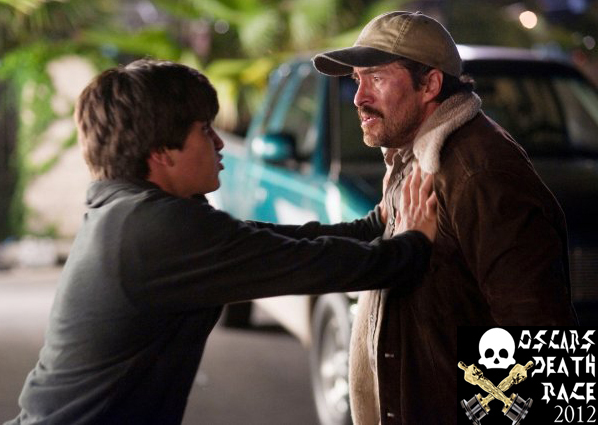

 But A Better Life doesn't do anything with Ruthie after that, really, and what it does do is disappointing and timid. The center of the story is Ruthie's boyfriend, Luis (José Julián) — or rather his father, Carlos (Damián Bichir), and his struggles to keep Luis in school and away from bad influences like Ruthie's Uncle Celo (the charismatically tattooed, and underused, Richard Cabral). Carlos can't do much, though, because he works all the time and Luis's mother is not around. But when Carlos borrows a whack of money from his sister to buy his friend's landscaping truck (and by extension the business), he lets himself begin to dream bigger for himself and Luis, about more money, a nicer apartment, a safer school. Maybe even his citizenship.

 Hello, and welcome to the Oscars Death Race. I'm Sarah D. Bunting, the head rodeo clown at Tomato Nation; the Oscars Death Race is pretty much what it sounds like, a quixotic attempt to watch every single nominee in the Academy-Awards categories that appear on the broadcast.
 Press Play Video Blog