VIDEO ESSAY: In Memory of Paul Mazursky 1930–2014

VIDEO ESSAY: In Memory of Paul Mazursky 1930–2014


A Cinema of Real Feeling: Remembering Paul Mazursky 

Paul Mazursky made movies about what was happening around
him. Mazursky honed in on the cultural climates of the
eras during which his films were produced. Whether it was the strife of marital
discourse found in the 60s and 70s (from Bob
& Carol & Ted & Alice
’s freewheeling "free love" sentiment
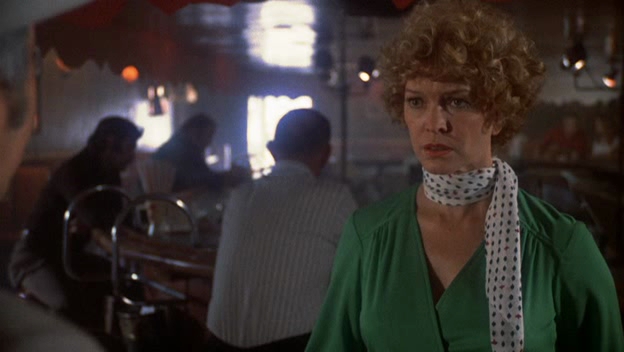
to An Unmarried Woman’s study of sexual
liberation) or the timeless theme of searching for a renewed, meaningful
identity (Tempest, Moscow on the Hudson and, to some extent, Down and Out in Beverly Hills), Mazursky told stories of the
moment and more effectively, presented a cinema of palpable feelings.

Mazursky was, first, a prolific Hollywood
character actor; he even played Tinseltown types in several of his own films.
Perhaps it was this affinity, this affection for actors that lent gravitas to his directing of his own films. Many of his films were about the upper middle
class: people with careers, relationship problems, anxieties about the economy,
and the overwhelming dread of just being “ordinary.” And yet, Mazursky really
loved these characters. He watched them. He followed them. His camera
roved the interiors of homes and other locales with patient, observant contemplation.
Because of his delicate orchestration of writing, music, and themes, Mazursky’s work as a filmmaker set him apart from his
peers. In his time, nobody listened to or looked at this group of damaged souls with as
much bruising honesty and scathing humor as Mazursky did. In a 1978 interview
with Film Comment, Mazursky addressed this: “[Middle-class life
is] on the edge of soap opera and the edge of real; it’s alienated and
confused, almost tragic. It’s become popularized in one way or another, but I
haven’t seen it dealt with much in American cinema on a level which
communicates real feeling. I’ve seen it dealt with through humor, a bit. But
not with real feeling.” Thanks to Mazursky’s distinct body of work as director,
we all have the gift of seeing these cinematic works of “real feeling” again
and again.

Nelson Carvajal is an independent digital filmmaker, writer and content
creator based out of Chicago, Illinois. His digital short films usually
contain appropriated content and have screened at such venues as the
London Underground Film Festival. Carvajal runs a blog called FREE CINEMA NOW
which boasts the tagline: "Liberating Independent Film And Video From A
Prehistoric Value System." You can follow Nelson on Twitter
here.

VIDEO ESSAY: In Memory of Gordon Willis (1931-2014)

VIDEO ESSAY: In Memory of Gordon Willis (1931-2014)

A Master of Light, Shadow and the Human Condition: In Memory
of Gordon Willis (1931-2014)

As the tribute articles, obituaries and remembrances for the
late cinematographer Gordon Willis begin to flood in, almost all of them are
sure to lead with “Godfather Cinematographer” in the headline. Surely it’s
partly because Willis’ work in The
Godfather Trilogy
is one of the most influential collections of moving images in
film history—but those headlines probably stem more from the idea that the populace of
readers will only know Willis’ name from those films.  This is too bad because Willis’ equally
significant contribution to the art of cinematography goes back to his
spectacular filmography of sleeper films from the 1970s through mid 1980s. Even then, Willis
was pushing the envelope in regards to the stylistic direction of his then
peers (Vilmos Zsigmond, Conrad Hall, and Lazlo Kovacs, among others). Outside of
his collaborations with Woody Allen (Annie
Hall
, Interiors, Manhattan, Stardust Memories, A
Midsummer’s Night Sex Comedy
and Broadway
Danny Rose
), Willis’ dynamic End of
the Road
made spectacular use of the hot vs. cold lighting settings amidst
the film’s rambunctious interior settings. In The People Next Door, Willis was able to light the interiors of family
homes so that they looked real and less like a family setting you would see on
television (note how the neighbors’ house party sequence would later influence
the free-loving car key party scene from Ang Lee’s The Ice Storm). Willis wasn’t interested in recreating the real
world; he wanted to represent it as truly as possible.

In regards to The
Godfather
films, well, where does one begin? There is just so much to soak
in, from the sepia tone scenes to the films’ controlled, if elegant, framing of
such violent acts as an orchestrated mass murder juxtaposed against a baptism
in a church. Perhaps more powerful than any onscreen kill was Willis’ uncanny
ability to command our attention through his long takes of characters’ faces.
Although bullets fly throughout the first Godfather
film, nothing in that movie captures our undivided attention and excitement
like that slow burning shot of Michael Corleone’s (Al Pacino) angst-ridden face
that is desperately searching for answers as he prepares to whip out his gun to
kill Solazzo and McClusky in the Italian restaurant. Even in non-violent
settings like a school campus (The Paper
Chase
) or a newspaper office (All The
President’s Men
), Willis’ photography keeps the mood riveting because he
allows his camera to study the faces of the screen characters; we see how their
faces twist in frustration or frown in disillusionment against the light that
presses down upon their skin. It wasn’t just that Willis had a unique visual
style all his own; it was that he was a true artist, a visual storyteller.
Willis knew that a pretty shot only had surface merits. He knew he had to let
the camera invade each screen presence by letting the shot study it, through
every prolonged take. As he did so, we became immersed in those moments. We may have
even seen ourselves in Michael Corleone’s face in that restaurant. Gordon
Willis was a great cinematographer not just because he mastered the
fundamentals of lighting design. He was a great cinematographer because he knew
how to look at us, even when we couldn’t look at ourselves.

Nelson Carvajal is an independent digital filmmaker, writer and content
creator based out of Chicago, Illinois. His digital short films usually
contain appropriated content and have screened at such venues as the
London Underground Film Festival. Carvajal runs a blog called FREE CINEMA NOW
which boasts the tagline: “Liberating Independent Film And Video From A
Prehistoric Value System.” You can follow Nelson on Twitter
here.

VIDEO ESSAY: Virtual Animals: Building the Digital Ark

VIDEO ESSAY: Virtual Animals: Building the Digital Ark

[The script of the video essay follows.]

For most of us, our first encounter with a wild animal
happens through a screen: the camera has the power to bring us closer to an
animal than we are ever likely to get in the wild.  It is by sight that we become fascinated with
them, by sight that we come to know them, by sight that we mourn their
disappearance. 

We are currently living through the world’s sixth mass
extinction event, the first to be caused entirely by humans.  By the century’s end, we are likely to have
lost half of the world’s species.  Film
will not only be the most intimate encounter we have with animals: for most
species, it will be the only encounter possible.

The fewer animals we find in the wild, the more we see on
screen.  The digital revolution has
enabled filmmakers to create an entirely new breed of animal, one that exists
only in the form of pixels.  Absence of
flesh and blood answered by an abundance of virtual animals.

Animals have always been a central part of filmmaking, and
animals on the screen have always had a complex relationship to their real life
counterparts.  One of the earliest films
made by Thomas Edison is of an animal execution.  In 1903 the rogue performing elephant Topsy
was sentenced to death by electrocution after killing her trainer.  Edison used the event as an opportunity to
show the power of alternating current, as
well as his state of the art film camera. 
Thousands watched the event, and many thousands more flocked to the
film.

The celluloid used in film stock comes from gelatin made
from the rendered bodies of animals. 
Eastman Kodak had its own rendering plant so that they could monitor the
quality of the animal product that went into the patented celluloid used by
most filmmakers.  Before digital, when
you watched a film, the image on the screen was literally being projected
through animal matter.

With digital we usher in a new era in which animals might
play a different role on the screen.  For
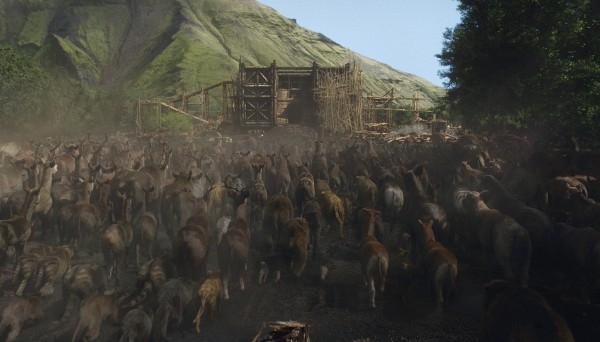
Darren Aronofsky’s animal epic Noah,
Industrial Light and Magic created 14,000 virtual animals, none of which
involved the use of live animals in their creation.  Aronofsky felt it would be against the theme
of the film to put live animals in dangerous or harmful filming conditions.  The result is the most breathtaking collection
of virtual animals ever assembled.  The
film itself is a kind of digital ark, bringing thousands of animals to life
even while their real-life counterparts are likely to become extinct in the
coming decades.

Before Noah, CGI
artists more often used live animals on the set to serve as models for digital
versions.  The process is called
capturing.  In the filming of Ang Lee’s Life of Pi, four tigers were used to
create the unforgettable feline presence of Richard Parker.  One of them was reported to have nearly
drowned on the set. 

We know animals by sight. 
By seeing we know they have souls. 
Somehow, these souls survive even in their visual avatars, even when
what we are watching is not an animal at all, but a collection of pixels on a
screen.

Nelson Carvajal is an independent digital filmmaker, writer and content
creator based out of Chicago, Illinois. His digital short films usually
contain appropriated content and have screened at such venues as the
London Underground Film Festival. Carvajal runs a blog called FREE CINEMA NOW
which boasts the tagline: “Liberating Independent Film And Video From A
Prehistoric Value System.” You can follow Nelson on Twitter
here.

Jed Mayer is an Associate Professor of English at the State University of New York, New Paltz.

VIDEO ESSAY: Fast-Mo: Fast-Motion Sequences in Film

VIDEO ESSAY: Fast-Mo: Fast-Motion Sequences in Film

I remember, as a kid, watching The Three Stooges on TV and
always feeling a little baffled to see the Stooges springing
back up from the ground at a hyper-motion, cartoonish speed; these
singular fast-motion moments usually followed a bigger gag, like one of the
Stooges being set on fire or bitten by a large animal. Still, even as a
child, it was quietly unnerving to see human beings moving faster than they . . . should.
The fast forward motion was more acceptable in cartoons like Wile E. Coyote and The Road Runner, for
example. In real life, however, people don’t move like that. But in film and
television, this fast motion effect has become more popular as years have
gone by—especially when one considers how prominent time-lapse photography has
become—so there must be an important reason for that.

In Leigh Singer’s dazzling new video, he explores the
visual rhetoric of the fast motion effect by grouping films together by shared themes and visual motifs. There are the pistol-slinging cowboys
of the Wild West in The Ballad of Cable
Hogue
juxtaposed against the kinetic, gun-wielding rabble-rousers of Baz
Luhrmann’s updated Romeo + Juliet. Also,
there is the meta-grouping of film clips from Funny Games, Click and Caché. Each of those films visually
demonstrates the power of the fast-forward effect via an actual remote control. In Funny Games the remote control is used
to undo a fatal act, in Click it is used
as a time travel device, and in Caché it
is used as a plot-fueling investigative device to discover who has been sending
mysterious surveillance videotapes. (Note: what other video supercut
appropriately mixes an Adam Sandler comedy with a Michael Haneke film?) As
Singer’s video blazes (fast) forward to the tune of Gioachino Rossini’s
“William Tell” overture finale, it becomes clear that Singer is fascinated with
how silly we look when we’re depicted in this fast forward motion. If slow
motion dramatizes the moment, then fast motion injects a comic surge to the mise-en-scène.

Curiously enough, after a couple of viewings, I personally found the
video to be deceptively powerful in its implications of the way we process the
concept of time, especially with cinema. When speaking of the moving image in
cinema, film historian Ivor Montagu once said “No other medium can portray real
man in motion in his real surroundings.” The cinema itself is an art form that
manipulates time in more ways than one. For one thing, it freezes time: actors
are immortalized and live forever on movie screens big and small. Yet, at the
same time, it makes our perception of time decidedly pronounced. When we watch a movie, we’re subconsciously convinced that we’re seeing actions
happen in real time. But it’s not real time. The motion picture itself is
moving at a rate of 24 (or these days 30) frames per second; those are 24
captured moments—24 instances of actions or feelings that have already
happened. Still, this notion of time we won’t get back is remedied by
having at least captured some of it on film. Likewise, that fleeting concept of
speed, or the future even, is validated and realized by the fast-motion visual
effect. In our own lives, time is something we really can’t control; it passes
by with a relentless fervor. Therefore, the fast-motion effect is a
demonstration of tremendous power. If the cinema is our duplicate (or projected)
reality, then the fast motion effect represents our god-like ability to
manipulate time’s reality. It’s a unique opportunity. The kinetic speed of
the fast-motion effect is a universal touchstone; it transcends language and
culture barriers. It’s a visual representation of the voracious thirst driving life. It pushes us forward, even when we’re afraid to take that leap, because
in life, there is no rewind button.–Nelson Carvajal

Leigh Singer is a freelance film journalist, filmmaker and screenwriter.
Leigh studied Film and Literature at Warwick University, where he
directed and adapted the world stage premiere of Steven Soderbergh’s
‘sex, lies and videotape’. He has written or made video essays on fllm for The Guardian, The Independent, BBCi,
Dazed & Confused, Total Film, RogerEbert.com
and others, has appeared on TV and radio as a film critic and is a
programmer with the London Film Festival. You can reach him on Twitter
@Leigh_Singer.

Nelson Carvajal is an independent digital filmmaker, writer and content
creator based out of Chicago, Illinois. His digital short films usually
contain appropriated content and have screened at such venues as the
London Underground Film Festival. Carvajal runs a blog called FREE CINEMA NOW
which boasts the tagline: “Liberating Independent Film And Video From A
Prehistoric Value System.” You can follow Nelson on Twitter
here.

VIDEO ESSAY: Lars Von Trier: Cinema’s Dancer in the Dark

VIDEO ESSAY: Lars Von Trier: Cinema’s Dancer in the Dark

In my writing group, a friend describes the way that, when
you edit a piece of writing, you should look for hot spots, places where the
strength of emotion is so great that heat radiates outwards. These are the
places that jolt the heart, that cause a vibration in your spine.

In Lars von Trier’s body of work there is nothing but this
kind of heat: piercing, exhilarating, painful, heartbreaking. When you watch
von Trier, every part of you wakes up, even parts you don’t like very much. A
von Trier film is a visceral experience. You can see this in Nelson Carvajal’s
brilliant video essay: a clamor of sounds, an array of confusing images,
panicked cuts. In a von Trier film you aren’t allowed to look away: not from
suffering, not from sex, not from heartache, not from desperation, not from
human evil, and not from the pain of lost innocence either. 

In many of von Trier’s earlier works, like Breaking the Waves and The Idiots, overwhelming emotion is
evoked through quick, jerky camera movements and raw acting. In his Golden
Hearts Trilogy, von Trier is particularly interested in looking at the purity
of altruism, while his more painful films often beg the question of whether
there is anything noble in sacrifice at all. 
Some feminists criticize the way von Trier depicts his heroines, his
obsession with their suffering, but von Trier’s films never struck me as
misogynistic, as some critics claim. His heroines are complex and authentic.
They make choices with conviction, even when those choices end up being the end
of them. In short, von Trier’s female characters are given permission to have a
kind of existential hunger that few “strong female characters” are ever able to
explore.

In recent films, like Melancholia,
Antichrist and Nymphomaniac, von Trier commands this same intensity as in his
earlier movies, while focusing more on languid scenes that showcase the horror
and beauty contained within the natural world. In von Trier’s universe, human
beings are brainy and removed from this landscape, yet also inextricably bound
up in it, constantly coming into contact with their animal selves, naked,
lustful, hungry. At the start of Antichrist a couple makes love to
classical music, while their baby falls out a window to his death. In Nymphomaniac,
a character muses about Fibonacci sequences and the intellectual pleasures of
fly-fishing, in between scenes of animalistic intercourse. And in Melancholia
all the scientific study in the world can’t save humanity from a star quietly
hurling itself into the earth.

While von Trier’s heroines are often presented as
Christ-like figures, he is less invested in exploring the fall from grace than in showing the messiness of the human experience and what happens when
Icarus flies too close to the sun.

In this way, von Trier’s power comes not simply from making
us empathize with another’s pain, but also allowing us to feel the dizzying
hope of free fall: from that moment before we give up, when all we can do is
reach.–Arielle Bernstein

Nelson Carvajal is an independent digital filmmaker, writer and content
creator based out of Chicago, Illinois. His digital short films usually
contain appropriated content and have screened at such venues as the
London Underground Film Festival. Carvajal runs a blog called FREE CINEMA NOW
which boasts the tagline: “Liberating Independent Film And Video From A
Prehistoric Value System.” You can follow Nelson on Twitter
here.

Arielle Bernstein is
a writer living in Washington, DC. She teaches writing at American
University and also freelances. Her work has been published in
The
Millions, The Rumpus, St. Petersburg Review and The Ilanot Review. She
has been listed four times as a finalist in
Glimmer Train short story
contests
. She is currently writing her first book.

VIDEO ESSAY: Rough and Ready: The Return of the Microcinema

VIDEO ESSAY: Rough and Ready: The Return of the Microcinema

Earlier this week, Google
released an app called “Previews” for Google Glass users. The app allows users
to view a film’s theatrical trailer by simply looking at that same film’s
theatrical poster in a theater lobby. This immediacy, this growing interest in
instant access, is another advancement in our culture’s shift from the group
experience to the singular experience, in regard to the cinema. Believe it or
not, there was a time when a moviegoer might go up to the box office cashier
and simply ask: “What’s that movie about?” And get an answer!

In a diabolical twist of fate, the
technological wizardry provided by Google Glass, smartphones and tablets have
in fact put mainstream moviegoers back into archaic roles. Specifically, these
personalized smart devices are removing viewers from their respective, physical
audience groups and positioning them to heavily rely on their own digitized
versions of a Kinetoscope. The Kinetoscope was an early motion picture viewing device that
allowed only one viewer at a time to watch a film through a peephole.
Kinetoscopes were all the rage in 1894. Today, we have the same thing—except
it’s in the form of an iPhone, or a computer.

For all of the gadgetry and instant
gratification that comes with such technological advancements, there has been
one constant in the movie-going world: the limited access to the experimental
(or underground) film catalogue. Sure, one can search for and watch a Stan
Brakhage small-gauge short film on YouTube, for instance, but that is not how a
Brakhage film should first be viewed. It would be like watching Star Wars
on your phone before having seen it in a theater. And while a Brakhage film
doesn’t necessarily require an IMAX screen or stadium seating, it does come
alive in a special way when it’s projected on a screen by a—dare I say
it?—small
-gauge film projector. Why is this? Because that film projector comes
from the same technological arena that gave birth to Brakhage. It’s one thing
to watch a cute cat video (that was more than likely recorded by a smartphone)
embedded on someone’s Facebook page. It’s an entirely different thing to watch
an 8-minute impressionistic work that was filmed, spliced and then further
manipulated on physical celluloid, sitting in a dark room filled with equally
engaged and fascinated cinephiles.

While the access to this catalogue of
experimental film is hindered by the limited places of exhibition to actually
watch them, some cinematic havens exist. These “microcinemas”—as they have
affectionately been called since 1994—aren’t as common as they once were, but
they are still championed by small circles of artists and curators in certain
pockets across the country.  In Chicago,
Illinois, there is a wonderful gem of a microcinema called the Nightingale (http://nightingalecinema.org/)
, located in
the city’s Noble Square neighborhood. Earlier this winter, I visited the
Nightingale for one of their special exhibition programs, where they showed
films that were thematically linked to the writings of Studs Terkel. Artists
read excerpts of his writings to an eager audience between each of the films.
It was quite a sight to see. The level of engagement between orator and
listener, between abstract film work and viewer, was truly special. The
Nightingale was offering an alternative to the instant gratification culture:
it gave viewers intimate gratification instead.

And in a time of such technological haste
and overt content consumption, the microcinema offers up an old-school
rhetoric that invites moviegoers to look back on films that challenged norms,
to look forward to the new works that are breaking the traditional narrative
structure, and to open up an offline, in-person dialogue with their fellow
cinephiles. It’s the kind of feat that no Google Glass app has yet to achieve.

Nelson Carvajal is an independent digital filmmaker, writer and content
creator based out of Chicago, Illinois. His digital short films usually
contain appropriated content and have screened at such venues as the
London Underground Film Festival. Carvajal runs a blog called FREE CINEMA NOW
which boasts the tagline: “Liberating Independent Film And Video From A
Prehistoric Value System.” You can follow Nelson on Twitter
here.

VIDEO ESSAY: Women in the Works of Martin Scorsese

VIDEO ESSAY: Women in the Works of Martin Scorsese

The first time I saw After
Hours
(the first of 9 or 10), I was 15, and I had no idea who Martin
Scorsese was, or even that he had directed the movie. I saw it in a shopping
mall in north Dallas, an unlikely place, perhaps. I was surprised, as a 15-year-old boy, to discover a
man had directed it; I had assumed it was directed by a woman.
Why? Because women ruled the show. The female characters in the film—Catherine
O’Hara’s manipulative Samaritan, Rosanna Arquette’s vulnerable and elusive
temptress, Linda Fiorentino’s frequently topless sculptor, Teri Garr’s
threatening sociopath with a beehive—lorded it over the men. Who represents
“the stronger sex” in this film? Griffin Dunne’s hapless wanderer, John Heard’s
sad-sack bartender, and, two pieces de
resistance
, Cheech and Chong’s local burglars. The film chronicles a trip
into the New York demimonde, as such a place ruled by women. And how does the
journey end? Dunne is sealed in a plaster statue—by a woman. He manages to
break free, but still. Such it is with many of Scorsese’s films: while we
cannot call these works matriarchal, by any means, in the struggle between men
and women, everyone gets punished. No one comes out on top. Scorsese rolls out
dramas for us to behold, in which men act badly towards women, women are
aggrieved, men charge off in a cloud of exhaust, and there is no indication that
the director, in the background, has chosen a side.

And so it is with many of Scorsese’s films. When Lorraine
Bracco’s Karen chews out Ray Liotta’s Henry Hill for standing her up in Goodfellas, she doesn’t do it privately:
she does it publicly, in front of a rapt crowd, the most rapt audience member
being Hill himself, half-smiling as his future wife screams at him. Even the
ever-so-famous restaurant tracking shot, in which Hill leads his girlfriend
into a mobster-hangout restaurant through the back way, showing his knowledge
of the place off to her and then showing her off to his friends, presents as a
grand, performative display, too over-the-top to be believable as anything but
a subtle critique of the way men may place women on pedestals in an effort to
cripple them. In Scorsese’s films, this doesn’t work, or at least not smoothly;
most of the men in Goodfellas,
indeed, end up either dead or emasculated. Scorsese pulls an even grander stunt
in Taxi Driver; the two main female
characters in the film, Jodie Foster’s teen prostitute and Cybill Shepard’s politician,
serve little other purpose than to cast Travis Bickle’s tremendous personality
problems into relief. He views these women as icons of purity, figures of worship,
points of escape—but in reality his interactions with them only drive him
further downwards by reminding him of how far upwards he has to climb.

And yet throughout these films, Scorsese watches: he does
not opinionate. In one of the most seemingly humiliating scenes from Wolf of Wall Street, a woman is covered
in money, quite literally, but she notably remains standing and even banters
with her sleazy Wall Street assailants during the process. When DiCaprio’s
Belfort dares his wife to throw a glass of water on him, the moment is
near-comic: Belfort is scared, genuinely scared, of a glass of water. Could he,
despite his success, be powerless in this arena, in some sense? Yes, he could. And
when his wife states that the skirtage around the house is going to be “really
short” after a heated argument, it’s no joke, rather a statement of power, an
assertion of privilege.

Regardless of how raffish, aggressive, or un-controlled
Scorsese’s characters may be at times (and Wolf
of Wall Street
has come under heavy criticism for just this quality), his
dramas take place on a grand scale, in which largeness is the point. When
Sharon Stone’s Ginger struts through Casino, she knows all eyes are on her, and
Scorsese knows it, too, and yet his camera is not objectifying her: he’s
showing our objectification to us. Her collapse, similarly, is immense, and
theatrical, and threatens to swallow the movie at moments—and yet this fall
from grace is a stage in a story, not a stage in a director’s thought process.
It is appropriate that the film that put Scorsese on the map, or at least
pushed him towards it, was Alice Doesn’t
Live Here Anymore
, the tale of a woman’s slow journey towards self-respect. Viewed this way, historically, we come to a surprising conclusion: that a man whose films have largely been about a male-dominated world might have been showing us that world only to reflect women’s views of it.

Nelson Carvajal is an independent digital filmmaker, writer and content
creator based out of Chicago, Illinois. His digital short films usually
contain appropriated content and have screened at such venues as the
London Underground Film Festival. Carvajal runs a blog called FREE CINEMA NOW
which boasts the tagline: “Liberating Independent Film And Video From A
Prehistoric Value System.” You can follow Nelson on Twitter
here.

Max Winter is the Editor of Press Play.

VIDEO ESSAY: The Coen Canon

VIDEO ESSAY: The Coen Canon

Simply put, fear is funny. More clearly put, fear is at the root of much of what we consider humorous in films, even though we might not recognize it as such. We call it by different names—confusion, precariousness, coincidence—but the fear that something, whether it’s a job, a relationship, or some larger dramatic situation, might go wrong is always present in cinematic humor. This tendency goes back to the earliest comic films. In one famous scene in Modern Times, Chaplin’s factory worker is supplied with an eating machine intended to feed him while he works, but he can’t eat and work at the same time, and so he’s bombarded by hot dogs and corn on the cob. We laugh a lot at this—not only because of Chaplin’s droll presentation, but because we fear the machine might never stop. In Woody Allen’s Annie Hall, we laugh at Alvy Singer’s caustic observations on his surroundings partially because of Allen’s cleverness but also partially because it spooks us, momentarily, that someone noticed the same thing about other humans that we did. In Planes, Trains, and Automobiles, we laugh because we envision a future in which Steve Martin and John Candy might never return home, but also because we know they will eventually return, in one form or another. When we watch Groundhog Day, we fear that Bill Murray will never wake up—but we also, in some small, quiet part of ourselves know that he will, so it’s okay to laugh. Fear and comedy are linked in the Coen brothers’ films as well—and more directly. This connection is a large part of what gives the films their power: we come to expect humor borne out of despair from these two minds, and we wonder what variation will arise next.

From their earliest films onwards, the Coens have used and exploited varying shapes and forms of the horrific for their comic potential. In Barton Fink, our first glimpse of the titular character (John Turturrro) shows him with a mortified expression on his face. Why is he mortified? Because, while watching his play being performed, he is scared of becoming second-rate. It would be easy enough, as well, to read the film’s conclusion, resounding with Charlie Meadows’ (John Goodman) near-immortal “I’ll show you the life of the mind,” as a suggestion that to truly look into the mind would be more terrifying than any of Fink’s visions of mediocrity; even so, the tone of the statement has a slightly leering quality to it, as if the very idea were a joke.  In Raising Arizona, what do H.I.’s escaped con pals (John Goodman and William Forsythe) do when they realize they’ve lost Nathan, Jr,? They scream, loudly and comically. Why? Because they’re scared of what the baby might be feeling, the baby’s sense of terror being as far from their experience as they can imagine. This exploration continues as the Coens’ films progress. Fargo is memorable not so much as a crime story as for its interweaving of the violent and the comic. When silent, brooding Gaer Grimsrud (Peter Stormare) blows a police officer’s head off from his car seat, the action is horrifying but also delivered with semi-comic timing; when Grimsrud feeds Carl Showalter (Steve Buscemi) into a wood chipper, we’re repulsed, of course, but we also giggle, a little, as we do when Jean Lundegaard, after being tied up in a kidnapping staged by her husband and having a hood thrown over her head, rolls helplessly around in the snow. The comedy here is a strong mix of terror and slapstick, made all the more dramatic by the flat, relaxed quality of its characters’ Midwestern accents. The Big Lebowski balances its share of fear and comedy, as well—the precariousness we witness here is the upending of the daily assumptions by which The Dude (Jeff Bridges) lives, on a daily basis. First his rug is stolen, then he’s attacked, then he’s drugged by a porn king—the obvious question, and the big question, is: what next? And the tumbleweed at the end of the film provides an answer, of sorts: because we don’t know, the best answer is to drift, and to take things lightly if we can. There are many darkly comic moments in No Country for Old Men, which flash by us like bullets, but the brothers slow down to present us with one scene which is pure Coeniana, as well as comic, as well as connected, one one level, to fear: a scene in which a black dog chases Llewelyn Moss (Josh Brolin). The dog runs after him, leaps after him, and, perhaps most memorably, swims after him, through rapids and waterfalls, across fields, over fences. Moss runs, of course, because, despite his courage in some ways, he is in some way scared of the dog, and beyond that, scared of being pinned down. Fear is all over A Serious Man, primarily fear of the future, and what grim events it might hold—and yet the Coens, by their own testimony, considered the torture of Larry Gopnik (Michael Stuhlbarg) to be central to its comedy, right up to the tornado in its conclusion. Fear lurks in Inside Llewyn Davis too, when viewed from the right perspective. There’s the much-chronicled runaway cat scene, in which Davis could be said to be scared of losing a part of himself, maudlin as the chase might be; but there’s also the fear that goes into any sort of performance, the fear that accompanies any launch of self into the void of an audience’s ears or eyes or minds, a fear empowered and increased by the great, great risk of failure. or rejection.

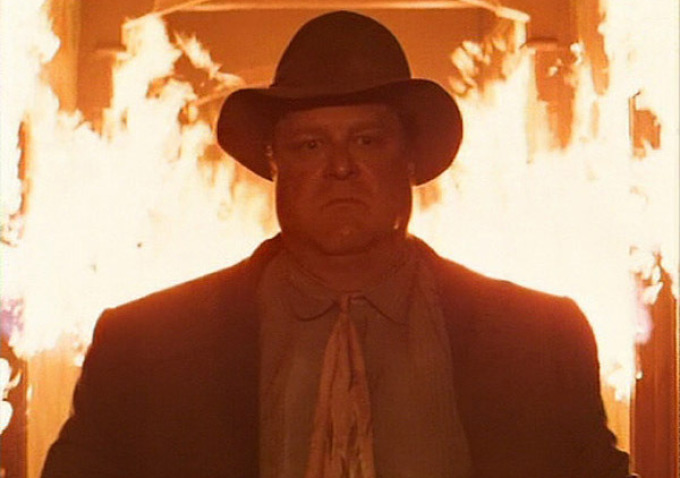
This is not to say that this is the only thing driving the Coen brothers’ movies. It’s certainly not. Their love of interiors, of drowning us in a certain period, along with the mood of that period; or their love of language (from Miller’s Crossing’s “What’s the rumpus?” to “He’s givin’ me the high hat!” to the outlandishly long sentences of True Grit, largely taken from Charles Portis’s book but doubtless part of what attracted them to the project; or their fascination with dream logic, cf. the progress of Barton Fink from a stiff stage play to a burning hotel—all of these things are part of the mixture as well. But without their humor, and without its (ironically) fearless push to the brink of disaster, their work might not be as compelling. The blazing, wild humor in their films serves as the mystery factor, the invisible keystone in an arch of energized idiosyncrasy. — Max Winter

Nelson Carvajal is an independent digital filmmaker, writer and content
creator based out of Chicago, Illinois. His digital short films usually
contain appropriated content and have screened at such venues as the
London Underground Film Festival. Carvajal runs a blog called FREE CINEMA NOW
which boasts the tagline: “Liberating Independent Film And Video From A
Prehistoric Value System.” You can follow Nelson on Twitter
here.

Max Winter is the Editor of Press Play.
The Life Lesson of LENNY COOKE

The Life Lesson of LENNY COOKE

null

“I don’t think they’re evaluated and
drafted because they’re ready. They’re evaluated and drafted because of their
potential […] also: They’re cheap. You can buy them,” explains Mike Jarvis. At the
time of the interview, Jarvis was the basketball coach of St. John’s
University. The “them” he’s referring to are the young basketball prodigies who
put their dreams on the line the moment they enter the NBA draft. Most of the
time, these talented young athletes have a couple of college years under their
belt, which lifts the veil on alternate career possibilities, in the event that
their future bid in the draft falls through–but in 2001, the NBA made an
unprecedented move by drafting Glynn Academy high school’s Kwame Brown as the
first overall pick; Brown would later be joined by Tyson Chandler (Dominguez
High School) and Eddy Curry (Thornwood High School) in the first round as well.
That 2001 NBA Draft not only made history, it changed the entire climate of
talent-seeking and cultivation in professional basketball. It stripped back
the rite of passage of continuing education (i.e. college) as an option for
these young men and tempted them with the opportunity of instant fame and “cash
money.” It also left a taste of cynicism among the higher-ups in the industry.
According to Jarvis, “In its own way, it’s not a whole lot different than
slavery. You buy the best-looking person. If they make it, fine. If they don’t,
you go out and buy somebody else.” At the time of the 2001 NBA Draft, Lenny
Cooke was ranked the number one high school basketball player in the country,
beating out fellow youthful players like LeBron James, Carmelo Anthony and
Amar’e Stoudamire.

Cooke’s decision to enter the 2002 NBA
Draft, as a 19-year-old talent fresh out of high school, is what is at the
center of Ben and Joshua Safdie’s new cinema verite-style documentary Lenny
Cooke
. Using handheld cameras that often zoom in and out on their subjects,
while chasing a moment or fleeting thought, the Safdie Brothers have unusual
access to Cooke’s day-to-day activities in the months leading up to the 2002
Draft; Cooke sometimes busies himself with basketball practice, but mostly
hangs out with his New York-based friends and Virginia-based family. Because of
the immediacy of this kind of filmmaking, we watch the red tape and gym
court-politics surrounding the young basketball star from a remove, like flies
on a wall. Particularly, there’s a bleak but insightful scene of a former NBA
coach breaking down how little money the players stand to earn, once they’re
actually drafted into the NBA, to a room of full of teenage basketball players;
as they listen to the coach crunch the numbers (e.g. paying federal taxes,
health insurance, taking care of the innumerable amount of family members that
will come out of the woodwork, etc.) into a real, bottom line scenario, and
their faces get more pensive and quiet, we get a glimpse at how fooled these
young men have been by the faux rock-star appeal of the professional athlete’s
life.

And through it all, Cooke seems like a
generally nice young kid. Sure he’s tall, more physically developed than your
average teenage male, but he has a wonder in his eyes—almost like a childlike
sense of discovery—when all of these new life opportunities are presented to
him. He is in a tailspin, due to all the attention from the media, from sports
agents, and from his status as the neighborhood hero. Still, Cooke is a
teenage father: he’d rather play an arcade video game than deal with his
tireless baby. He also falls victim to the attention of his early high school
stardom (a trip to Las Vegas, the temptation of other women, and access
to walking-around money). And when the documentary reaches the pivotal night of
the 2002 NBA Draft, neither the people in the film or members of the audience
can anticipate what will happen.

The fallout and denouement after that
fateful draft night makes up the final third of the film. The results are
equally surprising and sometimes satisfying. And the last third of Lenny
Cooke
is exceptionally moving: in this section, the film emerges as a life
lesson
, not just a basketball documentary: Cooke was constantly surrounded by
people who wanted to help him—and those who wanted to exploit him. At the end
of the day, neither Cooke nor his closest of friends could put the blame on any
one industry move-maker or organization. The Lenny Cooke of this film  was always in control of his own life
decisions. Early on in the documentary, a mentor who really did care for
Cooke’s future put it plainly: “It’s easy to be responsible–if you’re
responsible all the time. It’s difficult when you pick and choose the times you
want to be responsible. Ain’t nobody gonna teach you how to be a better
basketball player until you learn how to be a better person.”

Nelson Carvajal is an independent digital filmmaker, writer and content
creator based out of Chicago, Illinois. His digital short films usually
contain appropriated content and have screened at such venues as the
London Underground Film Festival. Carvajal runs a blog called FREE CINEMA NOW
which boasts the tagline: “Liberating Independent Film And Video From A
Prehistoric Value System.” You can follow Nelson on Twitter
here.

Self-Projected Artifice: The 49th Chicago International Film Festival

Self-Projected Artifice: The 49th Chicago International Film Festival

It was almost like a movie. Amat Escalante’s harrowing and
unapologetically bleak film Heli—which
looks at the crooked law enforcement and low-totem pole players of Mexico’s
drug cartel scene—came to a an ambiguous closing shot before dipping to white
for the end credits. The auditorium house lights came on at the press screening
I was at. No one moved from his or her seat. Utter silence. Then suddenly, a
critic in the row in front of me let out a groan. A very loud one. He wanted to
be heard. After 104 minutes of wince-inducing violence and despair, Heli offered no logical retribution for
its audience. The groaning critic was expressing one of two things: that he’d
witnessed a carefully nuanced, searing cross-section of a very real dilemma
south of the border—or that he’d just seen another arthouse trash film filled
with hot air. As other critics began leaving the auditorium, they started
chuckling at the thought of the groan. The groan seemed to carry an echo too,
as if it was a shared movie review, a unanimous proclamation that the Chicago
International Film Festival had once again managed to bring some of the more
polarizing films of world cinema to the Second City for the 49th consecutive
year. This year’s lineup was particularly dark in nature, from crude historical
narratives (James Gray’s The Immigrant,
Steve McQueen’s 12 Years A Slave) to
timely, devastating documentaries (the border crossing Purgatorio, the brotherly survival tale in Kenya’s Tough Bond). For all of its variety,
this year’s Chicago film fest found itself hovering over the theme of the
self-projected artifice, which was explored in three grossly differentiating
films.

You see, unlike most marquee U.S. film festivals such as
Sundance or SXSW, the Chicago International Film Festival has done a consistent
job of flying just below the radar of mainstream but several cuts above other
notable film festivals. Sure, there are “movie stars” who make appearances at
opening night and certain gala events, but the main crux of the Chicago Film
Fest is focused on its usually impressive program of world cinema. The fest’s
red carpet schmoozing takes a backseat to the discovery of new artistic voices
from international films that would be hard to find stateside.

Consider the above-mentioned Mexican film, Heli. For most of its running time, the
camera is deliberate in its movements. Slow pans reveal awful imagery: a boot
pressed against a man’s face, a man being forced to roll face down over human
vomit, and the devastating reunion of a woman with her husband after he was
savagely beaten. These images are all the more powerful because the characters
in the narrative are desperately trying to fool themselves into thinking they’re
bound to escape or even create a new life. In the violent landscape ruled by
the drug cartel, these poor Mexican peasants are disillusioned at best. In an
early scene, the protagonist’s wife visits a local psychic in hopes of hearing
the possibility of a new venture or at least to give validity to her current
situation. Later, during the film’s gruesome torture scene, a group of
adolescents in the background gleefully plays their American video games on
consoles. At one point, a young boy whips out his cell phone to film a victim
being tortured with fire and thinks out loud about the idea of uploading the
footage to YouTube. It’s that self-projected artifice—that daily routine to
dilute the horrors of one’s reality—which is what’s really striking about Heli. Lots of drug films have shocking
violence, but few observe the nameless people at the peripheries of the
screen’s frame and examine their ways of coping with their environment.

Sometimes this artifice is therapeutic. Part of the
festival’s documentary program, Rithy Panh’s The Missing Picture shows us one filmmaker’s in the 70s transcendent
retelling of his unfathomable childhood experience as a prisoner of the Khmer
Rouge in Cambodia by way of hand-made art; rather than relying solely on
historical archival footage, Panh used small whittled-down clay figures as
stand-ins for a majority of the film’s recreations. The title of the doc
resonates exponentially as the simple toy-like sets suddenly become vessels for
ghostly imagery. We can only imagine how the scenes played out in real life and
thus are forced to project our own anxieties and shock onto the stoic faces of
the tiny clay models on the screen. The effect is heartbreaking and, more
importantly, is never played for gimmickry. 

Finally, taking a hard right turn from subject matters of
drug cartels and Cambodian genocide, we land at the Cannes Palme d’Or winner,
France’s Blue Is The Warmest Color,
directed by Abdellatif Kechiche—which was one of Chicago’s festival highlights
to be sure. Centered on a remarkable lead performance by Adèle Exarchopoulos, Blue chronicles several years in the
relationship of a lesbian couple. Exarchopoulos, the youngest of the pair, has
to carefully micromanage each of her self-projected artifices. At her high
school, she “dates” a male classmate in order to ward off any suspicion or
prejudice toward her actual sexuality from her peers. At home, she deceives her
parents by insisting that her partner Emma (played by Léa Seydoux) is just a
tutor. Emma even assists with the mirage and fabricates a boyfriend during a
dinner conversation. These self-projected artifices are juxtaposed with Emma’s
own vocation. She’s a painter, using Adèle as her model for many of her works.
So, on display in the walls of Emma’s art galleries, is her true love—but for a
good portion of the film’s running time, their relationship is taboo for most
of their public appearances. When Adèle and Emma are older and living together
during the second half of the film, their struggles and strife link to the restraint
from those earlier scenes. The film floored me: Exarchopoulos is the
front-runner for the Best Actress Oscar.

With these three varied film selections—Heli, The Missing Picture,
Blue Is The Warmest Color—the theme
of the self-projected artifice rose to new challenging heights. Maybe by
looking through the eyes of our fellow foreign artists, we are able to peel
back some of our own layers of artifice (at least in what we produce in
American cinema) and see some fundamental similarities in our ways of handling
those scenarios, fiction or non-fiction. And as the 49th Chicago
International Film Festival drew to a close, I thought back to the groan from
that early press screening. If it did signify a sentiment towards a festival
that vehemently sought out challenging and polarizing titles from world cinema,
then I hope to hear the same groan next year.

Nelson Carvajal is an independent digital filmmaker, writer and content
creator based out of Chicago, Illinois. His digital short films usually
contain appropriated content and have screened at such venues as the
London Underground Film Festival. Carvajal runs a blog called FREE CINEMA NOW
which boasts the tagline: “Liberating Independent Film And Video From A
Prehistoric Value System.” You can follow Nelson on Twitter
here.