Watch: Vancouver Has Stood In for Many Cities, But Rarely Plays Itself
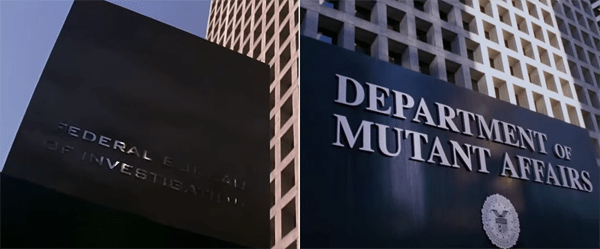
Moviegoers are, by definition, trusting souls. When a film begins, we block more avenues to skepticism than we could possibly imagine. We believe that animals talk, aliens burst from people’s stomachs, and giant, strangely human-looking gorillas crush skyscrapers–or at least we want to believe these things. We also believe that if a film tells us it is taking place in Chicago, boom: we ‘re in Chicago. If it tells us we’re in New York, voila: we’re in New York, in the middle of Bronx traffic. And yet, as this new video essay by Tony Zhou points out, often, we’re actually in Vancouver. The piece is one part homage, one part truth-telling mission, as Zhou goes through all the different films that have used Vancouver as their backdrop while calling it something (or somewhere) else: everything from Christopher Nolan’s ‘Insomnia‘ to Mike Nichols’ ‘Carnal Knowledge.’ Take a look, and see how many films you recognize–or, as it were, don’t recognize.
Watch: For Mike Nichols (1931-2014): A Video Essay
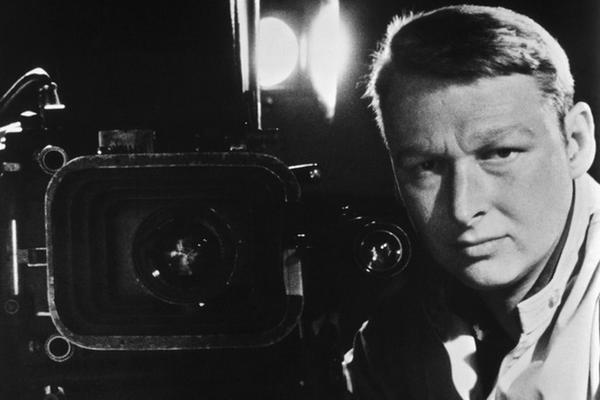
There were three big “Mike Nichols moments” in my life. The first was the universally shared one: watching The Graduate for the first time. I was a teenager and an interest in sexuality, excitement, and a nose for mischief were at their height. Watching Dustin Hoffman sleep with an older woman and then run off with her daughter, all to the tune of Simon & Garfunkel, even had me sweating as a so-called Generation Y-er. Visually, the film was doing interesting things with its pans and sudden zooms. They weren’t cheesy. They were oddly endearing. And to think that this film was made in the 1960s was all the more impressive. The next moment came when I saw Closer in the theatre back in 2004. I was well versed in the Nichols film canon (Primary Colors, Working Girl, etc.) and was expecting warmth and light at the end of the tunnel for this story of four miserable people who kept fucking each other over, literally and figuratively. But it never came. Yes, as per many Mike Nichols films, it was brilliantly acted. But this film was relentlessly blunt. It was cold. Was this really a Mike Nichols film? Yes, Nichols had made groundbreaking films in the past, but none that ever told America’s Sweetheart to “fuck off and die.” It had such a startling affect on me that when I re-watched some of his films (Wolf, Silkwood), I ardently searched to find even more tangible nastiness in some of those characters. I wanted to not like some of the fully realized, compassionate characters from those past films simply so I could connect them back to the characters of Closer—and ultimately give myself vindication as a viewer. But I couldn’t. I could never dislike Harrison Ford in Regarding Henry as much as I disliked Jude Law in Closer. But that’s okay. Nichols was showing me that he handled every type of person equally. By the time Nichols made Charlie Wilson’s War in 2007, it was obvious that Nichols really wasn’t interested in the dynamic movements of the camera; contrast that to The Graduate, which has something going on in nearly every frame. Nichols was basically creating a cinema of the theatre. He was going back to his roots. His camera was much more calm in the last feature films. He was just watching his players, smiling behind the camera. This speaks directly to the third Nichols moment for me, which happened a few years ago. I was on the “L” train in Chicago, headed downtown, listening to a podcast of Radiolab on NPR. The segment was on the origin of laughter. It opened by playing some archival audio of Nichols and Elaine May laughing hysterically as they attempted to get through a comedy bit. It was such an infectious sound, so hearty and real, that I kept playing it over and over. I was so obsessed with the clip that I found myself researching Nichols’ early comedic past, of which I was not too informed. I was shocked to learn that his original improv troupe (the Compass Players) was the predecessor to what would eventually become the Second City improv powerhouse of Chicago. Nichols was closer to my roots that I even realized.
At the end of the day, what these three moments signify was that Mike Nichols was always a filmmaker that kept surprising me. I never had him figured out. There was always a fascinating development or a piece of information about his life that was waiting to be discovered. I put this video essay together with a heavy heart. Aside from seeing such recent artists who have passed (like Philip Seymour Hoffman and Robin Williams) in the clips, the overwhelming fact that there were going to be no more films or pieces of theatre created by this great storyteller was piercing. But then I just remember that great laugh of his from that comedy sketch outtake. Something tells me that he still has some surprises waiting for me.
Nelson Carvajal is an independent digital filmmaker, writer and content creator based out of Chicago, Illinois. His digital short films usually contain appropriated content and have screened at such venues as the London Underground Film Festival. Carvajal runs a blog called FREE CINEMA NOW which boasts the tagline: "Liberating Independent Film And Video From A Prehistoric Value System." You can follow Nelson on Twitter here.
TRAILER MIX: VINTAGE MODEL: WHO’S AFRAID OF VIRGINIA WOOLF?
This vintage edition of TRAILER MIX looks back at a film preview from days gone by, and measures its virtues in terms of nostalgia, contemporary comparison, and innate artistry. Vintage entries will appear periodically throughout the run of the column.
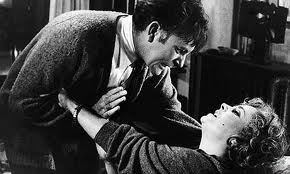
The only thing uttered by the characters in the trailer for Who's Afraid of Virginia Woolf? (1966) is the film's title, a wicked pun repeated and chanted by members of the story's unraveling quartet, originally created for the stage by Edward Albee. “It's easy to talk about it,” the trailer's ever-earnest narrator says of the movie. “It's hard to tell about it.” He then adds that discussion of the film's worth can be summed up by simply mentioning the talent involved, name-dropping Elizabeth Taylor, Richard Burton, and director Mike Nichols with great reverence. As it should be, the trailer is a reflection of the movie itself – a stark snapshot with a tight-lipped veneer that hints at the degradation of decorum. There's no mistaking that something's terribly wrong here, but the preview's refusal to divulge details beyond synopsis basics calls to mind the thin masks George (Burton) and Martha (Taylor) wear in their daily lives.
The first nod to the movie's simmering stew of ugliness comes when Martha finishes her title recitation with a booze-induced choke. In Who's Afraid of Virginia Woolf? nothing's fully pure, not even the jovial repetition of a pun. The eerie insistence of laughter continues in the trailer, as the narrator tells us that history professor George and wife Martha are “the essence of Ivy League charm to students and friends . . . who don't know them.” In between cackles, the most foreboding of which come from gravelly-voiced Burton, film stills are flashed across the screen, the slideshow looking more and more like a string of crime scene photos (after all, the movie's events could certainly warrant a border of “caution” tape).
“George Segal and Sandy Dennis are the newcomers,” the narrator says, “led by their charming host and hostess to the hell that hides behind those ivy-clad university walls.” The word “hell” is emphasized and followed by a delirious descent. Cigarette in hand, Martha continues to laugh devilishly, then Nick (Segal) gets a turn, then Honey (Dennis) pricelessly lets her giggle transform into a shrill scream of horror. Chilling images of George and Martha in the midst of a struggle are soon topped by a perfect cut to a spinning camera – a sick, twirling dance between Honey and George that hears the two of them chant the title yet again.
It's ironic that a trailer for a work that's so well-written is devoid of any remarkable dialogue. And yet, it's both gracious and appropriate that nearly none of the film's transgressive goodies are revealed. The narration sounds both hasty and deliberate, but were this a modern film, you'd likely know half the plot by the time the clip wrapped, weakening the desire to actually bother seeing the movie. The end of the trailer remains ironic, almost unwittingly so. In order to sell the film, screenwriter Ernest Lehman's work on West Side Story and The Sound of Music is mentioned, as if that could properly prepare anyone for what they'd be getting from Who's Afraid of Virginia Woolf? And the word “Incredible,” tacked on as “the only thing left to say,” reads as an off-key, comically unsure way to close. Not that many people would argue with the sentiment.
R. Kurt Osenlund is the Managing Editor of Slant Magazine's The House Next Door, as well as a film critic & contributor for Slant, South Philly Review, Film Experience, Cineaste, Fandor, ICON, and many other publications.

 Press Play Video Blog